

An expansion of rare lineage intestinal microbes characterizes rheumatoid arthritis
Open accessThe DOI matches its Crossref record; 53 of the 53 references it cites were found in a registry or an index.
Abstract
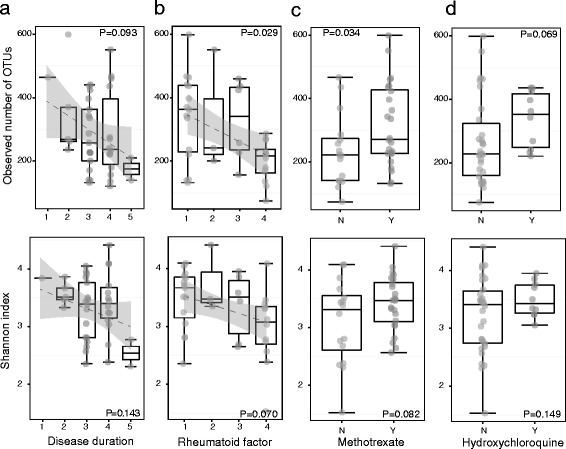
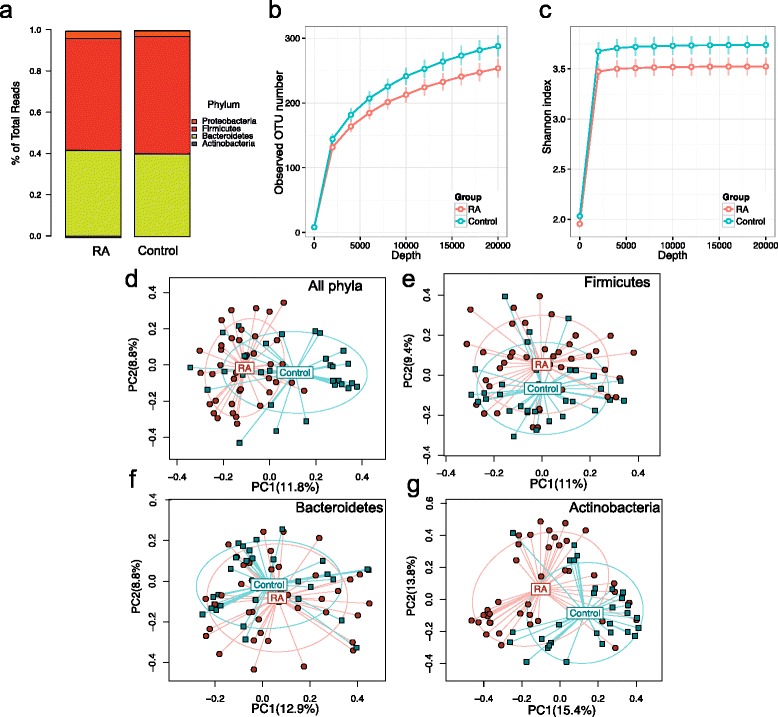
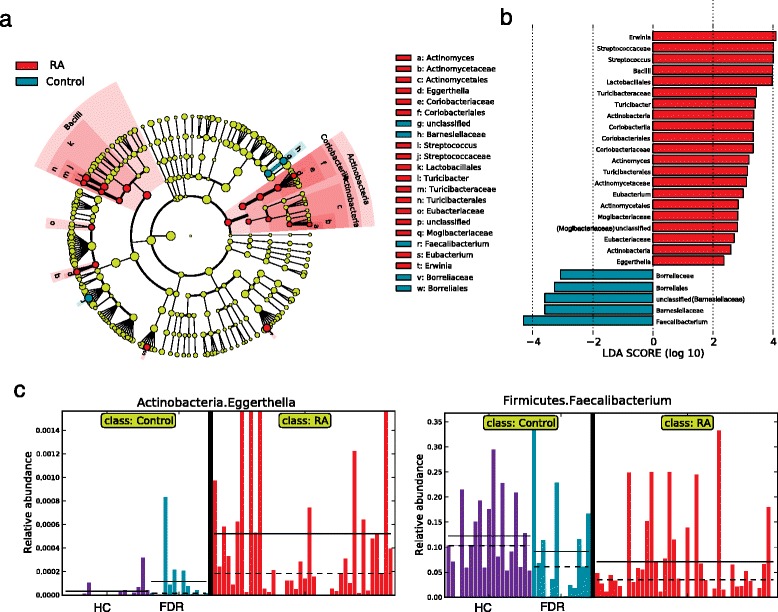
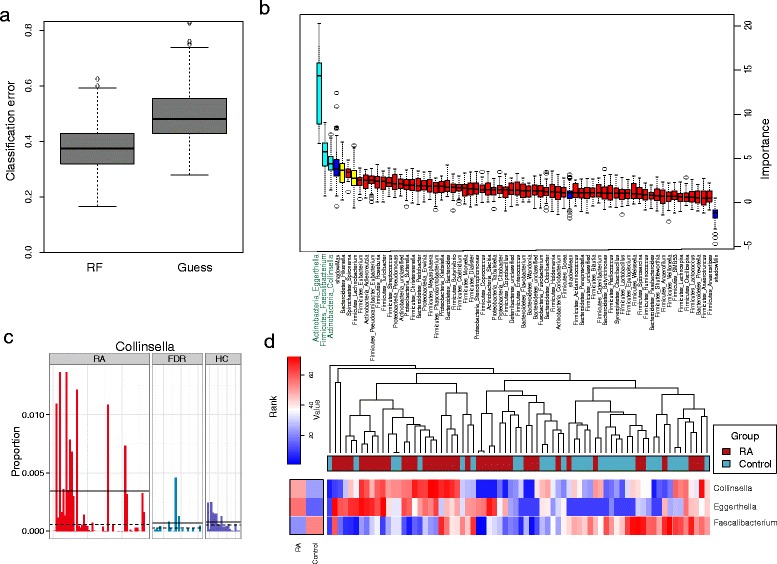
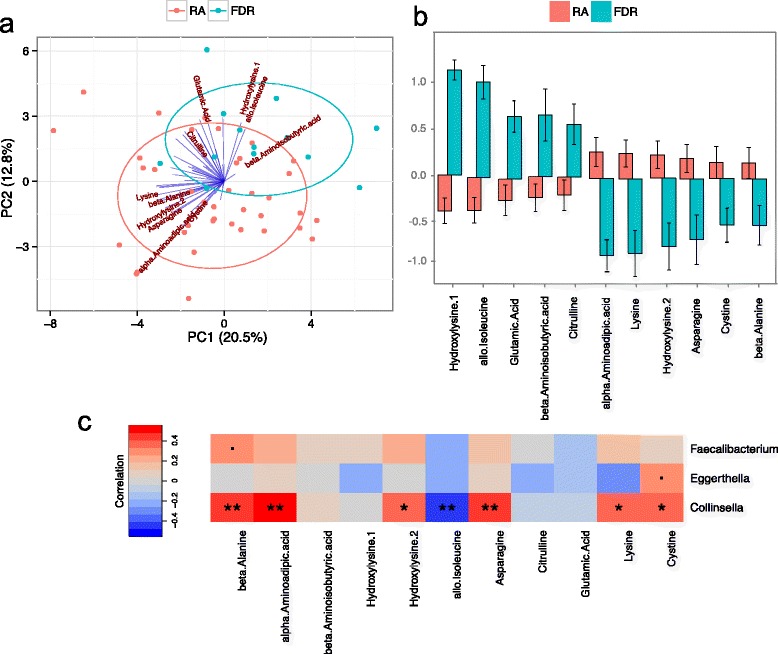
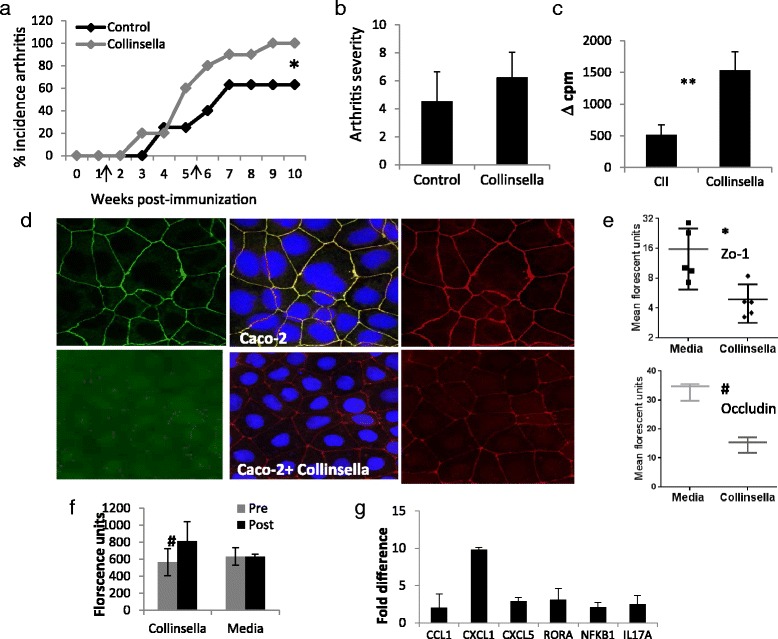
BACKGROUND: The adaptive immune response in rheumatoid arthritis (RA) is influenced by an interaction between host genetics and environment, particularly the host microbiome. Association of the gut microbiota with various diseases has been reported, though the specific components of the microbiota that affect the host response leading to disease remain unknown. However, there is limited information on the role of gut microbiota in RA. In this study we aimed to define a microbial and metabolite profile that could predict disease status. In addition, we aimed to generate a humanized model of arthritis to confirm the RA-associated microbe. METHODS: To identify an RA biomarker profile, the 16S ribosomal DNA of fecal samples from RA patients, first-degree relatives (to rule out environment/background as confounding factors), and random healthy non-RA controls were sequenced. Analysis of metabolites and their association with specific taxa was performed to investigate a potential mechanistic link. The role of an RA-associated microbe was confirmed using a human epithelial cell line and a humanized mouse model of arthritis. RESULTS: Patients with RA exhibited decreased gut microbial diversity compared with controls, which correlated with disease duration and autoantibody levels. A taxon-level analysis suggested an expansion of rare taxa, Actinobacteria, with a decrease in abundant taxa in patients with RA compared with controls. Prediction models based on the random forests algorithm suggested that three genera, Collinsella, Eggerthella, and Faecalibacterium, segregated with RA. The abundance of Collinsella correlated strongly with high levels of alpha-aminoadipic acid and asparagine as well as production of the proinflammatory cytokine IL-17A. A role for Collinsella in altering gut permeability and disease severity was confirmed in experimental arthritis. CONCLUSIONS: These observations suggest dysbiosis in RA patients resulting from the abundance of certain rare bacterial lineages. A correlation between the intestinal microbiota and metabolic signatures could determine a predictive profile for disease causation and progression.
Overview
The claims and statistics of this paper haven’t been checked yet.
Free: it reads the open-access text and checks the first 5 claims that cite a source we can check. Create a free account to check every claim.
Integrity signals
Registry
Cites
Statistics
Figures
Verification
Claims the paper makes
The claims and statistics of this paper haven’t been checked yet.
Free: it reads the open-access text and checks the first 5 claims that cite a source we can check. Create a free account to check every claim.
Claims other papers make about this one
Each is checked against this paper’s own text: does it say what the citing paper says it does?
The source backs part of the claim, not all of it — or backs it for a different population, condition or comparison.
In the citing paper
“Another study identified a strong link between three rare genera (Collinsella, Eggerthella and Faecalibacterium) and RA”
From Interaction between microbiota and immunity in health and disease (2020) · cites this paper as [171]
Experimental — accuracy not yet measuredThe cited source says what the claim attributes to it.
In the citing paper
“among which Collinsella is associated with proinflammatory IL-17A production.171”
From Interaction between microbiota and immunity in health and disease (2020) · cites this paper as [171]
Self-check
Percentages, sums and reported differences re-computed from the paper’s own numbers.
The self-check needs the paper’s full text.
Citations
Cites
Breiman, L. (2001) · Machine Learning · doi:10.1023/a:1010933404324 · Cited by 133,538
Metagenomic biomarker discovery and explanation
Segata, N., Izard, J., Waldron, L., Gevers, D., Miropolsky, L., Garrett, W. S., & Huttenhower, C. (2011) · Genome Biology · doi:10.1186/gb-2011-12-6-r60 · Cited by 16,192 · cited 1×
“Using LFfSe analysis [26], we observed 26 differentially abundant taxa at different taxonomic levels.”
MethodPredictive functional profiling of microbial communities using 16S rRNA marker gene sequences
Langille, M. G. I., Zaneveld, J., Caporaso, J. G., McDonald, D., Knights, D., Reyes, J. A., Clemente, J. C., Burkepile, D. E., Vega Thurber, R. L., Knight, R., et al. (2013) · Nature Biotechnology · doi:10.1038/nbt.2676 · Cited by 9,116
A core gut microbiome in obese and lean twins
Turnbaugh, P. J., Hamady, M., Yatsunenko, T., Cantarel, B. L., Duncan, A., Ley, R. E., Sogin, M. L., Jones, W. J., Roe, B. A., Affourtit, J. P., et al. (2009) · Nature · doi:10.1038/nature07540 · Cited by 7,823 · cited 1×
“RA [8, 9], diabetes, and obesity [11, 12].”
Enterotypes of the human gut microbiome
MetaHIT Consortium (additional members), Arumugam, M., Raes, J., Pelletier, E., Le Paslier, D., Yamada, T., Mende, D. R., Fernandes, G. R., Tap, J., Bruls, T., et al. (2011) · Nature · doi:10.1038/nature09944 · Cited by 7,548 · cited 1×
“The Human Microbiome Project and other studies have documented the diversity of the gut microbiome in healthy individuals and gut-related diseases [16–19].”
BackgroundTurnbaugh, P. J., Ley, R. E., Hamady, M., Fraser-Liggett, C. M., Knight, R., & Gordon, J. I. (2007) · Nature · doi:10.1038/nature06244 · Cited by 6,091 · cited 1×
“The Human Microbiome Project and other studies have documented the diversity of the gut microbiome in healthy individuals and gut-related diseases [16–19].”
BackgroundFeature Selection with the Boruta Package
Kursa, M. B., & Rudnicki, W. R. (2010) · Journal of Statistical Software · doi:10.18637/jss.v036.i11 · Cited by 5,659 · cited 1×
“We next applied Boruta feature selection, which is a feature selection method built around random forests and selects features that have significantly more discriminatory power than random permuted features [29].”
MethodDysfunction of the intestinal microbiome in inflammatory bowel disease and treatment
Morgan, X. C., Tickle, T. L., Sokol, H., Gevers, D., Devaney, K. L., Ward, D. V., Reyes, J. A., Shah, S. A., LeLeiko, N., Snapper, S. B., et al. (2012) · Genome Biology · doi:10.1186/gb-2012-13-9-r79 · Cited by 2,713 · cited 1×
“The Human Microbiome Project and other studies have documented the diversity of the gut microbiome in healthy individuals and gut-related diseases [16–19].”
BackgroundExpansion of intestinal Prevotella copri correlates with enhanced susceptibility to arthritis
Scher, J. U., Sczesnak, A., Longman, R. S., Segata, N., Ubeda, C., Bielski, C., Rostron, T., Cerundolo, V., Pamer, E. G., Abramson, S. B., et al. (2013) · eLife · doi:10.7554/elife.01202 · Cited by 2,047
Nielen, M. M. J., van Schaardenburg, D., Reesink, H. W., van de Stadt, R. J., van der Horst‐Bruinsma, I. E., de Koning, M. H. M. T., Habibuw, M. R., Vandenbroucke, J. P., & Dijkmans, B. A. C. (2004) · Arthritis & Rheumatism · doi:10.1002/art.20018 · Cited by 1,861 · cited 1×
“Autoreactive T-cell responses and auto-antibody production leading up to the onset of RA occur much earlier than the clinical presentation of RA [34].”
Background
Cited by
Items 801–864 of 864
Chen, J., Li, S., Zhu, J., Su, W., Jian, C., Zhang, J., Wu, J., Wang, T., Zhang, W., Zeng, F., et al. (2023) · Figshare · doi:10.6084/m9.figshare.22757214
Self-citationGarcía-Fernández, H., Larriva, A. P. A.-D., López-Moreno, J., Gutierrez-Mariscal, F. M., Romero-Cabrera, J. L., Molina‐Abril, H., Peña, J. D. T., Rodríguez-Cano, D., Malagón, M. M., Ordovás, J. M., et al. (2024) · Figshare · doi:10.6084/m9.figshare.26669511
Gupta, V. K., Cunningham, K. Y., Hur, B., Bakshi, U., Huang, H., Warrington, K. J., Taneja, V., Myasoedova, E., Davis, J. M., & Sung, J. (2021) · Figshare · doi:10.6084/m9.figshare.16614551
Self-citationYi, S., Zhang, X., Yang, L., Huang, J., Liu, Y., Wang, C., Schaid, D. J., & Chen, J. (2021) · Figshare · doi:10.6084/m9.figshare.14978575
Self-citationParantainen, J., Barreto, G., Koivuniemi, R., Kautiainen, H., Nordström, D., Moilanen, E., Hämäläinen, M., Leirisalo-Repo, M., Nurmi, K., & Eklund, K. K. (2022) · Figshare · doi:10.6084/m9.figshare.21591104
Chen, J., Li, S., Zhu, J., Su, W., Jian, C., Zhang, J., Wu, J., Wang, T., Zhang, W., Zeng, F., et al. (2023) · Figshare · doi:10.6084/m9.figshare.22757190
Self-citationOtchere, I. D., Kyereh, E., Blessie, E. J. S., Agbemafle, I., Agyenkwa-Mawuli, K., Gyampo, K. D., Arthur, A. A. A., Galley, C. B., Ahegbebu, G. B., Peget, F., et al. (2025) · Nutrition and Dietary Supplements · doi:10.2147/nds.s540803
THE ROLE OF GUT MICROBIOTA IN RHEUMATIC DISEASES: CURRENT EVIDENCE AND FUTURE DIRECTIONS
Ględa, M., Grygorowicz, A., Baran, K., Szyszka, M., Radecka, W., Kozak, W., Szreiber, A., Grela, K., Nowacka, K., Jabłoński, K., et al. (2025) · International Journal of Innovative Technologies in Social Science · doi:10.31435/ijitss.4(48).2025.4644
Wang, Y. (2026) · Journal of Asthma · doi:10.1080/02770903.2026.2614958 · Cited by 1
“…pro-inflammatory and anti-inflammatory properties by potentially influencing inflammatory processes and increasing interleukin-17A expression in rheumatoid arthritis, leading to altered neutrophil chemotaxis, elevating nuclear factor kappa-B levels, and activating inflammatory pathways (51,52).”
Zhou, W., Zhang, S., & Wang, C. (2026) · Frontiers in Immunology · doi:10.3389/fimmu.2026.1641755 · Cited by 1
“Our fi ndings are in line with previous reports showing a decreased microbial diversity in the rheumatoid arthritis patients compared to healthy controls and the decreased species richness was associated with the rheumatoid factor levels and disease duration (28, 29).”
Mikrobiom, Ernährung und Rheuma
Heidt, C., & Kriegel, M. A. (2026) · Rheuma Plus / Schweiz · doi:10.1007/s44332-026-00108-w
Hoffmann, P. A., Martin, J. C., Evora, A., Brillet, F., Scott, K. P., & Platt, B. (2026) · Research Square · doi:10.21203/rs.3.rs-8852210/v1
Li, F., Xu, M., 肖慧勤, Hu, P., & Zhang, W. (2026) · Frontiers in Medicine · doi:10.3389/fmed.2026.1766359 · Cited by 2
Hablot, J. (2018) · theses.fr (ABES) · doi:10.70675/d17749f4zc773z49bfz9b8fza3be7900dbe5 · Cited by 2
Santinon, F. (2018) · theses.fr (ABES) · doi:10.70675/4491fdebz295cz483bz93afz9cd31ce39645
Exploration du microbiote respiratoire humain
Fonkou, M. D. M. (2018) · theses.fr (ABES) · doi:10.70675/3fe24a46z4373z44faza62fz68c810682d4b · Cited by 2
Apport de la génomique en microbiologie clinique
Khedher, M. B. (2021) · theses.fr (ABES) · doi:10.70675/07f9adc3z10e0z4d0fz9ba5z2397b5f7c363
de Gouveia, M. I. M. (2022) · theses.fr (ABES) · doi:10.70675/7a523cf5z2fd4z40f3z994bz533e37242d57 · Cited by 1
Letarouilly, J.-G. (2023) · theses.fr (ABES) · doi:10.70675/58a03639zb2aaz41ddz8e49z6af64527969b
Étude du microbiote respiratoire en lien avec les infections respiratoires virales au Sénégal
Diouf, F. S. (2023) · theses.fr (ABES) · doi:10.70675/1174a41cz34e9z40d2z8c55z8823e54a9905
Gut microbiota in chronic inflammation: the interplay with lipid mediators
Bao, S., & Yao, C. (2026) · Gut Microbes · doi:10.1080/19490976.2026.2667605 · Cited by 4
“212,223,224 RA is additionally characterized by enrichment of butyrate-consuming species, which also contributes to lower butyrate levels and facilitates joint autoimmunity and bone erosion.”
Bottaro, F., Enrico, P., Ratti, G., Brambilla, P., & Delvecchio, G. (2026) · Neuroscience & Biobehavioral Reviews · doi:10.1016/j.neubiorev.2026.106739
Postbiotics and the gut–joint axis: emerging therapeutic strategies in rheumatoid arthritis
Soleimani, R. A., Bakhshi, P., Fakhri, S., Milani, P. G., Khani, N., Sarabi‐Aghdam, V., Tavafi, F., & Rad, A. H. (2026) · Gastrointestinal Nursing · doi:10.12968/gasn.2025.0081
Chen, J., Yin, Z., Dang, W., Jian, C., Wang, T., Huang, J., Zhu, X., Wei, Y., Gao, J., Zhang, J., et al. (2026) · Arthritis Research & Therapy · doi:10.1186/s13075-026-03831-9
“More studies have linked RA to the gut microbiota [40, 41].”
Self-citationLi, Z., Zou, Y.-W., Jia, P.-W., Yang, Y., Yang, K.-M., Li, H., & Ouyang, Z.-M. (2026) · Food Science & Nutrition · doi:10.1002/fsn3.71932
“For instance, Collinsella enhances gut permeability and IL-17A production, while Prevotella copri promotes Th17 cell polarization, amplifying synovial inflammation (Chen et al. 2016; Pianta et al. 2017; Nii et al. 2023).”
Altered gut microbiota in patients with early rheumatoid arthritis
Sholkamy, A. A., Gerges, M. V., Darwish, A. Z., Fouad, S. A., Dwedar, R. A., & Hegazy, M. T. (2026) · The Egyptian Rheumatologist · doi:10.1016/j.ejr.2026.05.004
Gut-joint axis in rheumatic diseases: Insights into pathogenesis and therapeutic strategies
Talukder, A., Deka, M., Buragohain, G., Saha, S., Bora, N. S., & Sahariah, B. J. (2026) · Medicine in Microecology · doi:10.1016/j.medmic.2026.100179
Pan, X., Jin, Z., Bi, J., Lu, H., & Chen, G. (2026) · Open Life Sciences · doi:10.1515/biol-2025-1290
“Chen et al. showed that Collinsella aerofaciens – enriched in RA patients – downregulates tight junction proteins (e.g., zonula occludens-1 [ZO-1]) and increases gut permeability, triggering mucosal immune activation [8].”
Metagenomic Profiling of the Gut Microbiome in Age-Related Macular Degeneration—A Pilot Study
Tîrziu, A.-T., Romanescu, M., Ciordas, P. D., Mercea, N., Munteanu, M., Horhat, F. G., Chiş, A. R., & Preda, M.-A. (2026) · Biomedicines · doi:10.3390/biomedicines14061290
Elsaghir, A., Wadan, A. S., & Witte, T. (2026) · BMC Immunology · doi:10.1186/s12865-026-00855-3
“However, other studies have failed to validate this connection, underscoring the diversity within cohorts and indicating that the directionality of microbiome alterations remains ambiguous [121].”
Xu, Z., Liu, Y., Wang, Y., Zhao, J., Wang, Y., Chen, L., & Hou, D. (2026) · Tuberculosis · doi:10.1016/j.tube.2026.102793
The Role of the Microbiome in the Development of an Autoimmune Reaction in Rheumatoid Arthritis
Blagov, A. V., Vatlin, A. A., Pavshintsev, V. V., Mitkin, N. A., Maltseva, O. N., & Orekhov, A. N. (2026) · Frontiers in Bioscience-Scholar · doi:10.31083/fbs44236
Zhao, X., McCarter, S. J., Gupta, V. K., Grant, K. M., Louis, E. K. S., Kantarci, K., Savica, R., Hill, M., Vuong, H. E., Staley, C. M., et al. (2026) · Frontiers in Microbiomes · doi:10.3389/frmbi.2026.1834726 · Cited by 1
Soler-Sáez, I., Galiana‐Roselló, C., Grillo-Risco, R., Falony, G., Tepavčević, V., Vieira‐Silva, S., & Garcia‐García, F. (2026) · mSystems · doi:10.1128/msystems.00416-26 · Cited by 1
“It has been quantitatively linked to the human enterotype associated with systemic inflammation (Bact2), increasing in abundance in overall lower microbial load fecal microbiota (49).”
Eggerthella lenta: metabolism, pathogenesis and therapeutic implications
Rock, R. R., Zhang, S., Noecker, C. A., & Turnbaugh, P. J. (2026) · Nature Reviews Microbiology · doi:10.1038/s41579-026-01344-5 · Cited by 2
Lancaster, E., Ai, Y., & Lee, J. (2026) · Environmental Science and Pollution Research · doi:10.1007/s11356-026-38012-3 · Cited by 1
“…gut studies have shown that Collin-sella relative abundance strongly correlates with production of the proinflammatory cytokine IL-17A and suspect that this genus may contribute to the increased gut permeability and disease severity in autoimmune disorders (Chen et al. 2016; Ciccia et al. 2016).”
Niu, S., Zhu, X., Zhang, J., Zhao, Y., Wang, Y., Lang, X., Liu, H., Zhang, Z., & Lu, X. (2026) · Gene · doi:10.1016/j.gene.2026.150349
Goto, K., Takemura, S., Minamiyama, Y., & Yoshikawa, T. (2026) · Experimental Physiology · doi:10.1113/ep093816
Ahmad, A., & Busair, E.-K. (2026) · Research Square · doi:10.21203/rs.3.rs-10630518/v1
Yang, S.-N., Chang, X.-Y., Peng, B.-K., Wei, Y., & Wang, Y.-P. (2026) · BMC Endocrine Disorders · doi:10.1186/s12902-026-02462-0
“This compromised barrier function could facilitate microbial translocation, allowing bacteria and their metabolites to enter systemic circulation and trigger inflammatory responses [36].”
Probiotics in Autoimmune Disease: Strain-specific Mechanisms and Therapeutic Perspectives
Zhou, J., Cao, J., Dong, S., Li, H., Yang, S., Yan, Z., Wang, C., Pei, Y., Su, Y., Wen, B., et al. (2026) · Clinical Reviews in Allergy & Immunology · doi:10.1007/s12016-026-09190-2
Investigation of the Faecal Microbiome and Household Factors Associated with Intercat AggressionPreprint
Chottianchai, T., Sriphavatsarakom, P., & Phumthanakorn, N. (2026) · SSRN Electronic Journal · doi:10.2139/ssrn.7315494
Hoffmann, P. A., Martin, J. C., Evora, A., Brillet, F., Scott, K. P., & Platt, B. (2026) · Research Square · doi:10.21203/rs.3.rs-10729381/v1
Hafezi, S., Sharif‐Askari, F. S., Sharif‐Askari, N. S., Eladham, M. W., Zayat, A. S., & Halwani, R. (2026) · Frontiers in Immunology · doi:10.3389/fimmu.2026.1884535
“…have frequently been reported in patients with RA; however, the reported microbial fi ndings are not uniform across studies and should be interpreted in the context of differences in study populations, sequencing methodologies, analytical pipelines, and cohort characteristics (12, 34, 60).”
InfluentialLu, T.-L., Tanisawa, K., Fujita, Z., Ozeki, C., Yoshida, E., Fang, S., & Suzuki, K. (2026) · Sports · doi:10.3390/sports14090375
“In addition, Collinsella aerofaciens may increase gut permeability and promote IL-17-related inflammatory responses, supporting a potential role of Collinsella in epithelial barrier and immune regulation in inflammatory disease contexts [34].”
Li, L., Luo, Y., Liu, S., Liang, C., Ruan, H., Peng, P., & Huang, Z. (2026) · Frontiers in Immunology · doi:10.3389/fimmu.2026.1893357
“…been reported in symptomatic atherosclerosis (19) and rheumatoid arthritis, where it has been linked to in fl ammatory and gut-barrier phenotypes (22), and genomic and functional characterization of Collinsella aerofaciens isolates has directly linked strain-level carbohydrate metabolism and…”
Cytomegalovirus latency and reactivation: Epigenetic control and immune–microenvironment crosstalk
Kohda, C., Iyoda, M., & Tanaka, K. (2026) · Virology · doi:10.1016/j.virol.2026.111074
Guimarães, G. N. F., Barrett, D. W., & Gonzalez-Lima, F. (2026) · Frontiers in Systems Biology · doi:10.3389/fsysb.2026.1920618
“Similarly, the detection of Sarcina, Collinsella, Parabacteroides, and a substantial residual unclassified genus-level fraction reinforces that the post-intervention microbiome should not be interpreted as uniformly beneficial (Chen et al., 2016).”
Saxena, A., Maiwall, R., Meena, B. L., Maras, J. S., Suroliya, V., Kumar, G., Sarin, S. K., & Trehanpati, N. (2026) · Journal of Medical Virology · doi:10.1002/jmv.71150
“These pathobionts have previously been linked to metabolic inflammation, poor nutrient absorption, and barrier dysfunction [6, 13, 32, 33].”
Kumar, B., Lorusso, E., Fosso, B., & Pesole, G. (2026) · Frontiers in Microbiology · doi:10.3389/fmicb.2026.1925500
“This observation is consistent with the findings of Chen et al. (2016), who reported enrichment of the genus Collinsella , particularly C. aerofaciens , in patients with rheumatoid arthritis.”
Park, S., Choi, J., Sadra, A., Lee, S.-H., & Sohn, J. (2026) · Frontiers in Microbiology · doi:10.3389/fmicb.2026.1867057
Le, D., Portik, D. M., Konno, T., Leonard, M. M., Miranda-Ribera, A., Fasano, A., & Zomorrodi, A. R. (2026) · bioRxiv (Cold Spring Harbor Laboratory) · doi:10.64898/2026.09.11.749611
Yang, Y., Hong, Q., & Liu, Z. (2026) · Frontiers in Immunology · doi:10.3389/fimmu.2026.1821878
柴志波, Wang, M., Zheng, J., & Yu, J. (2026) · Frontiers in Pharmacology · doi:10.3389/fphar.2026.1939732
“…et al., 2015), strain-dependent pathogenicity of Prevotella copri (Jiang et al., 2022; Nii et al., 2023), barrier-related effects of SCFA-associated networks, and associations between pretreatment microbial function and DMARD response (Chen et al., 2016; Danckert et al., 2024; Luo et al., 2023).”
Gut microbiota and systemic sclerosis: Mechanistic insights and microbial therapies
Liu, Q., Wang, Y., Pei, M., Li, R., Gao, R., Gao, M., Chen, M., Gong, Y., Li, M., & Ni, B. (2026) · Autoimmunity Reviews · doi:10.1016/j.autrev.2026.104192
Tang, S., Yang, Y., Wang, Y., Gong, S., Li, N., He, Z., Ni, J., Wang, J., Liu, Y., Chan, J. W. Y., et al. (2026) · EBioMedicine · doi:10.1016/j.ebiom.2026.106503
“58 Furthermore, Cloacibacillus , an amino-acid-degrading opportunistic pathogen, 59 was found to be enriched in previous PD cohorts.”
Zhang, J., & Han, K. (2026) · Immunological Investigations · doi:10.1080/08820139.2026.2747770
Doty, C., Brady, D. J., Barb, J. J., Thompson, S. L., Rincon, N., Browning, B., Kelly, D. L., Bennett, M. E., Elmer, G., Leggio, L., et al. (2026) · bioRxiv (Cold Spring Harbor Laboratory) · doi:10.64898/2026.10.09.758026
From microbiome to macula: The role of probiotics in retinal neuroprotection
Goyal, S., & Vanita, V. (2026) · Elsevier eBooks · doi:10.1016/b978-0-443-45154-6.00014-3
Cordova, B., Milletich, P. L., Jones, M. P., McKinley, K. L., Mearig, A. J., Triplett, E. W., & Ludvigsson, J. (2026) · EBioMedicine · doi:10.1016/j.ebiom.2026.106521
Probiotics in the prevention and management of chronic diseases
Bhardwaj, P., Rana, A., Malik, B., Sobti, R. C., & Chopra, M. (2026) · Elsevier eBooks · doi:10.1016/b978-0-443-45154-6.00010-6
Gut microbiome-disease associations revealed by large-scale Mendelian randomization analysesPreprint
Che, X., Zhang, X., Zhang, Z., & Pan, J. (2026) · Research Square · doi:10.21203/rs.3.rs-11314330/v1
Metadata
- Authors
- Chen, J., Wright, K., Davis, J. M., Jeraldo, P., Marietta, E. V., Murray, J., Nelson, H., Matteson, E. L., & Taneja, V.
- Affiliations
- Mayo Clinic (US)
- Corresponding author
- Taneja, Veena
- ORCID
- Venue
- Genome Medicine
- Published
- 2016-04-21
- Volume
- 8
- Issue
- 1
- Pages
- 43-43
- ISSN
- 1756-994X (ISSN-L)
- PMC
- PMC4840970
- OpenAlex
- W2336817596
- Cited by
- 858
- References
- 53
- Citations by year
- 2026: 81 · 2025: 80 · 2024: 97 · 2023: 116 · 2022: 111 · 2021: 128 · 2020: 67 · 2019: 66 · 2018: 62 · 2017: 39 · 2016: 10
- FWCI
- 30.65
- Type
- journal article
- Language
- en
- Open access
- gold
- doi.org
- Licence
- cc-by
- creativecommons.org/licenses/by/4.0/ (tdm)
- creativecommons.org/licenses/by/4.0/ (vor)
- Locations
- Genome Medicine (publishedVersion, cc-by)
- Europe PMC (PubMed Central) (publishedVersion, cc-by)
- PubMed Central (publishedVersion, cc-by)
- PubMed (publishedVersion)
- Funders
- National Institute of Arthritis and Musculoskeletal and Skin Diseases (AR30752)
- Mark and Mary Davis
- Topics
- Life Sciences › Biochemistry, Genetics and Molecular Biology › Molecular Biology › Gut microbiota and health
- Health Sciences › Medicine › Rheumatology › Rheumatoid Arthritis Research and Therapies
- Health Sciences › Medicine › Gastroenterology › Inflammatory Bowel Disease
- Keywords
- rheumatoid arthritis, gut microbiota, rare bacterial taxa, dysbiosis, Collinsella, Eggerthella, Faecalibacterium, actinobacteria, intestinal permeability, IL-17A, alpha-aminoadipic acid, asparagine, metabolites, humanized mice, disease biomarkers, autoantibodies, gut-immune interaction
- MeSH terms
- Gastrointestinal Microbiome, Adult, Aged, Animals, Arthritis, Rheumatoid, Cell Line, Disease Models, Animal, Feces, Female, Humans, Intestinal Mucosa, Male, Middle Aged, Models, Biological, Permeability, Phylogeny, RNA, Ribosomal, 16S, Severity of Illness Index, Case-Control Studies, Cytokines, Chemokines, Computational Biology, Biodiversity, Mice, Metagenome, Metabolome, Metagenomics
About these checks
Registry, retraction, Cites and statistics results are computed, not judged, with one exception: a printed reference that no index lists is read once by a model before it counts as a citation error. Claims are extracted by a model and kept only when their quote appears verbatim in the text; each cited source is then checked, with a model’s help, for whether it says what the claim relies on. Those verdicts can be wrong — read the claim’s quote and the cited source before relying on one.
Statistics and arithmetic are recomputed, not judged.
Confidence bands are shown only for fields calibrated on our annotated test set. None is calibrated yet, so no band is shown.
What counts as a claim ›How we measure confidence ›How we check this ›
Are you an author, or do you see a problem with this page? Request a review
Data sources
Bibliographic data: Semantic Scholar, OpenAlex, Crossref.
Contains information from the Semantic Scholar Academic Graph Datasets, made available under the ODC Attribution License (ODC-BY 1.0).
Semantic Scholar’s data is described in: Kinney, R., et al. (2023). The Semantic Scholar Open Data Platform. arXiv:2301.10140.
