

An expansion of rare lineage intestinal microbes characterizes rheumatoid arthritis
Open accessThe DOI matches its Crossref record; 53 of the 53 references it cites were found in a registry or an index.
Abstract
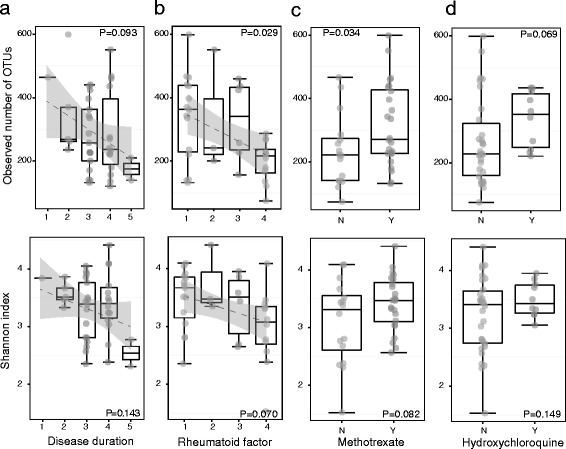
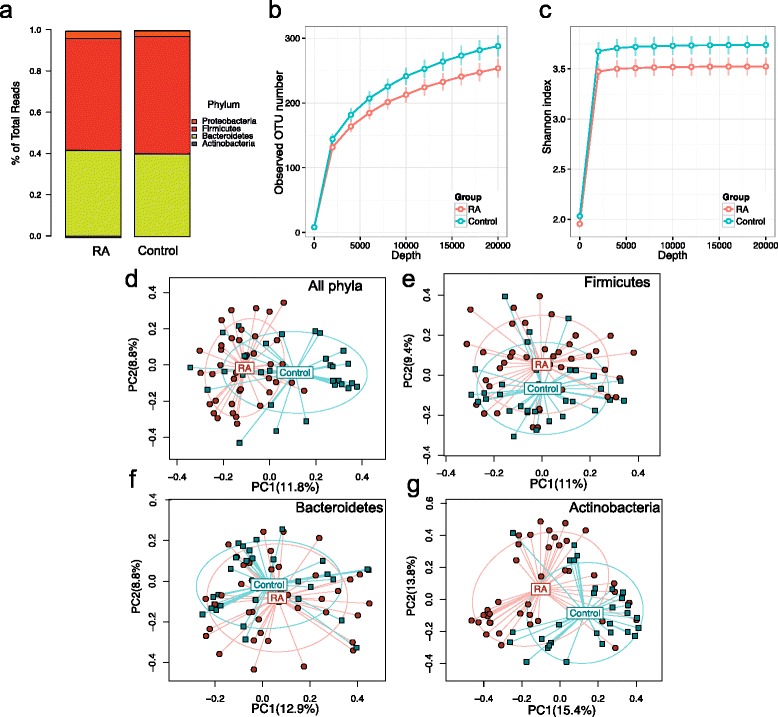
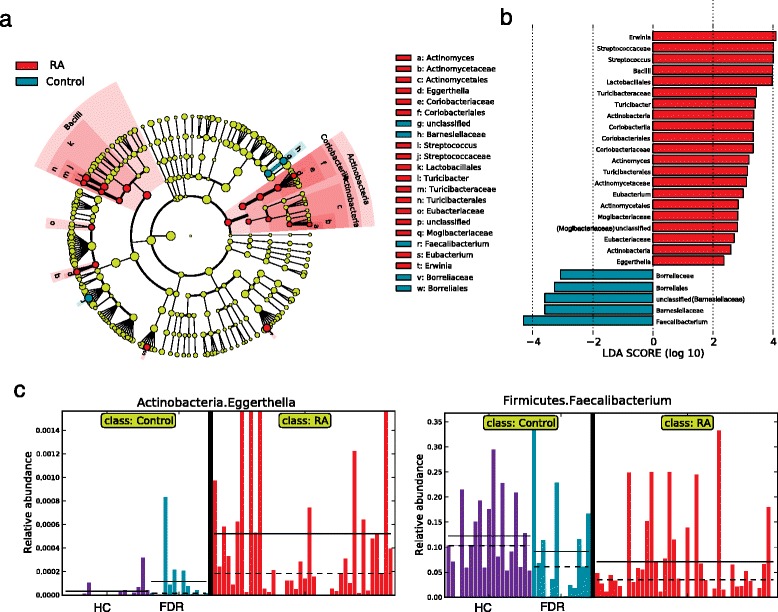
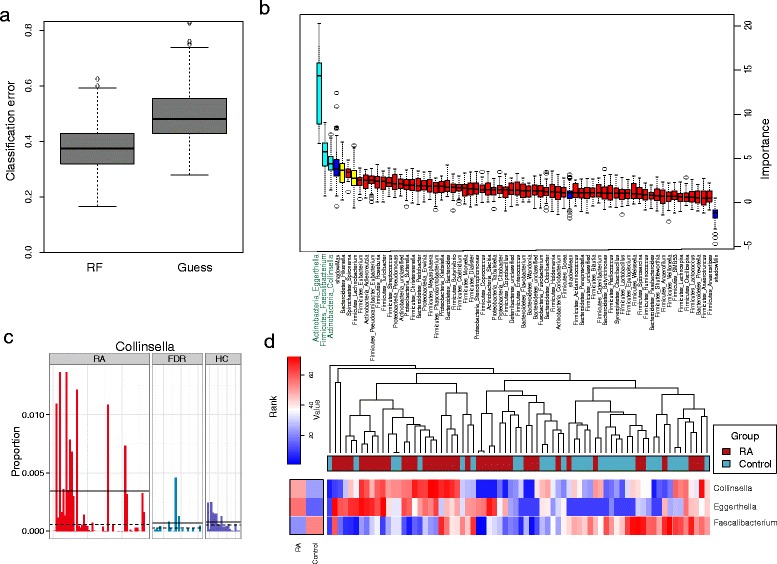
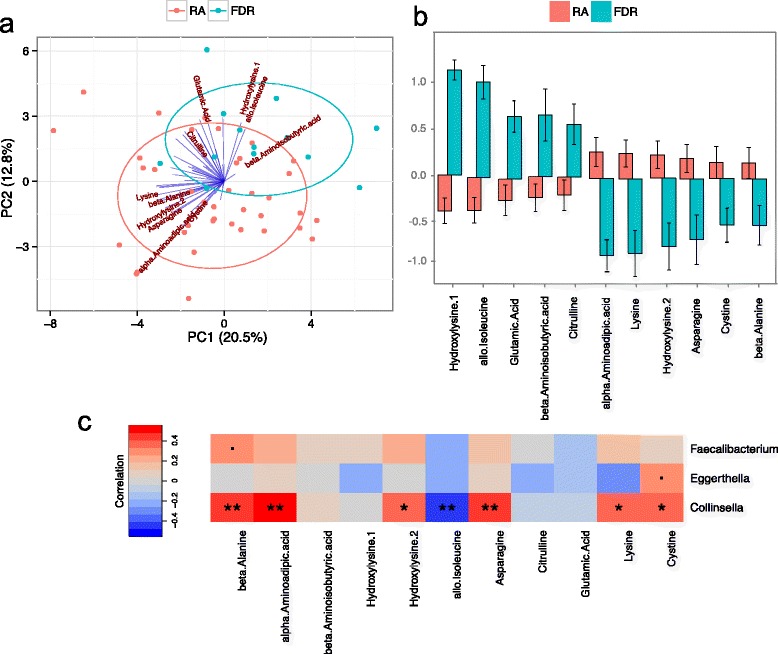
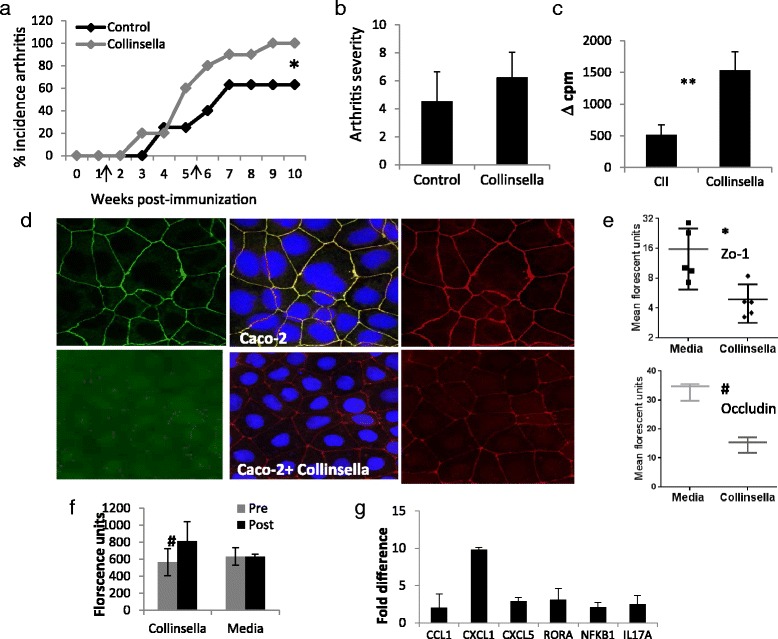
BACKGROUND: The adaptive immune response in rheumatoid arthritis (RA) is influenced by an interaction between host genetics and environment, particularly the host microbiome. Association of the gut microbiota with various diseases has been reported, though the specific components of the microbiota that affect the host response leading to disease remain unknown. However, there is limited information on the role of gut microbiota in RA. In this study we aimed to define a microbial and metabolite profile that could predict disease status. In addition, we aimed to generate a humanized model of arthritis to confirm the RA-associated microbe. METHODS: To identify an RA biomarker profile, the 16S ribosomal DNA of fecal samples from RA patients, first-degree relatives (to rule out environment/background as confounding factors), and random healthy non-RA controls were sequenced. Analysis of metabolites and their association with specific taxa was performed to investigate a potential mechanistic link. The role of an RA-associated microbe was confirmed using a human epithelial cell line and a humanized mouse model of arthritis. RESULTS: Patients with RA exhibited decreased gut microbial diversity compared with controls, which correlated with disease duration and autoantibody levels. A taxon-level analysis suggested an expansion of rare taxa, Actinobacteria, with a decrease in abundant taxa in patients with RA compared with controls. Prediction models based on the random forests algorithm suggested that three genera, Collinsella, Eggerthella, and Faecalibacterium, segregated with RA. The abundance of Collinsella correlated strongly with high levels of alpha-aminoadipic acid and asparagine as well as production of the proinflammatory cytokine IL-17A. A role for Collinsella in altering gut permeability and disease severity was confirmed in experimental arthritis. CONCLUSIONS: These observations suggest dysbiosis in RA patients resulting from the abundance of certain rare bacterial lineages. A correlation between the intestinal microbiota and metabolic signatures could determine a predictive profile for disease causation and progression.
Overview
The claims and statistics of this paper haven’t been checked yet.
Free: it reads the open-access text and checks the first 5 claims that cite a source we can check. Create a free account to check every claim.
Integrity signals
Registry
Cites
Statistics
Figures
Verification
Claims the paper makes
The claims and statistics of this paper haven’t been checked yet.
Free: it reads the open-access text and checks the first 5 claims that cite a source we can check. Create a free account to check every claim.
Claims other papers make about this one
Each is checked against this paper’s own text: does it say what the citing paper says it does?
The source backs part of the claim, not all of it — or backs it for a different population, condition or comparison.
In the citing paper
“Another study identified a strong link between three rare genera (Collinsella, Eggerthella and Faecalibacterium) and RA”
From Interaction between microbiota and immunity in health and disease (2020) · cites this paper as [171]
Experimental — accuracy not yet measuredThe cited source says what the claim attributes to it.
In the citing paper
“among which Collinsella is associated with proinflammatory IL-17A production.171”
From Interaction between microbiota and immunity in health and disease (2020) · cites this paper as [171]
Self-check
Percentages, sums and reported differences re-computed from the paper’s own numbers.
The self-check needs the paper’s full text.
Citations
Cites
Breiman, L. (2001) · Machine Learning · doi:10.1023/a:1010933404324 · Cited by 133,538
Metagenomic biomarker discovery and explanation
Segata, N., Izard, J., Waldron, L., Gevers, D., Miropolsky, L., Garrett, W. S., & Huttenhower, C. (2011) · Genome Biology · doi:10.1186/gb-2011-12-6-r60 · Cited by 16,192 · cited 1×
“Using LFfSe analysis [26], we observed 26 differentially abundant taxa at different taxonomic levels.”
MethodPredictive functional profiling of microbial communities using 16S rRNA marker gene sequences
Langille, M. G. I., Zaneveld, J., Caporaso, J. G., McDonald, D., Knights, D., Reyes, J. A., Clemente, J. C., Burkepile, D. E., Vega Thurber, R. L., Knight, R., et al. (2013) · Nature Biotechnology · doi:10.1038/nbt.2676 · Cited by 9,116
A core gut microbiome in obese and lean twins
Turnbaugh, P. J., Hamady, M., Yatsunenko, T., Cantarel, B. L., Duncan, A., Ley, R. E., Sogin, M. L., Jones, W. J., Roe, B. A., Affourtit, J. P., et al. (2009) · Nature · doi:10.1038/nature07540 · Cited by 7,823 · cited 1×
“RA [8, 9], diabetes, and obesity [11, 12].”
Enterotypes of the human gut microbiome
MetaHIT Consortium (additional members), Arumugam, M., Raes, J., Pelletier, E., Le Paslier, D., Yamada, T., Mende, D. R., Fernandes, G. R., Tap, J., Bruls, T., et al. (2011) · Nature · doi:10.1038/nature09944 · Cited by 7,548 · cited 1×
“The Human Microbiome Project and other studies have documented the diversity of the gut microbiome in healthy individuals and gut-related diseases [16–19].”
BackgroundTurnbaugh, P. J., Ley, R. E., Hamady, M., Fraser-Liggett, C. M., Knight, R., & Gordon, J. I. (2007) · Nature · doi:10.1038/nature06244 · Cited by 6,091 · cited 1×
“The Human Microbiome Project and other studies have documented the diversity of the gut microbiome in healthy individuals and gut-related diseases [16–19].”
BackgroundFeature Selection with the Boruta Package
Kursa, M. B., & Rudnicki, W. R. (2010) · Journal of Statistical Software · doi:10.18637/jss.v036.i11 · Cited by 5,659 · cited 1×
“We next applied Boruta feature selection, which is a feature selection method built around random forests and selects features that have significantly more discriminatory power than random permuted features [29].”
MethodDysfunction of the intestinal microbiome in inflammatory bowel disease and treatment
Morgan, X. C., Tickle, T. L., Sokol, H., Gevers, D., Devaney, K. L., Ward, D. V., Reyes, J. A., Shah, S. A., LeLeiko, N., Snapper, S. B., et al. (2012) · Genome Biology · doi:10.1186/gb-2012-13-9-r79 · Cited by 2,713 · cited 1×
“The Human Microbiome Project and other studies have documented the diversity of the gut microbiome in healthy individuals and gut-related diseases [16–19].”
BackgroundExpansion of intestinal Prevotella copri correlates with enhanced susceptibility to arthritis
Scher, J. U., Sczesnak, A., Longman, R. S., Segata, N., Ubeda, C., Bielski, C., Rostron, T., Cerundolo, V., Pamer, E. G., Abramson, S. B., et al. (2013) · eLife · doi:10.7554/elife.01202 · Cited by 2,047
Nielen, M. M. J., van Schaardenburg, D., Reesink, H. W., van de Stadt, R. J., van der Horst‐Bruinsma, I. E., de Koning, M. H. M. T., Habibuw, M. R., Vandenbroucke, J. P., & Dijkmans, B. A. C. (2004) · Arthritis & Rheumatism · doi:10.1002/art.20018 · Cited by 1,861 · cited 1×
“Autoreactive T-cell responses and auto-antibody production leading up to the onset of RA occur much earlier than the clinical presentation of RA [34].”
Background
Cited by
Items 501–600 of 864
Yang, Y., Hong, Q., Zhang, X., & Liu, Z. (2025) · Food & Function · doi:10.1039/d4fo05273k · Cited by 11
Metabolite 2-aminoadipic acid: implications for metabolic disorders and therapeutic opportunities
Shi, W., Yang, Z., Fu, P., & Yang, Y. (2025) · Frontiers in Pharmacology · doi:10.3389/fphar.2025.1569020 · Cited by 10
From mother to piglet: the lasting influence of the maternal microbiome
Tancredi, A., Matthijs, T., Cox, E., Immerseel, F. V., & Goossens, E. (2025) · Animal Microbiome · doi:10.1186/s42523-025-00420-0 · Cited by 16
“The most transmitted ASVs included member of Escherichia-Shigella genus, Collin-sella , implicated in gut permeability and inflammation [55], Lactobacillus acidophilus , a bacterium known for its probiotic activity [56], and known SCFA producers such as, different uncultured members of the…”
Belvončíková, P., Macáková, K., Tóthová, N., Babál, P., Tarabčáková, L., & Gardlík, R. (2025) · International Journal of Molecular Sciences · doi:10.3390/ijms26115099 · Cited by 13
“Changes in gut microbiota composition have been reported in numerous studies [15,16].”
Fan, Z., Yang, B. K., Ross, R. P., Stanton, C., Zhang, F., Sun, J., Zhao, J., Zhang, H., & Chen, W. (2021) · Journal of King Saud University - Science · doi:10.1016/j.jksus.2021.101545 · Cited by 12
Rodríguez‐Sojo, M. J., García-García, J., Ruiz‐Malagón, A. J., Diez‐Echave, P., Hidalgo‐Garcia, L., Molina‐Tijeras, J. A., González-Lozano, E., López-Escánez, L., Rodríguez‐Cabezas, M. E., Rodríguez, M. J., et al. (2022) · Nutrients · doi:10.3390/nu15010024 · Cited by 14
Sinsuebchuea, J., Paenkaew, P., Wutthi-in, M., Nantanaranon, T., Laeman, K., Kittichotirat, W., Wattanachaisaereekul, S., Dulsawat, S., Nopharatana, M., Vorapreeda, N., et al. (2023) · Microorganisms · doi:10.3390/microorganisms11010136 · Cited by 12
“Collinsella was discovered in EnB (Figure 2), which was strongly correlated with rheumatoid arthritis [93].”
BackgroundNygaard, S., Gerlif, K., Bundgaard‐Nielsen, C., Media, J. S., Leutscher, P. D. C., Sørensen, S., Villadsen, A. B., & Arenholt, L. T. S. (2023) · European Journal of Obstetrics & Gynecology and Reproductive Biology · doi:10.1016/j.ejogrb.2023.08.004 · Cited by 14
Hansen, B., Laczny, C. C., Aho, V. T. E., Frachet-Bour, A., Habier, J., Ostaszewski, M., Michalsen, A., Hanslian, E., Koppold, D. A., Hartmann, A. M., et al. (2023) · BMJ Open · doi:10.1136/bmjopen-2022-071380 · Cited by 13
An update on research advances in rheumatoid arthritis: from clinic to basic science
Corsiero, E., & Marrelli, A. (2018) · Journal of Laboratory and Precision Medicine · doi:10.21037/jlpm.2018.06.03 · Cited by 10
“A recent study has demonstrated that RA patients have a decreased gut microbial diversity compared to healthy individuals and this was correlated with autoantibody levels and disease duration (26).”
BackgroundYagi, A., & Yu, B. P. (2018) · Journal of Gastroenterology and Hepatology Research · doi:10.17554/j.issn.2224-3992.2018.07.762 · Cited by 13
Oliva, F., Bartoli, A., Garofalo, E., Calabrese, M., Oliva, G., & Maffulli, N. (2023) · Muscles Ligaments and Tendons Journal · doi:10.32098/mltj.01.2023.01 · Cited by 10
Wu, R. T., Cheng, J. L., Qi, Y., & Jiang, X. (2024) · International Journal of Biological Macromolecules · doi:10.1016/j.ijbiomac.2024.137212 · Cited by 10
RetractedLi, B., Liu, J., He, C., Deng, Z., Zhou, X., & Peng, R. (2024) · Journal of Inflammation Research · doi:10.2147/jir.s493892 · Cited by 10
Wu, D., Yin, M., Cao, D., Zhang, X., Zhu, Y., Wei, Y., Li, Y., Wen, C., & Zhou, J. (2025) · Journal of Inflammation Research · doi:10.2147/jir.s502980 · Cited by 9
Gao, A., Wu, R., Mu, Y., Jin, R., Jiang, S., Gao, C., Li, X., & Wang, C. (2025) · Frontiers in Immunology · doi:10.3389/fimmu.2025.1565133 · Cited by 11
Zheng, Z., Dai, J., Pan, X., Xiang, J., You, P., Zhang, H., & Luo, L. (2025) · International Journal of Biological Macromolecules · doi:10.1016/j.ijbiomac.2025.145306 · Cited by 14
Nutrition and the gut microbiome: a symbiotic dialogue influencing health and disease
Ray, S., & Shankaran, P. (2026) · Frontiers in Nutrition · doi:10.3389/fnut.2026.1761992 · Cited by 16
“Notably, increased levels of Collinsella correlate with elevated production of alpha-aminoadipic acid, asparagine, and IL-17A which in turn influences gut permeability and exacerbates RA severity (97).”
Chowdhury, M. R., Hone, K. G. M. S., Prévost, K., Balthazar, P., Avino, M., Arguin, M., Beaudoin, J., Malick, M., Desgagné, M., Robert, G., et al. (2023) · Clinical Colorectal Cancer · doi:10.1016/j.clcc.2023.10.004 · Cited by 13
Liu, B., Liu, Z., Jiang, T., Gu, X., Yin, X., Cai, Z., Zou, X., Dai, L., & Zhang, B. (2024) · European journal of medical research · doi:10.1186/s40001-024-01741-7 · Cited by 13
“Collinsella and Anaerostipes have limited evidence in irAEs, but the Collinsella genus has been reported to increase the production of IL-17A and enhance rheumatoid arthritis severity [56].”
BackgroundIntestinal microbiome changes and mechanisms of maintenance hemodialysis patients with constipation
Zhang, A., Chen, S., Zhu, Y., Wu, M., Lü, B., Zhou, X. H., Zhu, Y., Xu, X., Liu, H., Zhu, F., et al. (2024) · Frontiers in Cellular and Infection Microbiology · doi:10.3389/fcimb.2024.1495364 · Cited by 11
“Eggerthella has been associated with autoimmune diseases such as asthma (Wang et al., 2018), multiple sclerosis (Cekanaviciute et al., 2017), in fl ammatory bowel disease (Alexander et al., 2022)and rheumatoid arthritis (Chen et al., 2016).”
Small intestinal derived Prevotella histicola simulates biologic as a therapeutic agent
Balakrishnan, B., Johnson, S. P., Luckey, D. H., Marietta, E. V., Murray, J. A., & Taneja, V. (2024) · Scientific Reports · doi:10.1038/s41598-024-80635-4 · Cited by 9
Self-citation[Characteristics of intestinal flora in patients with primary Sjögren syndrome].
Wang, X., Wang, J., Guo, W., Zhou, Y., Sun, C., Li, Z., Chen, L., & Pan, X. (2020) · PubMed Central · doi:10.12122/j.issn.1673-4254.2020.07.06 · Cited by 10
VOLARE: visual analysis of disease-associated microbiome-immune system interplay
Siebert, J., Neff, C. P., Schneider, J. M., Regner, E. H., Ohri, N., Kuhn, K. A., Palmer, B. E., Lozupone, C., & Görg, C. (2019) · BMC Bioinformatics · doi:10.1186/s12859-019-3021-0 · Cited by 12
Ren, C., Li, M., Zheng, Y., Wu, F., Du, W., & Quan, R. (2021) · PeerJ · doi:10.7717/peerj.11427 · Cited by 9
Visualizing Microbiome–Immune System Interplay
Siebert, J., Görg, C., Palmer, B. E., & Lozupone, C. (2019) · Immunotherapy · doi:10.2217/imt-2018-0138 · Cited by 11
“Aberrations in both the gut microbiome and the immune system are associated with diseases such as inflammatory bowel disease [1], rheumatoid arthritis [2], asthma [3], HIV [4] and anti-PD-1 immunotherapy response failures in cancer patients [5–7].”
BackgroundFadlallah, S. M., Bitar, E. R., Hussein, H. M., Jallad, M.-A., Matar, G. M., & Rahal, E. A. (2023) · Microbiology Spectrum · doi:10.1128/spectrum.02042-23 · Cited by 9
“(27) showed that the alpha diversity of microbiota in terms of the Shannon index negatively correlates with rheumatoid factor levels (indicating disease severity) in RA patients (27).”
BackgroundMicrobial imbalance in the gut: a new frontier in Rheumatoid arthritis research
Wasim, R., Sumaiya, S., Ahmad, A., Anwar, A., & Salman, A. (2025) · Inflammopharmacology · doi:10.1007/s10787-025-01737-7 · Cited by 9
“The loss of epithelial barrier integrity brought on by Col-linsella aerofaciens growth has been linked to the transfer of external antigens into the host tissue and even circulation, which in turn causes immunological reactions in the joints (Chen et al. 2016).”
Zhang, L., Wang, H., Zhao, L., Zhang, J., Sun, W., Chu, J., Zhao, H., Yang, C., Yan, S., Chen, X., et al. (2025) · Microbiology Spectrum · doi:10.1128/spectrum.01576-24 · Cited by 11
“It is worth noting that decreased α diversity within gut microbiota is common in inflammatory and immune-mediated diseases, such as inflammatory bowel disease (30, 31), systemic lupus erythematosus (32), and rheumatoid arthritis (33).”
Revealing multiple biological subtypes of schizophrenia through a data-driven approach
Wang, Y., Feng, S., Huang, Y., Peng, R., Liang, L., Wang, W., Guo, M., Zhu, B., Zhang, H., Liao, J., et al. (2025) · Journal of Translational Medicine · doi:10.1186/s12967-025-06503-5 · Cited by 11
“Research has shown that Collinsella produces the proinflammatory cytokine interleukin-17a and alters gut permeability, which has been associated with systemic inflammation in GS1 patients [79].”
Fatima, S. N., Arif, F., Khalid, R., Khan, M., & Naseem, K. (2025) · Microbial Pathogenesis · doi:10.1016/j.micpath.2025.107882 · Cited by 13
Chen, S., Hoàng, M. H., Hu, D., He, Q., & Gao, Y. (2026) · Annals of Medicine · doi:10.1080/07853890.2026.2613484 · Cited by 14
“Chen et al. [12] demonstrated that reduced microbial species richness (α-diversity) correlates with elevated RF levels and disease progression.”
Xie, J., Wang, J., Zhao, F., Qiu, X., Chen, J., Jia, Y., Qin, P., Zhu, Y., Zhang, J., & Wang, B. (2022) · Evidence-based Complementary and Alternative Medicine · doi:10.1155/2022/6466149 · Cited by 8
Self-citationWang, D., Li, R., Jin, Y., Shen, X., & Aiwen, Z. (2023) · International Journal of Rheumatic Diseases · doi:10.1111/1756-185x.14938 · Cited by 10
Sharma, P., Brown, S., & Sokoya, E. M. (2024) · Rheumatology International · doi:10.1007/s00296-024-05541-4 · Cited by 12
“A growing body of research has reported differences in the gut microbiota of preclinical [47] and established [48–50] RA compared to healthy controls.”
BackgroundZhang, X., Li, P., Wang, D., Li, H., Kong, X., Zhang, G., Zhao, Y., Liu, J., Wu, W., Zhang, Y., et al. (2024) · Frontiers in Microbiology · doi:10.3389/fmicb.2024.1354989 · Cited by 9
Microbiome, Autoimmune Diseases and HIV Infection: Friends or Foes?
Pellicano, C., Leodori, G., Innocenti, G. P., Gigante, A., & Rosato, E. (2019) · Nutrients · doi:10.3390/nu11112629 · Cited by 10
Change in intestinal flora after treatment in children with focal epilepsy.
Gong, S.-Z., Qiu, J., Wu, L., & Tan, L.-H. (2022) · PubMed Central · doi:10.7499/j.issn.1008-8830.2109134 · Cited by 9
Uehara, M., Inoue, T., Kominato, M., Hase, S., Sasaki, E., Toyoda, A., & Sakakibara, Y. (2022) · mSystems · doi:10.1128/msystems.00520-22 · Cited by 8
“Collinsella is a proinflammatory genus involved in rheumatoid arthritis and nonalcoholic steatohepatitis and has potential applications as a disease biomarker (38, 39).”
BackgroundGao, Y., Hou, L., Hu, M., Li, D., Tian, Z., Wen, W., Fan, B., Li, S., & Wang, F. (2022) · Foods · doi:10.3390/foods11213501 · Cited by 10
Elucidating a fresh perspective on the interplay between exosomes and rheumatoid arthritis
Zhao, J., Zhang, B., Meng, W., & Hu, J. Y. (2023) · Frontiers in Cell and Developmental Biology · doi:10.3389/fcell.2023.1177303 · Cited by 10
“For example, the overall gut microbial diversity was reduced in patients with RA and correlated with disease duration and autoantibody levels, and Collinsella was significantly associated with the production of proinflammatory cytokines and altered intestinal permeability (Chen et al., 2016).”
BackgroundLau, A. S.-Y., Mitsuyama, E., Odamaki, T., Xiao, J., & Liong, M. (2019) · Journal of Medicinal Food · doi:10.1089/jmf.2018.4276 · Cited by 10
“66 During the process of immune exclusion, SIgA in the gut binds to foreign matters, including antigens and bacteria, before their detection and elimination.”
Zhou, X., Devescovi, V., Liu, Y., Dent, J. E., & Nardini, C. (2019) · Biomolecules · doi:10.3390/biom9040144 · Cited by 8
“Specifically, the three genera highlighted by the differential analysis of the CIA model have already been found in association with RA: Turicibacter is reported to be expanded in RA patients [5], Allobaculum to be highly abundant in arthritis-susceptible HLA transgenic mice compared to arthritis-resistant”
BackgroundDicks, L. M. T., Deane, S. M., & Grobbelaar, M. J. (2022) · Probiotics and Antimicrobial Proteins · doi:10.1007/s12602-022-09925-5 · Cited by 12
“Lowering of Collinsella numbers is considered beneficial, as they decrease the expression of tight junction proteins and may cause a leaky gut [78].”
BackgroundGut Microbes as the Major Drivers of Rheumatoid Arthritis: Our Microbes Are Our Fortune!
Taneja, V. (2025) · Microorganisms · doi:10.3390/microorganisms13020255 · Cited by 9
“This concept was confirmed in RA patients where established seropositive RA patients with severe disease showed an expansion of Eggerthella lenta and an altered metabolic profile [63,65].”
Self-citationMicrobiota and immune dynamics in rheumatoid arthritis: Mechanisms and therapeutic potential
Jin, J., Cai, X., Rao, P., Xu, J. Q., & Li, J. (2025) · Best Practice & Research Clinical Rheumatology · doi:10.1016/j.berh.2025.102035 · Cited by 10
Zhao, B., Yang, Z., Li, Z., & Niu, B. (2025) · Food Bioscience · doi:10.1016/j.fbio.2025.106612 · Cited by 8
Hao, Y. (2025) · Modern Rheumatology · doi:10.1093/mr/roaf081 · Cited by 11
Zhan, J., Fu, Y., Liu, Z., Zhang, S., & Wu, C. (2025) · Frontiers in Immunology · doi:10.3389/fimmu.2025.1637942 · Cited by 8
“Additionally, shared sequences between Collinsella and DRB1*0401 suggest that Collinsella may induce RA through molecular mimicry (15).”
InfluentialHu, J., Shi, M., Tian, M., Xie, B., Tan, Y., Zhou, D., Qian, T., & Qin, D. (2026) · Pharmaceuticals · doi:10.3390/ph19010094 · Cited by 10
“For instance, the proliferation of Collinsella has been associated with the downregulation of tight junction proteins, increased intestinal permeability, and exacerbation of arthritic pathology [49].”
Gut microbiota alterations in sleep disturbances: A systematic review and meta-analysis
Wang, Z., Wu, T., Li, J., Dong, G., Kong, L., Zhang, Y., Zhang, Z., Lv, Z., Zhang, Y., Zhan, R., et al. (2026) · Sleep Medicine Reviews · doi:10.1016/j.smrv.2026.102293 · Cited by 7
Role of the gut microbiome in multiple sclerosis: From etiology to therapeutics
Shahi, S. K., Yadav, M., Ghimire, S., & Mangalam, A. K. (2022) · International review of neurobiology · doi:10.1016/bs.irn.2022.06.001 · Cited by 9
Overview of microbial therapeutics in immunological disorders
Mishra, R., Mohanty, S., Mahapatra, S., & Prasad, P. (2023) · Elsevier eBooks · doi:10.1016/b978-0-323-99336-4.00008-2 · Cited by 8
Kilburn-Kappeler, L. R., Doerksen, T., Lu, A., Palinski, R. M., Lu, N., & Aldrich, C. G. (2023) · Veterinary Sciences · doi:10.3390/vetsci10090553 · Cited by 8
“In addition, the abundance of Collinsella has been correlated with the production of proinflammatory cytokine IL-17A, as well as the alteration of gut permeability and disease severity [45].”
BackgroundJiang, C., Chi, S., Wang, F., Zhao, C., Yang, X., Liu, M., Ma, B., Chen, J., Su, C., & Duan, X. (2024) · Immunobiology · doi:10.1016/j.imbio.2024.152798 · Cited by 8
Self-citationExploring the pathogenesis of RA through the gut‐articular axis‐dysbiosis a potential factor
Wang, S., Liu, Y., Zou, X., Pan, M., Wan, Q., & Chu, X. (2024) · Clinical Anatomy · doi:10.1002/ca.24215 · Cited by 8
“This is evidenced by data from various animal models of RA that demonstrate specific dysbiosis in arthritic animals; data from studies of RA patients are consistent with these findings (Chen et al., 2016; Horta-Baas et al., 2017; Salem et al., 2019; Seifert et al., 2023).”
Impact of Gut Microbiota and Probiotics on Rheumatoid Arthritis: A Potential Treatment Challenge
Ajith, T. A., & Anita, B. B. (2025) · International Journal of Rheumatic Diseases · doi:10.1111/1756-185x.70266 · Cited by 12
Lu, H., Yao, Y., Yang, J., Zhang, H., & Li, L. (2021) · Rheumatology International · doi:10.1007/s00296-021-04798-3 · Cited by 10
“Another study found that some of the low-abundance microbes in the healthy subject controls group were very abundant in untreated RA patients, such as Collinsella, the abundance of which was positively correlated with α-aminoadipic acid and asparagine serum levels and related to IL-17A production [34].”
BackgroundCollinsella ihumii sp. nov., a new anaerobic bacterium isolated from human stool
Khedher, M. B., Diouf, F. S., Lo, C. I., Alibar, S., Durand, G. A., Raoult, D., Fournier, P., & Fenollar, F. (2021) · Archives of Microbiology · doi:10.1007/s00203-021-02562-6 · Cited by 7
Gut microbiota and pediatric patients with spina bifida and neurogenic bowel dysfunction
Rendeli, C., Paradiso, V. F., Bucci, V., Cretì, G., D’Aleo, C. M., Lisi, G., Lombardi, L., Marte, A., Masnata, G., Migliazza, L., et al. (2022) · Child s Nervous System · doi:10.1007/s00381-022-05688-0 · Cited by 9
“At the same time, microbiota analysis of SB patients showed an expansion of the relative abundance of subdominant taxa such as Collinsella, a genus whose increased presence has been associated with atherosclerosis [43], type 2 diabetes [44], and gut permeability alteration [45].”
BackgroundSardana, Y., Bhatti, G. K., Singh, C., Sharma, P. K., Reddy, P. H., & Bhatti, J. S. (2023) · Life Sciences · doi:10.1016/j.lfs.2023.121641 · Cited by 8
Kohil, A., Abdalla, W., Ibrahim, W. N., Al-Harbi, K. M., Al-Haidose, A., Al‐Asmakh, M., & Abdallah, A. M. (2023) · Medicina · doi:10.3390/medicina59091629 · Cited by 7
“It has also been suggested that Actinobacteria, mainly Collinsella and Eggerthella genera, play an important role in the pathogenesis of RA and can be used as a biomarker to predict RA status [66].”
BackgroundInfluentialGu, Q., Jiang, Z., Li, K., Li, Y., Yan, X., McClements, D. J., Ma, C., & Liu, F. (2024) · Food & Function · doi:10.1039/d4fo00258j · Cited by 7
Kim, M. S., Kim, Y. D., Kang, S., Kwon, O., Shin, J.-H., & Kim, J. Y. (2021) · Journal of Functional Foods · doi:10.1016/j.jff.2021.104775 · Cited by 7
Diamanti, A. P., Panebianco, C., Gioia, V. D., Bellofatto, I. A., Salemi, S., Rosa, R. D., Sesti, G., Nalli, G., Salerno, G., Finocchiaro, C., et al. (2024) · Microorganisms · doi:10.3390/microorganisms12122387 · Cited by 7
Gut Microbiome Correlations in Hidradenitis Suppurativa Patients
Lelonek, E., Krajewski, P. K., & Szepietowski, J. C. (2025) · Journal of Clinical Medicine · doi:10.3390/jcm14145074 · Cited by 7
“Experimentally, high Collinsella can worsen arthritis severity by degrading epithelial tight junctions and promoting Th17 responses [36].”
Gut microbiome and rheumatoid arthritis: Revisiting the gut-joint axis
Kapoor, B., & Gulati, M. (2025) · International Immunopharmacology · doi:10.1016/j.intimp.2025.115503 · Cited by 8
Leiva‐Castro, C., Múnera‐Rodríguez, A. M., Torres-Joya, G., Palomares, F., & López-Enríquez, S. (2025) · Inflammopharmacology · doi:10.1007/s10787-025-01976-8 · Cited by 8
“Additionally, the expansion of Collinsella aerofaciens in RA patients has been linked to increased gut permeability through the downregulation of tight junction protein in epithelial cells and the induction expression of IL-17 network cytokines (Chen et al. 2016).”
Gut microbiota: origin or panacea for all ills? Gut microbiota and systemic diseases
Colica, C., Vecchio, I., Aiello, E., Abenavoli, L., Scarlata, G. G. M., & Aiello, V. (2026) · Microbial Pathogenesis · doi:10.1016/j.micpath.2026.108299 · Cited by 9
Xu, M., Chen, H., Tan, T., Xie, K., Xie, H., & Li, Q. (2024) · Arthritis Research & Therapy · doi:10.1186/s13075-023-03240-2 · Cited by 8
“Several studies have indicated a notable increase in antibodies against citrullinated HPV among patients with RA, implying a potential association between HPV and the onset of RA [19].”
BackgroundRanjbar, M., Naeini, F., Rostamian, A., Djafarian, K., & Mohammadi, H. (2024) · Heliyon · doi:10.1016/j.heliyon.2024.e36230 · Cited by 7
Gut microbiota and autoimmune diseases: Insights from Mendelian randomization
Mu, F., Rusip, G., & Florenly, F. (2024) · FASEB BioAdvances · doi:10.1096/fba.2024-00037 · Cited by 9
“120 Muñiz Pedrogo et al. found there was an increase in the numbers of Clostridiaceae and Epsilonproteobacteria in RA patients.”
BackgroundŁukowski, W. (2025) · Frontiers in Endocrinology · doi:10.3389/fendo.2025.1576419 · Cited by 9
Effects of OsomeFood Clean Label plant-based meals on the gut microbiome
Dwiyanto, J., Bibi, C., Meng, L. M. C., Jason, F., Tan, G., Lim, J., & Chong, C. W. (2023) · BMC Microbiology · doi:10.1186/s12866-023-02822-z · Cited by 7
“High Collinsella levels are also associated with westernized [58], low-fibre and high red meat diets [59], with chronic diseases [60] and negative effects on cholesterol metabolism [61].”
BackgroundThe microbiome and rheumatic heart disease: current knowledge and future perspectives
Gunavathy, N., Govindan, R., Poomarimuthu, M., Rathinavel, A., Elango, S., Maruthamuthu, S., Jayalakshmi, M., & Kadiam, S. (2023) · Acta cardiologica. Supplementum · doi:10.1080/00015385.2023.2207933 · Cited by 8
“17 levels and Th17 cell proportions [57,58].”
Estaleen, R., Reilly, C. M., & Luo, X. (2024) · Frontiers in Immunology · doi:10.3389/fimmu.2023.1330500 · Cited by 6
Understanding the Relationship Between Cerebrovascular Disease and the Gut Microbiome
Roth, W., Lo, E., DeLeon, O., Suriya, S. S., Fakhri, F., Brorson, J. R., Polster, S. P., Kass‐Hout, T., Prabhakaran, S., & Siegler, J. E. (2024) · Stroke Vascular and Interventional Neurology · doi:10.1161/svin.124.001272 · Cited by 11
“28 Emoto et al have also illustrated a significant rise in Firmi-cutes/Bacteroidetes ratio among patients diagnosed with coronary artery disease.”
Comprehensive mouse gut metagenome catalog reveals major difference to the human counterpartPreprint
Kieser, S., Zdobnov, E. M., & Trajkovski, M. (2021) · bioRxiv (Cold Spring Harbor Laboratory) · doi:10.1101/2021.03.18.435958 · Cited by 7
Mohamed, D. A., Ramadan, A. A., Mabrok, H. B., Ibrahim, G. E., & Mohammed, S. E. (2025) · Biomolecules · doi:10.3390/biom15040590 · Cited by 6
An, T.-F., Zhang, S., Li, J., Wang, H., Chen, L., Shi, Y., Wang, J., Han, S., Wang, R., Wang, L., et al. (2025) · Frontiers in Microbiology · doi:10.3389/fmicb.2025.1660775 · Cited by 7
Zhang, B., Sahardi, N. F. N. M., Chew, K. T., Di, W. J., & Shafiee, M. N. (2025) · Frontiers in Oncology · doi:10.3389/fonc.2025.1690541 · Cited by 7
Hankel, J., Sander, S. J., Muthukumarasamy, U., Strowig, T., Kamphues, J., Jung, K., & Visscher, C. (2022) · Frontiers in Veterinary Science · doi:10.3389/fvets.2022.1004506 · Cited by 6
Li, Z., Lin, L., Kong, Y., Feng, J., Ren, X., Wang, Y., Chen, X., Wu, S., Yang, R., Li, J., et al. (2024) · Frontiers in Cellular and Infection Microbiology · doi:10.3389/fcimb.2024.1398756 · Cited by 5
“…has collectively emphasizedtheassociationof Eggerthella withvariousdiseases,suchas asthma (Wang et al., 2018), multiple sclerosis (Cekanaviciute et al., 2017), systemic lupus erythematosus (Xiang et al., 2021), rheumatoid arthritis (Chen et al., 2016), and sepsis (Priputnevich et al., 2021).”
BackgroundSelf-citationIncreased Intestinal Inflammation and Permeability in Glaucoma
Wang, Z., Guo, S., He, C., Chen, L., Wang, J., Xiu, W., Zhang, G., Yang, C., Li, A., Zhu, X., et al. (2024) · Journal of Inflammation Research · doi:10.2147/jir.s480809 · Cited by 7
“9,32 Our findings of increased intestinal inflammation and permeability are consistent with these observations.”
ResultZhong, X., Wang, X., Xu, L., Zhang, J., Yu, W., Ji, L., Huang, J., Zhong, X., Zhang, J., & Long, L. (2025) · Human Immunology · doi:10.1016/j.humimm.2025.111239 · Cited by 8
The comparison of gut microbiota between different types of epilepsy in children
Fang, S., Hu, N., Zhou, C., You, J., Wu, L., Pan, X., Xiao, Z., & Qiu, J. (2025) · Microbial Cell Factories · doi:10.1186/s12934-025-02684-2 · Cited by 7
“In addition, studies have shown that inter-seizure IL-17α levels have been strongly linked to seizure frequency and severity [45, 46].”
Wren, J. F., Wilson, S. M., Kang, Y., Oba, P. M., Menton, J. F., Vinay, E., Millette, M., Kelly, M. R., & Swanson, K. S. (2025) · Journal of Animal Science · doi:10.1093/jas/skaf231 · Cited by 6
Personalized nutrition, personalized medicine, and microbiome therapeutics
Chauhan, N. S. (2023) · Elsevier eBooks · doi:10.1016/b978-0-323-99336-4.00017-3 · Cited by 13
Impact of humid climate on rheumatoid arthritis faecal microbiome and metabolites
Wang, D., Zheng, Z., Yu, H., Dou, D., Gao, Y., Xu, S., Li, Z., Sun, L., Qiu, X., & Zhong, X. (2023) · Scientific Reports · doi:10.1038/s41598-023-43964-4 · Cited by 10
“Previous studies have shown that Bacteroidaceae and Deltaproteobacteria are associated with RA 4,41,42 , while Actinobacteria, as a pathogen closely related to RA, may be an important factor that directly induces RA in damp environments 19,29 .”
BackgroundResultBiology of tongue coating in different disease stages of RA and its value in disease progression
Liu, Q., Shi, K., Bai, Y., Yang, F., Lei, C., Wang, X., Hu, Y., Wang, S., Wang, R., Yu, Y., et al. (2024) · Microbial Pathogenesis · doi:10.1016/j.micpath.2024.106644 · Cited by 7
Taneja, V. (2019) · Elsevier eBooks · doi:10.1016/b978-0-12-812102-3.00026-9 · Cited by 7
Self-citationRheumatic complications of checkpoint inhibitors: Lessons from autoimmunity
Reynolds, G. (2023) · Immunological Reviews · doi:10.1111/imr.13242 · Cited by 14
Can Studying Genetically Predisposed Individuals Inform Prevention Strategies for RA?
Fowler-Woods, A., Smolik, I., Anaparti, V., O’Neil, L. J., & El-Gabalawy, H. S. (2021) · Healthcare · doi:10.3390/healthcare9101301 · Cited by 6
Microbiote intestinal : qu’en attendre au plan physiologique et thérapeutique ?
Dore, J. M., Multon, M.-C., Béhier, J., Affagard, H., Andremont, A., Barthélémy, P., Batista, R., Bonneville, M., Bonny, C., Boyaval, G., et al. (2017) · Therapies · doi:10.1016/j.therap.2017.01.001 · Cited by 13
Shared and disease-specific host gene-microbiome interactions across human diseasesPreprint
Priya, S., Burns, M. B., Ward, T., Mars, R. A. T., Adamowicz, E. M., Lock, E. F., Kashyap, P., Knights, D., & Blekhman, R. (2021) · bioRxiv (Cold Spring Harbor Laboratory) · doi:10.1101/2021.03.29.437589 · Cited by 5
Montero, B. K., Wasimuddin, Schwensow, N., Gillingham, M. A. F., Ratovonamana, Y. R., Rakotondranary, S. J., Corman, V. M., Drosten, C., Ganzhorn, J. U., & Sommer, S. (2021) · bioRxiv (Cold Spring Harbor Laboratory) · doi:10.1101/2021.06.01.446545 · Cited by 5
Karabhari, A., Rathee, S., Soni, S., & Patil, U. K. (2026) · Current Pharmaceutical Design · doi:10.2174/0113816128404108251209112122 · Cited by 5
Gut microbiota alters drug metabolism and therapeutic outcomes
Guo, F., Bai, Y., & Lei, X. (2026) · Cell Host & Microbe · doi:10.1016/j.chom.2026.06.001 · Cited by 7
Familial clustering of dysbiotic oral and fecal microbiomes in juvenile dermatomyositis
Koester, S. T., Chow, A., Pepper-Tunick, E., Lee, P., Eckert, M. M., Brenchley, L., Gardner, P. J., Song, H. J., Li, N., Schiffenbauer, A. I., et al. (2024) · Scientific Reports · doi:10.1038/s41598-024-60225-0 · Cited by 7
Bandow, B., Shaaban, E. S., Rajakaruna, S., Saleh, Z. A., Abdelaziz, S. A., Hussein, L., & Paliy, O. (2025) · Microorganisms · doi:10.3390/microorganisms13020305 · Cited by 7
“In contrast, dietary consumption of pomegranate reduced the abundances of Collinsella and Leuconostoc , two genera previously linked with gut inflammation and gastrointestinal diseases [48,49].”
Metadata
- Authors
- Chen, J., Wright, K., Davis, J. M., Jeraldo, P., Marietta, E. V., Murray, J., Nelson, H., Matteson, E. L., & Taneja, V.
- Affiliations
- Mayo Clinic (US)
- Corresponding author
- Taneja, Veena
- ORCID
- Venue
- Genome Medicine
- Published
- 2016-04-21
- Volume
- 8
- Issue
- 1
- Pages
- 43-43
- ISSN
- 1756-994X (ISSN-L)
- PMC
- PMC4840970
- OpenAlex
- W2336817596
- Cited by
- 858
- References
- 53
- Citations by year
- 2026: 81 · 2025: 80 · 2024: 97 · 2023: 116 · 2022: 111 · 2021: 128 · 2020: 67 · 2019: 66 · 2018: 62 · 2017: 39 · 2016: 10
- FWCI
- 30.65
- Type
- journal article
- Language
- en
- Open access
- gold
- doi.org
- Licence
- cc-by
- creativecommons.org/licenses/by/4.0/ (tdm)
- creativecommons.org/licenses/by/4.0/ (vor)
- Locations
- Genome Medicine (publishedVersion, cc-by)
- Europe PMC (PubMed Central) (publishedVersion, cc-by)
- PubMed Central (publishedVersion, cc-by)
- PubMed (publishedVersion)
- Funders
- National Institute of Arthritis and Musculoskeletal and Skin Diseases (AR30752)
- Mark and Mary Davis
- Topics
- Life Sciences › Biochemistry, Genetics and Molecular Biology › Molecular Biology › Gut microbiota and health
- Health Sciences › Medicine › Rheumatology › Rheumatoid Arthritis Research and Therapies
- Health Sciences › Medicine › Gastroenterology › Inflammatory Bowel Disease
- Keywords
- rheumatoid arthritis, gut microbiota, rare bacterial taxa, dysbiosis, Collinsella, Eggerthella, Faecalibacterium, actinobacteria, intestinal permeability, IL-17A, alpha-aminoadipic acid, asparagine, metabolites, humanized mice, disease biomarkers, autoantibodies, gut-immune interaction
- MeSH terms
- Gastrointestinal Microbiome, Adult, Aged, Animals, Arthritis, Rheumatoid, Cell Line, Disease Models, Animal, Feces, Female, Humans, Intestinal Mucosa, Male, Middle Aged, Models, Biological, Permeability, Phylogeny, RNA, Ribosomal, 16S, Severity of Illness Index, Case-Control Studies, Cytokines, Chemokines, Computational Biology, Biodiversity, Mice, Metagenome, Metabolome, Metagenomics
About these checks
Registry, retraction, Cites and statistics results are computed, not judged, with one exception: a printed reference that no index lists is read once by a model before it counts as a citation error. Claims are extracted by a model and kept only when their quote appears verbatim in the text; each cited source is then checked, with a model’s help, for whether it says what the claim relies on. Those verdicts can be wrong — read the claim’s quote and the cited source before relying on one.
Statistics and arithmetic are recomputed, not judged.
Confidence bands are shown only for fields calibrated on our annotated test set. None is calibrated yet, so no band is shown.
What counts as a claim ›How we measure confidence ›How we check this ›
Are you an author, or do you see a problem with this page? Request a review
Data sources
Bibliographic data: Semantic Scholar, OpenAlex, Crossref.
Contains information from the Semantic Scholar Academic Graph Datasets, made available under the ODC Attribution License (ODC-BY 1.0).
Semantic Scholar’s data is described in: Kinney, R., et al. (2023). The Semantic Scholar Open Data Platform. arXiv:2301.10140.
