

An expansion of rare lineage intestinal microbes characterizes rheumatoid arthritis
Open accessThe DOI matches its Crossref record; 53 of the 53 references it cites were found in a registry or an index.
Abstract
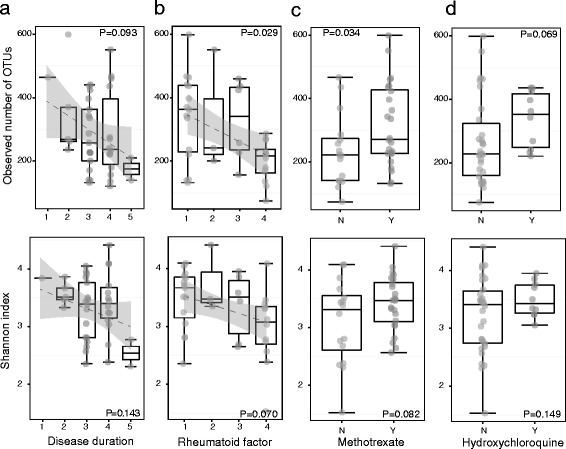
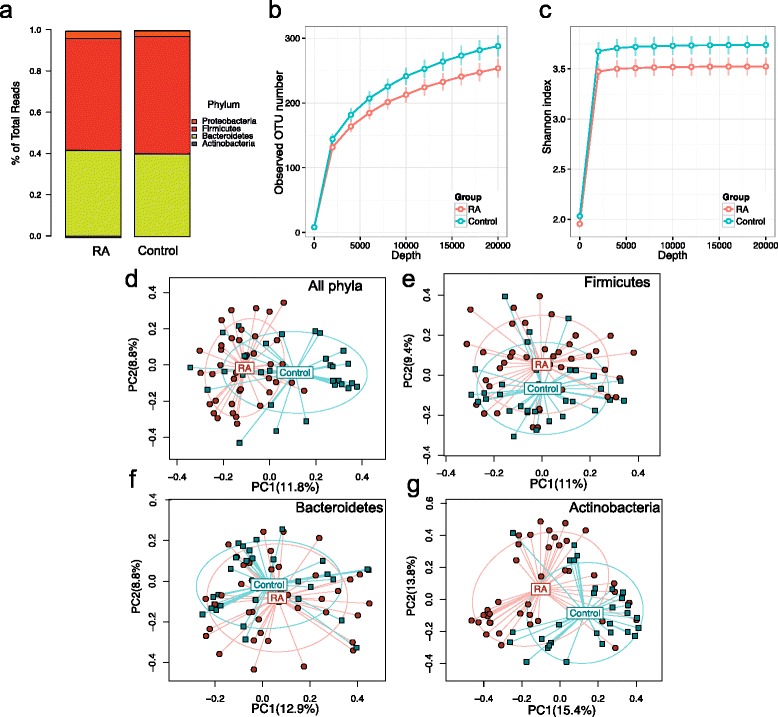
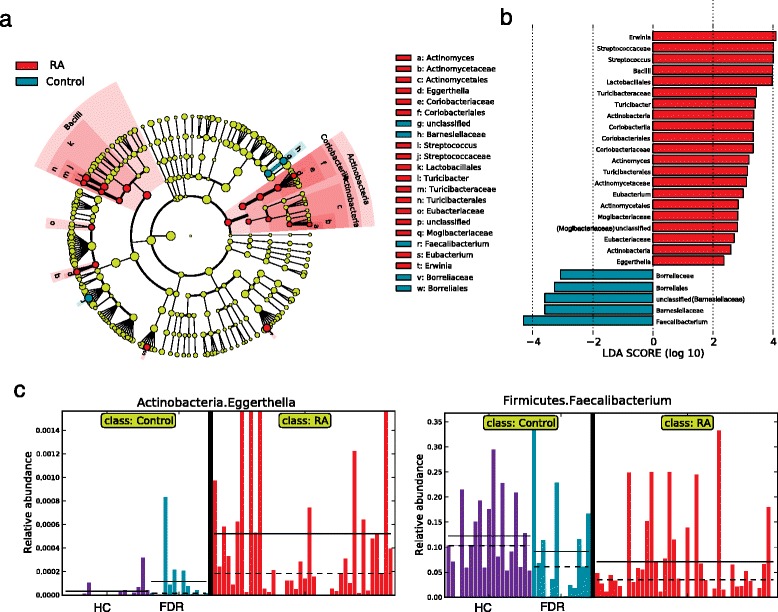
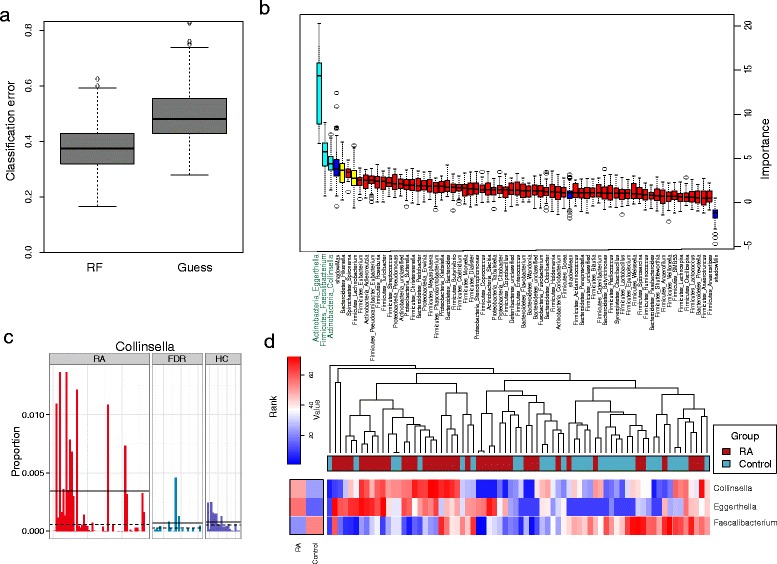
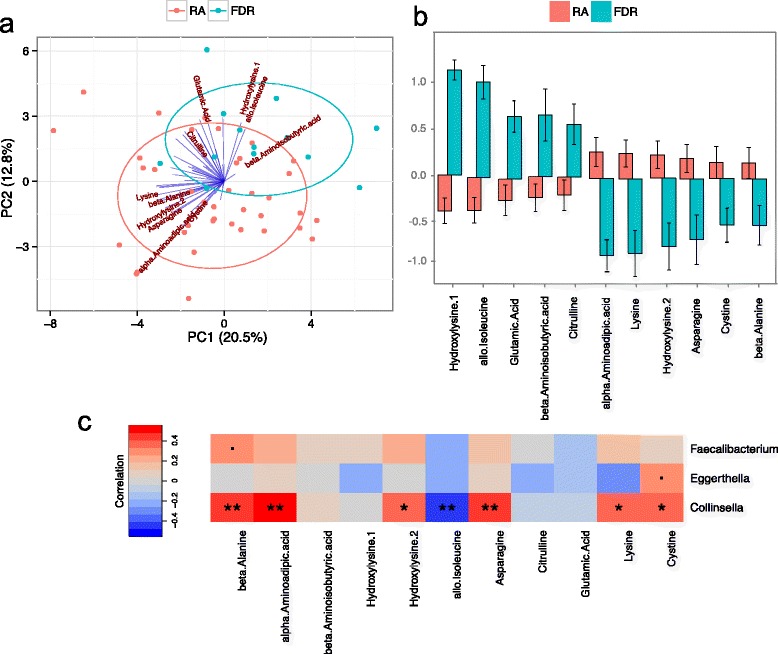
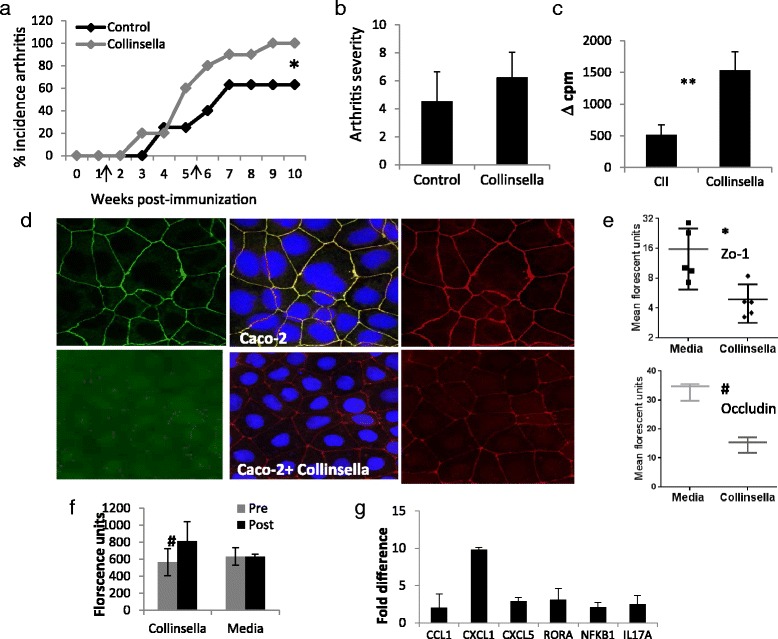
BACKGROUND: The adaptive immune response in rheumatoid arthritis (RA) is influenced by an interaction between host genetics and environment, particularly the host microbiome. Association of the gut microbiota with various diseases has been reported, though the specific components of the microbiota that affect the host response leading to disease remain unknown. However, there is limited information on the role of gut microbiota in RA. In this study we aimed to define a microbial and metabolite profile that could predict disease status. In addition, we aimed to generate a humanized model of arthritis to confirm the RA-associated microbe. METHODS: To identify an RA biomarker profile, the 16S ribosomal DNA of fecal samples from RA patients, first-degree relatives (to rule out environment/background as confounding factors), and random healthy non-RA controls were sequenced. Analysis of metabolites and their association with specific taxa was performed to investigate a potential mechanistic link. The role of an RA-associated microbe was confirmed using a human epithelial cell line and a humanized mouse model of arthritis. RESULTS: Patients with RA exhibited decreased gut microbial diversity compared with controls, which correlated with disease duration and autoantibody levels. A taxon-level analysis suggested an expansion of rare taxa, Actinobacteria, with a decrease in abundant taxa in patients with RA compared with controls. Prediction models based on the random forests algorithm suggested that three genera, Collinsella, Eggerthella, and Faecalibacterium, segregated with RA. The abundance of Collinsella correlated strongly with high levels of alpha-aminoadipic acid and asparagine as well as production of the proinflammatory cytokine IL-17A. A role for Collinsella in altering gut permeability and disease severity was confirmed in experimental arthritis. CONCLUSIONS: These observations suggest dysbiosis in RA patients resulting from the abundance of certain rare bacterial lineages. A correlation between the intestinal microbiota and metabolic signatures could determine a predictive profile for disease causation and progression.
Overview
The claims and statistics of this paper haven’t been checked yet.
Free: it reads the open-access text and checks the first 5 claims that cite a source we can check. Create a free account to check every claim.
Integrity signals
Registry
Cites
Statistics
Figures
Verification
Claims the paper makes
The claims and statistics of this paper haven’t been checked yet.
Free: it reads the open-access text and checks the first 5 claims that cite a source we can check. Create a free account to check every claim.
Claims other papers make about this one
Each is checked against this paper’s own text: does it say what the citing paper says it does?
The source backs part of the claim, not all of it — or backs it for a different population, condition or comparison.
In the citing paper
“Another study identified a strong link between three rare genera (Collinsella, Eggerthella and Faecalibacterium) and RA”
From Interaction between microbiota and immunity in health and disease (2020) · cites this paper as [171]
Experimental — accuracy not yet measuredThe cited source says what the claim attributes to it.
In the citing paper
“among which Collinsella is associated with proinflammatory IL-17A production.171”
From Interaction between microbiota and immunity in health and disease (2020) · cites this paper as [171]
Self-check
Percentages, sums and reported differences re-computed from the paper’s own numbers.
The self-check needs the paper’s full text.
Citations
Cites
Breiman, L. (2001) · Machine Learning · doi:10.1023/a:1010933404324 · Cited by 133,538
Metagenomic biomarker discovery and explanation
Segata, N., Izard, J., Waldron, L., Gevers, D., Miropolsky, L., Garrett, W. S., & Huttenhower, C. (2011) · Genome Biology · doi:10.1186/gb-2011-12-6-r60 · Cited by 16,192 · cited 1×
“Using LFfSe analysis [26], we observed 26 differentially abundant taxa at different taxonomic levels.”
MethodPredictive functional profiling of microbial communities using 16S rRNA marker gene sequences
Langille, M. G. I., Zaneveld, J., Caporaso, J. G., McDonald, D., Knights, D., Reyes, J. A., Clemente, J. C., Burkepile, D. E., Vega Thurber, R. L., Knight, R., et al. (2013) · Nature Biotechnology · doi:10.1038/nbt.2676 · Cited by 9,116
A core gut microbiome in obese and lean twins
Turnbaugh, P. J., Hamady, M., Yatsunenko, T., Cantarel, B. L., Duncan, A., Ley, R. E., Sogin, M. L., Jones, W. J., Roe, B. A., Affourtit, J. P., et al. (2009) · Nature · doi:10.1038/nature07540 · Cited by 7,823 · cited 1×
“RA [8, 9], diabetes, and obesity [11, 12].”
Enterotypes of the human gut microbiome
MetaHIT Consortium (additional members), Arumugam, M., Raes, J., Pelletier, E., Le Paslier, D., Yamada, T., Mende, D. R., Fernandes, G. R., Tap, J., Bruls, T., et al. (2011) · Nature · doi:10.1038/nature09944 · Cited by 7,548 · cited 1×
“The Human Microbiome Project and other studies have documented the diversity of the gut microbiome in healthy individuals and gut-related diseases [16–19].”
BackgroundTurnbaugh, P. J., Ley, R. E., Hamady, M., Fraser-Liggett, C. M., Knight, R., & Gordon, J. I. (2007) · Nature · doi:10.1038/nature06244 · Cited by 6,091 · cited 1×
“The Human Microbiome Project and other studies have documented the diversity of the gut microbiome in healthy individuals and gut-related diseases [16–19].”
BackgroundFeature Selection with the Boruta Package
Kursa, M. B., & Rudnicki, W. R. (2010) · Journal of Statistical Software · doi:10.18637/jss.v036.i11 · Cited by 5,659 · cited 1×
“We next applied Boruta feature selection, which is a feature selection method built around random forests and selects features that have significantly more discriminatory power than random permuted features [29].”
MethodDysfunction of the intestinal microbiome in inflammatory bowel disease and treatment
Morgan, X. C., Tickle, T. L., Sokol, H., Gevers, D., Devaney, K. L., Ward, D. V., Reyes, J. A., Shah, S. A., LeLeiko, N., Snapper, S. B., et al. (2012) · Genome Biology · doi:10.1186/gb-2012-13-9-r79 · Cited by 2,713 · cited 1×
“The Human Microbiome Project and other studies have documented the diversity of the gut microbiome in healthy individuals and gut-related diseases [16–19].”
BackgroundExpansion of intestinal Prevotella copri correlates with enhanced susceptibility to arthritis
Scher, J. U., Sczesnak, A., Longman, R. S., Segata, N., Ubeda, C., Bielski, C., Rostron, T., Cerundolo, V., Pamer, E. G., Abramson, S. B., et al. (2013) · eLife · doi:10.7554/elife.01202 · Cited by 2,047
Nielen, M. M. J., van Schaardenburg, D., Reesink, H. W., van de Stadt, R. J., van der Horst‐Bruinsma, I. E., de Koning, M. H. M. T., Habibuw, M. R., Vandenbroucke, J. P., & Dijkmans, B. A. C. (2004) · Arthritis & Rheumatism · doi:10.1002/art.20018 · Cited by 1,861 · cited 1×
“Autoreactive T-cell responses and auto-antibody production leading up to the onset of RA occur much earlier than the clinical presentation of RA [34].”
Background
Cited by
Items 601–700 of 864
Song, X., Li, J., Wang, D., Han, Z., Yan, X.-X., Yang, Z., Xu, J., Wang, Q., & Wu, D. (2025) · Scientific Reports · doi:10.1038/s41598-025-05127-5 · Cited by 6
“The abundance of Collinsella is associated with the production of the proinflammatory cytokine IL-17 A 47 .”
The gut-joint axis in juvenile idiopathic arthritis
Matei, D. E., & Rosser, E. C. (2026) · Arthritis Research & Therapy · doi:10.1186/s13075-026-03786-x · Cited by 4
“Several studies have shown that RA is associated with decreased abundance of SCFA-producing bacteria such as Faecalibacterium and Clostridium [24, 32].”
Wang, Q., Zhou, Z., Pang, L., Du, Y., Li, X., & Dai, L. (2026) · Frontiers in Endocrinology · doi:10.3389/fendo.2026.1802845 · Cited by 4
Pyridostigmine ameliorates pristane-induced arthritis symptoms in Dark Agouti rats
Zeng, M., Zibrila, A. I., Li, X., Liu, X., Wang, X., Zeng, Z., Wang, Z., He, Y., Meng, L., & Liu, J. (2023) · Scandinavian Journal of Rheumatology · doi:10.1080/03009742.2023.2196783 · Cited by 5
“In RA, the production of inflammatory cytokines, gut permeability, and the richness and diversity of the microbiota change dramatically, perturbing the homoeostasis of immunoregulation and subsequently aggravating the disease (41, 42).”
BackgroundPotential effects of sodium hyaluronate on constipation-predominant irritable bowel syndrome
Cui, L. H., Zou, S., Liu, J., Lv, H., Li, H., & Zhang, Z. (2023) · International Immunopharmacology · doi:10.1016/j.intimp.2023.111404 · Cited by 5
Microbiota and arthritis: cause or consequence?
Cafaro, G., Cruciani, G., Bruno, L., Pozzolo, R. D., Colangelo, A., Tromby, F., Nicchi, M., Pianese, B., Perricone, C., Gerli, R., et al. (2024) · Clinical and Experimental Rheumatology · doi:10.55563/clinexprheumatol/f6q4dc · Cited by 10
Xu, J., Tian, Y., Hu, D., Xi, Y., & Yang, L. (2024) · MedComm – Oncology · doi:10.1002/mog2.85 · Cited by 5
Charneca, S., Hernando, A. J. B., Almada-Correia, I., Pereira, J. P., Vieira, A. A., Sousa, J., Almeida, A. S., Motta, C., Barreto, G., Eklund, K. K., et al. (2025) · Nutrition Journal · doi:10.1186/s12937-025-01089-6 · Cited by 6
Lu, Y., Zhou, X., & Nardini, C. (2017) · Molecular BioSystems · doi:10.1039/c7mb00248c · Cited by 4
Application of MALDI-TOF MS in Bacterial Strain Typing and Taxonomy
Culebras, E. (2018) · Elsevier eBooks · doi:10.1016/b978-0-12-814451-0.00015-0 · Cited by 7
Complete Genome Sequence of Collinsella aerofaciens JCM 10188 T
Tourlousse, D. M., Sakamoto, M., Miura, T., Narita, K., Ohashi, A., Uchino, Y., Yamazoe, A., Kameyama, K., Terauchi, J., Ohkuma, M., et al. (2020) · Microbiology Resource Announcements · doi:10.1128/mra.00134-20 · Cited by 4
“Elevated abundance of Collinsella was also correlated with rheumatoid arthritis (5), with Collinsella aerofaciens being experimentally demonstrated to increase gut permeability and augmented arthritis severity in mice.”
BackgroundRheumatoid Arthritis and the Role of VEGF Gene: An Overview
Mumtaz, M., & Hussain, N. (2020) · Journal of Scientific Research in Medical and Biological Sciences · doi:10.47631/jsrmbs.v1i2.93 · Cited by 8
“The diversity of rare microbes such as actinobacteria are increased in RA patients while the variety of abundant microbiome of gut is reduced (Chen et al., 2016) The absorption of these endotoxins in blood stream sometime induce the initiation of proinflammatory T cells and autoantibodies production in RA patients (Ch…”
BackgroundThe intervention of intestinal Wnt/β-catenin pathway alters inflammation and disease severity of CIA
Tan, W., Qiu, Y., Chen, N., Gao, J., Liang, J., Liu, Y., & Zhao, D. (2021) · Immunologic Research · doi:10.1007/s12026-021-09190-8 · Cited by 5
The Gut Mucosal Firewall and Functional Medicine.
Bland, J. K. S. (2016) · Europe PMC (PubMed Central) · Cited by 9
Gut microbial dysbiosis in individuals with Sjögren’s diseasePreprint
Méndez, R., Watane, A., Farhangi, M., Cavuoto, K. M., Leith, T., Budree, S., Galor, A., & Banerjee, S. (2019) · bioRxiv (Cold Spring Harbor Laboratory) · doi:10.1101/645739 · Cited by 4
“Similar to our data, increased abundance of Actinobacteria,35 specifically Eggerthella and Actinomyces, Prevotella copri,34 Lactobacillus36 and decreased abundance of Faecalibacterium,35 Bacteroides,8 Lachnospiraceae34 and Clostridiales34 were reported in individuals with rheumatoid arthritis as compared to controls.”
ResultMicrobiota-dependent indole production is required for the development of collagen-induced arthritisPreprint
Seymour, B. J., Trent, B. J., Allen, B. E., Berlinberg, A. J., Tangchittsumran, J., Jubair, W. K., Chriswell, M. E., Liu, S., Ornelas, A., Stahly, A., et al. (2023) · bioRxiv (Cold Spring Harbor Laboratory) · doi:10.1101/2023.10.13.561693 · Cited by 4
“…in CIA (such as Lachnospiraciae and Lactobacillaeae [32, 33] ) , RA ( Lachnospiraceae bacterium, lactobacillus spp ., Faecalibacterium ) [93, 94], and SpA ( Ruminococcaceae, Rikenellaceae, Porphyromonadaceae, Bacteroidaceae, Lachnospiraceae ) [4] are either predicted or known to produce…”
Zang, B., Xu, L., Huang, H., Liu, Q., Yao, Y., Li, J., Yang, Y., Zhao, C., Liu, B., & Liu, B. (2025) · Microorganisms · doi:10.3390/microorganisms13122668 · Cited by 3
“Furthermore, an increased abundance of Collinsella and Shigella was identified in PBC patients, particularly those with severe cholestasis, similar to patterns in rheumatoid arthritis and Graves’ disease [24,25].”
Zhu, J., Ning, Q., Wang, T., Liu, Z. Y., Yu, L. F., Liu, H., & Zou, W. (2025) · Food Chemistry · doi:10.1016/j.foodchem.2025.147541 · Cited by 4
An overview of the role of the gut microbiota in rheumatoid arthritis
Poznyak, A. V., Vatlin, A. A., Pavshintsev, V. V., Mitkin, N. A., Maltseva, O. N., Utkina, A. S., & Orekhov, A. N. (2026) · Microbiome Research Reports · doi:10.20517/mrr.2025.69 · Cited by 4
Mechanistic insights into gut microbiota–driven autoimmunity in rheumatoid arthritis
Li, J., Chen, X., & Xie, X. (2026) · Frontiers in Immunology · doi:10.3389/fimmu.2026.1812972 · Cited by 3
“Oral administration of Collinsella in CIA mice impaired gut barrier function, increased circulating pro-in fl ammatory cytokines, and aggravated arthritis (57), suggesting that its expansion may be pathogenic rather than merely secondary to in fl ammation.”
InfluentialAnsari, S., Purohit, K. J., Shelke, A. B., Shah, M., Nkhoma, I. A., Navale, A. M., & Wakchaure, R. S. (2026) · Antonie van Leeuwenhoek · doi:10.1007/s10482-026-02296-9 · Cited by 4
Parasitic helminths and protozoa: Treasure boxes of disease modifying anti-rheumatic drugs
Osada, Y., Shimizu, S., & Morita, K. (2024) · Parasitology International · doi:10.1016/j.parint.2024.103000 · Cited by 3
Advancements in the Pathogenesis, Diagnosis, and Therapeutic Implications of Intestinal Bacteria
Lu, D., Ma, X., Tao, K., & Lei, H. (2025) · Current Issues in Molecular Biology · doi:10.3390/cimb47020106 · Cited by 3
“In ASD, reduced populations of Prevotella, Coprococcus, Bacteroides, and Actinomyces and increased Desulfovibrio are observed [130].”
Bilen, M., Beye, M., Fonkou, M. D. M., Khelaifia, S., Cadoret, F., Armstrong, N., Nguyen, T. T., Delerce, J., Daoud, Z., Raoult, D., et al. (2018) · MicrobiologyOpen · doi:10.1002/mbo3.580 · Cited by 3
“Members of the Collinsella genus are gram- positive anaerobic bacilli from the human gut microbiota that were suggested to play a role in health and diseases such as rheumatoid arthritis (Chen et al., 2016) and irritable bowel syndrome (Lee & Bak, 2011).”
BackgroundImmune Responses at Host Barriers and Their Importance in Systemic Autoimmune Diseases
Schinnerling, K., Penny, H. A., Soto, J. A., & Melo-González, F. (2023) · Advances in experimental medicine and biology · doi:10.1007/978-3-031-26163-3_1 · Cited by 3
Gut microbiome predictors of Escherichia coli sequence type 131 colonization and loss
Park, D. E., Aziz, M., Koch, B. J., Roach, K., Clabots, C., Johnson, J. R., Price, L. B., & Liu, C. M. (2023) · EBioMedicine · doi:10.1016/j.ebiom.2023.104909 · Cited by 3
“29 Conceivably, the associations we observed of Collinsella with ST131 and H 30R may be due to Collinsella -mediated modulation of the host in fl ammatory and immune systems in an ST131-favoring manner.”
BackgroundWąż, K. Z., Kucharz, E. J., Kopeć-Mędrek, M., Pieczyrak, R., & Kotyla, P. J. (2022) · Rheumatology Forum · doi:10.5603/rf.2022.0024 · Cited by 3
Kirby, T. O., Sapp, P. A., Townsend, J. R., Govaert, M., Duysburgh, C., Marzorati, M., Marshall, T. M., & Esposito, R. (2024) · Current Issues in Molecular Biology · doi:10.3390/cimb46010036 · Cited by 3
“…and correlated to circulating insulin [41], in increased abundances in the gut microbiome of patients with atherosclerosis [42], shown to increase gut permeability and be associated with rheumatoid arthritis [43], and known to be proinflammatory and a risk factor for Alzheimer’s disease [44].”
BackgroundIwase, S. C., Osawe, S., Happel, A., Gray, C. M., Holmes, S., Blackburn, J. M., Abimiku, A., & Jaspan, H. B. (2024) · Microbiology Spectrum · doi:10.1128/spectrum.03190-23 · Cited by 4
“Moreover, Collinsella aerofaciens (LFC: 0.72 at week 1 and 1.18 at week 15) and Klebsiella quasipneumoniae (LFC: 0.84 at both week 1 and week 15), which are known to be pathobionts (37, 38), were consistently more abundant in iHEU during the first 15 weeks of life.”
BackgroundInfluentialLiu, B. (2024) · Journal of Immunology · doi:10.52338/immunology.2024.3917 · Cited by 3
Probiotics and the physiological & biological aspects of probiotic microorganisms
Kushwaha, T. N., & Shweta, M. (2024) · Journal of Food Science and Nutrition Therapy · doi:10.17352/jfsnt.000049 · Cited by 4
Gut microbiota composition in recurrent acute otitis media: a cross-sectional observational study
Florjan, A., Rupnik, M., & Mahnič, A. (2024) · Folia Microbiologica · doi:10.1007/s12223-024-01174-z · Cited by 3
“Turicibacter is a member of the commensal gut microbiota; however, previous studies have reported its increased abundance in Helicobacter pylori infection (Kienesberger et al. 2016) and rheumatoid arthritis (Chen et al. 2016).”
BackgroundAutoimmune diseases and microbiome targeted therapies
Jain, P., Joshi, N., Sahu, V., Dominic, A., & Aggarwal, S. (2025) · International review of cytology · doi:10.1016/bs.ircmb.2024.12.007 · Cited by 5
A 10-year knowledge mapping of T cells in rheumatoid arthritis: A bibliometric analysis
Gao, Y., Liu, Y., & Hao, H. (2025) · Human Vaccines & Immunotherapeutics · doi:10.1080/21645515.2025.2450855 · Cited by 3
“35 In the colon, Prevotella copri seems to indicate early disease, as this bacterium is more common in untreated patients with new-onset RA than in those with established RA or in those without RA.”
DeBofsky, A., Xie, Y., Challis, J. K., Ankley, P. J., Brinkmann, M., Jones, P. D., & Giesy, J. P. (2021) · The Science of The Total Environment · doi:10.1016/j.scitotenv.2021.151060 · Cited by 4
“…rare species of gut microbial ecosystems can play important roles in maintaining ecological homeostasis of gut microbiota and bene fi ts to host fi tness (Chen et al., 2016; Sfanos et al., 2018) via modulating hormone metabolites (Antwis et al., 2019) or the immune system (Rolig et al., 2015).”
Tackling Pain Associated with Rheumatoid Arthritis: Proton-Sensing Receptors
Sun, W., & Dai, S.-P. (2018) · Advances in experimental medicine and biology · doi:10.1007/978-981-13-1756-9_5 · Cited by 4
Assessment of gut microbiota in rheumatoid arthritis patients
Anis, R. H., Dawa, G. A., & El-Korashi, L. A. (2021) · Microbes and Infectious Diseases /Microbes and Infectious Diseases · doi:10.21608/mid.2021.56268.1106 · Cited by 3
Mucosal Restitution and Repair
Liu, C. Y., Polk, D. B., & Frey, M. R. (2018) · Elsevier eBooks · doi:10.1016/b978-0-12-809954-4.00029-3 · Cited by 5
Cheng, M., Zhao, Y., Cui, Y., Zhong, C., Zha, Y., Li, S., Cao, G., Li, M., Zhang, L., Ning, K., et al. (2022) · bioRxiv (Cold Spring Harbor Laboratory) · doi:10.1101/2022.02.13.480248 · Cited by 3
Systems biology illuminates alternative metabolic niches in the human gut microbiomePreprint
Noecker, C. A., Sánchez, J. M., Bisanz, J. E., Escalante, V., Alexander, M., Trepka, K. R., Heinken, A., Liu, Y., Dodd, D., Thiele, I., et al. (2022) · bioRxiv (Cold Spring Harbor Laboratory) · doi:10.1101/2022.09.19.508335 · Cited by 3
Zhang, S., Chen, W., Ma, C., Luo, Y., Dong, L., Hu, X., Chen, F., & Li, D. (2024) · Food Science and Human Wellness · doi:10.26599/fshw.2024.9250215 · Cited by 2
“Moreover, FRD consumption increased the abundance of Collinsella and Olsenella , which have been reported to modulate immune response and promote pro-inflammatory cytokines production [202, 203].”
Liu, A., Zhang, Q., Liang, X., Chao, Z., Zhou, R., Huang, C., & Lin, J. (2024) · iMetaOmics. · doi:10.1002/imo2.24 · Cited by 2
“Furthermore, evidence suggests a progressive decline in gut microbiota diversity as RA progresses [10].”
The Effect of the Ideal Food Pyramid on Gut Microbiota in Rheumatoid Arthritis Patients
MUTLUTÜRK, Ü. K., Çiçek, B., & Cengiz, G. (2025) · Life · doi:10.3390/life15030463 · Cited by 3
“Chen et al. found high amounts of Prevotella copri in fecal samples from patients with recent-onset RA [10].”
McNeill, J., Zinn, C., Mearns, G. J., & Grainger, R. (2025) · Nutrition Research Reviews · doi:10.1017/s0954422425000083 · Cited by 3
Natural compounds for the treatment of rheumatoid arthritis based on the ‘gut‑joint axis’ (Review)
Hu, W., Li, R., & Zhang, Z. (2025) · Molecular Medicine Reports · doi:10.3892/mmr.2025.13756 · Cited by 2
“Specifically, ATO treatment increased the richness and diversity of the intestinal microbiota in CIA mice, restoring the imbalance between the two major phyla, Firmicutes and Bacteroidetes (204). on a metabolic level, ATO regulates several metabolites, including (‑)‑ β ‑pinene, a substrate involved in lipid metabolism…”
Microbiota-immune crosstalk in autoimmune disorders: Molecular insights and therapeutic pathways
Somasundaram, A., Abdulbari, N., Suja Pandian., R., Pandian, A., Fredrick Raja, E., Saratha., V., Saminathan, U., & Ramasamy, P. (2026) · Comparative Immunology Reports · doi:10.1016/j.cirep.2026.200270 · Cited by 5
“For instance, enhanced susceptibility to arthritis in germ-free SKG mice after fecal microbiota transplanted from early RA patients (through self-reactive activation of T cells in the gut) [64 – 69].”
Xue, M., McShane, C., Kim, J., Khorasaniha, R., Leibovitzh, H., Jingcheng, S., Chen, R., Jeong, S., Madsen, K. L., Griffiths, A. M., et al. (2026) · Gastroenterology · doi:10.1053/j.gastro.2026.05.006 · Cited by 3
Mangoni, A. A., Hulin, J.-A., & Tommasi, S. (2026) · Pharmacological Reviews · doi:10.1016/j.pharmr.2026.100147 · Cited by 2
Dong, B., Wang, B., Chen, J., Xu, X., & Xu, Z. Z. (2026) · Applied and Environmental Microbiology · doi:10.1128/aem.00788-26 · Cited by 4
“6f) offered superior resolution, pinpointing the IgA-degrading s__ Sutterella wadsworthensis (17) and the pro-inflammatory s__ Collinsella aerofaciens (18), a pathobiont associated with disease susceptibility.”
Self-citationGut microbiota and intestinal permeability in rheumatoid arthritis: pathogenic mechanisms
Bilski, J., Schramm‐Luc, A., Szczepanik, M., Pierzchalski, P., Krawczyk, A., & Luc, K. (2026) · Frontiers in Immunology · doi:10.3389/fimmu.2026.1887782 · Cited by 2
“Various studies in RA patients have observed an enrichment of taxa such as organisms related to Prevotella , Collinsella , and Eggerthella , along with a depletion of butyrate-producing commensals, including Faecalibacterium prausnitzii , although none of these shifts is universal (19, 23, 24, 83, 107).”
InfluentialDas Mikrobiom bei rheumatischen Erkrankungen: Treibende Kraft oder verwirrender Einflussfaktor?
Müller-Ladner, U. (2016) · Zeitschrift für Rheumatologie · doi:10.1007/s00393-016-0175-2 · Cited by 2
Peptidylarginine désiminases du microbiote buccal et polyarthrite rhumatoïde
Desclos-Theveniau, M., Bonnaure‐Mallet, M., & Meuric, V. (2020) · médecine/sciences · doi:10.1051/medsci/2020078 · Cited by 3
Yi, S., Zhang, X., Yang, L., Huang, J., Liu, Y., Wang, C., Schaid, D. J., & Chen, J. (2021) · Genome biology · doi:10.1186/s13059-021-02418-8 · Cited by 3
“In other diseases such as rheumatoid arthritis, the prevalence could differ by gender [9].”
BackgroundSelf-citationPre-Rheumatoid Arthritis: A Review
So, J., & So, H. (2023) · Journal of Clinical Rheumatology and Immunology · doi:10.1142/s2661341723300021 · Cited by 2
Sun, Y. (2024) · American Journal of Translational Research · doi:10.62347/tdtj1944 · Cited by 2
Prospects for microbiome modulation in autoimmune diseases: a literature review
Peshkova, M., Korneev, A. A., Игоревна, К. П., Kosheleva, N. V., & Timashev, P. S. (2024) · Sechenov Medical Journal · doi:10.47093/2218-7332.2024.15.1.4-19 · Cited by 3
Pandarathodiyil, A. K., Hema Shree, K., Sivapathasundharam, B., & Ramadoss, R. (2025) · Journal of Oral and Maxillofacial Pathology · doi:10.4103/jomfp.jomfp_23_24 · Cited by 4
“[35] Association of gingivitis in RA Both the aetiology and epidemiology of RA are significantly associated with gingival disease.”
Effect of probiotic supplementation on disease activity in rheumatoid arthritis patients
Khalifa, A. A., Hany, S. M., Morshedy, N. A., & Elsayed, A. M. (2025) · The Egyptian Rheumatologist · doi:10.1016/j.ejr.2025.04.009 · Cited by 2
Die intestinale Mikrobiota als Ansatz für individuelle Therapien
Witte, T., Pieper, D. H., & Heidrich, B. (2017) · Der Internist · doi:10.1007/s00108-017-0259-3 · Cited by 2
Systemic Sclerosis and Microbiota: Overview of Current Research Trends and Future Perspective
Kim, S., Chun, S. H., Park, H. J., & Lee, S. (2019) · Journal of Rheumatic Diseases · doi:10.4078/jrd.2019.26.4.235 · Cited by 3
Dysbiosis and probiotic applications in autoimmune diseases
de Salis, L. V. V., Martins, L. S. A., Rodrigues, G. S. P., & de Oliveira, G. L. V. (2022) · Elsevier eBooks · doi:10.1016/b978-0-12-824390-9.00004-9 · Cited by 3
Stoll, M. L., Bridges, S. L., & Danila, M. I. (2018) · Springer eBooks · doi:10.1007/978-3-319-79026-8_15 · Cited by 2
Heidt, C., & Reuss-Borst, M. A. (2023) · Aktuelle Rheumatologie · doi:10.1055/a-2143-1290 · Cited by 2
Mowla, K., Goli, N. A., Nezhad, R. K., Zayeri, Z. D., Dargahi-Malamir, M., & Rajaei, E. (2019) · Russian Open Medical Journal · doi:10.15275/rusomj.2019.0108 · Cited by 2
“We used CRP and ESR and HLA-DQ8 and arthritic tender joints in this study because HLA genes show a loss of sexand age-dependent changes and this gene has the strongest association with the additional risk of RA [23].”
MethodNavarro‐Tapia, E., Chenoll, E., Rueda, J. M. W., & Ramón, D. (2021) · Elsevier eBooks · doi:10.1016/b978-0-12-819265-8.00105-4 · Cited by 1
Regulatory roles of the microbiome in arthritis, fibromyalgia, and multiple sclerosis
Vázquez-Chinea, L. J., Johnson, S. N., & Lipski, E. A. (2022) · Elsevier eBooks · doi:10.1016/b978-0-12-822238-6.00028-5 · Cited by 1
Microflora impacts immune system and its antitumor function
Rawat, P., Dhingra, M., Kosta, K., & Das, A. (2022) · Elsevier eBooks · doi:10.1016/b978-0-323-96128-8.00007-9 · Cited by 1
Symbiotic association of gut microbiome in health and diseases at ageing
Mane, S. S., Patel, D. A., & Patil, P. C. (2023) · Elsevier eBooks · doi:10.1016/b978-0-323-99334-0.00049-9 · Cited by 1
Microbiota transfer early after birth modulates genetic susceptibility to chronic arthritis in mice
Borrego, A., Cabrera, W. H. K., Souza, A. T., Eto, S. F., de Oliveira, S. L., Rodrigues, J., & Jensen, J. R. (2024) · Microbes and Infection · doi:10.1016/j.micinf.2024.105411 · Cited by 2
Gut-Brain Axis: A Medium for Immune Interaction
Misal, P., Verma, S., Singh, A. K., & Kar, S. K. (2024) · Integrated science · doi:10.1007/978-3-031-73061-0_19 · Cited by 2
Gut Microbiota and Its Importance in Health and Disease
Midya, S., Banerjee, A., Pathak, S., & Duttaroy, A. K. (2024) · Springer eBooks · doi:10.1007/978-981-96-0297-1_1 · Cited by 1
Wang, S., Dai, W., Liu, Y., Zou, X., Pan, M., & Chu, X. (2026) · Journal of Biochemical and Molecular Toxicology · doi:10.1002/jbt.70891 · Cited by 1
“Some low‐ abundance species like Collinsella , which is elevated in the intestine of RA patients, are associated with reduced translation of tight junction proteins in intestinal epithelial cells, thereby impairing intestinal barrier integrity [12].”
A cross-sectional analysis of the vaginal microenvironment in rheumatoid arthritis
Mejia, M. E., Bowman, S., Lee, J. C., El-Halwagi, A., Ferguson, K., Maliekel, M. J., Zhou, Y., Serchejian, C., Robertson, C. M., Ballard, M. B., et al. (2026) · Microbiology Spectrum · doi:10.1128/spectrum.03602-25 · Cited by 1
“Yet, RA is also linked to rare gut and oral microbes absent from the vaginal tract (11, 12, 46), and taxonomic associations are not consistent across autoimmune diseases: the RA cohort did not demonstrate significantly decreased Lactobacillus or increased Bifidobac terium as reported in SLE.”
Mikrobiom, Ernährung und Rheuma
Heidt, C., & Kriegel, M. A. (2025) · rheuma plus · doi:10.1007/s12688-025-00861-0 · Cited by 1
Li, M., Liao, Q., Wu, J., Zhou, H., Sun, Y. N., Su, J., Huang, M., Zheng, J. M., & Zheng, F. (2025) · International Journal of Biological Macromolecules · doi:10.1016/j.ijbiomac.2025.148706 · Cited by 1
Decoding Gut Microbiome Dysbiosis as a Non-Invasive Diagnostic Biomarker for Alopecia Areata
Aguado-García, Á., Huertas-López, F., Martínez-Moreno, D., Serrano-López, E. M., Martínez-Villaescusa, M., Carazo-Díaz, C., & Navarro‐López, V. (2025) · Cosmetics · doi:10.3390/cosmetics12060274 · Cited by 1
Preliminary insights into the gut microbiota of patients with rheumatoid arthritis in Vietnam
Nguyen, B. N., Nguyen, L. T. N., Trinh, D. T. M., Nguyen, H. T., & Tran, T. T. T. (2025) · PeerJ · doi:10.7717/peerj.20521 · Cited by 2
“Conversely, beta diversity allowed clustering patients with RA and healthy individuals, like in most published studies ( Chen et al., 2016 ; Sun et al., 2019 ).”
InfluentialWu, Z., Liu, W., Chu, J., Yao, J., Yubo, F., & Wang, Y. (2026) · Medicine in Novel Technology and Devices · doi:10.1016/j.medntd.2026.100427 · Cited by 2
Khade, K., Dadachanji, R., Bhonde, G., Patil, A. D., Bhor, V. M., & Mukherjee, S. (2026) · Future Microbiology · doi:10.1080/17460913.2026.2634572 · Cited by 3
Sinomenine regulated gut-joint axis for alleviating rheumatoid arthritis
Wang, D., Ma, J., Qiu, Y., Gao, H., & Sun, Z. (2026) · International Immunopharmacology · doi:10.1016/j.intimp.2026.116460 · Cited by 1
Gut microbiome differences by serostatus in rheumatoid arthritis: a systematic review
Nurgaziyev, M., Kozhakhmetov, S., Issilbayeva, A., Jarmukhanov, Z., Nurgaziyeva, A., Sergazy, S., Kuantkhan, M., Chulenbayeva, L., & Kushugulova, A. R. (2026) · Frontiers in Immunology · doi:10.3389/fimmu.2026.1722255 · Cited by 1
“Chen et al. (16) reported that higher RF levels and longer disease duration were both associated with reduced species richness, and elevated RF was also linked to lower Shannon diversity (p < 0.05).”
InfluentialZhan, J.-Y., Wang, W.-R., Zhan, T., Yang, J., Liang, Y., Yu, R.-H., & Wang, X. (2026) · Frontiers in Immunology · doi:10.3389/fimmu.2026.1730351 · Cited by 2
“Actinomyces (121, 122), Prevotella (123), Bacteroides (120, 124), Escherichia – Shigella (125) are the main species increased, whereas Mycobacterium , Lactobacillus , Enterobacter (123), Deltaproteobacteria , and Clostridiaceae decreased (126), including CB , FP , Clostridium leptum , Clostridium…”
Xia, X., Kong, C., Zhao, X., Shi, N., Jiang, J., & Li, P. (2026) · Advanced Science · doi:10.1002/advs.202515505 · Cited by 1
“Gut dysbiosis has been consistently associated with multiple ADs, including systemic lupus ery-thematosus (SLE) and rheumatoid arthritis (RA) [ 17, 18 ].”
Chen, C., Xing, Y., Xing, G., Zeng, F., Zheng, N., Sha, S., Zhao, L., Zhang, Y., Ling, Y., Yao, X., et al. (2026) · Cell Reports Medicine · doi:10.1016/j.xcrm.2026.102777 · Cited by 2
“26 At the taxon level, Ruminococcus gnavus was markedly enriched in our pSS cohort, contradicting earlier studies reporting its depletion 15 despite its well-documented association with autoimmune conditions including SLE, 27 Sjo¨gren syndrome (SS), 15 and RA.”
Fan, R., Zang, Q., Xu, Y., Gao, L., Zhou, J., & Zang, Y. (2026) · Frontiers in Immunology · doi:10.3389/fimmu.2026.1868704 · Cited by 1
“Several studies have examined gut microbiome alterations in RA without ILD (15, 16, 54).”
Palmas, V., Gama, L. C. D. M., Guima, S. E. S., Sanna, G., Pisanu, C., Piras, C., Spada, M., Meloni, A., Congiu, D., Severino, G., et al. (2026) · Frontiers in Microbiology · doi:10.3389/fmicb.2026.1839847 · Cited by 1
“…intestinal permeability, IL-17–mediated inflammation, unfavorable metabolic phenotypes and, in some cases, greater severity of chronic inflammatory disorders (Alexander et al., 2022; Chen et al., 2016; Gomez-Arango et al., 2018; Iqbal et al., 2025; Lambeth et al., 2015; McIntyre et al., 2021).”
Kwon, C., Choi, Y. H., Kim, H., Han, K., Jang, D., & Hwangbo, H. (2026) · Experimental Gerontology · doi:10.1016/j.exger.2026.113223 · Cited by 1
Miranda, J. N., Sohn, M. B., Velasquez-Portocarrero, D. E., Gill, A. L., Beblavy, R., Castro-Meléndez, D., Ejiofor, K., Qiu, X., Laniewski, N. G., Groff, B., et al. (2026) · EBioMedicine · doi:10.1016/j.ebiom.2026.106360 · Cited by 2
Anwar, M. Z., Prieto, M. D., & Hsiao, W. (2026) · Mucosal Immunology · doi:10.1016/j.mucimm.2026.100375 · Cited by 1
Gut microbiome alterations in canine idiopathic epilepsy: a pairwise case-control study
Yang, Y., Nettifee, J. A., Azcárate-Peril, M. A., Muñana, K. R., & Callahan, B. J. (2026) · Animal Microbiome · doi:10.1186/s42523-026-00594-1 · Cited by 1
“Many studies [16, 32, 50] have shown positive association between Collinsella and the expression of IL-17A, a pro-inflammatory cytokine.”
Almarzooqi, S., Yassin, L. K., AlNuaimi, F., Alketbi, S., Skrabulyte-Barbulescu, J., AlAhbabi, N., Alremeithi, D., Almarashda, R., Almazrouei, S., Shehab, S., et al. (2026) · Translational Psychiatry · doi:10.1038/s41398-026-04305-x · Cited by 1
“Genera such as Collinsella, which are associated with altered barrier function in in fl ammatory conditions, may further exacerbate this process [192].”
Microbiota of the Colonic Diverticula in the Complicated Form of Diverticulitis: A Case Report
Рашидовна, Я. Д., Pankratova, Y., Karaseva, O. V., Grigoryeva, T. V., & Karpukhin, O. Y. (2022) · Life · doi:10.3390/life12122129 · Cited by 1
Cross-Talk Between Gut Microbiota and Immune Cells and Its Impact on Inflammatory Diseases
da Silva, E. M., Alves, R. W., Doretto-Silva, L., & Andrade‐Oliveira, V. (2023) · Interdisciplinary biotechnological advances · doi:10.1007/978-981-19-8342-9_8 · Cited by 3
Influence of Gut Resistome on Humans with Autism Spectrum Disorder
Abuljadayel, D. A., Bahieldin, A., Alotaibi, B., Aresh, W. M., & Farsi, R. M. (2024) · Journal of Pharmaceutical Research International · doi:10.9734/jpri/2024/v36i47510 · Cited by 1
Animal Models Informing the Role of the Microbiome and its Metabolites in Rheumatoid Arthritis
Li, J., He, J., Kuhn, K. A., & Li, Z. (2025) · Rheumatic Disease Clinics of North America · doi:10.1016/j.rdc.2025.01.004 · Cited by 2
Kumari, A., Aggarwal, G., & Popli, H. (2025) · Elsevier eBooks · doi:10.1016/b978-0-443-22300-6.00024-3 · Cited by 1
Mok, S. W.-F., Law, B. Y. K., Wong, V. K.-W., & Liu, L. (2018) · InTech eBooks · doi:10.5772/intechopen.75553 · Cited by 1
“Evidence associating gut microbiome and RA has recently been documented based on the characterization of the expansion of rare lineage intestinal microbes in RA [163].”
Faintuch, J., & Faintuch, J. J. (2019) · Elsevier eBooks · doi:10.1016/b978-0-12-815249-2.00046-4 · Cited by 1
FREQUENCY OF PROTEUS MIRABILIS INFECTION IN RHEUMATOID ARTHRITIS
Saleem, M. H., Nisar, S., Saleem, M. Z., Saleem, H., Mukhtar, S., & Anjum, M. A. (2021) · Pakistan Armed Forces Medical Journal · doi:10.51253/pafmj.v71i4.3690 · Cited by 1
Microbiome Therapeutics: Emerging Concepts and Challenges
Sarada, J., Anju, S., Aparna, Y., & Anuradha, K. T. (2021) · Springer eBooks · doi:10.1007/978-981-16-3156-6_11 · Cited by 1
Metadata
- Authors
- Chen, J., Wright, K., Davis, J. M., Jeraldo, P., Marietta, E. V., Murray, J., Nelson, H., Matteson, E. L., & Taneja, V.
- Affiliations
- Mayo Clinic (US)
- Corresponding author
- Taneja, Veena
- ORCID
- Venue
- Genome Medicine
- Published
- 2016-04-21
- Volume
- 8
- Issue
- 1
- Pages
- 43-43
- ISSN
- 1756-994X (ISSN-L)
- PMC
- PMC4840970
- OpenAlex
- W2336817596
- Cited by
- 858
- References
- 53
- Citations by year
- 2026: 81 · 2025: 80 · 2024: 97 · 2023: 116 · 2022: 111 · 2021: 128 · 2020: 67 · 2019: 66 · 2018: 62 · 2017: 39 · 2016: 10
- FWCI
- 30.65
- Type
- journal article
- Language
- en
- Open access
- gold
- doi.org
- Licence
- cc-by
- creativecommons.org/licenses/by/4.0/ (tdm)
- creativecommons.org/licenses/by/4.0/ (vor)
- Locations
- Genome Medicine (publishedVersion, cc-by)
- Europe PMC (PubMed Central) (publishedVersion, cc-by)
- PubMed Central (publishedVersion, cc-by)
- PubMed (publishedVersion)
- Funders
- National Institute of Arthritis and Musculoskeletal and Skin Diseases (AR30752)
- Mark and Mary Davis
- Topics
- Life Sciences › Biochemistry, Genetics and Molecular Biology › Molecular Biology › Gut microbiota and health
- Health Sciences › Medicine › Rheumatology › Rheumatoid Arthritis Research and Therapies
- Health Sciences › Medicine › Gastroenterology › Inflammatory Bowel Disease
- Keywords
- rheumatoid arthritis, gut microbiota, rare bacterial taxa, dysbiosis, Collinsella, Eggerthella, Faecalibacterium, actinobacteria, intestinal permeability, IL-17A, alpha-aminoadipic acid, asparagine, metabolites, humanized mice, disease biomarkers, autoantibodies, gut-immune interaction
- MeSH terms
- Gastrointestinal Microbiome, Adult, Aged, Animals, Arthritis, Rheumatoid, Cell Line, Disease Models, Animal, Feces, Female, Humans, Intestinal Mucosa, Male, Middle Aged, Models, Biological, Permeability, Phylogeny, RNA, Ribosomal, 16S, Severity of Illness Index, Case-Control Studies, Cytokines, Chemokines, Computational Biology, Biodiversity, Mice, Metagenome, Metabolome, Metagenomics
About these checks
Registry, retraction, Cites and statistics results are computed, not judged, with one exception: a printed reference that no index lists is read once by a model before it counts as a citation error. Claims are extracted by a model and kept only when their quote appears verbatim in the text; each cited source is then checked, with a model’s help, for whether it says what the claim relies on. Those verdicts can be wrong — read the claim’s quote and the cited source before relying on one.
Statistics and arithmetic are recomputed, not judged.
Confidence bands are shown only for fields calibrated on our annotated test set. None is calibrated yet, so no band is shown.
What counts as a claim ›How we measure confidence ›How we check this ›
Are you an author, or do you see a problem with this page? Request a review
Data sources
Bibliographic data: Semantic Scholar, OpenAlex, Crossref.
Contains information from the Semantic Scholar Academic Graph Datasets, made available under the ODC Attribution License (ODC-BY 1.0).
Semantic Scholar’s data is described in: Kinney, R., et al. (2023). The Semantic Scholar Open Data Platform. arXiv:2301.10140.
