

Adipose-derived and bone marrow mesenchymal stem cells: a donor-matched comparison
Open accessThe DOI matches its Crossref record; 62 of the 62 references it cites were found in a registry or an index.
Abstract
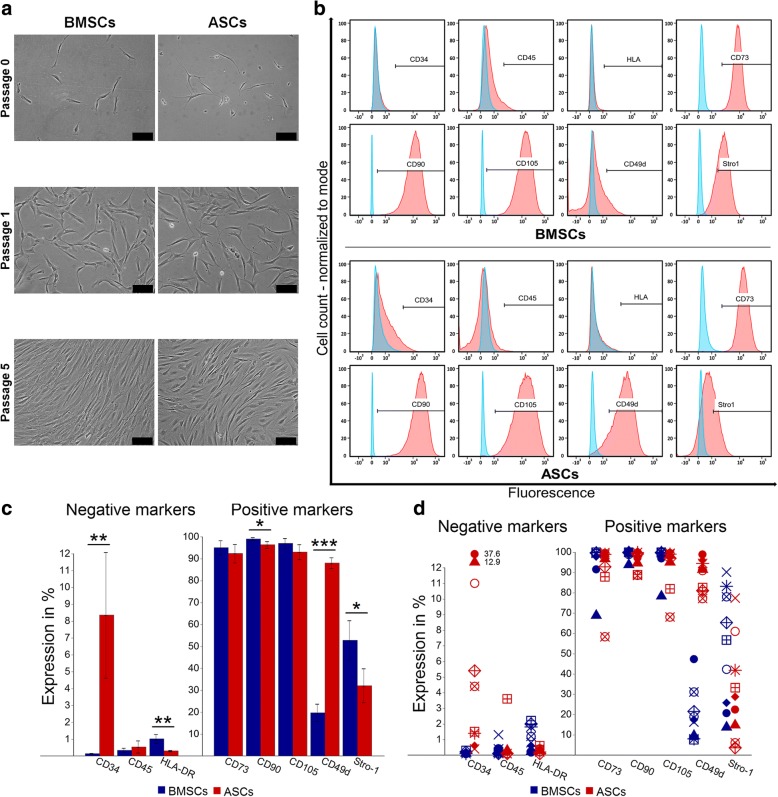
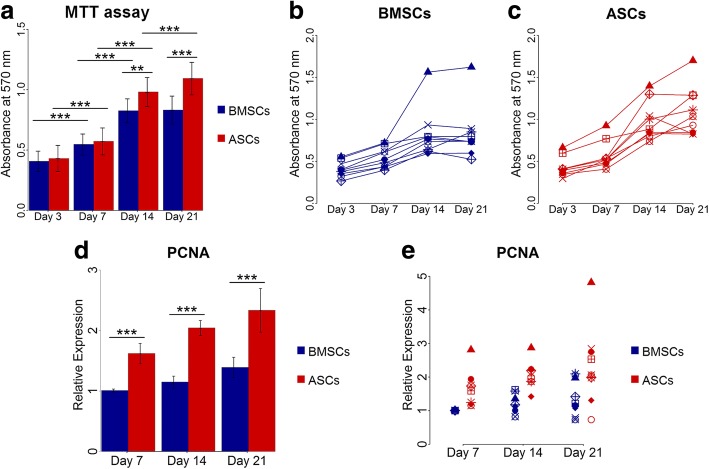
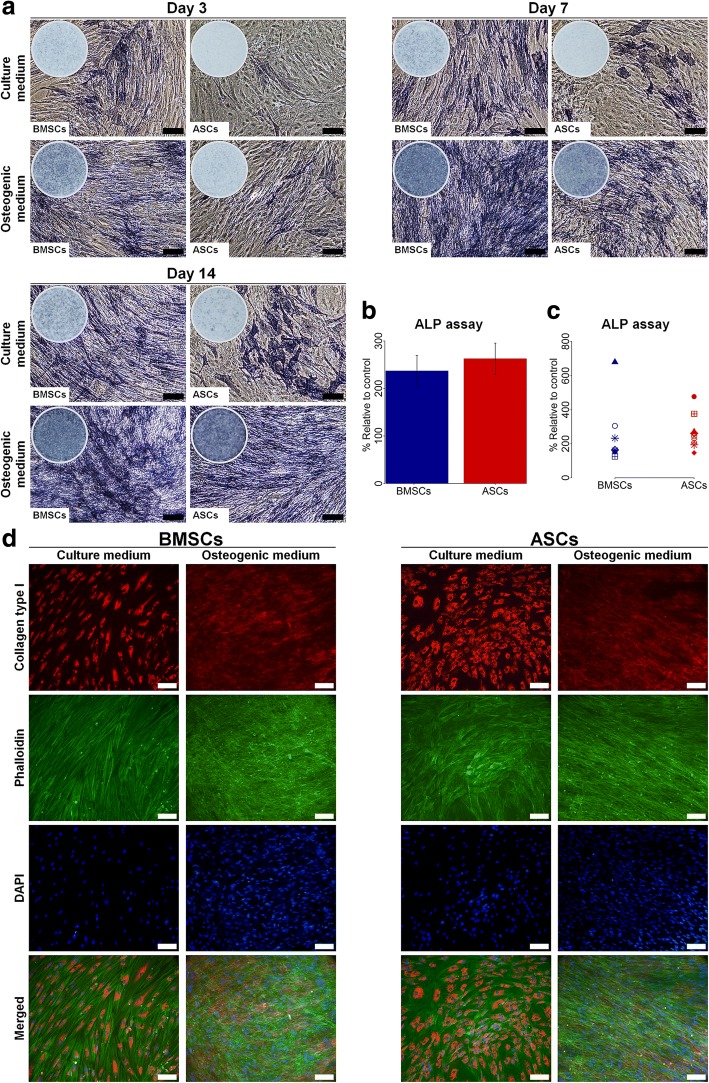
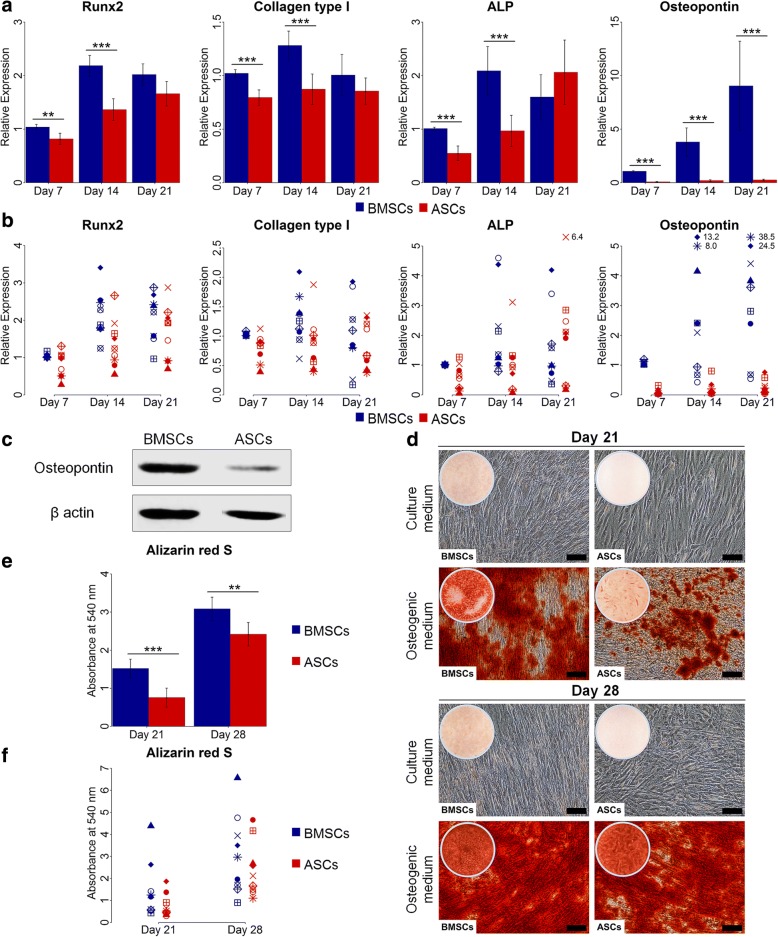
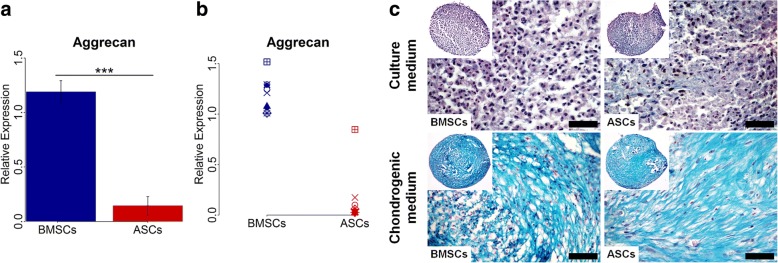
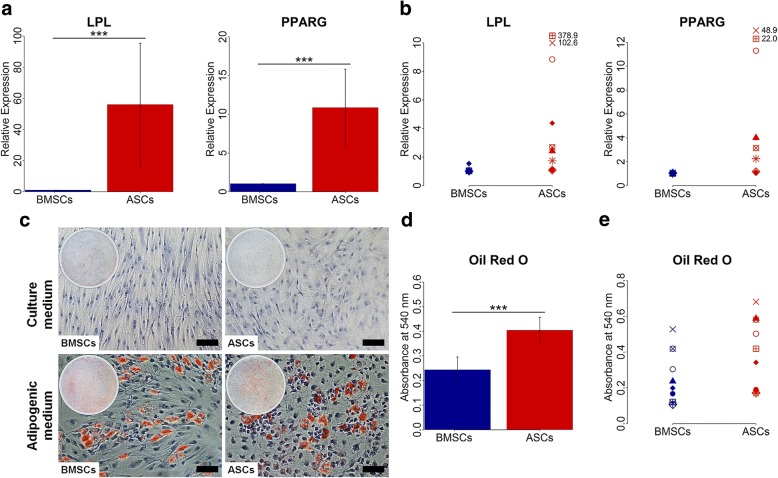
BACKGROUND: Adipose-derived stem cells (ASCs) have been introduced as an alternative to bone marrow mesenchymal stem cells (BMSCs) for cell-based therapy. However, different studies comparing ASCs and BMSCs have shown conflicting results. In fact, harvesting ASCs and BMSCs from different individuals might influence the results, making comparison difficult. Therefore, this study aimed to characterize donor-matched ASCs and BMSCs in order to investigate proliferation, differentiation potential and possible effects of donor variation on these mesenchymal stem cells (MSCs). METHODS: Human bone marrow and adipose tissue samples were obtained from nine donors aged 8-14. ASCs and BMSCs were isolated and characterized based on expression of surface markers using flow cytometry. The proliferation up to 21 days was investigated. Multi-lineage differentiation was induced using osteogenic, chondrogenic and adipogenic differentiation media. Alkaline phosphatase (ALP) activity was monitored and collagen type I formation was evaluated by immunofluorescence staining. In vitro multi-potency was studied using tissue-specific stains and lineage-specific gene expression. In addition, the osteogenic lineage was evaluated at protein level. RESULTS: Isolated ASCs and BMSCs from all donors demonstrated morphologic and immunophenotypic characteristics of MSCs, with expression of MSCs markers and negative expression of hematopoietic markers. Unlike BMSCs, ASCs showed high expression of CD49d and low expression of Stro-1. In general, ASCs showed significantly higher proliferation and adipogenic capacity with more lipid vesicle formation and expression of the adipogenesis-related genes than BMSCs. In contrast, BMSCs showed significantly higher osteogenic and chondrogenic capacity compared to ASCs. BMSCs had earlier and higher ALP activity, calcium deposition, and expression of the osteogenesis- and chondrogenesis-related genes and the osteogenesis-related protein osteopontin. Proliferation and differentiation capacity of ASCs and BMSCs varied significantly among the donors. CONCLUSIONS: ASCs and BMSCs showed tissue-specific differentiation abilities, but with significant variation between donors. The similarities and differences in the properties of ASCs and BMSCs should be taken into consideration when planning stem cell-based therapy.
Overview
The claims and statistics of this paper haven’t been checked yet.
Free: it reads the open-access text and checks the first 5 claims that cite a source we can check. Create a free account to check every claim.
Integrity signals
Registry
Cites
Statistics
Figures
Verification
Claims the paper makes
The claims and statistics of this paper haven’t been checked yet.
Free: it reads the open-access text and checks the first 5 claims that cite a source we can check. Create a free account to check every claim.
Claims other papers make about this one
Each is checked against this paper’s own text: does it say what the citing paper says it does?
The cited source says what the claim attributes to it.
In the citing paper
“Regarding bone tissue engineering, studies comparing the osteogenic potential of human BM-MSCs and ASCs have yielded mixed results.”
From Mesenchymal Stem/Stromal Cells: Immunomodulatory and Bone Regeneration Potential after Tumor Excision in Osteosarcoma Patients (2023) · cites this paper as [58]
The cited source says what the claim attributes to it.
In the citing paper
“Additionally, harvesting BM-MSCs is limited by the potential pain and morbidity associated with bone marrow aspiration, and only a small fraction (0.001–0.01%) of harvested bone marrow cells are MSCs [58,67].”
From Mesenchymal Stem/Stromal Cells: Immunomodulatory and Bone Regeneration Potential after Tumor Excision in Osteosarcoma Patients (2023) · cites this paper as [58]
The cited source says what the claim attributes to it.
In the citing paper
“Some suggest that BM-MSCs exhibit greater osteogenic capacity [58,59,60,61,62], while others propose that ASCs have equal or superior potential [58,63,64,65,66].”
From Mesenchymal Stem/Stromal Cells: Immunomodulatory and Bone Regeneration Potential after Tumor Excision in Osteosarcoma Patients (2023) · cites this paper as [58]
Self-check
Percentages, sums and reported differences re-computed from the paper’s own numbers.
The self-check needs the paper’s full text.
Citations
Cites
Multilineage potential of adult human mesenchymal stem cells
Pittenger, M. F., Mackay, A. M., Beck, S. C., Jaiswal, R. K., Douglas, R., Mosca, J. D., Moorman, M. A., Simonetti, D. W., Craig, S., & Marshak, D. R. (1999) · Science · doi:10.1126/science.284.5411.143 · Cited by 21,052 · cited 1×
“01%) of the harvested bone marrow cells are MSCs [5].”
BackgroundDominici, M., Le Blanc, K., Mueller, I., Slaper-Cortenbach, I., Marini, F. C., Krause, D. S., Deans, R. J., Keating, A., Prockop, D. J., & Horwitz, E. M. (2006) · Cytotherapy · doi:10.1080/14653240600855905 · Cited by 17,766 · cited 1×
“to a tissue culture flask), must express the surface markers CD73, CD90 and CD105 (≥ 90%), not express the hematopoietic markers CD14, CD34, CD45, CD19 and HLA-DR (≤ 2%), and should be able to undergo multi-lineage differentiation (osteogenic, adipogenic and chondrogenic) [4].”
BackgroundStöckl, S., Göttl, C., Grifka, J., & Grässel, S. (2013) · Cellular Physiology and Biochemistry · doi:10.1159/000350089 · Cited by 4,656
Komori, T., Yagi, H., Nomura, S., Yamaguchi, A., Sasaki, K., Deguchi, K., Shimizu, Y., Bronson, R. T., Gao, Y.-H., Inada, M., et al. (1997) · Cell · doi:10.1016/s0092-8674(00)80258-5 · Cited by 4,244 · cited 1×
“Runx2-deficient mice are reported to lack bone formation due to absence of osteoblasts [50].”
BackgroundMesenchymal stem cells reside in virtually all post-natal organs and tissues
Meirelles, L. D. S., Chagastelles, P. C., & Nardi, N. B. (2006) · Journal of Cell Science · doi:10.1242/jcs.02932 · Cited by 2,485 · cited 1×
“Discussion Adult MSCs, isolated from different connective tissues, have a fundamental role in maintenance and regeneration of body tissues [30].”
BackgroundChamberlain, G., Fox, J., Ashton, B., & Middleton, J. (2007) · Stem Cells · doi:10.1634/stemcells.2007-0197 · Cited by 2,381
Bourin, P., Bunnell, B. A., Casteilla, L., Dominici, M., Katz, A. J., March, K. L., Redl, H., Rubin, J. P., Yoshimura, K., & Gimble, J. M. (2013) · Cytotherapy · doi:10.1016/j.jcyt.2013.02.006 · Cited by 1,890 · cited 1×
“Although significant biologic differences have been shown in MSCs derived from different sources [12–14], ASCs and BMSCs have comparable characteristics when it comes to morphology and surface proteins [15].”
BackgroundLiang, H., Liang, P., Xu, Y., Wu, J., Liang, T., & Xu, X. (2009) · Journal of Neurotrauma · doi:10.1089/neu.2008.0850 · Cited by 1,750
Hass, R., Kasper, C., Böhm, S., & Jacobs, R. (2011) · Cell Communication and Signaling · doi:10.1186/1478-811x-9-12 · Cited by 1,748
Stolzing, A., Jones, E., McGonagle, D., & Scutt, A. (2008) · Mechanisms of Ageing and Development · doi:10.1016/j.mad.2007.12.002 · Cited by 1,195 · cited 1×
“It has been reported that stem cell yield, proliferation and differentiation properties of BMSCs and ASCs are negatively affected by age [31, 32].”
Background
Cited by
Items 201–300 of 540
3D printed gelatin-genipin scaffolds for temporomandibular joint cartilage regeneration
Helgeland, E., Mohamed‐Ahmed, S., Shanbhag, S., Pedersen, T. Ø., Rosén, A., Mustafa, K., & Rashad, A. (2021) · Biomedical Physics & Engineering Express · doi:10.1088/2057-1976/ac1e68 · Cited by 15
Self-citationParmentier, L., D‘Haese, S., Duquesne, J., Bray, F., der Meeren, L. V., Skirtach, A. G., Rolando, C. H., Dmitriev, R. I., & Vlierberghe, S. V. (2023) · International Journal of Biological Macromolecules · doi:10.1016/j.ijbiomac.2023.127619 · Cited by 14
Khosrowpour, Z., Hashemi, S. M., Mohammadi‐Yeganeh, S., Simorgh, S., Eftekhari, B. S., Milan, P. B., Kundu, S. C., & Gholipourmalekabadi, M. (2024) · ACS Omega · doi:10.1021/acsomega.3c06175 · Cited by 16
Electrical signature of heterogeneous human mesenchymal stem cells
Tsai, T., Vyas, P. D., Crowell, L. L., Tran, M., Ward, D. W., Qin, Y. S., Castro, A., & Adams, T. N. G. (2024) · Electrophoresis · doi:10.1002/elps.202300202 · Cited by 14
“HMSCs cell fate, gene, and surface protein expression vary based on source [6] and cell culture methods [8].”
InfluentialGetova, V. E., Orozco-García, E., Palmers, S., Krenning, G., Narváez-Sánchez, R., & Harmsen, M. C. (2024) · Tissue Engineering and Regenerative Medicine · doi:10.1007/s13770-024-00650-4 · Cited by 14
“ASC are multipotent plastic adherent highly proliferative cells [2] that express pericyte markers and stimulate vascularisation in vitro and clinically [3–5].”
BackgroundBaniameri, S., Aminianfar, H., Gharehdaghi, N., Yousefi‐Koma, A., Mohaghegh, S., Nokhbatolfoghahaei, H., & Khojasteh, A. (2024) · Journal of Cellular Physiology · doi:10.1002/jcp.31497 · Cited by 15
“Some studies shown that the number of stem cells present in adipose tissue is 1000 ‐ 100 times more than in bone marrow (Tsuji 2014; Trevor et al. 2020; Mohamed ‐ Ahmed et al. 2018).”
Molina, N., Torelli, F., Mohamed‐Ahmed, S., Hutchinson, D. J., Gjerde, C., Rashad, A., Mustafa, K., & Malkoch, M. (2025) · Chemistry of Materials · doi:10.1021/acs.chemmater.5c00063 · Cited by 14
“12,13 A key feature for clinical applications is the incorporation of chemical groups that enable on-demand covalent cross-linking of hydrogel networks through photoinitiation using photo-initiators such as lithium phenyl-2,4,6-trimethylbenzoyl-Received phosphinate (LAP).”
Self-citationContact osteogenesis by biodegradable 3D-printed poly(lactide-co-trimethylene carbonate)
Hassan, M. N., Yassin, M. A., Eltawila, A. M., Aladawi, A. E., Mohamed‐Ahmed, S., Suliman, S., Kandil, S. H., & Mustafa, K. (2022) · Biomaterials Research · doi:10.1186/s40824-022-00299-x · Cited by 14
“The hBMSCs were isolated from bone marrow aspirates, characterized according to our protocols [29].”
MethodSelf-citationHyväri, L., Vanhatupa, S., Ojansivu, M., Kelloniemi, M., Pakarinen, T.-K., Hupa, L., & Miettinen, S. (2023) · Cells · doi:10.3390/cells12020224 · Cited by 14
Immunomodulatory differences between mesenchymal stem cells from different oral tissues
Cao, C., Maska, B., Malik, M. A., Tagett, R., & Kaigler, D. (2023) · Heliyon · doi:10.1016/j.heliyon.2023.e23317 · Cited by 15
“…studies designed to minimize biological background variables of the donor, where ASCs and BMSCs from the same donor were compared, it was determined that ASC were significantly more proliferative and adipogenic, whereas BMSCs exhibited significantly higher osteogenic and chondrogenic capacity [26].”
Morita, K., Schol, J., Volleman, T. N. E., Sakai, D., Sato, M., & Watanabe, M. (2021) · Applied Sciences · doi:10.3390/app11083673 · Cited by 16
Waletzko‐Hellwig, J., Dau, M., Krebs, V., & Bader, R. (2023) · Journal of Biomedical Materials Research Part B Applied Biomaterials · doi:10.1002/jbm.b.35281 · Cited by 13
Leptin deficiency impairs adipogenesis and browning response in mouse mesenchymal progenitors
Veličković, K., Leija, H. A. L., Kosic, B., Sacks, H. S., Symonds, M. E., & Sottile, V. (2023) · European Journal of Cell Biology · doi:10.1016/j.ejcb.2023.151342 · Cited by 13
The Regenerative Marriage Between High-Density Platelet-Rich Plasma and Adipose Tissue
Everts, P. A., Podesta, L., Lana, J. F., Shapiro, G. C., Domingues, R. B., van Zundert, A. A. J., & Alexander, R. W. (2025) · International Journal of Molecular Sciences · doi:10.3390/ijms26052154 · Cited by 15
Zhang, L., Yuan, X., Song, R., Yuan, Z., Zhao, Y., & Zhang, Y. (2025) · Journal of Advanced Research · doi:10.1016/j.jare.2025.04.008 · Cited by 15
“Notably, ADSCs exhibit superior proliferative capacity and enhanced adipogenic predisposition compared to BMSCs [35].”
Burchak, V., Koch, F., Siebler, L., Haase, S., Horner, V. K., Kempter, X., Stark, G. B., Schepers, U., Grimm, A., Zimmermann, S., et al. (2022) · International Journal of Molecular Sciences · doi:10.3390/ijms23147939 · Cited by 13
Suyama, T. L., Takemoto, Y., Miyauchi, H., Kato, Y., Matsuzaki, Y., & Kato, R. (2022) · Inflammation and Regeneration · doi:10.1186/s41232-022-00214-w · Cited by 13
Martín, V., Bettencourt, A., Santos, C. F., Fernandes, M. H., & Gomes, P. S. (2023) · Cells · doi:10.3390/cells12182244 · Cited by 17
Cruz-Pavlovich, F. J. S., Bolaños-Chang, A. J., Rio-Murillo, X. I. D., Aranda-Preciado, G. A., Razura-Ruiz, E. M., Santos, A., & Navarro‐Partida, J. (2024) · Cells · doi:10.3390/cells13020179 · Cited by 15
RNA-Based Strategies for Cardiac Reprogramming of Human Mesenchymal Stromal Cells
Mueller, P., Wolfien, M., Ekat, K., Lang, C. I., Koczan, D., Wolkenhauer, O., Hahn, O., Peters, K., Lang, H., David, R., et al. (2020) · Cells · doi:10.3390/cells9020504 · Cited by 13
The Role of Metabolic Changes in Shaping the Fate of Cancer-Associated Adipose Stem Cells
Cantini, G., Franco, A. D., Mannelli, M., Scimè, A., Maggi, M., & Luconi, M. (2020) · Frontiers in Cell and Developmental Biology · doi:10.3389/fcell.2020.00332 · Cited by 13
Jin, L., Lu, N., Zhang, W., & Zhou, Y. (2021) · Cytotechnology · doi:10.1007/s10616-021-00486-z · Cited by 14
“Compared with embryonic stem cells, BM-MSCs does not involve ethical tissue, but the harvest of bone marrow may cause damage to donor, which limits its application (Samih et al. 2018).”
BackgroundPhenotypic and Functional Characterization of Bovine Adipose-Derived Mesenchymal Stromal Cells
Powell, J. G., Pokharel, S., Maldonado, V. V., & Samsonraj, R. M. (2024) · Animals · doi:10.3390/ani14091292 · Cited by 14
Gu, Z., Long, J., Li, Y., Wang, X., & Wang, H. (2019) · PubMed · Cited by 12
RetractedWang, L., Wu, Y., Yao, R.-Q., Li, Y., Wei, Y.-R., Cao, Y., Zhang, Z., Wu, M., Zhu, H., Yao, Y., et al. (2023) · Nano Today · doi:10.1016/j.nantod.2023.101865 · Cited by 12
Lau, C. S., Chua, J., Prasadh, S., Lim, J., Saigo, L., & Goh, B. T. (2023) · Biomedicines · doi:10.3390/biomedicines11082274 · Cited by 14
Surico, P. L., Scarabosio, A., Miotti, G., Grando, M., Salati, C., Parodi, P. C., Spadea, L., & Zeppieri, M. (2024) · World Journal of Stem Cells · doi:10.4252/wjsc.v16.i2.89 · Cited by 13
Liang, Z.-J., Huang, D., Nong, W., Mo, J.-P., Zhu, D., Wang, M., Chen, M., Wei, C., & Li, H.-M. (2021) · Tissue and Cell · doi:10.1016/j.tice.2021.101506 · Cited by 12
Vater, C., Männel, C., Bolte, J., Tian, X., Goodman, S. B., & Zwingenberger, S. (2022) · Current Stem Cell Research & Therapy · doi:10.2174/1574888x17666220215100732 · Cited by 12
Lobov, A. A., & Malashicheva, A. (2022) · Biological Communications · doi:10.21638/spbu03.2022.104 · Cited by 13
“Both cell types have increased ALP-activity, collagen I production and expression of Runx 2, and osteopontin and calcium deposition, but BM-MSCs have the greatest level of proosteogenic gene expression on the 14th day (Mohamed-Ahmed et al., 2018).”
BackgroundHelgeland, E., Pedersen, T. Ø., Rashad, A., Johannessen, A. C., Mustafa, K., & Rosén, A. (2020) · Journal of Oral Science · doi:10.2334/josnusd.19-0327 · Cited by 12
“Real-time quantitative polymerase chain reaction (RT-qPCR) Two weeks after implantation, samples were harvested for RNA extraction following established protocols [17].”
MethodSelf-citationSawada, H., Kazama, T., Nagaoka, Y., Arai, Y., Kano, K., Uei, H., Tokuhashi, Y., Nakanishi, K., & Matsumoto, T. (2023) · Journal of Orthopaedic Surgery and Research · doi:10.1186/s13018-023-03678-9 · Cited by 11
“A previous study using donor-matched MSCs found that bone marrow MSCs showed higher osteogenic and chondrogenic capacity but less adipogenic capacity compared to ASCs [5, 6].”
ResultLi, N., Hu, L., Li, J., Yang, Y., Bao, Z., Xu, Z., Chen, D., Tang, J., & Gu, Y. (2024) · Frontiers in Immunology · doi:10.3389/fimmu.2024.1357378 · Cited by 11
Hu, C., Zaitseva, T. S., Alcazar, C. A., Tabada, P., Sawamura, S. J., Yang, G., Borrelli, M. R., Wan, D. C., Nguyen, D. H., Paukshto, M. V., et al. (2020) · Frontiers in Bioengineering and Biotechnology · doi:10.3389/fbioe.2020.00689 · Cited by 11
Zacharias, S., Welty, M., Sand, T. T., & Black, L. L. (2021) · Research in Veterinary Science · doi:10.1016/j.rvsc.2021.09.015 · Cited by 13
Brooks, P. T., Munthe‐Fog, L., Rieneck, K., Clausen, F. B., Rivera, O. B., Haastrup, E. K., Fischer‐Nielsen, A., & Svalgaard, J. D. (2021) · Adipocyte · doi:10.1080/21623945.2021.2000696 · Cited by 11
“expression of genes involved in adipogenesis [30].”
Ofiteru, A., Becheru, D. F., Gharbia, S., Baltă, C., Herman, H., Mladin, B., Ioniţă, M., Hermenean, A. O., & Burns, J. S. (2020) · Cells · doi:10.3390/cells9122559 · Cited by 11
Liang, D., Song, G., & Zhang, Z. (2022) · Experimental and Therapeutic Medicine · doi:10.3892/etm.2022.11238 · Cited by 10
Everts, P. A., Flanagan, G., & Podesta, L. (2022) · Springer eBooks · doi:10.1007/978-3-030-92042-5_62 · Cited by 12
Joshi, J. M., Muttigi, M. S., Upadhya, R., & Seetharam, R. N. (2023) · Immunopharmacology and Immunotoxicology · doi:10.1080/08923973.2023.2180388 · Cited by 10
“This can be observed in a study which showed tissuedependent differentiation abilities, where bone marrowderived MSCs showed higher osteogenic and adipogenic potential, and this also differed based on the donors[7].”
BackgroundResultAdult Stem Cells: Mesenchymal Stromal Cells, Endothelial Progenitor Cells, and Pericytes
El-Derby, A. M., Ahmed, T. A., El-Hameed, A. M. A., Elkhenany, H. A., Saad, S. M., & El‐Badri, N. (2020) · Learning materials in biosciences · doi:10.1007/978-3-030-55359-3_4 · Cited by 10
Carmona-Luque, M. D., Paco-Meza, L.-M., Ortega, R., Cañadillas, S., Caballero‐Villarraso, J., Blanco, A., & Herrera, C. (2021) · Pathology - Research and Practice · doi:10.1016/j.prp.2021.153756 · Cited by 11
Pandey, V., Madi, S., & Gupta, P. K. (2022) · Journal of Clinical Orthopaedics and Trauma · doi:10.1016/j.jcot.2022.101804 · Cited by 12
Human Adipose-Derived Stem Cells Delay Muscular Atrophy after Peripheral Nerve Injury in Rats
Qu, S., Ma, N., Wang, W., Chen, S., Wu, Q., Li, Y., & Yang, Z. (2022) · Cell Biochemistry and Biophysics · doi:10.1007/s12013-022-01082-4 · Cited by 10
“fat tissue of healthy donors who underwent liposuction [14].”
BackgroundRejuvenation of Senescent Mesenchymal Stem Cells to Prevent Age-Related Changes in Synovial Joints
Sekelova, T., Danišovič, Ľ., & Čeháková, M. (2023) · Cell Transplantation · doi:10.1177/09636897231200065 · Cited by 11
Sendera, A., Pikuła, B., & Banaś-Ząbczyk, A. (2023) · Frontiers in Bioscience-Landmark · doi:10.31083/j.fbl2811285 · Cited by 10
“Additionally, the MSC origin may be crucial and adaptation of the source tissue for medical purposes may depend on the disease [1,24].”
BackgroundZawadzka-Knefel, A., Rusak, A., Mrozowska, M., Machałowski, T., Żak, A. M., Haczkiewicz-Leśniak, K., Kulus, M., Kuropka, P., Podhorska‐Okołów, M., & Skośkiewicz−Malinowska, K. (2023) · Frontiers in Bioengineering and Biotechnology · doi:10.3389/fbioe.2023.1254506 · Cited by 10
Hamann, A., Thomas, A. K., Kozisek, T., Farris, E., Lück, S., Zhang, Y., & Pannier, A. K. (2020) · Experimental Biology and Medicine · doi:10.1177/1535370220913501 · Cited by 10
Guda, T., Shah, J. S., Lundquist, B., Macaitis, J. M., Pérez, M. L., Pfau, M. R., Beltran, F. O., Schmitt, C. W., Corbin, E. M., Grunlan, M. A., et al. (2024) · Journal of Biomedical Materials Research Part B Applied Biomaterials · doi:10.1002/jbm.b.35516 · Cited by 9
Emerging Role of Mesenchymal Stromal Cell and Exosome Therapies in Treating Cognitive Impairment
Tew, V. K., Barathan, M., Nordin, F., Law, J. X., & Ng, M. H. (2025) · Pharmaceutics · doi:10.3390/pharmaceutics17030284 · Cited by 9
Ghavam, A., Sheikhnia, F., Heidari, M. M., Valilo, M., Mahmoudnejad, Z., & Gür, S. (2025) · BMC Urology · doi:10.1186/s12894-025-01861-0 · Cited by 9
Gao, M., Zhang, J., Li, C., Guo, C., Wang, X., Hu, Y., & Xu, W. (2025) · Materials Today Communications · doi:10.1016/j.mtcomm.2025.113551 · Cited by 9
Luteolin’s Potential in Managing Osteoporosis and Bone Metabolism Disorders: Preclinical Insights
Du, J., Qin, W., Wen, F., Zhao, D., Yin, X., Guo, Z., Feng, Q., Gu, E., Pan, Z., & Wang, L. (2025) · Drug Design Development and Therapy · doi:10.2147/dddt.s547141 · Cited by 9
“74 Luteolin may promote osteogenic differentiation of rat BMSCs by regulating β-catenin and Cyclin D1 expression, thereby increasing ALP activity.”
Mesenchymal stem cells in neurological disorders: Insights from clinical trials
Araújo, B. S. G. D. S. P., Serrenho, I., da Silva, A. V., Marceta, B. M., & Baltazar, G. (2025) · Regenerative Therapy · doi:10.1016/j.reth.2025.10.020 · Cited by 10
“The procedure for obtaining bone marrow mesenchymal stem cells (BM-MSCs) typically involves aspiration of bone marrow from the iliac crest [11].”
Bruschi, M., Sahu, N., Singla, M., Grandi, F. C., Agarwal, P., Chu, C. R., & Bhutani, N. (2021) · Tissue Engineering Part A · doi:10.1089/ten.tea.2021.0172 · Cited by 9
“48,49 An additional bottleneck is cellular senescence during culture and expansion of MSCs, 50 issues that affect MSCs from alternative tissues such as adipose or umbilical cord as well.”
Falanga, V., Grada, A. A., Otero-Viñas, M., Lin, X., Yufit, T., Fiore, D., & Carson, P. A. (2022) · Surgical Technology Online · doi:10.52198/22.sti.40.wh1493 · Cited by 12
Recent Emerging Trend in Stem Cell Therapy Risk Factors
Pourjabbar, B., Shams, F., Moghadam, M. H., Ahani‐Nahayati, M., Azari, A., Sefat, F., & Keshel, S. H. (2022) · Current Stem Cell Research & Therapy · doi:10.2174/1574888x18666221223104859 · Cited by 9
Zhao, L., Liu, S., Peng, Y., & Zhang, J. (2024) · Scientific Reports · doi:10.1038/s41598-024-69629-4 · Cited by 9
“BMSCs exhibit the most pronounced difference between days 14 and 17 of differentiation, and the difference between days 17 and 21 of differentiation is not significant 7 .”
Quiñones, E. D., Wang, M., Liu, K.-T., Lu, T.-Y., Lan, G., Lin, Y., Chen, Y., Shen, T., Wu, P.-H., Hsiao, Y., et al. (2024) · Materials Today Bio · doi:10.1016/j.mtbio.2024.101333 · Cited by 14
“…concentration of stem cells yielded from adipose tissue is over 500 times larger than those found in other stem cell sources, such as bone marrow [10 – 12]. hASCs have been found capable of promoting human proliferation by both directly contacting cells and paracrine activation in wound healing.”
Adipose-derived mesenchymal stromal/stem cells in type 1 diabetes treatment
Sood, V., Ricioli, H., Njoku, G. C., Primavera, R., Dietrich, S., Thakor, A. S., Pociot, F., & Yarani, R. (2025) · Communications Biology · doi:10.1038/s42003-025-08244-z · Cited by 10
“An increase in pancreatic duodenal homeobox (PDX-1) seen in multiple studies conducted in vitro in animal models 23,30 is known to play a role in β cell differentiation by regulating normal pancreatic development and improving survival of graft transplants in STZ-induced diabetic mice 96,97 .”
InfluentialSiengdee, P., Oster, M., Reyer, H., Viergutz, T., Wimmers, K., & Ponsuksili, S. (2020) · Frontiers in Cell and Developmental Biology · doi:10.3389/fcell.2020.601212 · Cited by 9
Arshad, M., Jalil, F., Jaleel, H., & Ghafoor, F. (2023) · Molecular Biology Reports · doi:10.1007/s11033-023-08277-9 · Cited by 9
A Review of the Role of Tendon Stem Cells in Tendon-Bone Regeneration
Chen, J., Jiang, C., Yin, L., Liu, Y., He, Y., Li, S., & Shen, H. (2023) · Medical Science Monitor · doi:10.12659/msm.940805 · Cited by 9
Lin, Y., Hsiao, L., Wu, M., Chen, Y., Lin, Y., Chang, C., Chung, W., Chen, K., Lu, C., Chen, W., et al. (2023) · International Journal of Molecular Sciences · doi:10.3390/ijms25010134 · Cited by 9
“Among the various MSC types, AdMSCs are distinguishable for their ease of isolation from adipose tissue harvested from multiple anatomical sites, which contain a higher yield of MSCs [21].”
BackgroundKazemi, T., Mohammadpour, A. A., Matin, M. M., SHahri, N. M., Dehghani, H., & Riabi, S. H. K. (2021) · Regenerative Medicine · doi:10.2217/rme-2021-0062 · Cited by 9
Safoine, M., Côté, A., Leloup, R., Hayward, C. J., Campagna, M.-A. P., Ruel, J., & Fradette, J. (2022) · Biomedical Materials · doi:10.1088/1748-605x/ac84b9 · Cited by 9
Aydin, M. S., Nicolae, C.-V., Campodoni, E., Mohamed‐Ahmed, S., Kadousaraei, M. J., Yassin, M. A., Gjerde, C., Sandri, M., Stancu, I., Rashad, A., et al. (2025) · ACS Applied Materials & Interfaces · doi:10.1021/acsami.5c03945 · Cited by 8
Self-citationStrategies to improve the effect of mesenchymal stem cell therapy on inflammatory bowel disease
Shi, M.-Y., Liu, L., & Yang, F. (2022) · World Journal of Stem Cells · doi:10.4252/wjsc.v14.i9.684 · Cited by 8
Mesenchymal stem cells: diversity
Grabovyi, O. M., Nevmerzhytska, N. M., Yaremenko, L. M., Kostynskyi, H. B., Demydchuk, A. S., & Kondaurova, H. Y. (2023) · Pathologia · doi:10.14739/2310-1237.2023.1.272938 · Cited by 8
Osteoarthritis—The Role of Mesenchymal Stem Cells in Cartilage Regeneration
Gherghel, R., Macovei, L. A., Burlui, A., Cardoneanu, A., Rezuş, I.-I., Mihai, I. R., & Rezuş, E. (2023) · Applied Sciences · doi:10.3390/app131910617 · Cited by 11
Çevik, Z. B. Y., Karaman, O., & Topaloğlu, N. (2023) · Lasers in Medical Science · doi:10.1007/s10103-023-03941-9 · Cited by 8
“In general, a significant amount of calcium deposition occurs in late time points of osteogenic differentiation, indicating the mineralization of the bone matrix [23, 49].”
BackgroundMultilineage-differentiating stress-enduring cells: a powerful tool for tissue damage repair
Que, H., Mai, E., Hu, Y., Li, H., Zheng, W., Jiang, Y., Han, F., Li, X., Gong, P., & Gu, J. (2024) · Frontiers in Cell and Developmental Biology · doi:10.3389/fcell.2024.1380785 · Cited by 11
Aleynik, D. Y., Charykova, I. N., Rubtsova, Y. P., Linkova, D. D., Farafontova, E. A., & Николаевна, Е. М. (2024) · International Journal of Molecular Sciences · doi:10.3390/ijms25126290 · Cited by 8
Bollmann, A., Sons, H. C., Schiefer, J. L., Fuchs, P. C., Windolf, J., & Suschek, C. V. (2022) · Biomedicines · doi:10.3390/biomedicines10123071 · Cited by 8
Isolation and Identification of Bone Marrow Mesenchymal Stem Cells from Forest Musk Deer
Luo, W., Geng, Y., Gao, M., Cao, M., Wang, J., Yang, J. F., Sun, C., & Yan, X. (2022) · Animals · doi:10.3390/ani13010017 · Cited by 8
Influence of Bone Substitutes on Mesenchymal Stromal Cells in an Inflammatory Microenvironment
Shanbhag, S., Rana, N., Suliman, S., Idris, S. B., Mustafa, K., & Stavropoulos, A. (2022) · International Journal of Molecular Sciences · doi:10.3390/ijms24010438 · Cited by 8
Self-citationConvergent alteration of the mesenchymal stem cell heterogeneity in adipose tissue during aging
Liu, Q., Zhao, Y., Wang, Q., Li, Y., Fu, X., & Xiao, R. (2023) · The FASEB Journal · doi:10.1096/fj.202300807r · Cited by 8
Ning, T., Guo, H., Ma, M., & Zha, Z. (2023) · Journal of Orthopaedic Surgery and Research · doi:10.1186/s13018-023-04335-x · Cited by 8
“…cells (hBM-SCs) are closely related to the process of bone metabolism [9]. hBMSCs are mainly located in the bone marrow cavity and were multipotent stem cells with the potential for self-renewal and multidirectional differentiation (adipocytes, chondrocytes, myoblasts, and osteoblasts) [10, 11].”
BackgroundPonsuksili, S., Siengdee, P., Li, S., Kriangwanich, W., Oster, M., Reyer, H., & Wimmers, K. (2024) · BMC Genomics · doi:10.1186/s12864-024-10308-z · Cited by 8
“Various source of tissue for derived MSCs influence functional properties of the cells was reported [10–13].”
BackgroundLiao, W. M., Lü, J., Wang, Q., Yan, S. R., Li, Y., Zhang, Y., Wang, P., Jiang, Q. Y., & Gu, N. (2022) · Frontiers in Bioengineering and Biotechnology · doi:10.3389/fbioe.2022.872149 · Cited by 9
“The ALP activity level (an important indicator for osteoblast differentiation) and formation of mineralized nodule were considered as two specific stages of osteogenic differentiation (Mohamed-Ahmed et al., 2018).”
BackgroundVariant-to-function approaches for adipose tissue: Insights into cardiometabolic disorders
Metz, S., Belanich, J. R., Claussnitzer, M., & Kilpeläinen, T. O. (2025) · Cell Genomics · doi:10.1016/j.xgen.2025.100844 · Cited by 9
“148 Using cellular perturbation methods to assess GWAS variants in adipocytes Validating the effect of a GWAS variant on its effector gene and cellular phenotypes requires either precise allele replacement through DNA sequence editing or modification of the corresponding regulatory element in the…”
Park, J., Choi, Y., Shin, J., Yang, H., Jeong, S.-H., & Park, I. (2023) · Stem Cell Research & Therapy · doi:10.1186/s13287-023-03383-8 · Cited by 7
“Not only does adipose tissue give a higher MSC yield, but it also yields ADSCs through a less painful and minimally invasive extraction procedure compared with that used for bone marrow mesenchymal stem cells (BM-MSCs) [2].”
BackgroundResultArtificial trachea design, construction, and application: Materials, cells, and growth factors
Feng, X., Hu, Y., Cao, L., & Liu, L. (2023) · Applied Materials Today · doi:10.1016/j.apmt.2023.101968 · Cited by 8
Li, Y., Yang, Y., Zhu, L., Xie, S.-Q., Guo, L., Zhang, Z., Zhe, C., Li, W., & Liu, F. (2024) · Biomedicine & Pharmacotherapy · doi:10.1016/j.biopha.2024.117349 · Cited by 8
Oontawee, S., Siriarchavatana, P., Rodprasert, W., Padeta, I., Pamulang, Y. V., Somparn, P., Pisitkun, T., Nambooppha, B., Sthitmatee, N., Nan, D. N., et al. (2025) · BMC Veterinary Research · doi:10.1186/s12917-024-04465-2 · Cited by 7
Shah, S., Mudigonda, S., Mitha, A. P., SALO, P. T., & Krawetz, R. J. (2020) · BioEssays · doi:10.1002/bies.202000215 · Cited by 7
Bezerra, A. F., Alves, J. P. M., Fernandes, C. C. L., Cavalcanti, C. M., Silva, M. R. L., Conde, A. J. H., Tetaping, G. M., Ferreira, A. C. A., Melo, L. M., Rodrigues, A. P. R., et al. (2022) · Veterinary Research Communications · doi:10.1007/s11259-022-09995-4 · Cited by 7
“2020), tissue source in goats and humans (Somal et al. 2016; Mohamed-Ahmed et al. 2018), and nutritional and metabolic status in humans (Mana et al.”
BackgroundShanbhag, S., Al‐Sharabi, N., Mohamed‐Ahmed, S., Gruber, R., Kristoffersen, E. K., & Mustafa, K. B. E. (2022) · Frontiers in Bioengineering and Biotechnology · doi:10.3389/fbioe.2022.969275 · Cited by 7
Self-citationCremona, M., Rusconi, G., Ferrario, A., Mariotta, L., Gola, M., & Soldati, G. (2023) · Biomedicines · doi:10.3390/biomedicines11092533 · Cited by 7
Tie, K., Cai, J., Shi, H., Li, X., Shangguan, Y., & Chen, L. (2022) · Arthroscopy The Journal of Arthroscopic and Related Surgery · doi:10.1016/j.arthro.2022.01.021 · Cited by 9
HSPB7 oppositely regulates human mesenchymal stromal cell-derived osteogenesis and adipogenesis
Zhang, S., van de Peppel, J., Koedam, M., van Leeuwen, J. P. T. M., & van der Eerden, B. C. J. (2023) · Stem Cell Research & Therapy · doi:10.1186/s13287-023-03361-0 · Cited by 7
“The discrepant observation with our work may, apart from differences in methodologies, be due to different molecular mechanisms underlying the lineage commitment process between BMSCs versus adipose tissue-derived MSCs (ASC), as ASCs have significantly higher adipogenic capacity, while BMSCs have pronounced osteogenic…”
BackgroundClinical Applications of PRP: Musculoskeletal Applications, Current Practices and Update
Aljefri, A. M., O’Brien, C., Tan, T. J., Sheikh, A. M., Ouellette, H. A., & Bauones, S. (2023) · CardioVascular and Interventional Radiology · doi:10.1007/s00270-023-03567-y · Cited by 7
“Previous studies have shown a greater osteogenic and chondrogenic differentiation potential of bone marrow MSCs as compared to adipose derived MSCs, while synovial MSCs have the greatest chondrogenic potential and the lowest osteogenic potential [63, 64.”
ResultLee, S.-J., Shin, J., Kwon, M.-A., Lee, K. B., Kim, H.-J., Lee, J.-H., Kang, H. S., Jun, J. K., Cho, S., & Kim, I. G. (2023) · Stem Cells International · doi:10.1155/2023/8815888 · Cited by 7
Feng, Q., Xuezhen, S., Li, H., Zhou, J., Bangtuo, Y., Li, C., Wei, Q., Yujie, L., & Mingzhu, Z. (2022) · Cellular and Molecular Biology · doi:10.14715/cmb/2021.67.6.33 · Cited by 7
Baysal, E., Al‐Sharabi, N., Mustafa, K. B. E., Costea, D. E., Brennan, M. Á., & Suliman, S. (2025) · Stem Cell Reviews and Reports · doi:10.1007/s12015-025-11015-2 · Cited by 6
“6.2 [ 21].”
InfluentialSelf-citationSong, Q., Zhou, D., Du, J., Li, T., He, X., Wang, J., Chao, A., Yu, B., & Shan, C. (2023) · Annals of Translational Medicine · doi:10.21037/atm-22-1121 · Cited by 6
“There are multiple factors that regulate the osteogenic and adipogenic differentiation of bone marrow mesenchymal stem cells, including ageing, epigenetic modifications, source, autophagy, inflammatory environment and intracellular signals (5-10).”
BackgroundPark, J. S., Kim, D. Y., & Hong, H. S. (2024) · Heliyon · doi:10.1016/j.heliyon.2024.e24554 · Cited by 6
“Nevertheless, because ADSCs are committed to adipose tissue, their differentiation potential may be less robust than that of BMSCs, and their osteogenic activity may be suboptimal [18].”
BackgroundEpanomeritakis, I. E., Eleftheriou, A., Economou, A., Lu, V., & Khan, W. S. (2024) · Bioengineering · doi:10.3390/bioengineering11070656 · Cited by 6
“A potential explanation is the heterogeneity arising from the use of different tissue sources, in vitro preparation methods, and the difficulty in stratifying a heterogenous population of donors and recipients [78,82,88].”
BackgroundKornmuller, A., Cooper, T. T., Jani, A., Lajoie, G., & Flynn, L. E. (2022) · Journal of Biomedical Materials Research Part A · doi:10.1002/jbm.a.37459 · Cited by 6
Kozisek, T., Samuelson, L., Hamann, A., & Pannier, A. K. (2023) · Journal of Biological Engineering · doi:10.1186/s13036-023-00394-0 · Cited by 6
“…under extensive research for applications in cell-based therapies [1–4] due to their ability to be easily isolated from numerous adult tissues [5–7], their immunomodulatory [8] and differentiation capacities [9], as well as their ability to home to sites of inflammation upon transplantation…”
Background
Metadata
- Authors
- Mohamed-Ahmed, S., Fristad, I., Lie, S. A., Suliman, S., Mustafa, K., Vindenes, H., & Idris, S. B.
- Affiliations
- University of Bergen (NO)
- Corresponding author
- Fristad, Inge
- Venue
- Stem Cell Research & Therapy
- Published
- 2018-06-19
- Volume
- 9
- Issue
- 1
- Pages
- 168-168
- ISSN
- 1757-6512 (ISSN-L)
- PMC
- PMC6008936
- OpenAlex
- W2809170199
- Cited by
- 515
- References
- 62
- Citations by year
- 2026: 34 · 2025: 52 · 2024: 95 · 2023: 106 · 2022: 84 · 2021: 60 · 2020: 49 · 2019: 30 · 2018: 4
- FWCI
- 20.27
- Type
- journal article
- Language
- en
- Open access
- gold
- doi.org
- Licence
- cc-by
- creativecommons.org/licenses/by/4.0/ (tdm)
- Locations
- Stem Cell Research & Therapy (publishedVersion, cc-by)
- Europe PMC (PubMed Central) (publishedVersion, other-oa)
- PubMed Central (publishedVersion, cc-by)
- PubMed (publishedVersion)
- NORA - Norwegian Open Research Archives (submittedVersion, cc-by)
- DOAJ (DOAJ: Directory of Open Access Journals) (submittedVersion, cc-by-sa)
- Funders
- Universitetet i Bergen
- Helse Vest (912048, 302077)
- Topics
- Life Sciences › Biochemistry, Genetics and Molecular Biology › Cell Biology › Mesenchymal stem cell research
- Health Sciences › Dentistry › Periodontics › Periodontal Regeneration and Treatments
- Health Sciences › Medicine › Hematology › Hematopoietic Stem Cell Transplantation
- Keywords
- adipose-derived stem cells, bone marrow mesenchymal stem cells, donor variability, multilineage differentiation, osteogenic differentiation, chondrogenic differentiation, adipogenesis, cell proliferation, alkaline phosphatase activity, osteopontin, CD49d, STRO-1, stem cell therapy
- MeSH terms
- Adipose Tissue, Cell Differentiation, Humans, Tissue Donors, Cell Proliferation, Adipogenesis, Mesenchymal Stem Cells
About these checks
Registry, retraction, Cites and statistics results are computed, not judged, with one exception: a printed reference that no index lists is read once by a model before it counts as a citation error. Claims are extracted by a model and kept only when their quote appears verbatim in the text; each cited source is then checked, with a model’s help, for whether it says what the claim relies on. Those verdicts can be wrong — read the claim’s quote and the cited source before relying on one.
Statistics and arithmetic are recomputed, not judged.
Confidence bands are shown only for fields calibrated on our annotated test set. None is calibrated yet, so no band is shown.
What counts as a claim ›How we measure confidence ›How we check this ›
Are you an author, or do you see a problem with this page? Request a review
Data sources
Bibliographic data: Semantic Scholar, OpenAlex, Crossref.
Contains information from the Semantic Scholar Academic Graph Datasets, made available under the ODC Attribution License (ODC-BY 1.0).
Semantic Scholar’s data is described in: Kinney, R., et al. (2023). The Semantic Scholar Open Data Platform. arXiv:2301.10140.
