

Adipose-derived and bone marrow mesenchymal stem cells: a donor-matched comparison
Open accessThe DOI matches its Crossref record; 62 of the 62 references it cites were found in a registry or an index.
Abstract
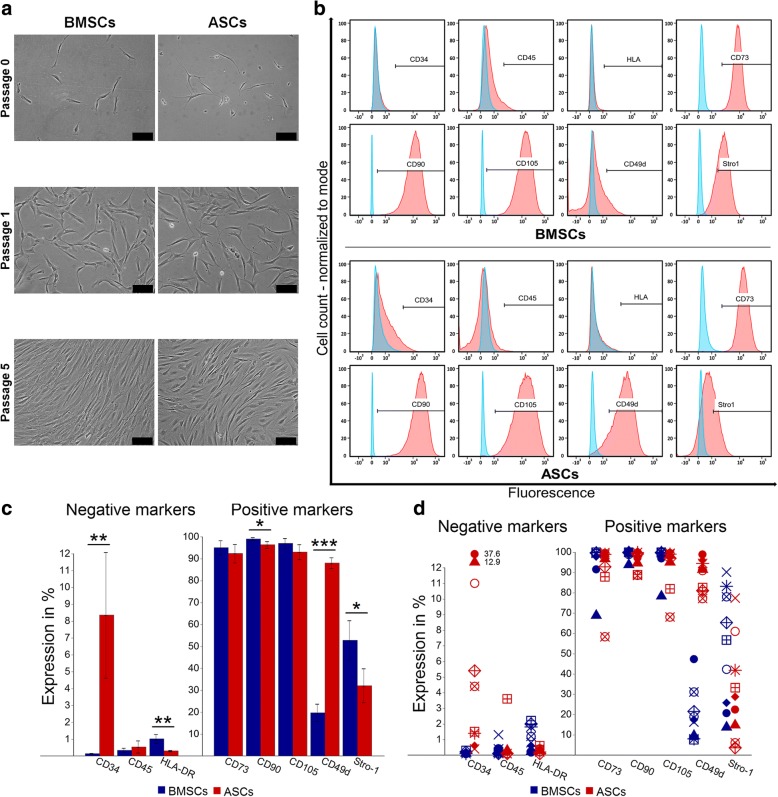
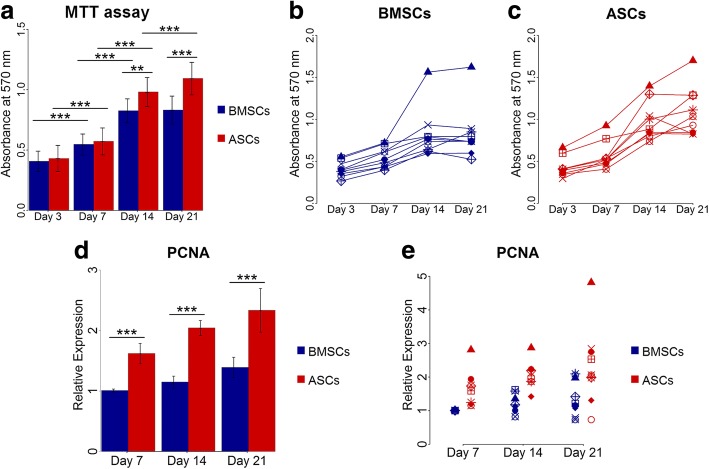
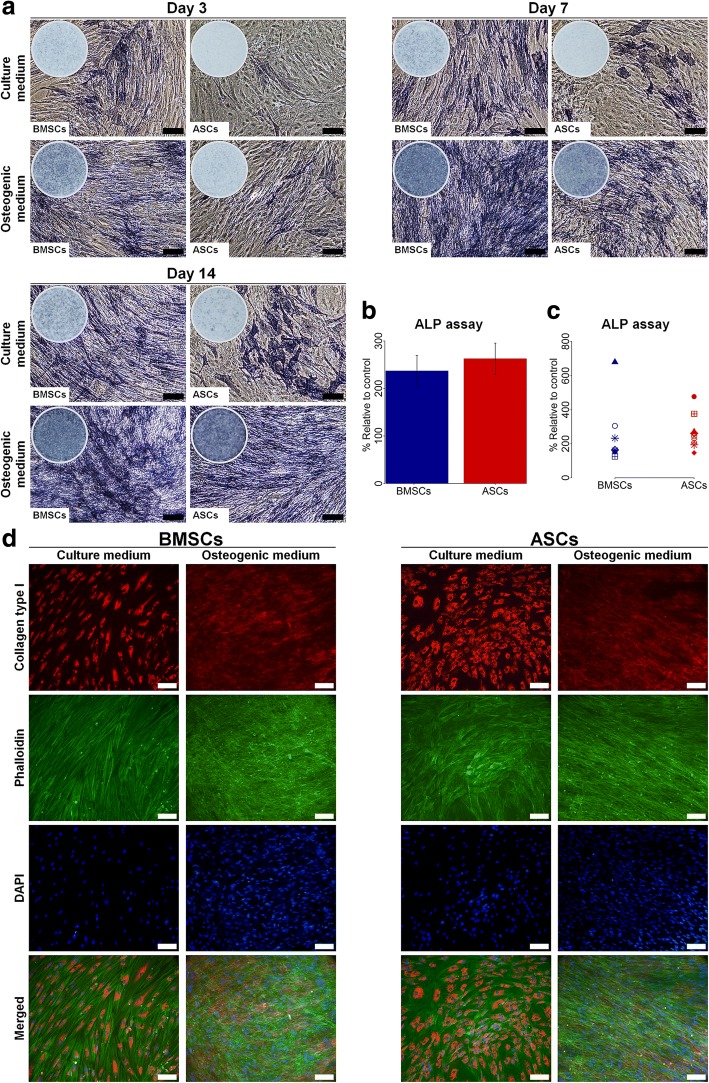
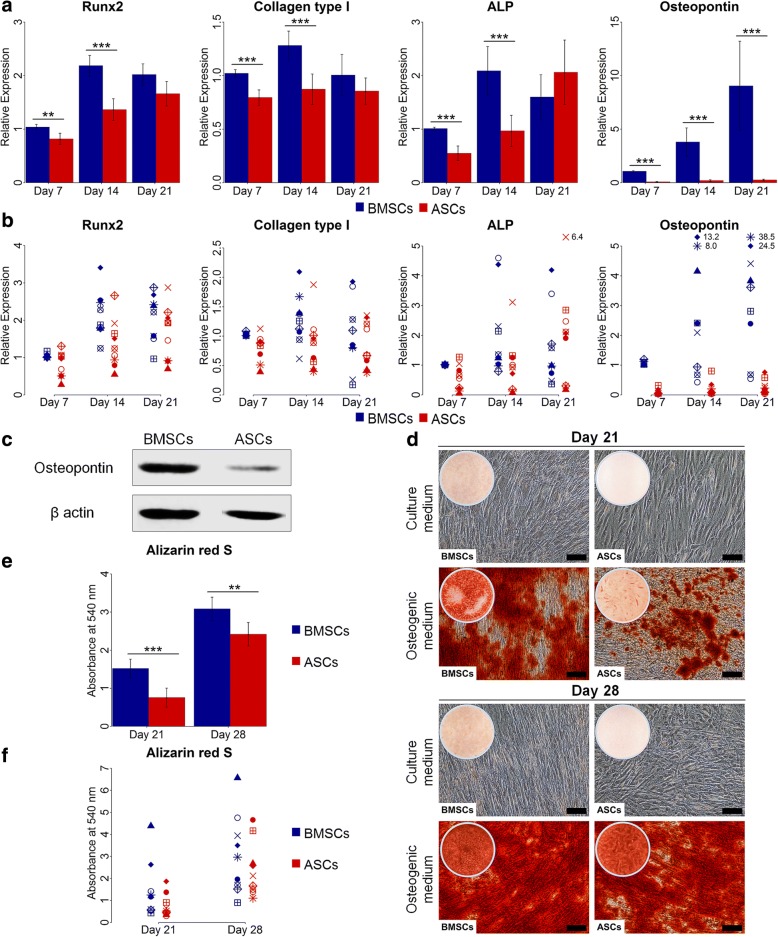
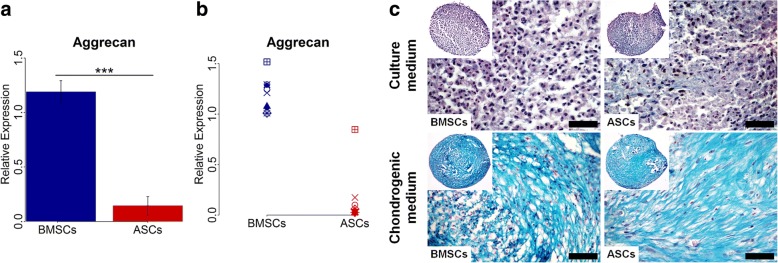
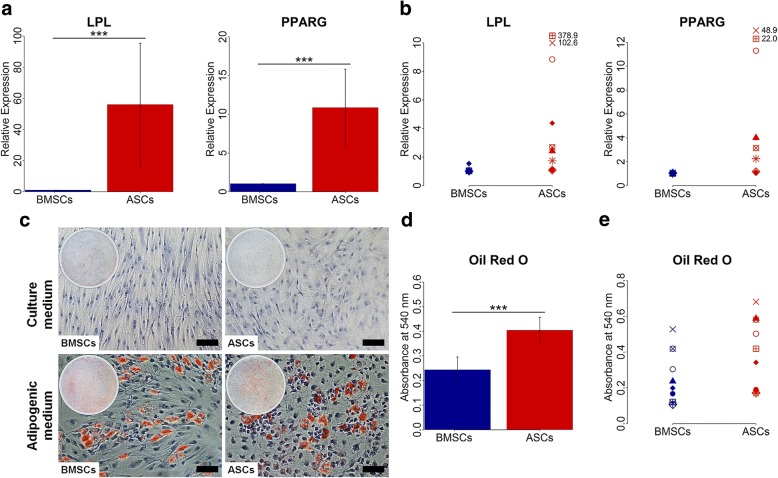
BACKGROUND: Adipose-derived stem cells (ASCs) have been introduced as an alternative to bone marrow mesenchymal stem cells (BMSCs) for cell-based therapy. However, different studies comparing ASCs and BMSCs have shown conflicting results. In fact, harvesting ASCs and BMSCs from different individuals might influence the results, making comparison difficult. Therefore, this study aimed to characterize donor-matched ASCs and BMSCs in order to investigate proliferation, differentiation potential and possible effects of donor variation on these mesenchymal stem cells (MSCs). METHODS: Human bone marrow and adipose tissue samples were obtained from nine donors aged 8-14. ASCs and BMSCs were isolated and characterized based on expression of surface markers using flow cytometry. The proliferation up to 21 days was investigated. Multi-lineage differentiation was induced using osteogenic, chondrogenic and adipogenic differentiation media. Alkaline phosphatase (ALP) activity was monitored and collagen type I formation was evaluated by immunofluorescence staining. In vitro multi-potency was studied using tissue-specific stains and lineage-specific gene expression. In addition, the osteogenic lineage was evaluated at protein level. RESULTS: Isolated ASCs and BMSCs from all donors demonstrated morphologic and immunophenotypic characteristics of MSCs, with expression of MSCs markers and negative expression of hematopoietic markers. Unlike BMSCs, ASCs showed high expression of CD49d and low expression of Stro-1. In general, ASCs showed significantly higher proliferation and adipogenic capacity with more lipid vesicle formation and expression of the adipogenesis-related genes than BMSCs. In contrast, BMSCs showed significantly higher osteogenic and chondrogenic capacity compared to ASCs. BMSCs had earlier and higher ALP activity, calcium deposition, and expression of the osteogenesis- and chondrogenesis-related genes and the osteogenesis-related protein osteopontin. Proliferation and differentiation capacity of ASCs and BMSCs varied significantly among the donors. CONCLUSIONS: ASCs and BMSCs showed tissue-specific differentiation abilities, but with significant variation between donors. The similarities and differences in the properties of ASCs and BMSCs should be taken into consideration when planning stem cell-based therapy.
Overview
The claims and statistics of this paper haven’t been checked yet.
Free: it reads the open-access text and checks the first 5 claims that cite a source we can check. Create a free account to check every claim.
Integrity signals
Registry
Cites
Statistics
Figures
Verification
Claims the paper makes
The claims and statistics of this paper haven’t been checked yet.
Free: it reads the open-access text and checks the first 5 claims that cite a source we can check. Create a free account to check every claim.
Claims other papers make about this one
Each is checked against this paper’s own text: does it say what the citing paper says it does?
The cited source says what the claim attributes to it.
In the citing paper
“Regarding bone tissue engineering, studies comparing the osteogenic potential of human BM-MSCs and ASCs have yielded mixed results.”
From Mesenchymal Stem/Stromal Cells: Immunomodulatory and Bone Regeneration Potential after Tumor Excision in Osteosarcoma Patients (2023) · cites this paper as [58]
The cited source says what the claim attributes to it.
In the citing paper
“Additionally, harvesting BM-MSCs is limited by the potential pain and morbidity associated with bone marrow aspiration, and only a small fraction (0.001–0.01%) of harvested bone marrow cells are MSCs [58,67].”
From Mesenchymal Stem/Stromal Cells: Immunomodulatory and Bone Regeneration Potential after Tumor Excision in Osteosarcoma Patients (2023) · cites this paper as [58]
The cited source says what the claim attributes to it.
In the citing paper
“Some suggest that BM-MSCs exhibit greater osteogenic capacity [58,59,60,61,62], while others propose that ASCs have equal or superior potential [58,63,64,65,66].”
From Mesenchymal Stem/Stromal Cells: Immunomodulatory and Bone Regeneration Potential after Tumor Excision in Osteosarcoma Patients (2023) · cites this paper as [58]
Self-check
Percentages, sums and reported differences re-computed from the paper’s own numbers.
The self-check needs the paper’s full text.
Citations
Cites
Multilineage potential of adult human mesenchymal stem cells
Pittenger, M. F., Mackay, A. M., Beck, S. C., Jaiswal, R. K., Douglas, R., Mosca, J. D., Moorman, M. A., Simonetti, D. W., Craig, S., & Marshak, D. R. (1999) · Science · doi:10.1126/science.284.5411.143 · Cited by 21,052 · cited 1×
“01%) of the harvested bone marrow cells are MSCs [5].”
BackgroundDominici, M., Le Blanc, K., Mueller, I., Slaper-Cortenbach, I., Marini, F. C., Krause, D. S., Deans, R. J., Keating, A., Prockop, D. J., & Horwitz, E. M. (2006) · Cytotherapy · doi:10.1080/14653240600855905 · Cited by 17,766 · cited 1×
“to a tissue culture flask), must express the surface markers CD73, CD90 and CD105 (≥ 90%), not express the hematopoietic markers CD14, CD34, CD45, CD19 and HLA-DR (≤ 2%), and should be able to undergo multi-lineage differentiation (osteogenic, adipogenic and chondrogenic) [4].”
BackgroundStöckl, S., Göttl, C., Grifka, J., & Grässel, S. (2013) · Cellular Physiology and Biochemistry · doi:10.1159/000350089 · Cited by 4,656
Komori, T., Yagi, H., Nomura, S., Yamaguchi, A., Sasaki, K., Deguchi, K., Shimizu, Y., Bronson, R. T., Gao, Y.-H., Inada, M., et al. (1997) · Cell · doi:10.1016/s0092-8674(00)80258-5 · Cited by 4,244 · cited 1×
“Runx2-deficient mice are reported to lack bone formation due to absence of osteoblasts [50].”
BackgroundMesenchymal stem cells reside in virtually all post-natal organs and tissues
Meirelles, L. D. S., Chagastelles, P. C., & Nardi, N. B. (2006) · Journal of Cell Science · doi:10.1242/jcs.02932 · Cited by 2,485 · cited 1×
“Discussion Adult MSCs, isolated from different connective tissues, have a fundamental role in maintenance and regeneration of body tissues [30].”
BackgroundChamberlain, G., Fox, J., Ashton, B., & Middleton, J. (2007) · Stem Cells · doi:10.1634/stemcells.2007-0197 · Cited by 2,381
Bourin, P., Bunnell, B. A., Casteilla, L., Dominici, M., Katz, A. J., March, K. L., Redl, H., Rubin, J. P., Yoshimura, K., & Gimble, J. M. (2013) · Cytotherapy · doi:10.1016/j.jcyt.2013.02.006 · Cited by 1,890 · cited 1×
“Although significant biologic differences have been shown in MSCs derived from different sources [12–14], ASCs and BMSCs have comparable characteristics when it comes to morphology and surface proteins [15].”
BackgroundLiang, H., Liang, P., Xu, Y., Wu, J., Liang, T., & Xu, X. (2009) · Journal of Neurotrauma · doi:10.1089/neu.2008.0850 · Cited by 1,750
Hass, R., Kasper, C., Böhm, S., & Jacobs, R. (2011) · Cell Communication and Signaling · doi:10.1186/1478-811x-9-12 · Cited by 1,748
Stolzing, A., Jones, E., McGonagle, D., & Scutt, A. (2008) · Mechanisms of Ageing and Development · doi:10.1016/j.mad.2007.12.002 · Cited by 1,195 · cited 1×
“It has been reported that stem cell yield, proliferation and differentiation properties of BMSCs and ASCs are negatively affected by age [31, 32].”
Background
Cited by
Items 101–200 of 540
Yuan, W., Huang, C., Deng, W., Lai, J., Chen, J., Jie, J., Wu, Y., You, T., & Wu, L. (2024) · International Journal of Biological Macromolecules · doi:10.1016/j.ijbiomac.2024.135562 · Cited by 34
Bessot, A., Gunter, J. H., Waugh, D. J. J., Clements, J. A., Hutmacher, D. W., McGovern, J., & Bock, N. (2023) · Advanced Healthcare Materials · doi:10.1002/adhm.202201701 · Cited by 34
Ye, Y., Zhang, X., Su, D., Ren, Y., Cheng, F., Yao, Y., Shi, G., Ji, Y., Chen, S., Shi, P., et al. (2022) · Stem Cell Research & Therapy · doi:10.1186/s13287-022-03157-8 · Cited by 34
“Like other tissue-derived MSCs, human adipose-derived MSCs (hADSCs) have low immunogenicity and can be autografted to avoid ethical issues related to clinical application, making them ideal cell therapy seed cells [5].”
BackgroundRossi, N., Hadad, H., Bejar-Chapa, M., Peretti, G. M., Randolph, M. A., Redmond, R. W., & Guastaldi, F. P. S. (2023) · Tissue Engineering Part B Reviews · doi:10.1089/ten.teb.2022.0213 · Cited by 33
“54 57 Nevertheless, preclinical and clinical studies investigating the possibility of ADSCs in enhancing bone regeneration have shown different results.”
Wang, C., Li, X., Dang, H., Liu, P., ZHANG, B., & Xu, F. (2019) · Cytotherapy · doi:10.1016/j.jcyt.2018.11.010 · Cited by 33
Mechanotransduction of stem cells for tendon repair
Wang, H., Huang, Y., & Ni, G. (2020) · World Journal of Stem Cells · doi:10.4252/wjsc.v12.i9.952 · Cited by 35
Saleem, R., Mohamed‐Ahmed, S., Elnour, R., Berggreen, E., Mustafa, K. B. E., & Al‐Sharabi, N. (2021) · International Journal of Molecular Sciences · doi:10.3390/ijms222413458 · Cited by 34
“characterized based on immunophenotype and multi-differentiation capacity according to the minimal criteria proposed by the International Society for Cellular Therapy (ISCT) to define human MSC (Supplementary Figure S1a–c) [48,49].”
BackgroundSelf-citationPan, R. L., Martyniak, K., Karimzadeh, M., Gelikman, D. G., DeVries, J., Sutter, K., Coathup, M. J., Razavi, M., Sawh-Martinez, R. F., & Kean, T. J. (2022) · Journal of Experimental Orthopaedics · doi:10.1186/s40634-022-00518-3 · Cited by 39
“This predominance of bone marrow-derived MSCs is due to their greater chondrogenic potential [128].”
Ding, W., Xu, Y.-Q., Zhang, Y., Li, A.-X., Qiu, X., Wen, H.-J., & Tan, H.-B. (2021) · CARTILAGE · doi:10.1177/1947603520942947 · Cited by 32
Li, B., Shen, E., Wu, Z., Qi, H., Wu, C., Liu, D., & Jiang, X. (2024) · Cartilage · doi:10.1177/19476035241245805 · Cited by 33
Zeng, X., Wang, T., Yamaguchi, K., Hatakeyama, S., Yamazaki, S., Shimizu, E., Imoto, S., Furukawa, Y., Johmura, Y., & Nakanishi, M. (2024) · Molecular Metabolism · doi:10.1016/j.molmet.2024.101943 · Cited by 34
“APCs exhibit differentiation properties similar to mesenchymal stem cells (MSCs) [48], and TGF-b has been known to induce MSC differentiation into myo fi broblasts [49].”
BackgroundHeterogeneity in Adipose Stem Cells
González, E. A. P. (2019) · Advances in experimental medicine and biology · doi:10.1007/978-3-030-11096-3_8 · Cited by 36
Umbilical Cord Mesenchymal Stromal Cells for Cartilage Regeneration Applications
Russo, E., Čaprnda, M., Kružliak, P., Conaldi, P. G., Borlongan, C. V., & Rocca, G. L. (2022) · Stem Cells International · doi:10.1155/2022/2454168 · Cited by 32
“In a study of Schneider et al., UC-MSCs showed similar osteogenic and migration abilities compared to BM-MSCs with the lesser expression of OPN and the major expression of matrix metalloproteinases (MMP)-1 and -2 [25].”
InfluentialEnhancers of mesenchymal stem cell stemness and therapeutic potency
Al‐Azab, M., Idiiatullina, E., Safi, M., & Hezam, K. (2023) · Biomedicine & Pharmacotherapy · doi:10.1016/j.biopha.2023.114356 · Cited by 33
Shimizu, Y., Ntege, E. H., Azuma, C., Uehara, F., Toma, T., Higa, K., Yabiku, H., Matsuura, N., Inoue, Y., & Sunami, H. (2023) · Cells · doi:10.3390/cells12141905 · Cited by 33
miRNA induced 3D bioprinted-heterotypic osteochondral interface
Celik, N., Kim, M. H., Yeo, M., Kamal, F., Hayes, D. J., & Ozbolat, I. T. (2022) · Biofabrication · doi:10.1088/1758-5090/ac7fbb · Cited by 30
Ramírez-Bajo, M. J., Rovira, J., Lazo-Rodríguez, M., Bañón-Maneus, E., Tubita, V., Moya‐Rull, D., Hierro-Garcia, N., Ventura‐Aguiar, P., Oppenheimer, F., Campistol, J. M., et al. (2020) · Frontiers in Cell and Developmental Biology · doi:10.3389/fcell.2020.00010 · Cited by 28
Xu, Y., Xin, R., Sun, H., Long, D., Li, Z., Liao, H., Xue, T., Zhang, Z., Kang, Y. Q., & Mao, G. (2021) · Frontiers in Cell and Developmental Biology · doi:10.3389/fcell.2021.723759 · Cited by 28
Rebelatto, C. L. K., Leite, L. M. B., Daga, D. R., Marsaro, D. B., Vaz, I. M., Jamur, V. R., de Aguiar, A. M., Vieira, T. B., Furman, B. P., Aguiar, C. O., et al. (2023) · International Journal of Molecular Sciences · doi:10.3390/ijms241612955 · Cited by 34
Zhu, J., Fu, Q., Shao, J., Peng, J., Qian, Q., Zhou, Y., & Chen, Y. (2021) · Journal of Tissue Engineering and Regenerative Medicine · doi:10.1002/term.3189 · Cited by 28
“AMSCs have the same potential for multi‐directional differentiation as BMSCs (Mohamed‐Ahmed et al., 2018).”
BackgroundInfluentialCell-based therapies for vascular regeneration: Past, present and future
Aghazadeh, Y., Khan, S. T., Nkennor, B., & Nunes, S. S. (2021) · Pharmacology & Therapeutics · doi:10.1016/j.pharmthera.2021.107976 · Cited by 29
Bispo, D. S. C., Jesus, C. S. H., Correia, M., Ferreira, F., Bonifazio, G., Goodfellow, B. J., Oliveira, M. B., Mano, J. F., & Gil, A. M. (2022) · Journal of Proteome Research · doi:10.1021/acs.jproteome.1c00832 · Cited by 30
Kadousaraei, M. J., Yamada, S., Aydin, M. S., Rashad, A., Molina, N., Mohamed‐Ahmed, S., Gjerde, C., Malkoch, M., & Mustafa, K. B. E. (2025) · Scientific Reports · doi:10.1038/s41598-025-90389-2 · Cited by 27
“Cell isolation and BMSC characterization were undertaken as previously described 43 .”
Self-citationLiu, Y., Wang, J., Liu, S., Kuang, M., Jing, Y., Zhao, Y., Wang, Z., & Li, G. (2019) · Bone · doi:10.1016/j.bone.2019.07.021 · Cited by 29
Enhanced Proliferative and Osteogenic Potential of Periodontal Ligament Stromal Cells
Alves, L., Machado, V., Botelho, J., Mendes, J. J., Cabral, J. M. S., da Silva, C. L., & Carvalho, M. S. (2023) · Biomedicines · doi:10.3390/biomedicines11051352 · Cited by 26
Jain, S., Yassin, M. A., Fuoco, T., Mohamed‐Ahmed, S., Vindenes, H. A., Mustafa, K., & Finne‐Wistrand, A. (2021) · Materials Science and Engineering C · doi:10.1016/j.msec.2021.112020 · Cited by 27
Self-citationAdipose-derived stem cell exosomes: multifaceted therapeutic applications in regenerative medicine
Rau, C., Kuo, P., & Hsieh, C. (2025) · International Journal of Surgery · doi:10.1097/js9.0000000000002841 · Cited by 27
“ADSCs can be obtained in large quantities from lipoaspirates and have multi-lineage differentiation capacity similar to bone marrow stem cells [ 2 , 3 ] .”
Sculpting the Future of Bone: The Evolution of Absorbable Materials in Orthopedics
Wang, Z., Lv, Z., Cai, X., Wang, Y., Peng, B., Xu, H., Pang, H., Yang, X., Xu, J., Bian, Y., et al. (2026) · Advanced Materials · doi:10.1002/adma.202510848 · Cited by 33
Rana, N., Suliman, S., Al‐Sharabi, N., & Mustafa, K. (2022) · Cells · doi:10.3390/cells11030470 · Cited by 26
“Pre-characterized human bone marrow mesenchymal stromal cells (MSC) were used in this study [27,28].”
MethodSelf-citationShanbhag, S., Kampleitner, C., Al‐Sharabi, N., Mohamed‐Ahmed, S., Alccayhuaman, K. A. A., Heimel, P., Tangl, S., Beinlich, A., Rana, N., Sanz, M., et al. (2023) · Cells · doi:10.3390/cells12050767 · Cited by 26
Self-citationInflammatory priming with IL-1β promotes the immunomodulatory behavior of adipose derived stem cells
Colombini, A., Libonati, F., Cangelosi, D., Lopa, S., Luca, P. D., Coviello, D. A., Moretti, M., & de Girolamo, L. (2022) · Frontiers in Bioengineering and Biotechnology · doi:10.3389/fbioe.2022.1000879 · Cited by 24
“Adipose-derived mesenchymal stem cells (ASCs) can be isolated from easily harvestable fat, with high cell yield and good proliferative capacity (Mohamed-Ahmed et al., 2018).”
BackgroundInfluentialDedifferentiated fat cells: current applications and future directions in regenerative medicine
Liang, Z., He, Y., Tang, H., Li, J., Cai, J., & Liao, Y. (2023) · Stem Cell Research & Therapy · doi:10.1186/s13287-023-03399-0 · Cited by 25
“Current studies suggested that DFAT cells are positive for CD13, CD29, CD44, CD49d, CD73, CD90, and CD105, and negative for CD11b,CD14, CD31, CD34, CD45, CD106, and HLA-DR [34] (Table 1).”
BackgroundBorem, R., Madeline, A., Bowman, M., Gill, S. S., Tokish, J., & Mercuri, J. J. (2019) · Journal of Orthopaedic Research® · doi:10.1002/jor.24412 · Cited by 24
Zakaria, N., & Yahaya, B. H. (2020) · Advances in experimental medicine and biology · doi:10.1007/5584_2019_464 · Cited by 24
Zhang, C., Wang, G., Lin, H., Shang, Y., Liu, N., Zhen, Y., & An, Y. (2023) · Cell Proliferation · doi:10.1111/cpr.13417 · Cited by 25
An in vitro model system based on calcium- and phosphate ion-induced hMSC spheroid mineralization
Vermeulen, S., Knoops, K., Duimel, H., Parvizifard, M., van Beurden, D., López‐Iglesias, C., Giselbrecht, S., Truckenmüller, R. K., Habibović, P., & Birgani, Z. N. T. (2023) · Materials Today Bio · doi:10.1016/j.mtbio.2023.100844 · Cited by 24
“Besides variations in cell culture medium or serum, the cell source is a crucial factor to consider for generating mineralized spheroids, as different MSC sources are shown to vary in their osteogenic differentiation and mineralization potential [60].”
BackgroundPossibilities and efficiency of MSC co-transfection for gene therapy
Christoffers, S., Seiler, L. K., Wiebe, E., & Blume, C. A. (2024) · Stem Cell Research & Therapy · doi:10.1186/s13287-024-03757-6 · Cited by 24
Harrison‐Brown, M., Scholes, C. J., Hafsi, K., Marenah, M., Li, J., Hassan, F., Maffulli, N., & Murrell, W. (2019) · Journal of Orthopaedic Surgery and Research · doi:10.1186/s13018-019-1070-8 · Cited by 29
Rana, N., Suliman, S., Mohamed‐Ahmed, S., Gavasso, S., Gjertsen, B. T., & Mustafa, K. (2021) · Acta Biomaterialia · doi:10.1016/j.actbio.2021.12.027 · Cited by 24
Self-citationZhang, S., Wang, H., Meng, Q., Lee, W. Y.-W., Li, Z., & Sun, S. (2025) · Journal of Translational Medicine · doi:10.1186/s12967-025-06564-6 · Cited by 22
“While ADMSCs have a natural tendency to differentiate into adipocytes in vitro, ADMSCs have unique advantages over BMSCs in stem cell therapy, such as high quantities, easy acquisition, and increased proliferation [77, 78].”
FANG, W. H., Sun, Z., Chen, X. T., Han, B., & Vangsness, C. T. (2020) · The Journal of Knee Surgery · doi:10.1055/s-0040-1710366 · Cited by 23
Umbilical cord: an allogenic tissue for potential treatment of COVID-19
Rodriguez, H. C., Gupta, M., Cavazos-Escobar, E., El‐Amin, S. F., & Gupta, A. (2020) · Human Cell · doi:10.1007/s13577-020-00444-5 · Cited by 22
“Autologous bone marrow requires the patient to undergo an invasive procedure associated with pain and morbidity to harvest the MSCs [15].”
BackgroundKlimek, K., Benko, A., Vandrovcová, M., Trávníčková, M., Douglas, T., Tarczyńska, M., Brož, A., Gawęda, K., Ginalska, G., & Bačáková, L. (2022) · Biomaterials Advances · doi:10.1016/j.bioadv.2022.212724 · Cited by 22
Monakova, A., Sagaradze, G. D., Basalova, N. A., Popov, V. S., Balabanyan, V. Y., & Efimenko, A. Y. (2022) · International Journal of Molecular Sciences · doi:10.3390/ijms23169414 · Cited by 22
Wu, S. C. M., Zhu, M., Chik, S. C. C., Kwok, M., Javed, A., Law, L., Chan, S., Boheler, K. R., Liu, Y. P., Chan, G., et al. (2023) · Stem Cell Research & Therapy · doi:10.1186/s13287-023-03380-x · Cited by 22
Stem cell therapy in pulmonary hypertension: current practice and future opportunities
Zheng, R., Xu, T., Wang, X., Yang, L., Wang, J., & Huang, X. (2023) · European Respiratory Review · doi:10.1183/16000617.0112-2023 · Cited by 22
Karoichan, A., Boucenna, S., & Tabrizian, M. (2024) · Journal of Extracellular Vesicles · doi:10.1002/jev2.12435 · Cited by 26
“…MSC sources such as adipose tissue or umbilical cord can be advantageous, albeit these cells are not yet well characterized as BMSCs and their relevance in orthopaedic applications, as well as their immunomodulatory effects remain conflicting (Fazaeli et al., 2021; Mohamed-Ahmed et al., 2018).”
BackgroundHow to enhance MSCs therapeutic properties? An insight on potentiation methods
García-Guerrero, C., Fuentes, P., Araya, M. J., Djouad, F., Luz‐Crawford, P., Vega-Letter, A. M., & Altamirano, C. (2024) · Stem Cell Research & Therapy · doi:10.1186/s13287-024-03935-6 · Cited by 25
“On the other hand, BM-MSCs also exhibit a significant capacity for differentiation into osteogenic lineages, although not to the same extent as UC-MSCs but greater than ASCs [10, 13].”
BackgroundAprile, M., Cataldi, S., Perfetto, C., Ambrosio, M. R., Italiani, P., Tatè, R., Blüher, M., Ciccodicola, A., & Costa, V. (2020) · Cells · doi:10.3390/cells9051284 · Cited by 23
Xeno-Free Spheroids of Human Gingiva-Derived Progenitor Cells for Bone Tissue Engineering
Shanbhag, S., Suliman, S., Bolstad, A. I., Stavropoulos, A., & Mustafa, K. (2020) · Frontiers in Bioengineering and Biotechnology · doi:10.3389/fbioe.2020.00968 · Cited by 25
“The ability of GPCs to differentiate into multiple stromal lineages was tested as previously described (Mohamed-Ahmed et al., 2018).”
BackgroundMethodInfluentialSelf-citationRodprasert, W., Nantavisai, S., Pathanachai, K., Pavasant, P., Osathanon, T., & Sawangmake, C. (2021) · Scientific Reports · doi:10.1038/s41598-021-91774-3 · Cited by 29
Yarahmadi, A., Dorri Giv, M., Hosseininejad, R., Rezaie, A., Mohammadi, N., Afkhami, H., & Farokhi, A. (2025) · Frontiers in Neurology · doi:10.3389/fneur.2025.1472679 · Cited by 21
“ADSCs are abundant in tissue reservoirs and can be acquired through minimally invasive procedures involving extracting subcutaneous white adipose tissue from the abdominal region, thighs, or buttocks of both animals and humans (98).”
Yuan, S., Zhang, C., & Wang, B. (2021) · Cell Cycle · doi:10.1080/15384101.2021.2015668 · Cited by 21
“BMSCs can differentiate into diverse cells, such as osteoblasts and myoblasts under appropriate culture conditions [7], which can also be used as seed cells for repairing and reconstructing injured or damaged tissues and organs [8].”
BackgroundHabib, S. A., Kamal, M. M., El‐Maraghy, S. A., & Senousy, M. A. (2022) · Journal of Cellular Biochemistry · doi:10.1002/jcb.30236 · Cited by 22
“Although the clinical studies of Ad‐ MSCs utility in treatment of osteoporosis is still scarce, however, Ad‐MSCs showed some success in treatment of microfractures,69 bone defects70 and osteoarthritis.71 These preclinical and clinical studies clearly demonstrated the safety and efficacy of Ad‐MSCs.”
BackgroundResultInfluentialTsai, Y.-C., Cheng, T., Liao, H., Chuang, M., Chen, H., Chen, C., Zhang, K.-L., Chang, C.-H., Lin, P., & Huang, C. F. (2022) · Tissue Engineering and Regenerative Medicine · doi:10.1007/s13770-022-00490-0 · Cited by 21
Xue, J., Liu, L., Liu, H., & Li, Z. (2023) · Communications Biology · doi:10.1038/s42003-023-05493-8 · Cited by 21
“1a), which accorded with the morphological characteristics of BMSCs 26 .”
Comparison of different sources of mesenchymal stem cells: focus on inflammatory bowel disease
Shi, L., Chen, L., Gao, X., Sun, X., Jin, G., Yang, Y., Shao, Y., Zhu, F., & Zhou, G. (2024) · Inflammopharmacology · doi:10.1007/s10787-024-01468-1 · Cited by 22
“However, due to epigenetic memory, AT-MSC display a notably stronger inclination toward adipogenic lineage differentiation when compared to other lineages (Mohamed-Ahmed et al. 2018).”
Scaffold-free bioprinted osteogenic and chondrogenic systems to model osteochondral physiology
Breathwaite, E. K., Weaver, J. R., Murchison, A. C., Treadwell, M. L., Odanga, J. J., & Lee, J. B. (2019) · Biomedical Materials · doi:10.1088/1748-605x/ab4243 · Cited by 21
Dezfuly, A. R., Safaee, A., Amirpour, N., Kazemi, M., Ramezani, A., Jafarinia, M., Dehghani, A., & Salehi, H. (2022) · Life Sciences · doi:10.1016/j.lfs.2022.120570 · Cited by 21
Byrnes, D., Masterson, C. H., Brady, J., Horie, S., McCarthy, S., Gonzalez, H., O’Toole, D. P., & Laffey, J. G. (2023) · Frontiers in Medicine · doi:10.3389/fmed.2023.1132749 · Cited by 20
“01% of bone marrow cells and tend to undergo early senescence, and bone marrow harvest is an invasive procedure (30).”
BackgroundMarquez‐Curtis, L. A., & Elliott, J. A. W. (2024) · Cryobiology · doi:10.1016/j.cryobiol.2024.104856 · Cited by 25
Lorio, M. P., Tate, J. L., Myers, T., Block, J. E., & Beall, D. P. (2024) · Journal of Pain Research · doi:10.2147/jpr.s441180 · Cited by 20
Montanari, M., Korkeamäki, J. T., Campodoni, E., Mohamed‐Ahmed, S., Mustafa, K., Sandri, M., & Rashad, A. (2025) · ACS Applied Bio Materials · doi:10.1021/acsabm.4c01418 · Cited by 23
Self-citationIntegrated Microphysiological Systems: Transferable Organ Models and Recirculating Flow
Renggli, K., Rousset, N., Lohasz, C., Nguyen, O. T. P., & Hierlemann, A. R. (2019) · Advanced Biosystems · doi:10.1002/adbi.201900018 · Cited by 22
Main, B. J., Valk, J., Maffulli, N., Rodriguez, H. C., Gupta, M., Stone, I. W., El‐Amin, S. F., & Gupta, A. (2020) · Journal of Orthopaedic Surgery and Research · doi:10.1186/s13018-020-02067-w · Cited by 20
Baron, M., Drohat, P., Crawford, B., Hornicek, F. J., Best, T. M., & Kouroupis, D. (2023) · Bioengineering · doi:10.3390/bioengineering10101187 · Cited by 19
“%) of harvested bone marrow cells are MSCs [58,67].”
BackgroundChance, T. C., Herzig, M. C. S., Christy, B. A., Delavan, C. P., Rathbone, C. R., Cap, A. P., & Bynum, J. A. (2020) · The Journal of Trauma: Injury, Infection, and Critical Care · doi:10.1097/ta.0000000000002661 · Cited by 20
Brown, M. G., Brady, D. J., Healy, K. M., Henry, K. A., Ogunsola, A. S., & Ma, X. (2024) · Cells · doi:10.3390/cells13121045 · Cited by 20
“Some of these include chemotherapeutics and treatments for devastating immunodeficiencies, such as severe combined immunodeficiency and chronic granulomatous disease [92].”
BackgroundAdipogenesis for soft tissue reconstruction
Karagöz, H., Zor, F., Goktas, E., & Gorantla, V. S. (2019) · Current Opinion in Organ Transplantation · doi:10.1097/mot.0000000000000694 · Cited by 19
“In recent years, ADMSCs are being used as an adult stem cell source and it has been showed that ASCs and BMSCs are comparable with regard to morphology and immunophenotyped [41].”
BackgroundSchweizer, R., Waldner, M., Öksüz, S., Zhang, W., Komatsu, C., Plock, J. A., Gorantla, V. S., Solari, M. G., Kokai, L. E., Marra, K. G., et al. (2020) · Frontiers in Immunology · doi:10.3389/fimmu.2020.00826 · Cited by 21
Li, W., Wang, F., Dong, F., Zhang, Z., Song, P. K., Chen, H., & Wang, J. (2021) · Stem Cells International · doi:10.1155/2021/6644366 · Cited by 21
Zhao, Y., Zhao, X., Xu, H., Xing, Y., Wu, T., Sun, X., Kuang, M., Ma, X., Liu, W., & Yang, Q. (2022) · Journal of Material Science and Technology · doi:10.1016/j.jmst.2022.09.061 · Cited by 21
Qi, L., Duan, R., Zhou, J., Guo, Y., & Zhang, C. (2024) · Food Chemistry · doi:10.1016/j.foodchem.2024.140359 · Cited by 18
Tissue engineering in growth plate cartilage regeneration: Mechanisms to therapeutic strategies
Guo, R., Zhuang, H., Chen, X., Ben, Y., Fan, M., Wang, Y., & Zheng, P. (2023) · Journal of Tissue Engineering · doi:10.1177/20417314231187956 · Cited by 19
Li, C., Liu, Y., Deng, M., Li, J., Li, S., Li, X., Zuo, Y., Shen, C., & Wang, Y. (2024) · Frontiers in Pharmacology · doi:10.3389/fphar.2024.1349199 · Cited by 19
Stem Cell-Derived Exosomes: An Advanced Horizon to Cancer Regenerative Medicine
Ramachandran, A., Dhar, R., & Devi, A. (2024) · ACS Applied Bio Materials · doi:10.1021/acsabm.4c00089 · Cited by 19
An Acellular, Self‐Healed Trilayer Cryogel for Osteochondral Regeneration in Rabbits
Chen, T., Dai, N., Wen, T., & Hsu, S. (2024) · Advanced Healthcare Materials · doi:10.1002/adhm.202400462 · Cited by 18
Yassin, M. A., Fuoco, T., Mohamed‐Ahmed, S., Mustafa, K., & Finne‐Wistrand, A. (2019) · Macromolecular Bioscience · doi:10.1002/mabi.201900049 · Cited by 18
Self-citationWang, W., Ding, W., Zhang, X., Wu, S., Yu, T., Cui, X., Xie, Y., Yang, D., & Lin, C. (2022) · Stem Cell Research & Therapy · doi:10.1186/s13287-022-03090-w · Cited by 17
Correlation between Ca Release and Osteoconduction by 3D-Printed Hydroxyapatite-Based Templates
Hassan, M. N., Eltawila, A. M., Mohamed‐Ahmed, S., Amin, W. M., Suliman, S., Kandil, S. H., Yassin, M. A., & Mustafa, K. (2024) · ACS Applied Materials & Interfaces · doi:10.1021/acsami.4c01472 · Cited by 17
Self-citationThe Myofibroblast Fate of Therapeutic Mesenchymal Stromal Cells: Regeneration, Repair, or Despair?
Younesi, F. S., & Hinz, B. (2024) · International Journal of Molecular Sciences · doi:10.3390/ijms25168712 · Cited by 17
Li, J., Wu, M., & He, L. (2025) · BMC Nephrology · doi:10.1186/s12882-025-04029-y · Cited by 20
“For an aspect of differentiation, BM-MSCs possess a stronger potential for chondrocytes and osteoblasts driven by epigenetic memory [47].”
Shao, Q., Esseltine, J. L., Huang, T., Novielli‐Kuntz, N. M., Ching, J. E., Sampson, J. B., & Laird, D. W. (2019) · Biomolecules · doi:10.3390/biom9090474 · Cited by 17
Suliman, S., Ali, H. R. W., Karlsen, T. A., Amiaud, J., Mohamed‐Ahmed, S., Layrolle, P., Costea, D. E., Brinchmann, J. E., & Mustafa, K. (2019) · Scientific Reports · doi:10.1038/s41598-019-52442-9 · Cited by 18
Self-citationDu, J., Agatemor, C., Saeui, C. T., Bhattacharya, R., Jia, X., & Yarema, K. J. (2021) · Cells · doi:10.3390/cells10020377 · Cited by 17
Shanbhag, S., Kampleitner, C., Mohamed‐Ahmed, S., Yassin, M. A., Dongre, H., Costea, D. E., Tangl, S., Hassan, M. N., Stavropoulos, A., Bolstad, A. I., et al. (2021) · Frontiers in Bioengineering and Biotechnology · doi:10.3389/fbioe.2021.783468 · Cited by 16
“…of bone formation by transplanted human MSC—either from independent or pooled donors, i.e., whether this occurs primarily via direct osteogenic differentiation of transplanted cells, paracrine stimulation of host cells, immune modulation, or a combination of factors (Moll et al., 2020).”
BackgroundSelf-citationSheng, C., Guo, X., Wan, Z., Bai, X., Liu, H., Zhang, X., Zhang, P., Liu, Y., Li, W., Zhou, Y., et al. (2022) · Nano Research · doi:10.1007/s12274-022-4554-5 · Cited by 17
Wang, H., Zhang, H., Zhang, Y., & Wang, P. (2024) · Chemical Biology & Drug Design · doi:10.1111/cbdd.14431 · Cited by 16
Dias, I. E., Dias, I. R., Franchi-Mendes, T., Viegas, C. A., & Carvalho, P. P. (2024) · Biomedicines · doi:10.3390/biomedicines12040735 · Cited by 17
Minimally Invasive Cellular Therapies for Osteoarthritis Treatment
Shah, S., Otsuka, T., Bhattacharjee, M., & Laurencin, C. T. (2020) · Regenerative Engineering and Translational Medicine · doi:10.1007/s40883-020-00184-w · Cited by 17
“Although BMSCs were superior to ADSCs in terms of chondrogenic differentiation, the donor-matched comparison showed that the donor is an important factor in determining MSCs’ properties [64].”
BackgroundKozisek, T., Hamann, A., Samuelson, L., Fudolig, M. A., & Pannier, A. K. (2021) · Molecular Therapy — Nucleic Acids · doi:10.1016/j.omtn.2021.06.018 · Cited by 16
“Here, the data show discrepancies in trends between transfection outcomes for each condition between the different donors and tissue sources (Figure 2), which may be partly attributed to the different proliferation rates between hMSCs from different donors and tissue source.(50) Generally, hAMSCs have higher prolifera…”
ResultLee, L. M., Klarmann, G. J., Haithcock, D. W., Wang, Y., Bhatt, K. H., Prabhakarpandian, B., Pant, K., Alvarez, L. M., & Lai, E. (2023) · Lab on a Chip · doi:10.1039/d2lc01138g · Cited by 17
Huang, R., Fu, R., Yan, Y., Liu, C., Yang, J., Xie, Y., & Li, Q. (2022) · Bioengineering & Translational Medicine · doi:10.1002/btm2.10312 · Cited by 15
“ASCs are a heterogeneous population of cells in subcutaneous adipose tissue that exhibit several distinct advantages over cells from other sources.46,47 BMSCs and PDCs have shown higher chondrogenic potential differentiation and greater Col X expression capacity than ASCs.48 ASCs are easily accessible in abundant quan…”
BackgroundAnti-aging mechanism of different age donor-matched adipose-derived stem cells
Wang, T., Li, Y., Zhu, Y., Liu, Z., Huang, L., Zhao, H., Zhou, Z., & Wu, Q. (2023) · Stem Cell Research & Therapy · doi:10.1186/s13287-023-03415-3 · Cited by 15
“A donormatched comparison indicated that the properties of ASCs have significant variation between donors, which may influence the stem cell-based therapy results [15].”
BackgroundKråkenes, T., Wergeland, S., Al‐Sharabi, N., Mohamed‐Ahmed, S., Fromreide, S., Costea, D. E., Mustafa, K., Bø, L., & Kvistad, C. E. (2023) · PLoS ONE · doi:10.1371/journal.pone.0293908 · Cited by 19
“Both stem cell sources were differentiated into osteogenic and adipogenic lineages to test multi-lineage differentiation potential, which was tested using Alizarin Red S and Oil Red O respectively, as previously described [20].”
MethodSelf-citationQi, L., Zhang, H., Guo, Y., Zhang, C., & Xu, Y. (2023) · Molecular Nutrition & Food Research · doi:10.1002/mnfr.202200726 · Cited by 15
Prajwal, G. S., Jeyaraman, N., Kanth, K., V, Jeyaraman, M., Muthu, S., Rajendran, S. N. S., Rajendran, R. L., Khanna, M., Oh, E. J., Choi, K. Y., et al. (2022) · Pharmaceuticals · doi:10.3390/ph15040386 · Cited by 17
Mesenchymal stem cells and connective tissue diseases: From bench to bedside
Shi, Y., Jiang, N., Li, M., Zeng, X., & Tian, X. (2022) · Journal of Translational Internal Medicine · doi:10.2478/jtim-2022-0028 · Cited by 16
“Bone marrow-derived MSCs (BM-MSCs) are the most extensively used MSCs and are characterized by remarkable osteogenic and chondrogenic differentiation potential.[2] However, the effectiveness of BM-MSCs is dependent on the donor’s condition, and the risk of infection during extraction cannot be ignored.”
BackgroundGögele, C., Vogt, J., Hahn, J., Breier, A., Bernhardt, R., Meyer, M., Schröpfer, M., Schäfer‐Eckart, K., & Schulze-Tanzil, G. G. (2023) · International Journal of Molecular Sciences · doi:10.3390/ijms24076714 · Cited by 18
Santos, R. D. A., Asensi, K. D., de Barros, J. H. O., de Menezes, R. C. S., Cordeiro, I. R., Brito, J. M., Kasai-Brunswick, T. H., & Goldenberg, R. C. D. S. (2020) · International Journal of Molecular Sciences · doi:10.3390/ijms21249563 · Cited by 16
Metadata
- Authors
- Mohamed-Ahmed, S., Fristad, I., Lie, S. A., Suliman, S., Mustafa, K., Vindenes, H., & Idris, S. B.
- Affiliations
- University of Bergen (NO)
- Corresponding author
- Fristad, Inge
- Venue
- Stem Cell Research & Therapy
- Published
- 2018-06-19
- Volume
- 9
- Issue
- 1
- Pages
- 168-168
- ISSN
- 1757-6512 (ISSN-L)
- PMC
- PMC6008936
- OpenAlex
- W2809170199
- Semantic Scholar
- 481cffff8d86ecf5060bbbddc949bb0dbf210be1
- Cited by
- 515
- References
- 62
- Citations by year
- 2026: 34 · 2025: 52 · 2024: 95 · 2023: 106 · 2022: 84 · 2021: 60 · 2020: 49 · 2019: 30 · 2018: 4
- FWCI
- 20.27
- Type
- journal article
- Language
- en
- Open access
- gold
- doi.org
- Licence
- cc-by
- creativecommons.org/licenses/by/4.0/ (tdm)
- Locations
- Stem Cell Research & Therapy (publishedVersion, cc-by)
- Europe PMC (PubMed Central) (publishedVersion, other-oa)
- PubMed Central (publishedVersion, cc-by)
- PubMed (publishedVersion)
- NORA - Norwegian Open Research Archives (submittedVersion, cc-by)
- DOAJ (DOAJ: Directory of Open Access Journals) (submittedVersion, cc-by-sa)
- Funders
- Universitetet i Bergen
- Helse Vest (912048, 302077)
- Topics
- Life Sciences › Biochemistry, Genetics and Molecular Biology › Cell Biology › Mesenchymal stem cell research
- Health Sciences › Dentistry › Periodontics › Periodontal Regeneration and Treatments
- Health Sciences › Medicine › Hematology › Hematopoietic Stem Cell Transplantation
- Keywords
- adipose-derived stem cells, bone marrow mesenchymal stem cells, donor variability, multilineage differentiation, osteogenic differentiation, chondrogenic differentiation, adipogenesis, cell proliferation, alkaline phosphatase activity, osteopontin, CD49d, STRO-1, stem cell therapy
- MeSH terms
- Adipose Tissue, Cell Differentiation, Humans, Tissue Donors, Cell Proliferation, Adipogenesis, Mesenchymal Stem Cells
About these checks
Registry, retraction, Cites and statistics results are computed, not judged, with one exception: a printed reference that no index lists is read once by a model before it counts as a citation error. Claims are extracted by a model and kept only when their quote appears verbatim in the text; each cited source is then checked, with a model’s help, for whether it says what the claim relies on. Those verdicts can be wrong — read the claim’s quote and the cited source before relying on one.
Statistics and arithmetic are recomputed, not judged.
Confidence bands are shown only for fields calibrated on our annotated test set. None is calibrated yet, so no band is shown.
What counts as a claim ›How we measure confidence ›How we check this ›
Are you an author, or do you see a problem with this page? Request a review
Data sources
Bibliographic data: Semantic Scholar, OpenAlex, Crossref.
Contains information from the Semantic Scholar Academic Graph Datasets, made available under the ODC Attribution License (ODC-BY 1.0).
Semantic Scholar’s data is described in: Kinney, R., et al. (2023). The Semantic Scholar Open Data Platform. arXiv:2301.10140.
