

Adipose-derived and bone marrow mesenchymal stem cells: a donor-matched comparison
Open accessThe DOI matches its Crossref record; 62 of the 62 references it cites were found in a registry or an index.
Abstract
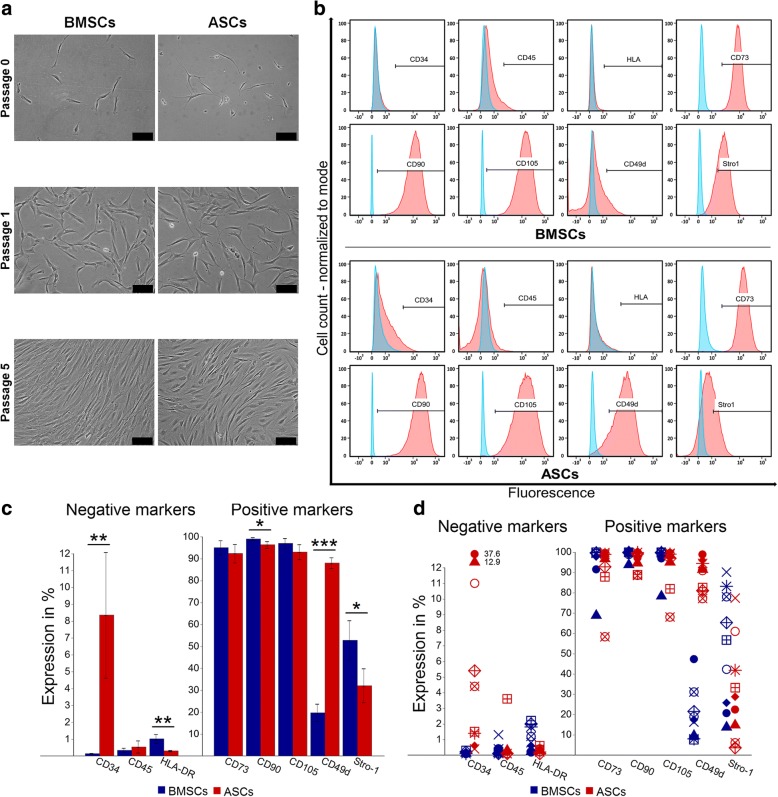
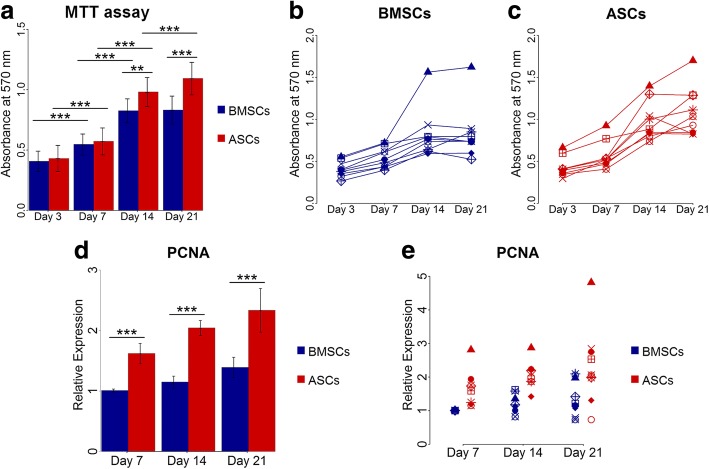
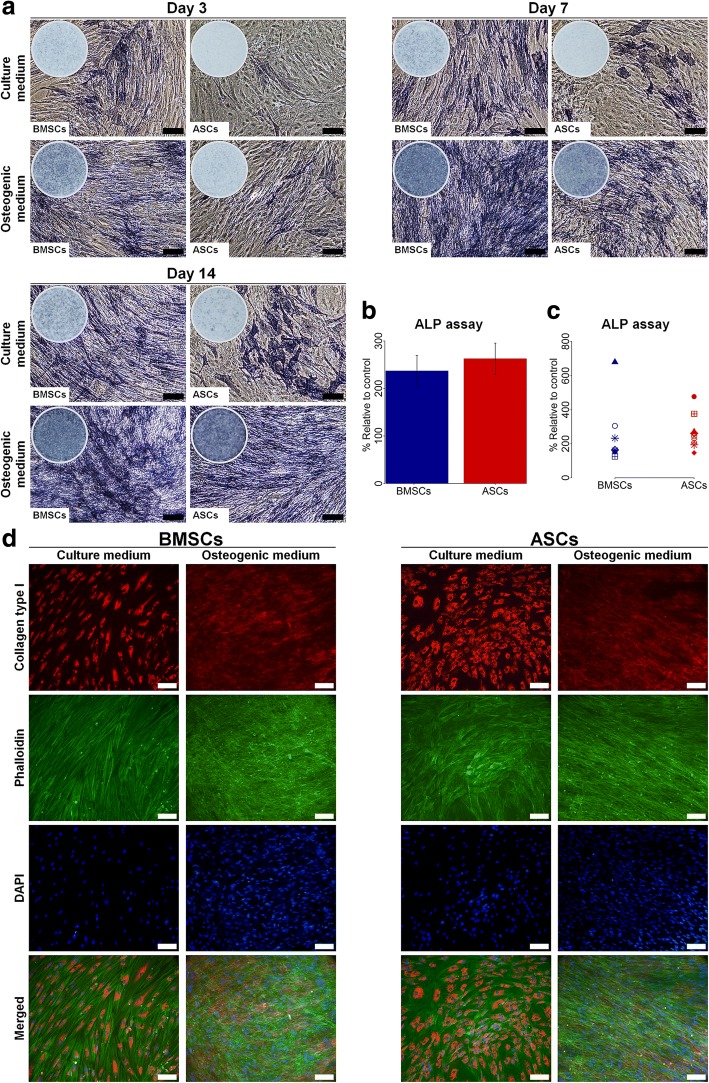
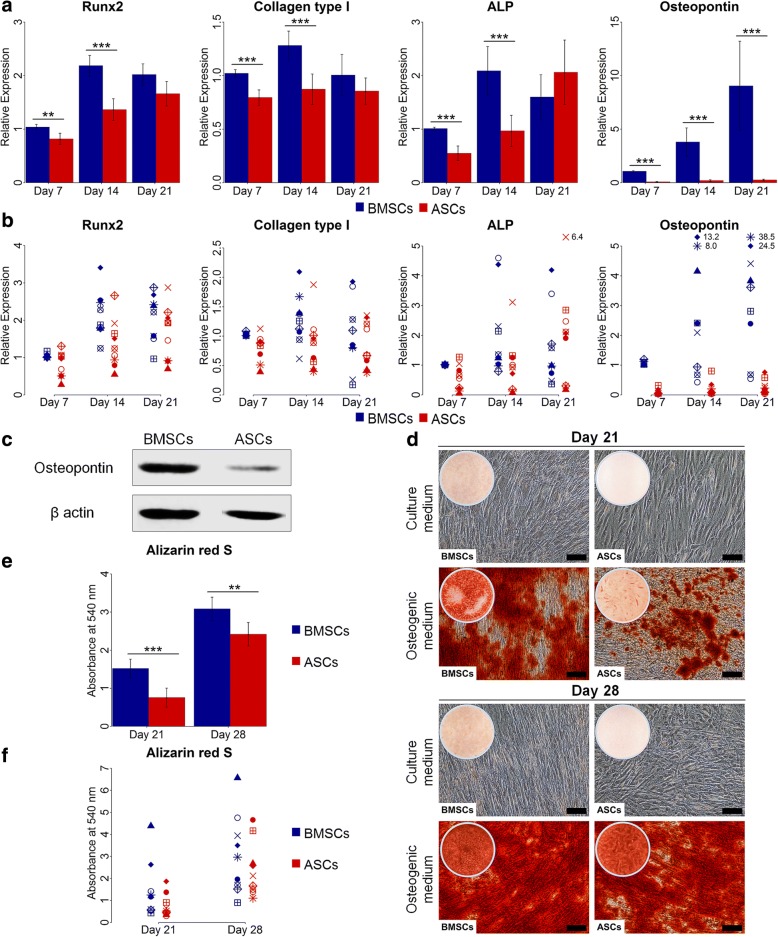
BACKGROUND: Adipose-derived stem cells (ASCs) have been introduced as an alternative to bone marrow mesenchymal stem cells (BMSCs) for cell-based therapy. However, different studies comparing ASCs and BMSCs have shown conflicting results. In fact, harvesting ASCs and BMSCs from different individuals might influence the results, making comparison difficult. Therefore, this study aimed to characterize donor-matched ASCs and BMSCs in order to investigate proliferation, differentiation potential and possible effects of donor variation on these mesenchymal stem cells (MSCs). METHODS: Human bone marrow and adipose tissue samples were obtained from nine donors aged 8-14. ASCs and BMSCs were isolated and characterized based on expression of surface markers using flow cytometry. The proliferation up to 21 days was investigated. Multi-lineage differentiation was induced using osteogenic, chondrogenic and adipogenic differentiation media. Alkaline phosphatase (ALP) activity was monitored and collagen type I formation was evaluated by immunofluorescence staining. In vitro multi-potency was studied using tissue-specific stains and lineage-specific gene expression. In addition, the osteogenic lineage was evaluated at protein level. RESULTS: Isolated ASCs and BMSCs from all donors demonstrated morphologic and immunophenotypic characteristics of MSCs, with expression of MSCs markers and negative expression of hematopoietic markers. Unlike BMSCs, ASCs showed high expression of CD49d and low expression of Stro-1. In general, ASCs showed significantly higher proliferation and adipogenic capacity with more lipid vesicle formation and expression of the adipogenesis-related genes than BMSCs. In contrast, BMSCs showed significantly higher osteogenic and chondrogenic capacity compared to ASCs. BMSCs had earlier and higher ALP activity, calcium deposition, and expression of the osteogenesis- and chondrogenesis-related genes and the osteogenesis-related protein osteopontin. Proliferation and differentiation capacity of ASCs and BMSCs varied significantly among the donors. CONCLUSIONS: ASCs and BMSCs showed tissue-specific differentiation abilities, but with significant variation between donors. The similarities and differences in the properties of ASCs and BMSCs should be taken into consideration when planning stem cell-based therapy.
Overview
The claims and statistics of this paper haven’t been checked yet.
Free: it reads the open-access text and checks the first 5 claims that cite a source we can check. Create a free account to check every claim.
Integrity signals
Registry
Cites
Statistics
Figures
Verification
Claims the paper makes
The claims and statistics of this paper haven’t been checked yet.
Free: it reads the open-access text and checks the first 5 claims that cite a source we can check. Create a free account to check every claim.
Claims other papers make about this one
Each is checked against this paper’s own text: does it say what the citing paper says it does?
The cited source says what the claim attributes to it.
In the citing paper
“Regarding bone tissue engineering, studies comparing the osteogenic potential of human BM-MSCs and ASCs have yielded mixed results.”
From Mesenchymal Stem/Stromal Cells: Immunomodulatory and Bone Regeneration Potential after Tumor Excision in Osteosarcoma Patients (2023) · cites this paper as [58]
The cited source says what the claim attributes to it.
In the citing paper
“Additionally, harvesting BM-MSCs is limited by the potential pain and morbidity associated with bone marrow aspiration, and only a small fraction (0.001–0.01%) of harvested bone marrow cells are MSCs [58,67].”
From Mesenchymal Stem/Stromal Cells: Immunomodulatory and Bone Regeneration Potential after Tumor Excision in Osteosarcoma Patients (2023) · cites this paper as [58]
The cited source says what the claim attributes to it.
In the citing paper
“Some suggest that BM-MSCs exhibit greater osteogenic capacity [58,59,60,61,62], while others propose that ASCs have equal or superior potential [58,63,64,65,66].”
From Mesenchymal Stem/Stromal Cells: Immunomodulatory and Bone Regeneration Potential after Tumor Excision in Osteosarcoma Patients (2023) · cites this paper as [58]
Self-check
Percentages, sums and reported differences re-computed from the paper’s own numbers.
The self-check needs the paper’s full text.
Citations
Cites
Multilineage potential of adult human mesenchymal stem cells
Pittenger, M. F., Mackay, A. M., Beck, S. C., Jaiswal, R. K., Douglas, R., Mosca, J. D., Moorman, M. A., Simonetti, D. W., Craig, S., & Marshak, D. R. (1999) · Science · doi:10.1126/science.284.5411.143 · Cited by 21,052 · cited 1×
“01%) of the harvested bone marrow cells are MSCs [5].”
BackgroundDominici, M., Le Blanc, K., Mueller, I., Slaper-Cortenbach, I., Marini, F. C., Krause, D. S., Deans, R. J., Keating, A., Prockop, D. J., & Horwitz, E. M. (2006) · Cytotherapy · doi:10.1080/14653240600855905 · Cited by 17,766 · cited 1×
“to a tissue culture flask), must express the surface markers CD73, CD90 and CD105 (≥ 90%), not express the hematopoietic markers CD14, CD34, CD45, CD19 and HLA-DR (≤ 2%), and should be able to undergo multi-lineage differentiation (osteogenic, adipogenic and chondrogenic) [4].”
BackgroundStöckl, S., Göttl, C., Grifka, J., & Grässel, S. (2013) · Cellular Physiology and Biochemistry · doi:10.1159/000350089 · Cited by 4,656
Komori, T., Yagi, H., Nomura, S., Yamaguchi, A., Sasaki, K., Deguchi, K., Shimizu, Y., Bronson, R. T., Gao, Y.-H., Inada, M., et al. (1997) · Cell · doi:10.1016/s0092-8674(00)80258-5 · Cited by 4,244 · cited 1×
“Runx2-deficient mice are reported to lack bone formation due to absence of osteoblasts [50].”
BackgroundMesenchymal stem cells reside in virtually all post-natal organs and tissues
Meirelles, L. D. S., Chagastelles, P. C., & Nardi, N. B. (2006) · Journal of Cell Science · doi:10.1242/jcs.02932 · Cited by 2,485 · cited 1×
“Discussion Adult MSCs, isolated from different connective tissues, have a fundamental role in maintenance and regeneration of body tissues [30].”
BackgroundChamberlain, G., Fox, J., Ashton, B., & Middleton, J. (2007) · Stem Cells · doi:10.1634/stemcells.2007-0197 · Cited by 2,381
Bourin, P., Bunnell, B. A., Casteilla, L., Dominici, M., Katz, A. J., March, K. L., Redl, H., Rubin, J. P., Yoshimura, K., & Gimble, J. M. (2013) · Cytotherapy · doi:10.1016/j.jcyt.2013.02.006 · Cited by 1,890 · cited 1×
“Although significant biologic differences have been shown in MSCs derived from different sources [12–14], ASCs and BMSCs have comparable characteristics when it comes to morphology and surface proteins [15].”
BackgroundLiang, H., Liang, P., Xu, Y., Wu, J., Liang, T., & Xu, X. (2009) · Journal of Neurotrauma · doi:10.1089/neu.2008.0850 · Cited by 1,750
Hass, R., Kasper, C., Böhm, S., & Jacobs, R. (2011) · Cell Communication and Signaling · doi:10.1186/1478-811x-9-12 · Cited by 1,748
Stolzing, A., Jones, E., McGonagle, D., & Scutt, A. (2008) · Mechanisms of Ageing and Development · doi:10.1016/j.mad.2007.12.002 · Cited by 1,195 · cited 1×
“It has been reported that stem cell yield, proliferation and differentiation properties of BMSCs and ASCs are negatively affected by age [31, 32].”
BackgroundComparison of Multi-Lineage Cells from Human Adipose Tissue and Bone Marrow
De Ugarte, D. A., Morizono, K., Elbarbary, A., Alfonso, Z., Zuk, P. A., Zhu, M., Dragoo, J. L., Ashjian, P., Thomas, B., Benhaim, P., et al. (2003) · Cells Tissues Organs · doi:10.1159/000071150 · Cited by 1,173 · cited 2×
“This is supported by other studies, reporting similar or greater rates of proliferation of ASCs compared to BMSCs [18, 19, 21, 22, 24, 25, 43].”
BackgroundResultBuilding strong bones: molecular regulation of the osteoblast lineage
Long, F. (2012) · Nature Reviews Molecular Cell Biology · doi:10.1038/nrm3254 · Cited by 1,141 · cited 1×
“collagen type I, ALP and osteopontin [48, 49].”
Mitchell, J. B., McIntosh, K., Zvonic, S., Garrett, S., Floyd, Z. E., Kloster, A., Di Halvorsen, Y., Storms, R. W., Goh, B., Kilroy, G., et al. (2006) · Stem Cells · doi:10.1634/stemcells.2005-0234 · Cited by 1,124
Fat tissue: an underappreciated source of stem cells for biotechnology
Fraser, J. K., Wulur, I., Alfonso, Z., & Hedrick, M. H. (2006) · Trends in Biotechnology · doi:10.1016/j.tibtech.2006.01.010 · Cited by 1,058 · cited 1×
“Abundant numbers of adipose-derived stem cells (ASCs) have been reported to be easily isolated from adipose tissue by a minimally invasive procedure [7].”
BackgroundMultipotential differentiation of adipose tissue-derived stem cells
Strem, B. M., Hicok, K. C., Zhu, M., Wulur, I., Alfonso, Z., Schreiber, R. E., Fraser, J. K., & Hedrick, M. H. (2005) · The Keio Journal of Medicine · doi:10.2302/kjm.54.132 · Cited by 946
Concise Review: Evidence for CD34 as a Common Marker for Diverse Progenitors
Sidney, L. E., Branch, M. J., Dunphy, S. E., Dua, H. S., & Hopkinson, A. (2014) · Stem Cells · doi:10.1002/stem.1661 · Cited by 872 · cited 1×
“The continued proliferation of ASCs may be linked to the expression of CD34 by ASCs, as CD34 is suggested to play a role in the long-term proliferation of MSCs [42].”
BackgroundDimitriou, R., Mataliotakis, G. I., Angoules, A. G., Kanakaris, N. K., & Giannoudis, P. V. (2011) · Injury · doi:10.1016/j.injury.2011.06.015 · Cited by 858 · cited 1×
“These limitations include donor site morbidity, risk of infection, nerve damage and hemorrhage [1].”
BackgroundLipoprotein lipase: from gene to obesity
Wang, H., & Eckel, R. H. (2009) · American Journal of Physiology-Endocrinology and Metabolism · doi:10.1152/ajpendo.90920.2008 · Cited by 741 · cited 1×
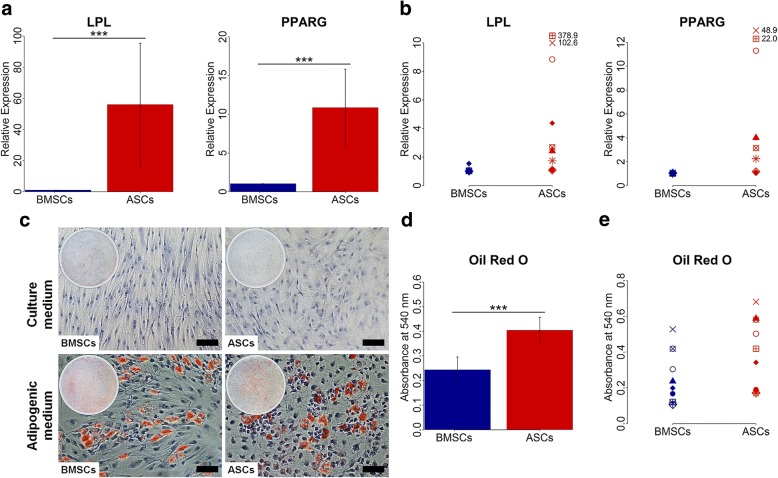
“are highly expressed in adipose tissue, and PPARG is essential for the adipocyte differentiation [58, 59].”
BackgroundConcise Review: Adipose‐Derived Stem Cells as a Novel Tool for Future Regenerative Medicine
Mizuno, H., Tobita, M., & Uysal, A. C. (2012) · STEM CELLS · doi:10.1002/stem.1076 · Cited by 663
Murshed, M., Harmey, D., Millán, J. L., McKee, M. D., & Karsenty, G. (2005) · Genes & Development · doi:10.1101/gad.1276205 · Cited by 601 · cited 1×
“In the presence of a collagen matrix, ALP enzyme activity is essential for initiation of mineralization [47].”
BackgroundChoudhery, M. S., Badowski, M., Muise, A., Pierce, J., & Harris, D. T. (2014) · Journal of Translational Medicine · doi:10.1186/1479-5876-12-8 · Cited by 529 · cited 1×
“It has been reported that stem cell yield, proliferation and differentiation properties of BMSCs and ASCs are negatively affected by age [31, 32].”
BackgroundRegulation of Osteoblast Differentiation by Runx2
Komori, T. (2009) · Advances in Experimental Medicine and Biology · doi:10.1007/978-1-4419-1050-9_5 · Cited by 526
Donor variation in the growth properties and osteogenic potential of human marrow stromal cells
Phinney, D. G., Kopen, G., Righter, W., Webster, S., Tremain, N., & Prockop, D. J. (1999) · Journal of Cellular Biochemistry · doi:10.1002/(sici)1097-4644(19991201)75:3<424::aid-jcb8>3.0.co;2-8 · Cited by 500 · cited 4×
“Unidentified factors in the medical history and the physiological status of the donors might also contribute to variations in the in vitro properties of ASCs and BMSCs [27, 34].”
BackgroundInfluentialHEO, J. S., CHOI, Y., KIM, H.-S., & KIM, H. O. (2016) · International Journal of Molecular Medicine · doi:10.3892/ijmm.2015.2413 · Cited by 495 · cited 1×
“This is supported by other studies, reporting similar or greater rates of proliferation of ASCs compared to BMSCs [18, 19, 21, 22, 24, 25, 43].”
ResultSiegel, G., Kluba, T., Hermanutz-Klein, U., Bieback, K., Northoff, H., & Schäfer, R. (2013) · BMC Medicine · doi:10.1186/1741-7015-11-146 · Cited by 493
De Ugarte, D. A., Alfonso, Z., Zuk, P. A., Elbarbary, A., Zhu, M., Ashjian, P., Benhaim, P., Hedrick, M. H., & Fraser, J. K. (2003) · Immunology Letters · doi:10.1016/s0165-2478(03)00108-1 · Cited by 457
Oedayrajsingh-Varma, M. J., van Ham, S. M., Knippenberg, M., Helder, M. N., Klein-Nulend, J., Schouten, T. E., Ritt, M. J. P. F., & van Milligen, F. J. (2006) · Cytotherapy · doi:10.1080/14653240600621125 · Cited by 456 · cited 1×
“Isolation of ASCs from an adipose tissue block is reported superior to liposuction [8, 11].”
BackgroundLi, C.-Y., Wu, X.-Y., Tong, J.-B., Yang, X.-X., Zhao, J.-L., Zheng, Q.-F., Zhao, G.-B., & Ma, Z.-J. (2015) · Stem Cell Research & Therapy · doi:10.1186/s13287-015-0066-5 · Cited by 410 · cited 1×
“This is supported by other studies, reporting similar or greater rates of proliferation of ASCs compared to BMSCs [18, 19, 21, 22, 24, 25, 43].”
ResultJurgens, W. J. F. M., Oedayrajsingh-Varma, M. J., Helder, M. N., ZandiehDoulabi, B., Schouten, T. E., Kuik, D. J., Ritt, M. J. P. F., & van Milligen, F. J. (2008) · Cell and Tissue Research · doi:10.1007/s00441-007-0555-7 · Cited by 384
The STRO-1+ Marrow Cell Population Is Multipotential
Dennis, J. E., Carbillet, J.-P., Caplan, A. I., & Charbord, P. (2002) · Cells Tissues Organs · doi:10.1159/000046182 · Cited by 336
Beane, O. S., Fonseca, V. C., Cooper, L. L., Koren, G., & Darling, E. M. (2014) · PLoS ONE · doi:10.1371/journal.pone.0115963 · Cited by 323 · cited 2×
“ASCs and BMSCs were derived from a homogenous age group to avoid heterogeneity in age and to limit possible age-related differences [28].”
BackgroundSiddappa, R., Licht, R., van Blitterswijk, C., & de Boer, J. (2007) · Journal of Orthopaedic Research · doi:10.1002/jor.20402 · Cited by 320 · cited 4×
“It has been reported that MSCs can be expanded up to passage 4 without losing their multi-potency [34].”
BackgroundResultInfluentialLI, X., BAI, J., JI, X., LI, R., XUAN, Y., & WANG, Y. (2014) · International Journal of Molecular Medicine · doi:10.3892/ijmm.2014.1821 · Cited by 301 · cited 1×
“This is supported by other studies, reporting similar or greater rates of proliferation of ASCs compared to BMSCs [18, 19, 21, 22, 24, 25, 43].”
ResultXu, L., Liu, Y., Sun, Y., Wang, B., Xiong, Y., Lin, W., Wei, Q., Wang, H., He, W., Wang, B., et al. (2017) · Stem Cell Research & Therapy · doi:10.1186/s13287-017-0716-x · Cited by 284 · cited 2×
“This is based on the DNA methylation status of the main transcription factors Runx2 and PPARG that control the fate of MSCs [23].”
BackgroundLian, J. B., & Stein, G. S. (1995) · Europe PMC (PubMed Central) · Cited by 283
Lipoatrophy and severe metabolic disturbance in mice with fat-specific deletion of PPARγ
Wang, F., Mullican, S. E., DiSpirito, J. R., Peed, L. C., & Lazar, M. A. (2013) · Proceedings of the National Academy of Sciences · doi:10.1073/pnas.1314863110 · Cited by 255 · cited 1×
“are highly expressed in adipose tissue, and PPARG is essential for the adipocyte differentiation [58, 59].”
BackgroundContact inhibition (of proliferation) redux
McClatchey, A. I., & Yap, A. S. (2012) · Current Opinion in Cell Biology · doi:10.1016/j.ceb.2012.06.009 · Cited by 229 · cited 1×
“The decrease in the metabolic activity from day 14 to 21 in ASCs and BMSCs from some donors might be explained by contact inhibition of proliferation, which is the tendency of cells to stop proliferation when reaching confluence [44].”
BackgroundSecunda, R., Vennila, R., Mohanashankar, A. M., Rajasundari, M., Jeswanth, S., & Surendran, R. (2015) · Cytotechnology · doi:10.1007/s10616-014-9718-z · Cited by 205
Dmitrieva, R. I., Minullina, I. R., Bilibina, A. A., Tarasova, O. V., Anisimov, S. V., & Zaritskey, A. Y. (2012) · Cell Cycle · doi:10.4161/cc.11.2.18858 · Cited by 195 · cited 1×
“BMSCs were also reported to show signs of senescence, early during expansion [6].”
BackgroundNiemeyer, P., Kornacker, M., Mehlhorn, A., Seckinger, A., Vohrer, J., Schmal, H., Kasten, P., Eckstein, V., Südkamp, N. P., & Krause, U. (2007) · Tissue Engineering · doi:10.1089/ten.2006.0114 · Cited by 179
Shafiee, A., Seyedjafari, E., Soleimani, M., Ahmadbeigi, N., Dinarvand, P., & Ghaemi, N. (2011) · Biotechnology Letters · doi:10.1007/s10529-011-0541-8 · Cited by 163 · cited 2×
“Other studies have also shown that BMSCs have superior in vitro osteogenic capacity than ASCs with respect to higher ALP activity, calcium content and expression of the early and late osteogenic genes [21, 22, 43].”
BackgroundResultPark, S., Sim, W. Y., Min, B., Yang, S. S., Khademhosseini, A., & Kaplan, D. L. (2012) · PLoS ONE · doi:10.1371/journal.pone.0046689 · Cited by 146 · cited 1×
“Moreover, the osteogenic capacity of ASCs was enhanced under dynamic culture conditions subjected to mechanical stimulation [52] and under culture conditions supplemented with platelet-derived growth factor [53, 54], vitamin D3 and bone morphogenetic protein-2 (BMP-2) [55].”
BackgroundIsobe, Y., Koyama, N., Nakao, K., Osawa, K., Ikeno, M., Yamanaka, S., Okubo, Y., Fujimura, K., & Bessho, K. (2015) · International Journal of Oral and Maxillofacial Surgery · doi:10.1016/j.ijom.2015.06.022 · Cited by 144
Farré-Guasch, E., Martí, C. D., Hernández-Alfaro, F. J., Klein‐Nulend, J., & Casals, N. (2010) · Tissue Engineering Part C Methods · doi:10.1089/ten.tec.2009.0487 · Cited by 138
Aggrecan, an unusual polyelectrolyte: Review of solution behavior and physiological implications
Chandran, P. L., & Horkay, F. (2011) · Acta Biomaterialia · doi:10.1016/j.actbio.2011.08.011 · Cited by 134 · cited 1×
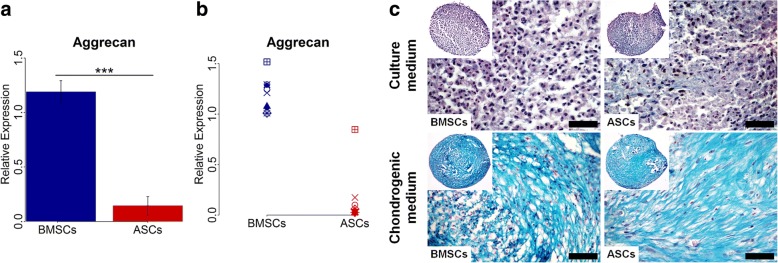
“Aggrecan is a major component of cartilage extracellular matrix [56].”
BackgroundAdipose-Derived Stem Cells: Isolation, Characterization, and Differentiation Potential
Huang, S.-J., Fu, R.-H., Shyu, W.-C., Liu, S.-P., Jong, G.-P., Chiu, Y.-W., Wu, H.-S., Tsou, Y.-A., Cheng, C.-W., & Lin, S.-Z. (2013) · Cell Transplantation · doi:10.3727/096368912x655127 · Cited by 133 · cited 1×
“Further, ASCs have the ability to undergo multi-lineage differentiation, including osteogenic, chondrogenic, adipogenic, cardiomyocytic, hepatic and neurogenic differentiation [16].”
BackgroundThe Effect of Age on Human Adipose-Derived Stem Cells
Wu, W., Niklason, L. E., & Steinbacher, D. M. (2012) · Plastic & Reconstructive Surgery · doi:10.1097/prs.0b013e3182729cfc · Cited by 128
Shanti, R. M., Li, W., Nesti, L. J., Wang, X., & Tuan, R. S. (2007) · Journal of Oral and Maxillofacial Surgery · doi:10.1016/j.joms.2007.04.008 · Cited by 101 · cited 1×
“chondrocytes, myocytes and osteoblasts, when exposed to specific growth signals [2].”
BackgroundIsolation, Characterization, and Differentiation of Stem Cells for Cartilage Regeneration
Beane, O. S., & Darling, E. M. (2012) · Annals of Biomedical Engineering · doi:10.1007/s10439-012-0639-8 · Cited by 95 · cited 1×
“tal pulp, synovium, muscle and other tissues [3].”
BackgroundHung, B. P., Hutton, D. L., Kozielski, K., Bishop, C. J., Naved, B. A., Green, J. J., Caplan, A. I., Gimble, J. M., Dorafshar, A. H., & Grayson, W. L. (2015) · Stem Cells · doi:10.1002/stem.2060 · Cited by 91 · cited 1×
“Moreover, the osteogenic capacity of ASCs was enhanced under dynamic culture conditions subjected to mechanical stimulation [52] and under culture conditions supplemented with platelet-derived growth factor [53, 54], vitamin D3 and bone morphogenetic protein-2 (BMP-2) [55].”
BackgroundHarvesting Technique Affects Adipose-Derived Stem Cell Yield
Iyyanki, T. S., Hubenak, J. R., Liu, J., Chang, E. I.-F., Beahm, E. K., & Zhang, Q. (2015) · Aesthetic Surgery Journal · doi:10.1093/asj/sju055 · Cited by 89 · cited 1×
“Isolation of ASCs from an adipose tissue block is reported superior to liposuction [8, 11].”
BackgroundMareschi, K., Rustichelli, D., Calabrese, R., Gunetti, M., Sanavio, F., Castiglia, S., Risso, A., Ferrero, I., Tarella, C., & Fagioli, F. (2011) · Stem Cells International · doi:10.1155/2012/920581 · Cited by 88 · cited 2×
“Different isolation methods of BMSCs have been described, but the direct plating method is simple and advantageous compared to other methods [29, 36].”
MethodEffects of BMP-2 and vitamin D3 on the osteogenic differentiation of adipose stem cells
Song, I., Kim, B., Kim, C., & Im, G. (2011) · Biochemical and Biophysical Research Communications · doi:10.1016/j.bbrc.2011.03.135 · Cited by 84 · cited 3×
“Moreover, the osteogenic capacity of ASCs was enhanced under dynamic culture conditions subjected to mechanical stimulation [52] and under culture conditions supplemented with platelet-derived growth factor [53, 54], vitamin D3 and bone morphogenetic protein-2 (BMP-2) [55].”
BackgroundHutton, D. L., Moore, E., Gimble, J. M., & Grayson, W. L. (2013) · Tissue Engineering Part A · doi:10.1089/ten.tea.2012.0752 · Cited by 74 · cited 1×
“Moreover, the osteogenic capacity of ASCs was enhanced under dynamic culture conditions subjected to mechanical stimulation [52] and under culture conditions supplemented with platelet-derived growth factor [53, 54], vitamin D3 and bone morphogenetic protein-2 (BMP-2) [55].”
BackgroundGarcia, J., Mennan, C., McCarthy, H. S., Roberts, S., Richardson, J. B., & Wright, K. T. (2016) · Stem Cells International · doi:10.1155/2016/6969726 · Cited by 72
Ardeshirylajimi, A., Mossahebi‐Mohammadi, M., Vakilian, S., Langroudi, L., Seyedjafari, E., Atashi, A., & Soleimani, M. (2015) · Cell Proliferation · doi:10.1111/cpr.12156 · Cited by 64 · cited 2×
“Other studies have also shown that BMSCs have superior in vitro osteogenic capacity than ASCs with respect to higher ALP activity, calcium content and expression of the early and late osteogenic genes [21, 22, 43].”
BackgroundResultRath, S. N., Nooeaid, P., Arkudas, A., Beier, J. P., Strobel, L. A., Brandl, A., Roether, J. A., Horch, R. E., Boccaccini, A. R., & Kneser, U. (2016) · Journal of Tissue Engineering and Regenerative Medicine · doi:10.1002/term.1849 · Cited by 55
Wu, W., Le, A. V., Mendez, J. J., Chang, J., Niklason, L. E., & Steinbacher, D. M. (2015) · Tissue Engineering Part A · doi:10.1089/ten.tea.2014.0115 · Cited by 44 · cited 3×
“Other studies have also shown that BMSCs have superior in vitro osteogenic capacity than ASCs with respect to higher ALP activity, calcium content and expression of the early and late osteogenic genes [21, 22, 43].”
BackgroundResultComparison of adult stem cells derived from multiple stem cell niches
Woo, D., Hwang, H. S., & Shim, J. H. (2016) · Biotechnology Letters · doi:10.1007/s10529-016-2050-2 · Cited by 44 · cited 1×
“Previous reports have also concluded that MSCs preferentially differentiate into cells of the same tissue origin [12, 60].”
ResultSpreading area and shape regulate apoptosis and differentiation of osteoblasts
付瑞荣, Liu, Q., Song, G., Baik, A. D., Hu, M., Shujin, S., Guo, X.-D. E., Long, M., & Huo, B. (2013) · Biomedical Materials · doi:10.1088/1748-6041/8/5/055005 · Cited by 41 · cited 1×
“This might be associated with changes in cell size and cytoskeleton, eventually resulting in cell differentiation or apoptosis [45].”
BackgroundGuneta, V., Tan, N. S., Chan, S. K. J., Tanavde, V., Lim, T. C., Wong, T. C. M., & Choong, C. S. N. (2016) · Experimental Cell Research · doi:10.1016/j.yexcr.2016.09.012 · Cited by 41 · cited 1×
“Previous reports have also concluded that MSCs preferentially differentiate into cells of the same tissue origin [12, 60].”
ResultWee, A.-S., Lim, C.-K., Merican, A. M., Ahmad, T. S., & Kamarul, T. (2013) · In Vitro Cellular & Developmental Biology - Animal · doi:10.1007/s11626-013-9626-0 · Cited by 3 · cited 1×
“Different isolation methods of BMSCs have been described, but the direct plating method is simple and advantageous compared to other methods [29, 36].”
Method
Cited by
Stem cell-based therapy for human diseases
Hoang, D. M., Pham, P. T., Bach, T. Q., Ngo, A. T. L., Nguyen, Q. T., Phan, T. T. K., Nguyen, G. H., Le, P. T. T., Hoang, V. T., Forsyth, N. R., et al. (2022) · Signal Transduction and Targeted Therapy · doi:10.1038/s41392-022-01134-4 · Cited by 1,074
Treatment of Inflammatory Bowel Disease: A Comprehensive Review
Cai, Z., Wang, S., & Li, J. (2021) · Frontiers in Medicine · doi:10.3389/fmed.2021.765474 · Cited by 675
Giorgino, R., Albano, D., Fusco, S., Peretti, G. M., Mangiavini, L., & Messina, C. (2023) · International Journal of Molecular Sciences · doi:10.3390/ijms24076405 · Cited by 387
Stem cell-derived exosomes: emerging therapeutic opportunities for wound healing
Zhou, C., Zhang, B., Yang, Y., Jiang, Q., Li, T., Gong, J., Tang, H., & Zhang, Q. (2023) · Stem Cell Research & Therapy · doi:10.1186/s13287-023-03345-0 · Cited by 341
“BMSCs BMSCs are multilineage progenitors with self-renewal, multidirectional differentiation, and pleiotropic paracrine functions [50].”
BackgroundAn Update on Adipose‐Derived Stem Cells for Regenerative Medicine: Where Challenge Meets Opportunity
Qin, Y., Ge, G., Yang, P., Wang, L., Qiao, Y., Pan, G., Yang, H., Bai, J., Cui, W., & Geng, D. (2023) · Advanced Science · doi:10.1002/advs.202207334 · Cited by 260
Metadata
- Authors
- Mohamed-Ahmed, S., Fristad, I., Lie, S. A., Suliman, S., Mustafa, K., Vindenes, H., & Idris, S. B.
- Affiliations
- University of Bergen (NO)
- Corresponding author
- Fristad, Inge
- Venue
- Stem Cell Research & Therapy
- Published
- 2018-06-19
- Volume
- 9
- Issue
- 1
- Pages
- 168-168
- ISSN
- 1757-6512 (ISSN-L)
- PMC
- PMC6008936
- OpenAlex
- W2809170199
- Cited by
- 515
- References
- 62
- Citations by year
- 2026: 34 · 2025: 52 · 2024: 95 · 2023: 106 · 2022: 84 · 2021: 60 · 2020: 49 · 2019: 30 · 2018: 4
- FWCI
- 20.27
- Type
- journal article
- Language
- en
- Open access
- gold
- doi.org
- Licence
- cc-by
- creativecommons.org/licenses/by/4.0/ (tdm)
- Locations
- Stem Cell Research & Therapy (publishedVersion, cc-by)
- Europe PMC (PubMed Central) (publishedVersion, other-oa)
- PubMed Central (publishedVersion, cc-by)
- PubMed (publishedVersion)
- NORA - Norwegian Open Research Archives (submittedVersion, cc-by)
- DOAJ (DOAJ: Directory of Open Access Journals) (submittedVersion, cc-by-sa)
- Funders
- Universitetet i Bergen
- Helse Vest (912048, 302077)
- Topics
- Life Sciences › Biochemistry, Genetics and Molecular Biology › Cell Biology › Mesenchymal stem cell research
- Health Sciences › Dentistry › Periodontics › Periodontal Regeneration and Treatments
- Health Sciences › Medicine › Hematology › Hematopoietic Stem Cell Transplantation
- Keywords
- adipose-derived stem cells, bone marrow mesenchymal stem cells, donor variability, multilineage differentiation, osteogenic differentiation, chondrogenic differentiation, adipogenesis, cell proliferation, alkaline phosphatase activity, osteopontin, CD49d, STRO-1, stem cell therapy
- MeSH terms
- Adipose Tissue, Cell Differentiation, Humans, Tissue Donors, Cell Proliferation, Adipogenesis, Mesenchymal Stem Cells
About these checks
Registry, retraction, Cites and statistics results are computed, not judged, with one exception: a printed reference that no index lists is read once by a model before it counts as a citation error. Claims are extracted by a model and kept only when their quote appears verbatim in the text; each cited source is then checked, with a model’s help, for whether it says what the claim relies on. Those verdicts can be wrong — read the claim’s quote and the cited source before relying on one.
Statistics and arithmetic are recomputed, not judged.
Confidence bands are shown only for fields calibrated on our annotated test set. None is calibrated yet, so no band is shown.
What counts as a claim ›How we measure confidence ›How we check this ›
Are you an author, or do you see a problem with this page? Request a review
Data sources
Bibliographic data: Semantic Scholar, OpenAlex, Crossref.
Contains information from the Semantic Scholar Academic Graph Datasets, made available under the ODC Attribution License (ODC-BY 1.0).
Semantic Scholar’s data is described in: Kinney, R., et al. (2023). The Semantic Scholar Open Data Platform. arXiv:2301.10140.
