

Adipose-derived and bone marrow mesenchymal stem cells: a donor-matched comparison
Open accessThe DOI matches its Crossref record; 62 of the 62 references it cites were found in a registry or an index.
Abstract
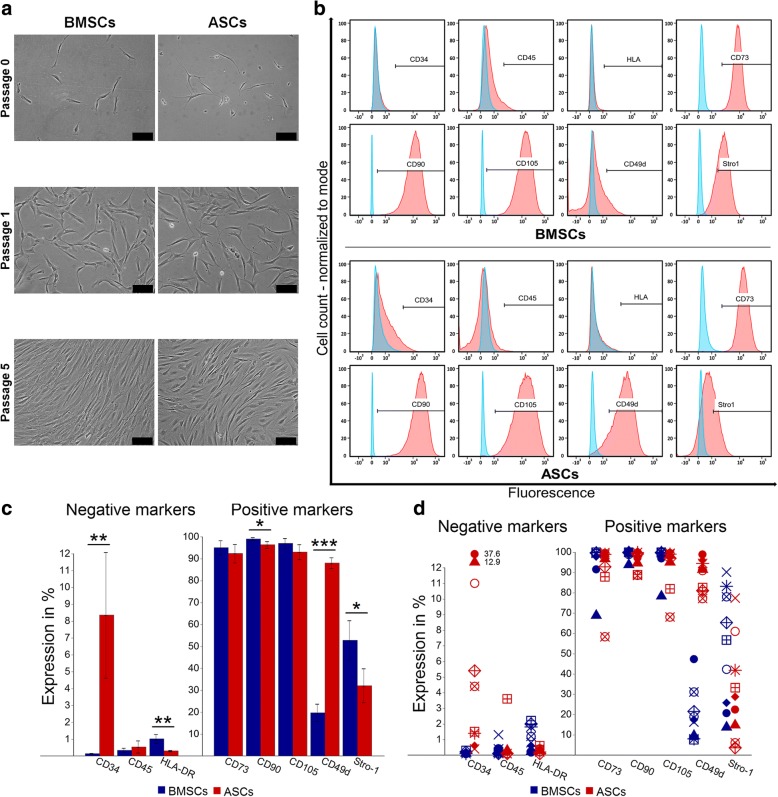
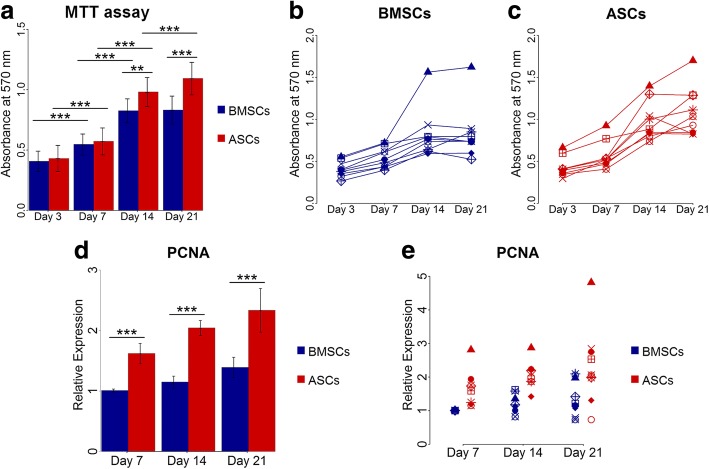
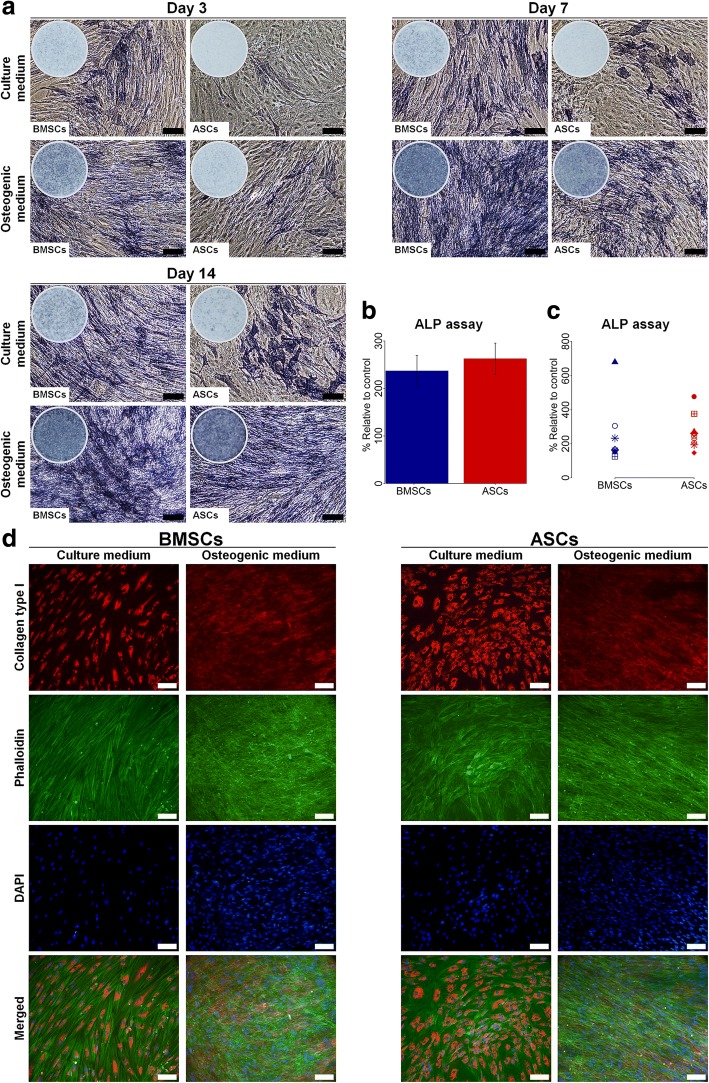
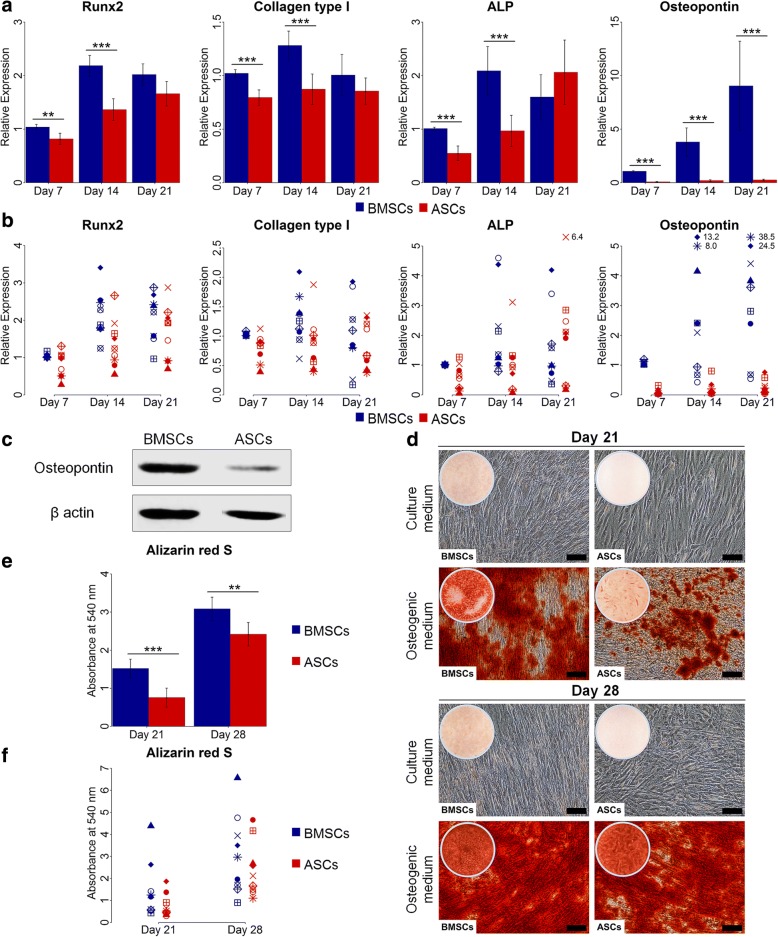
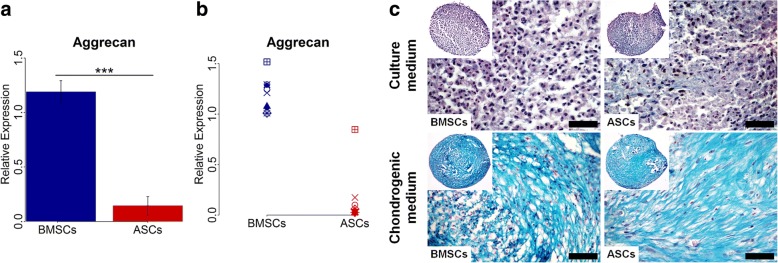
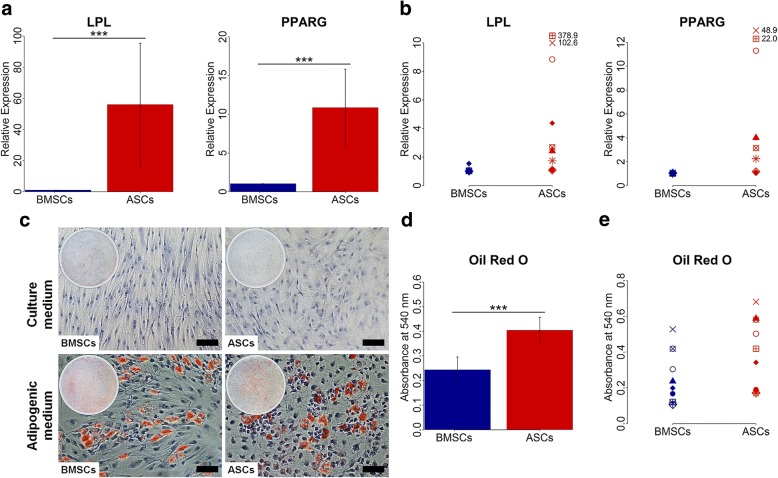
BACKGROUND: Adipose-derived stem cells (ASCs) have been introduced as an alternative to bone marrow mesenchymal stem cells (BMSCs) for cell-based therapy. However, different studies comparing ASCs and BMSCs have shown conflicting results. In fact, harvesting ASCs and BMSCs from different individuals might influence the results, making comparison difficult. Therefore, this study aimed to characterize donor-matched ASCs and BMSCs in order to investigate proliferation, differentiation potential and possible effects of donor variation on these mesenchymal stem cells (MSCs). METHODS: Human bone marrow and adipose tissue samples were obtained from nine donors aged 8-14. ASCs and BMSCs were isolated and characterized based on expression of surface markers using flow cytometry. The proliferation up to 21 days was investigated. Multi-lineage differentiation was induced using osteogenic, chondrogenic and adipogenic differentiation media. Alkaline phosphatase (ALP) activity was monitored and collagen type I formation was evaluated by immunofluorescence staining. In vitro multi-potency was studied using tissue-specific stains and lineage-specific gene expression. In addition, the osteogenic lineage was evaluated at protein level. RESULTS: Isolated ASCs and BMSCs from all donors demonstrated morphologic and immunophenotypic characteristics of MSCs, with expression of MSCs markers and negative expression of hematopoietic markers. Unlike BMSCs, ASCs showed high expression of CD49d and low expression of Stro-1. In general, ASCs showed significantly higher proliferation and adipogenic capacity with more lipid vesicle formation and expression of the adipogenesis-related genes than BMSCs. In contrast, BMSCs showed significantly higher osteogenic and chondrogenic capacity compared to ASCs. BMSCs had earlier and higher ALP activity, calcium deposition, and expression of the osteogenesis- and chondrogenesis-related genes and the osteogenesis-related protein osteopontin. Proliferation and differentiation capacity of ASCs and BMSCs varied significantly among the donors. CONCLUSIONS: ASCs and BMSCs showed tissue-specific differentiation abilities, but with significant variation between donors. The similarities and differences in the properties of ASCs and BMSCs should be taken into consideration when planning stem cell-based therapy.
Overview
The claims and statistics of this paper haven’t been checked yet.
Free: it reads the open-access text and checks the first 5 claims that cite a source we can check. Create a free account to check every claim.
Integrity signals
Registry
Cites
Statistics
Figures
Verification
Claims the paper makes
The claims and statistics of this paper haven’t been checked yet.
Free: it reads the open-access text and checks the first 5 claims that cite a source we can check. Create a free account to check every claim.
Claims other papers make about this one
Each is checked against this paper’s own text: does it say what the citing paper says it does?
The cited source says what the claim attributes to it.
In the citing paper
“Regarding bone tissue engineering, studies comparing the osteogenic potential of human BM-MSCs and ASCs have yielded mixed results.”
From Mesenchymal Stem/Stromal Cells: Immunomodulatory and Bone Regeneration Potential after Tumor Excision in Osteosarcoma Patients (2023) · cites this paper as [58]
The cited source says what the claim attributes to it.
In the citing paper
“Additionally, harvesting BM-MSCs is limited by the potential pain and morbidity associated with bone marrow aspiration, and only a small fraction (0.001–0.01%) of harvested bone marrow cells are MSCs [58,67].”
From Mesenchymal Stem/Stromal Cells: Immunomodulatory and Bone Regeneration Potential after Tumor Excision in Osteosarcoma Patients (2023) · cites this paper as [58]
The cited source says what the claim attributes to it.
In the citing paper
“Some suggest that BM-MSCs exhibit greater osteogenic capacity [58,59,60,61,62], while others propose that ASCs have equal or superior potential [58,63,64,65,66].”
From Mesenchymal Stem/Stromal Cells: Immunomodulatory and Bone Regeneration Potential after Tumor Excision in Osteosarcoma Patients (2023) · cites this paper as [58]
Self-check
Percentages, sums and reported differences re-computed from the paper’s own numbers.
The self-check needs the paper’s full text.
Citations
Cites
Multilineage potential of adult human mesenchymal stem cells
Pittenger, M. F., Mackay, A. M., Beck, S. C., Jaiswal, R. K., Douglas, R., Mosca, J. D., Moorman, M. A., Simonetti, D. W., Craig, S., & Marshak, D. R. (1999) · Science · doi:10.1126/science.284.5411.143 · Cited by 21,052 · cited 1×
“01%) of the harvested bone marrow cells are MSCs [5].”
BackgroundDominici, M., Le Blanc, K., Mueller, I., Slaper-Cortenbach, I., Marini, F. C., Krause, D. S., Deans, R. J., Keating, A., Prockop, D. J., & Horwitz, E. M. (2006) · Cytotherapy · doi:10.1080/14653240600855905 · Cited by 17,766 · cited 1×
“to a tissue culture flask), must express the surface markers CD73, CD90 and CD105 (≥ 90%), not express the hematopoietic markers CD14, CD34, CD45, CD19 and HLA-DR (≤ 2%), and should be able to undergo multi-lineage differentiation (osteogenic, adipogenic and chondrogenic) [4].”
BackgroundStöckl, S., Göttl, C., Grifka, J., & Grässel, S. (2013) · Cellular Physiology and Biochemistry · doi:10.1159/000350089 · Cited by 4,656
Komori, T., Yagi, H., Nomura, S., Yamaguchi, A., Sasaki, K., Deguchi, K., Shimizu, Y., Bronson, R. T., Gao, Y.-H., Inada, M., et al. (1997) · Cell · doi:10.1016/s0092-8674(00)80258-5 · Cited by 4,244 · cited 1×
“Runx2-deficient mice are reported to lack bone formation due to absence of osteoblasts [50].”
BackgroundMesenchymal stem cells reside in virtually all post-natal organs and tissues
Meirelles, L. D. S., Chagastelles, P. C., & Nardi, N. B. (2006) · Journal of Cell Science · doi:10.1242/jcs.02932 · Cited by 2,485 · cited 1×
“Discussion Adult MSCs, isolated from different connective tissues, have a fundamental role in maintenance and regeneration of body tissues [30].”
BackgroundChamberlain, G., Fox, J., Ashton, B., & Middleton, J. (2007) · Stem Cells · doi:10.1634/stemcells.2007-0197 · Cited by 2,381
Bourin, P., Bunnell, B. A., Casteilla, L., Dominici, M., Katz, A. J., March, K. L., Redl, H., Rubin, J. P., Yoshimura, K., & Gimble, J. M. (2013) · Cytotherapy · doi:10.1016/j.jcyt.2013.02.006 · Cited by 1,890 · cited 1×
“Although significant biologic differences have been shown in MSCs derived from different sources [12–14], ASCs and BMSCs have comparable characteristics when it comes to morphology and surface proteins [15].”
BackgroundLiang, H., Liang, P., Xu, Y., Wu, J., Liang, T., & Xu, X. (2009) · Journal of Neurotrauma · doi:10.1089/neu.2008.0850 · Cited by 1,750
Hass, R., Kasper, C., Böhm, S., & Jacobs, R. (2011) · Cell Communication and Signaling · doi:10.1186/1478-811x-9-12 · Cited by 1,748
Stolzing, A., Jones, E., McGonagle, D., & Scutt, A. (2008) · Mechanisms of Ageing and Development · doi:10.1016/j.mad.2007.12.002 · Cited by 1,195 · cited 1×
“It has been reported that stem cell yield, proliferation and differentiation properties of BMSCs and ASCs are negatively affected by age [31, 32].”
Background
Cited by
Stem cell-based therapy for human diseases
Hoang, D. M., Pham, P. T., Bach, T. Q., Ngo, A. T. L., Nguyen, Q. T., Phan, T. T. K., Nguyen, G. H., Le, P. T. T., Hoang, V. T., Forsyth, N. R., et al. (2022) · Signal Transduction and Targeted Therapy · doi:10.1038/s41392-022-01134-4 · Cited by 1,074
Treatment of Inflammatory Bowel Disease: A Comprehensive Review
Cai, Z., Wang, S., & Li, J. (2021) · Frontiers in Medicine · doi:10.3389/fmed.2021.765474 · Cited by 675
Giorgino, R., Albano, D., Fusco, S., Peretti, G. M., Mangiavini, L., & Messina, C. (2023) · International Journal of Molecular Sciences · doi:10.3390/ijms24076405 · Cited by 387
Stem cell-derived exosomes: emerging therapeutic opportunities for wound healing
Zhou, C., Zhang, B., Yang, Y., Jiang, Q., Li, T., Gong, J., Tang, H., & Zhang, Q. (2023) · Stem Cell Research & Therapy · doi:10.1186/s13287-023-03345-0 · Cited by 341
“BMSCs BMSCs are multilineage progenitors with self-renewal, multidirectional differentiation, and pleiotropic paracrine functions [50].”
BackgroundAn Update on Adipose‐Derived Stem Cells for Regenerative Medicine: Where Challenge Meets Opportunity
Qin, Y., Ge, G., Yang, P., Wang, L., Qiao, Y., Pan, G., Yang, H., Bai, J., Cui, W., & Geng, D. (2023) · Advanced Science · doi:10.1002/advs.202207334 · Cited by 260
Klimek, K., & Ginalska, G. (2020) · Polymers · doi:10.3390/polym12040844 · Cited by 205
“The MSCs possess capacity to self-renew and differentiate into various cells, such as adipocytes, chondrocytes, fibroblasts, myocytes, and osteoblasts [25,26].”
BackgroundAdipose-derived stem cells secretome and its potential application in “stem cell-free therapy”
Trzyna, A., & Banaś-Ząbczyk, A. (2021) · Biomolecules · doi:10.3390/biom11060878 · Cited by 201
“It has been shown that the older donor of ASCs the lower proliferation and differentiation potential and the lower growth factors secretion ability [9,36,54].”
BackgroundZhidu, S., Ying, T., Rui, J., & Chao, Z. (2024) · Stem Cell Research & Therapy · doi:10.1186/s13287-024-03885-z · Cited by 162
“Whereas AT-MSCs have a higher capacity for adipogenic differentiation, BM-MSCs are more likely to differentiate into osteogenic tissue [47].”
BackgroundOjansivu, M., Rashad, A., Ahlinder, A., Massera, J., Mishra, A., Syverud, K., Finne-Wistrand, A., Miettinen, S., & Mustafa, K. (2019) · Biofabrication · doi:10.1088/1758-5090/ab0692 · Cited by 176
Self-citationRecent advancements in cartilage tissue engineering innovation and translation
Nordberg, R. C., Bielajew, B. J., Takahashi, T., Dai, S., Hu, J. C. Y., & Athanasiou, K. A. (2024) · Nature Reviews Rheumatology · doi:10.1038/s41584-024-01118-4 · Cited by 196
The heterogeneity of mesenchymal stem cells: an important issue to be addressed in cell therapy
Li, J., Wu, Z., Zhao, L., Liu, Y., Su, Y., Gong, X., Liu, F., & Zhang, L. (2023) · Stem Cell Research & Therapy · doi:10.1186/s13287-023-03587-y · Cited by 150
“This can result in inconsistent growth rates and differentiation levels among different MSCs during the treatment process, thereby affecting the treatment outcome [129].”
BackgroundHwang, J. J., Rim, Y. A., Nam, Y., & Ju, J. H. (2021) · Frontiers in Immunology · doi:10.3389/fimmu.2021.631291 · Cited by 160
Robert, A. W., Marcon, B. H., Dallagiovanna, B., & Shigunov, P. (2020) · Frontiers in Cell and Developmental Biology · doi:10.3389/fcell.2020.00561 · Cited by 165
Chen, J., Lin, P., Tsai, Y.-R., Yang, Y.-C., & Kang, H. (2019) · Cells · doi:10.3390/cells8111318 · Cited by 141
Nucleic acid delivery to mesenchymal stem cells: a review of nonviral methods and applications
Hamann, A., Nguyen, A., & Pannier, A. K. (2019) · Journal of Biological Engineering · doi:10.1186/s13036-019-0140-0 · Cited by 119
Vascularization strategies for skin tissue engineering
Amirsadeghi, A., Jafari, A., Eggermont, L. J., Hashemi, S., Bencherif, S. A., & Khorram, M. (2020) · Biomaterials Science · doi:10.1039/d0bm00266f · Cited by 137
Cell–scaffold interactions in tissue engineering for oral and craniofacial reconstruction
Wang, F., Cai, X., Shen, Y., & Meng, L. (2022) · Bioactive Materials · doi:10.1016/j.bioactmat.2022.10.029 · Cited by 133
Advanced injectable hydrogels for cartilage tissue engineering
Zhu, S., Li, Y., He, Z., Ji, L., Zhang, W., Yu, T., Luo, J., Yu, D., Zhang, Q., & Bi, Q. (2022) · Frontiers in Bioengineering and Biotechnology · doi:10.3389/fbioe.2022.954501 · Cited by 114
MSCs vs. iPSCs: Potential in therapeutic applications
Thanaskody, K., Jusop, A. S., Tye, G. J., Zaman, W. S. W. K., Dass, S. A., & Nordin, F. (2022) · Frontiers in Cell and Developmental Biology · doi:10.3389/fcell.2022.1005926 · Cited by 115
“Photon counts and qPCR confirm that minicircle DNA with the same reporter gene maintains higher expression in hASCs for a longer time than standard plasmids (Jia et al., 2010).”
BackgroundInfluentialMesenchymal Stem Cells for Perianal Crohn’s Disease
Carvello, M., Lightner, A. L., Yamamoto, T., Kotze, P. G., & Spinelli, A. (2019) · Cells · doi:10.3390/cells8070764 · Cited by 111
“In addition, the two cell types seem to differentiate along their lineages, toward an adipocyte versus an osteogenic capacity [56].”
BackgroundRashad, A., Mohamed-Ahmed, S., Ojansivu, M., Berstad, K., Yassin, M. A., Kivijärvi, T., Heggset, E. B., Syverud, K., & Mustafa, K. (2018) · Biomacromolecules · doi:10.1021/acs.biomac.8b01194 · Cited by 100
Self-citationChawla, S., Mainardi, A., Majumder, N., Dönges, L., Kumar, B., Occhetta, P., Martín, I., Egloff, C., Ghosh, S., Bandyopadhyay, A., et al. (2022) · Cells · doi:10.3390/cells11244034 · Cited by 103
“(A) hBMSCs were chondro-differentiated in 3D microaggregates using chondrogenic medium (ChM) for 7 days.”
BackgroundInfluentialZhang, Y., Ravikumar, M., Ling, L., Nurcombe, V., & Cool, S. M. (2021) · Stem Cell Reports · doi:10.1016/j.stemcr.2021.01.021 · Cited by 97
Manufacturing artificial bone allografts: a perspective.
Steijvers, E., Ghei, A., & Xia, Z. (2022) · PubMed Central · doi:10.12336/biomatertransl.2022.01.007 · Cited by 116
Barrère‐Lemaire, S., Vincent, A., Jørgensen, C., Piot, C. A., Nargeot, J., & Djouad, F. (2023) · Physiological Reviews · doi:10.1152/physrev.00009.2023 · Cited by 96
Adipose-Derived Mesenchymal Stromal Cells in Basic Research and Clinical Applications
Czerwiec, K., Zawrzykraj, M., Deptuła, M., Skoniecka, A., Tymińska, A., Zieliński, J., Kosiński, A., & Pikuła, M. (2023) · International Journal of Molecular Sciences · doi:10.3390/ijms24043888 · Cited by 80
Function and mechanism of mesenchymal stem cells in the healing of diabetic foot wounds
Yu, X., Liu, P., Li, Z., & Zhang, Z. (2023) · Frontiers in Endocrinology · doi:10.3389/fendo.2023.1099310 · Cited by 100
Yan, W., Xia, Y., Zhao, H., Xu, X., Ma, X., & Tao, L. (2024) · Journal of Molecular and Cellular Cardiology · doi:10.1016/j.yjmcc.2023.12.009 · Cited by 91
Bone Defect Reconstruction Via Endochondral Ossification: A Developmental Engineering Strategy
Fu, R., Liu, C., Li, J., Yan, Y., Xie, Y., Li, Q., & Huang, R. (2020) · Journal of Tissue Engineering · doi:10.1177/20417314211004211 · Cited by 89
Molnar, V., Pavelić, E., Vrdoljak, K., Čemerin, M., Klarić, E., Matišić, V., Bjelica, R., Brlek, P., Kovačić, I., Tremolada, C., et al. (2022) · Genes · doi:10.3390/genes13060949 · Cited by 90
Mollentze, J., Durandt, C., & Pepper, M. S. (2021) · Stem Cells International · doi:10.1155/2021/9919361 · Cited by 91
“This indicates that BM-MSCs stop proliferation early (day 14) and switch to differentiation and formation of a mature collagenous matrix, while ASCs have an extended proliferation period and only switch to differentiation after day 21, resulting in BM-MSCs having greater mineralization and therefore more bone tissue o…”
BackgroundResultMeamar, R., Ghasemi‐Mobarakeh, L., Norouzi, M., Siavash, M., Hamblin, M. R., & Fesharaki, M. (2021) · International Immunopharmacology · doi:10.1016/j.intimp.2021.108282 · Cited by 80
Liang, C., Liu, Y., Xu, H., Huang, J., Shen, Y., Chen, F., & Luo, M. (2021) · Frontiers in Bioengineering and Biotechnology · doi:10.3389/fbioe.2020.615850 · Cited by 81
Yang, L., Ren, Z., Yan, S., Zhao, L., Liu, J., Zhao, L., Li, Z., Ye, S., Liu, A., Li, X., et al. (2022) · Communications Biology · doi:10.1038/s42003-022-03420-x · Cited by 73
Padula, S. L., Ponzo, M., Lombardi, M., Iazzetta, V., Errico, C., Polverino, G., Russo, F., D’Andrea, L., Hersant, B., Meningaud, J., et al. (2023) · Journal of Clinical Medicine · doi:10.3390/jcm12134351 · Cited by 73
Guadix, J. A., López-Beas, J., Clares, B., Soriano-Ruiz, J. L., Zugaza, J. L., & Gálvez-Martín, P. (2019) · Pharmaceutics · doi:10.3390/pharmaceutics11110552 · Cited by 66
Mohamed‐Ahmed, S., Yassin, M. A., Rashad, A., Espedal, H., Idris, S. B., Finne‐Wistrand, A., Mustafa, K. B. E., Vindenes, H. A., & Fristad, I. (2020) · Cell and Tissue Research · doi:10.1007/s00441-020-03315-5 · Cited by 74
Self-citationNanofat: A therapeutic paradigm in regenerative medicine
Jeyaraman, M., Muthu, S., Sharma, S., Ganta, C. K., Ranjan, R., & Jha, S. K. (2021) · World Journal of Stem Cells · doi:10.4252/wjsc.v13.i11.1733 · Cited by 71
Monaco, M. L., Gervois, P., Beaumont, J. E. J., Clegg, P., Bronckaers, A., Vandeweerd, J., & Lambrichts, I. (2020) · Cells · doi:10.3390/cells9040980 · Cited by 79
Therapeutic Applications of Stem Cell-Derived Exosomes
Abdulmalek, O. A. A. Y., Husain, K. H., AlKhalifa, H. K. A. A., Alturani, M. M. A. B., Butler, A. E., & Moin, A. S. M. (2024) · International Journal of Molecular Sciences · doi:10.3390/ijms25063562 · Cited by 77
Cross-linked gelatin-nanocellulose scaffolds for bone tissue engineering
Carlström, I. E., Rashad, A., Campodoni, E., Sandri, M., Syverud, K., Bolstad, A. I., & Mustafa, K. (2020) · Materials Letters · doi:10.1016/j.matlet.2020.127326 · Cited by 68
Self-citationChance, T. C., Rathbone, C. R., Kamucheka, R. M., Peltier, G. C., Cap, A. P., & Bynum, J. A. (2019) · The Journal of Trauma: Injury, Infection, and Critical Care · doi:10.1097/ta.0000000000002225 · Cited by 67
Lovecchio, J., Gargiulo, P., Luna, J. L. V., Giordano, E., & Sigurjónsson, Ó. E. (2019) · Scientific Reports · doi:10.1038/s41598-019-53319-7 · Cited by 70
Ding, Z., Greenberg, Z., Serafim, M. F., Ali, S., Jamieson, J. C., Traktuev, D. O., March, K. L., & He, M. (2024) · Extracellular Vesicle · doi:10.1016/j.vesic.2024.100034 · Cited by 66
“54,55 Similar to BM-and UC-MSCs, AT-MSCs secretome includes many regeneration-facilitating factors, as we have reported in multiple studies since our first report in 2004, 56 including EVs.”
ResultStem cell therapy in the heart: Biomaterials as a key route
Hashemzadeh, M. R., Yazdi, M. E. T., Amiri, M. S., & Mousavi, S. H. (2021) · Tissue and Cell · doi:10.1016/j.tice.2021.101504 · Cited by 70
Kumar, A., Kumar, V., Rattan, V., Jha, V., & Bhattacharyya, S. (2018) · Biochimie · doi:10.1016/j.biochi.2018.10.014 · Cited by 62
“For example, adipose derived stem cells (ADSC) has poor tendency for differentiation into osteocytes as compared to BMSC which has been nicely demonstrated in a recent study which involved donor matched comparison of ADSC and BMSC (1, 2).”
ResultInflammatory bowel disease: Therapeutic limitations and prospective of the stem cell therapy
Mishra, R., Dhawan, P., Srivastava, A. S., & Singh, A. B. (2020) · World Journal of Stem Cells · doi:10.4252/wjsc.v12.i10.1050 · Cited by 63
Liu, Y., & Holmes, C. A. (2021) · Frontiers in Cell and Developmental Biology · doi:10.3389/fcell.2021.648098 · Cited by 64
Shanbhag, S., Suliman, S., Mohamed‐Ahmed, S., Kampleitner, C., Hassan, M. N., Heimel, P., Dobsak, T., Tangl, S., Bolstad, A. I., & Mustafa, K. B. E. (2021) · Stem Cell Research & Therapy · doi:10.1186/s13287-021-02642-w · Cited by 61
“RNA extraction and cDNA synthesis were performed as previously described [40].”
MethodSelf-citationMesenchymal stem cell therapy for neurological disorders: The light or the dark side of the force?
Isaković, J., Šerer, K., Barišić, B., & Mitrečić, D. (2023) · Frontiers in Bioengineering and Biotechnology · doi:10.3389/fbioe.2023.1139359 · Cited by 67
Al‐Sharabi, N., Mohamed‐Ahmed, S., Shanbhag, S., Kampleitner, C., Elnour, R., Yamada, S., Rana, N., Birkeland, E., Tangl, S., Gruber, R., et al. (2024) · Stem Cell Research & Therapy · doi:10.1186/s13287-024-03639-x · Cited by 63
“hMSC was isolated and characterized based on immunophenotype and multi-differentiation capacity, according to the minimal criteria for defining hMSC, as proposed by ISCT [22, 34].”
MethodSelf-citationThe Role of Endothelial-to-Mesenchymal Transition in Cardiovascular Disease
Peng, Q., Shan, D., Cui, K., Li, K. S., Zhu, B., Wu, H., Wang, B., Wong, S., Norton, V., Dong, Y., et al. (2022) · Cells · doi:10.3390/cells11111834 · Cited by 60
Advantages and challenges of stem cell therapy for osteoarthritis (Review)
Loo, S., & Wong, N. (2021) · Biomedical Reports · doi:10.3892/br.2021.1443 · Cited by 64
“MSCs that are widely studied for the treatment of OA are bone marrow‐derived MSCs (BMSCs) and adipose‐derived stem cells (ASCs) (70,71).”
BackgroundSayegh, S., Atat, O. E., Diallo, K., Rauwel, B., Degboé, Y., Cavaignac, É., Constantin, A., Cantagrel, A. G., Trak-Smayra, V. E., Alaaeddine, N., et al. (2019) · Frontiers in Immunology · doi:10.3389/fimmu.2019.01482 · Cited by 61
Adipose‐derived stromal cells for nonhealing wounds: Emerging opportunities and challenges
Deptuła, M., Brzezicka, A., Skoniecka, A., Zieliński, J., & Pikuła, M. (2021) · Medicinal Research Reviews · doi:10.1002/med.21789 · Cited by 60
“AD‐MSCs are easy to obtain and have similar properties to bone marrow‐derived MSCs (BM‐MSCs).(22) Adipose tissue is a more effective source of stem cells, which can be extracted in large amounts (500‐fold greater than BM‐MSCs when counted per unit volume of fat) without ethical concerns.”
BackgroundRa, K., Park, S. C., & Lee, B. C. (2023) · International Journal of Molecular Sciences · doi:10.3390/ijms24055053 · Cited by 59
Li, Q., Song, W., Ryu, M., Nam, A., An, J., Ahn, J., Bhang, D. H., Jung, Y. C., & Youn, H. (2018) · Stem Cell Research & Therapy · doi:10.1186/s13287-018-1009-8 · Cited by 59
Mesenchymal stem/stromal cells as next-generation drug delivery vehicles for cancer therapeutics
Takayama, Y., Kusamori, K., & Nishikawa, M. (2021) · Expert Opinion on Drug Delivery · doi:10.1080/17425247.2021.1960309 · Cited by 56
Sharma, S., Muthu, S., Jeyaraman, M., Ranjan, R., & Jha, S. K. (2021) · World Journal of Stem Cells · doi:10.4252/wjsc.v13.i10.1360 · Cited by 56
Lach, M., Rosochowicz, M. A., Richter, M., Jagiełło, I., Suchorska, W. M., & Trzeciak, T. (2022) · Cells · doi:10.3390/cells11030529 · Cited by 59
Zupan, J., Stražar, K., Kocijan, R., Nau, T., Grillari, J., & Marolt, D. (2021) · Mechanisms of Ageing and Development · doi:10.1016/j.mad.2021.111539 · Cited by 61
Role of Adipose-Derived Mesenchymal Stem Cells in Bone Regeneration
Lau, C. S., Park, S. Y., Ethiraj, L. P., Singh, P., Raj, G., Quek, J., Prasadh, S., Choo, Y., & Goh, B. T. (2024) · International Journal of Molecular Sciences · doi:10.3390/ijms25126805 · Cited by 54
“A study by Samih et al. [172] comparing the proliferation of human AD-MSCs and BM-MSCs up to 21 days demonstrated that AD-MSCs had higher proliferation (Figure In addition, immunomodulatory capacities were higher in AD-MSCs than those of BM-MSCs, exhibiting the increased secretion of cytokines that…”
BackgroundJeske, R., Yuan, X., Fu, Q., Bunnell, B. A., Logan, T. M., & Li, Y. (2021) · Frontiers in Immunology · doi:10.3389/fimmu.2021.621744 · Cited by 56
“hASCs also exhibit attractive therapeutic properties, such as multipotency and immunomodulation (3, 17, 20), and can be expanded for additional passages compared to BM-hMSCs (17, 63).”
BackgroundInfluentialNiada, S., Giannasi, C., Magagnotti, C., Andolfo, A., & Brini, A. T. (2020) · Journal of Proteomics · doi:10.1016/j.jprot.2020.104069 · Cited by 53
Vascularized adipose tissue engineering: moving towards soft tissue reconstruction
Peirsman, A., Nguyen, H. T., Waeyenberge, M. V., Ceballos‐González, C. F., Bolívar‐Monsalve, E. J., Kawakita, S., Vanlauwe, F., Tirpáková, Z., Dorpe, S. V., Damme, L. V., et al. (2023) · Biofabrication · doi:10.1088/1758-5090/acd7a5 · Cited by 52
“Functionally, BMSCs and ASCs evoke similar anti-inflammatory and immunomodulatory effects [62–64] but ASCs have a higher proliferative and adipogenic capacity, which are favorable features for ATE [65].”
Mukherjee, S., Yadav, G., & Kumar, R. (2021) · World Journal of Stem Cells · doi:10.4252/wjsc.v13.i6.521 · Cited by 54
3D Tissue-Engineered Vascular Drug Screening Platforms: Promise and Considerations
Marei, I., Samaan, T. M. A., Al-Quradaghi, M. A., Farah, A., Mahmud, S. H., Ding, H., & Triggle, C. R. (2022) · Frontiers in Cardiovascular Medicine · doi:10.3389/fcvm.2022.847554 · Cited by 49
Ghasemi, A., Akbari, E., & Imani, R. (2021) · Frontiers in Bioengineering and Biotechnology · doi:10.3389/fbioe.2021.662084 · Cited by 51
“However, some of them, including Daclizumab (Zenapax), Sirolimus (Rapamune), and Tacrolimus (Prograf), have noticeable side effects and induce abnormally differentiation (e.g., cancers) (Moini et al., 2015).”
BackgroundThe Role of Pref-1 during Adipogenic Differentiation: An Overview of Suggested Mechanisms
da Silva, C., Durandt, C., Kallmeyer, K., Ambele, M. A., & Pepper, M. S. (2020) · International Journal of Molecular Sciences · doi:10.3390/ijms21114104 · Cited by 50
“…= WJSC [47] Li et al., 2015 AT = BM [50] Liu et al., 2009 AT > BM [51] Manini et al., 2011 AT > BM > Dermis [52] Maurn y et al., 2007 AT = BM [53] Mohamed-Ahmed et al., 2018 AT > BM > Dermis [54] Noël et al., 2007 AT = BM [55] Ragni et al., 2013 AT > BM > UCB > WJSC > AF> PV [45] Sakaguchi et…”
Muthu, S., Patil, S. C., Jeyaraman, N., Jeyaraman, M., Gangadaran, P., Rajendran, R. L., Oh, E. J., Khanna, M., Chung, H. Y., & Ahn, B. (2023) · World Journal of Orthopedics · doi:10.5312/wjo.v14.i1.23 · Cited by 47
Cell-Based Therapy for Stroke: Musing With Muse Cells
Park, Y. J., Niizuma, K., Mokin, M. V., Dezawa, M., & Borlongan, C. V. (2020) · Stroke · doi:10.1161/strokeaha.120.030618 · Cited by 46
Iron Oxide Nanoparticles in Mesenchymal Stem Cell Detection and Therapy
Mehta, K. J. (2022) · Stem Cell Reviews and Reports · doi:10.1007/s12015-022-10343-x · Cited by 49
Centeno, C. J., & Pastoriza, S. M. (2020) · International Journal of Sports Physical Therapy · doi:10.26603/ijspt20200301 · Cited by 48
Zhong, D., Xu, G.-Z., Wu, J.-Z., Liu, H., Tang, J., & Wang, C.-G. (2021) · Cell Death and Disease · doi:10.1038/s41419-021-03586-y · Cited by 45
Mykuliak, A., Yrjänäinen, A., Mäki, A.-J., Gebraad, A., Lampela, E., Kääriäinen, M., Pakarinen, T.-K., Kallio, P. J., Miettinen, S., & Vuorenpää, H. (2022) · Frontiers in Bioengineering and Biotechnology · doi:10.3389/fbioe.2022.764237 · Cited by 47
Quek, J., Vizetto‐Duarte, C., Teoh, S. H., & Choo, Y. (2024) · Journal of Functional Biomaterials · doi:10.3390/jfb15060145 · Cited by 46
Midha, S., Jain, K. G., Bhaskar, N., Kaur, A., Rawat, S. J., Giri, S., Basu, B., & Mohanty, S. (2020) · Stem Cells Translational Medicine · doi:10.1002/sctm.19-0385 · Cited by 44
“Although BMMSCs have proven clinical advantages, AD-MSCs possess some attractive characteristics, such as abundant stem cell source from lipoaspirates, faster proliferation rate and lesser discomfort, and morbidity to the patient.(12) However, their osteogenic potential is still somewhat debated.”
BackgroundYamada, S., Yassin, M. A., Schwarz, T., Hansmann, J., & Mustafa, K. B. E. (2021) · Journal of Tissue Engineering · doi:10.1177/20417314211019375 · Cited by 45
Self-citationCalcat-i-Cervera, S., Sanz‐Nogués, C., & O’Brien, T. (2021) · Frontiers in Medicine · doi:10.3389/fmed.2021.728496 · Cited by 43
Cai, A., Hardt, M., Schneider, P., Schmid, R., Lange, C., Dippold, D., Schubert, D. W., Boos, A. M., Weigand, A., Arkudas, A., et al. (2018) · BMC Biotechnology · doi:10.1186/s12896-018-0482-6 · Cited by 44
Takahashi, H., Sakata, N., Yoshimatsu, G., Hasegawa, S., & Kodama, S. (2019) · Journal of Clinical Medicine · doi:10.3390/jcm8020249 · Cited by 43
The endocannabinoid receptors CB1 and CB2 affect the regenerative potential of adipose tissue MSCs
Ruhl, T., Karthaus, N., Kim, B., & Beier, J. P. (2020) · Experimental Cell Research · doi:10.1016/j.yexcr.2020.111881 · Cited by 42
Tavakoli, S., Kisiel, M. A., Biedermann, T., & Klar, A. S. (2022) · Biomedicines · doi:10.3390/biomedicines10010118 · Cited by 44
Zhong, Y., Zhang, Y., Yu, A., Zhang, Z., Deng, Z., Xiong, K., Wang, Q., & Zhang, J. (2023) · Frontiers in Physiology · doi:10.3389/fphys.2023.1247734 · Cited by 43
“ADSCs display higher adipogenic ability, while BMSCs exhibit stronger chondrogenic and osteogenic capacity (Mohamed-Ahmed et al., 2018).”
BackgroundMamachan, M., Sharun, K., Banu, S. A., Muthu, S., PAWDE, A. M., Abualigah, L., & Maiti, S. K. (2024) · Tissue and Cell · doi:10.1016/j.tice.2024.102380 · Cited by 42
Cell Sources for Human In vitro Bone Models
Ansari, S., Ito, K., & Hofmann, S. (2021) · Current Osteoporosis Reports · doi:10.1007/s11914-020-00648-6 · Cited by 43
Chondrogenic Differentiation of Pluripotent Stem Cells under Controllable Serum-Free Conditions
Lach, M., Wróblewska, J. P., Kulcenty, K. I., Richter, M., Trzeciak, T., & Suchorska, W. M. (2019) · International Journal of Molecular Sciences · doi:10.3390/ijms20112711 · Cited by 43
Clinical Development of Regenerative Medicine Targeted for Intervertebral Disc Disease
Sakai, D., Schol, J., & Watanabe, M. (2022) · Medicina · doi:10.3390/medicina58020267 · Cited by 41
Qi, L., Wang, K., Zhou, J., Zhang, H., Guo, Y., & Zhang, C. (2023) · Food Chemistry · doi:10.1016/j.foodchem.2023.137365 · Cited by 39
Jain, S., Yassin, M. A., Fuoco, T., Liu, H., Mohamed‐Ahmed, S., Mustafa, K., & Finne‐Wistrand, A. (2020) · Journal of Tissue Engineering · doi:10.1177/2041731420954316 · Cited by 41
Self-citationShiu, S.-T., Lee, W.-F., Chen, S.-M., Hao, L.-T., Hung, Y., Lai, P., & Feng, S. (2021) · International Journal of Molecular Sciences · doi:10.3390/ijms22158101 · Cited by 43
“Bone marrow-derived MSCs (BMSCs) are the most commonly used source of MSCs and possess more potent osteogenic and chondrogenic differentiation abilities [17,18].”
BackgroundYang, M., Chen, J., & Chen, L. (2022) · Frontiers in Endocrinology · doi:10.3389/fendo.2022.1027686 · Cited by 45
Shanbhag, S., Mohamed‐Ahmed, S., Lunde, T. H. F., Suliman, S., Bolstad, A. I., Hervig, T. A., & Mustafa, K. B. E. (2020) · Stem Cell Research & Therapy · doi:10.1186/s13287-020-01863-9 · Cited by 41
“Consistent with previous reports, HPL supported the expansion, stromal phenotype, and multilineage, particularly osteogenic, differentiation of MSCs in comparison to FBS [17].”
BackgroundMethodResultInfluentialSelf-citationFuoco, T., Ahlinder, A., Jain, S., Mustafa, K., & Finne‐Wistrand, A. (2019) · Biomacromolecules · doi:10.1021/acs.biomac.9b01126 · Cited by 38
Self-citationUmbilical Cord-Derived Wharton’s Jelly for Regenerative Medicine Applications: A Systematic Review
Main, B. J., Maffulli, N., Valk, J., Rodriguez, H. C., Gupta, M., El‐Amin, S. F., & Gupta, A. (2021) · Pharmaceuticals · doi:10.3390/ph14111090 · Cited by 37
Donor Sex and Passage Conditions Influence MSC Osteogenic Response in Mineralized Collagen Scaffolds
Kolliopoulos, V., Tiffany, A. S., Polanek, M., & Harley, B. A. C. (2024) · Advanced Healthcare Materials · doi:10.1002/adhm.202400039 · Cited by 38
Aydin, M. S., Marek, N., Luciani, T., Mohamed‐Ahmed, S., Lund, B. K., Gjerde, C., Mustafa, K., Suliman, S., & Rashad, A. (2024) · ACS Biomaterials Science & Engineering · doi:10.1021/acsbiomaterials.4c01108 · Cited by 36
“…the effect of physicochemical properties of 3D printed PCL scaffolds on the fate of the innate immune cells, DC. Chen et al. investigated the role of 20, 40, and 90 μ m pores of PDMS substrates on the in vitro maturation of DC and reported an enhanced maturation of the cells as pore size decreased.”
Self-citationAdipose-Derived Stromal/Stem Cells from Large Animal Models: from Basic to Applied Science
Wiśniewska, J., Szóstek-Mioduchowska, A. Z., Kopcewicz, M. M., Walendzik, K., Machcińska-Zielińska, S., & Gawrońska‐Kozak, B. (2020) · Stem Cell Reviews and Reports · doi:10.1007/s12015-020-10049-y · Cited by 39
Harnessing adipose stem cell diversity in regenerative medicine
Gui, C., Parson, J. C., & Meyer, G. A. (2021) · APL Bioengineering · doi:10.1063/5.0038101 · Cited by 39
Hernando, S., Santos‐Vizcaíno, E., Igartúa, M., & Hernández, R. M. (2023) · Wiley Interdisciplinary Reviews Nanomedicine and Nanobiotechnology · doi:10.1002/wnan.1898 · Cited by 38
Metadata
- Authors
- Mohamed-Ahmed, S., Fristad, I., Lie, S. A., Suliman, S., Mustafa, K., Vindenes, H., & Idris, S. B.
- Affiliations
- University of Bergen (NO)
- Corresponding author
- Fristad, Inge
- Venue
- Stem Cell Research & Therapy
- Published
- 2018-06-19
- Volume
- 9
- Issue
- 1
- Pages
- 168-168
- ISSN
- 1757-6512 (ISSN-L)
- PMC
- PMC6008936
- OpenAlex
- W2809170199
- Semantic Scholar
- 481cffff8d86ecf5060bbbddc949bb0dbf210be1
- Cited by
- 515
- References
- 62
- Citations by year
- 2026: 34 · 2025: 52 · 2024: 95 · 2023: 106 · 2022: 84 · 2021: 60 · 2020: 49 · 2019: 30 · 2018: 4
- FWCI
- 20.27
- Type
- journal article
- Language
- en
- Open access
- gold
- doi.org
- Licence
- cc-by
- creativecommons.org/licenses/by/4.0/ (tdm)
- Locations
- Stem Cell Research & Therapy (publishedVersion, cc-by)
- Europe PMC (PubMed Central) (publishedVersion, other-oa)
- PubMed Central (publishedVersion, cc-by)
- PubMed (publishedVersion)
- NORA - Norwegian Open Research Archives (submittedVersion, cc-by)
- DOAJ (DOAJ: Directory of Open Access Journals) (submittedVersion, cc-by-sa)
- Funders
- Universitetet i Bergen
- Helse Vest (912048, 302077)
- Topics
- Life Sciences › Biochemistry, Genetics and Molecular Biology › Cell Biology › Mesenchymal stem cell research
- Health Sciences › Dentistry › Periodontics › Periodontal Regeneration and Treatments
- Health Sciences › Medicine › Hematology › Hematopoietic Stem Cell Transplantation
- Keywords
- adipose-derived stem cells, bone marrow mesenchymal stem cells, donor variability, multilineage differentiation, osteogenic differentiation, chondrogenic differentiation, adipogenesis, cell proliferation, alkaline phosphatase activity, osteopontin, CD49d, STRO-1, stem cell therapy
- MeSH terms
- Adipose Tissue, Cell Differentiation, Humans, Tissue Donors, Cell Proliferation, Adipogenesis, Mesenchymal Stem Cells
About these checks
Registry, retraction, Cites and statistics results are computed, not judged, with one exception: a printed reference that no index lists is read once by a model before it counts as a citation error. Claims are extracted by a model and kept only when their quote appears verbatim in the text; each cited source is then checked, with a model’s help, for whether it says what the claim relies on. Those verdicts can be wrong — read the claim’s quote and the cited source before relying on one.
Statistics and arithmetic are recomputed, not judged.
Confidence bands are shown only for fields calibrated on our annotated test set. None is calibrated yet, so no band is shown.
What counts as a claim ›How we measure confidence ›How we check this ›
Are you an author, or do you see a problem with this page? Request a review
Data sources
Bibliographic data: Semantic Scholar, OpenAlex, Crossref.
Contains information from the Semantic Scholar Academic Graph Datasets, made available under the ODC Attribution License (ODC-BY 1.0).
Semantic Scholar’s data is described in: Kinney, R., et al. (2023). The Semantic Scholar Open Data Platform. arXiv:2301.10140.
