

Early androgen exposure and human gender development
Open accessThe DOI matches its Crossref record; 85 of the 87 references it cites were found in a registry or an index.
Abstract
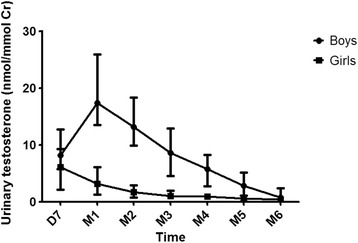
During early development, testosterone plays an important role in sexual differentiation of the mammalian brain and has enduring influences on behavior. Testosterone exerts these influences at times when the testes are active, as evidenced by higher concentrations of testosterone in developing male than in developing female animals. This article critically reviews the available evidence regarding influences of testosterone on human gender-related development. In humans, testosterone is elevated in males from about weeks 8 to 24 of gestation and then again during early postnatal development. Individuals exposed to atypical concentrations of testosterone or other androgenic hormones prenatally, for example, because of genetic conditions or because their mothers were prescribed hormones during pregnancy, have been consistently found to show increased male-typical juvenile play behavior, alterations in sexual orientation and gender identity (the sense of self as male or female), and increased tendencies to engage in physically aggressive behavior. Studies of other behavioral outcomes following dramatic androgen abnormality prenatally are either too small in their numbers or too inconsistent in their results, to provide similarly conclusive evidence. Studies relating normal variability in testosterone prenatally to subsequent gender-related behavior have produced largely inconsistent results or have yet to be independently replicated. For studies of prenatal exposures in typically developing individuals, testosterone has been measured in single samples of maternal blood or amniotic fluid. These techniques may not be sufficiently powerful to consistently detect influences of testosterone on behavior, particularly in the relatively small samples that have generally been studied. The postnatal surge in testosterone in male infants, sometimes called mini-puberty, may provide a more accessible opportunity for measuring early androgen exposure during typical development. This approach has recently begun to be used, with some promising results relating testosterone during the first few months of postnatal life to later gender-typical play behavior. In replicating and extending these findings, it may be important to assess testosterone when it is maximal (months 1 to 2 postnatal) and to take advantage of the increased reliability afforded by repeated sampling.
Overview
The claims and statistics of this paper haven’t been checked yet.
Free: it reads the open-access text and checks the first 5 claims that cite a source we can check. Create a free account to check every claim.
Integrity signals
Registry
Cites
Statistics
Figures
Verification
Claims the paper makes
The claims and statistics of this paper haven’t been checked yet.
Free: it reads the open-access text and checks the first 5 claims that cite a source we can check. Create a free account to check every claim.
Claims other papers make about this one
Each is checked against this paper’s own text: does it say what the citing paper says it does?
The cited source says what the claim attributes to it.
In the citing paper
“This argument is supported by the masculinizing effects of prenatal androgen excess in female-raised children with 46,XX CAH on diverse domains of gender-role behaviors (347-351), which may lead to gender questioning and variable transgender identification (352).”
From Congenital Adrenal Hyperplasia Due to Steroid 21-Hydroxylase Deficiency: An Endocrine Society* Clinical Practice Guideline (2018) · cites this paper as [348]
Self-check
Percentages, sums and reported differences re-computed from the paper’s own numbers.
The self-check needs the paper’s full text.
Citations
Cites
Statistical Power Analysis for the Behavioral Sciences
Muller, K. (1989) · Technometrics · doi:10.1080/00401706.1989.10488618 · Cited by 99,167
Statistical power analysis for the behavioral sciences
(1990) · Computers, Environment and Urban Systems · doi:10.1016/0198-9715(90)90050-4 · Cited by 65,269
Why Most Published Research Findings Are False
Ioannidis, J. P. A. (2005) · PLoS Medicine · doi:10.1371/journal.pmed.0020124 · Cited by 10,505
Simmons, J. P., Nelson, L. D., & Simonsohn, U. (2011) · Psychological Science · doi:10.1177/0956797611417632 · Cited by 6,567
The psychology of sex differences
(1975) · Behavior Therapy · doi:10.1016/s0005-7894(75)80031-1 · Cited by 5,488 · cited 1×
“Regarding potential pitfalls in studying gender, one is the tendency to analyze findings by gender, even when there was no initial hypothesis about gender differences [5].”
BackgroundWhy Most Published Research Findings Are False
Ioannidis, J. P. A. (2005) · CHANCE · doi:10.1080/09332480.2005.10722754 · Cited by 4,702 · cited 2×
“sciences are not replicable or are false [7].”
BackgroundThe gender similarities hypothesis.
Hyde, J. S. (2005) · American Psychologist · doi:10.1037/0003-066x.60.6.581 · Cited by 3,084
Voyer, D., Voyer, S., & Bryden, M. P. (1995) · Psychological Bulletin · doi:10.1037/0033-2909.117.2.250 · Cited by 2,868 · cited 1×
“15) contrasts with prior meta-analytic research [62,63] showing small sex differences on this type of task.”
ResultThe Psychology of Sex Differences: —Vol. I: Text
Maccoby, E. E., & Jacklin, C. N. (1974) · doi:10.1515/9781503620780 · Cited by 1,368
Global Disorders of Sex Development Update since 2006: Perceptions, Approach and Care
Lee, P. A., Nordenström, A., Houk, C. P., Ahmed, S. F., Auchus, R., Baratz, A., Baratz Dalke, K., Liao, L.-M., Lin-Su, K., Looijenga 3rd, L. H. J., et al. (2016) · Hormone Research in Paediatrics · doi:10.1159/000442975 · Cited by 1,273
Research works printed but not linked: 3
- Hines M Brain gender 2004 New York Oxford University Press
- Hines M Lerner RM Lamb ME Gendered development Handbook of Child Development and Developmental Science 2015 7 Hoboken, NJ Wiley
- Lutchmaya S. Foetal testosterone and social-communicative development. PhD Thesis, Department of Psychology, University of Cambridge. 2001.
Cited by
Items 101–200 of 289
Sexual Identity and Sexual Orientation
Castellanos-Cruz, L., Bao, A., & Swaab, D. F. (2016) · Elsevier eBooks · doi:10.1016/b978-0-12-803592-4.00104-8 · Cited by 10
Olvera-Hernández, S., Rodríguez, M. T., Swaab, D. F., & Fernández‐Guasti, A. (2017) · Physiology & Behavior · doi:10.1016/j.physbeh.2017.01.001 · Cited by 10
Morningstar, M. A., Nault, D. R., Lundell-Creagh, R., & daSilva, E. B. (2025) · Affective Science · doi:10.1007/s42761-025-00316-x · Cited by 9
Sex differences in global metrics of brain size across the lifespan
Vucic, S. N., Georges, B., Frangou, S., Sadeghi, N., & White, T. W. T. (2026) · Frontiers in Neuroscience · doi:10.3389/fnins.2026.1646144 · Cited by 9
“The initial surge of testosterone in males begins around 8 weeks gestational age and is associated with the development of the primary sexual organ development (Hines et al., 2015; Rey et al., 2020).”
Kalinichenko, L. S., Smaga, I., Filip, M., Lenz, B., Kornhuber, J., & Müller, C. P. (2022) · Behavioural Brain Research · doi:10.1016/j.bbr.2022.114225 · Cited by 9
Segev‐Becker, A., Jacobson, R., Stein, R., Eyal, O., Oren, A., Schachter‐Davidov, A., Israeli, G., Lebenthal, Y., & Weintrob, N. (2020) · Endocrine Practice · doi:10.4158/ep-2019-0509 · Cited by 10
Caring for Transgender and Gender Diverse Youth with Co-occurring Neurodiversity
van Vlerken, R. H. T., Fuchs, C. E., & van der Miesen, A. I. R. (2020) · Springer eBooks · doi:10.1007/978-3-030-38909-3_10 · Cited by 9
Sex judgment using color fundus parameters in elementary school students
Noma, S., Yamashita, T., Asaoka, R., Terasaki, H., Yoshihara, N., Kakiuchi, N., & Sakamoto, T. (2020) · Graefe s Archive for Clinical and Experimental Ophthalmology · doi:10.1007/s00417-020-04969-1 · Cited by 9
“Therefore, we conducted this study to investigate the usefulness of our approach in elementary school students who have already been exposed to the androgen surge (8–24 weeks of pregnancy) but before puberty (from age 10–24 years) [36, 37].”
MethodA potential role for the adrenal gland in autism
Al-Zaid, F. S., Al-Hader, A. F. A., & AL-Ayadhi, L. Y. (2021) · Scientific Reports · doi:10.1038/s41598-021-97266-8 · Cited by 9
Endo, N., Hiraishi, A., Goto, S., Nozu, H., Mannari‐Sasagawa, T., Horii‐Hayashi, N., Kitsuki, M., Okuda, M., Makinodan, M., & Nishi, M. (2024) · Neuropsychopharmacology Reports · doi:10.1002/npr2.12508 · Cited by 8
“To examine basal CORT levels during postnatal development, we analyzed plasma CORT levels on PND 7, 14, 21, 28, 35, and 56 using ELISA.”
Using machine learning to understand age and gender classification based on infant temperament
Gartstein, M. A., Seamon, E., Mattera, J. A., Enlow, M. B., Wright, R. J., Pérez‐Edgar, K. E., Buss, K. A., LoBue, V., Bell, M. A., Goodman, S. H., et al. (2022) · PLoS ONE · doi:10.1371/journal.pone.0266026 · Cited by 8
“Postpartum biological effects are also possible, for example via testosterone increases for boys in infancy, referred to as “mini-puberty,” peaking by the second month and returning to baseline at about 6 months [66].”
BackgroundDevelopmental Cascades: A New Framework to Understand Change
Oakes, L. M., & Rakison, D. H. (2019) · Oxford University Press eBooks · doi:10.1093/oso/9780195391893.003.0005 · Cited by 8
Nature, Nurture and the Learning Brain
Rangaswami, S. (2021) · Springer eBooks · doi:10.1007/978-3-030-72400-9_17 · Cited by 8
Hou, L., Zhao, M., Fan, L., Cao, B., Chen, J., Cui, Y., Polak, M., & Gong, C. (2021) · Orphanet Journal of Rare Diseases · doi:10.1186/s13023-021-02039-1 · Cited by 8
“It has been shown that prenatal androgens play a major role in developing sex differences in children’s play behaviour [22].”
BackgroundCultural Influences on Body Image and Body Esteem
Sotiriou, E. G., & Awad, G. H. (2020) · Cambridge University Press eBooks · doi:10.1017/9781108561716.018 · Cited by 8
Zhang, M. F., & Gordon, D. (2020) · Cambridge University Press eBooks · doi:10.1017/9781108561716.033 · Cited by 7
Simeoli, C., de Angelis, C., Veneri, A. D., Menafra, D., Paola, N. D., Pivonello, C., Somma, C. D., Valerio, P., Melis, D., Alviggi, C., et al. (2022) · Frontiers in Genetics · doi:10.3389/fgene.2022.902844 · Cited by 7
“However, the external genital ambiguity in the female foetus is likely not the unique consequence of prenatal exposure to androgen excess in the classic form, since in this condition prenatal androgen excess has been suggested to lead to masculinization of the brain with consequent masculinization of gender identity a…”
BackgroundMozafari, A. R., & Xu, X. (2020) · Cambridge University Press eBooks · doi:10.1017/9781108561716.029 · Cited by 7
The genetics and hormonal basis of human gender identity
Batista, R. L., & Oliveira, L. M. B. (2024) · Archives of Endocrinology and Metabolism · doi:10.20945/2359-4292-2024-0232 · Cited by 6
Strandqvist, A., Asperholm, M., Falhammar, H., Hirschberg, A. L., Nordenström, A., & Herlitz, A. (2025) · Hormones and Behavior · doi:10.1016/j.yhbeh.2025.105748 · Cited by 6
Family effects on the digit ratio (2D:4D): The role of the interbirth interval
Králík, M., Hupková, A., Zeman, T., Hložek, M., Hlaváček, L., Slováčková, M., Čuta, M., & Urbanová, P. (2019) · American Journal of Human Biology · doi:10.1002/ajhb.23260 · Cited by 6
Association between second to fourth digit ratio and personality among Indian men
Bagepally, B. S., Majumder, J., & Kotadiya, S. M. (2019) · American Journal of Human Biology · doi:10.1002/ajhb.23331 · Cited by 6
Evolutionary Roots of Women’s Aggression: Causes, Contexts, and Consequences
Davis, A. C., Vaillancourt, T., & Archer, J. E. (2020) · Cambridge University Press eBooks · doi:10.1017/9781108561716.022 · Cited by 6
Jones, C. L., Houk, C. P., Barroso, U., & Lee, P. A. (2022) · PubMed Central · doi:10.22074/ijfs.2021.532602.1144 · Cited by 6
“Data suggest that levels of fetal androgen play an important role in the brain sexual differentiation and has an enduring influence upon behavior (2).”
BackgroundTeaching About Sex and Gender in Neuroscience: More Than Meets the “XY”
Casto, K. V., Leininger, E. C., & Tan, T. M. (2022) · Journal of Undergraduate Neuroscience Education · doi:10.59390/azvz2988 · Cited by 6
Pang, J. S., & Baumann, N. (2020) · Cambridge University Press eBooks · doi:10.1017/9781108561716.015 · Cited by 6
Villa, L. M., Hampton, S., Aydin, E., Tait, R. J., Leming, M., Tsompanidis, A., Patterson, I., Allison, C. L., Austin, T., Suckling, J., et al. (2021) · medRxiv · doi:10.1101/2021.03.08.21251862 · Cited by 6
Sex and Stress Hormones Across Development: A Focus on Early Behavior
Peckins, M. K., & Beltz, A. M. (2019) · Elsevier eBooks · doi:10.1016/b978-0-12-809324-5.23624-9 · Cited by 6
Systematic Review and Meta‐Analyses Reveal no Gender Difference in Neonatal Social Perception
Karson, L., Minhas, H., Dhesi, M., Davies, J., Patel, J. Y., & Eliot, L. (2025) · Social Development · doi:10.1111/sode.12790 · Cited by 5
Koss, M. P., Hansen, M., Anderson, E. J., Bach, M. H., & Bramsen, R. H. (2020) · Cambridge University Press eBooks · doi:10.1017/9781108561716.035 · Cited by 5
Fertility, Childbirth, and Parenting: Defining Sexual and Gender Relations
Macleod, C. I., & Morison, T. (2020) · Cambridge University Press eBooks · doi:10.1017/9781108561716.011 · Cited by 5
Dorak, M. T. (2017) · Principles of Gender-Specific Medicine · doi:10.1016/b978-0-12-803506-1.00007-3 · Cited by 5
Intercultural Relationships, Migrant Women, and Intersection of Identities
Kashima, E. S., & Safdar, S. F. (2020) · Cambridge University Press eBooks · doi:10.1017/9781108561716.036 · Cited by 5
Sex/Gender Differences in the Brain and their Relationship to Behavior
Eliot, L. (2020) · Cambridge University Press eBooks · doi:10.1017/9781108561716.007 · Cited by 5
Twin study of neonatal transient-evoked otoacoustic emissions
Johansson, M., Olofsson, Å., & Berninger, E. (2020) · Hearing Research · doi:10.1016/j.heares.2020.108108 · Cited by 5
Novosel, D., Alanović, M., Žunac, R., & Bečić, T. (2021) · Physiology News · doi:10.36866/pn.123.8 · Cited by 5
Decoding Mini-Puberty and Its Clinical Significance: A Narrative Review
Serbis, A., Kosmeri, C., Atzemoglou, N., Lampropoulou, K.-M., Giaprou, L.-E., Rallis, D., & Giapros, V. I. (2025) · Endocrines · doi:10.3390/endocrines6020028 · Cited by 4
Paparella, R., Panvino, F., Pucarelli, I., Niceta, M., Spaziani, M., Spalice, A., Pisani, F., Ardizzone, I., & Tarani, L. (2025) · European Journal of Pediatrics · doi:10.1007/s00431-025-06673-w · Cited by 4
“Furthermore, the impact of androgens on brain development raises questions regarding potential neurocognitive differences in affected individuals, including alterations in executive functioning, attention, and behavior [9].”
Maternal androgens and autism spectrum disorder in the MARBLES prospective cohort study
Granillo, L., Iosif, A., Goodrich, A. J., Snyder, N. W., & Schmidt, R. J. (2022) · Research in Autism · doi:10.1016/j.rasd.2022.102054 · Cited by 4
Psychological Differences between Men and Women: Nature vs. Nurture
Chu, T. T. (2022) · Journal of Student Research · doi:10.47611/jsrhs.v11i4.3549 · Cited by 5
James, W. H., & Grech, V. (2017) · Archives of Sexual Behavior · doi:10.1007/s10508-017-1113-3 · Cited by 4
Strandqvist, A., Örtqvist, L., Frisén, L., Nordenskjöld, A., Herlitz, A., & Nordenström, A. (2019) · Hormones and Behavior · doi:10.1016/j.yhbeh.2019.02.004 · Cited by 4
“Sex-typical gender role behavior has been shown to depend, at least to some extent, on exposure to androgens prenatally (Hines et al., 2015) and postnatally (Pasterski et al.”
Does Preterm Birth Affect Psychosexual Development? A Preliminary Exploration
Rowland, D. L., Graves, V., Caldwell, C., & Donarski, A. (2019) · International Journal of Sexual Health · doi:10.1080/19317611.2019.1653414 · Cited by 4
Exploring the clinical implications of novel SRD5A2 variants in 46,XY disorders of sex development
Mao, Y., Huang, J., Chenzhang, Y., He, L., Zhang, Y., Jiang, J., Wu, X., Liao, L., Tang, Y., & Yang, J. (2024) · Asian Journal of Andrology · doi:10.4103/aja202469 · Cited by 4
“This study included 68 patients diagnosed with 46,XY DSD.”
InfluentialWealth, gender or personality: What shapes financial well-being among the elderly?
Chhatwani, M. N. (2025) · International Journal of Bank Marketing · doi:10.1108/ijbm-05-2024-0288 · Cited by 4
Career Development of Women: An International Perspective
Leung, S. A., & Cinamon, R. G. (2020) · Cambridge University Press eBooks · doi:10.1017/9781108561716.024 · Cited by 5
Association between prenatal androgens and cord blood androgens, a path analysis
Xu, H., Wang, Q., Li, T., Wang, Y., Cao, R., Peng, X., Yao, R., Han, H., Zhou, R., & Fu, L. (2023) · Scientific Reports · doi:10.1038/s41598-022-25531-5 · Cited by 4
2D:4D digit ratio and religiosity in university student and general population samples
Richards, G., Davies, W., Stewart‐Williams, S., Bellin, W., & Reed, P. (2018) · Transpersonal Psychology Review · doi:10.53841/bpstran.2018.20.1.23 · Cited by 4
Does biology explain why men outnumber women in tech?
Eagly, A. H. (2017) · The Conversation · doi:10.64628/aai.v9d7mc5qm · Cited by 5
Hegvik, T., Instanes, J. T., Haavik, J., Klungsøyr, K., & Engeland, A. (2017) · European Child & Adolescent Psychiatry · doi:10.1007/s00787-017-1087-7 · Cited by 4
Sexual Dimorphism in the Functional Development of the Cochlear Amplifier in Humans
Mishra, S. K., Zambrano, S., & Rodrigo, H. (2021) · Ear and Hearing · doi:10.1097/aud.0000000000000976 · Cited by 3
“The timeline for fetal development of cochlear structures (8 to 20 gestational weeks (Lavigne-Rebillard & Pujol 1986; Pujol & Lavigne-Rebillard 1995, 2002) overlaps with the period of elevated prenatal testosterone exposure in the developing male fetus 8 to 24 weeks (Hines et al. 2015).”
BackgroundOjo, O. O., Imhansuomon, P. T., & Nwaechefu, O. O. (2023) · Comparative Clinical Pathology · doi:10.1007/s00580-023-03469-y · Cited by 3
Casteism and career change in India: A gender-based explanation of retention
Banerjee, D., Memon, N. Z., & Sharma, A. (2024) · Australian Journal of Career Development · doi:10.1177/10384162241232512 · Cited by 3
“Sex and development studies show no signi fi cant relationship between biology and the cognitive abilities of women and men (Golombak et al., 2008; Halari et al., 2005; Hines et al., 2015).”
BackgroundJiménez, F. R. G., Dhillon, A. K., & VanderLaan, D. P. (2025) · Archives of Sexual Behavior · doi:10.1007/s10508-025-03121-6 · Cited by 3
“For example, one biological explanation is that exposure and receptivity to sex-atypical levels of sex-steroid hormones during sensitive periods of pre-/peri-natal development “feminize” areas of males’ brains and “masculin-ize” areas of females’ brains that regulate sexual orientation and its correlated behaviors (e.…”
Kociuba, M., Chakraborty, R., Ignasiak, Z., & Kozieł, S. M. (2019) · Anthropological Review · doi:10.2478/anre-2019-0013 · Cited by 3
“The impact of prenatal testosterone exposure during early intrauterine develop- Original Research Article Received: May 22, 2019; Revised: May 29, 2019; Accepted: May 31, 2019 DOI: 10.2478/anre-2019-0013 © 2019 Polish Anthropological Society Digit ratio (2D:4D) and the choice for the uniformed versus a civil study cou…”
BackgroundInfluentialGender/sex: Shaping identity in infancy and early childhood
Fausto‐Sterling, A., & Sung, J. (2023) · Principles of Gender-Specific Medicine · doi:10.1016/b978-0-323-88534-8.00026-2 · Cited by 3
Sadr-Bazzaz, M., Talaeı, A., Sadeghi, M. J., Moradi, M., Ahmadisoleymani, Z., & Vasey, P. L. (2024) · Archives of Sexual Behavior · doi:10.1007/s10508-024-02865-x · Cited by 3
“…in occupational preferences or its correlations with androgen-related phenotypes might also be due to the mediation effect of childhood sex-typed behavior which is both heritable and linked to prenatal androgens (Alanko et al., 2010; Bailey et al., 2000; Burri et al., 2011; Hines et al., 2015).”
Girls, Boys, and Schools: On Gender (In)equalities in Education
Berkowitz, M., Stern, E., Hofer, S. I., & Deiglmayr, A. (2020) · Cambridge University Press eBooks · doi:10.1017/9781108561716.032 · Cited by 4
Feminist Theory and Methodologies: Crossing Disciplinary Boundaries
Pande, R., Liu, W., & Tseng, H. (2020) · Cambridge University Press eBooks · doi:10.1017/9781108561716.003 · Cited by 3
Gender and Personality Research in Psychology: The Need for Intersectionality
Laher, S., Cheung, F. M., & Zeinoun, P. A. (2020) · Cambridge University Press eBooks · doi:10.1017/9781108561716.016 · Cited by 3
2D:4D indicates phimosis risk: A study on digit ratio and early foreskin development
Li, G., Huo, Y., Sun, K., Wang, X., Li, H., Gao, L., & Ma, B. (2016) · Early Human Development · doi:10.1016/j.earlhumdev.2016.05.013 · Cited by 3
On Possible Hormonal Mechanisms Affecting Sexual Orientation
McFadden, D. (2017) · Archives of Sexual Behavior · doi:10.1007/s10508-017-0995-4 · Cited by 3
Looy, H. (2018) · Social Justice Research · doi:10.1007/s11211-018-0315-8 · Cited by 3
Personality Dimensions and Attributional Styles in Individuals with and without Gender Dysphoria
Khodarahimi, S., Veiskarami, H. A., & Bruna, M. M. O. (2018) · Journal of Mind and Medical Sciences · doi:10.22543/7674.52.p284293 · Cited by 3
“Both experimental and clinical investigations of neurological and hormonal substrates of gender dysphoria in adults involve some degree of biological gender differentiation in men’s and women’s psychological functioning (10, 26).”
BackgroundGoldberg, A. E., & Frost, R. L. (2016) · Springer eBooks · doi:10.1007/978-3-319-32132-5_394-2 · Cited by 3
Three-year changes in sex judgment using color fundus parameters in elementary school students
Yamashita, T., Asaoka, R., Terasaki, H., Yoshihara, N., Kakiuchi, N., & Sakamoto, T. (2023) · PLoS ONE · doi:10.1371/journal.pone.0295123 · Cited by 2
Herrera-Paz, E. F. (2024) · Revista Médica Del Hospital General De México · doi:10.24875/hgmx.24000001 · Cited by 2
Ghosh, M. K., & Walker, A. M. (2025) · Journal of Cellular Immunology · doi:10.33696/immunology.7.225 · Cited by 2
Penile anthropometry of healthy boys in Qatar
Joya, H. U., Alansari, A. N., Rosales, C. H., & Al-Romaihi, S. A. G. (2026) · Journal of Pediatric Urology · doi:10.1016/j.jpurol.2026.106050 · Cited by 2
Work–Family Interface and Crossover Effects: Exploring for the Effects of Gender
Rajadhyaksha, U. A., & Başkurt, A. B. (2020) · Cambridge University Press eBooks · doi:10.1017/9781108561716.028 · Cited by 2
A Gendered Light on Empathy, Prosocial Behavior, and Forgiveness
Karniol, R., & Čehajić‐Clancy, S. (2020) · Cambridge University Press eBooks · doi:10.1017/9781108561716.020 · Cited by 2
Taylor, J., Gladman, J. R. F., & Greenhaff, P. L. (2021) · Physiology News · doi:10.36866/pn.123.20 · Cited by 2
A THREEFOLD APPROACH TO CHILDREN’S CHOICE OF PLAY IN THE SCHOOL AND FAMILY ENVIRONMENT
Charalampous, A., & Sidiropoulou, T. (2024) · European Journal of Education Studies · doi:10.46827/ejes.v11i5.5275 · Cited by 2
Au, A. K. Y., Chen, S. X., & Cross, S. E. (2020) · Cambridge University Press eBooks · doi:10.1017/9781108561716.017 · Cited by 2
Happiness across Cultures and Genders: Universals, Variations, and Remaining Questions
Kim‐Prieto, C., Heye, M., & Mangino, K. (2020) · Cambridge University Press eBooks · doi:10.1017/9781108561716.038 · Cited by 2
Noyce, A. J., Beccano-Kelly, D. A., Bandrés‐Ciga, S., Schuh, A. F. S., Zenebe, Y., & Siddiqi, B. (2021) · Physiology News · doi:10.36866/pn.123.32 · Cited by 2
EFFECT OF ANTIANDROGENS ON VALPROIC ACID-INDUCED NEURODEVELOPMENTAL CHANGES IN RATS
Farghaly, H. S. M., Bakr, M. F., SAYED, H., & Ashry, I. E.-S. M. (2023) · Assiut Veterinary Medical Journal/Maǧallaẗ Asyūṭ al-ṭibiyyaẗ al-baytariyyaẗ · doi:10.21608/avmj.2023.202372.1137 · Cited by 2
“The masculinization of the brain is a result of prenatal exposure to high amounts of fetal testosterone, according to several researchers (Auyeung et al., 2010; Baron-Cohen et al., 2005; Baron-Cohen et al., 2015; Chapman et al., 2006; Hines et al., 2015).”
BackgroundAkkoç, R. F., Aksu, F., Horoz, M. A., Bahceci, N., Hayaloglu, Z., & Servi, R. (2023) · International Journal of Morphology · doi:10.4067/s0717-95022023000401066 · Cited by 2
François, M. (2019) · Médecine & Droit · doi:10.1016/j.meddro.2019.12.002 · Cited by 2
Le GRAND livre des 1000 premiers jours de vie
(2021) · Dunod eBooks · doi:10.3917/dunod.smith.2021.02.0325 · Cited by 2
Developmental Mechanisms: Eliminating the Dichotomy
Oakes, L. M., & Rakison, D. H. (2019) · Oxford University Press eBooks · doi:10.1093/oso/9780195391893.003.0002 · Cited by 2
Halpern, D. F., Flores-Mendoza, C. E., & Rindermann, H. (2020) · Cambridge University Press eBooks · doi:10.1017/9781108561716.014 · Cited by 2
Kociuba, M., Kulik, T., Chakraborty, R., Ignasiak, Z., Rokita, A., & Kozieł, S. M. (2022) · Anthropological Review · doi:10.18778/1898-6773.85.3.07 · Cited by 2
“…balance of intrauterine sex hormones plays significant role in the “organisational” development of brain which, in turn, leave an enduring influence on behavioural and personality characteristics, which, particularly, show sexual dimorphism in the population (Manning 2011; Hines et al. 2015).”
BackgroundJogos como competições por status e parceiros: uma análise evolucionista de por que adultos jogam
Moraes, Y. L. (2021) · Digital Library of Theses and Dissertations (Universidade de São Paulo) · doi:10.11606/d.47.2021.tde-12082021-222310 · Cited by 2
Campbell, B. (2021) · Springer eBooks · doi:10.1007/978-3-319-19650-3_762 · Cited by 2
JAIN, V. (2025) · Durham e-Theses (Durham University) · Cited by 2
New colour accessibility policy for The Society’s journals
Stewart, A. (2021) · Physiology News · doi:10.36866/pn.123.14 · Cited by 1
Prenatal masculinization of the auditory system in infants: The MIREC-ID study
Nguyen, T., Jutras, B., Monnier, P., Muckle, G., Vélez, M. P., Arbuckle, T. E., & Saint‐Amour, D. (2019) · Psychoneuroendocrinology · doi:10.1016/j.psyneuen.2019.02.015 · Cited by 1
Introduction: Why Understanding Development Is Hard
Oakes, L. M., & Rakison, D. H. (2019) · Oxford University Press eBooks · doi:10.1093/oso/9780195391893.003.0001 · Cited by 1
Women’s Leadership across Cultures: Intersections, Barriers, and Leadership Development
Reichard, R. J., Trainor, L. L., Jensen, K. L., & Macias‐Alonso, I. (2020) · Cambridge University Press eBooks · doi:10.1017/9781108561716.026 · Cited by 1
Contextualizing the Many Faces of Domestic Violence: A Focus on the Global South
Nduna, M., Mkwananzi, S., Wekwete, N. N., & Makongoza, M. (2020) · Cambridge University Press eBooks · doi:10.1017/9781108561716.030 · Cited by 1
Cheung, F. M., & Halpern, D. F. (2020) · Cambridge University Press eBooks · doi:10.1017/9781108561716.037 · Cited by 1
An Integrative Approach to Moral DevelopmentDuring Adolescence
Baird, A. A., & Matthews, M. M. (2025) · Cambridge University Press eBooks · doi:10.1017/9781108894357.024 · Cited by 1
Exercise FITT-V during pregnancy: 1-month infant neuromotor outcomes
Kern, K., Claiborne, A., Jevtovic, F., Wisseman, B., Steen, D., Strom, C. J., Lilley, A., Newton, E. R., DeVente, J., Mouro, S., et al. (2025) · Infant Behavior and Development · doi:10.1016/j.infbeh.2025.102069 · Cited by 1
Brewer, M. D., & Stonecash, J. M. (2015) · Oxford University Press eBooks · doi:10.1093/acprof:oso/9780190239817.003.0005 · Cited by 1
Rogers, K., Boyle, D., Bennett, K., Bennett, M., & Torrens, C. (2021) · Physiology News · doi:10.36866/pn.123.28 · Cited by 1
Nothing about us, without us: Are we asking the right questions in transgender research?
Lehenaff, C., Tzovaras, B. G., & Ball, M. P. (2021) · Physiology News · doi:10.36866/pn.123.24 · Cited by 1
Nagla, S. A., Elrifaey, S. M., Abdelnabi, H. H., Hagras, A. M., Arafa, A., Hamza, M. B., & Dawood, W. A. (2025) · International Urology and Nephrology · doi:10.1007/s11255-025-04429-x · Cited by 1
“In addition, androgen levels, or response to endocrine disrup-tors, are supposed to alter male external genitalia growth in the prenatal period and even may affect sexual behavior later [25, 26].”
Meyer‐Bahlburg, H. F. L., & Hembree, W. C. (2016) · Elsevier eBooks · doi:10.1016/b978-0-12-803592-4.00072-9 · Cited by 1
Byers, E. S., & Blair, K. L. (2020) · Cambridge University Press eBooks · doi:10.1017/9781108561716.005 · Cited by 1
Metadata
- Authors
- Hines, M., Constantinescu, M., & Spencer, D.
- Affiliations
- University of Cambridge (GB)
- Corresponding author
- Hines, Melissa
- Venue
- Biology of Sex Differences
- Published
- 2015-02-26
- Volume
- 6
- Issue
- 1
- Pages
- 3-3
- ISSN
- 2042-6410 (ISSN-L)
- PMC
- PMC4350266
- OpenAlex
- W2138294571
- Cited by
- 263
- References
- 87
- Citations by year
- 2026: 16 · 2025: 13 · 2024: 9 · 2023: 14 · 2022: 16 · 2021: 33 · 2020: 69 · 2019: 34 · 2018: 20 · 2017: 19 · 2016: 15 · 2015: 5
- FWCI
- 8.54
- Type
- journal article
- Language
- en
- Open access
- gold
- doi.org
- Locations
- Biology of Sex Differences (publishedVersion, cc-by)
- Europe PMC (PubMed Central) (publishedVersion, cc-by)
- PubMed Central (publishedVersion, cc-by)
- PubMed (publishedVersion)
- Apollo (University of Cambridge) (submittedVersion, cc-by)
- Apollo (cc-by)
- Topics
- Health Sciences › Medicine › Endocrinology, Diabetes and Metabolism › Sexual Differentiation and Disorders
- Life Sciences › Neuroscience › Endocrine and Autonomic Systems › Neuroendocrine regulation and behavior
- Life Sciences › Biochemistry, Genetics and Molecular Biology › Genetics › Genetic and Clinical Aspects of Sex Determination and Chromosomal Abnormalities
- Keywords
- prenatal androgen exposure, testosterone, sexual differentiation of the brain, gender development, sexual orientation, gender identity, aggression, minipuberty, amniotic fluid, maternal blood, typically developing individuals
About these checks
Registry, retraction, Cites and statistics results are computed, not judged, with one exception: a printed reference that no index lists is read once by a model before it counts as a citation error. Claims are extracted by a model and kept only when their quote appears verbatim in the text; each cited source is then checked, with a model’s help, for whether it says what the claim relies on. Those verdicts can be wrong — read the claim’s quote and the cited source before relying on one.
Statistics and arithmetic are recomputed, not judged.
Confidence bands are shown only for fields calibrated on our annotated test set. None is calibrated yet, so no band is shown.
What counts as a claim ›How we measure confidence ›How we check this ›
Are you an author, or do you see a problem with this page? Request a review
Data sources
Bibliographic data: Semantic Scholar, OpenAlex, Crossref.
Contains information from the Semantic Scholar Academic Graph Datasets, made available under the ODC Attribution License (ODC-BY 1.0).
Semantic Scholar’s data is described in: Kinney, R., et al. (2023). The Semantic Scholar Open Data Platform. arXiv:2301.10140.
