

Early androgen exposure and human gender development
Open accessThe DOI matches its Crossref record; 85 of the 87 references it cites were found in a registry or an index.
Abstract
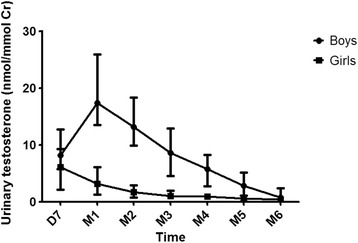
During early development, testosterone plays an important role in sexual differentiation of the mammalian brain and has enduring influences on behavior. Testosterone exerts these influences at times when the testes are active, as evidenced by higher concentrations of testosterone in developing male than in developing female animals. This article critically reviews the available evidence regarding influences of testosterone on human gender-related development. In humans, testosterone is elevated in males from about weeks 8 to 24 of gestation and then again during early postnatal development. Individuals exposed to atypical concentrations of testosterone or other androgenic hormones prenatally, for example, because of genetic conditions or because their mothers were prescribed hormones during pregnancy, have been consistently found to show increased male-typical juvenile play behavior, alterations in sexual orientation and gender identity (the sense of self as male or female), and increased tendencies to engage in physically aggressive behavior. Studies of other behavioral outcomes following dramatic androgen abnormality prenatally are either too small in their numbers or too inconsistent in their results, to provide similarly conclusive evidence. Studies relating normal variability in testosterone prenatally to subsequent gender-related behavior have produced largely inconsistent results or have yet to be independently replicated. For studies of prenatal exposures in typically developing individuals, testosterone has been measured in single samples of maternal blood or amniotic fluid. These techniques may not be sufficiently powerful to consistently detect influences of testosterone on behavior, particularly in the relatively small samples that have generally been studied. The postnatal surge in testosterone in male infants, sometimes called mini-puberty, may provide a more accessible opportunity for measuring early androgen exposure during typical development. This approach has recently begun to be used, with some promising results relating testosterone during the first few months of postnatal life to later gender-typical play behavior. In replicating and extending these findings, it may be important to assess testosterone when it is maximal (months 1 to 2 postnatal) and to take advantage of the increased reliability afforded by repeated sampling.
Overview
The claims and statistics of this paper haven’t been checked yet.
Free: it reads the open-access text and checks the first 5 claims that cite a source we can check. Create a free account to check every claim.
Integrity signals
Registry
Cites
Statistics
Figures
Verification
Claims the paper makes
The claims and statistics of this paper haven’t been checked yet.
Free: it reads the open-access text and checks the first 5 claims that cite a source we can check. Create a free account to check every claim.
Claims other papers make about this one
Each is checked against this paper’s own text: does it say what the citing paper says it does?
The cited source says what the claim attributes to it.
In the citing paper
“This argument is supported by the masculinizing effects of prenatal androgen excess in female-raised children with 46,XX CAH on diverse domains of gender-role behaviors (347-351), which may lead to gender questioning and variable transgender identification (352).”
From Congenital Adrenal Hyperplasia Due to Steroid 21-Hydroxylase Deficiency: An Endocrine Society* Clinical Practice Guideline (2018) · cites this paper as [348]
Self-check
Percentages, sums and reported differences re-computed from the paper’s own numbers.
The self-check needs the paper’s full text.
Citations
Cites
Statistical Power Analysis for the Behavioral Sciences
Muller, K. (1989) · Technometrics · doi:10.1080/00401706.1989.10488618 · Cited by 99,167
Statistical power analysis for the behavioral sciences
(1990) · Computers, Environment and Urban Systems · doi:10.1016/0198-9715(90)90050-4 · Cited by 65,269
Why Most Published Research Findings Are False
Ioannidis, J. P. A. (2005) · PLoS Medicine · doi:10.1371/journal.pmed.0020124 · Cited by 10,505
Simmons, J. P., Nelson, L. D., & Simonsohn, U. (2011) · Psychological Science · doi:10.1177/0956797611417632 · Cited by 6,567
The psychology of sex differences
(1975) · Behavior Therapy · doi:10.1016/s0005-7894(75)80031-1 · Cited by 5,488 · cited 1×
“Regarding potential pitfalls in studying gender, one is the tendency to analyze findings by gender, even when there was no initial hypothesis about gender differences [5].”
BackgroundWhy Most Published Research Findings Are False
Ioannidis, J. P. A. (2005) · CHANCE · doi:10.1080/09332480.2005.10722754 · Cited by 4,702 · cited 2×
“sciences are not replicable or are false [7].”
BackgroundThe gender similarities hypothesis.
Hyde, J. S. (2005) · American Psychologist · doi:10.1037/0003-066x.60.6.581 · Cited by 3,084
Voyer, D., Voyer, S., & Bryden, M. P. (1995) · Psychological Bulletin · doi:10.1037/0033-2909.117.2.250 · Cited by 2,868 · cited 1×
“15) contrasts with prior meta-analytic research [62,63] showing small sex differences on this type of task.”
ResultThe Psychology of Sex Differences: —Vol. I: Text
Maccoby, E. E., & Jacklin, C. N. (1974) · doi:10.1515/9781503620780 · Cited by 1,368
Global Disorders of Sex Development Update since 2006: Perceptions, Approach and Care
Lee, P. A., Nordenström, A., Houk, C. P., Ahmed, S. F., Auchus, R., Baratz, A., Baratz Dalke, K., Liao, L.-M., Lin-Su, K., Looijenga 3rd, L. H. J., et al. (2016) · Hormone Research in Paediatrics · doi:10.1159/000442975 · Cited by 1,273
Research works printed but not linked: 3
- Hines M Brain gender 2004 New York Oxford University Press
- Hines M Lerner RM Lamb ME Gendered development Handbook of Child Development and Developmental Science 2015 7 Hoboken, NJ Wiley
- Lutchmaya S. Foetal testosterone and social-communicative development. PhD Thesis, Department of Psychology, University of Cambridge. 2001.
Cited by
Items 201–289 of 289
Gender and Adolescent Development across Cultures
Qu, Y., Zhang, S., Kalindi, S. C., Yang, B., & Wang, Q. (2020) · Cambridge University Press eBooks · doi:10.1017/9781108561716.010 · Cited by 1
Sex and Gender in Psychopathology
Lefler, E. K., & Hartung, C. M. (2020) · Cambridge University Press eBooks · doi:10.1017/9781108561716.043 · Cited by 1
Pingale, N., Nerli, R. B., Ghagane, S. C., Sharma, M., Patil, S., & Gupta, P. (2021) · International Journal of Clinical Urology · doi:10.11648/j.ijcu.20210501.14 · Cited by 1
Entre gènes et sexe : quelle détermination ?
Paoloni‐Giacobino, A. (2019) · JMIG · doi:10.53738/revmed.2019.15.642.0596 · Cited by 1
Sexual dimorphism in molecular biology of cancer
Dorak, M. T. (2023) · Principles of Gender-Specific Medicine · doi:10.1016/b978-0-323-88534-8.00003-1 · Cited by 1
Davis, J. (2018) · Apollo (University of Cambridge) · doi:10.17863/cam.37164 · Cited by 1
Personality traits, risk factors and comorbidities in Attention-deficit/hyperactivity disorder
Instanes, J. T. (2020) · NVA (Nasjonalt vitenarkiv) · Cited by 1
(2021) · Physiology News · doi:10.36866/pn.123 · Cited by 1
Johansson, M. (2023) · Open Archive (Karolinska Institutet) · Cited by 1
Sex Steroid Hormone Signaling Tunes Metabolic and Neuronal Programs in Human Cortical DevelopmentPreprint
Berk-Rauch, H., Gherghina, L.-Y., Huang, L., Hennick, K. M., Nowakowski, T. J., Brand, A. H., & Chakravarti, A. (2026) · Research Square · doi:10.64898/2026.05.16.725519 · Cited by 1
Brain sexual development in Kallmann syndrome
Castañeyra-Ruiz, L., Calero, E. M. C., González-Marrero, I., Toledo, J. M. G., Perdomo, A. L. C., & Moltó, F. J. P. (2016) · European Journal of Anatomy
Effects of Early, Elevated Prenatal Testosterone on the HPA Axis and Hormone Responsiveness in Mice
Wilson, H. A. (2019) · The Atrium (University of Guelph)
Зелінська, Н. Б. (2019) · The Scientific Issues of Ternopil Volodymyr Hnatiuk National Pedagogical University Series pedagogy
The Role of Constraints in Development
Oakes, L. M., & Rakison, D. H. (2019) · Oxford University Press eBooks · doi:10.1093/oso/9780195391893.003.0004
The Development of Looking Behavior in Infancy
Oakes, L. M., & Rakison, D. H. (2019) · Oxford University Press eBooks · doi:10.1093/oso/9780195391893.003.0006
Oakes, L. M., & Rakison, D. H. (2019) · Oxford University Press eBooks · doi:10.1093/oso/9780195391893.003.0007
The Development of Knowledge of Animates and Inanimates in Infancy
Oakes, L. M., & Rakison, D. H. (2019) · Oxford University Press eBooks · doi:10.1093/oso/9780195391893.003.0008
The “Humpty-Dumpty” Problem in the Study of Development
Oakes, L. M., & Rakison, D. H. (2019) · Oxford University Press eBooks · doi:10.1093/oso/9780195391893.003.0003
Conclusions: Applications, Generalizations, Challenges, and a Call to Action
Oakes, L. M., & Rakison, D. H. (2019) · Oxford University Press eBooks · doi:10.1093/oso/9780195391893.003.0009
Krishna, K. B., Houk, C. P., Mohsin, F., & Lee, P. A. (2020) · Elsevier eBooks · doi:10.1016/b978-0-12-815968-2.00013-x
Occupational Health Psychology and Women in Asian Contexts
Siu, O. L., Wang, H., & Pagon, M. (2020) · Cambridge University Press eBooks · doi:10.1017/9781108561716.027
Women and Psychotherapy: “Women Hold Up Half the Sky”
Duan, C., & Grazioso, M. D. P. (2020) · Cambridge University Press eBooks · doi:10.1017/9781108561716.044
The Psychology of Women in Entrepreneurship: An International Perspective
Chan, E. T., Tang, P. M., & Chen, S. (2020) · Cambridge University Press eBooks · doi:10.1017/9781108561716.025
Understanding Women’s Antisocial and Criminal Behavior: A Global Review
Zhong, H., & Ryder, J. A. (2020) · Cambridge University Press eBooks · doi:10.1017/9781108561716.034
Gender and Women’s Sexual and Reproductive Health
Hindin, M. J., & OlaOlorun, F. M. (2020) · Cambridge University Press eBooks · doi:10.1017/9781108561716.040
Chen, A. X., Tsang, V. H. L., Wong, T. K., Fung, H. H.-L., & Ayalon, L. (2020) · Cambridge University Press eBooks · doi:10.1017/9781108561716.012
The Contents and Discontents of the Nature–Nurture Debate
Gangestad, S. W., & Chang, L. (2020) · Cambridge University Press eBooks · doi:10.1017/9781108561716.004 · Cited by 1
Sex Differences on the Brain: A Networking Perspective
Grabowska, A. (2020) · Cambridge University Press eBooks · doi:10.1017/9781108561716.006
Women under Pressure: The Intersection of Stress and Trauma with Aspects of Gender
Eagle, G. T., Ayers, S., Mkone, C., & Moroke, M. S. (2020) · Cambridge University Press eBooks · doi:10.1017/9781108561716.039
Physical Health: Women’s Sexual Embodiment after Cancer
Parton, C., Ussher, J. M., Perz, J., & Rubin, L. R. (2020) · Cambridge University Press eBooks · doi:10.1017/9781108561716.041
International and Intersectional Perspectives on the Psychology of Women
Cheung, F. M., & Halpern, D. F. (2020) · Cambridge University Press eBooks · doi:10.1017/9781108561716.002
Lundberg, T. (2020) · Lund University Publications (Lund University)
Lucas-Herald, A. K. (2021) · Physiology News · doi:10.36866/pn.123.16
The story of when kidneys fail and the contribution of Air Vice-Marshal Sir Ralph Jackson
Davenport, A., & Almond, M. K. (2021) · Physiology News · doi:10.36866/pn.123.9
Obituary: Professor Edward Carmeliet 1930 – 2021
Sipido, K. R., Mubagwa, K., Vereecke, J., & Verdonck, F. (2021) · Physiology News · doi:10.36866/pn.123.46
Conference for Black Physiologists 2021
King, A. L., Williams, C. R., Williams, J. M., Lee, D., Reynolds, C. L., & Mathis, K. W. (2021) · Physiology News · doi:10.36866/pn.123.36
How can we make the STEM workforce more equitable? A new report suggests next steps
Hilditch, A. (2021) · Physiology News · doi:10.36866/pn.123.11
Thinking a little differently: A member reflects on life as a neurodivergent physiologist
Vaughan, M. (2021) · Physiology News · doi:10.36866/pn.123.44
LGBTQ+ STEM @UCL Network: Fostering an inclusive and visible community
Bautista, J. (2021) · Physiology News · doi:10.36866/pn.123.12
CEO View: An exciting start to 2021 for The Society
Burdass, D. (2021) · Physiology News · doi:10.36866/pn.123.7
Cheung, F. M., & Halpern, D. F. (2020) · Cambridge University Press eBooks · doi:10.1017/9781108561716.031
Cheung, F. M., & Halpern, D. F. (2020) · Cambridge University Press eBooks · doi:10.1017/9781108561716.023
Developmental Perspectives of the International Psychology of Women
Cheung, F. M., & Halpern, D. F. (2020) · Cambridge University Press eBooks · doi:10.1017/9781108561716.008
Cheung, F. M., & Halpern, D. F. (2020) · Cambridge University Press eBooks · doi:10.1017/9781108561716.013
Halpern, D. F., & Cheung, F. M. (2020) · Cambridge University Press eBooks · doi:10.1017/9781108561716.046
The Underpinnings of Sex and Gender and How to Study Them
Cheung, F. M., & Halpern, D. F. (2020) · Cambridge University Press eBooks · doi:10.1017/9781108561716.001
Some Final Thoughts and Take-Home Messages
Cheung, F. M., & Halpern, D. F. (2020) · Cambridge University Press eBooks · doi:10.1017/9781108561716.045
(2018) · Elsevier eBooks · doi:10.1016/b978-0-12-802629-8.16001-2
Attention To People Like You: A Proposal Regarding Neuroendocrine Effects on Linguistic VariationPreprint
Ackerman, L. M., & Hejná, M. (2019) · PsyArXiv (OSF Preprints) · doi:10.31234/osf.io/9xn5p
Cheung, F. M., & Halpern, D. F. (2020) · Cambridge University Press eBooks · doi:10.1017/9781108561716.047
Goldberg, A. E., & Frost, R. L. (2018) · Springer eBooks · doi:10.1007/978-3-319-33228-4_394
Male Gender Bias and Levels of Male Hormones During Fetal Development
Bagasra, O., Heggen, C., & Hossain, M. I. (2018) · Wiley eBooks · doi:10.1002/9781119042280.ch5
Campbell, B. (2019) · Springer eBooks · doi:10.1007/978-3-319-16999-6_762-1
The Physiological Society's Early Career Theme Leads, & Yaar, S. (2021) · Physiology News · doi:10.36866/pn.123.35
Preliminary study: Digit ratio (2D:4D) Among U20 male and female rugby sevens state players
Azam, Z., Adanan, N., Adli, M., Sidi, M., Azizul, M., Affandi, M., & Sanuddin, N. D. (2022) · Journal of Physical Education and Sport · doi:10.7752/jpes.2022.11350
Hormones: Number of Sexual Partners
Wójcik, M., & Wiecha, J. (2023) · Springer eBooks · doi:10.1007/978-3-031-08956-5_1135-1
Human Sexuality from A to Z: Notation, Modelling, and ExplanationPreprint
Saint‐Mont, U. (2024) · Preprints.org · doi:10.20944/preprints202403.1379.v1
Oakes, L. M., & Rakison, D. H. (2019) · Oxford University Press eBooks · doi:10.1093/oso/9780195391893.002.0004
Oakes, L. M., & Rakison, D. H. (2019) · Oxford University Press eBooks · doi:10.1093/oso/9780195391893.002.0006
Oakes, L. M., & Rakison, D. H. (2019) · Oxford University Press eBooks · doi:10.1093/oso/9780195391893.002.0003
Origins, Development, and Variation
Malle, B., & Robbins, P. (2025) · Cambridge University Press eBooks · doi:10.1017/9781108894357.021
Jumlah laki-laki melebihi perempuan di bidang teknologi. Apakah ini bawaan biologis?
Eagly, A. H. (2017) · The Conversation · doi:10.64628/aan.u6fxddw3f
Social and biological factors related to gender expression in 3-year-old children
Trevisani, V., Pasquale, L. D., Palandri, L., Scassaserra, M. R., Predieri, B., Bruzzi, P., Iughetti, L., Righi, E., & Lucaccioni, L. (2025) · Endocrine Connections · doi:10.1530/ec-25-0289
von Andrian-Werburg, M. T. P. (2024) · Online Publication Service of Würzburg University (Würzburg University) · doi:10.25972/wup-978-3-95826-237-9
Terloyeva, D., Frey, A. J., Park, B. Y., Kauffman, E. M., Mathew, L., Bostwick, A., Varner, E. L., Lee, B. K., Croen, L., Fallin, M. D., et al. (2020) · Figshare · doi:10.6084/m9.figshare.13278911
Prezelj, T. (2024) · Repository of the University of Ljubljana (University of Ljubljana)
Exploring Educational Transition Experiences and Strengths in Autistic Women
Barker, R. (2024) · White Rose eTheses Online (University of Leeds, The University of Sheffield, University of York)
Placental infection: immune and nervous system effects modulated by androgens
Vancolen, S. (2025) · eScholarship@McGill (McGill) · doi:10.82308/34777
GENDER DYSPHORIA: GENETIC, EPIGENETIC, AND NEUROBIOLOGICAL BASES OF SEXUAL IDENTITY
Vargas-Vera, R. M., Placencia-Ibadango, M. V., Castro, P. V., Salazar, C. W. L., Hidalgo, A. J. T., Vargas-Silva, K. S., Mejía, M. N. L., Becerra, L. S. M., Zambrano-Burbano, M. S., & Silva, K. S. V. (2025) · Seven Editora eBooks · doi:10.56238/sevened2025.036-138
¿Hacia una nueva ciencia del género? Una lectura crítica de los debates
Inga, S. M. (2025) · Revista Punto Género · doi:10.5354/2735-7473.2025.82626
Collaer, M. L., Spencer, D., Kung, K. T. F., Thankamony, A., Hughes, I. A., Acerini, C. L., Srirangalingam, U., Gleeson, H. K., Luders, E., & Hines, M. T. (2026) · Hormones and Behavior · doi:10.1016/j.yhbeh.2025.105875
Self-citation*, B. L. I., N.Ye., M., Varabyou, H. Y., & А.А, K. (2026) · General medicine and Clinical Practice · doi:10.31579/2639-4162/338
Global trends in minipuberty research: A comprehensive bibliometric analysis
Jiang, Y., Jin, K., Zhong, W., Shen, X., & Zhong, X. (2026) · Medicine · doi:10.1097/md.0000000000048309
Exploring Gender Differences in Sports Participation: Biological and Behavioral Perspectives
Marc, J. D. (2026) · Psychology Research and Practice · doi:10.37155/2972-3086-0501-7
Gender development and developmental pathways
Rando, A. A., & Vaid, E. (2026) · Elsevier eBooks · doi:10.1016/b978-0-443-29019-0.00016-6
Biology on Probation: Response to Fine on Evolutionary Psychology and Feminist Studies
Marc, J. D. (2026) · Psychology Research and Practice · doi:10.37155/2972-3086-0501-10
Psiuk, A. A., Szymocha, J., Tsukerman, J., Wojas, A., Pardela, R., Palian, J., Huzarska, K., Baraniecka, A., Kurzyński, S., & Smędowski, I. (2026) · Quality in Sport · doi:10.12775/qs.2026.64.73672
Polito, N. D., Gambarota, F., Hampson, E., & Herlitz, A. (2026) · Neuroscience & Biobehavioral Reviews · doi:10.1016/j.neubiorev.2026.106877
Are 2D:4D Finger-Length Ratios Related to BDSM Power Play Roles? An Exploratory Study
Crane, P. R. (2026) · Sexes · doi:10.3390/sexes7030043
“Conflicting evidence on spatial and verbal abilities, childhood physical aggression, empathy, and psychological disorders such as ASD, ADHD, and eating disorders largely exist due to issues with small sample sizes, measurement validity, and replication (see [14] for a review).”
InfluentialSex differences in face looking preferences at birth
Khan, Y. T., Tsompanidis, A., Hymanson, E., Wickramanayake, S., Austin, T., Allison, C. L., & Baron‐Cohen, S. (2026) · Biology of Sex Differences · doi:10.1186/s13293-026-00976-9
Headaches, hormones, and transgender population: current evidence and knowledge gaps.
Grodzka, O., Szewczyk, A. K., Rogalska, M., Kukowka, A., Woźniak, P., Białecka, M. A., & Domitrz, I. (2026) · Archives of Medical Science · doi:10.5114/aoms/224765
Osiński, P., Roztocka, A., Trojnar, K., Brykczyńska, I., & Stefaniak, I. (2026) · Postępy Psychiatrii i Neurologii · doi:10.5114/ppn.2026.164930
“In addition, women with CAIS are almost always of heterosexual orientation [26] and marry men, as women in the control group do [27].”
Petrican, R., Fornito, A., John, A., & Pendered, S. L. (2026) · bioRxiv (Cold Spring Harbor Laboratory) · doi:10.64898/2026.09.27.754764
“…with previous reports that sex differences in brain structure and function can be observed at birth but they become most salient once reproductive maturation is reached (Ahmed et al., 2008; Gilmore et al., 2018; Hines et al., 2015; Pfeifer & Allen, 2021; Piekarski et al., 2023; Sato et al., 2004).”
Sex bias in autoimmunity: a life-course perspective and practical guidance for the field
Scagnellato, L., & Ciurtin, C. (2026) · BMJ Immunology · doi:10.1136/bmjimm-2026-000021
Gendered behaviors are associated with health beyond binary sexPreprint
Parent, O., McGuinness, M., Osborne, S., Danyluik, M., Mukora, A., Quesada, D., Devenyi, G. A., Raznahan, A., Juster, R., Dadar, M., et al. (2026) · medRxiv · doi:10.64898/2026.09.28.26364210
Charting sex divergence in the human brain across the lifespanPreprint
Zhu, M., Sun, L., Xia, M., Bi, Y., Cao, Q., Chen, R., Chen, Y., Chen, T., Cheng, Y., Dai, Z., et al. (2026) · bioRxiv (Cold Spring Harbor Laboratory) · doi:10.64898/2026.10.11.758308
“Biological sex fundamentally shapes the structural and functional organization of the human brain 1-6 , driven by a lifelong interplay of sex chromosomes 7, 8 , gonadal hormones 8, 9 , and genotype-by-sex interactions 8, 10-12 .”
Harvison, M., & Silveira, P. P. (2026) · Handbook of clinical neurology · doi:10.1016/b978-0-443-19043-8.00004-9
García-Acosta, S., Sadr-Bazzaz, M., Jiménez, F. R. G., & Vasey, P. L. (2026) · Archives of Sexual Behavior · doi:10.1007/s10508-026-03550-x
Holzer, M., Bartl-Pokorny, K. D., Zitta, C., Schuller, J., Schuller, B. W., Schwaberger, B., Fluhr, H., Pichler, G., & Pokorny, F. B. (2026) · Journal of Voice · doi:10.1016/j.jvoice.2026.10.002
Metadata
- Authors
- Hines, M., Constantinescu, M., & Spencer, D.
- Affiliations
- University of Cambridge (GB)
- Corresponding author
- Hines, Melissa
- Venue
- Biology of Sex Differences
- Published
- 2015-02-26
- Volume
- 6
- Issue
- 1
- Pages
- 3-3
- ISSN
- 2042-6410 (ISSN-L)
- PMC
- PMC4350266
- OpenAlex
- W2138294571
- Cited by
- 263
- References
- 87
- Citations by year
- 2026: 16 · 2025: 13 · 2024: 9 · 2023: 14 · 2022: 16 · 2021: 33 · 2020: 69 · 2019: 34 · 2018: 20 · 2017: 19 · 2016: 15 · 2015: 5
- FWCI
- 8.54
- Type
- journal article
- Language
- en
- Open access
- gold
- doi.org
- Locations
- Biology of Sex Differences (publishedVersion, cc-by)
- Europe PMC (PubMed Central) (publishedVersion, cc-by)
- PubMed Central (publishedVersion, cc-by)
- PubMed (publishedVersion)
- Apollo (University of Cambridge) (submittedVersion, cc-by)
- Apollo (cc-by)
- Topics
- Health Sciences › Medicine › Endocrinology, Diabetes and Metabolism › Sexual Differentiation and Disorders
- Life Sciences › Neuroscience › Endocrine and Autonomic Systems › Neuroendocrine regulation and behavior
- Life Sciences › Biochemistry, Genetics and Molecular Biology › Genetics › Genetic and Clinical Aspects of Sex Determination and Chromosomal Abnormalities
- Keywords
- prenatal androgen exposure, testosterone, sexual differentiation of the brain, gender development, sexual orientation, gender identity, aggression, minipuberty, amniotic fluid, maternal blood, typically developing individuals
About these checks
Registry, retraction, Cites and statistics results are computed, not judged, with one exception: a printed reference that no index lists is read once by a model before it counts as a citation error. Claims are extracted by a model and kept only when their quote appears verbatim in the text; each cited source is then checked, with a model’s help, for whether it says what the claim relies on. Those verdicts can be wrong — read the claim’s quote and the cited source before relying on one.
Statistics and arithmetic are recomputed, not judged.
Confidence bands are shown only for fields calibrated on our annotated test set. None is calibrated yet, so no band is shown.
What counts as a claim ›How we measure confidence ›How we check this ›
Are you an author, or do you see a problem with this page? Request a review
Data sources
Bibliographic data: Semantic Scholar, OpenAlex, Crossref.
Contains information from the Semantic Scholar Academic Graph Datasets, made available under the ODC Attribution License (ODC-BY 1.0).
Semantic Scholar’s data is described in: Kinney, R., et al. (2023). The Semantic Scholar Open Data Platform. arXiv:2301.10140.
