

Early androgen exposure and human gender development
Open accessThe DOI matches its Crossref record; 85 of the 87 references it cites were found in a registry or an index.
Abstract
During early development, testosterone plays an important role in sexual differentiation of the mammalian brain and has enduring influences on behavior. Testosterone exerts these influences at times when the testes are active, as evidenced by higher concentrations of testosterone in developing male than in developing female animals. This article critically reviews the available evidence regarding influences of testosterone on human gender-related development. In humans, testosterone is elevated in males from about weeks 8 to 24 of gestation and then again during early postnatal development. Individuals exposed to atypical concentrations of testosterone or other androgenic hormones prenatally, for example, because of genetic conditions or because their mothers were prescribed hormones during pregnancy, have been consistently found to show increased male-typical juvenile play behavior, alterations in sexual orientation and gender identity (the sense of self as male or female), and increased tendencies to engage in physically aggressive behavior. Studies of other behavioral outcomes following dramatic androgen abnormality prenatally are either too small in their numbers or too inconsistent in their results, to provide similarly conclusive evidence. Studies relating normal variability in testosterone prenatally to subsequent gender-related behavior have produced largely inconsistent results or have yet to be independently replicated. For studies of prenatal exposures in typically developing individuals, testosterone has been measured in single samples of maternal blood or amniotic fluid. These techniques may not be sufficiently powerful to consistently detect influences of testosterone on behavior, particularly in the relatively small samples that have generally been studied. The postnatal surge in testosterone in male infants, sometimes called mini-puberty, may provide a more accessible opportunity for measuring early androgen exposure during typical development. This approach has recently begun to be used, with some promising results relating testosterone during the first few months of postnatal life to later gender-typical play behavior. In replicating and extending these findings, it may be important to assess testosterone when it is maximal (months 1 to 2 postnatal) and to take advantage of the increased reliability afforded by repeated sampling.
Overview
The claims and statistics of this paper haven’t been checked yet.
Free: it reads the open-access text and checks the first 5 claims that cite a source we can check. Create a free account to check every claim.
Integrity signals
Registry
Cites
Statistics
Figures
Verification
Claims the paper makes
The claims and statistics of this paper haven’t been checked yet.
Free: it reads the open-access text and checks the first 5 claims that cite a source we can check. Create a free account to check every claim.
Claims other papers make about this one
Each is checked against this paper’s own text: does it say what the citing paper says it does?
The cited source says what the claim attributes to it.
In the citing paper
“This argument is supported by the masculinizing effects of prenatal androgen excess in female-raised children with 46,XX CAH on diverse domains of gender-role behaviors (347-351), which may lead to gender questioning and variable transgender identification (352).”
From Congenital Adrenal Hyperplasia Due to Steroid 21-Hydroxylase Deficiency: An Endocrine Society* Clinical Practice Guideline (2018) · cites this paper as [348]
Self-check
Percentages, sums and reported differences re-computed from the paper’s own numbers.
The self-check needs the paper’s full text.
Citations
Cites
Statistical Power Analysis for the Behavioral Sciences
Muller, K. (1989) · Technometrics · doi:10.1080/00401706.1989.10488618 · Cited by 99,167
Statistical power analysis for the behavioral sciences
(1990) · Computers, Environment and Urban Systems · doi:10.1016/0198-9715(90)90050-4 · Cited by 65,269
Why Most Published Research Findings Are False
Ioannidis, J. P. A. (2005) · PLoS Medicine · doi:10.1371/journal.pmed.0020124 · Cited by 10,505
Simmons, J. P., Nelson, L. D., & Simonsohn, U. (2011) · Psychological Science · doi:10.1177/0956797611417632 · Cited by 6,567
The psychology of sex differences
(1975) · Behavior Therapy · doi:10.1016/s0005-7894(75)80031-1 · Cited by 5,488 · cited 1×
“Regarding potential pitfalls in studying gender, one is the tendency to analyze findings by gender, even when there was no initial hypothesis about gender differences [5].”
BackgroundWhy Most Published Research Findings Are False
Ioannidis, J. P. A. (2005) · CHANCE · doi:10.1080/09332480.2005.10722754 · Cited by 4,702 · cited 2×
“sciences are not replicable or are false [7].”
BackgroundThe gender similarities hypothesis.
Hyde, J. S. (2005) · American Psychologist · doi:10.1037/0003-066x.60.6.581 · Cited by 3,084
Voyer, D., Voyer, S., & Bryden, M. P. (1995) · Psychological Bulletin · doi:10.1037/0033-2909.117.2.250 · Cited by 2,868 · cited 1×
“15) contrasts with prior meta-analytic research [62,63] showing small sex differences on this type of task.”
ResultThe Psychology of Sex Differences: —Vol. I: Text
Maccoby, E. E., & Jacklin, C. N. (1974) · doi:10.1515/9781503620780 · Cited by 1,368
Global Disorders of Sex Development Update since 2006: Perceptions, Approach and Care
Lee, P. A., Nordenström, A., Houk, C. P., Ahmed, S. F., Auchus, R., Baratz, A., Baratz Dalke, K., Liao, L.-M., Lin-Su, K., Looijenga 3rd, L. H. J., et al. (2016) · Hormone Research in Paediatrics · doi:10.1159/000442975 · Cited by 1,273
Gonadal Steroid Induction of Structural Sex Differences in the Central Nervous System
Arnold, A. P., & Gorski, R. A. (1984) · Annual Review of Neuroscience · doi:10.1146/annurev.ne.07.030184.002213 · Cited by 1,198 · cited 1×
“Treating female rats with testosterone during early development increases SDN-POA volume in adulthood and castrating developing males reduces it [3].”
BackgroundHuman behavioral sex differences: A role for gonadal hormones during early development?
Collaer, M. L., & Hines, M. (1995) · Psychological Bulletin · doi:10.1037//0033-2909.118.1.55 · Cited by 766 · cited 1×
“Recommendations for future studies aimed at evaluating the influence of early androgen exposure on human behavior echo those described elsewhere [16,81,82].”
BackgroundSelf-citationRAINER, J. D. (1975) · American Journal of Psychiatry · doi:10.1176/ajp.132.7.767 · Cited by 732
Rutter, M., Caspi, A., & Moffitt, T. E. (2003) · Journal of Child Psychology and Psychiatry · doi:10.1111/1469-7610.00194 · Cited by 672 · cited 1×
“In addition to average differences in some aspects of the behavior of males and females, there are sex differences in the likelihood of being diagnosed with certain psychiatric disorders [12].”
BackgroundArnold, A. P. (2009) · Hormones and Behavior · doi:10.1016/j.yhbeh.2009.03.011 · Cited by 625 · cited 2×
“Thousands of studies of non-human mammals have documented the contribution of gonadal steroids, particularly the testicular hormone, testosterone, to sexual differentiation of the brain and of behavior [1].”
BackgroundThe Psychology of Gender: Advances through Meta-Analysis
Halpern, D. F., Hyde, J. S., & Linn, M. C. (1989) · The American Journal of Psychology · doi:10.2307/1422961 · Cited by 605
Chamberlain (2005) · doi:10.1016/j.neubiorev.2004.11.004 · Cited by 529 · cited 1×
“Recommendations for future studies aimed at evaluating the influence of early androgen exposure on human behavior echo those described elsewhere [16,81,82].”
BackgroundSex Reassignment at Birth: Long-term Review and Clinical Implications
Diamond, M. (1997) · Archives of Pediatrics & Adolescent Medicine · doi:10.1001/archpedi.1997.02170400084015 · Cited by 490
Elevated fetal steroidogenic activity in autism
Baron-Cohen, S., Auyeung, B., Nørgaard-Pedersen, B., Hougaard, D. M., Abdallah, M. W., Melgaard, L., Cohen, A. S., Chakrabarti, B., Ruta, L., & Lombardo, M. V. (2015) · Molecular Psychiatry · doi:10.1038/mp.2014.48 · Cited by 471 · cited 14×
“Males are more likely than females to be diagnosed with autism spectrum disorders (ASD), with Tourette syndrome and other tic-related disorders, with attention deficit/hyperactivity disorder (ADHD) and with conduct disorder.”
BackgroundInfluentialFetal testosterone and autistic traits
Auyeung, B., Baron‐Cohen, S., Ashwin, E., Knickmeyer, R., Taylor, K., & Hackett, G. (2009) · British Journal of Psychology · doi:10.1348/000712608x311731 · Cited by 462
Hines, M., Brook, C., & Conway, G. S. (2004) · Journal of Sex Research · doi:10.1080/00224490409552215 · Cited by 439 · cited 2×
“Women exposed to elevated androgens prenatally because of CAH also are less likely to be exclusively or almost exclusively heterosexual than are other women, a finding that has again been independently replicated cross-nationally [25-28].”
BackgroundResultSelf-citationGender dysphoria and gender change in chromosomal females with congenital adrenal hyperplasia
Dessens, A. B., Slijper, F. M. E., & Drop, S. L. S. (2005) · Archives of Sexual Behavior · doi:10.1007/s10508-005-4338-5 · Cited by 425 · cited 1×
“In regard to gender identity, or one’s sense of self as male or female, exposure to high levels of androgens prenatally has been linked to an increased likelihood of developing a male gender identity, despite being reared as a female [32].”
BackgroundChapman, E., Baron-Cohen, S., Auyeung, B., Knickmeyer, R., Taylor, K., & Hackett, G. (2006) · Social Neuroscience · doi:10.1080/17470910600992239 · Cited by 389 · cited 1×
“One study found a significant negative correlation between amniotic fluid testosterone and scores on the Child Version of the Empathizing Quotient in boys but not in girls [67].”
BackgroundGender development and the human brain
Hines, M. (2011) · Annual Review of Neuroscience · doi:10.1146/annurev-neuro-061010-113654 · Cited by 378 · cited 1×
“Girls exposed to elevated androgens prenatally, because they have the genetic condition, congenital adrenal hyperplasia (CAH), show increased male-typical toy, playmate, and activity preferences, a finding replicated in over a dozen studies from several independent research groups in several different countries, inclu…”
BackgroundSelf-citationEarly hormonal influences on cognitive functioning in congenital adrenal hyperplasia.
Resnick, S. M., Berenbaum, S. A., Gottesman, I. I., & Bouchard, T. J. (1986) · Developmental Psychology · doi:10.1037//0012-1649.22.2.191 · Cited by 376 · cited 1×
“For spatial abilities, two studies have found that girls or women with CAH perform better on measures of mental rotations [46,47], but several others have not [48-51].”
BackgroundWINTER, J. S. D., HUGHES, I. A., REYES, F. I., & FAIMAN, C. (1976) · The Journal of Clinical Endocrinology & Metabolism · doi:10.1210/jcem-42-4-679 · Cited by 365 · cited 2×
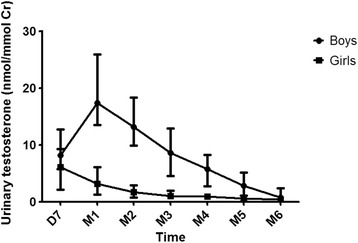
“In addition, the sex difference in testosterone in infants appears to be largest at about the first to the second month of postnatal life and to be smaller before and after that, reaching baseline by about 6 months of age [13-15] (also see Figure 1).”
BackgroundSex-related variation in human behavior and the brain
Hines, M. (2010) · Trends in Cognitive Sciences · doi:10.1016/j.tics.2010.07.005 · Cited by 357 · cited 1×
“(See [2,9,10] for more detailed reviews of the sizes of specific behavioral and psychological gender differences).”
BackgroundSelf-citationPsychosexual Development of Women with Congenital Adrenal Hyperplasia
Zucker, K. J., Bradley, S. J., Oliver, G., Blake, J., Fleming, S., & Hood, J. (1996) · Hormones and Behavior · doi:10.1006/hbeh.1996.0038 · Cited by 347 · cited 1×
“A change to living as a man has been observed in about 1% to 3% of women with CAH, as well as in women with other genetic conditions causing exposure to elevated concentrations of androgens during early development [33-36], and again has been seen cross-nationally.”
BackgroundCohen-Kettenis, P. T. (2005) · Archives of Sexual Behavior · doi:10.1007/s10508-005-4339-4 · Cited by 338 · cited 1×
“A change to living as a man has been observed in about 1% to 3% of women with CAH, as well as in women with other genetic conditions causing exposure to elevated concentrations of androgens during early development [33-36], and again has been seen cross-nationally.”
BackgroundEVIDENCE OF TESTICULAR ACTIVITY IN EARLY INFANCY
Forest, M. G., Cathiard, A. M., & Bertrand, J. A. (1973) · The Journal of Clinical Endocrinology & Metabolism · doi:10.1210/jcem-37-1-148 · Cited by 327 · cited 2×
“In addition, the sex difference in testosterone in infants appears to be largest at about the first to the second month of postnatal life and to be smaller before and after that, reaching baseline by about 6 months of age [13-15] (also see Figure 1).”
BackgroundMeyer-Bahlburg, H. F. L., Dolezal, C., Baker, S. W., & New, M. I. (2008) · Archives of Sexual Behavior · doi:10.1007/s10508-007-9265-1 · Cited by 326 · cited 1×
“Women exposed to elevated androgens prenatally because of CAH also are less likely to be exclusively or almost exclusively heterosexual than are other women, a finding that has again been independently replicated cross-nationally [25-28].”
ResultPsychological outcomes and gender-related development in complete androgen insensitivity syndrome
Hines, M., Ahmed, S. F., & Hughes, I. A. (2003) · Archives of Sexual Behavior · doi:10.1023/a:1022492106974 · Cited by 320 · cited 3×
“lack of effective androgen exposure [23,29,39].”
BackgroundResultSelf-citationFetal Testosterone Predicts Sexually Differentiated Childhood Behavior in Girls and in Boys
Auyeung, B., Baron-Cohen, S., Ashwin, E., Knickmeyer, R., Taylor, K., Hackett, G., & Hines, M. (2009) · Psychological Science · doi:10.1111/j.1467-9280.2009.02279.x · Cited by 314 · cited 1×
“Regarding testosterone measured in amniotic fluid, one study has reported that testosterone measured in amniotic fluid positively predicts male-typical play in both boys and girls [57].”
BackgroundSelf-citationFoetal testosterone and eye contact in 12-month-old human infants
Lutchmaya, S., Baron-Cohen, S., & Raggatt, P. (2002) · Infant Behavior and Development · doi:10.1016/s0163-6383(02)00094-2 · Cited by 306 · cited 1×
“A second study reported a significant curvilinear relation between amniotic fluid testosterone and eye contact in boys but not in girls [65], but this curvilinear relationship, as opposed to a linear relationship, had not been predicted.”
BackgroundFingers as a Marker of Prenatal Androgen Exposure
Berenbaum, S. A., Bryk, K. K., Nowak, N., Quigley, C. A., & Moffat, S. (2009) · Endocrinology · doi:10.1210/en.2009-0774 · Cited by 302 · cited 2×
“The relationship of finger ratios to prenatal androgen exposure appears to be too weak to be useful in studies of typically developing individuals, however, and studies relating finger ratios to sex-typed behavior have produced inconsistent results [9,16,17].”
BackgroundResultComplete Androgen Insensitivity Syndrome: Long-Term Medical, Surgical, and Psychosexual Outcome1
Wisniewski, A. B., Migeon, C. J., Meyer-Bahlburg, H. F. L., Gearhart, J. P., Berkovitz, G. D., Brown, T. R., & Money, J. (2000) · The Journal of Clinical Endocrinology & Metabolism · doi:10.1210/jcem.85.8.6742 · Cited by 297
Foetal testosterone, social relationships, and restricted interests in children
Knickmeyer, R., Baron‐Cohen, S., Raggatt, P., & Taylor, K. (2005) · Journal of Child Psychology and Psychiatry · doi:10.1111/j.1469-7610.2004.00349.x · Cited by 281 · cited 1×
“The same research group also found that amniotic fluid testosterone correlated with restricted interests in boys, though not in girls [69], and with scores on the Systemizing Quotient—Child Version [70] in boys and in girls.”
BackgroundFrisén, L., Nordenström, A., Falhammar, H., Filipsson, H., Holmdahl, G., Janson, P. O., Thorén, M., Hagenfeldt, K., Möller, A., & Nordenskjöld, A. (2009) · The Journal of Clinical Endocrinology & Metabolism · doi:10.1210/jc.2009-0636 · Cited by 276 · cited 1×
“Women exposed to elevated androgens prenatally because of CAH also are less likely to be exclusively or almost exclusively heterosexual than are other women, a finding that has again been independently replicated cross-nationally [25-28].”
ResultSexual behavior in adolescent and adult females with congenital adrenal hyperplasia
Dittmann, R. W., Kappes, M. E., & Kappes, M. H. (1992) · Psychoneuroendocrinology · doi:10.1016/0306-4530(92)90054-b · Cited by 239 · cited 1×
“Women exposed to elevated androgens prenatally because of CAH also are less likely to be exclusively or almost exclusively heterosexual than are other women, a finding that has again been independently replicated cross-nationally [25-28].”
ResultBerenbaum, S. A., & Bailey, J. M. (2003) · The Journal of Clinical Endocrinology & Metabolism · doi:10.1210/jc.2002-020782 · Cited by 239
Hines, M., Fane, B. A., Pasterski, V. L., Mathews, G. A., Conway, G. S., & Brook, C. (2003) · Psychoneuroendocrinology · doi:10.1016/s0306-4530(02)00121-x · Cited by 234
Self-citationGrimshaw, G. M., Sitarenios, G., & Finegan, J. A. K. (1995) · Brain and Cognition · doi:10.1006/brcg.1995.1269 · Cited by 234 · cited 2×
“One of the studies [60] is frequently cited as supporting the idea that prenatal testosterone exposure influences spatial ability, and so it merits a closer look.”
BackgroundGender Dysphoria and Gender Change in Androgen Insensitivity or Micropenis
Mazur, T. (2005) · Archives of Sexual Behavior · doi:10.1007/s10508-005-4341-x · Cited by 233 · cited 1×
“lack of effective androgen exposure [23,29,39].”
Foetal testosterone and vocabulary size in 18- and 24-month-old infants
Lutchmaya, S., Baron-Cohen, S., & Raggatt, P. (2001) · Infant Behavior and Development · doi:10.1016/s0163-6383(02)00087-5 · Cited by 224 · cited 1×
“An initial study found a correlation between amniotic fluid testosterone and reduced vocabulary in girls and boys combined [64], but both variables showed a sex difference and correlations were not significant within either girls or boys.”
BackgroundLong-Term Psychological Evaluation of Intersex Children
Slijper, F. M. E., & Drop, S. L. S. (1998) · Archives of Sexual Behavior · doi:10.1023/a:1018670129611 · Cited by 224 · cited 1×
“A change to living as a man has been observed in about 1% to 3% of women with CAH, as well as in women with other genetic conditions causing exposure to elevated concentrations of androgens during early development [33-36], and again has been seen cross-nationally.”
BackgroundFetal androgens and female gender identity in the early-treated adrenogenital syndrome.
Ehrhardt, A. A., Epstein, R., & Money, J. (1968) · PubMed · Cited by 222
Gender Change from Female to Male in Classical Congenital Adrenal Hyperplasia
Meyer-Bahlburg, H. F. L., Gruen, R. S., New, M. I., Bell, J. J., Morishima, A., Shimshi, M., Bueno, Y., Vargas, I., & Baker, S. W. (1996) · Hormones and Behavior · doi:10.1006/hbeh.1996.0039 · Cited by 209 · cited 1×
“A change to living as a man has been observed in about 1% to 3% of women with CAH, as well as in women with other genetic conditions causing exposure to elevated concentrations of androgens during early development [33-36], and again has been seen cross-nationally.”
BackgroundHines, M., Golombok, S., Rust, J., Johnston, K. J., Golding, J., & Avon Longitudinal Study of Parents and Children Study Team (2002) · Child Development · doi:10.1111/1467-8624.00498 · Cited by 204
Self-citationProgestin‐induced hermaphroditism: IQ and psychosexual identity in a study of ten girls∗∗
Ehrhardt, A. A., & Money, J. (1967) · Journal of Sex Research · doi:10.1080/00224496709550517 · Cited by 195 · cited 1×
“Evidence that healthy children whose mothers were prescribed androgenic progestins during pregnancy show increased male-typical play, and that those whose mothers were prescribed antiandrogenic hormones show reduced male-typical play [19-22], also suggests that androgen exposure, rather than other aspects of the CAH c…”
BackgroundKuiri-Hänninen, T., Seuri, R., Tyrväinen, E., Turpeinen, U., Hämäläinen, E., Stenman, U.-H., Dunkel, L., & Sankilampi, U. (2011) · The Journal of Clinical Endocrinology & Metabolism · doi:10.1210/jc.2010-1359 · Cited by 195 · cited 2×
“In addition, the sex difference in testosterone in infants appears to be largest at about the first to the second month of postnatal life and to be smaller before and after that, reaching baseline by about 6 months of age [13-15] (also see Figure 1).”
BackgroundEarly androgen effects on aggression in children and adults with congenital adrenal hyperplasia
Berenbaum, S. A., & Resnick, S. M. (1997) · Psychoneuroendocrinology · doi:10.1016/s0306-4530(97)00049-8 · Cited by 190 · cited 1×
“Two independent research groups have reported that females with CAH show increased physical aggression, however [40-42].”
BackgroundAndrogens and autistic traits: A study of individuals with congenital adrenal hyperplasia
Knickmeyer, R., Baron-Cohen, S., Fane, B. A., Wheelwright, S., Mathews, G. A., Conway, G. S., Brook, C. G. D., & Hines, M. (2006) · Hormones and Behavior · doi:10.1016/j.yhbeh.2006.02.006 · Cited by 187 · cited 1×
“One study found decreased empathy in females with CAH [40] and another found increased autistic traits [52], but these findings await independent replication attempts.”
ResultSelf-citationPasterski, V., Hindmarsh, P., Geffner, M., Brook, C., Brain, C., & Hines, M. (2007) · Hormones and Behavior · doi:10.1016/j.yhbeh.2007.05.015 · Cited by 184 · cited 1×
“Two independent research groups have reported that females with CAH show increased physical aggression, however [40-42].”
BackgroundSelf-citationFetal testosterone and empathy
Knickmeyer, R., Baron-Cohen, S., Raggatt, P., Taylor, K., & Hackett, G. (2006) · Hormones and Behavior · doi:10.1016/j.yhbeh.2005.08.010 · Cited by 182 · cited 1×
“A second study found no significant correlation in either boys or girls between amniotic fluid testosterone and performance on a measure of empathy that involved describing interactions between animated triangles [68].”
BackgroundFetal androgens, human central nervous system differentiation, and behavior sex differences.
Ehrhardt, A. Α., & Baker, S. W. (1974) · Cited by 181
Testosterone measured in infancy predicts subsequent sex-typed behavior in boys and in girls
Lamminmäki, A., Hines, M., Kuiri-Hänninen, T., Kilpeläinen, L., Dunkel, L., & Sankilampi, U. (2012) · Hormones and Behavior · doi:10.1016/j.yhbeh.2012.02.013 · Cited by 174 · cited 2×
“The figure is reproduced from [78] by permission of Elsevier.”
BackgroundSelf-citationComplete Androgen Insensitivity Syndrome: Effect on Human Meibomian Gland Secretions
Sullivan, B. D., Evans, J. E., Cermak, J. M., Krenzer, K. L., Dana, M. R., & Sullivan, D. A. (2002) · Archives of Ophthalmology · doi:10.1001/archopht.120.12.1689 · Cited by 168
Bradley, S. J., Oliver, G. D., Chernick, A. B., & Zucker, K. J. (1998) · Pediatrics · doi:10.1542/peds.102.1.e9 · Cited by 144
Prenatal Exposure to Synthetic Progestins Increases Potential for Aggression in Humans
Reinisch, J. M. (1981) · Science · doi:10.1126/science.7466388 · Cited by 139 · cited 1×
“Evidence from boys and girls exposed to androgenic progestins prenatally, because their mothers were prescribed these hormones during pregnancy, also suggests a link between prenatal androgen exposure and later physically aggressive behavior [45], but this finding has not been independently replicated.”
BackgroundPasterski, V., Zucker, K. J., Hindmarsh, P. C., Hughes, I. A., Acerini, C., Spencer, D., Neufeld, S., & Hines, M. (2015) · Archives of Sexual Behavior · doi:10.1007/s10508-014-0385-0 · Cited by 127
Self-citationFoetal testosterone and the child systemizing quotient
Auyeung, B., Baron-Cohen, S., Chapman, E., Knickmeyer, R., Taylor, K., & Hackett, G. (2006) · European Journal of Endocrinology · doi:10.1530/eje.1.02260 · Cited by 123 · cited 1×
“The same research group also found that amniotic fluid testosterone correlated with restricted interests in boys, though not in girls [69], and with scores on the Systemizing Quotient—Child Version [70] in boys and in girls.”
BackgroundPersonality and congenital adrenal hyperplasia: Possible effects of prenatal androgen exposure
Mathews, G. A., Fane, B. A., Conway, G. S., Brook, C. G. D., & Hines, M. (2009) · Hormones and Behavior · doi:10.1016/j.yhbeh.2008.11.007 · Cited by 122 · cited 2×
“One study found decreased empathy in females with CAH [40] and another found increased autistic traits [52], but these findings await independent replication attempts.”
BackgroundResultSelf-citationFetal plasma testosterone correlates positively with cortisol
Gitau, R., Adams, D., Fisk, N. M., & Glover, V (2005) · Archives of Disease in Childhood - Fetal and Neonatal Edition · doi:10.1136/adc.2004.049320 · Cited by 120 · cited 1×
“42) [56].”
Culbert, K. M., Breedlove, S. M., Burt, S. A., & Klump, K. L. (2008) · Archives of General Psychiatry · doi:10.1001/archgenpsychiatry.2007.47 · Cited by 117
van de Beek, C., van Goozen, S. H. M., Buitelaar, J. K., & Cohen‐Kettenis, P. T. (2007) · Archives of Sexual Behavior · doi:10.1007/s10508-007-9291-z · Cited by 117
Martel, M. M., Klump, K., Nigg, J. T., Breedlove, S. M., & Sisk, C. L. (2009) · Hormones and Behavior · doi:10.1016/j.yhbeh.2009.02.004 · Cited by 115 · cited 4×
“As yet, suggestions that early testosterone exposure relates to ADHD are largely theoretical.”
ResultInfluentialBerenbaum, S. A., Bryk, K. L. K., & Beltz, A. M. (2012) · Behavioral Neuroscience · doi:10.1037/a0026652 · Cited by 107 · cited 1×
“For spatial abilities, two studies have found that girls or women with CAH perform better on measures of mental rotations [46,47], but several others have not [48-51].”
BackgroundAuyeung, B., Ahluwalia, J., Thomson, L., Taylor, K., Hackett, G., O’Donnell, K. J., & Baron-Cohen, S. (2012) · Molecular Autism · doi:10.1186/2040-2392-3-17 · Cited by 106
Androgen effects on women's gendered behaviour
Udry, J. R., Morris, N. M., & Kovenock, J. (1995) · Journal of Biosocial Science · doi:10.1017/s0021932000022884 · Cited by 101 · cited 1×
“A study from a different research group found that maternal sex hormone-binding globulin (SHBG; a protein which limits the availability of testosterone to act), measured at a similar time during pregnancy, in combination with testosterone in adulthood, positively predicted sex-typed behavior in adult female offspring…”
BackgroundGender role behavior in children with XY karyotype and disorders of sex development
Jürgensen, M., Hiort, O., Holterhus, P., & Thyen, U. (2007) · Hormones and Behavior · doi:10.1016/j.yhbeh.2007.01.001 · Cited by 94 · cited 1×
“Adults with CAIS recall engaging in reduced male-typical, and increased female-typical, play behavior in childhood [23], and these effects have been replicated by an independent research group for children with CAIS as well [24].”
BackgroundSexual Differentiation of the Brain: Mode, Mechanisms, and Meaning
McCarthy, M. M., Vries, G. J. D., & Forger, N. G. (2009) · Elsevier eBooks · doi:10.1016/b978-008088783-8.00054-1 · Cited by 92 · cited 1×
“Testosterone and hormones produced from it have been found to influence cell survival, neurite outgrowth, and neurochemical specification during early development in rodents [4].”
BackgroundGeneral intelligence and cognitive profile in women with congenital adrenal hyperplasia (CAH)
Helleday, J., Bartfai, A., Ritzén, E. M., & Forsman, M. (1994) · Psychoneuroendocrinology · doi:10.1016/0306-4530(94)90015-9 · Cited by 88 · cited 2×
“Similarly, one study found that females with CAH performed worse than controls on a verbal fluency task [50], but similar results were not found in a second study [48].”
BackgroundResultTestosterone levels in midtrimester maternal and fetal plasma and amniotic fluid
Rodeck, C. H., Gill, D., Rosenberg, D. A., & Collins, W. P. (1985) · Prenatal Diagnosis · doi:10.1002/pd.1970050303 · Cited by 84 · cited 3×
“The one study that we have been able to find that related testosterone in amniotic fluid to testosterone in fetal blood did not find a significant correlation [55].”
BackgroundResultInfluentialEffects of Fetal Testosterone on Visuospatial Ability
Auyeung, B., Knickmeyer, R. C., Ashwin, E., Taylor, K., Hackett, G. A., & Baron‐Cohen, S. (2011) · Archives of Sexual Behavior · doi:10.1007/s10508-011-9864-8 · Cited by 78 · cited 2×
“A different research group has reported a significant correlation between amniotic fluid testosterone and performance on an embedded figure task [61].”
BackgroundGender-Typed Play and Amniotic Testosterone.
Knickmeyer, R. C., Wheelwright, S., Taylor, K., Raggatt, P., Hackett, G., & Baron-Cohen, S. (2005) · Developmental Psychology · doi:10.1037/0012-1649.41.3.517 · Cited by 77 · cited 1×
“Two other studies have not found a similar relationship, however [58,59].”
ResultPrenatal exposure to medroxyprogesterone acetate (MPA) in girls
Ehrhardt, A. Α., Grisanti, G. C., & Meyer‐Bahlburg, H. F. L. (1977) · Psychoneuroendocrinology · doi:10.1016/0306-4530(77)90010-5 · Cited by 73 · cited 1×
“Evidence that healthy children whose mothers were prescribed androgenic progestins during pregnancy show increased male-typical play, and that those whose mothers were prescribed antiandrogenic hormones show reduced male-typical play [19-22], also suggests that androgen exposure, rather than other aspects of the CAH c…”
BackgroundMalouf, M. A., Migeon, C. J., Carson, K. A., Petrucci, L., & Wisniewski, A. B. (2006) · Hormone Research in Paediatrics · doi:10.1159/000091793 · Cited by 71 · cited 2×
“Similarly, one study found that females with CAH performed worse than controls on a verbal fluency task [50], but similar results were not found in a second study [48].”
BackgroundResultMADDEN, J. D., WALSH, P. C., MACDONALD, P. C., & WILSON, J. D. (1975) · The Journal of Clinical Endocrinology & Metabolism · doi:10.1210/jcem-41-4-751 · Cited by 64
Prenatal effects of sex hormones on human male behavior: medroxyprogesterone acetate (MPA)
Meyer‐Bahlburg, H. F. L., Grisanti, G. C., & Ehrhardt, A. Α. (1977) · Psychoneuroendocrinology · doi:10.1016/0306-4530(77)90009-9 · Cited by 59 · cited 1×
“Evidence that healthy children whose mothers were prescribed androgenic progestins during pregnancy show increased male-typical play, and that those whose mothers were prescribed antiandrogenic hormones show reduced male-typical play [19-22], also suggests that androgen exposure, rather than other aspects of the CAH c…”
BackgroundALEXANDER, G. M., & PETERSON, B. S. (2004) · Development and Psychopathology · doi:10.1017/s095457940404458x · Cited by 53 · cited 1×
“Similar ideas have been put forward in regard to tic-related disorders [74] and ADHD [75], however, both of which, like ASD, are more often diagnosed in males than in females.”
ResultHormone–behavior associations in early infancy
Alexander, G. M., Wilcox, T. G., & Farmer, M. E. (2009) · Hormones and Behavior · doi:10.1016/j.yhbeh.2009.08.003 · Cited by 51 · cited 1×
“Other researchers have measured salivary testosterone in infants at the age of 3 to 5 months and measured behavior either on the same day [79,80] or later in life [72].”
BackgroundRaevuori, A., Kaprio, J., Hoek, H. W., Sihvola, E., Rissanen, A., & Keski-Rahkonen, A. (2008) · American Journal of Psychiatry · doi:10.1176/appi.ajp.2008.08030362 · Cited by 44
Constantinescu, M., & Hines, M. (2012) · Child Development Perspectives · doi:10.1111/j.1750-8606.2012.00257.x · Cited by 41 · cited 3×
“Recommendations for future studies aimed at evaluating the influence of early androgen exposure on human behavior echo those described elsewhere [16,81,82].”
BackgroundResultSelf-citationEhrhardt, A. Α., Meyer‐Bahlburg, H. F. L., Feldman, J. F., & Ince, S. E. (1984) · Archives of Sexual Behavior · doi:10.1007/bf01541430 · Cited by 39 · cited 1×
“Evidence that healthy children whose mothers were prescribed androgenic progestins during pregnancy show increased male-typical play, and that those whose mothers were prescribed antiandrogenic hormones show reduced male-typical play [19-22], also suggests that androgen exposure, rather than other aspects of the CAH c…”
BackgroundPostnatal Testosterone Levels and Temperament in Early Infancy
Alexander, G. M., & Saenz, J. (2010) · Archives of Sexual Behavior · doi:10.1007/s10508-010-9701-5 · Cited by 36 · cited 1×
“Other researchers have measured salivary testosterone in infants at the age of 3 to 5 months and measured behavior either on the same day [79,80] or later in life [72].”
Background
Research works printed but not linked: 3
- Hines M Brain gender 2004 New York Oxford University Press
- Hines M Lerner RM Lamb ME Gendered development Handbook of Child Development and Developmental Science 2015 7 Hoboken, NJ Wiley
- Lutchmaya S. Foetal testosterone and social-communicative development. PhD Thesis, Department of Psychology, University of Cambridge. 2001.
Cited by
Standards of Care for the Health of Transgender and Gender Diverse People, Version 8
Coleman, E., Radix, A. E., Bouman, W. P., Brown, G. R., de Vries, A. L. C., Deutsch, M. B., Ettner, R., Fraser, L., Goodman, M., Green, J., et al. (2022) · International Journal of Transgender Health · doi:10.1080/26895269.2022.2100644 · Cited by 2,698
Global Disorders of Sex Development Update since 2006: Perceptions, Approach and Care
Lee, P. A., Nordenström, A., Houk, C. P., Ahmed, S. F., Auchus, R., Baratz, A., Baratz Dalke, K., Liao, L.-M., Lin-Su, K., Looijenga 3rd, L. H. J., et al. (2016) · Hormone Research in Paediatrics · doi:10.1159/000442975 · Cited by 1,273
Speiser, P. W., Arlt, W., Auchus, R. J., Baskin, L. S., Conway, G. S., Merke, D. P., Meyer-Bahlburg, H. F. L., Miller, W. L., Murad, M. H., Oberfield, S. E., et al. (2018) · The Journal of Clinical Endocrinology & Metabolism · doi:10.1210/jc.2018-01865 · Cited by 1,234
Personality and gender differences in global perspective
Schmitt, D. P., Long, A. E., McPhearson, A., O'Brien, K., Remmert, B., & Shah, S. H. (2017) · International Journal of Psychology · doi:10.1002/ijop.12265 · Cited by 369
The neuroendocrinology of the microbiota-gut-brain axis: a behavioural perspective
Cussotto, S., Sandhu, K. V., Dinan, T. G., & Cryan, J. F. (2018) · Frontiers in Neuroendocrinology · doi:10.1016/j.yfrne.2018.04.002 · Cited by 326
“might be that males are exposed to higher intrauterine testosterone levels than females (Hines, 2006; Hines et al., 2015), with fetal testosterone associated to autistic traits and inversely correlated with social behaviour (Baron-Cohen et al.”
Background
Metadata
- Authors
- Hines, M., Constantinescu, M., & Spencer, D.
- Affiliations
- University of Cambridge (GB)
- Corresponding author
- Hines, Melissa
- Venue
- Biology of Sex Differences
- Published
- 2015-02-26
- Volume
- 6
- Issue
- 1
- Pages
- 3-3
- ISSN
- 2042-6410 (ISSN-L)
- PMC
- PMC4350266
- OpenAlex
- W2138294571
- Cited by
- 263
- References
- 87
- Citations by year
- 2026: 16 · 2025: 13 · 2024: 9 · 2023: 14 · 2022: 16 · 2021: 33 · 2020: 69 · 2019: 34 · 2018: 20 · 2017: 19 · 2016: 15 · 2015: 5
- FWCI
- 8.54
- Type
- journal article
- Language
- en
- Open access
- gold
- doi.org
- Locations
- Biology of Sex Differences (publishedVersion, cc-by)
- Europe PMC (PubMed Central) (publishedVersion, cc-by)
- PubMed Central (publishedVersion, cc-by)
- PubMed (publishedVersion)
- Apollo (University of Cambridge) (submittedVersion, cc-by)
- Apollo (cc-by)
- Topics
- Health Sciences › Medicine › Endocrinology, Diabetes and Metabolism › Sexual Differentiation and Disorders
- Life Sciences › Neuroscience › Endocrine and Autonomic Systems › Neuroendocrine regulation and behavior
- Life Sciences › Biochemistry, Genetics and Molecular Biology › Genetics › Genetic and Clinical Aspects of Sex Determination and Chromosomal Abnormalities
- Keywords
- prenatal androgen exposure, testosterone, sexual differentiation of the brain, gender development, sexual orientation, gender identity, aggression, minipuberty, amniotic fluid, maternal blood, typically developing individuals
About these checks
Registry, retraction, Cites and statistics results are computed, not judged, with one exception: a printed reference that no index lists is read once by a model before it counts as a citation error. Claims are extracted by a model and kept only when their quote appears verbatim in the text; each cited source is then checked, with a model’s help, for whether it says what the claim relies on. Those verdicts can be wrong — read the claim’s quote and the cited source before relying on one.
Statistics and arithmetic are recomputed, not judged.
Confidence bands are shown only for fields calibrated on our annotated test set. None is calibrated yet, so no band is shown.
What counts as a claim ›How we measure confidence ›How we check this ›
Are you an author, or do you see a problem with this page? Request a review
Data sources
Bibliographic data: Semantic Scholar, OpenAlex, Crossref.
Contains information from the Semantic Scholar Academic Graph Datasets, made available under the ODC Attribution License (ODC-BY 1.0).
Semantic Scholar’s data is described in: Kinney, R., et al. (2023). The Semantic Scholar Open Data Platform. arXiv:2301.10140.
