

Convergent and sequential synthesis designs: implications for conducting and reporting systematic reviews of qualitative and quantitative evidence
Open accessThe DOI matches its Crossref record; 63 of the 72 references it cites were found in a registry or an index; 1 of the 12 sources its claims cite were checked for support.
Abstract
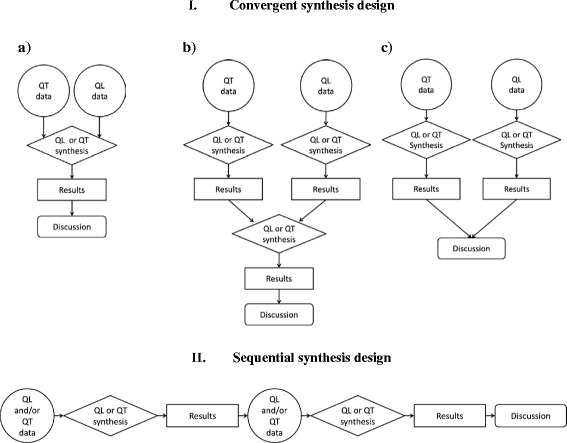
BACKGROUND: Systematic reviews of qualitative and quantitative evidence can provide a rich understanding of complex phenomena. This type of review is increasingly popular, has been used to provide a landscape of existing knowledge, and addresses the types of questions not usually covered in reviews relying solely on either quantitative or qualitative evidence. Although several typologies of synthesis designs have been developed, none have been tested on a large sample of reviews. The aim of this review of reviews was to identify and develop a typology of synthesis designs and methods that have been used and to propose strategies for synthesizing qualitative and quantitative evidence. METHODS: A review of systematic reviews combining qualitative and quantitative evidence was performed. Six databases were searched from inception to December 2014. Reviews were included if they were systematic reviews combining qualitative and quantitative evidence. The included reviews were analyzed according to three concepts of synthesis processes: (a) synthesis methods, (b) sequence of data synthesis, and (c) integration of data and synthesis results. RESULTS: A total of 459 reviews were included. The analysis of this literature highlighted a lack of transparency in reporting how evidence was synthesized and a lack of consistency in the terminology used. Two main types of synthesis designs were identified: convergent and sequential synthesis designs. Within the convergent synthesis design, three subtypes were found: (a) data-based convergent synthesis design, where qualitative and quantitative evidence is analyzed together using the same synthesis method, (b) results-based convergent synthesis design, where qualitative and quantitative evidence is analyzed separately using different synthesis methods and results of both syntheses are integrated during a final synthesis, and (c) parallel-results convergent synthesis design consisting of independent syntheses of qualitative and quantitative evidence and an interpretation of the results in the discussion. CONCLUSIONS: Performing systematic reviews of qualitative and quantitative evidence is challenging because of the multiple synthesis options. The findings provide guidance on how to combine qualitative and quantitative evidence. Also, recommendations are made to improve the conducting and reporting of this type of review.
Overview
CoChat Summary
TL;DR
This review of reviews of 459 systematic mixed studies reviews identified two main synthesis designs—convergent and sequential—with three convergent subtypes: data-based, results-based, and parallel-results. It also documents substantial gaps in reporting synthesis methods, terminology, and justification for combining qualitative and quantitative evidence.
Key findings
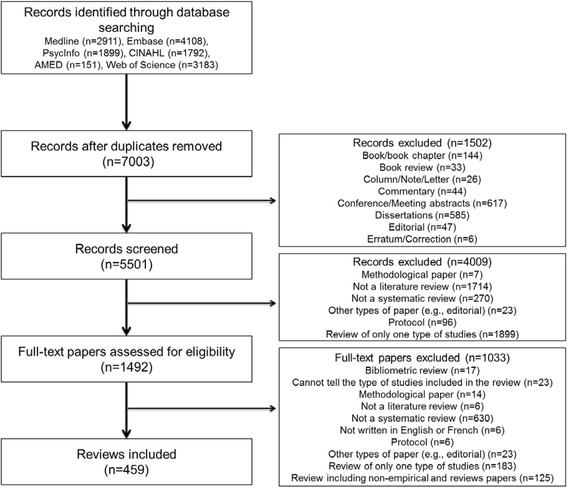
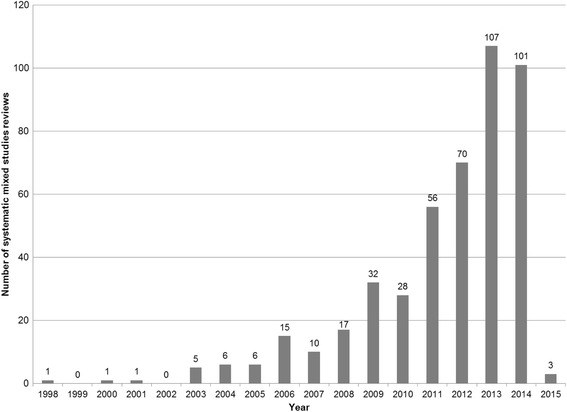
- From 7003 records, 459 systematic mixed studies reviews were included; publications rose from nearly 10 per year to more than 100 per year over the preceding decade.
- Convergent designs dominated: data-based convergent 69.7%, parallel-results convergent 17.2%, and results-based convergent 8.5%; sequential synthesis designs were found in 4.6% of reviews.
- Reporting was often incomplete: only 24% (n = 110) gave a clear rationale for combining quantitative and qualitative evidence, and only 39% (n = 179) fully described synthesis methods with methodological references; 90 reviews provided no synthesis information.
- The most commonly mentioned synthesis method was thematic synthesis (n = 129), followed by narrative synthesis (n = 64), narrative summary (n = 30), content analysis (n = 30), meta-analysis (n = 27), and meta-synthesis (n = 25).
Methods
- A review of systematic reviews combining qualitative and quantitative evidence was conducted; six databases (Medline, PsycInfo, Embase, CINAHL, AMED, Web of Science) were searched from inception to December 8, 2014, with free-text searching and English/French limits.
- Reviews were included if they combined qualitative, quantitative, and/or mixed methods studies, described search and selection strategies, and appraised included studies; a three-step selection process with independent screening was used.
- Data were extracted in NVivo 10 and analyzed using visual mapping and a deductive-inductive “process-data conceptualization” focused on synthesis methods, sequence of data synthesis, and integration of data and synthesis results.
Limitations
- The authors state the search was not comprehensive: it was limited to six mainly health-related databases, no hand searching was performed, and only peer-reviewed journal articles were included, potentially missing gray literature or conference abstracts.
- The authors also state that synthesis methods were not classified as aggregative versus configurative, and that interpretation of some synthesis methods was debatable.
- Evident from the text: data extraction was performed by one reviewer, and the included reviews were not critically appraised for quality, although the authors justify this by focusing on synthesis processes rather than review findings.
Model-written summary. Check it against the paper before relying on it.
Integrity signals
Registry
Cites
Statistics
Figures
Verification
Claims the paper makes
1 Valid · 0 Not valid · 9 Not checked · 55 Own results and interpretations
Every source the paper cites for this claim was checked and supports it.
In the paper
“However, a focus on quantitative evidence is insufficient in areas where research is not dominated by RCTs [2].”
§ Convergent and sequential synthesis designs: implications for conducting and reporting systematic reviews of qualitative and quantitative evidence > Background
What the sources say
- Supportedcites [2] Goldsmith MR Bankhead CR Austoker J Synthesising quantitative and qualitative research in evidence-based patient information J Epidemiol Community Health 2007 61 3 262 270 10.1136/jech.2006.046110 17325406 PMC2652927 source
The 'LIMITATIONS OF TRADITIONAL HIERARCHIES OF EVIDENCE' section states that hierarchies taking the randomised trial as the premier form of evidence 'become problematic in areas of research dominated by nontrial quantitative evidence', and that wider questions ('How does it work?', 'What are patients' experiences?') are 'best answered by evidence from a variety of sources'. The 'QUALITATIVE RESEARCH' section adds that qualitative evidence answers questions 'not easily evaluated by experimental studies' and may 'inform evidence-based practice independently of other research methodologies', and 'IMPORTANCE OF A RANGE OF EVIDENCE' frames synthesis of different research types as an unresolved methodological need. Together these carry the paraphrased point that a purely quantitative/RCT-centred focus is insufficient where research is not RCT-dominated. (LLM, conf=0.85)
plain- Asserted: passes — The authors put it forward as true.
- Checkable: passes — It can be checked against evidence.
- Load-bearing: passes — The paper’s conclusions depend on it.
- Based: passes — The paper gives a reason why it holds.
- Supported
A result the paper reports from its own data — it cites no other source for it, so there is none to check. The quote shows it is in the paper.
In the paper
“Only 39% (n = 179) of included reviews provided a full description of the synthesis method(s) with methodological references.”
§ Convergent and sequential synthesis designs: implications for conducting and reporting systematic reviews of qualitative and quantitative evidence > Results > Description of included reviews
plainn = 179- Asserted: passes — The authors put it forward as true.
- Checkable: passes — It can be checked against evidence.
- Load-bearing: passes — The paper’s conclusions depend on it.
- Based: passes — The paper gives a reason why it holds.
A result the paper states — it cites no source for it, so there is none to check. The quote shows it is in the paper.
In the paper
“Two main types of synthesis designs were identified: convergent and sequential synthesis designs.”
- Also stated in: § Synthesis of results · plain
“Based on the sequence and integration concepts, two main types of synthesis designs were identified (Fig. 3): convergent and sequential synthesis designs.”
§ Convergent and sequential synthesis designs: implications for conducting and reporting systematic reviews of qualitative and quantitative evidence > Abstract > Results
plain- Asserted: passes — The authors put it forward as true.
- Checkable: passes — It can be checked against evidence.
- Load-bearing: passes — The paper’s conclusions depend on it.
- Based: passes — The paper gives a reason why it holds.
- Rests on an assumption not shown here.
- Also stated in: § Synthesis of results · plain
A result the paper reports from its own data — it cites no other source for it, so there is none to check. The quote shows it is in the paper.
In the paper
“Among the SMSRs that provided information on the synthesis methods, the most common method mentioned was thematic synthesis (n = 129)”
§ Convergent and sequential synthesis designs: implications for conducting and reporting systematic reviews of qualitative and quantitative evidence > Results > Description of included reviews
plainn = 129- Asserted: passes — The authors put it forward as true.
- Checkable: passes — It can be checked against evidence.
- Load-bearing: unclear — It is unclear whether the paper’s conclusions depend on it.
- Based: passes — The paper gives a reason why it holds.
- Rests on an assumption not shown here.
A result the paper reports from its own data — it cites no other source for it, so there is none to check. The quote shows it is in the paper.
In the paper
“Within the convergent synthesis design, three subtypes were found: data-based, results-based, and parallel-results convergent synthesis designs.”
§ Convergent and sequential synthesis designs: implications for conducting and reporting systematic reviews of qualitative and quantitative evidence > Results > Synthesis of results
plain- Asserted: passes — The authors put it forward as true.
- Checkable: passes — It can be checked against evidence.
- Load-bearing: passes — The paper’s conclusions depend on it.
- Based: passes — The paper gives a reason why it holds.
- Rests on an assumption not shown here.
24 more claims
Create a free account to see all 65 claims and to verify the 11 references still open.
- Probably not a substantial claim. 20
- It may state two separate claims as one. 23
Claims other papers make about this one
Each is checked against this paper’s own text: does it say what the citing paper says it does?
The cited source says what the claim attributes to it.
In the citing paper
“a data-driven convergent synthesis approach was selected for thematic syntheses of LLM applications and limitations in patient care19.”
From Current applications and challenges in large language models for patient care: a systematic review (2025) · cites this paper as [19]
Citations
Cites
Three Approaches to Qualitative Content Analysis
Hsieh, H.-F., & Shannon, S. E. (2005) · Qualitative Health Research · doi:10.1177/1049732305276687 · Cited by 44,601 · cited 1×
“Qualitative content analysis [29] To understand a phenomenon of interest by focusing on the manifest (patent) content or contextual meaning of text.”
BackgroundContent Analysis: An Introduction to its Methodology.
Shelley, M., & Krippendorff, K. (1984) · Journal of the American Statistical Association · doi:10.2307/2288384 · Cited by 24,312
The integrative review: updated methodology
Whittemore, R., & Knafl, K. (2005) · Journal of Advanced Nursing · doi:10.1111/j.1365-2648.2005.03621.x · Cited by 10,241 · cited 3×
“Whittemore R, Knafl K.”
BackgroundMethodMethods for the thematic synthesis of qualitative research in systematic reviews
Thomas, J., & Harden, A. (2008) · BMC Medical Research Methodology · doi:10.1186/1471-2288-8-45 · Cited by 9,312
Achieving integration in mixed methods designs-principles and practices
Fetters, M. D., Curry, L. A., & Creswell, J. W. (2013) · Health Services Research · doi:10.1111/1475-6773.12117 · Cited by 7,219 · cited 1×
“and the interpretation and reporting [35, 36].”
(2006) · Cited by 7,081
Strategies for Theorizing from Process Data
Langley, A. (1999) · The Academy of Management Review · doi:10.5465/amr.1999.2553248 · Cited by 7,008 · cited 1×
“Thus, a “process-data conceptualization” was conducted [16] using a deductive-inductive approach, i.”
MethodPrimary, Secondary, and Meta-Analysis of Research
GLASS, G. V. (1976) · Educational Researcher · doi:10.3102/0013189x005010003 · Cited by 4,890 · cited 1×
“Secondary analysis is used to designate the reanalysis of primary data to answer new questions [52] Table 1 Typology of synthesis designs suggested in the literature”
MethodRealist review - a new method of systematic review designed for complex policy interventions
Pawson, R., Greenhalgh, T., Harvey, G., & Walshe, K. (2005) · Journal of Health Services Research & Policy · doi:10.1258/1355819054308530 · Cited by 3,190 · cited 1×
“Realist synthesis [67, 68] To unpack how interventions work in particular contexts through theoretical explanation (middle-range theory).”
BackgroundConfigurational Comparative Methods: Qualitative Comparative Analysis (QCA) and Related Techniques
Rihoux, B., & Ragin, C. (2009) · SAGE Publications · doi:10.4135/9781452226569 · Cited by 3,089
Research works printed but not linked: 5
- Dixon-Woods M Agarwal S Jones D Young B Sutton A Integrative approaches to qualitative and quantitative evidence 2004 London, UK Health Development Agency
- Plano Clark VL Ivankova NV Mixed methods research: a guide to the field. SAGE mixed methods research series 2015 Thousand Oaks SAGE Publications
- Neuendorf KA. The content analysis guidebook. Thousand Oaks: SAGE Publications; 2002.
- Creswell JW. Research design: qualitative, quantitative, and mixed methods approaches. Thousand Oaks: SAGE Publications; 2013.
- Denzin NK, Lincoln YS. The Sage handbook of qualitative research. Thousand Oaks: SAGE Publications; 2005.
Cited by
Time to challenge the spurious hierarchy of systematic over narrative reviews?
Greenhalgh, T., Thorne, S., & Malterud, K. (2018) · European Journal of Clinical Investigation · doi:10.1111/eci.12931 · Cited by 1,267
Hong, Q. N., Gonzalez‐Reyes, A., & Pluye, P. (2018) · Journal of Evaluation in Clinical Practice · doi:10.1111/jep.12884 · Cited by 1,107
“The first label refers to combining qualitative, quantitative, and/or mixed methods studies, while the second one can also refer to combining qualitative and quantitative methods (such as thematic synthesis and meta‐analysis).(7) Hereinafter, we will use the term “systematic mixed studies reviews” to designate this ty…”
MethodSelf-citationImproving the content validity of the mixed methods appraisal tool: a modified e-Delphi study
Hong, Q. N., Pluye, P., Fàbregues, S., Bartlett, G., Boardman, F., Cargo, M., Dagenais, P., Gagnon, M.-P., Griffiths, F., Nicolau, B., et al. (2019) · Journal of Clinical Epidemiology · doi:10.1016/j.jclinepi.2019.03.008 · Cited by 1,082
“The first was a review of systematic mixed studies reviews that was carried out in 2015 [22].”
BackgroundMethodSelf-citationMethodological guidance for the conduct of mixed methods systematic reviews
Stern, C., Lizarondo, L., Carrier, J., Godfrey, C., Rieger, K., Salmond, S., Apóstolo, J., Kirkpatrick, P., & Loveday, H. (2020) · JBI Evidence Synthesis · doi:10.11124/jbisrir-d-19-00169 · Cited by 700
“Since the introduction of this guidance, there have been significant developments in the area of mixed methods synthesis.(13,15,17,23-25) As such, the methodology group recognized the need to revise the guidance to ensure it was accurate and aligned with the current evidence base.”
InfluentialNoyes, J., Booth, A., Moore, G., Flemming, K., Tunçalp, Ö., & Shakibazadeh, E. (2019) · BMJ Global Health · doi:10.1136/bmjgh-2018-000893 · Cited by 497
Watson, J. A., Ryan, C. G., Cooper, L., Ellington, D., Whittle, R., Lavender, M., Dixon, J., Atkinson, G., Cooper, K., & Martin, D. J. (2019) · The Journal of Pain · doi:10.1016/j.jpain.2019.02.011 · Cited by 428
Grindell, C., Coates, E., Croot, L., & O’Cathain, A. (2022) · BMC Health Services Research · doi:10.1186/s12913-022-08079-y · Cited by 409
“A convergent integrated approach was used [23, 26].”
MethodYoung, A. T., Amara, D., Bhattacharya, A., & Wei, M. L. (2021) · The Lancet Digital Health · doi:10.1016/s2589-7500(21)00132-1 · Cited by 400
Current applications and challenges in large language models for patient care: a systematic review
Busch, F., Hoffmann, L., Rueger, C., van Dijk, E. H., Kader, R., Ortiz-Prado, E., Makowski, M. R., Saba, L., Hadamitzky, M., Kather, J. N., et al. (2025) · Communications Medicine · doi:10.1038/s43856-024-00717-2 · Cited by 358
“Instead,adata-drivenconvergent synthesisapproachwasselectedforthematicsynthesesofLLMapplications andlimitationsinpatientcare 19 .”
McNicholl, A., Casey, H., Desmond, D., & Gallagher, P. (2021) · Disability and Rehabilitation: Assistive Technology · doi:10.1080/17483107.2019.1642395 · Cited by 248
Innovations in framework synthesis as a systematic review method
Brunton, G., Oliver, S., & Thomas, J. (2020) · Research Synthesis Methods · doi:10.1002/jrsm.1399 · Cited by 222
“This grounding ranges from being more aggregative(30) and therefore more useful to test rather than develop theory(9) to more configurative and therefore more suited to explain an intervention's mechanism of effect,(36) or to generate theory.(31,33,46) Others take a more pluralist approach, suggesting that it is epist…”
BackgroundWhat do family caregivers of people with dementia need? A mixed‐method systematic review
Bressan, V, Visintini, C., & Palese, A. (2020) · Health & Social Care in the Community · doi:10.1111/hsc.13048 · Cited by 210
Methodological guidance for the conduct of mixed methods systematic reviews
Stern, C., Lizarondo, L., Carrier, J., Godfrey, C., Rieger, K., Salmond, S., Apostolo, J., Kirkpatrick, P., & Loveday, H. (2021) · JBI Evidence Implementation · doi:10.1097/xeb.0000000000000282 · Cited by 209
Wranik, W. D., Price, S., Haydt, S. M., Edwards, J., Hatfield, K., Weir, J., & Doria, N. (2019) · Health Policy · doi:10.1016/j.healthpol.2019.03.015 · Cited by 188
Jesus, T., Bhattacharjya, S., Papadimitriou, C., Bogdanova, Y., Bentley, J., Arango-Lasprilla, J., Kamalakannan, S., & The Refugee Empowerment Task Force, I. N. G. O. T. A. C. O. R. M. (2021) · International Journal of Environmental Research and Public Health · doi:10.3390/ijerph18126178 · Cited by 175
“papers included, but analyzed in their meaning and extracted implications, always alongside qualitative data and published perspectives within the same themes [43,44].”
BackgroundMethodVo, V., Chen, G., Aquino, Y. S. J., Carter, S. M., Do, Q. N., & Woode, M. E. (2023) · Social Science & Medicine · doi:10.1016/j.socscimed.2023.116357 · Cited by 154
Meunier, P.-Y., Raynaud, C., Guimaraes, E., Gueyffier, F., & Letrilliart, L. (2023) · The Annals of Family Medicine · doi:10.1370/afm.2908 · Cited by 149
A Conceptual Framework for Critical Appraisal in Systematic Mixed Studies Reviews
Hong, Q. N., & Pluye, P. (2019) · Journal of Mixed Methods Research · doi:10.1177/1558689818770058 · Cited by 139
“In SMSRs, there are multiple synthesis method options (Hong et al., 2017).”
BackgroundMethodSelf-citationSuccess factors in adaptation of newly graduated nurses: a scoping review
Baharum, H., Ismail, A., McKenna, L., Mohamed, Z., Ibrahim, R. B., & Hassan, N. H. (2023) · BMC Nursing · doi:10.1186/s12912-023-01300-1 · Cited by 199
“Codes and themes that emerged from the data were identified with inductive thematic analysis, which is a qualitative synthesis method, as the data were summarised to generate outputs in the form of themes [41].”
MethodApplication of IoT in Healthcare: Keys to Implementation of the Sustainable Development Goals
Espinosa, Á. V., Ruiz, J. L. L., Mata, F., & Espinilla, M. (2021) · Sensors · doi:10.3390/s21072330 · Cited by 141
“viding multiple perspectives, both quantitative and qualitative, as well as case studies [65,66].”
BackgroundRoest, B., Trappenburg, M., & Leget, C. (2019) · BMC Medical Ethics · doi:10.1186/s12910-019-0361-2 · Cited by 107
Dyadic Coping in Couples Facing Chronic Physical Illness: A Systematic Review
Weitkamp, K., Feger, F., Landolt, S. A., Roth, M., & Bodenmann, G. (2021) · Frontiers in Psychology · doi:10.3389/fpsyg.2021.722740 · Cited by 134
Lafortune, D., Blais, M., Miller, G., Dion, L., Lalonde, F., & Dargis, L. (2021) · Archives of Sexual Behavior · doi:10.1007/s10508-020-01741-8 · Cited by 105
Schneider, J., Pegram, G., Gibson, B., Talamonti, D., Tinoco, A., Craddock, N., Matheson, E. L., & Forshaw, M. J. (2022) · International Journal of Eating Disorders · doi:10.1002/eat.23706 · Cited by 181
Steindal, S. A., Nes, A. A. G., Godskesen, T., Holmen, H., Winger, A., Österlind, J., Dihle, A., & Klarare, A. (2023) · Journal of Medical Internet Research · doi:10.2196/43684 · Cited by 129
“The data were synthesized using inductive thematic synthesis [31,39], which has previously been used in systematic mixed studies reviews with a convergent design [25,40].”
Chu, T. L., & Zhang, T. (2019) · International Journal of Sports Science & Coaching · doi:10.1177/1747954119858458 · Cited by 144
“To provide corroboration and comprehensive evidence based on different research methods, this review examined the roles and relative influence of the three social agents (based on different social environments) by synthesizing both quantitative and qualitative evidence.(24) Guided by Vallerand’s hierarchical model of…”
MethodInfluentialDesai, S., Misra, M., Das, A., Singh, R. J., Sehgal, M., Gram, L., Kumar, N., & Prost, A. (2020) · BMJ Global Health · doi:10.1136/bmjgh-2020-003304 · Cited by 113
Hussain, B., Mirza, M., Baines, R., Burns, L., Stevens, S., Asthana, S., & Chatterjee, A. (2023) · Frontiers in Public Health · doi:10.3389/fpubh.2023.1113864 · Cited by 128
“Then, the resultant open codes and examples of excerpts were discussed with the review team before being collapsed into broader themes and synthesized narratively under each review theme (51).”
BackgroundEynon, M., Foad, J., Downey, J., Bowmer, Y., & Mills, H. (2019) · Scandinavian Journal of Medicine & Science in Sports · doi:10.1111/sms.13403 · Cited by 94
“Thus, a parallel resultsbased convergent synthesis was performed, which involves independent syntheses of qualitative and quantitative research studies and an interpretation of the results in the discussion.(41) Quantitative and qualitative studies were synthesized using narrative synthesis.”
MethodKishino, M., Ellis-Smith, C. I., Afolabi, O. A., & Koffman, J. (2022) · Palliative Medicine · doi:10.1177/02692163211068282 · Cited by 109
Hudon, C., Chouinard, M.-C., Pluye, P., El Sherif, R., Bush, P. L., Rihoux, B., Poitras, M.-E., Lambert, M., Zomahoun, H. T. V., & Légaré, F. (2019) · The Annals of Family Medicine · doi:10.1370/afm.2419 · Cited by 90
Self-citationMcKenzie, G., Willis, C., & Shields, N. (2021) · Developmental Medicine & Child Neurology · doi:10.1111/dmcn.14830 · Cited by 123
“This framework is used when qualitative and quantitative data synthesis occurs concurrently, and is the predominant analysis framework used in mixed methods systematic reviews.(42,54) A convergent integrated approach involves integrating quantitative data with qualitative data through a process of data transformation…”
MethodZhuang, S., Tan, D. W., Reddrop, S., Dean, L., Maybery, M., & Magiati, I. (2023) · Clinical Psychology Review · doi:10.1016/j.cpr.2023.102335 · Cited by 90
Konstantinou, P., Kassianos, A. P., Georgiou, G., Panayides, A., Papageorgiou, A., Almas, I., Wozniak, G., & Karekla, M. (2020) · Translational Behavioral Medicine · doi:10.1093/tbm/ibaa118 · Cited by 89
Dubbelink, S. I., Herrando, C., & Constantinides, E. (2021) · Sustainability · doi:10.3390/su131810310 · Cited by 148
Finch, J., Ford, C. E. L., Grainger, L., & Meiser‐Stedman, R. (2019) · Journal of Affective Disorders · doi:10.1016/j.jad.2019.11.143 · Cited by 100
Mental health and psychological wellbeing in the early stages of doctoral study: a systematic review
Jackman, P. C., Jacobs, L., Hawkins, R. M., & Sisson, K. (2022) · European Journal of Higher Education · doi:10.1080/21568235.2021.1939752 · Cited by 76
“A systematic mixed studies review employing the data-based convergent synthesis design (Hong et al. 2017) was adopted to ensure that the full breadth of methodologies (i.e. quantitative, qualitative, mixed method) and evidence was obtained.”
MethodXu, Y., Lau, Y., Cheng, L. J., & Lau, S. T. (2021) · Nurse Education Today · doi:10.1016/j.nedt.2021.105139 · Cited by 106
Martina, D., Geerse, O. P., Lin, C., Kristanti, M. S., Bramer, W. M., Mori, M., Korfage, I. J., van der Heide, A., Rietjens, J. A. C., & van der Rijt, C. C. D. (2021) · Palliative Medicine · doi:10.1177/02692163211042530 · Cited by 96
Zolopa, C., Høj, S. B., Bruneau, J., Meeson, J.-S., Minoyan, N., Raynault, M.-F., Makarenko, I., & Larney, S. (2021) · International Journal of Drug Policy · doi:10.1016/j.drugpo.2021.103127 · Cited by 91
McBride, E., Tatar, O., Rosberger, Z., Rockliffe, L., Marlow, L. A. V., Moss-Morris, R. E., Kaur, N., Wade, K., & Waller, J. (2020) · Health Psychology Review · doi:10.1080/17437199.2020.1762106 · Cited by 91
“dence was analysed and presented separately then integrated by juxtaposing the findings in a matrix table (Hong et al., 2017; Pluye & Hong, 2014).”
MethodTransmission of Vaccination Attitudes and Uptake Based on Social Contagion Theory: A Scoping Review
Konstantinou, P., Georgiou, K., Kumar, N., Kyprianidou, M., Nicolaides, C., Karekla, M., & Kassianos, A. P. (2021) · Vaccines · doi:10.3390/vaccines9060607 · Cited by 100
“A narrative synthesis approach [21,22] was used to analyze, summarize and interpret findings of included studies.”
MethodFacilitators and barriers to shared primary and specialist cancer care: a systematic review
Lisy, K., Kent, J., Piper, A., & Jefford, M. (2020) · Supportive Care in Cancer · doi:10.1007/s00520-020-05624-5 · Cited by 91
Inglis, G., Jenkins, P., McHardy, F., Sosu, E., & Wilson, C. (2022) · Journal of Community & Applied Social Psychology · doi:10.1002/casp.2677 · Cited by 131
“A data-based convergent synthesis design was adopted, whereby the results from the quantitative and qualitative studies were pooled and analysed using the same synthesis method (Hong et al., 2017).”
MethodPromoting Physical Activity Through Conversational Agents: Mixed Methods Systematic Review
Luo, T. C., Aguilera, A., Lyles, C. R., & Figueroa, C. A. (2021) · Journal of Medical Internet Research · doi:10.2196/25486 · Cited by 68
“Instead, data were analyzed using parallel-results convergent synthesis, which allows qualitative and quantitative evidence to be synthesized concurrently, without data transformation [29].”
McCutchan, G. M., Weiss, B., Quinn-Scoggins, H. D., Dao, A., Downs, T., Deng, Y., Ho, H., Trung, L. T., Emery, J. D., & Brain, K. E. (2021) · BMJ Global Health · doi:10.1136/bmjgh-2020-004213 · Cited by 86
Automating Research Synthesis with Domain-Specific Large Language Model Fine-Tuning
Sušnjak, T., Hwang, P., Reyes, N. H., Barczak, A. L. C., McIntosh, T. R., & Ranathunga, S. (2025) · ACM Transactions on Knowledge Discovery from Data · doi:10.1145/3715964 · Cited by 143
“The synthesis phase, irrespective of the methodological approach, is inherently complex due to the need to balance between the depth of individual studies and the breadth of the review’s scope [31].”
Hebditch, M., Daley, S., Wright, J. E., Sherlock, G., Scott, J., & Banerjee, S. (2020) · BMC Medical Education · doi:10.1186/s12909-020-02000-z · Cited by 75
Martinez‐Santos, A., de la Iglesia, J. D. C. F., Sheaf, G., & Coyne, I. (2021) · Journal of Advanced Nursing · doi:10.1111/jan.14784 · Cited by 69
Valimaki, M. A., Hu, S., Lantta, T., Hipp, K., Varpula, J., Chen, J., Liu, G., Tang, Y., Chen, W., & Li, X. (2024) · BMC Nursing · doi:10.1186/s12912-024-02096-4 · Cited by 124
“In this review, a comprehensive synthesis of quantitative and qualitative data was performed first and then discussed in discussion part (parallel-results convergent design) [40].”
BackgroundMethodPluye, P., Sherif, R. E., Granikov, V., Hong, Q. N., Vedel, I., Galvão, M. C. B., Frati, F., Desroches, S., Repchinsky, C. A., Rihoux, B., et al. (2019) · Journal of the Association for Information Science and Technology · doi:10.1002/asi.24178 · Cited by 79
“We conducted a systematic review of qualitative and quantitative evidence, known as systematic mixed studies review (Hong, Pluye, Bujold, & Wassef, 2017; Pluye & Hong, 2014; Pluye, Hong, Bush, & Vedel, 2016).”
BackgroundMethodSelf-citationThe impact of compassionate care education on nurses: A mixed‐method systematic review
Coffey, A., Saab, M. M., Landers, M., Cornally, N., Hegarty, J., Drennan, J., Lunn, C., & Savage, E. (2019) · Journal of Advanced Nursing · doi:10.1111/jan.14088 · Cited by 63
“This type of synthesis is best suited for reviews that have two or more review questions (Hong et al., 2017).”
BackgroundEvrard, P., Pétein, C., Beuscart, J.-B., & Spinewine, A. (2022) · Implementation Science · doi:10.1186/s13012-022-01206-7 · Cited by 62
“We performed data analysis using a data-based convergent design [35], meaning that results from different study designs were analysed together using a single method, here qualitative.”
MethodNew graduate nurses’ clinical competence: A mixed methods systematic review
Charette, M., McKenna, L., Deschênes, M., et al. (2020) · Journal of Advanced Nursing · doi:10.1111/jan.14487 · Cited by 62
Rodríguez-Abad, C., de la Iglesia, J. D. C. F., Martinez‐Santos, A., & Rodríguez‐González, R. (2021) · International Journal of Environmental Research and Public Health · doi:10.3390/ijerph18084262 · Cited by 82
“This review employed a data-based convergent synthesis design, a type of mixed method systematic review synthesizing evidence derived from quantitative and qualitative studies [13].”
MethodInfluentialLimpanopparat, S., Gibson, E., & Harris, D. A. (2024) · Computers in Human Behavior: Artificial Humans · doi:10.1016/j.chbah.2024.100081 · Cited by 62
Bray, N., Kolehmainen, N., McAnuff, J., Tanner, L., Tuersley, L., Beyer, F. R., Grayston, A., Wilson, D., Edwards, R. T., Noyes, J., et al. (2020) · Health Technology Assessment · doi:10.3310/hta24500 · Cited by 67
Remawi, B. N., Gadoud, A., Murphy, I., & Preston, N. J. (2020) · Heart Failure Reviews · doi:10.1007/s10741-020-10011-7 · Cited by 68
Rosa, W. E., Roberts, K. E., Braybrook, D. E., Harding, R., Godwin, K., Mahoney, C., Mathew, S., Atkinson, T. M., Banerjee, S. C., Haviland, K., et al. (2022) · Palliative Medicine · doi:10.1177/02692163221124426 · Cited by 78
A systematic review of patient prioritization tools in non-emergency healthcare services
Déry, J., Ruiz, A. B., Routhier, F., Bélanger, V., Côté, A., Aït-Kadi, D., Gagnon, M., Deslauriers, S., Pécora, A. T. L., Redondo, E., et al. (2020) · Systematic Reviews · doi:10.1186/s13643-020-01482-8 · Cited by 66
Konlan, K. D., Lee, T. W., & Damiran, D. (2023) · Nursing Open · doi:10.1002/nop2.2003 · Cited by 73
“The data were transformed into qualitative descriptive statements according to a predefined principle (Hong et al., 2017; Pluye & Hong, 2014).”
MethodPiat, M., Wainwright, M., Sofouli, E., Vachon, B., Deslauriers, T., Préfontaine, C., & Frati, F. (2021) · Systematic Reviews · doi:10.1186/s13643-021-01646-0 · Cited by 73
Gutierrez-Bucheli, L. A., Reid, A. D., & Kidman, G. (2022) · Environmental Education Research · doi:10.1080/13504622.2022.2047896 · Cited by 76
“…including interventional research studies. nevertheless, their article does not account for “their synthesis design” nor cite “methodological references” (Hong et al., 2017, p. 11) when drawing on qualitative and quantitative evidence and for when the reviews have to address some of the challenges…”
BackgroundDiabetes Self-management Apps: Systematic Review of Adoption Determinants and Future Research Agenda
Alaslawi, H., Berrou, I., Hamid, A. A., Alhuwail, D., & Aslanpour, Z. (2022) · JMIR Diabetes · doi:10.2196/28153 · Cited by 72
“In their review of systematic reviews, Hong et al [55] noted that data-based convergent synthesis design was commonly used, where data from qualitative and quantitative studies were analyzed using the same synthesis method, and the results are presented together.”
BackgroundMethodTreacy, M., & Stayt, L. C. (2019) · Journal of Advanced Nursing · doi:10.1111/jan.14138 · Cited by 63
“Hong et al. (2017) highlight the importance of providing a clear description of the synthesis design used.”
BackgroundMethodInfluentialUnjai, S., Forster, E., Mitchell, A. E., & Creedy, D. K. (2022) · Intensive and Critical Care Nursing · doi:10.1016/j.iccn.2022.103248 · Cited by 67
“This review was undertaken using a convergent synthesis design (Hong et al., 2017) , whereby quantitative and qualitative data were analysed separately and then both results were combined.”
MethodHowells, K., Sarkar, M., & Fletcher, D. (2017) · Progress in brain research · doi:10.1016/bs.pbr.2017.06.002 · Cited by 72
Shariff, Z., Dahmash, D. T., Kirby, D. J., et al. (2020) · Journal of the American Medical Directors Association · doi:10.1016/j.jamda.2020.01.108 · Cited by 54
Home-Based Pediatric Palliative Care and Electronic Health: Systematic Mixed Methods Review
Holmen, H., Riiser, K., & Winger, A. (2020) · Journal of Medical Internet Research · doi:10.2196/16248 · Cited by 60
“A thematic synthesis has been used in line with the convergent design of mixed methods reviews [20].”
Gemmell, E., Ramsden, R., BRUSSONI, M. J., & Brauer, M. D. (2022) · Journal of Urban Health · doi:10.1007/s11524-022-00696-6 · Cited by 76
“Analysis and Synthesis One author inductively coded study findings using NVIVO 12 software [30], transforming quantitative results by categorizing findings into qualitative codes [31, 32].”
MethodNoonan, M., Wingham, J., & Taylor, R. S. (2018) · BMJ Open · doi:10.1136/bmjopen-2017-020927 · Cited by 60
“29 30 This requires transformation of one method into another.”
MethodPicco, L., Lam, T., Haines, S., & Nielsen, S. (2021) · Drug and Alcohol Dependence · doi:10.1016/j.drugalcdep.2021.109090 · Cited by 45
Afolabi, O. A., Nkhoma, K. B., Maddocks, M. M., & Harding, R. (2021) · Palliative Medicine · doi:10.1177/02692163211008784 · Cited by 53
Mixed studies review of factors influencing receipt of pain treatment by injured black patients
Aronowitz, S. V., McDonald, C. C., Stevens, R. C., & Richmond, T. S. (2019) · Journal of Advanced Nursing · doi:10.1111/jan.14215 · Cited by 60
Factors enhancing resilience among older adults experiencing disaster: A systematic review
Timalsina, R., & Songwathana, P. (2020) · Australasian Emergency Care · doi:10.1016/j.auec.2019.12.007 · Cited by 65
Telemedicine in the primary care of older adults: a systematic mixed studies review
Ilali, M., Berre, M. L., Vedel, I., & Khanassov, V. (2023) · BMC Family Practice · doi:10.1186/s12875-023-02085-7 · Cited by 69
“Data synthesis This mixed studies review used a parallel-results convergent synthesis design [15] in a three-step process (Fig.”
MethodLaprise, C., & Bolster‐Foucault, C. (2021) · Canada Communicable Disease Report · doi:10.14745/ccdr.v47i02a03 · Cited by 49
“population-level data and individual experiences) and produces results that are directly relevant to decision-makers (22).”
BackgroundMethodO’Donnell, S., Lohan, M., Oliffe, J. L., Grant, D., & Galway, K. (2021) · Arts & Health · doi:10.1080/17533015.2021.1894463 · Cited by 60
“A data-based convergent synthesis design was utilised and quantitative data was transformed into themes (Hong et al., 2017).”
MethodCrooks, J., Trotter, S. A., Ruby Bhatti, O. B. E., Monaghan, E., & Clarke, G. (2023) · BMC Palliative Care · doi:10.1186/s12904-023-01168-7 · Cited by 59
“The quantitative and qualitative analyses are conducted and presented separately, allowing us to address each research objective, and then considered in combination within the discussion section of the review: a parallel-results convergent design [36, 37].”
MethodAn integrative review of adolescent trust in the healthcare provider relationship
Hardin, H. K., Bender, A. E., Hermann, C. P., & Speck, B. J. (2020) · Journal of Advanced Nursing · doi:10.1111/jan.14674 · Cited by 48
“Design An integrative review of trust of HCPs among adolescents was conducted using a data-based convergent synthesis design (Hong et al.,2017).”
MethodInfluentialPanday, J., Taneja, S., Popoola, A., Pack, R., Greyson, D. L., McDonald, S. D., Black, M., Murray‐Davis, B., Darling, E., & Vanstone, M. G. (2021) · Family Practice · doi:10.1093/fampra/cmab146 · Cited by 52
Ung, D. S. K., Goh, Y. S., Poon, Y.-S. R., Lin, Y. P., Seah, B., López, V., Mikkonen, K., Yong, K. K., & Liaw, S. Y. (2024) · Human Resources for Health · doi:10.1186/s12960-024-00900-5 · Cited by 60
“Under this design, the data were analysed using the same synthesis method and combined and synthesised [28].”
MethodSynthesis of Mixed Research on Posttraumatic Stress Related to Traumatic Birth
Beck, C. T., & Casavant, S. G. (2019) · Journal of Obstetric, Gynecologic & Neonatal Nursing · doi:10.1016/j.jogn.2019.02.004 · Cited by 62
Homer, C. S., Turkmani, S., Wilson, A. N., Vogel, J. P., Shah, M. G., Fogstad, H., & Langlois, E. V. (2022) · BMJ Global Health · doi:10.1136/bmjgh-2021-006872 · Cited by 48
“34 35 We did not undertake any assessment of meta-bias(es), such as publication bias across studies or selective reporting within studies.”
Vanstone, M. G., Panday, J., Popoola, A., Taneja, S., Greyson, D. L., McDonald, S. D., Pack, R., Black, M., Murray‐Davis, B., & Darling, E. (2022) · Journal of Midwifery & Women s Health · doi:10.1111/jmwh.13363 · Cited by 51
“Results from all studies were analysed concurrently, following the convergent integrated approach in Hong’s typology 40 .”
BackgroundMethodAfaya, A., Anaba, E. A., Bam, V. B., Afaya, R. A., Yahaya, A., Seidu, A., & Ahinkorah, B. O. (2024) · BMC Women s Health · doi:10.1186/s12905-024-03106-y · Cited by 50
“A convergent integrated approach [20] was employed to transform the data into narrative form because the extracted information was from quantitative and qualitative studies.”
MethodPsychological Vulnerabilities and Extremism Among Western Youth: A Literature Review
Harpviken, A. N. (2019) · Adolescent Research Review · doi:10.1007/s40894-019-00108-y · Cited by 69
An integrative review of the factors influencing older nurses’ timing of retirement
Markowski, M., Cleaver, K., & Weldon, S. M. (2020) · Journal of Advanced Nursing · doi:10.1111/jan.14442 · Cited by 47
The effect of multiple exposures in scenario‐based simulation—A mixed study systematic review
Svellingen, A. H., Søvik, M. B., Røykenes, K., & Brattebø, G. (2020) · Nursing Open · doi:10.1002/nop2.639 · Cited by 53
“For this mixed study review, we applied a convergent synthesis design (Hong et al., 2017; Pluye & Hong, 2014), for both qualitative and quantitative research.”
MethodAkudjedu, T. N., Mishio, N. A., Elshami, W., Culp, M. P., Lawal, O., Botwe, B. O., Wuni, A.-R., Julka-Anderson, N., Shanahan, M. C., Totman, J. J., et al. (2021) · Radiography · doi:10.1016/j.radi.2021.07.004 · Cited by 57
Arora, A. K., Ortiz-Paredes, D., Engler, K., Lessard, D., Mate, K., Rodriguez-Cruz, A., Kronfli, N., Vedel, I., Cox, J., Quesnel‐Vallée, A., et al. (2021) · AIDS Patient Care and STDs · doi:10.1089/apc.2021.0079 · Cited by 52
Elsey, H., Abboah‐Offei, M., Vidyasagaran, A. L., Anaseba, D., Wallace, L. J., Nwameme, A. U., Gyasi, A., Ayim, A., Ofei, A. M. A., Amedzro, N., et al. (2023) · Frontiers in Public Health · doi:10.3389/fpubh.2023.1105495 · Cited by 68
Finn, M., Walsh, A., Rafter, N., Mellon, L., Chong, H. Y., Naji, A., O'Brien, N., Williams, D. J., & McCarthy, S. E. (2024) · BMJ Open Quality · doi:10.1136/bmjoq-2023-002506 · Cited by 85
Guillaumie, L., Boiral, O., Baghdadli, A., & Mercille, G. (2020) · Canadian Journal of Public Health · doi:10.17269/s41997-020-00394-3 · Cited by 61
Nurses’ competency in electrocardiogram interpretation in acute care settings: A systematic review
Chen, Y., Kunst, E. L., Nasrawi, D., Massey, D. L., Johnston, A. N. B., Keller, K. B., & Lin, F. F. (2022) · Journal of Advanced Nursing · doi:10.1111/jan.15147 · Cited by 57
Magi, C. E., Bambi, S., Iovino, P., Aoufy, K. E., Amato, C., Balestri, C., Rasero, L., & Longobucco, Y. (2023) · Behavioral Sciences · doi:10.3390/bs13070616 · Cited by 60
“Therefore, a convergent and sequential synthesis design was adopted [28,29] and thematic analysis was utilized to manage the extracted data [30].”
MethodClinician Barriers and Facilitators to Routine HIV Testing: A Systematic Review of the Literature
Bagchi, A. D., & Davis, T. E. K. (2020) · Journal of the International Association of Providers of AIDS Care (JIAPAC) · doi:10.1177/2325958220936014 · Cited by 45
“There was no published protocol registered, but the review otherwise followed the adapted Preferred Reporting Items for Systematic Reviews and Meta-Analyses guidelines for reporting systematic reviews of qualitative and quantitative evidence.(23) A research librarian assisted with the review, which consisted of a syst…”
MethodSocial Needs Resource Connections: A Systematic Review of Barriers, Facilitators, and Evaluation
Steeves-Reece, A. L., Totten, A. M., Broadwell, K. D., Richardson, D. M., Nicolaidis, C., & Davis, M. M. (2022) · American Journal of Preventive Medicine · doi:10.1016/j.amepre.2021.12.002 · Cited by 51
Five common pitfalls in mixed methods systematic reviews: lessons learned
Lizarondo, L. M., Stern, C., Apóstolo, J., Carrier, J., dos Santos, K. B., Godfrey, C. M., Kirkpatrick, P., Pollock, D., Rieger, K. L., Salmond, S. W., et al. (2022) · Journal of Clinical Epidemiology · doi:10.1016/j.jclinepi.2022.03.014 · Cited by 66
“The approach that should be followed depends on the nature of the review question/s posed with the aim/s or questions serving as an anchor.(3, 9-11) (See Figure 1 below).”
BackgroundCunha, A. S., Pedro, A. R., & Cordeiro, J. V. (2023) · Journal of Medical Internet Research · doi:10.2196/44188 · Cited by 55
“Second, in line with the methodology proposed by Thomas and Harden [54], a thematic synthesis of the results was performed in the following sequential steps: text coding, construction of descriptive themes, and creation of analytical themes [50,54-56].”
Metadata
- Authors
- Hong, Q. N., Pluye, P., Bujold, M., & Wassef, M.
- Affiliations
- McGill University (CA)
- Corresponding author
- Hong, Quan Nha
- Venue
- Systematic Reviews
- Published
- 2017-03-23
- Volume
- 6
- Issue
- 1
- Pages
- 61-61
- ISSN
- 2046-4053 (ISSN-L)
- PMC
- PMC5364694
- OpenAlex
- W2599225410
- Semantic Scholar
- 7d52e90b26094da10fe066037dcdcf7e8742aea0
- Cited by
- 754
- References
- 72
- Citations by year
- 2026: 72 · 2025: 104 · 2024: 139 · 2023: 118 · 2022: 90 · 2021: 109 · 2020: 69 · 2019: 34 · 2018: 14 · 2017: 4
- FWCI
- 8.18
- Type
- journal article
- Language
- en
- Open access
- gold
- doi.org
- Licence
- cc-by
- Locations
- Systematic Reviews (publishedVersion, cc-by)
- PubMed Central (publishedVersion, cc-by)
- PubMed (publishedVersion)
- eScholarship@McGill (McGill) (submittedVersion, cc-by)
- Funders
- Fonds de Recherche du Québec - Santé (29308)
- Canadian Institutes of Health Research (301011)
- Topics
- Social Sciences › Decision Sciences › Statistics, Probability and Uncertainty › Meta-analysis and systematic reviews
- Health Sciences › Health Professions › General Health Professions › Health Policy Implementation Science
- Social Sciences › Education › Qualitative Research Methods and Applications
- Keywords
- convergent synthesis, sequential synthesis, reporting transparency, terminology consistency
- MeSH terms
- Evaluation Studies as Topic, Humans, Research Design, Qualitative Research
About these checks
Registry, retraction, Cites and statistics results are computed, not judged, with one exception: a printed reference that no index lists is read once by a model before it counts as a citation error. Claims are extracted by a model and kept only when their quote appears verbatim in the text; each cited source is then checked, with a model’s help, for whether it says what the claim relies on. Those verdicts can be wrong — read the claim’s quote and the cited source before relying on one.
A language model drew the claims from the paper on 2026-10-05, under version 3 of the claim definition (model deepseek-v4.1-flash, prompt extract-v3).
A second model labelled each claim on 2026-10-05 (model jev-1.13-20260917, definition revision gold-guideline-v0.2).
Cited sources are checked with a language model’s help (qwen3.8-omni-flash).
Statistics and arithmetic are recomputed, not judged.
Confidence bands are shown only for fields calibrated on our annotated test set. None is calibrated yet, so no band is shown.
What counts as a claim ›How we measure confidence ›How we check this ›
Are you an author, or do you see a problem with this page? Request a review
Data sources
Bibliographic data: Semantic Scholar, OpenAlex, Crossref.
Contains information from the Semantic Scholar Academic Graph Datasets, made available under the ODC Attribution License (ODC-BY 1.0).
Semantic Scholar’s data is described in: Kinney, R., et al. (2023). The Semantic Scholar Open Data Platform. arXiv:2301.10140.
