

Optimal database combinations for literature searches in systematic reviews: a prospective exploratory study
Open accessThe DOI matches its Crossref record; 27 of the 27 references it cites were found in a registry or an index; 3 of the 22 sources its claims cite were checked for support.
Abstract
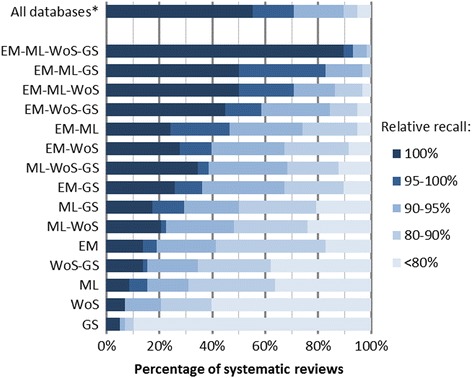
BACKGROUND: Within systematic reviews, when searching for relevant references, it is advisable to use multiple databases. However, searching databases is laborious and time-consuming, as syntax of search strategies are database specific. We aimed to determine the optimal combination of databases needed to conduct efficient searches in systematic reviews and whether the current practice in published reviews is appropriate. While previous studies determined the coverage of databases, we analyzed the actual retrieval from the original searches for systematic reviews. METHODS: Since May 2013, the first author prospectively recorded results from systematic review searches that he performed at his institution. PubMed was used to identify systematic reviews published using our search strategy results. For each published systematic review, we extracted the references of the included studies. Using the prospectively recorded results and the studies included in the publications, we calculated recall, precision, and number needed to read for single databases and databases in combination. We assessed the frequency at which databases and combinations would achieve varying levels of recall (i.e., 95%). For a sample of 200 recently published systematic reviews, we calculated how many had used enough databases to ensure 95% recall. RESULTS: A total of 58 published systematic reviews were included, totaling 1746 relevant references identified by our database searches, while 84 included references had been retrieved by other search methods. Sixteen percent of the included references (291 articles) were only found in a single database; Embase produced the most unique references (n = 132). The combination of Embase, MEDLINE, Web of Science Core Collection, and Google Scholar performed best, achieving an overall recall of 98.3 and 100% recall in 72% of systematic reviews. We estimate that 60% of published systematic reviews do not retrieve 95% of all available relevant references as many fail to search important databases. Other specialized databases, such as CINAHL or PsycINFO, add unique references to some reviews where the topic of the review is related to the focus of the database. CONCLUSIONS: Optimal searches in systematic reviews should search at least Embase, MEDLINE, Web of Science, and Google Scholar as a minimum requirement to guarantee adequate and efficient coverage.
Overview
CoChat Summary
TL;DR
This prospective exploratory study analyzed actual database retrieval for 58 published systematic reviews and found that searching Embase, MEDLINE, Web of Science Core Collection, and Google Scholar together achieved the best recall. The authors estimate that many published systematic reviews fail to retrieve 95% of relevant references because they omit key databases.
Key findings
- Among 1,746 relevant references identified by database searches, 292 (17%) were found by only one database; Embase retrieved the most unique references (n = 132), followed by MEDLINE, Web of Science, and Google Scholar.
- The combination of Embase, MEDLINE, Web of Science Core Collection, and Google Scholar achieved an overall recall of 98.3% and retrieved all included references in 72% of the studied systematic reviews.
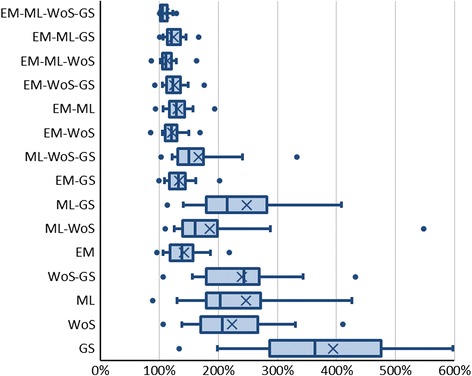
- Searching only Embase produced an average number needed to read (NNR) of 57, whereas the optimal four-database combination had an NNR of 73.
- In a sample of 200 recent systematic reviews, 97% searched MEDLINE, 61% searched Embase, 35% searched Web of Science, and only 10% used Google Scholar; the authors estimate that 60% of published systematic reviews do not retrieve 95% of all available relevant references.
Methods
- Since May 2013, the first author prospectively recorded results from systematic review searches performed at Erasmus MC; PubMed was searched in July 2016 for reviews published since 2014 with Erasmus MC first authors, yielding 58 included reviews.
- Included reviews had documented search strategies and results and had used at least Embase, MEDLINE, Cochrane CENTRAL, Web of Science, and Google Scholar; included references were extracted and located in original EndNote libraries to determine which database retrieved them.
- Recall, precision, and number needed to read were calculated for single databases and combinations in Excel; a separate sample of 200 recent PubMed systematic reviews was analyzed to assess current database selection practice.
Limitations
- The authors state they did not investigate whether missing references changed review conclusions, and because the finding that Web of Science and Google Scholar improve recall is novel, they cannot conclude whether it is due to their dataset or is generalizable.
- The authors note that all searches were performed by one experienced biomedical information specialist, that searcher skill strongly affects search effectiveness, and that their searches still missed some relevant references; they also state that Scopus as a replacement for Embase or Web of Science remains uncertain.
- The text makes evident additional constraints: the study is exploratory, based at a single institution, and relies on a relatively small set of 58 systematic reviews, with specialized databases such as CINAHL and PsycINFO used only when topic-appropriate.
Model-written summary. Check it against the paper before relying on it.
Integrity signals
Registry
Cites
Statistics
Figures

Verification
Claims the paper makes
2 Valid · 1 Not valid · 6 Not checked · 91 Own results and interpretations
A result the paper reports from its own data — it cites no other source for it, so there is none to check. The quote shows it is in the paper.
In the paper
“Using that combination, 93% of the systematic reviews in our study obtained levels of recall that could be considered acceptable (> 95%).”
§ Optimal database combinations for literature searches in systematic reviews: a prospective exploratory study > Discussion
plainstates a cause- Asserted: passes — The authors put it forward as true.
- Checkable: passes — It can be checked against evidence.
- Load-bearing: passes — The paper’s conclusions depend on it.
- Based: passes — The paper gives a reason why it holds.
A result the paper reports from its own data — it cites no other source for it, so there is none to check. The quote shows it is in the paper.
In the paper
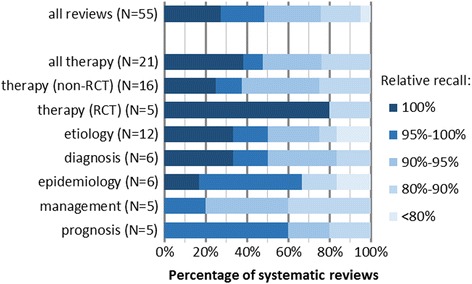
“For all but one domain, the traditional combination of Embase, MEDLINE, and Cochrane CENTRAL did not retrieve enough included references.”
§ Optimal database combinations for literature searches in systematic reviews: a prospective exploratory study > Results > Differences between domains of reviews
plain- Asserted: passes — The authors put it forward as true.
- Checkable: passes — It can be checked against evidence.
- Load-bearing: passes — The paper’s conclusions depend on it.
- Based: passes — The paper gives a reason why it holds.
A result the paper reports from its own data — it cites no other source for it, so there is none to check. The quote shows it is in the paper.
In the paper
“Embase was searched in 61% and Web of Science in 35%, and Google Scholar was only used in 10% of all reviews.”
§ Optimal database combinations for literature searches in systematic reviews: a prospective exploratory study > Results > Status of current practice of database selection
plain- Asserted: passes — The authors put it forward as true.
- Checkable: passes — It can be checked against evidence.
- Load-bearing: unclear — It is unclear whether the paper’s conclusions depend on it.
- Based: passes — The paper gives a reason why it holds.
A result the paper reports from its own data — it cites no other source for it, so there is none to check. The quote shows it is in the paper.
In the paper
“Of the five reviews that included only RCTs, four reached 100% recall if MEDLINE, Web of Science, and Google Scholar combined were complemented with Cochrane CENTRAL.”
§ Optimal database combinations for literature searches in systematic reviews: a prospective exploratory study > Discussion
plainstates a cause- Asserted: passes — The authors put it forward as true.
- Checkable: passes — It can be checked against evidence.
- Load-bearing: passes — The paper’s conclusions depend on it.
- Based: passes — The paper gives a reason why it holds.
A result the paper reports from its own data — it cites no other source for it, so there is none to check. The quote shows it is in the paper.
In the paper
“Based on our findings, this combination achieves acceptable recall about half the time (47%).”
§ Optimal database combinations for literature searches in systematic reviews: a prospective exploratory study > Results > Status of current practice of database selection
plainstates a cause- Asserted: passes — The authors put it forward as true.
- Checkable: passes — It can be checked against evidence.
- Load-bearing: passes — The paper’s conclusions depend on it.
- Based: passes — The paper gives a reason why it holds.
51 more claims
Create a free account to see all 100 claims and every source verdict.
- Probably not a substantial claim. 26
- It may state two separate claims as one. 24
- The quote only partly states this claim. 2
Claims other papers make about this one
Each is checked against this paper’s own text: does it say what the citing paper says it does?
The source backs part of the claim, not all of it — or backs it for a different population, condition or comparison.
In the citing paper
“although deduplication of references is essential to ensure the quality of SRs, there is currently no universal method to do so”
From Reducing systematic review burden using Deduklick: a novel, automated, reliable, and explainable deduplication algorithm to foster medical research (2022) · cites this paper as [5]
Experimental — accuracy not yet measuredThe source backs part of the claim, not all of it — or backs it for a different population, condition or comparison.
In the citing paper
“Although this database is one of the largest academic databases, offers extensive multidisciplinary coverage, and is widely used in bibliometric analyses, relevant publications indexed elsewhere or published in regional and non-indexed outlets may not have been captured [130].”
From Toward Holistic Aging in Lebanon: A Mapping of Gerontology and Geriatrics Research Trends, Gaps, and Future Directions (2026) · cites this paper as [130]
Experimental — accuracy not yet measuredThe source backs part of the claim, not all of it — or backs it for a different population, condition or comparison.
In the citing paper
“Meanwhile, others are highly specialized (e.g., PubMed, Medline, Compendix, etc.), which makes them unsuitable for more inclusive tasks, in particular, for the wide scope analysis and evaluation of multidisciplinary units [42,43].”
From Web of Science (WoS) and Scopus: The Titans of Bibliographic Information in Today’s Academic World (2021) · cites this paper as [43]
Experimental — accuracy not yet measuredThe source backs part of the claim, not all of it — or backs it for a different population, condition or comparison.
In the citing paper
“These databases are widely used in review studies and the majority of them are included in the optimal database combination search19 which guarantee an adequate and efficient coverage of the scientific literature.”
From Occupational therapy interventions for adults with severe mental illness: a scoping review (2021) · cites this paper as [19]
Experimental — accuracy not yet measuredThe cited source says what the claim attributes to it.
In the citing paper
“These differences have led to recommendations that systematic review teams search multiple databases to maximize the likelihood of finding relevant studies [6, 39, 40].”
From PRISMA-S: an extension to the PRISMA Statement for Reporting Literature Searches in Systematic Reviews (2021) · cites this paper as [40]
5 more claims about this paper
Create a free account to see every claim other papers make about this one.
Self-check
Percentages, sums and reported differences re-computed from the paper’s own numbers.
Each contradiction between two passages listed here was confirmed by an independent check.
Rated minor: it would not touch a result — a value no result rests on, a p-value that stays on the same side of the significance level, or a conflict that is clerical, resolved elsewhere in the paper, or outside its own findings.
In the paper
§ Optimal database combinations for literature searches in systematic reviews: a prospective exploratory study > Abstract > Results
“Sixteen percent of the included references (291 articles) were only found in a single database;”
§ Optimal database combinations for literature searches in systematic reviews: a prospective exploratory study > Results > Unique references per database
“A total of 292 (17%) references were found by only one database.”
Citations
Cites
Cochrane Handbook for Systematic Reviews of Interventions Version 5.0.1. The Cochrane Collaboration
Higgins, J. P. T., Green, S. R., & Higgins, J. P. T. (2008) · Cited by 7,171
A systematic approach to searching: an efficient and complete method to develop literature searches
Bramer, W. M., De Jonge, G. B., Rethlefsen, M. L., Mast, F., & Kleijnen, J. (2018) · Journal of the Medical Library Association · doi:10.5195/jmla.2018.283 · Cited by 863
Self-citationComparing two sampling methods to engage hard-to-reach communities in research priority setting
Valerio, M. A., Rodriguez, N., Winkler, P., Lopez, J., Dennison, M., Liang, Y., & Turner, B. J. (2016) · BMC Medical Research Methodology · doi:10.1186/s12874-016-0242-z · Cited by 543
Rethlefsen, M. L., Farrell, A. M., Osterhaus Trzasko, L. C., & Brigham, T. J. (2015) · Journal of Clinical Epidemiology · doi:10.1016/j.jclinepi.2014.11.025 · Cited by 331
Self-citationSystematic reviews need systematic searchers.
(2005) · Europe PMC (PubMed Central) · Cited by 257
Bramer, W. M., Giustini, D., & Kramer, B. M. R. (2016) · Systematic Reviews · doi:10.1186/s13643-016-0215-7 · Cited by 202
Self-citationHalladay, C. W., Trikalinos, T. A., Schmid, I. T., Schmid, C. H., & Dahabreh, I. J. (2015) · Journal of Clinical Epidemiology · doi:10.1016/j.jclinepi.2014.12.017 · Cited by 166 · cited 1×
“Prior research on database importance for systematic reviews has looked primarily at whether included references could have theoretically been found in a certain database, but most have been unable to ascertain whether the researchers actually found the articles in those databases [10, 12, 16, 17, 26].”
BackgroundSearching multiple databases for systematic reviews: added value or diminishing returns?
Stevinson, C., & Lawlor, D. A. (2004) · Complementary Therapies in Medicine · doi:10.1016/j.ctim.2004.09.003 · Cited by 143
Bramer, W. M., Giustini, D., Kramer, B. M., & Anderson, P. (2013) · Systematic Reviews · doi:10.1186/2046-4053-2-115 · Cited by 139 · cited 1×
“Nevertheless others have concluded that a single database is not sufficient to retrieve all references for systematic reviews [18, 19].”
BackgroundSelf-citationSearching one or two databases was insufficient for meta-analysis of observational studies
Lemeshow, A. R., Blum, R. E., Berlin, J. A., Stoto, M. A., & Colditz, G. A. (2005) · Journal of Clinical Epidemiology · doi:10.1016/j.jclinepi.2005.03.004 · Cited by 137
Cited by
Items 1,101–1,200 of 2,083
Nugroho, B., & Zulfiani, Z. (2021) · Jurnal Pendidikan Sains Indonesia · doi:10.24815/jpsi.v9i4.20579 · Cited by 11
Alshamsi, A., & Mohebi, L. (2022) · International Journal of Learning Teaching and Educational Research · doi:10.26803/ijlter.21.7.11 · Cited by 10
Hernandez-Garcia, E., Chrysikou, E., Nekhlyudov, L., Gilroy, D. W., & Ordóñez-Mena, J. M. (2022) · BJGP Open · doi:10.3399/bjgpo.2022.0104 · Cited by 4
Asi, A. D. T., Floris, M., & Argiolas, G. (2022) · Sinergie Italian Journal of Management · doi:10.7433/s118.2022.06 · Cited by 3
Emergency medical services and palliative care: protocol for a scoping review
Gage, C. H., Stander, C., Gwyther, L., & Stassen, W. (2022) · BMJ Open · doi:10.1136/bmjopen-2022-062054 · Cited by 4
Economic performance of green walls: A systematic review
Madushika, U. G. D., Ramachandra, T., & Geekiyanage, D. (2022) · World Construction Symposium (WCS) · doi:10.31705/wcs.2022.31 · Cited by 6
Galvez-Yanjari, V., de la Fuente, R., Muñoz-Gama, J., & Sepúlveda, M. (2023) · International Journal of Environmental Research and Public Health · doi:10.3390/ijerph20021436 · Cited by 5
Google Scholar as a Sole Literature Source for Meta-analyses in Otolaryngology Head and Neck Surgery
Ungar, O. J., Muhanna, N., & Chaushu, H. (2023) · Indian Journal of Otolaryngology and Head & Neck Surgery · doi:10.1007/s12070-023-03532-8 · Cited by 5
Brindley, C., Wijemunige, N., Dieteren, C., Bom, J. A. M., Engel, M. F. M., Meessen, B., & Bonfrer, I. (2023) · BMJ Open · doi:10.1136/bmjopen-2022-066213 · Cited by 4
The health care experiences of people with head and neck cancer: A scoping review
Checklin, M., O’Halloran, R., Foster, A. M., et al. (2023) · Head & Neck · doi:10.1002/hed.27558 · Cited by 5
DiFabio, D. L., Moodie, S., O’Hagan, R., Pardal, S., & Glista, D. (2023) · Digital Health · doi:10.1177/20552076231216684 · Cited by 5
Stanesby, O., Zhou, Z., Fonseca, R. C., Kidokoro, T., Otáhal, P., Fraser, B. J., Wu, F., Juonala, M., Viikari, J. S. A., Raitakari, O. T., et al. (2023) · European Journal of Pediatrics · doi:10.1007/s00431-023-05350-0 · Cited by 5
“We applied Bramer et al.’s recommended optimal combination of electronic databases [28] and designed the search strategy in consulta-tion with University of Tasmania library staff experienced in electronic literature searching.”
MethodBose, A., Ahmed, S., Cheng, Y., & Gonzalez, A. S. (2024) · Systematic Reviews · doi:10.1186/s13643-023-02379-y · Cited by 6
Jones, M. D., Clifford, B. K., Stamatakis, E., & Gibbs, M. T. (2024) · Sports Medicine · doi:10.1007/s40279-024-02081-6 · Cited by 7
“Systematic literature searches do not often identify all relevant studies [21], and it is possible the search terms we used may have been too specific.”
Marketing Outcomes and Shareholder Value: A Review and Research Agenda
Madathil, J. C., Paul, J., & Murugan, N. (2024) · International Journal of Market Research · doi:10.1177/14707853241277346 · Cited by 6
“This database is widely used in bibliometric and systematic review approaches (Bramer et al., 2017; ˚ Astr¨om et al., 2009).”
Understanding copycat packaging: a systematic review and research directions
Oguz, E., & Marsden, J. (2024) · Journal of Product & Brand Management · doi:10.1108/jpbm-11-2022-4207 · Cited by 4
Limitations of generalizability and reproducibility of systematic reviews in dermatology
Yew, Y. W., & Silverberg, J. I. (2019) · Journal of the American Academy of Dermatology · doi:10.1016/j.jaad.2019.01.090 · Cited by 4
Alcohol warning labels to reduce alcohol-related harm: a scoping review protocol
May, N. J., Eliott, J. A., Crabb, S., et al. (2019) · JBI Evidence Synthesis · doi:10.11124/jbisrir-2017-003973 · Cited by 4
Brima, N., Davies, J. I., & Leather, A. J. M. (2020) · BMJ Open · doi:10.1136/bmjopen-2019-036615 · Cited by 4
Community science supports research on protected area resilience
Mandeville, C. P., & Finstad, A. G. (2021) · Conservation Science and Practice · doi:10.1111/csp2.442 · Cited by 3
Effectiveness of Phone Reminders to Improve Adherence to Anti-Retroviral Therapy: A Meta-Analysis
Wahab, A. A. A., Ismail, R., Ismail, H., & Safian, N. (2021) · International Journal of Public Health Research · doi:10.17576/ijphr.1102.2021.12 · Cited by 3
Doody, O., Bailey, M., & Hennessy, T. (2021) · BMJ Open · doi:10.1136/bmjopen-2021-051858 · Cited by 4
The Effect of Vegetation Restoration in Soil Organic Carbon Storage
Bacar, T. S., Cheng, Y., Wang, Y., Kaboul, K., & Lopes, N. D. R. (2022) · Open Journal of Soil Science · doi:10.4236/ojss.2022.129017 · Cited by 5
Byrne, D., Fahey, T. P., & Moriarty, F. (2021) · HRB Open Research · doi:10.12688/hrbopenres.12951.2 · Cited by 3
Mutono, N., Wright, J., Mutembei, H. M., Muema, J., Thomas, M., Mutunga, M., & Thumbi, S. M. (2020) · AAS Open Research · doi:10.12688/aasopenres.13063.1 · Cited by 4
Marzán‐Rodríguez, M., Rodríguez-Díaz, C. E., & Mustanski, B. S. (2020) · Sexuality Research and Social Policy · doi:10.1007/s13178-020-00494-2 · Cited by 4
Kang, H., Miksche, M. S., & Ellingsen, D. (2022) · doi:10.31234/osf.io/tc9e8 · Cited by 4
Methodological Approaches to Literature Review
Thomas, D., Zairina, E., & George, J. (2023) · Springer eBooks · doi:10.1007/978-3-030-50247-8_57-1 · Cited by 13
Thermoception in Autism Spectrum Disorder: A Concise Systematic Review
Casterman, N. D. A., Rossignol, M., Colomar, A., & Cassioli, F. (2024) · Review Journal of Autism and Developmental Disorders · doi:10.1007/s40489-024-00445-2 · Cited by 3
“For this reason, we included the first 250 documents from Google Scholar, following the approach of Bramer et al. (2017).”
Allers, S., Eijkenaar, F., van Raaij, E. M., & Schut, E. (2025) · Journal of Open Innovation Technology Market and Complexity · doi:10.1016/j.joitmc.2025.100490 · Cited by 7
Luu, C. P., Lee, B. J., Larson, M., Greeneway, G. P., & Başkaya, M. K. (2025) · Brain Sciences · doi:10.3390/brainsci15030225 · Cited by 3
“We thus performed a comprehensive literature review on PubMed, Web of Science, and Em-base, with results reported following the Preferred Reporting Items for Systemic Reviews and Meta-analyses guidelines [7,8].”
Thapa, R. K., García-Carrillo, E., Sortwell, A., Byrne, P. J., Afonso, J. R., & Ramírez‐Campillo, R. (2025) · Human Movement · doi:10.5114/hm/199886 · Cited by 5
“Although the current recommendation of searching multiple databases needs to be evaluated further [87, 234], in this systematic scoping review, the literature search was conducted in multiple electronic databases and was recognised as exhaustive (i.e. PubMed, Web of Science, Scopus).”
Association between herpes simplex virus 1 and dementia: a systematic review protocol
Hong, A. T., Luu, I. Y.-K., Lin, F., Vij, A. P., Lewis, K., Wilson, M. L., & Klausner, J. D. (2025) · BMJ Open · doi:10.1136/bmjopen-2024-088632 · Cited by 5
Parsons, K., Payne, S. M., Bhaska, L., Wallace, J., & Holt, N. (2025) · Psychology of sport and exercise · doi:10.1016/j.psychsport.2025.102867 · Cited by 3
Negre, A., Sy, K., Sabri, H., Kalani, K., Wang, H., & Agossa, K. (2025) · Journal of Esthetic and Restorative Dentistry · doi:10.1111/jerd.13504 · Cited by 5
Sarraf, M., Girdler, S. J., & Bölte, S. (2025) · Cities & Health · doi:10.1080/23748834.2025.2535246 · Cited by 5
“Following that, two complementary search engines of Google Scholar and LUBsearch: Lund University Libraries were searched to reach a minimum requirement for an optimal database search (Bramer et al .”
Irshad, Z., Laconi, A., Ngom, R. V., Tolosi, R., & Piccirillo, A. (2025) · Animals · doi:10.3390/ani15182756 · Cited by 4
“Four databases providing a high level of article recalls across biomedical studies [24] were searched.”
Zyoud, S. H., Shakhshir, M. H., Abushanab, A. S., Koni, A. A., Shahwan, M. J., Jairoun, A. A., Aiesh, B. M., & Al‐Jabi, S. W. (2025) · Gut Pathogens · doi:10.1186/s13099-025-00749-6 · Cited by 4
“While it is common for systematic reviews and meta-analyses to utilize multiple databases to ensure a comprehensive literature search [30, 31], the majority of bibliometric studies are generally based on one database.”
Aleid, N., Alenazi, I. E., Alghasham, F. S., Rakhis, S. A. B., & AlFawaz, A. M. A. (2025) · Cureus · doi:10.7759/cureus.93457 · Cited by 5
“The search incorporated controlled vocabulary terms (MeSH, Emtree) and free-text keywords related to PTSD, trauma-related disorders, and T2D, with search syntax adapted for each database following recommendations by Bramer et al. [9].”
Sejín, J. R. R., Arango-Paternina, C. M., Flórez-Pregonero, A., & Villada, F. A. P. (2025) · BMC Public Health · doi:10.1186/s12889-025-22646-y · Cited by 3
“These databases were used following the recommended combination for literature searches [30].”
Trotter, E. F., & Woodcock, K. A. (2025) · Frontiers in Psychology · doi:10.3389/fpsyg.2025.1603733 · Cited by 5
Man, R., Vance, J. L., Popa, Y., Wilson, D., Tohill, S., Maltby, J., Morton, V. H., Morris, R. K., & the CHAPTER group (2025) · Acta Obstetricia Et Gynecologica Scandinavica · doi:10.1111/aogs.70089 · Cited by 10
“22 Google Scholar, used as an adjunct to database searching, is a powerful engine for finding relevant gray literature on a subject, which may not otherwise be retrieved.”
Leite, J. H., Setti, D., & de Resende, L. M. M. (2025) · Scientometrics · doi:10.1007/s11192-025-05485-x · Cited by 6
“Databases such as Scopus, Web of Science, and PubMed index journals with distinct focuses (Gusenbauer & Haddaway, 2020), thus reducing selection bias and improving the representativeness of the final portfolio (Bramer et al., 2017).”
Malik, E., Shankar, S., Nandram, S. S., & Bindlish, P. K. (2025) · Discover Psychology · doi:10.1007/s44202-025-00529-y · Cited by 11
“The search approach complies with current best practices of systematic review of literature methodology, which include transparency, reproducibility, and a balance between specifics and comprehensiveness [5, 21, 34].”
Haddadian, G., Kim, M. K., & Haddadian, N. (2025) · Research Synthesis in Applied Linguistics · doi:10.1080/29984475.2025.2598266 · Cited by 5
Carrión‐Téllez, V., Pastor‐Zaplana, J. Á., Gabucio, L. M. C., Peral‐Gómez, P., & García-Aracil, N. (2025) · Health Science Reports · doi:10.1002/hsr2.71684 · Cited by 3
Lampinen, V. S., Kämper, E., Balla, V. R., Katajavuori, N., & Asikainen, H. (2026) · Internet Interventions · doi:10.1016/j.invent.2026.100909 · Cited by 4
“Additionally, Google Scholar was used due to its suitability as a complementary tool in systematic reviews because it includes grey literature that may not be available in traditional academic databases (Haddaway et al., 2015; Bramer et al., 2017).”
Lee, J., Barnett, P., Goldsmith, L. P., Yang, J., Appleton, R., Lloyd‐Evans, B., Hahn, J. S., Rich, N., Francis, E., Mitchell, L., et al. (2026) · BMC Medicine · doi:10.1186/s12916-026-04617-1 · Cited by 6
“We defined systematic reviews as those that searched at least three different bibliographic databases (as this optimises searches in systematic reviews [26, 27], and is usually a requirement in criteria for high quality systematic reviews), and used systematic methods to address potential bias.”
Sedentary behavior and dimensions of stress: a scoping and mapping review
Chauntry, A. J., Teychenne, M. J., Tyne, W. P., Funnell, M. P., Hutson, M. J., Cooper, M. J., TERRY-EDMUNDS, J. M., Zieff, G., Diana, J. C., Romito, D., et al. (2026) · Mental health and physical activity · doi:10.1016/j.mhpa.2026.100759 · Cited by 5
Tol, C. H. M., van der Meer, H. A., van der Wal, A., Su, N., & Visscher, C. M. (2026) · Disability and Rehabilitation · doi:10.1080/09638288.2026.2621641 · Cited by 4
Ortiz, H. A. D. L. B., Parizotto, N. A., & Liebano, R. E. (2026) · Lasers in Medical Science · doi:10.1007/s10103-026-04812-9 · Cited by 6
“An electronic search for RCTs comparing HILT versus LLLT in MSDs was performed across PubMed, Web of Science, Scopus, EBSCOhost, ScienceDirect, and the Cochrane Library, with an additional manual search in the Physiotherapy Evidence Database (PEDro) and Google Scholar [ 18 ].”
From reviews to real-time: dynamic evidence in dentistry
Gavrilova, A. V., & Galli, C. (2026) · Evidence-Based Dentistry · doi:10.1038/s41432-026-01206-2 · Cited by 4
“Achieving comprehensive coverage often requires querying several separate databases 16 , yet studies show that even with this effort, approximately 60% of reviews fail to retrieve substantial amounts of relevant articles 17 .”
Omar, M., Elsamaloty, M., Yu, D., Khan, I., Shah, Z., Matthew, B. P., Bukhari, S. M. A., Nadeem, D. M., & Gupta, A. K. (2026) · Current Problems in Diagnostic Radiology · doi:10.1067/j.cpradiol.2026.03.001 · Cited by 5
Alberca-González, A., & Fernández-Jiménez, E. (2026) · Frontiers in Psychiatry · doi:10.3389/fpsyt.2026.1697185 · Cited by 6
“This speci fi c combination was selected to ensure optimal coverage of the intersection between pediatric health, behavioral sciences, and computational applications, following the methodological recommendations for maximizing recall in systematic reviews (21).”
Wang, Y., Qu, W., Liu, H., Peng, Z., & Hu, Y. (2026) · Frontiers in Psychology · doi:10.3389/fpsyg.2026.1755245 · Cited by 4
Dimova, E. D., Roddick, K., Hunter, S. C., Delfmann, L. R., Morgan, A., McPherson, K. E., Currie, C. E., McAloney‐Kocaman, K., McCann, B., & McKendrick, J. H. (2026) · Child Psychiatry & Human Development · doi:10.1007/s10578-026-02019-1 · Cited by 10
Are AI Neuroimaging Models Ready for Clinical Use? A Systematic Methodological Review
Sulaimanov, U., Şanlıer, N., Moniri, A., Demir, B., Serikkanov, Y. S., BAYRAMOĞLU, A. R., Al-Jebur, M. S., Uslu, I., Ozturk, O., Nizzola, M., et al. (2026) · Journal of Clinical Medicine · doi:10.3390/jcm15093441 · Cited by 5
“Empirical analyses of systematic review database yields have shown that approximately 16% of eligible references may be retrievable from only one database, with EMBASE frequently contributing the largest share of unique references not indexed in MEDLINE/PubMed [109].”
Liçenji, L., & Hoxha, J. (2026) · Frontiers in Artificial Intelligence · doi:10.3389/frai.2026.1815243 · Cited by 13
“Using more than one database is recommended to reduce retrieval bias and improve coverage because no single index is comprehensive across outlets and disciplines (Bramer et al., 2017; Higgins et al., 2024).”
Portillo, F., Rotbi, N., Padilla, N., Gil, C., Taborda, J. A., Alcayde, A., & Sáez, M. I. (2026) · Journal of Marine Science and Engineering · doi:10.3390/jmse14141291 · Cited by 3
Villa, G., Foti, L., Piazzini, T., et al. (2022) · Journal of Anesthesia Analgesia and Critical Care · doi:10.1186/s44158-022-00039-6 · Cited by 3
Dróżdż, W., Wiciński, M., Szota, A. M., Szambelan, M., Radajewska, I., Popławski, I., & Wojciechowski, P. (2023) · Journal of Clinical Medicine · doi:10.3390/jcm12124012 · Cited by 4
Taher, R. A., & Fox, A. P. (2023) · Psychosis · doi:10.1080/17522439.2023.2263779 · Cited by 3
Moncada, S., & Nguyen, L. (2024) · Sustainability · doi:10.3390/su16020550 · Cited by 8
Protocol for a scoping review of how people with ME/CFS use the internet
Shortland, D. L., Fazil, Q., Hallett, N., & Lavis, A. (2024) · BMJ Open · doi:10.1136/bmjopen-2023-076904 · Cited by 5
“Bramer et al 45 found that optimal searching to ensure a minimum risk of missing studies, should use four key databases: Embase, Medline, Web of Science and Google Scholar.”
BackgroundBudiman, I., Wagemakers, A., Derks, M., Sahara, S., & Moore, S. (2024) · NJAS Impact in Agricultural and Life Sciences · doi:10.1080/27685241.2024.2349518 · Cited by 6
“…OR “act” OR “stakehold*” OR “farmer” OR “peasan*” OR “socio-technical system” OR “socio-technical transition*” OR “farmer behavio*”) The query was used in May 2022, in Scopus and Web of Science to guarantee quality records and adequate and efficient coverage for the topic (Bramer et al., 2017).”
Chetty, D. R., ten Ham‐Baloyi, W., van Rooyen, D. R. M., et al. (2024) · Journal of Nursing Management · doi:10.1155/2024/6649401 · Cited by 3
“Secondly, the search for relevant literature was restricted to institutional databases accessible to D.R.C., which may have led to the exclusion of potentially valuable studies from other sources [19].”
Evaluation of Medical Subject Headings assignment in simulated patient articles
Tonin, F. S., Negrão, L. G., Meza, I. P., & Fernández-Llimós, F. (2024) · International Journal of Pharmacy Practice · doi:10.1093/ijpp/riae042 · Cited by 5
Fox, M. T., Maimets, I., Butler, J. I., Sidani, S., & Godfrey, C. M. (2024) · PLoS ONE · doi:10.1371/journal.pone.0308886 · Cited by 6
Wilson, T. R., Checklin, M., Lawson, N., Burnett, A. J., Lombardo, T., & Freeman-Sanderson, A. L. (2024) · International Journal of Speech-Language Pathology · doi:10.1080/17549507.2024.2420606 · Cited by 4
“To complement this systematic search, a further exploratory search was conducted using the first 200 results on Google Scholar (Bramer et al., 2017; Haddaway et al., 2015).”
James, E., Kelsey, R. J., Sargeant, J. A., Henson, J. J., Yates, T. E., & Wilkinson, T. J. (2024) · Health Science Reports · doi:10.1002/hsr2.70219 · Cited by 4
Mei, Z., Du, P., Han, Y., Shao, Z., & Zheng, D. (2025) · PLoS ONE · doi:10.1371/journal.pone.0311799 · Cited by 4
Computational Perspectives on Cognition in Anorexia Nervosa: A Systematic Review
Radzikowska, M., Pike, A., & Hall-McMaster, S. (2025) · Computational Psychiatry · doi:10.5334/cpsy.128 · Cited by 3
McNeill, I. M., Borland, R., & Abraham, C. (2025) · Journal of Medical Internet Research · doi:10.2196/68112 · Cited by 3
“In line with recommendations [40], the following databases were searched by the lead author in September 2022: Web of Science Core Collection, Scopus, OVID (Embase, MEDLINE, PsycINFO, Global Health, and Health and Psychosocial instruments), and EBSCOhost (Academic Search Complete and Cumulative…”
Yin, Y., Mok, V., Jeong, J., Brigham, E. P., Vera, M. A. D., Sadatsafavi, M., Duan, K. I., & JOHNSON, K. (2025) · ERJ Open Research · doi:10.1183/23120541.00123-2025 · Cited by 5
“Embase and MEDLINE were selected as together, they captures a median of 95% of health-related references compared with a search involving additional databases [17].”
Yang, X., Kinoshita, T., Wang, Q., & Chen, Y. (2025) · Sustainable Development · doi:10.1002/sd.70011 · Cited by 6
Manifestation and Measurement of Atypical Depression: A Scoping Review
Zahra, S. M., Whelan, T. A., Henry, D., Pizarro‐Campagna, E., Anderson, J., & Yang, Y. (2025) · Clinical Psychology & Psychotherapy · doi:10.1002/cpp.70123 · Cited by 3
Chaves, G. V., Dahl, K. H., Nielsen, M. B. M., Muzzi, L. A. L., & Miles, J. E. (2025) · Research in Veterinary Science · doi:10.1016/j.rvsc.2025.105826 · Cited by 5
A structured review of insider cybersecurity behaviour studies
Prabhu, S., & Dell, P. (2025) · Information Security Journal A Global Perspective · doi:10.1080/19393555.2025.2543458 · Cited by 6
“The study used the Scopus database due to its comprehensive multidisciplinary coverage, extensive range of publications in both technology and social sciences, high-quality indexing, inclusion of key publishers, and robust search functionalities (Bramer et al., 2017).”
The Effects of Climate Change on Health: A Systematic Review from a One Health Perspective
Eyzaguirre, I. A. L., Sousa, E. L., Martins, Y. D. J., Fernandes, M. E. B., & Filho, A. B. D. O. (2025) · Climate · doi:10.3390/cli13100204 · Cited by 8
Capper, T. S., Moran, L., Gupta, M., Seaman, G., Cole, C., Grota, T., O'Reilly, R., Jacob, A. M., & Jacob, E. R. (2025) · Nurse Education in Practice · doi:10.1016/j.nepr.2025.104609 · Cited by 4
Kalibatienė, D., & Miliauskaitė, J. (2025) · Computer Standards & Interfaces · doi:10.1016/j.csi.2025.104073 · Cited by 5
Belo, J. D. C., Calheiros, T., & Pereira, M. G. (2026) · Climate · doi:10.3390/cli14070148 · Cited by 3
“The identification phase involved an extensive search of the WoS and Scopus databases, followed by automated removal of duplicate records and ineligible entries [47,55].”
UNDERSTANDING THE CONCEPT OF POLICY TRANSFER: A SYSTEMATIC LITERATURE REVIEW APPROACH
Mokhtar, K. S., & Rahman, N. A. (2020) · International Journal of Politics Public Policy and Social Works · doi:10.35631/ijppsw.25001 · Cited by 3
Estrés laboral en el contexto universitario: Una revisión sistemática.
Flores-Meza, G., Cuaya-Itzcoatl, I. G., & Rojas-Solís, J. L. (2021) · Dilemas contemporáneos Educación Política y Valores · doi:10.46377/dilemas.v9i.2912 · Cited by 3
Hughes, S., Boisvert, I., McMahon, C. M., Steyns, A., & Neal, K. (2022) · BMJ Open · doi:10.1136/bmjopen-2021-051183 · Cited by 3
Evidence-Based Dentistry Practices: Traditional Review
Atak, D., & Aksoy, M. (2022) · Turkiye Klinikleri Journal of Dental Sciences · doi:10.5336/dentalsci.2021-83682 · Cited by 4
Optimising database searching in pharmacy education
Hope, D. L., Grant, G. D., Rogers, G. D., et al. (2022) · International Journal of Pharmacy Practice · doi:10.1093/ijpp/riac078 · Cited by 3
Managing cold intolerance after hand injury: A systematic review
Greene, B. H. C., Gudimella, R., Corkum, J. P., et al. (2023) · Hand surgery & rehabilitation · doi:10.1016/j.hansur.2023.01.007 · Cited by 3
Khulbe, Y., Chandani, Y., Kamaraj, B., et al. (2023) · Tropical Doctor · doi:10.1177/00494755231153977 · Cited by 3
Holistic mHealth interventions for the promotion of healthy ageing: protocol for a systematic review
Zheng, S., Edney, S. M., Mair, J. L., Kowatsch, T., Castro, Ó., Salamanca-Sanabria, A., & Müller‐Riemenschneider, F. (2023) · BMJ Open · doi:10.1136/bmjopen-2022-066662 · Cited by 4
Vujcich, D., Roberts, M., Selway, T., & Nattabi, B. (2023) · International Journal of Environmental Research and Public Health · doi:10.3390/ijerph20095708 · Cited by 6
Koenders, N., van Zetten, H., Smulders, M., Verra, M. L., van Kimmenade, R. R. J., van Brakel, T. J., Eijsvogels, T. M. H., & Smith, T. (2023) · Journal of Cardiopulmonary Rehabilitation and Prevention · doi:10.1097/hcr.0000000000000798 · Cited by 3
Artificial Intelligence - an agenda for management sciences
Jarosz, S. (2023) · e-mentor · doi:10.15219/em99.1603 · Cited by 8
Caetano, R. D. A., Santos, É. M. D. C., Poian, R. Z., et al. (2023) · Ethnobiology and Conservation · doi:10.15451/ec2023-07-12.15-1-35 · Cited by 3
Carter, C., Boisvert, I., & Docking, K. M. (2023) · Pediatric Blood & Cancer · doi:10.1002/pbc.30595 · Cited by 4
Customised training programme for the indigenous population: a systematic review
Biswal, P., & Sahoo, C. K. (2023) · Industrial and Commercial Training · doi:10.1108/ict-12-2022-0090 · Cited by 3
A Look at the Relationship Between Fatigue and Self-employed Truck Drivers
Soliani, R. D., da Silva, L. B., Lopes, A. V. B., & Santiago, F. (2023) · Studies in systems, decision and control · doi:10.1007/978-3-031-38277-2_1 · Cited by 6
Han, K. J., Yu, M., & Kehinde, O. (2023) · Journal of Prevention · doi:10.1007/s10935-023-00761-z · Cited by 3
Adandom, H. C., Nwankwo, H. C., Adandom, I. I., Akinrolie, O., Odole, A. C., Scott, D. R. M., & Awosoga, O. (2024) · Health Science Reports · doi:10.1002/hsr2.1848 · Cited by 2
“35,36 The search terms were determined through collaborative discussions between the lead researcher and the librarian, along with a comprehensive examination of preliminary search outcomes encompassing titles and subject headings.”
BackgroundGlycemic Changes Related to Arsenic Exposure: An Overview of Animal and Human Studies
Rosendo, G. B. O., Ferreira, R. L. U., Aquino, S. L. S., et al. (2024) · Nutrients · doi:10.3390/nu16050665 · Cited by 3
“Google Scholar was used as the secondary source, with searches limited to 100 reports, sorted by relevance ranking [17].”
Method
Metadata
- Authors
- Bramer, W. M., Rethlefsen, M. L., Kleijnen, J., & Franco, O. H.
- Affiliations
- Erasmus MC (NL)
- University of Utah (US)
- Maastricht University (NL)
- Corresponding author
- Bramer, Wichor M.
- Venue
- Systematic Reviews
- Published
- 2017-12
- Volume
- 6
- Issue
- 1
- Pages
- 245-245
- ISSN
- 2046-4053 (ISSN-L)
- PMC
- PMC5718002
- OpenAlex
- W2774587119
- Cited by
- 2,114
- References
- 27
- Citations by year
- 2026: 373 · 2025: 411 · 2024: 332 · 2023: 292 · 2022: 252 · 2021: 231 · 2020: 145 · 2019: 64 · 2018: 12 · 2017: 2
- FWCI
- 14.94
- Type
- journal article
- Language
- en
- Open access
- gold
- doi.org
- Licence
- cc-by
- creativecommons.org/licenses/by/4.0/ (tdm)
- creativecommons.org/licenses/by/4.0/ (vor, 5 d)
- Locations
- Systematic Reviews (publishedVersion, cc-by)
- Europe PMC (PubMed Central) (publishedVersion, cc-by)
- PubMed Central (publishedVersion, cc-by)
- PubMed (publishedVersion)
- Research Publications (Maastricht University) (publishedVersion, cc-by)
- EUR Research Repository (Erasmus University Rotterdam) (publishedVersion, other-oa)
- EUR Research Repository (Erasmus University Rotterdam) (submittedVersion, other-oa)
- RePub (Erasmus University Rotterdam) (submittedVersion, other-oa)
- DOAJ (DOAJ: Directory of Open Access Journals) (submittedVersion, cc-by-sa)
- Research Publications (Maastricht University) (submittedVersion, other-oa)
- Funders
- National Center for Advancing Translational Sciences (UL1TR001067)
- Topics
- Social Sciences › Decision Sciences › Statistics, Probability and Uncertainty › Meta-analysis and systematic reviews
- Social Sciences › Library and Information Sciences › scientometrics and bibliometrics research
- Physical Sciences › Computer Science › Information Systems › Information Retrieval and Search Behavior
- Keywords
- literature search strategies, search recall, search precision, database coverage, Embase, MEDLINE, Web of Science, Google Scholar, CINAHL, PsycINFO, number needed to read
- MeSH terms
- Humans, Prospective Studies, Review Literature as Topic, Databases, Bibliographic, Information Storage and Retrieval
About these checks
Registry, retraction, Cites and statistics results are computed, not judged, with one exception: a printed reference that no index lists is read once by a model before it counts as a citation error. Claims are extracted by a model and kept only when their quote appears verbatim in the text; each cited source is then checked, with a model’s help, for whether it says what the claim relies on. Those verdicts can be wrong — read the claim’s quote and the cited source before relying on one.
A language model drew the claims from the paper on 2026-09-29, under version 3 of the claim definition (model deepseek-v4.1-flash, prompt extract-v3).
A second model labelled each claim on 2026-09-29 (model jev-1.13-20260917, definition revision gold-guideline-v0.2).
Statistics and arithmetic are recomputed, not judged.
Confidence bands are shown only for fields calibrated on our annotated test set. None is calibrated yet, so no band is shown.
What counts as a claim ›How we measure confidence ›How we check this ›
Are you an author, or do you see a problem with this page? Request a review
Data sources
Bibliographic data: Semantic Scholar, OpenAlex, Crossref.
Contains information from the Semantic Scholar Academic Graph Datasets, made available under the ODC Attribution License (ODC-BY 1.0).
Semantic Scholar’s data is described in: Kinney, R., et al. (2023). The Semantic Scholar Open Data Platform. arXiv:2301.10140.
