

Optimal database combinations for literature searches in systematic reviews: a prospective exploratory study
Open accessThe DOI matches its Crossref record; 27 of the 27 references it cites were found in a registry or an index; 3 of the 22 sources its claims cite were checked for support.
Abstract
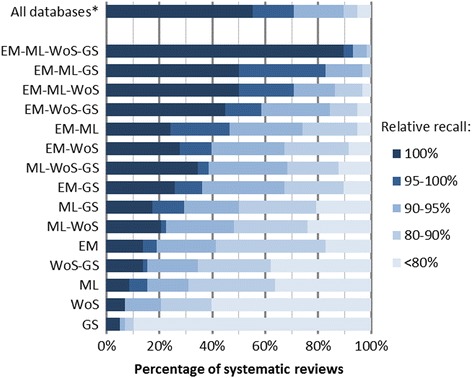
BACKGROUND: Within systematic reviews, when searching for relevant references, it is advisable to use multiple databases. However, searching databases is laborious and time-consuming, as syntax of search strategies are database specific. We aimed to determine the optimal combination of databases needed to conduct efficient searches in systematic reviews and whether the current practice in published reviews is appropriate. While previous studies determined the coverage of databases, we analyzed the actual retrieval from the original searches for systematic reviews. METHODS: Since May 2013, the first author prospectively recorded results from systematic review searches that he performed at his institution. PubMed was used to identify systematic reviews published using our search strategy results. For each published systematic review, we extracted the references of the included studies. Using the prospectively recorded results and the studies included in the publications, we calculated recall, precision, and number needed to read for single databases and databases in combination. We assessed the frequency at which databases and combinations would achieve varying levels of recall (i.e., 95%). For a sample of 200 recently published systematic reviews, we calculated how many had used enough databases to ensure 95% recall. RESULTS: A total of 58 published systematic reviews were included, totaling 1746 relevant references identified by our database searches, while 84 included references had been retrieved by other search methods. Sixteen percent of the included references (291 articles) were only found in a single database; Embase produced the most unique references (n = 132). The combination of Embase, MEDLINE, Web of Science Core Collection, and Google Scholar performed best, achieving an overall recall of 98.3 and 100% recall in 72% of systematic reviews. We estimate that 60% of published systematic reviews do not retrieve 95% of all available relevant references as many fail to search important databases. Other specialized databases, such as CINAHL or PsycINFO, add unique references to some reviews where the topic of the review is related to the focus of the database. CONCLUSIONS: Optimal searches in systematic reviews should search at least Embase, MEDLINE, Web of Science, and Google Scholar as a minimum requirement to guarantee adequate and efficient coverage.
Overview
CoChat Summary
TL;DR
This prospective exploratory study analyzed actual database retrieval for 58 published systematic reviews and found that searching Embase, MEDLINE, Web of Science Core Collection, and Google Scholar together achieved the best recall. The authors estimate that many published systematic reviews fail to retrieve 95% of relevant references because they omit key databases.
Key findings
- Among 1,746 relevant references identified by database searches, 292 (17%) were found by only one database; Embase retrieved the most unique references (n = 132), followed by MEDLINE, Web of Science, and Google Scholar.
- The combination of Embase, MEDLINE, Web of Science Core Collection, and Google Scholar achieved an overall recall of 98.3% and retrieved all included references in 72% of the studied systematic reviews.
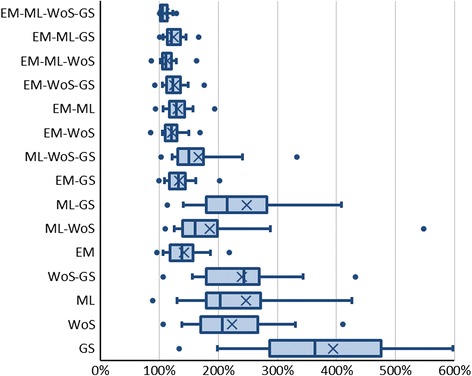
- Searching only Embase produced an average number needed to read (NNR) of 57, whereas the optimal four-database combination had an NNR of 73.
- In a sample of 200 recent systematic reviews, 97% searched MEDLINE, 61% searched Embase, 35% searched Web of Science, and only 10% used Google Scholar; the authors estimate that 60% of published systematic reviews do not retrieve 95% of all available relevant references.
Methods
- Since May 2013, the first author prospectively recorded results from systematic review searches performed at Erasmus MC; PubMed was searched in July 2016 for reviews published since 2014 with Erasmus MC first authors, yielding 58 included reviews.
- Included reviews had documented search strategies and results and had used at least Embase, MEDLINE, Cochrane CENTRAL, Web of Science, and Google Scholar; included references were extracted and located in original EndNote libraries to determine which database retrieved them.
- Recall, precision, and number needed to read were calculated for single databases and combinations in Excel; a separate sample of 200 recent PubMed systematic reviews was analyzed to assess current database selection practice.
Limitations
- The authors state they did not investigate whether missing references changed review conclusions, and because the finding that Web of Science and Google Scholar improve recall is novel, they cannot conclude whether it is due to their dataset or is generalizable.
- The authors note that all searches were performed by one experienced biomedical information specialist, that searcher skill strongly affects search effectiveness, and that their searches still missed some relevant references; they also state that Scopus as a replacement for Embase or Web of Science remains uncertain.
- The text makes evident additional constraints: the study is exploratory, based at a single institution, and relies on a relatively small set of 58 systematic reviews, with specialized databases such as CINAHL and PsycINFO used only when topic-appropriate.
Model-written summary. Check it against the paper before relying on it.
Integrity signals
Registry
Cites
Statistics
Figures

Verification
Claims the paper makes
2 Valid · 1 Not valid · 6 Not checked · 91 Own results and interpretations
A result the paper reports from its own data — it cites no other source for it, so there is none to check. The quote shows it is in the paper.
In the paper
“Using that combination, 93% of the systematic reviews in our study obtained levels of recall that could be considered acceptable (> 95%).”
§ Optimal database combinations for literature searches in systematic reviews: a prospective exploratory study > Discussion
plainstates a cause- Asserted: passes — The authors put it forward as true.
- Checkable: passes — It can be checked against evidence.
- Load-bearing: passes — The paper’s conclusions depend on it.
- Based: passes — The paper gives a reason why it holds.
A result the paper reports from its own data — it cites no other source for it, so there is none to check. The quote shows it is in the paper.
In the paper
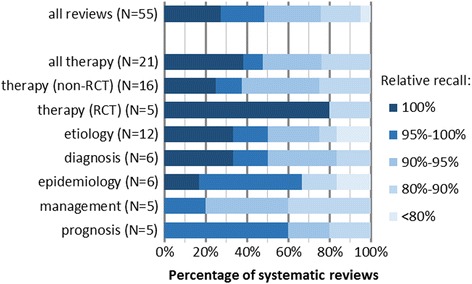
“For all but one domain, the traditional combination of Embase, MEDLINE, and Cochrane CENTRAL did not retrieve enough included references.”
§ Optimal database combinations for literature searches in systematic reviews: a prospective exploratory study > Results > Differences between domains of reviews
plain- Asserted: passes — The authors put it forward as true.
- Checkable: passes — It can be checked against evidence.
- Load-bearing: passes — The paper’s conclusions depend on it.
- Based: passes — The paper gives a reason why it holds.
A result the paper reports from its own data — it cites no other source for it, so there is none to check. The quote shows it is in the paper.
In the paper
“Embase was searched in 61% and Web of Science in 35%, and Google Scholar was only used in 10% of all reviews.”
§ Optimal database combinations for literature searches in systematic reviews: a prospective exploratory study > Results > Status of current practice of database selection
plain- Asserted: passes — The authors put it forward as true.
- Checkable: passes — It can be checked against evidence.
- Load-bearing: unclear — It is unclear whether the paper’s conclusions depend on it.
- Based: passes — The paper gives a reason why it holds.
A result the paper reports from its own data — it cites no other source for it, so there is none to check. The quote shows it is in the paper.
In the paper
“Of the five reviews that included only RCTs, four reached 100% recall if MEDLINE, Web of Science, and Google Scholar combined were complemented with Cochrane CENTRAL.”
§ Optimal database combinations for literature searches in systematic reviews: a prospective exploratory study > Discussion
plainstates a cause- Asserted: passes — The authors put it forward as true.
- Checkable: passes — It can be checked against evidence.
- Load-bearing: passes — The paper’s conclusions depend on it.
- Based: passes — The paper gives a reason why it holds.
A result the paper reports from its own data — it cites no other source for it, so there is none to check. The quote shows it is in the paper.
In the paper
“Based on our findings, this combination achieves acceptable recall about half the time (47%).”
§ Optimal database combinations for literature searches in systematic reviews: a prospective exploratory study > Results > Status of current practice of database selection
plainstates a cause- Asserted: passes — The authors put it forward as true.
- Checkable: passes — It can be checked against evidence.
- Load-bearing: passes — The paper’s conclusions depend on it.
- Based: passes — The paper gives a reason why it holds.
51 more claims
Create a free account to see all 100 claims and every source verdict.
- Probably not a substantial claim. 26
- It may state two separate claims as one. 24
- The quote only partly states this claim. 2
Claims other papers make about this one
Each is checked against this paper’s own text: does it say what the citing paper says it does?
The source backs part of the claim, not all of it — or backs it for a different population, condition or comparison.
In the citing paper
“although deduplication of references is essential to ensure the quality of SRs, there is currently no universal method to do so”
From Reducing systematic review burden using Deduklick: a novel, automated, reliable, and explainable deduplication algorithm to foster medical research (2022) · cites this paper as [5]
Experimental — accuracy not yet measuredThe source backs part of the claim, not all of it — or backs it for a different population, condition or comparison.
In the citing paper
“Although this database is one of the largest academic databases, offers extensive multidisciplinary coverage, and is widely used in bibliometric analyses, relevant publications indexed elsewhere or published in regional and non-indexed outlets may not have been captured [130].”
From Toward Holistic Aging in Lebanon: A Mapping of Gerontology and Geriatrics Research Trends, Gaps, and Future Directions (2026) · cites this paper as [130]
Experimental — accuracy not yet measuredThe source backs part of the claim, not all of it — or backs it for a different population, condition or comparison.
In the citing paper
“Meanwhile, others are highly specialized (e.g., PubMed, Medline, Compendix, etc.), which makes them unsuitable for more inclusive tasks, in particular, for the wide scope analysis and evaluation of multidisciplinary units [42,43].”
From Web of Science (WoS) and Scopus: The Titans of Bibliographic Information in Today’s Academic World (2021) · cites this paper as [43]
Experimental — accuracy not yet measuredThe source backs part of the claim, not all of it — or backs it for a different population, condition or comparison.
In the citing paper
“These databases are widely used in review studies and the majority of them are included in the optimal database combination search19 which guarantee an adequate and efficient coverage of the scientific literature.”
From Occupational therapy interventions for adults with severe mental illness: a scoping review (2021) · cites this paper as [19]
Experimental — accuracy not yet measuredThe cited source says what the claim attributes to it.
In the citing paper
“These differences have led to recommendations that systematic review teams search multiple databases to maximize the likelihood of finding relevant studies [6, 39, 40].”
From PRISMA-S: an extension to the PRISMA Statement for Reporting Literature Searches in Systematic Reviews (2021) · cites this paper as [40]
5 more claims about this paper
Create a free account to see every claim other papers make about this one.
Self-check
Percentages, sums and reported differences re-computed from the paper’s own numbers.
Each contradiction between two passages listed here was confirmed by an independent check.
Rated minor: it would not touch a result — a value no result rests on, a p-value that stays on the same side of the significance level, or a conflict that is clerical, resolved elsewhere in the paper, or outside its own findings.
In the paper
§ Optimal database combinations for literature searches in systematic reviews: a prospective exploratory study > Abstract > Results
“Sixteen percent of the included references (291 articles) were only found in a single database;”
§ Optimal database combinations for literature searches in systematic reviews: a prospective exploratory study > Results > Unique references per database
“A total of 292 (17%) references were found by only one database.”
Citations
Cites
Cochrane Handbook for Systematic Reviews of Interventions Version 5.0.1. The Cochrane Collaboration
Higgins, J. P. T., Green, S. R., & Higgins, J. P. T. (2008) · Cited by 7,171
A systematic approach to searching: an efficient and complete method to develop literature searches
Bramer, W. M., De Jonge, G. B., Rethlefsen, M. L., Mast, F., & Kleijnen, J. (2018) · Journal of the Medical Library Association · doi:10.5195/jmla.2018.283 · Cited by 863
Self-citationComparing two sampling methods to engage hard-to-reach communities in research priority setting
Valerio, M. A., Rodriguez, N., Winkler, P., Lopez, J., Dennison, M., Liang, Y., & Turner, B. J. (2016) · BMC Medical Research Methodology · doi:10.1186/s12874-016-0242-z · Cited by 543
Rethlefsen, M. L., Farrell, A. M., Osterhaus Trzasko, L. C., & Brigham, T. J. (2015) · Journal of Clinical Epidemiology · doi:10.1016/j.jclinepi.2014.11.025 · Cited by 331
Self-citationSystematic reviews need systematic searchers.
(2005) · Europe PMC (PubMed Central) · Cited by 257
Bramer, W. M., Giustini, D., & Kramer, B. M. R. (2016) · Systematic Reviews · doi:10.1186/s13643-016-0215-7 · Cited by 202
Self-citationHalladay, C. W., Trikalinos, T. A., Schmid, I. T., Schmid, C. H., & Dahabreh, I. J. (2015) · Journal of Clinical Epidemiology · doi:10.1016/j.jclinepi.2014.12.017 · Cited by 166 · cited 1×
“Prior research on database importance for systematic reviews has looked primarily at whether included references could have theoretically been found in a certain database, but most have been unable to ascertain whether the researchers actually found the articles in those databases [10, 12, 16, 17, 26].”
BackgroundSearching multiple databases for systematic reviews: added value or diminishing returns?
Stevinson, C., & Lawlor, D. A. (2004) · Complementary Therapies in Medicine · doi:10.1016/j.ctim.2004.09.003 · Cited by 143
Bramer, W. M., Giustini, D., Kramer, B. M., & Anderson, P. (2013) · Systematic Reviews · doi:10.1186/2046-4053-2-115 · Cited by 139 · cited 1×
“Nevertheless others have concluded that a single database is not sufficient to retrieve all references for systematic reviews [18, 19].”
BackgroundSelf-citationSearching one or two databases was insufficient for meta-analysis of observational studies
Lemeshow, A. R., Blum, R. E., Berlin, J. A., Stoto, M. A., & Colditz, G. A. (2005) · Journal of Clinical Epidemiology · doi:10.1016/j.jclinepi.2005.03.004 · Cited by 137
Cited by
Items 1,301–1,400 of 2,083
Rogers, M., Sutton, A., Campbell, F., Whear, R., Bethel, A. C., & Coon, J. T. (2024) · Campbell Systematic Reviews · doi:10.1002/cl2.1380 · Cited by 1
“Using a sample of systematic reviews and their included studies, Bramer et al. (2017) showed that a combination of Embase, MEDLINE, Web of Science Core Collection and Google Scholar performed best achieving 100% recall in 72% of systematic reviews across a range of topics and study designs.”
Use of Community Health Workers Among U.S. Male Latino Population: A Scoping Review
Littlefield, J., & Longacre, M. L. (2024) · Journal of Immigrant and Minority Health · doi:10.1007/s10903-024-01586-6 · Cited by 3
“Only the first 200 relevant references were selected from Google Scholar given past practice due to the high number of articles commonly identified [20].”
Mzid, R., Selvi, S., & Abid, M. (2024) · SN Computer Science · doi:10.1007/s42979-024-02767-8 · Cited by 3
“According to previous studies [26], a thorough review should be carried out on many databases to include the majority of papers.”
Mhlanga, S., Griffiths, F. E., Zharima, C., Robertson, L. J., Abdulla, S., & Goudge, J. (2024) · Health & Social Care in the Community · doi:10.1155/2024/7971386 · Cited by 3
“Since this is a rapid review, we restricted the search to two most relevant in the feld of mental health [26] (PubMed and PsyINFO) because many databases increase the number of hits with marginal increases in the number of included articles [27].”
BackgroundAdeel, A. A. (2024) · Sudanese Journal of Paediatrics · doi:10.24911/sjp.106-1714315809 · Cited by 3
Bilimsel Araştırma Makalesinde Giriş Bölümü Yazımı
Yeldan, İ., & Türkmen, E. (2024) · doi:10.5152/6905 · Cited by 2
Nutritional Care for Adults in Nursing Homes: A Scoping Review
Shirai, Y., Momosaki, R., Yuki, K. A. T. O., Asuka, H. O. R. I., & Maeda, K. (2024) · Journal of UOEH · doi:10.7888/juoeh.46.227 · Cited by 2
Should Mental Health Nurses Cry with Patients?
Hayward, B. A. (2024) · Issues in Mental Health Nursing · doi:10.1080/01612840.2024.2367154 · Cited by 2
“The selection of databases may have been improved with the addition of Embase ® (see Bramer et al., 2017) however CINAHL ® was used instead because crying was expected to be explored qualitatively (see Wright et al., 2015).”
Saleh, A. M., Hejase, R., & Abdel‐Aziz, H. R. (2024) · International Journal of Africa Nursing Sciences · doi:10.1016/j.ijans.2024.100768 · Cited by 4
Schindler, L., Beelich, H., Röll, S., Katsari, E., Stracke, S., & Waltemath, D. (2024) · JMIR Research Protocols · doi:10.2196/57669 · Cited by 2
“It was selected as it is widely used as a standard database for biomedical literature research and is recommended as one of the most important databases for comprehensive systematic reviews [11].”
Raballo, A., Poletti, M., Bevione, F., Lacidogna, M. C., & Preti, A. (2024) · Schizophrenia Bulletin · doi:10.1093/schbul/sbae159 · Cited by 5
“54 The following keywords were applied: “Personal space OR Interpersonal distance AND Schizophrenia” and “Peri personal space AND Schizophrenia.””
In vivo and in vitro anti-diabetic activity of stinky beans (Parkia Speciosa): a systematic review
Haokip, T., Beatrice, D. A., & Priyadarshini, R. D. (2024) · Discover Food · doi:10.1007/s44187-024-00175-8 · Cited by 2
“This is because Google Scholar lacks the basic functionality of traditional bibliographic database according to the Google Scholar’s relevance ranking [17].”
Woliansky, M., Lee, K. H., & Tadakamadla, S. K. (2024) · Emergency Medicine Australasia · doi:10.1111/1742-6723.14506 · Cited by 2
Formosa, M., & Ebejer, S. J. (2024) · SAGE Open Nursing · doi:10.1177/23779608241292839 · Cited by 7
“Also, accessing a combination of multiple databases sought to provide a greater coverage of possible citations on the elements searched (Bramer et al., 2017).”
BackgroundIntellectual property and exit strategies among SMEs: A scoping review and framework
Khawand, H. M., Kittler, M. G., Mortelmans, D., & Braendle, U. (2024) · World Patent Information · doi:10.1016/j.wpi.2024.102318 · Cited by 3
Offringa, T. M., Nooteboom, L. A., Versluijs, B. K., & Vermeiren, R. R. J. M. (2024) · Journal of Child and Adolescent Mental Health · doi:10.2989/17280583.2024.2398061 · Cited by 3
“University Libraries’ medical library PubMed, Embase, Medline, PsycINFO, and Web of Science Core Collection were searched to achieve optimal coverage (Bramer et al., 2017).”
Literature Searches in Medical Informatics Systematic Reviews: Suggested Approaches
Afraz, A., Chashmyazdan, M., Khajouei, R., & Bagherinezhad, Z. (2024) · Medical Reference Services Quarterly · doi:10.1080/02763869.2024.2429066 · Cited by 5
“Bramer et al. 7 demonstrated that Cochrane’s suggested database combination to retrieve RCT-restricted SRs was not complete and proposed a new database combination.”
Pitt-Francis, A., Stevens, A. R., Ahmed, Z., & Pietro, V. D. (2024) · Trauma Care · doi:10.3390/traumacare5010001 · Cited by 4
“Here, the use of six was justified by the cross-disciplinary nature of the topic [16].”
Topic Analysis of the Literature Reveals the Research Structure: A Case Study in Periodontics
Galli, C., Colangelo, M. T., Meleti, M., Guizzardi, S., & Calciolari, E. (2025) · Big Data and Cognitive Computing · doi:10.3390/bdcc9010007 · Cited by 4
Streicher, S., Register, C., Lim, X., Barış, M., Mann, S. P., Cheung, K., Gordon, E. C., Yaden, D. B., Savulescu, J., & Earp, B. D. (2025) · Wellcome Open Research · doi:10.12688/wellcomeopenres.23414.1 · Cited by 2
Knowledge translation in Anglo-American paramedicine: a scoping review
Hanson, A., & Burton, C. R. (2025) · BMJ Open · doi:10.1136/bmjopen-2024-087836 · Cited by 3
“…autonomous Anglo-American EMS systems of the UK, Australia and New Zealand, whereby much of the ‘day- to-day’ clinical decision-making originates from paramedics ‘in the field’, without the direct oversight or SFTP from medical advisors found in the more directive systems of Canada and the USA.”
Brescia, V., Cavarra, F., Campra, M., et al. (2025) · Health Services Management Research · doi:10.1177/09514848251314111 · Cited by 2
Exploring how the uptake of childhood immunisations can be improved in England: A systematic review
Ames, S., & Kelly, G. (2024) · Practice Nursing · doi:10.12968/pnur.2024.35.12.412 · Cited by 3
Bø, G. H., Härmä, R. S., Klingenberg, C., & Pettersen, V. K. (2025) · PROTEOMICS · doi:10.1002/pmic.202400150 · Cited by 3
Out-of-hospital care of postpartum hemorrhage: a scoping review
Soh, R., Silvestri, L., Pearce, A., & Pearce, J. (2025) · JBI Evidence Synthesis · doi:10.11124/jbies-24-00058 · Cited by 4
Briscoe, S., Meléndez‐Torres, G. J., Shaw, L., & Coon, J. T. (2025) · Methodological Innovations · doi:10.1177/20597991251329760 · Cited by 4
“In the majority of systematic reviews, bibliographic databases are the main way in which potentially relevant studies are identified (Bramer et al., 2017).”
Emergency Department Navigator Interventions and Outcome Measures: A Scoping Review
Parry, K. C., Picard, C. T., Devkota, R., & Tate, K. (2025) · International Journal of Older People Nursing · doi:10.1111/opn.70026 · Cited by 2
“…limiting in a scoping review, but due to limited resources in a graduate student project and given the optimal selection of databases, we believe this search to be sufficiently comprehensive due to the size and theoretical relevance of the included databases (Bramer et al. 2017; Ewald et al. 2022).”
Navigating epistemological shifts: management of skills development in the construction 4.0 era
Siriwardhana, S., Moehler, R., & Fang, Y. (2025) · International Journal of Construction Management · doi:10.1080/15623599.2025.2488921 · Cited by 6
“Utilizing various databases instead of relying on a single database would result in a greater number of articles with satisfactory and effective coverage (Bramer et al. 2017).”
Cribbs, K. A., Baisley, W. T., Lahue, B. J., et al. (2025) · PLoS ONE · doi:10.1371/journal.pone.0322113 · Cited by 2
Hallett, J., Price, T., Gray, C., Rosenberg, S., Lobo, R. C., & Crawford, G. (2025) · BMC Family Practice · doi:10.1186/s12875-025-02865-3 · Cited by 2
“For Google Scholar, we exported the first 100 results for each time period (2014–2018, 2019–2022, and 2023–2024) to ensure feasibility while capturing the most relevant articles as a supplementary source [42] to the database search.”
Measures of the Availability and Accessibility of Behavioral Health Services: A Scoping Review
Hooley, C., Adams, D. R., Wendt, C. L. E., & Dennis, C. B. (2025) · Psychiatric Services · doi:10.1176/appi.ps.20240282 · Cited by 3
Busili, A., Kumar, K., Kudrna, L., & Rabbani, U. (2025) · Medicine · doi:10.1097/md.0000000000043112 · Cited by 4
Hanoun, J., Béloni, P., & Toniolo, J. (2025) · Nursing Outlook · doi:10.1016/j.outlook.2025.102479 · Cited by 5
Learmonth, Y. C., Hawkins, M., Karahalios, A., Skeffington, P., Wood, E. J., & Marck, C. H. (2025) · Multiple Sclerosis and Related Disorders · doi:10.1016/j.msard.2025.106709 · Cited by 3
Jor, A., Kobayashi, T., Khan, M. J., Opu, S. H., Lam, W., Winser, S. J., Gao, F., & Zhang, M. (2025) · Gait & Posture · doi:10.1016/j.gaitpost.2025.109974 · Cited by 3
Niering, M., Zirkel, B., Munkelt, P., Gellert, F., Beurskens, R., Seifert, J., & Glahn, A. (2025) · BMC Sports Science Medicine and Rehabilitation · doi:10.1186/s13102-025-01470-2 · Cited by 6
“A systematic computerized literature search was conducted in Embase, PubMed, PsycINFO, and MEDLINE using a Boolean search strategy, following evidence-based recommendations for optimal database selection [21, 22].”
Alsharif, M. H. K., Gasmalla, H. E. E., Almasaad, J. M., Muhammad, J. S., Elamin, A. Y., Alamro, A., Shorbagi, S., Taha, M. H., & Eladl, M. A. (2022) · Education in Medicine Journal · doi:10.21315/eimj2022.14.2.5 · Cited by 4
Shahbazi, P., Raeini, A. G., Sheikhvatan, M., et al. (2023) · International Orthopaedics · doi:10.1007/s00264-023-06040-0 · Cited by 2
Pearce, J., Peters, M. D. J., May, N., Marshall, H. S., Hein, C., & Grantham, H. J. M. (2019) · Australasian Journal of Paramedicine · doi:10.33151/ajp.16.686 · Cited by 2
Physical activity and fatigue in adults with inflammatory bowel disease (IBD): a systematic review
Radford, S. J., Janiszewski, H., & Moran, G. W. (2019) · Gastrointestinal Nursing · doi:10.12968/gasn.2019.17.9.16 · Cited by 3
Krueger, J., Reichert, C., Dürschmid, S., Krauth, R., Vogt, S., Huchtemann, T., Lindquist, S., Lamprecht, J., Sailer, M., Heinze, H., et al. (2020) · Klinische Neurophysiologie · doi:10.1055/a-1205-7467 · Cited by 2
Y ahora, ¿cómo documento la idea? Buscadores bibliográficos
Fernández–Ananín, S., Bollo, J., & Targarona, E. M. (2021) · Cirugía Española · doi:10.1016/j.ciresp.2021.11.006 · Cited by 2
Riordan, F., Curran, G. M., Pallin, N., Albers, B., Clack, L., Morrissey, E., Curran, G. M., Lewis, C. C., Powell, B. J., Presseau, J., et al. (2022) · HRB Open Research · doi:10.12688/hrbopenres.13507.1 · Cited by 16
Somani, N., Beukes, E. W., Street, A. J., Lindsay, R. K., & Allen, P. M. (2022) · BMJ Open · doi:10.1136/bmjopen-2021-054268 · Cited by 3
Zampogna, G. (2022) · Journal of Diabetes Mellitus · doi:10.4236/jdm.2022.123014 · Cited by 4
Hemmings, L., Heneghan, N. R., Byrd, E. K., Stubbs, B., & Soundy, A. (2022) · BMJ Open · doi:10.1136/bmjopen-2022-061227 · Cited by 2
Ulrich, P., & Lehmann, S. (2023) · Corporate and Business Strategy Review · doi:10.22495/cbsrv4i1art8 · Cited by 2
Mandeville, R. M., Deshmukh, S. D., Tan, E. T., Kumar, V., Sanchez, B., Dowlatshahi, A. S., Luk, J., See, R. B., Leochico, C. F. D., Thum, J. A., et al. (2023) · Journal of Neural Engineering · doi:10.1088/1741-2552/ace217 · Cited by 2
Cognitive Behavioural Therapies for Weight-Loss in Adults: A Scoping Review Protocol
Gabucio, L. M. C., Mancheño-Bañón, D., Collado, L. T., Vioqué, J., & de la Hera, M. G. (2023) · Healthcare · doi:10.3390/healthcare11182473 · Cited by 2
Big Data in Tourism Destination Image Measurement: A Review between 2013 and 2022
Wang, Z., Udomwong, P., Fu, J., & Onpium, P. (2023) · doi:10.1109/ccat59108.2023.00036 · Cited by 3
Capper, T. S., Baldwin, A., Abbott, L., Briley, A. L., & Shlafer, R. J. (2024) · Maternal and Child Health Journal · doi:10.1007/s10995-023-03884-1 · Cited by 3
“The databases selected are deemed the most appropriate to provide thorough coverage of the literature when undertaking a literature review (Bramer et al., 2017).”
BackgroundEsmaeilpour, F., & Nashtaee, M. S. (2024) · Journal of Global Scholars of Marketing Science · doi:10.1080/21639159.2023.2283833 · Cited by 3
“As suggested by Bramer et al. (2017), systematic reviews typically require a minimum of four databases to ensure comprehensive topic.”
An Open-Access Platform for Transparent and Reproducible Structured Searching
Russell‐Rose, T., & Chamberlain, J. (2019) · International ACM SIGIR Conference on Research and Development in Information Retrieval (SIGIR) · doi:10.1145/3331184.3331394 · Cited by 2
Zajonz, T. S., Padberg, W. M., Mann, S. T. W., et al. (2019) · A&A Practice · doi:10.1213/xaa.0000000000001122 · Cited by 2
Thissen, G., van Middelkoop, M., Colaris, J. W., Selles, R. W., Dziedzic, K., Nicholls, E. E., & Bierma‐Zeinstra, S. (2022) · BMJ Open · doi:10.1136/bmjopen-2021-057156 · Cited by 2
Wang, Y., Lu, Q.-D., Shi, J., et al. (2020) · Sleep Medicine Reviews · doi:10.1016/j.smrv.2020.101316 · Cited by 2
Galarza, M. M. C., Paredes, N. O. C., Perez, S. A. A., & Lazo‐Porras, M. (2020) · medRxiv · doi:10.1101/2020.11.10.20209197 · Cited by 3
Manandhar, S., Simkhada, P. P., Brown, P., & van Teijlingen, E. (2023) · Qeios · doi:10.32388/bx9wfc.2 · Cited by 2
Methodological Approaches to Literature Review
Thomas, D., Zairina, E., & George, J. (2023) · Springer eBooks · doi:10.1007/978-3-030-64477-2_57 · Cited by 5
Goense, C. J. D., Doan, T.-H. P., Kpokiri, E. E., et al. (2023) · medRxiv · doi:10.1101/2023.11.02.23297983 · Cited by 2
Heen, E., Madar, A. A., Meyer, H., Henjum, S., & Kalvik, S. T. (2024) · OSF Preprints (OSF Preprints) · doi:10.31219/osf.io/nfa2j · Cited by 1
Shikuku, D. N., Bar‐Zeev, S., & Ameh, C. (2024) · Research Square · doi:10.21203/rs.3.rs-4233179/v1 · Cited by 2
Rada, G., Ávila, C., Ramos-Rojas, J. T., Vásquez, J., Vergara, C., Cantor-Cruz, F., Rojas-Gómez, A. M., Veloso, V., Bosio, C., Bignon, M., et al. (2025) · medRxiv · doi:10.1101/2025.11.16.25340330 · Cited by 3
Francisco, H., Pinto, C., Romito, G. A., Panutti, C. M., Marques, D., & Caramês, J. (2026) · Clinical Oral Implants Research · doi:10.1111/clr.70020 · Cited by 2
Younes, R. S., Ziade, C., Rajha, F., & Abboud Mzawak, M. (2026) · Healthcare · doi:10.3390/healthcare14172857 · Cited by 1
“Although this database is one of the largest academic databases, offers extensive multidisciplinary coverage, and is widely used in bibliometric analyses, relevant publications indexed elsewhere or published in regional and non-indexed outlets may not have been captured [130].”
Exploring advanced nursing practice in stroke services: a scoping review
Bailey, J., Tod, A., Robertson, S., & King, R. (2021) · British Journal of Neuroscience Nursing · doi:10.12968/bjnn.2021.17.sup2.s8 · Cited by 1
Almarhabi, M. (2022) · Intensive and Critical Care Nursing · doi:10.1016/j.iccn.2022.103214 · Cited by 1
Lathlean, T. J. H., Kieu, D., Franke, K. B., O’Callaghan, N. J., Boyd, M. A., & Mahajan, R. (2022) · BMJ Open · doi:10.1136/bmjopen-2022-065407 · Cited by 2
Management of carbon footprint in apparel industry: a systematic literature review
Sandaruwan, I. P. T., Waidyasekara, K. G. A. S., & Zainudeen, N. (2023) · World Construction Symposium (WCS) · doi:10.31705/wcs.2023.60 · Cited by 1
Gartner, J., Benharbit, B., Layani, G., Sasseville, M., Lemaire, C., Bergeron, F., Wilhelmy, C., Menear, M., & Côté, A. (2023) · BMJ Open · doi:10.1136/bmjopen-2023-073767 · Cited by 2
African primary research publications in plastic surgery: A PRISMA-S-compliant systematic review
Djè, V. A. D. B., Amouzou, K. S., Kouevi-Koko, T. E., & Jalloh, A. B. (2024) · Journal of Plastic Reconstructive & Aesthetic Surgery · doi:10.1016/j.bjps.2024.01.058 · Cited by 1
Information Needs among Parents of Cancer Children: A Systematic Review
Nurhidayah, I., Nurhaeni, N., Hanifah, I., & Allenidekania, A. (2024) · Jurnal PROMKES · doi:10.20473/jpk.v12.i1.2024.112-119 · Cited by 1
Marano, N., & Lindell, A. (2024) · Applied neuropsychology. Adult · doi:10.1080/23279095.2024.2338803 · Cited by 1
“This combination of databases was chosen due to its excellent recall rate (>95%; Bramer et al., 2017).”
Imanipour, M., Shahmari, M., Mahkooyeh, S. A., Ghobadi, A., & Sanjari, P. (2024) · Journal of Nursing Advances in Clinical Sciences. · doi:10.32598/jnacs.2401.1005 · Cited by 4
“The research questions for this scoping review were formulated in the first stage, focusing on the examination of the most common, least utilized, and most trusted sources of information during infectious epidemics [19].”
BackgroundBilimsel Araştırma Makalesinde Metot Bölümü Yazımı
Mutlu, E. K., & Şenel, A. (2024) · doi:10.5152/6906 · Cited by 1
Nitelikli Bilimsel Araştırma Makalesi Nasıl Yazılır?
Şenel, A., Çalgi, B., Boz, C., Mutlu, E. K., Tarakçı, E., Doğan, E. N. K., Türkmen, E., Çavdar, F. A., Gülüstan, F., Güzeldere, H. K. B., et al. (2024) · doi:10.5152/6900 · Cited by 2
Aboubacar, I. O. G., Laube, W., Abbey, G. A., & Waongo, M. (2024) · American Journal of Climate Change · doi:10.4236/ajcc.2024.132016 · Cited by 3
Xu, F., Xiong, Y., Gu, M. J., Wan, L., & Wang, Y. (2024) · Revista do Instituto de Medicina Tropical de São Paulo · doi:10.1590/s1678-9946202466045 · Cited by 11
Trinh, L. T. N., Do, A. D., Nguyen, M. H., Nguyen, G. H., & Tran, G. V. (2024) · Discover Public Health · doi:10.1186/s12982-024-00174-1 · Cited by 4
“Electronic database searches were performed with the Web of Science, PubMed, Cochrane as the main sources for academic papers [22–24], and the Google Search Engine as an additional source for grey literature, governmental policies and institutional reports [25–27].”
Rafiq, R., Ooi, G. S., Sridhar, S. B., & Ejaz, H. (2024) · Journal of Pharmaceutical Health Services Research · doi:10.1093/jphsr/rmae018 · Cited by 1
Carranza-Patiño, M., Marín-Cuevas, C. V., Herrera-Feijoo, R. J., et al. (2024) · Código Científico Revista de Investigación · doi:10.55813/gaea/ccri/v5/ne4/496 · Cited by 1
Staff, S., Yang, C., Greten, H. J., et al. (2024) · Journal of Integrative and Complementary Medicine · doi:10.1089/jicm.2023.0750 · Cited by 1
“19 Although only RCTs were eligible for inclusion, we decided to add terms for nonrandomized studies to increase sensitivity because primary hits were fewer than 1000.”
Bezerra‐Silva, A., Albuquerque‐Lima, S., Fagundes, A. C. A., Gomes, M. T. D., dos Santos, P. S. N., da Costa, J. S., Neto, E. M. C., & Funch, L. S. (2024) · Brazilian Journal of Biology · doi:10.1590/1519-6984.287299 · Cited by 2
Devis, L., Catry, É., Hardy, M. J., Mansour, A., Honoré, P. M., Lippi, G., Closset, M., & Mullier, F. (2024) · PLoS ONE · doi:10.1371/journal.pone.0310059 · Cited by 1
Estraneo, A., Magliacano, A., Bellis, F. D., Amantini, A., Lavezzi, S., Grippo, A., On behalf of the CaPIADoC study group, Aloisi, M., Formisano, R., Anzalone, N., et al. (2024) · Neurological Sciences · doi:10.1007/s10072-024-07875-0 · Cited by 1
“For a similar reason, we did not include Cochrane Central since it has been demonstrated that it does not provide additional unique references to searches in MEDLINE or EMBASE [62].”
Fucaloro, S. P., Schreiner, G., Ward, M., Krivicich, L. M., Bragg, J. T., Harkey, M. S., & Salzler, M. J. (2024) · Skeletal Radiology · doi:10.1007/s00256-024-04860-8 · Cited by 2
“PubMed, Embase, and Web of Science Core Collection were queried using a search term outlined in the appendix (Appendix) to find articles published by September 29, 2023 [18].”
Xu, J., Xiong, Y., Yan, H., Zhou, Z., Wen, J., & Wang, S. (2024) · Geriatric Nursing · doi:10.1016/j.gerinurse.2024.12.024 · Cited by 4
Kumar, R., Calvo, N., & Einstein, G. (2025) · Frontiers in Global Women s Health · doi:10.3389/fgwh.2024.1409397 · Cited by 1
Transtracheal ultrasound for identifying endotracheal intubation in adults
Gottlieb, M. A., Kim, D. J., Peksa, G. D., Westrick, J. C., & Marks, A. (2025) · Cochrane Database of Systematic Reviews · doi:10.1002/14651858.cd015936 · Cited by 5
Comments on “high-intensity versus low-level laser in musculoskeletal disorders”
Ortiz, H. A. D. L. B., & Liebano, R. E. (2025) · Lasers in Medical Science · doi:10.1007/s10103-025-04313-1 · Cited by 1
“Although the comprehensive search of electronic databases and grey literature demonstrates adherence to evidence-based practices [4], several methodological and statistical concerns warrant further examination.”
Ramírez‐Pérez, L., & Vargas, A. I. C. (2025) · Evolutionary Intelligence · doi:10.1007/s12065-025-01017-x · Cited by 1
Private health insurance acquisition: a global perspective
da Veiga, C. R. P., Santana, Y. L. C., de Miranda, W. D., & da Veiga, C. P. (2025) · Journal of Financial Services Marketing · doi:10.1057/s41264-025-00301-2 · Cited by 2
“This research utilized the Scopus and Web of Science (WoS) databases, chosen for their relevance and prominence in conducting SLR, particularly in applied social sciences (Bramer et al. 2017).”
Burton, R., & Alexis, O. (2025) · Journal of Advanced Nursing · doi:10.1111/jan.16900 · Cited by 1
Overviewing the Machine Learning Utilization on Groundwater Research Using Bibliometric Analysis
Bayhan, K., Başakın, E. E., Ekmekcioğlu, Ö., Pham, Q. B., & Chu, H. (2025) · Water · doi:10.3390/w17070936 · Cited by 4
Manifestations of vulnerability in narcissistic personality disorder: a review
Pledger, D., Hardaker, M., & Tsakanikos, E. (2025) · Academia Mental Health and Well-Being · doi:10.20935/mhealthwellb7718 · Cited by 3
Transportation Analytics Using Smart Card Data: A Systematic Review
Monteiro-Fialho, L., Cueto-Rubio, E., Granell, C., & Trilles, S. (2025) · IEEE Transactions on Intelligent Transportation Systems · doi:10.1109/tits.2025.3571101 · Cited by 1
Approaches to predict future type 2 diabetes mellitus and chronic kidney disease: A scoping review
Bußmann, A., Speckemeier, C., Ehm, A., Kollar, B., Neumann, A., & Neusser, S. (2025) · PLoS ONE · doi:10.1371/journal.pone.0325182 · Cited by 4
“On the other hand, the combination of these three bibliographic databases and Google Scholar has shown to achieve a broad and efficient coverage [130].”
Extended reality in the management of upper limb musculoskeletal conditions: A scoping review
Ramos, A., Salmam, I., Guémann, M., Gagnon, M., Roy, J., & Lewis, J. S. (2025) · Journal of Hand Therapy · doi:10.1016/j.jht.2025.04.020 · Cited by 1
Büchs, J., & Neuschaefer‐Rube, C. (2025) · JMIR Medical Education · doi:10.2196/63392 · Cited by 1
What motivates GPs to vaccinate against influenza? Protocol for a mixed-methods study
Bußmann, A., Plath, E., Minor, M., Meyer, A. C., Hagemann, C., Damm, O., Wasem, J., & Speckemeier, C. (2025) · BMJ Open · doi:10.1136/bmjopen-2025-102233 · Cited by 1
Metadata
- Authors
- Bramer, W. M., Rethlefsen, M. L., Kleijnen, J., & Franco, O. H.
- Affiliations
- Erasmus MC (NL)
- University of Utah (US)
- Maastricht University (NL)
- Corresponding author
- Bramer, Wichor M.
- Venue
- Systematic Reviews
- Published
- 2017-12
- Volume
- 6
- Issue
- 1
- Pages
- 245-245
- ISSN
- 2046-4053 (ISSN-L)
- PMC
- PMC5718002
- OpenAlex
- W2774587119
- Cited by
- 2,114
- References
- 27
- Citations by year
- 2026: 373 · 2025: 411 · 2024: 332 · 2023: 292 · 2022: 252 · 2021: 231 · 2020: 145 · 2019: 64 · 2018: 12 · 2017: 2
- FWCI
- 14.94
- Type
- journal article
- Language
- en
- Open access
- gold
- doi.org
- Licence
- cc-by
- creativecommons.org/licenses/by/4.0/ (tdm)
- creativecommons.org/licenses/by/4.0/ (vor, 5 d)
- Locations
- Systematic Reviews (publishedVersion, cc-by)
- Europe PMC (PubMed Central) (publishedVersion, cc-by)
- PubMed Central (publishedVersion, cc-by)
- PubMed (publishedVersion)
- Research Publications (Maastricht University) (publishedVersion, cc-by)
- EUR Research Repository (Erasmus University Rotterdam) (publishedVersion, other-oa)
- EUR Research Repository (Erasmus University Rotterdam) (submittedVersion, other-oa)
- RePub (Erasmus University Rotterdam) (submittedVersion, other-oa)
- DOAJ (DOAJ: Directory of Open Access Journals) (submittedVersion, cc-by-sa)
- Research Publications (Maastricht University) (submittedVersion, other-oa)
- Funders
- National Center for Advancing Translational Sciences (UL1TR001067)
- Topics
- Social Sciences › Decision Sciences › Statistics, Probability and Uncertainty › Meta-analysis and systematic reviews
- Social Sciences › Library and Information Sciences › scientometrics and bibliometrics research
- Physical Sciences › Computer Science › Information Systems › Information Retrieval and Search Behavior
- Keywords
- literature search strategies, search recall, search precision, database coverage, Embase, MEDLINE, Web of Science, Google Scholar, CINAHL, PsycINFO, number needed to read
- MeSH terms
- Humans, Prospective Studies, Review Literature as Topic, Databases, Bibliographic, Information Storage and Retrieval
About these checks
Registry, retraction, Cites and statistics results are computed, not judged, with one exception: a printed reference that no index lists is read once by a model before it counts as a citation error. Claims are extracted by a model and kept only when their quote appears verbatim in the text; each cited source is then checked, with a model’s help, for whether it says what the claim relies on. Those verdicts can be wrong — read the claim’s quote and the cited source before relying on one.
A language model drew the claims from the paper on 2026-09-29, under version 3 of the claim definition (model deepseek-v4.1-flash, prompt extract-v3).
A second model labelled each claim on 2026-09-29 (model jev-1.13-20260917, definition revision gold-guideline-v0.2).
Statistics and arithmetic are recomputed, not judged.
Confidence bands are shown only for fields calibrated on our annotated test set. None is calibrated yet, so no band is shown.
What counts as a claim ›How we measure confidence ›How we check this ›
Are you an author, or do you see a problem with this page? Request a review
Data sources
Bibliographic data: Semantic Scholar, OpenAlex, Crossref.
Contains information from the Semantic Scholar Academic Graph Datasets, made available under the ODC Attribution License (ODC-BY 1.0).
Semantic Scholar’s data is described in: Kinney, R., et al. (2023). The Semantic Scholar Open Data Platform. arXiv:2301.10140.
