

Microbiota Transfer Therapy alters gut ecosystem and improves gastrointestinal and autism symptoms: an open-label study
Open accessThe DOI matches its Crossref record; 80 of the 81 references it cites were found in a registry or an index.
Abstract
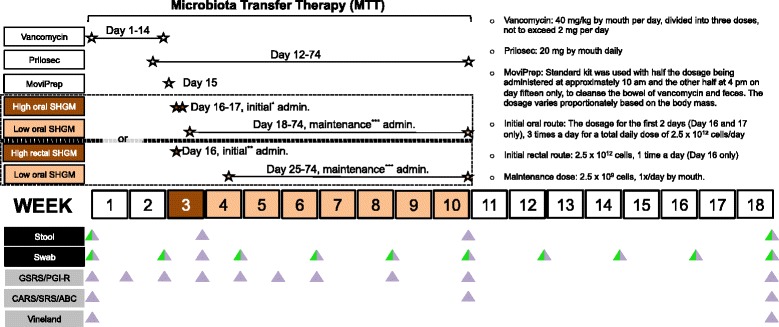
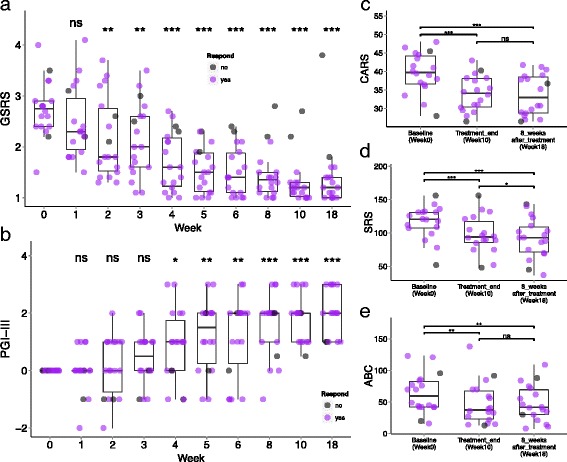
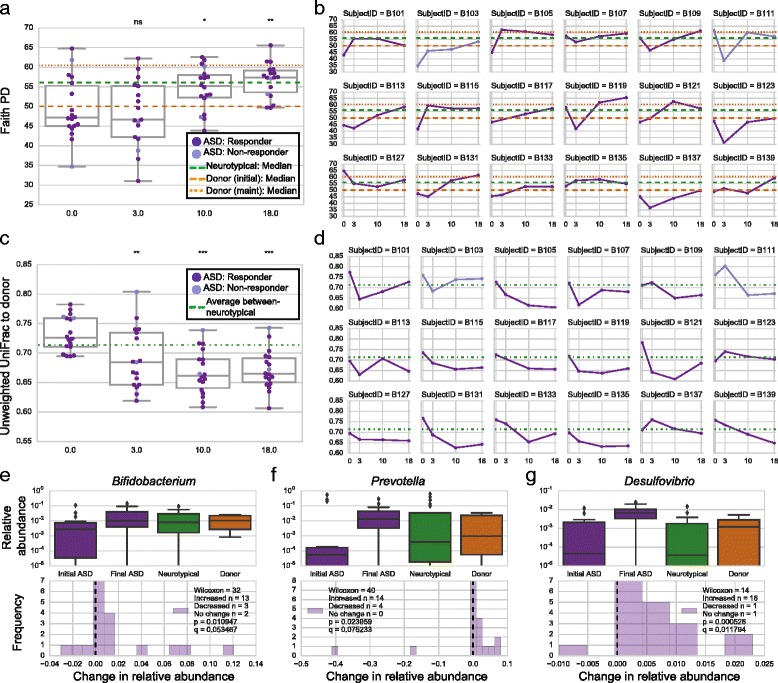
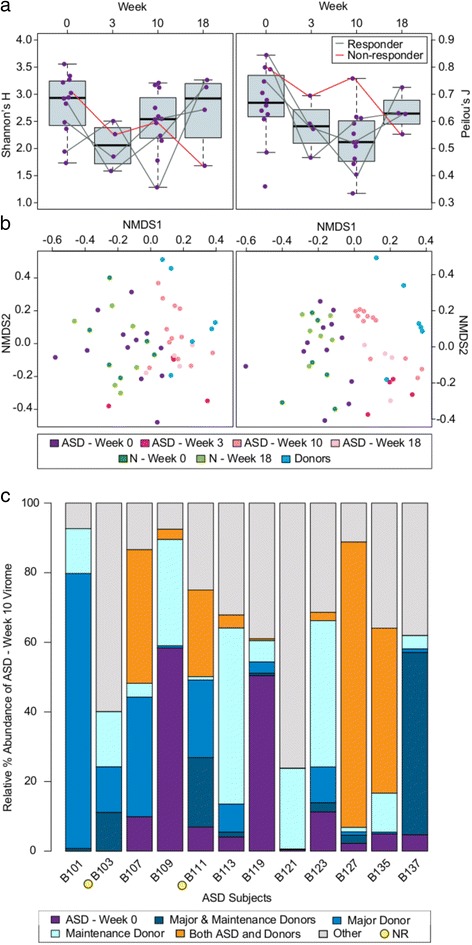
BACKGROUND: bacteria in the human intestines, have been implicated because children with ASD often suffer gastrointestinal (GI) problems that correlate with ASD severity. Several previous studies have reported abnormal gut bacteria in children with ASD. The gut microbiome-ASD connection has been tested in a mouse model of ASD, where the microbiome was mechanistically linked to abnormal metabolites and behavior. Similarly, a study of children with ASD found that oral non-absorbable antibiotic treatment improved GI and ASD symptoms, albeit temporarily. Here, a small open-label clinical trial evaluated the impact of Microbiota Transfer Therapy (MTT) on gut microbiota composition and GI and ASD symptoms of 18 ASD-diagnosed children. RESULTS: MTT involved a 2-week antibiotic treatment, a bowel cleanse, and then an extended fecal microbiota transplant (FMT) using a high initial dose followed by daily and lower maintenance doses for 7-8 weeks. The Gastrointestinal Symptom Rating Scale revealed an approximately 80% reduction of GI symptoms at the end of treatment, including significant improvements in symptoms of constipation, diarrhea, indigestion, and abdominal pain. Improvements persisted 8 weeks after treatment. Similarly, clinical assessments showed that behavioral ASD symptoms improved significantly and remained improved 8 weeks after treatment ended. Bacterial and phagedeep sequencing analyses revealed successful partial engraftment of donor microbiota and beneficial changes in the gut environment. Specifically, overall bacterial diversity and the abundance of Bifidobacterium, Prevotella, and Desulfovibrio among other taxa increased following MTT, and these changes persisted after treatment stopped (followed for 8 weeks). CONCLUSIONS: This exploratory, extended-duration treatment protocol thus appears to be a promising approach to alter the gut microbiome and virome and improve GI and behavioral symptoms of ASD. Improvements in GI symptoms, ASD symptoms, and the microbiome all persisted for at least 8 weeks after treatment ended, suggesting a long-term impact. TRIAL REGISTRATION: This trial was registered on the ClinicalTrials.gov, with the registration number NCT02504554.
Overview
The claims and statistics of this paper haven’t been checked yet.
Free: it reads the open-access text and checks the first 5 claims that cite a source we can check. Create a free account to check every claim.
Integrity signals
Registry
Cites
Statistics
Figures
Verification
Claims the paper makes
The claims and statistics of this paper haven’t been checked yet.
Free: it reads the open-access text and checks the first 5 claims that cite a source we can check. Create a free account to check every claim.
Claims other papers make about this one
Each is checked against this paper’s own text: does it say what the citing paper says it does?
The source backs part of the claim, not all of it — or backs it for a different population, condition or comparison.
In the citing paper
“Following the successful use of FMT in the treatment of refractory or recurrent Clostridium difficile infection, several studies have been conducted to explore FMT as a therapeutic strategy for a wide range of neurological disorders, including multiple sclerosis, epilepsy, ASD, Tourette syndrome, diabetic neuropathy, AD and PD, with promising preclinical and clinical data [30,465,466,467,468].”
From The Interplay between Gut Microbiota and Parkinson’s Disease: Implications on Diagnosis and Treatment (2022) · cites this paper as [466]
Experimental — accuracy not yet measuredThe source backs part of the claim, not all of it — or backs it for a different population, condition or comparison.
In the citing paper
“Among the seven [31, 36, 40–42, 48, 50] papers that reported on beta diversity, four [31, 40, 41, 50] papers showed significant differences in beta diversity between ASD and SIB/HC while the rest did not (Additional file 1: Table S2).”
From Gut microbiota changes in children with autism spectrum disorder: a systematic review (2020) · cites this paper as [40]
Experimental — accuracy not yet measuredThe source backs part of the claim, not all of it — or backs it for a different population, condition or comparison.
In the citing paper
“Further analysis of the alterations of genus and species in ASD, four studies consistently demonstrated a significantly decrease of Bifidobacterium in patients with ASD relative to HCs19,23,27,30.”
From Altered composition and function of intestinal microbiota in autism spectrum disorders: A systematic review (2019) · cites this paper as [19]
Experimental — accuracy not yet measuredThe source backs part of the claim, not all of it — or backs it for a different population, condition or comparison.
In the citing paper
“Among them, three studies18,19,22 indicated the functional modules of gut microbiota in ASD patients were substantially different from that in HCs (Fig. 2).”
From Altered composition and function of intestinal microbiota in autism spectrum disorders: A systematic review (2019) · cites this paper as [19]
Experimental — accuracy not yet measuredThe source backs part of the claim, not all of it — or backs it for a different population, condition or comparison.
In the citing paper
“Although the single study evaluating GI and behavioral outcomes after fecal transplant in ASD was highly successful [94]”
From Serotonin as a link between the gut-brain-microbiome axis in autism spectrum disorders (2018) · cites this paper as [94]
Experimental — accuracy not yet measured
21 more claims about this paper
Create a free account to see every claim other papers make about this one.
Self-check
Percentages, sums and reported differences re-computed from the paper’s own numbers.
The self-check needs the paper’s full text.
Citations
Cites
Trimmomatic: a flexible trimmer for Illumina sequence data
Bolger, A. M., Lohse, M., & Usadel, B. (2014) · Bioinformatics · doi:10.1093/bioinformatics/btu170 · Cited by 65,548 · cited 3×
“The quality control was performed on sequence reads using Trimmomatic [50] to remove adaptors, trim lowquality ends of reads (reads were cut as soon as the base”
MethodInfluentialFast gapped-read alignment with Bowtie 2
Langmead, B., & Salzberg, S. L. (2012) · Nature Methods · doi:10.1038/nmeth.1923 · Cited by 56,400 · cited 2×
“A contig was considered as detected in a sample if covered by reads on more than 75% of its length, and its abundance was computed as the contig average coverage (number of base pairs mapped to the contig divided by contig length) normalized by the total number of base pairs sequenced in the metagenome [56].”
MethodQIIME allows analysis of high-throughput community sequencing data
Caporaso, J. G., Kuczynski, J., Stombaugh, J., Bittinger, K., Bushman, F. D., Costello, E. K., Fierer, N., Peña, A. G., Goodrich, J. K., Gordon, J. I., et al. (2010) · Nature Methods · doi:10.1038/nmeth.f.303 · Cited by 34,887
Self-citationvegan: Community Ecology Package
Oksanen, J., Simpson, G. L., Blanchet, F. G., Kindt, R., Legendre, P., Minchin, P. R., O'Hara, R. B., Solymos, P., Stevens, M. H. H., Szoecs, E., et al. (2001) · CRAN: Contributed Packages · doi:10.32614/cran.package.vegan · Cited by 22,615
Structure, function and diversity of the healthy human microbiome
The Human Microbiome Project Consortium (2012) · Nature · doi:10.1038/nature11234 · Cited by 11,726 · cited 1×
“from FMT efficacy, since inter-individual gut bacterial [77] and viral [47] community variation is high.”
BackgroundA human gut microbial gene catalogue established by metagenomic sequencing
MetaHIT Consortium, Qin, J., Li, R., Raes, J., Arumugam, M., Burgdorf, K. S., Manichanh, C., Nielsen, T., Pons, N., Levenez, F., et al. (2010) · Nature · doi:10.1038/nature08821 · Cited by 11,624 · cited 1×
“Higher gut bacterial diversity and richness are commonly associated with healthy status, presumably due to resilience afforded by higher functional redundancy [62].”
BackgroundCd-hit: a fast program for clustering and comparing large sets of protein or nucleotide sequences
Li, W., & Godzik, A. (2006) · Bioinformatics · doi:10.1093/bioinformatics/btl158 · Cited by 11,410
Lord, C., Rutter, M., & Le Couteur, A. (1994) · Journal of Autism and Developmental Disorders · doi:10.1007/bf02172145 · Cited by 9,065 · cited 1×
“It is not designed to be a measure of autism severity but higher scores are generally consistent with more severe symptoms [39].”
BackgroundUltra-high-throughput microbial community analysis on the Illumina HiSeq and MiSeq platforms
Caporaso, J. G., Lauber, C. L., Walters, W. A., Berg-Lyons, D., Huntley, J., Fierer, N., Owens, S. M., Betley, J., Fraser, L., Bauer, M., et al. (2012) · The ISME Journal · doi:10.1038/ismej.2012.8 · Cited by 8,839
Self-citationConservation evaluation and phylogenetic diversity
Faith, D. P. (1992) · Biological Conservation · doi:10.1016/0006-3207(92)91201-3 · Cited by 5,693
FastTree: Computing Large Minimum Evolution Trees with Profiles instead of a Distance Matrix
Price, M. N., Dehal, P. S., & Arkin, A. P. (2009) · Molecular Biology and Evolution · doi:10.1093/molbev/msp077 · Cited by 5,602
Dominguez-Bello, M. G., Costello, E. K., Contreras, M., Magris, M., Hidalgo, G., Fierer, N., & Knight, R. (2010) · Proceedings of the National Academy of Sciences · doi:10.1073/pnas.1002601107 · Cited by 4,774
Quality-filtering vastly improves diversity estimates from Illumina amplicon sequencing
Bokulich, N. A., Subramanian, S., Faith, J. J., Gevers, D., Gordon, J. I., Knight, R., Mills, D. A., & Caporaso, J. G. (2013) · Nature Methods · doi:10.1038/nmeth.2276 · Cited by 4,401
Self-citationBravo, J. A., Forsythe, P., Chew, M. V., Escaravage, E., Savignac, H. M., Dinan, T. G., Bienenstock, J., & Cryan, J. F. (2011) · Proceedings of the National Academy of Sciences · doi:10.1073/pnas.1102999108 · Cited by 3,888 · cited 1×
“, 4-ethylphenylsulfate, indolepyruvate, and corticosterone) that affect GI function and neurobiological conditions, such as ASD and anxiety [9, 10].”
BackgroundHsiao, E. Y., McBride, S. W., Hsien, S., Sharon, G., Hyde, E. R., McCue, T., Codelli, J. A., Chow, J., Reisman, S. E., Petrosino, J. F., et al. (2013) · Cell · doi:10.1016/j.cell.2013.11.024 · Cited by 3,283
Peng, Y., Leung, H. C. M., Yiu, S. M., & Chin, F. Y. L. (2012) · Bioinformatics · doi:10.1093/bioinformatics/bts174 · Cited by 2,989
Vrieze, A., Van Nood, E., Holleman, F., Salojärvi, J., Kootte, R. S., Bartelsman, J. F. W. M., Dallinga–Thie, G. M., Ackermans, M. T., Serlie, M. J., Oozeer, R., et al. (2012) · Gastroenterology · doi:10.1053/j.gastro.2012.06.031 · Cited by 2,913
Lai, M.-C., Lombardo, M. V., & Baron-Cohen, S. (2014) · The Lancet · doi:10.1016/s0140-6736(13)61539-1 · Cited by 2,371
Moayyedi, P., Surette, M. G., Kim, P. T., Libertucci, J., Wolfe, M., Onischi, C., Armstrong, D., Marshall, J. K., Kassam, Z., Reinisch, W., et al. (2015) · Gastroenterology · doi:10.1053/j.gastro.2015.04.001 · Cited by 1,499
Infernal 1.0: inference of RNA alignments
Nawrocki, E. P., Kolbe, D. L., & Eddy, S. R. (2009) · Bioinformatics · doi:10.1093/bioinformatics/btp157 · Cited by 1,436
Disease-Specific Alterations in the Enteric Virome in Inflammatory Bowel Disease
Norman, J. M., Handley, S. A., Baldridge, M. T., Droit, L., Liu, C. Y., Keller, B. C., Kambal, A., Monaco, C. L., Zhao, G., Fleshner, P., et al. (2015) · Cell · doi:10.1016/j.cell.2015.01.002 · Cited by 1,285 · cited 1×
“Studies looking at the effects of perturbations in the gut from Crohn’s disease in humans [73] and from diet in mice [74] show this response with increased diversity of phage communities paired with decreased diversity of the bacterial community.”
BackgroundViruses in the faecal microbiota of monozygotic twins and their mothers
Reyes, A., Haynes, M., Hanson, N., Angly, F. E., Heath, A. C., Rohwer, F., & Gordon, J. I. (2010) · Nature · doi:10.1038/nature09199 · Cited by 1,194
Consumption of fermented milk product with probiotic modulates brain activity
Tillisch, K., Labus, J., Kilpatrick, L., Jiang, Z., Stains, J., Ebrat, B., Guyonnet, D., Legrain–Raspaud, S., Trotin, B., Naliboff, B., et al. (2013) · Gastroenterology · doi:10.1053/j.gastro.2013.02.043 · Cited by 1,192
VirSorter: mining viral signal from microbial genomic data
Roux, S., Enault, F., Hurwitz, B. L., & Sullivan, M. B. (2015) · PeerJ · doi:10.7717/peerj.985 · Cited by 1,106
Self-citationAdams, J. B., Johansen, L. J., Powell, L. D., Quig, D., & Rubin, R. A. (2011) · BMC Gastroenterology · doi:10.1186/1471-230x-11-22 · Cited by 1,076 · cited 2×
“underrepresented in children with ASD [7, 21, 66], also observed in this study at baseline (two-tailed MannWhitney U test p < 0.”
BackgroundResultSelf-citationPyrosequencing study of fecal microflora of autistic and control children
Finegold, S. M., Dowd, S. E., Gontcharova, V., Liu, C., Henley, K. E., Wolcott, R. D., Youn, E., Summanen, P. H., Granpeesheh, D., Dixon, D., et al. (2010) · Anaerobe · doi:10.1016/j.anaerobe.2010.06.008 · Cited by 977
Reduced incidence of Prevotella and other fermenters in intestinal microflora of autistic children
Kang, D.-W., Park, J. G., Ilhan, Z. E., Wallstrom, G., LaBaer, J., Adams, J. B., & Krajmalnik-Brown, R. (2013) · PLoS ONE · doi:10.1371/journal.pone.0068322 · Cited by 976 · cited 6×
“underrepresented in children with ASD [7, 21, 66], also observed in this study at baseline (two-tailed MannWhitney U test p < 0.”
BackgroundMethodResultSelf-citationBacteriophage adhering to mucus provide a non–host-derived immunity
Barr, J. J., Auro, R., Furlan, M., Whiteson, K. L., Erb, M. L., Pogliano, J., Stotland, A., Wolkowicz, R., Cutting, A. S., Doran, K. S., et al. (2013) · Proceedings of the National Academy of Sciences · doi:10.1073/pnas.1305923110 · Cited by 944
The human gut virome: inter-individual variation and dynamic response to diet
Minot, S., Sinha, R., Chen, J., Li, H., Keilbaugh, S. A., Wu, G. D., Lewis, J. D., & Bushman, F. D. (2011) · Genome Research · doi:10.1101/gr.122705.111 · Cited by 935 · cited 3×
“In healthy individuals, the gut virome is highly stable over time [23, 47, 69], with some phage populations hypothesized to provide a non-hostderived protective barrier to invading bacterial pathogens [70, 71].”
BackgroundMcDonald, D., Clemente, J. C., Kuczynski, J., Rideout, J. R., Stombaugh, J., Wendel, D., Wilke, A., Huse, S., Hufnagle, J., Meyer, F., et al. (2012) · GigaScience · doi:10.1186/2047-217x-1-7 · Cited by 897
Self-citationDe Angelis, M., Piccolo, M., Vannini, L., Siragusa, S., De Giacomo, A., Serrazzanetti, D. I., Cristofori, F., Guerzoni, M. E., Gobbetti, M., & Francavilla, R. (2013) · PLoS ONE · doi:10.1371/journal.pone.0076993 · Cited by 887
Gastrointestinal Symptoms in Autism Spectrum Disorder: A Meta-analysis
McElhanon, B. O., McCracken, C., Karpen, S., & Sharp, W. G. (2014) · Pediatrics · doi:10.1542/peds.2013-3995 · Cited by 831
Patterns and ecological drivers of ocean viral communities
Brum, J. R., Ignacio-Espinoza, J. C., Roux, S., Doulcier, G., Acinas, S. G., Alberti, A., Chaffron, S., Cruaud, C., de Vargas, C., Gasol, J. M., et al. (2015) · Science · doi:10.1126/science.1261498 · Cited by 785
Self-citationShifting the balance: antibiotic effects on host–microbiota mutualism
Willing, B. P., Russell, S. L., & Finlay, B. B. (2011) · Nature Reviews Microbiology · doi:10.1038/nrmicro2536 · Cited by 747 · cited 1×
“Many children with ASD often undergo increased oral antibiotic treatment during the first 3 years of life [11], which is thought to destabilize their gut microbiota [12] and open opportunities for competitive potential pathogens to contribute to ASD severity [13, 14].”
BackgroundHamilton, M. J., Weingarden, A. R., Sadowsky, M. J., & Khoruts, A. (2012) · American Journal of Gastroenterology · doi:10.1038/ajg.2011.482 · Cited by 738
Self-citationBrandt, L. J., Aroniadis, O. C., Mellow, M., Kanatzar, A., Kelly, C., Park, T., Stollman, N., Rohlke, F., & Surawicz, C. (2012) · American Journal of Gastroenterology · doi:10.1038/ajg.2012.60 · Cited by 672
Metagenomic analysis of stressed coral holobionts
Thurber, R. V., Willner‐Hall, D., Rodriguez‐Mueller, B., Desnues, C., Edwards, R. A., Angly, F., Dinsdale, E., Kelly, L., & Rohwer, F. (2009) · Environmental Microbiology · doi:10.1111/j.1462-2920.2009.01935.x · Cited by 641
Gastrointestinal microbiota in children with autism in Slovakia
Tomova, A., Husarova, V., Lakatosova, S., Bakos, J., Vlkova, B., Babinska, K., & Ostatnikova, D. (2015) · Physiology & Behavior · doi:10.1016/j.physbeh.2014.10.033 · Cited by 632 · cited 1×
“The increased relative abundance of Desulfovibrio is intriguing, since their role in the human gut has been controversially proposed as either commensal [21] or detrimental [18, 67].”
BackgroundRevicki, D. A., Wood, M., Wiklund, I., & Crawley, J. (1997) · Quality of Life Research · doi:10.1023/a:1008841022998 · Cited by 617
Short-Term Benefit From Oral Vancomycin Treatment of Regressive-Onset Autism
Sandler, R. H., Finegold, S. M., Bolte, E. R., Buchanan, C. P., Maxwell, A. P., Väisänen, M.-L., Nelson, M. N., & Wexler, H. M. (2000) · Journal of Child Neurology · doi:10.1177/088307380001500701 · Cited by 614 · cited 4×
“The improvements in GI and ASD symptoms are consistent with a previous 8-week trial of the use of vancomycin for treating children with ASD [22], but a key difference is that in the previous study, benefits were lost within a few weeks of stopping vancomycin therapy (despite the use of a”
BackgroundResultInfluentialRapid evolution of the human gut virome
Minot, S., Bryson, A., Chehoud, C., Wu, G. D., Lewis, J. D., & Bushman, F. D. (2013) · Proceedings of the National Academy of Sciences · doi:10.1073/pnas.1300833110 · Cited by 612
Impact of oral vancomycin on gut microbiota, bile acid metabolism, and insulin sensitivity
Vrieze, A., Out, C., Fuentes, S., Jonker, L., Reuling, I., Kootte, R. S., van Nood, E., Holleman, F., Knaapen, M., Romijn, J. A., et al. (2014) · Journal of Hepatology · doi:10.1016/j.jhep.2013.11.034 · Cited by 578
Real-Time PCR Quantitation of Clostridia in Feces of Autistic Children
Song, Y., Liu, C., & Finegold, S. M. (2004) · Applied and Environmental Microbiology · doi:10.1128/aem.70.11.6459-6465.2004 · Cited by 556
Durable coexistence of donor and recipient strains after fecal microbiota transplantation
Li, S. S., Zhu, A., Benes, V., Costea, P. I., Hercog, R., Hildebrand, F., Huerta-Cepas, J., Nieuwdorp, M., Salojärvi, J., Voigt, A. Y., et al. (2016) · Science · doi:10.1126/science.aad8852 · Cited by 547
Manrique, P., Bolduc, B., Walk, S. T., van der Oost, J., de Vos, W. M., & Young, M. J. (2016) · Proceedings of the National Academy of Sciences · doi:10.1073/pnas.1601060113 · Cited by 545
Gastrointestinal Problems in Children with Autism, Developmental Delays or Typical Development
Chaidez, V., Hansen, R. L., & Hertz-Picciotto, I. (2014) · Journal of Autism and Developmental Disorders · doi:10.1007/s10803-013-1973-x · Cited by 528
Vollaard, E. J., & Clasener, H. A. (1994) · Antimicrobial Agents and Chemotherapy · doi:10.1128/aac.38.3.409 · Cited by 478
Youngster, I., Sauk, J., Pindar, C., Wilson, R. G., Kaplan, J. L., Smith, M. B., Alm, E. J., Gevers, D., Russell, G. H., & Hohmann, E. L. (2014) · Clinical Infectious Diseases · doi:10.1093/cid/ciu135 · Cited by 467
Diagnosis and Treatment of Clostridium difficile in Adults: A Systematic Review
Bagdasarian, N., Rao, K., & Malani, P. N. (2015) · JAMA · doi:10.1001/jama.2014.17103 · Cited by 451
Wang, L., Christophersen, C. T., Sorich, M. J., Gerber, J. P., Angley, M. T., & Conlon, M. A. (2011) · Applied and Environmental Microbiology · doi:10.1128/aem.05212-11 · Cited by 432 · cited 1×
“underrepresented in children with ASD [7, 21, 66], also observed in this study at baseline (two-tailed MannWhitney U test p < 0.”
ResultViral and microbial community dynamics in four aquatic environments
Rodriguez-Brito, B., Li, L., Wegley, L., Furlan, M., Angly, F., Breitbart, M., Buchanan, J., Desnues, C., Dinsdale, E., Edwards, R., et al. (2010) · The ISME Journal · doi:10.1038/ismej.2010.1 · Cited by 429
Wang, L., Christophersen, C. T., Sorich, M. J., Gerber, J. P., Angley, M. T., & Conlon, M. A. (2013) · Molecular Autism · doi:10.1186/2040-2392-4-42 · Cited by 418
Treatment of Ulcerative Colitis Using Fecal Bacteriotherapy
Borody, T. J., Warren, E. F., Leis, S., Surace, R., & Ashman, O. (2003) · Journal of Clinical Gastroenterology · doi:10.1097/00004836-200307000-00012 · Cited by 388
Self-citationRising to the challenge: accelerated pace of discovery transforms marine virology
Brum, J. R., & Sullivan, M. B. (2015) · Nature Reviews Microbiology · doi:10.1038/nrmicro3404 · Cited by 380
Self-citationWilliams, B. L., Hornig, M., Parekh, T., & Lipkin, W. I. (2012) · mBio · doi:10.1128/mbio.00261-11 · Cited by 378
Moayyedi, P., Quigley, E. M. M., Lacy, B. E., Lembo, A. J., Saito, Y. A., Schiller, L. R., Soffer, E. E., Spiegel, B. M. R., & Ford, A. C. (2014) · American Journal of Gastroenterology · doi:10.1038/ajg.2014.195 · Cited by 351
Fecal microbiota transplantation: past, present and future
Aroniadis, O. C., & Brandt, L. J. (2013) · Current Opinion in Gastroenterology · doi:10.1097/mog.0b013e32835a4b3e · Cited by 336 · cited 1×
“difficile, where a single dose generally leads to recovery within a few days [60].”
BackgroundGastrointestinal dysfunction in autism: parental report, clinical evaluation, and associated factors
Gorrindo, P., Williams, K. C., Lee, E. B., Walker, L. S., McGrew, S. G., & Levitt, P. (2012) · Autism Research · doi:10.1002/aur.237 · Cited by 325
Freedberg, D. E., Toussaint, N. C., Chen, S. P., Ratner, A. J., Whittier, S., Wang, T. C., Wang, H. H., & Abrams, J. A. (2015) · Gastroenterology · doi:10.1053/j.gastro.2015.06.043 · Cited by 322
Kunde, S., Pham, A., Bonczyk, S., Crumb, T., Duba, M., Conrad, H., Cloney, D., & Kugathasan, S. (2013) · Journal of Pediatric Gastroenterology and Nutrition · doi:10.1097/mpg.0b013e318292fa0d · Cited by 314 · cited 1×
“difficile infection [32] and other GI conditions, although there is a growing interest in the use of several doses [35].”
BackgroundEffect of a vitamin/mineral supplement on children and adults with autism
Adams, J. B., Audhya, T., McDonough-Means, S., Rubin, R. A., Quig, D., Geis, E., Gehn, E., Loresto, M., Mitchell, J., Atwood, S., et al. (2011) · BMC Pediatrics · doi:10.1186/1471-2431-11-111 · Cited by 297
Self-citationDurable Alteration of the Colonic Microbiota by the Administration of Donor Fecal Flora
Grehan, M. J., Borody, T. J., Leis, S. M., Campbell, J., Mitchell, H., & Wettstein, A. (2010) · Journal of Clinical Gastroenterology · doi:10.1097/mcg.0b013e3181e5d06b · Cited by 253
Self-citationSon, J. S., Zheng, L. J., Rowehl, L. M., Tian, X., Zhang, Y., Zhu, W., Litcher-Kelly, L., Gadow, K. D., Gathungu, G., Robertson, C. E., et al. (2015) · PLOS ONE · doi:10.1371/journal.pone.0137725 · Cited by 229
Giant Hydrogen Sulfide Plume in the Oxygen Minimum Zone off Peru Supports Chemolithoautotrophy
Schunck, H., Lavik, G., Desai, D. K., Großkopf, T., Kalvelage, T., Löscher, C. R., Paulmier, A., Contreras, S., Siegel, H., Holtappels, M., et al. (2013) · PLoS ONE · doi:10.1371/journal.pone.0068661 · Cited by 223
Viral tagging reveals discrete populations in Synechococcus viral genome sequence space
Deng, L., Ignacio-Espinoza, J. C., Gregory, A. C., Poulos, B. T., Weitz, J. S., Hugenholtz, P., & Sullivan, M. B. (2014) · Nature · doi:10.1038/nature13459 · Cited by 209
Self-citationGondalia, S. V., Palombo, E. A., Knowles, S. R., Cox, S. B., Meyer, D., & Austin, D. W. (2012) · Autism Research · doi:10.1002/aur.1253 · Cited by 208 · cited 1×
“A number of studies reported that children with ASD have altered gut bacteria profiles compared with neurotypcial children [13–18], although in certain cohorts, no significant difference has been reported [19, 20].”
BackgroundThe human gut virome: a multifaceted majority
Ogilvie, L. A., & Jones, B. V. (2015) · Frontiers in Microbiology · doi:10.3389/fmicb.2015.00918 · Cited by 204
Desulfovibrio species are potentially important in regressive autism
Finegold, S. M. (2011) · Medical Hypotheses · doi:10.1016/j.mehy.2011.04.032 · Cited by 197 · cited 1×
“The increased relative abundance of Desulfovibrio is intriguing, since their role in the human gut has been controversially proposed as either commensal [21] or detrimental [18, 67].”
BackgroundHurwitz, B. L., Deng, L., Poulos, B. T., & Sullivan, M. B. (2013) · Environmental Microbiology · doi:10.1111/j.1462-2920.2012.02836.x · Cited by 194
Self-citationPrantera, C., Lochs, H., Grimaldi, M., Danese, S., Scribano, M. L., & Gionchetti, P. (2012) · Gastroenterology · doi:10.1053/j.gastro.2011.11.032 · Cited by 176
Krajmalnik-Brown, R., Lozupone, C., Kang, D.-W., & Adams, J. B. (2015) · Microbial Ecology in Health & Disease · doi:10.3402/mehd.v26.26914 · Cited by 167
Self-citationParracho, H. M. R. T., Gibson, G. R., Knott, F., Bosscher, D., Kleerebezem, M., & McCartney, A. L. (2010) · International Journal of Probiotics and Prebiotics · Cited by 162
Early medical history of children with autism spectrum disorders
NIEHUS, R., & LORD, C. (2006) · Journal of Developmental & Behavioral Pediatrics · doi:10.1097/00004703-200604002-00010 · Cited by 152
Toward Effective Probiotics for Autism and Other Neurodevelopmental Disorders
Gilbert, J. A., Krajmalnik-Brown, R., Porazinska, D. L., Weiss, S. J., & Knight, R. (2013) · Cell · doi:10.1016/j.cell.2013.11.035 · Cited by 121
Self-citationHowe, A., Ringus, D. L., Williams, R. J., Choo, Z.-N., Greenwald, S. M., Owens, S. M., Coleman, M. L., Meyer, F., & Chang, E. B. (2016) · The ISME Journal · doi:10.1038/ismej.2015.183 · Cited by 98
Innate and acquired bacteriophage-mediated immunity
Barr, J. J., Youle, M., & Rohwer, F. L. (2013) · Bacteriophage · doi:10.4161/bact.25857 · Cited by 95
Canopy Interception for a Tallgrass Prairie under Juniper Encroachment
Zou, C. B., Caterina, G. L., Will, R. E., Stebler, E., & Turton, D. (2015) · PLOS ONE · doi:10.1371/journal.pone.0141422 · Cited by 92
Badomics words and the power and peril of the ome-meme
Eisen, J. A. (2012) · GigaScience · doi:10.1186/2047-217x-1-6 · Cited by 17
Convective burn from use of hairdryer for heel warming prior to the heel prick test - a case report
Ray, R. I., Godwin, Y., & Shepherd, A. J. (2011) · BMC Pediatrics · doi:10.1186/1471-2431-11-30 · Cited by 13
Therapeutic Advances in Autism and Other Neurodevelopmental Disorders
Neul, J. L., & Şahin, M. (2015) · Neurotherapeutics · doi:10.1007/s13311-015-0364-8 · Cited by 11
Cited by
Cryan, J. F., O'Riordan, K. J., Cowan, C. S. M., Sandhu, K. V., Bastiaanssen, T. F. S., Boehme, M., Codagnone, M. G., Cussotto, S., Fulling, C., Golubeva, A. V., et al. (2019) · Physiological Reviews · doi:10.1152/physrev.00018.2018 · Cited by 5,286
Microbiota in health and diseases
Hou, K., Wu, Z.-X., Chen, X.-Y., Wang, J.-Q., Zhang, D., Xiao, C., Zhu, D., Koya, J. B., Wei, L., Li, J., et al. (2022) · Signal Transduction and Targeted Therapy · doi:10.1038/s41392-022-00974-4 · Cited by 3,171
Current understanding of the human microbiome
Gilbert, J. A., Blaser, M. J., Caporaso, J. G., Jansson, J. K., Lynch, S. V., & Knight, R. (2018) · Nature Medicine · doi:10.1038/nm.4517 · Cited by 2,609
Self-citationThe gut microbiota–brain axis in behaviour and brain disorders
Morais, L. H., Schreiber, H. L., & Mazmanian, S. K. (2021) · Nature Reviews Microbiology · doi:10.1038/s41579-020-00460-0 · Cited by 2,149
The gut microbiome in neurological disorders
Cryan, J. F., O'Riordan, K. J., Sandhu, K., Peterson, V., & Dinan, T. G. (2020) · The Lancet Neurology · doi:10.1016/s1474-4422(19)30356-4 · Cited by 1,336
Metadata
- Authors
- Kang, D.-W., Adams, J. B., Gregory, A. C., Borody, T., Chittick, L., Fasano, A., Khoruts, A., Geis, E., Maldonado, J., McDonough-Means, S., Pollard, E. L., Roux, S., Sadowsky, M. J., Lipson, K. S., Sullivan, M. B., Caporaso, J. G., & Krajmalnik-Brown, R.
- Affiliations
- Arizona State University (US)
- University of Arizona (US)
- Centre For Digestive Diseases (AU)
- Massachusetts General Hospital (US)
- University of Minnesota (US)
- Northern Arizona University (US)
- Corresponding author
- Sullivan, Matthew B.
- Caporaso, J. Gregory
- ORCID
- Venue
- Microbiome
- Published
- 2017-01-23
- Volume
- 5
- Issue
- 1
- Pages
- 10-10
- ISSN
- 2049-2618 (ISSN-L)
- PMC
- PMC5264285
- OpenAlex
- W2581406049
- Cited by
- 1,391
- References
- 81
- Citations by year
- 2026: 114 · 2025: 173 · 2024: 153 · 2023: 154 · 2022: 177 · 2021: 156 · 2020: 165 · 2019: 147 · 2018: 103 · 2017: 47
- FWCI
- 51.58
- Type
- journal article
- Language
- en
- Open access
- gold
- doi.org
- Licence
- cc-by
- Locations
- Microbiome (publishedVersion, cc-by)
- Europe PMC (PubMed Central) (publishedVersion, cc-by)
- PubMed Central (publishedVersion, cc-by)
- PubMed (publishedVersion)
- Arizona State University Library Digital Repository (Arizona State University) (submittedVersion, cc-by)
- eScholarship (California Digital Library) (submittedVersion)
- Funders
- Arizona Board of Regents
- Gordon and Betty Moore Foundation grant (#3790)
- Topics
- Life Sciences › Biochemistry, Genetics and Molecular Biology › Molecular Biology › Gut microbiota and health
- Health Sciences › Medicine › Gastroenterology › Gastrointestinal motility and disorders
- Life Sciences › Neuroscience › Cognitive Neuroscience › Autism Spectrum Disorder Research
- Keywords
- autism spectrum disorder, gut microbiota, fecal microbiota transplantation, gastrointestinal symptoms, constipation, diarrhea, Bifidobacterium, Prevotella, Desulfovibrio, antibiotic therapy, children
- MeSH terms
- Autism Spectrum Disorder, Gastrointestinal Microbiome, Fecal Microbiota Transplantation, Adolescent, Anti-Bacterial Agents, Bacteriophages, Bifidobacterium, Child, Constipation, Desulfovibrio, Diarrhea, DNA, Viral, Female, Gastrointestinal Diseases, Humans, Infant, Male, Abdominal Pain, Prevotella, Probiotics, Gastrointestinal Tract, High-Throughput Nucleotide Sequencing
About these checks
Registry, retraction, Cites and statistics results are computed, not judged, with one exception: a printed reference that no index lists is read once by a model before it counts as a citation error. Claims are extracted by a model and kept only when their quote appears verbatim in the text; each cited source is then checked, with a model’s help, for whether it says what the claim relies on. Those verdicts can be wrong — read the claim’s quote and the cited source before relying on one.
Statistics and arithmetic are recomputed, not judged.
Confidence bands are shown only for fields calibrated on our annotated test set. None is calibrated yet, so no band is shown.
What counts as a claim ›How we measure confidence ›How we check this ›
Are you an author, or do you see a problem with this page? Request a review
Data sources
Bibliographic data: Semantic Scholar, OpenAlex, Crossref.
Contains information from the Semantic Scholar Academic Graph Datasets, made available under the ODC Attribution License (ODC-BY 1.0).
Semantic Scholar’s data is described in: Kinney, R., et al. (2023). The Semantic Scholar Open Data Platform. arXiv:2301.10140.
