

Microbiota Transfer Therapy alters gut ecosystem and improves gastrointestinal and autism symptoms: an open-label study
Open accessThe DOI matches its Crossref record; 80 of the 81 references it cites were found in a registry or an index.
Abstract
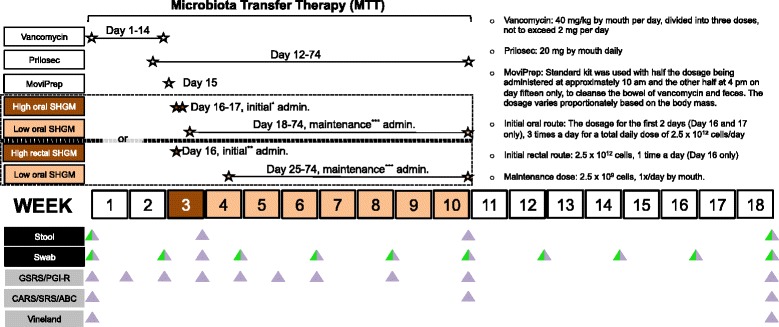
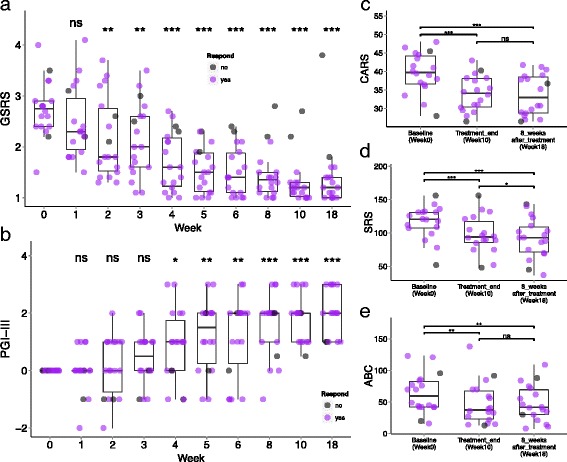
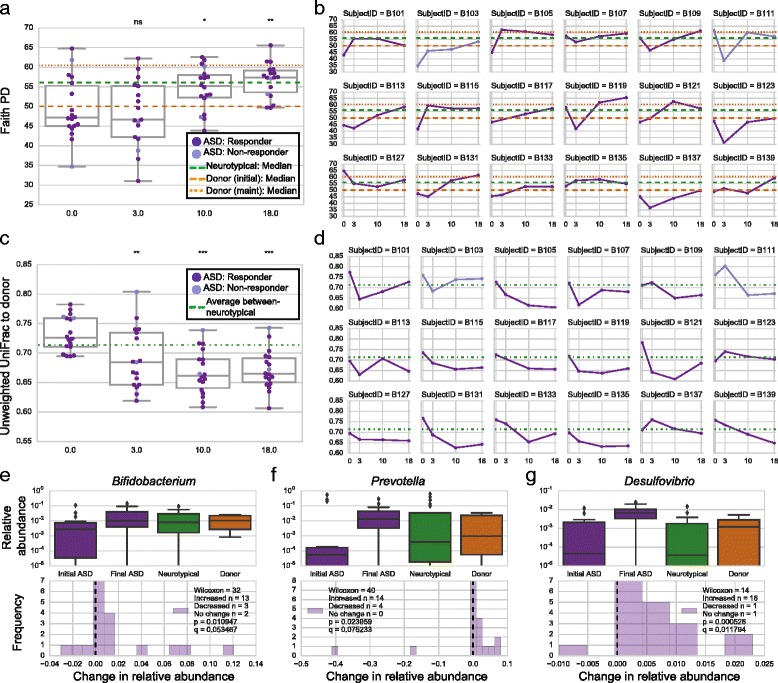
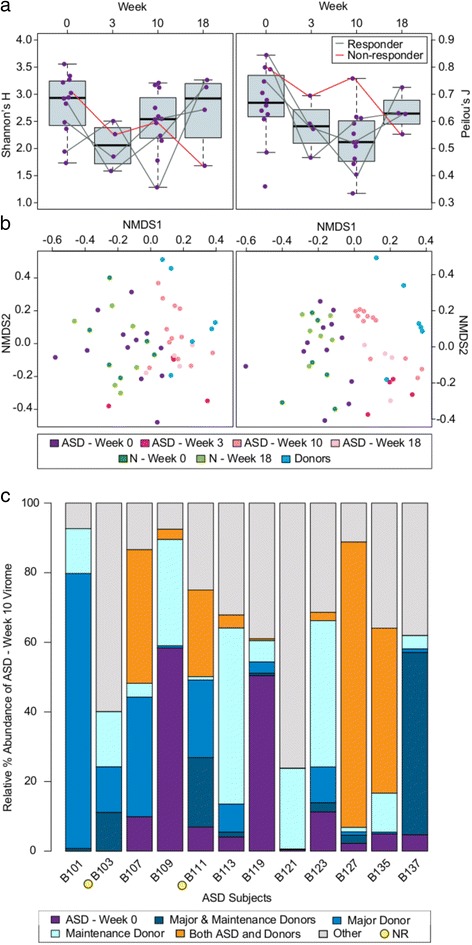
BACKGROUND: bacteria in the human intestines, have been implicated because children with ASD often suffer gastrointestinal (GI) problems that correlate with ASD severity. Several previous studies have reported abnormal gut bacteria in children with ASD. The gut microbiome-ASD connection has been tested in a mouse model of ASD, where the microbiome was mechanistically linked to abnormal metabolites and behavior. Similarly, a study of children with ASD found that oral non-absorbable antibiotic treatment improved GI and ASD symptoms, albeit temporarily. Here, a small open-label clinical trial evaluated the impact of Microbiota Transfer Therapy (MTT) on gut microbiota composition and GI and ASD symptoms of 18 ASD-diagnosed children. RESULTS: MTT involved a 2-week antibiotic treatment, a bowel cleanse, and then an extended fecal microbiota transplant (FMT) using a high initial dose followed by daily and lower maintenance doses for 7-8 weeks. The Gastrointestinal Symptom Rating Scale revealed an approximately 80% reduction of GI symptoms at the end of treatment, including significant improvements in symptoms of constipation, diarrhea, indigestion, and abdominal pain. Improvements persisted 8 weeks after treatment. Similarly, clinical assessments showed that behavioral ASD symptoms improved significantly and remained improved 8 weeks after treatment ended. Bacterial and phagedeep sequencing analyses revealed successful partial engraftment of donor microbiota and beneficial changes in the gut environment. Specifically, overall bacterial diversity and the abundance of Bifidobacterium, Prevotella, and Desulfovibrio among other taxa increased following MTT, and these changes persisted after treatment stopped (followed for 8 weeks). CONCLUSIONS: This exploratory, extended-duration treatment protocol thus appears to be a promising approach to alter the gut microbiome and virome and improve GI and behavioral symptoms of ASD. Improvements in GI symptoms, ASD symptoms, and the microbiome all persisted for at least 8 weeks after treatment ended, suggesting a long-term impact. TRIAL REGISTRATION: This trial was registered on the ClinicalTrials.gov, with the registration number NCT02504554.
Overview
The claims and statistics of this paper haven’t been checked yet.
Free: it reads the open-access text and checks the first 5 claims that cite a source we can check. Create a free account to check every claim.
Integrity signals
Registry
Cites
Statistics
Figures
Verification
Claims the paper makes
The claims and statistics of this paper haven’t been checked yet.
Free: it reads the open-access text and checks the first 5 claims that cite a source we can check. Create a free account to check every claim.
Claims other papers make about this one
Each is checked against this paper’s own text: does it say what the citing paper says it does?
The source backs part of the claim, not all of it — or backs it for a different population, condition or comparison.
In the citing paper
“Following the successful use of FMT in the treatment of refractory or recurrent Clostridium difficile infection, several studies have been conducted to explore FMT as a therapeutic strategy for a wide range of neurological disorders, including multiple sclerosis, epilepsy, ASD, Tourette syndrome, diabetic neuropathy, AD and PD, with promising preclinical and clinical data [30,465,466,467,468].”
From The Interplay between Gut Microbiota and Parkinson’s Disease: Implications on Diagnosis and Treatment (2022) · cites this paper as [466]
Experimental — accuracy not yet measuredThe source backs part of the claim, not all of it — or backs it for a different population, condition or comparison.
In the citing paper
“Among the seven [31, 36, 40–42, 48, 50] papers that reported on beta diversity, four [31, 40, 41, 50] papers showed significant differences in beta diversity between ASD and SIB/HC while the rest did not (Additional file 1: Table S2).”
From Gut microbiota changes in children with autism spectrum disorder: a systematic review (2020) · cites this paper as [40]
Experimental — accuracy not yet measuredThe source backs part of the claim, not all of it — or backs it for a different population, condition or comparison.
In the citing paper
“Further analysis of the alterations of genus and species in ASD, four studies consistently demonstrated a significantly decrease of Bifidobacterium in patients with ASD relative to HCs19,23,27,30.”
From Altered composition and function of intestinal microbiota in autism spectrum disorders: A systematic review (2019) · cites this paper as [19]
Experimental — accuracy not yet measuredThe source backs part of the claim, not all of it — or backs it for a different population, condition or comparison.
In the citing paper
“Among them, three studies18,19,22 indicated the functional modules of gut microbiota in ASD patients were substantially different from that in HCs (Fig. 2).”
From Altered composition and function of intestinal microbiota in autism spectrum disorders: A systematic review (2019) · cites this paper as [19]
Experimental — accuracy not yet measuredThe source backs part of the claim, not all of it — or backs it for a different population, condition or comparison.
In the citing paper
“Although the single study evaluating GI and behavioral outcomes after fecal transplant in ASD was highly successful [94]”
From Serotonin as a link between the gut-brain-microbiome axis in autism spectrum disorders (2018) · cites this paper as [94]
Experimental — accuracy not yet measured
21 more claims about this paper
Create a free account to see every claim other papers make about this one.
Self-check
Percentages, sums and reported differences re-computed from the paper’s own numbers.
The self-check needs the paper’s full text.
Citations
Cites
Trimmomatic: a flexible trimmer for Illumina sequence data
Bolger, A. M., Lohse, M., & Usadel, B. (2014) · Bioinformatics · doi:10.1093/bioinformatics/btu170 · Cited by 65,548 · cited 3×
“The quality control was performed on sequence reads using Trimmomatic [50] to remove adaptors, trim lowquality ends of reads (reads were cut as soon as the base”
MethodInfluentialFast gapped-read alignment with Bowtie 2
Langmead, B., & Salzberg, S. L. (2012) · Nature Methods · doi:10.1038/nmeth.1923 · Cited by 56,400 · cited 2×
“A contig was considered as detected in a sample if covered by reads on more than 75% of its length, and its abundance was computed as the contig average coverage (number of base pairs mapped to the contig divided by contig length) normalized by the total number of base pairs sequenced in the metagenome [56].”
MethodQIIME allows analysis of high-throughput community sequencing data
Caporaso, J. G., Kuczynski, J., Stombaugh, J., Bittinger, K., Bushman, F. D., Costello, E. K., Fierer, N., Peña, A. G., Goodrich, J. K., Gordon, J. I., et al. (2010) · Nature Methods · doi:10.1038/nmeth.f.303 · Cited by 34,887
Self-citationvegan: Community Ecology Package
Oksanen, J., Simpson, G. L., Blanchet, F. G., Kindt, R., Legendre, P., Minchin, P. R., O'Hara, R. B., Solymos, P., Stevens, M. H. H., Szoecs, E., et al. (2001) · CRAN: Contributed Packages · doi:10.32614/cran.package.vegan · Cited by 22,615
Structure, function and diversity of the healthy human microbiome
The Human Microbiome Project Consortium (2012) · Nature · doi:10.1038/nature11234 · Cited by 11,726 · cited 1×
“from FMT efficacy, since inter-individual gut bacterial [77] and viral [47] community variation is high.”
BackgroundA human gut microbial gene catalogue established by metagenomic sequencing
MetaHIT Consortium, Qin, J., Li, R., Raes, J., Arumugam, M., Burgdorf, K. S., Manichanh, C., Nielsen, T., Pons, N., Levenez, F., et al. (2010) · Nature · doi:10.1038/nature08821 · Cited by 11,624 · cited 1×
“Higher gut bacterial diversity and richness are commonly associated with healthy status, presumably due to resilience afforded by higher functional redundancy [62].”
BackgroundCd-hit: a fast program for clustering and comparing large sets of protein or nucleotide sequences
Li, W., & Godzik, A. (2006) · Bioinformatics · doi:10.1093/bioinformatics/btl158 · Cited by 11,410
Lord, C., Rutter, M., & Le Couteur, A. (1994) · Journal of Autism and Developmental Disorders · doi:10.1007/bf02172145 · Cited by 9,065 · cited 1×
“It is not designed to be a measure of autism severity but higher scores are generally consistent with more severe symptoms [39].”
BackgroundUltra-high-throughput microbial community analysis on the Illumina HiSeq and MiSeq platforms
Caporaso, J. G., Lauber, C. L., Walters, W. A., Berg-Lyons, D., Huntley, J., Fierer, N., Owens, S. M., Betley, J., Fraser, L., Bauer, M., et al. (2012) · The ISME Journal · doi:10.1038/ismej.2012.8 · Cited by 8,839
Self-citationConservation evaluation and phylogenetic diversity
Faith, D. P. (1992) · Biological Conservation · doi:10.1016/0006-3207(92)91201-3 · Cited by 5,693
Cited by
Cryan, J. F., O'Riordan, K. J., Cowan, C. S. M., Sandhu, K. V., Bastiaanssen, T. F. S., Boehme, M., Codagnone, M. G., Cussotto, S., Fulling, C., Golubeva, A. V., et al. (2019) · Physiological Reviews · doi:10.1152/physrev.00018.2018 · Cited by 5,286
Microbiota in health and diseases
Hou, K., Wu, Z.-X., Chen, X.-Y., Wang, J.-Q., Zhang, D., Xiao, C., Zhu, D., Koya, J. B., Wei, L., Li, J., et al. (2022) · Signal Transduction and Targeted Therapy · doi:10.1038/s41392-022-00974-4 · Cited by 3,171
Current understanding of the human microbiome
Gilbert, J. A., Blaser, M. J., Caporaso, J. G., Jansson, J. K., Lynch, S. V., & Knight, R. (2018) · Nature Medicine · doi:10.1038/nm.4517 · Cited by 2,609
Self-citationThe gut microbiota–brain axis in behaviour and brain disorders
Morais, L. H., Schreiber, H. L., & Mazmanian, S. K. (2021) · Nature Reviews Microbiology · doi:10.1038/s41579-020-00460-0 · Cited by 2,149
The gut microbiome in neurological disorders
Cryan, J. F., O'Riordan, K. J., Sandhu, K., Peterson, V., & Dinan, T. G. (2020) · The Lancet Neurology · doi:10.1016/s1474-4422(19)30356-4 · Cited by 1,336
Human gut microbiota/microbiome in health and diseases: a review
Gomaa, E. Z. (2020) · Antonie van Leeuwenhoek · doi:10.1007/s10482-020-01474-7 · Cited by 1,294
Martin, C. R., Osadchiy, V., Kalani, A., & Mayer, E. A. (2018) · Cellular and Molecular Gastroenterology and Hepatology · doi:10.1016/j.jcmgh.2018.04.003 · Cited by 1,284
Human Gut Microbiota from Autism Spectrum Disorder Promote Behavioral Symptoms in Mice
Sharon, G., Cruz, N. J., Kang, D.-W., Gandal, M. J., Wang, B., Kim, Y.-M., Zink, E. M., Casey, C. P., Taylor, B. C., Lane, C. J., et al. (2019) · Cell · doi:10.1016/j.cell.2019.05.004 · Cited by 1,182
Self-citationGut Microbiome: Profound Implications for Diet and Disease
Hills, R., Pontefract, B., Mishcon, H., Black, C., Sutton, S., & Theberge, C. (2019) · Nutrients · doi:10.3390/nu11071613 · Cited by 1,092
Tryptophan Metabolism: A Link Between the Gut Microbiota and Brain
Gao, K., Mu, C.-L., Farzi, A., & Zhu, W.-Y. (2020) · Advances in Nutrition · doi:10.1093/advances/nmz127 · Cited by 1,029
The gut microbiome: Relationships with disease and opportunities for therapy
Durack, J., & Lynch, S. V. (2019) · Journal of Experimental Medicine · doi:10.1084/jem.20180448 · Cited by 943
Chen, Y., Xu, J., & Chen, Y. (2021) · Nutrients · doi:10.3390/nu13062099 · Cited by 917
The Role of Microbiota-Gut-Brain Axis in Neuropsychiatric and Neurological Disorders
Socała, K., Doboszewska, U., Szopa, A., Serefko, A., Włodarczyk, M., Zielińska, A., Poleszak, E., Fichna, J., & Wlaź, P. (2021) · Pharmacological Research · doi:10.1016/j.phrs.2021.105840 · Cited by 857
Factors affecting the composition of the gut microbiota, and its modulation
Hasan, N., & Yang, H. (2019) · PeerJ · doi:10.7717/peerj.7502 · Cited by 755
Long-term benefit of microbiota transfer therapy on autism symptoms and gut microbiota
Kang, D.-W., Adams, J. B., Coleman, D. M., Pollard, E. L., Maldonado, J., McDonough-Means, S., Caporaso, J. G., & Krajmalnik-Brown, R. (2019) · Scientific Reports · doi:10.1038/s41598-019-42183-0 · Cited by 749
Self-citationSun, M.-F., Zhu, Y.-L., Zhou, Z.-L., Jia, X.-B., Xu, Y.-D., Yang, Q., Cui, C., & Shen, Y.-Q. (2018) · Brain, Behavior, and Immunity · doi:10.1016/j.bbi.2018.02.005 · Cited by 736
The Gut Virome Database Reveals Age-Dependent Patterns of Virome Diversity in the Human Gut
Gregory, A. C., Zablocki, O., Zayed, A. A., Howell, A., Bolduc, B., & Sullivan, M. B. (2020) · Cell Host & Microbe · doi:10.1016/j.chom.2020.08.003 · Cited by 658
Self-citationGut microbiota and its metabolites in depression: from pathogenesis to treatment
Liu, L., Wang, H., Chen, X., Zhang, Y., Zhang, H., & Xie, P. (2023) · eBioMedicine · doi:10.1016/j.ebiom.2023.104527 · Cited by 655
Kim, M.-S., Kim, Y., Choi, H., Kim, W., Park, S., Lee, D., Kim, D. K., Kim, H. J., Choi, H., Hyun, D.-W., et al. (2020) · Gut · doi:10.1136/gutjnl-2018-317431 · Cited by 614
Sun, J., Xu, J., Ling, Y., Wang, F., Gong, T., Yang, C., Ye, S., Ye, K., Wei, D., Song, Z., et al. (2019) · Translational Psychiatry · doi:10.1038/s41398-019-0525-3 · Cited by 532
A Comprehensive Review on the Role of the Gut Microbiome in Human Neurological Disorders
Sorboni, S. G., Moghaddam, H. S., Jafarzadeh-Esfehani, R., & Soleimanpour, S. (2022) · Clinical Microbiology Reviews · doi:10.1128/cmr.00338-20 · Cited by 522
Cammarota, G., Ianiro, G., Kelly, C. R., Mullish, B. H., Allegretti, J. R., Kassam, Z., Putignani, L., Fischer, M., Keller, J. J., Costello, S. P., et al. (2019) · Gut · doi:10.1136/gutjnl-2019-319548 · Cited by 506
Autism Spectrum Disorders and the Gut Microbiota
Fattorusso, A., Di Genova, L., Dell’Isola, G., Mencaroni, E., & Esposito, S. (2019) · Nutrients · doi:10.3390/nu11030521 · Cited by 484
Microbiota-derived metabolites as drivers of gut–brain communication
Ahmed, H., Leyrolle, Q., Koistinen, V., Kärkkäinen, O., Layé, S., Delzenne, N., & Hanhineva, K. (2022) · Gut Microbes · doi:10.1080/19490976.2022.2102878 · Cited by 462
Microbiota and the social brain
Sherwin, E., Bordenstein, S. R., Quinn, J. L., Dinan, T. G., & Cryan, J. F. (2019) · Science · doi:10.1126/science.aar2016 · Cited by 462
“according to the Gastrointestinal Symptom Rating Scale (115)”
BackgroundMethodThe Gut Microbiota and Autism Spectrum Disorders
Li, Q., Han, Y., Dy, A. B. C., & Hagerman, R. J. (2017) · Frontiers in Cellular Neuroscience · doi:10.3389/fncel.2017.00120 · Cited by 462
Microbiota-Gut-Brain Axis: New Therapeutic Opportunities
Long-Smith, C., O'Riordan, K. J., Clarke, G., Stanton, C., Dinan, T. G., & Cryan, J. F. (2020) · Annual Review of Pharmacology and Toxicology · doi:10.1146/annurev-pharmtox-010919-023628 · Cited by 419
The influence of neuroinflammation in Autism Spectrum Disorder
Matta, S. M., Hill-Yardin, E. L., & Crack, P. J. (2019) · Brain, Behavior, and Immunity · doi:10.1016/j.bbi.2019.04.037 · Cited by 416
Fecal Microbiota Transplantation in Neurological Disorders
Vendrik, K. E. W., Ooijevaar, R. E., de Jong, P. R. C., Laman, J. D., van Oosten, B. W., van Hilten, J. J., Ducarmon, Q. R., Keller, J. J., Kuijper, E. J., & Contarino, M. F. (2020) · Frontiers in Cellular and Infection Microbiology · doi:10.3389/fcimb.2020.00098 · Cited by 413
The Super-Donor Phenomenon in Fecal Microbiota Transplantation
Wilson, B. C., Vatanen, T., Cutfield, W. S., & O'Sullivan, J. M. (2019) · Frontiers in Cellular and Infection Microbiology · doi:10.3389/fcimb.2019.00002 · Cited by 413
Metagenome-wide association of gut microbiome features for schizophrenia
Zhu, F., Ju, Y., Wang, W., Wang, Q., Guo, R., Ma, Q., Sun, Q., Fan, Y., Xie, Y., Yang, Z., et al. (2020) · Nature Communications · doi:10.1038/s41467-020-15457-9 · Cited by 409
The Possible Role of the Microbiota-Gut-Brain-Axis in Autism Spectrum Disorder
Srikantha, P., & Mohajeri, M. H. (2019) · International Journal of Molecular Sciences · doi:10.3390/ijms20092115 · Cited by 400
“Especially, faecal microbiota transfers significantly ameliorated ASD behavioural symptoms and GI problems in autistic children [79].”
BackgroundMethodInfluentialDifferences in fecal microbial metabolites and microbiota of children with autism spectrum disorders
Kang, D.-W., Ilhan, Z. E., Isern, N. G., Hoyt, D. W., Howsmon, D. P., Shaffer, M., Lozupone, C. A., Hahn, J., Adams, J. B., & Krajmalnik-Brown, R. (2018) · Anaerobe · doi:10.1016/j.anaerobe.2017.12.007 · Cited by 381
Self-citationGut microbial molecules in behavioural and neurodegenerative conditions
Needham, B. D., Kaddurah-Daouk, R., & Mazmanian, S. K. (2020) · Nature Reviews Neuroscience · doi:10.1038/s41583-020-00381-0 · Cited by 379
Chen, R., Xu, Y., Wu, P., Zhou, H., Lasanajak, Y., Fang, Y., Tang, L., Ye, L., Li, X., Cai, Z., et al. (2019) · Pharmacological Research · doi:10.1016/j.phrs.2019.104403 · Cited by 372
Microglia Require CD4 T Cells to Complete the Fetal-to-Adult Transition
Pasciuto, E., Burton, O. T., Roca, C. P., Lagou, V., Rajan, W. D., Theys, T., Mancuso, R., Tito, R. Y., Kouser, L., Callaerts-Vegh, Z., et al. (2020) · Cell · doi:10.1016/j.cell.2020.06.026 · Cited by 368
“This mechanistic missing link provides support to controversial associations between gut microbiome and human neurological disorders and mental health (Kang et al., 2017; Sharon et al., 2016; Valles-Colomer et al., 2019), although a reverse causation (of behavioral changes influencing microbiome) has not yet been rule…”
Suganya, K., & Koo, B.-S. (2020) · International Journal of Molecular Sciences · doi:10.3390/ijms21207551 · Cited by 368
Golubeva, A. V., Joyce, S. A., Moloney, G., Burokas, A., Sherwin, E., Arboleya, S., Flynn, I., Khochanskiy, D., Moya-Pérez, A., Peterson, V., et al. (2017) · EBioMedicine · doi:10.1016/j.ebiom.2017.09.020 · Cited by 364
The evolution of the use of faecal microbiota transplantation and emerging therapeutic indications.
Allegretti, J. R., Mullish, B. H., Kelly, C., & Fischer, M. (2019) · The Lancet · doi:10.1016/s0140-6736(19)31266-8 · Cited by 358
Iglesias-Vázquez, L., Van Ginkel Riba, G., Arija, V., & Canals, J. (2020) · Nutrients · doi:10.3390/nu12030792 · Cited by 352
“Some studies have even observed an association between the GI symptoms and the severity of the clinical manifestations of the ASD, which means that the autistic symptomatology would be more frequent and severe in children with comorbid GI problems than in those without [9,11,12].”
BackgroundFecal microbiota transplantation: current challenges and future landscapes
Yadegar, A., Bar-Yoseph, H., Monaghan, T. M., Pakpour, S., Severino, A., Kuijper, E. J., Smits, W. K., Terveer, E. M., Neupane, S., Nabavi-Rad, A., et al. (2024) · Clinical Microbiology Reviews · doi:10.1128/cmr.00060-22 · Cited by 351
Autism-related dietary preferences mediate autism-gut microbiome associations
Yap, C. X., Henders, A. K., Alvares, G. A., Wood, D. L. A., Krause, L., Tyson, G. W., Restuadi, R., Wallace, L., McLaren, T., Hansell, N. K., et al. (2021) · Cell · doi:10.1016/j.cell.2021.10.015 · Cited by 350
Microbiota and the gut-brain-axis: Implications for new therapeutic design in the CNS
Liu, L., Huh, J. R., & Shah, K. (2022) · eBioMedicine · doi:10.1016/j.ebiom.2022.103908 · Cited by 344
Recent developments in understanding the role of the gut microbiota in brain health and disease
Sherwin, E., Dinan, T. G., & Cryan, J. F. (2018) · Annals of the New York Academy of Sciences · doi:10.1111/nyas.13416 · Cited by 338
Liu, F., Li, J., Wu, F., Zheng, H., Peng, Q., & Zhou, H. (2019) · Translational Psychiatry · doi:10.1038/s41398-019-0389-6 · Cited by 336
Clinical Application and Potential of Fecal Microbiota Transplantation
Ooijevaar, R. E., Terveer, E. M., Verspaget, H. W., Kuijper, E. J., & Keller, J. J. (2019) · Annual Review of Medicine · doi:10.1146/annurev-med-111717-122956 · Cited by 336
Connecting the immune system, systemic chronic inflammation and the gut microbiome: the role of sex
Rizzetto, L., Fava, F., Tuohy, K. M., & Selmi, C. (2018) · Journal of Autoimmunity · doi:10.1016/j.jaut.2018.05.008 · Cited by 331
Inflammation in Renal Diseases: New and Old Players
Andrade-Oliveira, V., Foresto-Neto, O., Watanabe, I. K. M., Zatz, R., & Câmara, N. O. S. (2019) · Frontiers in Pharmacology · doi:10.3389/fphar.2019.01192 · Cited by 330
q2-longitudinal: Longitudinal and Paired-Sample Analyses of Microbiome Data
Bokulich, N. A., Dillon, M. R., Zhang, Y., Rideout, J. R., Bolyen, E., Li, H., Albert, P. S., & Caporaso, J. G. (2018) · mSystems · doi:10.1128/msystems.00219-18 · Cited by 319
Self-citationThe microbiome in threatened species conservation
West, A. G., Waite, D. W., Deines, P., Bourne, D. G., Digby, A., McKenzie, V. J., & Taylor, M. W. (2019) · Biological Conservation · doi:10.1016/j.biocon.2018.11.016 · Cited by 310
Xu, M., Xu, X., Li, J., & Li, F. (2019) · Frontiers in Psychiatry · doi:10.3389/fpsyt.2019.00473 · Cited by 309
Blood-brain barrier regulation in psychiatric disorders
Kealy, J., Greene, C., & Campbell, M. (2020) · Neuroscience Letters · doi:10.1016/j.neulet.2018.06.033 · Cited by 307
Mining the microbiota for microbial and metabolite-based immunotherapies
Skelly, A. N., Sato, Y., Kearney, S., & Honda, K. (2019) · Nature Reviews Immunology · doi:10.1038/s41577-019-0144-5 · Cited by 306
Heiss, C. N., & Olofsson, L. E. (2019) · Journal of Neuroendocrinology · doi:10.1111/jne.12684 · Cited by 304
Microbiota transplantation: Concept, methodology and strategy for its modernization
FMT-standardization Study Group, Zhang, F., Cui, B., He, X., Nie, Y., Wu, K., & Fan, D. (2018) · Protein & Cell · doi:10.1007/s13238-018-0541-8 · Cited by 300
“, 2017), autism (Kang et al., 2017) and epilepsy (He et al.”
BackgroundExploring Bacteroidetes: Metabolic key points and immunological tricks of our gut commensals
Gibiino, G., Lopetuso, L. R., Scaldaferri, F., Rizzatti, G., Binda, C., & Gasbarrini, A. (2018) · Digestive and Liver Disease · doi:10.1016/j.dld.2018.03.016 · Cited by 278
Autism Spectrum Disorders: Etiology and Pathology
Sauer, A. K., Stanton, J. E., Hans, S., & Grabrucker, A. M. (2021) · Exon Publications eBooks · doi:10.36255/exonpublications.autismspectrumdisorders.2021.etiology · Cited by 276
Cross talk: the microbiota and neurodevelopmental disorders
Kelly, J. R., Minuto, C., Cryan, J. F., Clarke, G., & Dinan, T. G. (2017) · Frontiers in Neuroscience · doi:10.3389/fnins.2017.00490 · Cited by 271
Kim, Y.-K., & Shin, C. (2018) · Current Neuropharmacology · doi:10.2174/1570159x15666170915141036 · Cited by 271
Adams, J., Audhya, T., Geis, E., Gehn, E., Fimbres, V., Pollard, E., Mitchell, J., Ingram, J., Hellmers, R., Laake, D., et al. (2018) · Nutrients · doi:10.3390/nu10030369 · Cited by 267
Self-citationGut Microbiota Features in Young Children With Autism Spectrum Disorders
Coretti, L., Paparo, L., Riccio, M. P., Amato, F., Cuomo, M., Natale, A., Borrelli, L., Corrado, G., De Caro, C., Comegna, M., et al. (2018) · Frontiers in Microbiology · doi:10.3389/fmicb.2018.03146 · Cited by 266
Gut-Brain Psychology: Rethinking Psychology From the Microbiota–Gut–Brain Axis
Liang, S., Wu, X., & Jin, F. (2018) · Frontiers in Integrative Neuroscience · doi:10.3389/fnint.2018.00033 · Cited by 263
Ronan, V., Yeasin, R., & Claud, E. C. (2021) · Gastroenterology · doi:10.1053/j.gastro.2020.08.065 · Cited by 261
Liu, Y.-W., Liong, M. T., Chung, Y.-C. E., Huang, H.-Y., Peng, W.-S., Cheng, Y.-F., Lin, Y.-S., Wu, Y.-Y., & Tsai, Y.-C. (2019) · Nutrients · doi:10.3390/nu11040820 · Cited by 260
Zhang, T., Lu, G., Zhao, Z., Liu, Y., Shen, Q., Li, P., Chen, Y., Yin, H., Wang, H., Marcella, C., et al. (2020) · Protein & Cell · doi:10.1007/s13238-019-00684-8 · Cited by 260
Signalling pathways in autism spectrum disorder: mechanisms and therapeutic implications
Jiang, C.-C., Lin, L.-S., Long, S., Ke, X.-Y., Fukunaga, K., Lu, Y.-M., & Han, F. (2022) · Signal Transduction and Targeted Therapy · doi:10.1038/s41392-022-01081-0 · Cited by 258
Desulfovibrio in the Gut: The Enemy within?
Singh, S. B., Carroll-Portillo, A., & Lin, H. C. (2023) · Microorganisms · doi:10.3390/microorganisms11071772 · Cited by 256
Sanctuary, M. R., Kain, J. N., Chen, S. Y., Kalanetra, K., Lemay, D. G., Rose, D. R., Yang, H. T., Tancredi, D. J., German, J. B., Slupsky, C. M., et al. (2019) · PLOS ONE · doi:10.1371/journal.pone.0210064 · Cited by 255
Effect of fecal microbiota transplant on symptoms of psychiatric disorders: a systematic review
Chinna Meyyappan, A., Forth, E., Wallace, C. J. K., & Milev, R. (2020) · BMC Psychiatry · doi:10.1186/s12888-020-02654-5 · Cited by 254
Zhang, Z., Tang, H., Chen, P., Xie, H., & Tao, Y. (2019) · Signal Transduction and Targeted Therapy · doi:10.1038/s41392-019-0074-5 · Cited by 251
Marcella, C., Cui, B., Kelly, C. R., Ianiro, G., Cammarota, G., & Zhang, F. (2021) · Alimentary Pharmacology & Therapeutics · doi:10.1111/apt.16148 · Cited by 250
Extracellular Vesicles from Child Gut Microbiota Enter into Bone to Preserve Bone Mass and Strength
Liu, J., Chen, C., Liu, Z., Luo, Z., Rao, S., Jin, L., Wan, T., Yue, T., Tan, Y., Yin, H., et al. (2021) · Advanced Science · doi:10.1002/advs.202004831 · Cited by 249
Communication of gut microbiota and brain via immune and neuroendocrine signaling
Kasarello, K., Cudnoch-Jedrzejewska, A., & Czarzasta, K. (2023) · Frontiers in Microbiology · doi:10.3389/fmicb.2023.1118529 · Cited by 247
Li, Z., Wang, Y., Liu, J., Rawding, P., Bu, J., Hong, S., & Hu, Q. (2021) · Advanced Materials · doi:10.1002/adma.202102580 · Cited by 244
Gut microbiome composition and diversity are related to human personality traits
Johnson, K. V.-A. (2020) · Human Microbiome Journal · doi:10.1016/j.humic.2019.100069 · Cited by 240
Gut microbiota dysbiosis in a cohort of patients with psoriasis
Hidalgo‐Cantabrana, C., Gómez, J., Delgado, S., Requena‐López, S., Queiro‐Silva, R., Margolles, A., Coto, E., Sánchez, B., & Coto‐Segura, P. (2019) · British Journal of Dermatology · doi:10.1111/bjd.17931 · Cited by 236
The Microbiome in Psychology and Cognitive Neuroscience
Sarkar, A., Harty, S., Lehto, S. M., Moeller, A. H., Dinan, T. G., Dunbar, R. I. M., Cryan, J. F., & Burnet, P. W. J. (2018) · Trends in Cognitive Sciences · doi:10.1016/j.tics.2018.04.006 · Cited by 232
Zhang, W., Zou, G., Li, B., Du, X., Sun, Z., Sun, Y., & Jiang, X. (2020) · Journal of Microbiology and Biotechnology · doi:10.4014/jmb.2002.02044 · Cited by 232
Kim, N., Jeon, S. H., Ju, I. G., Gee, M. S., Do, J., Oh, M. S., & Lee, J. K. (2021) · Brain, Behavior, and Immunity · doi:10.1016/j.bbi.2021.09.002 · Cited by 231
The Gut Microbiota and Dysbiosis in Autism Spectrum Disorders
Hughes, H. K., Rose, D., & Ashwood, P. (2018) · Current Neurology and Neuroscience Reports · doi:10.1007/s11910-018-0887-6 · Cited by 225
Mao, G., Li, S., Orfila, C., Shen, X., Zhou, S., Linhardt, R. J., Ye, X., & Chen, S. (2019) · Food & Function · doi:10.1039/c9fo01534e · Cited by 225
Jing, Y., Yu, Y., Bai, F., Wang, L., Yang, D., Zhang, C., Qin, C., Yang, M., Zhang, D., Zhu, Y., et al. (2021) · Microbiome · doi:10.1186/s40168-021-01007-y · Cited by 224
Probabilistic Invasion Underlies Natural Gut Microbiome Stability
Obadia, B., Güvener, Z. T., Zhang, V., Ceja-Navarro, J. A., Brodie, E. L., Ja, W. W., & Ludington, W. B. (2017) · Current Biology · doi:10.1016/j.cub.2017.05.034 · Cited by 223
Making Sense of … the Microbiome in Psychiatry
Bastiaanssen, T. F. S., Cowan, C. S. M., Claesson, M. J., Dinan, T. G., & Cryan, J. F. (2019) · International Journal of Neuropsychopharmacology · doi:10.1093/ijnp/pyy067 · Cited by 222
Morton, J. T., Jin, D.-M., Mills, R. H., Shao, Y., Rahman, G., McDonald, D., Zhu, Q., Balaban, M., Jiang, Y., Cantrell, K., et al. (2023) · Nature Neuroscience · doi:10.1038/s41593-023-01361-0 · Cited by 221
Intestinal microbiota in early life and its implications on childhood health
Zhuang, L., Chen, H., Zhang, S., Zhuang, J., Li, Q., & Feng, Z. (2019) · Genomics, Proteomics & Bioinformatics · doi:10.1016/j.gpb.2018.10.002 · Cited by 219
“Moreover, considering the interactions between the gut–brain axis and intestinal microbes, FMT has been regarded as a possible therapy for some mental illnesses, such as autism spectrum disorder [189].”
BackgroundDysbiosis of microbiome and probiotic treatment in a genetic model of autism spectrum disorders
Tabouy, L., Getselter, D., Ziv, O., Karpuj, M., Tabouy, T., Lukic, I., Maayouf, R., Werbner, N., Ben-Amram, H., Nuriel-Ohayon, M., et al. (2018) · Brain, Behavior, and Immunity · doi:10.1016/j.bbi.2018.05.015 · Cited by 214
Fecal microbiota transplantation in disease therapy
Antushevich, H. (2020) · Clinica Chimica Acta · doi:10.1016/j.cca.2019.12.010 · Cited by 213
The role of the microbiota-gut-brain axis in neuropsychiatric disorders
Generoso, J. S., Giridharan, V. V., Lee, J., Macedo, D., & Barichello, T. (2021) · Brazilian Journal of Psychiatry · doi:10.1590/1516-4446-2020-0987 · Cited by 211
Park, J. C., & Im, S.-H. (2020) · Experimental & Molecular Medicine · doi:10.1038/s12276-020-0473-2 · Cited by 210
Introduction to host microbiome symbiosis in health and disease
Malard, F., Dore, J., Gaugler, B., & Mohty, M. (2021) · Mucosal Immunology · doi:10.1038/s41385-020-00365-4 · Cited by 209
Gastrointestinal Symptoms in Autism Spectrum Disorder: A Systematic Review
Leader, G., Abberton, C., Cunningham, S., Gilmartin, K., Grudzien, M., Higgins, E., Joshi, L., Whelan, S., & Mannion, A. (2022) · Nutrients · doi:10.3390/nu14071471 · Cited by 156
Role of Gut Microbiome in Autism Spectrum Disorder and Its Therapeutic Regulation
Taniya, M. A., Chung, H.-J., Al Mamun, A., Alam, S., Aziz, M. A., Emon, N. U., Islam, M. M., Hong, S.-T. S., Podder, B. R., Ara Mimi, A., et al. (2022) · Frontiers in Cellular and Infection Microbiology · doi:10.3389/fcimb.2022.915701 · Cited by 207
Kurokawa, S., Kishimoto, T., Mizuno, S., Masaoka, T., Naganuma, M., Liang, K.-C., Kitazawa, M., Nakashima, M., Shindo, C., Suda, W., et al. (2018) · Journal of Affective Disorders · doi:10.1016/j.jad.2018.04.038 · Cited by 205
Sasso, J. M., Ammar, R. M., Tenchov, R., Lemmel, S., Kelber, O., Grieswelle, M., & Zhou, Q. A. (2023) · ACS Chemical Neuroscience · doi:10.1021/acschemneuro.3c00127 · Cited by 204
You’ve got male: Sex and the microbiota-gut-brain axis across the lifespan
Jaggar, M., Rea, K., Spichak, S., Dinan, T. G., & Cryan, J. F. (2020) · Frontiers in Neuroendocrinology · doi:10.1016/j.yfrne.2019.100815 · Cited by 200
Reproducible protocols for metagenomic analysis of human faecal phageomes
Shkoporov, A. N., Ryan, F. J., Draper, L. A., Forde, A., Stockdale, S. R., Daly, K. M., McDonnell, S. A., Nolan, J. A., Sutton, T. D. S., Dalmasso, M., et al. (2018) · Microbiome · doi:10.1186/s40168-018-0446-z · Cited by 200
Epigenetic Regulation at the Interplay Between Gut Microbiota and Host Metabolism
Miro-Blanch, J., & Yanes, O. (2019) · Frontiers in Genetics · doi:10.3389/fgene.2019.00638 · Cited by 195
“Recently, the potential of FMT as microbiome modulation technique for treating metabolic (Kootte et al., 2017) (Gupta et al., 2016), neurological (Kang et al., 2017), and immunological disorders (Pamer, 2014) has been tested, improving these conditions by partially restoring microbiota diversity…”
BackgroundWalter, J., Maldonado-Gómez, M. X., & Martínez, I. (2018) · Current Opinion in Biotechnology · doi:10.1016/j.copbio.2017.08.008 · Cited by 194
Role of diet and its effects on the gut microbiome in the pathophysiology of mental disorders
Horn, J., Mayer, D. E., Chen, S., & Mayer, E. A. (2022) · Translational Psychiatry · doi:10.1038/s41398-022-01922-0 · Cited by 193
“A study with ASD children undergoing MTT found a significant sustained decrease in both GI and ASD symptoms and confirmed favorable changes in the abundance of certain beneficial bacterial taxa, including Bifidobacteria, Prevotella, and Desulfovibrio [113, 122].”
Background
Metadata
- Authors
- Kang, D.-W., Adams, J. B., Gregory, A. C., Borody, T., Chittick, L., Fasano, A., Khoruts, A., Geis, E., Maldonado, J., McDonough-Means, S., Pollard, E. L., Roux, S., Sadowsky, M. J., Lipson, K. S., Sullivan, M. B., Caporaso, J. G., & Krajmalnik-Brown, R.
- Affiliations
- Arizona State University (US)
- University of Arizona (US)
- Centre For Digestive Diseases (AU)
- Massachusetts General Hospital (US)
- University of Minnesota (US)
- Northern Arizona University (US)
- Corresponding author
- Sullivan, Matthew B.
- Caporaso, J. Gregory
- ORCID
- Venue
- Microbiome
- Published
- 2017-01-23
- Volume
- 5
- Issue
- 1
- Pages
- 10-10
- ISSN
- 2049-2618 (ISSN-L)
- PMC
- PMC5264285
- OpenAlex
- W2581406049
- Cited by
- 1,391
- References
- 81
- Citations by year
- 2026: 114 · 2025: 173 · 2024: 153 · 2023: 154 · 2022: 177 · 2021: 156 · 2020: 165 · 2019: 147 · 2018: 103 · 2017: 47
- FWCI
- 51.58
- Type
- journal article
- Language
- en
- Open access
- gold
- doi.org
- Licence
- cc-by
- Locations
- Microbiome (publishedVersion, cc-by)
- Europe PMC (PubMed Central) (publishedVersion, cc-by)
- PubMed Central (publishedVersion, cc-by)
- PubMed (publishedVersion)
- Arizona State University Library Digital Repository (Arizona State University) (submittedVersion, cc-by)
- eScholarship (California Digital Library) (submittedVersion)
- Funders
- Arizona Board of Regents
- Gordon and Betty Moore Foundation grant (#3790)
- Topics
- Life Sciences › Biochemistry, Genetics and Molecular Biology › Molecular Biology › Gut microbiota and health
- Health Sciences › Medicine › Gastroenterology › Gastrointestinal motility and disorders
- Life Sciences › Neuroscience › Cognitive Neuroscience › Autism Spectrum Disorder Research
- Keywords
- autism spectrum disorder, gut microbiota, fecal microbiota transplantation, gastrointestinal symptoms, constipation, diarrhea, Bifidobacterium, Prevotella, Desulfovibrio, antibiotic therapy, children
- MeSH terms
- Autism Spectrum Disorder, Gastrointestinal Microbiome, Fecal Microbiota Transplantation, Adolescent, Anti-Bacterial Agents, Bacteriophages, Bifidobacterium, Child, Constipation, Desulfovibrio, Diarrhea, DNA, Viral, Female, Gastrointestinal Diseases, Humans, Infant, Male, Abdominal Pain, Prevotella, Probiotics, Gastrointestinal Tract, High-Throughput Nucleotide Sequencing
About these checks
Registry, retraction, Cites and statistics results are computed, not judged, with one exception: a printed reference that no index lists is read once by a model before it counts as a citation error. Claims are extracted by a model and kept only when their quote appears verbatim in the text; each cited source is then checked, with a model’s help, for whether it says what the claim relies on. Those verdicts can be wrong — read the claim’s quote and the cited source before relying on one.
Statistics and arithmetic are recomputed, not judged.
Confidence bands are shown only for fields calibrated on our annotated test set. None is calibrated yet, so no band is shown.
What counts as a claim ›How we measure confidence ›How we check this ›
Are you an author, or do you see a problem with this page? Request a review
Data sources
Bibliographic data: Semantic Scholar, OpenAlex, Crossref.
Contains information from the Semantic Scholar Academic Graph Datasets, made available under the ODC Attribution License (ODC-BY 1.0).
Semantic Scholar’s data is described in: Kinney, R., et al. (2023). The Semantic Scholar Open Data Platform. arXiv:2301.10140.
