

Microbiome–host systems interactions: protective effects of propionate upon the blood–brain barrier
Open accessPublished version of a preprint
The DOI matches its Crossref record; 91 of the 92 references it cites were found in a registry or an index.
Abstract
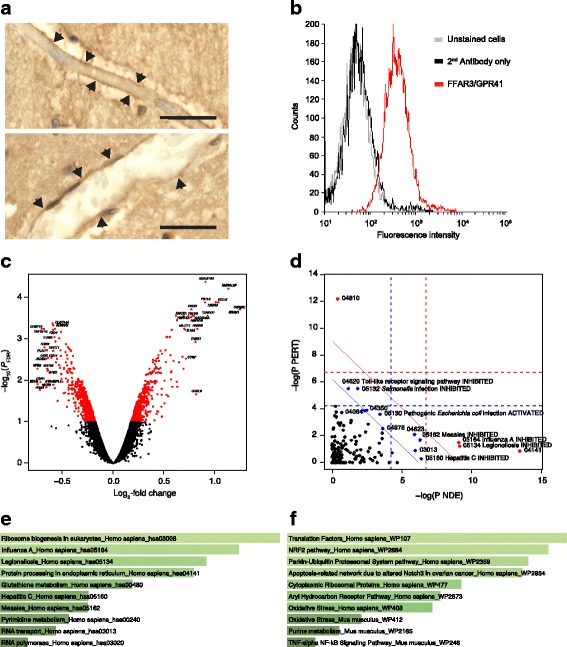
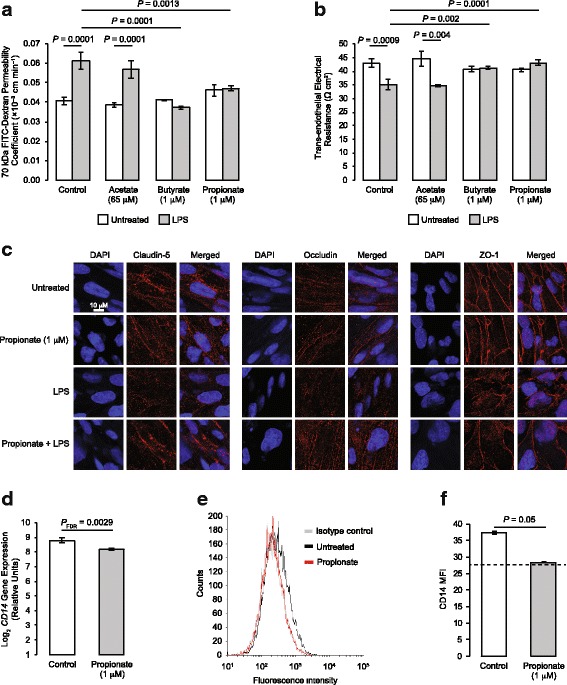
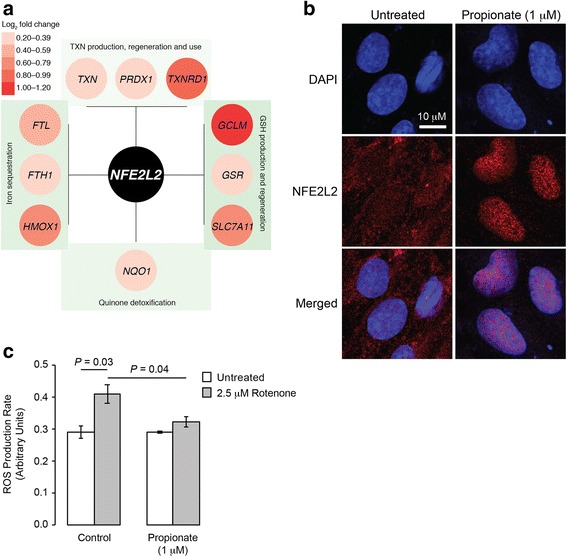
BACKGROUND: Gut microbiota composition and function are symbiotically linked with host health and altered in metabolic, inflammatory and neurodegenerative disorders. Three recognised mechanisms exist by which the microbiome influences the gut-brain axis: modification of autonomic/sensorimotor connections, immune activation, and neuroendocrine pathway regulation. We hypothesised interactions between circulating gut-derived microbial metabolites, and the blood-brain barrier (BBB) also contribute to the gut-brain axis. Propionate, produced from dietary substrates by colonic bacteria, stimulates intestinal gluconeogenesis and is associated with reduced stress behaviours, but its potential endocrine role has not been addressed. RESULTS: After demonstrating expression of the propionate receptor FFAR3 on human brain endothelium, we examined the impact of a physiologically relevant propionate concentration (1 μM) on BBB properties in vitro. Propionate inhibited pathways associated with non-specific microbial infections via a CD14-dependent mechanism, suppressed expression of LRP-1 and protected the BBB from oxidative stress via NRF2 (NFE2L2) signalling. CONCLUSIONS: Together, these results suggest gut-derived microbial metabolites interact with the BBB, representing a fourth facet of the gut-brain axis that warrants further attention.
Overview
The claims and statistics of this paper haven’t been checked yet.
Free: it reads the open-access text and checks the first 5 claims that cite a source we can check. Create a free account to check every claim.
Integrity signals
Registry
Cites
Statistics
Figures
Verification
Claims the paper makes
The claims and statistics of this paper haven’t been checked yet.
Free: it reads the open-access text and checks the first 5 claims that cite a source we can check. Create a free account to check every claim.
Claims other papers make about this one
Each is checked against this paper’s own text: does it say what the citing paper says it does?
The source backs part of the claim, not all of it — or backs it for a different population, condition or comparison.
In the citing paper
“Only FFAR2 is expressed in adipocytes and skeletal muscle, whereas FFAR3 is expressed in the peripheral nervous system and the BBB (Hoyles et al., 2018;Koh et al., 2016).”
From The Microbiota-Gut-Brain Axis (2019) · cites this paper as Hoyles et al., 2018
Experimental — accuracy not yet measuredThe cited source says what the claim attributes to it.
In the citing paper
“Ample evidence has shown that gut microbiota-derived metabolites are important regulators of BBB integrity”
From Microbiota–gut–brain axis and its therapeutic applications in neurodegenerative diseases (2024) · cites this paper as [663]
The cited source says what the claim attributes to it.
In the citing paper
“Numerous studies have confirmed that SCFAs can directly or indirectly affect the central nervous system.”
From The modulatory effects of gut microbes and metabolites on blood-brain barrier integrity and brain function in sepsis-associated encephalopathy (2023) · cites this paper as Hoyles et al., 2018
The cited source says what the claim attributes to it.
In the citing paper
“In addition to crossing BBB, SCFAs seem to play an important role in maintaining its integrity”
From The Role of Short-Chain Fatty Acids From Gut Microbiota in Gut-Brain Communication (2020) · cites this paper as [99]
The cited source says what the claim attributes to it.
In the citing paper
“treatment of an in vitro model of cerebrovascular endothelial cells with propionate attenuates the permeabilizing effects of exposure to lipopolysaccharide (LPS) (99).”
From The Role of Short-Chain Fatty Acids From Gut Microbiota in Gut-Brain Communication (2020) · cites this paper as [99]
5 more claims about this paper
Create a free account to see every claim other papers make about this one.
Self-check
Percentages, sums and reported differences re-computed from the paper’s own numbers.
The self-check needs the paper’s full text.
Citations
Cites
1 retracted
Kouchaki, E., Tamtaji, O. R., Salami, M., Bahmani, F., Daneshvar Kakhaki, R., Akbari, E., Tajabadi-Ebrahimi, M., Jafari, P., & Asemi, Z. (2017) · Clinical Nutrition · doi:10.1016/j.clnu.2016.08.015 · Cited by 317
Retractedlimma powers differential expression analyses for RNA-sequencing and microarray studies
Ritchie, M. E., Phipson, B., Wu, D., Hu, Y., Law, C. W., Shi, W., & Smyth, G. K. (2015) · Nucleic Acids Research · doi:10.1093/nar/gkv007 · Cited by 40,458 · cited 2×
“Differentially expressed genes were identified in microarray data using LIMMA [91]; P values were corrected for multiple testing using the Benjamini–Hochberg procedure (false discovery rate); a P value of less than or equal to 10% was considered significant in this case.”
MethodEnrichr: a comprehensive gene set enrichment analysis web server 2016 update
Kuleshov, M. V., Jones, M. R., Rouillard, A. D., Fernandez, N. F., Duan, Q., Wang, Z., Koplev, S., Jenkins, S. L., Jagodnik, K. M., Lachmann, A., et al. (2016) · Nucleic Acids Research · doi:10.1093/nar/gkw377 · Cited by 10,799 · cited 4×
“Enrichr (Chen et al, 2013; Kuleshov et al, 2016) was used to confirm KEGG findings (with respect to pathways, not their activation/inhibition) and to perform Gene Ontology (GO)- and WikiPathways-based analyses.”
MethodInfluentialA core gut microbiome in obese and lean twins
Turnbaugh, P. J., Hamady, M., Yatsunenko, T., Cantarel, B. L., Duncan, A., Ley, R. E., Sogin, M. L., Jones, W. J., Roe, B. A., Affourtit, J. P., et al. (2009) · Nature · doi:10.1038/nature07540 · Cited by 7,823 · cited 1×
“…associated with numerous pathologies, including diabetes, hepatic diseases, inflammatory bowel disease, viral infections and neurodegenerative disorders (Forslund et al, 2015; Ley et al, 2005; Manichanh et al, 2006; Turnbaugh et al, 2009; Qin et al, 2014; Monaco et al, 2016; Smith et al, 2013).”
BackgroundEnrichr: interactive and collaborative HTML5 gene list enrichment analysis tool
Chen, E. Y., Tan, C. M., Kou, Y., Duan, Q., Wang, Z., Meirelles, G. V., Clark, N. R., & Ma’ayan, A. (2013) · BMC Bioinformatics · doi:10.1186/1471-2105-14-128 · Cited by 7,814 · cited 4×
“Enrichr (Chen et al, 2013; Kuleshov et al, 2016) was used to confirm KEGG findings (with respect to pathways, not their activation/inhibition) and to perform Gene Ontology (GO)- and WikiPathways-based analyses.”
MethodInfluentialChanges of Intestinal Functions in Liver Cirrhosis
Fukui, H., & Wiest, R. (2016) · Inflammatory Intestinal Diseases · doi:10.1159/000444436 · Cited by 6,808
Obesity alters gut microbial ecology
Ley, R. E., Bäckhed, F., Turnbaugh, P., Lozupone, C. A., Knight, R. D., & Gordon, J. I. (2005) · Proceedings of the National Academy of Sciences · doi:10.1073/pnas.0504978102 · Cited by 6,176 · cited 1×
“…associated with numerous pathologies, including diabetes, hepatic diseases, inflammatory bowel disease, viral infections and neurodegenerative disorders (Forslund et al, 2015; Ley et al, 2005; Manichanh et al, 2006; Turnbaugh et al, 2009; Qin et al, 2014; Monaco et al, 2016; Smith et al, 2013).”
Backgroundaffy—analysis of Affymetrix GeneChip data at the probe level
Gautier, L., Cope, L., Bolstad, B. M., & Irizarry, R. A. (2004) · Bioinformatics · doi:10.1093/bioinformatics/btg405 · Cited by 5,218 · cited 2×
“Raw data supplied by Macrogen were quality-checked, log2-transformed and loess-normalised (2 iterations) using affy [82].”
MethodHost-gut microbiota metabolic interactions
Nicholson, J. K., Holmes, E., Kinross, J., Burcelin, R., Gibson, G., Jia, W., & Pettersson, S. (2012) · Science · doi:10.1126/science.1223813 · Cited by 4,760 · cited 2×
“Circulating concentrations of propionate are approximately 1 μM at rest, but these may be expected to increase following consumption of, for example, a meal containing high levels of fermentable fibre [1]; consequently, we examined the effects of 10 μM and 100 μM propionate upon the”
BackgroundSelf-citationModulation of oxidative stress as an anticancer strategy
Gorrini, C., Harris, I. S., & Mak, T. W. (2013) · Nature Reviews Drug Discovery · doi:10.1038/nrd4002 · Cited by 3,579 · cited 3×
“a Representation of stress response genes significantly upregulated in the current study and directly influenced by NFE2L2, the master regulator of antioxidant responses [54].”
BackgroundInfluential
Research works printed but not linked: 1
- Dunning M Lynch A Eldridge M illuminaHumanv4.db: Illumina HumanHT12v4 annotation data (chip illuminaHumanv4) 2015
Cited by
Items 501–600 of 610
Mikrobiota jelitowa a leki. Interakcje wpływające na skuteczność i bezpieczeństwo farmakoterapii
Nycz, J., & Zajdel, A. (2021) · Postępy Higieny i Medycyny Doświadczalnej · doi:10.2478/ahem-2021-0009 · Cited by 1
“Natomiast propionian chroni barierę krew–mózg przed skutkami stresu oksydacyjnego, przez wpływ na ekspresję genów kodujących białka wykazujące aktywność antyoksydacyjną [26].”
Gastrointestinal Tract: Intestinal Fatty Acid Metabolism and Implications for Health
Hoyles, L., & Wallace, R. J. (2018) · Springer eBooks · doi:10.1007/978-3-319-72473-7_31-1 · Cited by 1
Self-citationGastrointestinal Tract: Intestinal Fatty Acid Metabolism and Implications for Health
Hoyles, L., & Wallace, R. J. (2020) · Springer eBooks · doi:10.1007/978-3-030-15147-8_31 · Cited by 1
Self-citationLa microbiota intestinal en la salud y en la enfermedad
Ortega, M. A., Montero, C. G., Fraile‐Μartinez, O., Monserrat, J., & Álvarez‐Mon, M. (2022) · Medicine - Programa de Formación Médica Continuada Acreditado · doi:10.1016/j.med.2022.12.003 · Cited by 3
The Indian Delicacy Nimbu Achar: Your Lemony Pathway to Brain Health
Bali, S. (2023) · Current Research in Complementary & Alternative Medicine · doi:10.29011/2577-2201.100079 · Cited by 1
“The SCFA propionate has been recently reported to protect the BBB from oxidative stress via NRF2 (NFE2L2) signaling [94].”
BackgroundLi, J., Gao, M., Wang, P., Li, H., Liu, J., Yuan, F., Zhang, X., & Zhang, S. (2024) · Journal of Investigative Medicine · doi:10.1177/10815589241235657 · Cited by 1
“Changes in intestinal microbial composition and metabolites may lead to increased systemic inflammatory responses and affect the integrity of the BBB. 9 Decreased expression of FOXF2, a marker of pericytes in the BBB, indicates impaired BBB integrity.”
BackgroundInfluentialThe Gut Microbiota and NDG: What Is the Interplay
Haiba, S., Idriss, S., & Awad, M. (2024) · Springer eBooks · doi:10.1007/978-981-19-3949-5_30-1 · Cited by 1
Rajeev, A., & Chattopadhyay, I. (2024) · Springer eBooks · doi:10.1007/978-981-99-8803-7_13 · Cited by 1
Interplay Between Gut-microbiota and Neurodegeneration
Ashique, S., Pal, R., Kumar, S., Verma, B., Kumar, N., Kahwa, I., Farid, A., Mishra, N., Kumar, P., & Taghizadeh‐Hesary, F. (2024) · BENTHAM SCIENCE PUBLISHERS eBooks · doi:10.2174/9789815238754124010009 · Cited by 1
Cherednichenko, A. S., Mozdor, P. V., Oleynikova, T. K., Khatam, P. A., Nastueva, F. M., Kovalenkov, K. O., Serdinova, A. S., Osmaeva, A. K., Rovchak, A. I., Esikova, Y. Y., et al. (2024) · Epilepsy and Paroxysmal Conditions · doi:10.17749/2077-8333/epi.par.con.2024.190 · Cited by 1
Microbial Players: Unveiling the Role of Gut Microbiome in Migraine
Pandey, P., & Tiwari, V. (2024) · Springer eBooks · doi:10.1007/978-981-97-4529-6_6 · Cited by 1
The microbiome: what a neurologist needs to know
Dehghanizai, A. B., Stewart, C. J., & Thomas, R. H. (2025) · Practical Neurology · doi:10.1136/pn-2024-004400 · Cited by 1
“4 Since the microbiota releases a wide variety of substances, it is likely that they impact on brain health and development, especially as many of them are capable of crossing the blood–brain barrier but can also contribute towards its integrity 17 or lack of integrity.”
Wells, J. (2021) · DigitalCommons@UNMC · Cited by 1
Adiutori, R., Puentes, F., Bremang, M., Lombardi, V., Zubiri, I., Leoni, E., Aarum, J., Sheer, D., McArthur, S., Pike, I., et al. (2020) · Research Square · doi:10.1101/2020.04.30.070979
“Endothelial cell viability Human cerebromicrovascular endothelial cell line hCMEC/D3 was maintained and treated as described previously (59,60).”
MethodSelf-citationHua, R., Gao, H., Wang, B., Guo, Y., Liang, C., Gao, L., Shang, H.-W., & Xu, J. (2022) · World Chinese Journal of Digestology · doi:10.11569/wcjd.v30.i2.100
Мінухін, В. В., Knysh, O. V., Ждамарова, Л. А., Bolshakova, H., & Voyda, Y. V. (2022) · Zaporozhye Medical Journal · doi:10.14739/2310-1210.2022.1.236932 · Cited by 1
Neue Entwicklungen in der Neurologie
Humbroich, K. (2022) · Der Merkurstab · doi:10.14271/dms-21520-de
(2022) · British Journal of Gastroenterology · doi:10.31488/bjg.1000129
Coding for the Brain: RNA, its Photons, and Piagetian Higher-Intelligence through Action
Traill, R. R. (2023) · Journal of Psychiatry and Psychiatric Disorders · doi:10.26502/jppd.2572-519x0175
Muralidhara, M. (2023) · Elsevier eBooks · doi:10.1016/b978-0-443-19084-1.00015-6 · Cited by 1
Nandi, A., Kaur, A., Ghai, S., Singh, G., & Tiwari, A. (2023) · doi:10.14293/pr2199.000546.v1
Lu, C., & Xu, X. (2023) · Stress and Brain · doi:10.26599/sab.2023.9060002 · Cited by 1
Zhou, M., Fan, Y., Xu, L., Yu, Z., Wang, S., Xu, H., Zhang, J., Zhang, L., Liu, W., Wu, L., et al. (2023) · Figshare · doi:10.6084/m9.figshare.23606728
Hoyles, L., Pontifex, M. G., Rodríguez‐Ramiro, I., Anis-Alavi, M. A., Jelane, K. S., Snelling, T., Solito, E., Fonseca, S., Carvalho, A. L., Carding, S. R., et al. (2021) · Figshare · doi:10.6084/m9.figshare.17086980
Self-citationGut–brain communication through microbes
Green, M., & Foster, J. A. (2024) · Elsevier eBooks · doi:10.1016/b978-0-323-90144-4.00002-1
Anandamide: From modulation of neuronal excitation to antimicrobial activities—What is in common?
Sionov, R. V., & Steinberg, D. (2024) · Elsevier eBooks · doi:10.1016/b978-0-443-19081-0.00017-2
The Gut Microbiota and NDG: What Is the Interplay
Haiba, S., Idriss, S., & Awad, M. (2024) · Springer eBooks · doi:10.1007/978-981-99-7557-0_30
The impact of gut microbiome on neuro-autoimmune demyelinating diseases
Abolfazli, P., Nchama, C. N. A., & Lucke-Wold, B. P. (2024) · Academia Biology · doi:10.20935/acadbiol7397 · Cited by 1
Neuroprotective Approach, Microbiome Therapy, and Overcoming Insulin Resistance in the Brain
Rao, P., Udayashankara, V. K., Aswathanarayan, J. B., Reddy, K. V. V. S. N., Madhunapantula, S. V., Ravishankar, V., & Syed, Y. A. (2024) · Springer eBooks · doi:10.1007/978-981-96-0259-9_13 · Cited by 1
The microbiota-immune interaction in the gut-brain axis
Redazione (2025) · PNEI REVIEW · doi:10.3280/pnei2025oa20961
“Overall, SCFAs play a key role in the microbiota ‐ gut ‐ brain axis by both modulating BBB integrity and crossing it to directly influence CNS cell populations.”
InfluentialUnfriendly dialogue of gut microbiota and lipid metabolism in Alzheimer's disease
Cao, Y., Liu, S., Zhang, H., Pan, W., & Wang, D. (2025) · Journal of Alzheimer s Disease · doi:10.1177/13872877251391771 · Cited by 1
“95 Interestingly, adding high levels of acetate and butyrate to the diet has been shown to alleviate cognitive decline in AD model mice, 96 suggesting a protective role for endogenous SCFAs against cognitive impairment.”
Новикова, В. П., Magаmedova, D. M., Kukes, E. A., Yankovskaya, O. S., Серафимович, Ч. С., & Myslinchuk, E. S. (2025) · Meditsinskiy sovet = Medical Council · doi:10.21518/ms2025-402
Chiara, I. D., Feola, A., Gala, M. D., Marasco, R., Nielsen, M. S., Porcellini, A., Grieco, M., Gentile, M. T., & Muscariello, L. (2025) · Food Research International · doi:10.1016/j.foodres.2025.117840 · Cited by 1
Biological relationship between Parkinson's disease and gallstone disease
Jiang, C., Ma, J., Mu, J., Fu, Y., Zhao, Y., You, Y., Cui, Z., & Guo, C. (2025) · Neuroprotection/Neuroprotection (Chichester, England. Print) · doi:10.1002/nep3.70021
“90 In GD, depletion of SCFAs similarly disrupts bile acid metabolism and cholesterol homeostasis.”
Yin, X., Duan, C., Zhang, L., Zhu, Y., Qiu, Y., Shi, K., Wang, S., Zhang, X., Zhang, H., Hao, Y., et al. (2024) · Figshare · doi:10.6084/m9.figshare.26708390
Wu, G., Jiang, Z., Pu, Y., Chen, S., Wang, T., Wang, Y., Xu, X., Wang, S., Jin, M., Yao, Y., et al. (2022) · Figshare · doi:10.6084/m9.figshare.18070912
Yin, X., Duan, C., Zhang, L., Zhu, Y., Qiu, Y., Shi, K., Wang, S., Zhang, X., Zhang, H., Hao, Y., et al. (2024) · Figshare · doi:10.6084/m9.figshare.26708393
Hou, Y.-F., Shan, C., Zhuang, S., Zhuang, Q.-Q., Ghosh, A., Zhu, K.-C., Kong, X.-K., Wang, S.-M., Gong, Y.-L., Yang, Y.-Y., et al. (2021) · Figshare · doi:10.6084/m9.figshare.13671033
Yin, X., Duan, C., Zhang, L., Zhu, Y., Qiu, Y., Shi, K., Wang, S., Zhang, X., Zhang, H., Hao, Y., et al. (2024) · Figshare · doi:10.6084/m9.figshare.26708396
Yin, X., Duan, C., Zhang, L., Zhu, Y., Qiu, Y., Shi, K., Wang, S., Zhang, X., Zhang, H., Hao, Y., et al. (2024) · Figshare · doi:10.6084/m9.figshare.26708399
Yin, X., Duan, C., Zhang, L., Zhu, Y., Qiu, Y., Shi, K., Wang, S., Zhang, X., Zhang, H., Hao, Y., et al. (2024) · Figshare · doi:10.6084/m9.figshare.25633087
Yin, X., Duan, C., Zhang, L., Zhu, Y., Qiu, Y., Shi, K., Wang, S., Zhang, X., Zhang, H., Hao, Y., et al. (2024) · Figshare · doi:10.6084/m9.figshare.26708387
Yin, X., Duan, C., Zhang, L., Zhu, Y., Qiu, Y., Shi, K., Wang, S., Zhang, X., Zhang, H., Hao, Y., et al. (2024) · Figshare · doi:10.6084/m9.figshare.25632922
Hoyles, L., Pontifex, M. G., Rodríguez‐Ramiro, I., Anis-Alavi, M. A., Jelane, K. S., Snelling, T., Solito, E., Fonseca, S., Carvalho, A. L., Carding, S. R., et al. (2021) · Figshare · doi:10.6084/m9.figshare.17086974
Self-citationZhou, M., Fan, Y., Xu, L., Yu, Z., Wang, S., Xu, H., Zhang, J., Zhang, L., Liu, W., Wu, L., et al. (2023) · Figshare · doi:10.6084/m9.figshare.23606725
Yin, X., Duan, C., Zhang, L., Zhu, Y., Qiu, Y., Shi, K., Wang, S., Zhang, X., Zhang, H., Hao, Y., et al. (2024) · Figshare · doi:10.6084/m9.figshare.26708384
Connell, E. (2025) · UEA Digital Repository (University of East Anglia) · Cited by 1
Роль короткоцепочечных жирных кислот в функционировании оси микробиота – кишечник – головной мозг
Люля, А. С., & Fedorovich, S. V. (2024) · BSU Digital Library (Belarusian State University)
Molecular Insights to Gut–Brain Communication: Metabolomics Approach on Lifestyle Influences
Ahmed, H. (2025) · UTUPub (University of Turku) · Cited by 2
Zhou, Y., Wang, L., Fu, J., Zhao, J., Wang, D., & Tang, L. (2025) · Journal of Food Biochemistry · doi:10.1155/jfbc/1099383
Wang, Y., Zhang, R., Xu, H., Yu, Y., Li, M., Gou, P., Zeng, X., Wang, S., & Yu, H. (2025) · Journal of Future Foods · doi:10.1016/j.jfutfo.2025.10.029
Chronic stress, gut dysbiosis, and cholesterol metabolism: Implications for Alzheimer's disease
Das, A., Navya, P., Chowdhury, D., Das, A., Manna, R., & Bodakhe, S. H. (2026) · Journal of Neuroimmunology · doi:10.1016/j.jneuroim.2026.578853
Andrusiów, S., Dratwa, M., Łacina, P., Bochen, P., Gładysz, K., Szponar, B., Koszewicz, M. A., & Bogunia‐Kubik, K. (2026) · Frontiers in Molecular Neuroscience · doi:10.3389/fnmol.2025.1738817
Polyphenols and Probiotics Improve Mood Disorders by Regulating the Gut-Lung Axis
Dai, D., Hu, B., Hao, X., Xu, H., & Zhang, X. (2026) · Food Reviews International · doi:10.1080/87559129.2026.2631074
“[57] Within the gut-lung network, SCFAs additionally contribute to respiratory immune balance; for instance, butyrate facilitates the development and function of regulatory T cells, curbing allergic inflammation in the airways and indirectly improving the brain’s inflammatory environment.”
OGUZ, E. N. (2024) · Dspace Repository (Marmara Üniversitesi)
Role of gut-brain axis in Glioblastoma: Therapeutic opportunities with nanotechnology
Arunsi, K., Pendse, S., & Misra, R. (2026) · Next research. · doi:10.1016/j.nexres.2026.101587
Udowoima, A. (2026) · SSRN Electronic Journal · doi:10.2139/ssrn.6374238
Qi, X., Qi, H., Li, N., Wang, T., Wang, W., Song, X., Mi, B., & Zhang, D. (2026) · medRxiv · doi:10.64898/2026.03.26.26349460
Network-based machine learning methods to model variability across individuals
Yousefi, B. (2023) · theses.fr (ABES) · doi:10.70675/b7843ad7z3ae0z43caz9e47zf95945cd3b83
Peptidoglycan : a key elicitor of the gut- brain axis
Fioriti, F. (2023) · theses.fr (ABES) · doi:10.70675/9e7ce0aaz9b66z467bzbc3fz6fa3bf65d9a6
Chaurasiya, V., & Babre, N. (2026) · Next research. · doi:10.1016/j.nexres.2026.101755
Gut microbiota restructured by social isolation: Evidence for sex-specific response patterns
Fallon, K., Challa, S. R., Fornal, C. A., Boyineni, J., Soares, M. B., Malchenko, S., Veeravalli, K. K., Gyarmati, P., & Song, Y. (2026) · Brain Behavior & Immunity - Health · doi:10.1016/j.bbih.2026.101272
“Short-chain fatty acids (SCFAs), which are key gut microbiota-derived metabolites, play a crucial role in maintaining barrier integrity to maintain homeostasis of intestine and the central nervous system (Peng et al., 2009; Kelly et al., 2015; Braniste et al., 2014; Hoyles et al., 2018).”
Chaudhary, S., Verma, S., Kumari, V., & Tare, M. (2026) · International review of neurobiology · doi:10.1016/bs.irn.2026.05.019 · Cited by 1
Satheesan, A., Sharma, S., Chatterjee, M., & Basu, A. (2026) · Comprehensive physiology · doi:10.1002/cph4.70186 · Cited by 1
“Similarly, SCFAs like propionate and butyrate reportedly attenuated overall BBB permeability upon LPS exposure (Hoyles et al. 2018).”
Harnessing the gut microbiota: new frontiers in treating childhood epilepsy
Bejaoui, S., D’Amico, F., Messana, T., Candela, M., & Turroni, S. (2026) · Global Pediatrics · doi:10.1016/j.gpeds.2026.100354
Chen, A., Hu, S., Zeng, F., Yu, C., Chen, D., Ye, X., Jiang, Z., & Chen, S. (2026) · Food Research International · doi:10.1016/j.foodres.2026.119719
Wang, Y., Wang, L., cao, A., Yu, L., Guo, Y., Zhang, L., Zhu, M., Liu, Z., Zhao, Y., Liu, L., et al. (2026) · BMC Psychiatry · doi:10.1186/s12888-026-08547-3 · Cited by 1
“Furthermore, it compromises BBB integrity, activates the immune system, and triggers neuroinflammatory pathways via PTEN/Akt, MAPK/ ERK, and mTOR/Gskβ signaling mechanisms [43, 45, 46].”
Ebeid, T. A., Tharwat, M., Ahmad, S., Abbas, A. O., Alkhalaf, A. N., & Alshanbari, F. A. (2026) · Veterinary Sciences · doi:10.3390/vetsci13070620
“…potential of certain OAs (e.g., propionic acid) has been associated with activation of the Keap1/Nrf2 signaling pathway, which promotes nuclear translocation of Nrf2 and subsequent binding to antioxidant response elements, thereby upregulating the expression of endogenous antioxidant enzymes [41].”
Park, J., & Gareau, M. G. (2026) · Elsevier eBooks · doi:10.1016/b978-0-443-40306-4.00010-7
Bao, X.-L., Chen, Y.-X., Ding, T.-N., Zhao, D., Sun, M.-H., Yang, Q.-W., Hu, D.-S., Mo, F., Yang, G.-X., Gao, S.-H., et al. (2026) · Frontiers in Microbiology · doi:10.3389/fmicb.2026.1797695 · Cited by 1
Moni, S. S., & Abouelhag, H. (2026) · Ricos Biology · doi:10.33687/ricosbiol.04.07.139
Zhang, W., Chen, M., Guo, T., Wang, H., & Ma, N. (2026) · Frontiers in Microbiology · doi:10.3389/fmicb.2026.1841330
“…of intestinal symbiotic bacteria should be an important guarantee for maintaining the integrity of the BBB. Propionate, acting through its receptor free fatty acid receptor 3 (FFAR3) to activate Nrf2 signaling, effectively shields the BBB from oxidative stress-induced damage (Hoyles et al., 2018).”
Chen, J., Yuan, J., Li, D., Lu, C., Huang, L., Chen, A., Zhong, C., Chen, D., Qin, Z., He, X., et al. (2026) · Frontiers in Microbiology · doi:10.3389/fmicb.2026.1906680
“The gut microbiota—a complex ecosystem comprising bacteria, archaea, fungi, and viruses colonizing the intestinal tract—plays pivotal roles in maintaining human health through metabolic regulation, immune modulation, and neurobehavioral interactions (Chen et al., 2021; Hoyles et al., 2018).”
Microbiota–Neuroinflammation Crosstalk in Primary Brain Tumors: Focus on Glioblastoma
AlRamadneh, T. N., Renuka Jyothi, S., Nayak, P. P., Nanda, A., Hasnaawei, S. A., Bhatt, A., Chauhan, A. S., Singla, S., & Nourizadeh, M. (2026) · Brain and Behavior · doi:10.1002/brb3.71648
“Rather than simply breaching the BBB, SCFAs can influence BBB integrity, endothelial tight-junction regulation, and immune signaling at the neurovascular interface (Fang et al. 2019 ; Hoyles et al. 2018 ).”
Microbiome‐blood–brain barrier interactions in aging — mechanisms and therapeutic potential
Cuervo-Zanatta, D., Balasubramanian, H. B., Pasokh, A., & Zille, M. (2026) · FEBS Letters · doi:10.1002/1873-3468.70412
Zhou, L., Leng, H., Wang, Z., & Liu, W. (2026) · Frontiers in Cellular and Infection Microbiology · doi:10.3389/fcimb.2026.1868705
“…has been associated with improved blood – brain barrier (BBB) integrity and higher expression of tight junction proteins, including claudin-5 and occludin, in brain vasculature, thereby linking peripheral metabolite de fi cits to a neuroplasticity-limiting in fl ammatory milieu (Hoyles et al., 2018).”
Metabolic Outputs of the Gut Microbiome: Implications for Epilepsy
Gallucci, A., Guo, X., Shukla, D., & Campbell, S. L. (2026) · Cells · doi:10.3390/cells15161492
Seo, Y., & Park, C. S. (2026) · Pharmaceutics · doi:10.3390/pharmaceutics18091112
“…metabolites themselves influence barrier integrity: alterations in the gut microbiota and in microbial short-chain fatty acid availability have been associated with impaired BBB integrity, whereas short-chain fatty acids such as propionate can reinforce endothelial barrier function [33,34].”
Экспериментальная биология и биотехнология. – 2024. – № 1
(2024) · BSU Digital Library (Belarusian State University)
Distinct Roles of Gut Microbial Genera and Circulating Propionate in Multi-Modal Stress ResponsesPreprint
Fuchs, A., Proost, S., Clevers, E., Derrien, M., Raes, J., Verbeke, K., Oudenhove, L. V., & Dalile, B. (2026) · Research Square · doi:10.21203/rs.3.rs-10908337/v1
Kim, S.-H., Hong, S., Lee, E. Y., Kim, S.-A., Han, N. S., Kim, S. Y., & Lee, C. H. (2026) · Gut Microbes · doi:10.1080/19490976.2026.2728833
“34,35 In contrast, the abun dance of protective IND derivatives (IAld and IArA) and the serotonin precursor 5-HTP increased following postbiotic administration.”
Na, M., Guo, W., Zhang, R., Du, H., Li, K., Zhang, J., & Na, R. (2026) · Frontiers in Microbiology · doi:10.3389/fmicb.2026.1905439
“Previous studies have confirmed that ruminal butyrate production is positively correlated with soluble fiber content (Hoyles et al., 2018; Du et al., 2025).”
Huma, N. E., Davison, S., Guse, K., Walls, C., Rutschke, S., Sackett, A., Blanco-Ruiz, G., Butterick, T. A., Zhang, J., Chen, C., et al. (2026) · Food Bioscience · doi:10.1016/j.fbio.2026.110017
Li, H., Zhou, W., Zhang, H., He, X., & Liu, S. (2026) · Journal of Environmental Sciences · doi:10.1016/j.jes.2026.105775
Wang, W., Tang, Y., Wan, Z., Zhang, Z., Zheng, Z., Liu, H., Shu, Q., & Li, S. (2026) · Pharmacological Research · doi:10.1016/j.phrs.2026.108444
Guan, Q., Li, J., Li, R., Cao, Y., Zhou, Z., & Lu, W. (2026) · Advanced Functional Foods · doi:10.64187/aff.2026.v2.i3.005
Ren, G., Yang, W., Wang, J., Zhang, J., Gao, H., Gao, X., Chen, X., Wang, T., Cao, L., Wang, Z., et al. (2026) · Metabolic Brain Disease · doi:10.1007/s11011-026-01976-9
“Eubacterium produces SCFAs like butyric and propionic acid, which strengthen the intestinal barrier, reduce inflam - mation, and impact the blood-brain barrier(Purwani et al. 2012; Chenghan et al. 2025; Hoyles et al. 2018).”
Nanoparticles and the gut-microbiome: a dual strategy for oral brain delivery
Negahdari, R., Pouyanfar, N., Masoudifar, R., Aftabi, P., Fendereski, F., Anvari, Z., Masoumi, N., Faizi, M., & Ghorbani‐Bidkorbeh, F. (2026) · International Journal of Pharmaceutics · doi:10.1016/j.ijpharm.2026.127477
Kayser, E. (2023) · Illinois Digital Environment for Access to Learning and Scholarship (University of Illinois at Urbana-Champaign)
Metadata
- Authors
- Hoyles, L., Snelling, T., Umlai, U.-K., Nicholson, J. K., Carding, S. R., Glen, R. C., & McArthur, S.
- Affiliations
- Imperial College London (GB)
- University of East Anglia (GB)
- University of Cambridge (GB)
- Queen Mary University of London (GB)
- Corresponding author
- Hoyles, Lesley
- McArthur, Simon
- ORCID
- Venue
- Microbiome
- Published
- 2018-03-21
- Volume
- 6
- Issue
- 1
- Pages
- 55-55
- ISSN
- 2049-2618 (ISSN-L)
- PMC
- PMC5863458
- OpenAlex
- W2951463045
- Cited by
- 591
- References
- 92
- Citations by year
- 2026: 63 · 2025: 97 · 2024: 108 · 2023: 95 · 2022: 76 · 2021: 59 · 2020: 47 · 2019: 35 · 2018: 11
- FWCI
- 13.61
- Type
- journal article
- Language
- en
- Open access
- gold
- doi.org
- Licence
- cc-by
- creativecommons.org/licenses/by/4.0/ (tdm)
- Locations
- Microbiome (publishedVersion, cc-by)
- Europe PMC (PubMed Central) (publishedVersion, cc-by)
- PubMed Central (publishedVersion, cc-by)
- PubMed (publishedVersion)
- Nottingham Trent University's Institutional Repository (Nottingham Trent Repository) (acceptedVersion)
- UEA Digital Repository (University of East Anglia) (acceptedVersion)
- DOAJ (DOAJ: Directory of Open Access Journals) (submittedVersion, cc-by-sa)
- Queen Mary Research Online (Queen Mary University of London) (submittedVersion)
- Spiral (Imperial College London) (submittedVersion, cc-by)
- Spiral (Imperial College London) (submittedVersion, cc-by-nc-nd)
- Funders
- Alzheimer’s Research UK (ARUK-PPG2016B-6)
- Medical Research Council (MR/L01632X/1)
- Topics
- Life Sciences › Biochemistry, Genetics and Molecular Biology › Molecular Biology › Gut microbiota and health
- Life Sciences › Neuroscience › Neurology › Barrier Structure and Function Studies
- Health Sciences › Medicine › Gastroenterology › Gastrointestinal motility and disorders
- Keywords
- propionate, blood-brain barrier, gut-brain axis, gut microbiota, microbial metabolites, brain endothelium, CD14, LRP1, Nrf2 signaling, oxidative stress, intestinal gluconeogenesis, neuroprotection
- MeSH terms
- Gastrointestinal Microbiome, Bacteria, Blood-Brain Barrier, Cells, Cultured, Gluconeogenesis, Humans, Propionates, Signal Transduction, Oxidative Stress, Low Density Lipoprotein Receptor-Related Protein-1, Gastrointestinal Tract, Receptors, G-Protein-Coupled, NF-E2-Related Factor 2, Metabolome
About these checks
Registry, retraction, Cites and statistics results are computed, not judged, with one exception: a printed reference that no index lists is read once by a model before it counts as a citation error. Claims are extracted by a model and kept only when their quote appears verbatim in the text; each cited source is then checked, with a model’s help, for whether it says what the claim relies on. Those verdicts can be wrong — read the claim’s quote and the cited source before relying on one.
Statistics and arithmetic are recomputed, not judged.
Confidence bands are shown only for fields calibrated on our annotated test set. None is calibrated yet, so no band is shown.
What counts as a claim ›How we measure confidence ›How we check this ›
Are you an author, or do you see a problem with this page? Request a review
Data sources
Bibliographic data: Semantic Scholar, OpenAlex, Crossref.
Contains information from the Semantic Scholar Academic Graph Datasets, made available under the ODC Attribution License (ODC-BY 1.0).
Semantic Scholar’s data is described in: Kinney, R., et al. (2023). The Semantic Scholar Open Data Platform. arXiv:2301.10140.
