

Microbiome–host systems interactions: protective effects of propionate upon the blood–brain barrier
Open accessPublished version of a preprint
The DOI matches its Crossref record; 91 of the 92 references it cites were found in a registry or an index.
Abstract
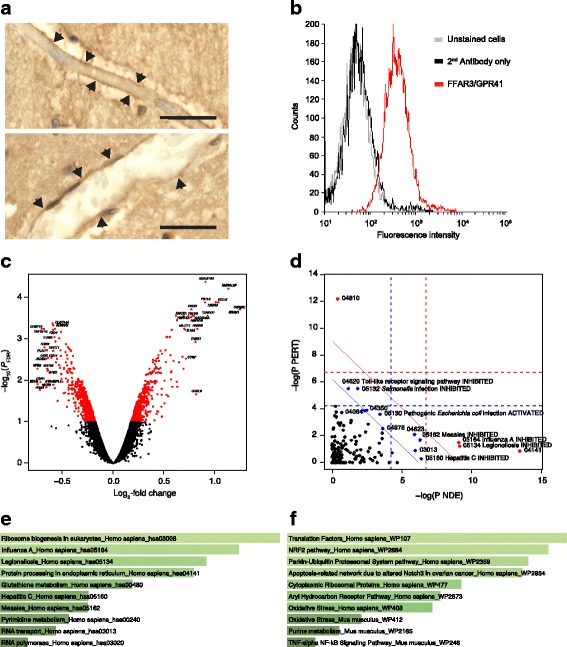
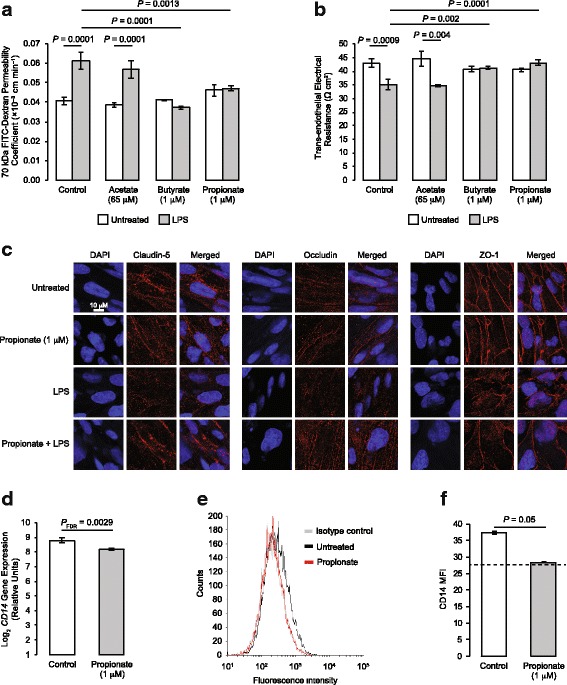
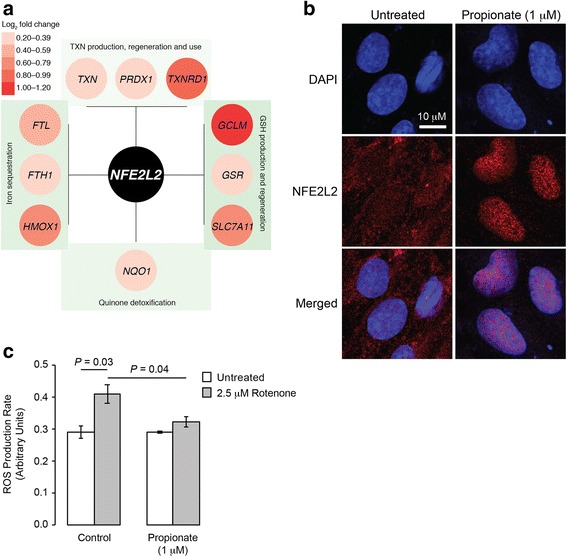
BACKGROUND: Gut microbiota composition and function are symbiotically linked with host health and altered in metabolic, inflammatory and neurodegenerative disorders. Three recognised mechanisms exist by which the microbiome influences the gut-brain axis: modification of autonomic/sensorimotor connections, immune activation, and neuroendocrine pathway regulation. We hypothesised interactions between circulating gut-derived microbial metabolites, and the blood-brain barrier (BBB) also contribute to the gut-brain axis. Propionate, produced from dietary substrates by colonic bacteria, stimulates intestinal gluconeogenesis and is associated with reduced stress behaviours, but its potential endocrine role has not been addressed. RESULTS: After demonstrating expression of the propionate receptor FFAR3 on human brain endothelium, we examined the impact of a physiologically relevant propionate concentration (1 μM) on BBB properties in vitro. Propionate inhibited pathways associated with non-specific microbial infections via a CD14-dependent mechanism, suppressed expression of LRP-1 and protected the BBB from oxidative stress via NRF2 (NFE2L2) signalling. CONCLUSIONS: Together, these results suggest gut-derived microbial metabolites interact with the BBB, representing a fourth facet of the gut-brain axis that warrants further attention.
Overview
The claims and statistics of this paper haven’t been checked yet.
Free: it reads the open-access text and checks the first 5 claims that cite a source we can check. Create a free account to check every claim.
Integrity signals
Registry
Cites
Statistics
Figures
Verification
Claims the paper makes
The claims and statistics of this paper haven’t been checked yet.
Free: it reads the open-access text and checks the first 5 claims that cite a source we can check. Create a free account to check every claim.
Claims other papers make about this one
Each is checked against this paper’s own text: does it say what the citing paper says it does?
The source backs part of the claim, not all of it — or backs it for a different population, condition or comparison.
In the citing paper
“Only FFAR2 is expressed in adipocytes and skeletal muscle, whereas FFAR3 is expressed in the peripheral nervous system and the BBB (Hoyles et al., 2018;Koh et al., 2016).”
From The Microbiota-Gut-Brain Axis (2019) · cites this paper as Hoyles et al., 2018
Experimental — accuracy not yet measuredThe cited source says what the claim attributes to it.
In the citing paper
“Ample evidence has shown that gut microbiota-derived metabolites are important regulators of BBB integrity”
From Microbiota–gut–brain axis and its therapeutic applications in neurodegenerative diseases (2024) · cites this paper as [663]
The cited source says what the claim attributes to it.
In the citing paper
“Numerous studies have confirmed that SCFAs can directly or indirectly affect the central nervous system.”
From The modulatory effects of gut microbes and metabolites on blood-brain barrier integrity and brain function in sepsis-associated encephalopathy (2023) · cites this paper as Hoyles et al., 2018
The cited source says what the claim attributes to it.
In the citing paper
“In addition to crossing BBB, SCFAs seem to play an important role in maintaining its integrity”
From The Role of Short-Chain Fatty Acids From Gut Microbiota in Gut-Brain Communication (2020) · cites this paper as [99]
The cited source says what the claim attributes to it.
In the citing paper
“treatment of an in vitro model of cerebrovascular endothelial cells with propionate attenuates the permeabilizing effects of exposure to lipopolysaccharide (LPS) (99).”
From The Role of Short-Chain Fatty Acids From Gut Microbiota in Gut-Brain Communication (2020) · cites this paper as [99]
5 more claims about this paper
Create a free account to see every claim other papers make about this one.
Self-check
Percentages, sums and reported differences re-computed from the paper’s own numbers.
The self-check needs the paper’s full text.
Citations
Cites
1 retracted
Kouchaki, E., Tamtaji, O. R., Salami, M., Bahmani, F., Daneshvar Kakhaki, R., Akbari, E., Tajabadi-Ebrahimi, M., Jafari, P., & Asemi, Z. (2017) · Clinical Nutrition · doi:10.1016/j.clnu.2016.08.015 · Cited by 317
Retractedlimma powers differential expression analyses for RNA-sequencing and microarray studies
Ritchie, M. E., Phipson, B., Wu, D., Hu, Y., Law, C. W., Shi, W., & Smyth, G. K. (2015) · Nucleic Acids Research · doi:10.1093/nar/gkv007 · Cited by 40,458 · cited 2×
“Differentially expressed genes were identified in microarray data using LIMMA [91]; P values were corrected for multiple testing using the Benjamini–Hochberg procedure (false discovery rate); a P value of less than or equal to 10% was considered significant in this case.”
MethodEnrichr: a comprehensive gene set enrichment analysis web server 2016 update
Kuleshov, M. V., Jones, M. R., Rouillard, A. D., Fernandez, N. F., Duan, Q., Wang, Z., Koplev, S., Jenkins, S. L., Jagodnik, K. M., Lachmann, A., et al. (2016) · Nucleic Acids Research · doi:10.1093/nar/gkw377 · Cited by 10,799 · cited 4×
“Enrichr (Chen et al, 2013; Kuleshov et al, 2016) was used to confirm KEGG findings (with respect to pathways, not their activation/inhibition) and to perform Gene Ontology (GO)- and WikiPathways-based analyses.”
MethodInfluentialA core gut microbiome in obese and lean twins
Turnbaugh, P. J., Hamady, M., Yatsunenko, T., Cantarel, B. L., Duncan, A., Ley, R. E., Sogin, M. L., Jones, W. J., Roe, B. A., Affourtit, J. P., et al. (2009) · Nature · doi:10.1038/nature07540 · Cited by 7,823 · cited 1×
“…associated with numerous pathologies, including diabetes, hepatic diseases, inflammatory bowel disease, viral infections and neurodegenerative disorders (Forslund et al, 2015; Ley et al, 2005; Manichanh et al, 2006; Turnbaugh et al, 2009; Qin et al, 2014; Monaco et al, 2016; Smith et al, 2013).”
BackgroundEnrichr: interactive and collaborative HTML5 gene list enrichment analysis tool
Chen, E. Y., Tan, C. M., Kou, Y., Duan, Q., Wang, Z., Meirelles, G. V., Clark, N. R., & Ma’ayan, A. (2013) · BMC Bioinformatics · doi:10.1186/1471-2105-14-128 · Cited by 7,814 · cited 4×
“Enrichr (Chen et al, 2013; Kuleshov et al, 2016) was used to confirm KEGG findings (with respect to pathways, not their activation/inhibition) and to perform Gene Ontology (GO)- and WikiPathways-based analyses.”
MethodInfluentialChanges of Intestinal Functions in Liver Cirrhosis
Fukui, H., & Wiest, R. (2016) · Inflammatory Intestinal Diseases · doi:10.1159/000444436 · Cited by 6,808
Obesity alters gut microbial ecology
Ley, R. E., Bäckhed, F., Turnbaugh, P., Lozupone, C. A., Knight, R. D., & Gordon, J. I. (2005) · Proceedings of the National Academy of Sciences · doi:10.1073/pnas.0504978102 · Cited by 6,176 · cited 1×
“…associated with numerous pathologies, including diabetes, hepatic diseases, inflammatory bowel disease, viral infections and neurodegenerative disorders (Forslund et al, 2015; Ley et al, 2005; Manichanh et al, 2006; Turnbaugh et al, 2009; Qin et al, 2014; Monaco et al, 2016; Smith et al, 2013).”
Backgroundaffy—analysis of Affymetrix GeneChip data at the probe level
Gautier, L., Cope, L., Bolstad, B. M., & Irizarry, R. A. (2004) · Bioinformatics · doi:10.1093/bioinformatics/btg405 · Cited by 5,218 · cited 2×
“Raw data supplied by Macrogen were quality-checked, log2-transformed and loess-normalised (2 iterations) using affy [82].”
MethodHost-gut microbiota metabolic interactions
Nicholson, J. K., Holmes, E., Kinross, J., Burcelin, R., Gibson, G., Jia, W., & Pettersson, S. (2012) · Science · doi:10.1126/science.1223813 · Cited by 4,760 · cited 2×
“Circulating concentrations of propionate are approximately 1 μM at rest, but these may be expected to increase following consumption of, for example, a meal containing high levels of fermentable fibre [1]; consequently, we examined the effects of 10 μM and 100 μM propionate upon the”
BackgroundSelf-citationModulation of oxidative stress as an anticancer strategy
Gorrini, C., Harris, I. S., & Mak, T. W. (2013) · Nature Reviews Drug Discovery · doi:10.1038/nrd4002 · Cited by 3,579 · cited 3×
“a Representation of stress response genes significantly upregulated in the current study and directly influenced by NFE2L2, the master regulator of antioxidant responses [54].”
BackgroundInfluential
Research works printed but not linked: 1
- Dunning M Lynch A Eldridge M illuminaHumanv4.db: Illumina HumanHT12v4 annotation data (chip illuminaHumanv4) 2015
Cited by
Items 101–200 of 610
Melatonin Alleviates Neuroinflammation and Metabolic Disorder in DSS-Induced Depression Rats
Lv, W., Liu, C., Yu, L., Zhou, J., Li, Y., Xiong, Y., Guo, A., Chao, L., Qu, Q., Guang-wei, W., et al. (2020) · Oxidative Medicine and Cellular Longevity · doi:10.1155/2020/1241894 · Cited by 93
“However, a common signature of these relative studies was enhancement of gut inflammation in depression patients or rodent animals [99, 100] and lower permeability in antidepressant controls [73, 101, 102].”
BackgroundThe role of short-chain fatty acids in central nervous system diseases
Dong, Y., & Cui, C. (2022) · Molecular and Cellular Biochemistry · doi:10.1007/s11010-022-04471-8 · Cited by 90
Diet as Regulator of Gut Microbiota and its Role in Health and Disease
Sánchez‐Tapia, M., Tovar, A. R., & Torres, N. (2019) · Archives of Medical Research · doi:10.1016/j.arcmed.2019.09.004 · Cited by 86
The functional roles of short chain fatty acids as postbiotics in human gut: future perspectives
Ragavan, M. L., & Hemalatha, S. (2023) · Food Science and Biotechnology · doi:10.1007/s10068-023-01414-x · Cited by 90
Parkinson's Disease Is Associated with Impaired Gut–Blood Barrier for Short‐Chain Fatty Acids
Yang, X., Ai, P., He, X., Mo, C., Zhang, Y., Xu, S., Lai, Y., Qian, Y., & Xiao, Q. (2022) · Movement Disorders · doi:10.1002/mds.29063 · Cited by 82
“In fact, PPA was found to limit inflammatory responses and protect blood– brain barrier integrity.(38,39) Two subsequent studies showed that PPA promotes survival of dopaminergic cells against rotenone toxicity in the PD model, and that orally administered PPA rescued dopaminergic neuronal loss and motor deficits in P…”
BackgroundStress and the gut-brain axis: an inflammatory perspective
Morys, J., Małecki, A., & Nowacka-Chmielewska, M. M. (2024) · Frontiers in Molecular Neuroscience · doi:10.3389/fnmol.2024.1415567 · Cited by 95
Re-thinking the Etiological Framework of Neurodegeneration
Castillo, X., Castro-Obregón, S., Gutiérrez-Becker, B., Gutiérrez-Ospina, G., Karalis, N., Khalil, A. A., Lopez-Noguerola, J. S., Rodríguez, L. L., Martínez-Martínez, E., Perez-Cruz, C., et al. (2019) · Frontiers in Neuroscience · doi:10.3389/fnins.2019.00728 · Cited by 79
Welcome, M. O. (2019) · NeuroMolecular Medicine · doi:10.1007/s12017-019-08547-5 · Cited by 83
Propionate and Alzheimer’s Disease
Killingsworth, J., Sawmiller, D., & Shytle, R. D. (2021) · Frontiers in Aging Neuroscience · doi:10.3389/fnagi.2020.580001 · Cited by 71
McCormack, U. M. M., Curião, T., Wilkinson, T., Metzler-Zebeli, B. U., Reyer, H., Ryan, T., Díaz, J. A. C., Crispie, F., Cotter, P. D., Creevey, C. J., et al. (2018) · mSystems · doi:10.1128/msystems.00134-17 · Cited by 80
“However, our data show an increase in propionic acid producers (e.g., Ruminococcus ) (49) in the ileum due to maternal FMT, which likely accounts for the higher ileal propionic acid concentrations in these animals.”
The Gut Microbiome as a Regulator of the Neuroimmune Landscape
Yu, L. W., Agirman, G., & Hsiao, E. Y. (2022) · Annual Review of Immunology · doi:10.1146/annurev-immunol-101320-014237 · Cited by 75
Facchin, S., Calgaro, M., & Savarino, E. V. (2025) · Cells · doi:10.3390/cells14151130 · Cited by 84
“In in vitro studies, on human brain endothelial cells (hCMEC/D3), propionate increased the expression of tight junction proteins, such as occludin and zonulin (ZO-1), contributing to the maintenance of the blood–brain barrier [54].”
Gut/rumen-mammary gland axis in mastitis: Gut/rumen microbiota–mediated “gastroenterogenic mastitis”
Hu, X., He, Z., Zhao, C., He, Y., Qiu, M., Xiang, K., Zhang, N., & Fu, Y. (2023) · Journal of Advanced Research · doi:10.1016/j.jare.2023.02.009 · Cited by 77
“Propionate has an effective capacity to regulate barrier function through multiple mechanisms, including modification of autonomic/sensorimotor connections, immune activation, and neuroendocrine pathway regulation [152].”
Luo, Y., Yang, L.-L., & Yao, X. (2024) · Molecular Neurodegeneration · doi:10.1186/s13024-024-00720-0 · Cited by 79
“Propionate bind to the free fatty acid receptor GPR41 in brain endothelial cells, inhibiting the expression of LRP-1 through a CD14-dependent mechanism, and protecting the blood-brain barrier from oxidative stress through NRF2 signaling [95].”
Biomarkers of gastrointestinal functionality in dogs: A systematic review and meta-analysis
Félix, A. P., Souza, C. M. M., & de Oliveira, S. G. (2021) · Animal Feed Science and Technology · doi:10.1016/j.anifeedsci.2021.115183 · Cited by 79
Citrus Polyphenols in Brain Health and Disease: Current Perspectives
Pontifex, M. G., Malik, M., Connell, E., Müller, M. M., & Vauzour, D. (2021) · Frontiers in Neuroscience · doi:10.3389/fnins.2021.640648 · Cited by 78
“For example, the SCFA propionate was recently reported to inhibit pathways associated with nonspecific microbial infections via a CD14-dependent mechanism, to suppress the expression of LRP-1 and to protect the BBB from oxidative stress via NRF2 (NFE2L2) signaling (Hoyles et al., 2018).”
BackgroundGut microbiota and aging-A focus on centenarians
Cӑtoi, A. F., Corina, A., Katsiki, N., Vodnar, D. C., Andreicuț, A. D., Stoian, A. P., Rizzo, M., & Pérez-Martínez, P. (2020) · Biochimica et Biophysica Acta (BBA) - Molecular Basis of Disease · doi:10.1016/j.bbadis.2020.165765 · Cited by 70
Yu, W., Sun, S., Yan, Y., Zhou, H., Liu, Z., & Fu, Q. (2025) · Frontiers in Immunology · doi:10.3389/fimmu.2025.1519925 · Cited by 82
“In the CNS, propionate protects the blood – brain barrier (BBB) via FFAR3 on the surface of endothelial cells (210), whereas in the intestinal barrier, SCFAs, especially acetate, propionate, and butyrate, are more protective of the intestinal barrier (211).”
Dietary prebiotics alter novel microbial dependent fecal metabolites that improve sleep
Thompson, R. S., Vargas, F., Dorrestein, P. C., Chichlowski, M., Berg, B. M., & Fleshner, M. (2020) · Scientific Reports · doi:10.1038/s41598-020-60679-y · Cited by 65
Mulder, D., Aarts, E., Vásquez, A. A., & Bloemendaal, M. (2023) · Molecular Psychiatry · doi:10.1038/s41380-023-02146-4 · Cited by 77
“…processed, follow standardized processing pipelines where possible, apply consistent and appropriate statistical approaches for analysis (e.g., accounting for the zero-in fl ated and compositional nature of the data), and report fi ndings (including effect-sizes) in a complete and transparent manner.”
Xu, M., Huang, H., Mo, X., Zhu, Y., Chen, X., Li, X., Peng, X., Xu, Z., Chen, L., Rong, S., et al. (2021) · Molecular Nutrition & Food Research · doi:10.1002/mnfr.202000660 · Cited by 72
Results of a 30-day safety assessment in young mice orally exposed to polystyrene nanoparticles
Xiao, J., Jiang, X., Zhou, Y., Sumayyah, G., Zhou, L., Tu, B., Qin, Q., Qiu, J., Qin, X., Zou, Z., et al. (2021) · Environmental Pollution · doi:10.1016/j.envpol.2021.118184 · Cited by 71
Gut Microbiota in Ischemic Stroke: Role of Gut Bacteria-Derived Metabolites
Zhang, W., Dong, X. Y., & Huang, R. (2022) · Translational Stroke Research · doi:10.1007/s12975-022-01096-3 · Cited by 76
“Propionate, an important SCFA, is found to reduce the production of reactive oxygen species (ROS), thus attenuating the BBB permeabilizing effect of LPS exposure [79].”
Wu, G., Jiang, Z., Pu, Y., Chen, S., Wang, T., Wang, Y., Xu, X., Wang, S., Jin, M., Yao, Y., et al. (2022) · BMC Neurology · doi:10.1186/s12883-021-02544-7 · Cited by 67
A new paradigm for a new simple chemical: butyrate & immune regulation
Dang, G., Wu, W., Zhang, H., & Everaert, N. (2021) · Food & Function · doi:10.1039/d1fo02116h · Cited by 74
Feng, Y., Song, Y., Zhou, J., Duan, Y., Kong, T., Ma, H., & Zhang, H. (2022) · Critical Reviews in Food Science and Nutrition · doi:10.1080/10408398.2022.2128037 · Cited by 80
“Meanwhile, the brain transmit neural communication signals can lead to changes in the intestinal hormone release, intestinal gene expression, intestinal microbial community composition, thus impacting gut homeostasis (Hoyles et al. 2018; Zarrinpar et al. 2018).”
Taraskina, A. N., Ignatyeva, O. A., Lisovaya, D., Ivanov, M., Ivanova, L. G., Golovicheva, V., Baydakova, G., Silachev, D. N., Popkov, V. A., Ivanets, T. Y., et al. (2022) · Cells · doi:10.3390/cells11091409 · Cited by 71
“The commensal microbiota appears to contribute to strong GI and blood–brain [18,19] barriers and promote mucus production and intestinal epithelial-cell regeneration.”
BackgroundHigarza, S. G., Arboleya, S., Gueimonde, M., Gómez-Lázaro, E., Arias, J. L., & Arias, N. (2019) · PLOS ONE · doi:10.1371/journal.pone.0223019 · Cited by 60
Fatty acids role in multiple sclerosis as “metabokines”
Yu, H., Bai, S., Hao, Y., & Guan, Y. (2022) · Journal of Neuroinflammation · doi:10.1186/s12974-022-02502-1 · Cited by 65
Short-chain fatty acids are potential goalkeepers of atherosclerosis
Feng, Y., & Xu, D. (2023) · Frontiers in Pharmacology · doi:10.3389/fphar.2023.1271001 · Cited by 72
Giovannini, M. G., Lana, D., Traini, C., & Vannucchi, M. G. (2021) · Journal of Clinical Medicine · doi:10.3390/jcm10112358 · Cited by 61
“The products of the microbiota, mainly butyrate, maintain the integrity of these barriers [95].”
BackgroundPathomechanisms of Blood-Brain Barrier Disruption in ALS
Kakaroubas, N., Brennan, S. E., Keon, M., & Saksena, N. (2019) · Neuroscience Journal · doi:10.1155/2019/2537698 · Cited by 66
“[144], it has been hypothesized that additional circulating gut-derived microbial mediators are possibly contributing to the regulation of BBB function, which warrants further investigation.”
BackgroundInfluentialA short chain fatty acid–centric view of Clostridioides difficile pathogenesis
Gregory, A. L., Pensinger, D. A., & Hryckowian, A. J. (2021) · PLoS Pathogens · doi:10.1371/journal.ppat.1009959 · Cited by 69
Central and peripheral regulations mediated by short-chain fatty acids on energy homeostasis
Luo, P., Lednovich, K., Xu, K., Nnyamah, C., Layden, B. T., & Xu, P. (2022) · Translational research · doi:10.1016/j.trsl.2022.06.003 · Cited by 65
Stachulski, A. V., Knausenberger, T. B.-A., Shah, S. N., Hoyles, L., & McArthur, S. (2023) · Tissue Barriers · doi:10.1080/21688370.2022.2073175 · Cited by 61
“The human cerebromicrovascular endothelial cell line hCMEC/D3 was maintained and treated as described previously.(29) Cells were cultured to confluency in complete endothelial cell growth medium MV2 (PromoCell GmbH, Germany), whereupon VEGF was removed and cells were further cultured for a minimum of 4 d to enable int…”
MethodSelf-citationKim, S., Park, S., Choi, T. G., & Kim, S. S. (2022) · Nutrients · doi:10.3390/nu14142982 · Cited by 71
Wu, Q., Zhang, Y., Zhang, Y., Xia, C., Lai, Q., Dong, Z., Kuang, W., Yang, C., Su, D., Li, H., et al. (2020) · Annals of the New York Academy of Sciences · doi:10.1111/nyas.14312 · Cited by 57
Advances in modelling the human microbiome–gut–brain axis in vitro
Moysidou, C., & Owens, R. M. (2021) · Biochemical Society Transactions · doi:10.1042/bst20200338 · Cited by 66
Sleep and the gut microbiota in preschool-aged children
Wang, Y., van de Wouw, M., Drogos, L. L., Vaghef‐Mehrabany, E., Reimer, R. A., Tomfohr‐Madsen, L. M., & Giesbrecht, G. F. (2022) · SLEEP · doi:10.1093/sleep/zsac020 · Cited by 60
Medawar, E., Beyer, F., Thieleking, R., Haange, S., Rolle-Kampczyk, U. E., Reinicke, M., Chakaroun, R., von Bergen�, M., Stümvoll, M., Villringer, A., et al. (2023) · Gut · doi:10.1136/gutjnl-2023-330365 · Cited by 65
“Microbiota-derived metabolites of plant-based dietary fibre such as short-chain fatty acids (SCFA), can cross the blood–brain barrier 7 to modulate hypothalamic signalling.”
The Brain–Gut–Microbiome Axis in Psychiatry
Jang, S.-H., Woo, Y. S., Lee, S.-Y., & Bahk, W. (2020) · International Journal of Molecular Sciences · doi:10.3390/ijms21197122 · Cited by 65
“In particular, propionate produced by microbiota protects the blood–brain barrier (BBB) from oxidative stress [25].”
BackgroundThe Role of the Microbiota-Gut-Brain Axis in the Development of Alzheimer’s Disease
Wiatrak, B., Balon, K., Jawień, P., Bednarz, D., Jęśkowiak, I., & Szeląg, A. (2022) · International Journal of Molecular Sciences · doi:10.3390/ijms23094862 · Cited by 58
“Propionate protects the blood-brain barrier by reducing the influence of pro-inflammatory and oxidative factors [55].”
BackgroundLiu, S., Gao, J., Liu, K., & Zhang, H. (2021) · Mechanisms of Ageing and Development · doi:10.1016/j.mad.2021.111560 · Cited by 61
Subramaniam, C. B., Bowen, J. M., Gladman, M. A., Lustberg, M. B., Mayo, S. J., & Wardill, H. R. (2020) · Neuroscience & Biobehavioral Reviews · doi:10.1016/j.neubiorev.2020.07.002 · Cited by 55
Gentile, F., Doneddu, P. E., Riva, N., Nobile‐Orazio, E., & Quattrini, A. (2020) · International Journal of Molecular Sciences · doi:10.3390/ijms21207471 · Cited by 61
“One study demonstrated that this defect may be restored by the supplementation of propionate or butyrate, highlighting a potential role of SCFAs also in BBB homeostasis [60].”
BackgroundEshraghi, R. S., Davies, C., Iyengar, R., Perez, L., Mittal, R., & Eshraghi, A. A. (2020) · Journal of Clinical Medicine · doi:10.3390/jcm10010027 · Cited by 62
Gudkov, S. V., Burmistrov, D. E., Kondakova, E. V., Sarimov, R. M., Yarkov, R. S., Franceschi, C., & Vedunova, M. V. (2022) · Ageing Research Reviews · doi:10.1016/j.arr.2022.101775 · Cited by 58
Wang, Y., Du, W., Hu, X., Yu, X., Guo, C., Jin, X., & Wang, W. (2023) · Acta Pharmaceutica Sinica B · doi:10.1016/j.apsb.2023.08.009 · Cited by 62
“In an in vitro BBB model, propionate inhibits pathways associated with non-specific microbial infection through a CD14-dependent mechanism, suppresses lipoprotein receptor-related protein-1 expression, and protects BBB from oxidative stress through NRF2 signaling 176 .”
BackgroundZhao, Y., Jia, M., Ding, C., Bao, B., Li, H., Ma, J., Dong, W., Gao, R., Chen, X., Chen, J., et al. (2025) · iMeta · doi:10.1002/imt2.70006 · Cited by 66
Double-side role of short chain fatty acids on host health via the gut-organ axes
Gao, Y., Yao, Q., Meng, L., Wang, J., & Zheng, N. (2024) · Animal nutrition · doi:10.1016/j.aninu.2024.05.001 · Cited by 61
Cortical Gray Matter Injury in Encephalopathy of Prematurity: Link to Neurodevelopmental Disorders
Fleiss, B., Gressèns, P., & Stolp, H. B. (2020) · Frontiers in Neurology · doi:10.3389/fneur.2020.00575 · Cited by 62
Pham, V. T., Calatayud, M., Rotsaert, C., Seifert, N., Richard, N., den Abbeele, P. V., Marzorati, M., & Steinert, R. E. (2021) · Nutrients · doi:10.3390/nu13041125 · Cited by 65
“Propionate is also involved in metabolism regulation, stimulating intestinal gluconeogenesis, improving glucose tolerance and insulin, promoting PPY and GLP1 secretion from human colonic cells, reducing high density lipoprotein and increasing serum triglyceride concentrations [29,30].”
BackgroundHuang, M., He, Y., Tian, L., Yu, L., Cheng, Q., Li, Z., Gao, L., Gao, S., & Chunquan, Y. (2023) · Journal of Affective Disorders · doi:10.1016/j.jad.2022.12.166 · Cited by 56
Zhong, S.-R., Kuang, Q., Zhang, F., Chen, B., & Zhong, Z.-G. (2021) · Translational Neuroscience · doi:10.1515/tnsci-2020-0206 · Cited by 59
Gut microbiota short-chain fatty acids and their impact on the host thyroid function and diseases
Mendoza-León, M. J., Mangalam, A. K., Regaldiz, A., González-Madrid, E., Rangel-Ramírez, M. A., Álvarez-Mardones, O., Vallejos, O. P., Méndez, C., Bueno, S. M., Melo-González, F., et al. (2023) · Frontiers in Endocrinology · doi:10.3389/fendo.2023.1192216 · Cited by 63
Lactobacillaceae differentially impact butyrate-producing gut microbiota to drive CNS autoimmunity
Montgomery, T. L., Toppen, L. C., Eckstrom, K. M., Heney, E. R., Kennedy, J. J., Scarborough, M., & Krementsov, D. N. (2024) · Gut Microbes · doi:10.1080/19490976.2024.2418415 · Cited by 56
Alzheimer’s disease and gut microbiota: does trimethylamine N-oxide (TMAO) play a role?
Arrona Cardoza, P., Spillane, M. B., & Morales Marroquin, E. (2022) · Nutrition Reviews · doi:10.1093/nutrit/nuab022 · Cited by 53
Balasubramanian, R., Bazaz, M. R., Pasam, T., Sharief, N., Velip, L., Samanthula, G., & Dandekar, M. P. (2022) · NeuroMolecular Medicine · doi:10.1007/s12017-022-08732-z · Cited by 58
Clerici, L., Bottari, D., & Bottari, B. (2025) · Current Nutrition Reports · doi:10.1007/s13668-025-00619-2 · Cited by 60
Beyond the Calories—Is the Problem in the Processing?
Laster, J., & Frame, L. A. (2019) · Current Treatment Options in Gastroenterology · doi:10.1007/s11938-019-00246-1 · Cited by 55
Zhang, Y., Ding, N., Hao, X., Zhao, J., Zhao, Y., Li, Y., & Li, Z. (2022) · Frontiers in Aging Neuroscience · doi:10.3389/fnagi.2022.1018371 · Cited by 57
Gut Biofactory—Neurocompetent Metabolites within the Gastrointestinal Tract. A Scoping Review
Skonieczna‐Żydecka, K., Jakubczyk, K., Maciejewska, D., Janda, K., Kaźmierczak-Siedlecka, K., Kaczmarczyk, M., Łoniewski, I., & Marlicz, W. M. (2020) · Nutrients · doi:10.3390/nu12113369 · Cited by 54
“The metabolite additionally restricted non-specific microbial infections via a CD14-dependent mechanism and protected the BBB from oxidative stress via nuclear factor erythroid 2–related factor 2, showing its potential to control oxidative damage within the CNS [122].”
BackgroundLuo, A., Li, S., Wang, X., Xie, Z., Li, S., & Hua, D. (2021) · Frontiers in Aging Neuroscience · doi:10.3389/fnagi.2021.748637 · Cited by 55
Hage, R. E., Hernandez‐Sanabria, E., Calatayud, M., & de Wiele, T. V. (2020) · American Journal of Physiology-Endocrinology and Metabolism · doi:10.1152/ajpendo.00523.2019 · Cited by 54
Bai, S., Xie, J., Bai, H., Tian, T., Zou, T., & Chen, J.-J. (2021) · Journal of Inflammation Research · doi:10.2147/jir.s324922 · Cited by 51
He, Z., Wang, G., Wu, J., Tang, Z., & Luo, M. (2021) · Biomedicine & Pharmacotherapy · doi:10.1016/j.biopha.2021.111667 · Cited by 56
Hu, C., Yan, Y., Ji, F., & Zhou, H. (2021) · Frontiers in Cellular and Infection Microbiology · doi:10.3389/fcimb.2021.671347 · Cited by 51
“Propionate treatment was shown to be effective against oxidative stress and ameliorate systemic inflammation (Hoyles et al., 2018; Bartolomaeus et al., 2019).”
BackgroundJackson, P. P. J., Wijeyesekera, A., Williams, C. M., Theis, S., Harsselaar, J. V., & Rastall, R. A. (2023) · American Journal of Clinical Nutrition · doi:10.1016/j.ajcnut.2023.08.016 · Cited by 54
“Additionally, propionate can protect against lipopolysaccharide-mediated blood brain barrier disruption [62], whereas butyrate has been associated with decreased histone acetylation [21].”
How to Determine the Role of the Microbiome in Drug Disposition
Bisanz, J. E., Spanogiannopoulos, P., Pieper, L. M., Bustion, A. E., & Turnbaugh, P. J. (2018) · Drug Metabolism and Disposition · doi:10.1124/dmd.118.083402 · Cited by 55
“Recent studies have explored modulation of cell barriers by exposing cell lines to known bacterial metabolites of interest, such as short-chain fatty acids (Hoyles et al., 2018).”
Chen, Q., Yin, Q., Xie, Q., Jiang, C., Zhou, L., Liu, J., Li, B., & Jiang, S. (2022) · Journal of Agricultural and Food Chemistry · doi:10.1021/acs.jafc.2c04410 · Cited by 50
Lee, B., Lee, S. M., Song, J. W., & Choi, J. W. (2024) · Biomolecules & Therapeutics · doi:10.4062/biomolther.2024.009 · Cited by 49
“In an in vitro study utilizing cerebrovascular endothelial cells, propionate treatment was observed to counteract the permeability effects triggered by exposure to lipopolysaccharide (LPS), indicating a potential role for SCFAs in modulating BBB function (Hoyles et al ., 2018).”
BackgroundDietary Fatty Acids and Microbiota-Brain Communication in Neuropsychiatric Diseases
Marrone, M. C., & Coccurello, R. (2019) · Biomolecules · doi:10.3390/biom10010012 · Cited by 45
“Of note, not only butyrate but also propionate can exert a protective action against microbial infection and oxidative stress-induced increase of BBB permeability [208].”
BackgroundModasia, A., Parker, A., Jones, E., Stentz, R., Brion, A., Goldson, A., Defernez, M., Wileman, T., Ashley Blackshaw, L., & Carding, S. R. (2020) · Frontiers in Microbiology · doi:10.3389/fmicb.2020.575595 · Cited by 46
Self-citationYau, Y. F., El-Nezami, H. S., Galano, J., Kundi, Z. M., Durand, T., & Lee, J. C. (2020) · Molecular Nutrition & Food Research · doi:10.1002/mnfr.202000566 · Cited by 48
Smitka, K., Procházková, P., Roubalová, R., Dvořák, J., Papežová, H., Hill, M., Pokorny, J., Kittnar, O., Bilej, M., & Tlaskalová‐Hogenová, H. (2021) · Frontiers in Endocrinology · doi:10.3389/fendo.2021.613983 · Cited by 55
“It was shown that SCFA including butyrate and lactate are ligands of FFA2, FFA3, and HCA1 receptors which are expressed on gastric ghrelin cells and ileal L cells.”
BackgroundOstendorf, F., Metzdorf, J., Gold, R., Haghikia, A., & Tönges, L. (2020) · Molecules · doi:10.3390/molecules25112502 · Cited by 46
“Besides direct effects in the gut, SCFA are detectable in the peripheral blood and are suggested to directly influence the blood–brain barrier [15].”
BackgroundMartin, F., Cominetti, O., Berger, B. W., Combremont, S., Marquis, J., Xie, G., Jia, W. P., Pinto-Sánchez, M. I., Berčík, P., & Bergonzelli, G. E. (2024) · Gut Microbes · doi:10.1080/19490976.2024.2347715 · Cited by 55
“39 40–42 Furthermore, butyric acid contributes to dopamine and norepinephrine synthesis as well as dopaminergic function, by modulating tyrosine hydroxylase and dopamine-β-hydroxylase genes.”
Gut microbiome-gut brain axis-depression: interconnection
Patel, R. A., Panche, A. N., & Harke, S. N. (2024) · The World Journal of Biological Psychiatry · doi:10.1080/15622975.2024.2436854 · Cited by 49
Targeting gut microbiota: new therapeutic opportunities in multiple sclerosis
Kujawa, D., Łaczmański, Ł., Budrewicz, S. P., Pokryszko‐Dragan, A., & Podbielska, M. (2023) · Gut Microbes · doi:10.1080/19490976.2023.2274126 · Cited by 47
“62 NRF2 81 and NF-κB 78 signaling pathways, which modulate the activity of both innate and adaptive immune cells.”
Chen, H., Fu, X., Wu, X., Zhao, J., Qiu, F., Wang, Z., Wang, Z., Chen, X., Xie, D., Huang, J., et al. (2024) · Bone Research · doi:10.1038/s41413-024-00336-6 · Cited by 49
“51 Using the Picrust2 software and the MetaCyc database, we conducted 16S rRNA gene sequencing-based prediction of functional pro fi les associated with SCFAs metabolism.”
Ayaz, B. D., & Zubcevic, J. A. (2020) · Pharmacological Research · doi:10.1016/j.phrs.2020.104677 · Cited by 45
Gut instincts: vitamin D/vitamin D receptor and microbiome in neurodevelopment disorders
Ogbu, D., Xia, E., & Sun, J. (2020) · Open Biology · doi:10.1098/rsob.200063 · Cited by 52
Zhang, Z., Li, J., Jiang, S., Xu, M. Y., Ma, T., Sun, Z., & Zhang, J. (2023) · Ecotoxicology and Environmental Safety · doi:10.1016/j.ecoenv.2023.114543 · Cited by 46
Li, Z., Zhang, F., Sun, M., Liu, J., Zhao, L., Liu, S., Li, S., & Wang, B. (2023) · PeerJ · doi:10.7717/peerj.15122 · Cited by 43
“An in vitro study demonstrated the regulatory effects of circulating SCFAs on the endothelium of the BBB ( Hoyles et al., 2018 ), suggesting a potential benefit for the treatment of neurological and psychological diseases.”
Unveiling the impact of aging on BBB and Alzheimer's disease: Factors and therapeutic implications
Nelson, V. K., Jha, N. K., Nuli, M. V., Gupta, S. K., Kanna, S., Gahtani, R. M., Hani, U., Singh, A. K., Abomughaid, M. M., Abomughayedh, A. M., et al. (2024) · Ageing Research Reviews · doi:10.1016/j.arr.2024.102224 · Cited by 48
Faecal Transplantation, Pro- and Prebiotics in Parkinson’s Disease; Hope or Hype?
Van Laar, T., Boertien, J. M., & Herranz, A. H. (2019) · Journal of Parkinson’s Disease · doi:10.3233/jpd-191802 · Cited by 42
“SCFA’s like propionate also have a direct influence on the blood-brain barrier (BBB), protecting the BBB from oxidative stress [29].”
BackgroundGut Microbiota at the Intersection of Alcohol, Brain, and the Liver
Gupta, H., Suk, K. T., & Kim, D. J. (2021) · Journal of Clinical Medicine · doi:10.3390/jcm10030541 · Cited by 47
Yang, L. L., Stiernborg, M., Skott, E., Xu, J., Wu, Y., Landberg, R., Arefin, S., Kublickiene, K., Millischer, V., Nilsson, I. A. K., et al. (2023) · Nutrients · doi:10.3390/nu15051293 · Cited by 42
Prajapati, S. K., Shah, R., Alford, N., Mishra, S. P., Jain, S., HANSEN, B. C., Sanberg, P. R., Molina, A. J. A., & Yadav, H. (2023) · The Journals of Gerontology Series A · doi:10.1093/gerona/glad226 · Cited by 43
The Crosstalk between Microbiome and Mitochondrial Homeostasis in Neurodegeneration
Borbolis, F., Mytilinaiou, E., & Palikaras, K. (2023) · Cells · doi:10.3390/cells12030429 · Cited by 46
Neuffer, J., González-Domínguez, R., Lefèvre-Arbogast, S., Low, D. Y., Driollet, B., Helmer, C., Du Preez, A., de Lucia, C., Ruigrok, S. R., Altendorfer, B., et al. (2022) · Nutrients · doi:10.3390/nu14214688 · Cited by 40
“On the one hand, our findings are in contradiction with studies that have found that SCFAs, including propionate, benefit both the integrity of the blood–brain barrier via the GRP41 receptor [13,48] and the maturation and function of brain microglia.”
Zhang, Q., Zhao, W., Hou, Y., Song, X., Yu, H., Tan, J., Zhou, Y., & Zhang, H. (2023) · CNS Neuroscience & Therapeutics · doi:10.1111/cns.14132 · Cited by 40
Yu, L., Gao, Y., Ye, Z., Duan, H., Zhao, J., Zhang, H., Narbad, A., Tian, F., Zhai, Q., & Chen, W. (2023) · Critical Reviews in Food Science and Nutrition · doi:10.1080/10408398.2023.2217727 · Cited by 42
“…pathways (Shin et al. 2011), and propionate can inhibit the assembly of Aβ peptides into neurotoxic oligomers (Ho et al. 2018), maintain the integrity of the blood–brain barrier (BBB) and block many in vitro microbial infection-related nonspecific inflammatory responses (Hoyles et al. 2018).”
Lan, Z., Tang, X., Lu, M., Hu, Z., & Tang, Z. (2024) · Heliyon · doi:10.1016/j.heliyon.2024.e26377 · Cited by 45
“Similarly, the SCFA propionate was shown to protected BBB from deleterious inflammatory and oxidative stress [53].”
Exploring the gut microbiota and its potential as a biomarker in gliomas
Aljarrah, D., Chalour, N., Zorgani, A., Nissan, T. A., & Pranjol, M. Z. I. (2024) · Biomedicine & Pharmacotherapy · doi:10.1016/j.biopha.2024.116420 · Cited by 40
Regulation of immune-driven pathogenesis in Parkinson’s disease by gut microbiota
Zheng, W., He, R., Yan, Z., Huang, Y., Huang, W., Cai, Z., Su, Y., Liu, S., Deng, Y., Wang, Q., et al. (2020) · Brain Behavior and Immunity · doi:10.1016/j.bbi.2020.01.009 · Cited by 40
Łoniewska, B., Fraszczyk-Tousty, M., Tousty, P., Skonieczna‐Żydecka, K., Maciejewska, D., & Łoniewski, I. (2023) · Nutrients · doi:10.3390/nu15020367 · Cited by 43
“SCFA can cross the blood–brain barrier [9,10], acting as signaling molecules and transmitting information along the gut–brain axis.”
BackgroundThe gut microbiota is important for the maintenance of blood–cerebrospinal fluid barrier integrity
Knox, E. G., Lynch, C. M. K., Lee, Y., O’Driscoll, C. M., Clarke, G. A., Cryan, J. F., & Aburto, M. R. (2022) · European Journal of Neuroscience · doi:10.1111/ejn.15878 · Cited by 40
Ma, L., Jiang, X., Huang, Q.-Y., Chen, W., Zhang, H., Pei, H., Cao, Y., Wang, H., & Li, H. (2023) · Biomedicine & Pharmacotherapy · doi:10.1016/j.biopha.2023.115244 · Cited by 45
Tian, X.-Y., Dong, W., Zhou, W., Yan, Y., Lu, L., Mi, J., Cao, Y., Sun, Y., & Zeng, X. (2023) · International Journal of Biological Macromolecules · doi:10.1016/j.ijbiomac.2023.129036 · Cited by 42
Metadata
- Authors
- Hoyles, L., Snelling, T., Umlai, U.-K., Nicholson, J. K., Carding, S. R., Glen, R. C., & McArthur, S.
- Affiliations
- Imperial College London (GB)
- University of East Anglia (GB)
- University of Cambridge (GB)
- Queen Mary University of London (GB)
- Corresponding author
- Hoyles, Lesley
- McArthur, Simon
- ORCID
- Venue
- Microbiome
- Published
- 2018-03-21
- Volume
- 6
- Issue
- 1
- Pages
- 55-55
- ISSN
- 2049-2618 (ISSN-L)
- PMC
- PMC5863458
- OpenAlex
- W2951463045
- Cited by
- 591
- References
- 92
- Citations by year
- 2026: 63 · 2025: 97 · 2024: 108 · 2023: 95 · 2022: 76 · 2021: 59 · 2020: 47 · 2019: 35 · 2018: 11
- FWCI
- 13.61
- Type
- journal article
- Language
- en
- Open access
- gold
- doi.org
- Licence
- cc-by
- creativecommons.org/licenses/by/4.0/ (tdm)
- Locations
- Microbiome (publishedVersion, cc-by)
- Europe PMC (PubMed Central) (publishedVersion, cc-by)
- PubMed Central (publishedVersion, cc-by)
- PubMed (publishedVersion)
- Nottingham Trent University's Institutional Repository (Nottingham Trent Repository) (acceptedVersion)
- UEA Digital Repository (University of East Anglia) (acceptedVersion)
- DOAJ (DOAJ: Directory of Open Access Journals) (submittedVersion, cc-by-sa)
- Queen Mary Research Online (Queen Mary University of London) (submittedVersion)
- Spiral (Imperial College London) (submittedVersion, cc-by)
- Spiral (Imperial College London) (submittedVersion, cc-by-nc-nd)
- Funders
- Alzheimer’s Research UK (ARUK-PPG2016B-6)
- Medical Research Council (MR/L01632X/1)
- Topics
- Life Sciences › Biochemistry, Genetics and Molecular Biology › Molecular Biology › Gut microbiota and health
- Life Sciences › Neuroscience › Neurology › Barrier Structure and Function Studies
- Health Sciences › Medicine › Gastroenterology › Gastrointestinal motility and disorders
- Keywords
- propionate, blood-brain barrier, gut-brain axis, gut microbiota, microbial metabolites, brain endothelium, CD14, LRP1, Nrf2 signaling, oxidative stress, intestinal gluconeogenesis, neuroprotection
- MeSH terms
- Gastrointestinal Microbiome, Bacteria, Blood-Brain Barrier, Cells, Cultured, Gluconeogenesis, Humans, Propionates, Signal Transduction, Oxidative Stress, Low Density Lipoprotein Receptor-Related Protein-1, Gastrointestinal Tract, Receptors, G-Protein-Coupled, NF-E2-Related Factor 2, Metabolome
About these checks
Registry, retraction, Cites and statistics results are computed, not judged, with one exception: a printed reference that no index lists is read once by a model before it counts as a citation error. Claims are extracted by a model and kept only when their quote appears verbatim in the text; each cited source is then checked, with a model’s help, for whether it says what the claim relies on. Those verdicts can be wrong — read the claim’s quote and the cited source before relying on one.
Statistics and arithmetic are recomputed, not judged.
Confidence bands are shown only for fields calibrated on our annotated test set. None is calibrated yet, so no band is shown.
What counts as a claim ›How we measure confidence ›How we check this ›
Are you an author, or do you see a problem with this page? Request a review
Data sources
Bibliographic data: Semantic Scholar, OpenAlex, Crossref.
Contains information from the Semantic Scholar Academic Graph Datasets, made available under the ODC Attribution License (ODC-BY 1.0).
Semantic Scholar’s data is described in: Kinney, R., et al. (2023). The Semantic Scholar Open Data Platform. arXiv:2301.10140.
