

BCAA metabolism in pancreatic cancer affects lipid balance by regulating fatty acid import into mitochondria
Open accessThe DOI matches its Crossref record; 51 of the 51 references it cites were found in a registry or an index.
Abstract
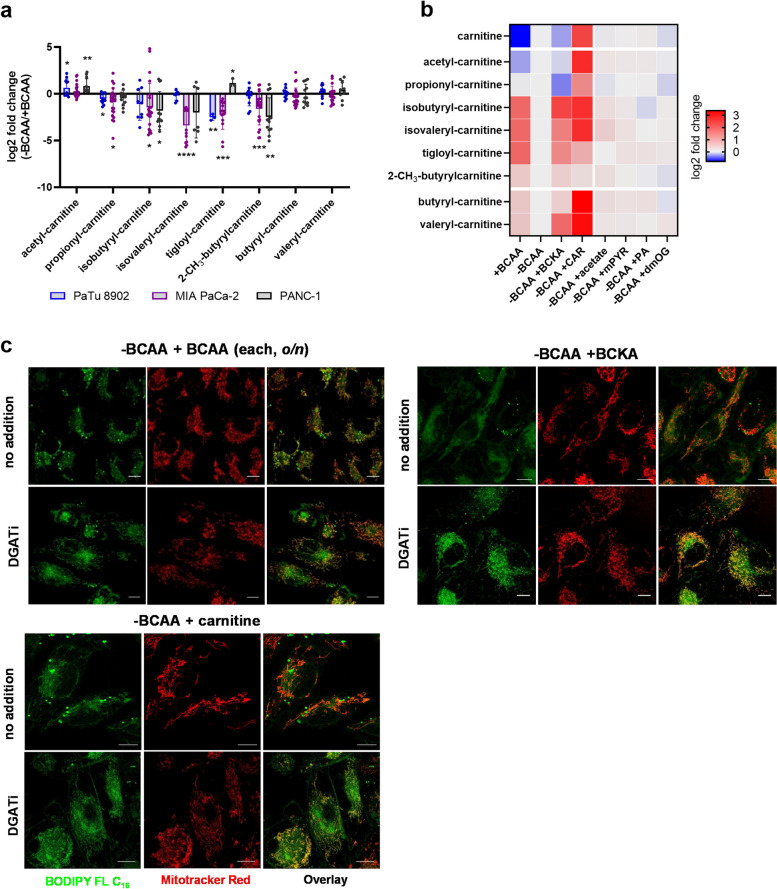
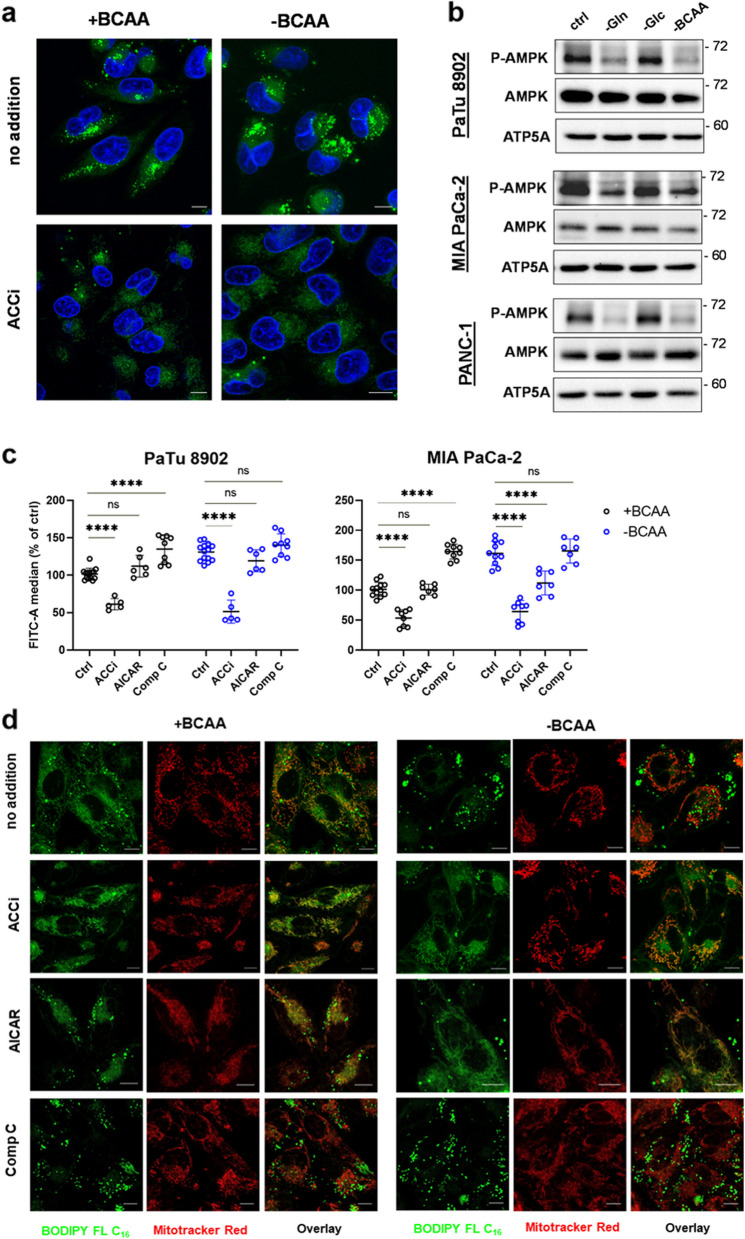
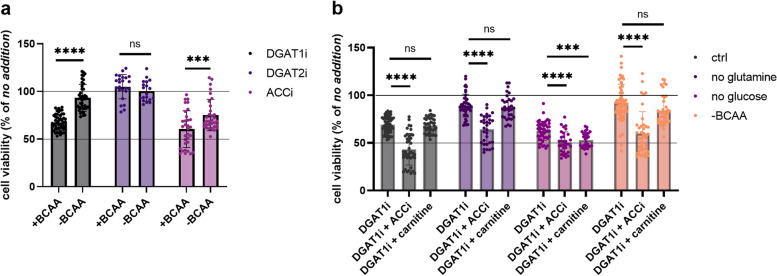
Background: Pancreatic ductal adenocarcinoma (PDAC) has been associated with the host dysmetabolism of branched-chain amino acids (BCAAs), however, the implications for the role of BCAA metabolism in PDAC development or progression are not clear. The mitochondrial catabolism of valine, leucine, and isoleucine is a multistep process leading to the production of short-chain R-CoA species. They can be subsequently exported from mitochondria as short-chain carnitines (SC-CARs), utilized in anabolic pathways, or released from the cells. Methods: We examined the specificities of BCAA catabolism and cellular adaptation strategies to BCAA starvation in PDAC cells in vitro. We used metabolomics and lipidomics to quantify major metabolic changes in response to BCAA withdrawal. Using confocal microscopy and flow cytometry we quantified the fluorescence of BODIPY probe and the level of lipid droplets (LDs). We used BODIPY-conjugated palmitate to evaluate transport of fatty acids (FAs) into mitochondria. Also, we have developed a protocol for quantification of SC-CARs, BCAA-derived metabolites. Results: Using metabolic profiling, we found that BCAA starvation leads to massive triglyceride (TG) synthesis and LD accumulation. This was associated with the suppression of activated FA transport into the mitochondrial matrix. The suppression of FA import into mitochondria was rescued with the inhibitor of the acetyl-CoA carboxylase (ACC) and the activator of AMP kinase (AMPK), which both regulate carnitine palmitoyltransferase 1A (CPT1) activation status. Conclusions: Our data suggest that BCAA catabolism is required for the import of long chain carnitines (LC-CARs) into mitochondria, whereas the disruption of this link results in the redirection of activated FAs into TG synthesis and its deposition into LDs. We propose that this mechanism protects cells against mitochondrial overload with LC-CARs and it might be part of the universal reaction to amino acid perturbations during cancer growth, regulating FA handling and storage.
Overview
The claims and statistics of this paper haven’t been checked yet.
Free: it reads the open-access text and checks the first 5 claims that cite a source we can check. Create a free account to check every claim.
Integrity signals
Registry
Cites
Statistics
Figures
Verification
Claims the paper makes
The claims and statistics of this paper haven’t been checked yet.
Free: it reads the open-access text and checks the first 5 claims that cite a source we can check. Create a free account to check every claim.
Claims other papers make about this one
Each is checked against this paper’s own text: does it say what the citing paper says it does?
The cited source says what the claim attributes to it.
In the citing paper
“Branched-chain amino acid transaminase 2 (BCAT2) is a mitochondrial enzyme involved in branched-chain amino acid (BCAA) metabolism, which can contribute to pancreatic cancer development and growth [64,65].”
From Acetylation: a new target for protein degradation in cancer (2025) · cites this paper as [65]
Self-check
Percentages, sums and reported differences re-computed from the paper’s own numbers.
The self-check needs the paper’s full text.
Citations
Cites
Rahib, L., Smith, B. D., Aizenberg, R., Rosenzweig, A. B., Fleshman, J. M., & Matrisian, L. M. (2014) · Cancer Research · doi:10.1158/0008-5472.can-14-0155 · Cited by 7,094 · cited 1×
“Its incidence and attributable death rate have been increasing continuously over the last decades [1, 2].”
BackgroundAutophagy regulates lipid metabolism
Singh, R., Kaushik, S., Wang, Y., Xiang, Y., Novak, I., Komatsu, M., Tanaka, K., Cuervo, A. M., & Czaja, M. J. (2009) · Nature · doi:10.1038/nature07976 · Cited by 3,975 · cited 1×
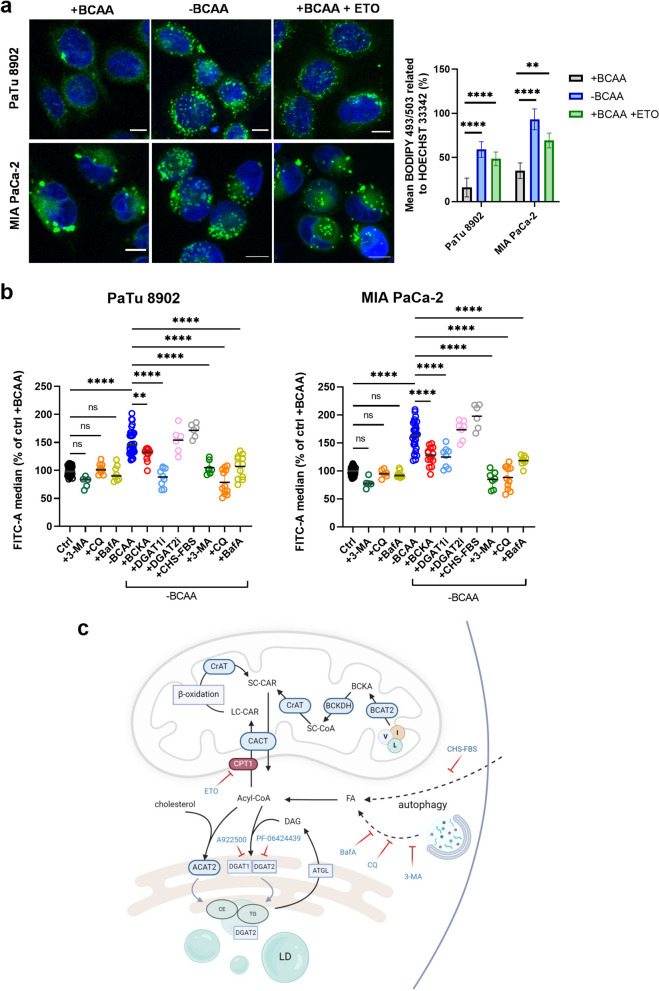
“Hence, we inhibited autophagosome formation by 3-methyladenine (3-MA) and autolysosome formation by bafilomycin A (BafA) and chloroquine (CQ) in order to decrease the availability of FAs originating from degraded membranes [24].”
Neutral red uptake assay for the estimation of cell viability/cytotoxicity
Repetto, G., del Peso, A., & Zurita, J. L. (2008) · Nature Protocols · doi:10.1038/nprot.2008.75 · Cited by 2,207 · cited 1×
“After another 72 h, neutral-red assay was performed [18].”
MethodRambold, A. S., Cohen, S., & Lippincott-Schwartz, J. (2015) · Developmental Cell · doi:10.1016/j.devcel.2015.01.029 · Cited by 1,038 · cited 5×
“Even though we did not inspect details of autophagy initiation under BCAA depletion, our data imply that BCAA starvation itself is capable to trigger autophagy, similarly to HBSS treatment [25, 26].”
BackgroundInfluentialNguyen, T. B., Louie, S. M., Daniele, J. R., Tran, Q., Dillin, A., Zoncu, R., Nomura, D. K., & Olzmann, J. A. (2017) · Developmental Cell · doi:10.1016/j.devcel.2017.06.003 · Cited by 610 · cited 7×
“Even though we did not inspect details of autophagy initiation under BCAA depletion, our data imply that BCAA starvation itself is capable to trigger autophagy, similarly to HBSS treatment [25, 26].”
BackgroundResultInfluentialTissue of origin dictates branched-chain amino acid metabolism in mutant Kras -driven cancers
Mayers, J. R., Torrence, M. E., Danai, L. V., Papagiannakopoulos, T., Davidson, S. M., Bauer, M. R., Lau, A. N., Ji, B. W., Dixit, P. D., Hosios, A. M., et al. (2016) · Science · doi:10.1126/science.aaf5171 · Cited by 582 · cited 2×
“The importance of BCAAs for PDAC tumor growth is still unclear; there are studies showing both increased and negligible metabolic utilization of BCAAs by PDAC cells in vitro and in vivo [8–10, 12, 13, 23, 40].”
BackgroundWorkflow4Metabolomics: a collaborative research infrastructure for computational metabolomics
Giacomoni, F., Le Corguillé, G., Monsoor, M., Landi, M., Pericard, P., Pétéra, M., Duperier, C., Tremblay-Franco, M., Martin, J.-F., Jacob, D., et al. (2015) · Bioinformatics · doi:10.1093/bioinformatics/btu813 · Cited by 500 · cited 1×
“Multivariate analyses were performed in Workflow4metabolomics [20] or Metabo-Analyst 5.0 0 [21], as specified in the respective figure legends.”
MethodInfluentialWang, H., Sreenivasan, U., Hu, H., Saladino, A., Polster, B. M., Lund, L. M., Gong, D.-W., Stanley, W. C., & Sztalryd, C. (2011) · Journal of Lipid Research · doi:10.1194/jlr.m017939 · Cited by 484 · cited 1×
“Previous works reported the delivery of lipolysis-derived FA import into mitochondria in starvation models [26, 28, 29], so we asked whether BCAA levels interfere with the dynamics of FA activation and its subsequent storage vs. oxidation.”
BackgroundBranched-chain amino acid catabolism fuels adipocyte differentiation and lipogenesis
Green, C. R., Wallace, M., Divakaruni, A. S., Phillips, S. A., Murphy, A. N., Ciaraldi, T. P., & Metallo, C. M. (2016) · Nature Chemical Biology · doi:10.1038/nchembio.1961 · Cited by 471 · cited 3×
“Aside from a role in oxidation or transamination, BCAA catabolism is implicated in the synthesis of odd-chain and branched-chain FAs in adipose tissue [3, 4], FAs, tri-glycerides (TGs) [23], and cholesterol [8] in PDAC.”
BackgroundInfluentialAMP kinase and malonyl-CoA: targets for therapy of the metabolic syndrome
Ruderman, N., & Prentki, M. (2004) · Nature Reviews Drug Discovery · doi:10.1038/nrd1344 · Cited by 451 · cited 1×
“One AMPK target is the acetyl-CoA carboxylase (ACC), the product of which is malonyl-CoA, an effective inhibitor of CPT1 [34].”
BackgroundAmino acid regulation of TOR complex 1
Avruch, J., Long, X., Ortiz-Vega, S., Rapley, J., Papageorgiou, A., & Dai, N. (2009) · American Journal of Physiology-Endocrinology and Metabolism · doi:10.1152/ajpendo.90645.2008 · Cited by 382 · cited 1×
“Besides this, BCAAs, mostly leucine, have been implicated in the activation of mammalian target of rapamycin complex 1 (mTORC1) signaling and consequent anabolic program under physiological and pathological conditions [5, 6].”
BackgroundLipid Droplets in Cancer: Guardians of Fat in a Stressful World
Petan, T., Jarc, E., & Jusović, M. (2018) · Molecules · doi:10.3390/molecules23081941 · Cited by 368 · cited 1×
“It is generally accepted that TG synthesis might neutralize the potentially toxic effects of non-esterified FAs in the cytosol, particularly polyunsaturated FAs (PUFAs), which are prone to oxidation and can cause cellular lipotoxicity [36–38].”
BackgroundTargeting DGAT1 Ameliorates Glioblastoma by Increasing Fat Catabolism and Oxidative Stress
Cheng, X., Geng, F., Pan, M., Wu, X., Zhong, Y., Wang, C., Tian, Z., Cheng, C., Zhang, R., Puduvalli, V., et al. (2020) · Cell Metabolism · doi:10.1016/j.cmet.2020.06.002 · Cited by 347 · cited 1×
“Impor-tantly, a negative correlation of LC-CARs and TGs has been noticed by others [45, 46].”
BackgroundHerms, A., Bosch, M., Reddy, B. J. N., Schieber, N. L., Fajardo, A., Rupérez, C., Fernández-Vidal, A., Ferguson, C., Rentero, C., Tebar, F., et al. (2015) · Nature Communications · doi:10.1038/ncomms8176 · Cited by 319 · cited 2×
“As for the mechanism of CPT1 inactivation, we presume that CPT1 might be inhibited via malonyl-CoA synthesized by ACC, which is a conserved pathway of CPT1 activity regulation [33–35].”
BackgroundNoland, R. C., Koves, T. R., Seiler, S. E., Lum, H., Lust, R. M., Ilkayeva, O., Stevens, R. D., Hegardt, F. G., & Muoio, D. M. (2009) · Journal of Biological Chemistry · doi:10.1074/jbc.m109.032888 · Cited by 317 · cited 1×
“The primary function of CRAT is to avert R-CoA accumulation by producing BCAA-CAR and SC-CAR intermediates, which can be exported from mitochondria [7, 47].”
BackgroundAcetyl-CoA Metabolism Supports Multistep Pancreatic Tumorigenesis
Carrer, A., Trefely, S., Zhao, S., Campbell, S. L., Norgard, R. J., Schultz, K. C., Sidoli, S., Parris, J. L. D., Affronti, H. C., Sivanand, S., et al. (2019) · Cancer Discovery · doi:10.1158/2159-8290.cd-18-0567 · Cited by 313 · cited 3×
“Aside from a role in oxidation or transamination, BCAA catabolism is implicated in the synthesis of odd-chain and branched-chain FAs in adipose tissue [3, 4], FAs, tri-glycerides (TGs) [23], and cholesterol [8] in PDAC.”
BackgroundMethodBCAT2-mediated BCAA catabolism is critical for development of pancreatic ductal adenocarcinoma
Li, J.-T., Yin, M., Wang, D., Wang, J., Lei, M.-Z., Zhang, Y., Liu, Y., Zhang, L., Zou, S.-W., Hu, L.-P., et al. (2020) · Nature Cell Biology · doi:10.1038/s41556-019-0455-6 · Cited by 246 · cited 2×
“Li et al. [9] demonstrated the role of mitochondrial branched-chain amino acid transaminase 2 (BCAT2) in PDAC development and showed that its genetic deletion decreased transamination activity and respiration [9], similarly to dihydrolipoamide branched chain transacylase E2 (DBT) knockdown [10].”
BackgroundCajka, T., Smilowitz, J. T., & Fiehn, O. (2017) · Analytical Chemistry · doi:10.1021/acs.analchem.7b03404 · Cited by 241 · cited 1×
“For lipidomics and metabolomics, cells were grown on 6-well plates and treated as required, quickly washed with PBS, snap-frozen, and stored at -80 °C. Metabolites were extracted using a biphasic solvent system of cold methanol, methyl tert -butyl ether, and water [16].”
MethodThe MAP1-LC3 conjugation system is involved in lipid droplet formation
Shibata, M., Yoshimura, K., Furuya, N., Koike, M., Ueno, T., Komatsu, M., Arai, H., Tanaka, K., Kominami, E., & Uchiyama, Y. (2009) · Biochemical and Biophysical Research Communications · doi:10.1016/j.bbrc.2009.03.039 · Cited by 215 · cited 1×
“LD accumulation has been observed previously in response to starvation and the activation of autophagy flux, ER stress, and dysregulation of mTORC1 [25, 27, 31, 32].”
BackgroundEnzyme promiscuity drives branched-chain fatty acid synthesis in adipose tissues
Wallace, M., Green, C. R., Roberts, L. S., Lee, Y. M., McCarville, J. L., Sanchez-Gurmaches, J., Meurs, N., Gengatharan, J. M., Hover, J. D., Phillips, S. A., et al. (2018) · Nature Chemical Biology · doi:10.1038/s41589-018-0132-2 · Cited by 215 · cited 3×
“Aside from a role in oxidation or transamination, BCAA catabolism is implicated in the synthesis of odd-chain and branched-chain FAs in adipose tissue [3, 4], FAs, tri-glycerides (TGs) [23], and cholesterol [8] in PDAC.”
BackgroundInfluentialSAR1B senses leucine levels to regulate mTORC1 signalling
Chen, J., Ou, Y., Luo, R., Wang, J., Wang, D., Guan, J., Li, Y., Xia, P., Chen, P. R., & Liu, Y. (2021) · Nature · doi:10.1038/s41586-021-03768-w · Cited by 212 · cited 1×
“Besides this, BCAAs, mostly leucine, have been implicated in the activation of mammalian target of rapamycin complex 1 (mTORC1) signaling and consequent anabolic program under physiological and pathological conditions [5, 6].”
BackgroundBranched-chain amino acid aminotransferase 2 regulates ferroptotic cell death in cancer cells
Wang, K., Zhang, Z., Tsai, H.-I., Liu, Y., Gao, J., Wang, M., Song, L., Cao, X., Xu, Z., Chen, H., et al. (2021) · Cell Death & Differentiation · doi:10.1038/s41418-020-00644-4 · Cited by 206 · cited 2×
“The importance of BCAAs for PDAC tumor growth is still unclear; there are studies showing both increased and negligible metabolic utilization of BCAAs by PDAC cells in vitro and in vivo [8–10, 12, 13, 23, 40].”
BackgroundZhu, Z., Achreja, A., Meurs, N., Animasahun, O., Owen, S., Mittal, A., Parikh, P., Lo, T.-W., Franco-Barraza, J., Shi, J., et al. (2020) · Nature Metabolism · doi:10.1038/s42255-020-0226-5 · Cited by 204
Critical role of AMPK in redox regulation under glucose starvation
Ren, Y., & Shen, H.-M. (2019) · Redox Biology · doi:10.1016/j.redox.2019.101154 · Cited by 193 · cited 3×
“As for the mechanism of CPT1 inactivation, we presume that CPT1 might be inhibited via malonyl-CoA synthesized by ACC, which is a conserved pathway of CPT1 activity regulation [33–35].”
BackgroundIlic, I., & Ilic, M. (2022) · World Journal of Gastroenterology · doi:10.3748/wjg.v28.i32.4698 · Cited by 162 · cited 1×
“Its incidence and attributable death rate have been increasing continuously over the last decades [1, 2].”
BackgroundLu, Y., Pang, Z., & Xia, J. (2023) · Briefings in Bioinformatics · doi:10.1093/bib/bbac553 · Cited by 161 · cited 1×
“Multivariate analyses were performed in Workflow4metabolomics [20] or Metabo-Analyst 5.0 0 [21], as specified in the respective figure legends.”
MethodInfluentialJovičić, E. J., Kump, A., Malavašič, P., Eichmann, T. O., Zimmermann, R., & Petan, T. (2017) · Biochimica et Biophysica Acta (BBA) - Molecular and Cell Biology of Lipids · doi:10.1016/j.bbalip.2017.12.006 · Cited by 151
Branched-chain amino acids sustain pancreatic cancer growth by regulating lipid metabolism
Lee, J. H., Cho, Y.-R., Kim, J. H., Kim, J.-W., Nam, H. Y., Kim, S. W., & Son, J. (2019) · Experimental & Molecular Medicine · doi:10.1038/s12276-019-0350-z · Cited by 149 · cited 2×
“Aside from a role in oxidation or transamination, BCAA catabolism is implicated in the synthesis of odd-chain and branched-chain FAs in adipose tissue [3, 4], FAs, tri-glycerides (TGs) [23], and cholesterol [8] in PDAC.”
BackgroundMitochondrial bioenergetic adaptations of breast cancer cells to aglycemia and hypoxia
Smolková, K., Bellancé, N., Scandurra, F. M., Genot, E. M., Gnaiger, E., Plecitá‐Hlavatá, L., Ježek, P., & Rossignol, R. (2010) · Journal of Bioenergetics and Biomembranes · doi:10.1007/s10863-009-9267-x · Cited by 129 · cited 1×
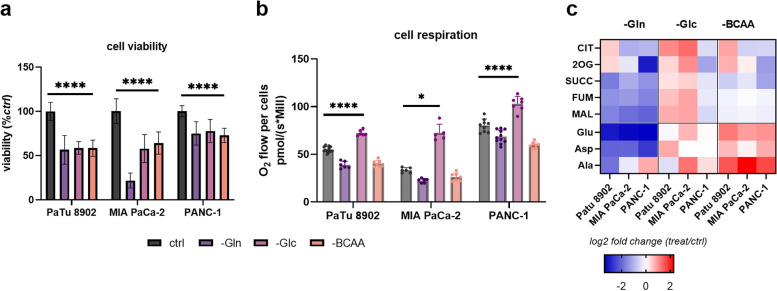
“Elevated respiration and TCA cycle intermediates in glucose-starving cells can be attributed to partial derepression of Warburg and Crabtree effects [22].”
BackgroundSelf-citationAcetylation promotes BCAT2 degradation to suppress BCAA catabolism and pancreatic cancer growth
Lei, M.-Z., Li, X.-X., Zhang, Y., Li, J.-T., Zhang, F., Wang, Y.-P., Yin, M., Qu, J., & Lei, Q.-Y. (2020) · Signal Transduction and Targeted Therapy · doi:10.1038/s41392-020-0168-0 · Cited by 129 · cited 1×
“Lei et al. [11] showed that acetylation promotes BCAT2 degradation to suppress BCAA catabolism and pancreatic cancer growth.”
BackgroundViolante, S. N., IJlst, L., Ruiter, J. P. N., Koster, J., van LENTHE, H., Durán, M., de Almeida, I. T., Wanders, R. J. A., Houten, S. M., & Ventura, F. V. (2013) · Biochimica et Biophysica Acta (BBA) - Molecular Basis of Disease · doi:10.1016/j.bbadis.2013.02.012 · Cited by 109 · cited 2×
“The primary function of CRAT is to avert R-CoA accumulation by producing BCAA-CAR and SC-CAR intermediates, which can be exported from mitochondria [7, 47].”
BackgroundLee, J., Homma, T., Kurahashi, T., Kang, E. S., & Fujii, J. (2015) · Biochemical and Biophysical Research Communications · doi:10.1016/j.bbrc.2015.06.121 · Cited by 104 · cited 1×
“LD accumulation has been observed previously in response to starvation and the activation of autophagy flux, ER stress, and dysregulation of mTORC1 [25, 27, 31, 32].”
BackgroundAutophagy is required for PDAC glutamine metabolism
Seo, J.-W., Choi, J., Lee, S.-Y., Sung, S., Yoo, H. J., Kang, M.-J., Cheong, H., & Son, J. (2016) · Scientific Reports · doi:10.1038/srep37594 · Cited by 84 · cited 1×
“The induction of autophagy in PDAC cells was also described in response to glutamine or glucose removal [42, 43].”
BackgroundKien, B., Kolleritsch, S., Kunowska, N., Heier, C., Chalhoub, G., Tilp, A., Wolinski, H., Stelzl, U., & Haemmerle, G. (2022) · Journal of Lipid Research · doi:10.1016/j.jlr.2022.100172 · Cited by 78 · cited 1×
“Previous works reported the delivery of lipolysis-derived FA import into mitochondria in starvation models [26, 28, 29], so we asked whether BCAA levels interfere with the dynamics of FA activation and its subsequent storage vs. oxidation.”
BackgroundParker, C. G., Kuttruff, C. A., Galmozzi, A., Jørgensen, L., Yeh, C., Hermanson, D. J., Wang, Y., Artola, M., McKerrall, S. J., Josyln, C. M., et al. (2017) · ACS Central Science · doi:10.1021/acscentsci.7b00420 · Cited by 77 · cited 2×
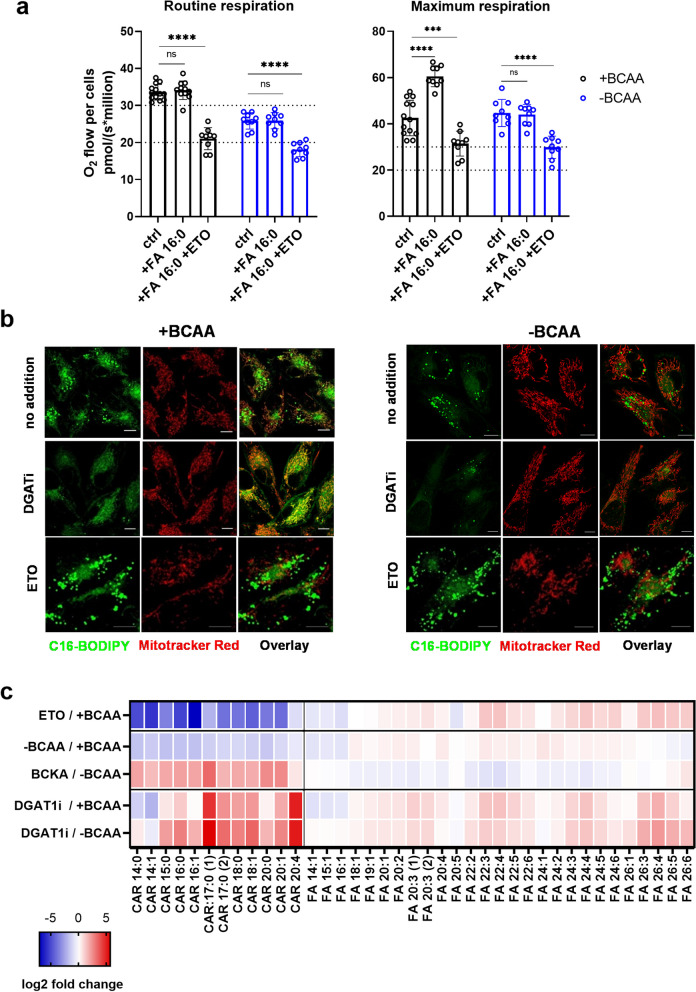
“We expected that the suppression of CPT1 function would result in LC-CAR decline, while suppression of β-oxidation or CACT [30] would result in accumulated LC-CAR (Fig.”
BackgroundLi, J., Li, K.-Y., Su, Y., Shen, Y., Lei, M., Zhang, F., Yin, M., Chen, Z., Wen, W., Hu, W., et al. (2021) · National Science Review · doi:10.1093/nsr/nwab212 · Cited by 65 · cited 2×
“The importance of BCAAs for PDAC tumor growth is still unclear; there are studies showing both increased and negligible metabolic utilization of BCAAs by PDAC cells in vitro and in vivo [8–10, 12, 13, 23, 40].”
BackgroundForkhead Box Transcription Factor Regulation and Lipid Accumulation by Hepatitis C Virus
Bose, S. K., Kim, H., Meyer, K., Wolins, N., Davidson, N. O., & Ray, R. (2014) · Journal of Virology · doi:10.1128/jvi.03327-13 · Cited by 62
Meng, Q., Xu, J., Liang, C., Liu, J., Hua, J., Zhang, Y., Ni, Q., Shi, S., & Yu, X. (2018) · Cell Death and Disease · doi:10.1038/s41419-018-1244-z · Cited by 62 · cited 1×
“The induction of autophagy in PDAC cells was also described in response to glutamine or glucose removal [42, 43].”
BackgroundMcGarrah, R. W., Zhang, G., Christopher, B. A., Deleye, Y., Walejko, J. M., Page, S. C., Ilkayeva, O., White, P. J., & Newgard, C. B. (2019) · American Journal of Physiology-Endocrinology and Metabolism · doi:10.1152/ajpendo.00334.2019 · Cited by 59 · cited 1×
“This is in contrast to observations reported for the heart muscle, where TG pool was diminished after BCAA-restricted chow diet in Zucker fatty rats [41].”
ResultWilcock, D. J., Badrock, A. P., Wong, C. W., Owen, R., Guerin, M., Southam, A. D., Johnston, H., Telfer, B. A., Fullwood, P., Watson, J., et al. (2022) · Cell Reports · doi:10.1016/j.celrep.2022.110995 · Cited by 57 · cited 2×
“Our data support the hypothesis that non-lipolysis-derived FA import into mitochondria is potentially detrimental to mitochondrial function [25, 45].”
BackgroundJanovská, P., Melenovský, V., Svobodová, M., Havlenova, T., Kratochvílová, H., Haluzík, M., Hošková, E., Pelikánová, T., Kautzner, J., Monzo, L., et al. (2020) · Journal of Cachexia Sarcopenia and Muscle · doi:10.1002/jcsm.12631 · Cited by 54 · cited 1×
“Metabolites were detected in negative and positive electrospray ion mode (Thermo Q Exactive Plus instrumentation) [17].”
MethodLong, M., Sanchez‐Martinez, A., Longo, M., Suomi, F., Stenlund, H., Johansson, A. I., Ehsan, H., Salo, V. T., Montava‐Garriga, L., Naddafi, S., et al. (2022) · The EMBO Journal · doi:10.15252/embj.2021109390 · Cited by 46 · cited 1×
“Importantly, there is a report by Long et al., which demonstrated a negative correlation of TG accumulation with BCAA-derived carnitines after iron depletion by deferiprone [48], suggesting that the SC-CAR equilibrium can be disturbed by mechanisms other than BCAA starvation.”
BackgroundZhang, H., Wang, Y., Guan, L., Chen, Y., Chen, P., Sun, J., Gonzalez, F. J., Huang, M., & Bi, H. (2020) · Journal of Pharmaceutical Analysis · doi:10.1016/j.jpha.2020.04.004 · Cited by 45 · cited 1×
“TG synthesis associated with CPT1 inhibition was also demonstrated in several in vitro cell models, including PANC-1 cells [44].”
BackgroundReductive carboxylation and 2-hydroxyglutarate formation by wild-type IDH2 in breast carcinoma cells
Smolková, K., Dvořák, A., Zelenka, J., Vítek, L., & Ježek, P. (2015) · The International Journal of Biochemistry & Cell Biology · doi:10.1016/j.biocel.2015.05.012 · Cited by 43 · cited 1×
“High-resolution respirometry (HRR) was applied with intact cells using a coupling control protocol (CCP) and O2k-respirometer (Oroboros Instruments, Austria), as reported previously [19].”
MethodSelf-citationLipid Droplets Protect Human β-Cells From Lipotoxicity-Induced Stress and Cell Identity Changes
Tong, X., & Stein, R. W. (2021) · Diabetes · doi:10.2337/db21-0261 · Cited by 41 · cited 1×
“It is generally accepted that TG synthesis might neutralize the potentially toxic effects of non-esterified FAs in the cytosol, particularly polyunsaturated FAs (PUFAs), which are prone to oxidation and can cause cellular lipotoxicity [36–38].”
BackgroundPancreatic cancer: branched-chain amino acids as putative key metabolic regulators?
Rossmeislová, L., Gojda, J., & Smolková, K. (2021) · Cancer and Metastasis Reviews · doi:10.1007/s10555-021-10016-0 · Cited by 41 · cited 2×
“Our study, however, is relevant to substrate variations that have been demonstrated during PDAC progression [39].”
BackgroundSelf-citationBocca, C., Kane, M. S., Veyrat‐Durebex, C., Nzoughet, J. K., de la Barca, J. M. C., Chupin, S., Alban, J., Procaccio, V., Bonneau, D., Simard, G., et al. (2019) · Journal of Proteome Research · doi:10.1021/acs.jproteome.9b00081 · Cited by 18 · cited 1×
“The link of BCAA-related mitochondrial carnitines and TG synthesis deserves further investigation, ideally in the context of mitochondrial dysfunction, because there is accumulating evidence that enhanced TG synthesis and LD bio-genesis correlate with mitochondria-related disturbances [26, 49–51].”
BackgroundSmolková, K., Špačková, J., Gotvaldová, K., Dvořák, A., Křenková, A., Hubálek, M., Holendová, B., Vítek, L., & Ježek, P. (2020) · Scientific Reports · doi:10.1038/s41598-020-65351-z · Cited by 16 · cited 1×
“Cell metabolites 2OG (347.3), fumarate (245.2), malate (335.3), and citrate (273.2) were measured using a method reported previously [14, 15].”
MethodInfluentialSelf-citationBiochemical Background in Mitochondria Affects 2HG Production by IDH2 and ADHFE1 in Breast Carcinoma
Špačková, J., Gotvaldová, K., Dvořák, A., Urbančoková, A., Pospíšilová, K., Větvička, D., Leguina‐Ruzzi, A., Tesařová, P., Vítek, L., Ježek, P., et al. (2021) · Cancers · doi:10.3390/cancers13071709 · Cited by 16 · cited 1×
“Cell metabolites 2OG (347.3), fumarate (245.2), malate (335.3), and citrate (273.2) were measured using a method reported previously [14, 15].”
MethodInfluentialSelf-citationWang, S., Song, T., & Wang, S. (2020) · Medicine · doi:10.1097/md.0000000000020310 · Cited by 13 · cited 1×
“The link of BCAA-related mitochondrial carnitines and TG synthesis deserves further investigation, ideally in the context of mitochondrial dysfunction, because there is accumulating evidence that enhanced TG synthesis and LD bio-genesis correlate with mitochondria-related disturbances [26, 49–51].”
BackgroundJusović, M., Starič, P., Jovičić, E. J., & Petan, T. (2023) · Cancers · doi:10.3390/cancers15194857 · Cited by 12 · cited 2×
“BCAA starvation, therefore, resembles the other previously reported model of nutrient star-vation (Hanks balanced salt solution, HBSS) [25–27].”
BackgroundResult
Cited by
Xiang, F., Zhang, Z., Xie, J., Xiong, S., Chen, Y., Liao, D., Xia, B., & Lin, L. (2025) · Journal of Translational Medicine · doi:10.1186/s12967-025-06341-5 · Cited by 127
“…converted to branched-chain CoA, which can also bind carnitine to form branched-chain acylcarnitines (BCACs), such as propionylcarni-tine (C3-carnitine), succinylcarnitine (C4DC-carnitine) and isovalerylcarnitine (isoC5-carnitine), which are involved in the energy production process of cells [10].”
Fatty Acid Trafficking Between Lipid Droplets and Mitochondria: An Emerging Perspective
Smolková, K., & Gotvaldová, K. (2025) · International Journal of Biological Sciences · doi:10.7150/ijbs.105361 · Cited by 48
“Several lines of evidence point to an inverse correlation between LC-CARs and TGs; the inhibition of DGAT1 induces an accumulation of LC-CARs [21, 22, 41], while CPT1 inhibition attenuates LC-CAR levels as opposed to a synthesis of TGs.”
InfluentialSelf-citation俞明康, Yang, D., Chen, X., Yang, Y., Zhang, B., Jiang, X., Xing, L., Yang, Y., Sun, Y., & Li, N. (2026) · Molecular Biomedicine · doi:10.1186/s43556-026-00427-2 · Cited by 40
“Another study reported that BCAA metabolism in pancreatic cancer regulates lipid homeostasis by controlling mitochondrial fatty acid import [335].”
Volpicella, M., Sgobba, M. N., Laera, L., Francavilla, A. L., Luca, D. I. D., Guerra, L., Pierri, C. L., & Grassi, A. (2025) · Biomolecules · doi:10.3390/biom15020216 · Cited by 28
“Recent findings highlight the interplay between amino acid metabolism and lipid homeostasis in the context of cancer [82,84].”
InfluentialMasi, M., Poppi, L., Previtali, V., Nelson, S. R., Wynne, K. J., Varignani, G., Falchi, F., Veronesi, M., Albanesi, E., Tedesco, D., et al. (2025) · Cell Death Discovery · doi:10.1038/s41420-025-02382-3 · Cited by 24
“…reduced consumption of tricarboxylic acid (TCA) cycle intermediates (i.e. citrate and succinate) [48], branched-chain amino acids (BCAA; i.e. isoleucine, leucine, valine) [49, 50] and other amino acids (i.e. histidine, phenylalanine, tryptophan, tyrosine, arginine, asparagine) [46, 51, 52] (Fig.”
Metadata
- Authors
- Gotvaldová, K., Špačková, J., Novotný, J., Baslarová, K., Ježek, P., Rossmeislová, L., Gojda, J., & Smolková, K.
- Affiliations
- Czech Academy of Sciences, Institute of Physiology (CZ)
- Charles University (CZ)
- Corresponding author
- Smolková, Katarína
- ORCID
- Venue
- Cancer & Metabolism
- Published
- 2024-03-26
- Volume
- 12
- Issue
- 1
- Pages
- 10-10
- ISSN
- 2049-3002 (ISSN-L)
- PMC
- PMC10967191
- OpenAlex
- W4393200926
- Cited by
- 27
- References
- 51
- Citations by year
- 2026: 9 · 2025: 16 · 2024: 2
- FWCI
- 5.39
- Type
- journal article
- Language
- en
- Open access
- gold
- doi.org
- Licence
- cc-by
- creativecommons.org/licenses/by/4.0 (tdm)
- creativecommons.org/licenses/by/4.0 (vor)
- Locations
- Cancer & Metabolism (publishedVersion, cc-by)
- PubMed Central (publishedVersion, cc-by)
- PubMed (publishedVersion)
- DOAJ (DOAJ: Directory of Open Access Journals) (submittedVersion)
- Funders
- Agentura Pro Zdravotnický Výzkum České Republiky (NV19-01–00101)
- Topics
- Life Sciences › Biochemistry, Genetics and Molecular Biology › Cancer Research › Cancer, Lipids, and Metabolism
- Health Sciences › Medicine › Oncology › Pancreatic and Hepatic Oncology Research
- Life Sciences › Biochemistry, Genetics and Molecular Biology › Cancer Research › Cancer, Hypoxia, and Metabolism
- Keywords
- branched-chain amino acids, pancreatic ductal adenocarcinoma, BCAA catabolism, lipid droplets, triglyceride synthesis, acetyl-CoA carboxylase, AMP kinase, CPT1A
About these checks
Registry, retraction, Cites and statistics results are computed, not judged, with one exception: a printed reference that no index lists is read once by a model before it counts as a citation error. Claims are extracted by a model and kept only when their quote appears verbatim in the text; each cited source is then checked, with a model’s help, for whether it says what the claim relies on. Those verdicts can be wrong — read the claim’s quote and the cited source before relying on one.
Statistics and arithmetic are recomputed, not judged.
Confidence bands are shown only for fields calibrated on our annotated test set. None is calibrated yet, so no band is shown.
What counts as a claim ›How we measure confidence ›How we check this ›
Are you an author, or do you see a problem with this page? Request a review
Data sources
Bibliographic data: Semantic Scholar, OpenAlex, Crossref.
Contains information from the Semantic Scholar Academic Graph Datasets, made available under the ODC Attribution License (ODC-BY 1.0).
Semantic Scholar’s data is described in: Kinney, R., et al. (2023). The Semantic Scholar Open Data Platform. arXiv:2301.10140.
