

Psychological status and behavior changes of the public during the COVID-19 epidemic in China
Open accessThe DOI matches its Crossref record; 39 of the 39 references it cites were found in a registry or an index.
Abstract
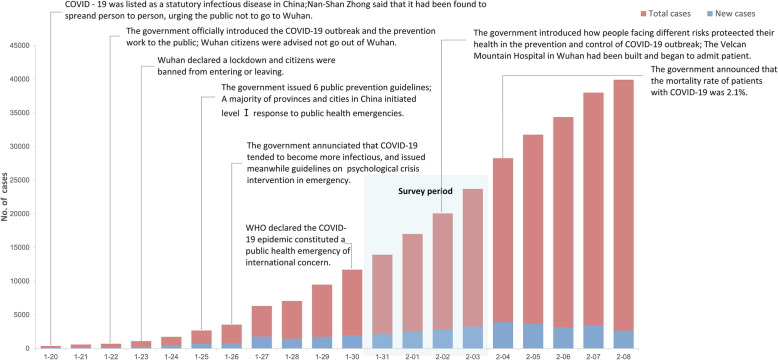
Background: A cluster of pneumonia cases were reported by Wuhan Municipal Health Commission, China in December 2019. A novel coronavirus was eventually identified, and became the COVID-19 epidemic that affected public health and life. We investigated the psychological status and behavior changes of the general public in China from January 30 to February 3, 2020. Methods: Respondents were recruited via social media (WeChat) and completed an online questionnaire. We used the State-Trait Anxiety Inventory, Self-rating Depression Scale, and Symptom Checklist-90 to evaluate psychological status. We also investigated respondents’ behavior changes. Quantitative data were analyzed by t-tests or analysis of variance, and classified data were analyzed with chi-square tests. Results: In total, 608 valid questionnaires were obtained. More respondents had state anxiety than trait anxiety (15.8% vs 4.0%). Depression was found among 27.1% of respondents and 7.7% had psychological abnormalities. About 10.1% of respondents suffered from phobia. Our analysis of the relationship between subgroup characteristics and psychological status showed that age, gender, knowledge about COVID-19, degree of worry about epidemiological infection, and confidence about overcoming the outbreak significantly influenced psychological status. Around 93.3% of respondents avoided going to public places and almost all respondents reduced Spring Festival-related activities. At least 70.9% of respondents chose to take three or more preventive measures to avoid infection. The three most commonly used prevention measures were making fewer trips outside and avoiding contact (98.0%), wearing a mask (83.7%), and hand hygiene (82.4%). Conclusions: We need to pay more attention to public psychological stress, especially among young people, as they are likely to experience anxiety, depression, and psychological abnormalities. Different psychological interventions could be formulated according to the psychological characteristics of different gender and age groups. The majority of respondents followed specific behaviors required by the authorities, but it will take time to observe the effects of these behaviors on the epidemic.
Overview
The claims and statistics of this paper haven’t been checked yet.
Free: it reads the open-access text and checks the first 5 claims that cite a source we can check. Create a free account to check every claim.
Integrity signals
Registry
Cites
Statistics
Figures
Verification
Claims the paper makes
The claims and statistics of this paper haven’t been checked yet.
Free: it reads the open-access text and checks the first 5 claims that cite a source we can check. Create a free account to check every claim.
Claims other papers make about this one
Each is checked against this paper’s own text: does it say what the citing paper says it does?
The cited source doesn’t support the claim as written.
In the citing paper
“No conclusions can be drawn from the studies with very small sample sizes of young people [37,40,43,44].”
From Exploring the Impact of COVID-19 on Mental Health Outcomes in Children and Adolescents: A Systematic Review (2020) · cites this paper as [37]
Checked by a reasoning model — may be wrong.
Experimental — accuracy not yet measuredThe source backs part of the claim, not all of it — or backs it for a different population, condition or comparison.
In the citing paper
“Specifically, one study conducted in the general population but including a subgroup of individuals younger than 18 years (n = 34) found that this younger group did not differ from older groups in the reported levels of psychological distress [37].”
From Exploring the Impact of COVID-19 on Mental Health Outcomes in Children and Adolescents: A Systematic Review (2020) · cites this paper as [37]
Experimental — accuracy not yet measuredThe source backs part of the claim, not all of it — or backs it for a different population, condition or comparison.
In the citing paper
“Depression and anxiety were higher among children and adolescents in other pandemics, and specifically COVID‑19 [22,23,24,25,26,27,28,29,30,31,32,33,34].”
From Mental Health of Children and Adolescents Amidst COVID-19 and Past Pandemics: A Rapid Systematic Review (2021) · cites this paper as [28]
Experimental — accuracy not yet measuredThe source backs part of the claim, not all of it — or backs it for a different population, condition or comparison.
In the citing paper
“on the COVID‑19 pandemic reported that the current pandemic has significantly affected the emotional and behavioral experience of children and adolescents [22,23,24,25,26,27,28,29,30,31,32,33,34].”
From Mental Health of Children and Adolescents Amidst COVID-19 and Past Pandemics: A Rapid Systematic Review (2021) · cites this paper as [28]
Experimental — accuracy not yet measuredThe source backs part of the claim, not all of it — or backs it for a different population, condition or comparison.
In the citing paper
“Specifically, impairments in mental health leave children and adolescents with increased emotional stress, feelings of helplessness, and fear, which can evolve into mental illnesses such as anxiety, depression, and posttraumatic stress symptoms [18,20,21,22,23,24,25,26,27,28,29,30,31,32,33,34].”
From Mental Health of Children and Adolescents Amidst COVID-19 and Past Pandemics: A Rapid Systematic Review (2021) · cites this paper as [28]
Experimental — accuracy not yet measured
14 more claims about this paper
Create a free account to see every claim other papers make about this one.
Self-check
Percentages, sums and reported differences re-computed from the paper’s own numbers.
The self-check needs the paper’s full text.
Citations
Cites
Clinical features of patients infected with 2019 novel coronavirus in Wuhan, China
Huang, C., Wang, Y., Li, X., Ren, L., Zhao, J., Hu, Y., Zhang, L., Fan, G., Xu, J., Gu, X., et al. (2020) · The Lancet · doi:10.1016/s0140-6736(20)30183-5 · Cited by 48,884
Self-citationA novel coronavirus from patients with pneumonia in China, 2019
Zhu, N., Zhang, D., Wang, W., Li, X., Yang, B., Song, J., Zhao, X., Huang, B., Shi, W., Lu, R., et al. (2020) · New England Journal of Medicine · doi:10.1056/nejmoa2001017 · Cited by 28,244
(1970) · Cited by 24,983
Chen, N., Zhou, M., Dong, X., Qu, J., Gong, F., Han, Y., Qiu, Y., Wang, J., Liu, Y., Wei, Y., et al. (2020) · The Lancet · doi:10.1016/s0140-6736(20)30211-7 · Cited by 21,415
Self-citationEarly transmission dynamics in Wuhan, China, of novel coronavirus-infected pneumonia
Li, Q., Guan, X., Wu, P., Wang, X., Zhou, L., Tong, Y., Ren, R., Leung, K. S. M., Lau, E. H. Y., Wong, J. Y., et al. (2020) · New England Journal of Medicine · doi:10.1056/nejmoa2001316 · Cited by 16,575
Self-citationLu, R., Zhao, X., Li, J., Niu, P., Yang, B., Wu, H., Wang, W., Song, H., Huang, B., Zhu, N., et al. (2020) · The Lancet · doi:10.1016/s0140-6736(20)30251-8 · Cited by 11,907
Wang, C., Pan, R., Wan, X., Tan, Y., Xu, L., Ho, C. S., & Ho, R. C. (2020) · International Journal of Environmental Research and Public Health · doi:10.3390/ijerph17051729 · Cited by 9,923
A self-rating depression scale
ZUNG, W. W. K. (1965) · Archives of General Psychiatry · doi:10.1001/archpsyc.1965.01720310065008 · Cited by 9,813
First case of 2019 novel coronavirus in the United States
Holshue, M. L., DeBolt, C., Lindquist, S., Lofy, K. H., Wiesman, J., Bruce, H., Spitters, C., Ericson, K., Wilkerson, S., Tural, A., et al. (2020) · New England Journal of Medicine · doi:10.1056/nejmoa2001191 · Cited by 6,030
Isolation of a Novel Coronavirus from a Man with Pneumonia in Saudi Arabia
Zaki, A. M., van Boheemen, S., Bestebroer, T. M., Osterhaus, A. D. M. E., & Fouchier, R. A. M. (2012) · New England Journal of Medicine · doi:10.1056/nejmoa1211721 · Cited by 5,735
Research works printed but not linked: 5
- 20. Speilberger CD. Manual for the StateTrait anxiety inventory (form Y). Palo Alto: Consulting Psychologists Press; 1983.
- 23. Zheng X, Shu L, Zhang A, Huang G, Zhang J, Sun M, et al. The test report of state-trait anxiety inventory in Changchun. Chin Mental Health J. 1992;7(02): 60-2 (in Chinese).
- 24. Wang C, Cai Z, Xu Q. Self-rating depression scale -SDS assessment and analysis of 1340 normal subjects. Chin J Nervous Mental Dis. 1986;12(5):267- 8 (in Chinese).
- 25. Jin H, Wu W, Zhang M. Preliminary analysis of evaluation results of SCL-90 in Chinese normal subjects. Chin J Nervous Mental Dis. 1986;05:260-3 (in Chinese).
- 26. Hua J, Wenyuan W, Mingyuan Z. Primary analysis for evaluation results of SCL-90 from Chinese norm. Chin J Nervous Mental Dis. 1986;5:260-3.
Cited by
Items 301–374 of 374
Rahman, M. A., Das, P., Lam, L., Alif, S. M., Sultana, F., Salehin, M., Banik, B., Joseph, B., Parul, P., Lewis, A. P., et al. (2024) · Research Square · doi:10.21203/rs.3.rs-3977428/v1 · Cited by 1
Bello, S. O., Igumbor, E. U., Deeni, Y., Ochu, C. L., & Popoola, M. A. (2020) · medRxiv · doi:10.1101/2020.09.13.20193524
Perez-Siguas, R. E., Matta-Solis, E. P., Matta-Solis, H. H., Artezano, A. R., Matta-Zamudio, L., & Yauri-Machaca, M. (2020) · International Journal of Advanced Computer Science and Applications · doi:10.14569/ijacsa.2020.0111068
“In the positive patients for COVID-19, they have been considered vulnerable in the mental aspect, because this desease presents depressive symptoms that prevent them from advancing in their life, it has been expected that positive patients with depressive symptoms do not tend to communicate with others and do not seek…”
BackgroundSapkota, B., Sapkota, B., Sapkota, B., & Lamichhane, N. (2020) · American Journal of Psychiatry and Neuroscience · doi:10.11648/j.ajpn.20200804.12
“The fear and anxiety related to epidemics and pandemics also influence the behaviour of people in the community [2].”
BackgroundPsychological Status and Behavior Changes Among Addis Ababa People during the COVID-19 Epidemic.Preprint
Woldemedihin, F., Anbesse, R., Kasahun, Y., & Melaku, M. K. (2020) · Journal of Educational & Psychological Research · doi:10.21203/rs.3.rs-134839/v1
“According to the results of the normal model of the scale, we defined a score of ≥ 2 for each factors as corresponding to abnormal symptoms [6].”
BackgroundResultInfluentialThe Effects of Pre-Response Before COVID-19 Outbreak on Strategic Decision MakingPreprint
Jung, J. H., Kim, D.-W., & Jung, I. H. (2020) · Research Square · doi:10.21203/rs.3.rs-72232/v1
“Also, global health crises such as COVID-19 require large-scale behavioral changes, but serious psychological burdens and pressures on individuals may not be capable of rational behavior [8].”
BackgroundModeling the Spread of COVID-19 Among Doctors from the Asymptomatic Individuals
Biswas, M. H. A., Paul, A. K., Khatun, M. S., Mandal, S., Akter, S., Islam, M. A., Khatun, M. R., & Samad, S. A. (2021) · Mathematical engineering · doi:10.1007/978-981-33-6264-2_3
Neumonitis química secundaria a desinfección de superficies
Rodríguez, P. M., Torres, I. P., & Prado, L. M. B. (2021) · Atención Primaria · doi:10.1016/j.aprim.2021.102123
The Mood of Elite Polish Athletes and P.E. Students During the First Wave of the COVID-19 Pandemic
Guszkowska, M., Szczypińska, M., & Samełko, A. (2021) · Studies in Sport Humanities · doi:10.5604/01.3001.0014.8906
Zhuang, J., Cai, G., Lu, Y., Lin, Y., Wong, L. P., Hu, Z., Yamamoto, T., Morita, K., Aoyagi, K., & He, F. (2021) · Research Square · doi:10.21203/rs.3.rs-420996/v1
Türkmen, A. S., Ceylan, A., & Topuz, A. (2021) · Türkiye Halk Sağlığı Dergisi · doi:10.20518/tjph.979217
مصلح, ا. ت. ع. (2021) · لارك · doi:10.31185/lark.vol4.iss43.2046 · Cited by 2
Understanding COVID-19 in Brazil: Socioeconomic Impacts, Statistical Analysis and Future Challenges
Peng, Y., do Nascimento, A. R., do Nascimento, I. F., Souza, J. G. D. M., Nagata, T., Albuquerque, P. H. M., Kimura, H., & Nagata, M. (2021) · Studies in systems, decision and control · doi:10.1007/978-3-030-72834-2_20
Ma, H., Liu, M., Zhao, S., Long, M., Diao, Y., Feng, Z., Wu, H. L., & Wang, Y. (2021) · Research Square · doi:10.21203/rs.3.rs-1015671/v1
Vulu, F., Ilombe, G., Vizcaino, L., Mariën, J., Morimoto, Y., Weetman, D., Lenhart, A. E., Irish, S. R., & Bobanga, T. L. (2021) · bioRxiv (Cold Spring Harbor Laboratory) · doi:10.1101/2021.11.08.467678 · Cited by 4
Pre-pandemic suicidal ideation and COVID-19 preventive behavior: a prospective cohort study
Sueki, H., & Ueda, M. (2021) · Psychology Health & Medicine · doi:10.1080/13548506.2021.2014061
“The association between risk factors for suicide and COVID-19 preventive behaviors has been demonstrated by cross-sectional surveys (Liu et al., 2020; Okruszek et al., 2020; Stickley et al., 2020a, 2020b).”
BackgroundInfluentialMental well-being of general population during COVID-19 pandemic
Priyanka, & Rasania, S. K. (2021) · Indian Journal of Community Health · doi:10.47203/ijch.2021.v33i03.021
“(8) Our results are in accordance with other studies which have reported lower mental wellbeing and higher level of anxiety and stress in younger population because of the pandemic.(10,16,19,21,23,27,28,29) Mohammad Ali et al, in their study from Bangladesh, found that people more than 50 years of age are more psychol…”
BackgroundResultMejia, C. R., Rodríguez-Alarcón, J. F., Ticona, D., Fernández, M. F., Esteban, R. F. C., & Mamani-Benito, O. J. (2021) · Pakistan Journal of Medical and Health Sciences · doi:10.53350/pjmhs211551788
Dashtgard, A., Dehghani, H., Mohsenizadeh, S. M., Marzouni, H. Z., & Moqaddam, M. A. (2022) · Modern Care Journal · doi:10.5812/modernc.120820
Yuan, J., Cao, B., Zhang, C., Xin, M., Fang, Y., Chen, Y., Huang, D., Li, L., Xuan, X., Zhang, G., et al. (2021) · doi:10.2196/preprints.29828
Kumari, M. (2022) · Journal of Medical Science And clinical Research · doi:10.18535/jmscr/v10i2.18
Choudhury, S., Bhuvaneshwari, S., Manohar, B., Dash, P., Goel, S., & Mathur, H. (2022) · International Journal of Health Sciences · doi:10.53730/ijhs.v6ns1.5621
“[12], which could be linked to psychological stress.”
BackgroundJavaroni, V. (2022) · International Brazilian Journal of Urology · doi:10.1590/s1677-5538.ibju.2021.764.1
“5 million COVID-19 cases have been confirmed worldwide, with more than 420,000 lives lost due to the disease (2), and increased rates of post-traumatic stress disorder (PTSD), depression and anxiety were already expected in the general population, and even more in COVID-19 survivors, following the pandemic (3-6).”
BackgroundThe Effects of Pre-Response Before COVID-19 Outbreak on Strategic Decision MakingPreprint
Jung, J. H., Kim, D.-W., & Jung, I. H. (2020) · Research Square · doi:10.21203/rs.3.rs-78153/v1
Menculini, G., Pomili, G., Brufani, F., Minuti, A., Mancini, N., D’Angelo, M., Biscontini, S., Mancini, E., Savini, A., Orsolini, L., et al. (2022) · Frontiers in Psychiatry · doi:10.3389/fpsyt.2022.869326
“7%, according to previous studies (66, 67), and an increase in the severity of pre-existing depression was detected (82).”
BackgroundResultConcern about COVID-19 among the Spanish population: Validation of a scale and associated symptoms
Penado, M., Serrano‐Ibáñez, E. R., Vázquez, T. C., Morales, M. D.-P., & López-Flores, M. (2022) · Journal of Affective Disorders · doi:10.1016/j.jad.2022.05.018
“…of fear, individuals may not be rational when reacting to COVID-19 (Martínez-Lorca et al., 2020), but the difference with concern is that this last variable may increase protective behaviors such as washing hands regularly, staying away from crowded places, and wearing face masks (Liu, 2020).”
Al-Qudimat, A. R., Al‐Zoubi, R. M., Elaarag, M., Nashwan, A. J., Hamze, A. K., Bawadi, H. A., Yassin, A. A., Assim, A., Aboumarzouk, O. M., Zarour, A. M., et al. (2022) · doi:10.22541/au.165217342.21121509/v1
Ahmed, M. S., Abid, R., & Ahmed, N. (2022) · PsyArXiv (OSF Preprints) · doi:10.31234/osf.io/8hvbj
Cinislioğlu, A. E., Şam, E., Cinislioğlu, N., Demirdöğen, Ş. O., Karabulut, İ., Akkaş, F., Tozoğlu, E. Ö., Tör, İ. H., & Özbey, İ. (2022) · Yeni Üroloji Dergisi · doi:10.33719/yud.2022;17-2-1064135 · Cited by 1
Zhang, R., Chen, Z., Zhao, W., Feng, P., Zhou, F., & Feng, T. (2022) · Research Square · doi:10.21203/rs.3.rs-2003812/v1
Andreatta, M., Jongerling, J., & Wieser, M. J. (2022) · doi:10.31219/osf.io/zrjeb
Don't Say It's Over: The Perceived Epidemic Stage and Covid Preventive BehaviourPreprint
Эдуардовна, С. Я., Antonova, N. A., Sharin, N. A., & Eritsyan, K. Y. (2022) · doi:10.31234/osf.io/pzw3f
Universitas Katolik Indonesia Santu Paulus Ruteng, E. N. T., & Eka, A. R. (2022) · Gaceta Médica de Caracas · doi:10.47307/gmc.2022.130.s5.32
García, F., Carlo, J. R. R., Ferrel, M. D. R. T., & Fuentes, E. B. (2022) · Ciencia Latina Revista Científica Multidisciplinar · doi:10.37811/cl_rcm.v6i6.3650
Behaviour Response Among Educated Young Adults Towards COVID-19 Pandemic in Malaysia
Masuri, M. G., & Zulfikri, N. I. I. M. (2022) · Malaysian Journal of Medicine and Health Sciences · doi:10.47836/mjmhs.18.s15.12
An Ethnographic Study of the Concept of COVID-19 in the Belu Community Beliefs
Mau, D. T., & Naibili, M. J. E. (2022) · Jurnal Aisyah Jurnal Ilmu Kesehatan · doi:10.30604/jika.v7i3.1103
Ušanović, L., Tomić, N., Čustović, N., Niesler, B., & Pojskić, L. (2023) · Journal of Health Sciences · doi:10.17532/jhsci.2023.1997 · Cited by 1
Does Erectile Dysfunction Develop Following COVID-19 Infection?
Karabıçak, M., & Türk, H. (2023) · Urological Science · doi:10.4103/uros.uros_18_22
Burnout in Stroke Patients Pre-and Post-COVID-19 Pandemic
Ahmed, H. M., Zakaria, H. M., Fahmy, E. M., & Elsherif, A. A. (2023) · The Egyptian Journal of Hospital Medicine · doi:10.21608/ejhm.2023.296398
Silva, L. I. M., Moreno, G., Daviña, P. R. G., Abdelkader, S. M., Hernández-Martín, M. M., Moreno-Pimentel, A. G., & Monroy, A. M. (2023) · BMC Nursing · doi:10.1186/s12912-023-01370-1
“In addition, the majority of respondents were diligent in following the preventive measures prescribed by the health authorities [20].”
BackgroundCremer, K., Frère, J., Chatzis, O., Kabamba, B., Renard, F., Keukeleire, M. D., Mendonça, R. D., der Linden, D. V., & Robert, A. R. (2023) · Health · doi:10.4236/health.2023.156043
Su, Y., Luo, M., Li, J., Wang, Z., Yang, X., & Wang, Y. (2023) · SSRN Electronic Journal · doi:10.2139/ssrn.4508680 · Cited by 1
A Study on the Adaptation Strategies Followed by the Dryland Farmers during Covid-19 Pandemic
Vaishnavi, C., Kammar, S. K., Goudappa, S. B., Wali, V. B., & Prashanth, B. (2023) · International Journal for Research in Applied Science and Engineering Technology · doi:10.22214/ijraset.2023.56207
Antonova, N. A., Eritsyan, K. Y., Усачева, Н. М., & Tsvetkova, L. (2023) · Frontiers in Psychology · doi:10.3389/fpsyg.2023.1286036
Social Support Impact on Public Anxiety During the COVID-19 Pandemic in China
Ao, Y., & Bahmani, H. (2023) · Springer eBooks · doi:10.1007/978-981-99-8207-3_6
Eguiarte, B. E. B., & Alcántara, R. R. (2023) · Educação (UFSM) · doi:10.5902/1984644485169
Karkhanei, B., Hassanvandi, H., Rabiei, M. A. S., Mehri, F., & Bahrami, S. A. R. S. (2023) · Avicenna Journal of Nursing and Midwifery Care · doi:10.32592/ajnmc.31.4.294
Psychological stress imposed on residents of Malé city during the state-mandated lockdown
ABDULLA, A., HUSSAIN, L., Samha, A., NIZAM, M. N., IBRAHIM, M. N., & MOHAMED, A. R. (2021) · The Maldives National Journal of Research · doi:10.62338/vvmvpy98
Mathematical assessment of the role of human behavior changes on SARS-CoV-2 transmission dynamicsPreprint
Pant, B., Safdar, S., Santillana, M., & Gumel, A. B. (2024) · medRxiv · doi:10.1101/2024.02.11.24302662 · Cited by 1
Sun, Z., Zhang, Y., Zhang, W., Wang, J., & Wu, Y. (2024) · Heliyon · doi:10.1016/j.heliyon.2024.e29704
“Additionally, it has also been suggested that behavioural changes are unrelated to an individual ’ s psychological status [39].”
BackgroundFrom Panic to Playfulness: A Journey Through the Covid-19 Pandemic (Preprint)Preprint
Talpur, B. A., nd, M. L., rd, K. R. T., & th, S. R. T. (2024) · doi:10.2196/preprints.59784
Lausund, H., Jøranson, N., Breievne, G., Myrstad, M., Heiberg, K. E., Walle‐Hansen, M. M., & Heggestad, A. K. T. (2024) · Nursing Inquiry · doi:10.1111/nin.12643
Hamedani, S. S., Bawazir, A. A., Cheng, W. S., Wai, L. K., & Nee, W. S. (2024) · International Journal of Academic Research in Business and Social Sciences · doi:10.6007/ijarbss/v14-i8/22025
Odabaş, Ö. K., Ağadayı, E., & Başer, D. A. (2024) · Turkish Journal of Family Medicine & Primary Care · doi:10.21763/tjfmpc.1362999
Alip-Tambal, P. N., & Kwong-Buizon, S. (2024) · Philippine journal of allergy, asthma and immunology · doi:10.70552/pjaai.24.1.9947
“18 This age group, 19-30 years old, also includes students; hence, frequent suspensions during the pandemic may have inflicted feelings of loneliness, boredom, uncertainty, and stress.”
BackgroundChen, B., Xie, M., Zhang, Y., Zhang, H., Yu, N. X., & Lin, D. (2024) · Applied Psychology Health and Well-Being · doi:10.1111/aphw.12638
Investigation of Perceived Stress During COVID-19 Pandemic Self-Isolation Periods
Ūselis, P., Jacikė, Ž., Šeibokaitė, A., & Griciūtė, A. (2025) · Medicina · doi:10.3390/medicina61020175
“When assessing self-isolation during the period under study, stressors (forced dissociation, fear of infection, lack of information or persistent negative information, uncertainty, etc.) acting on the body were found to lead to a continuous cascade of consequences [20,21].”
The Psychological and Behavioral Responses to COVID 19 in Iraqi Community
Alsamarai, A. M., Alsamarai, M. A., Alobaidi, A. H., & Kayabaş, A. (2025) · Coronaviruses · doi:10.2174/0126667975345740250226070104
Guan, W., He, K., Liu, J., Huang, L., & Yu, T. (2025) · SAGE Open · doi:10.1177/21582440251334182
“Studies have shown that social distancing contributed to increased feelings of isolation and loneliness, which have led many individuals to seek out digital alternatives, such as live streaming, to fulfill their social needs (Balkhi et al., 2020; X. Liu et al., 2020).”
Wang, Y., Li, S., Zheng, H., Zhang, Y., Zhang, J., La, Y., Xie, J., Li, J., & He, L. (2025) · Frontiers in Public Health · doi:10.3389/fpubh.2025.1689980
Distress and coping among youth during COVID-19: a national cross sectional study in France
Rezzoug, D., Laurent, I., Estevez, M., Falissard, B., Baubet, T., Habran, E., Oppenchaim, N., Vandentorren, S., & Stefano, C. D. (2025) · Frontiers in Psychiatry · doi:10.3389/fpsyt.2025.1601358
“Early studies in youth populations during the pandemic have reported increased levels of anxiety and depressive symptoms (8 – 10; 11, 12), as well as sleep and appetite disorders (13), fears related to illness (14), and behavioral dif fi culties, particularly among children with neurodevelopmental…”
Pre-pandemic suicidal ideation and preventive behavior during COVID-19: A prospective cohort studyPreprint
Sueki, H., & Ueda, M. (2021) · PsyArXiv (OSF Preprints) · doi:10.31234/osf.io/829gc
Mayor-Silva, L. I., Moreno, G., Daviña, P. R. G., Abdelkader, S. M., Hernández-Martín, M. M., Moreno-Pimentel, A. G., & Monroy, A. M. (2023) · Figshare · doi:10.6084/m9.figshare.23538888
Rahman, M. A., Das, P., Lam, L., Alif, S. M., Sultana, F., Salehin, M., Banik, B., Joseph, B., Parul, P., Lewis, A. P., et al. (2024) · Figshare · doi:10.6084/m9.figshare.26264931
438439Chapter 11 Implications of Findings on Information Technologies and Digital Divides Globally
Pick, J. B., & Sarkar, A. (2025) · De Gruyter eBooks · doi:10.1515/9783110793888-011
Pan, Y., Lin, H., Hirono, T., Yang, Y., Liu, Y., & Zhang, Y. (2026) · medRxiv · doi:10.64898/2026.05.23.26353929
Yaghoubinia, K., roodgar, M., Charati, J. Y., Mokhtari, B., Omrani, A., & Farrokhfar, S. (2026) · Iranian Journal of Nursing and Midwifery Research · doi:10.4103/ijnmr.ijnmr_188_25
Metadata
- Authors
- Liu, X., Luo, W.-T., Li, Y., Li, C.-N., Hong, Z.-S., Chen, H.-L., Xiao, F., & Xia, J.-Y.
- Affiliations
- Sun Yat-sen University (CN)
- Corresponding author
- Xia, Jin-Yu
- Venue
- Infectious Diseases of Poverty
- Published
- 2020-05-29
- Volume
- 9
- Issue
- 1
- Pages
- 58-58
- ISSN
- 2049-9957 (ISSN-L)
- PMC
- PMC7256340
- OpenAlex
- W3030171511
- Semantic Scholar
- 3c9fa44ee594409c9067a6a4aa84ee0f5e943dd6
- Cited by
- 375
- References
- 39
- Citations by year
- 2026: 4 · 2025: 7 · 2024: 22 · 2023: 35 · 2022: 69 · 2021: 173 · 2020: 64
- FWCI
- 34.13
- Type
- journal article
- Language
- en
- Open access
- gold
- doi.org
- Licence
- cc-by
- creativecommons.org/licenses/by/4.0 (tdm)
- creativecommons.org/licenses/by/4.0 (vor)
- Locations
- Infectious Diseases of Poverty (publishedVersion, cc-by)
- PubMed Central (publishedVersion, cc-by)
- PubMed (publishedVersion)
- DOAJ (DOAJ: Directory of Open Access Journals) (submittedVersion, cc-by-sa)
- Funders
- The “Three Major” constructions emergency projects for the new coronavirus prevention and control in 2020 of Sun Yat-sen University
- Topics
- Social Sciences › Psychology › Clinical Psychology › COVID-19 and Mental Health
- Social Sciences › Sociology and Political Science › COVID-19 Prevention and Impact
- Social Sciences › Communication › Communication and COVID-19 Impact
- Keywords
- COVID-19 pandemic, anxiety, depression, mental abnormality, phobia, behavior change, infection control, masking, hand hygiene, Chinese New Year, youth, gender differences, age differences, psychological intervention
- MeSH terms
- Betacoronavirus, COVID-19, SARS-CoV-2, Adolescent, Adult, Aged, China, Cross-Sectional Studies, Depression, Female, Humans, Male, Middle Aged, Phobic Disorders, Pneumonia, Viral, Surveys and Questionnaires, Stress, Psychological, Coronavirus Infections, Young Adult, Pandemics
About these checks
Registry, retraction, Cites and statistics results are computed, not judged, with one exception: a printed reference that no index lists is read once by a model before it counts as a citation error. Claims are extracted by a model and kept only when their quote appears verbatim in the text; each cited source is then checked, with a model’s help, for whether it says what the claim relies on. Those verdicts can be wrong — read the claim’s quote and the cited source before relying on one.
Statistics and arithmetic are recomputed, not judged.
Confidence bands are shown only for fields calibrated on our annotated test set. None is calibrated yet, so no band is shown.
What counts as a claim ›How we measure confidence ›How we check this ›
Are you an author, or do you see a problem with this page? Request a review
Data sources
Bibliographic data: Semantic Scholar, OpenAlex, Crossref.
Contains information from the Semantic Scholar Academic Graph Datasets, made available under the ODC Attribution License (ODC-BY 1.0).
Semantic Scholar’s data is described in: Kinney, R., et al. (2023). The Semantic Scholar Open Data Platform. arXiv:2301.10140.
