

Rejection sensitivity and symptom severity in patients with borderline personality disorder: effects of childhood maltreatment and self-esteem
Open accessThe DOI matches its Crossref record; 87 of the 87 references it cites were found in a registry or an index.
Abstract
BACKGROUND: Interpersonal dysfunction in Borderline Personality Disorder (BPD) is characterized by an 'anxious preoccupation with real or imagined abandonment' (DSM-5). This symptom description bears a close resemblance to that of rejection sensitivity, a cognitive affective disposition that affects perceptions, emotions and behavior in the context of social rejection. The present study investigates the level of rejection sensitivity in acute and remitted BPD patients and its relation to BPD symptom severity, childhood maltreatment, and self-esteem. METHODS: Data were obtained from 167 female subjects: 77 with acute BPD, 15 with remitted BPD, and 75 healthy controls who were matched with the patients for age and education. The instruments used for assessment were the Rejection Sensitivity Questionnaire, the short version of the Borderline Symptom List, the Childhood Trauma Questionnaire, and the Rosenberg Self-Esteem Scale. RESULTS: Both acute and remitted BPD patients had higher scores on the Rejection Sensitivity Questionnaire than did healthy controls. Lower self-esteem was found to be positively correlated with both increased BPD symptom severity and higher rejection sensitivity, and mediated the relation between the two. History of childhood maltreatment did not correlate with rejection sensitivity, BPD symptom severity, or self-esteem. CONCLUSIONS: Our findings support the hypothesis that rejection sensitivity is an important component in BPD, even for remitted BPD patients. Level of self-esteem appears to be a relevant factor in the relationship between rejection sensitivity and BPD symptom severity. Therapeutic interventions for BPD would do well to target rejection sensitivity.
Overview
The claims and statistics of this paper haven’t been checked yet.
Free: it reads the open-access text and checks the first 5 claims that cite a source we can check. Create a free account to check every claim.
Integrity signals
Registry
Cites
Statistics
Figures
Verification
Claims the paper makes
The claims and statistics of this paper haven’t been checked yet.
Free: it reads the open-access text and checks the first 5 claims that cite a source we can check. Create a free account to check every claim.
Claims other papers make about this one
Each is checked against this paper’s own text: does it say what the citing paper says it does?
The source backs part of the claim, not all of it — or backs it for a different population, condition or comparison.
In the citing paper
“Five studies indicated physical abuse significantly correlated with RS (Bungert, Liebke, et al., 2015;Erozkan, 2015;Feldman & Downey, 1994;Hernandez, Trout, & Liu, 2016;Kahya, 2018) and three studies indicated physical neglect correlated significantly (Bungert, Liebke, et al., 2015;Goodman et al., 2014;Kahya, 2018).”
From The link between rejection sensitivity and borderline personality disorder: A systematic review and meta-analysis (2019) · cites this paper as Bungert, Liebke, et al., 2015
Experimental — accuracy not yet measuredThe source backs part of the claim, not all of it — or backs it for a different population, condition or comparison.
In the citing paper
“Two studies considered the overall CTQ and found significant moderate correlations (Bungert, Liebke, et al., 2015;Kahya, 2018).”
From The link between rejection sensitivity and borderline personality disorder: A systematic review and meta-analysis (2019) · cites this paper as Bungert, Liebke, et al., 2015
Experimental — accuracy not yet measuredThe source backs part of the claim, not all of it — or backs it for a different population, condition or comparison.
In the citing paper
“Sexual abuse did not correlate with RS (Bungert, Liebke, et al., 2015;Chesin et al., 2015).”
From The link between rejection sensitivity and borderline personality disorder: A systematic review and meta-analysis (2019) · cites this paper as Bungert, Liebke, et al., 2015
Experimental — accuracy not yet measuredThe source backs part of the claim, not all of it — or backs it for a different population, condition or comparison.
In the citing paper
“Physical neglect was only measured in one study due to low internal reliability and a small correlation was found with RS (Bungert, Liebke, et al., 2015).”
From The link between rejection sensitivity and borderline personality disorder: A systematic review and meta-analysis (2019) · cites this paper as Bungert, Liebke, et al., 2015
Experimental — accuracy not yet measuredThe cited source says what the claim attributes to it.
In the citing paper
“However, empirical evidence on this association is inconsistent.”
From Child Maltreatment as a Risk Factor for Rejection Sensitivity: A Three-Level Meta-Analytic Review (2024) · cites this paper as Bungert et al., 2015
5 more claims about this paper
Create a free account to see every claim other papers make about this one.
Self-check
Percentages, sums and reported differences re-computed from the paper’s own numbers.
The self-check needs the paper’s full text.
Citations
Cites
Baron, R. M., & Kenny, D. A. (1986) · Journal of Personality and Social Psychology · doi:10.1037/0022-3514.51.6.1173 · Cited by 91,532 · cited 2×
“Following the definition of a mediator given by Baron and Kenny [55] hierarchical regression analyses were computed for the mediational analyses, using the SOBEL script applicable in SPSS [56].”
MethodAn inventory for measuring depression
BECK, A. T. (1961) · Archives of General Psychiatry · doi:10.1001/archpsyc.1961.01710120031004 · Cited by 38,032 · cited 1×
“Depressive symptoms were assessed using the Beck Depression Inventory (BDI [53], Cronbach’s α = .”
MethodSociety and the Adolescent Self-Image
Rosenberg, M. (1965) · doi:10.1515/9781400876136 · Cited by 30,126
James, W. (1913) · Henry Holt and Company eBooks · doi:10.1037/11059-000 · Cited by 25,226
Advances In Experimental Social Psychology
(2022) · Advances in Experimental Social Psychology · doi:10.1016/s0065-2601(22)x0002-6 · Cited by 22,259
SPSS and SAS procedures for estimating indirect effects in simple mediation models
Preacher, K. J., & Hayes, A. F. (2004) · Behavior Research Methods, Instruments, & Computers · doi:10.3758/bf03206553 · Cited by 17,383 · cited 7×
“Data from experimental studies on the experience of social encounters in BPD point in a similar direction: BPD patients felt more excluded in social situations during which they had in fact been included, or during which the behavior of the social partners was determined by predefined rules and not by the partners’ in…”
BackgroundMethodInfluentialScoville, W. B. (1949) · Journal of neurosurgery · doi:10.3171/jns.1949.6.1.0065 · Cited by 7,381
(1993) · Cited by 7,136
Social learning and clinical psychology.
Rotter, J. B. (1954) · Prentice-Hall, Inc eBooks · doi:10.1037/10788-000 · Cited by 3,848
The nature and function of self-esteem: Sociometer theory
Leary, M. R., & Baumeister, R. F. (2000) · Advances in Experimental Social Psychology · doi:10.1016/s0065-2601(00)80003-9 · Cited by 2,521 · cited 2×
“Sociometer theory views self-esteem as an affective state that reflects whether an individual is included or is suited to be included in social groups of important others [38,39].”
BackgroundSelf-esteem as an interpersonal monitor: The sociometer hypothesis
Leary, M. R., Tambor, E. S., Terdal, S. K., & Downs, D. L. (1995) · Journal of Personality and Social Psychology · doi:10.1037/0022-3514.68.3.518 · Cited by 2,519 · cited 2×
“[38] postulated a causal relationship between the experience of social rejection and the level of self-esteem, arguing that people who consistently tend to perceive rejection by others develop low self-esteem, whereas people who consistently tend to perceive acceptance and inclusion by others develop high self-esteem.”
BackgroundEmotion, attention, and the startle reflex
Lang, P. J., Bradley, M. M., & Cuthbert, B. N. (1990) · Psychological Review · doi:10.1037/0033-295x.97.3.377 · Cited by 2,205 · cited 2×
“They defined RS according to the general approach avoidance motivational model [4,5] that distinguishes two affective-motivational systems: an approach system responds to positive stimuli, while an avoidance/defensive system is responsive to negative stimuli and leads when activated to a preferred perception and proce…”
BackgroundMethodImplications of rejection sensitivity for intimate relationships
Downey, G., & Feldman, S. I. (1996) · Journal of Personality and Social Psychology · doi:10.1037/0022-3514.70.6.1327 · Cited by 2,110 · cited 5×
“[1] emphasized in their revised RS model that rejection expectancy may be linked not only to anxiety but also to anger.”
BackgroundResultInfluentialForschungsmethoden und Evaluation
Bortz, J., & Döring, N. (2006) · Springer-Lehrbuch · doi:10.1007/978-3-540-33306-7 · Cited by 1,746
Grant, B. F., Chou, S. P., Goldstein, R. B., Huang, B., Stinson, F. S., Saha, T. D., Smith, S. M., Dawson, D. S., Pulay, A. J., Pickering, R. P., et al. (2008) · The Journal of Clinical Psychiatry · doi:10.4088/jcp.v69n0404 · Cited by 1,618 · cited 1×
“Besides, the highly heterogeneous nature of the investigated BPD samples with regard to co-morbidities may have clouded our results [72-74].”
Forschungsmethoden und Evaluation für Human- und Sozialwissenschaftler
Bortz, J., & Döring, N. M. (2006) · Technische Universität Dortmund Eldorado (Technische Universität Dortmund) · doi:10.17877/de290r-11839 · Cited by 1,386
Why Do People Need Self-Esteem? A Theoretical and Empirical Review.
Pyszczynski, T., Greenberg, J., Solomon, S., Arndt, J., & Schimel, J. (2004) · Psychological Bulletin · doi:10.1037/0033-2909.130.3.435 · Cited by 1,367 · cited 1×
“Self-esteem is also assumed to be dependent on the evaluation of others, due to its relevance for social inclusion (for further discussion, see [40]).”
BackgroundCacioppo, J. T., & Gardner, W. L. (1999) · Annual Review of Psychology · doi:10.1146/annurev.psych.50.1.191 · Cited by 1,004
First, M. B., Spitzer, R. L., Gibbon, M., & Williams, J. B. W. (1997) · American Psychiatric Press eBooks · Cited by 983
Axis I Comorbidity of Borderline Personality Disorder
Zanarini, M. C., Frankenburg, F. R., Dubo, E. D., Sickel, A. E., Trikha, A., Levin, A., & Reynolds, V. (1998) · American Journal of Psychiatry · doi:10.1176/ajp.155.12.1733 · Cited by 977
The Neurotic Personality Of Our Time
Horney, K. (2013) · Routledge eBooks · doi:10.4324/9781315010533 · Cited by 933 · cited 1×
“Horney [30] proposed that an anxiety about maltreatment develops through early rejection experiences and predisposes people to a painful sensitivity to ‘any rejection or rebuff no matter how slight’.”
BackgroundThe test of significance in psychological research.
Bakan, D. (1966) · Psychological Bulletin · doi:10.1037/h0020412 · Cited by 911 · cited 1×
“However, since we could confirm statistically increased rejection sensitivity in the remitted patients (despite the small sample size and low statistical power), it can be assumed that the population effect is strong [71].”
BackgroundGunderson, J. G. (2011) · Archives of General Psychiatry · doi:10.1001/archgenpsychiatry.2011.37 · Cited by 770
Bohus, M., Kleindienst, N., Limberger, M. F., Stieglitz, R.-D., Domsalla, M., Chapman, A. L., Steil, R., Philipsen, A., & Wolf, M. (2009) · Psychopathology · doi:10.1159/000173701 · Cited by 735 · cited 1×
“BPD symptom severity was assessed using the short version of the Borderline Symptom List (BSL-23; [50]; Cronbach’s α = .”
MethodSelf-citation(1997) · American Journal of Psychiatry · doi:10.1176/ajp.154.8.1101 · Cited by 718 · cited 1×
“Early experiences of emotional neglect by primary caretakers are an important psychosocial risk factor for the development of BPD, and are one of the central features in the histories of BPD patients [23-25].”
Background(2002) · Choice Reviews Online · doi:10.5860/choice.39-4881 · Cited by 677
The Neurotic Personality of Our Time
(1938) · Journal of the American Medical Association · doi:10.1001/jama.1938.02790100061034 · Cited by 656
Handbook of Depression in Children and Adolescents
(1994) · Issues in Clinical Child Psychology · doi:10.1007/978-1-4899-1510-8 · Cited by 602
Zanarini, M. C., Frankenburg, F. R., Hennen, J., Reich, D. B., & Silk, K. R. (2004) · American Journal of Psychiatry · doi:10.1176/appi.ajp.161.11.2108 · Cited by 525 · cited 1×
“Besides, the highly heterogeneous nature of the investigated BPD samples with regard to co-morbidities may have clouded our results [72-74].”
ResultCognitive-behavioral treatment of borderline personality disorder
Brasfield, C. R. (1994) · Behaviour Research and Therapy · doi:10.1016/0005-7967(94)90183-x · Cited by 515
The developmental consequence of different patterns of maltreatment
Egeland, B., Sroufe, L. A., & Erickson, M. (1983) · Child Abuse & Neglect · doi:10.1016/0145-2134(83)90053-4 · Cited by 496 · cited 1×
“The fact that the HC group showed the highest correlation for the RSQ and the CTQ for the subscale emotional neglect, suggests that emotional neglect indeed seems to more profoundly undermine development compared to other types of childhood maltreatment [59].”
Battle, C. L., Shea, M. T., Johnson, D. M., Yen, S., Zlotnick, C., Zanarini, M. C., Sanislow, C. A., Skodol, A. E., Gunderson, J. G., Grilo, C. M., et al. (2004) · Journal of Personality Disorders · doi:10.1521/pedi.18.2.193.32777 · Cited by 465 · cited 1×
“Early experiences of emotional neglect by primary caretakers are an important psychosocial risk factor for the development of BPD, and are one of the central features in the histories of BPD patients [23-25].”
Background(2006) · Choice Reviews Online · doi:10.5860/choice.43-3703 · Cited by 455
Social causes and consequences of rejection sensitivity
London, B., Downey, G., Bonica, C., & Paltin, I. (2007) · Journal of Research on Adolescence · doi:10.1111/j.1532-7795.2007.00531.x · Cited by 445 · cited 1×
“Early experiences of belonging or rejection have been shown to be crucial to the development of RS [6-10].”
BackgroundRejection sensitivity and disruption of attention by social threat cues
Berenson, K. R., Gyurak, A., Ayduk, Ö., Downey, G., Garner, M. J., Mogg, K., Bradley, B. P., & Pine, D. S. (2009) · Journal of Research in Personality · doi:10.1016/j.jrp.2009.07.007 · Cited by 344
Sensitive periods of amygdala development: the role of maltreatment in preadolescence
Pechtel, P., Lyons-Ruth, K., Anderson, C. M., & Teicher, M. H. (2014) · NeuroImage · doi:10.1016/j.neuroimage.2014.04.025 · Cited by 342 · cited 1×
“Beyond that, a more elaborate method such as the MACEinterview (Maltreatment and Abuse Chronology of Exposure scale developed by Teicher and Parigger [64]) compared to the self-report based CTQ may be essential to measure differences in frequency and severity of childhood maltreatment.”
MethodFeldman, S., & Downey, G. (1994) · Development and Psychopathology · doi:10.1017/s0954579400005976 · Cited by 341
Borderline personality disorder and childhood trauma: Evidence for a causal relationship
Ball, J. S., & Links, P. S. (2009) · Current Psychiatry Reports · doi:10.1007/s11920-009-0010-4 · Cited by 320 · cited 1×
“Early experiences of emotional neglect by primary caretakers are an important psychosocial risk factor for the development of BPD, and are one of the central features in the histories of BPD patients [23-25].”
BackgroundRejection sensitivity and borderline personality disorder
Staebler, K., Helbing, E., Rosenbach, C., & Renneberg, B. (2011) · Clinical Psychology & Psychotherapy · doi:10.1002/cpp.705 · Cited by 268 · cited 3×
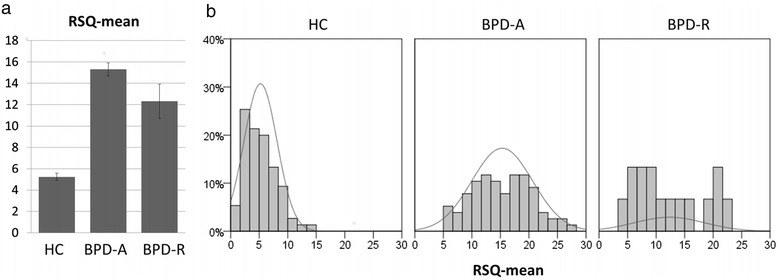
“These findings agree with previous studies that indicated a low overlap of RSQ scores in BPD and healthy subjects and thus a high separation of these groups [13-15].”
BackgroundResultGolier, J. A., Yehuda, R., Bierer, L. M., Mitropoulou, V., New, A. S., Schmeidler, J., Silverman, J. M., & Siever, L. J. (2003) · American Journal of Psychiatry · doi:10.1176/appi.ajp.160.11.2018 · Cited by 266 · cited 1×
“Such patients also have high rates of a history of physical abuse (around 53%), and are at high risk of developing posttraumatic stress disorder [26].”
BackgroundDowney, G., Mougios, V., Ayduk, O., London, B. E., & Shoda, Y. (2004) · Psychological Science · doi:10.1111/j.0956-7976.2004.00738.x · Cited by 264 · cited 4×
“[2] propose that this defensive motivational system is particularly sensitive for social rejection in people high in RS.”
BackgroundInfluentialOnoda, K., Okamoto, Y., Nakashima, K., Nittono, H., Yoshimura, S., Yamawaki, S., Yamaguchi, S., & Ura, M. (2010) · Social Cognitive and Affective Neuroscience · doi:10.1093/scan/nsq002 · Cited by 237 · cited 1×
“[42], who found that low selfesteem influences reactions to rejection.”
BackgroundThe rejection–rage contingency in borderline personality disorder.
Berenson, K. R., Downey, G., Rafaeli, E., Coifman, K. G., & Paquin, N. L. (2011) · Journal of Abnormal Psychology · doi:10.1037/a0023335 · Cited by 197
Park, L. E. (2007) · Personality and Social Psychology Bulletin · doi:10.1177/0146167206296301 · Cited by 188 · cited 2×
“have presented first evidence that there are indeed strategies to attenuate the negative effects of threat on people high in RS [67].”
BackgroundTesting sociometer theory: Self-esteem and the importance of acceptance for social decision-making
Anthony, D. B., Wood, J. V., & Holmes, J. G. (2006) · Journal of Experimental Social Psychology · doi:10.1016/j.jesp.2006.03.002 · Cited by 181 · cited 1×
“Individuals low in self-esteem use their knowledge about the security of acceptance to guide their social behavior [48,65].”
BackgroundRejection sensitivity and executive control: Joint predictors of borderline personality features
Ayduk, Ö., Zayas, V., Downey, G., Cole, A. B., Shoda, Y., & Mischel, W. (2008) · Journal of Research in Personality · doi:10.1016/j.jrp.2007.04.002 · Cited by 178 · cited 3×
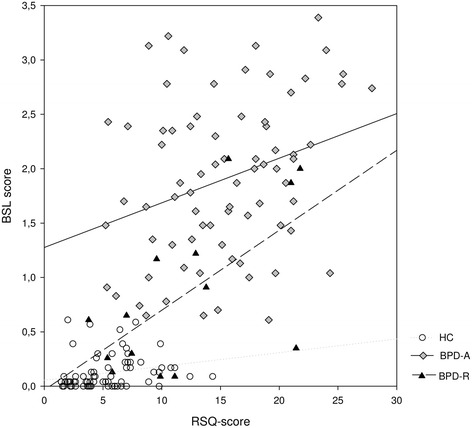
“Our findings confirm that RS is linked not only to the number of BPD features, as has been shown in earlier studies [17-21], but that it is also related to BPD symptom severity in a clinical sample of BPD patients.”
BackgroundResultCarvalho Fernando, S., Beblo, T., Schlosser, N., Terfehr, K., Otte, C., Löwe, B., Wolf, O. T., Spitzer, C., Driessen, M., & Wingenfeld, K. (2014) · Journal of Trauma & Dissociation · doi:10.1080/15299732.2013.863262 · Cited by 164 · cited 1×
“Recent studies suggest that interactions between childhood emotional abuse and personality traits such as sociability and neuroticism as well as emotion regulation difficulties have to be considered in order to explain differences in the symptom severity in BPD patients [61-63].”
BackgroundBorderline Personality Features: Instability of Self–Esteem and Affect
Zeigler–Hill, V., & Abraham, J. (2006) · Journal of Social and Clinical Psychology · doi:10.1521/jscp.2006.25.6.668 · Cited by 159 · cited 1×
“Self-esteem is low in BPD patients compared to healthy controls [33] and major depressive patients [34] and has been linked with BPD features in healthy individuals [35-37].”
BackgroundBornovalova, M. A., Huibregtse, B. M., Hicks, B. M., Keyes, M., McGue, M., & Iacono, W. (2013) · Journal of Abnormal Psychology · doi:10.1037/a0028328 · Cited by 158
Cerebral processing of social rejection in patients with borderline personality disorder
Domsalla, M., Koppe, G., Niedtfeld, I., Vollstädt-Klein, S., Schmahl, C., Bohus, M., & Lis, S. (2014) · Social Cognitive and Affective Neuroscience · doi:10.1093/scan/nst176 · Cited by 152
Self-citationSocial Interaction in Borderline Personality Disorder
Lis, S., & Bohus, M. (2013) · Current Psychiatry Reports · doi:10.1007/s11920-012-0338-z · Cited by 148 · cited 2×
“[43] found that impairment in social functioning often persists even after successful treatment of borderline symptoms (see also [44]).”
BackgroundSelf-citationSocial acceptance and self-esteem: Tuning the sociometer to interpersonal value.
Anthony, D. B., Holmes, J. G., & Wood, J. V. (2007) · Journal of Personality and Social Psychology · doi:10.1037/0022-3514.92.6.1024 · Cited by 147 · cited 4×
“[48], who found that traits such as physical attractiveness and popularity are particularly influential in shaping self-esteem since they generally evoke acceptance by others, further studies are required that take a closer look at appearance-based RS in BPD.”
BackgroundInfluentialMeyer, B., Ajchenbrenner, M., & Bowles, D. P. (2005) · Journal of Personality Disorders · doi:10.1521/pedi.2005.19.6.641 · Cited by 144 · cited 2×
“Our findings confirm that RS is linked not only to the number of BPD features, as has been shown in earlier studies [17-21], but that it is also related to BPD symptom severity in a clinical sample of BPD patients.”
BackgroundResultBrendgen, M., Vitaro, F., Tremblay, R. E., & Wanner, B. (2002) · Social Development · doi:10.1111/1467-9507.00196 · Cited by 129 · cited 1×
“Early experiences of belonging or rejection have been shown to be crucial to the development of RS [6-10].”
BackgroundZimmer‐Gembeck, M. J., & Nesdale, D. (2013) · Journal of Personality · doi:10.1111/j.1467-6494.2012.00792.x · Cited by 128 · cited 1×
“In situations of ambiguous rejection, individuals with high rejection expectancies responded with accentuated reactive aggression, while in situations of overt rejection, individuals with high rejection anxiety showed the strongest withdrawal [80].”
BackgroundLevy, S. R., Ayduk, O., & Downey, G. (2006) · Interpersonal Rejection · doi:10.1093/acprof:oso/9780195130157.003.0010 · Cited by 114 · cited 1×
“[78].”
Paris, J. (2010) · Current Psychiatry Reports · doi:10.1007/s11920-009-0083-0 · Cited by 105 · cited 1×
“Since borderline and depressive symptoms share a large portion of variance due to an overlap of symptoms [57], we corrected BDI scores for common variance with BSL scores, and used the resulting BDI residuals in a second step to correct self-esteem scores for depressive symptoms.”
MethodSocial Networks in Borderline Personality Disorder
Clifton, A., Pilkonis, P. A., & McCarty, C. (2007) · Journal of Personality Disorders · doi:10.1521/pedi.2007.21.4.434 · Cited by 100 · cited 1×
“This interaction between high RS and low self-esteem might result in the social relationships typically seen in BPD patients, who have less frequent social contacts, and often most of these contacts are with other BPD patients or with the therapist (see also [66]).”
BackgroundCognitive Vulnerability to Depression in Individuals With Borderline Personality Disorder
Abela, J. R. Z., Payne, A. V. L., & Moussaly, N. (2003) · Journal of Personality Disorders · doi:10.1521/pedi.17.4.319.23968 · Cited by 99 · cited 1×
“Self-esteem is low in BPD patients compared to healthy controls [33] and major depressive patients [34] and has been linked with BPD features in healthy individuals [35-37].”
BackgroundMiano, A., Fertuck, E. A., Arntz, A., & Stanley, B. (2013) · Journal of Personality Disorders · doi:10.1521/pedi_2013_27_096 · Cited by 94 · cited 2×
“Additionally, there is an increasing body of evidence linking RS to the number of borderline features in non-clinical samples [16-21].”
BackgroundMartín‐Blanco, A., Soler, J., Villalta, L., Feliu‐Soler, A., Elices, M., Pérez, V., Arranz, M. J., Ferraz, L., Álvarez, E., & Pascual, J. C. (2013) · Comprehensive Psychiatry · doi:10.1016/j.comppsych.2013.08.026 · Cited by 93 · cited 1×
“Recent studies suggest that interactions between childhood emotional abuse and personality traits such as sociability and neuroticism as well as emotion regulation difficulties have to be considered in order to explain differences in the symptom severity in BPD patients [61-63].”
BackgroundResponses of mental health clinicians to patients with borderline personality disorder.
Sansone, R. A., & Sansone, L. A. (2013) · Europe PMC (PubMed Central) · Cited by 91
Social antecedents and consequences of interpersonal rejection sensitivity
Butler, J. C., Doherty, M. S., & Potter, R. M. (2007) · Personality and Individual Differences · doi:10.1016/j.paid.2007.04.006 · Cited by 90 · cited 1×
“Early experiences of belonging or rejection have been shown to be crucial to the development of RS [6-10].”
BackgroundLaporte, L., Paris, J., Guttman, H., & Russell, J. (2011) · Journal of Personality Disorders · doi:10.1521/pedi.2011.25.4.448 · Cited by 89 · cited 1×
“Recent studies suggest that interactions between childhood emotional abuse and personality traits such as sociability and neuroticism as well as emotion regulation difficulties have to be considered in order to explain differences in the symptom severity in BPD patients [61-63].”
BackgroundRejection Sensitivity as an Interpersonal Vulnerability.
Pietrzak, J., Downey, G., & Ayduk, Ö. N. (2005) · Cited by 85
Borderline Personality Features and Instability of Daily Negative Affect and Self‐Esteem
Hochschild Tolpin, L., Cimbolic Gunthert, K., Cohen, L. H., & O'Neill, S. C. (2004) · Journal of Personality · doi:10.1111/j.0022-3506.2004.00258.x · Cited by 79 · cited 1×
“Self-esteem is low in BPD patients compared to healthy controls [33] and major depressive patients [34] and has been linked with BPD features in healthy individuals [35-37].”
BackgroundRejection sensitivity and depression: mediation by stress generation
Liu, R. T., Kraines, M. A., Massing-Schaffer, M., & Alloy, L. B. (2014) · Psychiatry: Interpersonal and Biological Processes · doi:10.1521/psyc.2014.77.1.86 · Cited by 79 · cited 1×
“To gain further insight into trait and state-related portions of RS, longitudinal studies are required that investigate variations in RS over time, as well as its sensitivity to change after therapeutic interventions, and its dependency from modulating factors such as social and non-social stress [58].”
BackgroundDyer, A., Borgmann, E., Feldmann, R. E., Kleindienst, N., Priebe, K., Bohus, M., & Vocks, S. (2013) · Body Image · doi:10.1016/j.bodyim.2012.12.007 · Cited by 76 · cited 1×
“BPD is also associated with a negative body image that cannot be explained by comorbid eating disorder [68-70].”
BackgroundSelf-citationMaltreatment and Childhood Depression
Downey, G., Feldman, S. I., Khuri, J., & Friedman, S. L. (1994) · Issues in clinical child psychology · doi:10.1007/978-1-4899-1510-8_22 · Cited by 75 · cited 3×
“Because childhood maltreatment constitutes experience of rejection in a very strong form [6], it may lead to RS, which in turn is associated with subsequent development of mental disorders [28].”
BackgroundMcLachlan, J., Zimmer-Gembeck, M. J., & McGregor, L. (2010) · Journal of Relationships Research · doi:10.1375/jrr.1.1.31 · Cited by 73 · cited 1×
“Early experiences of belonging or rejection have been shown to be crucial to the development of RS [6-10].”
BackgroundFinding the self: A behavioral measure and its clinical implications.
Kanter, J. W., Parker, C. R., & Kohlenberg, R. J. (2001) · Psychotherapy: Theory, Research, Practice, Training · doi:10.1037/0033-3204.38.2.198 · Cited by 71
Finding the self: A behavioral measure and its clinical implications.
Kanter, J. W., Parker, C. R., & Kohlenberg, R. J. (2001) · Psychotherapy: Theory, Research, Practice, Training · doi:10.1037//0033-3204.38.2.198 · Cited by 71 · cited 2×
“Data from experimental studies on the experience of social encounters in BPD point in a similar direction: BPD patients felt more excluded in social situations during which they had in fact been included, or during which the behavior of the social partners was determined by predefined rules and not by the partners’ in…”
BackgroundSelby, E. A., Ward, A. C., & Joiner, T. E. (2010) · International Journal of Eating Disorders · doi:10.1002/eat.20761 · Cited by 61 · cited 2×
“Our findings confirm that RS is linked not only to the number of BPD features, as has been shown in earlier studies [17-21], but that it is also related to BPD symptom severity in a clinical sample of BPD patients.”
BackgroundResultZimmer‐Gembeck, M. J., Nesdale, D., McGregor, L., Campbell, S. M., Goodwin, B. C., & Downey, G. (2013) · Journal of Adolescence · doi:10.1016/j.adolescence.2013.10.002 · Cited by 57 · cited 1×
“In healthy individuals, studies on RS support the idea of a biased perspective of individuals high in RS: adolescents with high RS overestimated rejection and felt more victimized by their peers, despite not being seen by their peers as being more victimized [76].”
BackgroundLuterek, J. A., Harb, G. C., Heimberg, R. G., & Marx, B. P. (2004) · Journal of Interpersonal Violence · doi:10.1177/0886260503259052 · Cited by 57 · cited 2×
“[31], who demonstrated the mediating role of RS on the effect of childhood sexual abuse on depressive symptoms.”
BackgroundKashdan, T. B., DeWall, C. N., Masten, C. L., Pond, R. S., Powell, C., Combs, D., Schurtz, D. R., & Farmer, A. S. (2014) · PLoS ONE · doi:10.1371/journal.pone.0090651 · Cited by 56 · cited 1×
“[41] propose that low self-esteem is associated with enhanced sensitivity to the valence of social feedback.”
BackgroundCorrelates of Substantiated Emotional Maltreatment in the Second Canadian Incidence Study
Chamberland, C., Fallon, B., Black, T. L., Trocmé, N., & Chabot, M. (2012) · Journal of Family Violence · doi:10.1007/s10896-012-9414-8 · Cited by 48 · cited 1×
“[60] showed that emotional neglect even is a stronger predictor of problems such as lack of self-esteem and interpersonal difficulties compared to other forms of maltreatment (e.”
BackgroundLearning biases underlying individual differences in sensitivity to social rejection.
Olsson, A., Carmona, S., Downey, G., Bolger, N., & Ochsner, K. N. (2013) · Emotion · doi:10.1037/a0033150 · Cited by 46 · cited 1×
“[75] demonstrated that high RS is linked to diminished extinction of previously conditioned fear responses, which is specific for social stimuli of negative valence.”
BackgroundComorbidity of DSM-IV personality disorders in a nonclinical sample
Watson, D., & Sinha, B. K. (1998) · Journal of Clinical Psychology · doi:10.1002/(sici)1097-4679(199810)54:6<831::aid-jclp11>3.0.co;2-m · Cited by 45
Comorbidity of DSM-IV personality disorders in a nonclinical sample
Watson, D., & Sinha, B. K. (1998) · Journal of Clinical Psychology · doi:10.1002/(sici)1097-4679(199810)54:6<773::aid-jclp3>3.0.co;2-i · Cited by 44 · cited 1×
“Self-esteem is low in BPD patients compared to healthy controls [33] and major depressive patients [34] and has been linked with BPD features in healthy individuals [35-37].”
BackgroundGardner, K. J., Qualter, P., Stylianou, M., & Robinson, A. J. (2010) · Personality and Individual Differences · doi:10.1016/j.paid.2010.07.018 · Cited by 37 · cited 2×
“Our findings confirm that RS is linked not only to the number of BPD features, as has been shown in earlier studies [17-21], but that it is also related to BPD symptom severity in a clinical sample of BPD patients.”
BackgroundResultRomero‐Canyas, R., & Downey, G. (2013) · Emotion · doi:10.1037/a0029786 · Cited by 37 · cited 1×
“a positive bias towards a high expectancy of being accepted [11].”
BackgroundBody image and borderline personality disorder among psychiatric inpatients
Sansone, R. A., Chu, J. W., & Wiederman, M. W. (2010) · Comprehensive Psychiatry · doi:10.1016/j.comppsych.2010.04.001 · Cited by 34 · cited 2×
“In BPD patients, increasing BPD-symptomatology is linked to a stronger believe that attractiveness is relevant for acceptance [68].”
BackgroundUntersuchungen zum Körperkonzept bei Patientinnen mit Borderline-Persönlichkeitsstörung1
Haaf, B., Pohl, U., Deusinger, I. M., & Bohus, M. (2001) · PPmP - Psychotherapie · Psychosomatik · Medizinische Psychologie · doi:10.1055/s-2001-14302 · Cited by 34
Self-citationRosenbach, C., & Renneberg, B. (2011) · Verhaltenstherapie · doi:10.1159/000328839 · Cited by 34
Boldero, J. M., Hulbert, C. A., Bloom, L., Cooper, J., Gilbert, F., Mooney, J. L., & Salinger, J. (2009) · Personality and Mental Health · doi:10.1002/pmh.93 · Cited by 24 · cited 3×
“Our findings confirm that RS is linked not only to the number of BPD features, as has been shown in earlier studies [17-21], but that it is also related to BPD symptom severity in a clinical sample of BPD patients.”
BackgroundResultSelbstwert und Borderline-Persönlichkeitsstörung
Lammers, C., Röpke, S., & Dulz, B. (2007) · PTT - Persönlichkeitsstörungen: Theorie und Therapie · Cited by 3
Research works printed but not linked: 3
- Downey G Khouri H Feldman S Cicchetti D Toth S Early interpersonal trauma and adult adjustment: the mediational role of rejection sensitivity Rochester symposium on developmental psychopathology, volume VIII: the effects of trauma on the developmental process 1997 New York University of Rochester Press 85 114
- Loranger AW International Personality Disorder Examination (IPDE): DSM-IV and ICD-10 modules 1999 Psychological Assessment Resources Odessa
- Bernstein DPFL Childhood trauma questionnaire: a retrospective self-report 1998 San Antonio, TX Harcourt Brace & Co.
Cited by
Childhood adversity and borderline personality disorder: a meta‐analysis
Porter, C., Palmier‐Claus, J., Branitsky, A., Mansell, W., Warwick, H., & Varese, F. (2020) · Acta Psychiatrica Scandinavica · doi:10.1111/acps.13118 · Cited by 450
Fonagy, P., Speranza, M., Luyten, P., Kaess, M., Hessels, C. J., & Bohus, M. (2015) · European Child & Adolescent Psychiatry · doi:10.1007/s00787-015-0751-z · Cited by 192
Self-citationFoxhall, M., Hamilton‐Giachritsis, C., & Button, K. (2019) · British Journal of Clinical Psychology · doi:10.1111/bjc.12216 · Cited by 107
Miano, A., Fertuck, E. A., Arntz, A., & Stanley, B. (2013) · Journal of Personality Disorders · doi:10.1521/pedi_2013_27_096 · Cited by 94
Schneider, P., Bindila, L., Schmahl, C., Bohus, M., Meyer-Lindenberg, A., Lutz, B., Spanagel, R., & Schneider, M. (2016) · Frontiers in Behavioral Neuroscience · doi:10.3389/fnbeh.2016.00203 · Cited by 89
Self-citation
Metadata
- Authors
- Bungert, M., Liebke, L., Thome, J., Haeussler, K., Bohus, M., & Lis, S.
- Affiliations
- Heidelberg University (DE)
- Corresponding author
- Bungert, Melanie
- Venue
- Borderline Personality Disorder and Emotion Dysregulation
- Published
- 2015-03-20
- Volume
- 2
- Issue
- 1
- Pages
- 4-4
- ISSN
- 2051-6673 (ISSN-L)
- PMC
- PMC4579499
- OpenAlex
- W2127723990
- Semantic Scholar
- 4e744164bf5282153f0ce1eed8e0f95afe63ccd7
- Cited by
- 92
- References
- 87
- Citations by year
- 2026: 4 · 2025: 5 · 2024: 7 · 2023: 5 · 2022: 8 · 2021: 13 · 2020: 11 · 2019: 9 · 2018: 7 · 2017: 11 · 2016: 8 · 2015: 3
- FWCI
- 12.00
- Type
- journal article
- Language
- en
- Open access
- gold
- doi.org
- Locations
- Borderline Personality Disorder and Emotion Dysregulation (publishedVersion, cc-by)
- PubMed Central (publishedVersion, cc-by)
- PubMed (publishedVersion)
- Funders
- Deutsche Forschungsgemeinschaft (KFO-256)
- Topics
- Social Sciences › Psychology › Clinical Psychology › Personality Disorders and Psychopathology
- Social Sciences › Psychology › Clinical Psychology › Personality Traits and Psychology
- Social Sciences › Psychology › Social Psychology › Death Anxiety and Social Exclusion
- Keywords
- rejection sensitivity, borderline personality disorder, symptom severity, self-esteem, child abuse, social rejection, interpersonal problems, mediation
About these checks
Registry, retraction, Cites and statistics results are computed, not judged, with one exception: a printed reference that no index lists is read once by a model before it counts as a citation error. Claims are extracted by a model and kept only when their quote appears verbatim in the text; each cited source is then checked, with a model’s help, for whether it says what the claim relies on. Those verdicts can be wrong — read the claim’s quote and the cited source before relying on one.
Statistics and arithmetic are recomputed, not judged.
Confidence bands are shown only for fields calibrated on our annotated test set. None is calibrated yet, so no band is shown.
What counts as a claim ›How we measure confidence ›How we check this ›
Are you an author, or do you see a problem with this page? Request a review
Data sources
Bibliographic data: Semantic Scholar, OpenAlex, Crossref.
Contains information from the Semantic Scholar Academic Graph Datasets, made available under the ODC Attribution License (ODC-BY 1.0).
Semantic Scholar’s data is described in: Kinney, R., et al. (2023). The Semantic Scholar Open Data Platform. arXiv:2301.10140.
