

Novel patient-reported outcomes (PROs) used in a pilot and feasibility study of a Cognitive Behavioral Coping Skills (CBCS) group intervention for patients with chronic hepatitis C
Open accessThe DOI matches its Crossref record; 49 of the 52 references it cites were found in a registry or an index; 14 of the 32 sources its claims cite were checked for support.
Abstract
Background: Patients with chronic hepatitis C virus (HCV) experience reduced quality of life, HCV-associated symptoms, comorbid conditions, and treatment side effects. The Cognitive Behavioral Coping Skills group intervention for HCV (CBCS-HCV) was developed using the Stage Model of Behavioral Therapies Research. Intervention development and initial feasibility testing in wave 1 participants were previously reported. The primary objective of this subsequent pilot with wave 2-3 participants was to investigate the effect sizes and clinical improvements in patient-reported outcomes (PROs) and trial and intervention feasibility. Methods: A pilot feasibility two-arm randomized controlled trial using block randomization to assign patients to CBCSHCV or standard of care was conducted. Participants attended nine group sessions: Four before HCV treatment and five during treatment. PRO data were collected at five time points: Before the CBCS intervention (T1), immediately before HCV treatment (T2), during HCV treatment (T3, T4), and 1 month post-intervention/post-HCV treatment (T5). PROs included quality of life, perceived stress, HCV symptoms, and medication adherence. Cohen's d was used to estimate within-group changes (WGCs) and between-group differences (BGDs), with d > 0.35 considered potentially clinically significant. Potential mechanisms of change were also evaluated. Results: Several WGCs and BGDs (ES > .35) suggest that the CBCS-HCV may promote improvements in PROs: Psychological stress, depression, anger, anxiety, sleep disturbance, and fatigue. The intervention did not appear to impact social functioning, pain, or medication adherence. Cognitive behavioral skills and group therapy dynamics, but not HCV treatment self-efficacy, may mediate improvements in PROs. Most aspects of the study trial, including intervention implementation, were feasible. Patient acceptance and retention were exceptional. The greatest feasibility challenge was due to patients needing to initiate treatment as soon as medications were obtained, but often before a full block could be created in wave 3. Challenges with PRO data collection were identified that will be resolved in future studies. Conclusions: The CBCS-HCV intervention warrants future investigation in an efficacy trial to evaluate improvements in selected PROs. The next step is to pilot test the CBCS-HCV delivered via telehealth to an expanded pool of patients to reduce patient barriers, hone technical logistics, and improve intervention reach and effectiveness. © The Author(s). 2018.
Overview
CoChat Summary
## TL;DR
This pilot two-arm randomized controlled trial tested a 9-session Cognitive Behavioral Coping Skills intervention for people with chronic hepatitis C against standard of care and found promising effect sizes for several patient-reported outcomes, especially stress and mental health symptoms. Feasibility was generally strong, with 20/22 randomized participants retained, 100% retention among those who started CBCS-HCV, and 89% overall PROM data completion.
## Key findings
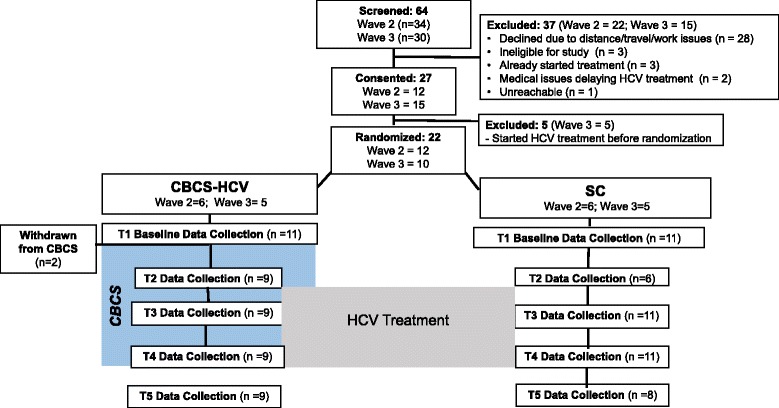
- The study screened 64 patients; 27 (42%) consented, 22 of those (81%) were randomized, and 20/22 (91%) were retained to the end of the study.
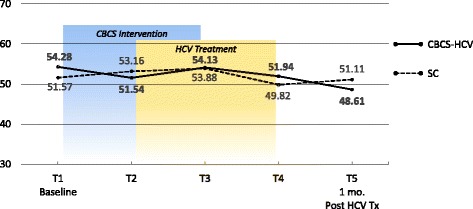
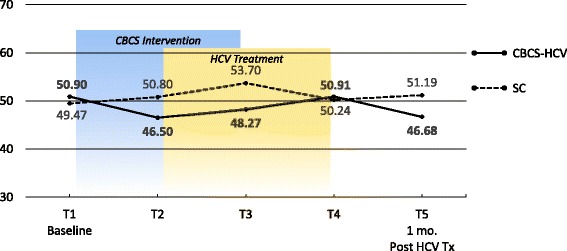
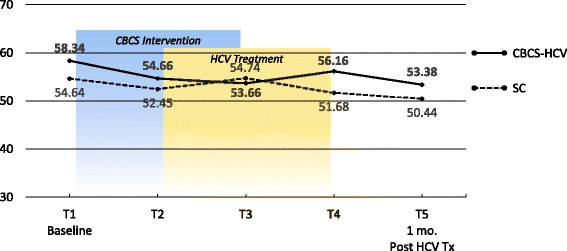
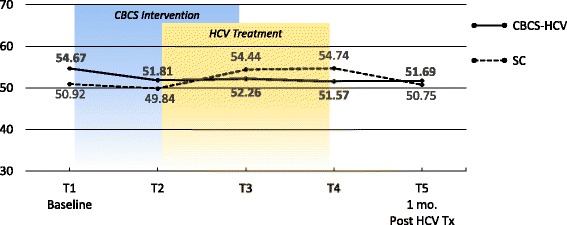
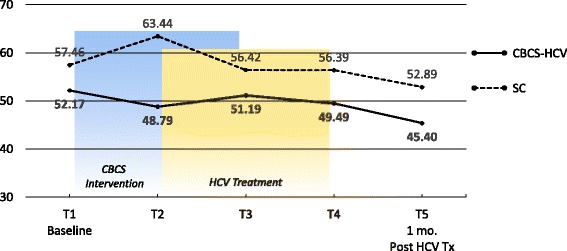
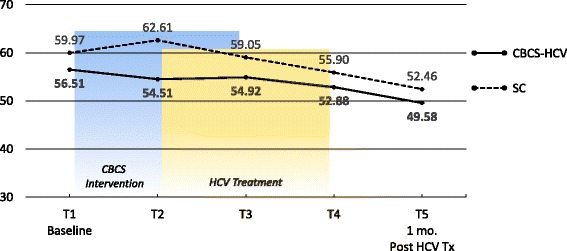
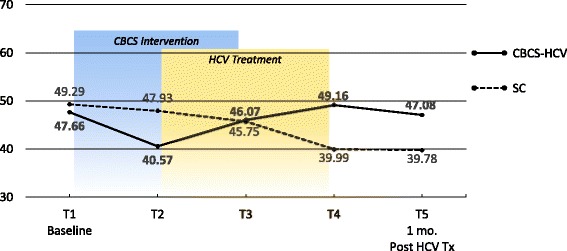
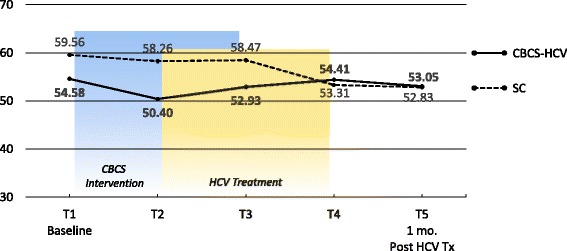
- After four CBCS sessions (T1–T2), the intervention showed potentially clinically significant improvements (ES > .35) in overall HRQOL (.38), physical well-being (.44), perceived stress (.53), anger (.48), anxiety (.43), sleep disturbance (.51), pain intensity (.64), and pain interference (.37); between-group differences at T2 were also large for some outcomes, including physical well-being (.90) and stress (.90).
- At 1 month post-intervention/post-treatment (T5), the CBCS group showed moderate improvements in depression (.55), anger (.46), anxiety (.55), fatigue (.52), sleep disturbance (.53), and sleep-related impairment (.48), but not in pain outcomes.
- Medication adherence did not differ between groups: pill counts were 96% (84–100%) for CBCS and 98% (91–100%) for standard of care, self-reported adherence was 99.9% vs 99.6%, and 100% of patients in both groups had undetectable HCV RNA at 4 or 12 weeks post-treatment.
## Methods
- Pilot feasibility two-arm randomized controlled trial with block randomization to CBCS-HCV (n = 12) or standard of care (n = 12), conducted across waves 2 and 3.
- Participants attended nine 2-hour group sessions: four before HCV treatment and five during treatment; the sample consisted of patients prescribed 12-week HCV regimens, and patients co-infected with HIV or hepatitis B were included.
- PROs were collected at five time points (T1–T5) and analyzed descriptively with Cohen’s d for within-group changes and between-group differences; no statistical significance tests were conducted because this was a pilot study.
## Limitations
- The paper states that recruitment was difficult because patients needed to start HCV treatment quickly after obtaining medications, which sometimes prevented full block randomization.
- The paper states that PRO data collection had challenges; overall completion was 89%, with lower completion at T2 (75%) and T5 (80%), partly because some standard-of-care participants lacked regular clinic visits or did not return mailed surveys.
- Evident from the text: the study was small and exploratory (22 randomized; 20 retained), used effect sizes rather than hypothesis tests, and therefore cannot establish efficacy.
Model-written summary. Check it against the paper before relying on it.
Integrity signals
Registry
Cites
Statistics
Figures
Verification
Claims the paper makes
12 Valid · 2 Not valid · 9 Not checked · 85 Own results and interpretations
The cited sources support only part of this claim — read each source’s verdict below.
In the paper
“Many clinical hepatology studies are based on clinician-reported adverse events or improvements, which do not correlate well with patient-reported harms or improvements [14, 15].”
§ Novel patient-reported outcomes (PROs) used in a pilot and feasibility study of a Cognitive Behavioral Coping Skills (CBCS) group intervention for patients with chronic hepatitis C > Background Chronic hepatitis C virus (HCV) affects over three million people in the USA and can lead to advanced liver disease, liver-related mortality, and all-cause mortality [1, 2]. Patients complain of several diffuse symptoms that may be associated with HCV and report poor health-related quality of life (HRQOL) [3, 4]. Antiviral treatment can eradicate HCV but can be difficult to tolerate for some patients [5]. Despite the availability of more tolerable and effective treatments, there remains a substantial need to develop psychosocial interventions to improve the health and well-being of the underserved HCV population [6]. There is also a need in clinical hepatology studies to capture patient-reported experiences using patient-reported outcome measures (PROMs) to complement traditional clinician-reported adverse events and laboratory markers [7, 8]. Psychosocial interventions could enhance patients’ coping skills to mitigate the negative impact of disease, and treatment in patients have difficulty coping with treatment side effects. Additionally, newer regimens are allowing more individuals to undergo treatment (i.e. traditionally “difficult to treat” patients with psychiatric or addiction issues); however, this introduces new clinical challenges for treatment providers. Psychosocial interventions provided before or during HCV treatment could provide patients with ancillary support and skills training that medical providers do not have the time nor expertise to provide [9, 10]. Finally, the current repertoire of healthcare services available for HCV patients is woefully limited. Many patients do not meet the eligibility requirements for insurance approvals of HCV treatment and are left with no other healthcare alternatives to enhance overall health and well-being [11]. Therefore, psychosocial interventions could be useful for patients awaiting treatment, undergoing treatment, or those who have completed treatment but are still living with advanced liver disease or cirrhosis. Psychosocial interventions that assist patients in developing cognitive and behavioral coping skills have been around for decades. PROMs are often the best method for evaluating clinical improvements in mental and physical health outcomes in other medical populations but are used less often in clinical hepatology studies [8]. To address the gap in healthcare services for HCV patients, we developed the Cognitive Behavioral Coping Skills group intervention for HCV (CBCS-HCV), an intervention that was modified specifically for the needs of HCV patients undergoing antiviral therapy. Several novel PROMs were used to evaluate improvements in functioning, stress, and symptoms which have not previously been utilized in hepatology studies. The formative work, preliminary study protocol, and initial pilot feasibility testing of the CBCS-HCV in an initial wave of participants (“wave 1”) undergoing interferon-based therapy have been previously described [12]. As discussed in the prior article, we followed the Stage Model for Behavioral Therapies Research guide to develop the CBCS-HCV [13]. In the initial phase of this research program, we addressed several essential steps recommended in stage 1a and stage 1b research. First, we performed several research activities, such as a literature review, a patients’ needs assessment, and selected pre-existing intervention materials to modify for the CBCS-HCV [12]. Next, we developed the CBCS-HCV group intervention Patient Workbook and Therapist Guide and a preliminary study protocol to conduct a mini randomized controlled trial (RCT). Several PROs were selected to evaluate a broad array of potential outcomes that we speculated might be affected by the intervention. Finally, we conducted initial feasibility and pilot testing in wave 1 study participants to evaluate (a) patient acceptability; (b) feasibility of recruitment, randomization, retention, and PRO data collection; (c) feasibility of intervention delivery; and (d) therapist protocol fidelity [12]. Several lessons were learned during the initial pilot testing. Patient acceptability was exceptional, therapist protocol fidelity was high, and participation, retention, and data collection were successful [12]. The major challenge was enrollment impediments that prevented block randomization due to providers and patients deferring HCV treatment until newer treatment regimens were available. These challenges were viewed as temporary and unlikely to impede future piloting. Because patient acceptability of the CBCS-HCV was high and the majority of other study and intervention methods were found feasible, we elected to move forward with additional pilot testing with wave 2 and wave 3 study participants to address two additional essential research activities recommended by the Stage Model of Behavioral Therapies prior to conducting a full efficacy study [12]. We placed emphasis on selecting and evaluating novel PROs not often utilized in clinical hepatology studies, although objective markers (viral load, pill count) were collected as well. Many clinical hepatology studies are based on clinician-reported adverse events or improvements, which do not correlate well with patient-reported harms or improvements [14, 15]. Since the focus of this pilot study was a psychological/behavioral intervention, it was critical to capture clinical improvements from the patients’ perspective. Selection of PROs was partially based on the Wilson and Cleary classification scheme [16]. The model suggests that to be very precise and valid, distinctly different PROs should be assessed separately to maximize information and decrease overlap between constructs. Symptoms and side effects are the most proximally and least confounded clinical variables associated with disease and treatment; however, as one moves further away from the direct effects of disease and treatment, towards the broader construct of quality of life, many other confounding patient and environmental factors influence a quality of life score. Therefore, we selected several PROMs that captured unidimensional patient-reported symptoms (e.g., fatigue, depression, sleep, pain) most closely related to HCV and least confounded by other influences. This would allow us to determine within the pilot study, the precise outcomes that could be affected by the intervention. The primary objectives of this follow-up pilot feasibility study in wave 2 and 3 study participants were as follows: (1) to examine effect size (ES) estimates of change in specific PROs, (2) to determine whether clinically significant improvements occurred in any specific PROs, and (3) to continue to evaluate study feasibility elements to inform a larger efficacy study. This information can be used to inform the selection of PROs and sample size calculations for a future efficacy trial. To achieve our first objective, we calculated ES estimates for all potential PROs to examine within-group changes (WGCs) over time and between-group differences (BGDs) at various time points. To achieve our second objective, we focused on ES estimates from baseline (T1) to the start of HCV treatment (T2), which aligned with receipt of four out of the nine CBCS-HCV sessions to determine the impact of half of the intervention on PROs prior to HCV treatment initiation. We also focused on ES estimates from baseline (T1) to 1 month post-CBCS-HCV intervention/post-HCV treatment (T5) to examine sustained clinical improvements post-intervention/post-treatment. We did not anticipate improvements in PROs during HCV treatment in the treatment condition because treatment side effects could lead to worse PRO scores, but we speculated that symptoms might either stabilize, or not worsen, during treatment. We selected an ES estimate of d > 0.35 as the threshold to define a potentially clinically significant improvement in a PRO, as it represented a small to moderate effect size and would be worthy of testing in a future efficacy trial. Study feasibility elements evaluated to address the third objective included feasibility of a RCT study design, intervention delivery, patient acceptability, therapist protocol fidelity, recruitment, enrollment, attendance, retention, and PRO data collection.
What the sources say
- Partly supportedcites [14] Basch E The missing voice of patients in drug-safety reporting N Engl J Med 2010 362 10 865 869 10.1056/NEJMp0911494 20220181 PMC3031980 sourceExperimental — accuracy not yet measured
In “The Missing Patient Voice in Drug-Safety Reporting” (page not specified), Basch says clinical-trial adverse-symptom data rely largely on clinicians’ impressions and that clinicians downgrade or miss symptoms patients report. This supports the point about discrepancies in reported harms, but the paper does not establish the claim specifically for hepatology studies or address agreement about reported improvements. (LLM, conf=0.86)
- Not checked — no full text of the sourcecites [15] Ahmed S Berzon RA Revicki DA Lenderking WR Moinpour CM Basch E The use of patient-reported outcomes (PRO) within comparative effectiveness research: implications for clinical practice and health care policy MedCare 2012 50 12 1060 1070 22922434 source
plainstates an association- Asserted: passes — The authors put it forward as true.
- Checkable: passes — It can be checked against evidence.
- Load-bearing: passes — The paper’s conclusions depend on it.
- Based: passes — The paper gives a reason why it holds.
- Partly supported
Every source the paper cites for this claim was checked and supports it.
In the paper
“The major challenge was enrollment impediments that prevented block randomization due to providers and patients deferring HCV treatment until newer treatment regimens were available.”
§ Novel patient-reported outcomes (PROs) used in a pilot and feasibility study of a Cognitive Behavioral Coping Skills (CBCS) group intervention for patients with chronic hepatitis C > Background Chronic hepatitis C virus (HCV) affects over three million people in the USA and can lead to advanced liver disease, liver-related mortality, and all-cause mortality [1, 2]. Patients complain of several diffuse symptoms that may be associated with HCV and report poor health-related quality of life (HRQOL) [3, 4]. Antiviral treatment can eradicate HCV but can be difficult to tolerate for some patients [5]. Despite the availability of more tolerable and effective treatments, there remains a substantial need to develop psychosocial interventions to improve the health and well-being of the underserved HCV population [6]. There is also a need in clinical hepatology studies to capture patient-reported experiences using patient-reported outcome measures (PROMs) to complement traditional clinician-reported adverse events and laboratory markers [7, 8]. Psychosocial interventions could enhance patients’ coping skills to mitigate the negative impact of disease, and treatment in patients have difficulty coping with treatment side effects. Additionally, newer regimens are allowing more individuals to undergo treatment (i.e. traditionally “difficult to treat” patients with psychiatric or addiction issues); however, this introduces new clinical challenges for treatment providers. Psychosocial interventions provided before or during HCV treatment could provide patients with ancillary support and skills training that medical providers do not have the time nor expertise to provide [9, 10]. Finally, the current repertoire of healthcare services available for HCV patients is woefully limited. Many patients do not meet the eligibility requirements for insurance approvals of HCV treatment and are left with no other healthcare alternatives to enhance overall health and well-being [11]. Therefore, psychosocial interventions could be useful for patients awaiting treatment, undergoing treatment, or those who have completed treatment but are still living with advanced liver disease or cirrhosis. Psychosocial interventions that assist patients in developing cognitive and behavioral coping skills have been around for decades. PROMs are often the best method for evaluating clinical improvements in mental and physical health outcomes in other medical populations but are used less often in clinical hepatology studies [8]. To address the gap in healthcare services for HCV patients, we developed the Cognitive Behavioral Coping Skills group intervention for HCV (CBCS-HCV), an intervention that was modified specifically for the needs of HCV patients undergoing antiviral therapy. Several novel PROMs were used to evaluate improvements in functioning, stress, and symptoms which have not previously been utilized in hepatology studies. The formative work, preliminary study protocol, and initial pilot feasibility testing of the CBCS-HCV in an initial wave of participants (“wave 1”) undergoing interferon-based therapy have been previously described [12]. As discussed in the prior article, we followed the Stage Model for Behavioral Therapies Research guide to develop the CBCS-HCV [13]. In the initial phase of this research program, we addressed several essential steps recommended in stage 1a and stage 1b research. First, we performed several research activities, such as a literature review, a patients’ needs assessment, and selected pre-existing intervention materials to modify for the CBCS-HCV [12]. Next, we developed the CBCS-HCV group intervention Patient Workbook and Therapist Guide and a preliminary study protocol to conduct a mini randomized controlled trial (RCT). Several PROs were selected to evaluate a broad array of potential outcomes that we speculated might be affected by the intervention. Finally, we conducted initial feasibility and pilot testing in wave 1 study participants to evaluate (a) patient acceptability; (b) feasibility of recruitment, randomization, retention, and PRO data collection; (c) feasibility of intervention delivery; and (d) therapist protocol fidelity [12]. Several lessons were learned during the initial pilot testing. Patient acceptability was exceptional, therapist protocol fidelity was high, and participation, retention, and data collection were successful [12]. The major challenge was enrollment impediments that prevented block randomization due to providers and patients deferring HCV treatment until newer treatment regimens were available. These challenges were viewed as temporary and unlikely to impede future piloting. Because patient acceptability of the CBCS-HCV was high and the majority of other study and intervention methods were found feasible, we elected to move forward with additional pilot testing with wave 2 and wave 3 study participants to address two additional essential research activities recommended by the Stage Model of Behavioral Therapies prior to conducting a full efficacy study [12]. We placed emphasis on selecting and evaluating novel PROs not often utilized in clinical hepatology studies, although objective markers (viral load, pill count) were collected as well. Many clinical hepatology studies are based on clinician-reported adverse events or improvements, which do not correlate well with patient-reported harms or improvements [14, 15]. Since the focus of this pilot study was a psychological/behavioral intervention, it was critical to capture clinical improvements from the patients’ perspective. Selection of PROs was partially based on the Wilson and Cleary classification scheme [16]. The model suggests that to be very precise and valid, distinctly different PROs should be assessed separately to maximize information and decrease overlap between constructs. Symptoms and side effects are the most proximally and least confounded clinical variables associated with disease and treatment; however, as one moves further away from the direct effects of disease and treatment, towards the broader construct of quality of life, many other confounding patient and environmental factors influence a quality of life score. Therefore, we selected several PROMs that captured unidimensional patient-reported symptoms (e.g., fatigue, depression, sleep, pain) most closely related to HCV and least confounded by other influences. This would allow us to determine within the pilot study, the precise outcomes that could be affected by the intervention. The primary objectives of this follow-up pilot feasibility study in wave 2 and 3 study participants were as follows: (1) to examine effect size (ES) estimates of change in specific PROs, (2) to determine whether clinically significant improvements occurred in any specific PROs, and (3) to continue to evaluate study feasibility elements to inform a larger efficacy study. This information can be used to inform the selection of PROs and sample size calculations for a future efficacy trial. To achieve our first objective, we calculated ES estimates for all potential PROs to examine within-group changes (WGCs) over time and between-group differences (BGDs) at various time points. To achieve our second objective, we focused on ES estimates from baseline (T1) to the start of HCV treatment (T2), which aligned with receipt of four out of the nine CBCS-HCV sessions to determine the impact of half of the intervention on PROs prior to HCV treatment initiation. We also focused on ES estimates from baseline (T1) to 1 month post-CBCS-HCV intervention/post-HCV treatment (T5) to examine sustained clinical improvements post-intervention/post-treatment. We did not anticipate improvements in PROs during HCV treatment in the treatment condition because treatment side effects could lead to worse PRO scores, but we speculated that symptoms might either stabilize, or not worsen, during treatment. We selected an ES estimate of d > 0.35 as the threshold to define a potentially clinically significant improvement in a PRO, as it represented a small to moderate effect size and would be worthy of testing in a future efficacy trial. Study feasibility elements evaluated to address the third objective included feasibility of a RCT study design, intervention delivery, patient acceptability, therapist protocol fidelity, recruitment, enrollment, attendance, retention, and PRO data collection.
What the sources say
- Supportedcites [12] Evon DM Golin CE Ruffin R Fried MW Development and pilot-testing of a cognitive behavioral coping skills group intervention for patients with chronic hepatitis C Contemp Clin Trials Comm 2017 6 85 96 10.1016/j.conctc.2017.03.008 PMC5654628 29082334 source
The Wave 1 feasibility results say that providers and patients deferred HCV treatment while awaiting newer medications, sharply reducing enrollment. The same section says enrollment was too slow to assemble the planned block of 14 for randomization, so the researchers switched to an observational trial. Page numbers are not provided in our copy. (LLM, conf=0.94)
plainstates a cause- Asserted: passes — The authors put it forward as true.
- Checkable: passes — It can be checked against evidence.
- Load-bearing: unclear — It is unclear whether the paper’s conclusions depend on it.
- Based: passes — The paper gives a reason why it holds.
- Supported
The cited sources support only part of this claim — read each source’s verdict below.
In the paper
“PROMs are often the best method for evaluating clinical improvements in mental and physical health outcomes in other medical populations but are used less often in clinical hepatology studies [8].”
§ Novel patient-reported outcomes (PROs) used in a pilot and feasibility study of a Cognitive Behavioral Coping Skills (CBCS) group intervention for patients with chronic hepatitis C > Background Chronic hepatitis C virus (HCV) affects over three million people in the USA and can lead to advanced liver disease, liver-related mortality, and all-cause mortality [1, 2]. Patients complain of several diffuse symptoms that may be associated with HCV and report poor health-related quality of life (HRQOL) [3, 4]. Antiviral treatment can eradicate HCV but can be difficult to tolerate for some patients [5]. Despite the availability of more tolerable and effective treatments, there remains a substantial need to develop psychosocial interventions to improve the health and well-being of the underserved HCV population [6]. There is also a need in clinical hepatology studies to capture patient-reported experiences using patient-reported outcome measures (PROMs) to complement traditional clinician-reported adverse events and laboratory markers [7, 8]. Psychosocial interventions could enhance patients’ coping skills to mitigate the negative impact of disease, and treatment in patients have difficulty coping with treatment side effects. Additionally, newer regimens are allowing more individuals to undergo treatment (i.e. traditionally “difficult to treat” patients with psychiatric or addiction issues); however, this introduces new clinical challenges for treatment providers. Psychosocial interventions provided before or during HCV treatment could provide patients with ancillary support and skills training that medical providers do not have the time nor expertise to provide [9, 10]. Finally, the current repertoire of healthcare services available for HCV patients is woefully limited. Many patients do not meet the eligibility requirements for insurance approvals of HCV treatment and are left with no other healthcare alternatives to enhance overall health and well-being [11]. Therefore, psychosocial interventions could be useful for patients awaiting treatment, undergoing treatment, or those who have completed treatment but are still living with advanced liver disease or cirrhosis. Psychosocial interventions that assist patients in developing cognitive and behavioral coping skills have been around for decades. PROMs are often the best method for evaluating clinical improvements in mental and physical health outcomes in other medical populations but are used less often in clinical hepatology studies [8]. To address the gap in healthcare services for HCV patients, we developed the Cognitive Behavioral Coping Skills group intervention for HCV (CBCS-HCV), an intervention that was modified specifically for the needs of HCV patients undergoing antiviral therapy. Several novel PROMs were used to evaluate improvements in functioning, stress, and symptoms which have not previously been utilized in hepatology studies. The formative work, preliminary study protocol, and initial pilot feasibility testing of the CBCS-HCV in an initial wave of participants (“wave 1”) undergoing interferon-based therapy have been previously described [12]. As discussed in the prior article, we followed the Stage Model for Behavioral Therapies Research guide to develop the CBCS-HCV [13]. In the initial phase of this research program, we addressed several essential steps recommended in stage 1a and stage 1b research. First, we performed several research activities, such as a literature review, a patients’ needs assessment, and selected pre-existing intervention materials to modify for the CBCS-HCV [12]. Next, we developed the CBCS-HCV group intervention Patient Workbook and Therapist Guide and a preliminary study protocol to conduct a mini randomized controlled trial (RCT). Several PROs were selected to evaluate a broad array of potential outcomes that we speculated might be affected by the intervention. Finally, we conducted initial feasibility and pilot testing in wave 1 study participants to evaluate (a) patient acceptability; (b) feasibility of recruitment, randomization, retention, and PRO data collection; (c) feasibility of intervention delivery; and (d) therapist protocol fidelity [12]. Several lessons were learned during the initial pilot testing. Patient acceptability was exceptional, therapist protocol fidelity was high, and participation, retention, and data collection were successful [12]. The major challenge was enrollment impediments that prevented block randomization due to providers and patients deferring HCV treatment until newer treatment regimens were available. These challenges were viewed as temporary and unlikely to impede future piloting. Because patient acceptability of the CBCS-HCV was high and the majority of other study and intervention methods were found feasible, we elected to move forward with additional pilot testing with wave 2 and wave 3 study participants to address two additional essential research activities recommended by the Stage Model of Behavioral Therapies prior to conducting a full efficacy study [12]. We placed emphasis on selecting and evaluating novel PROs not often utilized in clinical hepatology studies, although objective markers (viral load, pill count) were collected as well. Many clinical hepatology studies are based on clinician-reported adverse events or improvements, which do not correlate well with patient-reported harms or improvements [14, 15]. Since the focus of this pilot study was a psychological/behavioral intervention, it was critical to capture clinical improvements from the patients’ perspective. Selection of PROs was partially based on the Wilson and Cleary classification scheme [16]. The model suggests that to be very precise and valid, distinctly different PROs should be assessed separately to maximize information and decrease overlap between constructs. Symptoms and side effects are the most proximally and least confounded clinical variables associated with disease and treatment; however, as one moves further away from the direct effects of disease and treatment, towards the broader construct of quality of life, many other confounding patient and environmental factors influence a quality of life score. Therefore, we selected several PROMs that captured unidimensional patient-reported symptoms (e.g., fatigue, depression, sleep, pain) most closely related to HCV and least confounded by other influences. This would allow us to determine within the pilot study, the precise outcomes that could be affected by the intervention. The primary objectives of this follow-up pilot feasibility study in wave 2 and 3 study participants were as follows: (1) to examine effect size (ES) estimates of change in specific PROs, (2) to determine whether clinically significant improvements occurred in any specific PROs, and (3) to continue to evaluate study feasibility elements to inform a larger efficacy study. This information can be used to inform the selection of PROs and sample size calculations for a future efficacy trial. To achieve our first objective, we calculated ES estimates for all potential PROs to examine within-group changes (WGCs) over time and between-group differences (BGDs) at various time points. To achieve our second objective, we focused on ES estimates from baseline (T1) to the start of HCV treatment (T2), which aligned with receipt of four out of the nine CBCS-HCV sessions to determine the impact of half of the intervention on PROs prior to HCV treatment initiation. We also focused on ES estimates from baseline (T1) to 1 month post-CBCS-HCV intervention/post-HCV treatment (T5) to examine sustained clinical improvements post-intervention/post-treatment. We did not anticipate improvements in PROs during HCV treatment in the treatment condition because treatment side effects could lead to worse PRO scores, but we speculated that symptoms might either stabilize, or not worsen, during treatment. We selected an ES estimate of d > 0.35 as the threshold to define a potentially clinically significant improvement in a PRO, as it represented a small to moderate effect size and would be worthy of testing in a future efficacy trial. Study feasibility elements evaluated to address the third objective included feasibility of a RCT study design, intervention delivery, patient acceptability, therapist protocol fidelity, recruitment, enrollment, attendance, retention, and PRO data collection.
What the sources say
- Partly supportedcites [8] Evon DM. Incorporating patient-reported outcomes into hepatitis C virus treatment studies. Clin Gastroenterol Hepatol 2014; 12(8):1360-2. PMC4104216 24534544 sourceExperimental — accuracy not yet measured
In “Incorporating Patient-reported Outcomes into HCV Treatment Studies” (page unavailable), the paper contrasts established use of patient-reported outcomes in oncology with their limited publication and proposed wider use in HCV treatment research. That supports the claim for HCV studies, but the paper does not establish that these measures are used less often across clinical hepatology studies generally. (LLM, conf=0.84)
plain- Asserted: passes — The authors put it forward as true.
- Checkable: passes — It can be checked against evidence.
- Load-bearing: passes — The paper’s conclusions depend on it.
- Based: passes — The paper gives a reason why it holds.
- Partly supported
A result the paper reports from its own data — it cites no other source for it, so there is none to check. The quote shows it is in the paper.
In the paper
“The proportion of ideal versus actual doses taken by CBCS participants was 96% (84–100%) for all medications (i.e., SIM, SOF, RBV).”
§ Novel patient-reported outcomes (PROs) used in a pilot and feasibility study of a Cognitive Behavioral Coping Skills (CBCS) group intervention for patients with chronic hepatitis C > Results > Change from baseline (T1) to 1 month post-CBCS/post-HCV treatment (T5) to explore potential sustainable benefits of CBCS intervention after HCV treatment
plain- Asserted: passes — The authors put it forward as true.
- Checkable: passes — It can be checked against evidence.
- Load-bearing: unclear — It is unclear whether the paper’s conclusions depend on it.
- Based: passes — The paper gives a reason why it holds.
A result the paper reports from its own data — it cites no other source for it, so there is none to check. The quote shows it is in the paper.
In the paper
“As shown in Tables 3 and 4, the CBCS-HCV condition showed potentially clinically significant improvements (i.e., ES > .35) in a variety of PROs, relative to gains made in the SC condition.”
§ Novel patient-reported outcomes (PROs) used in a pilot and feasibility study of a Cognitive Behavioral Coping Skills (CBCS) group intervention for patients with chronic hepatitis C > Results > Change from baseline (T1) to start of HCV treatment (T2) to explore potential benefits after participation in four CBCS-HCV sessions
hedgedstates a possible cause- Asserted: passes — The authors put it forward as true.
- Checkable: passes — It can be checked against evidence.
- Load-bearing: passes — The paper’s conclusions depend on it.
- Based: passes — The paper gives a reason why it holds.
41 more claims
Create a free account to see all 108 claims and to verify the 4 references still open.
- It may state two separate claims as one. 52
- Probably not a substantial claim. 15
Citations
Cites
Diagnostic and Statistical Manual of Mental Disorders
American Psychiatric Association (2013) · doi:10.1176/appi.books.9780890425596 · Cited by 116,369
Diagnostic and Statistical Manual of Mental Disorders
Williams, J. B. W., & First, M. (2013) · Encyclopedia of Social Work · doi:10.1093/acrefore/9780199975839.013.104 · Cited by 109,519
Self-efficacy: The exercise of control
Bandura, A., Freeman, W. H., & Lightsey, R. (1999) · Journal of Cognitive Psychotherapy · doi:10.1891/0889-8391.13.2.158 · Cited by 46,835
A Global Measure of Perceived Stress
Cohen, S., Kamarck, T., & Mermelstein, R. (1983) · Journal of Health and Social Behavior · doi:10.2307/2136404 · Cited by 32,807 · cited 3×
“Data were analyzed in IBM SPSS software v.23 and SAS (Cary, NC).”
MethodInfluentialCohen, J. (1992) · Psychological Bulletin · doi:10.1037//0033-2909.112.1.155 · Cited by 8,771
Cella, D., Riley, W., Stone, A., Rothrock, N., Reeve, B., Yount, S., Amtmann, D., Bode, R., Buysse, D., Choi, S., et al. (2010) · Journal of Clinical Epidemiology · doi:10.1016/j.jclinepi.2010.04.011 · Cited by 5,128 · cited 1×
“Precise HCV symptoms and treatment side effects were measured using eight short instruments from the National Institutes of Health (NIH) Patient-Reported Outcomes Measurement Information System® (PROMIS®): depression—8; irritability—8; anxiety—4; fatigue—8; sleep disturbance—8; sleep-related impairment—8; pain intensi…”
MethodWilson, I. B. (1995) · JAMA · doi:10.1001/jama.1995.03520250075037 · Cited by 3,027 · cited 2×
“Selection of PROs was partially based on the Wilson and Cleary classification scheme [16].”
BackgroundMethodDiagnosis, management, and treatment of hepatitis C: An update # † ‡
Ghany, M. G., Strader, D. B., Thomas, D. L., & Seeff, L. B. (2009) · Hepatology · doi:10.1002/hep.22759 · Cited by 2,973 · cited 1×
“Background Chronic hepatitis C virus (HCV) affects over three million people in the USA and can lead to advanced liver disease, liver-related mortality, and all-cause mortality [1, 2].”
Background(2003) · Health and Quality of Life Outcomes · doi:10.1186/1477-7525-1-79 · Cited by 1,506
Reeve, B. B., Hays, R. D., Bjorner, J. B., Cook, K. F., Crane, P. K., Teresi, J. A., Thissen, D., Revicki, D. A., Weiss, D. J., Hambleton, R. K., et al. (2007) · Medical Care · doi:10.1097/01.mlr.0000250483.85507.04 · Cited by 1,491 · cited 1×
“Precise HCV symptoms and treatment side effects were measured using eight short instruments from the National Institutes of Health (NIH) Patient-Reported Outcomes Measurement Information System® (PROMIS®): depression—8; irritability—8; anxiety—4; fatigue—8; sleep disturbance—8; sleep-related impairment—8; pain intensi…”
MethodThe Working Alliance: Theory, Research, and Practice
Bogart, G. (1995) · American Journal of Psychotherapy · doi:10.1176/appi.psychotherapy.1995.49.2.306 · Cited by 994
A stage model of behavioral therapies research: getting started and moving on from stage I.
Rounsaville, B. J., Carroll, K. M., & Onken, L. S. (2001) · Clinical Psychology: Science and Practice · doi:10.1093/clipsy.8.2.133 · Cited by 846 · cited 1×
“As discussed in the prior article, we followed the Stage Model for Behavioral Therapies Research guide to develop the CBCS-HCV [13].”
MethodA Stage Model of Behavioral Therapies Research: Getting Started and Moving on From Stage I
Rounsaville, B. J., Carroll, K. M., & Onken, L. S. (2001) · Clinical Psychology: Science and Practice · doi:10.1093/clipsy/8.2.133 · Cited by 846
Denniston, M. M., Jiles, R. B., Drobeniuc, J., Klevens, R. M., Ward, J. W., McQuillan, G. M., & Holmberg, S. D. (2014) · Annals of Internal Medicine · doi:10.7326/m13-1133 · Cited by 724
(1994) · Medical Entomology and Zoology · Cited by 674
The Missing Voice of Patients in Drug-Safety Reporting
Basch, E. (2010) · New England Journal of Medicine · doi:10.1056/nejmp0911494 · Cited by 646 · cited 1×
“Many clinical hepatology studies are based on clinician-reported adverse events or improvements, which do not correlate well with patient-reported harms or improvements [14, 15].”
BackgroundBasch, E., Abernethy, A. P., Mullins, C. D., Reeve, B. B., Smith, M. L., Coons, S. J., Sloan, J., Wenzel, K., Chauhan, C., Eppard, W., et al. (2012) · Journal of Clinical Oncology · doi:10.1200/jco.2012.42.5967 · Cited by 476 · cited 1×
“There is also a need in clinical hepatology studies to capture patient-reported experiences using patient-reported outcome measures (PROMs) to complement traditional clinician-reported adverse events and laboratory markers [7, 8].”
BackgroundPsychological, behavioral, and immune changes after a psychological intervention: a clinical trial
Andersen, B. L., Farrar, W. B., Golden-Kreutz, D. M., Glaser, R., Emery, C. F., Crespin, T. R., Shapiro, C. L., & Carson, W. E. (2004) · Journal of Clinical Oncology · doi:10.1200/jco.2004.06.030 · Cited by 416
Barua, S., Greenwald, R., Grebely, J., Dore, G. J., Swan, T., & Taylor, L. E. (2015) · Annals of Internal Medicine · doi:10.7326/m15-0406 · Cited by 401 · cited 1×
“Many patients do not meet the eligibility requirements for insurance approvals of HCV treatment and are left with no other healthcare alternatives to enhance overall health and well-being [11].”
BackgroundCurrent directions in videoconferencing tele-mental health research
Richardson, L. K., Frueh, B. C., Grubaugh, A. L., Egede, L., & Elhai, J. D. (2009) · Clinical Psychology: Science and Practice · doi:10.1111/j.1468-2850.2009.01170.x · Cited by 314 · cited 1×
“Thus, telehealth platforms like videoconferencing may increase the reach, uptake, and dissemination of useful interventions to enhance the overall health of the HCV population [46].”
BackgroundMorland, L. A., Greene, C. J., Rosen, C. S., Foy, D., Reilly, P., Shore, J., He, Q., & Frueh, C. (2010) · The Journal of Clinical Psychiatry · doi:10.4088/jcp.09m05604blu · Cited by 274
Ahmed, S., Berzon, R. A., Revicki, D. A., Lenderking, W. R., Moinpour, C. M., Basch, E., Reeve, B. B., & Wu, A. W. (2012) · Medical Care · doi:10.1097/mlr.0b013e318268aaff · Cited by 272
Depression and anxiety in patients with hepatitis C: prevalence, detection rates and risk factors
Golden, J., O'Dwyer, A. M., & Conroy, R. M. (2005) · General Hospital Psychiatry · doi:10.1016/j.genhosppsych.2005.06.006 · Cited by 211
Fatigue and Health-Related Quality of Life (HRQL) in Chronic Hepatitis C Virus Infection
Kallman, J., O’Neil, M. M., Larive, B., Boparai, N., Calabrese, L., & Younossi, Z. M. (2007) · Digestive Diseases and Sciences · doi:10.1007/s10620-006-9708-x · Cited by 181 · cited 7×
“At 1 month post-CBCS/post-treatment, there were no significant differences in HRQOL between the two conditions on any HRQOL subscale.”
BackgroundResultInfluentialAntoni, M. H., Carrico, A. W., Durán, R. E., Spitzer, S., Penedo, F., Ironson, G., Fletcher, M. A., Klimas, N., & Schneiderman, N. (2006) · Psychosomatic Medicine · doi:10.1097/01.psy.0000195749.60049.63 · Cited by 167
Symptom Prevalence and Clustering of Symptoms in People Living with Chronic Hepatitis C Infection
Lang, C. A., Conrad, S., Garrett, L., Battistutta, D., Cooksley, W. G. E., Dunne, M. P., & Macdonald, G. A. (2006) · Journal of Pain and Symptom Management · doi:10.1016/j.jpainsymman.2005.08.016 · Cited by 99 · cited 6×
“At 1 month post-CBCS/post-treatment, there were no significant differences in HRQOL between the two conditions on any HRQOL subscale.”
BackgroundInfluentialReeve, B., Hays, R., Bjorner, J., Cook, K., Crane, P., Ja, T., Thissen, D., Revicki, D., Weiss, D., Hambleton, R., et al. (2007) · ScholarWorks@UMassAmherst (University of Massachusetts Amherst) · Cited by 99
Sansom-Daly, U. M., Wakefield, C. E., Bryant, R. A., Butow, P., Sawyer, S., Patterson, P., Anazodo, A., Thompson, K., & Cohn, R. J. (2012) · BMC Cancer · doi:10.1186/1471-2407-12-339 · Cited by 94
Antoni, M. H., Cruess, D. G., Klimas, N. G., Carrico, A. W., Maher, K. J., Cruess, S. E., Lechner, S. C., Kumar, M., Lutgendorf, S. K., Ironson, G. H., et al. (2005) · Journal of Psychosomatic Research · doi:10.1016/j.jpsychores.2004.05.010 · Cited by 89
The Rapid Evolution of Treatment Strategies for Hepatitis C
Muir, A. J. (2014) · The American Journal of Gastroenterology · doi:10.1038/ajg.2014.66 · Cited by 85 · cited 1×
“At the time of recruitment for wave 2–3 in 2014, two firstgeneration direct-acting antiviral (DAA) therapies were being used in standard clinical care: simeprevir/sofosbuvir and sofosbuvir/ribavirin [17].”
BackgroundRCT of a psychological intervention for patients with cancer: I. Mechanisms of change.
Andersen, B. L., Shelby, R. A., & Golden-Kreutz, D. M. (2007) · Journal of Consulting and Clinical Psychology · doi:10.1037/0022-006x.75.6.927 · Cited by 76 · cited 1×
“, relaxation) increased over time and may be correlated with and underlie clinical improvements [37].”
BackgroundThe experience of fatigue for people living with hepatitis C
Glacken, M., Coates, V., Kernohan, G., & Hegarty, J. (2003) · Journal of Clinical Nursing · doi:10.1046/j.1365-2702.2003.00709.x · Cited by 73
Factor structure and validity of the Therapeutic Factors Inventory–Short Form.
Joyce, A. S., MacNair-Semands, R., Tasca, G. A., & Ogrodniczuk, J. S. (2011) · Group Dynamics: Theory, Research, and Practice · doi:10.1037/a0024677 · Cited by 67
Grebely, J., Haire, B. G., Taylor, L. E., Macneill, P. U., Litwin, A. H., Swan, T., Byrne, J., Levin, J., Bruggmann, P., & Dore, G. J. (2015) · Journal of Hepatology · doi:10.1016/j.jhep.2015.06.014 · Cited by 58 · cited 1×
“Psychosocial interventions provided before or during HCV treatment could provide patients with ancillary support and skills training that medical providers do not have the time nor expertise to provide [9, 10].”
BackgroundHuijbregts, M. P. J., McEwen, S., & Taylor, D. (2009) · Physiotherapy Canada · doi:10.3138/physio.61.4.210 · Cited by 51
E-Health Program for Patients with Chronic Disease
Marziali, E. (2009) · Telemedicine and e-Health · doi:10.1089/tmj.2008.0082 · Cited by 50
Role of Sleep Disturbance in Chronic Hepatitis C Infection
Carlson, M. D., Hilsabeck, R. C., Barakat, F., & Perry, W. (2010) · Current Hepatitis Reports · doi:10.1007/s11901-010-0030-x · Cited by 38 · cited 1×
“Sleep disturbance is a common complaint among patients with HCV and can affect mental and physical health [34].”
BackgroundAASLD 2016 Recommendations for Testing, Managing, and Treating Hepatitis C
Kamel, R. (2017) · Egyptian Journal of Hematology and Bone Marrow Transplantation · doi:10.21608/ejhbmt.2017.19680 · Cited by 38
Palyo, S. A., Schopmeyer, K. A., & McQuaid, J. R. (2012) · Psychological Services · doi:10.1037/a0025987 · Cited by 37
Bonner, J. E., Barritt, A. S., Fried, M. W., & Evon, D. M. (2012) · Digestive Diseases and Sciences · doi:10.1007/s10620-012-2141-4 · Cited by 32 · cited 1×
“Psychosocial interventions provided before or during HCV treatment could provide patients with ancillary support and skills training that medical providers do not have the time nor expertise to provide [9, 10].”
BackgroundSelf-citationChronic hepatitis C and antiviral treatment regimens: Where can psychology contribute?
Evon, D. M., Golin, C. E., Fried, M. W., & Keefe, F. J. (2013) · Journal of Consulting and Clinical Psychology · doi:10.1037/a0029030 · Cited by 32
Self-citationWoolhouse, S., Cooper, E., & Pickard, A. (2013) · International Journal of Drug Policy · doi:10.1016/j.drugpo.2013.05.018 · Cited by 30 · cited 1×
“, group cohesion, acceptance) may also be responsible for improvements and warrants future examination [38].”
BackgroundEvon, D. M., Golin, C. E., Stewart, P. W., Fried, M. W., Alston, S. M., Reeve, B. B., Lok, A. S.-F., Sterling, R. K., Lim, J. K., Reau, N. S., et al. (2017) · Contemporary Clinical Trials · doi:10.1016/j.cct.2017.03.013 · Cited by 15 · cited 1×
“Thus, future studies will transition to PRO collection via phone-based surveys or REDCap, which have proven successful in other studies [40].”
BackgroundSelf-citationAhmed, S., Berzon, R. A., Revicki, D. A., Lenderking, W. R., Moinpour, C. M., Basch, E., Reeve, B. B., & Wu, A. W. (2012) · eScholarship@McGill (McGill) · Cited by 14
Reliability and validity of a self‐efficacy instrument for hepatitis C antiviral treatment regimens
Bonner, J. E., Esserman, D., & Evon, D. M. (2012) · Journal of Viral Hepatitis · doi:10.1111/j.1365-2893.2011.01550.x · Cited by 8 · cited 1×
“, relaxation, awareness of tension, assertiveness, coping confidence) using the Measure of Current Status (MOCS) [22], HCV treatment self-efficacy [23], and nonspecific therapeutic aspects of group therapy [24–26].”
MethodSelf-citationSpiegel, B. M. R., Younossi, Z. M., Hays, R. D., Revicki, D., Robbins, S., & Kanwal, F. (2005) · Hepatology · doi:10.1002/hep.20659 · Cited by 7 · cited 1×
“Previous studies suggest that HCV patients have worse mental and physical health compared to the US general population [4, 36].”
ResultEvon, D. M., Golin, C. E., Ruffin, R., & Fried, M. W. (2017) · Contemporary Clinical Trials Communications · doi:10.1016/j.conctc.2017.03.008 · Cited by 5
Self-citationIncorporating Patient-Reported Outcomes Into Hepatitis C Virus Treatment Studies
Evon, D. M. (2014) · Clinical Gastroenterology and Hepatology · doi:10.1016/j.cgh.2014.02.017 · Cited by 4 · cited 2×
“There is also a need in clinical hepatology studies to capture patient-reported experiences using patient-reported outcome measures (PROMs) to complement traditional clinician-reported adverse events and laboratory markers [7, 8].”
BackgroundMethodSelf-citation(2006) · PubMed
Research works printed but not linked: 1
- MacKenzie KL Livesly WJ A developmental model for brief group therapy: advances in group therapy: integrating research and practice 1983 New York International Universities Press
Cited by
Update on global epidemiology of viral hepatitis and preventive strategies
Jefferies, M., Rauff, B., Rashid, H., Lam, T., & Rafiq, S. (2018) · World Journal of Clinical Cases · doi:10.12998/wjcc.v6.i13.589 · Cited by 352
Moonaz, S. H., Nault, D., Cramer, H., & Ward, L. (2021) · BMJ Open · doi:10.1136/bmjopen-2020-045812 · Cited by 80
Ort, A., & Fahr, A. (2021) · Health Psychology Review · doi:10.1080/17437199.2021.1988866 · Cited by 16
Floria, D., Fogarasi, B., Tari, E., Szabó, L., Veres, D. S., Bognár, A. S., Beáta, S., Erőss, B. M., Teutsch, B., & Hegyi, P. J. (2025) · Therapeutic Advances in Gastroenterology · doi:10.1177/17562848251386324 · Cited by 6
Wang, X., Wang, X., Bai, H., et al. (2021) · PubMed · Cited by 4
Metadata
- Authors
- Evon, D. M., Golin, C. E., Ruffin, R., Ayres, S., & Fried, M. W.
- Affiliations
- University of North Carolina at Chapel Hill (US)
- Durham VA Medical Center (US)
- Corresponding author
- Evon, Donna M.
- Venue
- Pilot and Feasibility Studies
- Published
- 2018-06-27
- Volume
- 4
- Issue
- 1
- Pages
- 92-92
- ISSN
- 2055-5784 (ISSN-L)
- PMC
- PMC6020443
- OpenAlex
- W2806472463
- Semantic Scholar
- f14177950f705ffb643e59e35bc2e08cfd6b7d62
- Cited by
- 8
- References
- 52
- Citations by year
- 2025: 2 · 2022: 1 · 2021: 4 · 2018: 1
- FWCI
- 0.78
- Type
- journal article
- Language
- en
- Open access
- gold
- doi.org
- Licence
- cc-by
- creativecommons.org/licenses/by/4.0/ (tdm)
- creativecommons.org/licenses/by/4.0/ (vor)
- Locations
- Pilot and Feasibility Studies (publishedVersion, cc-by)
- Europe PMC (PubMed Central) (publishedVersion, other-oa)
- PubMed Central (publishedVersion, cc-by)
- PubMed (publishedVersion)
- Carolina Digital Repository (University of North Carolina at Chapel Hill) (submittedVersion)
- DOAJ (DOAJ: Directory of Open Access Journals) (submittedVersion, cc-by-sa)
- UNC Libraries
- Funders
- National Institute of Diabetes and Digestive and Kidney Diseases (K23DK089004-04, K24DK066144, DK034987)
- Eunice Kennedy Shriver National Institute of Child Health and Human Development (K24HD06920)
- National Institute of Allergy and Infectious Diseases (P30AI450410)
- Topics
- Health Sciences › Medicine › Hepatology › Hepatitis C virus research
- Social Sciences › Psychology › Clinical Psychology › Psychotherapy Techniques and Applications
- Social Sciences › Psychology › Experimental and Cognitive Psychology › Anxiety, Depression, Psychometrics, Treatment, Cognitive Processes
- Keywords
- chronic hepatitis C, group intervention, patient-reported outcomes, quality of life, perceived stress, medication adherence, depression, anxiety, sleep disorders, fatigue, mechanisms of change, intervention feasibility, telemedicine
About these checks
Registry, retraction, Cites and statistics results are computed, not judged, with one exception: a printed reference that no index lists is read once by a model before it counts as a citation error. Claims are extracted by a model and kept only when their quote appears verbatim in the text; each cited source is then checked, with a model’s help, for whether it says what the claim relies on. Those verdicts can be wrong — read the claim’s quote and the cited source before relying on one.
The claim verdicts this report counts are experimental: their accuracy is not yet measured.
A language model drew the claims from the paper on 2026-10-11, under version 3 of the claim definition (model deepseek-v4.1-flash, prompt extract-v3).
A second model labelled each claim on 2026-10-11 (model jev-1.13-20260917, definition revision gold-guideline-v0.2).
Cited sources are checked with a language model’s help (gpt-6-sol).
Statistics and arithmetic are recomputed, not judged.
Confidence bands are shown only for fields calibrated on our annotated test set. None is calibrated yet, so no band is shown.
What counts as a claim ›How we measure confidence ›How we check this ›
Are you an author, or do you see a problem with this page? Request a review
Data sources
Bibliographic data: Semantic Scholar, OpenAlex, Crossref.
Contains information from the Semantic Scholar Academic Graph Datasets, made available under the ODC Attribution License (ODC-BY 1.0).
Semantic Scholar’s data is described in: Kinney, R., et al. (2023). The Semantic Scholar Open Data Platform. arXiv:2301.10140.
