

Creating visual explanations improves learning
Open accessThe DOI matches its Crossref record; 56 of the 56 references it cites were found in a registry or an index.
Abstract
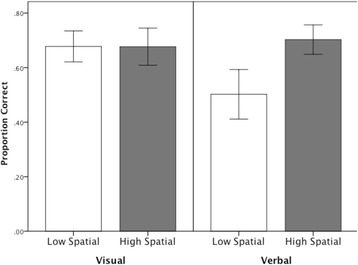
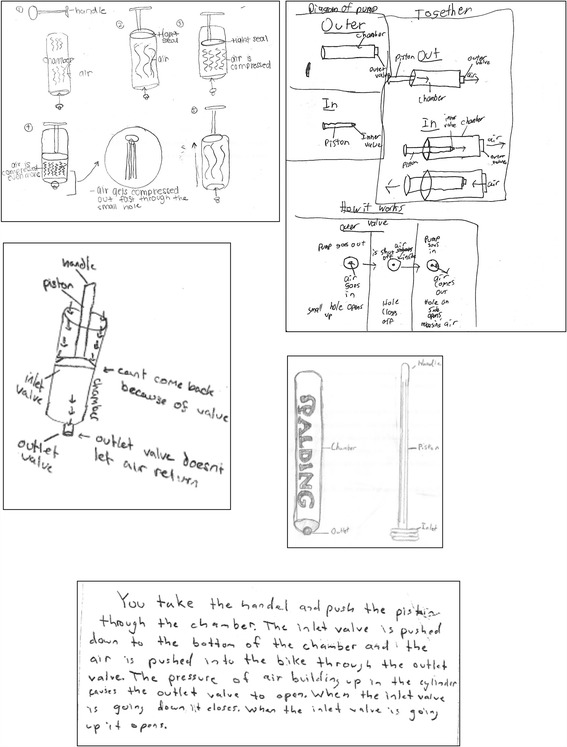
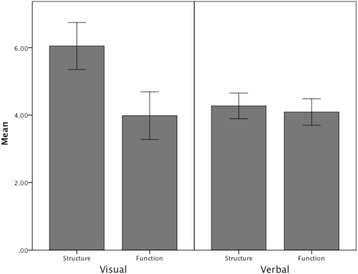
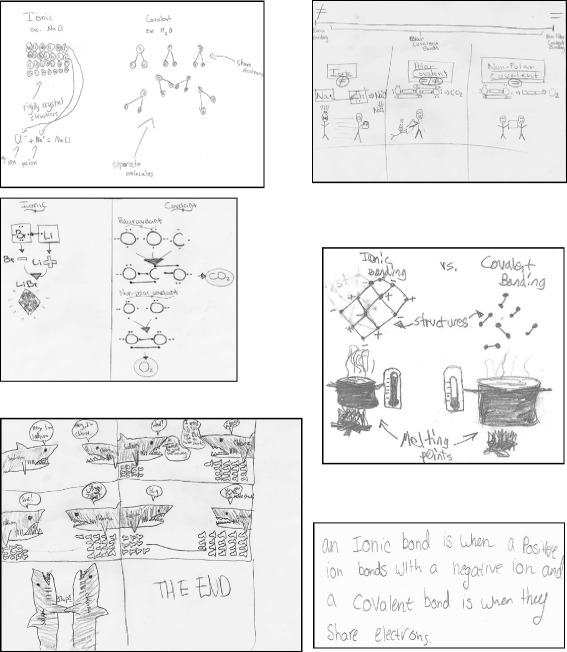
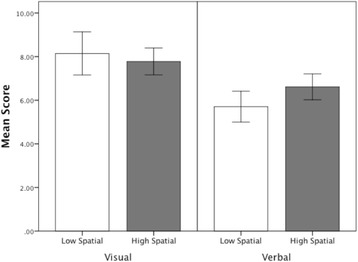
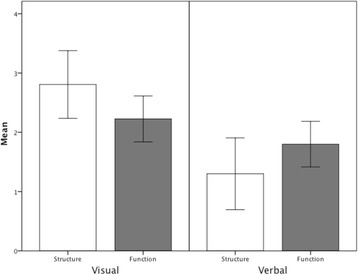
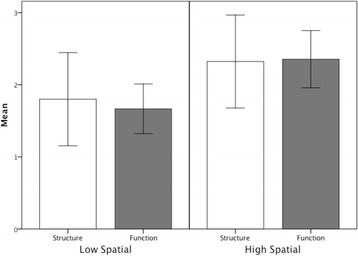
Many topics in science are notoriously difficult for students to learn. Mechanisms and processes outside student experience present particular challenges. While instruction typically involves visualizations, students usually explain in words. Because visual explanations can show parts and processes of complex systems directly, creating them should have benefits beyond creating verbal explanations. We compared learning from creating visual or verbal explanations for two STEM domains, a mechanical system (bicycle pump) and a chemical system (bonding). Both kinds of explanations were analyzed for content and learning assess by a post-test. For the mechanical system, creating a visual explanation increased understanding particularly for participants of low spatial ability. For the chemical system, creating both visual and verbal explanations improved learning without new teaching. Creating a visual explanation was superior and benefitted participants of both high and low spatial ability. Visual explanations often included crucial yet invisible features. The greater effectiveness of visual explanations appears attributable to the checks they provide for completeness and coherence as well as to their roles as platforms for inference. The benefits should generalize to other domains like the social sciences, history, and archeology where important information can be visualized. Together, the findings provide support for the use of learner-generated visual explanations as a powerful learning tool.
Overview
The claims and statistics of this paper haven’t been checked yet.
Free: it reads the open-access text and checks the first 5 claims that cite a source we can check. Create a free account to check every claim.
Integrity signals
Registry
Cites
Statistics
Figures
Verification
Claims the paper makes
The claims and statistics of this paper haven’t been checked yet.
Free: it reads the open-access text and checks the first 5 claims that cite a source we can check. Create a free account to check every claim.
Claims other papers make about this one
Each is checked against this paper’s own text: does it say what the citing paper says it does?
The cited source says what the claim attributes to it.
In the citing paper
“Representational transformations (e.g., turning a diagram into a paragraph of text or vice versa ) are a useful part of knowledge work (e.g., [6, 8, 26]), but they take additional effort.”
From Accessibility-Driven Information Transformations in Mixed-Visual Ability Work Teams (2026) · cites this paper as [8]
The cited source says what the claim attributes to it.
In the citing paper
“While student representational drawing is backed by research (e.g., Bobek and Tversky, 2016) and occasionally recommended (Fiorella and Mayer, 2016), the research also indicates implementation can be difficult (Fiorella and Zhang, 2018).”
From Moving the Needle: Evidence of an Effective Study Strategy Intervention in a Community College Biology Course (2022) · cites this paper as Bobek and Tversky, 2016
The cited source says what the claim attributes to it.
In the citing paper
“Bobek and Tversky (2016) found an improvement in middle school students who created visual explanations of a bicycle pump and chemical bonding.”
From Moving the Needle: Evidence of an Effective Study Strategy Intervention in a Community College Biology Course (2022) · cites this paper as Bobek and Tversky (2016)
Self-check
Percentages, sums and reported differences re-computed from the paper’s own numbers.
The self-check needs the paper’s full text.
Citations
Cites
Levels of processing: A framework for memory research
Craik, F. I. M., & Lockhart, R. S. (1972) · Journal of Verbal Learning and Verbal Behavior · doi:10.1016/s0022-5371(72)80001-x · Cited by 9,566 · cited 2×
“Translating verbal information from the text into a visual explanation may promote deeper processing of the material and more complete and comprehensive mental models (Craik & Lockhart, 1972).”
BackgroundMethod(1991) · Choice Reviews Online · doi:10.5860/choice.28-5764 · Cited by 6,847
Why a Diagram is (Sometimes) Worth Ten Thousand Words
Larkin, J. H., & Simon, H. A. (1987) · Cognitive Science · doi:10.1016/s0364-0213(87)80026-5 · Cited by 3,733 · cited 2×
“They also help to draw inferences (Larkin & Simon, 1987), find routes in maps (Levine, 1982), spot trends in graphs (Kessell & Tversky, 2011; Zacks & Tversky, 1999), imagine traffic flow or seasonal changes in light from architectural sketches (e.g. Tversky & Suwa, 2009), and determine the…”
BackgroundVoyer, D., Voyer, S., & Bryden, M. P. (1995) · Psychological Bulletin · doi:10.1037/0033-2909.117.2.250 · Cited by 2,868
Test-Enhanced Learning: Taking Memory Tests Improves Long-Term Retention
Roediger, H. L., & Karpicke, J. D. (2006) · Psychological Science · doi:10.1111/j.1467-9280.2006.01693.x · Cited by 2,867
The Psychology of Learning and Motivation
Ross, B. H. (2012) · Cited by 2,633
Mental Rotations, a Group Test of Three-Dimensional Spatial Visualization
Vandenberg, S. G., & Kuse, A. R. (1978) · Perceptual and Motor Skills · doi:10.2466/pms.1978.47.2.599 · Cited by 2,620
The malleability of spatial skills: A meta-analysis of training studies.
Uttal, D. H., Meadow, N. G., Tipton, E., Hand, L. L., Alden, A. R., Warren, C., & Newcombe, N. S. (2013) · Psychological Bulletin · doi:10.1037/a0028446 · Cited by 1,899
Active‐Constructive‐Interactive: A Conceptual Framework for Differentiating Learning Activities
Chi, M. T. H. (2009) · Topics in Cognitive Science · doi:10.1111/j.1756-8765.2008.01005.x · Cited by 1,597 · cited 2×
“Visual explanations often included crucial yet invisible features.”
BackgroundWhy is science difficult to learn? Things are seldom what they seem
Johnstone, A. H. (1991) · Journal of Computer Assisted Learning · doi:10.1111/j.1365-2729.1991.tb00230.x · Cited by 1,321 · cited 3×
“o reproduction in any medium, provided you giv the Creative Commons license, and indicate if Dynamic systems such as those in science and engineering, but also in history, politics, and other domains, are notoriously difficult to learn (e.g. Chi, DeLeeuw, Chiu, & Lavancher, 1994; Hmelo-Silver & Pfeffer, 2004; Johnston…”
Background
Cited by
Castro-Alonso, J. C., de Koning, B. B., Fiorella, L., & Paas, F. (2021) · Educational Psychology Review · doi:10.1007/s10648-021-09606-9 · Cited by 278
AI, big data, and the future of consent
Andreotta, A. J., Kirkham, N., & Rizzi, M. (2022) · AI & SOCIETY · doi:10.1007/s00146-021-01262-5 · Cited by 164
Drawing Boundary Conditions for Learning by Drawing
Fiorella, L., & Zhang, Q. (2018) · Educational Psychology Review · doi:10.1007/s10648-018-9444-8 · Cited by 161
Making Sense of Generative Learning
Fiorella, L. (2023) · Educational Psychology Review · doi:10.1007/s10648-023-09769-7 · Cited by 135
“However, like many GLA studies, the study by Bobek and Tversky (2016) tested explaining and drawing separately and thus it could not directly assess how drawing affected the quality of students’ explanations.”
BackgroundInfluentialHow Do Teachers Use Comics to Promote Engagement, Equity, and Diversity in Science Classrooms?
Matuk, C. F., Hurwich, T., SPIEGEL, A. N., & Diamond, J. (2019) · Research in Science Education · doi:10.1007/s11165-018-9814-8 · Cited by 154
“They do so by helping to develop students’ mental representations (Lansing 1981, 1984), enable inferences (Bobek and Tversky, 2016), and promote conceptual change (Edens and Potter 2003).”
Drawing as a versatile cognitive tool
Fan, J. E., Bainbridge, W. A., Chamberlain, R., & Wammes, J. D. (2023) · Nature Reviews Psychology · doi:10.1038/s44159-023-00212-w · Cited by 160
“Drawing has also been likened to other elaborative forms of information processing, such as self-explanation, whereby a learner attempts to comprehend a new concept by explaining it to themselves [141, 152, 153].”
BackgroundResultInfluentialCreating drawings enhances learning by teaching.
Fiorella, L., & Kuhlmann, S. (2020) · Journal of Educational Psychology · doi:10.1037/edu0000392 · Cited by 99
Wu, S. P. W., & Rau, M. A. (2019) · Educational Psychology Review · doi:10.1007/s10648-019-09467-3 · Cited by 131
“Similarly, when students draw, they use top-down processes when they use their prior knowledge to generate visual-spatial features (Bobek and Tversky 2014; Suwa et al. 2001).”
Wang, P., & McCarthy, B. (2020) · Australasian Marketing Journal (AMJ) · doi:10.1016/j.ausmj.2020.04.008 · Cited by 109
“This finding is consistent with studies in neuroscience that highlight the role of visualisations in promoting deep learning (Bokek and Tversky, 2016).”
ResultFostering spatial ability development in and for authentic STEM learning
Zhu, C., Leung, C. O.-Y., Lagoudaki, E., Velho, M., Caballero, N. S., Jolles, D., Duffy, G., Maresch, G., Pagkratidou, M., & Klapwijk, R. (2023) · Frontiers in Education · doi:10.3389/feduc.2023.1138607 · Cited by 94
“For example, having secondary school students create visualizations of mechanical or chemical systems not only solidified their understanding of these systems but also developed their spatial thinking skills (Bobek and Tversky, 2016).”
BackgroundLachner, A., Jacob, L., & Hoogerheide, V. (2021) · Learning and Instruction · doi:10.1016/j.learninstruc.2020.101438 · Cited by 77
The Generative Activity Principle in Multimedia Learning
Fiorella, L., & Mayer, R. E. (2021) · The Cambridge Handbook of Multimedia Learning · doi:10.1017/9781108894333.036 · Cited by 40
Behavioral health and generative AI: a perspective on future of therapies and patient care
Sezgın, E., & McKay, I. T. (2024) · npj Mental Health Research · doi:10.1038/s44184-024-00067-w · Cited by 81
Wu, S. P. W., & Rau, M. A. (2018) · Learning and Instruction · doi:10.1016/j.learninstruc.2017.09.010 · Cited by 58
Wiley, J. (2018) · Applied Cognitive Psychology · doi:10.1002/acp.3495 · Cited by 69
“…hand, a general advantage of drawing tasks is that they prompt generative, constructive processing and active integration of information by readers (Bobek & Tversky, 2016; Hall, Bailey, & Tillman, 1997; Scheiter, Schleinschok, & Ainsworth, 2017; Schwamborn, Mayer, Thillmann, Leopold, & Leutner,…”
BackgroundResultCullen, S., Fan, J., van der Brugge, E., & Elga, A. (2018) · npj Science of Learning · doi:10.1038/s41539-018-0038-5 · Cited by 55
An integrated model of learning from errors
Zhang, Q., & Fiorella, L. (2023) · Educational Psychologist · doi:10.1080/00461520.2022.2149525 · Cited by 63
Drawing to learn: How producing graphical representations enhances scientific thinking.
Fan, J. E. (2015) · Translational Issues in Psychological Science · doi:10.1037/tps0000037 · Cited by 73
“The authors speculated that one possible reason for this difference is that visual explanations may more readily provide explicit checks for completeness and coherence, as well as a platform for simulating how function is derived from structure (Bobek & Tversky, 2014).”
BackgroundMethodInfluentialHIV Care Meets Telehealth: a Review of Successes, Disparities, and Unresolved Challenges
Labisi, T., Regan, N. N., Davis, P., & Fadul, N. A. (2022) · Current HIV/AIDS Reports · doi:10.1007/s11904-022-00623-z · Cited by 63
“In addition, visual explanations are effective in aiding learning [48].”
BackgroundAdekola, A. P., & Mavhandu‐Mudzusi, A. H. (2021) · Sexuality Research and Social Policy · doi:10.1007/s13178-021-00651-1 · Cited by 58
“Using visual resources to explain different phenomena to young people is a powerful strategy that can enhance their spatial thinking skills (Bobek & Tversky, 2016).”
BackgroundFontecha, A. F., O’Halloran, K. L., Wignell, P., & Tan, S. (2019) · Linguistics and Education · doi:10.1016/j.linged.2019.100788 · Cited by 67
Students' mechanistic reasoning in practice: Enabling functions of drawing, gestures and talk
de Andrade, V., Shwartz, Y., Freire, S., & Baptista, M. (2021) · Science Education · doi:10.1002/sce.21685 · Cited by 48
Jolak, R., Savary‐Leblanc, M., Dalibor, M., Wortmann, A., Hebig, R., Vincúr, J., Polášek, I., Pallec, X. L., Gérard, S., & Chaudron, M. R. V. (2020) · Empirical Software Engineering · doi:10.1007/s10664-020-09835-6 · Cited by 53
“Moreover, graphical descriptions encourage spatial inferences (e.g., inferences about the behavior, causality, and function of a system) to substitute for and support abstract inferences (Bobek and Tversky 2016).”
BackgroundReyes, R. L., & Villanueva, J. A. (2024) · Journal of Chemical Education · doi:10.1021/acs.jchemed.3c01151 · Cited by 54
Role of generated and provided visuals in supporting learning from scientific text
Zhang, Q., & Fiorella, L. (2019) · Contemporary Educational Psychology · doi:10.1016/j.cedpsych.2019.101808 · Cited by 47
Weimer, J., Rolef, P., Müller, L., Bellhäuser, H., Göbel, S., Buggenhagen, H., Weimer, A., Waezsada, E., Kirchhoff, F., & Weinmann‐Menke, J. (2023) · BMC Medical Education · doi:10.1186/s12909-023-04062-1 · Cited by 40
“The form of preparation using lecture notes described in this training approach, which along with the PowerPoint slides used was positively evaluated by the participants, represents a fundamental element in achieving the best possible improvement in skills [53].”
BackgroundMethodPumplun, L., Peters, F., Gawlitza, J. F., & Buxmann, P. (2023) · Journal of the Association for Information Systems · doi:10.17705/1jais.00820 · Cited by 60
Connecting spatial thinking to STEM learning through visualizations
Taylor, H. A., Burte, H., & Renshaw, K. T. (2023) · Nature Reviews Psychology · doi:10.1038/s44159-023-00224-6 · Cited by 49
The human-AI dyad: Navigating the new frontier of entrepreneurial discourse
Jeremiah, F. (2024) · Futures · doi:10.1016/j.futures.2024.103529 · Cited by 46
Lotfinejad, N., Assadi, R., Aelami, M. H., & Pittet, D. (2020) · Antimicrobial Resistance and Infection Control · doi:10.1186/s13756-020-0692-2 · Cited by 38
How drawing prompts can increase cognitive engagement in an active learning engineering course
Wu, S. P. W., Veen, B. D. V., & Rau, M. A. (2020) · Journal of Engineering Education · doi:10.1002/jee.20354 · Cited by 47
Nyboer, E. A., Reid, A. J., Jeanson, A. L., Kelly, R., Mackay, M., House, J., Arnold, S. M., Simonin, P. W., Sedanza, M. G., Rice, E. D., et al. (2022) · Reviews in Fish Biology and Fisheries · doi:10.1007/s11160-022-09719-6 · Cited by 40
“2009; Bobek and Tversky 2016).”
BackgroundChen, A., Teng, A. K., Zhao, J., Asirot, M. G., & Turner, A. M. (2022) · Geriatric Nursing · doi:10.1016/j.gerinurse.2022.04.027 · Cited by 38
Amaniyan, S., Pouyesh, V., Bashiri, Y., Snelgrove, S. R., & Vaismoradi, M. (2020) · SAGE Open Nursing · doi:10.1177/2377960820940550 · Cited by 36
“The visual format of conceptual maps may have been able to evoke complex components and abstract concepts that are usually difficult to incorporate into the formation of a mental model (Bobek & Tversky, 2016).”
BackgroundHandheld ultrasound in training – The future is getting smaller!
Wilkinson, J. N., & Saxhaug, L. M. (2020) · Journal of the Intensive Care Society · doi:10.1177/1751143720914216 · Cited by 34
“The sono-pathological link has been made; the clinical signs have been taken to memory with a visual reinforcement of what they read about in books.(25) The torch has been shone inside the patient and has similarly lit up the world of understanding for the novice.”
BackgroundVisual resemblance and interaction history jointly constrain pictorial meaning
Hawkins, R. D., Sano, M., Goodman, N. D., & Fan, J. E. (2023) · Nature Communications · doi:10.1038/s41467-023-37737-w · Cited by 33
Cheng, L., & Beal, C. R. (2019) · Educational Technology Research and Development · doi:10.1007/s11423-019-09684-1 · Cited by 34
Bachtiar, B., & Irasuti, I. (2024) · International Journal of Learning Teaching and Educational Research · doi:10.26803/ijlter.23.8.7 · Cited by 40
“Moreover, research by Bobek and Tversky (2016) supports the idea that creating visual explanations enhances understanding, particularly for participants with varying spatial abilities, by promoting completeness and coherence in the material.”
BackgroundBraun, I., Langner, A., & Graulich, N. (2022) · Frontiers in Education · doi:10.3389/feduc.2022.1055280 · Cited by 32
“Predominantly, it has been shown that prompting learners to visually depict content presented in text- or animation-based instructional materials is an effective learning strategy as students who draw not only build higher quality explanations and develop a more coherent mental model of a studied phenomenon, but also…”
BackgroundMoser, S., & Lewalter, D. (2024) · European Journal of Psychology of Education · doi:10.1007/s10212-024-00813-w · Cited by 32
“Yet, Bobek and Tversky (2016) and Scheiter et al. (2017) reported that students who produced drawings while reading science texts outperformed students who produced written self-explanations, in particular if the products where of high quality and students had low spatial ability.”
Baldwin, N., & Orgill, M. (2019) · Chemistry Education Research and Practice · doi:10.1039/c9rp00013e · Cited by 31
Quantum Picturalism: Learning Quantum Theory in High School
Dündar‐Coecke, S., Yeh, L., Puca, C., Pfaendler, S. M.-L., Waseem, M., Cervoni, T., Kissinger, A., Gogioso, S., & Coecke, B. (2023) · IEEE International Conference on Quantum Computing and Engineering (QCE) · doi:10.1109/qce57702.2023.20321 · Cited by 53
“…has been a major focus on the function of instructional pictures as valuable support for, or as an alternative to, both text and symbolic reasoning [23]– [25] with evidence suggesting that visual aids like diagrams enhance learning by providing intuitive explanations, improving memory retention,…”
BackgroundRasmawan, R. (2020) · International Journal of Instruction · doi:10.29333/iji.2020.13446a · Cited by 25
XNLP: A Living Survey for XAI Research in Natural Language Processing
Qian, K., Danilevsky, M., Katsis, Y., Kawas, B., Oduor, E., Popa, L. C., & Li, Y. (2021) · ACM International Conference on Intelligent User Interfaces (IUI) · doi:10.1145/3397482.3450728 · Cited by 25
“XNLP is designed to reflect key characteristics of a good survey, powered by data-driven visualizations, which have been empirically shown [2] to communicate and enable more efficient ingestion of information than text alone.”
BackgroundSpenser, K. A., Bull, R., Betts, L. R., & Winder, B. (2020) · Cognitive Development · doi:10.1016/j.cogdev.2020.100928 · Cited by 26
Mulia, M. D. O. C. S. P.-G. S. U. B., Chinmi, M., Marta, R. F., & Mulia, M. D. O. C. S. P.-G. S. U. B. (2020) · Revista Romaneasca pentru Educatie Multidimensionala · doi:10.18662/rrem/12.2sup1/297 · Cited by 24
“By visual learning it gives completeness and coherence as well as well as their role as platforms to inference (Bobek & Tversky, 2016).”
BackgroundCausal theory error in college students’ understanding of science studies
Seifert, C. M., Harrington, M. B., Michal, A. L., & Shah, P. (2022) · Cognitive Research Principles and Implications · doi:10.1186/s41235-021-00347-5 · Cited by 29
“Self-generated explanations supported by visual representations have been shown to improve learners’ understanding of scientific data (Ainsworth & Loizou, 2003; Bobek & Tversky, 2016; Gobert & Clement, 1999; Rhodes et al., 2014; Tal & Wansink, 2016).”
BackgroundMethodSinghal, I., & Balaji, B. (2022) · Journal of Chemical Education · doi:10.1021/acs.jchemed.1c01278 · Cited by 23
Improving patient knowledge on rational use of antibiotics using educational videos
Ghozali, M. T., Hidayaturrohim, B., & Islamy, I. D. A. (2023) · International Journal of Public Health Science (IJPHS) · doi:10.11591/ijphs.v12i1.21846 · Cited by 29
How Domain Experts Create Conceptual Diagrams and Implications for Tool Design
Ma’ayan, D., Ni, W., Ye, K., Kulkarni, C. E., & Sunshine, J. S. (2020) · CHI Conference on Human Factors in Computing Systems · doi:10.1145/3313831.3376253 · Cited by 27
“Moreover, creating diagrams as visual explanations also improves learning, since they can act as a check for completeness and a medium for inference [5].”
BackgroundDrawing Together Research and Pedagogy
Kantrowitz, A., Fava, M., & Brew, A. (2017) · Art Education · doi:10.1080/00043125.2017.1286863 · Cited by 25
Alomar, A. Z. (2022) · Journal of Medical Education and Curricular Development · doi:10.1177/23821205221078794 · Cited by 22
“Multiple sensory stimulations lead to more cognitive connections, resulting in a better understanding of the concepts and the development of deep thinking.(26) Videos can help improve students’ knowledge retention regarding procedural steps, such as in PE, because they can watch each step repeatedly until they can do…”
BackgroundThe Use of Visuals in Undergraduate Neuroscience Education: Recommendations for Educators
Sahiti, Q., & Stamp, J. A. (2021) · Teaching of Psychology · doi:10.1177/00986283211000326 · Cited by 19
“Visuals are especially effective in the teaching and learning of scientific information (Bobek & Tversky, 2016; Stein & Power, 1996; Van Meter & Garner, 2005).”
BackgroundThe impact of gestural representation of metaphor schema on metaphor comprehension
Khatin‐Zadeh, O., Hu, J., Marmolejo‐Ramos, F., & Farsani, D. (2023) · Poznań Studies in Contemporary Linguistics · doi:10.1515/psicl-2022-1056 · Cited by 19
Geonews: timely geoscience educational YouTube videos about recent geologic events
Wang, N., Clowdus, Z., Sealander, A., & Stern, R. J. (2022) · Geoscience Communication · doi:10.5194/gc-5-125-2022 · Cited by 20
AI-generated videos in medical education: systematic review
Artsi, Y., Sorin, V., Glicksberg, B. S., Korfiatis, P. D., Thomas, D. C., Nadkarni, G. N., & Klang, E. (2025) · BMJ Open Quality · doi:10.1136/bmjoq-2025-003704 · Cited by 20
“By maintaining high standards and critically evaluating AI-generated content, we can responsibly integrate these tools to enhance learning while preserving essential human elements such as mentorship and critical thinking.”
An Analysis of Racial Diversity in the Breast Reconstruction and Aesthetic Surgery Literature
Chawla, S., Shihadeh, H., & Patel, A. (2022) · Plastic & Reconstructive Surgery Global Open · doi:10.1097/gox.0000000000004487 · Cited by 18
The impact of embodied scaffolding sequences on STEM conceptual learning
Zeng, J., Zhang, P., Zhou, J., Shang, J., & Black, J. B. (2024) · Educational Technology Research and Development · doi:10.1007/s11423-024-10438-x · Cited by 22
“), a median split was adopted to assign students in each condition to distinct levels of prior proficiency (Bobek & Tversky, 2016).”
Teong, L.-F., Khor, B., Purba, K. R., Gafor, A. H. A., Goh, B. L., Bee, B. C., Yahya, R., Bavanandan, S., Ng, H.-M., Sahathevan, S., et al. (2022) · Healthcare · doi:10.3390/healthcare10030535 · Cited by 18
Teaching Spinal Cord Neuroanatomy through Drawing: An Interactive, Step-Wise Module
Gheysens, K., Lebeau, R. B., & Glendinning, D. S. (2017) · MedEdPORTAL · doi:10.15766/mep_2374-8265.10592 · Cited by 16
An Immersive Learning Platform for Efficient Biology Learning of Secondary School-Level Students
Rao, D., & Saha, S. K. (2019) · Journal of Educational Computing Research · doi:10.1177/0735633119854031 · Cited by 16
“Since decades, several studies are performed on the creation of visual explanations, which improve learning (Aisami, 2015; Atkinson & Shffrin, 1968; Bobek & Tversky, 2016; Carney & Levin, 2002; Lohr, 2008).”
BackgroundVemu, S., Denaro, K., Sato, B. K., & Williams, A. E. (2022) · CBE—Life Sciences Education · doi:10.1187/cbe.21-08-0216 · Cited by 18
“While student representational drawing is backed by research (e.g., Bobek and Tversky, 2016) and occasionally recommended (Fiorella and Mayer, 2016), the research also indicates implementation can be difficult (Fiorella and Zhang, 2018).”
Ahzari, S., & Akmam, A. (2025) · Jurnal Pendidikan Fisika · doi:10.26618/jpf.v13i2.17702 · Cited by 15
“These findings align with research by Haris et al. (2024 animations, and multimedia resources that make abstract physics concepts more concrete and accessible (Bobek & Tversky, 2016; Bouchée et al., 2022; Nasution et al., 2025).”
Nurgaliyeva, S., Zhumabayeva, A., Kulgildinova, T., Куатовна, А. С., Kurbonova, B., Umirbekova, A. N., & Bolatov, A. (2025) · Cogent Education · doi:10.1080/2331186x.2025.2468563 · Cited by 16
“…Natural Sciences, which often involve complex processes and abstract concepts, visual aids like diagrams, charts, and illustrations play a crucial role in helping students understand difficult material (Abdulrahaman et al., 2020; Bobek & Tversky, 2016; Dunlosky et al., 2013; Evagorou et al., 2015).”
Dechamps, T., & Skulmowski, A. (2025) · Educational Psychology Review · doi:10.1007/s10648-025-10026-2 · Cited by 19
“Bobek and Tversky (2016), on the other hand, only included verbal tests and could therefore potentially have reached even stronger results if they had included tests covering more types of knowledge and the pictorial modality.”
InfluentialWillis, S., Stern, R. J., Ryan, J. G., & Bebeau, C. (2021) · Geosciences · doi:10.3390/geosciences11030140 · Cited by 16
How using comics can assist in determining the students’ learning of distance-time graphs
Azamain, M. S., Shahrıll, M., Musa, N. K. H., & Batrisyia, I. (2020) · Journal of Physics Conference Series · doi:10.1088/1742-6596/1470/1/012005 · Cited by 15
“Furthermore, visualisation can help students see and grasp concepts that are difficult to explain [21].”
BackgroundSketching and verbal self‐explanation: Do they help middle school children solve science problems?
Miller‐Cotto, D., Booth, J. L., & Newcombe, N. S. (2022) · Applied Cognitive Psychology · doi:10.1002/acp.3980 · Cited by 19
Explanatory drawings prioritize functional properties at the expense of visual fidelityPreprint
Huey, H., Lu, X., Walker, C. M., & Fan, J. E. (2021) · PsyArXiv (OSF Preprints) · doi:10.1016/j.cognition.2023.105414 · Cited by 18
“…understanding (Forbus, Usher, Lovett, Lockwood, & Wetzel, 2011; Hegarty & Just, 1993; Hegarty, Kriz, & Cate, 2003; Tversky, 2001), as well as how these abstractions map back onto physical parts of the target system (Bobek & Tversky, 2016; Fan, 2015; Gobert & Clement, 1999; New-combe, 2013).”
Engelschalt, P., Bielik, T., Krell, M., Krüger, D., & zu Belzen, A. U. (2023) · International Journal of Science Education · doi:10.1080/09500693.2023.2253368 · Cited by 14
“Taken together, these di ff erences add to fi ndings from other scholars indicating that the format of assessment in fl uences learners ’ responses (e.g. Bobek & Tversky, 2016) and the interpretation of their knowledge (e.g. Ropohl et al., 2015; Walpuski & Ropohl, 2011).”
ResultProios, H., Baskini, M., Keramydas, C., Pourliaka, T., & Tsakpounidou, K. (2022) · Journal of Stroke and Cerebrovascular Diseases · doi:10.1016/j.jstrokecerebrovasdis.2022.106544 · Cited by 13
Asli, S. (2025) · Sustainability · doi:10.3390/su17104636 · Cited by 14
Heartfelt images: learning cardiac science artistically
Courneya, C. A. (2017) · Medical Humanities · doi:10.1136/medhum-2016-011140 · Cited by 13
Professional discourse: the verbal and visual semiosis interplay
Litvishko, O. M., Shiryaeva, T. A., Тихонова, Е. В., & Косычева, М. А. (2022) · RESEARCH RESULT Theoretical and Applied Linguistics · doi:10.18413/2313-8912-2022-8-1-0-2 · Cited by 13
Virtual and Augmented Reality in Mechanical Engineering Education
Ivanova, G., Ivanov, A. L., & Zdravkov, L. (2023) · International Convention on Information and Communication Technology, Electronics and Microelectronics · doi:10.23919/mipro57284.2023.10159965 · Cited by 13
“The popularity of these methods is due to the fact that 80% of learning new material is visual, while only 20% is verbal, i.e. these technologies use the way the human cognitive apparatus is designed for maximum information absorption [1].”
BackgroundSholihah, R. N., Kusnadi, K., & Supriatno, B. (2023) · Jurnal Penelitian Pendidikan IPA · doi:10.29303/jppipa.v9i8.3917 · Cited by 15
Herawati, F., Yulia, R., Arifin, B., Frasetyo, I., Setiasih, S., Woerdenbag, H. J., Avanti, C., & Andrajati, R. (2021) · Antibiotics · doi:10.3390/antibiotics10050606 · Cited by 16
Sindoni, M. G., Ho, W. Y. J., & Wei, L. (2025) · Discourse Context & Media · doi:10.1016/j.dcm.2025.100959 · Cited by 13
Singh-Pillay, A., & Sotsaka, D. S. (2020) · Journal for the Education of Gifted Young Scientists · doi:10.17478/jegys.639351 · Cited by 15
“This finding resonates with other research studies which established that spatial visualization ability of an individual can be improved by means of various toys (Batinov, 2017), concrete materials that can be manipulated (Bobek & Tversky, 2016) and digital manipulatives.”
BackgroundResultHorne, L., Manzanares, A. D., Atalan-Helicke, N., Vincent, S. G., Anderson, S. W., & Romulo, C. L. (2024) · Journal of Environmental Studies and Sciences · doi:10.1007/s13412-024-00929-x · Cited by 11
“There is also some evidence to suggest that drawing may help reduce the achievement gap for students from historically marginalized backgrounds (Aylward 2010), students with lower skill levels (Bobek and Tversky 2016), or non-traditional students (Van Der Veen 2017).”
Examining young children’s transitions from drawing into early writing
Campbell, K., & Cunningham, A. E. (2025) · Early Childhood Research Quarterly · doi:10.1016/j.ecresq.2025.04.007 · Cited by 13
Sharma, S. K., Mandal, A., & Mishra, M. K. (2020) · Indian Journal of Tuberculosis · doi:10.1016/j.ijtb.2020.10.013 · Cited by 11
Basthomi, Y. A., Sunandar, A., & Timan, A. (2023) · Jurnal Educative Journal of Educational Studies · doi:10.30983/educative.v8i2.7464 · Cited by 10
Chen, Z., & Tversky, B. (2024) · Cognitive Science · doi:10.1111/cogs.13405 · Cited by 10
Self-citationProfessional Development for Primary School Teachers Intended to Promote Students’ Spatial Ability
Bufasi, E., Čakāne, I., Dudareva, I., & Namsone, D. (2024) · International Journal of Engineering Pedagogy (iJEP) · doi:10.3991/ijep.v14i2.43673 · Cited by 11
Theories and Practices in Learning and Assessment for Postgraduate Medical Education: A Review
Ismail, O. M., Said, U. N., El-Omar, O., & Bhutta, M. A. (2024) · Cureus · doi:10.7759/cureus.74160 · Cited by 10
Mind maps for eliciting and assessing plant awareness: A preliminary study on pre‐service teachers
Eugenio‐Gozalbo, M., Ortega-Cubero, I., & Suárez‐López, R. (2024) · Plants People Planet · doi:10.1002/ppp3.10605 · Cited by 12
“Although promising evidence exists (Bovek & Tversky, 2016; Fiorella & Zhang, 2018; Schmidgall et al., 2019), learning relies on the final quality of drawing, which in turn is linked with the art teacher, who plays a fundamental role in success (Dempsey & Betz, 2009; Van Meter & Garner, 2005).”
Explainable artificial intelligence for natural language processing: A survey
Hassan, M. M., Nag, A., Biswas, R., Ali, M. S., Zaman, S., Bairagi, A. K., & Kaushal, C. (2025) · Data & Knowledge Engineering · doi:10.1016/j.datak.2025.102470 · Cited by 14
He, A., Yuan, W., & Kılıçman, A. (2024) · International Journal of Mathematical Education in Science and Technology · doi:10.1080/0020739x.2024.2375257 · Cited by 10
“At the same time, visual explanations help prevent polarisation in understanding abstract concepts among students with different levels of Mathematical ability (Bobek & Tversky, 2016).”
Stoichiometry E-Book Based on Creative Problem Solving (CPS) to Solve Conceptual Problems
Rasmawan, R. (2022) · Jurnal Pendidikan Kimia Indonesia · doi:10.23887/jpk.v6i1.43441 · Cited by 10
“High acceptance of material descriptions, videos, analogies, and pictures in e-books can help students obtain more complete information than just explanations in text form (Bobek & Tversky, 2016).”
BackgroundDrawn to natural history: Enhancing field courses with drawing and field journal instruction
Merkle, B. G., Barber, B. R., & Carling, M. D. (2020) · Natural sciences education · doi:10.1002/nse2.20019 · Cited by 9
Analisis Poster Sebagai Media Pembelajaran Sejarah Afrika
Patridina, E. P. B. G. G., & Listyaputri, D. R. (2022) · JURNAL PENDIDIKAN · doi:10.32585/jp.v31i2.2654 · Cited by 12
The Effects of Invention and Recontextualization on Representing and Reasoning with Trees of Life
Matuk, C. F., & Uttal, D. H. (2018) · Research in Science Education · doi:10.1007/s11165-018-9761-4 · Cited by 9
“…(de Bock et al. 1998; van Essen and Hamaker 1990), influences the development of their mental representations (Lansing 1981, 1984), promotes conceptual change (Edens and Potter 2003), increases self-monitoring behaviors (Van Meter 2001), and facilitates inferencemaking (Bobek and Tversky 2016).”
BackgroundWang, N., Stern, R. J., & Waite, L. (2022) · Journal of Geoscience Education · doi:10.1080/10899995.2022.2093543 · Cited by 9
“Well-designed animations and videos allow students to better visualize complex processes (Ploetzner et al., 2020), which is especially important for understanding different components of an Earth system and how these interact (Bobek & Tversky, 2016; Resnick et al., 2018).”
BackgroundInfluentialLee, U., Jeong, Y., Kim, S., Son, Y., Byun, G., Kim, H., & Lim, C. (2025) · arXiv (Cornell University) · doi:10.13140/rg.2.2.26490.20166 · Cited by 12
“My drawing is quite different!” Drawbacks of comparing generative drawings to instructional visuals
Fiorella, L., Jaeger, A. J., Capobianco, A., & Burnett, A. (2024) · Contemporary Educational Psychology · doi:10.1016/j.cedpsych.2024.102277 · Cited by 9
Virtual Reality in Electronics and Communication Engineering Education
Jain, M., & Soni, S. K. (2024) · IEEE International Conference on Information Technology, Electronics and Intelligent Communication Systems (ICITEICS) · doi:10.1109/iciteics61368.2024.10624857 · Cited by 8
“The effectiveness of these tools is highlighted by replicating content in interactive forms, such as three-dimensional models of learning material, which align with the human cognitive apparatus’s design for maximum information absorption [2].”
BackgroundVankit, S. A., Zamanifard, S., Diaz, D., Mousas, C., Richardson, K. C., Duchowski, A. T., & Volonte, M. (2025) · Computer Animation and Virtual Worlds · doi:10.1002/cav.70023 · Cited by 9
Enhancing Toxicology Achievement by the VARK and the GRSLSS-mixed Models in Team-Based Learning
Khamphaya, T., Pouyfung, P., & Yimthiang, S. (2022) · Frontiers in Public Health · doi:10.3389/fpubh.2021.732550 · Cited by 8
“It could be because V and A can remember and get information by watching and listening faster than others (55).”
BackgroundSakao, T., Neramballi, A., & Matschewsky, J. (2022) · Proceedings of the Design Society · doi:10.1017/pds.2022.198 · Cited by 8
“…used to explain the concept of the service design trap in this article and is expected to improve the learning of the concept, because such improvement with pictures is widely recognized in different domains such as education (Bobek and Tversky, 2016) and health communication (Houts et al ., 2006).”
Background
Metadata
- Authors
- Bobek, E., & Tversky, B.
- Affiliations
- University of Massachusetts Lowell (US)
- Columbia University (US)
- Corresponding author
- Bobek, Eliza
- Venue
- Cognitive Research: Principles and Implications
- Published
- 2016-12
- Volume
- 1
- Issue
- 1
- Pages
- 27-27
- ISSN
- 2365-7464 (ISSN-L)
- PMC
- PMC5256450
- OpenAlex
- W2560277832
- Cited by
- 298
- References
- 55
- Citations by year
- 2026: 25 · 2025: 54 · 2024: 53 · 2023: 33 · 2022: 42 · 2021: 32 · 2020: 32 · 2019: 14 · 2018: 5 · 2017: 5
- FWCI
- 11.39
- Type
- journal article
- Language
- en
- Open access
- gold
- doi.org
- Licence
- cc-by
- creativecommons.org/licenses/by/4.0 (tdm)
- creativecommons.org/licenses/by/4.0 (vor, 6 d)
- Locations
- Cognitive Research Principles and Implications (publishedVersion, cc-by)
- Europe PMC (PubMed Central) (publishedVersion, cc-by)
- PubMed Central (publishedVersion, cc-by)
- PubMed (publishedVersion)
- eScholarship (California Digital Library) (submittedVersion)
- Funders
- National Science Foundation (CHS-1513841, HHC 0905417, IIS-0725223, IIS-0855995, REC 0440103)
- Topics
- Social Sciences › Psychology › Experimental and Cognitive Psychology › Visual and Cognitive Learning Processes
- Social Sciences › Education › Science Education and Pedagogy
- Social Sciences › Psychology › Developmental and Educational Psychology › Innovative Teaching and Learning Methods
- Keywords
- visual explanations, verbal explanation, science learning, spatial ability, mechanical systems, chemical bonding, inference, complex systems, STEM education
About these checks
Registry, retraction, Cites and statistics results are computed, not judged, with one exception: a printed reference that no index lists is read once by a model before it counts as a citation error. Claims are extracted by a model and kept only when their quote appears verbatim in the text; each cited source is then checked, with a model’s help, for whether it says what the claim relies on. Those verdicts can be wrong — read the claim’s quote and the cited source before relying on one.
Statistics and arithmetic are recomputed, not judged.
Confidence bands are shown only for fields calibrated on our annotated test set. None is calibrated yet, so no band is shown.
What counts as a claim ›How we measure confidence ›How we check this ›
Are you an author, or do you see a problem with this page? Request a review
Data sources
Bibliographic data: Semantic Scholar, OpenAlex, Crossref.
Contains information from the Semantic Scholar Academic Graph Datasets, made available under the ODC Attribution License (ODC-BY 1.0).
Semantic Scholar’s data is described in: Kinney, R., et al. (2023). The Semantic Scholar Open Data Platform. arXiv:2301.10140.
