

Creating visual explanations improves learning
Open accessThe DOI matches its Crossref record; 56 of the 56 references it cites were found in a registry or an index.
Abstract
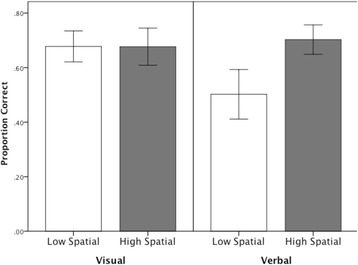
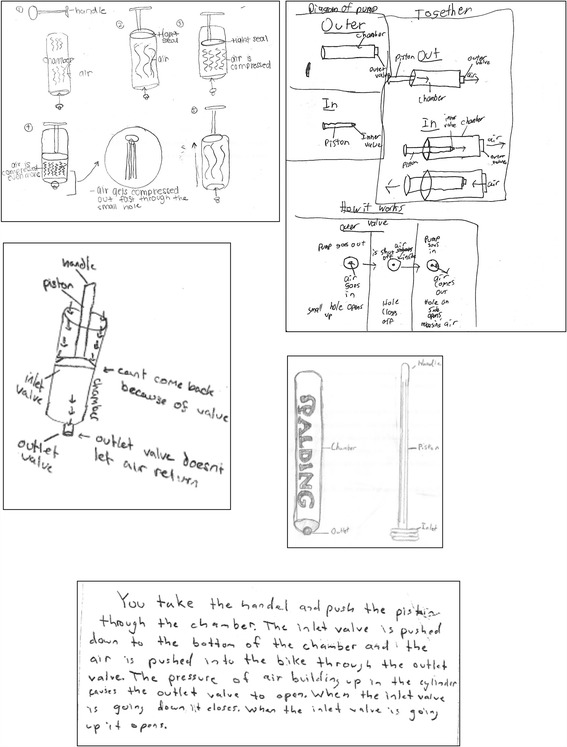
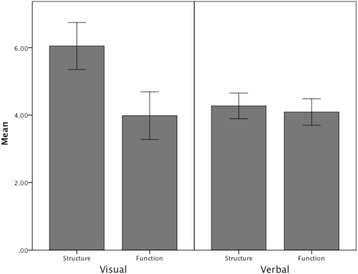
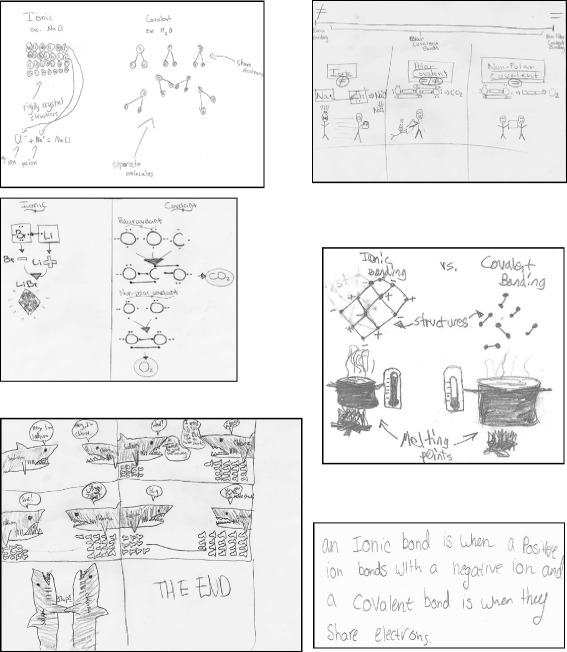
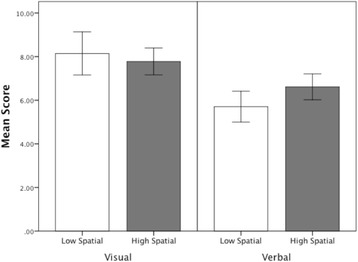
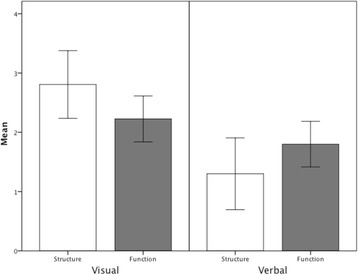
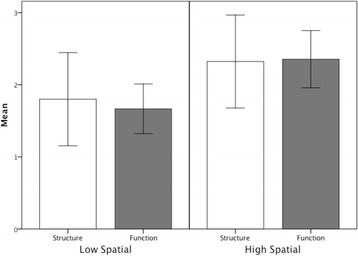
Many topics in science are notoriously difficult for students to learn. Mechanisms and processes outside student experience present particular challenges. While instruction typically involves visualizations, students usually explain in words. Because visual explanations can show parts and processes of complex systems directly, creating them should have benefits beyond creating verbal explanations. We compared learning from creating visual or verbal explanations for two STEM domains, a mechanical system (bicycle pump) and a chemical system (bonding). Both kinds of explanations were analyzed for content and learning assess by a post-test. For the mechanical system, creating a visual explanation increased understanding particularly for participants of low spatial ability. For the chemical system, creating both visual and verbal explanations improved learning without new teaching. Creating a visual explanation was superior and benefitted participants of both high and low spatial ability. Visual explanations often included crucial yet invisible features. The greater effectiveness of visual explanations appears attributable to the checks they provide for completeness and coherence as well as to their roles as platforms for inference. The benefits should generalize to other domains like the social sciences, history, and archeology where important information can be visualized. Together, the findings provide support for the use of learner-generated visual explanations as a powerful learning tool.
Overview
The claims and statistics of this paper haven’t been checked yet.
Free: it reads the open-access text and checks the first 5 claims that cite a source we can check. Create a free account to check every claim.
Integrity signals
Registry
Cites
Statistics
Figures
Verification
Claims the paper makes
The claims and statistics of this paper haven’t been checked yet.
Free: it reads the open-access text and checks the first 5 claims that cite a source we can check. Create a free account to check every claim.
Claims other papers make about this one
Each is checked against this paper’s own text: does it say what the citing paper says it does?
The cited source says what the claim attributes to it.
In the citing paper
“Representational transformations (e.g., turning a diagram into a paragraph of text or vice versa ) are a useful part of knowledge work (e.g., [6, 8, 26]), but they take additional effort.”
From Accessibility-Driven Information Transformations in Mixed-Visual Ability Work Teams (2026) · cites this paper as [8]
The cited source says what the claim attributes to it.
In the citing paper
“While student representational drawing is backed by research (e.g., Bobek and Tversky, 2016) and occasionally recommended (Fiorella and Mayer, 2016), the research also indicates implementation can be difficult (Fiorella and Zhang, 2018).”
From Moving the Needle: Evidence of an Effective Study Strategy Intervention in a Community College Biology Course (2022) · cites this paper as Bobek and Tversky, 2016
The cited source says what the claim attributes to it.
In the citing paper
“Bobek and Tversky (2016) found an improvement in middle school students who created visual explanations of a bicycle pump and chemical bonding.”
From Moving the Needle: Evidence of an Effective Study Strategy Intervention in a Community College Biology Course (2022) · cites this paper as Bobek and Tversky (2016)
Self-check
Percentages, sums and reported differences re-computed from the paper’s own numbers.
The self-check needs the paper’s full text.
Citations
Cites
Levels of processing: A framework for memory research
Craik, F. I. M., & Lockhart, R. S. (1972) · Journal of Verbal Learning and Verbal Behavior · doi:10.1016/s0022-5371(72)80001-x · Cited by 9,566 · cited 2×
“Translating verbal information from the text into a visual explanation may promote deeper processing of the material and more complete and comprehensive mental models (Craik & Lockhart, 1972).”
BackgroundMethod(1991) · Choice Reviews Online · doi:10.5860/choice.28-5764 · Cited by 6,847
Why a Diagram is (Sometimes) Worth Ten Thousand Words
Larkin, J. H., & Simon, H. A. (1987) · Cognitive Science · doi:10.1016/s0364-0213(87)80026-5 · Cited by 3,733 · cited 2×
“They also help to draw inferences (Larkin & Simon, 1987), find routes in maps (Levine, 1982), spot trends in graphs (Kessell & Tversky, 2011; Zacks & Tversky, 1999), imagine traffic flow or seasonal changes in light from architectural sketches (e.g. Tversky & Suwa, 2009), and determine the…”
BackgroundVoyer, D., Voyer, S., & Bryden, M. P. (1995) · Psychological Bulletin · doi:10.1037/0033-2909.117.2.250 · Cited by 2,868
Test-Enhanced Learning: Taking Memory Tests Improves Long-Term Retention
Roediger, H. L., & Karpicke, J. D. (2006) · Psychological Science · doi:10.1111/j.1467-9280.2006.01693.x · Cited by 2,867
The Psychology of Learning and Motivation
Ross, B. H. (2012) · Cited by 2,633
Mental Rotations, a Group Test of Three-Dimensional Spatial Visualization
Vandenberg, S. G., & Kuse, A. R. (1978) · Perceptual and Motor Skills · doi:10.2466/pms.1978.47.2.599 · Cited by 2,620
The malleability of spatial skills: A meta-analysis of training studies.
Uttal, D. H., Meadow, N. G., Tipton, E., Hand, L. L., Alden, A. R., Warren, C., & Newcombe, N. S. (2013) · Psychological Bulletin · doi:10.1037/a0028446 · Cited by 1,899
Active‐Constructive‐Interactive: A Conceptual Framework for Differentiating Learning Activities
Chi, M. T. H. (2009) · Topics in Cognitive Science · doi:10.1111/j.1756-8765.2008.01005.x · Cited by 1,597 · cited 2×
“Visual explanations often included crucial yet invisible features.”
BackgroundWhy is science difficult to learn? Things are seldom what they seem
Johnstone, A. H. (1991) · Journal of Computer Assisted Learning · doi:10.1111/j.1365-2729.1991.tb00230.x · Cited by 1,321 · cited 3×
“o reproduction in any medium, provided you giv the Creative Commons license, and indicate if Dynamic systems such as those in science and engineering, but also in history, politics, and other domains, are notoriously difficult to learn (e.g. Chi, DeLeeuw, Chiu, & Lavancher, 1994; Hmelo-Silver & Pfeffer, 2004; Johnston…”
Background
Cited by
Items 101–200 of 380
Silqi, V. I., & Febrianto, R. (2022) · Jurnal Educatio FKIP UNMA · doi:10.31949/educatio.v8i3.2194 · Cited by 8
The Life + Death Education Framework: Proposition of a ‘Universal’ Framework for Implementation
Phan, H. P., Ngu, B. H., Hsu, C.-S., & Chen, S.-C. (2024) · OMEGA - Journal of Death and Dying · doi:10.1177/00302228241295786 · Cited by 8
“We suggest, in this case, the use of different types of verbal discourse (Bobek & Tversky, 2016; Liu et al., 2022; Schunk, 1984) to help improve a person ’ s psychological persona. ii.”
A naturalistic observation study of medication counseling practices at retail chain pharmacies
Yande, S., Masurkar, P. P., Gopinathan, S., & Sansgiry, S. S. (2020) · Pharmacy Practice · doi:10.18549/pharmpract.2020.1.1696 · Cited by 8
Anggraeni, A. D., & Pentury, H. J. (2020) · RETORIKA Jurnal Bahasa Sastra dan Pengajarannya · doi:10.26858/retorika.v13i2.13538 · Cited by 8
“Surely some of the effectiveness of visual explanations is because they represent and communicate more directly than language (Bobek & Tversky, 2016).”
BackgroundAn Empirical Study to Determine Whether ADHD Disorder Affects the Process of Language Learning
(2020) · Journal of Psychology and Neuroscience · doi:10.47485/2693-2490.1008 · Cited by 14
Interactive Sketchpad: A Multimodal Tutoring System for Collaborative, Visual Problem-Solving
Lee, J., Chen, S.-S., & Liang, P. P. (2025) · CHI Conference Extended Abstracts on Human Factors in Computing Systems (CHI EA) · doi:10.1145/3706599.3719790 · Cited by 17
Towards Explainable Access Control [BlueSky Paper]
Mehri, G. H., Morisset, C., & Zannone, N. (2025) · ACM Symposium on Access Control Models and Technologies (SACMAT) · doi:10.1145/3734436.3734439 · Cited by 10
Learning Activities in a Dynamic Learning Environment to Foster a Basic Fraction Concept
Merkel, R., Leuders, T., Reinhold, F., & Loibl, K. (2025) · International Journal of Science and Mathematics Education · doi:10.1007/s10763-025-10602-6 · Cited by 7
“Thus, in line with previous research (Bobek & Tversky, 2016; Morano & Riccomini, 2020), creating own visualizations helps students with less prior knowledge develop a basic fraction concept.”
Twelve tips for creating asynchronous e-learning modules in health professions education
Paniszyn, L., Daddario, S., Colocci, I., Ibikunle, O., & Schwartz, A. W. (2025) · Medical Teacher · doi:10.1080/0142159x.2025.2505120 · Cited by 7
“…with information on how they performed relative to their peers, as well as opportunities to post questions or reactions, may provide a chance for asynchronous interaction that can be further built upon in communal settings where learners can further explore difficulty concepts together [23].”
A Rubik’s Cube-Inspired Pedagogical Tool for Teaching and Learning Engineering Ethics
Peng, Y. (2024) · Science and Engineering Ethics · doi:10.1007/s11948-024-00506-z · Cited by 9
“Visual aids, preferred by engineering students for simplifying learning (Fang et al., 2017; Felder & Silverman, 1988; Felder & Spurlin, 2005), also help ensure the completeness and coherence of knowledge (Bobek & Tversky, 2016).”
BackgroundA Shift Towards Visualization in eLearning
Wu, W., Bakirova, G., & Трифонов, И. В. (2021) · International Journal of Web-Based Learning and Teaching Technologies · doi:10.4018/ijwltt.20211101.oa11 · Cited by 7
“Providing visual explanations is more beneficial than using verbal methods, in part, because visual explanations map information more directly than verbal ones (Bobek & Tversky, 2016).”
BackgroundSivagnanasundaram, J., Goonetillake, J. S., Buhary, R., Dharmawardhana, T., Weerakkody, R., Gunapala, R., & Ginige, A. (2021) · Sustainability · doi:10.3390/su13147823 · Cited by 7
Rana, M., Sultana, F., Karmakar, K., Mamun, M. A. A., Ghosh, S. R., Hafsha, J. R., & Islam, M. R. (2026) · Future Business Journal · doi:10.1186/s43093-026-00859-w · Cited by 6
“However, findings remain mixed in short-form video contexts [8, 22], highlighting the need for platform-specific, theory-driven research.”
Fiorella, L. (2023) · Applied Cognitive Psychology · doi:10.1002/acp.4100 · Cited by 8
Strategies to Effectively Utilize Images in Anatomical Teaching and Assessment
Narayanan, S. N., & Rajprasath, R. (2024) · Medical Science Educator · doi:10.1007/s40670-024-02030-y · Cited by 8
“This visual representation allows for a more effective learning process as it caters to learners with diverse learning styles and improves memory retention [3, 4].”
Tapp, A., Soloway, E. M., Norris, C., & St.Clair, A. (2024) · International Journal on Engineering Science and Technology · doi:10.46328/ijonest.206 · Cited by 8
“Visual representations have been shown to lead to effective learning (Arcavi, 2003; Bobek & Tversky, 2016).”
BackgroundNot just normal: Exploring power with Shiny apps
Stratton, C., Green, J. L., & Hoegh, A. B. (2021) · Technology Innovations in Statistics Education · doi:10.5070/t513146468 · Cited by 6
“Students’ conceptual understanding of complex topics such as power can be enhanced by the use of graphical and visualization techniques (delMas, Garfield, and Chance 1999; Chance, Ben-Zvi, Garfield, and Medina 2007; Bobek and Tversky 2016).”
MethodAduko, E. A., & Armah, R. B. (2022) · European Journal of Mathematics and Science Education · doi:10.12973/ejmse.3.2.61 · Cited by 6
Koo, F. K., Chen, R., Fethney, J., Balante, J., & Wong, G. K. M. (2024) · Journal of Dental Education · doi:10.1002/jdd.13598 · Cited by 6
VanUitert, V. J., Millirons, E., Coleman, O. F., & Kennedy, M. J. (2024) · Journal of Special Education Technology · doi:10.1177/01626434241257228 · Cited by 8
“In contrast, developing an explanation requires students to articulate a relationship be-tween new information and their prior knowledge, perceptions, and experiences, which may not necessarily be based on evidence and could be fundamentally incorrect (Bobek & Tversky, 2016).”
Liu, Y., Shah, A., Ackerman, J., & Saha, M. (2025) · CHI Conference on Human Factors in Computing Systems · doi:10.1145/3706598.3714262 · Cited by 15
Samaranayake, U. M. J. E. (2020) · International Journal of Ophthalmology · doi:10.18240/ijo.2020.04.20 · Cited by 6
Why don’t students draw when learning from science texts?
Eidman, L., & Fiorella, L. (2024) · Frontiers in Education · doi:10.3389/feduc.2024.1365202 · Cited by 5
Causal Explanations and the Growth of Understanding
Keil, F. C. (2024) · Annual Review of Developmental Psychology · doi:10.1146/annurev-devpsych-010923-103603 · Cited by 6
The Role of Planning in Cognitive Processing During L2 Writing
Tabari, M. A., & Golparvar, S. E. (2024) · International Journal of Applied Linguistics · doi:10.1111/ijal.12676 · Cited by 6
Kim, S., Abel, R., Leutner, D., Schmiemann, P., & Roelle, J. (2025) · Learning and Instruction · doi:10.1016/j.learninstruc.2025.102143 · Cited by 7
Learning through picture books: a meta-analysis of their impact on literacy development
Auliya, H. R., Sayekti, O. M., Wibowo, S. E., Rakhmawati, S., Suryani, L., & Haliem, T. D. (2026) · Reading and Writing · doi:10.1007/s11145-025-10753-6 · Cited by 6
Modeling Awareness Requirements in Groupware: From Cards to Diagrams
Bravo, C., Duque, R., Molina, A. I., & Gallardo, J. (2023) · IEEE Transactions on Human-Machine Systems · doi:10.1109/thms.2023.3332592 · Cited by 5
“Furthermore, graphical descriptions encourage inferences about the behavior or cause–effect relations of a system [16], which will be useful to express the dynamic nature of providing awareness.”
BackgroundMisconceptions Analysis of Students' Reflective-Impulsive Cognitive Style on Function Material
Hasanah, A. U., Muchyidin, A., & Manfaat, B. (2023) · Journal of Mathematics Instruction Social Research and Opinion · doi:10.58421/misro.v2i3.192 · Cited by 5
“Understanding students' concepts is crucial in learning, especially with the cognitive aspects of students [31], [32].”
BackgroundDash, A. K., Behera, S. K., & Dogra, D. P. (2023) · Multimedia Tools and Applications · doi:10.1007/s11042-023-17756-x · Cited by 5
“PlutoAR is based on the following principle: “visualizations can enhance knowledge reten-tion” [28].”
Ishimaru, D., Kanemoto, H., Hotta, M., Nagata, Y., Koizumi, F., Satake, Y., Taomoto, D., & Ikeda, M. (2024) · Frontiers in Psychiatry · doi:10.3389/fpsyt.2024.1283156 · Cited by 5
“This active experience also seems to promote the acquisition of knowledge (17).”
BackgroundRethinking Informed Consent in the Big Data Age
Andreotta, A. J. (2024) · Routledge eBooks · doi:10.4324/9781032626048 · Cited by 6
New Patient Education Video on Colonoscopy Preparation: Development and Evaluation Study
Bernstein, M. T., Garber, J., Faucher, P., Reynolds, K., Restall, G. J., Walker, J. R., & Singh, H. (2020) · JMIR Human Factors · doi:10.2196/15353 · Cited by 5
“Given that visual explanations may enhance learning [29], we also developed videos to demonstrate a patient’s experience of preparing for and undergoing a colonoscopy.”
BackgroundUnderstanding Enjoyment in ARTé: Mecenas with EGameFlow
Weng, W., Ramadan, H., & André, T. (2020) · IEEE Conference on Games (CoG) · doi:10.1109/cog47356.2020.9231662 · Cited by 5
“, [12] – [13]).”
Carnevale, S., Napoli, I. D., Esposito, F., & Arcidiacono, C. (2021) · Educational Technology Research and Development · doi:10.1007/s11423-021-10042-3 · Cited by 5
Using drawing and situated learning to teach transitional care to post-graduate residents
Liaw, F., Chang, Y., Chang, Y.-D., Shih, L.-W., & Tsai, P.-F. (2022) · BMC Medical Education · doi:10.1186/s12909-022-03738-4 · Cited by 5
“The benefits of drawing are substantial, including active engagement by adults and visible proof of research findings [18].”
BackgroundMirzaei, K., Yazdankhahfard, M., & Behbahanirad, A. (2024) · Journal of Education and Health Promotion · doi:10.4103/jehp.jehp_1804_22 · Cited by 7
“[18,19] In research conducted on psychology students in their third year of university, the concept map method showed a more significant effect on fostering creative and critical thinking than the lecture method.”
BackgroundMultiple Models. In the Mind and in the World
Tversky, B. (2018) · Historical social research · doi:10.12759/hsr.suppl.31.2018.59-65 · Cited by 9
Self-citationAccessibility-Driven Information Transformations in Mixed-Visual Ability Work Teams
Zhao, Y., A. Nacenta, M., A. Sukhai, M., & Somanath, S. (2026) · Proceedings of the 2026 CHI Conference on Human Factors in Computing Systems · doi:10.1145/3772318.3790872 · Cited by 4
“Representational transformations (e.g., turning a diagram into a paragraph of text or vice versa ) are a useful part of knowledge work (e.g., [6, 8, 26]), but they take additional effort.”
Türkan, S. (2021) · Research Portal (Queen's University Belfast) · Cited by 6
Xu, J., Abdullah, Z. B., & Samah, N. A. (2024) · International Journal of Online Pedagogy and Course Design · doi:10.4018/ijopcd.362000 · Cited by 4
Kgatla, M. N., Ramavhoya, T. I., Rasweswe, M. M., & Mulaudzi, F. M. (2025) · BMC Nursing · doi:10.1186/s12912-025-02968-3 · Cited by 4
“It is found to be crucial to use graphic illustrations to engage undergraduate nursing students in this increasingly visual world [2].”
Pradana, P. W., Supahar, S., & |, |. (2025) · Knowledge Management & E-Learning An International Journal · doi:10.34105/j.kmel.2025.17.016 · Cited by 5
Fiorella, L. (2020) · Applied Cognitive Psychology · doi:10.1002/acp.3774 · Cited by 8
Principles Based on Generative Activity in Multimedia Learning
Mayer, R. E., & Fiorella, L. (2021) · Cambridge University Press eBooks · doi:10.1017/9781108894333.035 · Cited by 4
Torres-Ronda, L., & Curtis, R. M. (2023) · Strength and conditioning journal · doi:10.1519/ssc.0000000000000811 · Cited by 4
Predictors of Student Apathy amongst Generation Z: Excavating the Roots
Ewurum, N., Obi-Aso, N. E., & Emoh, F. I. (2024) · Journal of African Real Estate Research · doi:10.15641/jarer.v8i2.1366 · Cited by 5
“Bobek and Tversky (2016) opine the use of diagrams, graphs and other visual representations strengthens abstract concept formation.”
BackgroundBhayangkara, A. N., Firdaus, D. B., & Pratiwi, T. M. (2019) · doi:10.2991/coema-19.2019.11 · Cited by 4
“explains with the methods of lectures and the learning media [21].”
BackgroundMethodDevelopment of Innovative, Adaptable Video Learning Modules for the Civil Engineering Classroom
Bauer, S. K., Zhu, C., Lomboy, G. R., & Jalayer, M. (2024) · ASEE Annual Conference & Exposition · doi:10.18260/1-2--36971 · Cited by 4
An Easy Approach to Understanding Acid-Base Balance in a Blood Buffer System
Hughes, J. M., Vilchiz, V. H., & Lee, C. (2021) · The American Biology Teacher · doi:10.1525/abt.2021.83.8.526 · Cited by 4
“Visual models are a powerful teaching tool that can be used to familiarize students with the dynamics of complex systems (Bobek & Tversky, 2016).”
BackgroundN-of-1 Trials, Their Reporting Guidelines, and the Advancement of Open Science Principles
Porcino, A., & Vohra, S. (2022) · Harvard Data Science Review · doi:10.1162/99608f92.a65a257a · Cited by 5
“For example, visual representation of the data has been shown to increase comprehension and learning (Bobek & Tversky, 2016)(n.d.-i) and are thus recommended for N-of-1 trials.”
BackgroundTeachers’ experience and training with visual diagrams production
Fernández, B. G., Ruíz-Gallardo, J.-R., Paños, E., & Jiménez, A. M. (2024) · Journal of Visual Literacy · doi:10.1080/1051144x.2024.2313427 · Cited by 4
“The production of visual diagrams is essential in the acquisition of spatial abilities (Bobek & Tversky, 2016; Lamb et al., 2015; Rafi & Samsudin, 2007) and to communicate any technological design.”
BackgroundTurner, C. P. (2019) · Figshare · Cited by 8
Hung, G. S. L., Gardiner, B., & Patel, B. M. (2021) · Journal of Trauma Nursing · doi:10.1097/jtn.0000000000000601 · Cited by 3
Aurelia, S., Andini, D., Soloan, G., Waladhiyaputri, V., & Friska, D. (2023) · ASEAN Journal of Community Engagement · doi:10.7454/ajce.v7i1.1191 · Cited by 5
Ridgley, L. M., Geary, D. C., Li, Y., Myers, P. L., Ottinger, R., Silvaggio, D. N., Ünal, Z. E., & Popov, V. (2025) · Frontiers in Education · doi:10.3389/feduc.2025.1613317 · Cited by 3
The Benefits of Drawing and Describing for Recognizing Object Images
McCarter, A. C., & Starns, J. J. (2026) · Applied Cognitive Psychology · doi:10.1002/acp.70167 · Cited by 3
Learning How to Teach with Drawings and Comics
Tigges, S. (2024) · Academic Radiology · doi:10.1016/j.acra.2023.09.038 · Cited by 3
Kremer, G., Aboumorra, S., & Stark, R. (2024) · Proceedings of the Design Society · doi:10.1017/pds.2024.137 · Cited by 3
Duan, J., Yan, R., Zare, S., & Qin, J. (2024) · Asia-Pacific Science Education · doi:10.1163/23641177-bja10076 · Cited by 4
Janetzki, J. L., Cornelius-Bell, A., & Ward, M. (2025) · Physical Therapy Reviews · doi:10.1080/10833196.2025.2452056 · Cited by 3
“The process of generating the diagrams also allowed for deeper processing of information that they had researched and also an increase in their spatial thinking skills by connection of information learned in the course to the wider literature [12,13].”
Beer, J., Jacques, A., Lambert, K., Lim, W. H., Howell, M., & Boudville, N. C. (2025) · BMJ Open · doi:10.1136/bmjopen-2024-096381 · Cited by 3
“The ability to incorporate visual elements such as pictorial messages, info-graphics, visual food swaps and food information could enhance its impact 27 and thus reduce serum phosphate.”
Benefits from sketching for improving comprehension monitoring from illustrated texts
Wiley, J., George, T., & Griffin, T. D. (2025) · Psychonomic Bulletin & Review · doi:10.3758/s13423-025-02730-5 · Cited by 3
Tversky, B. (2025) · Journal of Bioethical Inquiry · doi:10.1007/s11673-025-10425-8 · Cited by 3
“Here are two (Bobek and Tversky 2016) (Figs.”
Self-citationLearning by Drawing in STEM: A Meta-Analysis
Zhang, Y., Guo, X., Pi, Z., & Yang, J. (2021) · International Conference of Educational Innovation through Technology (EITT) · doi:10.1109/eitt53287.2021.00025 · Cited by 3
Darmawati, A. Z., Raharjo, R., & Azizah, U. (2023) · Studies in Philosophy of Science and Education · doi:10.46627/sipose.v4i2.280 · Cited by 3
“In this internalization process, students must first understand the message before they can convey it (Bobek & Tversky, 2016).”
BackgroundEvidence‐based complementary feeding recipe book for Kenyan caregivers: A novel approach
Lowe, A., Callis, A., DiGirolamo, A. M., Girard, A. W., Boakye, A., Ogutu, E. A., Omosa, E., Okeyo, F. A., Odollo, L., Samburu, B. M., et al. (2023) · Maternal and Child Nutrition · doi:10.1111/mcn.13475 · Cited by 3
“Visual communication techniques include iconography ‐ style illustrations and simple, graphic images to increase a user's learning and memory (Bobek & Tversky, 2016).”
MethodTraining the New Radiologists: Approaches for Education
Penn, L., Golden, E. D., Tomblinson, C. M., Sugi, M. D., Nickerson, J. P., Peterson, R. B., Tigges, S., & Kennedy, T. A. (2024) · Seminars in Ultrasound CT and MRI · doi:10.1053/j.sult.2024.02.003 · Cited by 5
Horna-Saldaña, C. J., Canaleta, X., Fonseca, D., Amo, D., & Caro-Via, S. (2024) · Lecture notes in educational technology · doi:10.1007/978-981-97-1814-6_59 · Cited by 3
QGrover: Teaching Grover's Algorithm Through Visual Exploration
Norrie, S., Estey, A., Müller, H. A., & Stege, U. (2024) · IEEE International Conference on Quantum Computing and Engineering (QCE) · doi:10.1109/qce60285.2024.20454 · Cited by 3
“This is useful as it takes advantage of students’ visual learning channels, which improve learning outcomes [48].”
Suyono, S. (2021) · Budapest International Research and Critics in Linguistics and Education (BirLE) Journal · doi:10.33258/birle.v4i1.1568 · Cited by 3
Stevens, M. P. (2021) · Nottingham ePrints (University of Nottingham) · Cited by 3
The Potential of Medical Consent Contracts Using Visuals
Andersen, C. B. (2020) · American Journal of Biomedical Science & Research · doi:10.34297/ajbsr.2020.08.001261 · Cited by 3
“a doctor and patient, or researcher and participant [2].”
BackgroundDelshad, M. H., & Ahmady, S. (2024) · Health Science Monitor · doi:10.61186/hsm.3.3.203 · Cited by 2
Hadža, R., Augustovicova, D. C., Paludo, A. C., Biesen, D. V., & Hrubý, M. (2025) · Adapted Physical Activity Quarterly · doi:10.1123/apaq.2024-0149 · Cited by 2
Thapar, S., Quesada, D., & Knaüper, B. (2025) · JMIR Formative Research · doi:10.2196/69532 · Cited by 3
“Empirical evidence from medical education shows that images are more easily processed than words, are easier to recall, and have better retention than text alone [68-72].”
Srinivasan, S. S. K., Kumar, M. J., & Singh, P. (2025) · Proceedings of the ACM on Human-Computer Interaction · doi:10.1145/3757624 · Cited by 2
“Our findings demonstrate that video-based usability testing provides older adults with intuitive, step-by-step exposure to novel features without necessitating immediate hands-on interaction, aligning with prior research on the benefits of visual explanations [14, 22].”
Affording Design, Affording Redesign
Tversky, B. (2014) · Springer eBooks · doi:10.1007/978-4-431-54403-6_7 · Cited by 3
Self-citationUsing Contingency Mapping for Young Children With Autism Spectrum Disorder
Cenatus, M., Blair, K.-S. C., & Risse, M. R. (2025) · Journal of Positive Behavior Interventions · doi:10.1177/10983007251372620 · Cited by 2
“Visually oriented interventions allow for choices, expectations, tasks, and communication exchanges in a way that visual learners find easier to understand (Bobek & Tversky, 2016).”
Evaluation of Technical Description Writing: An Assessment for ESP Learners in Engineering Programs
Naqvi, S. (2025) · rEFLections · doi:10.61508/refl.v33i1.286058 · Cited by 3
“The use of visuals such as diagrams and charts can help clarify complex descriptions and make technical writing more accessible to readers (Bobek & Tversky, 2016; Carifio & Perla, 2009).”
A simple drill for the Pythagorean theorem with scissors on circles!
Biswas, A., & Bisaria, A. (2020) · International Mathematical Forum · doi:10.12988/imf.2020.91254 · Cited by 2
“Over time, many mathematicians have presented various thought provoking mathematical perspectives and proofs that may be too broad or general [1-18].”
BackgroundThe Upsurge of Graphical Abstracts: A Neuroscience Perspective
Ojha, P. (2021) · Neuroscience · doi:10.1016/j.neuroscience.2020.12.029 · Cited by 2
Penugasan Infografis Sebagai Upaya Memupuk Keterampilan 4c Pebelajar
Syaifudin, M. (2021) · JKTP Jurnal Kajian Teknologi Pendidikan · doi:10.17977/um038v4i32021p319 · Cited by 4
“Sementara itu Levie & Lentz dalam Dewan (2015), Bobek & Tversky (2016) dan Mocek (2017) juga menemukan bahwa dengan memanfaatkan bantuan visual yang berupa gambar ilustrasi yang menyertai text yang ada meningkatkan keterpahaman pesan oleh pembaca.”
BackgroundAnsari, M., Alshammari, F., Alqahtani, H. M., Alshammari, R. M., Althubyani, M., Hagbani, T. A., & Alshammari, B. (2022) · Journal of Young Pharmacists · doi:10.5530/jyp.2022.14.17 · Cited by 3
The Journey to a Successful Illustrated Review
Nersesian, S., Sholzberg, M., Cushman, M., & Wolberg, A. S. (2022) · Research and Practice in Thrombosis and Haemostasis · doi:10.1002/rth2.12721 · Cited by 2
Interactive Multimedia by Stimulating Visual-Spatial Intelligence Trial
Ainyn, Q., & Dwiningsih, K. (2022) · THABIEA JOURNAL OF NATURAL SCIENCE TEACHING · doi:10.21043/thabiea.v5i1.9820 · Cited by 2
Santos, R. R., Santos, O., & de Matos, M. G. (2022) · The Psychologist Practice & Research Journal · doi:10.33525/pprj.v5i1.128 · Cited by 2
“• The use of visual stimuli delivered in point-of-de-cision places, as well as animated visual elements, are effective in the formation of habits, namely hand hygiene (Beyfus et al., 2016; Bobek & Tversky, 2016; Stella et al., 2019).”
BackgroundA Chemistry Laboratory Miniature Model: A Window to Science
Mancheño, M. J., Agüí, M. L., Elvira, E., Hernández-Cornejo, D., Barcina, J. O., Cornejo, J. H., Agudo, C., Ribeiro, A. C. C., Sánchez-Portal, J., & Parra, M. (2024) · Journal of Chemical Education · doi:10.1021/acs.jchemed.3c01266 · Cited by 2
Amifelia, H., Hairida, H., Ulfah, M., Erlina, E., & Lestari, I. (2024) · Jurnal Penelitian Pendidikan IPA · doi:10.29303/jppipa.v10i7.4762 · Cited by 2
The visual diagram: an information design tool for science communication
Luna-Gijón, G., Nava-Cuahutle, A. A., & Martínez-Cantero, D. A. (2025) · Journal of Visual Literacy · doi:10.1080/1051144x.2025.2462383 · Cited by 2
“As a result, they tend to overlook it when conceptualising their materials, which aligns with research and findings in the specialised literature (Bobek & Tversky, 2016; García Fernández et al., 2024; García Fernández & Ruiz-Gallardo, 2023; López-Manjón & Postigo, 2016).”
InfluentialProdromou, A., & Sophocleous, H. (2025) · IGI Global eBooks · doi:10.4018/979-8-3693-9040-5.ch003 · Cited by 2
Alfutimie, A., & Barakbah, S. M. A. (2025) · Cogent Education · doi:10.1080/2331186x.2025.2498124 · Cited by 2
“Students can see the experiment in action and gain a better understanding of the principles and concepts being taught (Bobek & Tversky, 2016).”
Suroyya, C. F., Tantowi, A., Kartiko, A., Labib, A., & Masuwd, M. A. (2024) · ELEMENTARY Islamic Teacher Journal · doi:10.21043/elementary.v12i1.28369 · Cited by 4
Using Roadmap-Formatted Curriculum in Elementary School to Improve NWEA Reading Growth
Jaksa, A., Lopez, C., Norris, C., Rodeffer, C., Simiao, G., Soloway, E. M., & Zachery-Ross, A. (2024) · The Journal of Interactive Learning Research · doi:10.70725/582294dxydig · Cited by 2
“The design of Roadmaps supports multimodal learning, which research shows can improve student understanding and retention (Bobek & Tversky, 2016).”
Geometric perspective on the one-dimensional Lenz–Ising model in a non-zero magnetic field
Cupatan, M. A. (2020) · European Journal of Physics · doi:10.1088/1361-6404/ab4f15 · Cited by 2
Developing electronic learning to deliver MR safety training in a radiotherapy department
McDaid, L., Hutton, M., Cooper, L., Hales, R. B., Parry, C., Waters, J. C., Rodgers, J., Doherty, W., & Eccles, C. L. (2021) · Journal of medical imaging and radiation sciences · doi:10.1016/j.jmir.2021.05.012 · Cited by 2
How do the semantic properties of visual explanations guide causal inference
Huey, H., Walker, C. M., & Fan, J. E. (2021) · Proceedings of the Annual Meeting of the Cognitive Science Society · Cited by 4
Glass, G. F., Tan, H., & Chan, E. (2021) · Contemporary Nurse · doi:10.1080/10376178.2022.2044872 · Cited by 2
“This approach has been suggested to promote deeper processing and a better grasp of content, improving retention and application of this knowledge (Bobek & Tversky, 2016).”
MethodJumintono, J., Murwaningtyas, F. S. D., Hamidah, E., & Santoso, W. (2022) · Educational Administration Theory and Practice journal · doi:10.17762/kuey.v27i4.272 · Cited by 2
2.1 The Digital Transformation of Design
Bernstein, P. (2018) · De Gruyter eBooks · doi:10.1515/9783035610444-018 · Cited by 2
Metadata
- Authors
- Bobek, E., & Tversky, B.
- Affiliations
- University of Massachusetts Lowell (US)
- Columbia University (US)
- Corresponding author
- Bobek, Eliza
- Venue
- Cognitive Research: Principles and Implications
- Published
- 2016-12
- Volume
- 1
- Issue
- 1
- Pages
- 27-27
- ISSN
- 2365-7464 (ISSN-L)
- PMC
- PMC5256450
- OpenAlex
- W2560277832
- Cited by
- 298
- References
- 55
- Citations by year
- 2026: 25 · 2025: 54 · 2024: 53 · 2023: 33 · 2022: 42 · 2021: 32 · 2020: 32 · 2019: 14 · 2018: 5 · 2017: 5
- FWCI
- 11.39
- Type
- journal article
- Language
- en
- Open access
- gold
- doi.org
- Licence
- cc-by
- creativecommons.org/licenses/by/4.0 (tdm)
- creativecommons.org/licenses/by/4.0 (vor, 6 d)
- Locations
- Cognitive Research Principles and Implications (publishedVersion, cc-by)
- Europe PMC (PubMed Central) (publishedVersion, cc-by)
- PubMed Central (publishedVersion, cc-by)
- PubMed (publishedVersion)
- eScholarship (California Digital Library) (submittedVersion)
- Funders
- National Science Foundation (CHS-1513841, HHC 0905417, IIS-0725223, IIS-0855995, REC 0440103)
- Topics
- Social Sciences › Psychology › Experimental and Cognitive Psychology › Visual and Cognitive Learning Processes
- Social Sciences › Education › Science Education and Pedagogy
- Social Sciences › Psychology › Developmental and Educational Psychology › Innovative Teaching and Learning Methods
- Keywords
- visual explanations, verbal explanation, science learning, spatial ability, mechanical systems, chemical bonding, inference, complex systems, STEM education
About these checks
Registry, retraction, Cites and statistics results are computed, not judged, with one exception: a printed reference that no index lists is read once by a model before it counts as a citation error. Claims are extracted by a model and kept only when their quote appears verbatim in the text; each cited source is then checked, with a model’s help, for whether it says what the claim relies on. Those verdicts can be wrong — read the claim’s quote and the cited source before relying on one.
Statistics and arithmetic are recomputed, not judged.
Confidence bands are shown only for fields calibrated on our annotated test set. None is calibrated yet, so no band is shown.
What counts as a claim ›How we measure confidence ›How we check this ›
Are you an author, or do you see a problem with this page? Request a review
Data sources
Bibliographic data: Semantic Scholar, OpenAlex, Crossref.
Contains information from the Semantic Scholar Academic Graph Datasets, made available under the ODC Attribution License (ODC-BY 1.0).
Semantic Scholar’s data is described in: Kinney, R., et al. (2023). The Semantic Scholar Open Data Platform. arXiv:2301.10140.
