

Creating visual explanations improves learning
Open accessThe DOI matches its Crossref record; 56 of the 56 references it cites were found in a registry or an index.
Abstract
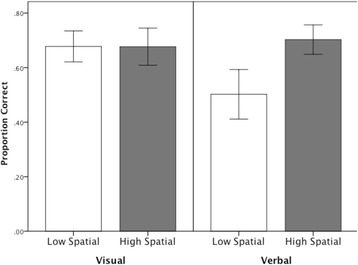
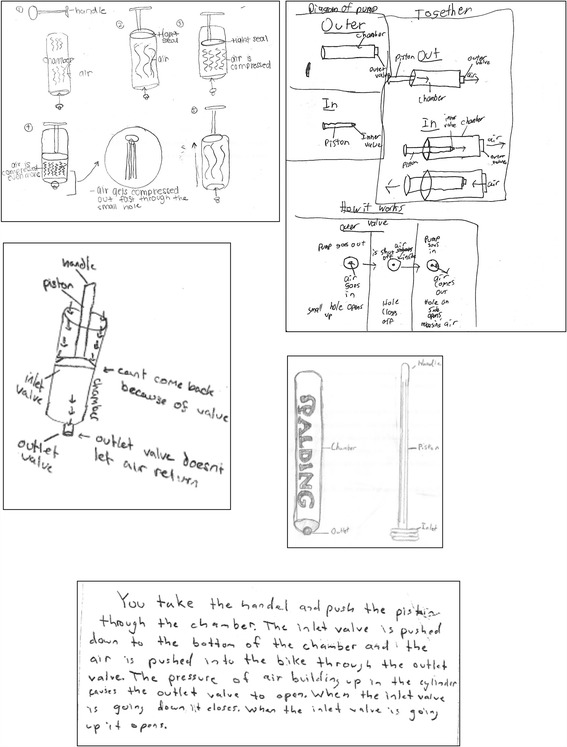
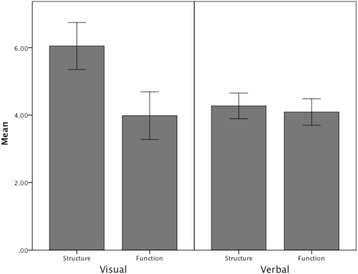
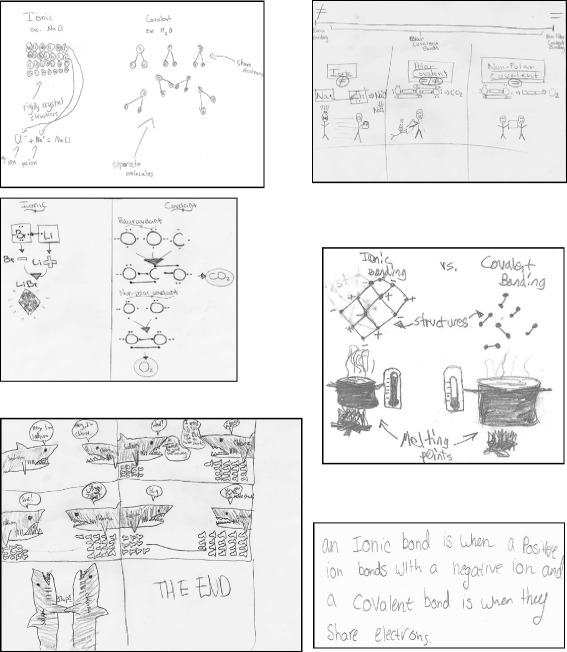
Many topics in science are notoriously difficult for students to learn. Mechanisms and processes outside student experience present particular challenges. While instruction typically involves visualizations, students usually explain in words. Because visual explanations can show parts and processes of complex systems directly, creating them should have benefits beyond creating verbal explanations. We compared learning from creating visual or verbal explanations for two STEM domains, a mechanical system (bicycle pump) and a chemical system (bonding). Both kinds of explanations were analyzed for content and learning assess by a post-test. For the mechanical system, creating a visual explanation increased understanding particularly for participants of low spatial ability. For the chemical system, creating both visual and verbal explanations improved learning without new teaching. Creating a visual explanation was superior and benefitted participants of both high and low spatial ability. Visual explanations often included crucial yet invisible features. The greater effectiveness of visual explanations appears attributable to the checks they provide for completeness and coherence as well as to their roles as platforms for inference. The benefits should generalize to other domains like the social sciences, history, and archeology where important information can be visualized. Together, the findings provide support for the use of learner-generated visual explanations as a powerful learning tool.
Overview
The claims and statistics of this paper haven’t been checked yet.
Free: it reads the open-access text and checks the first 5 claims that cite a source we can check. Create a free account to check every claim.
Integrity signals
Registry
Cites
Statistics
Figures
Verification
Claims the paper makes
The claims and statistics of this paper haven’t been checked yet.
Free: it reads the open-access text and checks the first 5 claims that cite a source we can check. Create a free account to check every claim.
Claims other papers make about this one
Each is checked against this paper’s own text: does it say what the citing paper says it does?
The cited source says what the claim attributes to it.
In the citing paper
“Representational transformations (e.g., turning a diagram into a paragraph of text or vice versa ) are a useful part of knowledge work (e.g., [6, 8, 26]), but they take additional effort.”
From Accessibility-Driven Information Transformations in Mixed-Visual Ability Work Teams (2026) · cites this paper as [8]
The cited source says what the claim attributes to it.
In the citing paper
“While student representational drawing is backed by research (e.g., Bobek and Tversky, 2016) and occasionally recommended (Fiorella and Mayer, 2016), the research also indicates implementation can be difficult (Fiorella and Zhang, 2018).”
From Moving the Needle: Evidence of an Effective Study Strategy Intervention in a Community College Biology Course (2022) · cites this paper as Bobek and Tversky, 2016
The cited source says what the claim attributes to it.
In the citing paper
“Bobek and Tversky (2016) found an improvement in middle school students who created visual explanations of a bicycle pump and chemical bonding.”
From Moving the Needle: Evidence of an Effective Study Strategy Intervention in a Community College Biology Course (2022) · cites this paper as Bobek and Tversky (2016)
Self-check
Percentages, sums and reported differences re-computed from the paper’s own numbers.
The self-check needs the paper’s full text.
Citations
Cites
Levels of processing: A framework for memory research
Craik, F. I. M., & Lockhart, R. S. (1972) · Journal of Verbal Learning and Verbal Behavior · doi:10.1016/s0022-5371(72)80001-x · Cited by 9,566 · cited 2×
“Translating verbal information from the text into a visual explanation may promote deeper processing of the material and more complete and comprehensive mental models (Craik & Lockhart, 1972).”
BackgroundMethod(1991) · Choice Reviews Online · doi:10.5860/choice.28-5764 · Cited by 6,847
Why a Diagram is (Sometimes) Worth Ten Thousand Words
Larkin, J. H., & Simon, H. A. (1987) · Cognitive Science · doi:10.1016/s0364-0213(87)80026-5 · Cited by 3,733 · cited 2×
“They also help to draw inferences (Larkin & Simon, 1987), find routes in maps (Levine, 1982), spot trends in graphs (Kessell & Tversky, 2011; Zacks & Tversky, 1999), imagine traffic flow or seasonal changes in light from architectural sketches (e.g. Tversky & Suwa, 2009), and determine the…”
BackgroundVoyer, D., Voyer, S., & Bryden, M. P. (1995) · Psychological Bulletin · doi:10.1037/0033-2909.117.2.250 · Cited by 2,868
Test-Enhanced Learning: Taking Memory Tests Improves Long-Term Retention
Roediger, H. L., & Karpicke, J. D. (2006) · Psychological Science · doi:10.1111/j.1467-9280.2006.01693.x · Cited by 2,867
The Psychology of Learning and Motivation
Ross, B. H. (2012) · Cited by 2,633
Mental Rotations, a Group Test of Three-Dimensional Spatial Visualization
Vandenberg, S. G., & Kuse, A. R. (1978) · Perceptual and Motor Skills · doi:10.2466/pms.1978.47.2.599 · Cited by 2,620
The malleability of spatial skills: A meta-analysis of training studies.
Uttal, D. H., Meadow, N. G., Tipton, E., Hand, L. L., Alden, A. R., Warren, C., & Newcombe, N. S. (2013) · Psychological Bulletin · doi:10.1037/a0028446 · Cited by 1,899
Active‐Constructive‐Interactive: A Conceptual Framework for Differentiating Learning Activities
Chi, M. T. H. (2009) · Topics in Cognitive Science · doi:10.1111/j.1756-8765.2008.01005.x · Cited by 1,597 · cited 2×
“Visual explanations often included crucial yet invisible features.”
BackgroundWhy is science difficult to learn? Things are seldom what they seem
Johnstone, A. H. (1991) · Journal of Computer Assisted Learning · doi:10.1111/j.1365-2729.1991.tb00230.x · Cited by 1,321 · cited 3×
“o reproduction in any medium, provided you giv the Creative Commons license, and indicate if Dynamic systems such as those in science and engineering, but also in history, politics, and other domains, are notoriously difficult to learn (e.g. Chi, DeLeeuw, Chiu, & Lavancher, 1994; Hmelo-Silver & Pfeffer, 2004; Johnston…”
Background
Cited by
Items 301–380 of 380
GRAPPA 2024: Innovations in Education Workshop
Ayan, G., Husni, M. E., Mathew, A. J., McInnes, I. B., & Mease, P. J. (2025) · The Journal of Rheumatology · doi:10.3899/jrheum.2025-0240
AI Model & Data Visualizations: A Study on Small Pizza Restaurants
Sheshala, H., & Eldridge, E. (2024) · Journal of Student Research · doi:10.47611/jsrhs.v13i4.8094
Learning Reimagined: AI's Role in Advancing Education of Cancer Research and Treatment Technology
Chan, M. F., & Wang, D. (2025) · Technology in Cancer Research & Treatment · doi:10.1177/15330338251378314
Space to Act, Think, and Create
Tversky, B. (2025) · Annual Review of Psychology · doi:10.1146/annurev-psych-032525-024243
Self-citationControl Card Sebagai Media yang Efektif untuk Meningkatkan Perilaku Konsumsi Obat Tuberkulosis
Febrina, A. J. P. K., Simbolon, D., & Ningsih, L. (2024) · Jurnal Penelitian Kesehatan "SUARA FORIKES" (Journal of Health Research "Forikes Voice") · doi:10.33846/sf15328
Wu, C. J., Xu, X., Xu, Y., Shi, H., & Wu, F. (2025) · Radiology · doi:10.1148/radiol.250757
Ottinger, R., Komatsubara, K., Myers, P., Smith, L., & Walsh, A. (2025) · Lecture notes in mechanical engineering · doi:10.1007/978-981-96-6711-6_27
Szitás, T. (2025) · SZTE Repository of Dissertations (University of Szeged) · doi:10.14232/phd.12477
Austerschmidt, K. (2021) · PUB – Publications at Bielefeld University (Bielefeld University) · doi:10.4119/unibi/2949954 · Cited by 1
Visualizing Patient's Health Records In Clinical Decision Support System
Xu, Z. (2019) · Carolina Digital Repository (University of North Carolina at Chapel Hill) · doi:10.17615/jekk-9045
Κομματά, Μ. Α. (2023) · University of Thessaly Institutional Repository (University of Thessaly) · doi:10.26253/heal.uth.39363
Weimer, J., Rolef, P., Müller, L., Bellhäuser, H., Göbel, S., Buggenhagen, H., Weimer, A., Waezsada, E., Kirchhoff, F., & Weinmann-Menke, J. (2024) · Figshare · doi:10.6084/m9.figshare.26565591
A Behavioural Design Thinking Approach to Technology Innovation in Sports Nutrition
Dunne, D. (2024) · Liverpool John Moores University · doi:10.24377/ljmu.t.00022147 · Cited by 1
Liaw, F.-Y., Chang, Y.-W., Chang, Y.-D., Shih, L.-W., & Tsai, P.-F. (2022) · Figshare · doi:10.6084/m9.figshare.21185345
Easland, M. (2025) · Lincoln (University of Nebraska) · Cited by 1
Nazneen, F., & Shelton, C. R. (2023) · ScholarSphere (Penn State Libraries)
LARGE LANGUAGE MODELS TO IMPROVE HEALTH LITERACY WITH IMAGES
Miller, S. P., & Miller, S. P. (2024) · UA Campus Repository (The University of Arizona)
Kexel, E., Rasmusson, F., & Hellstrand, M. (2023) · KTH Publication Database DiVA (KTH Royal Institute of Technology)
A influência de elementos visuais (ir)relevantes na aprendizagem de crianças em idade escolar
Coelho, S. J. S. (2024) · Portuguese National Funding Agency for Science, Research and Technology (RCAAP Project by FCT)
Loiselle, C. (2021) · University of New Hampshire Scholars Repository (University of New Hampshire at Manchester)
Galo, L., Papantoni, J., & Hansen, M. (2023) · Diva portal (Dalarna University Library)
Aqilla Fadia Rahmani (2024) · Repository at Universitas Pendidikan Indonesia (Universitas Pendidikan Indonesia)
Verkko-oppimateriaalit tukevat röntgenhoitajaopiskelijoiden oppimista
Antikainen, M., Lunki, N., Kallio, M., Adolfsen, J., Järvi, J., Siivola, O., Kuukasjärvi, J., Romppainen, E., Hietakangas, J., Holmström, A., et al. (2021) · Theseus (Ammattikorkeakoulujen)
Ippolito, S. (2025) · eCommons (Cornell University) · doi:10.7298/8dm7-c549
Castillo, M. A. F. S. (2025) · International Journal for Research in Applied Science and Engineering Technology · doi:10.22214/ijraset.2025.76197
Fysioterapian rooli kestävän kehityksen edistämisessä : infograafi konkreettisista ideoista
Launonen, M., & Merivirta, L. (2025) · Theseus (Ammattikorkeakoulujen)
ENSINO DE GENÉTICA NA EDUCAÇÃO BÁSICA: ANÁLISE DE VIDEOAULAS NO YOUTUBE
de Sousa, M. A. N., da Silva, D. D. T., Calado, L. P., Mendes, M. D. O., Nóbrega, F. V. A., Pereira, J. G. D. S., & Souza, J. A. S. (2025) · Revista Multidisciplinar do Nordeste Mineiro · doi:10.61164/0gkdx602
Can using visual images enliven teaching and learning within closed doors?
Hussain, M. M., & Sarker, S. (2026) · Bangladesh Journal of Educational Research · doi:10.3329/bjer.v12i1.87178
“On the other hand, a significant number of studies have found that visual imagery actively aids in the teaching-learning process (Bobek & Tversky, 2016; Dondis, 1973; Elkins, 2008; Newman & Ogle, 2019; Paivio, 1990, 2007; Plotnik”
Hasanat, N. U., Rinaldi, M. R., van Luijtelaar, G., & Yuniarti, K. W. (2026) · American Journal of Health Education · doi:10.1080/19325037.2025.2609309
“These enhancements reflect the principles of interactive and visual learning, which contribute to greater engagement and improved comprehension among individuals (Bobek & Tversky, 2016; Chrvala et al., 2016; Strang et al., 2010).”
Ekaete, E. E. (., (PhD), G. E. J. A., ETUKAFIA, G. N., & EFFIONG, I. O. (2026) · International Journal of Biological and Healthcare Research · doi:10.70382/caijbhr.v10i3.009
“The utilization of illustrative explanations in teaching and learning have been argued to promote learners' interest in learning, promotes concentration, and enhances retention (Hafeez, 2021, Bobek, et al., 2016).”
Zainudin, N. H. M., Radzi, J. M., Mohamed, N. S., Abdullah, N., & Isa, W. M. W. (2025) · Malaysian Journal of Medicine and Health Sciences · doi:10.47836/mjmhs.21.4.3
Ocampo, J. M., & Torres, K. A. R. (2026) · Journal of Education and Learning (EduLearn) · doi:10.11591/edulearn.v20i2.22114
“Further, creating a visual explanation is an excellent way to learn [24].”
Beetsma, A. J., Reezigt, R. R., van Dam, S. J., Hobbelen, H. J. S. M., & Reneman, M. F. (2026) · Journal of Physical Therapy Education · doi:10.1097/jte.0000000000000473
Exploring the hidden power of visual thinking: Development of a workshop for students
Suni, P., & Mäenpää, K. (2025) · SAJ - Serbian Architectural Journal · doi:10.5937/saj2502179s
Enhancing CAP Education with a multi-guideline knowledge graph: a mixed-methods study
Liu, F., Xiong, Z., Gao, P., Lu, M., & Li, P. (2026) · BMC Medical Education · doi:10.1186/s12909-026-09028-7
“These findings support earlier research indicating that well-designed visual tools can streamline diagnostic processes and reduce cognitive overload in complex tasks [28, 29].”
Murray, R. Z., Beck, N., Semmler, A., Frentiu, F. D., Chopin, L. K., & Antwertingere, Y. J. (2026) · Research Square · doi:10.21203/rs.3.rs-9109391/v1
Yuginarta, I. G. A. M. D., Sulindawati, N. L. G. E., & Werang, B. R. (2025) · Jurnal EDUCATIO Jurnal Pendidikan Indonesia · doi:10.29210/1202526739
“Ketika proses konstruksi pengetahuan ini difasilitasi oleh mind mapping, sebagaimana diungkapkan oleh Bobek & Tversky (2016), siswa dapat mengorganisir informasi secara visual, yang secara alami mempengaruhi cara kerja alami otak.”
Correction to: Adhesive Techniques in Restorative Dentistry
Mehrabanian, M. (2026) · BDJ · doi:10.1038/s41415-026-9828-y
The future is now: the Digital Dentistry Symposium
Jonker, C. H. (2026) · BDJ · doi:10.1038/s41415-026-9826-0
Bokabularyong estratehiya at komprehensiyon sa pagbasa para sa Grade 7
Hernandez, L., & Pon-elban, D. (2026) · Pantao (International Journal of the Humanities and Social Sciences) · doi:10.69651/pijhss0502980
When Should Teachers Control AI Generation for Mathematics Visuals?
Li, Z., Wang, J., & Wang, A. Y. (2026) · ACM Conference on Learning @ Scale (L@S) · doi:10.1145/3774398.3811626
“Well-designed visuals can improve comprehension and problem-solving, especially for novice learners [9, 59, 76].”
AI-generated Drawing Facilitates Children’s Poem Learning
Lu, S., Pan, W., & Xie, H. (2026) · International Conference on Educational and Information Technology · doi:10.1109/iceit68991.2026.11521583
“Research on generated drawing has primarily focused on learning in scientific domains (e.g., biology, geography, chemistry) [6], while its application beyond science remains underexplored.”
Mazhar, B., Haq, I. U., Haq, E. U., Iqbal, M. A., Pokharel, M., & Maqsood, F. (2026) · Journal of Visual Literacy · doi:10.1080/1051144x.2026.2676908
“Concurrently, these explanations may activate visual metacognitive awareness by prompting scrutiny of algorithmic limitations and personal interpretive biases (Bobek & Tversky, 2016).”
Aplikasi Multimedia Berbasis Kartun Animasi untuk Pembelajaran Sains di Sekolah Dasar
Suwahyo, B. W. (2026) · Jurnal Didaktika Pendidikan Dasar · doi:10.26811/didaktika.v10i1.2018
Accelerated Progress in Higher Education STEM Learning via Enhanced Practical Sessions
Kovács, T. (2026) · Advanced Journal of STEM Education · doi:10.31098/ajosed.v4i1.3955
“Visual activities, including carefully planned demonstrations, interactive simulations, and structured role-play, are powerful pedagogical tools designed to help students grasp basic concepts and understand the critical links among them (Bobek & Tversky, 2016).”
Kantrowitz, A. (2026) · Springer eBooks · doi:10.1007/978-3-032-11698-7_7
Leconte, L. (2026) · theses.fr (ABES) · doi:10.70675/f063982cze68ez4991za2d4zbef442bcf6fa
T2MM: An LLM Supported Architecture For Inquiry-Based ModelingPreprint
Kos, J., Singh, R., & Goel, A. K. (2026) · arXiv (Cornell University) · doi:10.48550/arxiv.2606.11210
“Previous research suggests that while pictures or conceptual models can help reduce cognitive load [17], especially when displaying complex systems [5], asking the learner to draw these complex systems raises the cognitive load [15].”
Development of a Handbook for Technical Drawing Creation and Management - in an industrial context
Samuelsson, K. (2026) · Lund University Publications Student Papers (Lund University)
Picture This: Enhancing Biology Education through Artistic Expression
Barnes, S. E., & Maxwell, M. R. (2026) · Integrative Organismal Biology · doi:10.1093/iob/obag029
A Human-Computer Interaction Approach to Medical Explainable AI (XAI)
Schwerk, A. M. K., & Blum, L. (2026) · Springer eBooks · doi:10.1007/978-981-95-3811-9_5 · Cited by 1
Photopic (tint) ultrasound in musculoskeletal radiology – a pilot visual-grading/acceptability study
Lim, S., Uldin, H., Raja, N. R., Shah, A., Speers, C., & Botchu, R. (2026) · Journal of Ultrasonography · doi:10.15557/jou.2026.0012
“If both tint and grayscale images are reviewed, a possible pedagogical benefit is that of scaffolding knowledge by presenting the same pathology slightly differently to serve as a reiteration of knowledge, which is a useful pedagogical technique (12) .”
Developing Interactive Illustrated Digital Modules to Improve Biology Learning Outcomes
Rambe, N. R., Siagian, S., & Mukhtar, M. (2026) · Annual International Seminar on Transformative Education and Educational Leadership (AISTEEL) · doi:10.4108/eai.5-12-2025.2363805
“Empirical studies have shown that structured visual interpretation can improve comprehension and retention by strengthening mental representation of scientific concepts [10].”
Wang, Q., Shen, Z., Sun, Y., Shi, K., Zhou, Y., & Huang, S. (2026) · Journal of the American Heart Association · doi:10.1161/jaha.125.047858
“In terms of educational strategies, visual demonstrations facilitate intuitive learning of procedures, while verbal explanations are more effective for conveying underlying principles and step sequences 25 and are particularly helpful for communicating HBPM schedule and management items.”
Expert‐validated criteria for evaluating 2D anatomical images: Results of a Delphi consensus study
Soylu, A., Kıyak, Y. S., Çoşkun, Ö., & Peker, T. (2026) · Anatomical Sciences Education · doi:10.1002/ase.70301
Белоненко, Д. П. (2024) · Electronic Kharkiv National University Institutional Repository (Kharkiv National University)
Teaching heat exchanger design using COMSOL Multiphysics in a computer-based lab
Pini, R., Buchner, D., Millán, M., Eckel, A.-M., Hejazi, S. A. H., Zavate, A.-G., & Zhang, Y. (2026) · Discover Education · doi:10.1007/s44217-026-02039-y
“From an educational perspective, generating a visualisation of a complex concept, such as coupled heat and mass transfer in heat exchanger equipment, yields a tangible representation of the information, enabling the student to focus their attention on selected components of the information [27].”
Abdullah, N., & Sbhatu, D. B. (2026) · Humanities and Social Sciences Communications · doi:10.1057/s41599-026-08635-5
Abraham, I. (2026) · ASEE Annual Conference & Exposition · doi:10.18260/1-2--60980
Raghavan, S. (2026) · ASEE Annual Conference & Exposition · doi:10.18260/1-2--59331
Xing, Z., & Nicholas, A. C. (2026) · Frontiers in Psychology · doi:10.3389/fpsyg.2026.1867712
Putri, A. U., Rahmat, A., & Hamdiyati, Y. (2026) · Journal La Edusci · doi:10.37899/journallaedusci.v7i5.5925
Arst-Rebane, K., & Veidrik, K. (2026) · DSpace repository (University of Tartu)
Solano, J. (2026) · International Journal of Science Education and Teaching · doi:10.14456/ijset.2026.4
Voutsakis, E. (2026) · DSpace - NTUA (National Technical University of Athens) · doi:10.26240/heal.ntua.33501
‘I drew a flower!’ Improving young children’s observational accuracy through inquiry-based drawing
Wu, X. E., Tse, C., Lee, N.-C., Chong, Y. H. E., Chan, Y. W. B., Ng, K. W. D., & Wen, R. (2026) · International Journal of Science Education · doi:10.1080/09500693.2026.2726298
Tablon, E., & Zabala, G. M. (2024) · International Journal of Education Research · doi:10.17158/eat1rf59
Operationalising accessibility in marine pollution science communication: the Zeropol Hub case study
Köpke, K., Agnew, S., Heising, T., Devriese, L., Vaupotič, N., Maes, T., Ruhl, R., Pahl, S., Booth, A. M., & Vlachogianni, T. (2026) · Frontiers in Communication · doi:10.3389/fcomm.2026.1913207
Causal reasoning through drawing: Explore how students organise their thoughts in space.
de Andrade, V., Haskel‐Ittah, M., & Shwartz, Y. (2026) · Proceedings. · doi:10.22318/icls2026.111240
Horna-Saldaña, C. J., & Pérez, J. E. P. (2026) · Journal of Enabling Technologies · doi:10.1108/jet-12-2025-0100
Medical students' appraisal of curated AI answers in a cardiovascular system course
Narahari, S., & Winchester, D. E. (2026) · American Heart Journal Plus Cardiology Research and Practice · doi:10.1016/j.ahjo.2026.100924
“Bobek and Tversky found that visual explanations can be powerful learning tools and can be more effective than verbal explanations in clarifying certain concepts [5].”
การพัฒนาเกณฑ์การประเมินวัดความสามารถการเขียนสื่อสารทางวิทยาศาสตร์ สำหรับนักศึกษาครูวิทยาศาสตร์
Pathumrangsan, N., Nugultham, K., & Kruea-In, N. (2026) · Journal of Graduate Research
Pradnyani, N., Wisudariani, N. M. R., & Tantri, A. A. S. (2026) · JOURNAL OF EDUCATIONAL SCIENCES · doi:10.31258/jes.10.9.p.52-68
“Visual representations can support learning by organizing information spatially, highlighting relationships, and reducing dependence on verbal memory alone (Bobek & Tversky, 2016).”
Multisensory olfactory training for smell loss
Filiz, G. (2026) · Le dépôt institutionnel (Université du Québec à Trois-Rivières) · doi:10.71781/36292
Khanna, D. A. N. P. (2022) · Journal of Positive School Psychology
Pagan, C. Y. P. (2026) · Digital Commons - University of South Florida (University of South Florida)
Ayman, D., Ozkan, H., Ayman, D., & Tanrıverdi, Ö. (2026) · Scientific Reports · doi:10.1038/s41598-026-75309-2
Jesus’ Use of Object Lessons: Possible Considerations for Religious Communication
Antrican, H. (2026) · Journal of Language Culture and Religion · doi:10.64830/001c.171889
Metadata
- Authors
- Bobek, E., & Tversky, B.
- Affiliations
- University of Massachusetts Lowell (US)
- Columbia University (US)
- Corresponding author
- Bobek, Eliza
- Venue
- Cognitive Research: Principles and Implications
- Published
- 2016-12
- Volume
- 1
- Issue
- 1
- Pages
- 27-27
- ISSN
- 2365-7464 (ISSN-L)
- PMC
- PMC5256450
- OpenAlex
- W2560277832
- Cited by
- 298
- References
- 55
- Citations by year
- 2026: 25 · 2025: 54 · 2024: 53 · 2023: 33 · 2022: 42 · 2021: 32 · 2020: 32 · 2019: 14 · 2018: 5 · 2017: 5
- FWCI
- 11.39
- Type
- journal article
- Language
- en
- Open access
- gold
- doi.org
- Licence
- cc-by
- creativecommons.org/licenses/by/4.0 (tdm)
- creativecommons.org/licenses/by/4.0 (vor, 6 d)
- Locations
- Cognitive Research Principles and Implications (publishedVersion, cc-by)
- Europe PMC (PubMed Central) (publishedVersion, cc-by)
- PubMed Central (publishedVersion, cc-by)
- PubMed (publishedVersion)
- eScholarship (California Digital Library) (submittedVersion)
- Funders
- National Science Foundation (CHS-1513841, HHC 0905417, IIS-0725223, IIS-0855995, REC 0440103)
- Topics
- Social Sciences › Psychology › Experimental and Cognitive Psychology › Visual and Cognitive Learning Processes
- Social Sciences › Education › Science Education and Pedagogy
- Social Sciences › Psychology › Developmental and Educational Psychology › Innovative Teaching and Learning Methods
- Keywords
- visual explanations, verbal explanation, science learning, spatial ability, mechanical systems, chemical bonding, inference, complex systems, STEM education
About these checks
Registry, retraction, Cites and statistics results are computed, not judged, with one exception: a printed reference that no index lists is read once by a model before it counts as a citation error. Claims are extracted by a model and kept only when their quote appears verbatim in the text; each cited source is then checked, with a model’s help, for whether it says what the claim relies on. Those verdicts can be wrong — read the claim’s quote and the cited source before relying on one.
Statistics and arithmetic are recomputed, not judged.
Confidence bands are shown only for fields calibrated on our annotated test set. None is calibrated yet, so no band is shown.
What counts as a claim ›How we measure confidence ›How we check this ›
Are you an author, or do you see a problem with this page? Request a review
Data sources
Bibliographic data: Semantic Scholar, OpenAlex, Crossref.
Contains information from the Semantic Scholar Academic Graph Datasets, made available under the ODC Attribution License (ODC-BY 1.0).
Semantic Scholar’s data is described in: Kinney, R., et al. (2023). The Semantic Scholar Open Data Platform. arXiv:2301.10140.
