

The impact of artificial intelligence on learner–instructor interaction in online learning
Open accessThe DOI matches its Crossref record; 64 of the 64 references it cites were found in a registry or an index.
Abstract
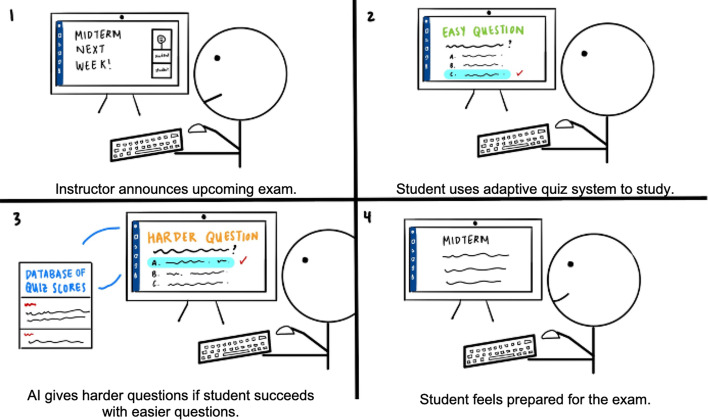
Artificial intelligence (AI) systems offer effective support for online learning and teaching, including personalizing learning for students, automating instructors’ routine tasks, and powering adaptive assessments. However, while the opportunities for AI are promising, the impact of AI systems on the culture of, norms in, and expectations about interactions between students and instructors are still elusive. In online learning, learner–instructor interaction (inter alia, communication, support, and presence) has a profound impact on students’ satisfaction and learning outcomes. Thus, identifying how students and instructors perceive the impact of AI systems on their interaction is important to identify any gaps, challenges, or barriers preventing AI systems from achieving their intended potential and risking the safety of these interactions. To address this need for forward-looking decisions, we used Speed Dating with storyboards to analyze the authentic voices of 12 students and 11 instructors on diverse use cases of possible AI systems in online learning. Findings show that participants envision adopting AI systems in online learning can enable personalized learner–instructor interaction at scale but at the risk of violating social boundaries. Although AI systems have been positively recognized for improving the quantity and quality of communication, for providing just-in-time, personalized support for large-scale settings, and for improving the feeling of connection, there were concerns about responsibility, agency, and surveillance issues. These findings have implications for the design of AI systems to ensure explainability, human-in-the-loop, and careful data collection and presentation. Overall, contributions of this study include the design of AI system storyboards which are technically feasible and positively support learner–instructor interaction, capturing students’ and instructors’ concerns of AI systems through Speed Dating, and suggesting practical implications for maximizing the positive impact of AI systems while minimizing the negative ones.
Overview
The claims and statistics of this paper haven’t been checked yet.
Free: it reads the open-access text and checks the first 5 claims that cite a source we can check. Create a free account to check every claim.
Integrity signals
Registry
Cites
Statistics
Figures
Verification
Claims the paper makes
The claims and statistics of this paper haven’t been checked yet.
Free: it reads the open-access text and checks the first 5 claims that cite a source we can check. Create a free account to check every claim.
Claims other papers make about this one
Each is checked against this paper’s own text: does it say what the citing paper says it does?
The source backs part of the claim, not all of it — or backs it for a different population, condition or comparison.
In the citing paper
“This observation demonstrates the potential of AI as a tool for just-in-time learning in project-based contexts [8, 18], where students can quickly acquire specific expertise needed for their individual projects within compressed timelines.”
From Scaffolding Creativity: Integrating Generative AI Tools and Real-World Experiences in Business Education (2025) · cites this paper as [18]
Experimental — accuracy not yet measuredThe source backs part of the claim, not all of it — or backs it for a different population, condition or comparison.
In the citing paper
“However, teachers may not be digitally ready to use AI-driven educational applications for teaching and learning purposes (e.g., Ally, 2019;Seo et al., 2021).”
From Teachers’ AI digital competencies and twenty-first century skills in the post-pandemic world (2023) · doi:10.1007/s11423-023-10203-6 · cites this paper as Seo et al., 2021
Experimental — accuracy not yet measuredThe cited source says what the claim attributes to it.
In the citing paper
“Interaction between students and instructors has a significant influence on students' happiness and learning results in online learning [92].”
From Adaptive Learning Using Artificial Intelligence in e-Learning: A Literature Review (2023) · cites this paper as [92]
In the citing paper
“They may lack technological experience to conduct data analysis, or to set rules to automatically generate assignments and feedback for students via AI-driven tools (Seo et al., 2021).”
From Teachers’ AI digital competencies and twenty-first century skills in the post-pandemic world (2023) · doi:10.1007/s11423-023-10203-6 · cites this paper as Seo et al., 2021
In the citing paper
“For example, Seo et al. (2021) proposed that AI could facilitate teachers' generation of repetitive questions, and offer students learner-instruction connections, just-in-time personalized support and meaningful automatic communication for classmates.”
From Teachers’ AI digital competencies and twenty-first century skills in the post-pandemic world (2023) · doi:10.1007/s11423-023-10203-6 · cites this paper as Seo et al., 2021
Self-check
Percentages, sums and reported differences re-computed from the paper’s own numbers.
The self-check needs the paper’s full text.
Citations
Cites
Using thematic analysis in psychology
Braun, V., & Clarke, V. (2006) · Qualitative Research in Psychology · doi:10.1191/1478088706qp063oa · Cited by 194,414 · cited 1×
“We used a Reflexive Thematic Analysis approach (Braun & Clarke, 2006; Nowell et al., 2017).”
S., N. L. (2017) · doi:10.1177/1609406917733847 · Cited by 14,051
Zawacki-Richter, O., Marín, V. I., Bond, M., & Gouverneur, F. (2019) · International Journal of Educational Technology in Higher Education · doi:10.1186/s41239-019-0171-0 · Cited by 7,242
What is AI Literacy? Competencies and Design Considerations
Long, D., & Magerko, B. (2020) · Proceedings of the 2020 CHI Conference on Human Factors in Computing Systems · doi:10.1145/3313831.3376727 · Cited by 3,241 · cited 1×
“To address this, it is important to foster AI literacy in students and instructors without a technical background (Long & Magerko, 2020).”
BackgroundAnderson, J. R., Boyle, C. F., & Reiser, B. J. (1985) · Science · doi:10.1126/science.228.4698.456 · Cited by 3,119
Editorial: Three types of interaction
Moore, M. G. (1989) · American Journal of Distance Education · doi:10.1080/08923648909526659 · Cited by 2,471 · cited 1×
“Moore (1989) classified these interactions in online learning into three types: learner–content, learner–learner, and learner–instructor.”
BackgroundVanLEHN, K. (2011) · Educational Psychologist · doi:10.1080/00461520.2011.611369 · Cited by 2,323 · cited 1×
“…artificial intelligence (AI) in online learning and teaching are broad (Anderson et al., 1985; Baker, 2016; Roll et al., 2018; Seo et al., 2020b; VanLehn, 2011), ranging from personalized learning for students and automation of instructors’ routine tasks to AI-powered assessments (Popenici &…”
BackgroundExploring the impact of artificial intelligence on teaching and learning in higher education
Popenici, S. A. D., & Kerr, S. (2017) · Research and Practice in Technology Enhanced Learning · doi:10.1186/s41039-017-0062-8 · Cited by 2,019 · cited 3×
“…intelligence (AI) in online learning and teaching are broad (Anderson et al., 1985; Baker, 2016; Roll et al., 2018; Seo et al., 2020b; VanLehn, 2011), ranging from personalized learning for students and automation of instructors’ routine tasks to AI-powered assessments (Popenici & Kerr, 2017).”
BackgroundMoore, M. G. (1993) · Cited by 1,817
Can we open the black box of AI?
Castelvecchi, D. (2016) · Nature · doi:10.1038/538020a · Cited by 1,773 · cited 1×
“For instance, when communicating with an AI Teaching Assistant, the black-box nature of the AI system leaves no choices for students to check whether the answers from AI are right or wrong (Castelvecchi, 2016).”
Background
Research works printed but not linked: 3
- Shackelford, J. L., & Maxwell, M. (2012). Contribution of learner–instructor interaction to sense of community in graduate online education. MERLOT Journal of Online Learning and Teaching, 8 (4), 248–260.
- Walker, C. H. (2016). The correlation between types of instructor-student communication in online graduate courses and student satisfaction levels in the private university setting. Doctoral dissertation. Carson-Newman University, Tennessee.
- Wogu, I. A. P., Misra, S., Olu-Owolabi, E. F., Assibong, P. A., Udoh, O. D., Ogiri, S. O., & Damasevicius, R. (2018). Artificial intelligence, artificial teachers and the fate of learners in the 21st century education sector: Implications for theory and practice. International Journal of Pure and Applied Mathematics, 119 (16), 2245–2259.
Cited by
Items 101–200 of 787
A Study on the Efficacy of ChatGPT-4 in Enhancing Students’ English Communication Skills
Wang, Y. (2025) · SAGE Open · doi:10.1177/21582440241310644 · Cited by 102
“In the English communication field, AI can provide students with assistance and evaluation by adapting lesson plans to their unique learning patterns and background information (Seo et al., 2021).”
InfluentialChan, C. K. Y., & Lee, K. K. W. (2025) · Computers & Education · doi:10.1016/j.compedu.2025.105399 · Cited by 45
The Influence of Compatibility on the Acceptance of Artificial Intelligence in Kuwaiti Universities
Saatchi, S. G., Wahed, M. K. Y. A., Alqaraleh, M. K. S., Al-Shorman, H. M., AlAnazi, T. M. B., Alka’awneh, S. M. N., Alzboon, M. S., Al-Momani, A. M., Shelash, S. I., & Alzyoud, M. S. (2025) · Studies in computational intelligence · doi:10.1007/978-3-031-73899-9_9 · Cited by 42
Bobrytska, V. I., Krasylnykova, H. V., Beseda, N. А., Krasylnykov, S. R., & Skyrda, T. S. (2024) · International Journal of Learning, Teaching and Educational Research · doi:10.26803/ijlter.23.1.20 · Cited by 31
Jiang, Q., Zhang, Y., Wei, W., & Gu, C. (2024) · Computers and Education Artificial Intelligence · doi:10.1016/j.caeai.2024.100287 · Cited by 43
The Impact of AI-Assisted Blended Learning on Writing Efficacy and Resilience
Lai, Z. C.-C. (2025) · International Journal of Computer-Assisted Language Learning and Teaching · doi:10.4018/ijcallt.377174 · Cited by 52
“While prior studies on AI in language learning have predominantly focused on general proficiency and comprehension skills, the role of AI in enhancing specific psychological factors, such as writing self-efficacy and resilience, remains under explored (Seo et al., 2021).”
Smith, C. E., Shiekh, K., Cooreman, H., Rahman, S., Zhu, Y., Siam, M. K., Ivanitskiy, M., Ahmed, A. M., Hallinan, M., Grisak, A., et al. (2024) · Proceedings of the 2024 on Innovation and Technology in Computer Science Education V. 1 · doi:10.1145/3649217.3653575 · Cited by 31
“Educators generally lack understanding about the functionality, limitations, and usage of these tools and are struggling to catch up with students who are exploring GenAI on their own [30, 36].”
BackgroundBognár, L., Ágoston, G., Bacsa-Bán, A., Fauszt, T., Gubán, G., Joós, A., Juhász, L. Z., Kocsó, E., Kovács, E., Maczó, E. C., et al. (2024) · Education Sciences · doi:10.3390/educsci14090974 · Cited by 64
Educational Leadership and Artificial Intelligence for Sustainable Development
Avurakoghene, O. P., & Oredein, A. O. (2023) · Shodh Sari-An International Multidisciplinary Journal · doi:10.59231/sari7600 · Cited by 38
The Impact of AI-Powered Personalization on Academic Performance in Students
Shete, S. G., Koshti, P., & Pujari, V. I. (2024) · International Conference on Recent Trends in Computer Science and Technology (ICRTCST) · doi:10.1109/icrtcst61793.2024.10578480 · Cited by 49
The rise and drop of online learning: adaptability and future prospects
Najjar, N., Rouphael, M., Bitar, T., & Hleihel, W. (2025) · Frontiers in Education · doi:10.3389/feduc.2025.1522905 · Cited by 60
Rožman, M., Tominc, P., & Vrečko, I. (2023) · Environment and Social Psychology · doi:10.54517/esp.v8i2.1670 · Cited by 45
“Additionally, students have access to high-quality courses and learning materials from around the world, all from the comfort of their own homes([12,48]).”
BackgroundYang, W., Lu, Z., Li, Z., Cui, Y., Dai, L., Li, Y., Ma, X., & Zhu, H. (2024) · Kybernetes · doi:10.1108/k-03-2024-0613 · Cited by 38
Auto MC-Reward: Automated Dense Reward Design with Large Language Models for Minecraft
Li, H., Yang, X. F., Wang, Z., Zhu, X., Zhou, J., Qiao, Y., Wang, X., Li, H., Lu, L., & Dai, J. (2024) · IEEE Computer Society Conference on Computer Vision and Pattern Recognition/Proceedings - IEEE Computer Society Conference on Computer Vision and Pattern Recognition/Proceedings · doi:10.1109/cvpr52733.2024.01554 · Cited by 110
“Such summaries, based on life experience and practice, are key to human intelligence [40, 43].”
Cha, S., Loeser, M., & Seo, K. (2024) · Applied Sciences · doi:10.3390/app14093672 · Cited by 44
Self-citationEkundayo, T., Khan, Z., & Nuzhat, S. (2024) · Human Behavior and Emerging Technologies · doi:10.1155/2024/8713718 · Cited by 46
Al-Zahrani, A. M. (2024) · IgMin Research · doi:10.61927/igmin151 · Cited by 39
Empowering Student Learning Through Artificial Intelligence: A Bibliometric Analysis
Yun, G., Lee, K. M., & Choi, H. H. (2024) · Journal of Educational Computing Research · doi:10.1177/07356331241278636 · Cited by 37
“Additionally, communication and connectivity channels powered by knowledge-based AI provide students with invaluable support, akin to having a knowledgeable expert readily available, promptly, and effectively addressing their needs (Seo et al., 2021).”
AI Policies, Equity, and Morality and the Implications for Faculty in Higher Education
Azevedo, L., Mallinson, D. J., Wang, J., Robles, P., & Best, E. (2024) · Public Integrity · doi:10.1080/10999922.2024.2414957 · Cited by 53
“Additionally, educators are confronted with the task of seamlessly integrating autonomous educational tools equipped with advanced instructional capabilities, exemplified by intelligent video conferencing cameras (Seo et al., 2021).”
Tominc, P., & Rožman, M. (2023) · Education Sciences · doi:10.3390/educsci13060580 · Cited by 43
“This will enable them to approach this technology with a positive, critical, and ethical mindset, unlocking its complete potential [64,66].”
BackgroundTransforming Education and Learning through Chat GPT: A Systematic Literature Review
Prananta, A. W., Ruth Rize Paas Megahati, S., Susanto, N., & Raule, J. H. (2023) · Jurnal Penelitian Pendidikan IPA · doi:10.29303/jppipa.v9i11.5468 · Cited by 45
“The impact that we can feel is that humans use technology to exchange information, science, and technology (Seo et al., 2021).”
Jie, A. L. X., & Kamrozzaman, N. A. (2024) · Open Journal of Social Sciences · doi:10.4236/jss.2024.1210025 · Cited by 69
Using Intelligent Tutoring Systems to Enhance Student Engagement
Aarthi, S., Ravikumar, R. N., o'g'li, K. S. S., Ismailov, A., & Khujaniyozova, O. R. (2025) · Advances in computational intelligence and robotics book series · doi:10.4018/979-8-3373-1827-1.ch008 · Cited by 25
Alamäki, A. V., Khan, U. A., Kauttonen, J., & Schlögl, S. (2024) · Education Sciences · doi:10.3390/educsci14121386 · Cited by 41
Assistive Technology and Accessibility Tools in Enhancing Adaptive Education
Oyedokun, T. T. (2024) · Advances in educational technologies and instructional design book series · doi:10.4018/979-8-3693-8227-1.ch006 · Cited by 37
Katona, J., & Gyönyörű, K. I. K. (2025) · TechTrends · doi:10.1007/s11528-025-01088-8 · Cited by 49
“Such software applies machine learning-based algorithms to adapt the curriculum and feedback accordingly based on each learner's performance, skill levels, and learning habits (Colliot et al., 2024; Demartini et al., 2024; Seo et al., 2021).”
The New Revolution in Language Learning: The Power of Artificial Intelligence and Education 4.0
CHISEGA-NEGRILĂ, A.-M. (2023) · BULLETIN OF CAROL I NATIONAL DEFENCE UNIVERSITY · doi:10.53477/2284-9378-23-17 · Cited by 56
Maher, M. L., Tadimalla, S. Y., & Dhamani, D. (2023) · IEEE Frontiers in Education Conference (FIE) · doi:10.1109/fie58773.2023.10343037 · Cited by 38
“Several studies have previously examined the effectiveness of AI tools for enhancing student learning outcomes, such as increased engagement, improved knowledge retention, and enhanced problem-solving abilities [6, 7].”
BackgroundEnhancing Language Teaching Materials Through Artificial Intelligence: Opportunities and Challenges
Singha, S., Singha, R., & Jasmine, E. (2024) · Advances in educational technologies and instructional design book series · doi:10.4018/979-8-3693-0872-1.ch002 · Cited by 34
Zhang, J., Han, B., Dong, Z., Wen, R., Lee, G., Hoermann, S., Zhang, W., & Piumsomboon, T. (2024) · CHI Conference Extended Abstracts on Human Factors in Computing Systems (CHI EA) · doi:10.1145/3613905.3650766 · Cited by 28
“This consideration resonates with previous findings indicating that constant tracking of student behaviours, such as eye movement or facial expressions, can evoke discomfort due to privacy concerns [30].”
Impacts of Artificial Intelligence on Student Learning: A Systematic Literature Review
Ambarita, N., & Nurrahmatullah, M. F. (2024) · Jurnal VARIDIKA · doi:10.23917/varidika.v36i1.4730 · Cited by 57
“Furthermore, the ranking position of the most cited article was recently contributed by Seo et al. (2021).”
BackgroundInfluentialKaramuk, E. (2025) · Advances in Computational Intelligence and Robotics · doi:10.4018/979-8-3373-0122-8.ch007 · Cited by 22
Wan, Y., Li, R., Li, W., & Du, H. (2025) · Sustainability · doi:10.3390/su17178059 · Cited by 41
PERSONALISED LEARNING WITH AI: IMPLICATIONS FOR IGNATIAN PEDAGOGY
Baskara, R. (2023) · International Journal of Educational Best Practices · doi:10.31258/ijebp.v7n1.p1-16 · Cited by 41
“These technologies help students to develop a sense of belonging and trust within the classroom, which is crucial to effective learning (Seo et al., 2021).”
BackgroundLee, S.-S., Li, N., & Kim, J. (2023) · Education and Information Technologies · doi:10.1007/s10639-023-12371-7 · Cited by 26
Lim, T., Gottipati, S., & Cheong, M. L. F. (2025) · International Journal of Educational Technology in Higher Education · doi:10.1186/s41239-025-00556-8 · Cited by 44
“…surveillance “ provided anonymity is preserved ”, they expressed discomfort with “ continuous educational monitoring ” (R60), including intrusive methods like biometric data collection such as eye-tracking and facial expression analytics, echoing surveillance concerns raised in Seo et al. (2021).”
InfluentialSecades, V. A., Rivero, A. J. L., Martín-Merino-Acera, M., Ruiz-García, M.-J., & Arranz-García, O. (2022) · Electronics · doi:10.3390/electronics11091487 · Cited by 25
Transforming and Reforming the Indian Education System with Artificial Intelligence
Sihag, P., & Vibha, V. (2024) · Digital Education Review · doi:10.1344/der.2024.45.98-105 · Cited by 31
“The primary softwares include Squirrel AI in China adjusts itself automatically to provide adaptive learning environment (Beard, 2020; Seo et al, 2021), the AI assistant ‘Jill Watson’ (Miao et al., 2021) virtually answers students queries without a human assistant, chatbots (Clark, 2020), Automated…”
MethodThe acceptance of artificial intelligence in education among postgraduate students in Malaysia
Razak, F. Z. A., Abdullah, M. A., Ahmad, B. E., Bakar, W. H. R. B. W. A., & Misaridin, N. A. F. B. (2024) · Education and Information Technologies · doi:10.1007/s10639-024-12916-4 · Cited by 32
“A study by Seo et al. (2021), adopting AI systems in online learning lies in their impact on learner-instructor interaction, with potential effects on communication, support, presence, and concerns regarding surveillance, privacy, and social boundaries.”
Estaiteyeh, M., & McQuirter, R. (2024) · Brock Education Journal · doi:10.26522/brocked.v33i3.1176 · Cited by 42
“Studies that analyzed both teacher and student perceptions of AIEd also yielded mixed opinions towards its adoption in modern classrooms (Barrett & Pack, 2023; Seo et al., 2021).”
Inteligencia Artificial en la Educación Avances y Desafíos Multidisciplinarios.
Barahona-Martínez, G. E., Gallardo-Chiluisa, N. N., Caiza, Y. E. Q., Jiménez-Rivas, D. E., Caicedo-Basurto, R. L., Guanotuña-Yaulema, J. A., Flores-Cruz, P. L., & Hernández, D. M. G. (2024) · Editorial Grupo AEA eBooks · doi:10.55813/egaea.l.101 · Cited by 23
The Effect of Artificial Intelligence (AI) on Students' Learning
Ma’amor, H., Achim, N., Ahmad, N. L., Roszaman, N. S., Anuar, N. N. K., Azwa, N. C. A. K., Rahman, S. N. A., & Hamjah, N. A. A. (2024) · Information Management and Business Review · doi:10.22610/imbr.v16i3s(i)a.4178 · Cited by 56
Huang, T., & Wu, C. (2025) · Computers and Education Open · doi:10.1016/j.caeo.2025.100275 · Cited by 50
ChatGPT’s impact on student learning outcomes: a meta-analysis of 35 experimental studies
Wu, X., Zhu, P., Zhang, J., Yin, M., & Wang, Y. (2026) · Humanities and Social Sciences Communications · doi:10.1057/s41599-026-07019-z · Cited by 65
“Therefore, we must pay attention to students ’ prior knowledge, self-regulation abilities, and AI literacy (Urban et al., 2024; Ng et al., 2024; Seo et al., 2021).”
Papakonstantinidis, S., Kwiatek, P., & Spathopoulou, F. (2024) · Contemporary Educational Technology · doi:10.30935/cedtech/14250 · Cited by 43
Edu-Metaverse Classroom with AI-Driven Virtual Avatar Assistant
Halim, N. A. A., Azlan, M. H., Ismail, A. W., Fazli, F. E., Ahmad, M. A., & Aladin, M. Y. F. (2024) · International Conference on Smart Electronics and Communication (ICOSEC) · doi:10.1109/icosec61587.2024.10722453 · Cited by 24
“According to [3] during class, students might not always have access to instant support and direction.”
BackgroundElkot, M. A., Youssif, E., Elmahdi, O. E. H., AbdAlgane, M., & Ali, R. (2024) · Contemporary Educational Technology · doi:10.30935/cedtech/15688 · Cited by 36
Obenza, B. N., Caballo, J. H. S., Caangay, R. B. R., Makigod, T. E. C., Almocera, S. M., Bayno, J. L. M., Camposano, J. J. R., Cena, S. J. G., Garcia, J. A. K., Labajo, B. F. M., et al. (2024) · American Journal of Applied Statistics and Economics · doi:10.54536/ajase.v3i1.2510 · Cited by 40
“…Artifi cial Intelligence (AI) has been implemented in language learning to improve instruction and address the learners’ needs (Chen, 2021), facilitate interaction between instructors and learners (Seo et al ., 2021), and foster learners’ educational experience (Alam, 2021; Kavitha & Lohani, 2018).”
BackgroundArslan, S. (2025) · System · doi:10.1016/j.system.2025.103680 · Cited by 38
Buniel, J. M. C., Intano, J. A., Cuartero, O., Grustan, K. J. C., Sumaoy, R. C., REYES, N. S. D. L., Calipayan, J. P., Arreo, R. P., Duero, D., Rosil, I., et al. (2025) · Frontiers in Education · doi:10.3389/feduc.2025.1535466 · Cited by 33
Akinsemolu, A. A., & Onyeaka, H. N. (2025) · Journal of language and Education · doi:10.17323/jle.2025.22118 · Cited by 40
“From a learning perspec - tive, AI offers unlimited learning mate - rials that learners can use, ranging from personalized lessons to chatbots that an - swer questions when prompted (Seo et al., 2021).”
Shi, W., & Shakibaei, G. (2025) · European Journal of Education · doi:10.1111/ejed.70174 · Cited by 25
Student utilization and perceptions of AI technology for academic purposes: a mixed-method analysis
Sustaningrum, R., & Haldaka, M. (2025) · Cogent Education · doi:10.1080/2331186x.2025.2553835 · Cited by 36
“Performance expectancy is a pivotal determinant in the adoption of artificial intelligence, particularly as students anticipate that AI will deliver prompt and precise responses (Seo et al., 2021).”
Educational Technology and AI: Bridging Cognitive Load and Learner Engagement for Effective Learning
Na, M., Deli, M. M., & Rauf, U. A. A. (2025) · SAGE Open · doi:10.1177/21582440251395930 · Cited by 43
“Chiu et al. (2023), Kim et al. (2022), and Seo et al. (2021) collectively suggest that when instructors modulate their engagement—stepping in during confusion and stepping back during mastery—they enhance the impact of AI features.”
Sakib, N., Anik, F. I., & Li, L. (2023) · Conference on Information Technology Education · doi:10.1145/3585059.3611447 · Cited by 24
Utilizing M-Technologies for AI-Driven Career Guidance in Morocco: An Innovative Mobile Approach
Talib, A., Housni, M., & Radid, M. (2023) · International Journal of Interactive Mobile Technologies (iJIM) · doi:10.3991/ijim.v17i24.44263 · Cited by 31
A Review of Ethical Considerations in Using Artificial Intelligence in E-Learning
Homayouni, L., Hejazi, Y., & Zarifsanaiey, N. (2024) · International and National Conference on E-Learning and E-Teaching (ICeLeT) · doi:10.1109/icelet62507.2024.10493100 · Cited by 20
“Instructors worry that relying too much on AI systems might compromise the student's ability to learn independently and solve problems creatively [13],[41].”
BackgroundHuang, Q., Kumarasinghe, P. J., & Jayarathna, R. M. G. S. (2024) · Interdisciplinary Journal of Information Knowledge and Management · doi:10.28945/5277 · Cited by 29
“Numerous studies have successfully applied DOI to examine the adoption of innovative technologies in educational settings (Ganjipour & Edrisi, 2023; Pinho et al., 2021; Seo et al., 2021).”
BackgroundWang, N. C. (2025) · Proceedings of the Extended Abstracts of the CHI Conference on Human Factors in Computing Systems · doi:10.1145/3706599.3720283 · Cited by 18
“This observation demonstrates the potential of AI as a tool for just-in-time learning in project-based contexts [8, 18], where students can quickly acquire specific expertise needed for their individual projects within compressed timelines.”
Sok, S., Heng, K., & Pum, M. (2025) · SAGE Open · doi:10.1177/21582440251353575 · Cited by 30
“It was found that scripted and standardized AI support could limit students’ capacity to learn effectively, limit their critical thinking skills, and affect their ability to cope with problems independently (C x ela et al., 2024; Seo et al., 2021).”
Daweli, T. W., & Mahyoub, R. A. M. (2024) · Arab World English Journal · doi:10.24093/awej/call10.11 · Cited by 41
“The incorporation of AI in educational settings holds promise to meaningfully improve instruction and the learning process for both educators and learners (Seo et al., 2021).”
BackgroundZhu, Y., & Siquan, X. (2025) · European Journal of Education · doi:10.1111/ejed.70160 · Cited by 27
Zhou, Q., Hashim, H. B., & Sulaiman, N. A. (2025) · Education and Information Technologies · doi:10.1007/s10639-025-13811-2 · Cited by 46
“This enables learners to develop robust autonomous learning habits, thus mitigating potential frustrations and inefficiencies (Seo et al., 2021).”
Reshaping School Cultures: AI’s Influence on Organizational Dynamics and Leadership Behaviors
Kesim, E., Atmaca, T., & Turan, S. (2025) · Leadership and Policy in Schools · doi:10.1080/15700763.2024.2413703 · Cited by 16
“The majority of current studies (Ali et al., 2024; García-Martínez et al., 2023; Seo et al., 2021) tend to focus on the immediate effects of AI, with a lack of longitudinal perspectives on the impact of AI on educational outcomes and school culture.”
Blackmon, S. J., & Major, C. H. (2023) · British Journal of Educational Technology · doi:10.1111/bjet.13362 · Cited by 32
Zhang, C., & Villanueva, L. E. (2023) · International Journal of Education and Humanities · doi:10.54097/ijeh.v11i2.13753 · Cited by 29
Cultural integration in AI-enhanced mathematics education: insights from Southeast Asian educators
Payadnya, I. P. A. A., Putri, G. A. M. A., Suwija, I. K., Saelee, S., & Jayantika, I. G. A. N. T. (2024) · Journal for Multicultural Education · doi:10.1108/jme-09-2024-0119 · Cited by 52
The shifting landscape of student engagement: A pre-post semester analysis in AI-enhanced classrooms
Bognár, L., & Khine, M. S. (2025) · Computers and Education Artificial Intelligence · doi:10.1016/j.caeai.2025.100395 · Cited by 38
Sol, K., Heng, K., & Sok, S. (2024) · SSRN Electronic Journal · doi:10.2139/ssrn.4687461 · Cited by 16
Malik, I. A., Adem, S. A., & Rasool, A. (2025) · Cogent Education · doi:10.1080/2331186x.2025.2546126 · Cited by 24
“The integration of EdAI in education has raised questions about its potential impact on students ’ analytical thinking, abilities and skills (Seo et al., 2021).”
AI and higher education: Understanding faculty roles in teaching, research, and administration
Spathopoulou, F., Pitychoutis, K. M., & Papakonstantinidis, S. (2025) · Contemporary Educational Technology · doi:10.30935/cedtech/17406 · Cited by 29
Hua, J. H. (2023) · International Journal of Educational Management and Development Studies · doi:10.53378/353030 · Cited by 36
“Generally, the use of AI in teaching and learning improvement students’ motivation and engagement ( Yilmaz & Yilmaz, 2023; Kairu, 2020; Rodway & Schepman, 2023; Seo et al., 2021) and academic performance (García-Martínez et al., 2023).”
Karan, B. (2024) · Technology Pedagogy and Education · doi:10.1080/1475939x.2024.2337924 · Cited by 19
“…privacy and safety (Holmes et al., 2022), security risks (Chaudhry & Kazim, 2022), loss of physical teaching (Ahmad et al., 2021), autonomy issues (Seo et al., 2021), fairness, accountability, transparency and ethical risks (Bhimdiwala et al., 2021), AI biases and discrimination issues (Akgun &…”
Seok, J., Lee, B. H., Kim, D., Bak, S., Kim, S., Kim, S.-T., & Park, S.-M. (2025) · International Journal of Human-Computer Interaction · doi:10.1080/10447318.2024.2443263 · Cited by 29
“Among conversational AI services, AI assistants interact with users in a human-like manner, providing information services, or performing specific tasks (Seo et al., 2021; Shaikh & Cruz, 2023).”
Kabanda, M. (2025) · EIKI Journal of Effective Teaching Methods · doi:10.59652/jetm.v3i1.404 · Cited by 29
“Halkiopoulos & Gkintoni, 2024; Hooda et al., 2022; Kujur et al., 2023; Lee, 2023; Owoc et al., 2021; Sajja et al., 2024; Seo et al., 2021 Personalized Learning AI customizes learning paths to meet students ’ unique needs and learning paces.”
InfluentialUmjetna inteligencija i obrazovanje: Suparnici ili saveznici?
Mrnjaus, K., Vrcelj, S., & Kušić, S. (2023) · JAHR · doi:10.21860/j.14.2.9 · Cited by 30
Fayzullina, A. R., Filippova, A. A., N.Yu., G., Astakhov, D. V., Александровна, К. Н., & Zaripova, Z. F. (2025) · Contemporary Educational Technology · doi:10.30935/cedtech/17519 · Cited by 28
Toribio, N. F. (2023) · Journal of Namibian Studies History Politics Culture · doi:10.59670/jns.v33i.3132 · Cited by 23
Impact of Artificial Intelligence in Achieving Quality Education
Nkechi, A. A., Ojo, A. O., & Eneh, O. A. (2024) · Artificial intelligence · doi:10.5772/intechopen.1004871 · Cited by 33
Ayanwale, M. A., Ntshangase, S. D., Adelana, O. P., Afolabi, O. W., Adam, U. A., & Olatunbosun, S. O. (2024) · Computers and Education Artificial Intelligence · doi:10.1016/j.caeai.2024.100330 · Cited by 38
“This aligns with (Seo et al., 2021), and facilitate meaningful interaction and communication (Torda, 2020).”
Twabu, K. Y., & Nakene-Mginqi, M. (2024) · Frontiers in Education · doi:10.3389/feduc.2024.1512569 · Cited by 26
“I Want to Think Like an SLP”: A Design Exploration of AI-Supported Home Practice in Speech Therapy
Dangol, A., Lewis, A., Suh, H., Hong, X., Meadan, H., Fogarty, J. A., & Kientz, J. A. (2025) · CHI Conference on Human Factors in Computing Systems · doi:10.1145/3706598.3713986 · Cited by 29
“We chose storyboards because prior research highlights that they are well suited for eliciting meaningful feedback from participants who may lack familiarity with AI systems [15, 69, 97, 122].”
Qehaja, A. B. (2025) · foresight · doi:10.1108/fs-04-2024-0079 · Cited by 36
Enhancing intercultural competence in technical higher education through AI-driven frameworks
Zhang, Q., Ismail, M. I. R. M., & Zakaria, A. R. B. (2025) · Scientific Reports · doi:10.1038/s41598-025-03303-1 · Cited by 33
Artificial Intelligence Agents for Personalized Adaptive Learning
Tebourbi, H., Nouzri, S., Mualla, Y., & Abbas‐Turki, A. (2025) · Procedia Computer Science · doi:10.1016/j.procs.2025.07.179 · Cited by 24
The impact of artificial intelligence on students’ 4C skills: A meta-analysis
Tian, Q., & Zheng, X. (2025) · Educational Research Review · doi:10.1016/j.edurev.2025.100728 · Cited by 25
Modeling Student Acceptance of AI Technologies in Higher Education: A Hybrid SEM–ANN Approach
Saflor, C. S. (2025) · Future Internet · doi:10.3390/fi17120581 · Cited by 23
PENGARUH PENGGUNAAN KECERDASAN BUATAN TERHADAP MAHASISWA DI PERGURUAN TINGGI
Salsabilla, K. A. Z., Hadi, T. D. F., Pratiwi, W., & Mukaromah, S. (2023) · Prosiding Seminar Nasional Teknologi dan Sistem Informasi · doi:10.33005/sitasi.v3i1.371 · Cited by 94
Vân, N. T., Daril, M. A. M., Ali, M., & Korejo, M. S. (2024) · International Journal of Online and Biomedical Engineering (iJOE) · doi:10.3991/ijoe.v20i06.48001 · Cited by 15
Nyale, D., Karume, S., & Kipkebut, A. K. (2024) · Education and Information Technologies · doi:10.1007/s10639-024-12743-7 · Cited by 20
“(Seo et al., 2021).”
Adewale, M. D., Azeta, A. A., Abayomi-Alli, A. A., & Sambo-Magaji, A. (2024) · Electronics · doi:10.3390/electronics13142808 · Cited by 18
A Comparative Study on AI-Based Learning Behaviors: Evidence from Vietnam
Duong, N. T., Thi, T. D. P., & Pham, V. K. (2024) · International Journal of Human-Computer Interaction · doi:10.1080/10447318.2024.2430433 · Cited by 19
“In other words, when learners are rational decision-makers, each individual clearly understands what they want to gain from an AI-mediated learning environment and knows the performance and outcomes of learning (Seo et al., 2021), which forms a driving force for achieving better learning outcomes.”
Preservice Teachers’ Extent of Knowledge and Willingness to Adopt Generative AI in Higher Education
Gapol, P. A. M., Alieto, E. O., Capacio, E. A., Dumagay, A. H., Francisco, C. I., & Vallejo, R. G. (2025) · Lecture notes on data engineering and communications technologies · doi:10.1007/978-3-031-98476-1_6 · Cited by 16
Pham, A. T. (2022) · International Journal of Engineering Pedagogy (iJEP) · doi:10.3991/ijep.v12i3.29673 · Cited by 20
Marengo, A., Pagano, A., Soomro, K. A., & Pange, J. (2023) · Preprints.org · doi:10.20944/preprints202311.0055.v1 · Cited by 13
Educational Collaboration : Teachers and Artificial Intelligence
Mujiono, M. (2023) · Jurnal Kependidikan: Jurnal Hasil Penelitian dan Kajian Kepustakaan di Bidang Pendidikan, Pengajaran dan Pembelajaran · doi:10.33394/jk.v9i2.7801 · Cited by 12
“Although AI can provide responses and feedback, AI cannot provide the same interpersonal experience as teachers (Seo et al., 2021).”
BackgroundNgoon, T. J., Kovalev, D., Patidar, P., Harrison, C., Agarwal, Y., Zimmerman, J., & Ogan, A. (2023) · Designing Interactive Systems Conference · doi:10.1145/3563657.3596079 · Cited by 14
“In the domain of learning, the predominant form of Speed Dating has been small samples or focus groups where needs validation is the primary or sole contribution [51, 109, 128, 133].”
BackgroundChmyr, V., & Bhinder, N. (2023) · Rupkatha Journal on Interdisciplinary Studies in Humanities · doi:10.21659/rupkatha.v15n4.11 · Cited by 28
AI-Driven Decision-Making Applications in Higher Education
Lestari, R., Windarwati, H. D., & Hidayah, R. (2024) · Advances in media, entertainment and the arts (AMEA) book series · doi:10.4018/979-8-3693-0639-0.ch011 · Cited by 13
Balaquiao, E. C. (2024) · Journal of Pedagogy and Education Science · doi:10.56741/jpes.v3i02.515 · Cited by 22
“Students may interpret the conduct of AI agents that do not account for the danger of data bias or algorithmic bias as discriminatory [27].”
Background
Metadata
- Authors
- Seo, K., Tang, J., Roll, I., Fels, S., & Yoon, D.
- Affiliations
- Seoul National University of Science and Technology (KR)
- University of British Columbia (CA)
- Technion – Israel Institute of Technology (IL)
- Corresponding author
- Seo, Kyoungwon
- Venue
- International Journal of Educational Technology in Higher Education
- Published
- 2021-10-26
- Volume
- 18
- Issue
- 1
- Pages
- 54-54
- ISSN
- 2365-9440 (ISSN-L)
- PMC
- PMC8545464
- OpenAlex
- W3209912268
- Cited by
- 788
- References
- 64
- Citations by year
- 2026: 158 · 2025: 283 · 2024: 235 · 2023: 105 · 2022: 7
- FWCI
- 78.45
- Type
- journal article
- Language
- en
- Open access
- diamond
- doi.org
- Licence
- cc-by
- creativecommons.org/licenses/by/4.0 (tdm)
- creativecommons.org/licenses/by/4.0 (vor)
- Locations
- International Journal of Educational Technology in Higher Education (publishedVersion, cc-by)
- Europe PMC (PubMed Central) (publishedVersion, other-oa)
- PubMed Central (publishedVersion, cc-by)
- PubMed (publishedVersion)
- cIRcle (University of British Columbia) (submittedVersion, cc-by)
- DOAJ (DOAJ: Directory of Open Access Journals) (submittedVersion, cc-by-sa)
- Open Collections
- Funders
- seoul national university of science and technology
- Topics
- Social Sciences › Education › Artificial Intelligence in Education
- Social Sciences › Education › Online and Blended Learning
- Physical Sciences › Computer Science › Artificial Intelligence › Intelligent Tutoring Systems and Adaptive Learning
- Keywords
- artificial intelligence in education, learner-instructor interaction, online learning, student perceptions, instructor perceptions, speed dating, personalized learning, adaptive testing, social boundaries, surveillance, human-in-the-loop, explainability, student satisfaction
About these checks
Registry, retraction, Cites and statistics results are computed, not judged, with one exception: a printed reference that no index lists is read once by a model before it counts as a citation error. Claims are extracted by a model and kept only when their quote appears verbatim in the text; each cited source is then checked, with a model’s help, for whether it says what the claim relies on. Those verdicts can be wrong — read the claim’s quote and the cited source before relying on one.
Statistics and arithmetic are recomputed, not judged.
Confidence bands are shown only for fields calibrated on our annotated test set. None is calibrated yet, so no band is shown.
What counts as a claim ›How we measure confidence ›How we check this ›
Are you an author, or do you see a problem with this page? Request a review
Data sources
Bibliographic data: Semantic Scholar, OpenAlex, Crossref.
Contains information from the Semantic Scholar Academic Graph Datasets, made available under the ODC Attribution License (ODC-BY 1.0).
Semantic Scholar’s data is described in: Kinney, R., et al. (2023). The Semantic Scholar Open Data Platform. arXiv:2301.10140.
