

The impact of artificial intelligence on learner–instructor interaction in online learning
Open accessThe DOI matches its Crossref record; 64 of the 64 references it cites were found in a registry or an index.
Abstract
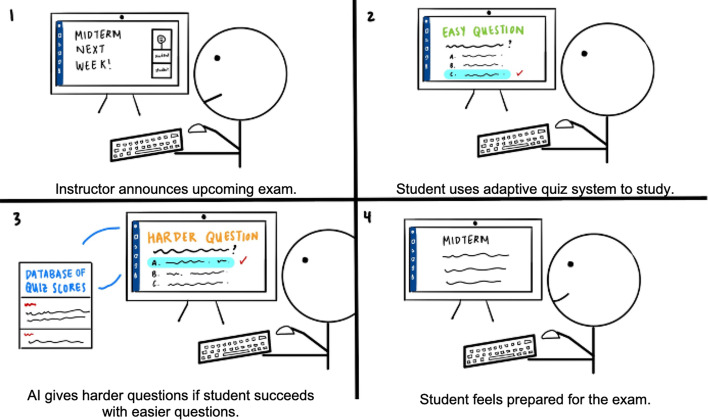
Artificial intelligence (AI) systems offer effective support for online learning and teaching, including personalizing learning for students, automating instructors’ routine tasks, and powering adaptive assessments. However, while the opportunities for AI are promising, the impact of AI systems on the culture of, norms in, and expectations about interactions between students and instructors are still elusive. In online learning, learner–instructor interaction (inter alia, communication, support, and presence) has a profound impact on students’ satisfaction and learning outcomes. Thus, identifying how students and instructors perceive the impact of AI systems on their interaction is important to identify any gaps, challenges, or barriers preventing AI systems from achieving their intended potential and risking the safety of these interactions. To address this need for forward-looking decisions, we used Speed Dating with storyboards to analyze the authentic voices of 12 students and 11 instructors on diverse use cases of possible AI systems in online learning. Findings show that participants envision adopting AI systems in online learning can enable personalized learner–instructor interaction at scale but at the risk of violating social boundaries. Although AI systems have been positively recognized for improving the quantity and quality of communication, for providing just-in-time, personalized support for large-scale settings, and for improving the feeling of connection, there were concerns about responsibility, agency, and surveillance issues. These findings have implications for the design of AI systems to ensure explainability, human-in-the-loop, and careful data collection and presentation. Overall, contributions of this study include the design of AI system storyboards which are technically feasible and positively support learner–instructor interaction, capturing students’ and instructors’ concerns of AI systems through Speed Dating, and suggesting practical implications for maximizing the positive impact of AI systems while minimizing the negative ones.
Overview
The claims and statistics of this paper haven’t been checked yet.
Free: it reads the open-access text and checks the first 5 claims that cite a source we can check. Create a free account to check every claim.
Integrity signals
Registry
Cites
Statistics
Figures
Verification
Claims the paper makes
The claims and statistics of this paper haven’t been checked yet.
Free: it reads the open-access text and checks the first 5 claims that cite a source we can check. Create a free account to check every claim.
Claims other papers make about this one
Each is checked against this paper’s own text: does it say what the citing paper says it does?
The source backs part of the claim, not all of it — or backs it for a different population, condition or comparison.
In the citing paper
“This observation demonstrates the potential of AI as a tool for just-in-time learning in project-based contexts [8, 18], where students can quickly acquire specific expertise needed for their individual projects within compressed timelines.”
From Scaffolding Creativity: Integrating Generative AI Tools and Real-World Experiences in Business Education (2025) · cites this paper as [18]
Experimental — accuracy not yet measuredThe source backs part of the claim, not all of it — or backs it for a different population, condition or comparison.
In the citing paper
“However, teachers may not be digitally ready to use AI-driven educational applications for teaching and learning purposes (e.g., Ally, 2019;Seo et al., 2021).”
From Teachers’ AI digital competencies and twenty-first century skills in the post-pandemic world (2023) · doi:10.1007/s11423-023-10203-6 · cites this paper as Seo et al., 2021
Experimental — accuracy not yet measuredThe cited source says what the claim attributes to it.
In the citing paper
“Interaction between students and instructors has a significant influence on students' happiness and learning results in online learning [92].”
From Adaptive Learning Using Artificial Intelligence in e-Learning: A Literature Review (2023) · cites this paper as [92]
In the citing paper
“They may lack technological experience to conduct data analysis, or to set rules to automatically generate assignments and feedback for students via AI-driven tools (Seo et al., 2021).”
From Teachers’ AI digital competencies and twenty-first century skills in the post-pandemic world (2023) · doi:10.1007/s11423-023-10203-6 · cites this paper as Seo et al., 2021
In the citing paper
“For example, Seo et al. (2021) proposed that AI could facilitate teachers' generation of repetitive questions, and offer students learner-instruction connections, just-in-time personalized support and meaningful automatic communication for classmates.”
From Teachers’ AI digital competencies and twenty-first century skills in the post-pandemic world (2023) · doi:10.1007/s11423-023-10203-6 · cites this paper as Seo et al., 2021
Self-check
Percentages, sums and reported differences re-computed from the paper’s own numbers.
The self-check needs the paper’s full text.
Citations
Cites
Using thematic analysis in psychology
Braun, V., & Clarke, V. (2006) · Qualitative Research in Psychology · doi:10.1191/1478088706qp063oa · Cited by 194,414 · cited 1×
“We used a Reflexive Thematic Analysis approach (Braun & Clarke, 2006; Nowell et al., 2017).”
S., N. L. (2017) · doi:10.1177/1609406917733847 · Cited by 14,051
Zawacki-Richter, O., Marín, V. I., Bond, M., & Gouverneur, F. (2019) · International Journal of Educational Technology in Higher Education · doi:10.1186/s41239-019-0171-0 · Cited by 7,242
What is AI Literacy? Competencies and Design Considerations
Long, D., & Magerko, B. (2020) · Proceedings of the 2020 CHI Conference on Human Factors in Computing Systems · doi:10.1145/3313831.3376727 · Cited by 3,241 · cited 1×
“To address this, it is important to foster AI literacy in students and instructors without a technical background (Long & Magerko, 2020).”
BackgroundAnderson, J. R., Boyle, C. F., & Reiser, B. J. (1985) · Science · doi:10.1126/science.228.4698.456 · Cited by 3,119
Editorial: Three types of interaction
Moore, M. G. (1989) · American Journal of Distance Education · doi:10.1080/08923648909526659 · Cited by 2,471 · cited 1×
“Moore (1989) classified these interactions in online learning into three types: learner–content, learner–learner, and learner–instructor.”
BackgroundVanLEHN, K. (2011) · Educational Psychologist · doi:10.1080/00461520.2011.611369 · Cited by 2,323 · cited 1×
“…artificial intelligence (AI) in online learning and teaching are broad (Anderson et al., 1985; Baker, 2016; Roll et al., 2018; Seo et al., 2020b; VanLehn, 2011), ranging from personalized learning for students and automation of instructors’ routine tasks to AI-powered assessments (Popenici &…”
BackgroundExploring the impact of artificial intelligence on teaching and learning in higher education
Popenici, S. A. D., & Kerr, S. (2017) · Research and Practice in Technology Enhanced Learning · doi:10.1186/s41039-017-0062-8 · Cited by 2,019 · cited 3×
“…intelligence (AI) in online learning and teaching are broad (Anderson et al., 1985; Baker, 2016; Roll et al., 2018; Seo et al., 2020b; VanLehn, 2011), ranging from personalized learning for students and automation of instructors’ routine tasks to AI-powered assessments (Popenici & Kerr, 2017).”
BackgroundMoore, M. G. (1993) · Cited by 1,817
Can we open the black box of AI?
Castelvecchi, D. (2016) · Nature · doi:10.1038/538020a · Cited by 1,773 · cited 1×
“For instance, when communicating with an AI Teaching Assistant, the black-box nature of the AI system leaves no choices for students to check whether the answers from AI are right or wrong (Castelvecchi, 2016).”
Background
Research works printed but not linked: 3
- Shackelford, J. L., & Maxwell, M. (2012). Contribution of learner–instructor interaction to sense of community in graduate online education. MERLOT Journal of Online Learning and Teaching, 8 (4), 248–260.
- Walker, C. H. (2016). The correlation between types of instructor-student communication in online graduate courses and student satisfaction levels in the private university setting. Doctoral dissertation. Carson-Newman University, Tennessee.
- Wogu, I. A. P., Misra, S., Olu-Owolabi, E. F., Assibong, P. A., Udoh, O. D., Ogiri, S. O., & Damasevicius, R. (2018). Artificial intelligence, artificial teachers and the fate of learners in the 21st century education sector: Implications for theory and practice. International Journal of Pure and Applied Mathematics, 119 (16), 2245–2259.
Cited by
Items 301–400 of 787
Moussa, M. K. (2024) · Studies in big data · doi:10.1007/978-3-031-52280-2_30 · Cited by 6
The role of artificial intelligence in building an adaptive educational environment
IZMAILOVA, M. A. (2024) · MIR (Modernization Innovation Research) · doi:10.18184/2079-4665.2024.15.1.8-26 · Cited by 7
Students’ Perspective on the Use of Artificial Intelligence in Education
Caucheteux, C., Hodgkins, L.-B., Batifol, V., Fouché, L., & Roméro, M. (2024) · Palgrave studies in creativity and culture · doi:10.1007/978-3-031-55272-4_8 · Cited by 9
The Digital Siren’s Call: Accepting Unethical AI Advice
Xu, C., Xu, H., Sun, Y., & Xiong, W. (2024) · International Journal of Human-Computer Interaction · doi:10.1080/10447318.2024.2400396 · Cited by 8
Equilibrio entre la privacidad y la ética en el uso de la inteligencia artificial en la educación
Peña, J. M., Moreno, O. B., Herrera, Á. L. O., & Moreno, T. (2024) · Sapiens International Multidisciplinary Journal · doi:10.71068/m4gqp119 · Cited by 6
Yang, K., Wang, Y., Lin, M., Qiao, S., Lin, H., Yang, Y., Estigoy, E. B., & Sun, H. (2025) · Procedia Computer Science · doi:10.1016/j.procs.2025.03.006 · Cited by 9
MAPPING THE USE OF DIGITAL LEARNING TOOLS AND METHODS FOR INCREASING TEACHERS’ DIGITAL COMPETENCE
Arif, M. Z., Nurdin, D., & Sururi, S. (2023) · JURNAL PENDIDIKAN GLASSER · doi:10.32529/glasser.v7i2.2528 · Cited by 15
“Artificial Intelligence (AI) is currently being widely used to support the learning process, especially in personalizing individual learning, automating teacher routine tasks, and for more complex and impactful assessment processes (Seo et al., 2021).”
BackgroundChatGPT and Its Impact on Tertiary Education in Malaysia
Sinnappan, G. S., Kolandaisamy, R. A. L., & Rajamanickam, L. (2023) · Advances in educational technologies and instructional design book series · doi:10.4018/978-1-6684-9103-4.ch008 · Cited by 6
Hidayatullah, E., Untari, R., & Fifardin, F. (2024) · UNION Jurnal Ilmiah Pendidikan Matematika · doi:10.30738/union.v12i2.17548 · Cited by 15
Barać, M., Vitković, N., Stanković, Z., Rajić, M., & Turudija, R. (2024) · Spectrum of Mechanical Engineering and Operational Research. · doi:10.31181/smeor11202413 · Cited by 6
Куатовна, А. С., Sarsekeyeva, Z. Y., Olzhabayevna, M. A., Kopbalina, K. B., & Nurgaliyeva, S. (2024) · Journal of Infrastructure Policy and Development · doi:10.24294/jipd.v8i8.5905 · Cited by 39
“These results suggest that modern teaching techniques are highly effective in improving reading literacy among elementary school learners in Kazakhstan (Farkas and Jang, 2019; Hwang et al., 2023; Seo et al., 2021).”
ResultToboula, C. M. Z. (2023) · International Journal of Education (IJE) · doi:10.5121/ije.2023.11106 · Cited by 11
“The use of AI-supported collaborative e-learning can foster greater engagement in EFL teaching, enhance learning outcomes for EFL students, and increase teacher satisfaction (Chou and Chen, 2008; Jeong, 2019; Seo et al., 2021; Gopinathan et al., 2022).”
BackgroundLi, Y. (2024) · Acta Psychologica · doi:10.1016/j.actpsy.2024.104677 · Cited by 17
Lee, D., Kim, D., Loeser, M., & Seo, K. (2025) · International Conference on Electronics, Information, and Communication (ICEIC) · doi:10.1109/iceic64972.2025.10879736 · Cited by 6
Self-citationSalhab, R. A. (2025) · Frontiers in Education · doi:10.3389/feduc.2025.1560074 · Cited by 11
Artificial Intelligence Versus Traditional Learning in a Medical School Setting
Ramsamooj, A., Ibrahim, S. M., Gerriets, V. A., Cusick, J., & Ramsamooj, R. (2025) · Cureus · doi:10.7759/cureus.85262 · Cited by 8
Lin, M. P.-C., Liu, A. L., Saffari, S., Chang, D., & Ryoo, J. (2025) · Lecture notes in computer science · doi:10.1007/978-3-031-98281-1_7 · Cited by 6
Jo, H. (2025) · Journal of Organizational Change Management · doi:10.1108/jocm-02-2024-0094 · Cited by 7
AI-Enhanced Cyber Science Education: Innovations and Impacts
Triplett, W. J. (2025) · Information · doi:10.3390/info16090721 · Cited by 8
Reddy, C. S., & Leelavathi, R. (2025) · International Journal of Educational Management · doi:10.1108/ijem-12-2024-0843 · Cited by 13
Rakuasa, H., Faris, D. A., & Hidayatullah, M. S. (2024) · Journal Education Innovation (JEI) · doi:10.65474/qhps7h31 · Cited by 36
AI for educational innovation: opportunities and challenges amidst protracted crises
Zeid, M. B., & Abouchedid, K. (2025) · Education and Information Technologies · doi:10.1007/s10639-025-13867-0 · Cited by 7
Exploring the Scholarly Landscape: AI Teaching and Learning in Adult Education
Akbar, Y. A. A., Anuar, A., Zani, R. M., Abdullah, F. N., & Sulaiman, E. S. E. (2024) · International Journal of Academic Research in Progressive Education and Development · doi:10.6007/ijarped/v13-i1/19354 · Cited by 9
“The utilization of AI-powered assessment systems has garnered significant attention within the realm of academic research (Seo et al., 2021).”
BackgroundEmpowering Education: ChatGPT’s Role in Teaching and Learning Statistics and Data Analytics
Pan, Y., & Gu, J. N. (2023) · International Journal of Technology in Teaching and Learning · doi:10.37120/ijttl.2023.19.1.02 · Cited by 9
“The opportunities for integrating AI into online learning and teaching are plentiful, as highlighted by Seo et al. (2021).”
BackgroundGenerative Artificial Intelligence and the 4C Learning Skills for the 21st Century
Türker, P. M., & Öztürk, M. (2024) · Advances in educational technologies and instructional design book series · doi:10.4018/979-8-3693-7220-3.ch011 · Cited by 10
Artificial Intelligence Pedagogical Content Knowledge
Balta, N. (2024) · The European Educational Researcher · doi:10.31757/euer.811 · Cited by 10
Persepsi dan Sikap Siswa Terhadap Penggunaan Artificial Intelligence
Kurniahtunnisa, K., Manuel, M. Y., Aini, M., & Agustina, T. P. (2025) · Scholaria Jurnal Pendidikan dan Kebudayaan · doi:10.24246/j.js.2025.v15.i1.p47-59 · Cited by 61
Scutelnicu, L.-A., & Ceobanu, C. (2025) · Smart innovation, systems and technologies · doi:10.1007/978-981-97-6469-3_32 · Cited by 7
The Use of Artificial Intelligence in Education: Applications, Challenges, and the Way Forward
Mupaikwa, E. (2023) · Advances in library and information science (ALIS) book series · doi:10.4018/978-1-6684-8671-9.ch002 · Cited by 12
Exploring the Opportunities and Challenges of AI Technology in College English Teaching
Sun, M. (2023) · Advances in Social Science, Education and Humanities Research/Advances in social science, education and humanities research · doi:10.2991/978-2-38476-126-5_171 · Cited by 5
Burke‐Smalley, L. A., Neely, A. R., & Bryant, E. (2023) · Business Horizons · doi:10.1016/j.bushor.2023.11.003 · Cited by 6
Babu, C. V. S., & Suruthi, G. (2024) · Advances in educational technologies and instructional design book series · doi:10.4018/979-8-3693-0831-8.ch003 · Cited by 5
Designing Adaptive Learning Space by Integrating Technology to a Sustainable Classroom
HOTAR, N., Baran, B., Tokuç, A., Güzel, E. B., Akdoğan, F. S., Karagöz, E., Güney, L. Ö., Yıldız, C., Yacı, Ş. N., Eraslan, D., et al. (2024) · Advances in educational technologies and instructional design book series · doi:10.4018/979-8-3693-3641-0.ch006 · Cited by 8
Adewale, M. D., Azeta, A. A., Abayomi-Alli, A. A., & Sambo-Magaji, A. (2024) · EAI/Springer Innovations in Communication and Computing · doi:10.1007/978-3-031-64957-8_10 · Cited by 6
Yang, H., Zhang, Y., & Guo, J. (2025) · Behavioral Sciences · doi:10.3390/bs15040518 · Cited by 5
“At the same time, by using AI to provide feedback, teachers can provide students with personalized writing support to adapt to the needs of different students (Seo et al., 2021).”
Rahman, M. A. (2024) · Pedagogy Journal of English Language Teaching · doi:10.32332/joelt.v12i2.9549 · Cited by 22
Jing, Z., & Mouhong, Z. (2025) · BMC Medical Education · doi:10.1186/s12909-025-08289-y · Cited by 4
“The conference proposed a new educational scenario of a “trinity of teachers, machines, and students”, highlighting that generative AI technologies are pioneering new models for teaching applications [2].”
Augmented Educators and AI: Shaping the Future of Human-AI Collaboration in Learning
Kim, H., Park, J., Jeon, H., Fels, S., Dodson, S., & Seo, K. (2025) · CHI Conference Extended Abstracts on Human Factors in Computing Systems (CHI EA) · doi:10.1145/3706599.3706720 · Cited by 6
“AI should be able to detect emotional cues and deliver empathetic, context-aware feedback [13].”
Self-citationThe Impact of Artificial Intelligence on Administration, Teaching, and Learning Functions
Machaba, M. F., & Age, T. J. (2025) · Advances in computational intelligence and robotics book series · doi:10.4018/979-8-3693-8915-7.ch007 · Cited by 6
Thompson, K. N., Chandler, K. L., Morgan, C., Khashabi, D., Delinski, E. A., & Durme, B. V. (2025) · Journal of Advanced Academics · doi:10.1177/1932202x251356323 · Cited by 5
“While growing concerns include security of personally iden-ti fi able information (Nguyen et al., 2023; Seo et al., 2021) and academic integrity violations, such as cheating and plagiarism (Cotton et al., 2024), LLMs can impact the K-12 classroom.”
Empowering Financial Decision-Making With AI Agents: A Case Study on Critical Thinking Development
Castañeda, K. P. B., & Ramirez-Montoya, M.-S. (2025) · IEEE Revista Iberoamericana de Tecnologias del Aprendizaje · doi:10.1109/rita.2025.3600114 · Cited by 8
“…management by automating review and assignment grading tasks, allow teachers to focus on higher-value teaching activities [3] and to access tools and platforms that create virtual classrooms, and automate evaluations and feedback systems that improve the quality of teaching and learning [4].”
Conversational AI for Student Well-Being: Transforming Mental Health Support in Education
Aziz, A., Emon, M. M. H., Tasnim, Z., Aziz, N., Rahman, M. A., & Hamid, A. E. (2025) · Advances in computational intelligence and robotics book series · doi:10.4018/979-8-3373-3316-8.ch004 · Cited by 6
Jalilzadeh, K., Çelık, F., & Duran, V. (2025) · European Journal of Education · doi:10.1111/ejed.70293 · Cited by 5
Huyen, N. T., Chi, N. Y., Lam, P. X., & Hoc, L. H. (2025) · The Internet and Higher Education · doi:10.1016/j.iheduc.2025.101060 · Cited by 8
Design and validation of a questionnaire on teachers' uses of generative artificial intelligence
Pérez-Montesdeoca, H., Rodríguez-Rodríguez, D., Stendardi, D., & Fernández‐Sogorb, A. (2026) · Computers and Education Open · doi:10.1016/j.caeo.2026.100332 · Cited by 13
Büyükeke, A. (2025) · Üniversite Araştırmaları Dergisi · doi:10.32329/uad.1728785 · Cited by 5
Baez, C., Buchner, J., Ullrich, A., & Schallert-Vallaster, S. (2026) · Computers and Education Open · doi:10.1016/j.caeo.2026.100346 · Cited by 14
Stewart, O. G. (2026) · AI in Education · doi:10.3390/aieduc2010005 · Cited by 4
“In their study of university professors across disciplines, Seo et al. (2021) found that instructors expressed enthusiasm about AI’s ability to provide just-in-time support for routine tasks, while simultaneously expressing concern that such support could diminish opportunities for personal…”
InfluentialArslan, M. A., Arpacık, Ö., Küçük, S., & Durak, H. Y. (2026) · Journal of Research on Technology in Education · doi:10.1080/15391523.2026.2643173 · Cited by 5
Advantages and Disadvantages of Chatgpt in Science Learning: A Systematic Literature Review
Asmiddin, A. M., Nurhuda, P., & Megawati, R. (2023) · Jurnal Penelitian Pendidikan IPA · doi:10.29303/jppipa.v9i12.6576 · Cited by 6
“The progress and development of artificial intelligence (AI) is rapidly and significantly forming a new habit, society is currently using AI to simplify daily human activities, one of which is also used in science learning (Seo et al., 2021).”
BackgroundExamining Artificial Intelligence and Ethics in Education With Bibliometric Analysis
Alioğulları, E., Tüylü, D., & Sagiroglu, A. (2025) · Advances in educational technologies and instructional design book series · doi:10.4018/979-8-3693-7949-3.ch001 · Cited by 4
Empowering Education Harnessing AI Tools for Innovative Content Development
Hossain, M., Amin, S. Z., & Hossain, F. (2025) · Advances in computational intelligence and robotics book series · doi:10.4018/979-8-3693-6507-6.ch012 · Cited by 6
Advancing language education with ChatGPT: A path to cultivate 21st-century digital skills
Rahimi, A. R., & Teimouri, R. (2025) · Research Methods in Applied Linguistics · doi:10.1016/j.rmal.2025.100218 · Cited by 16
Adewale, M. D., Azeta, A. A., Abayomi-Alli, A. A., & Sambo-Magaji, A. (2025) · Lecture notes of the Institute for Computer Sciences, Social Informatics and Telecommunications Engineering · doi:10.1007/978-3-031-93557-2_13 · Cited by 5
Bouziane, A., & Bouziane, K. (2025) · Discover Education · doi:10.1007/s44217-025-00632-1 · Cited by 4
“This finding confirms the results of the studies by [15, 17, 26, 27] and [28].”
Ahn, H. Y. (2025) · Systems · doi:10.3390/systems13100915 · Cited by 6
“Simultaneously, the perception of intelligence in a technological system can elevate the user’s sense of enjoyment [58].”
Benevides, K. D. G., Rufino, L. J. G. C., dos Santos, D. F. A., Benevides, M. P., Pimenta, C. D., de Oliveira, M. R., & Moura, R. A. D. (2025) · Aracê. · doi:10.56238/arev7n8-085 · Cited by 19
Mustafa, A. N. (2023) · World Journal of Advanced Research and Reviews · doi:10.30574/wjarr.2023.20.3.2508 · Cited by 17
“As education continues to evolve with technological advancements, it’s imperative for educators to stay abreast of these promising and effective teaching strategies [37,38,39,46,47,50,51,52,53].”
BackgroundInfluentialEnhancing EFL Saudi university students speaking proficiency through TED talks
Alghmadi, K. A. (2024) · Journal of Pedagogical Research · doi:10.33902/jpr.202424730 · Cited by 4
Using AI Technology to Create an Inclusive Environment for Diverse Online Learners
Liu, Y. (2024) · Advances in mobile and distance learning book series · doi:10.4018/979-8-3693-0268-2.ch006 · Cited by 4
Riegel, C. (2024) · Advances in analytics for learning and teaching · doi:10.1007/978-3-031-56365-2_18 · Cited by 9
Review of Artificial Intelligence-Based Tools in EFL Classroom
Luo, J., & Qiu, L. (2024) · Arts Culture and Language · doi:10.61173/s266nr95 · Cited by 14
Kaplan, O. (2024) · Adıyaman Üniversitesi Eğitim Bilimleri Dergisi · doi:10.17984/adyuebd.1463794 · Cited by 10
Tabora, L. A. T., Ampatuan, D. S. I. S., Castaneda, M. A. C., Galinato, E. J. U., & Zulueta, E. E. M. (2024) · International Conference on Frontiers of Educational Technologies (ICFET) · doi:10.1145/3678392.3678393 · Cited by 6
“While AI-driven personalized learning systems offer promising benefits, assessing their impact on the learning outcomes of students is essential, as these AI systems may have long-term implications on students’ overall cognitive and socio-emotional development [39].”
Integrating AI Into Higher Education: A Comprehensive Exploration
Labib, L. N., & ElSabry, E. A. (2024) · Advances in wireless technologies and telecommunication book series · doi:10.4018/979-8-3373-1132-6.ch001 · Cited by 5
Teachers’ Experiences of Using AI-powered Technologies in Bangladeshi English Language Classrooms
Munni, B. E., & Rafique, R. (2025) · Spectrum · doi:10.3329/spectrum.v18i1.76362 · Cited by 18
“While AI supports engagement, Moybeka et al. (2023) and Seo (2021) suggest balancing AI with human-led instruction for student-centered teaching.”
Jiang, Y., Yuan, Y., & He, Z. (2025) · Interactive Learning Environments · doi:10.1080/10494820.2025.2470321 · Cited by 7
“However, technologies such as AI may reduce direct contact between teachers and pupils, weakening their emotional interactions (Seo et al., 2021).”
Leveraging AI in Education: Benefits, Responsibilities, and Trends
Fitas, R., Ghosh, K., & Maity, S. (2025) · Signals and communication technology · doi:10.1007/978-3-031-96855-6_7 · Cited by 6
Sarwari, A. Q. (2024) · Interdisciplinary Description of Complex Systems · doi:10.7906/indecs.22.1.1 · Cited by 4
Baez, C., Buchner, J., Roos, A., & Schallert-Vallaster, S. (2023) · doi:10.31219/osf.io/wqvrh · Cited by 4
Satvati, N., Kamali, J., Boldaji, F. S., Khodadadi, M., & Akhondi, S. (2023) · SSRN Electronic Journal · doi:10.2139/ssrn.4670840 · Cited by 4
Ko, E. G., & Hughes, J. E. (2026) · Computers and Education: Artificial Intelligence · doi:10.1016/j.caeai.2026.100560 · Cited by 3
Evaluating the Impact of AI Tools on Academic Performance and Student Satisfaction
Wu, Z. (2026) · Journal of Computer Assisted Learning · doi:10.1002/jcal.70225 · Cited by 5
Wahyuni, S. I., Arsyad, M., & Khaeruddin, K. (2024) · Jurnal Penelitian Pendidikan IPA · doi:10.29303/jppipa.v10i6.7395 · Cited by 8
“…also have a positive influence on the relationship between students and the real world (Markula & Aksela, 2022; Darling-Hammond et al., 2020; Seo et al., 2021), students are encouraged to be more active, creative and think critically in solving problems in the surrounding environment and…”
BackgroundPotential of Artificial Intelligence in Education and Ethical Issues
Saxena, M. K., & Bajotra, V. (2024) · Far Western Journal of Education. · doi:10.3126/fwje.v1i1.68773 · Cited by 14
Bacon, E. D., & Kraus, H. (2025) · rEFLections · doi:10.61508/refl.v32i1.280410 · Cited by 8
“…on AI assisted learning has centered on its potentially damaging impact in education, with concern raised over students’ academic (dis) honesty (Hamilton, 2023), learners’ possible overreliance on AI, and relinquishing their responsibility to think critically (Seo et al., 2021; Yusuf et al., 2024).”
Park, M., Park, B., & Seo, K. (2025) · CHI Conference Extended Abstracts on Human Factors in Computing Systems (CHI EA) · doi:10.1145/3706599.3719684 · Cited by 6
“Such self-reflection is crucial as it enables individuals to identify and address the underlying causes of their stress [7, 13, 14, 46].”
Self-citationRani, J., Guru, R., Santhanam, S., Molla, W. T., Singh, J., & Dutt, S. (2025) · Advances in computational intelligence and robotics book series · doi:10.4018/979-8-3693-7260-9.ch001 · Cited by 3
Tulang, A. B. (2025) · European Journal of Educational Research · doi:10.12973/eu-jer.14.3.829 · Cited by 4
AI-Driven Insights from Student Feedback for Teacher Improvement
Ortiz, M. G., & Dumlao, M. F. (2025) · Journal of interdisciplinary perspectives · doi:10.69569/jip.2025.418 · Cited by 3
Massouti, A., Shaya, N., & Baroudi, S. (2026) · Social Sciences & Humanities Open · doi:10.1016/j.ssaho.2026.102954 · Cited by 4
Sağlam, A. L. G. (2025) · Learning Research and Practice · doi:10.1080/23735082.2025.2567247 · Cited by 8
“Moreover, the promise of AI-enhanced feedback offers opportunities for tailored (Huang et al., 2021) and timely responses to students (Seo et al., 2021), fostering a supportive learning environment.”
Beyond the hype: evidence-based approaches to responsible AI integration in workplace learning
Sposato, M. (2025) · Education + Training · doi:10.1108/et-01-2025-0034 · Cited by 3
Ba, S., Lu, G., Mendoza, N. B., Yang, Y. P., Pan, Z., & Wang, Y. (2025) · Journal of Educational Computing Research · doi:10.1177/07356331251396357 · Cited by 6
“Nevertheless, human instructors remain indispensable for nuanced facilitation, adaptive scaffolding, and emotional support (Seo et al., 2021).”
The implications of artificial intelligence usage on management students’ academic productivity
Idrissi, I. E., & Alami, Y. (2025) · Artificial Intelligence in Education · doi:10.1108/aiie-05-2025-0103 · Cited by 7
Enhancing collaborative writing with AI-enhanced feedback in graduate-level action research courses
Vu, P., & Vu, L. (2025) · Artificial Intelligence in Education · doi:10.1108/aiie-03-2025-0042 · Cited by 10
Wei, L., Qiu, L., & Man, S. (2025) · SAGE Open · doi:10.1177/21582440251407506 · Cited by 13
“These features boost engagement and outcomes (Chiu et al., 2023; Grassini, 2023; Selwyn, 2022; Seo et al., 2021; Somasundaram et al., 2020; Wu et al., 2024).”
Learning with large language models: beyond prompt engineering
Ding, L., O’Berry, R., Tallent, H., C., S. G. C. G., & Gapud, A. A. (2026) · Education and Information Technologies · doi:10.1007/s10639-026-13924-2 · Cited by 15
“Research exploring the impact of LLMs on student learning has yielded mixed results in terms of their variability in students’ engagement, academic performance, and motivation (Chiu et al., 2023; Grassini, 2023; Selwyn, 2022; Seo et al., 2021 ; Somasundaram et al., 2020).”
Sun, H. (2026) · Frontiers in Psychology · doi:10.3389/fpsyg.2026.1919875 · Cited by 4
“…judgements and to act; its non-human source foregrounds the affect-management and trust dimensions, because students must decide how much credence to give an algorithm, especially about expressive qualities it may not capture (Chan and Hu, 2023; Chen, 2025; Holmes et al., 2021; Seo et al., 2021).”
Mudau, P. K., & van den Berg, G. (2023) · Education Sciences · doi:10.3390/educsci13090963 · Cited by 10
Machine learning on academic education: Bibliometric studies
Tjahyaningtijas, H. P. A., Husin, N., Al-Habib, H., Asmunin, A., Wibawa, R. P., Sumarno, A., Paragas, J. R., & Susantini, E. (2023) · E3S Web of Conferences · doi:10.1051/e3sconf/202345002010 · Cited by 6
Perceptions and innovations of academics in an open distance e-learning institution
Maphoto, K. B. (2024) · Online Journal of Communication and Media Technologies · doi:10.30935/ojcmt/14485 · Cited by 7
Understanding the AI Integrity in Academic Excellence: Bangladesh Perspective
Akhter, N., Suriea, U., & Soha, S. A. (2024) · Bangladesh Journal of Bioethics · doi:10.62865/bjbio.v15i2.101 · Cited by 3
CHATGPT, SMART WRITING ASSISTANT CHATBOT FOR STUDENTS: AN ANALYSIS OF ITS DRAWBACKS
Yazid, S. R., & Dzulfikri, D. (2024) · Abjadia International Journal of Education · doi:10.18860/abj.v9i1.24459 · Cited by 8
“When it comes to dependency, previous research may have covered the possible effects of relying on AI writing assistants on students' originality and independent thought (Lund et al., 2023; Seo et al., 2021)(Lund et al., 2023; Seo et al., 2021).”
BackgroundWalawalkar, A. M., Kumar, S., Moslehpour, M., & Moslehpour, M. (2024) · Advances in computational intelligence and robotics book series · doi:10.4018/979-8-3693-3860-5.ch003 · Cited by 3
Lu, F., & Liu, S. (2024) · International Journal of Knowledge Management · doi:10.4018/ijkm.356493 · Cited by 4
“Death of the Old Teacher”: Navigating AI in Education Through Kubler-Ross Model
Giray, L. (2025) · ECNU Review of Education · doi:10.1177/20965311251319049 · Cited by 4
“Additionally, without AI, it can be more dif fi cult for teachers to identify and address individual learning gaps, which leads to a one-size-fi ts-all approach that may not serve all students well (Seo et al., 2021).”
Impact of AI chatbots on EFL learners’ technology adoption: An extension of the UTAUT2 model
Huang, Y., & Fung, D. C.-L. (2024) · Interaction Studies Social Behaviour and Communication in Biological and Artificial Systems · doi:10.1075/is.24019.hua · Cited by 6
Tavoletti, E., Stephens, R. D., Dong, L., & Taras, V. (2025) · Management Research Review · doi:10.1108/mrr-11-2024-0913 · Cited by 5
Mjahad, R. A., Boukranaa, A. M., Karfa, A. E., & Sandy, K. (2025) · SAGE Open · doi:10.1177/21582440251381402 · Cited by 9
“Furthermore, a key drawback identified is the risk of data privacy issues and inequality in accessing advanced technology, particularly in regions with limited internet infrastructure (Lin & Chen, 2024; Seo et al., 2021).”
Metadata
- Authors
- Seo, K., Tang, J., Roll, I., Fels, S., & Yoon, D.
- Affiliations
- Seoul National University of Science and Technology (KR)
- University of British Columbia (CA)
- Technion – Israel Institute of Technology (IL)
- Corresponding author
- Seo, Kyoungwon
- Venue
- International Journal of Educational Technology in Higher Education
- Published
- 2021-10-26
- Volume
- 18
- Issue
- 1
- Pages
- 54-54
- ISSN
- 2365-9440 (ISSN-L)
- PMC
- PMC8545464
- OpenAlex
- W3209912268
- Cited by
- 788
- References
- 64
- Citations by year
- 2026: 158 · 2025: 283 · 2024: 235 · 2023: 105 · 2022: 7
- FWCI
- 78.45
- Type
- journal article
- Language
- en
- Open access
- diamond
- doi.org
- Licence
- cc-by
- creativecommons.org/licenses/by/4.0 (tdm)
- creativecommons.org/licenses/by/4.0 (vor)
- Locations
- International Journal of Educational Technology in Higher Education (publishedVersion, cc-by)
- Europe PMC (PubMed Central) (publishedVersion, other-oa)
- PubMed Central (publishedVersion, cc-by)
- PubMed (publishedVersion)
- cIRcle (University of British Columbia) (submittedVersion, cc-by)
- DOAJ (DOAJ: Directory of Open Access Journals) (submittedVersion, cc-by-sa)
- Open Collections
- Funders
- seoul national university of science and technology
- Topics
- Social Sciences › Education › Artificial Intelligence in Education
- Social Sciences › Education › Online and Blended Learning
- Physical Sciences › Computer Science › Artificial Intelligence › Intelligent Tutoring Systems and Adaptive Learning
- Keywords
- artificial intelligence in education, learner-instructor interaction, online learning, student perceptions, instructor perceptions, speed dating, personalized learning, adaptive testing, social boundaries, surveillance, human-in-the-loop, explainability, student satisfaction
About these checks
Registry, retraction, Cites and statistics results are computed, not judged, with one exception: a printed reference that no index lists is read once by a model before it counts as a citation error. Claims are extracted by a model and kept only when their quote appears verbatim in the text; each cited source is then checked, with a model’s help, for whether it says what the claim relies on. Those verdicts can be wrong — read the claim’s quote and the cited source before relying on one.
Statistics and arithmetic are recomputed, not judged.
Confidence bands are shown only for fields calibrated on our annotated test set. None is calibrated yet, so no band is shown.
What counts as a claim ›How we measure confidence ›How we check this ›
Are you an author, or do you see a problem with this page? Request a review
Data sources
Bibliographic data: Semantic Scholar, OpenAlex, Crossref.
Contains information from the Semantic Scholar Academic Graph Datasets, made available under the ODC Attribution License (ODC-BY 1.0).
Semantic Scholar’s data is described in: Kinney, R., et al. (2023). The Semantic Scholar Open Data Platform. arXiv:2301.10140.
