

Facilitator or hindrance? The impact of AI on university students' higher-order thinking skills in complex problem solving
Open accessThe DOI matches its Crossref record; 72 of the 74 references it cites were found in a registry or an index, and 1 are not checked yet; 6 of the 15 sources its claims cite were checked for support.
Abstract
Artificial Intelligence (AI) is increasingly permeating education, enhancing teaching efficiency and enriching personalized learning experiences. However, integrating AI without compromising students' independent thinking remains a challenge. Using ChatGPT-4o as an example, this study employed a within-subject experimental design to examine AI’s impact on university students' higher-order thinking skills (HOTS) and task outcomes in complex problem-solving. Based on the design problem context, the research constructed diverse task modules encompassing complex problem-solving processes, collected multidimensional data from 40 students, and analyzed using epistemic network analysis and consensus assessment techniques. The results indicate that AI slightly enhances the originality and usefulness of design sketches and significantly increases the number of HOTS used and the diversity of their interconnections. The study further categorizes students by their degree of AI influence, revealing that those more influenced by AI incorporate more personal thinking, use more HOTS, and exhibit richer interconnections among these skills. This research provides empirical evidence on AI's role in fostering HOTS and provides guidance on the integration of AI to enhance students' independent thinking in education.
Verified 2026-11-22 · 1 reference not checked yet
Overview
CoChat Summary
TL;DR
In a within-subject study with 40 design students using ChatGPT-4o for complex design problem solving, AI slightly improved sketch originality and usefulness but significantly increased the number and interconnectedness of higher-order thinking skills (HOTS). Students more influenced by AI showed more HOTS and more complex HOTS networks, though direct adoption of AI ideas was common.
Key findings
- Sketch scores improved significantly but modestly from Re-sketch to Fi-sketch: originality increased from M = 2.80 (SD = 0.91) to M = 3.38 (SD = 0.75), Cohen’s d = 0.793, t = −5.018, p < 0.001; usefulness increased from M = 3.05 (SD = 0.88) to M = 3.78 (SD = 0.79), Cohen’s d = 1.119, t = −7.079, p < 0.001.
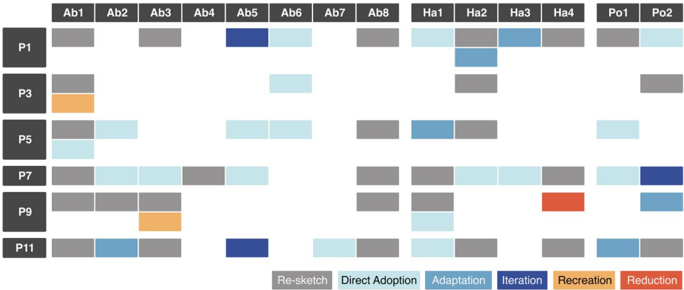
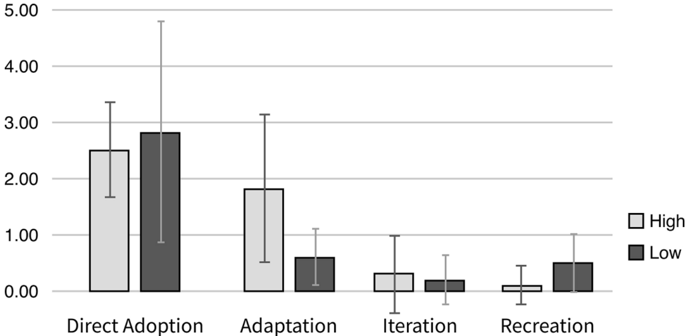
- Participants generated 310 components total; Fi-sketch components increased by 110.89% over Re-sketches. Among newly added components, 61.35% were direct adoption of AI ideas, 22.09% adaptation, 9.82% recreation, and 6.75% iteration.
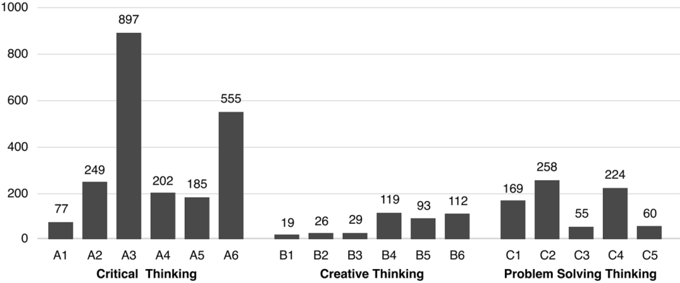
- Participants exhibited 3329 HOTS; critical thinking was used most and creative thinking least, with “evaluation” highest and “analogy” lowest. Of 40 paired HOTS comparisons, 18 were significant (p < 0.05), and usage was higher after AI in all significant instances except problem-solving thinking between phase2 and phase5.
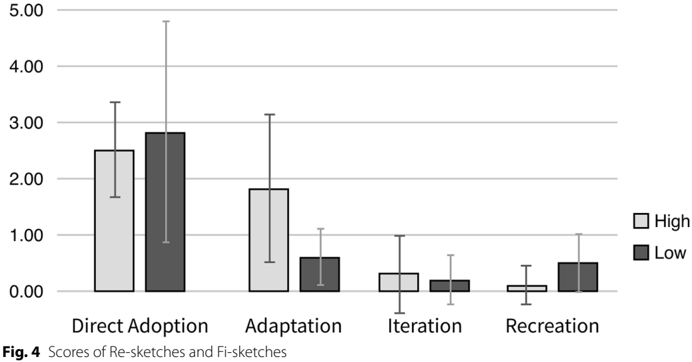
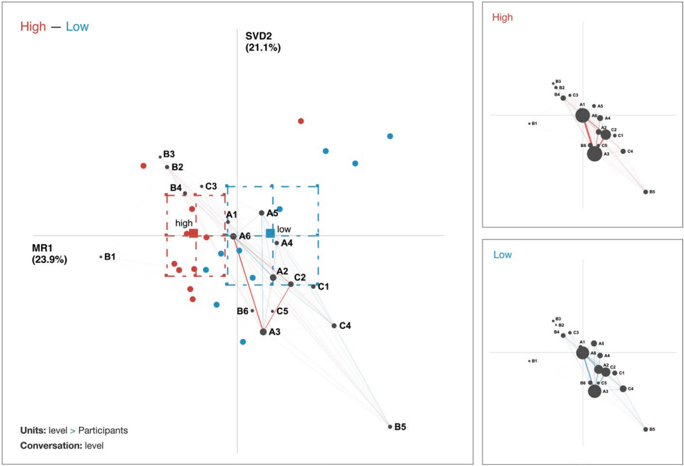
- High-impact participants (top 10 by z-scored sketch-score change) used adaptation relationships more than low-impact participants (M = 1.80, SD = 1.32 vs. M = 0.60, SD = 0.52; d = 1.200, t = −2.683, p = 0.020) and showed significantly more critical thinking, creative thinking, and sub-HOTS A3, A6, B2, B4, and C2.
Methods
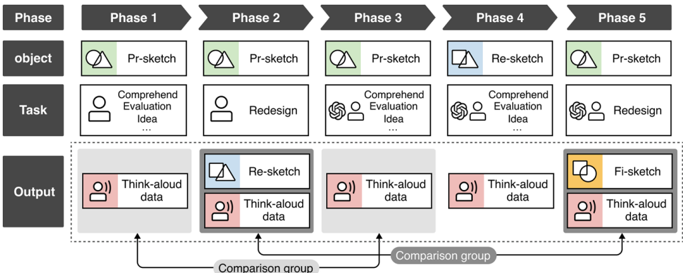
- Within-subject experimental design with 40 design freshmen/sophomores (28 females, 12 males; M age = 19.28, SD = 0.67) from visual communication design, digital media art design, and architectural design. Five phases involved a Pr-sketch, Re-sketch, ChatGPT-4o interaction, and Fi-sketch; participants used think-aloud throughout, with screen recording and an average task time of 33.80 min (SD = 6.05).
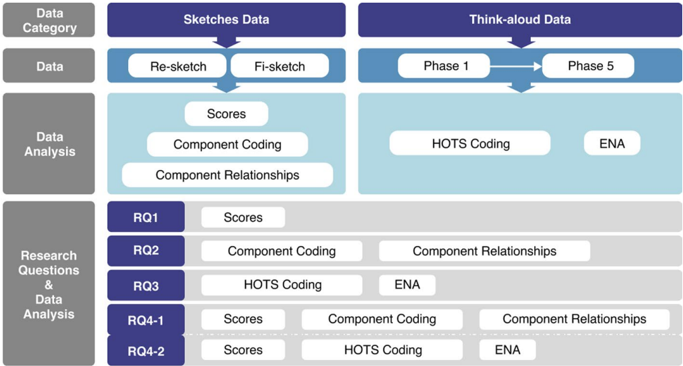
- Sketch data were rated by three blind design teachers using Consensus Assessment Technique on 7-point originality and usefulness scales; ICC was 0.75 for originality and 0.76 for usefulness. Hairdryer components were coded as Airflow Barrel, Handle, and Power, and Re-sketch-to-Fi-sketch component relationships were classified as direct adoption, adaptation, iteration, recreation, or reduction.
- Think-aloud data (22.53 h audio) were coded with a HOTS scheme covering critical, creative, and problem-solving thinking and 17 sub-HOTS, achieving Kappa = 0.71. Analyses used paired t-tests, Mann-Whitney U tests, and Epistemic Network Analysis (ENA).
Limitations
- The paper states that it focused only on students solving complex problems independently or with AI, without considering educators’ role in natural educational settings; future research should explore AI use within teaching environments.
- The paper states that it examined only design problems as complex problems, limiting generalizability, and that the sample was small and relatively homogeneous; future work should involve larger-scale studies and varied readiness, cultural backgrounds, or AI familiarity.
- The paper also notes that AI models are continuously updated, so generation logic and presentation may change. Evident from the text: the study used a single task object (hairdryer), a novice sample, and ChatGPT-4o only, and the fixed within-subject phase order is not described as counterbalanced, so practice or order effects are not ruled out.
Model-written summary. Check it against the paper before relying on it.
Integrity signals
Registry
Cites
Statistics
Figures
Verification
Claims the paper makes
6 Valid · 0 Not valid · 8 Not checked · 119 Own results and interpretations
The cited sources support only part of this claim — read each source’s verdict below.
In the paper
“However, the immediacy of AI-generated concepts may compress the design concept generation phase, which is crucial for breakthrough innovation in design processes (Wadinambiarachchi et al., 2024).”
What the sources say
- Partly supportedcites Wadinambiarachchi et al., 2024 matched to “The Effects of Generative AI on Design Fixation and Divergent Thinking” (2024) sourceExperimental — accuracy not yet measured
The Introduction says AI tools can produce visuals quickly, and Discussion §5.3 reports that, within a fixed-time task, using an AI image generator left less time for sketching ideas. The paper does not establish that immediacy compresses the design concept generation phase or assess that phase’s role in breakthrough innovation. Page numbers are unavailable in our copy. (LLM, conf=0.83)
hedgedstates a possible cause- Asserted: passes — The authors put it forward as true.
- Checkable: passes — It can be checked against evidence.
- Load-bearing: unclear — It is unclear whether the paper’s conclusions depend on it.
- Based: passes — The paper gives a reason why it holds.
- Partly supported
A result the paper reports from its own data — it cites no other source for it, so there is none to check. The quote shows it is in the paper.
In the paper
“The results showed a significant difference in the adaptation relationship (Cohen's d = 1.200, t = -2.683, p = 0.020), with high-impact participants (M = 1.80, SD = 1.32) using this relationship more frequently than low-impact participants (M = 0.60, SD = 0.52).”
plainstates an associationn = 10 ·- Asserted: passes — The authors put it forward as true.
- Checkable: passes — It can be checked against evidence.
- Load-bearing: passes — The paper’s conclusions depend on it.
- Based: passes — The paper gives a reason why it holds.
A result the paper reports from its own data — it cites no other source for it, so there is none to check. The quote shows it is in the paper.
In the paper
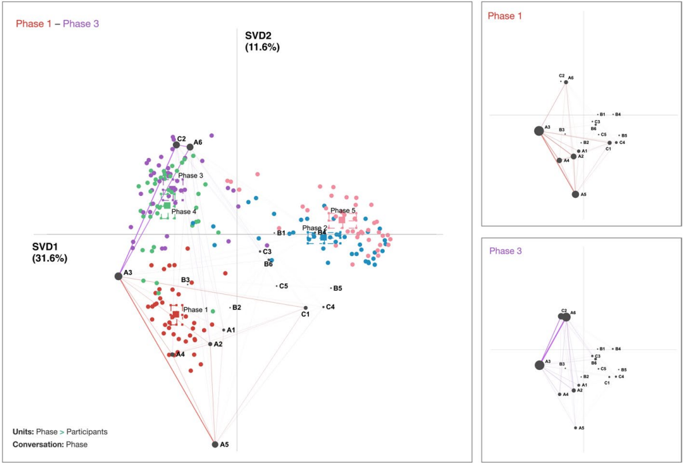
“From phase1 to phase3, evaluation shifted from the focal point to a node, forming a more complex cognitive network.”
plainstates an association- Asserted: passes — The authors put it forward as true.
- Checkable: passes — It can be checked against evidence.
- Load-bearing: passes — The paper’s conclusions depend on it.
- Based: passes — The paper gives a reason why it holds.
A result the paper reports from its own data — it cites no other source for it, so there is none to check. The quote shows it is in the paper.
In the paper
“In phase1, evaluation was closely linked to inference, analysis, and explanation, with critical thinking as the core skill.”
plainstates an association- Asserted: passes — The authors put it forward as true.
- Checkable: passes — It can be checked against evidence.
- Load-bearing: passes — The paper’s conclusions depend on it.
- Based: passes — The paper gives a reason why it holds.
A result the paper reports from its own data — it cites no other source for it, so there is none to check. The quote shows it is in the paper.
In the paper
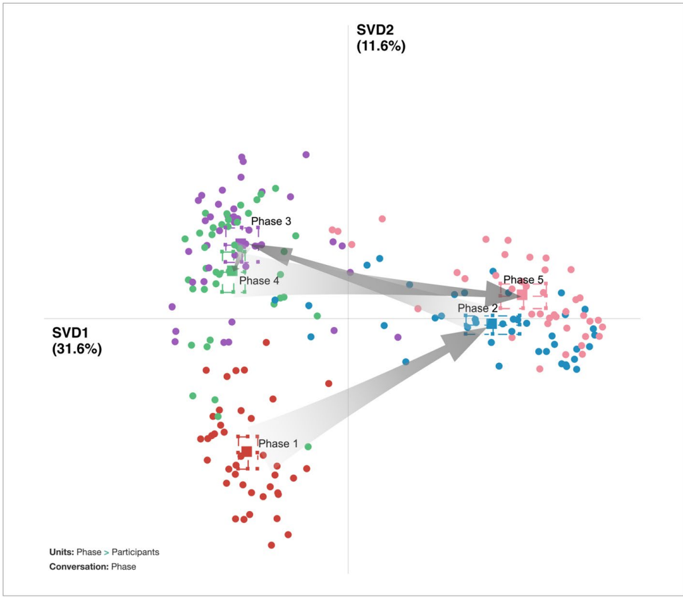
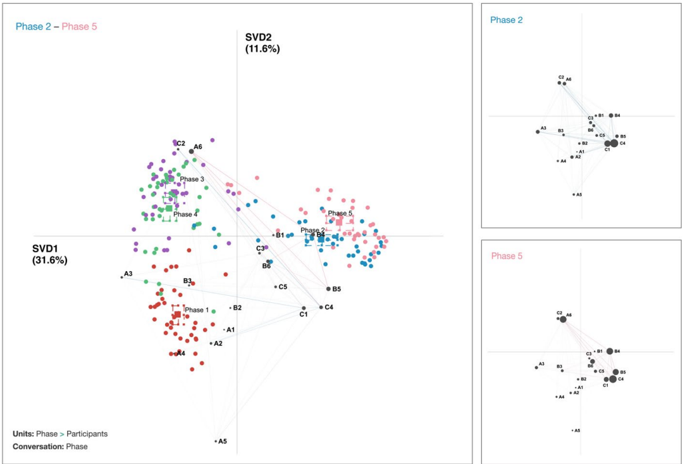
“In all instances, the usage frequency of HOTS was higher after using AI (phase3 and phase5) than before (phase1 and phase2).”
- Also stated in: § Discussion · p. 16 · plain
“Additionally, the number of HOTS used increased significantly, stimulating connections between different categories.”
plainstates a cause- Asserted: passes — The authors put it forward as true.
- Checkable: passes — It can be checked against evidence.
- Load-bearing: passes — The paper’s conclusions depend on it.
- Based: passes — The paper gives a reason why it holds.
- Also stated in: § Discussion · p. 16 · plain
71 more claims
Create a free account to see all 133 claims and to verify the 1 reference still open.
- It may state two separate claims as one. 36
- Probably not a substantial claim. 27
- The quote only partly states this claim. 1
Self-check
Percentages, sums and reported differences re-computed from the paper’s own numbers.
Each contradiction between two passages listed here was confirmed by an independent check.
Rated minor: it would not touch a result — a value no result rests on, a p-value that stays on the same side of the significance level, or a conflict that is clerical, resolved elsewhere in the paper, or outside its own findings.
In the paper
§ Appendix · p. 23
“| | High-impact participants (n = 10) | High-impact participants (n = 10) | Lower | Upper | | | |”
§ Appendix · p. 23
“Table 6 T-test results of HOTS frequency between high-impact and low-impact participants”
Citations
Cites
New Era of Artificial Intelligence in Education: Towards a Sustainable Multifaceted Revolution
Kamalov, F., Santandreu Calonge, D., & Gurrib, I. (2023) · Sustainability · doi:10.3390/su151612451 · Cited by 1,089 · cited 1×
“The deepening application of AI in education has significantly altered students’ thinking patterns and cognitive processes (Kamalov et al., 2023).”
Journal for Educational Research Online
(2021) · Journal for Educational Research Online / Journal für Bildungsforschung Online · doi:10.31244/jero · Cited by 887
How to Assess Higher-Order Thinking Skills in Your Classroom
Brookhart, S. M. (2010) · Cited by 844
Strzelecki, A. (2024) · Interactive Learning Environments · doi:10.1080/10494820.2023.2209881 · Cited by 807 · cited 1×
“Although AI is widely adopted, its dynamics and role in higher education are still poorly understood, with limited empirical studies on the factors driving its use among university students (Strzelecki, 2023).”
Purposely Teaching for the Promotion of Higher-order Thinking Skills: A Case of Critical Thinking
Miri, B., David, B.-C., & Uri, Z. (2007) · Research in Science Education · doi:10.1007/s11165-006-9029-2 · Cited by 667 · cited 2×
“Researchers emphasize the importance of critical and creative thinking within HOT, particularly the central role of critical thinking (Miri et al., 2007).”
Higher Order Thinking Skills and Low-Achieving Students: Are They Mutually Exclusive?
Zohar, A., & Dori, Y. J. (2003) · Journal of the Learning Sciences · doi:10.1207/s15327809jls1202_1 · Cited by 631
Artificial intelligence and the changing sources of competitive advantage
Krakowski, S., Luger, J., & Raisch, S. (2023) · Strategic Management Journal · doi:10.1002/smj.3387 · Cited by 594 · cited 1×
“It enables artificial agents to perform cognitive functions like decision-making and problem-solving, tasks once exclusive to humans (Krakowski et al., 2023).”
Design Problem Solving: A Task Analysis
Chandrasekaran, B. (1990) · The AI Magazine · doi:10.1609/aimag.v11i4.857 · Cited by 568
Humans and Technology: Forms of Conjoined Agency in Organizations
Murray, A., Rhymer, J., & Sirmon, D. G. (2021) · Academy of Management Review · doi:10.5465/amr.2019.0186 · Cited by 518 · cited 1×
“Free from human cognitive limitations, these agents often outperform humans in information retrieval, decision-making, and prediction (Murray et al., 2021).”
An approach to the analysis of design protocols
Gero, J. S., & Mc Neill, T. (1998) · Design Studies · doi:10.1016/s0142-694x(97)00015-x · Cited by 512 · cited 1×
“This grading method ensured that the final data remained objective and independent (Gero & Neill, 1998).”
Impact of the Implementation of ChatGPT in Education: A Systematic Review
Montenegro-Rueda, M., Fernández-Cerero, J., Fernández-Batanero, J. M., & López-Meneses, E. (2023) · Computers · doi:10.3390/computers12080153 · Cited by 509 · cited 1×
“This dependence can diminish the depth and richness of educational experiences, undermining mastery of essential problem-solving skills (Montenegro-Rueda et al., 2023).”
Design Problem Solving: A Task Analysis
Chandrasekaran, B. (1990) · Cited by 508
Generative artificial intelligence, human creativity, and art
Zhou, E., & Lee, D. (2024) · PNAS Nexus · doi:10.1093/pnasnexus/pgae052 · Cited by 459
Advanced Design in Nursing Research
Brink, P., & Wood, M. (1998) · doi:10.4135/9781452204840 · Cited by 433 · cited 1×
“Teachers’ consistency and agreement were assessed using the intraclass correlation coefficient (ICC), and achieving high reliability for both originality (0.75) and usefulness (0.76) (Brink & Wood, 1998).”
InfluentialZhang, S., Zhao, X., Zhou, T., & Kim, J. H. (2024) · International Journal of Educational Technology in Higher Education · doi:10.1186/s41239-024-00467-0 · Cited by 409 · cited 1×
“Additionally, students with a lack of confidence or insufficient understanding of the task may be more inclined to view AI outputs as authoritative answers, which reduces their motivation for active thinking and exploration (Zhang et al., 2024).”
Yilmaz, R., & Karaoglan Yilmaz, F. G. (2023) · Computers in Human Behavior: Artificial Humans · doi:10.1016/j.chbah.2023.100005 · Cited by 344 · cited 1×
“Yilmaz and Yilmaz (2023) highlighted AI’s support for personalized learning, including explanations, programming examples, query support, and access to advanced resources.”
The Effects of Generative AI on Design Fixation and Divergent Thinking
Wadinambiarachchi, S., Kelly, R. M., Pareek, S., Zhou, Q., & Velloso, E. (2024) · Proceedings of the CHI Conference on Human Factors in Computing Systems · doi:10.1145/3613904.3642919 · Cited by 320 · cited 1×
“However, the immediacy of AI-generated concepts may compress the design concept generation phase, which is crucial for breakthrough innovation in design processes (Wadinambiarachchi et al., 2024).”
Essel, H. B., Vlachopoulos, D., Essuman, A. B., & Amankwa, J. O. (2024) · Computers and Education: Artificial Intelligence · doi:10.1016/j.caeai.2023.100198 · Cited by 296
Lee, H.-Y., Chen, P.-H., Wang, W.-S., Huang, Y.-M., & Wu, T.-T. (2024) · International Journal of Educational Technology in Higher Education · doi:10.1186/s41239-024-00447-4 · Cited by 273 · cited 1×
“It is a language model-based AI tool capable of providing students with multi-perspective explanations of design problems, heuristic questions, and guidance for critical thinking through natural language interaction, allowing students to demonstrate their HOTS (Lee et al., 2024).”
Authentic Learning Environments In Higher Education
Herrington, T., & Herrington, J. (2005) · Cited by 261
REVOLUTIONIZING EDUCATION: HARNESSING THE POWER OF ARTIFICIAL INTELLIGENCE FOR PERSONALIZED LEARNING
Pratama, M. P., Sampelolo, R., & Lura, H. (2023) · KLASIKAL : JOURNAL OF EDUCATION, LANGUAGE TEACHING AND SCIENCE · doi:10.52208/klasikal.v5i2.877 · Cited by 227 · cited 1×
“AI redefines traditional educational frameworks by analyzing vast data, including student behavior and learning styles, to provide personalized recommendations and autonomously adjust teaching modules, fostering an adaptive learning environment (Pratama et al., 2023).”
Hwang, G., & Lai, C. (2017) · Educational Technology & Society · Cited by 225
Unveiling the shadows: beyond the hype of AI in education
Al-Zahrani, A. M. (2024) · Heliyon · doi:10.1016/j.heliyon.2024.e30696 · Cited by 225 · cited 1×
“While AI enhances efficiency, it also presents challenges, including biases, plagiarism, factual inac-curacies, lack of diversity, privacy concerns, and the risk of overreliance (Al-Zahrani, 2024).”
What is an Authentic Learning Environment?
Herrington, A., & Herrington, J. (2006) · Authentic Learning Environments in Higher Education · doi:10.4018/978-1-59140-594-8.ch001 · Cited by 208
Hwang, G.-J., Lai, C.-L., Liang, J.-C., Chu, H.-C., & Tsai, C.-C. (2018) · Educational Technology Research and Development · doi:10.1007/s11423-017-9540-3 · Cited by 186
Treffinger, D. J., Selby, E. C., & Isaksen, S. G. (2008) · Learning and Individual Differences · doi:10.1016/j.lindif.2007.11.007 · Cited by 180 · cited 1×
“This suggests that when students worked independently, their limited knowledge and methods activated prior knowledge, constraining their cognitive scope (Treffinger et al., 2008).”
The dark side of artificial intelligence in higher education
Ivanov, S. (2023) · The Service Industries Journal · doi:10.1080/02642069.2023.2258799 · Cited by 154 · cited 1×
“Without proper management, the negative impact of AI could undermine higher education’s mission to create and disseminate knowledge (Ivanov, 2023).”
Dancing with ambiguity: Causality behavior, design thinking, and triple-loop-learning
LEIFER, L. J., & Steinert, M. (2011) · Information Knowledge Systems Management · doi:10.3233/iks-2012-0191 · Cited by 151 · cited 1×
“…in design education, which includes integrating multidisciplinary knowledge, iterative prototyping, and decision-making in ambiguous contexts (Leifer & Steinert, 2011), offers a transferable framework for other fields dealing with complex issues, such as problem-driven teaching in STEM…”
New Era of Artificial Intelligence in Education: Towards a Sustainable Multifaceted Revolution
Kamalov, F., Calong, D. S., & Gurrib, I. (2025) · Tropical Africa Spectrum · doi:10.48550/arxiv.2305.18303 · Cited by 145
Fox, M. F., Sonnert, G., & Nikiforova, I. (2009) · Research in Higher Education · doi:10.1007/s11162-009-9120-4 · Cited by 139 · cited 1×
“This approach aims to analyze the most remarkable differences, providing an opportunity to identify potential characteristics that may be associated with the outcomes (Fox et al., 2009).”
Li, W., Huang, J.-Y., Liu, C., Tseng, J. C. R., & Wang, S.-P. (2023) · Thinking Skills and Creativity · doi:10.1016/j.tsc.2023.101369 · Cited by 130 · cited 1×
“Current research often independently analyzes various thinking skills within HOTS (Li et al., 2023) or treats HOTS as a unified whole (Sun, 2022).”
Design Thinking: Understanding How Designers Think and Work
Cross, N. (2023) · Bloomsbury Publishing Plc eBooks · doi:10.5040/9781350305090 · Cited by 129 · cited 2×
“Design education is not just about creating designs but rather about teaching students how to think (Cross, 2023).”
Engaging Students in Critical Thinking and Problem Solving: A Brief Review of the Literature
McCormick, N. J., Clark, L. M., & Raines, J. M. (2015) · Journal of Studies in Education · doi:10.5296/jse.v5i4.8249 · Cited by 122 · cited 1×
“Complex problems involve uncertainty, multiple variables, and diverse solution paths, requiring critical, creative, and problem-solving thinking to integrate information and reason innovatively (McCormick et al., 2015).”
Data-Driven Artificial Intelligence in Education: A Comprehensive ReviewPreprint
Ahmad, K., Qadir, J., Al‐Fuqaha, A., et al. (2020) · doi:10.35542/osf.io/zvu2n · Cited by 104
An AIGC-empowered methodology to product color matching design
Wu, F., Hsiao, S., & Lu, P. (2023) · Displays · doi:10.1016/j.displa.2023.102623 · Cited by 100 · cited 1×
“Generative AI, such as ChatGPT, can generate problem representations, offer problem-solving information, and create prototype solutions, effectively promoting adaptive learning experiences (Wu et al., 2024).”
Authentic Learning Environments in Higher Education
(2006) · The Electronic Library · doi:10.1108/02640470610689287 · Cited by 98
Capturing regulatory patterns in online collaborative learning: A network analytic approach
Zhang, S., Chen, J., Wen, Y., Chen, H., Gao, Q., & Wang, Q. (2021) · International Journal of Computer-Supported Collaborative Learning · doi:10.1007/s11412-021-09339-5 · Cited by 86 · cited 1×
“ENA is a computational method comprising codes, analysis units, and sections (Zhang et al., 2021).”
Identifying Key Components of Teaching and Learning in a STEM School
Morrison, J. A., McDuffie, A. R., & French, B. F. (2015) · School Science and Mathematics · doi:10.1111/ssm.12126 · Cited by 82 · cited 2×
“The dynamic process of knowledge construction in design education, which includes integrating multidisciplinary knowledge, iterative prototyping, and decision-making in ambiguous contexts (Leifer & Steinert, 2011), offers a transferable framework for other fields dealing with complex issues, such as problem-driven tea…”
The Impact of Artificial Intelligence on Students’ Learning Experience
Kaledio, P., Robert, A., & Frank, L. (2024) · SSRN Electronic Journal · doi:10.2139/ssrn.4716747 · Cited by 82
Irgens, G. A., Shaffer, D. W., Swiecki, Z., Ruis, A. R., & Chesler, N. C. (2016) · TigerPrints (Clemson University) · Cited by 80
Exploring the structure of students’ scientific higher order thinking in science education
Sun, H., Xie, Y., & Lavonen, J. (2022) · Thinking Skills and Creativity · doi:10.1016/j.tsc.2022.100999 · Cited by 77
Artificial Intelligence for Academic Purposes (AIAP): Integrating AI literacy into an EAP module
Ngo, T. N., & Hastie, D. (2025) · English for Specific Purposes · doi:10.1016/j.esp.2024.09.001 · Cited by 72 · cited 1×
“This indicates that AI literacy will help students integrate AI effectively and engage and develop HOTS, which was also suggested by Ngo and Hastie (2025).”
The effects of learner factors on higher-order thinking in the smart classroom environment
Wu, D., Xing, D., & Lu, C. (2019) · Journal of Computers in Education · doi:10.1007/s40692-019-00146-4 · Cited by 64 · cited 1×
“Most scholars identify three core skills within HOTS: critical thinking, creative thinking, and problem-solving thinking (Di et al., 2019; Hwang et al., 2018).”
Decoding the agility of artificial intelligence-assisted human design teams
Song, B., Gyory, J. T., Zhang, G., Soria Zurita, N. F., Stump, G., Martin, J., Miller, S., Balon, C., Yukish, M., McComb, C., et al. (2022) · Design Studies · doi:10.1016/j.destud.2022.101094 · Cited by 59 · cited 1×
“AI also enhances students’ adaptability, fosters reflection, and inspires more effective actions (Song et al., 2022).”
AI-augmented multidisciplinary teams: hype or hope?
Di Ieva, A. (2019) · The Lancet · doi:10.1016/s0140-6736(19)32626-1 · Cited by 52 · cited 2×
“Most scholars identify three core skills within HOTS: critical thinking, creative thinking, and problem-solving thinking (Di et al., 2019; Hwang et al., 2018).”
Advancing Architecture Options Theory: Six Industrial Case Studies
Engel, A., & Reich, Y. (2015) · Systems Engineering · doi:10.1002/sys.21312 · Cited by 49 · cited 1×
“By processing the original information and beginning to move beyond AI’s boundaries, they achieved a more significant increase in their scores (Engel & Reich, 2015).”
Seeing More: Visualizing Audio Cues
Bergstrom, T., & Karahalios, K. G. (2007) · Lecture notes in computer science · doi:10.1007/978-3-540-74800-7_3 · Cited by 44
Human Intelligence Analysis through Perception of AI in Teaching and Learning
Kshirsagar, P. R., Jagannadham, D. B. V., Alqahtani, H., Noorulhasan Naveed, Q., Islam, S., Thangamani, M., & Dejene, M. (2022) · Computational Intelligence and Neuroscience · doi:10.1155/2022/9160727 · Cited by 43 · cited 1×
“AI introduces new methods for exploring complex problems by swiftly retrieving and extracting information, enhancing students’ understanding, and offering diverse analytical perspectives (Kshirsagar et al., 2022).”
Measuring complex problem solving: an educational application of psychological theories
Greiff, S., & Fischer, A. (2013) · Journal for Educational Research Online / Journal für Bildungsforschung Online · doi:10.25656/01:8019 · Cited by 40
A STUDY ON "AI IN EDUCATION: OPPORTUNITIES AND CHALLENGES FOR PERSONALIZED LEARNING
Lydia, E. G., Vidhyavathi, P., & Malathi, P. (2023) · Industrial Engineering Journal · doi:10.36893/iej.2023.v52i05.750-759 · Cited by 37 · cited 1×
“The widespread use of AI holds great potential for educational technology, transforming traditional teaching methods and learning experiences (Grace et al., 2023).”
The Use of AI in Improving Student's Critical Thinking Skills
Lawasi, M. C., Rohman, V. A., & Shoreamanis, M. (2024) · Proceedings Series on Social Sciences & Humanities · doi:10.30595/pssh.v18i.1279 · Cited by 29
Balancing: The Effects of AI Tools in Educational Context
Liang, Y. (2023) · Frontiers in Humanities and Social Sciences · doi:10.54691/fhss.v3i8.5531 · Cited by 27 · cited 1×
“AI can diminish creativity and raise moral issues in higher education (Liang, 2023), potentially leading to personal disconnection and lack of customization in learning experiences.”
Darvin, J. (2006) · Journal of Adolescent & Adult Literacy · doi:10.1598/jaal.49.5.4 · Cited by 23 · cited 1×
“…iterative prototyping, and decision-making in ambiguous contexts (Leifer & Steinert, 2011), offers a transferable framework for other fields dealing with complex issues, such as problem-driven teaching in STEM (Morrison et al., 2015) and cognitive development in the humanities (Darvin, 2006).”
Altaleb, H., Mouti, S., & Beegom, S. (2023) · International Conference on Optimization and Applications (ICOA) · doi:10.1109/icoa58279.2023.10308834 · Cited by 21 · cited 1×
“Altaleb et al. (2023) developed an AI-based adaptive learning platform that analyzes students’ learning behaviors and historical performance to tailor personalized learning paths and content, enhancing learning efficiency, motivation, and engagement.”
Generative AI, Human Creativity, and Art
Zhou, E., & Lee, D. (2023) · doi:10.2139/ssrn.4594824 · Cited by 19 · cited 1×
“Moreover, because AI relies on big data and algorithmic models, its output may exhibit patterned characteristics, potentially leading students into the symbolic collage trap (Zhou & Lee, 2023).”
The effect of disciplinary diversity on design idea generation in dyadic teams
Ou, X., Goldschmidt, G., & Erez, M. (2023) · Design Studies · doi:10.1016/j.destud.2023.101184 · Cited by 18 · cited 1×
“These dimensions are commonly used in evaluating design concepts (Ou et al., 2023).”
Resnick, M. S. (2023) · Thinking Skills and Creativity · doi:10.1016/j.tsc.2023.101412 · Cited by 17 · cited 1×
“This can lead students to neglect the multidirectional connections between thinking skills, resulting in a rigid application of HOTS (Resnick, 2023).”
HARNESSING COMPLEXITY IN DESIGN
Maxwell, T. T., Ertas, A., & Tanik, M. M. (2002) · Journal of Integrated Design and Process Science: Transactions of the SDPS, Official Journal of the Society for Design and Process Science · doi:10.3233/jid-2002-6304 · Cited by 17 · cited 1×
“At its core, Design problems are inherently complex (Maxwell et al., 2002), characterized by ambiguity, ill-defined boundaries, and nonlinear relationships (Baty, 2010).”
The Scope of Design Knowledge: Integrating the Technically Rational and Human-Centered Dimensions
Åman, P., Andersson, H., & Hobday, M. (2017) · Design Issues · doi:10.1162/desi_a_00439 · Cited by 13 · cited 2×
“The design discipline encompasses knowledge and skills from multiple disciplines (Åman et al., 2017).”
Ceci n’est pas une chaise: Emerging practices in designer-AI collaboration
van der Burg, V., Akdag Salah, A., Chandrasegaran, S., & Lloyd, P. (2022) · Proceedings of DRS · doi:10.21606/drs.2022.653 · Cited by 10 · cited 1×
“Additionally, bias in the AI’s training dataset and the need to balance predictability and randomness in its interpretations could result in erroneous AI outputs (Van der Burg et al., 2022).”
Chang, C.-C., & Kuo, H. (2023) · Thinking Skills and Creativity · doi:10.1016/j.tsc.2023.101410 · Cited by 10 · cited 1×
“Chang and Kuo (2024) applied ENA to explore the evolution of students’ historical cognitive beliefs and their impact on the cultivation of historical HOTS.”
The Impact of Adaptive Complex Assessment on the HOT Skill Development of Students
Raiyn, J., & Tilchin, O. (2016) · World Journal of Education · doi:10.5430/wje.v6n2p12 · Cited by 9 · cited 1×
“In higher education, real-world learning environments often involve complex, ill-defined problems to develop students’ professional practice capabilities, particularly higher-order thinking skills (HOTS) (Herrington, 2005; Raiyn & Tilchin, 2016).”
An Analysis of Higher Order Thinking Skills Realization in Reading Comprehension Questions
Aryani, E. J., & Wahyuni, S. (2020) · Language Circle Journal of Language and Literature · doi:10.15294/lc.v15i1.26064 · Cited by 9 · cited 1×
“In the literature discipline, HOTS is shown through deep analysis, critical reading, and text interpretation, focusing on evaluating different perspectives (Aryani & Wahyuni, 2020).”
Cognitive Intelligent Tutoring System based on Affective State
Rajkumar, N., & Ramalingam, V. (2015) · Indian Journal of Science and Technology · doi:10.17485/ijst/2015/v8i24/80145 · Cited by 7
Leveraging Multi-AI Agents for Cross-Domain Knowledge Discovery
Aryal, S., Do, T., Heyojoo, B., Chataut, S., Gurung, B. D. S., Gadhamshetty, V. R., & Gnimpiéba, E. Z. (2024) · arXiv (Cornell University) · doi:10.48550/arxiv.2404.08511 · Cited by 7 · cited 1×
“By identifying and bridging knowledge across multiple domains, AI synthesizes and delivers comprehensive insights that transcend the limitations of single-domain expertise, thereby enriching knowledge discovery and decision-making processes (Aryal et al., 2024).”
Solving complex problems through design
Baty, S. (2010) · Interactions · doi:10.1145/1836216.1836235 · Cited by 6 · cited 1×
“At its core, Design problems are inherently complex (Maxwell et al., 2002), characterized by ambiguity, ill-defined boundaries, and nonlinear relationships (Baty, 2010).”
HOTS - based scientific learning to increase the comprehension concept and science students skill
Widyaningrum, D., Utaminingsih, S., & Santoso, S. (2021) · Journal of Physics Conference Series · doi:10.1088/1742-6596/1823/1/012092 · Cited by 6 · cited 1×
“In the science discipline, HOTS enhances critical and creative thinking through induction, deduction, and causal reasoning (Widyaningrum & Utaminingsih, 2021).”
AL-Othman, F. H. (2014) · Journal of Education and Learning · doi:10.5539/jel.v3n1p111 · Cited by 4 · cited 1×
“As early-stage university students, they were particularly impressionable and receptive to teaching interventions, which significantly influence their thinking patterns and HOTS development (Al-Othman, 2014).”
Solving Critical Design Problems
Allen, T. (2019) · Routledge eBooks · doi:10.4324/9780429398872 · Cited by 4 · cited 1×
“Design emphasizes critical and creative thinking to find solutions to design problems (Allen, 2019), and this thinking mechanism can mutually reinforce the cultivation of HOTS.”
Strategies for Constructing Assessments of Higher Order Thinking Skills
Brookhart, S. M., & Nitko, A. J. (2011) · Emerald Group Publishing Limited eBooks · doi:10.1108/978-1-61735-507-320251017 · Cited by 3
To AI Is Human: How AI Tools with Their Imperfections Enhance Learning
Cwiakala, M. (2024) · Journal of Systemics, Cybernetics and Informatics · doi:10.54808/jsci.22.07.40 · Cited by 1 · cited 1×
“The emergence of skepticism provides an opportunity for a deeper exploration of cognitive patterns in design education, especially in developing students’ systematic and rational thinking (Cwiakala, 2024).”
Cross, N. (2024) · Edward Elgar Publishing eBooks · doi:10.4337/9781035317967.ch37 · Cited by 1
Identification of Mathematical Reasoning Ability in Solving Higher Order Thinking Skills Problems
Mafada, A. A., Kusmayadi, T. A., & Fitriana, L. (2020) · Proceedings of the 3rd International Conference on Learning Innovation and Quality Education (ICLIQE 2019) · doi:10.2991/assehr.k.200129.113
The implementation of Higher-Level Thinking Skills (HOTS) in History Education
Parimaladevi, P., & Ahmad, A. (2019) · Proceedings of the THE 2ND INTERNATIONAL CONFERENCE ON SUSTAINABLE DEVELOPMENT & MULTI-ETHNIC SOCIETY - ICOSH2 2019 · doi:10.32698/gcs.01100
Research works printed but not linked: 1
- Yulianti, P . D., Yandhini, S., Sari, A. D. P ., Herawani, I., & Oktarini, I. (2024). The influence of AI on students' mind patterns. BICC Proceedings, 2 , 183-186. https:// doi. org/ 10. 3983/ bicc. v1i1. 125 · doi:10.3983/bicc.v1i1.125
Cited by
Zhao, Y., Yue, Y., Sun, Z., Jiang, Q., & Li, G. (2025) · Journal of Intelligence · doi:10.3390/jintelligence13120160 · Cited by 37
Adaptive and Personalized Learning in Higher Education: An Artificial Intelligence-Based Approach
Hernández-Herrera, J. R., Ortiz-Bejar, J., & Ortiz-Bejar, J. (2026) · Education Sciences · doi:10.3390/educsci16010109 · Cited by 30
ChatGPT in education: A systematic review of its impact on critical thinking skills and dispositions
Guo, Y., Huang, L., Zhang, C., Li, Q., & Chen, M. (2025) · Thinking Skills and Creativity · doi:10.1016/j.tsc.2025.102106 · Cited by 28
Whitty, M. T. (2025) · Electronics · doi:10.3390/electronics14204104 · Cited by 6
Chea, P., & Deng, F. (2026) · Innovative Higher Education · doi:10.1007/s10755-026-09886-5 · Cited by 6
Metadata
- Authors
- Du, X., Du, M., Zhou, Z., & Bai, Y.
- Affiliations
- Hunan Normal University (CN)
- Sichuan University (CN)
- Hunan University (CN)
- Corresponding author
- Du, Xing
- ORCID
- Du, Xing
- Venue
- International Journal of Educational Technology in Higher Education
- Published
- 2025-07-04
- Volume
- 22
- Issue
- 1
- ISSN
- 2365-9440 (ISSN-L)
- OpenAlex
- W4411986533
- Cited by
- 44
- References
- 65
- Citations by year
- 2026: 38 · 2025: 6
- FWCI
- 45.39
- Type
- journal article
- Language
- en
- Open access
- diamond
- doi.org
- Licence
- cc-by
- creativecommons.org/licenses/by/4.0 (tdm)
- creativecommons.org/licenses/by/4.0 (vor)
- Locations
- International Journal of Educational Technology in Higher Education (publishedVersion, cc-by)
- DOAJ (DOAJ: Directory of Open Access Journals) (submittedVersion, cc-by-sa)
- Funders
- Education Department of Hunan Province (202401000055)
- Topics
- Social Sciences › Education › Artificial Intelligence in Education
- Physical Sciences › Engineering › Mechanical Engineering › Design Education and Practice
- Social Sciences › Education › Problem and Project Based Learning
- Keywords
- artificial intelligence in education, higher-order thinking skills, complex problem solving, GPT-4o, university students, independent thinking, design sketches, epistemic network analysis, personalized learning
About these checks
Registry, retraction, Cites and statistics results are computed, not judged, with one exception: a printed reference that no index lists is read once by a model before it counts as a citation error. Claims are extracted by a model and kept only when their quote appears verbatim in the text; each cited source is then checked, with a model’s help, for whether it says what the claim relies on. Those verdicts can be wrong — read the claim’s quote and the cited source before relying on one.
The claim verdicts this report counts are experimental: their accuracy is not yet measured.
A language model drew the claims from the paper on 2026-10-10, under version 3 of the claim definition (model deepseek-v4.1-flash, prompt extract-v3).
A second model labelled each claim on 2026-10-10 (model jev-1.13-20260917, definition revision gold-guideline-v0.2).
Cited sources are checked with a language model’s help (gpt-6-sol).
Statistics and arithmetic are recomputed, not judged.
Confidence bands are shown only for fields calibrated on our annotated test set. None is calibrated yet, so no band is shown.
What counts as a claim ›How we measure confidence ›How we check this ›
Are you an author, or do you see a problem with this page? Request a review
Data sources
Bibliographic data: Semantic Scholar, OpenAlex, Crossref.
Contains information from the Semantic Scholar Academic Graph Datasets, made available under the ODC Attribution License (ODC-BY 1.0).
Semantic Scholar’s data is described in: Kinney, R., et al. (2023). The Semantic Scholar Open Data Platform. arXiv:2301.10140.
