

Exosomal lipid composition and the role of ether lipids and phosphoinositides in exosome biology
Open accessThe DOI matches its Crossref record; 102 of the 103 references it cites were found in a registry or an index.
Abstract
Exosomes are a type of extracellular vesicle released from cells after fusion of multivesicular bodies with the plasma membrane. These vesicles are often enriched in cholesterol, SM, glycosphingolipids, and phosphatidylserine. Lipids not only have a structural role in exosomal membranes but also are essential players in exosome formation and release to the extracellular environment. Our knowledge about the importance of lipids in exosome biology is increasing due to recent technological developments in lipidomics and a stronger focus on the biological functions of these molecules. Here, we review the available information about the lipid composition of exosomes. Special attention is given to ether lipids, a relatively unexplored type of lipids involved in membrane trafficking and abundant in some exosomes. Moreover, we discuss how the lipid composition of exosome preparations may provide useful information about their purity. Finally, we discuss the role of phosphoinositides, membrane phospholipids that help to regulate membrane dynamics, in exosome release and how this process may be linked to secretory autophagy. Knowledge about exosome lipid composition is important to understand the biology of these vesicles and to investigate possible medical applications.
Overview
The claims and statistics of this paper haven’t been checked yet.
Free: it reads the open-access text and checks the first 5 claims that cite a source we can check. Create a free account to check every claim.
Integrity signals
Registry
Cites
Statistics
Figures
Verification
Claims the paper makes
The claims and statistics of this paper haven’t been checked yet.
Free: it reads the open-access text and checks the first 5 claims that cite a source we can check. Create a free account to check every claim.
Claims other papers make about this one
Each is checked against this paper’s own text: does it say what the citing paper says it does?
The source backs part of the claim, not all of it — or backs it for a different population, condition or comparison.
In the citing paper
“pSIVA is a polarity-sensitive indicator of viability and apoptosis that binds to externalized phosphatidylserine and is a sensor for exosome-like vesicles, which are frequently characterized by an abundance of cholesterol, glycosphingolipids, and phosphatidylserine [69].”
From Abnormal accumulation of extracellular vesicles in hippocampal dystrophic axons and regulation by the primary cilia in Alzheimer's disease (2023) · cites this paper as [69]
Experimental — accuracy not yet measured
Self-check
Percentages, sums and reported differences re-computed from the paper’s own numbers.
The self-check needs the paper’s full text.
Citations
Cites
Shedding light on the cell biology of extracellular vesicles
van Niel, G., D'Angelo, G., & Raposo, G. (2018) · Nature Reviews Molecular Cell Biology · doi:10.1038/nrm.2017.125 · Cited by 8,369
Membrane lipids: where they are and how they behave
van Meer, G., Voelker, D. R., & Feigenson, G. W. (2008) · Nature Reviews Molecular Cell Biology · doi:10.1038/nrm2330 · Cited by 7,157
Biogenesis, Secretion, and Intercellular Interactions of Exosomes and Other Extracellular Vesicles
Colombo, M., Raposo, G., & Théry, C. (2014) · Annual Review of Cell and Developmental Biology · doi:10.1146/annurev-cellbio-101512-122326 · Cited by 6,186
Biological properties of extracellular vesicles and their physiological functions
Yáñez‐Mó, M., Siljander, P. R. ‐., Andreu, Z., Bedina Zavec, A., Borràs, F. E., Buzas, E. I., Buzas, K., Casal, E., Cappello, F., Carvalho, J., et al. (2015) · Journal of Extracellular Vesicles · doi:10.3402/jev.v4.27066 · Cited by 5,926
Self-citationIsolation and Characterization of Exosomes from Cell Culture Supernatants and Biological Fluids
Théry, C., Amigorena, S., Raposo, G., & Clayton, A. (2006) · Current Protocols in Cell Biology · doi:10.1002/0471143030.cb0322s30 · Cited by 5,766
Ceramide Triggers Budding of Exosome Vesicles into Multivesicular Endosomes
Trajkovic, K., Hsu, C., Chiantia, S., Rajendran, L., Wenzel, D., Wieland, F., Schwille, P., Brügger, B., & Simons, M. (2008) · Science · doi:10.1126/science.1153124 · Cited by 3,627
Communication by Extracellular Vesicles: Where We Are and Where We Need to Go
Tkach, M., & Théry, C. (2016) · Cell · doi:10.1016/j.cell.2016.01.043 · Cited by 3,444
Phosphoinositides in cell regulation and membrane dynamics
Di Paolo, G., & De Camilli, P. (2006) · Nature · doi:10.1038/nature05185 · Cited by 2,790
Current knowledge on exosome biogenesis and release
Hessvik, N. P., & Llorente, A. (2018) · Cellular and Molecular Life Sciences · doi:10.1007/s00018-017-2595-9 · Cited by 2,362
Self-citationHuotari, J., & Helenius, A. (2011) · The EMBO Journal · doi:10.1038/emboj.2011.286 · Cited by 2,265
Cited by
Items 401–500 of 774
Sapoń, K., Gawrońska, I., Janas, T., Sikorski, A. F., & Janas, T. (2020) · FEBS Letters · doi:10.1002/1873-3468.13785 · Cited by 14
Sancho‐Albero, M., Martín-Pardillos, A., Irusta, S., Sebastián, V., Cebolla, V. L., Pazo-Cid, R., Martín‐Duque, P., & Santamaría, J. (2023) · Cancers · doi:10.3390/cancers15092479 · Cited by 12
Luo, Y., Ou, X., De, L., Shi, H., Liao, J., Yu, R., Song, L., & Zhu, J. (2024) · Life Sciences · doi:10.1016/j.lfs.2024.123163 · Cited by 12
Exosomes and breast cancer angiogenesis; Highlights in intercellular communication
Khanicheragh, P., Abbasi‐Malati, Z., Saghebasl, S., Hassanpour, P., Milani, S. Z., Rahbarghazi, R., & Hasani, A. (2024) · Cancer Cell International · doi:10.1186/s12935-024-03606-9 · Cited by 12
“In an ESCRT-independent pathway, lipid rafts, ceramides, and phospholipids can collaborate to force endosomal membrane curvature, and protein sorting into ILVs without the ESCRT complex [32, 33].”
Recent Advances in Microfluidics for Nucleic Acid Analysis of Small Extracellular Vesicles in Cancer
Zhand, S., Goss, D. M., Cheng, Y. Y., & Warkiani, M. E. (2024) · Advanced Healthcare Materials · doi:10.1002/adhm.202401295 · Cited by 12
Gowtham, A., & Kaundal, R. K. (2024) · International Journal of Biological Macromolecules · doi:10.1016/j.ijbiomac.2024.139206 · Cited by 16
Exosomal biomarkers and immune checkpoint inhibitors: advancements and future prospects
Lü, C., Tufail, M., Jiang, C., & Li, N. (2025) · Cancer Cell International · doi:10.1186/s12935-025-03806-x · Cited by 12
“Exosomes are characterized by their lipid bilayer membrane, which encloses a cargo of proteins, nucleic acids, lipids, and metabolites [24].”
Sun, Y., Liu, Y., Li, J., Huang, S., Du, Y., Chen, D., Yang, M., & Peng, Y. (2025) · Journal of Materials Chemistry B · doi:10.1039/d5tb00861a · Cited by 12
Phosphatidylserine-positive extracellular vesicles for detecting multiple operable cancers
Jin, F., Yang, P., Xu, R., Zhang, S., Li, L., Yang, L., Bu, X., Gao, S., Han, Y., Ma, C., et al. (2025) · Cell Reports · doi:10.1016/j.celrep.2025.116259 · Cited by 12
Exosome-driven biohybrid nanorobots: bridging nature and nanotechnology in biomedical innovation
Preetam, S., Lata, S., Aditi, Bora, J., Thapliyal, S., Mehta, S., Ramniwas, S., Deshwal, R. K., Rustagi, S., Talukdar, N., et al. (2025) · RSC Advances · doi:10.1039/d5ra05296c · Cited by 16
“24 This unique lipid composition contributes to the exosomes' structural integrity and bioactivity, particularly when functioning as natural nanocarriers in biomedical applications.”
Singhmar, R., Lamba, J. K., Panwar, A., & Hong, C. A. (2025) · Biomaterials Science · doi:10.1039/d5bm01308a · Cited by 12
Advances in Intranasal Delivery of Exosomes for Central Nervous System Disorders
Arjmand, B., Mojavezi, A. R., Kamroo, A., Yazdi, R. K., Rezaei–Tavirani, M., & Vahedi, M.-S. (2025) · Molecular Neurobiology · doi:10.1007/s12035-025-05563-4 · Cited by 13
Molina, Y. L., García‐Seisdedos, D., Babiy, B., Lerma, M., Martínez-Botas, J., Casarejos, M. J., Vallejo, M. T., Gómez‐Coronado, D., Lasunción, M. A., Pastor, Ó., et al. (2022) · Biomedicines · doi:10.3390/biomedicines10061316 · Cited by 12
“Several lipids and lipid-metabolizing enzymes have been shown to play roles in the formation and release of exosomes/microvesicles [5,6].”
BackgroundPan, B., Long, H., Yuan, Y., Zhang, H., Peng, Y., Zhou, D., Liu, C., Xiang, B., Huang, Y., Zhao, Y., et al. (2022) · Animals · doi:10.3390/ani12141839 · Cited by 12
“Previous findings have demonstrated that ITPKC controls the biological functions of organelles by regulating vesicle transport and regu‐ lates lipid distribution and metabolism via lipid transfer proteins [78].”
BackgroundSamarpita, S., & Li, X. (2023) · International Journal of Molecular Sciences · doi:10.3390/ijms24087647 · Cited by 12
Regulatory mechanism and promising clinical application of exosomal circular RNA in gastric cancer
Han, M., Zhang, M., Qi, M., Zhou, Y., Li, F., & Fang, S.-Q. (2023) · Frontiers in Oncology · doi:10.3389/fonc.2023.1236679 · Cited by 13
“…pathways, the nSMase2-ceramide-dependent pathway has been well studied, in addition to lipid components such as the membrane protein caveolin 1, the membrane backbone protein fl otillins, cholesterol, and tetraspanins also play a critical role in the formation of ESCRT-independent ILV (15, 32).”
BackgroundЧелнокова, И. А., Nikitina, I. A., & Starodubtseva, M. N. (2024) · Micron · doi:10.1016/j.micron.2024.103662 · Cited by 12
Regulatory role of exosome-derived miRNAs and other contents in adipogenesis
Song, X., Song, Y., Zhang, J., Hu, Y., Zhang, L., Huang, Z., Raza, S. H. A., Jiang, C., Ma, Y., Ma, Y., et al. (2024) · Experimental Cell Research · doi:10.1016/j.yexcr.2024.114168 · Cited by 12
Chang, W., Xiao, D., Fang, X., & Wang, J. (2021) · Cytotherapy · doi:10.1016/j.jcyt.2021.09.013 · Cited by 14
Exosome-Based Theranostics for Liver Diseases
Luo, N., Li, J., Dong, R., & Lu, J. (2022) · Disease Markers · doi:10.1155/2022/7888906 · Cited by 13
“Exosomes are cell-derived vesicles, approximately 50-150nm in diameter, with endosomal origin and inheriting the phospholipid membrane of the parental cell [22].”
Exosomes: potential diagnostic markers and drug carriers for adenomyosis
Cheng, W.-X., Wei, S., Zhou, Y., Shao, Y., & Li, M.-Y. (2023) · Frontiers in Pharmacology · doi:10.3389/fphar.2023.1216149 · Cited by 12
“The membrane of EXOs is mainly composed of lipids, including sphingomyelin, phosphatidylcholine, cholesterol and ceramide (Trajkovic et al., 2008; van Meer et al., 2008; Skotland et al., 2017; Skotland et al., 2019), which are mainly involved in signal transduction.”
BackgroundExosomes in cancer diagnosis based on the Latest Evidence: Where are We?
Jin, K., Lan, H., Han, Y., & Qian, J. (2024) · International Immunopharmacology · doi:10.1016/j.intimp.2024.113133 · Cited by 11
Immune Cell-Derived Exosomes: A Cell-Free Cutting-Edge Tumor Immunotherapy
Sengupta, R., Topiwala, I. S., Meghana Shakthi, A., Dhar, R., & Devi, A. (2024) · ACS Applied Bio Materials · doi:10.1021/acsabm.4c00660 · Cited by 12
Tan, W., Ma, L., Li, Y., Zhang, Y., Hu, Z., Li, W., Ding, H., Liu, X., Xie, L., Deng, C., et al. (2025) · Phytomedicine · doi:10.1016/j.phymed.2025.156694 · Cited by 11
Roles and Therapeutic Targeting of Exosomes in Sepsis‐Induced Cardiomyopathy
Fan, R., Liu, H., & Liang, Q. (2025) · Journal of Cellular and Molecular Medicine · doi:10.1111/jcmm.70559 · Cited by 13
Ossolińska, A., Płaza‐Altamer, A., Ossoliński, K., Ossoliński, T., Ruman, T., & Nizioł, J. (2025) · Metabolomics · doi:10.1007/s11306-025-02294-4 · Cited by 12
Signaling pathways shaping the field of lipidomics
Ahi, E. P., & House, A. H. (2025) · Prostaglandins & Other Lipid Mediators · doi:10.1016/j.prostaglandins.2025.107053 · Cited by 12
Methods, Mechanisms, and Application Prospects for Enhancing Extracellular Vesicle Uptake
Xu, Y.-P., Jiang, T., Yang, X., & Chen, Z. (2024) · Current Medical Science · doi:10.1007/s11596-024-2861-7 · Cited by 11
The antitumor effect of extracellular vesicles derived from cytokine-activated CD8+ T cells
Zhang, L., An, Y., Yang, X., Yu, W., Li, B., Ji, Z., Meng, S., Yang, Q., Wang, L., Wei, F., et al. (2024) · Journal of Leukocyte Biology · doi:10.1093/jleuko/qiae117 · Cited by 11
Ravichandiran, V., Kesharwani, A., Anupriya, Bhaskaran, M., Parihar, V. K., Bakhshi, S., Velayutham, R., & Kumarasamy, M. (2024) · Precision medicine and engineering. · doi:10.1016/j.preme.2024.100010 · Cited by 11
Exosomes and SARS-CoV-2 infection
Li, L., Yang, Z., & Li, J. (2024) · Frontiers in Immunology · doi:10.3389/fimmu.2024.1467109 · Cited by 12
Membrane trafficking: Retrofusion as an escape route out of the endosome
Eden, E. R., & Futter, C. E. (2021) · Current Biology · doi:10.1016/j.cub.2021.07.055 · Cited by 11
Indocyanine green-loaded exosomes for image-guided glioma nano-therapy
Fan, B., Yang, S., Wang, Y.-Y., Zhang, C., Yang, J.-P., Wang, L., Lv, Z., Shi, X., Fan, Z., & Yang, J.-K. (2022) · Journal of Experimental Nanoscience · doi:10.1080/17458080.2022.2060500 · Cited by 12
“Previous studies have shown that the exosome membrane is rich in phosphatidylserine (PS), which makes the surface of the exosome membrane negatively charged, and can also promote the binding of PS receptors on the surface of the exosome and macrophage membrane, and then mediates the phagocytosis and clearance of exoso…”
BackgroundAlberti, G., Sánchez‐López, C. M., Andrés, A. T., Santonocito, R., Campanella, C., Cappello, F., & Marcilla, A. (2021) · Applied Sciences · doi:10.3390/app112210787 · Cited by 11
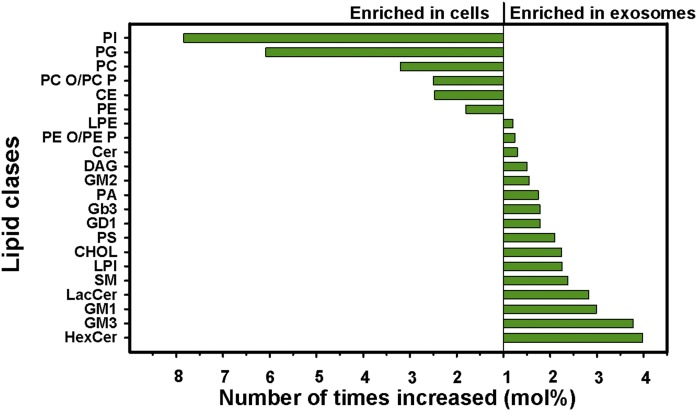
“Notably, the membranes of most EVs show lower phosphatidylcholine (PC) and phosphatidylinositol (PI) content than their cells of origin, but contain similar levels of phosphatidylethanolamine (PE) [156].”
BackgroundYakovlev, V. A., Lapato, D. M., Rana, P., Ghosh, P., Frye, R., & Roberson‐Nay, R. (2024) · Translational Psychiatry · doi:10.1038/s41398-024-02874-3 · Cited by 12
“Thus, miRNA expression may hold great potential to elucidate pathways to alcohol-induced brain alterations and damage [31, 32].”
BackgroundYao, Y., Yang, Y., Ji, M. H., Qin, Q., Xu, K., Xia, Z., Liu, H., Yuan, L., Yuan, Y., Qin, L., et al. (2024) · MedComm · doi:10.1002/mco2.621 · Cited by 12
“41 It has been shown that miRNAs in exosomes is a key intercellular messenger in lung that can serve as a regulator of inter-cellular communication, mediates of immune, untimely promoting the progression of asthma.”
BackgroundOkuyan, H. M., Coşkun, A., & Begen, M. A. (2025) · Life Sciences · doi:10.1016/j.lfs.2024.123365 · Cited by 10
Post-Secretion Processes and Modification of Extracellular Vesicles
Ten, A., Yudintceva, N. M., Samochernykh, K. A., Combs, S. E., Jha, H. C., Gao, H., & Shevtsov, M. A. (2025) · Cells · doi:10.3390/cells14060408 · Cited by 10
“In addition, increased levels of cardiolipin were found in exosomes, suggesting the contribution of mitophagy to the release of these EVs [19].”
Exosomal biomarkers: A novel frontier in the diagnosis of gastrointestinal cancers
Zhang, Y., Yue, N.-N., Chen, L., Tian, C., Yao, J., Wang, L., Liang, Y., Wei, D.-R., Ma, H., & Li, D. (2025) · World Journal of Gastrointestinal Oncology · doi:10.4251/wjgo.v17.i4.103591 · Cited by 10
Picatoste, B., Guamán, H. M., Herrero-Matesanz, M., Piñeres, L. V., & Benito‐Martín, A. (2025) · Seminars in Cancer Biology · doi:10.1016/j.semcancer.2025.09.003 · Cited by 11
An, W., Jin, Z., & Li, Y. (2026) · Frontiers in Neurology · doi:10.3389/fneur.2025.1708655 · Cited by 12
Decoding the Role of Lipid Metabolism and Membrane Dynamics in Melanoma
Pisanu, M. E., Iorio, E., Facchiano, F., Chirico, M., Scattoni, M. L., & Tabolacci, C. (2026) · International Journal of Molecular Sciences · doi:10.3390/ijms27041715 · Cited by 10
“These lipids impart essential biophysical properties to the exosomes, including membrane curvature, rigidity, and stability [124].”
Advances in Exosomal microRNAs and Proteins in Ovarian Cancer Diagnosis, Prognosis, and Treatment
Qin, T., Chen, F., Zhu, J., Ding, Y., & Zhang, Q. (2022) · Current Molecular Medicine · doi:10.2174/1566524022666220628160009 · Cited by 10
IGFBP6 regulates extracellular vesicles formation via cholesterol abundance in MDA-MB-231 cells
Shkurnikov, M. Y., Averinskaya, D. A., Stekolshchikova, E., Serkina, A., Razumovskaya, A. V., Silkina, M. O., Antipenko, I. D., Makarova, J. A., Evtushenko, E. A., Nikulin, S. V., et al. (2024) · Biochimie · doi:10.1016/j.biochi.2024.06.011 · Cited by 10
Luan, X., Wang, X., Bian, G., Li, X., Gao, Z., Liu, Z., Zhang, Z., Han, T., Zhao, J., Zhao, H., et al. (2024) · Oncology Reports · doi:10.3892/or.2024.8846 · Cited by 15
The roles and therapeutic approaches of MSC-derived exosomes in colorectal cancer
Yang, J., & Zhang, L. (2022) · Clinical & Translational Oncology · doi:10.1007/s12094-021-02750-2 · Cited by 11
“Cholesterol, hexosylceramides, sphingomyelin, phosphatidylserine, and saturated fatty acids (SFA) are lipid components of the exosomes membrane [50].”
BackgroundHanbouch, L., Schaack, B., Kasri, A., Fontaine, G., Gkanatsiou, E., Brinkmalm, G., Camporesi, E., Portelius, E., Blennow, K., Mourier, G., et al. (2022) · Molecular Neurobiology · doi:10.1007/s12035-022-03025-9 · Cited by 12
“We then assessed binding of these synthetic peptides to exosomes known to have membranes enriched in cholesterol playing a crucial role in the formation and release of exosomes [30, 31].”
MethodMitani, F., Hayasaka, R., Hirayama, A., & Oneyama, C. (2022) · Biological and Pharmaceutical Bulletin · doi:10.1248/bpb.b22-00560 · Cited by 10
Exosomal microRNAs and long noncoding RNAs: as novel biomarkers for endometriosis
Fard, E. S., Asadi, M., Taghvimi, S., Vafadar, A., Vosough, P., Tajbakhsh, A., & Savardashtaki, A. (2023) · Cell and Tissue Research · doi:10.1007/s00441-023-03802-5 · Cited by 12
“② During maturation, cargo RNAs, proteins, and lipids direct into forming vesicles and sort into ILVs via ESCRT-dependent or independent pathways, and ③ ILV maturation gives rise to MVBs. ④ Later, MVBs either fuse with lysosomes and their contents are degraded or move along microtubules and are released from the cell…”
BackgroundInfluentialCholera Toxin Subunit B for Sensitive and Rapid Determination of Exosomes by Gel Filtration
Sapoń, K., Maziarz, D., Janas, T., Sikorski, A. F., & Janas, T. (2020) · Membranes · doi:10.3390/membranes10080172 · Cited by 10
“43 mol% of total lipids [14], and membrane proteins cover ca.”
BackgroundKoide, N., Fujita, K., Kuroda, S., & Hinuma, S. (2021) · Biochimica et Biophysica Acta (BBA) - Molecular Cell Research · doi:10.1016/j.bbamcr.2021.119043 · Cited by 10
Xu, X.-Q., Zhang, B., Guo, L., Liu, Y., Meng, F., Wang, X., Hu, W., Khan, A. I., & Ho, W. (2021) · Journal of Innate Immunity · doi:10.1159/000514886 · Cited by 10
Differential lipidomics of HK-2 cells and exosomes under high glucose stimulation
Wang, W., Li, T., Li, Z., Wang, H., & Liu, X. (2022) · International Journal of Medical Sciences · doi:10.7150/ijms.67326 · Cited by 10
Fanelli, M., Petrone, V., Chirico, R., Radu, C. M., Minutolo, A., & Matteucci, C. (2024) · Extracellular Vesicles and Circulating Nucleic Acids · doi:10.20517/evcna.2024.20 · Cited by 10
Dielectrophoresis Low and High Crossover Frequencies of Cancerous Exosomes
Nakano, M., Nakabayashi, R., Koyama, R., Inaba, M., & Suehiro, J. (2025) · Electrophoresis · doi:10.1002/elps.8128 · Cited by 10
Milczek-Haduch, D., Żmigrodzka, M., & Witkowska‐Piłaszewicz, O. (2025) · International Journal of Molecular Sciences · doi:10.3390/ijms26094359 · Cited by 10
Donghia, D., Baldassari, S., Drava, G., Ailuno, G., & Caviglioli, G. (2025) · Pharmaceutics · doi:10.3390/pharmaceutics17070841 · Cited by 10
“Exosomes are constituted, to a large extent, of membrane lipids, while only minor amounts of other lipids are captured from the cytosol during the process of exosome formation and release [99].”
InfluentialVasave, R., Bhawale, R., Khan, O., Pardhi, E. R., Rajana, N., Kumari, N. U., Chary, P. S., & Mehra, N. K. (2025) · ACS Applied Bio Materials · doi:10.1021/acsabm.5c00955 · Cited by 10
Col, V. D., Ribas, F. F., & Araldi, R. P. (2025) · Cosmetics · doi:10.3390/cosmetics12050191 · Cited by 10
Xu, H., Zhang, J., & Li, M. (2026) · International Journal of Pharmaceutics X · doi:10.1016/j.ijpx.2026.100530 · Cited by 18
Extracellular vesicles: Focus on peri‐implantation period of pregnancy in pigs
Guzewska, M. M., Szuszkiewicz, J., & Kaczmarek, M. M. (2023) · Molecular Reproduction and Development · doi:10.1002/mrd.23664 · Cited by 9
“EVs, extracellular vesicles. phosphatidylserines, which are among the major constituents of the EV membrane (Skotland et al., 2017, 2019).”
Varela, L., van de Lest, C. H. A., Boere, J., Libregts, S. F. W. M., Lozano−Andrés, E., van Weeren, P. R., & Wauben, M. H. M. (2023) · Biochimica et Biophysica Acta (BBA) - Molecular and Cell Biology of Lipids · doi:10.1016/j.bbalip.2023.159367 · Cited by 10
Small and Large Extracellular Vesicles of Porcine Seminal Plasma Differ in Lipid Profile
Martínez‐Díaz, P., Parra, A., Sánchez‐López, C. M., Casas, J., Lucas, X., Marcilla, A., Roca, J., & Barranco, I. (2024) · International Journal of Molecular Sciences · doi:10.3390/ijms25137492 · Cited by 9
“The lipid content of sEVs has received much less attention than that of proteins or RNAs [10], and quantitative lipidomic studies of EVs are needed [21].”
BackgroundResultInfluentialHuber, D., Kors, T. A., Schütt, L., Hofmann, L., Betzler, A. C., Lotfi, R., Oliveri, F., Schmid, S., Wollenberg, B., Hoffmann, T. K., et al. (2025) · British Journal of Cancer · doi:10.1038/s41416-025-03001-9 · Cited by 9
Skalska, M., Durak-Kozica, M., & Stępień, E. Ł. (2025) · Talanta · doi:10.1016/j.talanta.2025.128582 · Cited by 10
Serratì, S., Palazzo, A., Lapenna, A., Mateos, H., Mallardi, A., Marsano, R. M., Quarta, A., Rosso, M. D., & Azzariti, A. (2021) · Biomolecules · doi:10.3390/biom11121857 · Cited by 9
“The lipid composition seems to be cell-type dependent [14], and up to 540 different lipids, divided into 36 classes and subclasses, have been identified in exosome-like vesicles derived from a single cancer cell line [15].”
BackgroundPossible roles of exosomal miRNAs in the pathogenesis of oral lichen planus.
Li, C., He, H., Wang, J., Xia, X., Zhang, M., & Wu, Q. (2019) · PubMed · Cited by 9
Xuan, Z., Chen, C., Tang, W., Ye, S., Zheng, J., Zhao, Y., Shi, Z., Zhang, L., Sun, H., & Shao, C. (2021) · Frontiers in Cell and Developmental Biology · doi:10.3389/fcell.2021.726535 · Cited by 9
Mesenchymal stem cell- derived exosomes as cell-free therapeutics for sensorineural hearing loss
Perde‐Schrepler, M., Brie, I. C., & Maniu, A. A. (2025) · Biomolecules and Biomedicine · doi:10.17305/bb.2025.11517 · Cited by 9
“Compared to other EVs, exosomes have a more organized lipid structure and greater stability against detergents [79, 80].”
Ruan, K., Zhang, J., Chu, Z., Wang, X., Zhang, X., Liu, Q., & Yang, J. (2025) · International Immunopharmacology · doi:10.1016/j.intimp.2025.114491 · Cited by 8
Le, M. T., Dao, H. H., Nguyen, X., Nguyen, V.-T., Nguyen, T. D., & Than, U. T. T. (2025) · Annals of Medicine · doi:10.1080/07853890.2025.2534851 · Cited by 9
“In addition, the lipid bilayer is adorned with molecular markers that reflect their origin [7], facilitating receptor-mediated recognition and cargo delivery to target cells via membrane fusion or endocytosis [8].”
Gurney, J. P., Ludlow, J. W., Kanegan, M. J. V., & Smith, R. L. (2025) · Frontiers in Pharmacology · doi:10.3389/fphar.2025.1635151 · Cited by 10
“Many studies have demonstrated that EVs are differentially produced and secreted according to the cellular environment (Kowal et al., 2014; Pote and Gacche, 2025; Skotland et al., 2019).”
Decoding Membrane Lipids: Analytical Barriers and Technological Advances in Modern Lipidomics
Kim, K. D., & Yoo, B. C. (2026) · International Journal of Molecular Sciences · doi:10.3390/ijms27031472 · Cited by 9
“Lipidomic analyses have revealed that EV lipid composition is shaped by both bio-genetic pathways and disease state, with cancer-derived EVs often displaying distinct lipid signatures that influence vesicle stability, uptake, and biological activity [61,64].”
Exosomal signaling in cancer metastasis: Molecular insights and therapeutic opportunities
Pote, M. S., & Gacche, R. N. (2024) · Archives of Biochemistry and Biophysics · doi:10.1016/j.abb.2024.110277 · Cited by 8
Vilela, A. F. L., Patrício, M. R., Nobre-Azevedo, P., de Carvalho, J. C. S., Defelippo-Felippe, T. V., Pontes, N. N. H., Rodrigues, D. L., Oliveira, B., Silva-Neto, P. V. D., Nardini, V., et al. (2025) · Talanta · doi:10.1016/j.talanta.2025.127847 · Cited by 8
Recent developments of nanomedicine delivery systems for the treatment of pancreatic cancer
Rezaei, N., Shahriari, M., & Mehrnejad, F. (2022) · Journal of Drug Delivery Science and Technology · doi:10.1016/j.jddst.2022.104042 · Cited by 9
Microfluidic Chips Fabrication and Integration for Tumor‐Derived Exosomes Detection
Wu, Y., Sun, Z., Gao, F., Wang, Y., & Jiang, Y. (2023) · Advanced Materials Technologies · doi:10.1002/admt.202300357 · Cited by 8
Extracellular Particles as Carriers of Cholesterol Not Associated with Lipoproteins
Landa, S., Verlov, N., Fedorova, N., Filatov, M., Pantina, R., Burdakov, V., Varfolomeeva, E., & Emanuel, V. (2022) · Membranes · doi:10.3390/membranes12060618 · Cited by 9
“They are a group of subcellular extracellular vesicles formed during the decay of dying cells [15,16].”
BackgroundYao, X., Liao, B., Chen, F., Liu, L., Wu, K., Hao, Y., Li, Y., Wang, Y., Fan, R., Yin, J., et al. (2023) · Frontiers in Bioengineering and Biotechnology · doi:10.3389/fbioe.2023.1108952 · Cited by 8
“EVs contain proteins, nucleic acids, and metabolites (Skotland et al., 2019), play an important role in intracellular and intercellular communication, and participate in various physiological and pathological processes (Théry et al.”
BackgroundTemozolomide and flavonoids against glioma: from absorption and metabolism to exosomal delivery
Verma, P., Joshi, H., Singh, T., Sharma, B., Sharma, U., Ramniwas, S., Rana, R., Gupta, M., Kaur, G., & Tuli, H. S. (2023) · Naunyn-Schmiedeberg s Archives of Pharmacology · doi:10.1007/s00210-023-02660-w · Cited by 8
“…lipid contents are crucial and conserved for the maintenance of exosome form, exosome synthesis, and management of homeostasis in recipient cells (Skotland et al. 2019). mRNAs and non-coding RNAs such circRNAs, lncRNAs, miRNAs, small nuclear RNAs, small nucleolar RNAs, tRNAs, rRNAs, and…”
Coagulation Activity of Membrane Microparticles
Antonova, O. A., Yakushkin, V. V., & Mazurov, A. V. (2019) · Biochemistry (Moscow) Supplement Series A Membrane and Cell Biology · doi:10.1134/s1990747819030036 · Cited by 8
Diagnostic methods for pancreatic cancer and their clinical applications (Review)
Zhao, J., Wang, J., Gu, Y., Huang, X., & Wang, L. (2025) · Oncology Letters · doi:10.3892/ol.2025.15116 · Cited by 9
“…are differences in the types of proteins studied, the aforementioned studies indirectly suggest that exosomal membranes and contained proteins could serve as potential diagnosis biomarkers for PC. Exosomes contain rich and complex lipid components such as cholesterol, sphingolipids and PS (156).”
Li, Q., Li, B., Zhang, Q., Chen, D., Yuan, S., Jing, H., Li, H., Guan, W., & Zhang, S. (2025) · Journal of Extracellular Vesicles · doi:10.1002/jev2.70143 · Cited by 8
“Consistent with previous studies (Skotland et al. 2019; Haraszti et al. 2016), L. johnsonii -derived EVs were enriched in glycerophospholipids (GP), sphingolipids (SP) and sterol lipids (ST) (Figure 8A).”
Optical biosensors for detection of exosomes
Vafadar, A., Maleki, M., Ehtiati, S., Moghadam, H. Z., & Savardashtaki, A. (2025) · Clinica Chimica Acta · doi:10.1016/j.cca.2025.120704 · Cited by 7
Zhao, L.-X., Wang, E.-T., Jia, W.-H., Wang, M.-H., Pan, Z., Dong, L., Wen, H.-Q., Xu, W.-H., & Xu, R. (2026) · International Journal of Nanomedicine · doi:10.2147/ijn.s577306 · Cited by 8
“101 In exosomes from different sources, the abundance of these lipids varies.”
Hsia, T., & Chen, Y. (2024) · European Journal of Pharmaceutics and Biopharmaceutics · doi:10.1016/j.ejpb.2024.114234 · Cited by 7
Biagini, D., Mrakic‐Sposta, S., Bondi, D., Ghimenti, S., Lenzi, A., Vivaldi, F. M., Santangelo, C., Verratti, V., Pietrangelo, T., Vezzoli, A., et al. (2024) · Talanta · doi:10.1016/j.talanta.2024.126619 · Cited by 7
Pande, K., Bettadaiah, B. K., & Kannan, A. (2024) · Cancer Nanotechnology · doi:10.1186/s12645-024-00286-y · Cited by 7
“These results confirmed the exosomes isolated from curd by an appropriate procedure with promising representation in the similar manner mentioned in previous reports (Fakhredini et al. 2022; Skotland et al. 2019; Liangsupree et al. 2022).”
ResultNan, F., Liu, B., & Yao, C. (2024) · Molecular Genetics and Genomics · doi:10.1007/s00438-024-02199-2 · Cited by 7
“These exosomal RNAs play a role in processes like gene expression, cell cycle regulation, and epigenetic modifications (Donoso-Quezada et al. 2021; Skotland et al. 2019, 2017).”
Exosomal long non-coding RNAs in lung cancer: A review
Jiang, J., Lin, F., Wu, W., Zhang, Z., Zhang, C., Qin, D., & Xu, Z. (2024) · Medicine · doi:10.1097/md.0000000000038492 · Cited by 7
CircRNAs in extracellular vesicles associated with triple-negative breast cancer
Qurtam, A. A. (2025) · Cellular and Molecular Biology · doi:10.14715/cmb/2024.70.12.14 · Cited by 7
“Membrane lipid rafts play pivotal roles in this process, with cholesterol, ceramide, and sphingoli - pids, along with proteins like tetraspanins, caveolins, and flotillins, contributing significantly [23,24].”
Circulating exosomes with unique lipid signature in relapsing remitting multiple sclerosis
Palazzo, C., Asci, I., Russo, S., Buccoliero, C., Mangialardi, V., Abbrescia, P., Valente, O., Ruggieri, M., Paolicelli, D., Lobasso, S., et al. (2025) · Frontiers in Cellular Neuroscience · doi:10.3389/fncel.2025.1613618 · Cited by 7
Cocaine Induces Sex-Associated Changes in Lipid Profiles of Brain Extracellular Vesicles
Landfield, Q., Saito, M., Hashim, A., Canals‐Baker, S., Sershen, H. W., Levy, E., & Saito, M. (2021) · Neurochemical Research · doi:10.1007/s11064-021-03395-x · Cited by 7
Exosomal Cargo in Ovarian Cancer Dissemination
Dzhugashvili, E., & TAMKOVICH, S. N. (2023) · Current Issues in Molecular Biology · doi:10.3390/cimb45120615 · Cited by 7
“Furthermore, the exosomes’ lipid composition exhibits greater detergent resistance when compared to other extracellular vesicles [45].”
BackgroundRamezani, A., Tafazoli, A., Salimi, F., Ghavami, M., Arjmandi, H., Khalesi, B., Hashemi, Z. S., & Khalili, S. (2024) · Archives of Biochemistry and Biophysics · doi:10.1016/j.abb.2024.109994 · Cited by 8
Jiang, Y., Lv, H., Shen, F., Fan, L., Zhang, H., Huang, Y., Liu, J., Wang, D., Pan, H., & Yang, J. (2024) · Frontiers in Bioengineering and Biotechnology · doi:10.3389/fbioe.2024.1363780 · Cited by 8
Dracheva, K. V., Pobozheva, I. A., Anisimova, K. A., Panteleeva, A. A., Garaeva, L. A., Баландов, С. Г., Михайловна, Х. З., Vasilevsky, D. I., Pchelina, S., & Мирошникова, В. В. (2024) · International Journal of Molecular Sciences · doi:10.3390/ijms25126457 · Cited by 7
“Additionally, AT EVs are enriched with lipids—fatty acids, triacylglycerols (TAGs), and cholesterol [10].”
BackgroundVarela, L., van de Lest, C. H. A., van Weeren, P. R., & Wauben, M. H. M. (2024) · Extracellular Vesicles and Circulating Nucleic Acids · doi:10.20517/evcna.2024.14 · Cited by 7
Harnessing the Therapeutic Potential of Mesenchymal Stem Cells in Cancer Treatment
Kangari, P., Salahlou, R., & Vandghanooni, S. (2024) · Advanced Pharmaceutical Bulletin · doi:10.34172/apb.2024.052 · Cited by 7
Obesity and atherosclerosis: the exosome link
Reiss, A. B., Glass, D. S., Voloshyna, I., Glass, A. D., Kasselman, L. J., & Leon, J. D. (2020) · Vessel Plus · doi:10.20517/2574-1209.2020.04 · Cited by 8
“These exosome components are encased in a phospholipid membrane rich in ceramides, cholesterol and sphingomyelin, often with high phosphatidylserine content([71-73]).”
Background
Metadata
- Authors
- Skotland, T., Hessvik, N. P., Sandvig, K., & Llorente, A.
- Affiliations
- Oslo University Hospital (NO)
- Corresponding author
- Llorente, Alicia
- Venue
- Journal of Lipid Research
- Publisher
- Elsevier BV
- Published
- 2019-01
- Volume
- 60
- Issue
- 1
- Pages
- 9-18
- ISSN
- 0022-2275 (ISSN-L)
- PMC
- PMC6314266
- OpenAlex
- W2887269406
- Cited by
- 730
- References
- 103
- Citations by year
- 2026: 74 · 2025: 120 · 2024: 112 · 2023: 115 · 2022: 104 · 2021: 102 · 2020: 69 · 2019: 34
- FWCI
- 5.03
- Type
- journal article
- Language
- en
- Open access
- hybrid
- doi.org
- Licence
- cc-by
- www.elsevier.com/tdm/userlicense/1.0/ (tdm)
- creativecommons.org/licenses/by/4.0/ (vor, 624 d)
- Locations
- Journal of Lipid Research (publishedVersion, cc-by)
- Europe PMC (PubMed Central) (publishedVersion, cc-by)
- PubMed Central (publishedVersion, cc-by)
- PubMed (publishedVersion)
- DOAJ (DOAJ: Directory of Open Access Journals) (submittedVersion, cc-by-sa)
- NORA - Norwegian Open Research Archives (submittedVersion, cc-by)
- Funders
- Norwegian Cancer Society
- Norwegian Research Council
- Southern and Eastern Norway Regional Health Authority
- Topics
- Life Sciences › Biochemistry, Genetics and Molecular Biology › Molecular Biology › Extracellular vesicles in disease
- Life Sciences › Biochemistry, Genetics and Molecular Biology › Cell Biology › Cellular transport and secretion
- Life Sciences › Biochemistry, Genetics and Molecular Biology › Molecular Biology › Lipid Membrane Structure and Behavior
- Keywords
- exosomes, extracellular vesicles, lipid composition, ether lipids, phosphoinositides, exosome secretion, cholesterol, sphingomyelin, phosphatidylserine, multivesicular bodies, lipidomics, secretory autophagy, membrane trafficking
- MeSH terms
- Animals, Ether, Humans, Phosphatidylinositols, Exosomes
About these checks
Registry, retraction, Cites and statistics results are computed, not judged, with one exception: a printed reference that no index lists is read once by a model before it counts as a citation error. Claims are extracted by a model and kept only when their quote appears verbatim in the text; each cited source is then checked, with a model’s help, for whether it says what the claim relies on. Those verdicts can be wrong — read the claim’s quote and the cited source before relying on one.
Statistics and arithmetic are recomputed, not judged.
Confidence bands are shown only for fields calibrated on our annotated test set. None is calibrated yet, so no band is shown.
What counts as a claim ›How we measure confidence ›How we check this ›
Are you an author, or do you see a problem with this page? Request a review
Data sources
Bibliographic data: Semantic Scholar, OpenAlex, Crossref.
Contains information from the Semantic Scholar Academic Graph Datasets, made available under the ODC Attribution License (ODC-BY 1.0).
Semantic Scholar’s data is described in: Kinney, R., et al. (2023). The Semantic Scholar Open Data Platform. arXiv:2301.10140.
