

Exosomal lipid composition and the role of ether lipids and phosphoinositides in exosome biology
Open accessThe DOI matches its Crossref record; 102 of the 103 references it cites were found in a registry or an index.
Abstract
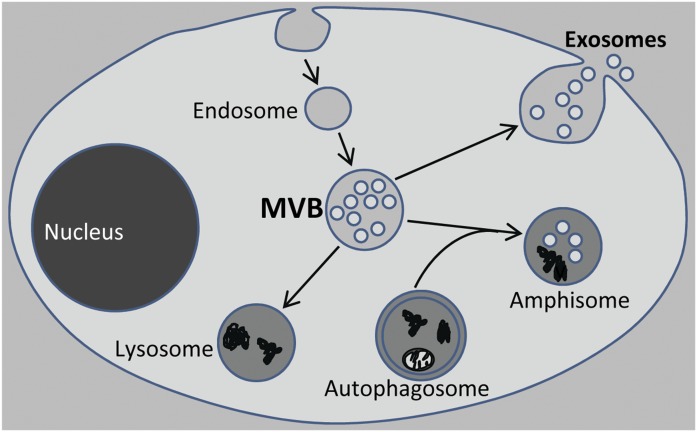
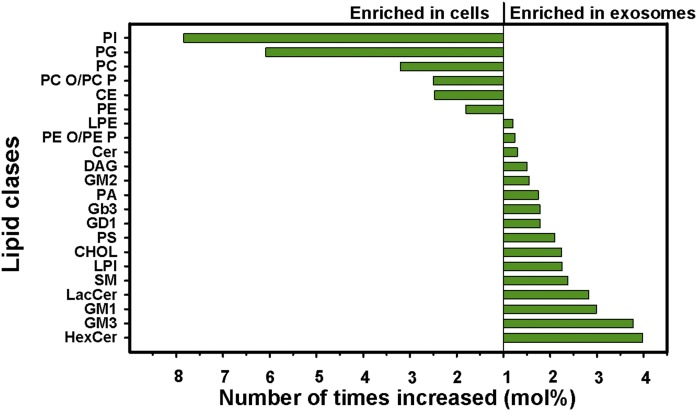
Exosomes are a type of extracellular vesicle released from cells after fusion of multivesicular bodies with the plasma membrane. These vesicles are often enriched in cholesterol, SM, glycosphingolipids, and phosphatidylserine. Lipids not only have a structural role in exosomal membranes but also are essential players in exosome formation and release to the extracellular environment. Our knowledge about the importance of lipids in exosome biology is increasing due to recent technological developments in lipidomics and a stronger focus on the biological functions of these molecules. Here, we review the available information about the lipid composition of exosomes. Special attention is given to ether lipids, a relatively unexplored type of lipids involved in membrane trafficking and abundant in some exosomes. Moreover, we discuss how the lipid composition of exosome preparations may provide useful information about their purity. Finally, we discuss the role of phosphoinositides, membrane phospholipids that help to regulate membrane dynamics, in exosome release and how this process may be linked to secretory autophagy. Knowledge about exosome lipid composition is important to understand the biology of these vesicles and to investigate possible medical applications.
Overview
The claims and statistics of this paper haven’t been checked yet.
Free: it reads the open-access text and checks the first 5 claims that cite a source we can check. Create a free account to check every claim.
Integrity signals
Registry
Cites
Statistics
Figures
Verification
Claims the paper makes
The claims and statistics of this paper haven’t been checked yet.
Free: it reads the open-access text and checks the first 5 claims that cite a source we can check. Create a free account to check every claim.
Claims other papers make about this one
Each is checked against this paper’s own text: does it say what the citing paper says it does?
The source backs part of the claim, not all of it — or backs it for a different population, condition or comparison.
In the citing paper
“pSIVA is a polarity-sensitive indicator of viability and apoptosis that binds to externalized phosphatidylserine and is a sensor for exosome-like vesicles, which are frequently characterized by an abundance of cholesterol, glycosphingolipids, and phosphatidylserine [69].”
From Abnormal accumulation of extracellular vesicles in hippocampal dystrophic axons and regulation by the primary cilia in Alzheimer's disease (2023) · cites this paper as [69]
Experimental — accuracy not yet measured
Self-check
Percentages, sums and reported differences re-computed from the paper’s own numbers.
The self-check needs the paper’s full text.
Citations
Cites
Shedding light on the cell biology of extracellular vesicles
van Niel, G., D'Angelo, G., & Raposo, G. (2018) · Nature Reviews Molecular Cell Biology · doi:10.1038/nrm.2017.125 · Cited by 8,369
Membrane lipids: where they are and how they behave
van Meer, G., Voelker, D. R., & Feigenson, G. W. (2008) · Nature Reviews Molecular Cell Biology · doi:10.1038/nrm2330 · Cited by 7,157
Biogenesis, Secretion, and Intercellular Interactions of Exosomes and Other Extracellular Vesicles
Colombo, M., Raposo, G., & Théry, C. (2014) · Annual Review of Cell and Developmental Biology · doi:10.1146/annurev-cellbio-101512-122326 · Cited by 6,186
Biological properties of extracellular vesicles and their physiological functions
Yáñez‐Mó, M., Siljander, P. R. ‐., Andreu, Z., Bedina Zavec, A., Borràs, F. E., Buzas, E. I., Buzas, K., Casal, E., Cappello, F., Carvalho, J., et al. (2015) · Journal of Extracellular Vesicles · doi:10.3402/jev.v4.27066 · Cited by 5,926
Self-citationIsolation and Characterization of Exosomes from Cell Culture Supernatants and Biological Fluids
Théry, C., Amigorena, S., Raposo, G., & Clayton, A. (2006) · Current Protocols in Cell Biology · doi:10.1002/0471143030.cb0322s30 · Cited by 5,766
Ceramide Triggers Budding of Exosome Vesicles into Multivesicular Endosomes
Trajkovic, K., Hsu, C., Chiantia, S., Rajendran, L., Wenzel, D., Wieland, F., Schwille, P., Brügger, B., & Simons, M. (2008) · Science · doi:10.1126/science.1153124 · Cited by 3,627
Communication by Extracellular Vesicles: Where We Are and Where We Need to Go
Tkach, M., & Théry, C. (2016) · Cell · doi:10.1016/j.cell.2016.01.043 · Cited by 3,444
Phosphoinositides in cell regulation and membrane dynamics
Di Paolo, G., & De Camilli, P. (2006) · Nature · doi:10.1038/nature05185 · Cited by 2,790
Current knowledge on exosome biogenesis and release
Hessvik, N. P., & Llorente, A. (2018) · Cellular and Molecular Life Sciences · doi:10.1007/s00018-017-2595-9 · Cited by 2,362
Self-citationHuotari, J., & Helenius, A. (2011) · The EMBO Journal · doi:10.1038/emboj.2011.286 · Cited by 2,265
Cited by
Items 301–400 of 774
Fukuta, T., Ikeda-Imafuku, M., Kodama, S., Kuse, J., Matsui, K., & Iwao, Y. (2023) · Pharmaceuticals · doi:10.3390/ph16010108 · Cited by 24
“of phospholipids such as sphingomyelin, phosphatidylcholine, and phosphatidylserine, whose percentages depend on the specific cellular species [47,48].”
BackgroundExosomes target HBV-host interactions to remodel the hepatic immune microenvironment
Wu, X., Niu, J., & Shi, Y. (2024) · Journal of Nanobiotechnology · doi:10.1186/s12951-024-02544-y · Cited by 22
“Exosomal membranes have a stable phospholipid bilayer featuring higher levels of sphingolipids, unsaturated lipids, and cholesterol than cell membranes [32, 33].”
BackgroundProtocols for Enzymatic Fluorometric Assays to Quantify Phospholipid Classes
Morita, S., Tsuji, T., & Terada, T. (2020) · International Journal of Molecular Sciences · doi:10.3390/ijms21031032 · Cited by 22
“On the other hand, the roles of phospholipids in the bioactivities and fates of extracellular vesicles remain largely unknown, although several studies have analyzed the phospholipid composition of exosomes [51,52].”
BackgroundWhitehead, B. J., Boysen, A. T., Mardahl, M., & Nejsum, P. L. (2020) · International Journal for Parasitology · doi:10.1016/j.ijpara.2020.03.012 · Cited by 24
Kamiya, K., Osaki, T., & Takeuchi, S. (2020) · Sensors and Actuators B Chemical · doi:10.1016/j.snb.2020.128917 · Cited by 22
Askenase, P. W. (2021) · RNA Biology · doi:10.1080/15476286.2021.1885189 · Cited by 25
Engin, A. (2021) · Advances in experimental medicine and biology · doi:10.1007/978-3-030-49844-3_4 · Cited by 21
Kurano, M., Jubishi, D., Okamoto, K., Hashimoto, H., Sakai, E., Morita, Y., Saigusa, D., Kano, K., Aoki, J., Harada, S., et al. (2022) · Journal of Biomedical Science · doi:10.1186/s12929-022-00880-5 · Cited by 21
“Although modulations of the urinary PS levels in AKI have not been reported, considering that PS is involved in apoptosis [39] and exosome formation [59], the elevation of PS in COVID-19-associated kidney injuries seems reasonable.”
BackgroundZhou, C., Huang, Y., Da, M., Jin, W., & Zhou, F. (2023) · Discover Oncology · doi:10.1007/s12672-023-00704-4 · Cited by 22
“EV lipids are important for tumors to look the way they’re supposed to, but they may also serve as signal molecules in many biological processes [171].”
BackgroundZhou, Y. L., Dong, Y., Zhang, A., Wu, J., & Sun, Q. (2023) · Frontiers in Bioengineering and Biotechnology · doi:10.3389/fbioe.2023.1214190 · Cited by 22
“The rigid bilayer membrane of the exosomes contains lipid components such as sphingomyelin, cholesterol, and ceramides, which are functionally involved in exosome secretion, structure, and signaling (Skotland et al., 2019).”
BackgroundCurrent progress and prospect of microfluidic-based exosome investigation
Wang, Y., Bao, Y., Liang, Y.-X., Chen, Y.-J., Huang, W., & Xie, M. (2023) · TrAC Trends in Analytical Chemistry · doi:10.1016/j.trac.2023.117310 · Cited by 22
Recent progress in engineered extracellular vesicles and their biomedical applications
Mazahir, F., & Yadav, A. K. (2024) · Life Sciences · doi:10.1016/j.lfs.2024.122747 · Cited by 21
LRRK2 kinase activity regulates Parkinson’s disease-relevant lipids at the lysosome
Maloney, M. T., Wang, X., Ghosh, R., Andrews, S. V., Maciuca, R. D., Masoud, S. T., Agam, M. R., Caprioli, R. M., Astarita, G., Bondar, V. V., et al. (2025) · Molecular Neurodegeneration · doi:10.1186/s13024-025-00880-7 · Cited by 21
“BMP and GSLs are enriched in ILVs within multivesicular bodies (MVBs) and can be secreted into the extracellular space when MVBs fuse with the plasma membrane in the form of exosomes [52].”
Emerging role of extracellular vesicles in the regulation of skeletal muscle adaptation
Vechetti, I. J. (2019) · Journal of Applied Physiology · doi:10.1152/japplphysiol.00914.2018 · Cited by 22
Scanning densitometry and mass spectrometry for HPTLC analysis of lipids: The last 10 years
Cebolla, V. L., Jarne, C., Vela, J., Garriga, R., Membrado, L., & Galbán, J. (2021) · Journal of Liquid Chromatography & Related Technologies · doi:10.1080/10826076.2020.1866600 · Cited by 21
“SQ-related error may be assumable taking into account that uncertainties around 10% were considered acceptable in lipidomic ESI-MS quantification,([103]) or between 5% and 15% (or even greater) for most lipid species analyzed in exosomes.([104,105]) Errors come from sampling, sample preparation, use of normalizers, in…”
BackgroundPark, M., Kim, J. W., Kim, K. M., Kang, S., Kim, W., Kim, J.-K., Cho, Y., Lee, H., Baek, M. C., Bae, J.-H., et al. (2021) · Cancer Research · doi:10.1158/0008-5472.can-20-3320 · Cited by 22
“Among the various lipid components, we focused on PS, which is the fourth most abundant and most negatively charged lipid of small EVs (16).”
BackgroundSancho‐Albero, M., Jarne, C., Savirón, M., Martín‐Duque, P., Membrado, L., Cebolla, V. L., & Santamaría, J. (2022) · International Journal of Molecular Sciences · doi:10.3390/ijms23031150 · Cited by 22
“In this regard, uncertainties around 10% are usually considered acceptable in general lipidomic analysis using the gold standard electrospray (ESI)-Mass Spectrometry (MS) quantification [3], and uncertainties between 5% and 15% (or even greater) were obtained for most lipid species analyzed in exosomes by different me…”
MethodCurrent perspectives on clinical use of exosomes as novel biomarkers for cancer diagnosis
Yi, X., Chen, J., Huang, D., Feng, S., Yang, T., Li, Z., Wang, X., Zhao, M., Wu, J., & Zhong, T. (2022) · Frontiers in Oncology · doi:10.3389/fonc.2022.966981 · Cited by 21
Jang, J., Yeo, S., Baek, S., Jung, H. J., Lee, M. S., Choi, S. H., & Choe, Y. (2023) · Acta Neuropathologica Communications · doi:10.1186/s40478-023-01637-3 · Cited by 20
“pSIVA is a polarity-sensitive indicator of viability and apoptosis that binds to externalized phosphatidylserine and is a sensor for exosome-like vesicles, which are frequently characterized by an abundance of cholesterol, glycosphingolipids, and phosphatidylserine [69].”
BackgroundLee, Y. J., Park, M., Kim, H., Kim, J., Kim, W., Lim, S., & Kang, K. W. (2022) · Acta Pharmacologica Sinica · doi:10.1038/s41401-022-01029-8 · Cited by 20
“The membrane-lipid composition of csEVs secreted by diverse cell types differs from that of parent cells in their enrichment factors, containing two to three times more PS compared to parent cells [17].”
BackgroundShi, Y., Fang, Y., Tian, T., Chen, W., Sun, Q., Guo, F.-Q., Gong, P.-Q., Li, C., Wang, H., Hu, Z., et al. (2023) · Journal of Translational Medicine · doi:10.1186/s12967-023-04249-6 · Cited by 20
“EVs, generated by all cells, can deliver multiple miRNA, lncRNA, DNA fragments, and proteins as stable cargos enveloped in their lipid bilayer membranes [10, 11].”
BackgroundUtilizing extracellular vesicles as a drug delivery system in glaucoma and RGC degeneration
Durmaz, E., Dribika, L., Kutnyanszky, M., & Mead, B. (2024) · Journal of Controlled Release · doi:10.1016/j.jconrel.2024.06.029 · Cited by 23
Relationship between exosomes and cancer: formation, diagnosis, and treatment
Huang, C., Li, J., Xie, Z., Hu, X., & Huang, Y. (2024) · International Journal of Biological Sciences · doi:10.7150/ijbs.95763 · Cited by 23
Cocaine‐Specific Effects on Exosome Biogenesis in Microglial Cells
Kumar, S., Crenshaw, B. J., Williams, S. D., Bell, C. R., Matthews, Q. L., & Sims, B. (2021) · Neurochemical Research · doi:10.1007/s11064-021-03231-2 · Cited by 20
Exosomes in Cerebral Ischemia-Reperfusion Injury: Current Perspectives and Future Challenges
Zhou, C., Zhou, F., He, Y., Liu, Y., & Cao, Y. (2022) · Brain Sciences · doi:10.3390/brainsci12121657 · Cited by 20
“Specifically, lipids rich in exosomes, such as cholesterol, ceramide, and sphingomyelin, are essential for the membrane structure of exosomes as well as exosome secretion [21].”
BackgroundExtracellular vesicles in the retina - putative roles in physiology and disease
Kalargyrou, A. A., Guilfoyle, S. E., Smith, A. J., Ali, R. R., & Pearson, R. A. (2023) · Frontiers in Molecular Neuroscience · doi:10.3389/fnmol.2022.1042469 · Cited by 22
Role of Exosomal miR ‐223 in Chronic Skeletal Muscle Inflammation
Tian, Y. Y., Wang, T., Bu, H., Shao, G., Zhang, W., & Zhang, L. (2022) · Orthopaedic Surgery · doi:10.1111/os.13232 · Cited by 20
Alberti, G., Russo, E., Corrao, S., Anzalone, R., Kružliak, P., Miceli, V., Conaldi, P. G., Gaudio, F. D., & Rocca, G. L. (2022) · Biomedicines · doi:10.3390/biomedicines10112822 · Cited by 20
Tuluwengjiang, G., Rasulova, I., Ahmed, S., Kiasari, B. A., Sârbu, I., Ciongradi, C. I., Omar, T. M., Hussain, F., Jawad, M. J., Castillo-Acobo, R. Y., et al. (2024) · Pathology - Research and Practice · doi:10.1016/j.prp.2024.155097 · Cited by 20
RetractedAn Overview of Exosomes in Cancer Therapy: A Small Solution to a Big Problem
Rodrigues, P., Melim, C., Veiga, F., & Figueiras, A. (2020) · Processes · doi:10.3390/pr8121561 · Cited by 20
“According to studies, in comparison with their parent cells, exosomes are usually enriched 2–3 times more in sphingomyelin, cholesterol, phosphatidylserine and glycosphingolipids, with values varying with each type of originating cell [32,34].”
BackgroundExtracellular Vesicles in Viral Pathogenesis: A Case of Dr. Jekyll and Mr. Hyde
Purvinsh, L. V., Gorshkov, A. N., Brodskaia, A. V., & Vasin, A. V. (2021) · Life · doi:10.3390/life11010045 · Cited by 21
“Phosphatidylethanolamine (PE) Lower content then in cells Phosphatidylcholine (PC) Phosphatidylinositol (PI) Diacylglycerol [60,61] +Biologically active lipids”
BackgroundCeramide Composition in Exosomes for Characterization of Glioblastoma Stem-Like Cell Phenotypes
de Mera, R. M. M.-F., Villaseñor, A., Rojo, D., Carrión-Navarro, J., Gradillas, A., Ayuso‐Sacido, Á., & Barbas, C. (2022) · Frontiers in Oncology · doi:10.3389/fonc.2021.788100 · Cited by 19
“Lipids not only have a structural role in the exosome membrane but also are key players in their formation and signaling in both the producer and recipient cells (35).”
BackgroundJin, Y., Zhang, Y., Song, M., Zhou, J., Zhang, H., & Ding, Y. (2026) · Cell Biomaterials · doi:10.1016/j.celbio.2025.100344 · Cited by 24
Gangadaran, P., Gunassekaran, G. R., Rajendran, R. L., Oh, J. M., Vadevoo, S. M. P., Lee, H., Hong, C. M., Lee, B.-H., Lee, J., & Ahn, B. (2022) · Biomedicines · doi:10.3390/biomedicines10081978 · Cited by 19
Conformational alteration in glycan induces phospholipase Cβ1 activation and angiogenesis
Wang, S., Cheng, J., Tsai, H., Lo, T.-C., Hung, J., Lin, C., Lee, C., Ho, Y., Kuo, H.-H., Yu, A. L.-T., et al. (2022) · Journal of Biomedical Science · doi:10.1186/s12929-022-00889-w · Cited by 19
Ekram, S., Khalid, S., Ramzan, F., Salim, A., Bashir, I., Durrieu, M., & Khan, I. (2023) · Cartilage · doi:10.1177/19476035231172154 · Cited by 19
Immune modulation through secretory autophagy
Weigert, A., & Herhaus, L. (2023) · Journal of Cellular Biochemistry · doi:10.1002/jcb.30427 · Cited by 19
“59 Incorporation of distinct RNAs into EVs is a regulated process, as the corresponding proportions inside the donor cell can be vastly distinct.”
Wang, T., Koukoulis, T. F., Vella, L. J., Su, H., Purnianto, A., Nie, S., Ang, C., Ma, G., Korhonen, P. K., Taki, A. C., et al. (2023) · International Journal of Molecular Sciences · doi:10.3390/ijms241310955 · Cited by 18
Moghaddam, M. M., Fazel, P., Fallah, A., Sedighian, H., Kachuei, R., Behzadi, E., & Fooladi, A. A. I. (2023) · Stem Cell Reviews and Reports · doi:10.1007/s12015-023-10594-2 · Cited by 19
“In addition, the lipid bilayer membrane makes it possible to keep exosomes at -80 ℃ after their separation so that their functions are preserved [33, 34].”
BackgroundMa, Y., Hu, X., Karako, K., Song, P., Tang, W., & Xia, Y. (2024) · BioScience Trends · doi:10.5582/bst.2024.01306 · Cited by 23
Xu, F., Zhang, Q., Liu, Y., Tang, R., Li, H., Yang, H., & Lin, L. (2025) · Pharmacological Research · doi:10.1016/j.phrs.2025.107753 · Cited by 18
Feng, C., Wang, X., Tao, Y., Xie, Y., Lai, Z., Li, Z., Hu, J., Tang, S., Pan, L.-X., He, L., et al. (2021) · Cancers · doi:10.3390/cancers13215440 · Cited by 19
Muraki, R., Morita, Y., Ida, S., Kitajima, R., Furuhashi, S., Takeda, M., Kikuchi, H., Hiramatsu, Y., Takanashi, Y., Hamaya, Y., et al. (2023) · Cancer Medicine · doi:10.1002/cam4.5973 · Cited by 22
Extracellular vesicle therapy for obesity-induced NAFLD: a comprehensive review of current evidence
Zhang, J., Ma, B., Wang, Z., Chen, Y., Li, C., & Dong, Y. (2024) · Cell Communication and Signaling · doi:10.1186/s12964-023-01292-0 · Cited by 17
“However, animals-derived EVs are different from PELNVs, they contain cholesterol (CHOL), phosphatidylserine (PS), phosphatidylinositol (PI), which depend on different cell types [36].”
BackgroundMitochondrial cargo export in exosomes: Possible pathways and implication in disease biology
Sharma, A. (2023) · Journal of Cellular Physiology · doi:10.1002/jcp.30967 · Cited by 18
Fitz, N. F., Sahu, A., Yi, L., Ambrosio, F., Lefterov, I. M., & Koldamova, R. P. (2023) · International Journal of Molecular Sciences · doi:10.3390/ijms241612550 · Cited by 18
“It has already been demonstrated in multiple studies that the lipidomic profiles and lipid composition of EVs substantially differ in comparison to those of the parent cells [15,18].”
BackgroundNovel Therapeutic Mechanisms and Strategies for Intracerebral Hemorrhage: Focusing on Exosomes
Jiang, S., Hu, L., Zhou, H., Wu, J., Zhou, J., Yu, X., & Chen, G. (2024) · International Journal of Nanomedicine · doi:10.2147/ijn.s473611 · Cited by 17
Exosome-based cell therapy for diabetic foot ulcers: Present and prospect
Yang, Z., Yang, M.-L., Rui, S., Hao, W., Wu, X., Guo, L. Y., Armstrong, D. G., Yang, C., & Deng, W. (2024) · Heliyon · doi:10.1016/j.heliyon.2024.e39251 · Cited by 18
“The plasma membrane of exosomes is more robust and resistant to degradation than derived cells, probably due to the increased content of cholesterol, sphingolipids, and desaturated lipids [13].”
BackgroundQin, Y., Chen, X., Bao, L., Ren, L., Dou, G., Lian, J., Xing, S., Li, Z., Ding, F., Qin, W., et al. (2025) · Journal of Nanobiotechnology · doi:10.1186/s12951-025-03194-4 · Cited by 18
Unraveling exosome-mediated cancer therapy resistance: pathways and therapeutic challenges
Sonwane, S., Telrandhe, U. B., Chambhare, N., & Vaidya, S. (2025) · Journal of the Egyptian National Cancer Institute · doi:10.1186/s43046-025-00289-9 · Cited by 19
“The composition of lipids in exosomes differs from that in the plasma membrane of the parent cell and is an important player in both exo-some formation and functionality [60].”
Luo, Y., Liu, C., Kirby, J. A., Chu, C., Zang, D., & Chen, J. (2025) · Cancers · doi:10.3390/cancers17132186 · Cited by 17
“Lipid components within EVs include sphingomyelin, phosphatidylserin, phosphatidylinositol, phosphatidic acid, ceramide, and cholesterol [34].”
Davies, B. A., Morton, L. A., Jefferson, J. R., Rozeveld, C. N., Doskey, L. C., LaRusso, N. F., & Katzmann, D. J. (2020) · Molecular Biology of the Cell · doi:10.1091/mbc.e19-03-0133 · Cited by 17
“Exosome bio-genesis has been a topic of intense investigation, revealing roles for a variety of proteins and lipid species (Hessvik and Llorente, 2018; Skotland et al. , 2019).”
Multi-Omics Prognostic Signatures Based on Lipid Metabolism for Colorectal Cancer
Sun, Y., Liu, B., Chen, Y., Xing, Y., & Zhang, Y. (2022) · Frontiers in Cell and Developmental Biology · doi:10.3389/fcell.2021.811957 · Cited by 18
“Phosphatidylserine (PS), the only kind of phospholipid that could regulate the functional state of critical proteins in cell membrane, distributed on the vesicle membrane and participated in the process of related diseases (Skotland et al., 2019; Wodlej et al., 2019).”
BackgroundAl‐Dhalimy, A. M. B., Salim, H. M., Shather, A. H., Naser, I. H., Hizam, M. M., & Alshujery, M. K. (2023) · Pathology - Research and Practice · doi:10.1016/j.prp.2023.154778 · Cited by 17
Stage-dependent changes in oviductal phospholipid profiles throughout the estrous cycle in cattle
Banliat, C., Tomás, D., Teixeira‐Gomes, A., Uzbekova, S., Guyonnet, B., Labas, V., & Saint‐Dizier, M. (2019) · Theriogenology · doi:10.1016/j.theriogenology.2019.06.011 · Cited by 17
Lipidome of extracellular vesicles from Giardia lamblia
Faria, C. P., Ferreira, B., Lourenço, Á., Guerra, I., Melo, T., Domingues, P. M., Domingues, M. R., Cruz, M. T., & Sousa, M. D. C. (2023) · PLoS ONE · doi:10.1371/journal.pone.0291292 · Cited by 17
“At the moment the knowledge about the lipid composition and the function of lipids in EVs is limited [28, 29] and as for now none lipidomic studies in Giardia EVs was described.”
BackgroundYang, Z., Luo, Y., Zhang, F., & Ma, L. (2024) · Cell Division · doi:10.1186/s13008-024-00110-4 · Cited by 17
“Exosomes are nanoscale extracellular vesicles with lipid bilayers containing biomolecules such as DNA, RNA, lipids and proteins that are produced and released from cells [12].”
BackgroundKlemetti, M. M., Pettersson, A. B. V., Khan, A. A., Ermini, L., Porter, T. R., Litvack, M. L., Alahari, S., Zamudio, S., Illsley, N. P., Röst, H. L., et al. (2024) · Journal of Extracellular Vesicles · doi:10.1002/jev2.12413 · Cited by 19
Halipi, V., Sasanian, N., Feng, J., Hu, J., Lubart, Q., Bernson, D., van Leeuwen, D., Ahmadpour, D., Sparr, E., & Esbjörner, E. K. (2024) · ACS Chemical Neuroscience · doi:10.1021/acschemneuro.3c00655 · Cited by 17
Peptide ligands for the universal purification of exosomes by affinity chromatography
Kilgore, R., Moore, B., Sripada, S. A., Chu, W., Shastry, S., Barbieri, E., Hu, S., Tian, W., Petersen, H., Mohammadifar, M. A., et al. (2024) · Biotechnology and Bioengineering · doi:10.1002/bit.28821 · Cited by 17
Current Development of Mesenchymal Stem Cell-Derived Extracellular Vesicles
Zheng, B., Wang, X., Guo, M., & Tzeng, C. (2025) · Cell Transplantation · doi:10.1177/09636897241297623 · Cited by 16
Nishio, M., Teranishi, Y., Morioka, K., Yanagida, A., & Shoji, A. (2019) · Biosensors and Bioelectronics · doi:10.1016/j.bios.2019.111918 · Cited by 17
Mammes, A., Pasquier, J., Mammes, O., Conti, M., Douard, R., & Loric, S. (2021) · World Journal of Gastrointestinal Oncology · doi:10.4251/wjgo.v13.i11.1561 · Cited by 16
The synaptic lipidome in health and disease
Vallés, A. S., & Barrantes, F. J. (2022) · Biochimica et Biophysica Acta (BBA) - Biomembranes · doi:10.1016/j.bbamem.2022.184033 · Cited by 17
Mustonen, A., Lehmonen, N., Paakkonen, T., Raekallio, M. R., Käkelä, R., Niemelä, T., Mykkänen, A. K., Sihvo, S. P., & Nieminen, P. (2023) · Arthritis Research & Therapy · doi:10.1186/s13075-023-02998-9 · Cited by 20
“Lipids have structural roles in EVs and affect their membrane stability, EV binding and uptake to recipient cells, and the formation and release of EVs [12, 61].”
BackgroundPham, T. T. H., Sakamoto, H., Hasegawa, T., Sakamoto, C., Suye, S., & Chuang, H.-S. (2025) · Frontiers in Bioengineering and Biotechnology · doi:10.3389/fbioe.2025.1714972 · Cited by 16
“…interactions, signal transport, and mediating pathophysiological pathways, such as in fl ammation (Buzas et al., Lipidcomposition(separationanalysis)(Skotlandetal.,2019) Separation of lipid for mass-spectroscopy analysis based on polarity (thin-layer chromatography) or volatility (gas-liquid…”
Known and unknown: Exosome secretion in tumor microenvironment needs more exploration
Huang, M., Ji, J., Xu, X., Jin, D., Wu, T., Lin, R., Huang, Y., Qian, J., Tan, Z., Jiang, F., et al. (2023) · Genes & Diseases · doi:10.1016/j.gendis.2023.101175 · Cited by 19
Extracellular Vesicles in the Crosstalk of Autophagy and Apoptosis: A Role for Lipid Rafts
Longo, A., Manganelli, V., Misasi, R., Riitano, G., Çağlar, T. R., Fasciolo, E., Recalchi, S., Sorice, M., & Garofalo, T. (2025) · Cells · doi:10.3390/cells14100749 · Cited by 16
“The lipid composition of EVs differs from the lipid profile of the donor cells [22,49], but it may depend on the physiological stage of the producer cell and the fate and function of EVs [50,51].”
The Role of Extracellular Vesicles from Human Macrophages on Host-Pathogen Interaction
Arteaga-Blanco, L. A., & Bou‐Habib, D. C. (2021) · International Journal of Molecular Sciences · doi:10.3390/ijms221910262 · Cited by 16
Chicken seminal fluid lacks CD9‐ and CD44‐bearing extracellular vesicles
Álvarez‐Rodríguez, M., Ntzouni, M. P., Wright, D., Khan, M. K. I., López‐Béjar, M., Martinez-Serrano, C. A., & Rodríguez‐Martínez, H. (2020) · Reproduction in Domestic Animals · doi:10.1111/rda.13617 · Cited by 15
Charest, A. (2020) · Advanced Biosystems · doi:10.1002/adbi.202000069 · Cited by 18
Henriksen, N. L., Aasmul‐Olsen, K., Venkatasubramanian, R., Nygaard, M. K. E., Sprenger, R. R., Heckmann, A. B., Ostenfeld, M. S., Ejsing, C. S., Eskildsen, S. F., Müllertz, A., et al. (2021) · Nutrients · doi:10.3390/nu13030718 · Cited by 16
“These bi-layered vesicles carry a variety of biomolecules including nucleic acids, proteins and lipids and are compositionally similar to the membrane of origin, although they generally seem to be enriched in cholesterol, sphingolipids, phosphatidylserine and proteins such as tetraspanins [17,18].”
BackgroundHirose, M., Ueno, T., Nagumo, H., Sato, Y., & Sakai‐Kato, K. (2021) · Molecular Pharmaceutics · doi:10.1021/acs.molpharmaceut.1c00645 · Cited by 16
Matsuzaka, Y., & Yashiro, R. (2022) · International Journal of Molecular Sciences · doi:10.3390/ijms23105658 · Cited by 18
Kim, J. S., Lee, D. H., Seo, H. K., Lee, H., Kim, G., Nie, C. X., Hong, Y., Yoon, Y., Lim, J., Park, S. J., et al. (2025) · Small · doi:10.1002/smll.202506162 · Cited by 14
Zheng, Y., Qin, Y., He, Q., Xie, J., Lv, X., Xiang, T., Lan, Z., Luo, S., Liu, Y., Xu, M., et al. (2025) · ACS Nano · doi:10.1021/acsnano.5c20533 · Cited by 14
He, S., Ding, L., Yuan, H., Zhao, G., Yang, X., & Wu, Y. (2022) · Analytica Chimica Acta · doi:10.1016/j.aca.2022.340703 · Cited by 14
Hayasaka, R., Tabata, S., Hasebe, M., Ikeda, S., Hikita, T., Oneyama, C., Yoshitake, J., Onoshima, D., Takahashi, K., Shibata, T., et al. (2023) · Frontiers in Molecular Biosciences · doi:10.3389/fmolb.2022.1049402 · Cited by 16
“PCs and LPCs are known to be limited in sEVs, but many reports indicate that they are present (Skotland et al., 2019; Nishida-Aoki et al., 2020).”
BackgroundKankaanpää, S., Nurmi, M., Lampimäki, M., Leskinen, H. M., Nieminen, A. I., Samoylenko, A., Vainio, S. J., Mäkinen, S., Ahonen, L., Kangasluoma, J., et al. (2024) · Journal of Extracellular Biology · doi:10.1002/jex2.149 · Cited by 15
“EVs are abundant in SM (Skotland et al., 2019).”
BackgroundInfluentialInsights into tumor-derived exosome inhibition in cancer therapy
Tang, Z., Chen, C., Zhou, C., Liu, Z., Li, T., Zhang, Y., Feng, Y., Gu, C., Li, S., & Chen, J. (2025) · European Journal of Medicinal Chemistry · doi:10.1016/j.ejmech.2025.117278 · Cited by 15
Ma, Y., Yoshida, T., Matoba, K., Kida, K., Shintani, R., Piao, Y., Jin, J., Nishino, T., & Hanayama, R. (2021) · Scientific Reports · doi:10.1038/s41598-021-92860-2 · Cited by 16
Han, C., Kang, M., Kang, H., Yi, J., Lim, M., Kwon, Y., & Park, J. (2023) · Sensors and Actuators B Chemical · doi:10.1016/j.snb.2023.133547 · Cited by 14
Lu, X., Li, Y., Li, Y., Zhang, X., Shi, J., Feng, H., Gao, Y., & Yu, Z. (2023) · Frontiers in Molecular Biosciences · doi:10.3389/fmolb.2023.1114594 · Cited by 14
“Lipids are not only involved in building the structure of EV membranes, but also play an important role in the formation and release of EVs into the extracellular environment (Skotland et al., 2019).”
BackgroundSu, H., Masters, C. L., Bush, A. I., Barnham, K. J., Reid, G. E., & Vella, L. J. (2023) · PROTEOMICS · doi:10.1002/pmic.202300063 · Cited by 14
Hua, S., Wang, B., Ding, C., & Yan, Y. (2023) · Talanta · doi:10.1016/j.talanta.2023.125139 · Cited by 14
Xu, Y., Han, J., Zhang, X., Zhang, X., Song, J., Gao, Z., Qian, H., Jin, J., & Liang, Z. (2023) · Oncology Reports · doi:10.3892/or.2023.8678 · Cited by 14
“Lipid rafts, such as flotillins and caveolins, play a key role in ESCRT‑independent intraluminal vesicles formation (33,34).”
BackgroundExosomes: Their role in the diagnosis, progression, metastasis, and treatment of glioblastoma
Mousavikia, S. N., Darvish, L., Toossi, M. T. B., & Azimian, H. (2024) · Life Sciences · doi:10.1016/j.lfs.2024.122743 · Cited by 14
Microautophagy: current understanding of its molecular mechanisms and functions
Sakai, Y., Behrends, C., Debnath, J., Izumi, M., Jenny, A., Molinari, M., Nakamura, S., Oku, M., Otegui, M. S., Santambrogio, L., et al. (2026) · Autophagy Reports · doi:10.1080/27694127.2026.2626661 · Cited by 17
“Because PS is enriched in the membranes of small EVs [209], an important unanswered question is whether PS-conjugated LC3 proteins direct cargo into secretory pathways such as LDELS instead of classical degradative autophagy pathways.”
Manganelli, V., Dini, L., Tacconi, S., Dinarelli, S., Capozzi, A., Riitano, G., Recalchi, S., Çağlar, T. R., Fratini, F., Misasi, R., et al. (2024) · International Journal of Molecular Sciences · doi:10.3390/ijms25116175 · Cited by 15
“Different molecular components, including lipids, tetraspanins, and microdomains localized on distinct intracellular membrane compartments, participate in MVB membrane inward budding and exosome sorting both in physiological [21,22] and pathological processes [23].”
BackgroundExosome biosensors for detection of liver cancer
Vafadar, A., Younesi, M., Babadi, S., Alizadeh, M., Movahedpour, A., & Savardashtaki, A. (2025) · Clinica Chimica Acta · doi:10.1016/j.cca.2025.120199 · Cited by 15
Mustonen, A., Paakkonen, T., Matilainen, J., Rilla, K. J., Käkelä, R., Malinen, M., Takabe, P., Oikari, S., Capra, J., Sihvo, S. P., et al. (2022) · International Journal of Molecular Sciences · doi:10.3390/ijms23105613 · Cited by 13
Multi-omics analysis revealed the role of extracellular vesicles in hepatobiliary & pancreatic tumor
Gongye, X., Tian, M., Xia, P., Qu, C., Chen, Z., Wang, J., Zhu, Q., Li, Z., & Yuan, Y. (2022) · Journal of Controlled Release · doi:10.1016/j.jconrel.2022.08.010 · Cited by 13
Role of exosomes and exosomal microRNA in muscle–Kidney crosstalk in chronic kidney disease
Zhou, S., Cheing, G. L. Y., & Cheung, K. (2022) · Frontiers in Cell and Developmental Biology · doi:10.3389/fcell.2022.951837 · Cited by 16
“Exosomes contain almost 10,000 different proteins, over 1,000 different types of lipids, and approximately 3,000 each of coding and non-coding nucleic acids (Jeppesen et al., 2019; Skotland et al., 2019; Wang et al., 2021).”
BackgroundA Versatile Design‐Enabled Analysis of Circulating Extracellular Vesicles in Disease Diagnosis
Liu, Q., Yao, J., Huang, Z., Wang, S., Jiang, J., Cao, Y., Bei, Y., & Zhao, J. T. (2023) · Advanced Healthcare Materials · doi:10.1002/adhm.202203119 · Cited by 14
Role of dendritic cell‑derived exosomes in allergic rhinitis (Review)
Kang, C., He, H., Liu, P., Liu, Y., Li, X., Zhang, J., Hong, R., Zeng, X., Zhao, H., Liu, J., et al. (2023) · International Journal of Molecular Medicine · doi:10.3892/ijmm.2023.5320 · Cited by 13
“They not only contribute to their support structures but are also important participants in their formation and release into the extracellular environment (49,50).”
BackgroundThe emerging role of medical foods and therapeutic potential of medical food-derived exosomes
Hur, J.-Y., Lee, S., Shin, W., Kim, Y., & Ahn, J. (2024) · Nanoscale Advances · doi:10.1039/d3na00649b · Cited by 15
Ma, F., Zhang, S., Akanyibah, F. A., Zhang, W., Chen, K., Ocansey, D. K. W., Lyu, C., & Mao, F. (2023) · PubMed Central · Cited by 18
Bifunctional iRGD-Exo-DOX crosses the blood-brain barrier to target central nervous system lymphoma
Xia, T., Liu, Z., Du, Y., Zhang, J., Liu, X., Ouyang, J., Xu, P., & Chen, B. (2024) · Biochemical Pharmacology · doi:10.1016/j.bcp.2024.116138 · Cited by 13
Impacts of tissue context on extracellular vesicles‐mediated cancer–host cell communications
Nishida‐Aoki, N., & Ochiya, T. (2024) · Cancer Science · doi:10.1111/cas.16161 · Cited by 13
Adipose exosomal noncoding RNAs: Roles and mechanisms in metabolic diseases
Wu, Y., Lin, Z., Li, C., Lin, X., Shan, S., Guo, B., Zheng, M., Wang, Y., Li, F., & Yuan, L. (2024) · Obesity Reviews · doi:10.1111/obr.13740 · Cited by 14
“38 It has been reported that lipids are responsible for the maintenance of exosome morphology and biogenesis as well as secretion.”
Background
Metadata
- Authors
- Skotland, T., Hessvik, N. P., Sandvig, K., & Llorente, A.
- Affiliations
- Oslo University Hospital (NO)
- Corresponding author
- Llorente, Alicia
- Venue
- Journal of Lipid Research
- Publisher
- Elsevier BV
- Published
- 2019-01
- Volume
- 60
- Issue
- 1
- Pages
- 9-18
- ISSN
- 0022-2275 (ISSN-L)
- PMC
- PMC6314266
- OpenAlex
- W2887269406
- Cited by
- 730
- References
- 103
- Citations by year
- 2026: 74 · 2025: 120 · 2024: 112 · 2023: 115 · 2022: 104 · 2021: 102 · 2020: 69 · 2019: 34
- FWCI
- 5.03
- Type
- journal article
- Language
- en
- Open access
- hybrid
- doi.org
- Licence
- cc-by
- www.elsevier.com/tdm/userlicense/1.0/ (tdm)
- creativecommons.org/licenses/by/4.0/ (vor, 624 d)
- Locations
- Journal of Lipid Research (publishedVersion, cc-by)
- Europe PMC (PubMed Central) (publishedVersion, cc-by)
- PubMed Central (publishedVersion, cc-by)
- PubMed (publishedVersion)
- DOAJ (DOAJ: Directory of Open Access Journals) (submittedVersion, cc-by-sa)
- NORA - Norwegian Open Research Archives (submittedVersion, cc-by)
- Funders
- Norwegian Cancer Society
- Norwegian Research Council
- Southern and Eastern Norway Regional Health Authority
- Topics
- Life Sciences › Biochemistry, Genetics and Molecular Biology › Molecular Biology › Extracellular vesicles in disease
- Life Sciences › Biochemistry, Genetics and Molecular Biology › Cell Biology › Cellular transport and secretion
- Life Sciences › Biochemistry, Genetics and Molecular Biology › Molecular Biology › Lipid Membrane Structure and Behavior
- Keywords
- exosomes, extracellular vesicles, lipid composition, ether lipids, phosphoinositides, exosome secretion, cholesterol, sphingomyelin, phosphatidylserine, multivesicular bodies, lipidomics, secretory autophagy, membrane trafficking
- MeSH terms
- Animals, Ether, Humans, Phosphatidylinositols, Exosomes
About these checks
Registry, retraction, Cites and statistics results are computed, not judged, with one exception: a printed reference that no index lists is read once by a model before it counts as a citation error. Claims are extracted by a model and kept only when their quote appears verbatim in the text; each cited source is then checked, with a model’s help, for whether it says what the claim relies on. Those verdicts can be wrong — read the claim’s quote and the cited source before relying on one.
Statistics and arithmetic are recomputed, not judged.
Confidence bands are shown only for fields calibrated on our annotated test set. None is calibrated yet, so no band is shown.
What counts as a claim ›How we measure confidence ›How we check this ›
Are you an author, or do you see a problem with this page? Request a review
Data sources
Bibliographic data: Semantic Scholar, OpenAlex, Crossref.
Contains information from the Semantic Scholar Academic Graph Datasets, made available under the ODC Attribution License (ODC-BY 1.0).
Semantic Scholar’s data is described in: Kinney, R., et al. (2023). The Semantic Scholar Open Data Platform. arXiv:2301.10140.
