

Exosomal lipid composition and the role of ether lipids and phosphoinositides in exosome biology
Open accessThe DOI matches its Crossref record; 102 of the 103 references it cites were found in a registry or an index.
Abstract
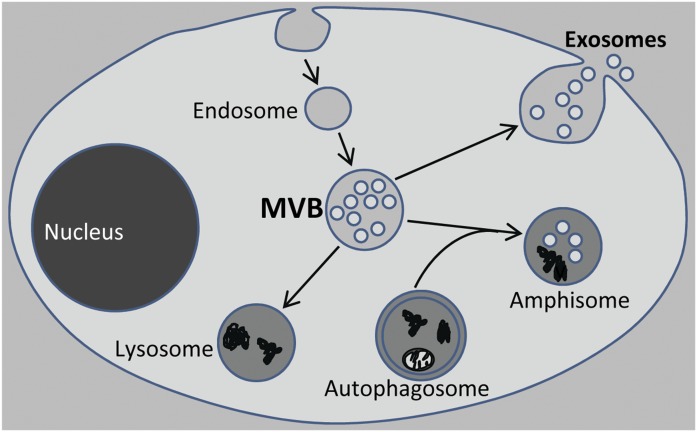
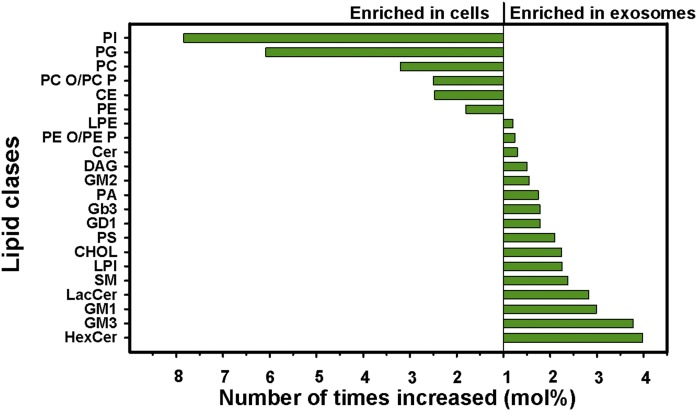
Exosomes are a type of extracellular vesicle released from cells after fusion of multivesicular bodies with the plasma membrane. These vesicles are often enriched in cholesterol, SM, glycosphingolipids, and phosphatidylserine. Lipids not only have a structural role in exosomal membranes but also are essential players in exosome formation and release to the extracellular environment. Our knowledge about the importance of lipids in exosome biology is increasing due to recent technological developments in lipidomics and a stronger focus on the biological functions of these molecules. Here, we review the available information about the lipid composition of exosomes. Special attention is given to ether lipids, a relatively unexplored type of lipids involved in membrane trafficking and abundant in some exosomes. Moreover, we discuss how the lipid composition of exosome preparations may provide useful information about their purity. Finally, we discuss the role of phosphoinositides, membrane phospholipids that help to regulate membrane dynamics, in exosome release and how this process may be linked to secretory autophagy. Knowledge about exosome lipid composition is important to understand the biology of these vesicles and to investigate possible medical applications.
Overview
The claims and statistics of this paper haven’t been checked yet.
Free: it reads the open-access text and checks the first 5 claims that cite a source we can check. Create a free account to check every claim.
Integrity signals
Registry
Cites
Statistics
Figures
Verification
Claims the paper makes
The claims and statistics of this paper haven’t been checked yet.
Free: it reads the open-access text and checks the first 5 claims that cite a source we can check. Create a free account to check every claim.
Claims other papers make about this one
Each is checked against this paper’s own text: does it say what the citing paper says it does?
The source backs part of the claim, not all of it — or backs it for a different population, condition or comparison.
In the citing paper
“pSIVA is a polarity-sensitive indicator of viability and apoptosis that binds to externalized phosphatidylserine and is a sensor for exosome-like vesicles, which are frequently characterized by an abundance of cholesterol, glycosphingolipids, and phosphatidylserine [69].”
From Abnormal accumulation of extracellular vesicles in hippocampal dystrophic axons and regulation by the primary cilia in Alzheimer's disease (2023) · cites this paper as [69]
Experimental — accuracy not yet measured
Self-check
Percentages, sums and reported differences re-computed from the paper’s own numbers.
The self-check needs the paper’s full text.
Citations
Cites
Shedding light on the cell biology of extracellular vesicles
van Niel, G., D'Angelo, G., & Raposo, G. (2018) · Nature Reviews Molecular Cell Biology · doi:10.1038/nrm.2017.125 · Cited by 8,369
Membrane lipids: where they are and how they behave
van Meer, G., Voelker, D. R., & Feigenson, G. W. (2008) · Nature Reviews Molecular Cell Biology · doi:10.1038/nrm2330 · Cited by 7,157
Biogenesis, Secretion, and Intercellular Interactions of Exosomes and Other Extracellular Vesicles
Colombo, M., Raposo, G., & Théry, C. (2014) · Annual Review of Cell and Developmental Biology · doi:10.1146/annurev-cellbio-101512-122326 · Cited by 6,186
Biological properties of extracellular vesicles and their physiological functions
Yáñez‐Mó, M., Siljander, P. R. ‐., Andreu, Z., Bedina Zavec, A., Borràs, F. E., Buzas, E. I., Buzas, K., Casal, E., Cappello, F., Carvalho, J., et al. (2015) · Journal of Extracellular Vesicles · doi:10.3402/jev.v4.27066 · Cited by 5,926
Self-citationIsolation and Characterization of Exosomes from Cell Culture Supernatants and Biological Fluids
Théry, C., Amigorena, S., Raposo, G., & Clayton, A. (2006) · Current Protocols in Cell Biology · doi:10.1002/0471143030.cb0322s30 · Cited by 5,766
Ceramide Triggers Budding of Exosome Vesicles into Multivesicular Endosomes
Trajkovic, K., Hsu, C., Chiantia, S., Rajendran, L., Wenzel, D., Wieland, F., Schwille, P., Brügger, B., & Simons, M. (2008) · Science · doi:10.1126/science.1153124 · Cited by 3,627
Communication by Extracellular Vesicles: Where We Are and Where We Need to Go
Tkach, M., & Théry, C. (2016) · Cell · doi:10.1016/j.cell.2016.01.043 · Cited by 3,444
Phosphoinositides in cell regulation and membrane dynamics
Di Paolo, G., & De Camilli, P. (2006) · Nature · doi:10.1038/nature05185 · Cited by 2,790
Current knowledge on exosome biogenesis and release
Hessvik, N. P., & Llorente, A. (2018) · Cellular and Molecular Life Sciences · doi:10.1007/s00018-017-2595-9 · Cited by 2,362
Self-citationHuotari, J., & Helenius, A. (2011) · The EMBO Journal · doi:10.1038/emboj.2011.286 · Cited by 2,265
Cited by
The exosome journey: from biogenesis to uptake and intracellular signalling
Gurung, S., Perocheau, D., Touramanidou, L., & Baruteau, J. (2021) · Cell Communication and Signaling · doi:10.1186/s12964-021-00730-1 · Cited by 1,791
“The rigid bilayer membrane of exosomes also consist of lipid components such as sphingomyelin, cholesterol and ceramides, which influence cargo sorting, exosome secretion, structure and signalling [32, 33] (Table 2).”
BackgroundExosome biogenesis: machinery, regulation, and therapeutic implications in cancer
Han, Q.-F., Li, W.-J., Hu, K.-S., Gao, J., Zhai, W.-L., Yang, J.-H., & Zhang, S.-J. (2022) · Molecular Cancer · doi:10.1186/s12943-022-01671-0 · Cited by 678
“In addition, several exosomal proteins, such as flotillins and caveolins, are important components of lipid rafts [33, 34].”
BackgroundDonoso‐Quezada, J., Ayala‐Mar, S., & González‐Valdez, J. (2021) · Traffic · doi:10.1111/tra.12803 · Cited by 327
“Hence, this differential lipidic composition of EVs allows lipids to be considered important markers to assess the purity of exosome preparations.(31) Furthermore, recent”
BackgroundExosomes─Nature’s Lipid Nanoparticles, a Rising Star in Drug Delivery and Diagnostics
Tenchov, R., Sasso, J. M., Wang, X., Liaw, W.-S., Chen, C.-A., & Zhou, Q. A. (2022) · ACS Nano · doi:10.1021/acsnano.2c08774 · Cited by 604
Exosome Processing and Characterization Approaches for Research and Technology Development
Lai, J. J., Chau, Z. L., Chen, S., Hill, J. J., Korpany, K. V., Liang, N., Lin, L., Lin, Y., Liu, J. K., Liu, Y., et al. (2022) · Advanced Science · doi:10.1002/advs.202103222 · Cited by 623
Mesenchymal Stem Cell-Derived Exosomes: Applications in Regenerative Medicine
Hade, M. D., Suire, C. N., & Suo, Z. (2021) · Cells · doi:10.3390/cells10081959 · Cited by 607
An emerging focus on lipids in extracellular vesicles
Skotland, T., Sagini, K., Sandvig, K., & Llorente, A. (2020) · Advanced Drug Delivery Reviews · doi:10.1016/j.addr.2020.03.002 · Cited by 548
Self-citationThe biology, function, and applications of exosomes in cancer
Liu, J., Ren, L., Li, S., Li, W., Zheng, X., Yang, Y., Fu, W., Yi, J., Wang, J., & Du, G. (2021) · Acta Pharmaceutica Sinica B · doi:10.1016/j.apsb.2021.01.001 · Cited by 561
Randall’s plaque and calcium oxalate stone formation: role for immunity and inflammation
Khan, S. R., Canales, B. K., & Dominguez-Gutierrez, P. R. (2021) · Nature Reviews Nephrology · doi:10.1038/s41581-020-00392-1 · Cited by 423
Erdbrügger, U., Blijdorp, C. J., Bijnsdorp, I. V., Borràs, F. E., Burger, D., Bussolati, B., Byrd, J. B., Clayton, A., Dear, J. W., Falcón‐Pérez, J. M., et al. (2021) · Journal of Extracellular Vesicles · doi:10.1002/jev2.12093 · Cited by 404
“In addition, uEVs have a higher cholesterol content compared to plasma derived EVs (Skotland et al., 2019).”
BackgroundSelf-citationDe Sousa, K. P., Rossi, I., Abdullahi, M., Ramirez, M. I., Stratton, D., & Inal, J. M. (2023) · WIREs Nanomedicine and Nanobiotechnology · doi:10.1002/wnan.1835 · Cited by 300
“EVs tend to have a higher lipid:protein ratio and a different lipid content than their parent cells (Haraszti et al., 2016; Llorente et al., 2013; Lydic et al., 2015; Skotland et al., 2019; Sun et al., 2019; Subra et al., 2007).”
BackgroundD’Acunzo, P., Pérez-González, R., Kim, Y., Hargash, T., Miller, C., Alldred, M. J., Erdjument-Bromage, H., Penikalapati, S. C., Pawlik, M., Saito, M., et al. (2021) · Science Advances · doi:10.1126/sciadv.abe5085 · Cited by 280
Shao, J., Zaro, J., & Shen, Y. (2020) · International Journal of Nanomedicine · doi:10.2147/ijn.s281890 · Cited by 295
Exosomes as a Multicomponent Biomarker Platform in Cancer
LeBleu, V. S., & Kalluri, R. (2020) · Trends in Cancer · doi:10.1016/j.trecan.2020.03.007 · Cited by 279
Russell, A. E., Sneider, A., Witwer, K. W., Bergese, P., Bhattacharyya, S. N., Cocks, A., Cocucci, E., Erdbrügger, U., Falcon‐Perez, J. M., Freeman, D. W., et al. (2019) · Journal of Extracellular Vesicles · doi:10.1080/20013078.2019.1684862 · Cited by 255
Self-citationHuda, M. N., Nafiujjaman, M., Deaguero, I. G., Okonkwo, J., Hill, M. L., Kim, T., & Nurunnabi, M. (2021) · ACS Biomaterials Science & Engineering · doi:10.1021/acsbiomaterials.1c00217 · Cited by 254
Biology and therapeutic potential of mesenchymal stem cell‐derived exosomes
Xunian, Z., & Kalluri, R. (2020) · Cancer Science · doi:10.1111/cas.14563 · Cited by 255
Understanding the extracellular vesicle surface for clinical molecular biology
Hallal, S., Tűzesi, Á., Grau, G. E., Buckland, M. E., & Alexander, K. L. (2022) · Journal of Extracellular Vesicles · doi:10.1002/jev2.12260 · Cited by 236
“Generally, lipid membranes display an asymmetric distribution of the lipid classes across the two leaflets, with sphingolipids and PC typically in the outer leaflet, and other lipid classes distributed across the inner leaflet (Skotland et al., 2019).”
BackgroundThe foundations and development of lipidomics
Han, X., & Gross, R. W. (2022) · Journal of Lipid Research · doi:10.1016/j.jlr.2021.100164 · Cited by 249
“For example, ether lipids and polyphosphoinositides play important roles in exosomal biology (206).”
BackgroundTian, T., Cao, L., He, C., Ye, Q., Liang, R., You, W., Zhang, H., Wu, J., Ye, J., Tannous, B. A., et al. (2021) · Theranostics · doi:10.7150/thno.56367 · Cited by 240
“the inner leaflet of the membrane [32].”
BackgroundGhadami, S., & Dellinger, K. (2023) · Frontiers in Molecular Biosciences · doi:10.3389/fmolb.2023.1198044 · Cited by 246
“Indeed, a common narrative in the exosome literature is the differences between the lipid composition of parent cell membranes and their exosomes (Skotland et al., 2019).”
BackgroundInfluentialDevelopment of Extracellular Vesicle Therapeutics: Challenges, Considerations, and Opportunities
Claridge, B., Lozano, J., Poh, Q. H., & Greening, D. W. (2021) · Frontiers in Cell and Developmental Biology · doi:10.3389/fcell.2021.734720 · Cited by 227
“…to transfer biological and pharmaceutical molecules to specific tissues and cell types has raised considerable interest in their development as biocompatible drug delivery systems [reviewed in Sluijter et al. (2018); Pirisinu et al. (2020); Herrmann et al. (2021); and Rankin-Turner et al. (2021)].”
BackgroundMatrix mechanics and water permeation regulate extracellular vesicle transport
Lenzini, S., Bargi, R., Chung, G., & Shin, J.-W. (2020) · Nature Nanotechnology · doi:10.1038/s41565-020-0636-2 · Cited by 225
Characterizing Extracellular Vesicles and Their Diverse RNA Contents
Veziroglu, E. M., & Mias, G. I. (2020) · Frontiers in Genetics · doi:10.3389/fgene.2020.00700 · Cited by 222
Direct cytosolic delivery of siRNA via cell membrane fusion using cholesterol-enriched exosomes
Zhuo, Y., Luo, Z., Zhu, Z., Wang, J., Li, X., Zhang, Z., Guo, C., Wang, B., Nie, D., Gan, Y., et al. (2024) · Nature Nanotechnology · doi:10.1038/s41565-024-01785-0 · Cited by 191
Exosome‐mediated effects and applications in inflammatory bowel disease
Ocansey, D. K. W., Zhang, L., Wang, Y., Yan, Y., Qian, H., Zhang, X., Xu, W., & Mao, F. (2020) · Biological Reviews · doi:10.1111/brv.12608 · Cited by 209
“Furthermore, specific bioactive lipids are found in exosomes, particularly leukotrienes, prostaglandin, and activated enzymes of lipid metabolism (Subra et al., 2010; Skotland, Sandvig, & Llorente, 2017; Skotland et al., 2019; Zhang et al., 2019).”
BackgroundSahoo, S., Adamiak, M., Mathiyalagan, P., Kenneweg, F., Kafert-Kasting, S., & Thum, T. (2021) · Circulation · doi:10.1161/circulationaha.120.049254 · Cited by 212
Li, M.-Y., Liu, L.-Z., & Dong, M. (2021) · Molecular Cancer · doi:10.1186/s12943-021-01312-y · Cited by 215
“TSG101 (tumor susceptibility gene 101) [60], ALIX (apoptosis-linked gene 2interacting protein X)/Syntenin/syndecan complex [60, 61], phospholipids [62], Flotillin [63], ARF6 and SNARE complex proteins [64] are also involved in the origin and biogenesis process of exosomes, although their functions in exosome biogenesi…”
BackgroundExosome-Derived MicroRNAs of Human Milk and Their Effects on Infant Health and Development
Melnik, B. C., Stremmel, W., Weiskirchen, R., John, S. M., & Schmitz, G. (2021) · Biomolecules · doi:10.3390/biom11060851 · Cited by 184
Characterization of brain‐derived extracellular vesicle lipids in Alzheimer's disease
Su, H., Rustam, Y. H., Masters, C. L., Makalic, E., McLean, C. A., Hill, A. F., Barnham, K. J., Reid, G. E., & Vella, L. J. (2021) · Journal of Extracellular Vesicles · doi:10.1002/jev2.12089 · Cited by 188
“…in EVs, here we reveal that EVs are abundant in alkyl- and alkenyl-(i.e., plasmalogen) ether-containing PS species, supporting the suggestion that ether lipids are a feature of EVs (Llorente et al., 2013, Lydic et al., 2015, Simbari et al., 2016, Skotland et al., 2017a, Skotland et al., 2019).”
BackgroundInclusion Biogenesis, Methods of Isolation and Clinical Application of Human Cellular Exosomes
Tschuschke, M., Kocherova, I., Bryja, A., Mozdziak, P., Angelova Volponi, A., Janowicz, K., Sibiak, R., Piotrowska-Kempisty, H., Iżycki, D., Bukowska, D., et al. (2020) · Journal of Clinical Medicine · doi:10.3390/jcm9020436 · Cited by 196
“However, similarly to PM, the exosome membrane is double-layered with an asymmetric distribution of particular lipid classes in inner and outer portions [54].”
BackgroundExosomes in atherosclerosis: performers, bystanders, biomarkers, and therapeutic targets
Wang, C., Li, Z., Liu, Y., & Yuan, L. (2021) · Theranostics · doi:10.7150/thno.56035 · Cited by 187
“Ceramides, phosphatidylethanolamines, phosphatidylserines, diacylglycerides, cholesterol, sphingomyelins, and lysobisphospatidic acid, have been found in exosome membranes [75, 76].”
BackgroundKumar, A., & Deep, G. (2020) · Cancer Letters · doi:10.1016/j.canlet.2020.03.017 · Cited by 185
New advances in exosome-based targeted drug delivery systems
Ferreira, D., Moreira, J. N., & Rodrigues, L. R. (2022) · Critical Reviews in Oncology/Hematology · doi:10.1016/j.critrevonc.2022.103628 · Cited by 172
Exosomes: Potential Disease Biomarkers and New Therapeutic Targets
Mosquera-Heredia, M. I., Morales, L. C., Vidal, O. M., Barceló, E., Silvera-Redondo, C., Vélez, J. I., & Garavito-Galofre, P. (2021) · Biomedicines · doi:10.3390/biomedicines9081061 · Cited by 163
Circulating microRNAs as biomarkers in cancer diagnosis
Sohel, M. M. H. (2020) · Life Sciences · doi:10.1016/j.lfs.2020.117473 · Cited by 164
Vinarov, Z., Abrahamsson, B., Artursson, P., Batchelor, H. K., Berben, P., Bernkop‐Schnürch, A., Butler, J., Ceulemans, J., Davies, N. M., Dupont, D., et al. (2021) · Advanced Drug Delivery Reviews · doi:10.1016/j.addr.2021.02.001 · Cited by 168
Exosomes: Revisiting their role as “garbage bags”
Vidal, M. (2019) · Traffic · doi:10.1111/tra.12687 · Cited by 154
“A recent review analyzed data available on the lipid composition of exosomes and especially highlighted 2 to 3-fold enrichment of cholesterol from cells to exosomes.(113) This is in agreement with the analysis of the cholesterol distribution in the endocytic pathway of B cells achieved by detection of cholesterol usin…”
ResultDorninger, F., Forss-Petter, S., Wimmer, I., & Berger, J. (2020) · Neurobiology of Disease · doi:10.1016/j.nbd.2020.105061 · Cited by 139
“or mainly reflects the cellular lipid composition, has yet to be shown but it has been speculated that plasmalogens regulate fusion processes and contribute to the extracellular stability of exosomes (Skotland et al., 2019).”
BackgroundMilk-derived exosomes exhibit versatile effects for improved oral drug delivery
Wu, L., Wang, L., Liu, X., Bai, Y., Wu, R., Li, X., Mao, Y., Zhang, L., Zheng, Y., Gong, T., et al. (2021) · Acta Pharmaceutica Sinica B · doi:10.1016/j.apsb.2021.12.015 · Cited by 155
Extracellular vesicles and particles impact the systemic landscape of cancer
Lucotti, S., Kenific, C. M., Zhang, H., & Lyden, D. C. (2022) · The EMBO Journal · doi:10.15252/embj.2021109288 · Cited by 155
Strategies for Targeted Delivery of Exosomes to the Brain: Advantages and Challenges
Choi, H., Choi, K., Kim, D., Oh, B.-K., Yim, H. Y., Jo, S., & Choi, C. (2022) · Pharmaceutics · doi:10.3390/pharmaceutics14030672 · Cited by 150
“, phosphatidylserine [105]) that can be utilized for the surface engineering of various targeting moieties.”
BackgroundChong, S. Y., Lee, C. K., Huang, C., Ou, Y. H., Charles, C. J., Richards, A. M., Neupane, Y. R., Pavon, M. V., Zharkova, O., Pastorin, G., et al. (2019) · International Journal of Molecular Sciences · doi:10.3390/ijms20133272 · Cited by 135
“The abundance of lipids in EVs suggests that EV lipids may play a biological role beyond their structural function under physiological and certain pathophysiological conditions [91,92].”
BackgroundSkotland, T., Iversen, T., Llorente, A., & Sandvig, K. (2022) · Advanced Drug Delivery Reviews · doi:10.1016/j.addr.2022.114326 · Cited by 151
Self-citationExtracellular vesicles in tumor immunity: mechanisms and novel insights
Kuang, L., Wu, L., & Li, Y. (2025) · Molecular Cancer · doi:10.1186/s12943-025-02233-w · Cited by 146
Protein Composition Reflects Extracellular Vesicle Heterogeneity
Vagner, T., Chin, A. R., Mariscal, J., Bannykh, S., Engman, D. M., & Vizio, D. D. (2019) · PROTEOMICS · doi:10.1002/pmic.201800167 · Cited by 138
Salomón, C., Das, S., Erdbrügger, U., Kalluri, R., Lim, S. K., Olefsky, J. M., Rice, G. E., Sahoo, S., Tao, W. A., Vader, P., et al. (2022) · Endocrine Reviews · doi:10.1210/endrev/bnac009 · Cited by 143
“Recent reviews catalogue more than 1900 lipid molecules identified in EV isolates obtained from multiple species, cells, and biological fluids (11, 99-106).”
BackgroundMethodLipids as Regulators of Cellular Senescence
Hamsanathan, S., & Gurkar, A. U. (2022) · Frontiers in Physiology · doi:10.3389/fphys.2022.796850 · Cited by 137
“Lipids are essential to each of these “senescence features,” including exosomes that are typically lipid enriched extracellular vesicles (Skotland et al., 2019) and therefore lipids are inextricably linked to the process of cellular senescence.”
BackgroundRole of Exosomes in Prostate Cancer Metastasis
Akoto, T., & Saini, S. (2021) · International Journal of Molecular Sciences · doi:10.3390/ijms22073528 · Cited by 136
“This shows the participation of these lipids in different molecular mechanisms in exosome packaging during reticulocyte maturation into erythrocytes [11,82].”
BackgroundShowalter, M. R., Berg, A. L., Nagourney, A., Heil, H., Carraway, K. L., & Fiehn, O. (2020) · International Journal of Molecular Sciences · doi:10.3390/ijms21218067 · Cited by 118
“Reports of BMP content in exosomes have been previously reviewed and further support the lack of enrichment of BMPs in exosomes under most cellular conditions [88].”
BackgroundAdvances in Analytical Technologies for Extracellular Vesicles
Yan, H., Li, Y., Cheng, S., & Zeng, Y. (2021) · Analytical Chemistry · doi:10.1021/acs.analchem.1c00693 · Cited by 127
Strategies for scalable manufacturing and translation of MSC-derived extracellular vesicles
Adlerz, K. M., Patel, D. B., Rowley, J. A., Ng, K. S., & Ahsan, T. (2020) · Stem Cell Research · doi:10.1016/j.scr.2020.101978 · Cited by 128
Nucleic acid delivery with extracellular vesicles
Schulz-Siegmund, M., & Aigner, A. (2021) · Advanced Drug Delivery Reviews · doi:10.1016/j.addr.2021.03.005 · Cited by 121
Extracellular vesicle–matrix interactions
Debnath, K., Heras, K. L., Rivera, A., Lenzini, S. B., & Shin, J. (2023) · Nature Reviews Materials · doi:10.1038/s41578-023-00551-3 · Cited by 128
Han, C., Kang, H., Yi, J., Kang, M., Lee, H., Kwon, Y., Jung, J.-H., Lee, J., & Park, J. (2021) · Journal of Extracellular Vesicles · doi:10.1002/jev2.12047 · Cited by 131
“Traditional omics approaches have identified hundreds of proteins, nucleic acids, and lipids of EVs (Choi et al., 2015; Guduric-Fuchs et al., 2012; Ji et al., 2014; Llorente et al., 2013; Simpson et al., 2008; Skotland et al., 2019).”
BackgroundRole of Ceramides and Lysosomes in Extracellular Vesicle Biogenesis, Cargo Sorting and Release
Horbay, R., Hamraghani, A., Ermini, L., Holcik, S., Beug, S. T., & Yeganeh, B. (2022) · International Journal of Molecular Sciences · doi:10.3390/ijms232315317 · Cited by 131
“Indeed, EVs share these common characteristics of membrane microdomains, particularly lipid bilayer membrane for protection and stability of encapsulated material against detergents [100].”
BackgroundZou, Z., Han, L., Xu, G., Hu, Y., Zhang, W., & Tian, K. (2023) · International Journal of Nanomedicine · doi:10.2147/ijn.s417422 · Cited by 127
“Also, they are involved in cargo sorting and exosome secretion.(41) The exosomal protein components include mainly the tetraspanin family (CD9, CD63 and CD81), membrane transport and fusion proteins (GTPases, annexins and flotillin), integrins, heat shock proteins (HSPs), endosomal sorting complex proteins required fo…”
Guidelines for the purification and characterization of extracellular vesicles of parasites
Fernández-Becerra, C., Xander, P. B., Alfandari, D., Dong, G., Aparici‐Herraiz, I., Rosenhek‐Goldian, I., Shokouhy, M., Gualdrón‐López, M., Lozano, N., Cortes-Serra, N., et al. (2023) · Journal of Extracellular Biology · doi:10.1002/jex2.117 · Cited by 127
ECM deposition is driven by caveolin-1–dependent regulation of exosomal biogenesis and cargo sorting
Albacete-Albacete, L., Navarro-Lérida, I., López, J. A., Martín-Padura, I., Astudillo, A. M., Ferrarini, A., Van-Der-Heyden, M., Balsinde, J., Orend, G., Vázquez, J., et al. (2020) · Journal of Cell Biology · doi:10.1083/jcb.202006178 · Cited by 114
“Lipidomic analyses of exosome preparations confirmed a significant enrichment in PS—in particular PS (18:0/18:1) species—in agreement with previous data (Skotland et al., 2019).”
ResultTargeted inhibition of tumor-derived exosomes as a novel therapeutic option for cancer
Li, Y., Chen, Z.-K., Duan, X., Zhang, H., Xiao, B.-L., Wang, K.-M., & Chen, G. (2022) · Experimental & Molecular Medicine · doi:10.1038/s12276-022-00856-3 · Cited by 118
Cell–cell communication: old mystery and new opportunity
Song, D., Yang, D., Powell, C. A., & Wang, X. (2019) · Cell Biology and Toxicology · doi:10.1007/s10565-019-09470-y · Cited by 120
Hussey, G. S., Pineda Molina, C., Cramer, M. C., Tyurina, Y. Y., Tyurin, V. A., Lee, Y. C., El-Mossier, S. O., Murdock, M. H., Timashev, P. S., Kagan, V. E., et al. (2020) · Science Advances · doi:10.1126/sciadv.aay4361 · Cited by 108
“Phospholipid profiles of liquid-phase EV, MBV, and parent cells Several studies have characterized the lipid composition of EV (11).”
BackgroundRapid On-Demand Extracellular Vesicle Augmentation with Versatile Oligonucleotide Tethers
Yerneni, S. S., Lathwal, S., Shrestha, P., Shirwan, H., Matyjaszewski, K., Weiss, L., Yolcu, E. S., Campbell, P. G., & Das, S. R. (2019) · ACS Nano · doi:10.1021/acsnano.9b04651 · Cited by 110
Metabolomics Applied to the Study of Extracellular Vesicles
Williams, C., Palviainen, M., Reichardt, N., Siljander, P. R. M., & Falcón‐Pérez, J. M. (2019) · Metabolites · doi:10.3390/metabo9110276 · Cited by 114
“Since EV lipidomics is a more established field and has been excellently reviewed elsewhere [41,42], we have focused on metabolites as small polar molecules involved in cellular processes of metabolism.”
BackgroundKhosravi, N., Pishavar, E., Baradaran, B., Oroojalian, F., & Mokhtarzadeh, A. (2022) · Journal of Controlled Release · doi:10.1016/j.jconrel.2022.06.026 · Cited by 104
Extracellular vesicles versus lipid nanoparticles for the delivery of nucleic acids
Bader, J., Brigger, F., & Leroux, J. (2024) · Advanced Drug Delivery Reviews · doi:10.1016/j.addr.2024.115461 · Cited by 115
Composing the Early Embryonic Microenvironment: Physiology and Regulation of Oviductal Secretions
Saint‐Dizier, M., Schoen, J., Chen, S., Banliat, C., & Mermillod, P. (2019) · International Journal of Molecular Sciences · doi:10.3390/ijms21010223 · Cited by 131
“Superovulation treatment OEC gene expression Cattle (Buffalo) Superovulation treatment with FSH decreased the expression of steroid hormone receptors PGR and ESR1, VEGF, and its receptor FLT1 [95]”
BackgroundInfluentialVickram, A. S., Samad, H. A., Latheef, S. K., Chakraborty, S., Dhama, K., Sridharan, T. B., Sundaram, T., & Gulothungan, G. (2019) · International Journal of Biological Macromolecules · doi:10.1016/j.ijbiomac.2019.09.218 · Cited by 113
Protein cargo in extracellular vesicles as the key mediator in the progression of cancer
Hánělová, K., Raudenská, M., Masařík, M., & Balvan, J. (2024) · Cell Communication and Signaling · doi:10.1186/s12964-023-01408-6 · Cited by 116
“Besides the structural role of lipids in the exosomal membrane, they are essential for exosome formation and release [35].”
BackgroundMesenchymal Stem Cell-Derived Exosomes and Intervertebral Disc Regeneration: Review
Bhujel, B., Shin, H., Choi, D.-J., & Han, I. (2022) · International Journal of Molecular Sciences · doi:10.3390/ijms23137306 · Cited by 109
Understanding exosomes: Part 1—Characterization, quantification and isolation techniques
Miron, R. J., & Zhang, Y. (2023) · Periodontology 2000 · doi:10.1111/prd.12520 · Cited by 111
Advances in microfluidic extracellular vesicle analysis for cancer diagnostics
Cheng, S., Li, Y., Yan, H., Wen, Y., Zhou, X., Friedman, L., & Zeng, Y. (2021) · Lab on a Chip · doi:10.1039/d1lc00443c · Cited by 94
Hsu, M.-T., Wang, Y.-K., & Tseng, Y. J. (2022) · Cancers · doi:10.3390/cancers14030732 · Cited by 103
Rong, Y., Ji, C., Wang, Z., Ge, X., Wang, J., Wu, Y., Tang, P., Jiang, D., Fan, J., Yin, G., et al. (2021) · Journal of Neuroinflammation · doi:10.1186/s12974-021-02268-y · Cited by 106
“sEVs may play a key role in cell communication through the delivery of RNA, proteins and bioactive lipids [55, 56].”
BackgroundElmallah, M. I. Y., Ortega‐Deballon, P., Hermite, L., de Barros, J.-P. P., Gobbo, J., & Garrido, C. (2022) · Molecular Oncology · doi:10.1002/1878-0261.13223 · Cited by 99
Al-Jipouri, A., Almurisi, S. H., AL-Japairai, K. A. S., Bakar, L. M., & Doolaanea, A. A. (2023) · Polymers · doi:10.3390/polym15020318 · Cited by 104
“Extensive lipidomic analyses showed that EVs contain lipid species also present in the cell’s plasma membrane, rich in glycosphingolipids, sphingomyelins, PE, PS, PC, and cholesterol [43].”
BackgroundThe role of exosomes in immunopathology and potential therapeutic implications
Wang, W., Qiao, S., Kong, X., Zhang, G., & Cai, Z. (2025) · Cellular and Molecular Immunology · doi:10.1038/s41423-025-01323-5 · Cited by 104
“The accumulation of cholesterol is associated with increased secretion of fl otillin-containing exosomes [51], whereas the inhibition of nSMase2 impedes exosome production [63].”
Novel concept of exosome-like liposomes for the treatment of Alzheimer's disease
Fernandes, M., Lopes, I., Magalhães, L., Sárria, M. P., Machado, R., Sousa, J. C., Botelho, C., Teixeira, J., & Gomes, A. C. (2021) · Journal of Controlled Release · doi:10.1016/j.jconrel.2021.06.018 · Cited by 95
Role of Exosomes for Delivery of Chemotherapeutic Drugs
Gebeyehu, A., Kommineni, N., Meckes, D. G., & Sachdeva, M. S. (2021) · Critical Reviews™ in Therapeutic Drug Carrier Systems · doi:10.1615/critrevtherdrugcarriersyst.2021036301 · Cited by 87
Yuan, D., Luo, J., Sun, Y., Hao, L., Zheng, J., & Yang, Z. (2021) · Cellular Signalling · doi:10.1016/j.cellsig.2021.110030 · Cited by 110
Blandin, A., Dugail, I., Hilairet, G., Ponnaiah, M., Ghesquière, V., Froger, J., Ducheix, S., Fizanne, L., Boursier, J., Cariou, B., et al. (2023) · Cell Reports · doi:10.1016/j.celrep.2023.112169 · Cited by 96
Nishida‐Aoki, N., Izumi, Y., Takeda, H., Takahashi, M., Ochiya, T., & Bamba, T. (2020) · Metabolites · doi:10.3390/metabo10020067 · Cited by 97
“Many reports showed relatively similar levels of PE in EVs and cells [54].”
ResultEmam, S. E., Elsadek, N. E., Lila, A. S. A., Takata, H., Kawaguchi, Y., Shimizu, T., Ando, H., Ishima, Y., & Ishida, T. (2021) · Journal of Controlled Release · doi:10.1016/j.jconrel.2021.05.001 · Cited by 98
Emerging technologies for profiling extracellular vesicle heterogeneity
Huang, G. J., Lin, G., Zhu, Y., Duan, W., & Jin, D. (2020) · Lab on a Chip · doi:10.1039/d0lc00431f · Cited by 94
Crivelli, S. M., Giovagnoni, C., Zhu, Z., Tripathi, P., Elsherbini, A. M., Quadri, Z., Pu, J. Y., Zhang, L., Ferko, B., Berkeš, D., et al. (2022) · Journal of Extracellular Vesicles · doi:10.1002/jev2.12233 · Cited by 92
“Interestingly, the EV membrane is particularly enriched in sphingolipids compared to the membrane of the donor cells (Skotland et al., 2019).”
BackgroundCorbeil, D., Santos, M. F., Karbanová, J., Kurth, T., Rappa, G., & Lorico, A. (2020) · Cells · doi:10.3390/cells9091931 · Cited by 96
“The enrichment of lipid raft-associated cholesterol and sphingomyelin in EVs is consistent with such hypothesis [24,69].”
ResultSharma, A., Yadav, A., Nandy, A., & Ghatak, S. (2024) · Pharmaceutics · doi:10.3390/pharmaceutics16060709 · Cited by 92
“Additionally, lipid markers may exhibit non-specificity in their labeling properties or might aggregate [159].”
BackgroundSong, Y., Kim, Y., Ha, S., Sheller‐Miller, S., Yoo, J., Choi, C., & Park, C. H. (2020) · American Journal of Reproductive Immunology · doi:10.1111/aji.13329 · Cited by 91
Milk Exosomes: Perspective Agents for Anticancer Drug Delivery
Sedykh, S. E., Kuleshova, A., & Nevinsky, G. A. (2020) · International Journal of Molecular Sciences · doi:10.3390/ijms21186646 · Cited by 95
“A detailed overview of exosome lipids is given in [77,78].”
BackgroundA New Infectious Unit: Extracellular Vesicles Carrying Virus Populations
Kerviel, A., Zhang, M. Y., & Altan‐Bonnet, N. (2021) · Annual Review of Cell and Developmental Biology · doi:10.1146/annurev-cellbio-040621-032416 · Cited by 97
Ma, F., Vayalil, J., Lee, G., Wang, Y., & Peng, G. (2021) · Journal for ImmunoTherapy of Cancer · doi:10.1136/jitc-2021-003217 · Cited by 91
Potential Application of Exosomes in Vaccine Development and Delivery
Huda, M. N., & Nurunnabi, M. (2022) · Pharmaceutical Research · doi:10.1007/s11095-021-03143-4 · Cited by 90
“Many studies have shown lipids like sphingomyelin (SM), glycosphingolipids, cholesterol, and phosphatidylinositol (PS) (166, 167).”
BackgroundExtracellular Vesicles in Trypanosomatids: Host Cell Communication
Torrecilhas, A. C., Soares, R. P., Schenkman, S., Fernandez‐Prada, C., & Olivier, M. (2020) · Frontiers in Cellular and Infection Microbiology · doi:10.3389/fcimb.2020.602502 · Cited by 94
“They are formed in endosomes asmultivesicular bodies and are released after exocytosis through fusion with the plasma membrane (Raposo and Stoorvogel, 2013; Hessvik and Llorente, 2018; Skotland et al., 2019).”
BackgroundA Role for Exosomes in Craniofacial Tissue Engineering and Regeneration
Cooper, L. F., Ravindran, S., Huang, C.-C., & Kang, M. (2020) · Frontiers in Physiology · doi:10.3389/fphys.2019.01569 · Cited by 91
Human Milk Extracellular Vesicles: A Biological System with Clinical Implications
Chutipongtanate, S., Morrow, A. L., & Newburg, D. S. (2022) · Cells · doi:10.3390/cells11152345 · Cited by 89
“By high-throughput analyses, up to 920 proteins [72], 1523 miRNAs [73], and 395 lipids [74,75] have been identified in hMEVs.”
BackgroundPlant Exosome-like Nanoparticles as Biological Shuttles for Transdermal Drug Delivery
Wang, Y., Wei, Y., Liao, H., Fu, H., Yang, X., Xiang, Q., & Zhang, S. (2023) · Bioengineering · doi:10.3390/bioengineering10010104 · Cited by 84
From Exosome Biogenesis to Absorption: Key Takeaways for Cancer Research
Lau, N. C. H., & Yam, J. W. P. (2023) · Cancers · doi:10.3390/cancers15071992 · Cited by 91
“The ESCRT-independent pathway involves a combination of lipid raft components, which together regulate the budding and formation of ILVs [34,35].”
BackgroundDouanne, N., Dong, G., Douanne, M., Olivier, M., & Fernandez‐Prada, C. (2020) · PLoS neglected tropical diseases · doi:10.1371/journal.pntd.0008439 · Cited by 87
Lipid nanovesicles for biomedical applications: ‘What is in a name’?
Apolinário, A. C., Hauschke, L., Nunes, J. R., & Lopes, L. B. (2021) · Progress in Lipid Research · doi:10.1016/j.plipres.2021.101096 · Cited by 83
Extracellular Vesicles as Therapeutic Resources in the Clinical Environment
Sanz‐Ros, J., Mas‐Bargues, C., Romero-García, N., Huete-Acevedo, J., Dromant, M., & Borrás, C. (2023) · International Journal of Molecular Sciences · doi:10.3390/ijms24032344 · Cited by 84
“For instance, milk-EVs can remain unaltered in the gastric acidic environment thanks to their unique lipid composition and membrane rigidity [148,149].”
Background
Metadata
- Authors
- Skotland, T., Hessvik, N. P., Sandvig, K., & Llorente, A.
- Affiliations
- Oslo University Hospital (NO)
- Corresponding author
- Llorente, Alicia
- Venue
- Journal of Lipid Research
- Publisher
- Elsevier BV
- Published
- 2019-01
- Volume
- 60
- Issue
- 1
- Pages
- 9-18
- ISSN
- 0022-2275 (ISSN-L)
- PMC
- PMC6314266
- OpenAlex
- W2887269406
- Cited by
- 730
- References
- 103
- Citations by year
- 2026: 74 · 2025: 120 · 2024: 112 · 2023: 115 · 2022: 104 · 2021: 102 · 2020: 69 · 2019: 34
- FWCI
- 5.03
- Type
- journal article
- Language
- en
- Open access
- hybrid
- doi.org
- Licence
- cc-by
- www.elsevier.com/tdm/userlicense/1.0/ (tdm)
- creativecommons.org/licenses/by/4.0/ (vor, 624 d)
- Locations
- Journal of Lipid Research (publishedVersion, cc-by)
- Europe PMC (PubMed Central) (publishedVersion, cc-by)
- PubMed Central (publishedVersion, cc-by)
- PubMed (publishedVersion)
- DOAJ (DOAJ: Directory of Open Access Journals) (submittedVersion, cc-by-sa)
- NORA - Norwegian Open Research Archives (submittedVersion, cc-by)
- Funders
- Norwegian Cancer Society
- Norwegian Research Council
- Southern and Eastern Norway Regional Health Authority
- Topics
- Life Sciences › Biochemistry, Genetics and Molecular Biology › Molecular Biology › Extracellular vesicles in disease
- Life Sciences › Biochemistry, Genetics and Molecular Biology › Cell Biology › Cellular transport and secretion
- Life Sciences › Biochemistry, Genetics and Molecular Biology › Molecular Biology › Lipid Membrane Structure and Behavior
- Keywords
- exosomes, extracellular vesicles, lipid composition, ether lipids, phosphoinositides, exosome secretion, cholesterol, sphingomyelin, phosphatidylserine, multivesicular bodies, lipidomics, secretory autophagy, membrane trafficking
- MeSH terms
- Animals, Ether, Humans, Phosphatidylinositols, Exosomes
About these checks
Registry, retraction, Cites and statistics results are computed, not judged, with one exception: a printed reference that no index lists is read once by a model before it counts as a citation error. Claims are extracted by a model and kept only when their quote appears verbatim in the text; each cited source is then checked, with a model’s help, for whether it says what the claim relies on. Those verdicts can be wrong — read the claim’s quote and the cited source before relying on one.
Statistics and arithmetic are recomputed, not judged.
Confidence bands are shown only for fields calibrated on our annotated test set. None is calibrated yet, so no band is shown.
What counts as a claim ›How we measure confidence ›How we check this ›
Are you an author, or do you see a problem with this page? Request a review
Data sources
Bibliographic data: Semantic Scholar, OpenAlex, Crossref.
Contains information from the Semantic Scholar Academic Graph Datasets, made available under the ODC Attribution License (ODC-BY 1.0).
Semantic Scholar’s data is described in: Kinney, R., et al. (2023). The Semantic Scholar Open Data Platform. arXiv:2301.10140.
