

Apolipoprotein E: structure determines function, from atherosclerosis to Alzheimer's disease to AIDS
Open accessThe DOI matches its Crossref record; 58 of the 58 references it cites were found in a registry or an index.
Abstract
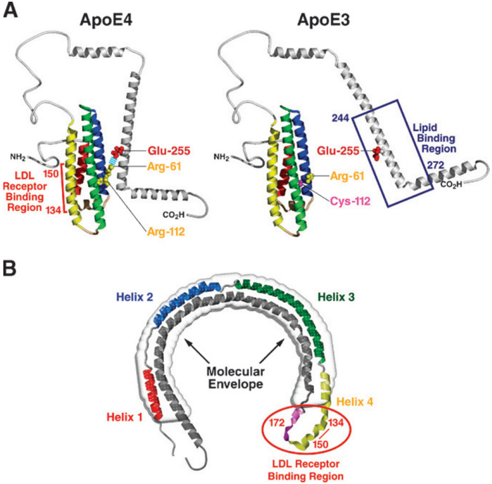
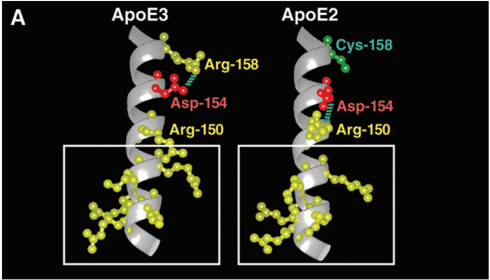
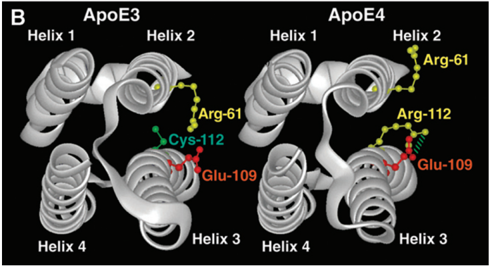
Apolipoprotein (apo) E has roles beyond lipoprotein metabolism. The detrimental effects of apoE4 in cardiovascular, neurological, and infectious diseases correlate with its structural features (e.g., domain interaction) that distinguish it from apoE3 and apoE2. Structure/function studies revealed that apoE2 is severely defective in LDL receptor binding because of a structural difference that alters the receptor binding region and helped unravel the mechanism of type III hyperlipoproteinemia. ApoE4 is the major genetic risk factor for Alzheimer's disease and sets the stage for neuropathological disorders precipitated by genetic, metabolic, and environmental stressors. ApoE also influences susceptibility to parasitic, bacterial, and viral infections. In HIV-positive patients, apoE4 homozygosity hastens progression to AIDS and death and increases susceptibility to opportunistic infections. The next phase in our understanding of apoE will be characterized by clinical intervention to prevent or reverse the detrimental effects of apoE4 by modulating its structure or blocking the pathological processes it mediates.
Overview
The claims and statistics of this paper haven’t been checked yet.
Free: it reads the open-access text and checks the first 5 claims that cite a source we can check. Create a free account to check every claim.
Integrity signals
Registry
Cites
Statistics
Figures
Verification
Claims the paper makes
The claims and statistics of this paper haven’t been checked yet.
Free: it reads the open-access text and checks the first 5 claims that cite a source we can check. Create a free account to check every claim.
Claims other papers make about this one
Each is checked against this paper’s own text: does it say what the citing paper says it does?
The source backs part of the claim, not all of it — or backs it for a different population, condition or comparison.
In the citing paper
“APOE exerts toxic effects on the cerebrovascular system (694) and neurons (383, 384) and influences A 𝛃 clearance (60, 64, 98, 135, 256, 266, 278, 294, 315, 693), amyloid deposition (39, 256, 258, 266, 278, 314, 518, 612), and tau-related neurodegeneration (533) in an allele-dependent manner APOE4 > APOE3 > APOE2 .”
From Blood-Brain Barrier: From Physiology to Disease and Back (2019) · cites this paper as [384]
Experimental — accuracy not yet measuredThe source backs part of the claim, not all of it — or backs it for a different population, condition or comparison.
In the citing paper
“ApoE is a 34-kDa lipid carrier protein, which in the brain is produced by astrocytes and secreted as nascent, high-density lipoprotein-like particles [4].”
From Blocking the apoE/Aβ interaction ameliorates Aβ-related pathology in APOE ε2 and ε4 targeted replacement Alzheimer model mice (2014) · cites this paper as [4]
Experimental — accuracy not yet measuredThe source backs part of the claim, not all of it — or backs it for a different population, condition or comparison.
In the citing paper
“This notion may explain enhanced Aβ clearance in the setting of apoE2, which is defective in LDL receptor binding [4,5].”
From Blocking the apoE/Aβ interaction ameliorates Aβ-related pathology in APOE ε2 and ε4 targeted replacement Alzheimer model mice (2014) · cites this paper as [4]
Experimental — accuracy not yet measuredThe source backs part of the claim, not all of it — or backs it for a different population, condition or comparison.
In the citing paper
“Structurally, ApoE has two main domains that are connected by a hinge region (amino acids ∼165 to 215); the N-terminal domain (amino acids 1 to 191) forms the receptor binding region, and the C-terminal domain (amino acids ∼225 to 299) harbors the major lipid-binding region (amino acids ∼244 to 272) (Fig. 4, A and C) (20).”
From Secreted Apoe rewires melanoma cell state vulnerability to ferroptosis (2024) · cites this paper as [20]
Experimental — accuracy not yet measuredThe source backs part of the claim, not all of it — or backs it for a different population, condition or comparison.
In the citing paper
“Val254Glu and Arg269Gly are located in the lipid‐binding carboxyl‐terminal domain (amino acids ≈243 to 317). 28 , 42”
From APOE and dementia – resequencing and genotyping in 105,597 individuals (2020) · cites this paper as [42]
Experimental — accuracy not yet measured
15 more claims about this paper
Create a free account to see every claim other papers make about this one.
Self-check
Percentages, sums and reported differences re-computed from the paper’s own numbers.
The self-check needs the paper’s full text.
Citations
Cites
Corder, E. H., Saunders, A. M., Strittmatter, W. J., Schmechel, D. E., Gaskell, P. C., Small, G. W., Roses, A. D., Haines, J. L., & Pericak-Vance, M. A. (1993) · Science · doi:10.1126/science.8346443 · Cited by 9,429
Apolipoprotein E: Cholesterol Transport Protein with Expanding Role in Cell Biology
Mahley, R. W. (1988) · Science · doi:10.1126/science.3283935 · Cited by 4,028
Self-citationApolipoprotein E: Far More Than a Lipid Transport Protein
Mahley, R. W., & Rall, S. C. (2000) · Annual Review of Genomics and Human Genetics · doi:10.1146/annurev.genom.1.1.507 · Cited by 1,836
Self-citationMahley, R. W., Weisgraber, K. H., & Huang, Y. (2006) · Proceedings of the National Academy of Sciences · doi:10.1073/pnas.0600549103 · Cited by 912
Self-citationApolipoprotein E: Structure-Function Relationships
Weisgraber, K. H. (1994) · Advances in Protein Chemistry · doi:10.1016/s0065-3233(08)60642-7 · Cited by 830
Self-citationWeisgraber, K. H., Rall, S. C., & Mahley, R. W. (1981) · Journal of Biological Chemistry · doi:10.1016/s0021-9258(19)52510-8 · Cited by 777
Self-citationHuman apolipoprotein E. The complete amino acid sequence
Rall, S. C., Weisgraber, K. H., & Mahley, R. W. (1982) · Journal of Biological Chemistry · doi:10.1016/s0021-9258(18)34702-1 · Cited by 741
Self-citationThree-Dimensional Structure of the LDL Receptor-Binding Domain of Human Apolipoprotein E
Wilson, C., Wardell, M. R., Weisgraber, K. H., Mahley, R. W., & Agard, D. A. (1991) · Science · doi:10.1126/science.2063194 · Cited by 678
Self-citationHerpes simplex virus type 1 in brain and risk of Alzheimer's disease
Itzhaki, R. F., Lin, W.-R., Shang, D., Wilcock, G. K., Faragher, B., & Jamieson, G. A. (1997) · The Lancet · doi:10.1016/s0140-6736(96)10149-5 · Cited by 669
Polymorphism of apolipoprotein E and occurrence of dysbetalipoproteinaemia in man
UTERMANN, G., HEES, M., & STEINMETZ, A. (1977) · Nature · doi:10.1038/269604a0 · Cited by 666
Cited by
Items 201–300 of 581
The ApoE ε4 Isoform: Can the Risk of Diseases be Reduced by Environmental Factors?
Bos, M. M., Noordam, R., Blauw, G. J., Slagboom, P. E., Rensen, P. C. N., & van Heemst, D. (2018) · The Journals of Gerontology Series A · doi:10.1093/gerona/gly226 · Cited by 37
Kulminski, A. M., Raghavachari, N., Arbeev, K. G., Culminskaya, I. V., Arbeeva, L. S., Wu, D., Ukraintseva, S. V., Christensen, K., & Yashin, A. I. (2016) · Biogerontology · doi:10.1007/s10522-016-9659-3 · Cited by 35
Li, Z., Zhu, J., Wang, Y., Zhou, M. L., Li, D., Zheng, S., Yin, L., Luo, C., Zhang, H., Zhong, L., et al. (2019) · Asian Journal of Pharmaceutical Sciences · doi:10.1016/j.ajps.2019.05.002 · Cited by 41
Graeser, A.-C., Boesch, C., Lippmann, J., Wagner, A. E., Huebbe, P., Storm, N., Höppner, W., Wiswedel, I., Gardemann, A., Minihane, A. M., et al. (2011) · Journal of Molecular Medicine · doi:10.1007/s00109-011-0771-1 · Cited by 31
Argyri, L., Dafnis, I., Theodossiou, T. A., Gantz, D., Stratikos, E., & Chroni, A. (2014) · Journal of Biological Chemistry · doi:10.1074/jbc.m113.538124 · Cited by 30
Nemergut, M., Marques, S. M., Uhrik, L., Vanova, T., Nezvedova, M., Gadara, D. C., Jha, D., Tulis, J., Novakova, V., Planas-Iglesias, J., et al. (2023) · Molecular Neurodegeneration · doi:10.1186/s13024-023-00620-9 · Cited by 30
Nguyen, D., Dhanasekaran, P., Nickel, M., Mizuguchi, C., Watanabe, M., Saito, H., Phillips, M. C., & Lund-Katz, S. (2014) · Biochemistry · doi:10.1021/bi500340z · Cited by 30
Apolipoprotein E and Sex Bias in Cerebrovascular Aging of Men and Mice
Finch, C. E., & Shams, S. (2016) · Trends in Neurosciences · doi:10.1016/j.tins.2016.07.002 · Cited by 30
Apolipoprotein E is an HIV-1-inducible inhibitor of viral production and infectivity in macrophages
Siddiqui, R., Suzu, S., Ueno, M., Nasser, H., Koba, R., Bhuyan, F., Noyori, O., Hamidi, S., Sheng, G., Yasuda-Inoue, M., et al. (2018) · PLoS Pathogens · doi:10.1371/journal.ppat.1007372 · Cited by 35
Gazi, I. F., Apostolou, F., Liberopoulos, E. N., Filippatos, T. D., Tellis, C. C., Elisaf, M., & Tselepis, A. D. (2011) · Lipids · doi:10.1007/s11745-011-3580-y · Cited by 32
Corsetti, J. P., Gansevoort, R. T., Bakker, S. J. L., Navis, G., Sparks, C. E., & Dullaart, R. P. F. (2012) · Metabolism · doi:10.1016/j.metabol.2011.11.010 · Cited by 30
McFall, G. P., Wiebe, S. A., Vergote, D., Westaway, D. A., Jhamandas, J. H., Bäckman, L., & Dixon, R. A. (2015) · Neuropsychology · doi:10.1037/neu0000150 · Cited by 33
In silico analyses of deleterious missense SNPs of human apolipoprotein E3
Pires, Á. S., Porto, W. F., Franco, O. L., & de Alencar, S. A. (2017) · Scientific Reports · doi:10.1038/s41598-017-01737-w · Cited by 29
Kacperczyk, M., Kmieciak, A., & Kratz, E. M. (2021) · International Journal of Molecular Sciences · doi:10.3390/ijms22137197 · Cited by 29
Functional primate genomics—leveraging the medical potential
Enard, W. (2012) · Journal of Molecular Medicine · doi:10.1007/s00109-012-0901-4 · Cited by 30
Central Neurotoxicity in Cancer Chemotherapy: Pharmacogenetic inSights
Froklage, F. E., Reijneveld, J. C., & Heimans, J. J. (2011) · Pharmacogenomics · doi:10.2217/pgs.10.197 · Cited by 31
ApoE4-specific Misfolded Intermediate Identified by Molecular Dynamics Simulations
Williams II, B., Convertino, M., Das, J., & Dokholyan, N. V. (2015) · PLOS Computational Biology · doi:10.1371/journal.pcbi.1004359 · Cited by 29
Meox2 haploinsufficiency increases neuronal cell loss in a mouse model of Alzheimer's disease
Soto, I., Grabowska, W. A., Onos, K. D., Graham, L. C., Jackson, H. M., Simeone, S. N., & Howell, G. R. (2016) · Neurobiology of Aging · doi:10.1016/j.neurobiolaging.2016.02.025 · Cited by 29
Model Membranes and Their Interactions with Native and Artificial Lipoproteins
Waldie, S. (2020) · doi:10.24834/isbn.9789178771325 · Cited by 32
Prion Protein PRNP: A New Player in Innate Immunity? The Aβ Connection
Lathe, R., & Darlix, J. (2017) · Journal of Alzheimer s Disease Reports · doi:10.3233/adr-170037 · Cited by 29
Apolipoprotein E secreted by astrocytes forms antiparallel dimers in discoidal lipoproteins
Strickland, M. R., Rau, M. J., Summers, B., Basore, K., Wulf, J., Jiang, H., Chen, Y., Ulrich, J. D., Randolph, G. J., Zhang, R., et al. (2024) · Neuron · doi:10.1016/j.neuron.2023.12.018 · Cited by 28
Plasma ApoE elevations are associated with NAFLD: The PREVEND Study
van den Berg, E. H., Corsetti, J. P., Bakker, S. J. L., & Dullaart, R. P. F. (2019) · PLOS ONE · doi:10.1371/journal.pone.0220659 · Cited by 27
Therapeutic potential of ApoE-mimetic peptides in CNS disorders: Current perspective
Ahmed, S., Pande, A. H., & Sharma, S. S. (2022) · Experimental Neurology · doi:10.1016/j.expneurol.2022.114051 · Cited by 29
Macromolecular Structures and Proteins Interacting with the Microtubule Associated Tau Protein
Jiménez, J. S. (2022) · Neuroscience · doi:10.1016/j.neuroscience.2022.05.023 · Cited by 31
Bioprosthetic Valve Deterioration
Sakaue, T., Koyama, T., Nakamura, Y., Okamoto, K., Kawashima, T., Umeno, T., Nakayama, Y., Miyamoto, S., Shikata, F., Hamaguchi, M., et al. (2023) · JACC Basic to Translational Science · doi:10.1016/j.jacbts.2023.01.003 · Cited by 30
Jakic, B., Carlsson, M. J. L., Buszko, M., Cappellano, G., Ploner, C., Onestingel, E., Foti, M., Hackl, H., Demetz, E., Dietrich, H., et al. (2018) · Gerontology · doi:10.1159/000492571 · Cited by 30
Tran, T. N., Kosaraju, M. G., Tamamizu‐Kato, S., Akintunde, O., Zheng, Y. Y., Bielicki, J. K., Pinkerton, K. E., Uchida, K., Lee, Y. Y., & Narayanaswami, V. (2014) · Biochemistry · doi:10.1021/bi401404u · Cited by 27
Yao, X., Remaley, A. T., & Levine, S. J. (2011) · CHEST Journal · doi:10.1378/chest.11-0158 · Cited by 26
Polydopamine-assisted deposition of heparin for selective adsorption of low-density lipoprotein
Liu, Y., Qiu, W., Yang, H., Qian, Y., Huang, X., & Xu, Z. (2015) · RSC Advances · doi:10.1039/c4ra16700g · Cited by 28
Aging and Apolipoprotein E in HIV Infection
Geffin, R., & McCarthy, M. (2018) · Journal of NeuroVirology · doi:10.1007/s13365-018-0660-2 · Cited by 31
Turienzo, A., Lledó, B., Ortiz, J. A., Morales, R., Sanz, J. S., Llácer, J., & Bernabéu, R. (2018) · Human Fertility · doi:10.1080/14647273.2018.1524935 · Cited by 27
Secreted Apoe rewires melanoma cell state vulnerability to ferroptosis
More, S., Bonnereau, J., Wouters, D., Spotbeen, X., Karras, P., Rizzollo, F., Killian, T., Venken, T., Naulaerts, S., Vervoort, E., et al. (2024) · Science Advances · doi:10.1126/sciadv.adp6164 · Cited by 29
Moon, H.-J., Haroutunian, V., & Zhao, L. (2022) · Neurobiology of Disease · doi:10.1016/j.nbd.2022.105631 · Cited by 25
Cross interactions between Apolipoprotein E and amyloid proteins in neurodegenerative diseases
Loch, R. A., Wang, H., Perálvarez‐Marín, A., Berger, P., Nielsen, H. M., Chroni, A., & Luo, J. (2023) · Computational and Structural Biotechnology Journal · doi:10.1016/j.csbj.2023.01.022 · Cited by 26
Georgiadou, D., Chroni, A., Vezeridis, A., Zannis, V. I., & Stratikos, E. (2011) · PLoS ONE · doi:10.1371/journal.pone.0027037 · Cited by 24
Bhale, A. S., Meilhac, O., d’Hellencourt, C. L., Vijayalakshmi, M. A., & Venkataraman, K. (2024) · BioFactors · doi:10.1002/biof.2057 · Cited by 31
Mouse models of atherosclerosis: explaining critical roles of lipid metabolism and inflammation
Mukhopadhyay, R. (2013) · Journal of Applied Genetics · doi:10.1007/s13353-013-0134-4 · Cited by 29
The role of apolipoprotein E in neurodegeneration and cardiovascular disease
Lopez, M. F., Krastins, B., & Ning, M. (2014) · Expert Review of Proteomics · doi:10.1586/14789450.2014.901892 · Cited by 29
Apolipoprotein E Signals via TLR4 to Induce CXCL5 Secretion by Asthmatic Airway Epithelial Cells
Kalchiem‐Dekel, O., Yao, X., Barochia, A. V., Kaler, M. M., Figueroa, D. M., Karkowsky, W., Gordon, E. M., Gao, M., Fergusson, M. M., Qu, X., et al. (2020) · American Journal of Respiratory Cell and Molecular Biology · doi:10.1165/rcmb.2019-0209oc · Cited by 24
Witchey, S. K., Doyle, M. G., Fredenburg, J. D., Armour, G. S., Horman, B. M., Odenkirk, M. T., Aylor, D. L., Baker, E. S., & Patisaul, H. B. (2022) · Neuroendocrinology · doi:10.1159/000526959 · Cited by 27
Apolipoprotein E regulation of myeloid cell plasticity in atherosclerosis
Raffaï, R. L. (2012) · Current Opinion in Lipidology · doi:10.1097/mol.0b013e328356f967 · Cited by 27
Ou, L., Li, X., Chen, B., Ge, Z., Zhang, J., Zhang, Y., Cai, G., Li, Z., Wang, P., & Dong, W. (2017) · Journal of Cardiovascular Pharmacology and Therapeutics · doi:10.1177/1074248417724870 · Cited by 24
James, L. M., Dolan, S., Leuthold, A. C., Engdahl, B. E., Georgopoulos, A., & Georgopoulos, A. P. (2018) · EBioMedicine · doi:10.1016/j.ebiom.2018.08.026 · Cited by 23
The Kynurenine Pathway, Aryl Hydrocarbon Receptor, and Alzheimer’s Disease
Cortés-Malagón, E. M., Ornelas, A. L., Olvera‐Gómez, I., & Bonilla‐Delgado, J. (2024) · Brain Sciences · doi:10.3390/brainsci14090950 · Cited by 28
ApoE: In Vitro Studies of a Small Molecule Effector
Mondal, T., Wang, H., DeKoster, G. T., Baban, B., Gross, M. L., & Frieden, C. (2016) · Biochemistry · doi:10.1021/acs.biochem.6b00324 · Cited by 23
Atomistic Insights into Structural Differences between E3 and E4 Isoforms of Apolipoprotein E
Ray, A., Ahalawat, N., & Mondal, J. (2017) · Biophysical Journal · doi:10.1016/j.bpj.2017.10.006 · Cited by 23
Cyr, Y., Bissonnette, S., Lamantia, V., Wassef, H., Loizon, E., Sock, E. T. N., Vidal, H., Mayer, G., Chrétien, M., & Faraj, M. (2020) · Obesity · doi:10.1002/oby.22985 · Cited by 24
Katsarou, M., Stratikos, E., & Chroni, A. (2018) · Journal of Lipid Research · doi:10.1194/jlr.m088732 · Cited by 22
Smith, C. J., & Ashford, J. W. (2023) · Journal of Alzheimer s Disease · doi:10.3233/jad-221218 · Cited by 24
Rogojin, A., Gorbet, D. J., Hawkins, K. M., & Sergio, L. E. (2019) · Journal of Alzheimer s Disease · doi:10.3233/jad-190403 · Cited by 25
Abondio, P., Bruno, F., & Luiselli, D. (2023) · Current Issues in Molecular Biology · doi:10.3390/cimb45040184 · Cited by 24
Fluorescence Analysis of the Lipid Binding-Induced Conformational Change of Apolipoprotein E4
Mizuguchi, C., Hata, M., Dhanasekaran, P., Nickel, M., Phillips, M. C., Lund‐Katz, S., & Saito, H. (2012) · Biochemistry · doi:10.1021/bi300672s · Cited by 24
Visceral leishmaniasis is associated with marked changes in serum lipid profile
Liberopoulos, E. N., Apostolou, F., Gazi, I. F., Kostara, C. E., Bairaktari, E. T., Tselepis, A. D., & Elisaf, M. (2014) · European Journal of Clinical Investigation · doi:10.1111/eci.12288 · Cited by 24
Eberlé, D., Kim, R. Y., Luk, F. S., de Mochel, N. S. R., Gaudreault, N., Olivas, V. R., Kumar, N., Posada, J. M., Birkeland, A. C., Rapp, J. H., et al. (2012) · Arteriosclerosis Thrombosis and Vascular Biology · doi:10.1161/atvbaha.112.246389 · Cited by 22
Faraji, P., Kühn, H., & Ahmadian, S. (2024) · Journal of Molecular Neuroscience · doi:10.1007/s12031-024-02224-4 · Cited by 28
Association between APOE polymorphisms and lipid profile in Mexican Amerindian population
Martínez‐Magaña, J. J., Mendoza, A. D. G., Tovilla‐Zárate, C. A., González‐Castro, T. B., Juárez‐Rojop, I. E., Hernández‐Díaz, Y., Martínez-Hernández, A. G., Garcia‐Ortíz, H., Orozco, L., López‐Narváez, M. L., et al. (2019) · Molecular Genetics & Genomic Medicine · doi:10.1002/mgg3.958 · Cited by 29
Graeser, A.-C., Huebbe, P., Storm, N., Höppner, W., Döring, F., Wagner, A. E., & Rimbach, G. H. (2012) · Genes & Nutrition · doi:10.1007/s12263-012-0282-x · Cited by 21
Versmissen, J., Oosterveer, D. M., Hoekstra, M., Out, R., Berbée, J. F. P., Blommesteijn-Touw, A. C., der Zee, L. V. V., Vongpromek, R., Vanmierlo, T., Defesche, J. C., et al. (2011) · Circulation Cardiovascular Genetics · doi:10.1161/circgenetics.111.959858 · Cited by 23
Igel, E., Haller, A. M., Wolfkiel, P. R., Orr–Asman, M. A., Jaeschke, A., & Hui, D. Y. (2021) · Journal of Biological Chemistry · doi:10.1016/j.jbc.2021.101106 · Cited by 20
Biomarkers of UVB radiation-related senescent fibroblasts
Qiang, M., & Dai, Z. (2024) · Scientific Reports · doi:10.1038/s41598-023-51058-4 · Cited by 25
Asgari, N., Akbari, M. T., Zare, S., & Babamohammadi, G. (2013) · Journal of Assisted Reproduction and Genetics · doi:10.1007/s10815-012-9897-5 · Cited by 22
Qiu, W., Pham, K., JAMES, I. R., Nolan, D. A., Castley, A., Christiansen, F., Czarniak, P., Luo, Y., Wu, J.-S., Garlepp, M. J., et al. (2013) · Journal of Neuroimmunology · doi:10.1016/j.jneuroim.2013.04.022 · Cited by 24
Uen, Y., Liao, C.-C., Lin, J.-C., Pan, Y.-H., Liu, Y., Chen, Y.-C., Chen, W.-J., Tai, C.-C., Lee, K.-W., Liu, Y., et al. (2015) · Journal of Proteomics · doi:10.1016/j.jprot.2015.05.038 · Cited by 21
Current insights into apolipoprotein E and the immune response in Alzheimer's disease
Lin, P. B., & Holtzman, D. M. (2024) · Immunological Reviews · doi:10.1111/imr.13414 · Cited by 19
Human Plasma Lipid Modulation in Schistosomiasis Mansoni Depends on Apolipoprotein E Polymorphism
da Fonseca, C. S. M., Filho, A. A. P., dos Santos, B. S., da Silva, C. A., Domingues, A. L. C., Owen, J. S., & Lima, V. L. D. M. (2014) · PLoS ONE · doi:10.1371/journal.pone.0101964 · Cited by 24
Goyal, M., Grover, S., Dhanjal, J. K., Goyal, S., Tyagi, C., Chacko, S., & Grover, A. (2013) · BioMed Research International · doi:10.1155/2013/620793 · Cited by 20
Epigenetic considerations of the APOE gene
Yu, C., & Foraker, J. E. (2015) · BioMolecular Concepts · doi:10.1515/bmc-2014-0039 · Cited by 22
Lee, J., Peterson, S. M., & Freeman, J. L. (2016) · Journal of Applied Toxicology · doi:10.1002/jat.3372 · Cited by 22
Human apolipoprotein E glycosylation and sialylation: from structure to function
Moon, H.-J., Luo, Y., Chugh, D., & Zhao, L. (2024) · Frontiers in Molecular Neuroscience · doi:10.3389/fnmol.2024.1399965 · Cited by 20
Liang, T., Xue, F., Hang, W., Wen, B., Zhang, Q., Chen, J., Liu, X., & Chen, J. (2019) · Journal of Alzheimer s Disease · doi:10.3233/jad-190419 · Cited by 20
Immunopathogenesis and Immunogenetic Variants in COVID-19
Sagulkoo, P., Plaimas, K., Suratanee, A., Simão, A. N. C., Reiche, E. M. V., & Maes, M. H. J. (2022) · Current Pharmaceutical Design · doi:10.2174/1381612828666220519150821 · Cited by 18
Cerebrospinal Fluid Proteins as Regulators of Beta‐amyloid Aggregation and Toxicity
Pate, K. M., & Murphy, R. M. (2017) · Israel Journal of Chemistry · doi:10.1002/ijch.201600078 · Cited by 17
Association between apolipoprotein E genotype and cancer susceptibility: a meta-analysis
Anand, R., Prakash, S. S., Veeramanikandan, R., & Kirubakaran, R. (2014) · Journal of Cancer Research and Clinical Oncology · doi:10.1007/s00432-014-1634-2 · Cited by 18
ApoE: The Non-Protagonist Actor in Neurological Diseases
Grimaldi, L., Bovi, E., Formisano, R., & Sancesario, G. M. (2024) · Genes · doi:10.3390/genes15111397 · Cited by 19
Alzheimer’s disease basics: we all should know
Das, S. K. (2025) · Neurological Research · doi:10.1080/01616412.2025.2529560 · Cited by 21
Piccarducci, R., Daniele, S., Polini, B., Carpi, S., Chico, L., Fusi, J., Baldacci, F., Siciliano, G., Bonuccelli, U., Nieri, P., et al. (2021) · Oxidative Medicine and Cellular Longevity · doi:10.1155/2021/8869849 · Cited by 19
A review of neuroimaging-based data-driven approach for Alzheimer’s disease heterogeneity analysis
Liu, L., Sun, S., Kang, W., Wu, S., & Lin, L. (2024) · Reviews in the Neurosciences · doi:10.1515/revneuro-2023-0033 · Cited by 16
Lipoprotein Lipase: Structure, Function, and Genetic Variation
Perera, S. D., Wang, J., McIntyre, A. D., & Hegele, R. A. (2025) · Genes · doi:10.3390/genes16010055 · Cited by 20
Liu, C., Liu, J., Wang, Y.-Y., Xu, S.-F., & Yu, L.-M. (2026) · Molecular Neurobiology · doi:10.1007/s12035-025-05629-3 · Cited by 19
Ghosh, S., Rihan, M., Ahmed, S., Pande, A. H., & Sharma, S. S. (2022) · Respiratory Medicine · doi:10.1016/j.rmed.2022.107007 · Cited by 18
Блохина, А. В., Ershova, A. I., Kiseleva, A. V., Сотникова, Е. А., Zharikova, A. A., Zaicenoka, M., Vyatkin, Y. V., Ramensky, V. E., Kutsenko, V. A., Shalnova, S. A., et al. (2023) · International Journal of Molecular Sciences · doi:10.3390/ijms241713159 · Cited by 18
Ferreira, A. P., Ferreira, C. B., Brito, C. J., Souza, V. C., Córdova, C., Nóbrega, O. D. T., & de França, N. M. (2013) · Atherosclerosis · doi:10.1016/j.atherosclerosis.2013.03.027 · Cited by 20
Kulminski, A. M., Barochia, A. V., Loika, Y., Raghavachari, N., Arbeev, K. G., Wojczynski, M. K., Thyagarajan, B., Vardarajan, B. N., Christensen, K., Yashin, A. I., et al. (2018) · PLoS ONE · doi:10.1371/journal.pone.0206873 · Cited by 16
Fluorescence study of domain structure and lipid interaction of human apolipoproteins E3 and E4
Mizuguchi, C., Hata, M., Dhanasekaran, P., Nickel, M., Okuhira, K., Phillips, M. C., Lund-Katz, S., & Saito, H. (2014) · Biochimica et Biophysica Acta (BBA) - Molecular and Cell Biology of Lipids · doi:10.1016/j.bbalip.2014.09.019 · Cited by 16
Stojković, D. S., Kostić, M., Smiljkovic, M. S., Aleksić, M., Vasiljevic, P. J., Nikolić, M., & Sokóvić, M. (2018) · Current Medicinal Chemistry · doi:10.2174/0929867325666180309103645 · Cited by 17
Ferreira, C., Baptista, R., Santos, M. O., da Costa, R. C., de Moura, J. P., & Gonçalves, L. M. M. (2019) · Journal of Lipids · doi:10.1155/2019/1698610 · Cited by 18
Applicability of Diagnostic Criteria and Prevalence of Familial Dysbetalipoproteinemia in Russia
Blokhina, A. V., Ershova, A. I., Kiseleva, A. V., Sotnikova, E. A., Zharikova, A. A., Zaicenoka, M., Vyatkin, Y. V., Ramensky, V. E., Kutsenko, V. A., Shalnova, S. A., et al. (2023) · doi:10.20944/preprints202306.0140.v1 · Cited by 16
Persson, N., Lavebratt, C., & Wåhlin, Å. (2013) · Neurobiology of Learning and Memory · doi:10.1016/j.nlm.2013.08.017 · Cited by 16
Yao, X., Dai, C., Fredriksson, K., Lam, J. Y., Gao, M., Keeran, K. J., Nugent, G. Z., Qu, X., Yu, Z., Jeffries, N. O., et al. (2011) · American Journal of Physiology-Lung Cellular and Molecular Physiology · doi:10.1152/ajplung.00110.2011 · Cited by 14
Rashidi, O. M., H.Nazar, F. A., Alama, M. N., & Awan, Z. A. (2017) · The Open Cardiovascular Medicine Journal · doi:10.2174/1874192401711010084 · Cited by 18
Villeneuve, S., Brisson, D., & Gaudet, D. (2015) · Journal of Lipids · doi:10.1155/2015/742408 · Cited by 15
Hu, M., Mak, V. W. L., & Tomlinson, B. (2012) · Journal of clinical lipidology · doi:10.1016/j.jacl.2012.02.005 · Cited by 19
Hatziri, A., Kalogeropoulou, C. P., Xepapadaki, E., Birli, E., Karavia, E. A., Παπακώστα, Ε., Filou, S., Constantinou, C., & Kypreos, K. E. (2017) · Biochimica et Biophysica Acta (BBA) - Molecular Basis of Disease · doi:10.1016/j.bbadis.2017.11.007 · Cited by 15
Identifying Genetic Markers Associated With Susceptibility to Cardiovascular Diseases
Shukla, H. J., Mason, J. L., & Sabyah, A. (2018) · Future Science OA · doi:10.4155/fsoa-2018-0031 · Cited by 19
Impact of Apolipoprotein E Variants: A Review of Naturally Occurring Variants and Clinical Features
Matsunaga, A., & Saito, T. (2025) · Journal of Atherosclerosis and Thrombosis · doi:10.5551/jat.65393 · Cited by 14
APOE genotype dictates lipidomic signatures in primary human hepatocytes
Almeida, F., Patra, K., Giannisis, A., Niesnerova, A., Nandakumar, R., Ellis, E. C. S., Oliveira, T. G., & Nielsen, H. M. (2024) · Journal of Lipid Research · doi:10.1016/j.jlr.2024.100498 · Cited by 15
Relevance of Lipoprotein Composition in Endothelial Dysfunction and the Development of Hypertension
Ramírez-Melo, L. M., Estrada-Luna, D., Rubio-Ruiz, M. E., Ovando, A. C., Fernández‐Martínez, E., Jiménez‐Osorio, A. S., Pérez-Méndez, O. A., & Carreón‐Torres, E. (2025) · International Journal of Molecular Sciences · doi:10.3390/ijms26031125 · Cited by 14
Pig and Mouse Models of Hyperlipidemia and Atherosclerosis
Getz, G. S., & Reardon, C. A. (2022) · Methods in molecular biology · doi:10.1007/978-1-0716-1924-7_24 · Cited by 18
Yow, H.-Y., Hamzah, S. B., Rahim, N. A., & Suppiah, V. (2023) · Asian Biomedicine · doi:10.2478/abm-2023-0050 · Cited by 17
Andersen, C. J., & Fernández, M. L. (2024) · Nutrients · doi:10.3390/nu17010042 · Cited by 14
Metadata
- Authors
- Mahley, R. W., Weisgraber, K. H., & Huang, Y.
- Affiliations
- Gladstone Institutes (US)
- Corresponding author
- Mahley, Robert W.
- Venue
- Journal of Lipid Research
- Publisher
- Elsevier BV
- Published
- 2009-04
- Volume
- 50
- Pages
- S183-S188
- ISSN
- 0022-2275 (ISSN-L)
- PMC
- PMC2674716
- OpenAlex
- W2006599070
- Cited by
- 580
- References
- 58
- Citations by year
- 2026: 30 · 2025: 55 · 2024: 40 · 2023: 48 · 2022: 44 · 2021: 34 · 2020: 27 · 2019: 34 · 2018: 33 · 2017: 28 · 2016: 37 · 2015: 23 · 2014: 38 · 2013: 25 · 2012: 35
- FWCI
- 16.86
- Type
- journal article
- Language
- en
- Open access
- hybrid
- doi.org
- Licence
- cc-by
- www.elsevier.com/tdm/userlicense/1.0/ (tdm)
- creativecommons.org/licenses/by/4.0/ (vor, 4185 d)
- Locations
- Journal of Lipid Research (publishedVersion, cc-by)
- PubMed Central (publishedVersion)
- PubMed (publishedVersion)
- DOAJ (DOAJ: Directory of Open Access Journals) (submittedVersion, cc-by-sa)
- Funders
- Gladstone Institutes
- National Institutes of Health
- National Institute on Aging (R01AG028793, 2P01AG02207)
- Topics
- Health Sciences › Medicine › Cardiology and Cardiovascular Medicine › Lipoproteins and Cardiovascular Health
- Life Sciences › Neuroscience › Cellular and Molecular Neuroscience › Alzheimer's disease research and treatments
- Life Sciences › Biochemistry, Genetics and Molecular Biology › Biochemistry › Cholesterol and Lipid Metabolism
- Keywords
- apolipoprotein E, APOE ε4, APOE3, APOE2, protein structure-function relationship, LDL receptor binding, type III hyperlipoproteinemia, atherosclerosis, Alzheimer's disease, AIDS, HIV, opportunistic infections, genetic risk factors, lipoprotein metabolism
- MeSH terms
- Acquired Immunodeficiency Syndrome, Alzheimer Disease, Animals, Apolipoproteins E, Humans, Protein Binding, Atherosclerosis
About these checks
Registry, retraction, Cites and statistics results are computed, not judged, with one exception: a printed reference that no index lists is read once by a model before it counts as a citation error. Claims are extracted by a model and kept only when their quote appears verbatim in the text; each cited source is then checked, with a model’s help, for whether it says what the claim relies on. Those verdicts can be wrong — read the claim’s quote and the cited source before relying on one.
Statistics and arithmetic are recomputed, not judged.
Confidence bands are shown only for fields calibrated on our annotated test set. None is calibrated yet, so no band is shown.
What counts as a claim ›How we measure confidence ›How we check this ›
Are you an author, or do you see a problem with this page? Request a review
Data sources
Bibliographic data: Semantic Scholar, OpenAlex, Crossref.
Contains information from the Semantic Scholar Academic Graph Datasets, made available under the ODC Attribution License (ODC-BY 1.0).
Semantic Scholar’s data is described in: Kinney, R., et al. (2023). The Semantic Scholar Open Data Platform. arXiv:2301.10140.
