

Anti-Müllerian Hormone and Ovarian Reserve: Update on Assessing Ovarian Function
Open accessThe DOI matches its Crossref record; 100 of the 101 references it cites were found in a registry or an index.
Abstract
Context: Anti-müllerian hormone (AMH) is produced by granulosa cells of small, growing follicles in the ovary. Serum AMH levels strongly correlate with the number of growing follicles, and therefore AMH has received increasing attention as a marker for ovarian reserve. This review summarizes recent findings and limitations in the application of serum AMH in ovarian reserve assessment. Evidence Acquisition: A PubMed search was conducted to find recent literature on the measurements and use of serum AMH as a marker for ovarian reserve. Evidence Synthesis: Serum AMH levels are measured to assess the “functional ovarian reserve,” a term that is preferred over “ovarian reserve,” since AMH levels reflect the pool of growing follicles that potentially can ovulate. Serum AMH levels are used in individualized follicle-stimulating hormone dosing protocols and may predict the risk of poor response or ovarian hyperstimulation syndrome but has limited value in predicting ongoing pregnancy. Serum AMH levels are studied to predict natural or disease-related age of menopause. Studies show that the age-dependent decline rates of AMH vary among women. The generalized implementation of serum AMH measurement has also led to an increase in diagnostic assays, including automated assays. However, direct comparison of results remains problematic. Conclusion: Serum AMH remains the preferred ovarian reserve marker. However, the lack of an international standard for AMH limits comparison between AMH assays. Furthermore, little is known about endogenous and exogenous factors that influence serum AMH levels, which limits proper interpretation of AMH values in a clinical setting.
Overview
The claims and statistics of this paper haven’t been checked yet.
Free: it reads the open-access text and checks the first 5 claims that cite a source we can check. Create a free account to check every claim.
Integrity signals
Registry
Cites
Statistics
Figures
Verification
Claims the paper makes
The claims and statistics of this paper haven’t been checked yet.
Free: it reads the open-access text and checks the first 5 claims that cite a source we can check. Create a free account to check every claim.
Claims other papers make about this one
Each is checked against this paper’s own text: does it say what the citing paper says it does?
The cited source says what the claim attributes to it.
In the citing paper
“However, AMH concentrations can vary in the same patient due to inter-test and biological variability,581,583 and heterogeneity exists in available AMH assays and detection levels.583”
From Clinical practice guidelines for the care of girls and women with Turner syndrome. (2024) · cites this paper as [583]
The check wasn’t confident either way, so it gives no verdict — never disputed.
In the citing paper
“IGT also is present in a significant proportion of men undergoing investigation for primary infertility.1549”
From American Association of Clinical Endocrinology Clinical Practice Guideline: Developing a Diabetes Mellitus Comprehensive Care Plan-2022 Update. (2022) · cites this paper as [1549]
Experimental — accuracy not yet measured
Self-check
Percentages, sums and reported differences re-computed from the paper’s own numbers.
The self-check needs the paper’s full text.
Citations
Cites
The Diagnosis of Polycystic Ovary Syndrome during Adolescence
Witchel, S. F., Oberfield, S., Rosenfield, R. L., Codner, E., Bonny, A., Ibáñez, L., Pena, A., Horikawa, R., Gomez-Lobo, V., Joel, D., et al. (2015) · Hormone Research in Paediatrics · doi:10.1159/000375530 · Cited by 3,113
The physiology and clinical utility of anti-Müllerian hormone in women
Dewailly, D., Andersen, C. Y., Balen, A., Broekmans, F., Dilaver, N., Fanchin, R., Griesinger, G., Kelsey, T. W., La Marca, A., Lambalk, C., et al. (2014) · Human Reproduction Update · doi:10.1093/humupd/dmt062 · Cited by 1,049 · cited 1×
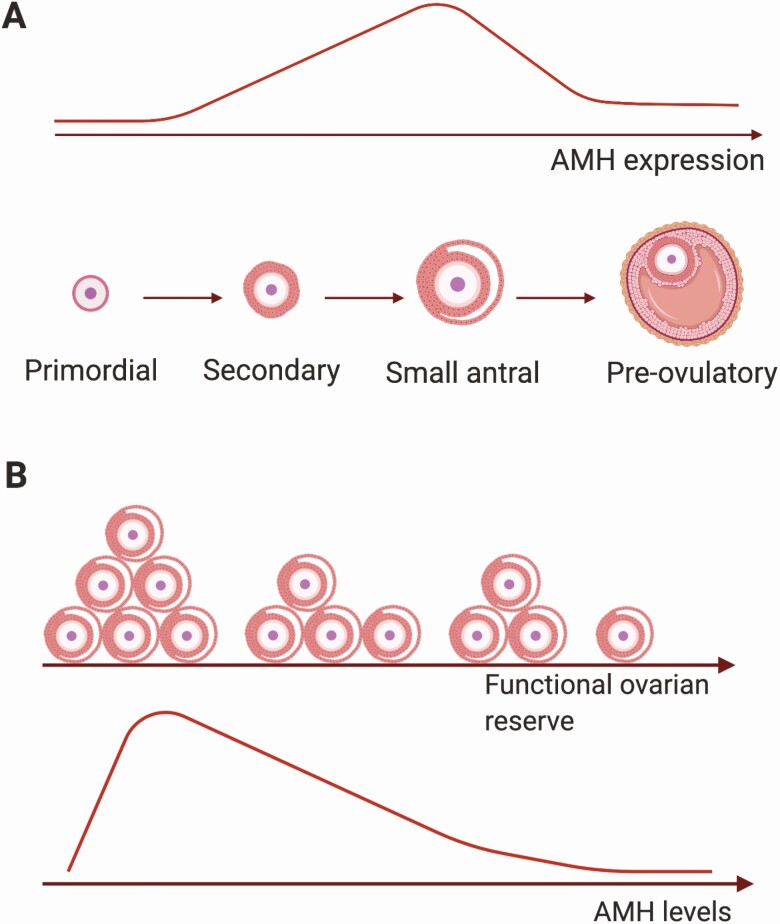
“Initial studies, performed nearly 2 decades ago, showed that serum AMH levels indeed strongly correlate with the number of growing follicles and that both decline with increasing age (3).”
BackgroundSelf-citationCate, R. L., Mattaliano, R. J., Hession, C., Tizard, R., Farber, N. M., Cheung, A., Ninfa, E. G., Frey, A. Z., Gash, D. J., Chow, E. P., et al. (1986) · Cell · doi:10.1016/0092-8674(86)90783-x · Cited by 1,022
Human ovarian reserve from conception to the menopause
Wallace, W., & Kelsey, T. (2009) · Nature Precedings · doi:10.1038/npre.2009.3179.1 · Cited by 878 · cited 1×
“This positive correlation may reflect the increased rate of primordial follicle recruitment observed from birth up to approximately age 14 years (13).”
BackgroundCorrelation of ovarian reserve tests with histologically determined primordial follicle number
Hansen, K. R., Hodnett, G. M., Knowlton, N., & Craig, L. B. (2011) · Fertility and Sterility · doi:10.1016/j.fertnstert.2010.04.006 · Cited by 534 · cited 1×
“In younger women AMH levels did not correlate, while in women of late reproductive age, a significant correlation was observed with the primordial follicle density (7-10).”
BackgroundA Validated Model of Serum Anti-Müllerian Hormone from Conception to Menopause
Kelsey, T. W., Wright, P., Nelson, S. M., Anderson, R. A., & Wallace, W. H. B. (2011) · PLoS ONE · doi:10.1371/journal.pone.0022024 · Cited by 457 · cited 2×
“From age 25 years onward, AMH levels start to decline to undetectable levels at menopause, and only from this age onward, a negative correlation between AMH levels and age can be observed (11, 12).”
BackgroundBroer, S. L., van Disseldorp, J., Broeze, K. A., Dolleman, M., Opmeer, B. C., Bossuyt, P., Eijkemans, M. J. C., Mol, B.-W. J., Broekmans, F. J. M., on behalf of the IMPORT study group, et al. (2013) · Human Reproduction Update · doi:10.1093/humupd/dms041 · Cited by 457 · cited 3×
“In agreement with the studies from Broer et al (63, 64), the authors concluded that changing the dosage of stimulating medication based on individual ORTs, including AMH, does not significantly increase the chances on pregnancy and live birth.”
MethodResultInfluentialSerum Anti-Müllerian Hormone Levels Reflect the Size of the Primordial Follicle Pool in Mice
Kevenaar, M. E., Meerasahib, M. F., Kramer, P., van de Lang-Born, B. M. N., de Jong, F. H., Groome, N. P., Themmen, A. P. N., & Visser, J. A. (2006) · Endocrinology · doi:10.1210/en.2005-1588 · Cited by 389 · cited 1×
“Only at older ages did AMH levels reflect the number of primordial follicles, while at all ages, serum AMH levels correlated with the number of growing follicles (6).”
BackgroundSelf-citationJeppesen, J. V., Anderson, R. A., Kelsey, T. W., Christiansen, S. L., Kristensen, S. G., Jayaprakasan, K., Raine-Fenning, N., Campbell, B. K., & Yding Andersen, C. (2013) · Molecular Human Reproduction · doi:10.1093/molehr/gat024 · Cited by 374
Tsepelidis, S., Devreker, F., Demeestere, I., Flahaut, A., Gervy, C., & Englert, Y. (2007) · Human Reproduction · doi:10.1093/humrep/dem101 · Cited by 299 · cited 1×
“While initial studies suggested that AMH levels are relatively stable during the menstrual cycle (24), more recent research suggest that AMH levels show significant intracycle variation up to 20.”
Background
Cited by
Items 501–600 of 648
Understanding the impact of inflammatory processes on ovarian ageing and fertility
REQUESENS, C. L. (2021) · Figshare · doi:10.26180/14873181
Ju, W., Zhao, S., Wu, H., Yu, Y., Li, Y., Liu, D., Lian, F., & Xiang, S. (2024) · Figshare · doi:10.6084/m9.figshare.26675348
Huang, Y., Wu, M., Wu, C., Zhu, Q., Wu, T., Zhu, X., Wu, M., & Wang, S. (2024) · Figshare · doi:10.6084/m9.figshare.26567468
Ju, W., Zhao, S., Wu, H., Yu, Y., Li, Y., Liu, D., Lian, F., & Xiang, S. (2024) · Figshare · doi:10.6084/m9.figshare.26675342
Huang, Y., Wu, M., Wu, C., Zhu, Q., Wu, T., Zhu, X., Wu, M., & Wang, S. (2024) · Figshare · doi:10.6084/m9.figshare.26567462
Huang, Y., Wu, M., Wu, C., Zhu, Q., Wu, T., Zhu, X., Wu, M., & Wang, S. (2024) · Figshare · doi:10.6084/m9.figshare.26567480
Halici, M., Seker, M. E., Gebedek, I. Y., Gokbak, M. N., Cetisli, A. F., Ciftci, A. B., Konac, E., Kopuk, S. Y., Tıraş, B., & Çakıroğlu, Y. (2024) · Figshare · doi:10.6084/m9.figshare.26635788
Huang, Y., Wu, M., Wu, C., Zhu, Q., Wu, T., Zhu, X., Wu, M., & Wang, S. (2024) · Figshare · doi:10.6084/m9.figshare.26567474
Ju, W., Zhao, S., Wu, H., Yu, Y., Li, Y., Liu, D., Lian, F., & Xiang, S. (2024) · Figshare · doi:10.6084/m9.figshare.26675375
Ju, W., Zhao, S., Wu, H., Yu, Y., Li, Y., Liu, D., Lian, F., & Xiang, S. (2024) · Figshare · doi:10.6084/m9.figshare.26675360
Ju, W., Zhao, S., Wu, H., Yu, Y., Li, Y., Liu, D., Lian, F., & Xiang, S. (2024) · Figshare · doi:10.6084/m9.figshare.26675345
Ju, W., Zhao, S., Wu, H., Yu, Y., Li, Y., Liu, D., Lian, F., & Xiang, S. (2024) · Figshare · doi:10.6084/m9.figshare.26675333
Ju, W., Zhao, S., Wu, H., Yu, Y., Li, Y., Liu, D., Lian, F., & Xiang, S. (2024) · Figshare · doi:10.6084/m9.figshare.26675369
Huang, Y., Wu, M., Wu, C., Zhu, Q., Wu, T., Zhu, X., Wu, M., & Wang, S. (2024) · Figshare · doi:10.6084/m9.figshare.26567456
Huang, Y., Wu, M., Wu, C., Zhu, Q., Wu, T., Zhu, X., Wu, M., & Wang, S. (2024) · Figshare · doi:10.6084/m9.figshare.26567465
Huang, H., Gao, H., Shi, Y., Deng, B., He, X., Lin, J., & Li, P. (2024) · Figshare · doi:10.6084/m9.figshare.26655490
Die idiopathische Sterilität - eigenständiges Krankheitsbild oder diagnostische Lücke?
Larscheid, M. (2023) · Gutenberg Open Science · doi:10.25358/openscience-8922
Huang, Y., Wu, M., Wu, C., Zhu, Q., Wu, T., Zhu, X., Wu, M., & Wang, S. (2024) · Figshare · doi:10.6084/m9.figshare.26567450
Hu, H., Zhang, J., 辛喜艳, Jin, Y., Zhu, Y., Zhang, H., 范瑞文, Ye, Y., & Li, D. (2024) · Figshare · doi:10.6084/m9.figshare.25255862
Ju, W., Zhao, S., Wu, H., Yu, Y., Li, Y., Liu, D., Lian, F., & Xiang, S. (2024) · Figshare · doi:10.6084/m9.figshare.26675354
Huang, Y., Wu, M., Wu, C., Zhu, Q., Wu, T., Zhu, X., Wu, M., & Wang, S. (2024) · Figshare · doi:10.6084/m9.figshare.26567477
Huang, Y., Wu, M., Wu, C., Zhu, Q., Wu, T., Zhu, X., Wu, M., & Wang, S. (2024) · Figshare · doi:10.6084/m9.figshare.26567471
Ju, W., Zhao, S., Wu, H., Yu, Y., Li, Y., Liu, D., Lian, F., & Xiang, S. (2024) · Figshare · doi:10.6084/m9.figshare.26675357
Ju, W., Zhao, S., Wu, H., Yu, Y., Li, Y. Q., Liu, D., Lian, F., & Xiang, S. (2024) · Figshare · doi:10.6084/m9.figshare.26675330
Ju, W., Zhao, S., Wu, H., Yu, Y., Li, Y., Liu, D., Lian, F., & Xiang, S. (2024) · Figshare · doi:10.6084/m9.figshare.26675384
Huang, Y., Wu, M., Wu, C., Zhu, Q., Wu, T., Zhu, X., Wu, M., & Wang, S. (2024) · Figshare · doi:10.6084/m9.figshare.26567444
Huang, Y., Wu, M., Wu, C., Zhu, Q., Wu, T., Zhu, X., Wu, M., & Wang, S. (2024) · Figshare · doi:10.6084/m9.figshare.26567453
Ju, W., Zhao, S., Wu, H., Yu, Y., Li, Y., Liu, D., Lian, F., & Xiang, S. (2024) · Figshare · doi:10.6084/m9.figshare.26675363
Ju, W., Zhao, S., Wu, H., Yu, Y., Li, Y., Liu, D., Lian, F., & Xiang, S. (2024) · Figshare · doi:10.6084/m9.figshare.26675351
Ju, W., Zhao, S., Wu, H., Yu, Y., Li, Y., Liu, D., Lian, F., & Xiang, S. (2024) · Figshare · doi:10.6084/m9.figshare.26675378
Huang, Y., Wu, M., Wu, C., Zhu, Q., Wu, T., Zhu, X., Wu, M., & Wang, S. (2024) · Figshare · doi:10.6084/m9.figshare.26567459
Impacto da cirurgia anexial na reserva ovárica
Silva, L. L. M. F. D. (2023) · Portuguese National Funding Agency for Science, Research and Technology (RCAAP Project by FCT) · doi:10.34626/05jr-5p38
Huang, Y., Wu, M., Wu, C., Zhu, Q., Wu, T., Zhu, X., Wu, M., & Wang, S. (2024) · Figshare · doi:10.6084/m9.figshare.26567447
Ju, W., Zhao, S., Wu, H., Yu, Y., Li, Y., Liu, D., Lian, F., & Xiang, S. (2024) · Figshare · doi:10.6084/m9.figshare.26675336
Ju, W., Zhao, S., Wu, H., Yu, Y., Li, Y., Liu, D., Lian, F., & Xiang, S. (2024) · Figshare · doi:10.6084/m9.figshare.26675366
Huang, H., Gao, H., Shi, Y., Deng, B., He, X., Lin, J., & Li, P. (2024) · Figshare · doi:10.6084/m9.figshare.24864283
Ju, W., Zhao, S., Wu, H., Yu, Y., Li, Y., Liu, D., Lian, F., & Xiang, S. (2024) · Figshare · doi:10.6084/m9.figshare.26675372
Ju, W., Zhao, S., Wu, H., Yu, Y., Li, Y., Liu, D., Lian, F., & Xiang, S. (2024) · Figshare · doi:10.6084/m9.figshare.26675381
Ju, W., Zhao, S., Wu, H., Yu, Y., Li, Y., Liu, D., Lian, F., & Xiang, S. (2024) · Figshare · doi:10.6084/m9.figshare.26675339
Effect of Supplementation Prior to Artificial Insemination and During Gestation in Beef Females
Tadich, L. F. (2023) · Lincoln (University of Nebraska)
Decoding genetic associations of female reproductive health traits
Pujol‐Gualdo, N. (2024) · DSpace repository (University of Tartu)
Brochado, C. (2024) · LA Referencia (Red Federada de Repositorios Institucionales de Publicaciones Científicas)
Identification of Novel Causative Genes and Variants of Female Infertility
Yalcin, Z. (2024) · eScholarship@McGill (McGill) · doi:10.82308/5622
Role of Ghrelin Level as a Diagnostic Tool for Hypogonadism in Females with Beta Thalassemia Major
Abdulhaleem, F. A., Al-Qaisi, A. H. J., & Jamil, D. M. (2025) · Baghdad Science Journal · doi:10.21123/2411-7986.5109
Lokpo, S. Y., Gawonyah, M. K., Ablordey, K., Ametepe, S., Adejumo, E. N., Appiah, M., Kabutey, C. A., Pobee, R., Hiadzi, E. K., Kpene, G. E., et al. (2025) · Discover Medicine · doi:10.1007/s44337-025-00548-7
“This is inconsistent with Piouka et al. [54] who found age to be negatively correlated with AMH ( r = − 0.215, P = 0.001) indicating that ovarian reserve diminishes over time [55–57].”
InfluentialValoración de la reserva ovárica. Estudio de parámetros hormonales y ecográficos
Peralta Flores, S. (2024) · Dipòsit Digital de la Universitat de Barcelona (Universitat de Barcelona)
The impact of ovarian surgery on female fertility: The mediating role of reduced ovarian reserve
Alshlah, H. A. S., Hamdan, M. N. A., Alnaqeeb, N. T., Ahmed, S. A. A., & Kadhum, A. A. H. (2025) · Perinatal Journal · doi:10.57239/prn.26.03410039
Hamaamin, K. S., Mahmood, N. N., Abdulla, S. K., Rashid, B. M., Marouf, B. H., & Othman, H. H. (2026) · Journal of Biochemical and Molecular Toxicology · doi:10.1002/jbt.70696
“Anti‐Müllerian hormone, which is secreted by granulosa cells of primary to early antral follicles, is an essential regulator of ovarian reserves, and functions to modulate follicle recruitment and selection, thereby preserving fertility potential [51, 52].”
Magnetic resonance-guided high-intensity focused ultrasound for the treatment of uterine fibroids
Otonkoski, S. (2026) · UTUPub (University of Turku)
Jin, Y., Zhang, H., Ma, R., Song, H., Zhang, F., Wang, K., He, H., Sun, Y., & Zhang, G. (2026) · Developmental Biology · doi:10.1016/j.ydbio.2026.02.003
Recent Advances in Anti-Mullerian Hormone (AMH)-Related Osteoporosis Research
Wang, L., Guo, Y., Yan, R., Yu, Y., Zhao, H., & Yan, Y. (2026) · Biomedicines · doi:10.3390/biomedicines14020428
“[ 59–62] as shown in Figure 2.”
Mousavi, M. S., Mehranjani, M. S., Forghani, F., & Salahi, E. (2026) · Gene Cell and Tissue · doi:10.5812/gct-169067
Park, Y., Park, H., Lee, I., Lee, J. H., Cho, S., & Choi, Y. S. (2026) · Frontiers in Endocrinology · doi:10.3389/fendo.2026.1746451
Liu, Y., Bai, S., Tang, S., Weng, S., Luo, M., & Deng, Y. (2026) · Current Traditional Medicine · doi:10.2174/0122150838411576251125071933
Anti-Mullerian Hormone Role in In Vitro Fertilization Outcome
Mawlood, C. (2026) · Advanced medical journal · doi:10.56056/amj.2026.424
Güneş, A. C., Atakul, M. O., Akgör, U., Özten, G., Cengiz, M., Tuncer, H., Serin, B. G., Kabacam, M., Aydinli, H., & Gültekin, M. (2026) · Vaccines · doi:10.3390/vaccines14030233
“Ovarian reserve is a key determinant of female reproductive potential and is commonly assessed using serum anti-Müllerian hormone (AMH), produced by granulosa cells of small growing follicles and strongly correlated with the number of antral follicles [15,16].”
Nurlankyzy, M., Oladejo, T. O., Seipetdenova, S., Seitkamal, K., Ashikbayeva, Z., Koyanbayeva, D., Myrkhiyeva, Z., Abdossova, A., Bekmurzayeva, A., & Tosi, D. (2026) · TrAC Trends in Analytical Chemistry · doi:10.1016/j.trac.2026.118783
Jónsdóttir, G., Lantz, E., Beermann, M., Paschou, M., Kallner, H. K., & Hasselrot, K. (2026) · PLoS ONE · doi:10.1371/journal.pone.0343949 · Cited by 1
Radioactive iodine effects on ovarian reserve: a systematic review and metaanalysis
Bukhari, S. Q., & Mirghani, H. O. (2026) · Frontiers in Endocrinology · doi:10.3389/fendo.2026.1636824
Soloviova, A., & Oleksiienko, V. (2026) · doi:10.70286/eoss-09.03.2026.004.153-159
Reserva ovárica y hormona antimulleriana
Villatoro, A. R. (2026) · FMC - Formación Médica Continuada en Atención Primaria · doi:10.1016/j.fmc.2025.09.007
Yakhyaeva, & Akhmedova, Z. (2026) · Diabetes Obesity Metabolic Syndrome · doi:10.57105/2415-7252-2026-1-01
Feng, D., Chen, J., Li, Y., Luo, X., Chen, Z., & Li, X. (2026) · Molecular and Cellular Endocrinology · doi:10.1016/j.mce.2026.112787
Strakhovetskyi, V. S., & Katamadze, S. N. (2026) · Bulletin of Problems Biology and Medicine · doi:10.29254/2077-4214-2026-1-180-364-372
Lou, Y., Tian, T., Guo, W., Li, J., Li, Q., Wang, Y., Li, R., Liu, P., Qiao, J., Yan, J., et al. (2026) · Journal of Ovarian Research · doi:10.1186/s13048-026-02087-w
“The condition of infertility itself can lead to alterations in AMH levels, which may be either elevated or decreased, thus confusing the function of AAM on AMH in physiological conditions [52, 53].”
Викторовна, Ш. З., Владимировна, Д. С., Khalimov, Y. S., Семикова, Г. В., Lisker, A. V., Volkova, A. S., КОЛЯБИНА, А. Б., ХОШАФЯН, Н. М., & Александровна, Л. Т. (2026) · Endocrine Surgery · doi:10.14341/serg13013
Lefebvre, T. (2022) · theses.fr (ABES) · doi:10.70675/0042c8cezb767z487ezbc29z5e88d7e2cd3d
Gu, Y., 李一宁, Chang, X., Wu, S., Tan, J., & Dai, J. (2026) · Environment & Health · doi:10.1021/envhealth.5c00832
The future of personalized fertility treatment with nanomedicine
Acharyya, S., Sahu, S., Patra, P. K., Pradhan, R., Dolui, R., & Kumar, H. K. S. (2026) · Elsevier eBooks · doi:10.1016/b978-0-443-41561-6.00001-7
Noninvasive fertility diagnostics using nanobiosensors
Tıwarı, R., Juniorsundresh, N., Patwekar, V., Balalakshmi, C., Hunge, S. S., Arul, V., & Himabindu, K. (2026) · Elsevier eBooks · doi:10.1016/b978-0-443-41561-6.00013-3
Mirshekari, H., Sabzalizadeh, F., Taheri, R. A., & Khajeh, K. (2026) · Journal of Ovarian Research · doi:10.1186/s13048-026-02096-9
Gorzko, A., Nawrocka-Rutkowska, J., Brodowska, A., Śliwak, E., Starczewski, A., & Szydłowska, I. (2026) · Metabolites · doi:10.3390/metabo16050295
“This indicates an important gap in understanding the interplay between central adiposity, metabolic status, and ovarian reserve in women with PCOS [1,2].”
Li, X. J., Ai, Z., Jia, Y., Li, H., Lv, Q., & Wang, L. S. (2026) · Frontiers in Cell and Developmental Biology · doi:10.3389/fcell.2026.1725501 · Cited by 1
“Although AMH has been demonstrated to predict the risk of poor ovarian response or ovarian hyperstimulation syndrome, its utility in predicting ongoing pregnancy remains limited (Moolhuijsen and Visser, 2020).”
Delimitreva, S. M., Blagoeva, A., & Chakarova, I. V. (2026) · International Journal of Molecular Sciences · doi:10.3390/ijms27093993
“Since AMH is secreted only by these small reserve follicles, its level in the blood serves as a direct marker of ovarian reserve [58].”
de Medeiros, S. F., de Medeiros, M. M. W. Y., & de Medeiros, A. K. L. W. Y. (2023) · Femina · doi:10.61622/0100-7254511202302
Darelius, A., Idahl, A., Sundfeldt, K., & Strandell, A. (2026) · Acta Obstetricia Et Gynecologica Scandinavica · doi:10.1111/aogs.70247
“18 Given that the long-term effects of OS on ovarian function are not yet fully understood, and a temporary decrease in AMH has been observed within 3 months following hysterectomy, 19 it is crucial with an extended follow-up.”
Menopausa e reposição hormonal: do diagnóstico ao acompanhamento
da Cruz, M. A. P. C., Cardoso, R. M., da Silva, R. G. M., Rodrigues, M. C. D. S., & de Oliveira, T. S. (2026) · RCMOS - Revista Científica Multidisciplinar O Saber · doi:10.51473/rcmos.v1i1.2026.2377
Zhao, X. X. (2026) · BMC Pregnancy and Childbirth · doi:10.1186/s12884-026-09294-9
“Serum AMH in females is closely linked to follicular development, with its secretion peaking during adolescence and reproductive age, followed by a gradual decline in its concentration with advancing age [19].”
Uyar, E. E., Yavuzer, B., Babayeva, M., Yücel, N., Günay, M., & Süleyman, H. (2026) · Life · doi:10.3390/life16060878
“Previous studies have shown that low levels of AMH correlate with reduced pregnancy rates [42,43].”
Xu, L., Zhang, H., Huang, H., Yang, L., Xie, L., Zhang, D., & Yang, Y. (2026) · Translational Pediatrics · doi:10.21037/tp-2026-1-0037
“Preantral and early antral follicles produce AMH but not in the later stages of follicle formation (26-28).”
Wang, B., Liu, H., Liu, X., Wang, S., Guo, W., Wang, J., & Sun, X. (2026) · Cancers · doi:10.3390/cancers18111821
“These dual mechanisms—direct oocyte apoptosis and aberrant follicular activation—operate in parallel during chemotherapy exposure [19,23,24,26], jointly accounting for the steep and early AMH decline observed.”
Dong, H.-C., Su, K., Lin, C.-K., Cheng, H.-R., Yin, C.-H., & Chang, F.-W. (2026) · International Journal of Molecular Sciences · doi:10.3390/ijms27114934
“AMH is produced by granulosa cells of small growing follicles [4,5], and serum AMH levels correlate strongly with the number of developing follicles, which is why AMH is widely used as a marker of ovarian reserve [6,7].”
DuBose, L. E., Calabrese, R. L., Santoro, N., Roeca, C. M., Clain, E., Thomas, H., Seifert, J., Nuckols, V. R., Thurman, B., Clayton, Z. S., et al. (2026) · Journal of Applied Physiology · doi:10.1152/japplphysiol.00329.2026
Ji, C., Jiang, D., Wu, Y., Huang, J., Qi, Y., Wang, X., Zhang, W., Li, S. H., Lu, L., Li, M., et al. (2026) · Nutrients · doi:10.3390/nu18121874
“AMH is secreted by functional granulosa cells in developing antral and small sinus follicles, and its expression is absent in atretic follicles and the corpus luteum [67].”
Seol, D., Kim, C. S., Choi, J., Park, C., Lee, H. J., Lee, H. J., Noh, S., Lee, S., Lee, J., Park, C.-W., et al. (2026) · Journal of Medical Primatology · doi:10.1111/jmp.70089
“Because of this stage-specific expression, circulating AMH is widely recognized as a robust indicator of the ovarian re-serve [6, 7].”
InfluentialJordán-Rodríguez, D., Vicente‐Carrillo, A., Rey, A. I., Cáceres‐Martín, E., Gómez-León, A., Rebollar, P. G., Lorenzo, P. L., García-García, R. M., & Arias‐Álvarez, M. (2026) · Domestic Animal Endocrinology · doi:10.1016/j.domaniend.2026.107039
Shift Work as a Potential Risk Factor for Lower Ovarian Reserve: A Study of Fertility Patients
Banjoko, A., Harris, N., Mousavi, S., Wang, S., Huszti, E., Ferraro, Z. M., & Jones, C. A. (2026) · Journal of Clinical Medicine · doi:10.3390/jcm15124769
“Our study assessed ovarian reserve using AMH alone, a reliable marker of ovarian reserve [11].”
InfluentialGrouthier, V. (2026) · EMC - Endocrinologie - Nutrition · doi:10.1016/s1155-1941(25)84232-x
Uyanık, G., Gökçek, İ., Abay, M., & Bayraktar, H. S. (2026) · Harran Üniversitesi Veteriner Fakültesi Dergisi · doi:10.31196/huvfd.1902306
Serum Vitamin D Levels and Their Association with Anti-Müllerian Hormone in Infertile Women
Daronkolayi, K. H., Moayed, M. H., Enayatrad, M., & Talebi, A. (2025) · Iranian South Medical Journal · doi:10.66224/ismj.28.3.666
Role of Anti-Müllerian Hormone in Female Fertility: A Review Article
Edelweishia, M., Christoper, A., & Theresia, E. (2026) · International Journal of Infertility & Fetal Medicine · doi:10.5005/jp-journals-10016-1409
Ovarian aging across the reproductive lifespan: fertility and public health implications
Teppa-Garrán, A., & Marín, R. (2026) · Academia Global and Public Health · doi:10.20935/acadphealth8399
Marin, L., Targhetta, E., Esposito, F., Ambrosini, G., & Andrisani, A. (2026) · Journal of Clinical Medicine · doi:10.3390/jcm15135144
“Given the younger age and higher AFC of patients with hematological malignancies, pro-portionally higher AMH levels would have been expected [19,20].”
Bahgat, N. A., Younis, S. M. A. E., Alkatary, R. M., Mohammed, A. M. A. I., Elhakim, E., Thabet, M., Albarakati, R. G., & Elsherbini, D. M. A. (2026) · Frontiers in Medicine · doi:10.3389/fmed.2026.1761079
Sharifi, M., Dehghani, M. J., Karimi, M. A., & Jafari, A. (2026) · BMC Endocrine Disorders · doi:10.1186/s12902-026-02394-9
“In women with PCOS, AMH is often elevated because numerous small antral follicles produce excessive AMH but fail to mature appropriately [24, 59–61].”
Ovarian Reserve Markers and Menstrual Pattern in Women Presenting with Primary Infertility
Jamal, M., Hussain, M., Aftab, K. T., Irfan, L., Aisha, & Gulzar, A. (2026) · Link Medical Journal · doi:10.61919/rx964j57
Berlinska, L. I. (2026) · Reports of Vinnytsia National Medical University · doi:10.31393/reports-vnmedical-2026-30(2)-29
Features of fertility indicators in women with autoimmune thyroiditis without thyroid dysfunction
Beliakova, Y. I., & Buldygina, Y. V. (2026) · Reproductive Endocrinology · doi:10.18370/2309-4117.2026.83.41-46
Metadata
- Authors
- Moolhuijsen, L. M. E., & Visser, J. A.
- Affiliations
- Erasmus MC (NL)
- Corresponding author
- Visser, Jenny A
- Venue
- The Journal of Clinical Endocrinology & Metabolism
- Publisher
- The Endocrine Society
- Published
- 2020-08-08
- Volume
- 105
- Issue
- 11
- Pages
- 3361-3373
- ISSN
- 0021-972X (ISSN-L)
- 1945-7197
- PMC
- PMC7486884
- OpenAlex
- W3047889783
- Cited by
- 584
- References
- 101
- Citations by year
- 2026: 104 · 2025: 115 · 2024: 131 · 2023: 101 · 2022: 86 · 2021: 44 · 2020: 2
- FWCI
- 8.65
- Type
- journal article
- Language
- en
- Open access
- hybrid
- doi.org
- Licence
- Locations
- The Journal of Clinical Endocrinology & Metabolism (publishedVersion, cc-by)
- PubMed Central (publishedVersion, cc-by)
- PubMed (publishedVersion)
- EUR Research Repository (Erasmus University Rotterdam) (publishedVersion, other-oa)
- EUR Research Repository (Erasmus University Rotterdam) (submittedVersion, other-oa)
- RePub (Erasmus University Rotterdam) (submittedVersion, other-oa)
- RePub (Erasmus University Rotterdam) (submittedVersion)
- Topics
- Health Sciences › Medicine › Reproductive Medicine › Ovarian function and disorders
- Health Sciences › Medicine › Reproductive Medicine › Reproductive Biology and Fertility
- Health Sciences › Medicine › Oncology › Ovarian cancer diagnosis and treatment
- Keywords
- anti-Müllerian hormone, ovarian reserve, ovarian reserve markers, granulosa cells, growing follicles, poor ovarian response, ovarian hyperstimulation syndrome, menopause prediction, endogenous and exogenous factors
- MeSH terms
- Aging, Female, Fertility, Humans, Infertility, Female, Anti-Mullerian Hormone, Ovarian Reserve
About these checks
Registry, retraction, Cites and statistics results are computed, not judged, with one exception: a printed reference that no index lists is read once by a model before it counts as a citation error. Claims are extracted by a model and kept only when their quote appears verbatim in the text; each cited source is then checked, with a model’s help, for whether it says what the claim relies on. Those verdicts can be wrong — read the claim’s quote and the cited source before relying on one.
Statistics and arithmetic are recomputed, not judged.
Confidence bands are shown only for fields calibrated on our annotated test set. None is calibrated yet, so no band is shown.
What counts as a claim ›How we measure confidence ›How we check this ›
Are you an author, or do you see a problem with this page? Request a review
Data sources
Bibliographic data: Semantic Scholar, OpenAlex, Crossref.
Contains information from the Semantic Scholar Academic Graph Datasets, made available under the ODC Attribution License (ODC-BY 1.0).
Semantic Scholar’s data is described in: Kinney, R., et al. (2023). The Semantic Scholar Open Data Platform. arXiv:2301.10140.
