

Anti-Müllerian Hormone and Ovarian Reserve: Update on Assessing Ovarian Function
Open accessThe DOI matches its Crossref record; 100 of the 101 references it cites were found in a registry or an index.
Abstract
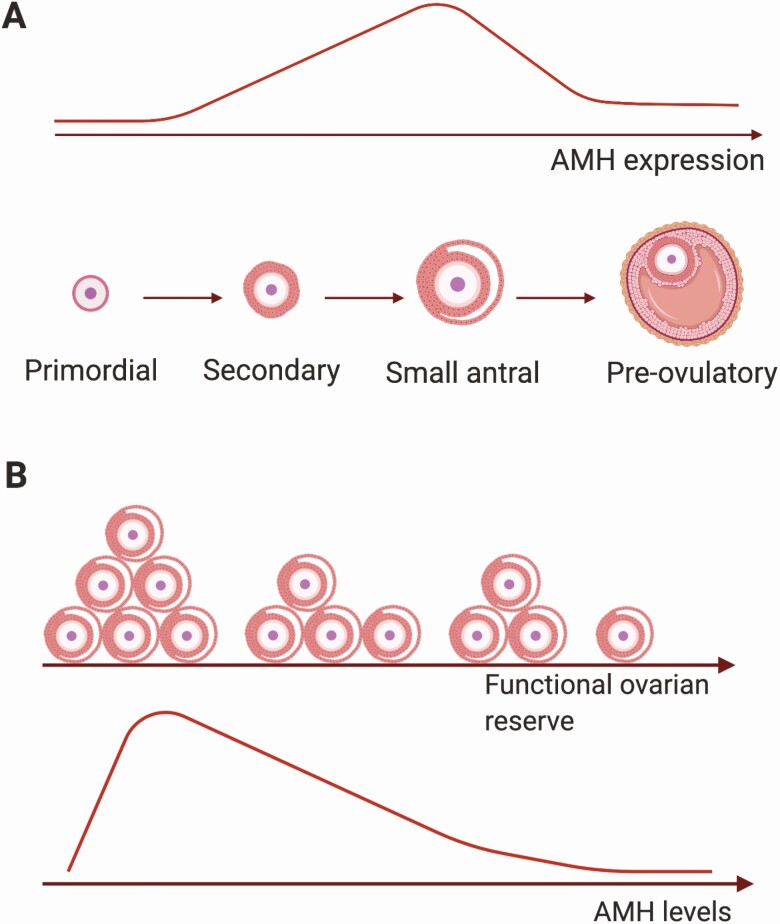
Context: Anti-müllerian hormone (AMH) is produced by granulosa cells of small, growing follicles in the ovary. Serum AMH levels strongly correlate with the number of growing follicles, and therefore AMH has received increasing attention as a marker for ovarian reserve. This review summarizes recent findings and limitations in the application of serum AMH in ovarian reserve assessment. Evidence Acquisition: A PubMed search was conducted to find recent literature on the measurements and use of serum AMH as a marker for ovarian reserve. Evidence Synthesis: Serum AMH levels are measured to assess the “functional ovarian reserve,” a term that is preferred over “ovarian reserve,” since AMH levels reflect the pool of growing follicles that potentially can ovulate. Serum AMH levels are used in individualized follicle-stimulating hormone dosing protocols and may predict the risk of poor response or ovarian hyperstimulation syndrome but has limited value in predicting ongoing pregnancy. Serum AMH levels are studied to predict natural or disease-related age of menopause. Studies show that the age-dependent decline rates of AMH vary among women. The generalized implementation of serum AMH measurement has also led to an increase in diagnostic assays, including automated assays. However, direct comparison of results remains problematic. Conclusion: Serum AMH remains the preferred ovarian reserve marker. However, the lack of an international standard for AMH limits comparison between AMH assays. Furthermore, little is known about endogenous and exogenous factors that influence serum AMH levels, which limits proper interpretation of AMH values in a clinical setting.
Overview
The claims and statistics of this paper haven’t been checked yet.
Free: it reads the open-access text and checks the first 5 claims that cite a source we can check. Create a free account to check every claim.
Integrity signals
Registry
Cites
Statistics
Figures
Verification
Claims the paper makes
The claims and statistics of this paper haven’t been checked yet.
Free: it reads the open-access text and checks the first 5 claims that cite a source we can check. Create a free account to check every claim.
Claims other papers make about this one
Each is checked against this paper’s own text: does it say what the citing paper says it does?
The cited source says what the claim attributes to it.
In the citing paper
“However, AMH concentrations can vary in the same patient due to inter-test and biological variability,581,583 and heterogeneity exists in available AMH assays and detection levels.583”
From Clinical practice guidelines for the care of girls and women with Turner syndrome. (2024) · cites this paper as [583]
The check wasn’t confident either way, so it gives no verdict — never disputed.
In the citing paper
“IGT also is present in a significant proportion of men undergoing investigation for primary infertility.1549”
From American Association of Clinical Endocrinology Clinical Practice Guideline: Developing a Diabetes Mellitus Comprehensive Care Plan-2022 Update. (2022) · cites this paper as [1549]
Experimental — accuracy not yet measured
Self-check
Percentages, sums and reported differences re-computed from the paper’s own numbers.
The self-check needs the paper’s full text.
Citations
Cites
The Diagnosis of Polycystic Ovary Syndrome during Adolescence
Witchel, S. F., Oberfield, S., Rosenfield, R. L., Codner, E., Bonny, A., Ibáñez, L., Pena, A., Horikawa, R., Gomez-Lobo, V., Joel, D., et al. (2015) · Hormone Research in Paediatrics · doi:10.1159/000375530 · Cited by 3,113
The physiology and clinical utility of anti-Müllerian hormone in women
Dewailly, D., Andersen, C. Y., Balen, A., Broekmans, F., Dilaver, N., Fanchin, R., Griesinger, G., Kelsey, T. W., La Marca, A., Lambalk, C., et al. (2014) · Human Reproduction Update · doi:10.1093/humupd/dmt062 · Cited by 1,049 · cited 1×
“Initial studies, performed nearly 2 decades ago, showed that serum AMH levels indeed strongly correlate with the number of growing follicles and that both decline with increasing age (3).”
BackgroundSelf-citationCate, R. L., Mattaliano, R. J., Hession, C., Tizard, R., Farber, N. M., Cheung, A., Ninfa, E. G., Frey, A. Z., Gash, D. J., Chow, E. P., et al. (1986) · Cell · doi:10.1016/0092-8674(86)90783-x · Cited by 1,022
Human ovarian reserve from conception to the menopause
Wallace, W., & Kelsey, T. (2009) · Nature Precedings · doi:10.1038/npre.2009.3179.1 · Cited by 878 · cited 1×
“This positive correlation may reflect the increased rate of primordial follicle recruitment observed from birth up to approximately age 14 years (13).”
BackgroundCorrelation of ovarian reserve tests with histologically determined primordial follicle number
Hansen, K. R., Hodnett, G. M., Knowlton, N., & Craig, L. B. (2011) · Fertility and Sterility · doi:10.1016/j.fertnstert.2010.04.006 · Cited by 534 · cited 1×
“In younger women AMH levels did not correlate, while in women of late reproductive age, a significant correlation was observed with the primordial follicle density (7-10).”
BackgroundA Validated Model of Serum Anti-Müllerian Hormone from Conception to Menopause
Kelsey, T. W., Wright, P., Nelson, S. M., Anderson, R. A., & Wallace, W. H. B. (2011) · PLoS ONE · doi:10.1371/journal.pone.0022024 · Cited by 457 · cited 2×
“From age 25 years onward, AMH levels start to decline to undetectable levels at menopause, and only from this age onward, a negative correlation between AMH levels and age can be observed (11, 12).”
BackgroundBroer, S. L., van Disseldorp, J., Broeze, K. A., Dolleman, M., Opmeer, B. C., Bossuyt, P., Eijkemans, M. J. C., Mol, B.-W. J., Broekmans, F. J. M., on behalf of the IMPORT study group, et al. (2013) · Human Reproduction Update · doi:10.1093/humupd/dms041 · Cited by 457 · cited 3×
“In agreement with the studies from Broer et al (63, 64), the authors concluded that changing the dosage of stimulating medication based on individual ORTs, including AMH, does not significantly increase the chances on pregnancy and live birth.”
MethodResultInfluentialSerum Anti-Müllerian Hormone Levels Reflect the Size of the Primordial Follicle Pool in Mice
Kevenaar, M. E., Meerasahib, M. F., Kramer, P., van de Lang-Born, B. M. N., de Jong, F. H., Groome, N. P., Themmen, A. P. N., & Visser, J. A. (2006) · Endocrinology · doi:10.1210/en.2005-1588 · Cited by 389 · cited 1×
“Only at older ages did AMH levels reflect the number of primordial follicles, while at all ages, serum AMH levels correlated with the number of growing follicles (6).”
BackgroundSelf-citationJeppesen, J. V., Anderson, R. A., Kelsey, T. W., Christiansen, S. L., Kristensen, S. G., Jayaprakasan, K., Raine-Fenning, N., Campbell, B. K., & Yding Andersen, C. (2013) · Molecular Human Reproduction · doi:10.1093/molehr/gat024 · Cited by 374
Tsepelidis, S., Devreker, F., Demeestere, I., Flahaut, A., Gervy, C., & Englert, Y. (2007) · Human Reproduction · doi:10.1093/humrep/dem101 · Cited by 299 · cited 1×
“While initial studies suggested that AMH levels are relatively stable during the menstrual cycle (24), more recent research suggest that AMH levels show significant intracycle variation up to 20.”
Background
Cited by
Items 601–648 of 648
Kadhim, F. J., Lafta, H., Abdelhafez, M. S., & Abou‐El‐Naga, A. M. (2026) · Journal of Obstetrics Gynecology and Cancer Research · doi:10.24200/jogcr.11.9.844
Khaleefah, M. H., Al‐Obaidi, M. T., Elrefaeey, A., & Abou‐El‐Naga, A. M. (2026) · Journal of Obstetrics Gynecology and Cancer Research · doi:10.24200/jogcr.11.9.808
Radu, T., Mar, M., Gliga, M., & Mărginean, C. (2026) · Medical Sciences · doi:10.3390/medsci14030416
“This complementary approach is consistent with current evidence indicating that AMH and AFC reflect different biological aspects of ovarian reserve and should therefore be interpreted together, rather than as interchangeable markers of ovarian function [16].”
Zhao, W., Liu, X., Guo, Y., Li, T., Zeng, H., Fang, C., Liang, X., Li, Y., & Li, J. (2026) · Human Reproduction · doi:10.1093/humrep/deag117
Bulu, G., Akyol, A., Kuloğlu, T., Bulu, A., & Şanlı, C. (2026) · Clinical and Experimental Obstetrics & Gynecology · doi:10.31083/ceog52123
Chen, J., Duan, X., Jing, Y., Liu, X., Zhang, Y., Tang, Y., Chen, C., Yang, J., Li, X., Lin, F., et al. (2026) · Journal of Ovarian Research · doi:10.1186/s13048-026-02203-w
Zam, W., Housheh, S., Marouf, H., Alshaer, J., & Nouman, A. (2026) · Women s Health · doi:10.1177/17455057261476901
“12,13 Establishing normative AMH and gonadotropin values for Middle Eastern populations is therefore essential for accurate clinical interpretation.”
Vays, A., Dzhibladze, T. A., Zuev, V. M., Chilova, R., Gavrilova, T. V., Rukhadze, T. N., Bakhvalova, A. A., Obosyan, L. B., & Bryunin, D. V. (2026) · V F Snegirev Archives of Obstetrics and Gynecology · doi:10.17816/aog707309
“Наиболее информативным, доступным и широко используемым маркёром является уровень АМГ, значения которого относительно стабильны и не зависят от фазы менструального цикла [10].”
Wang, L., Jin, Y., Zhang, G., Chen, X., Ren, H., Li, L., 田晶晶, Mengke, B., Li, P., Ma, Y., et al. (2026) · Veterinary Sciences · doi:10.3390/vetsci13080788
Du, H., & Yan, H. (2026) · Journal of Radiation Research and Applied Sciences · doi:10.1016/j.jrras.2026.102619
Jin, F., Fryze, J., Böttcher, B., Strowitzki, T., & Germeyer, A. (2026) · F&S Reviews · doi:10.1016/j.xfnr.2026.100120
Mikhail, I., Odah, T., Hashash, J. G., Farraye, J., Kuohung, W., & Farraye, F. A. (2026) · Digestive Diseases and Sciences · doi:10.1007/s10620-026-10191-6
Yadav, S., & Patel, P. (2026) · BIO Web of Conferences · doi:10.1051/bioconf/202624900031
Karalök, M. H., Dündar, B., Parmaksız, A., Elgün, T., Sevinç, S. K., & Yurttaş, A. G. (2026) · Metabolites · doi:10.3390/metabo16090610
“AMH is a dimeric glycoprotein of the transforming growth factor-beta superfamily produced by the granulosa cells of preantral and small antral follicles [1,2], and its serum concentration reflects the size of the remaining growing follicle pool [3,4].”
Fimiarz, K. J., Łysak, K., Pawełkiewicz, S., Grygutis, I., Suchołbiak, A., Jarzęcka, U., Kozielec, K., & Kozielec, M. (2026) · International Journal of Innovative Technologies in Social Science · doi:10.31435/ijitss.2(50).2026.5360
“(Practice Committee of the American Society for Reproductive Medicine, 2020; Moolhuijsen and Visser, 2020) As a marker of ovarian reserve, AMH may be a useful parameter for evaluating the safety of conservative treatment methods for adenomyosis.”
Jang, E. B., Kook, Y. S., Lee, A. J., Shim, S., Lee, S. J., Kim, T. J., & So, K. A. (2026) · Medicine · doi:10.1097/md.0000000000050473
Gungor, E., Pehlivan, K. S., Ciydem, A., & Çim, N. (2026) · BMC Women s Health · doi:10.1186/s12905-026-04842-z
“Ovarian reserve, the size and quality of the remaining follicle pool, is most commonly estimated in clinical practice by AMH, AFC, and ovarian volume [6, 7].”
Xue, W., Chen, T., Wu, Y., Ren, T., Zhao, J., 冯凤芝, Wan, X., Xiang, Y., & Yang, J. (2026) · International Journal of Gynecology & Obstetrics · doi:10.1002/ijgo.71318
Evaluation of angiopoietin-like protein 4 levels in patients with endometriosis
Tanrıverdi, M. D. E., & Koç, E. M. E. (2026) · Journal of the Turkish-German Gynecological Association · doi:10.4274/jtgga.galenos.2026.2026-2-15
“AMH, produced by granulosa cells of small growing ovarian follicles, serves as a reliable biomarker for assessing the functional ovarian reserve and reflects the remaining follicular pool, making it a key early indicator of diminished ovarian function (24).”
Modeling the diagnosis and control infertility couples with different factorsPreprint
Ghasemabadi, A., Hafezi, S. G., Effati, S., Namakin, K., Zand, M. A., & Ghamsary, M. (2023) · Research Square · doi:10.21203/rs.3.rs-3318432/v1
Sanni, A., Jurczak, S., Stewart, S., Stasinou, T., Modgil, V., Mathur, R., & Tsampras, N. (2026) · Research Square · doi:10.21203/rs.3.rs-10411765/v1
Le rôle du bilan hormonal dans l’évaluation de l’infertilité
Jones, C., & Separi, L. (2026) · Canadian Family Physician · doi:10.46747/cfp.7209e280
“Cepen-dant, les taux d’AMH peuvent varier jusqu’à près de 20 % durant un cycle menstruel, et ils sont influencés par l’âge, l’indice de masse corporelle, les maladies et la contraception hormonale 18 .”
Role of hormone testing in assessment of infertility
Jones, C., & Separi, L. (2026) · Canadian Family Physician · doi:10.46747/cfp.7209547
A Multidimensional Perspective Review of Traditional Chinese Medicine in Treating Ovarian Aging
Zhang, W., Wang, G., Yan, Y., Li, H., Li, S., Liu, L., & Fan, G. (2026) · International Journal of Women s Health · doi:10.2147/ijwh.s633079
“61 Its serum levels exhibit a negative correlation with female age, meaning AMH levels decline progressively with advancing age.”
Wan, X., Yu, M., Wu, X., Huang, Z., & Tan, J. (2026) · Frontiers in Endocrinology · doi:10.3389/fendo.2026.1914533
Lewchalermwong, D., Adi, Y. K., Taechamaeteekul, P., Olanratmanee, E.-O., Kesdangsakonwut, S., & Tummaruk, P. (2026) · Animals · doi:10.3390/ani16192974
“These findings are consistent with the possibility that elevated luteal AMH may modulate FSH sensitivity, follicle recruitment, and luteal steroidogenesis, although the precise physiological significance of AMH in luteal tissue remains to be determined [19,36].”
InfluentialFariña, S. G., Quintana, D. R. B., Hernández, Y. S., Guirado, J. M., Rancel, M. C., Pérez, J. G., & Padrón, E. (2026) · European Journal of Obstetrics & Gynecology and Reproductive Biology · doi:10.1016/j.ejogrb.2026.115452
Karaman, E., & Öner, G. (2026) · Clinical and Experimental Obstetrics & Gynecology · doi:10.31083/ceog51464
Sen, E. (2026) · Life · doi:10.3390/life16101642
“Reviews summarizing ovarian ageing and ovarian reserve tests emphasize that optimal fertility is observed between 20 and 30 years of age, whereas a marked and accelerated decline in both oocyte quantity and quality occurs after the age of 35 [24,25].”
Association of Body Mass Index with Inflammatory Biomarkers Among Women with Infertility
Saleh, A. (2026) · Al-Turath Journal for Biology · doi:10.63964/atjb.2026.2.3.3
Joronen, R. (2025) · UEF eRepo (University of Eastern Finland)
RETROSPECTIVE ANALYSIS OF REPRODUCTIVE FUNCTION IN WOMEN OF LATE REPRODUCTIVE AGE
Akhmedzhanova, K. Z., & Ishkulovich, S. F. (2024) · Central Asian Journal of Medicine
Gholami, A. A., Azizova, Z. S., Musahodzhaeva, D., Ismailova, D., Ishmuratova, L., & ALIAKBAROVNA, A. M. A. A. N. (2026) · Journal of Endometriosis and Uterine Disorders · doi:10.1016/j.jeud.2026.100188
Anti-Mullerian Hormone (AMH) Levels In Patients Before And After Salpingectomy And Hysterectomy
Musdhaliufatullah, N., Abdullah, N., Abidin, N., Sunarno, I., Sriwijaya, S., & syahri, S. (2025) · Journal of Neonatal Surgery
Dumas, C. M., Alizadeh, E., Lee, J. Y., Sullivan, M., Kuljancic, J., Flynn, W. F., Robson, P., White, B. S., Luciano, D. E., & Courtois, E. T. (2026) · Nature Communications · doi:10.1038/s41467-026-78453-5 · Cited by 1
Low Anti-Mullerian Hormone in Primary Infertility: a Review with Homoeopathic Therapeutic Approach
-, D. V. S. C. (2026) · Advanced International Journal for Research · doi:10.63363/aijfr.2026.v07i05.8016
Chen, C.-Y., Lu, Y., Chang, P.-H., Chen, H.-J., Hsueh, Y., Chang, C.-W., Hsu, H.-C., Yang, T.-C., Chang, Y.-Y., & Chang, H.-M. (2026) · Frontiers in Endocrinology · doi:10.3389/fendo.2026.1962631
Yücel, G. N., Sağlam, A. S. Y., & Kaplanoğlu, G. T. (2026) · Journal of Biochemical and Molecular Toxicology · doi:10.1002/jbt.71152
Антимюллеровский гормон предиктор менопаузы?
Зайдилаевна, З. Я. (2023) · Medical alphabet
Anti-Müllerian Hormone Trajectories Across the Menopause Transition
Acharya, K. S., Bozzuto, L., Kaizer, L. K., Crawford, S., Khoudary, S. R. E., Karlamangla, A. S., Morrison, A., Neal-Perry, G. S., Santoro, N., & Sammel, M. D. (2026) · Obstetrics and Gynecology · doi:10.1097/aog.0000000000006451
Karadeniz, O., Kar, D. E., & Cicekyurt, D. T. (2026) · Journal of Ultrasound in Medicine · doi:10.1002/jum.70531
Georgopoulou, A. N., Vassilakopoulos, T. P., Markantes, G. Κ., Georgopoulos, N. A., Κωνσταντόπουλος, Κ., Siakantaris, M. P., & Angelopoulou, M. K. (2026) · HORMONES · doi:10.1007/s42000-026-00836-6
Golgelioglu, M., & Soy, H. Ö. (2026) · Journal of Medicine and Palliative Care · doi:10.47582/jompac.2005229
Wang, C., Fu, X., Feng, Q., Cao, W., Du, F., Liu, C., Xiaomei, F., Liu, S., Hou, H., 李八方, et al. (2026) · Nutrients · doi:10.3390/nu18213595
Qin, S., Zhang, Q., Qian, X., 黄国宁, Wan, Y., & Wu, J. (2026) · Environmental Pollution · doi:10.1016/j.envpol.2026.129462
Reproductive factors in women with familial hypercholesterolaemia
Mulder, J. W. C. M., van Oortmerssen, J. A. E., Klevmoen, M., Galema‐Boers, A. M. H., Løvheim, E. B., Louwers, Y. V., Visser, J. A., Boersma, E. H., Holven, K. B., Kavousi, M., et al. (2026) · European Journal of Preventive Cardiology · doi:10.1093/eurjpc/zwag515
Self-citationPartner-specific biological interactions in human reproduction
Glusciukaite, K., Didžiokaitė, G., Vidrinskaite, G., Kugaudaite, G., Bernotas, P., Lebedis, I., Vaičiulevičiūtė, R., Pachaleva, J., Kuznecovaitė, A., Bernotienė, E., et al. (2026) · Frontiers in Cell and Developmental Biology · doi:10.3389/fcell.2026.1974757
Jiang, F., Liang, Y., Chen, J., Yang, X., 宋家美, Dongya, L., Meng, Y., & Liu, Y. (2026) · Scientific Reports · doi:10.1038/s41598-026-64818-9
Metadata
- Authors
- Moolhuijsen, L. M. E., & Visser, J. A.
- Affiliations
- Erasmus MC (NL)
- Corresponding author
- Visser, Jenny A
- Venue
- The Journal of Clinical Endocrinology & Metabolism
- Publisher
- The Endocrine Society
- Published
- 2020-08-08
- Volume
- 105
- Issue
- 11
- Pages
- 3361-3373
- ISSN
- 0021-972X (ISSN-L)
- 1945-7197
- PMC
- PMC7486884
- OpenAlex
- W3047889783
- Cited by
- 584
- References
- 101
- Citations by year
- 2026: 104 · 2025: 115 · 2024: 131 · 2023: 101 · 2022: 86 · 2021: 44 · 2020: 2
- FWCI
- 8.65
- Type
- journal article
- Language
- en
- Open access
- hybrid
- doi.org
- Licence
- Locations
- The Journal of Clinical Endocrinology & Metabolism (publishedVersion, cc-by)
- PubMed Central (publishedVersion, cc-by)
- PubMed (publishedVersion)
- EUR Research Repository (Erasmus University Rotterdam) (publishedVersion, other-oa)
- EUR Research Repository (Erasmus University Rotterdam) (submittedVersion, other-oa)
- RePub (Erasmus University Rotterdam) (submittedVersion, other-oa)
- RePub (Erasmus University Rotterdam) (submittedVersion)
- Topics
- Health Sciences › Medicine › Reproductive Medicine › Ovarian function and disorders
- Health Sciences › Medicine › Reproductive Medicine › Reproductive Biology and Fertility
- Health Sciences › Medicine › Oncology › Ovarian cancer diagnosis and treatment
- Keywords
- anti-Müllerian hormone, ovarian reserve, ovarian reserve markers, granulosa cells, growing follicles, poor ovarian response, ovarian hyperstimulation syndrome, menopause prediction, endogenous and exogenous factors
- MeSH terms
- Aging, Female, Fertility, Humans, Infertility, Female, Anti-Mullerian Hormone, Ovarian Reserve
About these checks
Registry, retraction, Cites and statistics results are computed, not judged, with one exception: a printed reference that no index lists is read once by a model before it counts as a citation error. Claims are extracted by a model and kept only when their quote appears verbatim in the text; each cited source is then checked, with a model’s help, for whether it says what the claim relies on. Those verdicts can be wrong — read the claim’s quote and the cited source before relying on one.
Statistics and arithmetic are recomputed, not judged.
Confidence bands are shown only for fields calibrated on our annotated test set. None is calibrated yet, so no band is shown.
What counts as a claim ›How we measure confidence ›How we check this ›
Are you an author, or do you see a problem with this page? Request a review
Data sources
Bibliographic data: Semantic Scholar, OpenAlex, Crossref.
Contains information from the Semantic Scholar Academic Graph Datasets, made available under the ODC Attribution License (ODC-BY 1.0).
Semantic Scholar’s data is described in: Kinney, R., et al. (2023). The Semantic Scholar Open Data Platform. arXiv:2301.10140.
