

The DOI matches its Crossref record; 53 of the 54 references it cites were found in a registry or an index.
Exercise Training Modulates Gut Microbiota Profile and Improves Endotoxemia
Open accessAbstract
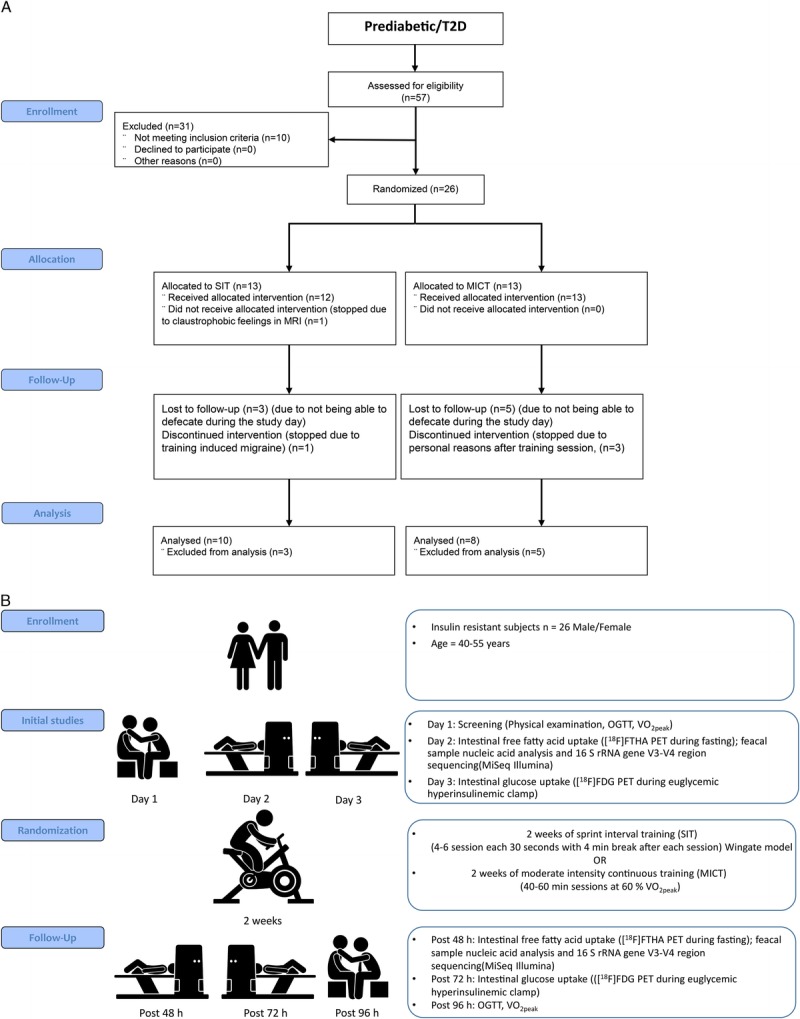
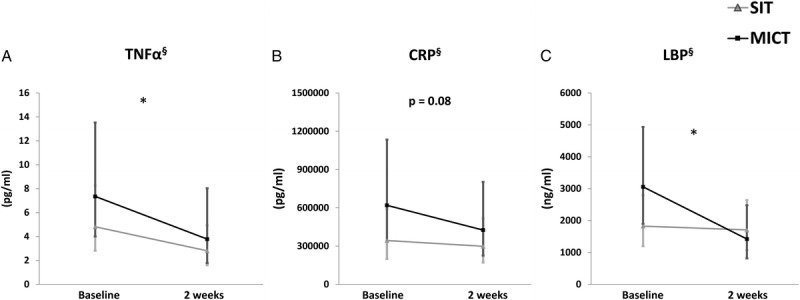
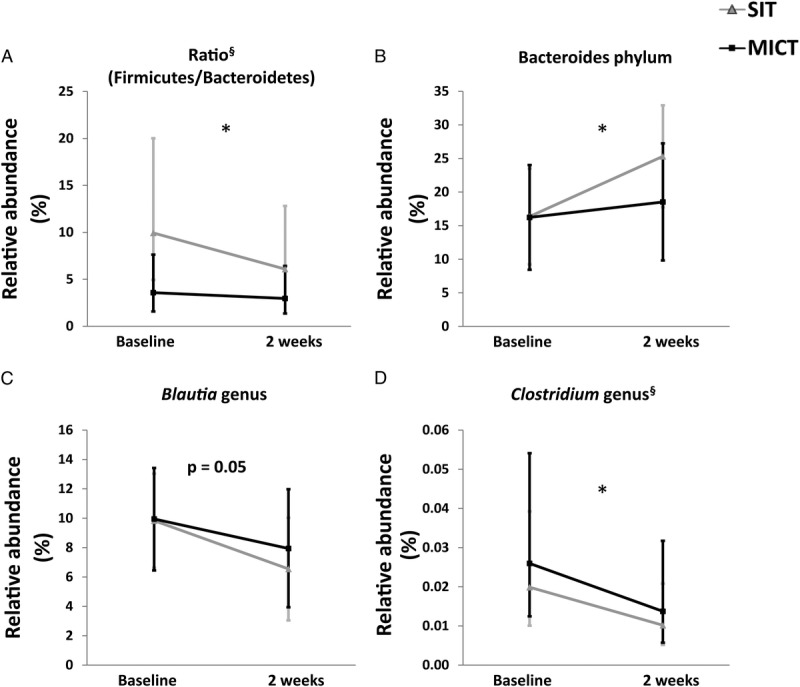
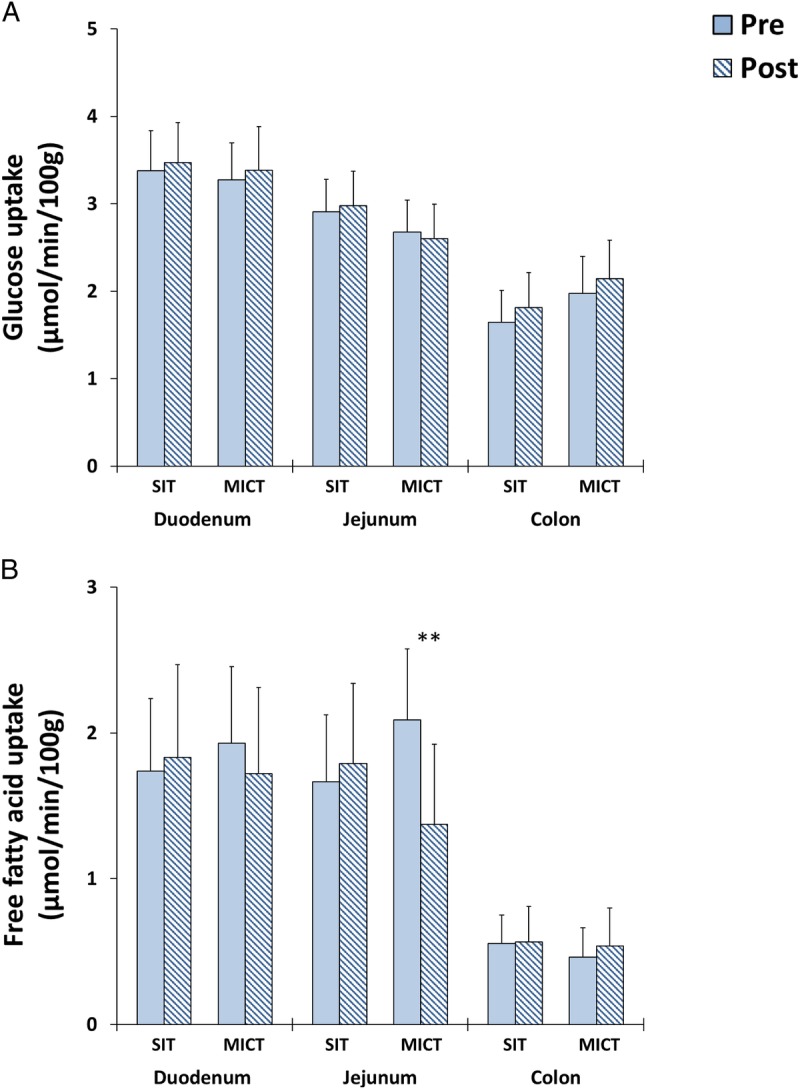
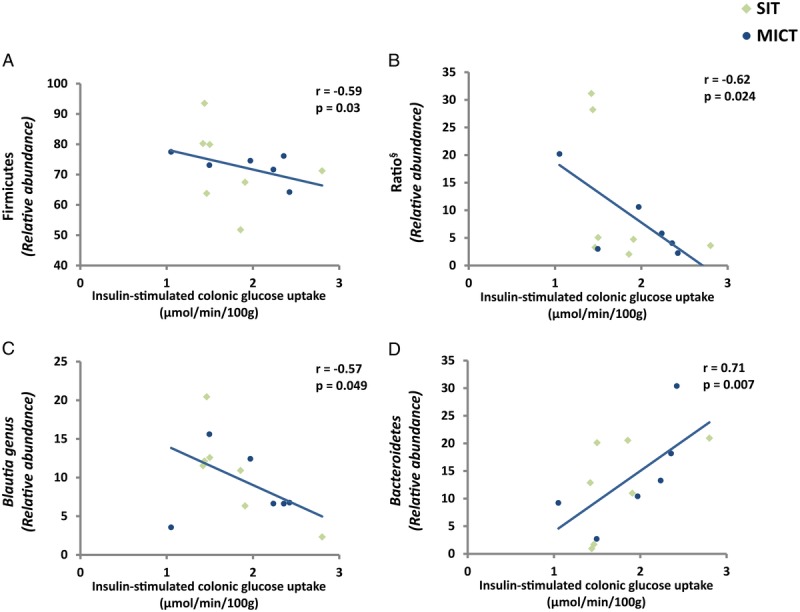
Introduction: Intestinal metabolism and microbiota profiles are impaired in obesity and insulin resistance. Moreover, dysbiotic gut microbiota has been suggested to promote systemic low-grade inflammation and insulin resistance through the release of endotoxins particularly lipopolysaccharides. We have previously shown that exercise training improves intestinal metabolism in healthy men. To understand whether changes in intestinal metabolism interact with gut microbiota and its release of inflammatory markers, we studied the effects of sprint interval (SIT) and moderate-intensity continuous training (MICT) on intestinal metabolism and microbiota in subjects with insulin resistance. Methods: Twenty-six, sedentary subjects (prediabetic, n = 9; type 2 diabetes, n = 17; age, 49 [SD, 4] yr; body mass index, 30.5 [SD, 3]) were randomized into SIT or MICT. Intestinal insulin-stimulated glucose uptake (GU) and fatty acid uptake (FAU) from circulation were measured using positron emission tomography. Gut microbiota composition was analyzed by 16S rRNA gene sequencing and serum inflammatory markers with multiplex assays and enzyme-linked immunoassay kit. Results: V˙O 2peak improved only after SIT ( P = 0.01). Both training modes reduced systematic and intestinal inflammatory markers (tumor necrosis factor-α, lipopolysaccharide binding protein) (time P < 0.05). Training modified microbiota profile by increasing Bacteroidetes phylum (time P = 0.03) and decreasing Firmicutes/Bacteroidetes ratio (time P = 0.04). Moreover, there was a decrease in Clostridium genus (time P = 0.04) and Blautia (time P = 0.051). Only MICT decreased jejunal FAU ( P = 0.02). Training had no significant effect on intestinal GU. Colonic GU associated positively with Bacteroidetes and inversely with Firmicutes phylum, ratio Firmicutes/Bacteroidetes and Blautia genus. Conclusions: Intestinal substrate uptake associates with gut microbiota composition and whole-body insulin sensitivity. Exercise training improves gut microbiota profiles and reduces endotoxemia.
Overview
The claims and statistics of this paper haven’t been checked yet.
Run the check — free, no account needed. It reads the open-access text and checks the sources it cites.
Integrity signals
Registry
Cites
Statistics
Figures
Verification
Claims the paper makes
The claims and statistics of this paper haven’t been checked yet.
Run the check — free, no account needed. It reads the open-access text and checks the sources it cites.
Claims other papers make about this one
Each is checked against this paper’s own text: does it say what the citing paper says it does?
In the citing paper
“lower abundance of Blautia genus was associated with better whole-body insulin sensitivity.”
From The athletic gut microbiota (2020) · cites this paper as [109]
In the citing paper
“Bacteroidetes increased and the Firmicutes/Bacteroidetes ratio decreased.”
From The athletic gut microbiota (2020) · cites this paper as [109]
In the citing paper
“both high intensity interval and moderate continuous training affected the gut microbiota in insulin resistant, sedentary individuals following a 2-week exercise intervention [109].”
From The athletic gut microbiota (2020) · cites this paper as [109]
In the citing paper
“There was also a decrease in Clostridium and Blautia genera.”
From The athletic gut microbiota (2020) · cites this paper as [109]
In the citing paper
“These results highlight the importance of intestinal substrate uptake on the whole-body and changes, especially in glucose uptake, might have a positive effect on the gut microbiota.”
From The athletic gut microbiota (2020) · cites this paper as [109]
In the citing paper
“colonic glucose concentrations associated positively with Bacteroidetes and inversely with Firmicutes phylum, the Firmicutes/Bacteroidetes ratio, and Blautia genus.”
From The athletic gut microbiota (2020) · cites this paper as [109]
Self-check
Percentages, sums and reported differences re-computed from the paper’s own numbers.
The self-check needs the paper’s full text.
Citations
Cites
QIIME allows analysis of high-throughput community sequencing data
Caporaso, J. G., Kuczynski, J., Stombaugh, J., Bittinger, K., Bushman, F. D., Costello, E. K., Fierer, N., Peña, A. G., Goodrich, J. K., Gordon, J. I., et al. (2010) · Nature Methods · doi:10.1038/nmeth.f.303 · Cited by 34,887
An obesity-associated gut microbiome with increased capacity for energy harvest
Turnbaugh, P. J., Ley, R. E., Mahowald, M. A., Magrini, V., Mardis, E. R., & Gordon, J. I. (2006) · Nature · doi:10.1038/nature05414 · Cited by 12,444
Human gut microbes associated with obesity
Ley, R. E., Turnbaugh, P. J., Klein, S., & Gordon, J. I. (2006) · Nature · doi:10.1038/4441022a · Cited by 8,785
Glucose clamp technique: a method for quantifying insulin secretion and resistance.
DeFronzo, R. A., Tobin, J. D., & Andres, R. (1979) · American Journal of Physiology-Endocrinology and Metabolism · doi:10.1152/ajpendo.1979.237.3.e214 · Cited by 7,425
Obesity alters gut microbial ecology
Ley, R. E., Bäckhed, F., Turnbaugh, P., Lozupone, C. A., Knight, R. D., & Gordon, J. I. (2005) · Proceedings of the National Academy of Sciences · doi:10.1073/pnas.0504978102 · Cited by 6,176
Cani, P. D., Bibiloni, R., Knauf, C., Waget, A., Neyrinck, A. M., Delzenne, N. M., & Burcelin, R. (2008) · Diabetes · doi:10.2337/db07-1403 · Cited by 4,819
Graphical Evaluation of Blood-to-Brain Transfer Constants from Multiple-Time Uptake Data
Patlak, C. S., Blasberg, R. G., & Fenstermacher, J. D. (1983) · Journal of Cerebral Blood Flow & Metabolism · doi:10.1038/jcbfm.1983.1 · Cited by 3,565
Turnbaugh, P. J., Bäckhed, F., Fulton, L., & Gordon, J. I. (2008) · Cell Host & Microbe · doi:10.1016/j.chom.2008.02.015 · Cited by 2,915
Classification and Diagnosis of Diabetes
Fajans, S. S. (1990) · Medical Entomology and Zoology · Cited by 2,356
A microbial symbiosis factor prevents intestinal inflammatory disease
Mazmanian, S. K., Round, J. L., & Kasper, D. L. (2008) · Nature · doi:10.1038/nature07008 · Cited by 2,340
Cited by
Sorted by citations
Items 201–300 of 333
Advancements of physical exercise and intestinal microbiota and their potential mechanisms
Li, R., Zhang, T., Cheng, Z. L., Yao, C., Meng, X., & Ma, T. (2025) · Frontiers in Microbiology · doi:10.3389/fmicb.2025.1595118 · Cited by 4
Regular Physical Activity Influences Gut Microbiota with Positive Health Effects
Jurdana, M., & Maganja, D. B. (2023) · IntechOpen eBooks · doi:10.5772/intechopen.110725 · Cited by 5
Lietzén, M. S., Guzzardi, M. A., Ojala, R., Hentilä, J., Heiskanen, M. A., Honkala, S. M., Läutamaki, R., Löyttyniemi, E., Kirjavainen, A. K., Rajander, J., et al. (2024) · Nutrients · doi:10.3390/nu16203554 · Cited by 4
Self-citationEmerging trends and hotspots in intestinal microbiota research in sepsis: bibliometric analysis
Zhang, Z., Yang, M., Zhou, T., Chen, Y., Zhou, X., & Long, K. (2024) · Frontiers in Medicine · doi:10.3389/fmed.2024.1510463 · Cited by 5
Yang, J., Zhang, W., & Dong, C. (2025) · Biology · doi:10.3390/biology14020211 · Cited by 4
Rethinking Parkinson Disease: Exploring Gut-Brain Interactions and the Potential Role of Exercise
Zapanta, K., Schroeder, E. T., & Fisher, B. E. (2022) · Physical Therapy · doi:10.1093/ptj/pzac022 · Cited by 5
de Souza, E., Meneses-Santos, D., Santos, J., Aidar, F., Carvalho, C. R. D. O., dos Santos, J. D., & Marçal, A. C. (2023) · Sports · doi:10.3390/sports11100192 · Cited by 5
Essential Fatty Acids along the Women’s Life Cycle and Promotion of a Well-balanced Metabolism
Marchiori, G. N., Eynard, A. R., & Soria, E. A. (2023) · Current Women s Health Reviews · doi:10.2174/0115734048247312230929092327 · Cited by 4
Meenatchi, R., Singh, P., Ahmed, Z. H. T., Thacharodi, A., Rohinth, M., Kumar, R. R., K, H. V. M., & Hassan, S. (2023) · doi:10.22541/au.169200028.86242834/v1 · Cited by 3
Dziewiecka, H., Ostapiuk–Karolczuk, J., Kasperska, A., Cichoń-Woźniak, J., Basta, P., & Skarpańska-Stejnborn, A. (2025) · BMC Sports Science Medicine and Rehabilitation · doi:10.1186/s13102-025-01099-1 · Cited by 3
Bock, P. M., Kowalewski, L. S., Ayres, L. R., Russo, M. K. B., Dornelles, L. I., Leites, G. T., Martins, A. F., de Oliveira, Á. R., & Krause, M. D. S. (2025) · Sao Paulo Medical Journal · doi:10.1590/1516-3180-2024.0040.r1.13082024 · Cited by 3
Suther, C., Hatch‐McChesney, A., Allen, J. T., Chakraborty, N., Lawrence, A., Moyler, C., Dimitrov, G. I., Gautam, A., Hammamieh, R., Gwin, J. A., et al. (2025) · American Journal of Physiology-Gastrointestinal and Liver Physiology · doi:10.1152/ajpgi.00130.2025 · Cited by 4
Cutting edge developments and novel targets in IBD: Microbiome in IBD
Deleu, S., & Sabino, J. P. G. (2025) · Best Practice & Research Clinical Gastroenterology · doi:10.1016/j.bpg.2025.102060 · Cited by 4
Gut microbiota and hypertension: role of exercise training
Zhao, M. L., Liu, Q., Shi, N.-J., Li, Y., & Li, H. (2025) · Clinical and Experimental Hypertension · doi:10.1080/10641963.2025.2608905 · Cited by 3
Tao, Y., Wang, Z., Wang, Q., & Zhong, S. (2025) · Nutrition Reviews · doi:10.1093/nutrit/nuaf274 · Cited by 4
JIANG, H.-B., Zhang, J.-Q., Liang, H., Sun, L.-Y., Deng, C., & Yang, S. (2026) · Frontiers in Microbiology · doi:10.3389/fmicb.2026.1729870 · Cited by 7
Evolution and development of innate immune memory
Divangahi, M., & Kaufmann, E. (2026) · Science Immunology · doi:10.1126/sciimmunol.aeb7976 · Cited by 7
Gómez‐Bruton, A., Irún, P., Matute-Llorente, Á., Lozano‐Berges, G., Moradell, A., Ara-Gimeno, S., Subías-Perié, J., Sánchez‐Luengo, M., Hijos, G., García, S. G., et al. (2024) · Trials · doi:10.1186/s13063-024-08221-7 · Cited by 3
Kouraki, A., Vijay, A., Gohir, S. A., Millar, B., Kelly, A., & Valdes, A. M. (2024) · Sports Health A Multidisciplinary Approach · doi:10.1177/19417381241283812 · Cited by 3
Merelim, A. S., Zacca, R., Moreira‐Gonçalves, D., Costa, P., & Baptista, L. C. P. (2025) · Frontiers in Medicine · doi:10.3389/fmed.2025.1504786 · Cited by 3
Zheng, T.-S., Gao, X., Gu, C. J., Ru, Y., Xu, R.-P., Yang, Y., & Wang, D. (2025) · Biomolecules · doi:10.3390/biom15060862 · Cited by 3
Restoring gut biome balance for weight loss: clinical applications
Bhat, N., Bhat, J., Bhat, K., Junaid, I., Bhat, A., & Bhat, J. (2022) · Elsevier eBooks · doi:10.1016/b978-0-12-822238-6.00022-4 · Cited by 3
Ortega‐Santos, C. P., Al‐Nakkash, L., & Whisner, C. M. (2022) · Microorganisms · doi:10.3390/microorganisms10112221 · Cited by 3
Bielik, V., Hric, I., & Hammami, R. (2023) · Journal of sport and health science/Journal of Sport and Health Science · doi:10.1016/j.jshs.2023.12.003 · Cited by 3
Dysbiosis and Regulation of Gut Microbiota in Type 2 Diabetes Mellitus
Minakshi, Kumari, H., Prakash, S., & Kumar, A. (2024) · Current Pharmaceutical Biotechnology · doi:10.2174/0113892010318580240910061534 · Cited by 5
The effect of physical activity on gut microbiota. A review
Barzak, B., Hankus, K., Parmar, S., & Woźniak, S. (2022) · Medical Journal of Cell Biology · doi:10.2478/acb-2022-0021 · Cited by 3
The Universal Endurance Microbiome?Preprint
Olbricht, H., Twadell, K., Sandel, B., Stephens, C. M., & Whittall, J. B. (2022) · bioRxiv (Cold Spring Harbor Laboratory) · doi:10.1101/2022.07.20.500882 · Cited by 3
Advances in Probiotics for Health and Nutrition
Zambare, V., Din, M. F. M., Gupta, P., & Prajapati, B. G. (2023) · IntechOpen eBooks · doi:10.5772/intechopen.104299 · Cited by 2
Soga, K., Takahashi, M., Uno, A., Sinada, T., Oba, K., Kawashima, K., Tatewaki, Y., Nakase, T., & Taki, Y. (2025) · Trials · doi:10.1186/s13063-025-08807-9 · Cited by 2
Shojah-anzabi, B., Farzizadeh, R., Seifi-Asgshahr, F., & Nejati-afkham, A. (2026) · Human Nutrition & Metabolism · doi:10.1016/j.hnm.2026.200360 · Cited by 4
Hu, C.-R., Zeng, C.-F., Li, H., Ma, W., Liu, S.-Q., Li, L.-Y., Xiao, Y., Wu, M., & Chen, M. (2026) · BMC Microbiology · doi:10.1186/s12866-026-04711-7 · Cited by 2
Kasimu, A., Huang, Y., Wang, D., Jiang, Y., Liu, Y., Song, Y., Zhang, Y., Chen, X., & Li, B. (2026) · BMC Gastroenterology · doi:10.1186/s12876-025-04554-y · Cited by 2
Duah, O. B., Young, L., Serre, C. B. D. L., Zhu, H., & Xu, H. (2026) · Journal of Clinical Medicine · doi:10.3390/jcm15103729 · Cited by 2
Keathley, J., White, J., & Reid, G. (2023) · Life · doi:10.3390/life13051124 · Cited by 2
Mancini, A., Vitucci, D., Lasorsa, V. A., Lupo, C., Brustio, P. R., Capasso, M., Orrù, S., Rainoldi, A., Schena, F. F., & Buono, P. (2024) · Frontiers in Nutrition · doi:10.3389/fnut.2024.1465707 · Cited by 2
Morita, E., Ando, S., Fukuyama, Y., Kikuchi, Y., Kumabe, S., & Yamashina, Y. (2024) · BioSocial Health Journal. · doi:10.34172/bshj.36 · Cited by 2
Impact of Physical Activity on Digestive System Diseases
Zabawa, B., Sadowski, J., Mól, P., Papież, Ł. S., Dołęga, J., Krzykawski, K., Maciejczyk, T., Sieńko, A., Łabuś, M., & Hudzińska, P. (2024) · Quality in Sport · doi:10.12775/qs.2024.34.56112 · Cited by 2
Epidemiology of bacterial biofilms on polyps and normal tissues in a screening colonoscopy cohort
Drewes, J. L., Rifkin, S. B., McMann, M., Glass, S., Spence, E., Wensel, C. R., Geis, A. L., Stevens, C. M., Gills, J. J., Wang, H., et al. (2025) · Gut Microbes · doi:10.1080/19490976.2025.2452233 · Cited by 2
Joisten, N., Reuter, M., Rosenberger, F., Venhorst, A., Kupjetz, M., Walzik, D., Schenk, A., McCann, A., Ueland, P. M., Meyer, T., et al. (2025) · Acta Physiologica · doi:10.1111/apha.70041 · Cited by 2
Wood, A., Glynn, T. K., & Cahalin, L. P. (2022) · Journal of Womenʼs Health Physical Therapy · doi:10.1097/jwh.0000000000000249 · Cited by 2
Gut microbiota in insulin resistance: a bibliometric analysis
Tian, W., Liu, L., Wang, R., Quan, Y., Tang, B., Yu, D., Zhang, L., Hua, H., & Zhao, J. (2024) · Journal of Diabetes & Metabolic Disorders · doi:10.1007/s40200-023-01342-x · Cited by 2
Álvarez‐Herms, J., Burtscher, M., González-Benito, A., Corbi, F., & Odriozola-Martínez, A. (2024) · Journal of Athletic Training · doi:10.4085/1062-6050-0143.24 · Cited by 4
Thigh muscle mass is associated with circulating valeric acid in healthy male volunteersPreprint
Hassler, E. M., Reishofer, G., Köfeler, H. C., Renner, W., Deutschmann, H., Mangge, H., Herrmann, M., Leber, S. L., Gunzer, F., & Almer, G. (2023) · medRxiv · doi:10.1101/2023.08.11.23293978 · Cited by 2
The Effect of Various Types of Exercise on Gut Microbiota: A Systematic Review
Rabiee, M., & Mousavi, M. S. (2024) · International journal of Sport Studies for Health · doi:10.61838/kman.intjssh.7.2.3 · Cited by 1
Prevalence and Influencing Factors of Irritable Bowel Syndrome Among Nurses in China
Liu, H., Chen, J., Li, X., Pang, J., Gao, Y., Gao, J., Yuan, Y., Yu, X., Li, Y., & Zhang, Y. (2024) · Gastroenterology Nursing · doi:10.1097/sga.0000000000000804 · Cited by 1
Sim, D.-H., Lee, D.-H., Lee, J., & Hong, K. (2024) · Exercise Science · doi:10.15857/ksep.2024.00577 · Cited by 1
Possible physiological benefits of fasting and exercise
Pahlavani, H. A., & Veisi, A. (2025) · Archives of Physiology and Biochemistry · doi:10.1080/13813455.2025.2550470 · Cited by 3
Meng, D., He, S., Wei, M., Lv, Z., Yang, G., & Wang, Z. (2025) · Physiology & Behavior · doi:10.1016/j.physbeh.2025.115190 · Cited by 1
Bao, Y., Wang, T., Adina, W., Yao, R., Chu, H., Yao, X., Meng, J., Wang, J., Ren, W., & Zeng, Y. (2025) · Frontiers in Microbiology · doi:10.3389/fmicb.2025.1689293 · Cited by 1
Fang, Y., Cai, Y., Chen, X., & Lin, Z. (2025) · Frontiers in Nutrition · doi:10.3389/fnut.2025.1698112 · Cited by 2
Hu, S., Chen, T., Liu, X., Wu, Z., & Wang, X. (2026) · Journal of Translational Medicine · doi:10.1186/s12967-026-07744-8 · Cited by 1
Lindsell, H. B., Corsetti, M., Darie, A.-M., Magistro, D., Mohanan, A., Walton, G., & Williams, N. C. (2026) · Neurogastroenterology & Motility · doi:10.1111/nmo.70300 · Cited by 1
An overview of current research on exercise interventions in aging and aging-related disease
Jain, A., Johnston, C., Zhang, Y., Oh, J., Tsung, C., Kent, E., & Zhang, H. (2026) · Frontiers in Aging · doi:10.3389/fragi.2026.1832962 · Cited by 2
Physical activity enhances fecal lactobacilli in rats chronically drinking sweetened cola beverage
Marušáková, M., Dudík, B., Hadová, K., Kmecová, Z., Kráľová, E., Křenek, P., Bilková, A., & Klimas, J. (2022) · Open Life Sciences · doi:10.1515/biol-2022-0070 · Cited by 1
Gholam, S.-R., Segers, C., Mysara, M., Coolkens, A., Baatout, S., Leys, N., & Mastroleo, F. (2023) · Applied Microbiology · doi:10.3390/applmicrobiol3020031 · Cited by 1
Jalo, A., Helin, J. S., Hentilä, J., Nissinen, T. A., Honkala, S. M., Heiskanen, M. A., Löyttyniemi, E., Malm, T., & Hannukainen, J. C. (2024) · Journal of Functional Morphology and Kinesiology · doi:10.3390/jfmk9020058 · Cited by 3
Self-citationIshizaka, A., Koga, M., Mizutani, T., Suzuki, Y., Matano, T., & Yotsuyanagi, H. (2024) · Translational Medicine Communications · doi:10.1186/s41231-024-00187-7 · Cited by 1
WIDE RESECTION IN SACRAL OSTEOBLASTOMA: CASE SERIES
Çakar, A., Tekin, S. B., Aktaş, M. A., Çirçi, E., Polat, B., Peker, B., & Atıcı, Y. (2024) · Journal of Turkish Spinal Surgery · doi:10.4274/jtss.galenos.2024.08769 · Cited by 1
Aerobic exercise remodels gut microbiota to alleviate cerebral ischemia-reperfusion injury.
Zhu, M., Zhu, J., Pan, J., Fu, R., Pan, G., & Zhang, J. (2025) · PubMed · doi:10.14670/hh-18-832 · Cited by 1
Characterization of the intestinal microbiome in eutrophic, obese omnivores, and vegetarians
Polo, T. C. F., Lai, M. R. D. R., & Miot, H. A. (2022) · Nutrire · doi:10.1186/s41110-021-00153-5 · Cited by 1
Commentary: Plasma Metabolic Profiling of Pediatric Sepsis in a Chinese Cohort
Liu, T., Feng, S., Zhang, Y., & Wang, C. (2021) · Frontiers in Cell and Developmental Biology · doi:10.3389/fcell.2021.766357 · Cited by 1
Physical Activity Induced Alterations of Gut Microbiota in Humans: A Systematic ReviewPreprint
Dziewiecka, H., Buttar, H. S., Kasperska, A., Ostapiuk–Karolczuk, J., Domagalska, M., Cichoń-Woźniak, J., & Skarpańska-Stejnborn, A. (2022) · Research Square · doi:10.21203/rs.3.rs-1533424/v1 · Cited by 1
Carré, F. (2020) · La Presse Médicale Formation · doi:10.1016/j.lpmfor.2020.10.016
López, J. I. S. (2021) · RICYDE Revista Internacional de Ciencias del Deporte · doi:10.5232/ricyde2021.06406
Interaction of quinolone antibiotics with the human intestinal CACO-2 cell model
Kang, M. S. (2001) · Aston Publications Explorer (Aston University) · doi:10.48780/publications.aston.ac.uk.00012354
Why Do These Microbes Like Me and How Could There Be a Link with Cardiovascular Risk Factors?
Sawicka, E., Moniuszko-Malinowska, A. M., & Kamiński, K. A. (2022) · Journal of Clinical Medicine · doi:10.3390/jcm11030599
Jia, H. (2022) · Elsevier eBooks · doi:10.1016/b978-0-323-91369-0.00005-4
Beales, I. (2020) · Faculty Opinions – Post-Publication Peer Review of the Biomedical Literature · doi:10.3410/f.737113055.793574215
García, S. I., Ordoñez, S., Pau, E. C. D. S., & Marcos-Zambrano, L. J. (2022) · medRxiv · doi:10.1101/2022.06.17.22276351
Jafari, A., Taghizadfanid, M., Nikookheslat, S. D., & Bafandetiz, Y. (2022) · Journal of Sport and Exercise Physiology · doi:10.52547/joeppa.15.3.57
de Oliveira, E. C. D., Guimarães, L. M. K., & Dias, D. D. A. M. (2022) · Research Society and Development · doi:10.33448/rsd-v11i8.31257
Probiotics in sports and physical exercise
Severo, J. S., da Silva, A. C. A., Pereira, I. C., Torres‐Leal, F. L., & da Silva, M. T. B. (2022) · Elsevier eBooks · doi:10.1016/b978-0-323-89908-6.00023-6
Cullen, J. (2022) · MOspace Institutional Repository (University of Missouri) · doi:10.32469/10355/95195
Bacillus Endospore Probiotics Are a Promising Intervention for Mitigation of Metabolic Endotoxemia
Krishnan, K., Nair, S., & Mehta, D. S. (2023) · Springer eBooks · doi:10.1007/978-981-99-1463-0_22
Arbab, M. H. (2023) · Wiley eBooks · doi:10.1002/9781119904786.ch20
Muskulatur: „peripheres mechanisch- und Signalstoff-gestütztes Zentrum der Gesundheit“
Laube, W. (2023) · Springer eBooks · doi:10.1007/978-3-662-67753-7_8
The Effect of Various Types of Exercise on Gut Microbiota: A Systematic Review
Rabiee, M., & Mousavi, M. S. (2023) · International journal of Sport Studies for Health · doi:10.5812/intjssh-141680
Unidade de Saúde Familiar Marginal, A. D. C., Rocha, L. X., Teixeira, F. D. C., Unidade de Saúde Familiar Quinta das Lindas, A. L. O. E. O., Lima, R., & Cuidar, A. D. E. D. E. V. I. –. F. /. A. (2023) · Revista de Medicina Desportiva informa · doi:10.23911/exercicio_diabetes_2023_nov
Tang, Y., Wang, J., Wang, Y., Wu, W.-J., Meng, X., Chen, D., Lei, Y., Tao, X., Yuan, S., & Liu, W. (2024) · Research Square · doi:10.21203/rs.3.rs-3855371/v1
Cheng, C., Sha, W., Xu, B., Zhang, C., Xia, J., & Lei, T. (2024) · Research Square · doi:10.21203/rs.3.rs-3335328/v1
Martins, L. (2024) · Revista de Educação Física / Journal of Physical Education · doi:10.37310/ref.v92i2.2964 · Cited by 1
de Lima, A. P. (2024) · Digital Library of Theses and Dissertations (Universidade de São Paulo) · doi:10.11606/t.5.2024.tde-07052024-151215
The Essential Role of Exercise in Managing Type 2 Diabetes
Kesavadev, J. (2024) · International Journal of Diabetes and Technology · doi:10.4103/ijdt.ijdt_27_24
Solouki, S., Gorgani‐Firuzjaee, S., Jafary, H., & Delfan, M. (2024) · Annals of Military and Health Sciences Research · doi:10.5812/amh-147901
Maillot, J., Depiesse, F., & Meinadier, E. (2022) · Elsevier eBooks · doi:10.1016/b978-2-294-77582-6.00006-9
Prebiotics, Probiotics, Symbiotics and Postbiotics. Nutrition and Microbiota
Ruíz-Tóvar, J., & Llavero, C. (2024) · Springer eBooks · doi:10.1007/978-3-031-65650-7_2
Obesity, gut bacteria, and the epigenetic control of metabolic disease
Guidi, L., Martínez‐Téllez, B., & Santos, C. P. O. (2024) · Elsevier eBooks · doi:10.1016/b978-0-443-18979-1.00013-7
ElAbd, R., Al‐Bader, M., & Al‐Sarraf, H. (2025) · SSRN Electronic Journal · doi:10.2139/ssrn.5153880
Shah, S. M. A., Khan, H. R., Afghan, T. S., Ahmed, N., Saeed, A., Ullah, M. N., Iftikhar, N., Gul, B., & Bibi, M. (2025) · Indus journal of bioscience research. · doi:10.70749/ijbr.v3i2.337
1) Gut Microbiota and Lifestyle-related Diseases: Prospects for Prevention and Treatment
Naito, Y., Takagi, T., & Matoba, S. (2024) · Nihon Naika Gakkai Zasshi · doi:10.2169/naika.113.355
Jacobs, L., Mannie-Corbisier, L., Taghavi, M., & Nortier, J. (2025) · Bulletin de la Dialyse à Domicile · doi:10.25796/bdd.v8i1.86213
Alteration of gut microbiota composition in patients with prediabetes and type 2 diabetes mellitus
Александровна, М. О., Алексеевич, Т. А., Олеговна, Щ. А., Martirosian, N. S., Кузина, И. А., Валерьевна, Г. Е., Эдуардовна, Т. М., Акрамовна, Э. Э., & Petunina, N. A. (2025) · Meditsinskiy sovet = Medical Council · doi:10.21518/ms2025-032
Hurenko, O. O., & Drozdovska, S. (2025) · Bulletin of Problems Biology and Medicine · doi:10.29254/2077-4214-2025-2-177-465-474
Gut Barrier Permeability, Microbiota, and Brain Health
Madison, A. A., Duff, A. F., & Bailey, M. T. (2025) · Oxford University Press eBooks · doi:10.1093/oxfordhb/9780190931544.013.17
Zhang, X., & Wu, S. (2025) · X-Disciplinarity · doi:10.63174/xdi.zrer7962
Preventive effect of matrine on clostridium perfringens type A-induced diarrhoea in piglets
Xing, S., Zhang, M., Yan, D., Tian, T., Yu, A., & Wu, C. (2025) · Veterinary Research Communications · doi:10.1007/s11259-025-10856-z
INNOVATIVE APPROACHES IN IBS MANAGEMENT: THE ROLE OF PHYSICAL ACTIVITY AND WEARABLE TECHNOLOGIES
Szpila, G., Lewandowska, A., Nafalska, N., Stopyra, M., Feret, K., Chodór, M., Kokoszka, M., Andrzejczyk, A., Gadzinowska, J., & Tomaszewska, A. (2025) · International Journal of Innovative Technologies in Social Science · doi:10.31435/ijitss.3(47).2025.3988
Gasmi, M., van der Merwe, M., Hardiany, N. S., Zeb, F., Hejazi, M., & Muscella, A. (2025) · Nutrition and Health · doi:10.1177/02601060251395142
Wang, J., Lu, X., Zhao, Y., Jiang, Z., Wang, J., Wang, Z., & Zhang, X. (2025) · Food Science & Nutrition · doi:10.1002/fsn3.71245
Shi, J., Nguyen, S. M., Yu, D., Wang, L., Liu, L., Cai, H., Wu, J., Long, J., Cai, Q., Shrubsole, M. J., et al. (2025) · Gut Microbes Reports · doi:10.1080/29933935.2025.2589861
Metadata
- Authors
- MOTIANI, K. K., COLLADO, M. C., ESKELINEN, J.-J., VIRTANEN, K. A., LÖYTTYNIEMI, E., SALMINEN, S., NUUTILA, P., KALLIOKOSKI, K. K., & HANNUKAINEN, J. C.
- Affiliations
- University of Turku (FI)
- Consejo Superior de Investigaciones Científicas (ES)
- Turku University Hospital (FI)
- ORCID
- Venue
- Medicine & Science in Sports & Exercise
- Published
- 2019-08-19
- Volume
- 52
- Issue
- 1
- Pages
- 94-104
- ISSN
- 0195-9131 (ISSN-L)
- 1530-0315
- PMC
- PMC7028471
- OpenAlex
- W2969245839
- Cited by
- 333
- References
- 54
- Citations by year
- 2026: 39 · 2025: 68 · 2024: 64 · 2023: 58 · 2022: 48 · 2021: 40 · 2020: 13 · 2019: 2
- FWCI
- 8.52
- Type
- journal article
- Language
- en
- Open access
- hybrid
- doi.org
- Licence
- Locations
- Medicine & Science in Sports & Exercise (publishedVersion, cc-by-nc-nd)
- Europe PMC (PubMed Central) (publishedVersion, cc-by-nc-nd)
- PubMed Central (publishedVersion, cc-by-nc-nd)
- PubMed (publishedVersion)
- DIGITAL.CSIC (Spanish National Research Council (CSIC)) (submittedVersion, cc-by-nc-nd)
- Topics
- Life Sciences › Biochemistry, Genetics and Molecular Biology › Molecular Biology › Gut microbiota and health
- Health Sciences › Medicine › Endocrinology, Diabetes and Metabolism › Adipokines, Inflammation, and Metabolic Diseases
- Health Sciences › Dentistry › Periodontics › Oral microbiology and periodontitis research
- Keywords
- exercise training, gut microbiota, endotoxemia, lipopolysaccharide, insulin resistance, type 2 diabetes, prediabetes, sprint interval training, moderate-intensity continuous training, intestinal glucose absorption, fatty acid uptake, Bacteroidetes, Firmicutes/Bacteroidetes ratio, Blautia, Clostridium, low-grade inflammation, intestinal metabolism
- MeSH terms
- Gastrointestinal Microbiome, Lipopolysaccharide-Binding Protein, Acute-Phase Proteins, Carrier Proteins, Diabetes Mellitus, Type 2, Female, Humans, Inflammation, Insulin Resistance, Intestinal Mucosa, Male, Membrane Glycoproteins, Middle Aged, Obesity, Oxygen Consumption, Prediabetic State, Tumor Necrosis Factor-alpha, Biomarkers, Body Mass Index, Endotoxemia, Physical Conditioning, Human
About these checks
Registry, retraction, Cites and statistics results are computed, not judged, with one exception: a printed reference that no index lists is read once by a model before it counts as a citation error. Claims are extracted by a model and kept only when their quote appears verbatim in the text; each cited source is then checked, with a model’s help, for whether it says what the claim relies on. Those verdicts can be wrong — read the claim’s quote and the cited source before relying on one.
Statistics and arithmetic are recomputed, not judged.
Confidence bands are shown only for fields calibrated on our annotated test set. None is calibrated yet, so no band is shown.
What counts as a claim ›How we measure confidence ›How we check this ›
Are you an author, or do you see a problem with this page? Request a review
