

The DOI matches its Crossref record; 53 of the 54 references it cites were found in a registry or an index.
Exercise Training Modulates Gut Microbiota Profile and Improves Endotoxemia
Open accessAbstract
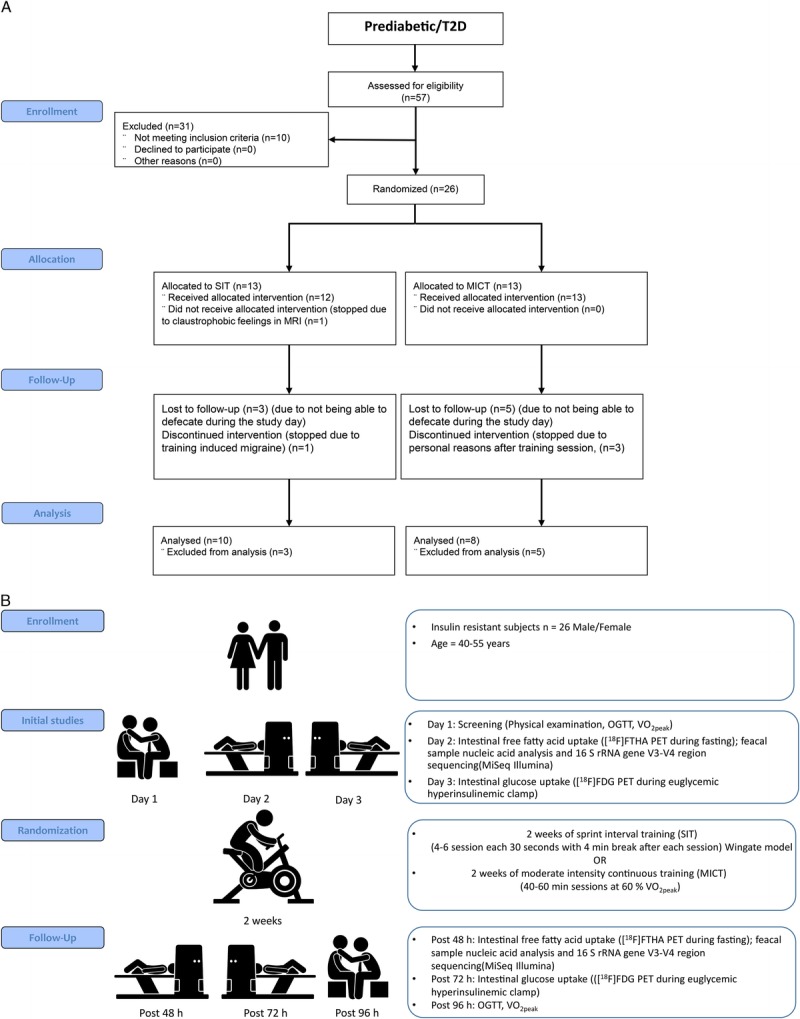
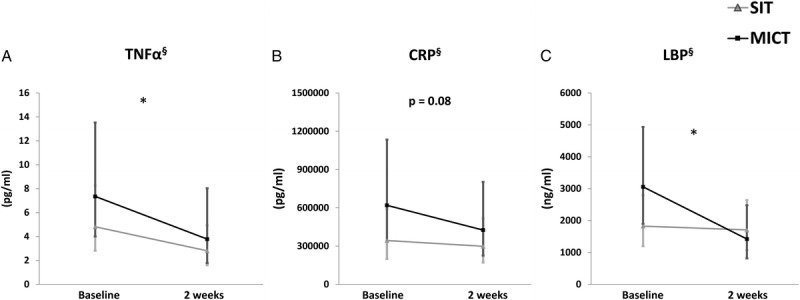
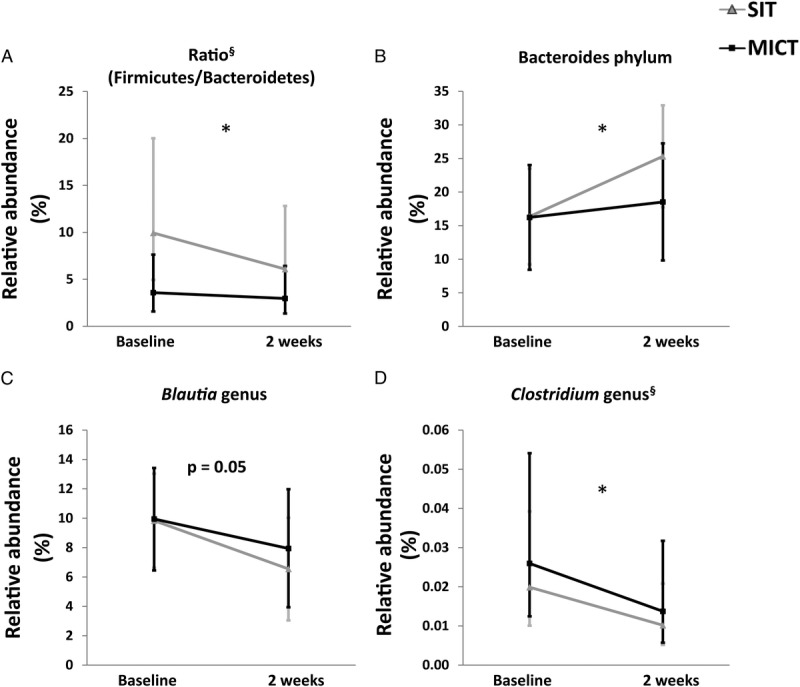
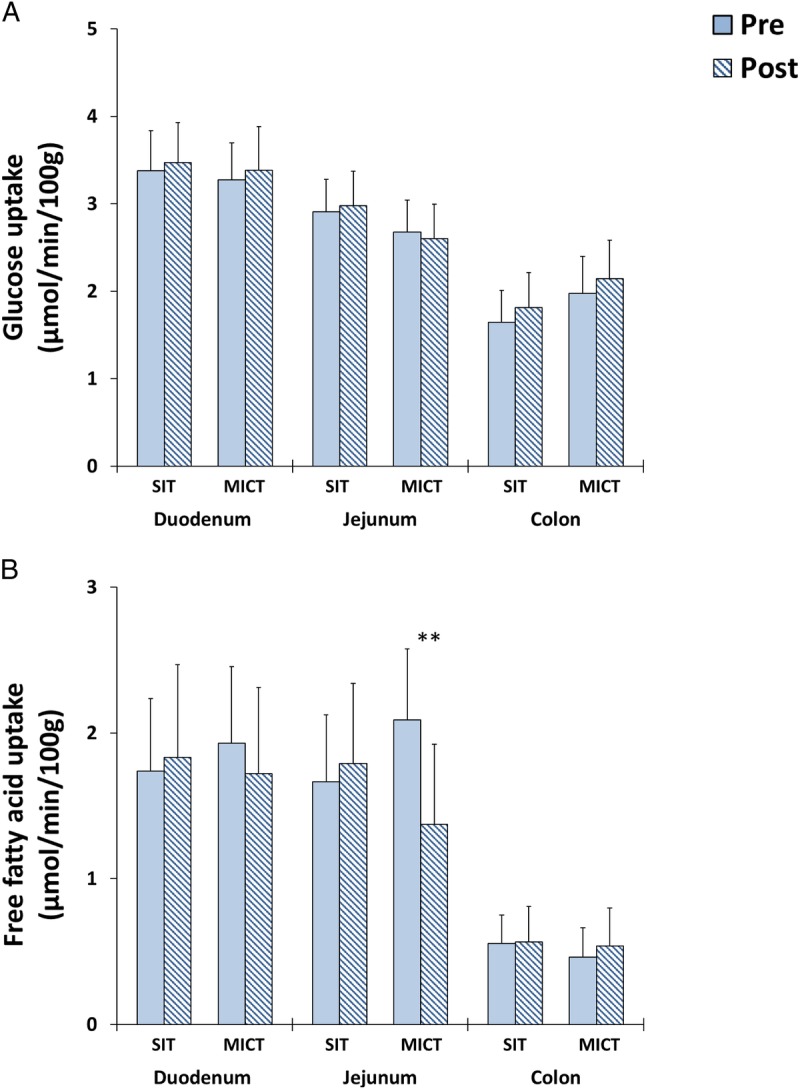
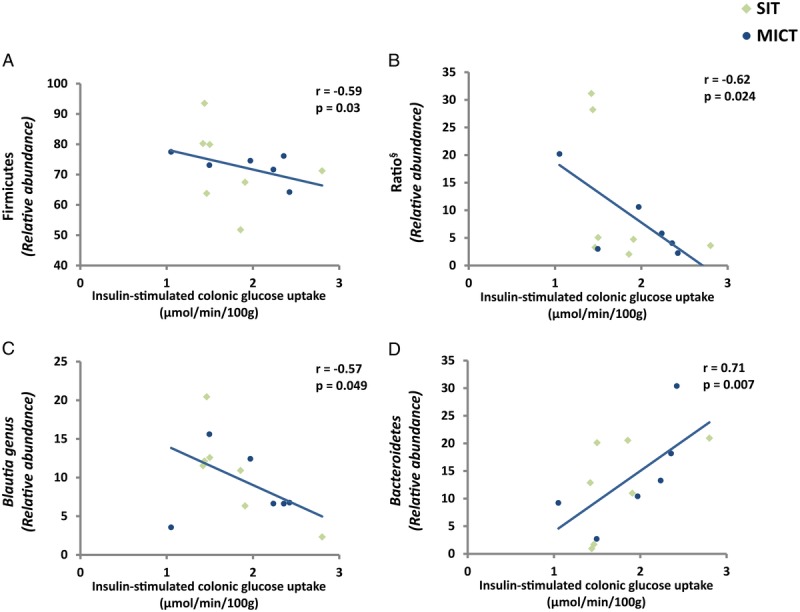
Introduction: Intestinal metabolism and microbiota profiles are impaired in obesity and insulin resistance. Moreover, dysbiotic gut microbiota has been suggested to promote systemic low-grade inflammation and insulin resistance through the release of endotoxins particularly lipopolysaccharides. We have previously shown that exercise training improves intestinal metabolism in healthy men. To understand whether changes in intestinal metabolism interact with gut microbiota and its release of inflammatory markers, we studied the effects of sprint interval (SIT) and moderate-intensity continuous training (MICT) on intestinal metabolism and microbiota in subjects with insulin resistance. Methods: Twenty-six, sedentary subjects (prediabetic, n = 9; type 2 diabetes, n = 17; age, 49 [SD, 4] yr; body mass index, 30.5 [SD, 3]) were randomized into SIT or MICT. Intestinal insulin-stimulated glucose uptake (GU) and fatty acid uptake (FAU) from circulation were measured using positron emission tomography. Gut microbiota composition was analyzed by 16S rRNA gene sequencing and serum inflammatory markers with multiplex assays and enzyme-linked immunoassay kit. Results: V˙O 2peak improved only after SIT ( P = 0.01). Both training modes reduced systematic and intestinal inflammatory markers (tumor necrosis factor-α, lipopolysaccharide binding protein) (time P < 0.05). Training modified microbiota profile by increasing Bacteroidetes phylum (time P = 0.03) and decreasing Firmicutes/Bacteroidetes ratio (time P = 0.04). Moreover, there was a decrease in Clostridium genus (time P = 0.04) and Blautia (time P = 0.051). Only MICT decreased jejunal FAU ( P = 0.02). Training had no significant effect on intestinal GU. Colonic GU associated positively with Bacteroidetes and inversely with Firmicutes phylum, ratio Firmicutes/Bacteroidetes and Blautia genus. Conclusions: Intestinal substrate uptake associates with gut microbiota composition and whole-body insulin sensitivity. Exercise training improves gut microbiota profiles and reduces endotoxemia.
Overview
The claims and statistics of this paper haven’t been checked yet.
Run the check — free, no account needed. It reads the open-access text and checks the sources it cites.
Integrity signals
Registry
Cites
Statistics
Figures
Verification
Claims the paper makes
The claims and statistics of this paper haven’t been checked yet.
Run the check — free, no account needed. It reads the open-access text and checks the sources it cites.
Claims other papers make about this one
Each is checked against this paper’s own text: does it say what the citing paper says it does?
In the citing paper
“lower abundance of Blautia genus was associated with better whole-body insulin sensitivity.”
From The athletic gut microbiota (2020) · cites this paper as [109]
In the citing paper
“Bacteroidetes increased and the Firmicutes/Bacteroidetes ratio decreased.”
From The athletic gut microbiota (2020) · cites this paper as [109]
In the citing paper
“both high intensity interval and moderate continuous training affected the gut microbiota in insulin resistant, sedentary individuals following a 2-week exercise intervention [109].”
From The athletic gut microbiota (2020) · cites this paper as [109]
In the citing paper
“There was also a decrease in Clostridium and Blautia genera.”
From The athletic gut microbiota (2020) · cites this paper as [109]
In the citing paper
“These results highlight the importance of intestinal substrate uptake on the whole-body and changes, especially in glucose uptake, might have a positive effect on the gut microbiota.”
From The athletic gut microbiota (2020) · cites this paper as [109]
In the citing paper
“colonic glucose concentrations associated positively with Bacteroidetes and inversely with Firmicutes phylum, the Firmicutes/Bacteroidetes ratio, and Blautia genus.”
From The athletic gut microbiota (2020) · cites this paper as [109]
Self-check
Percentages, sums and reported differences re-computed from the paper’s own numbers.
The self-check needs the paper’s full text.
Citations
Cites
QIIME allows analysis of high-throughput community sequencing data
Caporaso, J. G., Kuczynski, J., Stombaugh, J., Bittinger, K., Bushman, F. D., Costello, E. K., Fierer, N., Peña, A. G., Goodrich, J. K., Gordon, J. I., et al. (2010) · Nature Methods · doi:10.1038/nmeth.f.303 · Cited by 34,887
An obesity-associated gut microbiome with increased capacity for energy harvest
Turnbaugh, P. J., Ley, R. E., Mahowald, M. A., Magrini, V., Mardis, E. R., & Gordon, J. I. (2006) · Nature · doi:10.1038/nature05414 · Cited by 12,444
Human gut microbes associated with obesity
Ley, R. E., Turnbaugh, P. J., Klein, S., & Gordon, J. I. (2006) · Nature · doi:10.1038/4441022a · Cited by 8,785
Glucose clamp technique: a method for quantifying insulin secretion and resistance.
DeFronzo, R. A., Tobin, J. D., & Andres, R. (1979) · American Journal of Physiology-Endocrinology and Metabolism · doi:10.1152/ajpendo.1979.237.3.e214 · Cited by 7,425
Obesity alters gut microbial ecology
Ley, R. E., Bäckhed, F., Turnbaugh, P., Lozupone, C. A., Knight, R. D., & Gordon, J. I. (2005) · Proceedings of the National Academy of Sciences · doi:10.1073/pnas.0504978102 · Cited by 6,176
Cani, P. D., Bibiloni, R., Knauf, C., Waget, A., Neyrinck, A. M., Delzenne, N. M., & Burcelin, R. (2008) · Diabetes · doi:10.2337/db07-1403 · Cited by 4,819
Graphical Evaluation of Blood-to-Brain Transfer Constants from Multiple-Time Uptake Data
Patlak, C. S., Blasberg, R. G., & Fenstermacher, J. D. (1983) · Journal of Cerebral Blood Flow & Metabolism · doi:10.1038/jcbfm.1983.1 · Cited by 3,565
Turnbaugh, P. J., Bäckhed, F., Fulton, L., & Gordon, J. I. (2008) · Cell Host & Microbe · doi:10.1016/j.chom.2008.02.015 · Cited by 2,915
Classification and Diagnosis of Diabetes
Fajans, S. S. (1990) · Medical Entomology and Zoology · Cited by 2,356
A microbial symbiosis factor prevents intestinal inflammatory disease
Mazmanian, S. K., Round, J. L., & Kasper, D. L. (2008) · Nature · doi:10.1038/nature07008 · Cited by 2,340
Disentangling type 2 diabetes and metformin treatment signatures in the human gut microbiota
MetaHIT consortium, Forslund, K., Hildebrand, F., Nielsen, T., Falony, G., Le Chatelier, E., Sunagawa, S., Prifti, E., Vieira-Silva, S., Gudmundsdottir, V., et al. (2015) · Nature · doi:10.1038/nature15766 · Cited by 2,116
(2) Classification and diagnosis of diabetes
American Diabetes Association (2015) · Diabetes Care · doi:10.2337/dc15-s005 · Cited by 1,841
The Firmicutes/Bacteroidetes ratio of the human microbiota changes with age
Mariat, D., Firmesse, O., Levenez, F., Guimarăes, V., Sokol, H., Doré, J., Corthier, G., & Furet, J.-P. (2009) · BMC Microbiology · doi:10.1186/1471-2180-9-123 · Cited by 1,755
Patlak, C. S., & Blasberg, R. G. (1985) · Journal of Cerebral Blood Flow & Metabolism · doi:10.1038/jcbfm.1985.87 · Cited by 1,673
Exercise and associated dietary extremes impact on gut microbial diversity
Clarke, S. F., Murphy, E. F., O'Sullivan, O., Lucey, A. J., Humphreys, M., Hogan, A., Hayes, P., O'Reilly, M., Jeffery, I. B., Wood-Martin, R., et al. (2014) · Gut · doi:10.1136/gutjnl-2013-306541 · Cited by 1,439
The first 1000 cultured species of the human gastrointestinal microbiota
Rajilić-Stojanović, M., & de Vos, W. M. (2014) · FEMS Microbiology Reviews · doi:10.1111/1574-6976.12075 · Cited by 1,182
Rajilić–Stojanović, M., Biagi, E., Heilig, H. G. H. J., Kajander, K., Kekkonen, R. A., Tims, S., & de Vos, W. M. (2011) · Gastroenterology · doi:10.1053/j.gastro.2011.07.043 · Cited by 1,041
Exercise alters gut microbiota composition and function in lean and obese humans
ALLEN, J. M., MAILING, L. J., NIEMIRO, G. M., MOORE, R., COOK, M. D., WHITE, B. A., HOLSCHER, H. D., & WOODS, J. A. (2018) · Medicine & Science in Sports & Exercise · doi:10.1249/mss.0000000000001495 · Cited by 820
Lipopolysaccharide recognition: CD14, TLRs and the LPS-activation cluster
Triantafilou, M., & Triantafilou, K. (2002) · Trends in Immunology · doi:10.1016/s1471-4906(02)02233-0 · Cited by 731
de la Cuesta-Zuluaga, J., Mueller, N. T., Corrales-Agudelo, V., Velásquez-Mejía, E. P., Carmona, J. A., Abad, J. M., & Escobar, J. S. (2017) · Diabetes Care · doi:10.2337/dc16-1324 · Cited by 704
Evans, C. C., LePard, K. J., Kwak, J. W., Stancukas, M. C., Laskowski, S., Dougherty, J., Moulton, L., Glawe, A., Wang, Y., Leone, V., et al. (2014) · PLoS ONE · doi:10.1371/journal.pone.0092193 · Cited by 587
[Classification and diagnosis of diabetes].
Boulin (1953) · PubMed · Cited by 516
Differences in gut microbiota profile between women with active lifestyle and sedentary women
Bressa, C., Bailén-Andrino, M., Pérez-Santiago, J., González-Soltero, R., Pérez, M., Montalvo-Lominchar, M. G., Maté-Muñoz, J. L., Domínguez, R., Moreno, D., & Larrosa, M. (2017) · PLOS ONE · doi:10.1371/journal.pone.0171352 · Cited by 501
Manco, M., Putignani, L., & Bottazzo, G. F. (2010) · Endocrine Reviews · doi:10.1210/er.2009-0030 · Cited by 489
Estaki, M., Pither, J., Baumeister, P., Little, J. P., Gill, S. K., Ghosh, S., Ahmadi-Vand, Z., Marsden, K. R., & Gibson, D. L. (2016) · Microbiome · doi:10.1186/s40168-016-0189-7 · Cited by 476
Albillos, A., de la Hera, A., González, M., Moya, J. L., Calleja, J. L., Monserrat, J., Ruíz-del-Árbol, L., & Álvarez‐Mon, M. (2003) · Hepatology · doi:10.1053/jhep.2003.50038 · Cited by 449
Collado, M. C., Isolauri, E., Laitinen, K., & Salminen, S. (2010) · The American Journal of Clinical Nutrition · doi:10.3945/ajcn.2010.29877 · Cited by 381
Self-citationSun, L. D., Yu, Z., Ye, X., Zou, S., Li, H., Yu, D., Wu, H., Chen, Y., Dore, J. M., Clément, K., et al. (2010) · Diabetes Care · doi:10.2337/dc10-0340 · Cited by 281
Munukka, E., Ahtiainen, J. P., Puigbó, P., Jalkanen, S., Pahkala, K., Keskitalo, A., Kujala, U. M., Pietilä, S., Hollmén, M., Elo, L., et al. (2018) · Frontiers in Microbiology · doi:10.3389/fmicb.2018.02323 · Cited by 237
González‐Quintela, A., Alonso‐Sampedro, M., Franco, J. C., Vizcaíno, L., Loidi, L., & Gudé, F. (2013) · PLoS ONE · doi:10.1371/journal.pone.0054600 · Cited by 221
Exercise training modifies gut microbiota in normal and diabetic mice
Lambert, J. E., Myslicki, J. P., Bomhof, M. R., Belke, D. D., Shearer, J., & Reimer, R. A. (2015) · Applied Physiology, Nutrition, and Metabolism · doi:10.1139/apnm-2014-0452 · Cited by 214
Response of Gut Microbiota to Metabolite Changes Induced by Endurance Exercise
Zhao, X., Zhang, Z., Hu, B., Huang, W. M., Yuan, C., & Zou, L. (2018) · Frontiers in Microbiology · doi:10.3389/fmicb.2018.00765 · Cited by 214
Early-life adversity and brain development: Is the microbiome a missing piece of the puzzle?
O’Mahony, S. M., Clarke, G., Dinan, T. G., & Cryan, J. F. (2017) · Neuroscience · doi:10.1016/j.neuroscience.2015.09.068 · Cited by 203
Gut microbiota and diet in patients with different glucose tolerance
Egshatyan, L. V., Kashtanova, D. A., Popenko, A., Ткачева, О. Н., Tyakht, A., Alexeev, D. G., Karamnova, N., Kostryukova, E., Babenko, V. V., Vakhitova, M. T., et al. (2015) · Endocrine Connections · doi:10.1530/ec-15-0094 · Cited by 192
Lipopolysaccharide binding protein and CD14 in LPS dependent macrophage activation
Tobias, P. S., & Ulevitch, R. J. (1993) · Immunobiology · doi:10.1016/s0171-2985(11)80341-4 · Cited by 180
O’Sullivan, Ó., Cronin, O., Clarke, S. F., Murphy, E. F., Molloy, M., Shanahan, F., & Cotter, P. D. (2015) · Gut Microbes · doi:10.1080/19490976.2015.1011875 · Cited by 174
Khalili, H., Ananthakrishnan, A. N., Konijeti, G. G., Liao, X., Higuchi, L. M., Fuchs, C. S., Spiegelman, D. L., Richter, J. M., Korzenik, J. R., & Chan, A. T. (2013) · BMJ · doi:10.1136/bmj.f6633 · Cited by 171
Cook, M. D., Allen, J. M., Pence, B. D., Wallig, M. A., Gaskins, H. R., White, B. A., & Woods, J. A. (2016) · Immunology & Cell Biology · doi:10.1038/icb.2015.108 · Cited by 140
Shukla, S. K., Cook, D., Meyer, J., Vernon, S. D., Le, T., Clevidence, D., Robertson, C. E., Schrodi, S. J., Yale, S., & Frank, D. N. (2015) · PLOS ONE · doi:10.1371/journal.pone.0145453 · Cited by 137
Does Exercise Alter Gut Microbial Composition? A Systematic Review
Mitchell, C. M., Davy, B. M., Hulver, M. W., Neilson, A. P., Bennett, B. J., & Davy, K. P. (2018) · Medicine & Science in Sports & Exercise · doi:10.1249/mss.0000000000001760 · Cited by 120
The detection and interpretation of endotoxaemia
Cohen, J. (2000) · Intensive Care Medicine · doi:10.1007/s001340051119 · Cited by 114
Rodríguez‐Díaz, J., García‐Mantrana, I., Vila-Vicent, S., Gozalbo‐Rovira, R., Buesa, J., Monedero, V., & Collado, M. C. (2017) · Scientific Reports · doi:10.1038/srep45559 · Cited by 95
Self-citationCardiac Autonomic Function and High-Intensity Interval Training in Middle-Age Men
Kiviniemi, A. M., Tulppo, M. P., Eskelinen, J., Savolainen, A., Kapanen, J., HEINONEN, I. H. A., Huikuri, H. V., Hannukainen, J. C., & Kalliokoski, K. K. (2014) · Medicine & Science in Sports & Exercise · doi:10.1249/mss.0000000000000307 · Cited by 90
Self-citationCytokine response of human mononuclear cells induced by intestinal Clostridium species
Tuovinen, E., Keto, J., Nikkilä, J., Mättö, J., & Lähteenmäki, K. (2013) · Anaerobe · doi:10.1016/j.anaerobe.2012.11.002 · Cited by 75
Felley, C. P. (2009) · Swiss Medical Weekly · doi:10.4414/smw.2009.12549 · Cited by 61
Early‐life exercise may promote lasting brain and metabolic health through gut bacterial metabolites
Mika, A., & Fleshner, M. (2015) · Immunology and Cell Biology · doi:10.1038/icb.2015.113 · Cited by 58
Sjöros, T., Heiskanen, M. A., Motiani, K. K., Löyttyniemi, E., Eskelinen, J., Virtanen, K. A., Savisto, N., Solin, O. H., Hannukainen, J. C., & Kalliokoski, K. K. (2017) · Scandinavian Journal of Medicine and Science in Sports · doi:10.1111/sms.12875 · Cited by 48
Self-citationGut microbiota: implications for sports and exercise medicine
Cronin, O., O’Sullivan, Ó., Barton, W., Cotter, P. D., Molloy, M. G., & Shanahan, F. (2017) · British Journal of Sports Medicine · doi:10.1136/bjsports-2016-097225 · Cited by 40
The Gut Microbiome in Irritable Bowel Syndrome and Other Functional Bowel Disorders
Ringel, Y. (2017) · Gastroenterology Clinics of North America · doi:10.1016/j.gtc.2016.09.014 · Cited by 39
Motiani, K. K., Savolainen, A., Eskelinen, J., Toivanen, J., Ishizu, T., Yli-Karjanmaa, M., Virtanen, K. A., Parkkola, R., Kapanen, J., Grönroos, T. J., et al. (2017) · Journal of Applied Physiology · doi:10.1152/japplphysiol.00431.2016 · Cited by 24
Self-citationHeiskanen, M. A., Sjöros, T., HEINONEN, I. H. A., Löyttyniemi, E., Koivumäki, M., Motiani, K. K., Eskelinen, J., Virtanen, K. A., Knuuti, J. M., Hannukainen, J. C., et al. (2017) · Scientific Reports · doi:10.1038/s41598-017-10931-9 · Cited by 17
Self-citationMorbid obesity and type 2 diabetes alter intestinal fatty acid uptake and blood flow
Koffert, J., Ståhle, M. R., Karlsson, H. K., Iozzo, P., Salminen, P. T. P., Roivainen, A., & Nuutila, P. (2018) · Diabetes Obesity and Metabolism · doi:10.1111/dom.13228 · Cited by 16
Self-citation
Cited by
Sorted by citations
KANALEY, J. A., COLBERG, S. R., CORCORAN, M. H., MALIN, S. K., RODRIGUEZ, N. R., CRESPO, C. J., KIRWAN, J. P., & ZIERATH, J. R. (2022) · Medicine & Science in Sports & Exercise · doi:10.1249/mss.0000000000002800 · Cited by 931
El-Salhy, M., Hatlebakk, J. G., Gilja, O. H., Bråthen Kristoffersen, A., & Hausken, T. (2020) · Gut · doi:10.1136/gutjnl-2019-319630 · Cited by 498
Oscillospira - a candidate for the next-generation probiotics
Yang, J., Li, Y., Wen, Z., Liu, W., Meng, L., & Huang, H. (2021) · Gut Microbes · doi:10.1080/19490976.2021.1987783 · Cited by 484
Mohr, A. E., Jäger, R., Carpenter, K. C., Kerksick, C. M., Purpura, M., Townsend, J. R., West, N. P., Black, K., Gleeson, M., Pyne, D. B., et al. (2020) · Journal of the International Society of Sports Nutrition · doi:10.1186/s12970-020-00353-w · Cited by 378
“, 2019, Finland [109] Obese sedentary, prediabetic/type 2 diabetic males and females; n = 26 (n = 9, n = 17 respectfully); 49 ± 4 years Parallel group design 16S rRNA gene amplification of the V3 and V4 regions Exercise groups: • Sprint interval training group; 30 s exercise bouts (4–6) of all out cycling efforts with…”
BackgroundMethodInfluentialInterplay Between Exercise and Gut Microbiome in the Context of Human Health and Performance
Clauss, M., Gérard, P., Mosca, A., & Leclerc, M. (2021) · Frontiers in Nutrition · doi:10.3389/fnut.2021.637010 · Cited by 308
Metadata
- Authors
- MOTIANI, K. K., COLLADO, M. C., ESKELINEN, J.-J., VIRTANEN, K. A., LÖYTTYNIEMI, E., SALMINEN, S., NUUTILA, P., KALLIOKOSKI, K. K., & HANNUKAINEN, J. C.
- Affiliations
- University of Turku (FI)
- Consejo Superior de Investigaciones Científicas (ES)
- Turku University Hospital (FI)
- ORCID
- Venue
- Medicine & Science in Sports & Exercise
- Published
- 2019-08-19
- Volume
- 52
- Issue
- 1
- Pages
- 94-104
- ISSN
- 0195-9131 (ISSN-L)
- 1530-0315
- PMC
- PMC7028471
- OpenAlex
- W2969245839
- Cited by
- 333
- References
- 54
- Citations by year
- 2026: 39 · 2025: 68 · 2024: 64 · 2023: 58 · 2022: 48 · 2021: 40 · 2020: 13 · 2019: 2
- FWCI
- 8.52
- Type
- journal article
- Language
- en
- Open access
- hybrid
- doi.org
- Licence
- Locations
- Medicine & Science in Sports & Exercise (publishedVersion, cc-by-nc-nd)
- Europe PMC (PubMed Central) (publishedVersion, cc-by-nc-nd)
- PubMed Central (publishedVersion, cc-by-nc-nd)
- PubMed (publishedVersion)
- DIGITAL.CSIC (Spanish National Research Council (CSIC)) (submittedVersion, cc-by-nc-nd)
- Topics
- Life Sciences › Biochemistry, Genetics and Molecular Biology › Molecular Biology › Gut microbiota and health
- Health Sciences › Medicine › Endocrinology, Diabetes and Metabolism › Adipokines, Inflammation, and Metabolic Diseases
- Health Sciences › Dentistry › Periodontics › Oral microbiology and periodontitis research
- Keywords
- exercise training, gut microbiota, endotoxemia, lipopolysaccharide, insulin resistance, type 2 diabetes, prediabetes, sprint interval training, moderate-intensity continuous training, intestinal glucose absorption, fatty acid uptake, Bacteroidetes, Firmicutes/Bacteroidetes ratio, Blautia, Clostridium, low-grade inflammation, intestinal metabolism
- MeSH terms
- Gastrointestinal Microbiome, Lipopolysaccharide-Binding Protein, Acute-Phase Proteins, Carrier Proteins, Diabetes Mellitus, Type 2, Female, Humans, Inflammation, Insulin Resistance, Intestinal Mucosa, Male, Membrane Glycoproteins, Middle Aged, Obesity, Oxygen Consumption, Prediabetic State, Tumor Necrosis Factor-alpha, Biomarkers, Body Mass Index, Endotoxemia, Physical Conditioning, Human
About these checks
Registry, retraction, Cites and statistics results are computed, not judged, with one exception: a printed reference that no index lists is read once by a model before it counts as a citation error. Claims are extracted by a model and kept only when their quote appears verbatim in the text; each cited source is then checked, with a model’s help, for whether it says what the claim relies on. Those verdicts can be wrong — read the claim’s quote and the cited source before relying on one.
Statistics and arithmetic are recomputed, not judged.
Confidence bands are shown only for fields calibrated on our annotated test set. None is calibrated yet, so no band is shown.
What counts as a claim ›How we measure confidence ›How we check this ›
Are you an author, or do you see a problem with this page? Request a review
