

Resolving Difficult Phylogenetic Questions: Why More Sequences Are Not Enough
Open accessThe DOI matches its Crossref record; 84 of the 84 references it cites were found in a registry or an index.
Abstract
The Perspective section provides experts with a forum
Overview
The claims and statistics of this paper haven’t been checked yet.
Free: it reads the open-access text and checks the first 5 claims that cite a source we can check. Create a free account to check every claim.
Integrity signals
Registry
Cites
Statistics
Figures

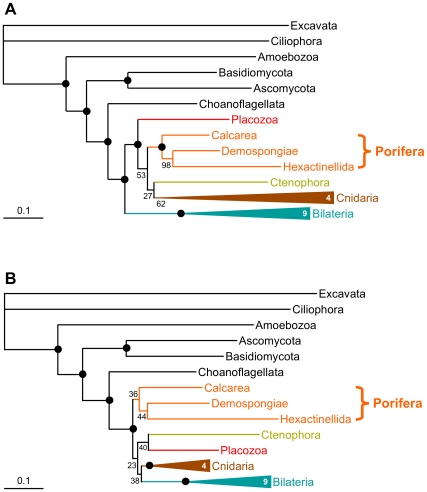


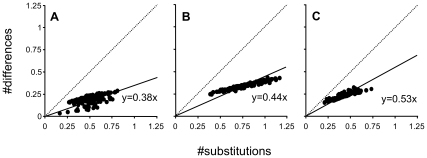
Verification
Claims the paper makes
The claims and statistics of this paper haven’t been checked yet.
Free: it reads the open-access text and checks the first 5 claims that cite a source we can check. Create a free account to check every claim.
Claims other papers make about this one
Each is checked against this paper’s own text: does it say what the citing paper says it does?
The cited source doesn’t support the claim as written.
In the citing paper
“The argument for LBA (7-10) or saturated datasets (7, 8) as the reason past studies found ctenophores to be sister to all other animals seems to have been overstated.”
From Error, signal, and the placement of Ctenophora sister to all other animals (2015) · cites this paper as [8]
Checked by a reasoning model — may be wrong.
Experimental — accuracy not yet measuredThe source backs part of the claim, not all of it — or backs it for a different population, condition or comparison.
In the citing paper
“A key aspect of the debate is that support for both hypotheses is generally recovered from the same dataset when different substitution models and/or taxon- and gene-sampling strategies are used (contrast [6, 10] and [42, 45], and see [7, 43, 47]).”
From Improved Modeling of Compositional Heterogeneity Supports Sponges as Sister to All Other Animals (2017) · cites this paper as [43]
Experimental — accuracy not yet measuredThe source backs part of the claim, not all of it — or backs it for a different population, condition or comparison.
In the citing paper
“Inferred relationships among major sponge lineages (i.e., Demospongiae + Hexactinellida sister to Calcarea + Homoscleromorpha) were consistent with morphology (27,28) and most other molecular analyses that have recovered monophyletic sponges (datasets 1-27 in Figs. 2 and 3 and Figs.S1-S5) (4, 5, 8, 9, 28-30).”
From Error, signal, and the placement of Ctenophora sister to all other animals (2015) · cites this paper as [8]
Experimental — accuracy not yet measuredThe source backs part of the claim, not all of it — or backs it for a different population, condition or comparison.
In the citing paper
“Our robust support of sponge monophyly agrees with morphology (35) and most other large molecular datasets (5,6,(8)(9)(10).”
From Error, signal, and the placement of Ctenophora sister to all other animals (2015) · cites this paper as [8]
Experimental — accuracy not yet measuredThe cited source says what the claim attributes to it.
In the citing paper
“Ctenophores have a high rate of molecular evolution, making them a priori difficult to place due to their potential for long branch attraction (LBA) artifacts [12].”
From A Large and Consistent Phylogenomic Dataset Supports Sponges as the Sister Group to All Other Animals (2017) · cites this paper as [12]
6 more claims about this paper
Create a free account to see every claim other papers make about this one.
Self-check
Percentages, sums and reported differences re-computed from the paper’s own numbers.
The self-check needs the paper’s full text.
Citations
Cites
Evolutionary trees from DNA sequences: A maximum likelihood approach.
Felsenstein, J. (1981) · Journal of Molecular Evolution · doi:10.1007/bf01734359 · Cited by 14,571 · cited 1×
“Briefly, major steps forward were the modeling of heterogeneity of rate across species [63], heterogeneity of rate across substitutions [64,65], heterogeneity of nucleotide/ amino acid composition across species [66,67], heterogeneity of rate across sites [68], and heterogeneity of the substitution process across site…”
BackgroundEvolution of Protein Molecules
JUKES, T. H., & CANTOR, C. R. (1969) · Mammalian Protein Metabolism · doi:10.1016/b978-1-4832-3211-9.50009-7 · Cited by 11,032
Selection of Conserved Blocks from Multiple Alignments for Their Use in Phylogenetic Analysis
Castresana, J. (2000) · Molecular Biology and Evolution · doi:10.1093/oxfordjournals.molbev.a026334 · Cited by 10,508
OrthoMCL: Identification of Ortholog Groups for Eukaryotic Genomes
Li, L., Stoeckert, C. J., & Roos, D. S. (2003) · Genome Research · doi:10.1101/gr.1224503 · Cited by 5,707 · cited 2×
“Despite the great progress in software development [19–22,52–54], our nine years of experience with large-scale multigene analyses [55] leads us to conclude that computer-assisted manual expertise is not yet dispensable.”
BackgroundMethodAtlas of protein sequence and structure
Chang, M.-Y., Dayhoff, M. O., Eck, R. V., & Sochard, M. R. (1965) · NASA Technical Reports Server (NASA) · Cited by 4,383
(1964) · Mammalian Protein Metabolism · doi:10.1016/b978-1-4832-3210-2.50006-6 · Cited by 3,059
Wooding, S. (2004) · The American Journal of Human Genetics · doi:10.1086/383584 · Cited by 3,032
Cases in which Parsimony or Compatibility Methods will be Positively Misleading
Felsenstein, J. (1978) · Systematic Biology · doi:10.1093/sysbio/27.4.401 · Cited by 2,896
Whelan, S., & Goldman, N. (2001) · Molecular Biology and Evolution · doi:10.1093/oxfordjournals.molbev.a003851 · Cited by 2,849 · cited 1×
“, the sitehomogeneous WAG+F+C model [44] used in [4] instead of the site-heterogeneous CAT+C model [45] used in the original study [3] (Figure 4A).”
MethodCases in which parsimony or compatibility methods will be positively misleading.
Felsenstein, J. (1978) · Systematic Zoology · doi:10.2307/2412923 · Cited by 2,230
Cited by
Items 201–300 of 999
Phylogenetic Signal, Congruence, and Uncertainty across Bacteria and Archaea
Martinez-Gutierrez, C. A., & Aylward, F. O. (2021) · Molecular Biology and Evolution · doi:10.1093/molbev/msab254 · Cited by 95
Zhang, G., Hu, Y., Huang, M., Huang, W., Liu, D., Zhang, D., Hu, H., Downing, J., Liu, Z., & Mā, H. (2023) · Journal of Integrative Plant Biology · doi:10.1111/jipb.13462 · Cited by 100
Walkabout on the long branches of plant evolution
Bowman, J. L. (2012) · Current Opinion in Plant Biology · doi:10.1016/j.pbi.2012.10.001 · Cited by 105
Escherichia coli strains producing a novel Shiga toxin 2 subtype circulate in China
Yang, X., Bai, X., Zhang, J., Sun, H., Fu, S., Fan, R., He, X., Scheutz, F., Matussek, A., & Xiong, Y. (2019) · International Journal of Medical Microbiology · doi:10.1016/j.ijmm.2019.151377 · Cited by 91
Chazot, N., Condamine, F. L., Dudas, G., Peña, C., Matos-Maravi, P., Freitas, A. V. L., Willmott, K. R., Élias, M., WARREN, A. D., Aduse‐Poku, K., et al. (2021) · Nature Communications · doi:10.1038/s41467-021-25906-8 · Cited by 103
de Vienne, D. M., Ollier, S., & Aguileta, G. (2012) · Molecular Biology and Evolution · doi:10.1093/molbev/msr317 · Cited by 92
Carlsen, M. M., Fér, T., Schmickl, R., Leong‐Škorničková, J., Newman, M., & Kress, W. J. (2018) · Molecular Phylogenetics and Evolution · doi:10.1016/j.ympev.2018.07.020 · Cited by 97
The plastid ancestor originated among one of the major cyanobacterial lineages
de Alda, J. A. G. O., Esteban, R., Egaña, M. L. D., & Houmard, J. (2014) · Nature Communications · doi:10.1038/ncomms5937 · Cited by 122
Huang, Y., Li, X., Yang, Z., Yang, C., Yang, J., & Ji, Y. (2016) · Frontiers in Plant Science · doi:10.3389/fpls.2016.01797 · Cited by 93
Chrismas, N. A. M., Anesio, A. M., & Sánchez‐Baracaldo, P. (2015) · Frontiers in Microbiology · doi:10.3389/fmicb.2015.01070 · Cited by 95
Mitogenomics at the base of Metazoa
Osigus, H.-J., Eitel, M., Bernt, M., Donath, A., & Schierwater, B. (2013) · Molecular Phylogenetics and Evolution · doi:10.1016/j.ympev.2013.07.016 · Cited by 89
Lemieux, C., Otis, C., & Turmel, M. (2014) · BMC Genomics · doi:10.1186/1471-2164-15-857 · Cited by 96
Is Phylotranscriptomics as Reliable as Phylogenomics?
Cheon, S., Zhang, J., & Park, C. (2020) · Molecular Biology and Evolution · doi:10.1093/molbev/msaa181 · Cited by 93
Chen, M., Liang, D., & Zhang, P. (2017) · Genome Biology and Evolution · doi:10.1093/gbe/evx147 · Cited by 94
Can We Identify Genes with Increased Phylogenetic Reliability?
Doyle, V. P., Young, R. E., Naylor, G. J. P., & Brown, J. M. (2015) · Systematic Biology · doi:10.1093/sysbio/syv041 · Cited by 85
Analytical Biases Associated with GC-Content in Molecular Evolution
Romiguier, J., & Roux, C. (2017) · Frontiers in Genetics · doi:10.3389/fgene.2017.00016 · Cited by 87
Koenen, E. J. M., Kidner, C. A., Souza, É. R. D., Simon, M. F., Iganci, J. R. V., Nicholls, J. A., Brown, G. K., de Queiroz, L. P., Luckow, M., Lewis, G. P., et al. (2020) · American Journal of Botany · doi:10.1002/ajb2.1568 · Cited by 94
Ratite Nonmonophyly: Independent Evidence from 40 Novel Loci
Smith, J. V., Braun, E. L., & Kimball, R. T. (2013) · Systematic Biology · doi:10.1093/sysbio/sys067 · Cited by 86
Phylogenetic informativeness reconciles ray-finned fish molecular divergence times
Dornburg, A., Townsend, J. P., Friedman, M., & Near, T. J. (2014) · BMC Evolutionary Biology · doi:10.1186/s12862-014-0169-0 · Cited by 86
Identifying localized biases in large datasets: A case study using the avian tree of life
Kimball, R. T., Wang, N., Heimer‐McGinn, V., Ferguson, C., & Braun, E. L. (2013) · Molecular Phylogenetics and Evolution · doi:10.1016/j.ympev.2013.05.029 · Cited by 93
Williams, A. V., Miller, J. T., Small, I., Nevill, P., & Boykin, L. M. (2015) · Molecular Phylogenetics and Evolution · doi:10.1016/j.ympev.2015.11.021 · Cited by 93
Ganot, P., Zoccola, D., Tambutté, É., Voolstra, C. R., Aranda, M., Allemand, D., & Tambutté, S. (2014) · Molecular Biology and Evolution · doi:10.1093/molbev/msu265 · Cited by 93
Zhong, B., Xi, Z., Goremykin, V. V., Fong, R., McLenachan, P. A., Novis, P. M., Davis, C. “., & Penny, D. (2013) · Molecular Biology and Evolution · doi:10.1093/molbev/mst200 · Cited by 89
Streicher, J. W., Miller, E. C., Guerrero, P. C., Correa, C., Ortiz, J. C., Crawford, A. J., Pie, M. R., & Wiens, J. J. (2017) · Molecular Phylogenetics and Evolution · doi:10.1016/j.ympev.2017.10.013 · Cited by 87
Lavrov, D. V., Pett, W., Voigt, O., Wörheide, G., Forget, L., Lang, B. F., & Kayal, E. (2013) · Molecular Biology and Evolution · doi:10.1093/molbev/mss274 · Cited by 83
Self-citationSplit diversity in constrained conservation prioritization using integer linear programming
Chernomor, O., Minh, B. Q., Forest, F., Klaere, S., Ingram, T., Henzinger, M., & von Haeseler, A. (2015) · Methods in Ecology and Evolution · doi:10.1111/2041-210x.12299 · Cited by 82
Simmons, M. P., & Gatesy, J. (2015) · Molecular Phylogenetics and Evolution · doi:10.1016/j.ympev.2015.05.011 · Cited by 93
Kelava, S., Mans, B. J., Shao, R., Moustafa, M. A. M., Matsuno, K., Takano, A., Kawabata, H., Sato, K., Fujita, H., Chen, Z., et al. (2020) · Ticks and Tick-borne Diseases · doi:10.1016/j.ttbdis.2020.101577 · Cited by 82
Global Diversity of the Placozoa
Eitel, M., Osigus, H.-J., DeSalle, R., & Schierwater, B. (2013) · PLoS ONE · doi:10.1371/journal.pone.0057131 · Cited by 82
What Explains Patterns of Diversification and Richness among Animal Phyla?
Ježková, T., & Wiens, J. J. (2017) · The American Naturalist · doi:10.1086/690194 · Cited by 87
Ying, H., Cooke, I., Sprungala, S., Wang, W., Hayward, D. C., Tang, Y., Huttley, G. A., Ball, E. E., Forêt, S., & Miller, D. J. (2018) · Genome biology · doi:10.1186/s13059-018-1552-8 · Cited by 88
Stöger, I., Sigwart, J. D., Kano, Y., Knebelsberger, T., Marshall, B. A., Schwabe, E., & Schrödl, M. (2013) · BioMed Research International · doi:10.1155/2013/407072 · Cited by 79
Lam, V. K. Y., Gomez, M. S., & Graham, S. W. (2015) · Genome Biology and Evolution · doi:10.1093/gbe/evv134 · Cited by 81
de Moya, R. S., Yoshizawa, K., Walden, K. K. O., Sweet, A. D., Dietrich, C. H., & Johnson Kevin, P. (2020) · Systematic Biology · doi:10.1093/sysbio/syaa075 · Cited by 86
Contamination detection in genomic data: more is not enough
Cornet, L., & Baurain, D. (2022) · Genome biology · doi:10.1186/s13059-022-02619-9 · Cited by 87
Self-citationEvaluating Topological Conflict in Centipede Phylogeny Using Transcriptomic Data Sets
Fernández, R., Laumer, C., Vahtera, V., Libro, S., Kaluziak, S. T., Sharma, P. P., Pérez-Porro, A. R., Edgecombe, G. D., & Giribet, G. (2014) · Molecular Biology and Evolution · doi:10.1093/molbev/msu108 · Cited by 87
Zhang, Y. M., Williams, J. L., & Lucky, A. (2019) · Insect Systematics and Diversity · doi:10.1093/isd/ixz016 · Cited by 83
Phylogenomics reveals the history of host use in mosquitoes
Soghigian, J., Sither, C. B., Justi, S. A., Morinaga, G., Cassel, B. K., Vitek, C. J., LIVDAHL, T. P., Xia, S., Gloria‐Soria, A., Powell, J. R., et al. (2023) · Nature Communications · doi:10.1038/s41467-023-41764-y · Cited by 95
Wielstra, B., McCartney‐Melstad, E., Arntzen, J. W., Butlin, R. K., & Shaffer, H. B. (2019) · Molecular Phylogenetics and Evolution · doi:10.1016/j.ympev.2018.12.032 · Cited by 82
Talavera, G., Lukhtanov, V. A., Pierce, N. E., & Vila, R. (2021) · Systematic Biology · doi:10.1093/sysbio/syab038 · Cited by 88
Alda, F., Tagliacollo., V. A., Bernt, M. J., Waltz, B. T., Ludt, W. B., Faircloth, B. C., Alfaro, M. E., Albert, J. S., & Chakrabarty, P. (2018) · Systematic Biology · doi:10.1093/sysbio/syy085 · Cited by 89
Bourret, T. B., Choudhury, R. A., Mehl, H. K., Blomquist, C. L., McRoberts, N., & Rizzo, D. M. (2018) · PLoS ONE · doi:10.1371/journal.pone.0192502 · Cited by 89
Difficult phylogenetic questions: more data, maybe; better methods, certainly
Philippe, H., & Roure, B. (2011) · BMC Biology · doi:10.1186/1741-7007-9-91 · Cited by 76
Self-citationThe Evolution of MicroRNA Pathway Protein Components in Cnidaria
Moran, Y., Praher, D., Fredman, D., & Technau, U. (2013) · Molecular Biology and Evolution · doi:10.1093/molbev/mst159 · Cited by 78
Richards, E. J., Brown, J. M., Barley, A. J., Chong, R. A., & Thomson, R. C. (2018) · Systematic Biology · doi:10.1093/sysbio/syy013 · Cited by 84
Roe, A. D., Torson, A. S., Bilodeau, G. J., Bilodeau, P., Blackburn, G. S., Cui, M., Cusson, M., Doucet, D. S., Griess, V. C., Lafond, V., et al. (2018) · Journal of Pest Science · doi:10.1007/s10340-018-1027-4 · Cited by 79
Six Impossible Things before Breakfast: Assumptions, Models, and Belief in Molecular Dating
Bromham, L. D. (2019) · Trends in Ecology & Evolution · doi:10.1016/j.tree.2019.01.017 · Cited by 77
Takahashi, T., Nagata, N., & Sota, T. (2014) · Molecular Phylogenetics and Evolution · doi:10.1016/j.ympev.2014.07.016 · Cited by 78
Phylogenomic Reconstruction Supports Supercontinent Origins for Leishmania
Harkins, K. M., Schwartz, R. S., Cartwright, R. A., & Stone, A. C. (2015) · Infection Genetics and Evolution · doi:10.1016/j.meegid.2015.11.030 · Cited by 84
Craniodental Morphology and Phylogeny of Marsupials
Beck, R. M. D., Voss, R. S., & Jansa, S. A. (2022) · Bulletin of the American Museum of Natural History · doi:10.1206/0003-0090.457.1.1 · Cited by 96
Comprehensive and Functional Analysis of Horizontal Gene Transfer Events in Diatoms
Vancaester, E., Depuydt, T., Osuna‐Cruz, C. M., & Vandepoele, K. (2020) · Molecular Biology and Evolution · doi:10.1093/molbev/msaa182 · Cited by 75
Fabre, P., Pagès, M., Musser, G. G., Fitriana, Y., Fjeldså, J., Jennings, A., Jønsson, K. A., Kennedy, J. D., MICHAUX, J. R., Semiadi, G., et al. (2013) · Zoological Journal of the Linnean Society · doi:10.1111/zoj.12061 · Cited by 82
Conserved Genes, Sampling Error, and Phylogenomic Inference
Betancur‐R, R., Naylor, G. J. P., & Ortí, G. (2013) · Systematic Biology · doi:10.1093/sysbio/syt073 · Cited by 79
Jameson, N. M., Yi, S. V., Xu, K., Sperone, F. G., & Wildman, D. E. (2014) · Molecular Phylogenetics and Evolution · doi:10.1016/j.ympev.2014.03.027 · Cited by 73
Zhang, X., Sun, Y., Landis, J. B., Lv, Z., Shen, J., Zhang, H., Lin, N., Li, L., Sun, J., Deng, T., et al. (2020) · BMC Plant Biology · doi:10.1186/s12870-020-02518-w · Cited by 85
The Evolutionary Root of Flowering Plants
Goremykin, V. V., Nikiforova, S. V., Biggs, P. J., Zhong, B., Delange, P., Martin, W. F., Woetzel, S., Atherton, R. A., McLenachan, P. A., & Lockhart, P. J. (2012) · Systematic Biology · doi:10.1093/sysbio/sys070 · Cited by 81
Oxygen and animals in Earth history
Knoll, A. H., & Sperling, E. A. (2014) · Proceedings of the National Academy of Sciences · doi:10.1073/pnas.1401745111 · Cited by 72
Corolla Monosymmetry: Evolution of a Morphological Novelty in the Brassicaceae Family
Busch, A., Horn, S., Mühlhausen, A., Mummenhoff, K., & Zachgo, S. (2011) · Molecular Biology and Evolution · doi:10.1093/molbev/msr297 · Cited by 76
Novel scenarios of early animal evolution--is it time to rewrite textbooks?
Dohrmann, M., & Worheide, G. (2013) · Integrative and Comparative Biology · doi:10.1093/icb/ict008 · Cited by 71
Self-citationFong, J. J., Brown, J. M., Fujita, M. K., & Boussau, B. (2012) · PLoS ONE · doi:10.1371/journal.pone.0048990 · Cited by 71
Kawahara, A. Y., Plotkin, D. M., Ohshima, I., López‐Vaamonde, C., Houlihan, P. R., Breinholt, J. W., Kawakita, A., Xiao, L., Regier, J. C., Davis, D. R., et al. (2016) · Systematic Entomology · doi:10.1111/syen.12210 · Cited by 84
Uribe, J. E., Irisarri, I., Templado, J., & Zardoya, R. (2018) · Molecular Phylogenetics and Evolution · doi:10.1016/j.ympev.2018.12.019 · Cited by 75
Chloroplast Phylogenomic Inference of Green Algae Relationships
Sun, L., Fang, L., Zhang, Z., Chang, X., Penny, D., & Zhong, B. (2016) · Scientific Reports · doi:10.1038/srep20528 · Cited by 78
Redmond, A. K., Zou, J., Secombes, C. J., Macqueen, D. J., & Dooley, H. M. (2019) · Frontiers in Immunology · doi:10.3389/fimmu.2019.01558 · Cited by 79
Plastome phylogenomics, biogeography, and clade diversification of Paris (Melanthiaceae)
Ji, Y., Yang, L., Chase, M. W., Liu, C., Yang, Z., Yang, J., Yang, J., & Yi, T. (2019) · BMC Plant Biology · doi:10.1186/s12870-019-2147-6 · Cited by 73
The Comb Jelly Opsins and the Origins of Animal Phototransduction
Feuda, R., Rota-Stabelli, O., Oakley, T. H., & Pisani, D. (2014) · Genome Biology and Evolution · doi:10.1093/gbe/evu154 · Cited by 70
Klopfstein, S., Langille, B. L., Spasojevic, T., Broad, G. R., Cooper, S. J., Austin, A. D., & Niehuis, O. (2018) · Systematic Entomology · doi:10.1111/syen.12333 · Cited by 71
Redmond, A. K., Casey, D., Gundappa, M. K., Macqueen, D. J., & McLysaght, A. (2023) · Nature Communications · doi:10.1038/s41467-023-38714-z · Cited by 80
Eyun, S. (2017) · BMC Evolutionary Biology · doi:10.1186/s12862-017-0883-5 · Cited by 70
A Practical Guide to Design and Assess a Phylogenomic Study
Lozano-Fernández, J. (2022) · Genome Biology and Evolution · doi:10.1093/gbe/evac129 · Cited by 84
Tracing the Evolution of Streptophyte Algae and Their Mitochondrial Genome
Turmel, M., Otis, C., & Lemieux, C. (2013) · Genome Biology and Evolution · doi:10.1093/gbe/evt135 · Cited by 72
Chloroplast Phylogenomics Indicates that Ginkgo biloba Is Sister to Cycads
Wu, C., Chaw, S., & Huang, Y. (2013) · Genome Biology and Evolution · doi:10.1093/gbe/evt001 · Cited by 69
Clustering Genes of Common Evolutionary History
Gori, K. C., Suchan, T., Álvarez, N., Goldman, N., & Dessimoz, C. (2016) · Molecular Biology and Evolution · doi:10.1093/molbev/msw038 · Cited by 75
Koslicki, D., & Falush, D. (2016) · mSystems · doi:10.1128/msystems.00020-16 · Cited by 65
Inadvertent Paralog Inclusion Drives Artifactual Topologies and Timetree Estimates in Phylogenomics
Siu-Ting, K., Torres‐Sánchez, M., Mauro, D. S., Wilcockson, D. C., Wilkinson, M., Pisani, D., O’Connell, M. J., & Creevey, C. J. (2019) · Molecular Biology and Evolution · doi:10.1093/molbev/msz067 · Cited by 71
Jager, M., Dayraud, C., Mialot, A., Quéinnec, E., le Guyader, H., & Manuel, M. (2013) · PLoS ONE · doi:10.1371/journal.pone.0084363 · Cited by 66
Self-citationSharma, P. P., Baker, C. M., Cosgrove, J. G., Johnson, J. E., Oberski, J. T., Raven, R. J., Harvey, M. S., Boyer, S. L., & Giribet, G. (2018) · Molecular Phylogenetics and Evolution · doi:10.1016/j.ympev.2018.01.003 · Cited by 68
A Transcriptomic Approach to Ribbon Worm Systematics (Nemertea): Resolving the Pilidiophora Problem
Andrade, S. C. S., Montenegro, H., Strand, M., Schwartz, M. L., Kajihara, H., Norenburg, J. L., Turbeville, J. M., Sundberg, P., & Giribet, G. (2014) · Molecular Biology and Evolution · doi:10.1093/molbev/msu253 · Cited by 69
The Impact of Paralogy on Phylogenomic Studies – A Case Study on Annelid Relationships
Struck, T. H. (2013) · PLoS ONE · doi:10.1371/journal.pone.0062892 · Cited by 65
Longo, S. J., Faircloth, B. C., Meyer, A., Westneat, M. W., Alfaro, M. E., & Wainwright, P. C. (2017) · Molecular Phylogenetics and Evolution · doi:10.1016/j.ympev.2017.05.002 · Cited by 74
Bell, D., Lin, Q., Gerelle, W. K., Joya, S., Chang, Y., Taylor, Z. N., Rothfels, C. J., Larsson, A. O., Villarreal, J. C., Li, F., et al. (2019) · American Journal of Botany · doi:10.1002/ajb2.1397 · Cited by 67
Liu, C., Lei, J.-Q., Jiang, Q., Zhou, S., & He, X. (2022) · BMC Plant Biology · doi:10.1186/s12870-022-03488-x · Cited by 66
Cryoconite pans on Snowball Earth: supraglacial oases for Cryogenian eukaryotes?
Hoffman, P. F. (2016) · Geobiology · doi:10.1111/gbi.12191 · Cited by 72
Foley, S., Lüddecke, T., Cheng, D.-Q., Krehenwinkel, H., Künzel, S., Longhorn, S. J., Wendt, I., von Wirth, V., Tänzler, R., Vences, M., et al. (2019) · Molecular Phylogenetics and Evolution · doi:10.1016/j.ympev.2019.106573 · Cited by 70
Reanalyzing the Palaeoptera problem – The origin of insect flight remains obscure
Simon, S., Blanke, A., & Meusemann, K. (2018) · Arthropod Structure & Development · doi:10.1016/j.asd.2018.05.002 · Cited by 75
Pem, D., Jeewon, R., Chethana, K. W. T., Hongsanan, S., Doilom, M., Suwannarach, N., & Hyde, K. D. (2021) · Fungal Diversity · doi:10.1007/s13225-021-00485-7 · Cited by 81
Hering, L., & Mayer, G. (2014) · Genome Biology and Evolution · doi:10.1093/gbe/evu193 · Cited by 63
Genus-level phylogeny of cephalopods using molecular markers: current status and problematic areas
Sánchez, G., Setiamarga, D. H. E., Tuanapaya, S., Tongtherm, K., Winkelmann, I. E., Schmidbaur, H., Umino, T., Albertin, C. B., Allcock, A. L., Perales-Raya, C., et al. (2018) · PeerJ · doi:10.7717/peerj.4331 · Cited by 78
Phylogenomics reveals an extensive history of genome duplication in diatoms (Bacillariophyta)
Parks, M., Nakov, T., Ruck, E. C., Wickett, N. J., & Alverson, A. J. (2018) · American Journal of Botany · doi:10.1002/ajb2.1056 · Cited by 72
Braun, E. L., Cracraft, J. L., & Houde, P. (2019) · Springer eBooks · doi:10.1007/978-3-030-16477-5_6 · Cited by 69
Singhal, S., Colston, T. J., Grundler, M. R., Smith, S. A., Costa, G. C., Colli, G. R., Moritz, C. C., Pyron, R. A., & Rabosky, D. L. (2020) · Systematic Biology · doi:10.1093/sysbio/syaa054 · Cited by 69
Karimi, N., Grover, C. E., Gallagher, J. P., Wendel, J. F., Ané, C., & Baum, D. (2019) · Systematic Biology · doi:10.1093/sysbio/syz073 · Cited by 69
Simões, T. R., & Pyron, R. A. (2021) · Bulletin of the Museum of Comparative Zoology · doi:10.3099/0027-4100-163.2.47 · Cited by 88
Classes and phyla of the kingdom Fungi
Wijayawardene, N. N., Hyde, K. D., Mikhailov, K. V., Péter, G., Aptroot, A., Pires‐Zottarelli, C. L. A., Goto, B. T., Tokarev, Y. S., Haelewaters, D., Karunarathna, S. C., et al. (2024) · Fungal Diversity · doi:10.1007/s13225-024-00540-z · Cited by 81
The origin of turtles: A paleontological perspective
Joyce, W. G. (2015) · Journal of Experimental Zoology Part B Molecular and Developmental Evolution · doi:10.1002/jez.b.22609 · Cited by 64
Wang, N., Braun, E. L., & Kimball, R. T. (2011) · Molecular Biology and Evolution · doi:10.1093/molbev/msr230 · Cited by 69
Kocot, K. M. (2016) · Organisms Diversity & Evolution · doi:10.1007/s13127-015-0261-3 · Cited by 59
The effects of model choice and mitigating bias on the ribosomal tree of life
Lasek‐Nesselquist, E., & Gogarten, J. P. (2013) · Molecular Phylogenetics and Evolution · doi:10.1016/j.ympev.2013.05.006 · Cited by 71
Spasojevic, T., Broad, G. R., Sääksjärvi, I. E., Schwarz, M., Ito, M., Korenko, S., & Klopfstein, S. (2020) · Systematic Biology · doi:10.1093/sysbio/syaa079 · Cited by 72
Metadata
- Authors
- Philippe, H., Brinkmann, H., Lavrov, D. V., Littlewood, D. T. J., Manuel, M., Wörheide, G., & Baurain, D.
- Affiliations
- Université de Montréal (CA)
- Iowa State University (US)
- Natural History Museum (GB)
- Ludwig-Maximilians-Universität München (DE)
- University of Liège (BE)
- Corresponding author
- Philippe, Hervé
- ORCID
- Venue
- PLoS Biology
- Publisher
- Public Library of Science (PLoS)
- Published
- 2011-03-15
- Volume
- 9
- Issue
- 3
- Pages
- e1000602
- ISSN
- 1544-9173 (ISSN-L)
- 1545-7885
- PMC
- PMC3057953
- OpenAlex
- W2111414304
- Semantic Scholar
- c032b81df71c5b5745454ef5b2afa4f715cc3f92
- Cited by
- 1,129
- References
- 83
- Citations by year
- 2026: 60 · 2025: 62 · 2024: 58 · 2023: 77 · 2022: 67 · 2021: 73 · 2020: 67 · 2019: 123 · 2018: 78 · 2017: 78 · 2016: 73 · 2015: 73 · 2014: 80 · 2013: 74 · 2012: 56
- FWCI
- 31.19
- Type
- journal article
- Language
- en
- Open access
- gold
- doi.org
- Locations
- PLoS Biology (publishedVersion, cc-by)
- PubMed Central (publishedVersion, cc-by)
- PubMed (publishedVersion)
- ORBi (University of Liège) (submittedVersion, other-oa)
- HAL (submittedVersion)
- DOAJ (DOAJ: Directory of Open Access Journals) (submittedVersion, cc-by-sa)
- Open access LMU (Ludwid Maxmilian's Universitat Munchen) (submittedVersion)
- Figshare (submittedVersion, cc-by)
- Natural History Museum, London (submittedVersion, cc-by)
- Funders
- Deutsche Forschungsgemeinschaft
- Agence Nationale de la Recherche
- Natural Sciences and Engineering Research Council of Canada
- Biotechnology and Biological Sciences Research Council (BB/H023534/1)
- Natural Environment Research Council (NER/A/S/2003/00313)
- Topics
- Life Sciences › Biochemistry, Genetics and Molecular Biology › Molecular Biology › Genomics and Phylogenetic Studies
- Life Sciences › Agricultural and Biological Sciences › Ecology, Evolution, Behavior and Systematics › Plant Diversity and Evolution
- Physical Sciences › Earth and Planetary Sciences › Paleontology › Evolution and Paleontology Studies
- Keywords
- phylogenetic inference, sequence data, phylogenetic resolution, molecular phylogeny, data saturation, phylogenetic signal
- MeSH terms
- Animals, Base Sequence, Biological Evolution, Molecular Sequence Data, Phylogeny, Databases, Factual, Sequence Alignment, Genomics
About these checks
Registry, retraction, Cites and statistics results are computed, not judged, with one exception: a printed reference that no index lists is read once by a model before it counts as a citation error. Claims are extracted by a model and kept only when their quote appears verbatim in the text; each cited source is then checked, with a model’s help, for whether it says what the claim relies on. Those verdicts can be wrong — read the claim’s quote and the cited source before relying on one.
Statistics and arithmetic are recomputed, not judged.
Confidence bands are shown only for fields calibrated on our annotated test set. None is calibrated yet, so no band is shown.
What counts as a claim ›How we measure confidence ›How we check this ›
Are you an author, or do you see a problem with this page? Request a review
Data sources
Bibliographic data: Semantic Scholar, OpenAlex, Crossref.
Contains information from the Semantic Scholar Academic Graph Datasets, made available under the ODC Attribution License (ODC-BY 1.0).
Semantic Scholar’s data is described in: Kinney, R., et al. (2023). The Semantic Scholar Open Data Platform. arXiv:2301.10140.
