

The DOI matches its Crossref record; 98 of the 98 references it cites were found in a registry or an index.
YAP1 Exerts Its Transcriptional Control via TEAD-Mediated Activation of Enhancers
Open accessAbstract
YAP1 is a major effector of the Hippo pathway and a well-established oncogene. Elevated YAP1 activity due to mutations in Hippo pathway components or YAP1 amplification is observed in several types of human cancers. Here we investigated its genomic binding landscape in YAP1-activated cancer cells, as well as in non-transformed cells. We demonstrate that TEAD transcription factors mediate YAP1 chromatin-binding genome-wide, further explaining their dominant role as primary mediators of YAP1-transcriptional activity. Moreover, we show that YAP1 largely exerts its transcriptional control via distal enhancers that are marked by H3K27 acetylation and that YAP1 is necessary for this chromatin mark at bound enhancers and the activity of the associated genes. This work establishes YAP1-mediated transcriptional regulation at distal enhancers and provides an expanded set of target genes resulting in a fundamental source to study YAP1 function in a normal and cancer setting.
Overview
The claims and statistics of this paper haven’t been checked yet.
Run the check — free, no account needed. It reads the open-access text and checks the sources it cites.
Integrity signals
Registry
Cites
Statistics
Figures
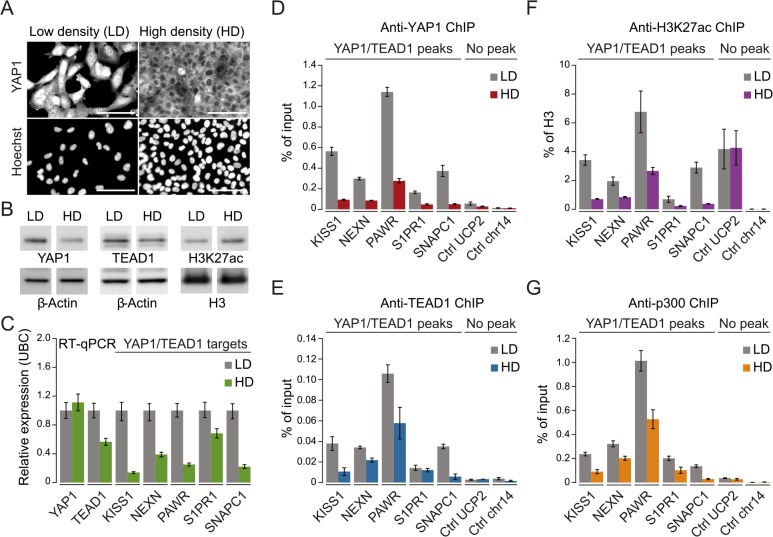
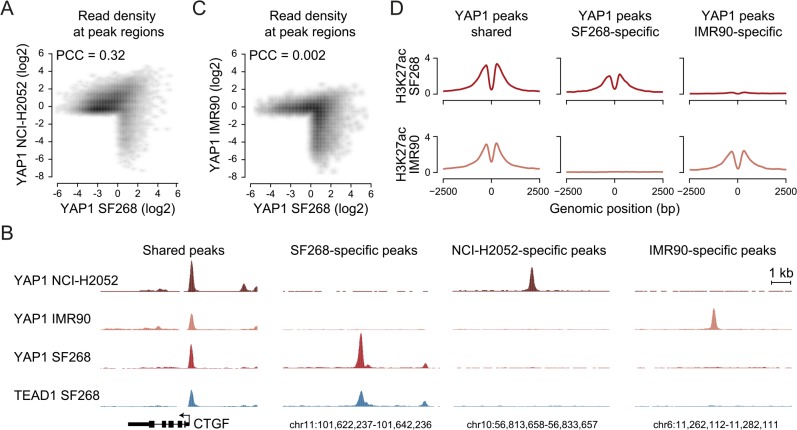
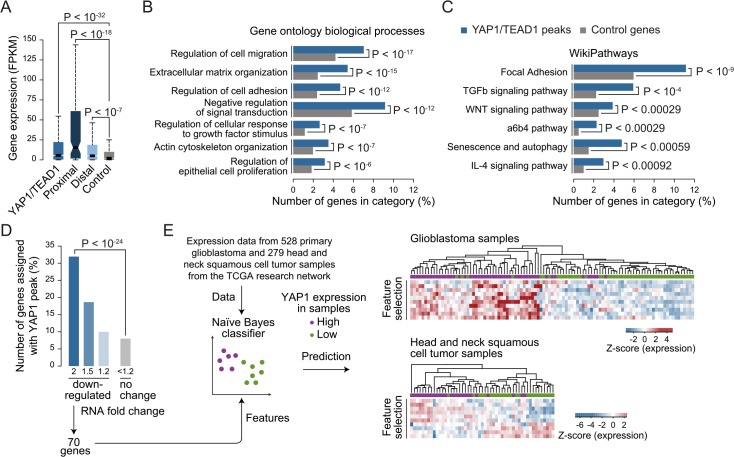
Verification
Claims the paper makes
The claims and statistics of this paper haven’t been checked yet.
Run the check — free, no account needed. It reads the open-access text and checks the sources it cites.
Claims other papers make about this one
Each is checked against this paper’s own text: does it say what the citing paper says it does?
The source backs part of the claim, not all of it — or backs it for a different population, condition or comparison.
In the citing paper
“ChIP-seq and deepsequencing studies in cancer and normal cells showed that several YAP-binding regions also show a consensus motif for AP-1 transcriptional factors suggesting that YAP/TEAD and AP-1 cooperatively regulate target genes representing a cross-talk between YAP and JNK signalling (74,75).”
From A Tumour-Specific Molecular Network Promotes Tumour Growth in Drosophila by Enforcing a JNK-YKI Feedforward Loop (2023) · cites this paper as [74]
Experimental — accuracy not yet measuredThe cited source says what the claim attributes to it.
In the citing paper
“Third, YAP/TEAD bind distal regulatory elements to regulate transcription of target genes (73-75).”
From A Tumour-Specific Molecular Network Promotes Tumour Growth in Drosophila by Enforcing a JNK-YKI Feedforward Loop (2023) · cites this paper as [74]
The cited source says what the claim attributes to it.
In the citing paper
“Consistently, published ChIP-seq datasets34,38,39 reveal a similar phenomenon in human cancer cell lines (Figure S7F).”
From HBO1 functions as an epigenetic barrier to hepatocyte plasticity and reprogramming during liver injury (2025) · cites this paper as [38]
Self-check
Percentages, sums and reported differences re-computed from the paper’s own numbers.
The self-check needs the paper’s full text.
Citations
Cites
Gene Ontology: tool for the unification of biology
Ashburner, M., Ball, C. A., Blake, J. A., Botstein, D., Butler, H., Cherry, J. M., Davis, A. P., Dolinski, K., Dwight, S. S., Eppig, J. T., et al. (2000) · Nature Genetics · doi:10.1038/75556 · Cited by 43,206
Ultrafast and memory-efficient alignment of short DNA sequences to the human genome.
Langmead, B., Trapnell, C., Pop, M., & Salzberg, S. L. (2009) · Genome Biology · doi:10.1186/gb-2009-10-3-r25 · Cited by 21,849
Model-based Analysis of ChIP-Seq (MACS)
Zhang, Y., Liu, T., Meyer, C. A., Eeckhoute, J., Johnson, D. S., Bernstein, B. E., Nusbaum, C., Myers, R. M., Brown, M., Li, W., et al. (2008) · Genome Biology · doi:10.1186/gb-2008-9-9-r137 · Cited by 18,386
Cerami, E., Gao, J., Dogrusoz, U., Gross, B. E., Sumer, S. O., Aksoy, B. A., Jacobsen, A., Byrne, C. J., Heuer, M. L., Larsson, E., et al. (2012) · Cancer Discovery · doi:10.1158/2159-8290.cd-12-0095 · Cited by 17,455
Differential expression analysis for sequence count data
Anders, S., & Huber, W. (2010) · Genome Biology · doi:10.1186/gb-2010-11-10-r106 · Cited by 15,581
Trapnell, C., Williams, B. A., Pertea, G., Mortazavi, A., Kwan, G., van Baren, M. J., Salzberg, S. L., Wold, B. J., & Pachter, L. (2010) · Nature Biotechnology · doi:10.1038/nbt.1621 · Cited by 15,556
Integrative Analysis of Complex Cancer Genomics and Clinical Profiles Using the cBioPortal
Gao, J., Aksoy, B. A., Dogrusoz, U., Dresdner, G., Gross, B., Sumer, S. O., Sun, Y., Jacobsen, A., Sinha, R., Larsson, E., et al. (2013) · Science Signaling · doi:10.1126/scisignal.2004088 · Cited by 15,160
The Human Genome Browser at UCSC
Kent, W. J., Sugnet, C. W., Furey, T. S., Roskin, K. M., Pringle, T. H., Zahler, A. M., & Haussler, A. D. (2002) · Genome Research · doi:10.1101/gr.229102 · Cited by 10,400
Histone H3K27ac separates active from poised enhancers and predicts developmental state
Creyghton, M. P., Cheng, A. W., Welstead, G. G., Kooistra, T., Carey, B. W., Steine, E. J., Hanna, J., Lodato, M. A., Frampton, G. M., Sharp, P. A., et al. (2010) · Proceedings of the National Academy of Sciences · doi:10.1073/pnas.1016071107 · Cited by 4,302
Evolutionarily conserved elements in vertebrate, insect, worm, and yeast genomes
Siepel, A., Bejerano, G., Pedersen, J. S., Hinrichs, A. S., Hou, M., Rosenbloom, K., Clawson, H., Spieth, J., Hillier, L. W., Richards, S., et al. (2005) · Genome Research · doi:10.1101/gr.3715005 · Cited by 3,971 · cited 1×
“We calculated the conservation rate of regions using the PhastCons 46 way placental mammals [94].”
Method
Cited by
Sorted by citations
Items 301–400 of 415
The Intersection of Epigenetic Alterations and Developmental State in Pediatric Ependymomas
Kardian, A., & Mack, S. C. (2024) · Developmental Neuroscience · doi:10.1159/000537694 · Cited by 4
Upregulation of YPEL3 expression and induction of human breast cancer cell death by microRNAs
Lee, B., Kwon, Y., Shin, S., Kwon, T.-U., Park, H., Lee, H. G., Kwak, J.-H., & Chun, Y. (2024) · Toxicological Research · doi:10.1007/s43188-024-00251-2 · Cited by 4
El-Maadawy, W. H., Hafiz, E. O. A., Mostafa, A., Hassany, A. A., Shafie, N. S., Lethy, A. W., El-Ahwany, E. G., & Amer, M. (2025) · European Journal of Pharmacology · doi:10.1016/j.ejphar.2025.178182 · Cited by 4
Wang, Y., Liang, J., Lange, K., Demmerle, J., Liu, E. A., Black, E., He, B. J., Ricketts, C. J., Yoshida, S. R., Chong, S., et al. (2026) · Nature Cell Biology · doi:10.1038/s41556-026-01985-x · Cited by 5
Miyoshi, M., Shimosato, T., & Takaya, T. (2024) · Biomolecules · doi:10.3390/biom14060709 · Cited by 4
Lan, C., Ni, B., Zhao, T., Li, Z., Wang, J., Ma, Y., Li, W., & Wang, X. (2022) · Frontiers in Genetics · doi:10.3389/fgene.2022.866702 · Cited by 4
TAZ Regulates the Cisplatin Resistance of Epithelial Ovarian Cancer Cells via the ANGPTL4/SOX2 Axis
Li, C., Wang, Q., Luo, Y., & Xiang, J. (2022) · Analytical Cellular Pathology · doi:10.1155/2022/5632164 · Cited by 4
Behrmann, A., Zhong, D., Li, L., Xie, S., Mead, M., Sabaeifard, P., Goodarzi, M., Lemoff, A. S., Kozlitina, J., & Towler, D. A. (2023) · Endocrinology · doi:10.1210/endocr/bqad192 · Cited by 3
Lu, J., Feng, Y., Yu, D., Li, H., Li, W., Chen, H., & Chen, L. (2024) · International Journal of Biological Macromolecules · doi:10.1016/j.ijbiomac.2023.129188 · Cited by 4
Olatunde, D., & Benedetti, A. D. (2024) · Cancers · doi:10.3390/cancers16162918 · Cited by 4
Seo, H.-S., Kim, H.-G., Joo, H.-E., Kwon, J., & Cho, J.-H. (2025) · Journal of Ethnopharmacology · doi:10.1016/j.jep.2025.120292 · Cited by 5
Hong, Z., Li, B., Xu, J., Lin, R., Pan, J., Fang, C., Zhang, B., Lau, L. Y., Aldridge, R. J., Whitmore, E. A., et al. (2026) · Advanced Science · doi:10.1002/advs.76784 · Cited by 3
Li, S., Wang, L., Shi, J., Chen, Y., Xiao, A., Huo, B., Tian, W., Zhang, S., Yang, G., Gong, W., et al. (2024) · PeerJ · doi:10.7717/peerj.16752 · Cited by 3
Ma, R., Hu, K., Dai, S., & Wang, Y. (2024) · Biochemical and Biophysical Research Communications · doi:10.1016/j.bbrc.2024.150037 · Cited by 3
Mutation status in yes-associated protein 1 (YAP1) in an insulinoma cell line Rin-5F
Kiba, T. (2025) · Cancer Genetics · doi:10.1016/j.cancergen.2025.03.006 · Cited by 3
Regulation of YAP activity by nuclear G-actin binding
Wang, H., Jayawardana, I. M., Fleisch, J. M., Frank, D., Zhao, B. Q., Kamaras, C., Gebhardt, P., Knerr, J., Ulferts, S., Sivabalasarma, S., et al. (2026) · Nucleic Acids Research · doi:10.1093/nar/gkag248 · Cited by 3
Multiomics characterization of mouse hepatoblastoma identifies yes‐associated protein 1 target genes
Rodríguez, T., Kwan, S., Smith, J. L., Dadafarin, S., Wu, C., Sontheimer, E. J., & Xue, W. (2022) · Hepatology · doi:10.1002/hep.32713 · Cited by 3
Identification of BRCC3 and BRCA1 as Regulators of TAZ Stability and Activity
Sberna, S., Lopez-Hernandez, A., Biancotto, C., Motta, L., Andronache, A., Verhoef, L. G. G. C., Cagánová, M., & Campaner, S. (2023) · Cells · doi:10.3390/cells12202431 · Cited by 3
Genetic dependencies associated with transcription factor activities in human cancer cell lines
Thatikonda, V., Supper, V., Wachter, J., Kaya, O., Kombara, A., Bilgilier, C., Ravichandran, M. C., Lipp, J., Sharma, R., Badertscher, L., et al. (2024) · Cell Reports · doi:10.1016/j.celrep.2024.114175 · Cited by 3
Analysis in silico of the functional interaction between WNT5A and YAP/TEAD signaling in cancer
Astudillo, P. (2021) · PeerJ · doi:10.7717/peerj.10869 · Cited by 3
Peng, S., Liang, J., Zhan, Y., Wu, W., Xu, W., Zhang, X., Cai, L., & Jiang, F. (2026) · Advanced Science · doi:10.1002/advs.202512866 · Cited by 2
Khanum, A., Dcunha, L., Subair, S., Gopalakrishnan, A. P., Palollathil, A., & Raju, R. (2026) · Proteomes · doi:10.3390/proteomes14020017 · Cited by 2
Context-dependent synthetic lethality — an emerging precision therapeutic approach
Chang, L., Shaw, K. L., Vázquez, F., & Sellers, W. R. (2026) · Nature reviews. Cancer · doi:10.1038/s41568-026-00929-9 · Cited by 7
Micromechanical Design Criteria for Tissue-Engineering Biomaterials
Lei, Y. F., Goldblatt, Z. E., & Billiar, K. L. (2020) · Elsevier eBooks · doi:10.1016/b978-0-12-816137-1.00083-0 · Cited by 2
Hikasa, H., Kawahara, K., Inui, M., Yasuki, Y., Yamashita, K., Otsubo, K., Kitajima, S., Nishio, M., Arima, K., Endo, M., et al. (2024) · Cancer Science · doi:10.1111/cas.16316 · Cited by 1
Netrin-1 and UNC5B Cooperate with Integrins to Mediate YAP-Driven Cytostasis
Pearson, J. D., Huang, K., Pena, L. G. D., Ducarouge, B., Mehlen, P., & Bremner, R. (2024) · Cancer Research Communications · doi:10.1158/2767-9764.crc-24-0101 · Cited by 2
C-terminal fusion partner activity contributes to the oncogenic functions of YAP1::TFE3
Cimino, P. J., Keiser, D. J., Parrish, A. G., Holland, E. C., & Szulzewsky, F. (2025) · Scientific Reports · doi:10.1038/s41598-025-17409-z · Cited by 2
Kushner, M. H., Riegel, A. T., & Sharif, G. M. (2019) · IntechOpen eBooks · doi:10.5772/intechopen.80925 · Cited by 2
Sayeed, K., Parameswaran, S., Beucler, M. J., Edsall, L., VonHandorf, A., Crowther, A., Donmez, O. A., Hass, M. R., Richards, S., Forney, C. R., et al. (2025) · eLife · doi:10.7554/elife.101578.3 · Cited by 2
A feedback loop between plakophilin 4 and YAP signaling regulates keratinocyte differentiation
Müller, L., Gutschner, T., & Hatzfeld, M. (2024) · iScience · doi:10.1016/j.isci.2024.110762 · Cited by 2
Najas, S., Pijuan, I., Esteve‐Codina, A., Usieto, S., Martinez, J. D., Zwijsen, A., Arbonés, M. L., Martı́, E., & Dréau, G. L. (2019) · bioRxiv (Cold Spring Harbor Laboratory) · doi:10.1101/558486 · Cited by 2
Vargas, P. P., Arias-García, M., Roumeliotis, T. I., Choudhary, J. S., & Bakal, C. (2020) · SSRN Electronic Journal · doi:10.1101/2020.07.24.218313 · Cited by 2
Sayeed, K., Parameswaran, S., Beucler, M. J., Edsall, L., VonHandorf, A., Crowther, A., Donmez, O. A., Hass, M. R., Richards, S., Forney, C. R., et al. (2024) · eLife · doi:10.7554/elife.101578 · Cited by 2
Waghmare, I., Gangwani, K., Rai, A., Singh, A., & Kango-Singh, M. (2023) · doi:10.1101/2023.10.18.561369 · Cited by 1
OTUD6A orchestrates complex modulation of TEAD4 ‐mediated transcriptional programs
Kim, H. J., Choi, Y.-S., Lee, Y., Hwangbo, M. H., & Kim, J. (2024) · FEBS Letters · doi:10.1002/1873-3468.14861 · Cited by 1
Li, L., Wang, J., Ren, S., & Hao, X. (2024) · Neurosurgical Review · doi:10.1007/s10143-024-03101-9 · Cited by 1
De novo identification of universal cell mechanics gene signatures
Urbanska, M., Ge, Y., Winzi, M., Abuhattum, S., Ali, S. S., Herbig, M., Kräter, M., Toepfner, N., Durgan, J., Florey, O., et al. (2025) · eLife · doi:10.7554/elife.87930.3 · Cited by 1
Karagil, S., Haddad, N. F., Stolinski, M., Hill, N. J., Johnson, D., Wehida, N., & Elbediwy, A. (2025) · Cells · doi:10.3390/cells14211701 · Cited by 2
Vinarský, V., Pagliari, S., Aldabash, B., Martino, F., Mazzotti, C., Jirakova, K., Garlíková, Z., Iuri, E. D., Kytýř, D., Benzoni, P., et al. (2025) · Cell Death Discovery · doi:10.1038/s41420-025-02793-2 · Cited by 2
Ma, M., Yang, J., Li, Z., Shi, X., & Xu, Z. (2025) · Molecular Neurobiology · doi:10.1007/s12035-025-05488-y · Cited by 1
YAP-TEAD regulates the super-enhancer network to control early surface ectoderm commitment
Wang, Z., Yang, C., Ma, Z., He, X., Li, L., Wang, Y., Wang, Y., Cai, X., Jiao, H., Zhang, M., et al. (2025) · Nucleic Acids Research · doi:10.1093/nar/gkaf1285 · Cited by 1
Kunitomi, H., Khaine, A. M., Jamee, R., Arreola, V., Lancero, M., Raychaudhuri, A., Perli, S., Sato, Y., Iwasaki, M., Ruivo, P., et al. (2026) · Cell Stem Cell · doi:10.1016/j.stem.2026.04.006 · Cited by 1
Papanikolaou, M. A., Gargalionis, A. N., Adamopoulos, C., & Piperi, C. (2026) · Cancer and Metastasis Reviews · doi:10.1007/s10555-026-10349-8 · Cited by 1
Tang, B., Minin, J., Gonzalez, V., Khan, Z. Z., Gaines, A. R., Raviv, Y., Yang, Y.-A., Carney, C. P., Millman, Z. G., Grúň, D., et al. (2026) · Nature Cell Biology · doi:10.1038/s41556-026-02013-8 · Cited by 1
Clinical and biological implications of Hippo pathway dysregulation in sarcomas
Kyriazoglou, A. I., Zakopoulou, R., Zagouri, F., Bamias, A., & Dimopoulos, M. A. (2018) · Forum of Clinical Oncology · doi:10.2478/fco-2018-0002 · Cited by 1
Molecular basis and therapeutic implications of binary YAPOn/YAPOff cancer classes
Sharma, P., Michaels, Y. S., & Pearson, J. D. (2025) · Biochemical Journal · doi:10.1042/bcj20253077 · Cited by 1
VGLL1 drives therapy resistance in estrogen receptor positive breast cancerPreprint
Gemma, C., Lai, C., Singh, A. K., Belfiore, A., Portman, N., Milioli, H. H., Periyasamy, M., Abuelmaaty, S., Nicholls, A. J., Davies, C. M., et al. (2020) · bioRxiv (Cold Spring Harbor Laboratory) · doi:10.1101/2020.11.29.402842 · Cited by 1
Vasko Popa a diez años de su muerte
Prenz, J. O. (2001) · Cuadernos hispanoamericanos · Cited by 1
Epigenetic regulation of osteoblast differentiation
Najafova, Z. (2017) · eDiss (Georg-August-Universität Göttingen) · doi:10.53846/goediss-6333 · Cited by 1
Ghomlaghi, M., Theocharous, M., Shin, S., Neill, E. O., & Nguyen, L. K. (2022) · bioRxiv (Cold Spring Harbor Laboratory) · doi:10.1101/2022.04.06.487403 · Cited by 1
Kurlishchuk, Y. V., Vranesic, A. C., Gründl, M., Kipping, A., Kim, K., Cramer, P., & von Eyß, B. (2023) · bioRxiv (Cold Spring Harbor Laboratory) · doi:10.1101/2023.08.20.554005 · Cited by 1
Sayeed, K., Parameswaran, S., Beucler, M. J., Edsall, L., VonHandorf, A., Crowther, A., Donmez, O., Hass, M. R., Richards, S., Forney, C. R., et al. (2024) · eLife · doi:10.7554/elife.101578.1 · Cited by 1
De novo identification of universal cell mechanics gene signaturesPreprint
Urbanska, M., Ge, Y., Winzi, M., Abuhattum, S., Ali, S. S., Herbig, M., Kräter, M., Toepfner, N., Durgan, J., Florey, O., et al. (2024) · eLife · doi:10.7554/elife.87930.2 · Cited by 1
Wolfe, A. L., Zhou, Q., Toska, E., Galeas, J., Ku, A. A., Koche, R. P., Bandyopadhyay, S., Scaltriti, M., Lebrilla, C. B., McCormick, F. P., et al. (2020) · bioRxiv (Cold Spring Harbor Laboratory) · doi:10.1101/2020.10.13.337998
Xiang, Z., Huang, G., Wu, H., He, Q., Yang, C., Dou, R., Liu, Q., Song, J., Yan, F., Wang, S., et al. (2020) · doi:10.21203/rs.3.rs-135600/v1
Increased ACTL6A Occupancy within mSWI/SNF Chromatin Remodelers Drives Human Squamous Cell CarcinomaPreprint
Chang, C.-Y., Shipony, Z., Kuo, A., Loh, K. M., Greenleaf, W. J., & Crabtree, G. R. (2021) · SSRN Electronic Journal · doi:10.2139/ssrn.3806798
A Yap-dependent transcriptional program directs cell migration for embryo axis assemblyPreprint
Sousa‐Ortega, A., Vázquez-Marín, J., Sanabria‐Reinoso, E., Polvillo, R., Campoy-López, A., Buono, L., Loosli, F., Almuedo‐Castillo, M., & Martínez‐Morales, J. R. (2022) · bioRxiv (Cold Spring Harbor Laboratory) · doi:10.1101/2022.02.06.479280
DeMali, K. A., & Campbell, H. (2017) · Faculty Opinions – Post-Publication Peer Review of the Biomedical Literature · doi:10.3410/f.727215210.793538385
Xiang, Z., Huang, G., Wu, H., He, Q., Yang, C., Dou, R., Liu, Q., Song, J., Fang, Y., Wang, S., et al. (2022) · Research Square · doi:10.21203/rs.3.rs-1122369/v1
Mechanobiology and Applications in Biomaterials for Soft Tissue Repair and Regeneration
Lei, Y. F., Li, J., & Billiar, K. L. (2022) · Elsevier eBooks · doi:10.1016/b978-0-12-822944-6.00065-7
Vigneswaran, K., Boyd, N., Oh, S.-Y., Lallani, S. B., Boucher, A., Neill, S. G., Olson, J. J., & Read, R. D. (2023) · doi:10.1158/1078-0432.c.6529980.v1
Bauzone, M., Souidi, M., Dessein, A., Wisztorski, M., Vincent, A., Gimeno, J., Monté, D., SEUNINGEN, I. V., Gespach, C. P., & Huet, G. (2023) · doi:10.1158/1541-7786.c.6545196.v1
Overall, C. M., Butler, G. S., Vlok, M., de Jesus, H. C. R., Baid, K., Machado, Y. J., Pablos, I., Solis, N., Kappelhoff, R., Bell, P. A., et al. (2024) · Research Square · doi:10.21203/rs.3.rs-3918469/v1
Waghmare, I., Gangwani, K., Rai, A., Singh, A., & Kango‐Singh, M. (2024) · Cancers · doi:10.3390/cancers16091768 · Cited by 1
Mitchell, K. A., Vissers, J. H. A., Pojer, J. M., Brooks, E., Hilmi, A. J. S., Papenfuss, A. T., Schröder, J., & Harvey, K. F. (2024) · bioRxiv (Cold Spring Harbor Laboratory) · doi:10.1101/2024.06.19.599466
Blandino, G., Sardo, F. L., Turco, C., Messina, B., Sacconi, A., Auciello, F. R., Pulito, C., Strano, S., & Lev, S. (2024) · Research Square · doi:10.21203/rs.3.rs-5032978/v1
Comparative atlas of genome-wide chromatin-associated protein co-occupancyPreprint
White, S. M., Moyers, B. A., Wang, T., Mackiewicz, M., Weimer, A. K. K., Grubert, F., Ramalingam, V., Luo, J. X. J., Jiang, L., Shi, M., et al. (2024) · bioRxiv (Cold Spring Harbor Laboratory) · doi:10.1101/2024.12.17.628199 · Cited by 1
Tang, B., Minin, J., Gonzalez, V., Khan, Z., Raviv, Y., Yang, Y.-A., Carney, C. P., Millman, Z., Grun, D., Pineda, C. M., et al. (2025) · bioRxiv (Cold Spring Harbor Laboratory) · doi:10.1101/2025.03.13.643008
Wang, Y., Manokaran, C., Huang, K. Y., Schaffhausen, B. S., & Roberts, T. M. (2025) · Proceedings of the National Academy of Sciences · doi:10.1073/pnas.2426862122
Sayeed, K., Parameswaran, S., Beucler, M. J., Edsall, L., VonHandorf, A., Crowther, A., Donmez, O., Hass, M. R., Richards, S., Forney, C. R., et al. (2025) · eLife · doi:10.7554/elife.101578.2
Tang, Y., Thiess, L., Weiler, S. M. E., Tóth, M., Rose, F., Merker, S., Ruppert, T., Schirmacher, P., & Breuhahn, K. (2023) · Figshare · doi:10.6084/m9.figshare.23597364
Tang, Y., Thiess, L., Weiler, S. M. E., Tóth, M., Rose, F., Merker, S., Ruppert, T., Schirmacher, P., & Breuhahn, K. (2023) · Figshare · doi:10.6084/m9.figshare.23597370
Tang, Y., Thiess, L., Weiler, S. M. E., Tóth, M., Rose, F., Merker, S., Ruppert, T., Schirmacher, P., & Breuhahn, K. (2023) · Figshare · doi:10.6084/m9.figshare.23597367
Tang, Y., Thiess, L., Weiler, S. M. E., Tóth, M., Rose, F., Merker, S., Ruppert, T., Schirmacher, P., & Breuhahn, K. (2023) · Figshare · doi:10.6084/m9.figshare.23597382
Tang, Y., Thiess, L., Weiler, S. M. E., Tóth, M., Rose, F., Merker, S., Ruppert, T., Schirmacher, P., & Breuhahn, K. (2023) · Figshare · doi:10.6084/m9.figshare.23597373
Wan, W., Miao, Y., Niu, Y., Zhu, K., Ma, Y., Pan, M., Ma, B., & Wei, Q. (2023) · Figshare · doi:10.6084/m9.figshare.22619555
Tang, Y., Thiess, L., Weiler, S. M. E., Tóth, M., Rose, F., Merker, S., Ruppert, T., Schirmacher, P., & Breuhahn, K. (2023) · Figshare · doi:10.6084/m9.figshare.23597379
Tang, Y., Thiess, L., Weiler, S. M. E., Tóth, M., Rose, F., Merker, S., Ruppert, T., Schirmacher, P., & Breuhahn, K. (2023) · Figshare · doi:10.6084/m9.figshare.23597361
Tang, Y., Thiess, L., Weiler, S. M. E., Tóth, M., Rose, F., Merker, S., Ruppert, T., Schirmacher, P., & Breuhahn, K. (2023) · Figshare · doi:10.6084/m9.figshare.23597376
Wan, W., Miao, Y., Niu, Y., Zhu, K., Ma, Y., Pan, M., Ma, B., & Wei, Q. (2023) · Figshare · doi:10.6084/m9.figshare.22619558
Kumariya, S., Stuck, J., de Oro, A. G., & Osman, I. (2026) · iScience · doi:10.1016/j.isci.2026.114996
Baronchelli, E., Ferretti, S., Kubacki, M., Covino, A., Benedetti, V., Bellini, E. N., Giannelli, S. G., Luoni, M., Ventura, E., Banfi, F., et al. (2026) · bioRxiv (Cold Spring Harbor Laboratory) · doi:10.64898/2026.03.12.711340
Tissot, F. S. (2017) · theses.fr (ABES) · doi:10.70675/15252dfez0dfez4a42z83f4z21be7c773c9d
The YAP1-NPM1 nuclear complex regulates MYC and reveals a targetable oncogenic node
Dwead, A. M., Al‐Mathkour, M. M., Khanov, M., Akbaş, E., & Cinar, B. (2026) · iScience · doi:10.1016/j.isci.2026.115588
Modulation of hippo pathway by alternative splicing
Srivastava, D. (2019) · theses.fr (ABES) · doi:10.70675/39639c36z8ae3z4f14z9907zaaead2a13436
Metadata
- Authors
- Stein, C., Bardet, A. F., Roma, G., Bergling, S., Clay, I., Ruchti, A., Agarinis, C., Schmelzle, T., Bouwmeester, T., Schübeler, D., & Bauer, A.
- Affiliations
- Novartis (Switzerland) (CH)
- Friedrich Miescher Institute (CH)
- University of Basel (CH)
- Corresponding author
- Schübeler, Dirk
- Bauer, Andreas
- ORCID
- Venue
- PLOS Genetics
- Publisher
- Public Library of Science (PLoS)
- Published
- 2015-08-21
- Volume
- 11
- Issue
- 8
- Pages
- e1005465
- ISSN
- 1553-7390 (ISSN-L)
- 1553-7404
- PMC
- PMC4546604
- OpenAlex
- W1539804860
- Cited by
- 414
- References
- 98
- Citations by year
- 2026: 26 · 2025: 26 · 2024: 53 · 2023: 52 · 2022: 42 · 2021: 52 · 2020: 42 · 2019: 38 · 2018: 33 · 2017: 29 · 2016: 17 · 2015: 2
- FWCI
- 14.36
- Type
- journal article
- Language
- en
- Open access
- gold
- doi.org
- Licence
- Locations
- PLoS Genetics (publishedVersion, cc-by)
- Europe PMC (PubMed Central) (publishedVersion, cc-by)
- PubMed Central (publishedVersion, cc-by)
- PubMed (publishedVersion)
- DOAJ (DOAJ: Directory of Open Access Journals) (submittedVersion, cc-by-sa)
- Figshare (submittedVersion, cc-by)
- Funders
- European Commission (282510, 257082)
- SystemsX.ch
- FP7 Health (HEALTH-2010-257082, 282510)
- Topics
- Life Sciences › Biochemistry, Genetics and Molecular Biology › Cell Biology › Hippo pathway signaling and YAP/TAZ
- Life Sciences › Biochemistry, Genetics and Molecular Biology › Molecular Biology › Genomics and Chromatin Dynamics
- Life Sciences › Biochemistry, Genetics and Molecular Biology › Cancer Research › Cancer-related molecular mechanisms research
- Keywords
- YAP, TEAD transcription factors, Hippo signaling pathway, enhancer activation, distal enhancers, H3K27 acetylation, chromatin binding, transcriptional regulation, oncogenes, cancer
- MeSH terms
- YAP-Signaling Proteins, TEA Domain Transcription Factors, Acetylation, Base Sequence, Binding Sites, DNA-Binding Proteins, Enhancer Elements, Genetic, Histones, Humans, Nuclear Proteins, Phosphoproteins, Protein Binding, Protein Processing, Post-Translational, Transcription Factors, Transcriptional Activation, Consensus Sequence, Cell Line, Tumor, Adaptor Proteins, Signal Transducing, Transcriptome
About these checks
Registry, retraction, Cites and statistics results are computed, not judged, with one exception: a printed reference that no index lists is read once by a model before it counts as a citation error. Claims are extracted by a model and kept only when their quote appears verbatim in the text; each cited source is then checked, with a model’s help, for whether it says what the claim relies on. Those verdicts can be wrong — read the claim’s quote and the cited source before relying on one.
Statistics and arithmetic are recomputed, not judged.
Confidence bands are shown only for fields calibrated on our annotated test set. None is calibrated yet, so no band is shown.
What counts as a claim ›How we measure confidence ›How we check this ›
Are you an author, or do you see a problem with this page? Request a review
