

The DOI matches its Crossref record; 28 of the 28 references it cites were found in a registry or an index.
Acquired Resistance of Lung Adenocarcinomas to Gefitinib or Erlotinib Is Associated with a Second Mutation in the EGFR Kinase Domain
Open accessAbstract
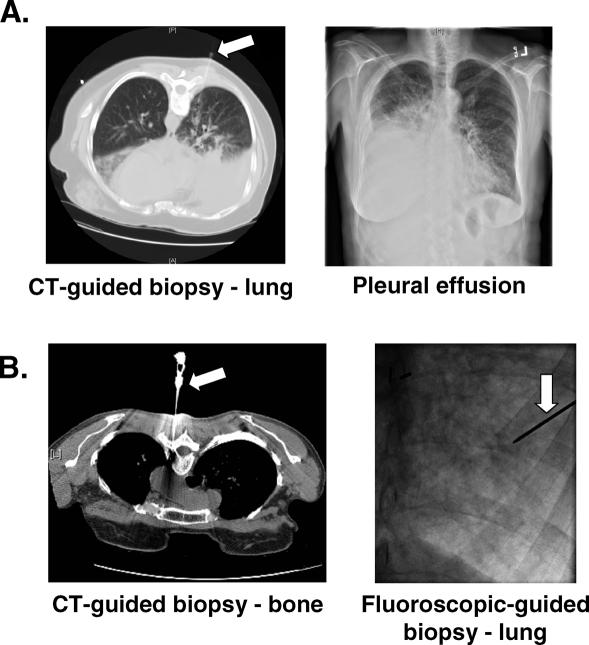
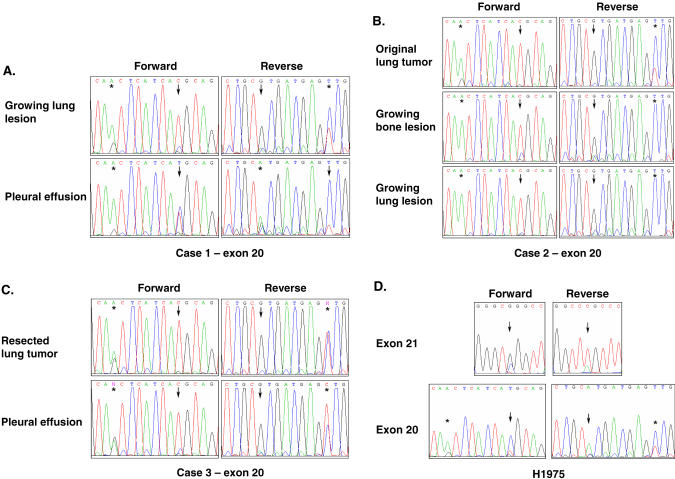
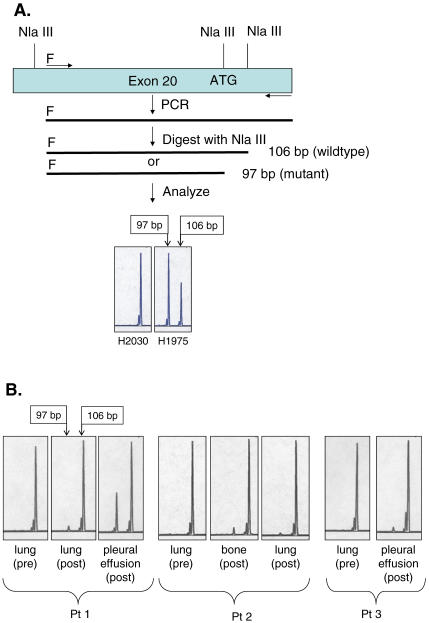
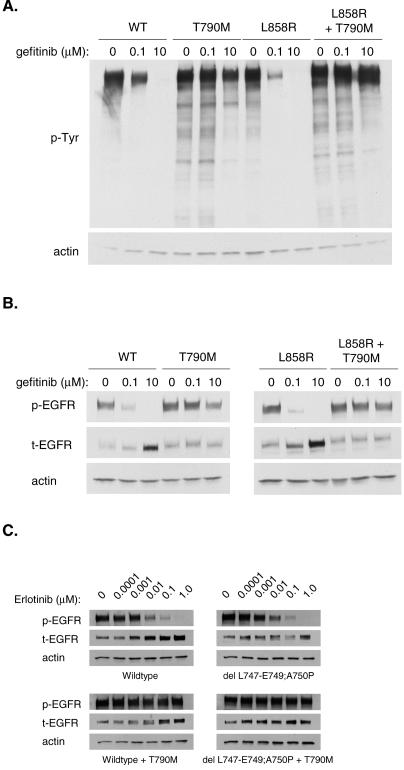
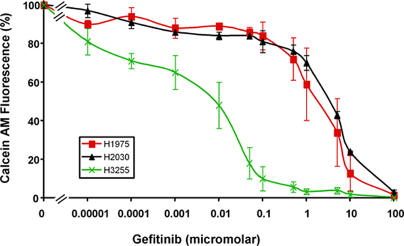
BACKGROUND: Lung adenocarcinomas from patients who respond to the tyrosine kinase inhibitors gefitinib (Iressa) or erlotinib (Tarceva) usually harbor somatic gain-of-function mutations in exons encoding the kinase domain of the epidermal growth factor receptor (EGFR). Despite initial responses, patients eventually progress by unknown mechanisms of "acquired" resistance. METHODS AND FINDINGS: We show that in two of five patients with acquired resistance to gefitinib or erlotinib, progressing tumors contain, in addition to a primary drug-sensitive mutation in EGFR, a secondary mutation in exon 20, which leads to substitution of methionine for threonine at position 790 (T790M) in the kinase domain. Tumor cells from a sixth patient with a drug-sensitive EGFR mutation whose tumor progressed on adjuvant gefitinib after complete resection also contained the T790M mutation. This mutation was not detected in untreated tumor samples. Moreover, no tumors with acquired resistance had KRAS mutations, which have been associated with primary resistance to these drugs. Biochemical analyses of transfected cells and growth inhibition studies with lung cancer cell lines demonstrate that the T790M mutation confers resistance to EGFR mutants usually sensitive to either gefitinib or erlotinib. Interestingly, a mutation analogous to T790M has been observed in other kinases with acquired resistance to another kinase inhibitor, imatinib (Gleevec). CONCLUSION: In patients with tumors bearing gefitinib- or erlotinib-sensitive EGFR mutations, resistant subclones containing an additional EGFR mutation emerge in the presence of drug. This observation should help guide the search for more effective therapy against a specific subset of lung cancers.
Overview
The claims and statistics of this paper haven’t been checked yet.
Run the check — free, no account needed. It reads the open-access text and checks the sources it cites.
Integrity signals
Registry
Cites
Statistics
Figures
Verification
Claims the paper makes
The claims and statistics of this paper haven’t been checked yet.
Run the check — free, no account needed. It reads the open-access text and checks the sources it cites.
Claims other papers make about this one
Each is checked against this paper’s own text: does it say what the citing paper says it does?
The cited source says what the claim attributes to it.
In the citing paper
“H1975 cells harbor activating EGFR mutations [17]”
From Clathrin adapters AP-1 and GGA2 support expression of epidermal growth factor receptor for cell growth (2021) · cites this paper as [17]
In the citing paper
“However, it is now well established that acquisition of a second mutation in EGFR, resulting in substitution of threonine at the “gatekeeper” amino acid 790 to methionine (T790M) is the most common resistance mechanism and is detected in tumor cells from more than 50% of patients after disease progression (20, 21).”
From AZD9291, an Irreversible EGFR TKI, Overcomes T790M-Mediated Resistance to EGFR Inhibitors in Lung Cancer (2014) · cites this paper as [21]
In the citing paper
“This mutation leads to the substitution of threonine by methionine at position 790, which encodes part of the kinase domain of the receptor and results in increased affinity for ATP, causing resistance to competitive inhibition by reversible EGFR TKIs such as gefitinib and erlotinib [121,122].”
From Metastatic non-small-cell lung cancer: ESMO Clinical Practice Guidelines for diagnosis, treatment and follow-up (2016) · cites this paper as [121]
In the citing paper
“In EGFR mutant lung cancer, the most common mechanism of acquired resistance to EGFR inhibitors is the development of a mutation in the gatekeeper residue of EGFR, T790M (Kobayashi et al., 2005; Pao et al., 2005).”
From ERBB Receptors: From Oncogene Discovery to Basic Science to Mechanism-Based Cancer Therapeutics (2014) · cites this paper as Pao et al., 2005
In the citing paper
“Accordingly, cell growth was suppressed by the depletion of AP-1 in a non-cancer cell line, ARPE-19, and a NSCLC-derived cancer cell line, H1975, which harbors activating EGFR mutations [17].”
From Clathrin adapters AP-1 and GGA2 support expression of epidermal growth factor receptor for cell growth (2021) · cites this paper as [17]
In the citing paper
“H1975 cells harbor activating EGFR mutations [17], and as such, these results suggest the involvement of AP-1 in EGFR-dependent cell growth.”
From Clathrin adapters AP-1 and GGA2 support expression of epidermal growth factor receptor for cell growth (2021) · cites this paper as [17]
Self-check
Percentages, sums and reported differences re-computed from the paper’s own numbers.
The self-check needs the paper’s full text.
Citations
Cites
Lynch, T. J., Bell, D. W., Sordella, R., Gurubhagavatula, S., Okimoto, R. A., Brannigan, B. W., Harris, P. L., Haserlat, S. M., Supko, J. G., Haluska, F. G., et al. (2004) · New England Journal of Medicine · doi:10.1056/nejmoa040938 · Cited by 11,486
EGFR Mutations in Lung Cancer: Correlation with Clinical Response to Gefitinib Therapy
Paez, J. G., Jänne, P. A., Lee, J. C., Tracy, S., Greulich, H., Gabriel, S., Herman, P., Kaye, F. J., Lindeman, N., Boggon, T. J., et al. (2004) · Science · doi:10.1126/science.1099314 · Cited by 9,368 · cited 13×
“PCR products were ligated into plasmids using the TOPO TA-cloning kit (Invitrogen, Carlsbad, California, United States), as per manufacturer’s instructions.”
BackgroundInfluentialPao, W., Miller, V., Zakowski, M., Doherty, J., Politi, K., Sarkaria, I., Singh, B., Heelan, R., Rusch, V., Fulton, L., et al. (2004) · Proceedings of the National Academy of Sciences · doi:10.1073/pnas.0405220101 · Cited by 4,338 · cited 17×
“PCR products were ligated into plasmids using the TOPO TA-cloning kit (Invitrogen, Carlsbad, California, United States), as per manufacturer’s instructions.”
BackgroundMethodInfluentialSelf-citationClinical Resistance to STI-571 Cancer Therapy Caused by BCR-ABL Gene Mutation or Amplification
Gorre, M. E., Mohammed, M., Ellwood, K., Hsu, N., Paquette, R., Rao, P. N., & Sawyers, C. L. (2001) · Science · doi:10.1126/science.1062538 · Cited by 3,104 · cited 3×
“For example, in CML, a commonly found mutation is a CfiT single nucleotide change that replaces threonine with isoleucine at position 315 (T315I) in the ABL kinase domain [9,10,11].”
BackgroundResultShigematsu, H., Lin, L., Takahashi, T., Nomura, M., Suzuki, M., Wistuba, I. I., Fong, K. M., Lee, H., Toyooka, S., Shimizu, N., et al. (2005) · JNCI Journal of the National Cancer Institute · doi:10.1093/jnci/dji055 · Cited by 2,377
Overriding Imatinib Resistance with a Novel ABL Kinase Inhibitor
Shah, N. P., Tran, C., Lee, F. Y., Chen, P., Norris, D. J., & Sawyers, C. L. (2004) · Science · doi:10.1126/science.1099480 · Cited by 1,804 · cited 2×
“The new drugs bind to ABL in an ‘‘open’’ conformation, as opposed to imatinib, which binds ABL in a ‘‘closed’’ conformation [12,13].”
BackgroundCools, J., DeAngelo, D. J., Gotlib, J. R., Stover, E. H., Legare, R. D., Cortes, J. E., Kutok, J. L., Clark, J., Galinsky, I. A., Griffin, J. D., et al. (2003) · New England Journal of Medicine · doi:10.1056/nejmoa025217 · Cited by 1,714 · cited 5×
“These results differ from those of acquired resistance mutation in CML [10], GIST [15,27], and HES [16].”
BackgroundResultInfluentialShah, N. P., Nicoll, J. M., Nagar, B., Gorre, M. E., PAQUETTE, R. L., Kuriyan, J., & Sawyers, C. L. (2002) · Cancer Cell · doi:10.1016/s1535-6108(02)00096-x · Cited by 1,614 · cited 3×
“It is also possible that EGFR amplification itself plays a role in acquired resistance, since imatinib-resistant clones have been shown to lack resistance mutations but contain amplified copies of BCR-ABL [11,28].”
BackgroundGefitinib-Sensitizing EGFR Mutations in Lung Cancer Activate Anti-Apoptotic Pathways
Sordella, R., Bell, D. W., Haber, D. A., & Settleman, J. E. (2004) · Science · doi:10.1126/science.1101637 · Cited by 1,605 · cited 3×
“This scenario could explain the seemingly contradictory report by others who found the H1975 cell line to be highly sensitive to gefitinib [18]; our H1975 cells could represent a subclone that emerged over time.”
BackgroundResultStamos, J. L., Sliwkowski, M. X., & Eigenbrot, C. W. (2002) · Journal of Biological Chemistry · doi:10.1074/jbc.m207135200 · Cited by 1,594 · cited 1×
“From analysis of the crystal structure of the EGFR kinase domain bound to erlotinib, it is has been shown that the wild-type threonine residue at position 790 is located in the hydrophobic ATP-binding pocket of the catalytic region, where it forms a critical hydrogen bond with the drug [”
Background
Research works printed but not linked: 2
- Krug, 2001, Proc Am Soc Clin Oncol, 20, 1328
- Daub, 2004, Nat Rev Cancer, 3, 1001
Cited by
Sorted by citations
Travis, W. D., Brambilla, E. M., Noguchi, M., Nicholson, A. G., Geisinger, K. R., Yatabe, Y., Beer, D. G., Powell, C. A., Riely, G. J., Schil, P. E. V., et al. (2011) · Journal of Thoracic Oncology · doi:10.1097/jto.0b013e318206a221 · Cited by 4,834
Self-citationCancer drug resistance: an evolving paradigm
Holohan, C., Van Schaeybroeck, S., Longley, D. B., & Johnston, P. G. (2013) · Nature Reviews Cancer · doi:10.1038/nrc3599 · Cited by 4,681
Genotypic and Histological Evolution of Lung Cancers Acquiring Resistance to EGFR Inhibitors
Sequist, L. V., Waltman, B. A., Dias-Santagata, D., Digumarthy, S., Turke, A. B., Fidias, P., Bergethon, K., Shaw, A. T., Gettinger, S., Cosper, A. K., et al. (2011) · Science Translational Medicine · doi:10.1126/scitranslmed.3002003 · Cited by 3,499
“They have identified several resistance mechanisms, two of which—EGFR mutation T790M (6, 7) andMET amplification (8, 9)—have been validated in the clinic.”
BackgroundERBB receptors and cancer: the complexity of targeted inhibitors
Hynes, N. E., & Lane, H. A. (2005) · Nature reviews. Cancer · doi:10.1038/nrc1609 · Cited by 3,379
“The recent identification of additional mutations in NSCLC patients whose tumours displayed drug-sensitive mutations and who initially responded to TKI treatment might explain some of the acquired resistance to EGFR inhibitor”
BackgroundSequist, L. V., Yang, J. C.-H., Yamamoto, N., O'Byrne, K., Hirsh, V., Mok, T., Geater, S. L., Orlov, S., Tsai, C.-M., Boyer, M., et al. (2013) · Journal of Clinical Oncology · doi:10.1200/jco.2012.44.2806 · Cited by 3,228
Epidermal growth factor receptor mutations in lung cancer
Sharma, S. V., Bell, D. W., Settleman, J., & Haber, D. A. (2007) · Nature Reviews Cancer · doi:10.1038/nrc2088 · Cited by 3,170
Somatic mutations affect key pathways in lung adenocarcinoma
Ding, L., Getz, G., Wheeler, D. A., Mardis, E. R., McLellan, M. D., Cibulskis, K., Sougnez, C., Greulich, H., Muzny, D. M., Morgan, M. B., et al. (2008) · Nature · doi:10.1038/nature07423 · Cited by 2,681
Self-citationLlovet, J. M., Zucman-Rossi, J., Pikarsky, E., Sangro, B., Schwartz, M., Sherman, M., & Gores, G. (2016) · Nature Reviews Disease Primers · doi:10.1038/nrdp.2016.18 · Cited by 2,531
Novello, S., Barlesi, F., Califano, R., Cufer, T., Ekman, S., Levra, M. G., Kerr, K., Popat, S., Reck, M., Senan, S., et al. (2016) · Annals of Oncology · doi:10.1093/annonc/mdw326 · Cited by 2,631
Targeting cancer with small molecule kinase inhibitors
Zhang, J., Yang, P. L., & Gray, N. S. (2008) · Nature reviews. Cancer · doi:10.1038/nrc2559 · Cited by 2,648
Yu, H. A., Arcila, M. E., Rekhtman, N., Sima, C. S., Zakowski, M. F., Pao, W., Kris, M. G., Miller, V. A., Ladanyi, M., & Riely, G. J. (2013) · Clinical Cancer Research · doi:10.1158/1078-0432.ccr-12-2246 · Cited by 2,454
“Themost frequently reportedmechanism of acquired resistance is the EGF receptor (EGFR) T790M point mutation within exon 20 (5, 6).”
BackgroundSelf-citationHerbst, R. S., Heymach, J. V., & Lippman, S. M. (2008) · New England Journal of Medicine · doi:10.1056/nejmra0802714 · Cited by 2,435
Liquid Biopsies: Genotyping Circulating Tumor DNA
Diaz, L. A., & Bardelli, A. (2014) · Journal of Clinical Oncology · doi:10.1200/jco.2012.45.2011 · Cited by 2,210
Cross, D. A. E., Ashton, S. E., Ghiorghiu, S., Eberlein, C., Nebhan, C. A., Spitzler, P. J., Orme, J. P., Finlay, M. R. V., Ward, R. A., Mellor, M. J., et al. (2014) · Cancer Discovery · doi:10.1158/2159-8290.cd-14-0337 · Cited by 2,246
“acquisition of a second mutation in EGFR, resulting in substitution of threonine at the “gatekeeper” amino acid 790 to methionine (T790M) is the most common resistance mechanism and is detected in tumor cells from more than 50% of patients after disease progression (20, 21).”
Self-citationThe T790M mutation in EGFR kinase causes drug resistance by increasing the affinity for ATP
Yun, C.-H., Mengwasser, K. E., Toms, A. V., Woo, M. S., Greulich, H., Wong, K.-K., Meyerson, M., & Eck, M. J. (2008) · Proceedings of the National Academy of Sciences · doi:10.1073/pnas.0709662105 · Cited by 2,118
EGFR Antagonists in Cancer Treatment
Ciardiello, F., & Tortora, G. (2008) · New England Journal of Medicine · doi:10.1056/nejmra0707704 · Cited by 2,095
Epidermal growth factor receptor (EGFR) signaling in cancer
Normanno, N., Luca, A. D., Bianco, C., Strizzi, L., Mancino, M., Maiello, M. R., Carotenuto, A., Feo, G. D., Caponigro, F., & Salomon, D. S. (2005) · Gene · doi:10.1016/j.gene.2005.10.018 · Cited by 2,088
The resurgence of covalent drugs
Singh, J., Petter, R. C., Baillie, T. A., & Whitty, A. (2011) · Nature Reviews Drug Discovery · doi:10.1038/nrd3410 · Cited by 1,873
“For example, approximately 50% of patients with non-small-cell lung carcinoma (NSCLC) who initially responded to reversible EGFR inhibitors relapsed owing to the emergence of tumour cells that express EGFR with mutations at T790M and/or L858R in the ATP binding sit”
BackgroundLiquid biopsy: monitoring cancer-genetics in the blood
Crowley, E. H., Nicolantonio, F. D., Loupakis, F., & Bardelli, A. (2013) · Nature Reviews Clinical Oncology · doi:10.1038/nrclinonc.2013.110 · Cited by 1,857
Dasatinib in imatinib-resistant Philadelphia chromosome-positive leukemias
Talpaz, M., Shah, N. P., Kantarjian, H., Donato, N., Nicoll, J., Paquette, R., Cortes, J., O'Brien, S., Nicaise, C., Bleickardt, E., et al. (2006) · New England Journal of Medicine · doi:10.1056/nejmoa055229 · Cited by 1,760
Non-invasive analysis of acquired resistance to cancer therapy by sequencing of plasma DNA
Murtaza, M., Dawson, S.-J., Tsui, D. W. Y., Gale, D., Forshew, T., Piskorz, A. M., Parkinson, C., Chin, S.-F., Kingsbury, Z., Wong, A. S. C., et al. (2013) · Nature · doi:10.1038/nature12065 · Cited by 1,624
Detection of Mutations in EGFR in Circulating Lung-Cancer Cells
Maheswaran, S., Sequist, L. V., Nagrath, S., Ulkus, L., Brannigan, B., Collura, C. V., Inserra, E., Diederichs, S., Iafrate, A. J., Bell, D. W., et al. (2008) · New England Journal of Medicine · doi:10.1056/nejmoa0800668 · Cited by 1,617
Breast Cancer, Version 4.2017, NCCN Clinical Practice Guidelines in Oncology
Gradishar, W. J., Anderson, B. O., Balassanian, R., Blair, S. L., Burstein, H. J., Cyr, A. E., ELIAS, A. D., Farrar, W. B., Forero, A., Giordano, S. H., et al. (2018) · Journal of the National Comprehensive Cancer Network · doi:10.6004/jnccn.2018.0012 · Cited by 1,612
Bean, J., Brennan, C., Shih, J.-Y., Riely, G., Viale, A., Wang, L., Chitale, D., Motoi, N., Szoke, J., Broderick, S., et al. (2007) · Proceedings of the National Academy of Sciences · doi:10.1073/pnas.0710370104 · Cited by 1,598
Self-citationCeritinib in ALK -Rearranged Non–Small-Cell Lung Cancer
Shaw, A. T., Kim, D.-W., Mehra, R., Tan, D. S. W., Felip, E., Chow, L. Q. M., Camidge, D. R., Vansteenkiste, J., Sharma, S., De Pas, T., et al. (2014) · New England Journal of Medicine · doi:10.1056/nejmoa1311107 · Cited by 1,495
Self-citationBIBW2992, an irreversible EGFR/HER2 inhibitor highly effective in preclinical lung cancer models
Li, D., Ambrogio, L., Shimamura, T., Kubo, S., Takahashi, M., Chirieac, L. R., Padera, R. F., Shapiro, G. I., Baum, A., Himmelsbach, F., et al. (2008) · Oncogene · doi:10.1038/onc.2008.109 · Cited by 1,447
Non–Small Cell Lung Cancer, Version 3.2022, NCCN Clinical Practice Guidelines in Oncology
Ettinger, D. S., Wood, D. E., Aisner, D. L., Akerley, W., Bauman, J. R., Bharat, A., Bruno, D. S., Chang, J. Y., Chirieac, L. R., D’Amico, T. A., et al. (2022) · Journal of the National Comprehensive Cancer Network · doi:10.6004/jnccn.2022.0025 · Cited by 1,430
Self-citationNon–Small Cell Lung Cancer, Version 5.2017, NCCN Clinical Practice Guidelines in Oncology
Ettinger, D. S., Wood, D. E., Aisner, D. L., Akerley, W., Bauman, J. R., Chirieac, L. R., D’Amico, T. A., DeCamp, M. M., Dilling, T. J., Dobelbower, M. C., et al. (2017) · Journal of the National Comprehensive Cancer Network · doi:10.6004/jnccn.2017.0050 · Cited by 1,315
Self-citationLindeman, N. I., Cagle, P. T., Beasley, M. B., Chitale, D. A., Dacic, S., Giaccone, G., Jenkins, R. B., Kwiatkowski, D. J., Saldivar, J.-S., Squire, J., et al. (2013) · Journal of Thoracic Oncology · doi:10.1097/jto.0b013e318290868f · Cited by 1,280
“Initial reports found this mutation in approximately 50%of tumors at the time of treatment failure.(137,168) However, because T790M is often not present in every tumor cell, conventional Sanger sequencing, even with microdissection, is considered insufficient for this testing.”
BackgroundResistance Mechanisms for the Bruton's Tyrosine Kinase Inhibitor Ibrutinib
Woyach, J. A., Furman, R. R., Liu, T.-M., Ozer, H. G., Zapatka, M., Ruppert, A. S., Xue, L., Li, D. H.-H., Steggerda, S. M., Versele, M., et al. (2014) · New England Journal of Medicine · doi:10.1056/nejmoa1400029 · Cited by 1,275
Kinase-targeted cancer therapies: progress, challenges and future directions
Bhullar, K. S., Orrego-Lagarón, N., McGowan, E. M., Parmar, I., Jha, A., Hubbard, B. P., & Rupasinghe, H. P. V. (2018) · Molecular Cancer · doi:10.1186/s12943-018-0804-2 · Cited by 1,316
Villanueva, J., Vultur, A., Lee, J. T., Somasundaram, R., Fukunaga‐Kalabis, M., Cipolla, A. K., Wubbenhorst, B. S., Xu, X., Gimotty, P. A., Kee, D., et al. (2010) · Cancer Cell · doi:10.1016/j.ccr.2010.11.023 · Cited by 1,289
“Drug resistance is a common problem associated with chronic treatment with anticancer drugs (Engelman and Janne, 2008; Engelman et al., 2007; Kobayashi et al., 2005; Pao et al., 2005).”
Activation of the AXL kinase causes resistance to EGFR-targeted therapy in lung cancer
Zhang, Z., Lee, J. C., Lin, L., Olivas, V., Au, V., LaFramboise, T., Abdel-Rahman, M., Wang, X., Levine, A. D., Rho, J. K., et al. (2012) · Nature Genetics · doi:10.1038/ng.2330 · Cited by 1,224
Self-citationYun, C.-H., Boggon, T. J., Li, Y., Woo, M. S., Greulich, H., Meyerson, M., & Eck, M. J. (2007) · Cancer Cell · doi:10.1016/j.ccr.2006.12.017 · Cited by 1,192
“Patients initially responsive to erlotinib and gefitinib become resistant through second-site mutations in the EGFR kinase, most notably in the ‘‘gatekeeper’’ residue threonine 790 (Kobayashi et al., 2005; Kwak et al., 2005; Pao et al., 2005).”
BackgroundEML4-ALK Mutations in Lung Cancer That Confer Resistance to ALK Inhibitors
Choi, Y. L., Soda, M., Yamashita, Y., Ueno, T., Takashima, J., Nakajima, T., Yatabe, Y., Takeuchi, K., Hamada, T., Haruta, H., et al. (2010) · New England Journal of Medicine · doi:10.1056/nejmoa1007478 · Cited by 1,186
Integrated digital error suppression for improved detection of circulating tumor DNA
Newman, A. M., Lovejoy, A. F., Klass, D. M., Kurtz, D. M., Chabon, J. J., Scherer, F., Stehr, H., Liu, C. L., Bratman, S. V., Say, C., et al. (2016) · Nature Biotechnology · doi:10.1038/nbt.3520 · Cited by 1,100
“Secondary mutations in the EGFR kinase domain, such as T790M, frequently arise in NSCLC patients treated with first generation EGFR TKIs and are drivers of therapeutic resistance 27,28 .”
Rational, biologically based treatment of EGFR-mutant non-small-cell lung cancer
Pao, W., & Chmielecki, J. (2010) · Nature Reviews Cancer · doi:10.1038/nrc2947 · Cited by 1,083
“Unlike CML and GIST, in which the gatekeeper mutation is found in 20–25% of patients with acquired resistance to imatinib, the T790M mutation in EGFR is found in 50% of EGFR -mutant tumours with acquired resistance to erlotinib or gefitini”
BackgroundSelf-citationAntitumour activity of MDV3100 in castration-resistant prostate cancer: a phase 1–2 study
Scher, H. I., Beer, T. M., Higano, C. S., Anand, A., Taplin, M., Efstathiou, E., Rathkopf, D. E., Shelkey, J., Yu, E. Y., Alumkal, J. J., et al. (2010) · The Lancet · doi:10.1016/s0140-6736(10)60172-9 · Cited by 1,063
Doebele, R. C., Pilling, A. B., Aisner, D. L., Kutateladze, T. G., Le, A. T., Weickhardt, A. J., Kondo, K. L., Linderman, D. J., Heasley, L. E., Franklin, W. A., et al. (2012) · Clinical Cancer Research · doi:10.1158/1078-0432.ccr-11-2906 · Cited by 1,083
Systemic Therapy for Locally Advanced and Metastatic Non–Small Cell Lung Cancer
Arbour, K. C., & Riely, G. J. (2019) · JAMA · doi:10.1001/jama.2019.11058 · Cited by 1,070
Self-citationPreexistence and clonal selection of MET amplification in EGFR mutant NSCLC
Turke, A. B., Zejnullahu, K., Wu, Y.-L., Song, Y., Dias-Santagata, D., Lifshits, E., Toschi, L., Rogers, A., Mok, T., Sequist, L., et al. (2010) · Cancer Cell · doi:10.1016/j.ccr.2009.11.022 · Cited by 1,059
“Secondary mutations in EGFR itself, including the EGFR T790M ‘‘gatekeeper’’ mutation is observed in 50% of resistance cases, and amplification of the MET oncogene is observed in 20% of resistance cases (Balak et al., 2006; Bean et al., 2007; Engelman et al., 2007b; Kobayashi et al., 2005; Kosaka et al., 2006; Pao et a…”
BackgroundMu, P., Zhang, Z., Benelli, M., Karthaus, W. R., Hoover, E., Chen, C.-C., Wongvipat, J., Ku, S., Gao, D., Cao, Z., et al. (2017) · Science · doi:10.1126/science.aah4307 · Cited by 1,089
The quest to overcome resistance to EGFR-targeted therapies in cancer
Chong, C. R., & Janne, P. A. (2013) · Nature Medicine · doi:10.1038/nm.3388 · Cited by 1,076
ERBB Receptors: From Oncogene Discovery to Basic Science to Mechanism-Based Cancer Therapeutics
Arteaga, C. L., & Engelman, J. A. (2014) · Cancer Cell · doi:10.1016/j.ccr.2014.02.025 · Cited by 1,048
Novel mutant-selective EGFR kinase inhibitors against EGFR T790M
Zhou, W., Ercan, D., Chen, L., Yun, C.-H., Li, D., Capelletti, M., Cortot, A. B., Chirieac, L., Iacob, R. E., Padera, R., et al. (2009) · Nature · doi:10.1038/nature08622 · Cited by 1,013
Dissecting Therapeutic Resistance to RAF Inhibition in Melanoma by Tumor Genomic Profiling
Wagle, N., Emery, C., Berger, M. F., Davis, M. J., Sawyer, A. M., Pochanard, P., Kehoe, S. M., Johannessen, C. M., MacConaill, L. E., Hahn, W. C., et al. (2011) · Journal of Clinical Oncology · doi:10.1200/jco.2010.33.2312 · Cited by 1,028
Yang, J. C.-H., Sequist, L. V., Geater, S. L., Tsai, C.-M., Mok, T. S. K., Schuler, M., Yamamoto, N., Yu, C.-J., Ou, S.-H. I., Zhou, C., et al. (2015) · The Lancet Oncology · doi:10.1016/s1470-2045(15)00026-1 · Cited by 1,002
Gazdar, A. F. (2009) · Oncogene · doi:10.1038/onc.2009.198 · Cited by 991
The ERBB network: at last, cancer therapy meets systems biology
Yarden, Y., & Pines, G. (2012) · Nature reviews. Cancer · doi:10.1038/nrc3309 · Cited by 1,031
Hata, A. N., Niederst, M. J., Archibald, H. L., Gomez-Caraballo, M., Siddiqui, F. M., Mulvey, H. E., Maruvka, Y. E., Ji, F., Bhang, H.-E. C., Krishnamurthy Radhakrishna, V., et al. (2016) · Nature Medicine · doi:10.1038/nm.4040 · Cited by 985
“The gene targets covered by this assay are as follows (exons): AKT1 (3), ALK (22, 23, 25), APC (16), BRAF (11, 15), CDH1 (1, 2, 3, 4, 5, 6, 7, 8, 9, 10, 11,12, 13, 14, 15, 16), CDKN2A (1, 2, 3), CTNNB1 (3), DDR2 (12, 13, 14, 15, 16, 17, 18), EGFR (7, 15, 18, 19, 20, 21), ERBB2 (10, 20), ESR1 (8), FBXW7 (1, 2, 3, 4, 5,…”
Sawyers, C. L. (2008) · Nature · doi:10.1038/nature06913 · Cited by 993
“Successful 're-biopsy' studies have been carried out and have resulted, for example, in the discovery that patients with lung cancer who relapse during treatment with EGFR inhibitors have acquired mutations in the genetic region encoding the kinase domain of EGFR since the initial biops”
BackgroundUnderstanding and targeting resistance mechanisms in NSCLC
Rotow, J. K., & Bivona, T. G. (2017) · Nature reviews. Cancer · doi:10.1038/nrc.2017.84 · Cited by 997
Acquired Resistance to Immune Checkpoint Inhibitors
Schoenfeld, A. J., & Hellmann, M. D. (2020) · Cancer Cell · doi:10.1016/j.ccell.2020.03.017 · Cited by 991
“For example, in EGFR-mutant lung cancer, an archetype for molecularly targeted therapy, knowledge of resistance to first-generation tyrosine kinase inhibitors (TKIs) identified a secondary EGFR point mutation which, in turn, led to the development of the third-generation EGFR-T790M targeted TKI osimertinib (Mok et al.…”
BackgroundThe MAPK pathway across different malignancies: A new perspective
Burotto, M., Chiou, V. L., Lee, J., & Kohn, E. C. (2014) · Cancer · doi:10.1002/cncr.28864 · Cited by 984
Irreversible inhibitors of the EGF receptor may circumvent acquired resistance to gefitinib
Kwak, E. L., Sordella, R., Bell, D. W., Godin-Heymann, N., Okimoto, R. A., Brannigan, B. W., Harris, P. L., Driscoll, D. R., Fidias, P. M., Lynch, T. J., et al. (2005) · Proceedings of the National Academy of Sciences · doi:10.1073/pnas.0502860102 · Cited by 966
EGFR Mutations and Lung Cancer
Santos, G. D. C., Shepherd, F. A., & Tsao, M. (2011) · Annual Review of Pathology Mechanisms of Disease · doi:10.1146/annurev-pathol-011110-130206 · Cited by 964
Overcoming Endocrine Resistance in Breast Cancer
Hanker, A. B., Sudhan, D. R., & Arteaga, C. L. (2020) · Cancer Cell · doi:10.1016/j.ccell.2020.03.009 · Cited by 927
“These include 1) secondary mutations in the drug target that block drug-mediated target inhibition (ie, ESR1, EGFR, ALK, NTRK, ERBB2, etc) (Camidge et al., 2014; Hanker et al., 2017; Lin et al., 2017; Pao et al., 2005; Russo et al., 2016), 2) target-independent activation of downstream or bypass signaling pathways (ie…”
Targeting the EGFR signaling pathway in cancer therapy
Seshacharyulu, P., Ponnusamy, M. P., Haridas, D., Jain, M., Ganti, A. K., & Batra, S. K. (2012) · Expert Opinion on Therapeutic Targets · doi:10.1517/14728222.2011.648617 · Cited by 936
The Epidermal Growth Factor Receptor Pathway: A Model for Targeted Therapy
Scaltriti, M., & Baselga, J. (2006) · Clinical Cancer Research · doi:10.1158/1078-0432.ccr-05-1554 · Cited by 913
Non–Small Cell Lung Cancer, Version 4.2024
Riely, G. J., Wood, D. E., Ettinger, D. S., Aisner, D. L., Akerley, W., Bauman, J. R., Bharat, A., Bruno, D. S., Chang, J. Y., Chirieac, L. R., et al. (2024) · Journal of the National Comprehensive Cancer Network · doi:10.6004/jnccn.2204.0023 · Cited by 945
Self-citationAcquired resistance to TKIs in solid tumours: learning from lung cancer
Camidge, D. R., Pao, W., & Sequist, L. V. (2014) · Nature Reviews Clinical Oncology · doi:10.1038/nrclinonc.2014.104 · Cited by 862
Self-citationSequist, L. V., Martins, R. G., Spigel, D., Grunberg, S. M., Spira, A., Jänne, P. A., Joshi, V. A., McCollum, D., Evans, T. L., Muzikansky, A., et al. (2008) · Journal of Clinical Oncology · doi:10.1200/jco.2007.14.8494 · Cited by 820
Balak, M. N., Gong, Y., Riely, G. J., Somwar, R., Li, A. R., Zakowski, M. F., Chiang, A. C., Yang, G., Ouerfelli, O., Kris, M. G., et al. (2006) · Clinical Cancer Research · doi:10.1158/1078-0432.ccr-06-1570 · Cited by 823
Self-citationLiquid biopsy: a step closer to transform diagnosis, prognosis and future of cancer treatments
Lone, S. N., Nisar, S., Masoodi, T., Singh, M. K., Rizwan, A., Hashem, S., El-Rifai, W. M., Bedognetti, D., Batra, S. K., Haris, M., et al. (2022) · Molecular Cancer · doi:10.1186/s12943-022-01543-7 · Cited by 866
Targeting MAPK Signaling in Cancer: Mechanisms of Drug Resistance and Sensitivity
Lee, S., Rauch, J., & Kölch, W. (2020) · International Journal of Molecular Sciences · doi:10.3390/ijms21031102 · Cited by 823
“Gefitinib Selective EGFR inhibitor (ATP competitive) EGFR T790M mutation [32,33]; Gene amplification (e.”
BackgroundJackman, D., Pao, W., Riely, G. J., Engelman, J. A., Kris, M. G., Jänne, P. A., Lynch, T., Johnson, B. E., & Miller, V. A. (2010) · Journal of Clinical Oncology · doi:10.1200/jco.2009.24.7049 · Cited by 793
Self-citationWeinstein, I. B., & Joe, A. (2008) · Cancer Research · doi:10.1158/0008-5472.can-07-3293 · Cited by 805
Linardou, H., Dahabreh, I. J., Kanaloupiti, D., Siannis, F., Bafaloukos, D., Kosmidis, P., Papadimitriou, C. A., & Murray, S. (2008) · The Lancet Oncology · doi:10.1016/s1470-2045(08)70206-7 · Cited by 739
Validation of ITD mutations in FLT3 as a therapeutic target in human acute myeloid leukaemia
Smith, C. C., Wang, Q., Chin, C.-S., Salerno, S. N., Damon, L. E., Levis, M. J., Perl, A. E., Travers, K. J., Wang, S., Hunt, J. P., et al. (2012) · Nature · doi:10.1038/nature11016 · Cited by 738
_, _. (2008) · Journal of the National Comprehensive Cancer Network · doi:10.6004/jnccn.2008.0021 · Cited by 737
NCCN Guidelines Insights: Non–Small Cell Lung Cancer, Version 4.2016
Ettinger, D. S., Wood, D. E., Akerley, W., Bazhenova, L. A., Borghaei, H., Camidge, D. R., Cheney, R. T., Chirieac, L. R., D’Amico, T. A., Dilling, T. J., et al. (2016) · Journal of the National Comprehensive Cancer Network · doi:10.6004/jnccn.2016.0031 · Cited by 744
Self-citationNanomedicine therapeutic approaches to overcome cancer drug resistance
Markman, J. L., Rekechenetskiy, A., Holler, E., & Ljubimova, J. Y. (2013) · Advanced Drug Delivery Reviews · doi:10.1016/j.addr.2013.09.019 · Cited by 733
“Further, the resistance was not found to be associated with KRAS mutations that can cause primary resistance and transfection of cells in vitro conferred resistance to gefitinib and erlotinib in normally sensitive cells [58].”
BackgroundEttinger, D. S., Akerley, W., Bepler, G., Blum, M. G., Chang, A. C., Cheney, R. T., Chirieac, L. R., D’Amico, T. A., Demmy, T. L., Ganti, A. K., et al. (2010) · Journal of the National Comprehensive Cancer Network · doi:10.6004/jnccn.2010.0056 · Cited by 729
Self-citationEngelman, J. A., Zejnullahu, K., Gale, C.-M., Lifshits, E., Gonzales, A. J., Shimamura, T., Zhao, F., Vincent, P. W., Naumov, G. N., Bradner, J. E., et al. (2007) · Cancer Research · doi:10.1158/0008-5472.can-07-1885 · Cited by 730
Takezawa, K., Pirazzoli, V., Arcila, M. E., Nebhan, C. A., Song, X., de Stanchina, E., Ohashi, K., Janjigian, Y. Y., Spitzler, P. J., Melnick, M. A., et al. (2012) · Cancer Discovery · doi:10.1158/2159-8290.cd-12-0108 · Cited by 710
Self-citationEngelman, J. A., & Janne, P. A. (2008) · Clinical Cancer Research · doi:10.1158/1078-0432.ccr-07-2248 · Cited by 706
Blood-Based Analyses of Cancer: Circulating Tumor Cells and Circulating Tumor DNA
Haber, D. A., & Velculescu, V. E. (2014) · Cancer Discovery · doi:10.1158/2159-8290.cd-13-1014 · Cited by 710
Takano, T., Ohe, Y., Sakamoto, H., Tsuta, K., Matsuno, Y., Tateishi, U., Yamamoto, S., Nokihara, H., Yamamoto, N., Sekine, I., et al. (2005) · Journal of Clinical Oncology · doi:10.1200/jco.2005.01.0793 · Cited by 696
Mechanisms of acquired resistance to first- and second-generation EGFR tyrosine kinase inhibitors
Westover, D., Zugazagoitia, J., Cho, B. C., Lovly, C. M., & Paz-Ares, L. (2018) · Annals of Oncology · doi:10.1093/annonc/mdx703 · Cited by 766
Understanding resistance to EGFR inhibitors—impact on future treatment strategies
Wheeler, D. L., Dunn, E. F., & Harari, P. M. (2010) · Nature Reviews Clinical Oncology · doi:10.1038/nrclinonc.2010.97 · Cited by 683
Weickhardt, A. J., Scheier, B., Burke, J. M., Gan, G., Lu, X., Bunn, P. A., Aisner, D. L., Gaspar, L. E., Kavanagh, B. D., Doebele, R. C., et al. (2012) · Journal of Thoracic Oncology · doi:10.1097/jto.0b013e3182745948 · Cited by 684
Activation of ERBB2 signaling causes resistance to the EGFR-directed therapeutic antibody cetuximab
Yonesaka, K., Zejnullahu, K., Okamoto, I., Satoh, T., Cappuzzo, F., Souglakos, J., Ercan, D., Rogers, A., Roncalli, M., Takeda, M., et al. (2011) · Science Translational Medicine · doi:10.1126/scitranslmed.3002442 · Cited by 663
“Studies of drug resistance to EGFR inhibitors have focused on understanding resistance mechanisms to EGFR kinase inhibitors, and findings from the studies have been applied to develop the next generation of clinical trials (12, 27, 28).”
Oncogenic Transformation by Inhibitor-Sensitive and -Resistant EGFR Mutants
Greulich, H., Chen, T.-H., Feng, W., Jänne, P. A., Alvarez, J. V., Zappaterra, M., Bulmer, S. E., Frank, D. A., Hahn, W. C., Sellers, W. R., et al. (2005) · PLoS Medicine · doi:10.1371/journal.pmed.0020313 · Cited by 677
“Patients who responded to gefitinib and subsequently relapsed were found to have T790M secondary mutations, also in exon 20 [19,20].”
BackgroundTargeting the cancer kinome through polypharmacology
Knight, Z. A., Lin, H., & Shokat, K. M. (2010) · Nature reviews. Cancer · doi:10.1038/nrc2787 · Cited by 674
Gao, S. P., Mark, K. G., Leslie, K., Pao, W., Motoi, N., Gerald, W. L., Travis, W. D., Bornmann, W., Veach, D., Clarkson, B., et al. (2007) · Journal of Clinical Investigation · doi:10.1172/jci31871 · Cited by 666
Self-citationThe mighty mouse: genetically engineered mouse models in cancer drug development
Sharpless, N. E., & DePinho, R. A. (2006) · Nature Reviews Drug Discovery · doi:10.1038/nrd2110 · Cited by 674
Mechanisms and insights into drug resistance in cancer
Zahreddine, H. A., & Borden, K. L. B. (2013) · Frontiers in Pharmacology · doi:10.3389/fphar.2013.00028 · Cited by 680
“…at the gatekeeper residues of the kinase domain which disables drug binding (Gorre et al., 2001; Blencke et al., 2003; Kobayashi et al., 2005; Pao et al., 2005; Soverini et al., 2005; Balak et al., 2006; Jabbour et al., 2006, 2008; Nicolini et al., 2006; Apperley, 2007; Costa et al., 2007;…”
BackgroundSomatic mutations of epidermal growth factor receptor signaling pathway in lung cancers
Shigematsu, H., & Gazdar, A. F. (2005) · International Journal of Cancer · doi:10.1002/ijc.21496 · Cited by 668
Stem cell fate in cancer growth, progression and therapy resistance
Lytle, N. K., Barber, A. G., & Reya, T. (2018) · Nature reviews. Cancer · doi:10.1038/s41568-018-0056-x · Cited by 664
Chabon, J. J., Simmons, A. D., Lovejoy, A. F., Esfahani, M. S., Newman, A. M., Haringsma, H. J., Kurtz, D. M., Stehr, H., Scherer, F., Karlovich, C., et al. (2016) · Nature Communications · doi:10.1038/ncomms11815 · Cited by 657
Yano, S., Wang, W., Li, Q., Matsumoto, K., Sakurama, H., Nakamura, T., Ogino, H., Kakiuchi, S., Hanibuchi, M., Nishioka, Y., et al. (2008) · Cancer Research · doi:10.1158/0008-5472.can-08-1643 · Cited by 643
CH5424802, a Selective ALK Inhibitor Capable of Blocking the Resistant Gatekeeper Mutant
Sakamoto, H., Tsukaguchi, T., Hiroshima, S., Kodama, T., Kobayashi, T., Fukami, T. A., Oikawa, N., Tsukuda, T., Ishii, N., & Aoki, Y. (2011) · Cancer Cell · doi:10.1016/j.ccr.2011.04.004 · Cited by 654
ABC Transporters in Multidrug Resistance and Pharmacokinetics, and Strategies for Drug Development
Choi, Y. H., & Yu, A. (2014) · Current Pharmaceutical Design · doi:10.2174/138161282005140214165212 · Cited by 653
Oxnard, G. R., Arcila, M. E., Sima, C. S., Riely, G. J., Chmielecki, J., Kris, M. G., Pao, W., Ladanyi, M., & Miller, V. A. (2011) · Clinical Cancer Research · doi:10.1158/1078-0432.ccr-10-2692 · Cited by 627
“Testing for the T790M mutation was then performed using standard methodologies (12, 23).”
MethodInfluentialSelf-citationSequist, L. V. D., Bell, D. W., Lynch, T. J., & Haber, D. A. (2007) · Journal of Clinical Oncology · doi:10.1200/jco.2006.07.3585 · Cited by 625
Molecular analysis of circulating tumour cells—biology and biomarkers
Krebs, M., Metcalf, R. L., Carter, L., Brady, G., Blackhall, F. H., & Dive, C. (2014) · Nature Reviews Clinical Oncology · doi:10.1038/nrclinonc.2013.253 · Cited by 638
Walter, A. O., Sjin, R. T. T., Haringsma, H. J., Ohashi, K., Sun, J., Lee, K., Dubrovskiy, A., Labenski, M., Zhu, Z., Wang, Z., et al. (2013) · Cancer Discovery · doi:10.1158/2159-8290.cd-13-0314 · Cited by 620
“second site EGFR point mutation that results in the substitution of threonine with methionine at amino acid position 790 (T790M;(7-10)).”
BackgroundSelf-citationMitsudomi, T., & Yatabe, Y. (2007) · Cancer Science · doi:10.1111/j.1349-7006.2007.00607.x · Cited by 606
EGFR in Cancer: Signaling Mechanisms, Drugs, and Acquired Resistance
Uribe, M. L., Marrocco, I., & Yarden, Y. (2021) · Cancers · doi:10.3390/cancers13112748 · Cited by 604
“The most common mechanism of resistance entails appearance of a secondary mutation (T790M) in the EGFR’s kinase domain [37].”
BackgroundBell, D. W., Lynch, T. J., Haserlat, S. M., Harris, P. L., Okimoto, R. A., Brannigan, B. W., Sgroi, D. C., Muir, B., Riemenschneider, M. J., Iacona, R. B., et al. (2005) · Journal of Clinical Oncology · doi:10.1200/jco.2005.02.7078 · Cited by 598
Self-citation
Metadata
- Authors
- Pao, W., Miller, V. A., Politi, K. A., Riely, G. J., Somwar, R., Zakowski, M. F., Kris, M. G., & Varmus, H.
- Affiliations
- Memorial Sloan Kettering Cancer Center (US)
- Corresponding author
- Pao, William
- ORCID
- Venue
- PLoS Medicine
- Publisher
- Public Library of Science (PLoS)
- Published
- 2005-02-22
- Volume
- 2
- Issue
- 3
- Pages
- e73
- ISSN
- 1549-1277 (ISSN-L)
- 1549-1676
- PMC
- PMC549606
- OpenAlex
- W2002937040
- Cited by
- 3,527
- References
- 28
- Citations by year
- 2026: 45 · 2025: 61 · 2024: 59 · 2023: 139 · 2022: 104 · 2021: 116 · 2020: 140 · 2019: 154 · 2018: 203 · 2017: 221 · 2016: 232 · 2015: 255 · 2014: 246 · 2013: 272 · 2012: 222
- FWCI
- 134.24
- Type
- journal article
- Language
- en
- Open access
- gold
- doi.org
- Locations
- PLoS Medicine (publishedVersion, cc-by)
- Europe PMC (PubMed Central) (publishedVersion, cc-by)
- PubMed Central (publishedVersion, cc-by)
- PubMed (publishedVersion)
- DOAJ (DOAJ: Directory of Open Access Journals) (submittedVersion, cc-by-sa)
- Figshare (submittedVersion, cc-by)
- Funders
- American Cancer Society
- CHEST Foundation
- LUNGevity Foundation
- AstraZeneca
- Memorial Sloan-Kettering Cancer Center
- Washington University in St. Louis
- National Institutes of Health
- Genentech
- Canadian Institutes of Health Research
- National Cancer Institute (T 32 CA09207, T32CA009207)
- Topics
- Health Sciences › Medicine › Pulmonary and Respiratory Medicine › Lung Cancer Treatments and Mutations
- Health Sciences › Medicine › Oncology › HER2/EGFR in Cancer Research
- Life Sciences › Biochemistry, Genetics and Molecular Biology › Cancer Research › Cancer Genomics and Diagnostics
- Keywords
- lung adenocarcinoma, gefitinib, erlotinib, acquired drug resistance, EGFR mutation, T790M mutation, EGFR kinase domain, tyrosine kinase inhibitors, KRAS mutation, imatinib resistance
- MeSH terms
- Erlotinib Hydrochloride, Gefitinib, Adenocarcinoma, Antineoplastic Agents, Carcinoma, Non-Small-Cell Lung, DNA Mutational Analysis, Exons, Female, Humans, Lung Neoplasms, Middle Aged, Quinazolines, Tumor Cells, Cultured, Point Mutation, Disease Progression, Drug Resistance, Neoplasm, Reverse Transcriptase Polymerase Chain Reaction, ErbB Receptors
About these checks
Registry, retraction, Cites and statistics results are computed, not judged, with one exception: a printed reference that no index lists is read once by a model before it counts as a citation error. Claims are extracted by a model and kept only when their quote appears verbatim in the text; each cited source is then checked, with a model’s help, for whether it says what the claim relies on. Those verdicts can be wrong — read the claim’s quote and the cited source before relying on one.
Statistics and arithmetic are recomputed, not judged.
Confidence bands are shown only for fields calibrated on our annotated test set. None is calibrated yet, so no band is shown.
What counts as a claim ›How we measure confidence ›How we check this ›
Are you an author, or do you see a problem with this page? Request a review
