

The DOI matches its Crossref record; 28 of the 28 references it cites were found in a registry or an index.
Acquired Resistance of Lung Adenocarcinomas to Gefitinib or Erlotinib Is Associated with a Second Mutation in the EGFR Kinase Domain
Open accessAbstract
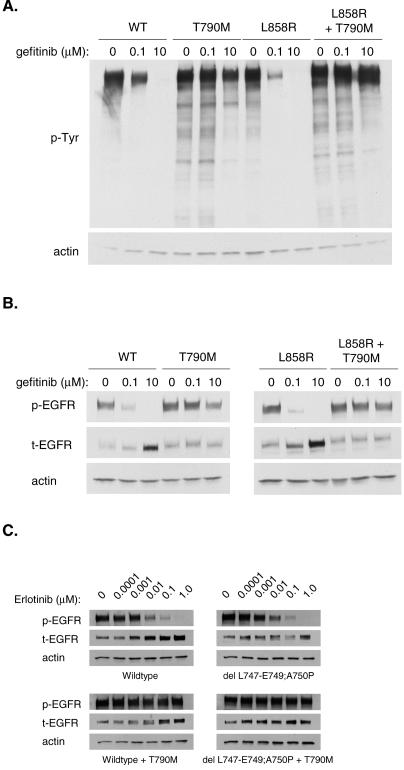
BACKGROUND: Lung adenocarcinomas from patients who respond to the tyrosine kinase inhibitors gefitinib (Iressa) or erlotinib (Tarceva) usually harbor somatic gain-of-function mutations in exons encoding the kinase domain of the epidermal growth factor receptor (EGFR). Despite initial responses, patients eventually progress by unknown mechanisms of "acquired" resistance. METHODS AND FINDINGS: We show that in two of five patients with acquired resistance to gefitinib or erlotinib, progressing tumors contain, in addition to a primary drug-sensitive mutation in EGFR, a secondary mutation in exon 20, which leads to substitution of methionine for threonine at position 790 (T790M) in the kinase domain. Tumor cells from a sixth patient with a drug-sensitive EGFR mutation whose tumor progressed on adjuvant gefitinib after complete resection also contained the T790M mutation. This mutation was not detected in untreated tumor samples. Moreover, no tumors with acquired resistance had KRAS mutations, which have been associated with primary resistance to these drugs. Biochemical analyses of transfected cells and growth inhibition studies with lung cancer cell lines demonstrate that the T790M mutation confers resistance to EGFR mutants usually sensitive to either gefitinib or erlotinib. Interestingly, a mutation analogous to T790M has been observed in other kinases with acquired resistance to another kinase inhibitor, imatinib (Gleevec). CONCLUSION: In patients with tumors bearing gefitinib- or erlotinib-sensitive EGFR mutations, resistant subclones containing an additional EGFR mutation emerge in the presence of drug. This observation should help guide the search for more effective therapy against a specific subset of lung cancers.
Overview
The claims and statistics of this paper haven’t been checked yet.
Run the check — free, no account needed. It reads the open-access text and checks the sources it cites.
Integrity signals
Registry
Cites
Statistics
Figures
Verification
Claims the paper makes
The claims and statistics of this paper haven’t been checked yet.
Run the check — free, no account needed. It reads the open-access text and checks the sources it cites.
Claims other papers make about this one
Each is checked against this paper’s own text: does it say what the citing paper says it does?
The cited source says what the claim attributes to it.
In the citing paper
“H1975 cells harbor activating EGFR mutations [17]”
From Clathrin adapters AP-1 and GGA2 support expression of epidermal growth factor receptor for cell growth (2021) · cites this paper as [17]
In the citing paper
“However, it is now well established that acquisition of a second mutation in EGFR, resulting in substitution of threonine at the “gatekeeper” amino acid 790 to methionine (T790M) is the most common resistance mechanism and is detected in tumor cells from more than 50% of patients after disease progression (20, 21).”
From AZD9291, an Irreversible EGFR TKI, Overcomes T790M-Mediated Resistance to EGFR Inhibitors in Lung Cancer (2014) · cites this paper as [21]
In the citing paper
“This mutation leads to the substitution of threonine by methionine at position 790, which encodes part of the kinase domain of the receptor and results in increased affinity for ATP, causing resistance to competitive inhibition by reversible EGFR TKIs such as gefitinib and erlotinib [121,122].”
From Metastatic non-small-cell lung cancer: ESMO Clinical Practice Guidelines for diagnosis, treatment and follow-up (2016) · cites this paper as [121]
In the citing paper
“In EGFR mutant lung cancer, the most common mechanism of acquired resistance to EGFR inhibitors is the development of a mutation in the gatekeeper residue of EGFR, T790M (Kobayashi et al., 2005; Pao et al., 2005).”
From ERBB Receptors: From Oncogene Discovery to Basic Science to Mechanism-Based Cancer Therapeutics (2014) · cites this paper as Pao et al., 2005
In the citing paper
“Accordingly, cell growth was suppressed by the depletion of AP-1 in a non-cancer cell line, ARPE-19, and a NSCLC-derived cancer cell line, H1975, which harbors activating EGFR mutations [17].”
From Clathrin adapters AP-1 and GGA2 support expression of epidermal growth factor receptor for cell growth (2021) · cites this paper as [17]
In the citing paper
“H1975 cells harbor activating EGFR mutations [17], and as such, these results suggest the involvement of AP-1 in EGFR-dependent cell growth.”
From Clathrin adapters AP-1 and GGA2 support expression of epidermal growth factor receptor for cell growth (2021) · cites this paper as [17]
Self-check
Percentages, sums and reported differences re-computed from the paper’s own numbers.
The self-check needs the paper’s full text.
Citations
Cites
Lynch, T. J., Bell, D. W., Sordella, R., Gurubhagavatula, S., Okimoto, R. A., Brannigan, B. W., Harris, P. L., Haserlat, S. M., Supko, J. G., Haluska, F. G., et al. (2004) · New England Journal of Medicine · doi:10.1056/nejmoa040938 · Cited by 11,486
EGFR Mutations in Lung Cancer: Correlation with Clinical Response to Gefitinib Therapy
Paez, J. G., Jänne, P. A., Lee, J. C., Tracy, S., Greulich, H., Gabriel, S., Herman, P., Kaye, F. J., Lindeman, N., Boggon, T. J., et al. (2004) · Science · doi:10.1126/science.1099314 · Cited by 9,368 · cited 13×
“PCR products were ligated into plasmids using the TOPO TA-cloning kit (Invitrogen, Carlsbad, California, United States), as per manufacturer’s instructions.”
BackgroundInfluentialPao, W., Miller, V., Zakowski, M., Doherty, J., Politi, K., Sarkaria, I., Singh, B., Heelan, R., Rusch, V., Fulton, L., et al. (2004) · Proceedings of the National Academy of Sciences · doi:10.1073/pnas.0405220101 · Cited by 4,338 · cited 17×
“PCR products were ligated into plasmids using the TOPO TA-cloning kit (Invitrogen, Carlsbad, California, United States), as per manufacturer’s instructions.”
BackgroundMethodInfluentialSelf-citationClinical Resistance to STI-571 Cancer Therapy Caused by BCR-ABL Gene Mutation or Amplification
Gorre, M. E., Mohammed, M., Ellwood, K., Hsu, N., Paquette, R., Rao, P. N., & Sawyers, C. L. (2001) · Science · doi:10.1126/science.1062538 · Cited by 3,104 · cited 3×
“For example, in CML, a commonly found mutation is a CfiT single nucleotide change that replaces threonine with isoleucine at position 315 (T315I) in the ABL kinase domain [9,10,11].”
BackgroundResultShigematsu, H., Lin, L., Takahashi, T., Nomura, M., Suzuki, M., Wistuba, I. I., Fong, K. M., Lee, H., Toyooka, S., Shimizu, N., et al. (2005) · JNCI Journal of the National Cancer Institute · doi:10.1093/jnci/dji055 · Cited by 2,377
Overriding Imatinib Resistance with a Novel ABL Kinase Inhibitor
Shah, N. P., Tran, C., Lee, F. Y., Chen, P., Norris, D. J., & Sawyers, C. L. (2004) · Science · doi:10.1126/science.1099480 · Cited by 1,804 · cited 2×
“The new drugs bind to ABL in an ‘‘open’’ conformation, as opposed to imatinib, which binds ABL in a ‘‘closed’’ conformation [12,13].”
BackgroundCools, J., DeAngelo, D. J., Gotlib, J. R., Stover, E. H., Legare, R. D., Cortes, J. E., Kutok, J. L., Clark, J., Galinsky, I. A., Griffin, J. D., et al. (2003) · New England Journal of Medicine · doi:10.1056/nejmoa025217 · Cited by 1,714 · cited 5×
“These results differ from those of acquired resistance mutation in CML [10], GIST [15,27], and HES [16].”
BackgroundResultInfluentialShah, N. P., Nicoll, J. M., Nagar, B., Gorre, M. E., PAQUETTE, R. L., Kuriyan, J., & Sawyers, C. L. (2002) · Cancer Cell · doi:10.1016/s1535-6108(02)00096-x · Cited by 1,614 · cited 3×
“It is also possible that EGFR amplification itself plays a role in acquired resistance, since imatinib-resistant clones have been shown to lack resistance mutations but contain amplified copies of BCR-ABL [11,28].”
BackgroundGefitinib-Sensitizing EGFR Mutations in Lung Cancer Activate Anti-Apoptotic Pathways
Sordella, R., Bell, D. W., Haber, D. A., & Settleman, J. E. (2004) · Science · doi:10.1126/science.1101637 · Cited by 1,605 · cited 3×
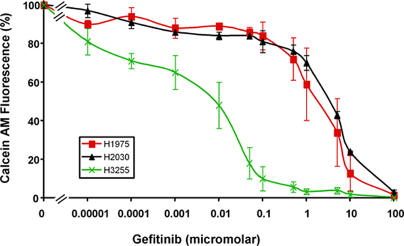
“This scenario could explain the seemingly contradictory report by others who found the H1975 cell line to be highly sensitive to gefitinib [18]; our H1975 cells could represent a subclone that emerged over time.”
BackgroundResultStamos, J. L., Sliwkowski, M. X., & Eigenbrot, C. W. (2002) · Journal of Biological Chemistry · doi:10.1074/jbc.m207135200 · Cited by 1,594 · cited 1×
“From analysis of the crystal structure of the EGFR kinase domain bound to erlotinib, it is has been shown that the wild-type threonine residue at position 790 is located in the hydrophobic ATP-binding pocket of the catalytic region, where it forms a critical hydrogen bond with the drug [”
Background
Research works printed but not linked: 2
- Krug, 2001, Proc Am Soc Clin Oncol, 20, 1328
- Daub, 2004, Nat Rev Cancer, 3, 1001
Cited by
Sorted by citations
Items 501–600 of 1,023
Landscape and function of multiple mutations within individual oncogenes
Saito, Y., Koya, J., Araki, M., Kogure, Y., Shingaki, S., Tabata, M., McClure, M. B., Yoshifuji, K., Matsumoto, S., Isaka, Y., et al. (2020) · Nature · doi:10.1038/s41586-020-2175-2 · Cited by 137
Bi, M., Zhang, Z., Jiang, Y., Xue, P., Wang, H., Lai, Z., Fu, X., Angelis, C. D., Gong, Y., Gao, Z., et al. (2020) · Nature Cell Biology · doi:10.1038/s41556-020-0514-z · Cited by 135
Shimamura, T., Ji, H., Minami, Y., Thomas, R. K., Lowell, A. M., Shah, K., Greulich, H. E., Glatt, K. A., Meyerson, M. M., Shapiro, G. I., et al. (2006) · Cancer Research · doi:10.1158/0008-5472.can-06-0971 · Cited by 135
Petrelli, F., Borgonovo, K., Cabiddu, M., & Barni, S. (2012) · Clinical Lung Cancer · doi:10.1016/j.cllc.2011.08.005 · Cited by 141
Kobayashi, S. S., Shimamura, T., Monti, S., Steidl, U. G., Hetherington, C. J., Lowell, A. M., Golub, T. R., Meyerson, M. M., Tenen, D. G., Shapiro, G. I., et al. (2006) · Cancer Research · doi:10.1158/0008-5472.can-06-2318 · Cited by 136
“www.aacrjournals.org 11395 Cancer Res 2006; 66: (23). December 1, 2006 (9, 10 ).”
BackgroundInfluentialTrowe, T., Boukouvala, S., Calkins, K., Cutler, R. E., Fong, R., Funke, R. P., Gendreau, S. B., Kim, Y. D., Miller, N., Woolfrey, J. R., et al. (2008) · Clinical Cancer Research · doi:10.1158/1078-0432.ccr-07-4367 · Cited by 132
A Structure-Guided Approach to Creating Covalent FGFR Inhibitors
Zhou, W., Hur, W., McDermott, U., Dutt, A., Xian, W., Ficarro, S. B., Zhang, J., Sharma, S. V., Brugge, J. S., Meyerson, M. M., et al. (2010) · Chemistry & Biology · doi:10.1016/j.chembiol.2010.02.007 · Cited by 135
Endocrine resistance in hormone-responsive breast cancer: mechanisms and therapeutic strategies
Murphy, C. G., & Dickler, M. N. (2016) · Endocrine Related Cancer · doi:10.1530/erc-16-0121 · Cited by 137
Targeted therapies in CLL: mechanisms of resistance and strategies for management
Woyach, J. A., & Johnson, A. J. (2015) · Blood · doi:10.1182/blood-2015-03-585075 · Cited by 134
Zou, Y., Ling, Y., Sironi, J., Schwartz, E. L., Perez-Soler, R., & Piperdi, B. (2013) · Journal of Thoracic Oncology · doi:10.1097/jto.0b013e31828c7210 · Cited by 137
“Met gene, loss of Bcl-2-like protein 11 (BIM), overexpression of hepatocyte growth factor (HGF), and activating mutations in the downstream K-Ras gene (K-Ras mutations are usually mutually exclusive with EGFR mutations).(7,14,16,23,26,27) Thus, our experiments, demonstrating that chloroquine can partially overcome the…”
BackgroundChen, G., Kronenberger, P., Teugels, E., Umelo, I. A., & Grève, J. D. (2012) · BMC Medicine · doi:10.1186/1741-7015-10-28 · Cited by 132
“Takezawa K, Okamoto I, Tanizaki J, Kuwata K, Yamaguchi H, Fukuoka M, Nishio K, Nakagawa K: Enhanced anticancer effect of the combination of BIBW2992 and thymidylate synthase-targeted agents in non-small cell lung cancer with the T790M mutation of epidermal growth factor receptor.”
BackgroundResultInfluentialLee, J., Lee, Y.-M., Chang, G., Yu, S., Hsieh, W.-Y., Chen, J. J. W., Chen, H., & Yang, P. (2011) · PLoS ONE · doi:10.1371/journal.pone.0023756 · Cited by 133
Mutations and Response to Epidermal Growth Factor Receptor Inhibitors
Laurent‐Puig, P., Lièvre, A., & Blons, H. (2009) · Clinical Cancer Research · doi:10.1158/1078-0432.ccr-08-0905 · Cited by 134
Corcoran, R. B., Settleman, J. E., & Engelman, J. A. (2011) · Oncotarget · doi:10.18632/oncotarget.262 · Cited by 133
Challenge and countermeasures for EGFR targeted therapy in non-small cell lung cancer
Tian, X., Gu, T., Lee, M., & Dong, Z. (2021) · Biochimica et Biophysica Acta (BBA) - Reviews on Cancer · doi:10.1016/j.bbcan.2021.188645 · Cited by 137
Hepatocyte Growth Factor, a Key Tumor-Promoting Factor in the Tumor Microenvironment
Owusu, B. Y., Galemmo, R. A., Janetka, J. W., & Klampfer, L. (2017) · Cancers · doi:10.3390/cancers9040035 · Cited by 140
“Acquired resistance to EGFR inhibitors has been associated frequently with selection for secondary EGFR mutations, such as T790M in exon 20 [110,111], or with MET amplifications [112].”
BackgroundEGFR targeting therapies: Monoclonal antibodies versus tyrosine kinase inhibitors
Dassonville, O., Bozec, A., Fischel, J. L., & Milano, G. A. (2007) · Critical Reviews in Oncology/Hematology · doi:10.1016/j.critrevonc.2006.12.008 · Cited by 134
Modulation of Phosphoprotein Activity by Phosphorylation Targeting Chimeras (PhosTACs)
Chen, P.-H., Hu, Z., An, E., Okeke, I., Zheng, S., Luo, X., Gong, A., Jaime-Figueroa, S., & Crews, C. M. (2021) · ACS Chemical Biology · doi:10.1021/acschembio.1c00693 · Cited by 130
Activity of ponatinib against clinically-relevant AC220-resistant kinase domain mutants of FLT3-ITD
Smith, C. C., Lasater, E. A., Zhu, X., Lin, K. C., Stewart, W. K., Damon, L. E., Salerno, S. N., & Shah, N. P. (2013) · Blood · doi:10.1182/blood-2012-07-442871 · Cited by 127
Johnson, M. L., Yu, H. A., Hart, E. M., Weitner, B. B., RADEMAKER, A. W., Patel, J. D., Kris, M. G., & Riely, G. J. (2015) · Journal of Clinical Oncology · doi:10.1200/jco.2014.59.7328 · Cited by 130
Self-citationEGFR-mutated oncogene-addicted non-small cell lung cancer: Current trends and future prospects
Soria, J., Mok, T. S. K., Cappuzzo, F., & Janne, P. A. (2011) · Cancer Treatment Reviews · doi:10.1016/j.ctrv.2011.10.003 · Cited by 131
Genomic alterations of ERBB receptors in cancer: clinical implications
Mishra, R., Hanker, A. B., & Garrett, J. T. (2017) · Oncotarget · doi:10.18632/oncotarget.22825 · Cited by 132
“EGFR T790M NSCLC clinical: osimertinib [28]; preclinical: EA1045 and cetuximab [34] clinical: afatinib [26, 27] clinical: gefitinib, erlotinib, afatinib [18, 19]”
BackgroundStructural Basis of AZD9291 Selectivity for EGFR T790M
Yan, X.-E., Ayaz, P., Zhu, S., Zhao, P., Liang, L., Zhang, C. H., Wu, Y.-C., Li, J.-L., Choi, H. G., Huang, X., et al. (2020) · Journal of Medicinal Chemistry · doi:10.1021/acs.jmedchem.0c00891 · Cited by 129
Targeting Cancer with Small-Molecular-Weight Kinase Inhibitors
Fabbro, D., Cowan‐Jacob, S. W., Möbitz, H., & Martiny‐Baron, G. (2011) · Methods in molecular biology · doi:10.1007/978-1-61779-337-0_1 · Cited by 130
Wang, Z., Chen, R., Wang, S., Zhong, J., Wu, M., Zhao, J., Duan, J., Zhuo, M., An, T., Wang, Y., et al. (2014) · PLoS ONE · doi:10.1371/journal.pone.0110780 · Cited by 130
Zhang, X., Liu, G., Kang, Y., Dong, Z., Qian, Q., & Ma, X. (2013) · PLoS ONE · doi:10.1371/journal.pone.0057692 · Cited by 129
McDermott, U., & Settleman, J. (2009) · Journal of Clinical Oncology · doi:10.1200/jco.2009.22.9054 · Cited by 131
Yoon, Y., Kim, H., Han, S., Oh, D. Y., Im, S., Bang, Y., & Kim, T. (2010) · Molecular Carcinogenesis · doi:10.1002/mc.20607 · Cited by 129
Human cancers converge at the HIF-2α oncogenic axis
Franovic, A., Holterman, C. E., Payette, J., & Lee, S. (2009) · Proceedings of the National Academy of Sciences · doi:10.1073/pnas.0906432106 · Cited by 134
Kosaka, T., Yamaki, E., Mogi, A., & Kuwano, H. (2011) · BioMed Research International · doi:10.1155/2011/165214 · Cited by 130
Zhu, J., Zhong, W., Zhang, G.-C., Li, R., Zhang, X., Guo, A., Zhang, Y.-F., An, S., Mok, T. S. K., & Wu, Y.-L. L. C. (2008) · Cancer Letters · doi:10.1016/j.canlet.2008.02.064 · Cited by 129
Podsypanina, K., Politi, K. A., Beverly, L. J., & VARMUS, H. E. (2008) · Proceedings of the National Academy of Sciences · doi:10.1073/pnas.0801197105 · Cited by 126
Self-citationEdwards, A., Li, J., Atadja, P. W., Bhalla, K. N., & Haura, E. B. (2007) · Molecular Cancer Therapeutics · doi:10.1158/1535-7163.mct-06-0761 · Cited by 129
“Importantly, LBH589 inhibits cell viability in cells containing EGFR mutation that are nonetheless resistant to EGFR TKI, such as H1975, H1650, and H820, with IC50 ranging between 10 and 20 nmol/L (27).”
BackgroundFreudenberg, J. A., Wang, Q., Katsumata, M., Drebin, J. A., Nagatomo, I., & Greene, M. I. (2009) · Experimental and Molecular Pathology · doi:10.1016/j.yexmp.2009.05.001 · Cited by 135
Yatabe, Y., Takahashi, T., & Mitsudomi, T. (2008) · Cancer Research · doi:10.1158/0008-5472.can-07-5211 · Cited by 127
Rai, K., Takigawa, N., Ito, S., Kashihara, H., Ichihara, E., Yasuda, T., Shimizu, K., Tanimoto, M., & Kiura, K. (2011) · Molecular Cancer Therapeutics · doi:10.1158/1535-7163.mct-11-0220 · Cited by 129
“Because the T790M mutation restores the affinity of ATP to the ATP binding site of mutated EGFR, the oncogene addiction by the EGFR pathway is presumed to be sustained in EGFR-TKI-resistant cells harboring the T790M mutation (9-10).”
BackgroundSchmidt, K. T., Chau, C. H., Price, D. K., & Figg, W. D. (2016) · The Journal of Clinical Pharmacology · doi:10.1002/jcph.765 · Cited by 129
Targeting STAT3 and oxidative phosphorylation in oncogene-addicted tumors
Lee, M., Hirpara, J. L., Eu, J. Q., Sethi, G., Wang, L., Goh, B.-C., & Wong, A. L. A. (2018) · Redox Biology · doi:10.1016/j.redox.2018.101073 · Cited by 129
PTEN-Mediated Resistance to Epidermal Growth Factor Receptor Kinase Inhibitors
Mellinghoff, I. K., Cloughesy, T. F., & Mischel, P. S. (2007) · Clinical Cancer Research · doi:10.1158/1078-0432.ccr-06-1992 · Cited by 130
Erlotinib-induced autophagy in epidermal growth factor receptor mutated non-small cell lung cancer
Li, Y., Lam, S. K., Mak, J., Zheng, C., & Ho, J. (2013) · Lung Cancer · doi:10.1016/j.lungcan.2013.05.012 · Cited by 126
Yi, H. G., Kim, H. J., Kim, Y. J., Han, S., Oh, D., Lee, S., Kim, D., Im, S., Kim, T., Kim, C. S., et al. (2008) · Lung Cancer · doi:10.1016/j.lungcan.2008.10.016 · Cited by 125
Clinical Analysis and Interpretation of Cancer Genome Data
Allen, E. M. V., Wagle, N., & Levy, M. A. (2013) · Journal of Clinical Oncology · doi:10.1200/jco.2013.48.7215 · Cited by 128
“Similarly, multiple EGFR mutations may occur simultaneously in EGFR mutant lung adenocarcinoma that confer opposite sensitivities to EGFR tyrosine kinase inhibitors.(66) Initial efforts to computationally represent these complex relationships are underway, including one approach to systematically annotate genomic rela…”
BackgroundEGFR-Targeted Therapy for Non-Small Cell Lung Cancer: Focus on EGFR Oncogenic Mutation
Antonicelli, A., Cafarotti, S., Indini, A., Galli, A., Russo, A., Cesario, A., Lococo, F., Russo, P., Mainini, A. F., Bonifati, L. G., et al. (2013) · International Journal of Medical Sciences · doi:10.7150/ijms.4609 · Cited by 131
Molecular Pathology of Primary Non-small Cell Lung Cancer
Suster, D. I., & Mino-Kenudson, M. A. (2020) · Archives of Medical Research · doi:10.1016/j.arcmed.2020.08.004 · Cited by 130
Helfrich, B. A., Raben, D., Varella‐Garcia, M., Gustafson, D., Chan, D. C. F., Bemis, L., Coldren, C. D., Barón, A. E., Zeng, C., Franklin, W. A., et al. (2006) · Clinical Cancer Research · doi:10.1158/1078-0432.ccr-06-0760 · Cited by 126
Afatinib restrains K-RAS–driven lung tumorigenesis
Moll, H. P., Pranz, K., Musteanu, M., Grabner, B., Hruschka, N., Mohrherr, J., Aigner, P., Stiedl, P., Brcic, L., Laszlo, V., et al. (2018) · Science Translational Medicine · doi:10.1126/scitranslmed.aao2301 · Cited by 125
Fighting cancer drug resistance: Opportunities and challenges for mutation-specific EGFR inhibitors
Juchum, M., Günther, M., & Laufer, S. (2015) · Drug Resistance Updates · doi:10.1016/j.drup.2015.05.002 · Cited by 126
“One theory implies that the aniline moiety pointing to the gatekeeper causes a steric clash with the methionine leading to the removal of the inhibitor from the active site (Kobayashi et al., 2005; Pao et al., 2005).”
BackgroundInfluentialJung, S. K., Lee, M., Lim, D. Y., Kim, J., Singh, P., Lee, S., Jeong, C., Lim, T., Chen, H., Chi, Y., et al. (2014) · Journal of Biological Chemistry · doi:10.1074/jbc.m114.585513 · Cited by 125
Comprehensive review for anticancer hybridized multitargeting HDAC inhibitors
Bass, A. K. A., El‐Zoghbi, M. S., Nageeb, E.-S. M., Mohamed, M. F. A., Badr, M., & Abuo‐Rahma, G. E. A. (2020) · European Journal of Medicinal Chemistry · doi:10.1016/j.ejmech.2020.112904 · Cited by 128
Regales, L., Balak, M. N., Gong, Y., Politi, K. A., Sawai, A., Le, C. H., Koutcher, J. A., Solit, D. B., Rosen, N. X., Zakowski, M. F., et al. (2007) · PLoS ONE · doi:10.1371/journal.pone.0000810 · Cited by 127
“For example, although somatic T790M mutations in patients who never received gefitinib or erlotinib are rare [2], they can occasionally be found in tumors with primary drug resistance [10].”
InfluentialSelf-citationPUMA and BIM Are Required for Oncogene Inactivation–Induced Apoptosis
Bean, G. R., Ganesan, Y. T., Dong, Y., Takeda, S., Liu, H., Chan, P. M., Huang, Y., Chodosh, L. A., Zambetti, G. P., Hsieh, J. J.-D., et al. (2013) · Science Signaling · doi:10.1126/scisignal.2003483 · Cited by 123
Exploiting evolutionary steering to induce collateral drug sensitivity in cancer
Acar, A., Nichol, D., Fernández-Mateos, J., Cresswell, G. D., Barozzi, I., Hong, S. P., Trahearn, N., Spiteri, I., Stubbs, M., Burke, R., et al. (2020) · Nature Communications · doi:10.1038/s41467-020-15596-z · Cited by 137
Cheng, Y., Zhang, T., & Xu, Q. (2021) · MedComm · doi:10.1002/mco2.105 · Cited by 131
Gefitinib response of erlotinib-refractory lung cancer involving meninges—role of EGFR mutation
Choong, N. W., Dietrich, S., Seiwert, T. Y., Tretiakova, M., Nallasura, V., Davies, G. C., Lipkowitz, S., Husain, A. N., Salgia, R., & Ma, P. C. (2006) · Nature Clinical Practice Oncology · doi:10.1038/ncponc0400 · Cited by 124
“The T790M mutation of the EGFR has recently been shown to confer resistance to both gefitinib and erlotinib”
Epidermal growth factor receptor (EGFR) mutations in lung cancer: preclinical and clinical data
Jorge, S. E., Kobayashi, S. S., & Costa, D. B. (2014) · Brazilian Journal of Medical and Biological Research · doi:10.1590/1414-431x20144099 · Cited by 127
“The first identified, and most common, mechanism of acquired resistance is the EGFR-T790M mutation located at the gatekeeper amino acid residue (49,50).”
BackgroundHow Genetically Engineered Mouse Tumor Models Provide Insights Into Human Cancers
Politi, K. A., & Pao, W. J. (2011) · Journal of Clinical Oncology · doi:10.1200/jco.2010.30.8304 · Cited by 126
Self-citationEPHA2 Blockade Overcomes Acquired Resistance to EGFR Kinase Inhibitors in Lung Cancer
Amato, K. R., Wang, S., Tan, L., Hastings, A. K., Song, W., Lovly, C. M., Meador, C. B., Ye, F., Wang, L., Balko, J. M., et al. (2016) · Cancer Research · doi:10.1158/0008-5472.can-15-0717 · Cited by 120
Self-citationJia, Y., Juarez, J., Li, J., Manuia, M., Niederst, M. J., Tompkins, C., Timple, N., Vaillancourt, M.-T., Pferdekamper, A. C., Lockerman, E. L., et al. (2016) · Cancer Research · doi:10.1158/0008-5472.can-15-2581 · Cited by 121
Vertical suppression of the EGFR pathway prevents onset of resistance in colorectal cancers
Misale, S., Bozic, I., Tong, J., Peraza-Penton, A., Lallo, A., Baldi, F., Lin, K. H., Truini, M., Trusolino, L., Bertotti, A., et al. (2015) · Nature Communications · doi:10.1038/ncomms9305 · Cited by 122
Acquired resistance to drugs targeting receptor tyrosine kinases
Rosenzweig, S. A. (2011) · Biochemical Pharmacology · doi:10.1016/j.bcp.2011.12.025 · Cited by 122
“N IH -PA Author M anuscript N IH -PA Author M anuscript N IH -PA Author M anuscript Nomenclature and Abbreviations Akt Ak (mouse strain) - thymoma Axl a receptor tyrosine kinase Bcr-Abl breakpoint cluster-Abelson tyrosine kinase CML chronic myelogenous Leukemia CrkL v-crk sarcoma virus CT10 oncogene homolog (avian)-li…”
BackgroundInfluentialUmemura, S., Tsubouchi, K., Yoshioka, H., Hotta, K., Takigawa, N., Fujiwara, K., Horita, N., Segawa, Y., Hamada, N., Takata, I., et al. (2012) · Lung Cancer · doi:10.1016/j.lungcan.2012.03.002 · Cited by 122
Nakanishi, Y., Akiyama, N., Tsukaguchi, T., Fujii, T., Sakata, K., Sase, H., Isobe, T., Morikami, K., Shindoh, H., Mio, T., et al. (2014) · Molecular Cancer Therapeutics · doi:10.1158/1535-7163.mct-14-0248 · Cited by 121
Janjigian, Y. Y., Azzoli, C. G., Krug, L. M., Pereira, L. K., Rizvi, N. A., Pietanza, M. C., Kris, M. G., Ginsberg, M. S., Pao, W. J., Miller, V. A., et al. (2011) · Clinical Cancer Research · doi:10.1158/1078-0432.ccr-10-2662 · Cited by 124
Self-citationNasser, A. A., Eissa, I. H., Oun, M. R., El‐Zahabi, M. A., Taghour, M. S., Belal, A., Saleh, A. M., Mehany, A. B. M., Luesch, H., Mostafa, A. E., et al. (2020) · Organic & Biomolecular Chemistry · doi:10.1039/d0ob01557a · Cited by 122
Harnessing the predictive power of preclinical models for oncology drug development
Honkala, A., Malhotra, S. V., Kummar, S., & Junttila, M. R. (2022) · Nature Reviews Drug Discovery · doi:10.1038/s41573-021-00301-6 · Cited by 121
Buettner, R., Wolf, J., & Thomas, R. K. (2013) · Journal of Clinical Oncology · doi:10.1200/jco.2012.45.9867 · Cited by 123
Ross, H. J., Blumenschein, G. R., Aisner, J., Damjanov, N., Dowlati, A., Garst, J. L., Rigas, J. R., Smylie, M., Hassani, H., Allen, K. E., et al. (2010) · Clinical Cancer Research · doi:10.1158/1078-0432.ccr-08-3328 · Cited by 121
“However, the mutations in two of the three patients may have conferred resistance to the medication, as both KRAS and T790M mutations are associated with resistance to EGFR tyrosine kinase inhibitors (24, 25), including lapatinib (data not shown).”
BackgroundIchihara, S., Toyooka, S., Fujiwara, Y., Hotta, K., Shigematsu, H., Tokumo, M., Soh, J., Asano, H., Ichimura, K., Aoe, K., et al. (2006) · International Journal of Cancer · doi:10.1002/ijc.22513 · Cited by 119
Effect of sialylation on EGFR phosphorylation and resistance to tyrosine kinase inhibition
Yen, H.-Y., Liu, Y.-C., Chen, N.-Y., Tsai, C.-F., Wang, Y.-T., Chen, Y.-J., Hsu, T.-L., Yang, P.-C., & Wong, C.-H. (2015) · Proceedings of the National Academy of Sciences · doi:10.1073/pnas.1507329112 · Cited by 119
Afatinib: emerging next-generation tyrosine kinase inhibitor for NSCLC
Agulnik, M., Nelson, Ziehr, & Johnson, J. R. (2013) · OncoTargets and Therapy · doi:10.2147/ott.s23165 · Cited by 121
Lin, C., Chen, X., Li, M., Liu, J., Qi, X., Yang, W., Zhang, H., Cai, Z., Dai, Y., & Ouyang, X. (2015) · Clinical Lung Cancer · doi:10.1016/j.cllc.2015.02.002 · Cited by 119
Yamasaki, F., Johansen, M. J., Zhang, D., Krishnamurthy, S., Felix, E. A., Bartholomeusz, C., Aguilar, R. J., Kurisu, K., Mills, G. B., Hortobágyi, G. N., et al. (2007) · Cancer Research · doi:10.1158/0008-5472.can-06-3020 · Cited by 118
Epidermal Growth Factor Receptor Inhibition in Lung Cancer: Status 2012
Hirsch, F. R., Janne, P. A., Eberhardt, W., Cappuzzo, F., Thatcher, N., Pirker, R., Choy, H., Kim, E. S., Paz-Ares, L. G., Gandara, D. R., et al. (2013) · Journal of Thoracic Oncology · doi:10.1097/jto.0b013e31827ed0ff · Cited by 122
YAP promotes erlotinib resistance in human non-small cell lung cancer cells
Hsu, P., You, B., Yang, Y., Zhang, W., Wang, Y., Xu, Z., Dai, Y., Liu, S., Yang, C., Li, H., et al. (2016) · Oncotarget · doi:10.18632/oncotarget.10458 · Cited by 121
Molecular Mechanisms and Targeted Therapies Including Immunotherapy for Non-Small Cell Lung Cancer
Nagano, T., TACHIHARA, M. Y., & Nishimura, Y. (2018) · Current Cancer Drug Targets · doi:10.2174/1568009619666181210114559 · Cited by 120
EGFRMutation and Response of Lung Cancer to Gefitinib
Toyooka, S., Kiura, K., & Mitsudomi, T. (2005) · New England Journal of Medicine · doi:10.1056/nejm200505193522019 · Cited by 119
Sun, J., Ahn, M., Choi, Y., Ahn, J. S., & Park, K. (2013) · Lung Cancer · doi:10.1016/j.lungcan.2013.08.023 · Cited by 121
Genomic Medicine Frontier in Human Solid Tumors: Prospects and Challenges
Dienstmann, R., Rodon, J. A., Barretina, J., & Tabernero, J. M. (2013) · Journal of Clinical Oncology · doi:10.1200/jco.2012.45.2268 · Cited by 120
Cho, J., Chen, L., Sangji, N., Okabe, T., Yonesaka, K., Francis, J. M., Flavin, R. J., Johnson, W., Kwon, J., Yu, S., et al. (2013) · Cancer Research · doi:10.1158/0008-5472.can-13-1145 · Cited by 117
A Novel Classification of Lung Cancer into Molecular Subtypes
West, L. E., Vidwans, S. J., Campbell, N. P., Shrager, J., Simon, G. R., Bueno, R., Dennis, P. A., Otterson, G. A., & Salgia, R. (2012) · PLoS ONE · doi:10.1371/journal.pone.0031906 · Cited by 125
“a T790M mutation in EGFR is predictive of resistance to EGFR inhibitors [22].”
BackgroundMolecular Pathology of Non–Small Cell Lung Cancer
Aisner, D. L., & Marshall, C. B. (2012) · American Journal of Clinical Pathology · doi:10.1309/ajcpfr12wjkceezz · Cited by 119
Concordance of Genomic Alterations between Primary and Recurrent Breast Cancer
Meric‐Bernstam, F., Frampton, G. M., Ferrer-Lozano, J., Yelensky, R., Fidalgo, J. A. P., Wang, Y., Palmer, G. A., Ross, J. S., Miller, V. A., Su, X., et al. (2014) · Molecular Cancer Therapeutics · doi:10.1158/1535-7163.mct-13-0482 · Cited by 116
“Although the recognition of genomic evolution of tumors during disease progression and treatment is increasing (21-24), our study has demonstrated a high concordance between primary and recurrent/metastatic tumors.”
Self-citationThe tumor-suppressive and potential therapeutic functions of miR-34a in epithelial carcinomas
Adams, B. D., Parsons, C., & Slack, F. J. (2015) · Expert Opinion on Therapeutic Targets · doi:10.1517/14728222.2016.1114102 · Cited by 121
“many patients respond initially, many ultimately relapse,[87] again highlighting the need for the development of agents that can be used to sensitize refrac-”
BackgroundEmerging Role of mTOR in the Response to Cancer Therapeutics
Ilagan, E., & Manning, B. D. (2016) · Trends in cancer · doi:10.1016/j.trecan.2016.03.008 · Cited by 118
“renders the activated kinase insensitive to these small molecule inhibitors [44, 45].”
BackgroundCUDC-305, a Novel Synthetic HSP90 Inhibitor with Unique Pharmacologic Properties for Cancer Therapy
Bao, R., Lai, C.-J., Qu, H., Wang, D.-G., Yin, L., Zifcak, B. M., Atoyan, R., Wang, J., Samson, M., Forrester, J. S., et al. (2009) · Clinical Cancer Research · doi:10.1158/1078-0432.ccr-09-0152 · Cited by 116
Molecular Targeted Therapy of Lung Cancer: EGFR Mutations and Response to EGFR InhibitorsPreprint
Haber, D. A., Bell, D. W., Sordella, R., Kwak, E. L., Godin-Heymann, N., Sharma, S. V., Lynch, T. J., & Settleman, J. E. (2005) · Cold Spring Harbor Symposia on Quantitative Biology · doi:10.1101/sqb.2005.70.043 · Cited by 112
“A third group at Memorial Sloan Kettering Cancer Center described a similar frequency of EGFR mutations in patients with both gefitinib- and erlotinib-responsive NSCLC (Pao et al. 2005).”
BackgroundSholl, L. M., Xiao, Y., Joshi, V. A., Yeap, B. Y., Cioffredi, L., Jackman, D. M., Lee, C., Janne, P. A., & Lindeman, N. I. (2010) · American Journal of Clinical Pathology · doi:10.1309/ajcpst1cthzs3psz · Cited by 116
Core Needle Lung Biopsy Specimens: Adequacy for EGFR and KRAS Mutational Analysis
Solomon, S. B., Zakowski, M. F., Pao, W. J., Thornton, R. H., Ladanyi, M., Kris, M. G., Rusch, V. W., & Rizvi, N. A. (2009) · American Journal of Roentgenology · doi:10.2214/ajr.09.2858 · Cited by 115
Self-citationp53 Modulates Acquired Resistance to EGFR Inhibitors and Radiation
Huang, S., Benavente, S., Armstrong, E. A., Li, C., Wheeler, D. L., & Harari, P. M. (2011) · Cancer Research · doi:10.1158/0008-5472.can-11-0128 · Cited by 116
HGF induces novel EGFR functions involved in resistance formation to tyrosine kinase inhibitors
Gusenbauer, S., Vlaicu, P., & Ullrich, A. (2012) · Oncogene · doi:10.1038/onc.2012.396 · Cited by 115
Baghdadi, M., Endo, H., Takano, A., Ishikawa, K., Kameda, Y., Wada, H., Miyagi, Y., Yokose, T., Ito, H., Nakayama, H., et al. (2018) · Scientific Reports · doi:10.1038/s41598-017-18796-8 · Cited by 118
Impact of EGFR mutation analysis in non-small cell lung cancer
Yamamoto, H., Toyooka, S., & Mitsudomi, T. (2008) · Lung Cancer · doi:10.1016/j.lungcan.2008.06.021 · Cited by 116
Steiner, P., Joynes, C. J., Bassi, R., Wang, S., Tonra, J. R., Hadari, Y. R., & Hicklin, D. J. (2007) · Clinical Cancer Research · doi:10.1158/1078-0432.ccr-06-1887 · Cited by 116
Foo, J., & Michor, F. (2009) · PLoS Computational Biology · doi:10.1371/journal.pcbi.1000557 · Cited by 114
“Similarly, the T790M point mutation in the epidermal growth factor receptor (EGFR) confers resistance to the EGFR tyrosine kinase inhibitors gefitinib and erlotinib [5], which are used to treat non-small cell lung cancer.”
BackgroundEGFR gene status in cytological samples of nonsmall cell lung carcinoma
Santos, G. D. C., Saieg, M. A., Geddie, W. R., & Leighl, N. B. (2011) · Cancer Cytopathology · doi:10.1002/cncy.20150 · Cited by 116
Molina‐Vila, M. Á., Bertrán-Alamillo, J., Reguart, N., Tarón, M., Castellà, E., Llatjós, M., Costa, C., Mayo, C., Pradas, A., Queralt, C., et al. (2008) · Journal of Thoracic Oncology · doi:10.1097/jto.0b013e318189f579 · Cited by 112
Wang, Y.-S., Wang, Y., Xia, H., Zhou, S., Schmid‐Bindert, G., & Zhou, C. (2012) · Asian Pacific Journal of Cancer Prevention · doi:10.7314/apjcp.2012.13.1.255 · Cited by 114
“In gefitinib or erlotinib resistant tumor samples, about 50% samples have been found to bear T790M mutation and the other 20% cases have MET amplification.”
InfluentialDogra, N., Kumar, A., & Mukhopadhyay, T. (2018) · Scientific Reports · doi:10.1038/s41598-018-30158-6 · Cited by 117
Targeting Drug Resistance in EGFR with Covalent Inhibitors: A Structure-Based Design Approach
Engel, J., Richters, A., Getlik, M., Tomassi, S., Keul, M., Termathe, M., Lategahn, J., Becker, C., Mayer‐Wrangowski, S. C., Grütter, C., et al. (2015) · Journal of Medicinal Chemistry · doi:10.1021/acs.jmedchem.5b01082 · Cited by 114
Uchida, J., Kato, K., Kukita, Y., Kumagai, T., Nishino, K., Daga, H., Nagatomo, I., Inoue, T., Kimura, M., Oba, S., et al. (2015) · Clinical Chemistry · doi:10.1373/clinchem.2015.241414 · Cited by 115
Metadata
- Authors
- Pao, W., Miller, V. A., Politi, K. A., Riely, G. J., Somwar, R., Zakowski, M. F., Kris, M. G., & Varmus, H.
- Affiliations
- Memorial Sloan Kettering Cancer Center (US)
- Corresponding author
- Pao, William
- ORCID
- Venue
- PLoS Medicine
- Publisher
- Public Library of Science (PLoS)
- Published
- 2005-02-22
- Volume
- 2
- Issue
- 3
- Pages
- e73
- ISSN
- 1549-1277 (ISSN-L)
- 1549-1676
- PMC
- PMC549606
- OpenAlex
- W2002937040
- Cited by
- 3,527
- References
- 28
- Citations by year
- 2026: 45 · 2025: 61 · 2024: 59 · 2023: 139 · 2022: 104 · 2021: 116 · 2020: 140 · 2019: 154 · 2018: 203 · 2017: 221 · 2016: 232 · 2015: 255 · 2014: 246 · 2013: 272 · 2012: 222
- FWCI
- 134.24
- Type
- journal article
- Language
- en
- Open access
- gold
- doi.org
- Locations
- PLoS Medicine (publishedVersion, cc-by)
- Europe PMC (PubMed Central) (publishedVersion, cc-by)
- PubMed Central (publishedVersion, cc-by)
- PubMed (publishedVersion)
- DOAJ (DOAJ: Directory of Open Access Journals) (submittedVersion, cc-by-sa)
- Figshare (submittedVersion, cc-by)
- Funders
- American Cancer Society
- CHEST Foundation
- LUNGevity Foundation
- AstraZeneca
- Memorial Sloan-Kettering Cancer Center
- Washington University in St. Louis
- National Institutes of Health
- Genentech
- Canadian Institutes of Health Research
- National Cancer Institute (T 32 CA09207, T32CA009207)
- Topics
- Health Sciences › Medicine › Pulmonary and Respiratory Medicine › Lung Cancer Treatments and Mutations
- Health Sciences › Medicine › Oncology › HER2/EGFR in Cancer Research
- Life Sciences › Biochemistry, Genetics and Molecular Biology › Cancer Research › Cancer Genomics and Diagnostics
- Keywords
- lung adenocarcinoma, gefitinib, erlotinib, acquired drug resistance, EGFR mutation, T790M mutation, EGFR kinase domain, tyrosine kinase inhibitors, KRAS mutation, imatinib resistance
- MeSH terms
- Erlotinib Hydrochloride, Gefitinib, Adenocarcinoma, Antineoplastic Agents, Carcinoma, Non-Small-Cell Lung, DNA Mutational Analysis, Exons, Female, Humans, Lung Neoplasms, Middle Aged, Quinazolines, Tumor Cells, Cultured, Point Mutation, Disease Progression, Drug Resistance, Neoplasm, Reverse Transcriptase Polymerase Chain Reaction, ErbB Receptors
About these checks
Registry, retraction, Cites and statistics results are computed, not judged, with one exception: a printed reference that no index lists is read once by a model before it counts as a citation error. Claims are extracted by a model and kept only when their quote appears verbatim in the text; each cited source is then checked, with a model’s help, for whether it says what the claim relies on. Those verdicts can be wrong — read the claim’s quote and the cited source before relying on one.
Statistics and arithmetic are recomputed, not judged.
Confidence bands are shown only for fields calibrated on our annotated test set. None is calibrated yet, so no band is shown.
What counts as a claim ›How we measure confidence ›How we check this ›
Are you an author, or do you see a problem with this page? Request a review
