

Pharmacological and rAAV Gene Therapy Rescue of Visual Functions in a Blind Mouse Model of Leber Congenital Amaurosis
Open accessThe DOI matches its Crossref record; 55 of the 55 references it cites were found in a registry or an index.
Abstract
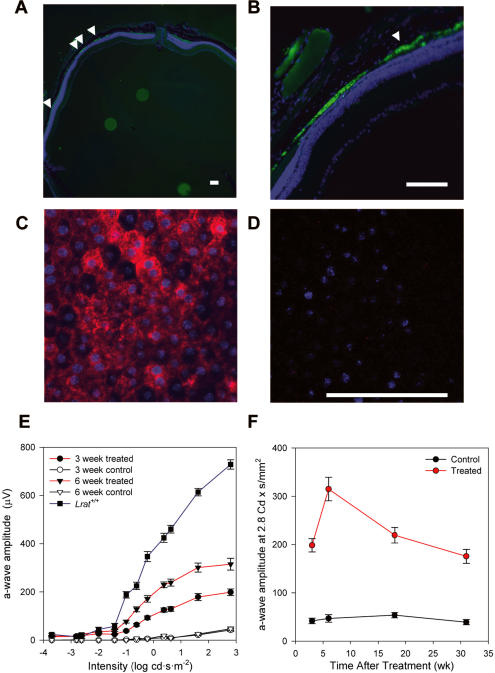
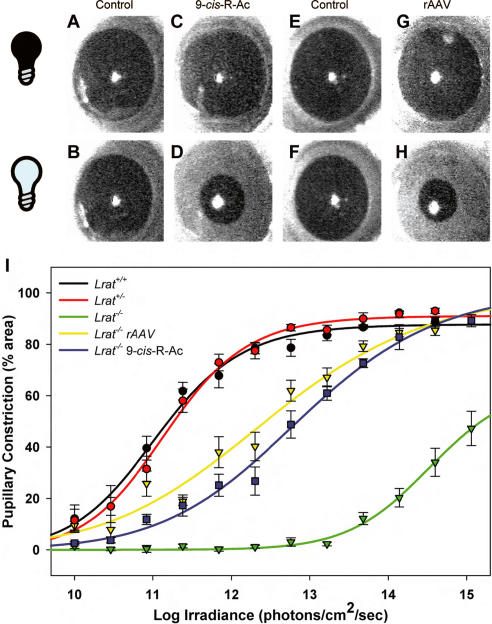
BACKGROUND: Leber congenital amaurosis (LCA), a heterogeneous early-onset retinal dystrophy, accounts for approximately 15% of inherited congenital blindness. One cause of LCA is loss of the enzyme lecithin:retinol acyl transferase (LRAT), which is required for regeneration of the visual photopigment in the retina. METHODS AND FINDINGS: An animal model of LCA, the Lrat-/- mouse, recapitulates clinical features of the human disease. Here, we report that two interventions--intraocular gene therapy and oral pharmacologic treatment with novel retinoid compounds--each restore retinal function to Lrat-/- mice. Gene therapy using intraocular injection of recombinant adeno-associated virus carrying the Lrat gene successfully restored electroretinographic responses to approximately 50% of wild-type levels (p < 0.05 versus wild-type and knockout controls), and pupillary light responses (PLRs) of Lrat-/- mice increased approximately 2.5 log units (p < 0.05). Pharmacological intervention with orally administered pro-drugs 9-cis-retinyl acetate and 9-cis-retinyl succinate (which chemically bypass the LRAT-catalyzed step in chromophore regeneration) also caused long-lasting restoration of retinal function in LRAT-deficient mice and increased ERG response from approximately 5% of wild-type levels in Lrat-/- mice to approximately 50% of wild-type levels in treated Lrat-/- mice (p < 0.05 versus wild-type and knockout controls). The interventions produced markedly increased levels of visual pigment from undetectable levels to 600 pmoles per eye in retinoid treated mice, and approximately 1,000-fold improvements in PLR and electroretinogram sensitivity. The techniques were complementary when combined. CONCLUSION: Intraocular gene therapy and pharmacologic bypass provide highly effective and complementary means for restoring retinal function in this animal model of human hereditary blindness. These complementary methods offer hope of developing treatment to restore vision in humans with certain forms of hereditary congenital blindness.
Overview
The claims and statistics of this paper haven’t been checked yet.
Free: it reads the open-access text and checks the first 5 claims that cite a source we can check. Create a free account to check every claim.
Integrity signals
Registry
Cites
Statistics
Figures
Verification
Claims the paper makes
The claims and statistics of this paper haven’t been checked yet.
Free: it reads the open-access text and checks the first 5 claims that cite a source we can check. Create a free account to check every claim.
Claims other papers make about this one
Each is checked against this paper’s own text: does it say what the citing paper says it does?
The source backs part of the claim, not all of it — or backs it for a different population, condition or comparison.
In the citing paper
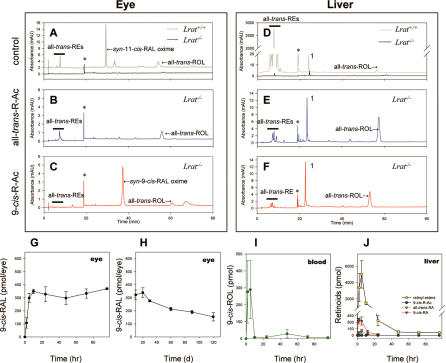
“In contrast to other cell types, an overdose of all-trans-retinol does not result in excessive accumulation of retinyl esters in the RPE.567,575”
From Chemistry of the Retinoid (Visual) Cycle (2014) · cites this paper as [567]
Experimental — accuracy not yet measuredThe cited source says what the claim attributes to it.
In the citing paper
“Thus, blockage in production of 11-cis-retinal was overcome with oral delivery of another photosensitive but chemically more stable retinoid, 9-cis-retinal (Figure 36)567−571”
From Chemistry of the Retinoid (Visual) Cycle (2014) · cites this paper as [567]
Self-check
Percentages, sums and reported differences re-computed from the paper’s own numbers.
The self-check needs the paper’s full text.
Citations
Cites
A decade of molecular biology of retinoic acid receptors
Chambon, P. (1996) · The FASEB Journal · doi:10.1096/fasebj.10.9.8801176 · Cited by 2,889 · cited 1×
“All-trans-RA and its 9-cis-isomer are important regulators of gene expression via nuclear receptors [52].”
Gene therapy restores vision in a canine model of childhood blindness
Acland, G. M., Aguirre, G. D., Ray, J., Zhang, Q., Aleman, T. S., Cideciyan, A. V., Pearce-Kelling, S. E., Anand, V., Zeng, Y., Maguire, A. M., et al. (2001) · Nature Genetics · doi:10.1038/ng0501-92 · Cited by 1,202 · cited 4×
“A recombinant adenoassociated virus (rAAV) carrying wild-type (WT) Rpe65 (rAAV-Rpe65) restored visual function in this model of childhood blindness [9].”
InfluentialSelf-citationRpe65 is necessary for production of 11-cis-vitamin A in the retinal visual cycle
Redmond., T. M., Yu, S., Lee, E., Bok, D., Hamasaki, D., Chen, N., Goletz, P., Ma, J.-X., Crouch, R. K., & Pfeifer, K. (1998) · Nature Genetics · doi:10.1038/3813 · Cited by 929 · cited 1×
“Humans with this form of LCA and Rpe65 / mice both have severely impaired rod and cone function [6].”
Rod outer segment disk shedding in rat retina: relationship to cyclic lighting
LaVail, M. M. (1976) · Science · doi:10.1126/science.982063 · Cited by 689
A "humanized" green fluorescent protein cDNA adapted for high-level expression in mammalian cells
Zolotukhin, S., Potter, M., Hauswirth, W. W., Guy, J., & Muzyczka, N. (1996) · Journal of Virology · doi:10.1128/jvi.70.7.4646-4654.1996 · Cited by 609 · cited 1×
“The pTR-UF5 backbone [13] was used for generation of a pTR-VMD2-mLRAT plasmid construct.”
Self-citationOrganization of the G Protein-coupled Receptors Rhodopsin and Opsin in Native Membranes
Liang, Y., Fotiadis, D., Filipek, S., Saperstein, D. A., Palczewski, K., & Engel, A. (2003) · Journal of Biological Chemistry · doi:10.1074/jbc.m302536200 · Cited by 596 · cited 1×
“These data are reminiscent of results obtained following gene therapy of RPE65-deficient mice and dogs [7,9,12,16,49,50].”
Self-citationStrange vision: ganglion cells as circadian photoreceptors
Berson, D. (2003) · Trends in Neurosciences · doi:10.1016/s0166-2236(03)00130-9 · Cited by 546
Chemistry of Visual Adaptation in the Rat
DOWLING, J. E. (1960) · Nature · doi:10.1038/188114a0 · Cited by 543 · cited 1×
“rods were all consistent with bleaching adaptation produced by residual opsin activity in the absence of a chromophore [”
Protection of mouse photoreceptors by survival factors in retinal degenerations.
LaVail, M. M., Yasumura, D., Matthes, M. T., Lau-Villacorta, C., Unoki, K., Sung, C. –., & Steinberg, R. H. (1998) · PubMed · Cited by 537
Retinal remodeling triggered by photoreceptor degenerations
Jones, B. W., Watt, C. B., Frederick, J. M., Baehr, W., Chen, C., Levine, E. M., Milam, A. H., Lavail, M. M., & Marc, R. E. (2003) · Journal of Comparative Neurology · doi:10.1002/cne.10703 · Cited by 476 · cited 2×
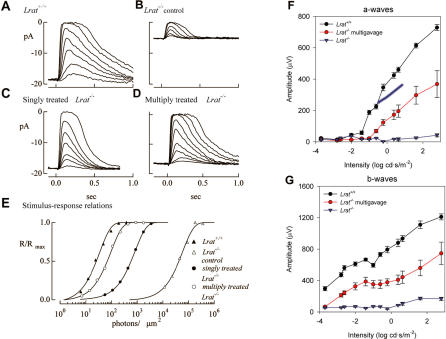
“While full restitution of the ERG could not be obtained in Lrat / mice in the tested experimental conditions, our finding of nearly complete restitution of single cell responses suggests that remodeling of the neuronal retina in Lrat / may limit functional rescue [35].”
Self-citation
Cited by
Phagocytosis of Retinal Rod and Cone Photoreceptors
Kevany, B. M., & Palczewski, K. (2010) · Physiology · doi:10.1152/physiol.00038.2009 · Cited by 426
“In contrast, unspent chromophore 11-cisretinal is re-used and sent back to OS (4).”
Self-citationDiseases Caused by Defects in the Visual Cycle: Retinoids as Potential Therapeutic Agents
Travis, G. H., Golczak, M., Moise, A. R., & Palczewski, K. (2007) · Annual Review of Pharmacology and Toxicology · doi:10.1146/annurev.pharmtox.47.120505.105225 · Cited by 419
“More recently, lrat−/− knockout mice were treated with recombinant AAV carrying a WT mouse lrat cDNA (155).”
Self-citationChemistry of the Retinoid (Visual) Cycle
Kiser, P. D., Golczak, M., & Palczewski, K. (2014) · Chemical Reviews · doi:10.1021/cr400107q · Cited by 353
Self-citationBenoit, S. C., Kemp, C. J., Elias, C. F., Abplanalp, W., Herman, J. P., Migrenne, S., Lefevre, A.-L., Cruciani-Guglielmacci, C., Magnan, C., Yu, F., et al. (2009) · Journal of Clinical Investigation · doi:10.1172/jci36714 · Cited by 351
Chemistry and Biology of Vision
Palczewski, K. (2012) · Journal of Biological Chemistry · doi:10.1074/jbc.r111.301150 · Cited by 289
Self-citationSakami, S., Maeda, T., Bereta, G., Okano, K., Golczak, M., Sumaroka, A., Roman, A. J., Cideciyan, A. V., Jacobson, S. G., & Palczewski, K. (2011) · Journal of Biological Chemistry · doi:10.1074/jbc.m110.209759 · Cited by 291
Self-citationInherited Retinal Degenerations: Current Landscape and Knowledge Gaps
Duncan, J. L., Pierce, E. A., Laster, A. M., Daiger, S. P., Birch, D. G., Ash, J. D., Iannaccone, A., Flannery, J. G., Sahel, J. A., Zack, D. J., et al. (2018) · Translational Vision Science & Technology · doi:10.1167/tvst.7.4.6 · Cited by 257
Involvement of All-trans-retinal in Acute Light-induced Retinopathy of Mice
Maeda, A., Maeda, T., Golczak, M., Chou, S., Desai, A., Hoppel, C. L., Matsuyama, S., & Palczewski, K. (2009) · Journal of Biological Chemistry · doi:10.1074/jbc.m900322200 · Cited by 248
Self-citationKong, J., Kim, S.-R., Binley, K., Pata, I., Doi, K., Mannik, J., Zernant-Rajang, J., Kan, O., Iqball, S., Naylor, S., et al. (2008) · Gene Therapy · doi:10.1038/gt.2008.78 · Cited by 215
Three-dimensional architecture of murine rod outer segments determined by cryoelectron tomography
Nickell, S., Park, P. S.-H., Baumeister, W., & Palczewski, K. (2007) · The Journal of Cell Biology · doi:10.1083/jcb.200612010 · Cited by 209
“Moreover, mouse models of retinal dystrophies provide a method for testing various genetic and pharmacological therapies to combat diseases leading to blindness (Batten et al., 2005).”
Self-citationEfficient Non-Viral Ocular Gene Transfer with Compacted DNA Nanoparticles
Farjo, R., Skaggs, J., Quiambao, A. B., Cooper, M. J., & Naash, M. I. (2006) · PLoS ONE · doi:10.1371/journal.pone.0000038 · Cited by 208
“In addition, several treatment strategies for overcoming these genetic deficits have been attempted and proven in tissue culture and various animal models [6–10].”
den Hollander, A. I., Black, A., Bennett, J., & Cremers, F. P. M. (2010) · Journal of Clinical Investigation · doi:10.1172/jci42258 · Cited by 207
Hepatic metabolism of retinoids and disease associations
Shirakami, Y., Lee, S.-A., Clugston, R. D., & Blaner, W. S. (2012) · Biochimica et Biophysica Acta (BBA) - Molecular and Cell Biology of Lipids · doi:10.1016/j.bbalip.2011.06.023 · Cited by 203
Key enzymes of the retinoid (visual) cycle in vertebrate retina
Kiser, P. D., Golczak, M., Maeda, A., & Palczewski, K. (2012) · Biochimica et Biophysica Acta (BBA) - Molecular and Cell Biology of Lipids · doi:10.1016/j.bbalip.2011.03.005 · Cited by 177
“Further successful studies in dogs, mice and primates [166–169] paved the way for the”
Self-citationRemodeling of the Human Retina in Choroideremia: Rab Escort Protein 1 (REP-1) Mutations
Jacobson, S. G., Cideciyan, A. V., Sumaroka, A., Aleman, T. S., Schwartz, S. B., Windsor, E. A. M., Roman, A. J., Stone, E. M., & MacDonald, I. M. (2006) · Investigative Opthalmology & Visual Science · doi:10.1167/iovs.06-0424 · Cited by 174
Jacobson, S. G., Boye, S. L., Aleman, T. S., Conlon, T. J., Zeiss, C. J., Roman, A. J., Cideciyan, A. V., Schwartz, S. B., Komaromy, A. M., Doobrajh, M., et al. (2006) · Human Gene Therapy · doi:10.1089/hum.2006.17.845 · Cited by 147
Self-citationTan, M. H., Smith, A. J., Pawlyk, B., Xu, X., Liu, X., Bainbridge, J. B., Basche, M., McIntosh, J., Tran, H. V., Nathwani, A., et al. (2009) · Human Molecular Genetics · doi:10.1093/hmg/ddp133 · Cited by 119
Aguirre, G. K., Komáromy, A. M., Cideciyan, A. V., Brainard, D. H., Aleman, T. S., Roman, A. J., Avants, B. B., Gee, J. C., Korczykowski, M., Hauswirth, W. W., et al. (2007) · PLoS Medicine · doi:10.1371/journal.pmed.0040230 · Cited by 117
Self-citationRetinoids for treatment of retinal diseases
Palczewski, K. (2010) · Trends in Pharmacological Sciences · doi:10.1016/j.tips.2010.03.001 · Cited by 111
Self-citationGene Therapy in Retinal Dystrophies
Ziccardi, L., Cordeddu, V., Gaddini, L., Matteucci, A., Parravano, M., Malchiodi-Albedi, F., & Varano, M. (2019) · International Journal of Molecular Sciences · doi:10.3390/ijms20225722 · Cited by 107
“Better results have been obtained in disorders in which genetic defects originate in the RPE (such as RPE65- and MERTK-mediated dystrophies) [54,105,106].”
Retinoids and Retinal Diseases
Kiser, P. D., & Palczewski, K. (2016) · Annual Review of Vision Science · doi:10.1146/annurev-vision-111815-114407 · Cited by 108
“9-cis-Retinyl acetate and LRAT gene replacement therapy are under investigation as treatments for RP associated with loss-of-function LRAT mutations (Batten et al. 2005, Koenekoop et al. 2014).”
Self-citationKoenekoop, R. K., Sui, R., Sallum, J., van den Born, L. I., Ajlan, R., Khan, A., den Hollander, A. I., Cremers, F. P. M., Mendola, J. D., Bittner, A. K., et al. (2014) · The Lancet · doi:10.1016/s0140-6736(14)60153-7 · Cited by 103
Zhang, H., Fan, J., Li, S., Karan, S., Rohrer, B., Palczewski, K., Frederick, J. M., Crouch, R. K., & Baehr, W. (2008) · The Journal of Neuroscience · doi:10.1523/jneurosci.0317-08.2008 · Cited by 101
“GRK1, abundantly present in rod outer segments (ROSs), which degenerate very slowly (Batten et al., 2005), and the rod-specific PDE6 subunit were unaffected.”
Self-citationPang, J.-J., Lauramore, A., Deng, W.-T., Li, Q., Doyle, T. J., Chiodo, V., Li, J., & Hauswirth, W. W. (2008) · Vision Research · doi:10.1016/j.visres.2007.08.009 · Cited by 97
“, 1996), AAV vectors are clearly a promising tool for retinal gene delivery in awide variety of disease contexts andhave been used to deliver therapeutic genes to correct disorders in animal models of various human retinal diseases (Acland et al., 2005; Alexander et al., 2007; Batten et al., 2005; Davidson et al., 200…”
Self-citationGolczak, M., Maeda, A., Bereta, G., Maeda, T., Kiser, P. D., Hunzelmann, S., von Lintig, J., Blaner, W. S., & Palczewski, K. (2008) · Journal of Biological Chemistry · doi:10.1074/jbc.m708982200 · Cited by 93
Self-citationDelivery of retinoid-based therapies to target tissues
Moise, A. R., Noy, N., Palczewski, K., & Blaner, W. S. (2007) · Biochemistry · doi:10.1021/bi7003069 · Cited by 93
“Although the studies ofCrbp-/- mice demonstrate that the absence of these proteins results in a much less severe metabolic phenotype than that observed with Lrat-/- mice, these studies do show that like LRAT, the CRBPs have an important role in facilitating retinol uptake, esterification, and storage by cells (20, 32,…”
Self-citationOrban, T., Palczewska, G., & Palczewski, K. (2011) · Journal of Biological Chemistry · doi:10.1074/jbc.m110.195198 · Cited by 89
Self-citationPalczewska, G., Maeda, T., Imanishi, Y., Sun, W., Chen, Y., Williams, D. R., Piston, D. W., Maeda, A., & Palczewski, K. (2010) · Nature Medicine · doi:10.1038/nm.2260 · Cited by 88
Self-citationWilliams, M. L., Coleman, J. E., Haire, S. E., Aleman, T. S., Cideciyan, A. V., Sokal, I., Palczewski, K., Jacobson, S. G., & Semple-Rowland, S. L. (2006) · PLoS Medicine · doi:10.1371/journal.pmed.0030201 · Cited by 88
“The notion that therapies producing large contiguous regions of treated cells aid survival of the treated cells gains support from the success of subretinal delivery of viral vectors in studies of mouse [21,24] and dog [20,58] models of LCA2, a disease caused by mutations in the gene encoding RPE65.”
Self-citationMaeda, T., Cideciyan, A. V., Maeda, A., Golczak, M., Aleman, T. S., Jacobson, S. G., & Palczewski, K. (2009) · Human Molecular Genetics · doi:10.1093/hmg/ddp163 · Cited by 83
“In contrast to Rpe65 mice, Lrat mice do not store retinoids in the liver or in the RPE (23,28).”
InfluentialSelf-citationProspects for retinal gene replacement therapy
Smith, A. J., Bainbridge, J. W., & Ali, R. R. (2009) · Trends in Genetics · doi:10.1016/j.tig.2009.02.003 · Cited by 100
RDH12 and RPE65, Visual Cycle Genes Causing Leber Congenital Amaurosis, Differ in Disease Expression
Jacobson, S. G., Cideciyan, A. V., Aleman, T. S., Sumaroka, A., Schwartz, S. B., Windsor, E. A. M., Roman, A. J., Heon, E., Stone, E. M., & Thompson, D. A. (2007) · Investigative Opthalmology & Visual Science · doi:10.1167/iovs.06-0599 · Cited by 81
Maeda, A., Maeda, T., Golczak, M., Imanishi, Y., Leahy, P. S., Kubota, R., & Palczewski, K. (2006) · Molecular Pharmacology · doi:10.1124/mol.106.026823 · Cited by 84
“Retinoic acid analysis was carried out using methods described previously (Batten et al., 2005).”
Self-citationRukmini, A. V., Miléa, D., & Gooley, J. J. (2019) · Frontiers in Neurology · doi:10.3389/fneur.2019.00076 · Cited by 84
Koirala, A., Makkia, R. S., Conley, S. M., Cooper, M. J., & Naash, M. I. (2013) · Human Molecular Genetics · doi:10.1093/hmg/ddt013 · Cited by 75
“A combinatorial approach consisting of gene replacement therapy and oral delivery of retinoid precursors has shown to yield a significant improvement in the rod vision in another LCA model with defects in retinoid processing (lrat) (46).”
A review of therapeutic prospects of non-viral gene therapy in the retinal pigment epithelium
Koirala, A., Conley, S. M., & Naash, M. I. (2013) · Biomaterials · doi:10.1016/j.biomaterials.2013.06.002 · Cited by 71
“For example, treatment with 9-cis retinal, a precursor for the visual chromophore has mediated improvements in rod function in rpe65 / mice [3] and in lrat / mice [4], and the pharmacological agent TUDCA (tauroursodexycholic acid) reduced ER stress and apoptosis resulting in significantly increased cone survival in lr…”
Ocular gene therapy: current progress and future prospects
Colella, P., Cotugno, G., & Auricchio, A. (2008) · Trends in Molecular Medicine · doi:10.1016/j.molmed.2008.11.003 · Cited by 81
“RPGRIP [61] and LRAT [ 62 ]), severe retinitis pigmentosa (i.e.”
Molecular Basis for Vitamin A Uptake and Storage in Vertebrates
Chelstowska, S., Widjaja-Adhi, M., Silvaroli, J., & Golczak, M. (2016) · Nutrients · doi:10.3390/nu8110676 · Cited by 72
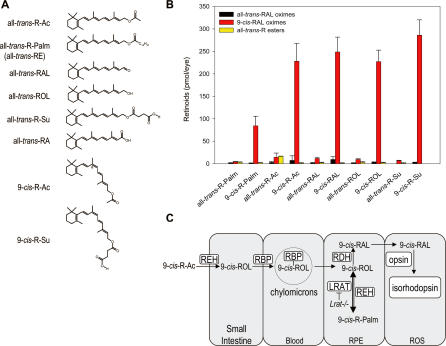
“Similar results were obtained using chemically inert and more tolerable 9-cis-retinyl acetate or 9-cis-retinyl succinate that serve as pro-drug forms of 9-cis-retinal [137].”
Technical brief: subretinal injection and electroporation into adult mouse eyes.
Johnson, C. J., Berglin, L., Chrenek, M. A., Redmond, T. M., Boatright, J. H., & Nickerson, J. M. (2008) · PubMed Central · Cited by 77
Inner retinal photoreception independent of the visual retinoid cycle
Tu, D. C., Owens, L. A., Anderson, L., Golczak, M., Doyle, S. E., McCall, M., Menaker, M., Palczewski, K., & Van Gelder, R. N. (2006) · Proceedings of the National Academy of Sciences · doi:10.1073/pnas.0600917103 · Cited by 68
Self-citationChemistry and Biology of the Initial Steps in Vision: The Friedenwald Lecture
Palczewski, K. (2014) · Investigative Ophthalmology & Visual Science · doi:10.1167/iovs.14-15502 · Cited by 75
Self-citationJacobson, S. G., Cideciyan, A. V., Alemán, T. S., Sumaroka, A., Román, A. J., Świder, M., Schwartz, S., Banin, E., & Stone, E. M. (2010) · Investigative Ophthalmology & Visual Science · doi:10.1167/iovs.10-6127 · Cited by 72
Vitamin A derivatives as treatment options for retinal degenerative diseases
Perusek, L., & Maeda, T. (2013) · Nutrients · doi:10.3390/nu5072646 · Cited by 60
“Rod opsin on the other hand is observed to traffic normally in the absence of 11-cis-retinal, both in Lrat and Rpe65 knockout mice, suggesting that rod pigment does not necessarily need its chromophore for proper photoreceptor localization [74], whereas 11-cis-retinal deficiency can induce abnormality of length and mo…”
Gene supplementation therapy for recessive forms of inherited retinal dystrophies
Smith, A. J., Bainbridge, J. W., & Ali, R. R. (2011) · Gene Therapy · doi:10.1038/gt.2011.161 · Cited by 67
Two-photon microscopy reveals early rod photoreceptor cell damage in light-exposed mutant mice
Maeda, A., Palczewska, G., Golczak, M., Kohno, H., Dong, Z., Maeda, T., & Palczewski, K. (2014) · Proceedings of the National Academy of Sciences · doi:10.1073/pnas.1317986111 · Cited by 57
“Lrat mice were bred and genotyped as detailed previously (46, 89) with primers for Lrat WT, 5′AAGTGCTGGGCATGGTGACTTGTG-3′ and 5′-TCCAGTTCCAGACTCTTTCCACCCAC3′ and for Lrat mutant, 5′-TGCGAGGCCAGAGGCCACTTGTGTAGC-3′ and 5′TCCAGTTCCAGACTCTTTCCACCCAC-3′.”
Self-citationPalmitoylation stabilizes unliganded rod opsin
Maeda, A., Okano, K., Park, P. S.-H., Lem, J., Crouch, R. K., Maeda, T., & Palczewski, K. (2010) · Proceedings of the National Academy of Sciences · doi:10.1073/pnas.1000640107 · Cited by 54
“This compound was selected because rhodopsin can use the chemically more stable 9-cis-retinal just as efficiently as the naturally unstable 11-cis-retinal for its chromophore ligand (18, 19).”
Self-citationGearhart, P. M. (2010) · Archives of Ophthalmology · doi:10.1001/archophthalmol.2010.210 · Cited by 52
“with a failure of the visual cycle due to a lack of lecithin retinol acyltransferase.(14) Oral retinoid therapy has entered phase 1b clinical trials, with early reports suggesting evidence of efficacy in patients with lecithin retinol acyltransferasemutations.”
Sun, W., Gerth‐Kahlert, C., Maeda, A., Lodowski, D. T., Kraak, L. V. D., Saperstein, D. A., Héon, E., & Palczewski, K. (2007) · Vision Research · doi:10.1016/j.visres.2007.04.005 · Cited by 57
Self-citationPharmacotherapy of retinal disease with visual cycle modulators
Hussain, R. M., Gregori, N. Z., Ciulla, T. A., & Lam, B. L. (2018) · Expert Opinion on Pharmacotherapy · doi:10.1080/14656566.2018.1448060 · Cited by 56
Gene Therapy of Inherited Retinopathies: A Long and Successful Road from Viral Vectors to Patients
Colella, P., & Auricchio, A. (2012) · Human Gene Therapy · doi:10.1089/hum.2012.123 · Cited by 50
“Gene replacement has been successfully evaluated in additional rodent models of IR caused by mutations in genes expressed in the RPE, such as MER tyrosine kinase (Mertk) (Vollrath et al., 2001; Smith et al., 2003; Tschernutter et al., 2005) and lecithin-retinol acyltransferase (LRAT) (Batten et al., 2005).”
InfluentialAnimal Models for Target Diseases in Gene Therapy — using DNA and siRNA Delivery Strategies
Blagbrough, I. S., & Zara, C. (2008) · Pharmaceutical Research · doi:10.1007/s11095-008-9646-8 · Cited by 54
“Intraocular injected rAAV-delivered Lrat gene therapy and oral pharmacological treatment with novel 9-cis-retinyl acetate and 9-cis-retinyl succinate, which are easier to synthesize and more stable than the 11-cis-isomers they replaced, successfully restored electroretinographic responses to ∼50% of wild-type levels (…”
InfluentialNoninvasive two-photon optical biopsy of retinal fluorophores
Palczewska, G., Bogusławski, J., Stremplewski, P., Kornaszewski, Ł. W., Zhang, J., Dong, Z., Liang, X., Gratton, E., Vogel, A., Wojtkowski, M., et al. (2020) · Proceedings of the National Academy of Sciences · doi:10.1073/pnas.2007527117 · Cited by 53
“In further imaging experiments with different mouse models, it was shown that retinosomes overaccumulate in Rpe65 mice and that they are absent in the eyes of Lrat mice which are deficient in retinyl ester synthesis and thus lack visual chromophores and consequently are deprived of visual function (8, 9).”
Self-citationPathways and disease-causing alterations in visual chromophore production for vertebrate vision
Kiser, P. D., & Palczewski, K. (2020) · Journal of Biological Chemistry · doi:10.1074/jbc.rev120.014405 · Cited by 53
Self-citationDNA-Gated Graphene Field-Effect Transistors for Specific Detection of Arsenic(III) in Rice
Wang, Y., Bi, Y., Wang, R., Wang, L., Qu, H., & Zheng, L. (2021) · Journal of Agricultural and Food Chemistry · doi:10.1021/acs.jafc.0c07052 · Cited by 49
Gene therapy in retinal diseases: A review
Dhurandhar, D., Sahoo, N. K., Mariappan, I., & Narayanan, R. (2021) · Indian Journal of Ophthalmology · doi:10.4103/ijo.ijo_3117_20 · Cited by 54
“[8] There is no gene therapy available for LRAT defect-causing LCA.[9]”
InfluentialLeber Congenital Amaurosis Caused by an RPGRIP1 Mutation Shows Treatment Potential
Jacobson, S. G., Cideciyan, A. V., Alemán, T. S., Sumaroka, A., Schwartz, S., Román, A. J., & Stone, E. M. (2007) · Ophthalmology · doi:10.1016/j.ophtha.2006.10.028 · Cited by 54
Koirala, A., Conley, S. M., Makkia, R., Liu, Z., Cooper, M. J., Sparrow, J. R., & Naash, M. I. (2013) · Journal of Controlled Release · doi:10.1016/j.jconrel.2013.08.299 · Cited by 47
“Studies have shown positive effects of 9-cis retinal (a stable chromophore precursor) and 9-cis-retinyl acetate supplementation in LCA models [40, 41], and clinical trials are underway to assess the utility of this approach in patients (clinicaltrials.”
Gene delivery to the retina: focus on non-viral approaches
Naik, R. J., Mukhopadhyay, A., & Ganguli, M. (2008) · Drug Discovery Today · doi:10.1016/j.drudis.2008.09.012 · Cited by 59
Gene and Induced Pluripotent Stem Cell Therapy for Retinal Diseases
Maeda, A., Mandai, M., & Takahashi, M. (2019) · Annual Review of Genomics and Human Genetics · doi:10.1146/annurev-genom-083118-015043 · Cited by 55
Evaluation of 9-cis-Retinyl Acetate Therapy in Rpe65−/−Mice
Maeda, T., Maeda, A., Casadesus, G., Palczewski, K., & Margaron, P. (2009) · Investigative Opthalmology & Visual Science · doi:10.1167/iovs.09-3700 · Cited by 45
“Behavioral testing is one of the most powerful ways to evaluate vision-dependent higher brain functions such as pupillary responses to light.(27,39) For example, it has been reported that neural function is disrupted in the LCA mouse model.”
InfluentialSelf-citationDev Borman, A., Ocaka, L. A., Mackay, D. S., Ripamonti, C., Henderson, R. H., Moradi, P., Hall, G., Black, G. C., Robson, A. G., Holder, G. E., et al. (2012) · Investigative Opthalmology & Visual Science · doi:10.1167/iovs.12-9548 · Cited by 44
QLT091001, a 9-cis-Retinal Analog, Is Well-Tolerated by Retinas of Mice with Impaired Visual Cycles
Maeda, T., Dong, Z., Jin, H., Sawada, O., Gao, S., Utkhede, D., Monk, W., Palczewska, G., & Palczewski, K. (2013) · Investigative Opthalmology & Visual Science · doi:10.1167/iovs.12-11152 · Cited by 41
“9-cis-Retinyl esters, including 9-cis-retinyl acetate (9-cis-R-Ac), are prodrugs used to generate 9-cis-retinal in vivo.(21,25) QLT091001, which contains 9cis-retinyl acetate as a 9-cis-retinoid—and is developed by QLT, Inc.”
InfluentialSelf-citationMaeda, A., Maeda, T., & Palczewski, K. (2006) · Investigative Opthalmology & Visual Science · doi:10.1167/iovs.06-0215 · Cited by 40
Self-citationGene Therapy of ABCA4-Associated Diseases
Auricchio, A., Trapani, I., & Allikmets, R. (2015) · Cold Spring Harbor Perspectives in Medicine · doi:10.1101/cshperspect.a017301 · Cited by 41
“Similar successes have been reported for the Rpe652/2 and Lrat2/2 mouse models with AAV and lentiviral vectors (Dejneka et al. 2004; Batten et al. 2005; Bemelmans et al. 2006; YanezMunoz et al. 2006).”
Lecithin:Retinol Acyltransferase: A Key Enzyme Involved in the Retinoid (visual) Cycle
Sears, A. E., & Palczewski, K. (2016) · Biochemistry · doi:10.1021/acs.biochem.6b00319 · Cited by 40
Self-citationDietary 9-cis-β,β-Carotene Fails to Rescue Vision in Mouse Models of Leber Congenital Amaurosis
Maeda, T., Perusek, L., Amengual, J., Babino, D., Palczewski, K., & von Lintig, J. (2011) · Molecular Pharmacology · doi:10.1124/mol.111.074732 · Cited by 37
“by organic extraction and dried under argon (Batten et al., 2005).”
InfluentialSelf-citationAdeno-Associated Virus Mediated Gene Therapy for Retinal Degenerative Diseases
Stieger, K., Cronin, T., Bennett, J., & Rolling, F. (2012) · Methods in Molecular Biology · doi:10.1007/978-1-61779-370-7_8 · Cited by 35
Autosomal recessive retinitis pigmentosa E150K opsin mice exhibit photoreceptor disorganization
Zhang, N., Kolesnikov, A. V., Jastrzebska, B., Mustafi, D., Sawada, O., Maeda, T., Genoud, C., Engel, A., Kefalov, V. J., & Palczewski, K. (2013) · Journal of Clinical Investigation · doi:10.1172/jci66176 · Cited by 34
“Lrat –/– (44, 55) and Gnat1 –/– mice (54) also were employed for crossbreeding experiments.”
Self-citationEffective and Sustained Delivery of Hydrophobic Retinoids to Photoreceptors
Tang, P. H., Fan, J., Goletz, P. W., Wheless, L., & Crouch, R. K. (2010) · Investigative Opthalmology & Visual Science · doi:10.1167/iovs.10-5766 · Cited by 29
“Previous studies have shown that early administration of 9-cis retinal to young (P10) Rpe65 / and Lrat / mice are effective for preserving rods and cones.(14,22,23) This study was undertaken to evaluate the efficiency of a single administration of Matrigel in delivering 9-cis retinal.”
Clinical gene therapy for the treatment of RPE65-associated Leber congenital amaurosis
Stein, L., Roy, K., Lei, L., & Kaushal, S. (2011) · Expert Opinion on Biological Therapy · doi:10.1517/14712598.2011.557358 · Cited by 36
“Previous related animal studies included several murine studies, some of which indicated that a more chemically stable compound, 9-cis-retinyl acetate, a synthetic retinoid, improved vision function in LRAT or RPE65 knockout mice [29-33].”
Potential Therapeutic Agents Against Retinal Diseases Caused by Aberrant Metabolism of Retinoids
Liu, X., Chen, J., Liu, Z., Li, J., Yao, K., & Wu, Y. (2016) · Investigative Ophthalmology & Visual Science · doi:10.1167/iovs.15-18429 · Cited by 32
“…Models Human Trials 9-cis-retinal Van Hooser et al. 2000.73 – Van Hooser et al. 2002.74 Gearhart et al. 2010.77 9-cis-retinyl acetate Batten et al. 2005.149 Koenekoop et al. 2014.10 Maeda et al. 2009.5 NCT00765427 Maeda et al. 2013.181 NCT01999764 For LCA and RP, NCT01014052 For…”
InfluentialA Microparticle/Hydrogel Combination Drug-Delivery System for Sustained Release of Retinoids
Gao, S.-Q., Maeda, T., Okano, K., & Palczewski, K. (2012) · Investigative Ophthalmology & Visual Science · doi:10.1167/iovs.12-10279 · Cited by 34
“Pharmacologic replacement of 11-cis-retinal provides great promise for the treatment of human retinal diseases with deficient chromophore biosynthesis.(3,5,18,23,24) 9-cis-Retinal can successfully replace 11-cis-retinal by bypassing certain biochemical defects in the visual cycle, such as the absence of LRAT activity.”
InfluentialSelf-citationEffects of Long-Term Administration of 9-cis-Retinyl Acetate on Visual Function in Mice
Maeda, T., Maeda, A., Leahy, P., Saperstein, D. A., & Palczewski, K. (2009) · Investigative Opthalmology & Visual Science · doi:10.1167/iovs.08-2301 · Cited by 27
“9-cisR-Ac is a prodrug that is metabolically converted first to fatty acid esters and consequently to 9-cis-retinal to form isorhodopsin.(12) The retinoid dosage regimen was based on our previous studies wherein a single dose of 9-cis-retinoid (approximately 100 mg/kg) significantly restored ERG responses in mice that…”
InfluentialSelf-citationAn Acyl-covalent Enzyme Intermediate of Lecithin:Retinol Acyltransferase*
Golczak, M., & Palczewski, K. (2010) · Journal of Biological Chemistry · doi:10.1074/jbc.m110.152314 · Cited by 27
Self-citationSubretinal Delivery and Electroporation in Pigmented and Nonpigmented Adult Mouse Eyes
Nickerson, J. M., Goodman, P., Chrenek, M. A., Bernal, C. J., Berglin, L., Redmond, T. M., & Boatright, J. H. (2012) · Methods in molecular biology · doi:10.1007/978-1-61779-848-1_4 · Cited by 28
Animals Models of Inherited Retinal Disease
Moshiri, A. (2021) · International Ophthalmology Clinics · doi:10.1097/iio.0000000000000368 · Cited by 27
Bereta, G. P., Wang, B., Kiser, P. D., Baehr, W., Jang, G.-F., & Palczewski, K. (2009) · Journal of Biological Chemistry · doi:10.1074/jbc.m109.061713 · Cited by 27
Self-citationGuanylate Cyclase-Activating Proteins and Retina Disease
Baehr, W., & Palczewski, K. (2007) · Springer eBooks · doi:10.1007/978-1-4020-6191-2_4 · Cited by 25
“…gene transfer therapies of retinal diseases by an adeno-associated virus (AAV) vector have been very successful in several recessive animal models (Acland et al., 2001; Bennett et al., 1999; Bennett et al., 1998; Batten et al., 2005; LaVail et al., 2000; Haire et al., 2006; Williams et al., 2006).”
Self-citationSweeney, M. O., McGee, T. L., Berson, E. L., & Dryja, T. P. (2007) · PubMed Central · Cited by 23
Palczewska, G., Maeda, A., Golczak, M., Arai, E., Dong, Z., Perusek, L., Kevany, B. M., & Palczewski, K. (2016) · Journal of Biological Chemistry · doi:10.1074/jbc.m116.764563 · Cited by 21
“However, a reverse transport process also occurs whereby the RPE regenerates the visual chromophore, 11-cis-retinal, for final delivery to the photoreceptors (14, 15).”
Self-citationGao, S., Kahremany, S., Zhang, J., Jastrzębska, B., Querubin, J. R., Petersen‐Jones, S. M., & Palczewski, K. (2018) · Molecular Pharmacology · doi:10.1124/mol.117.111294 · Cited by 21
“Rapid improvement of visual function was observed in patients with RPE65 or LRAT mutations after oral administration of synthetic 9-cis-retinyl acetate (Van Hooser et al., 2000; Batten et al., 2005).”
InfluentialSelf-citationGene Therapy to the Retina and the Cochlea
Crane, R., Conley, S. M., Al‐Ubaidi, M. R., & Naash, M. I. (2021) · Frontiers in Neuroscience · doi:10.3389/fnins.2021.652215 · Cited by 25
den Hollander, A. I. (2016) · Investigative Ophthalmology & Visual Science · doi:10.1167/iovs.15-18167 · Cited by 20
Retinal degeneration in animal models with a defective visual cycle
Maeda, A., & Palczewski, K. (2013) · Drug Discovery Today Disease Models · doi:10.1016/j.ddmod.2014.01.001 · Cited by 21
“Gene transfer therapies with Lenti virus in Lrat / mice also rescued visual functions [27].”
Self-citationAAV-Mediated Gene Therapy in Mouse Models of Recessive Retinal Degeneration
Pang, J., Lei, L., Dai, X., Shi, W., Liu, X., Dinculescu, A., & McDowell, J. H. (2012) · Current Molecular Medicine · doi:10.2174/156652412799218877 · Cited by 19
“To date, successful gene therapy treatments were used in mouse models with different forms of LCA caused by mutations in the GUCY2D gene (retinal guanylate cyclase1, retGC1; LCA1) [68], the RPE65 gene (retinal pigment epithelium-specific; LCA2) [16,17,48,69], the AIPL1 gene (arylhydrocarbon receptorinteracting protein…”
Self-citationFrom mouse to human: Accessing the biochemistry of vision in vivo by two-photon excitation
Palczewska, G., Wojtkowski, M., & Palczewski, K. (2023) · Progress in Retinal and Eye Research · doi:10.1016/j.preteyeres.2023.101170 · Cited by 18
Self-citationMolecular Biology and Analytical Chemistry Methods Used to Probe the Retinoid Cycle
Golczak, M., Bereta, G., Maeda, A., & Palczewski, K. (2010) · Methods in Molecular Biology · doi:10.1007/978-1-60327-325-1_13 · Cited by 16
“Lrat –/– mice manifest undetectable levels of retinyl esters within the RPE and severely attenuated rod and cone visual responses (13, 14) and Rdh5 –/– mice exhibit enhanced accumulation of cis-retinyl esters in their RPE (15).”
Self-citationAn analysis of retinal gene therapy clinical trials.
MacLaren, R. E. (2009) · PubMed · Cited by 20
Bennett, J., Chung, D. C., & Maguire, A. M. (2012) · Methods in enzymology on CD-ROM/Methods in enzymology · doi:10.1016/b978-0-12-386509-0.00013-2 · Cited by 20
“Gene augmentation strategies whereby a wild type copy of a gene is delivered have also been used successfully in proof-of-concept gene therapy studies in small and large animal models of more than a dozen different conditions (Acland et al., 2001, 2005; Alexander et al., 2007; Ali et al., 2000; Allocca et al., 2008, 2…”
Kiang, A., Kenna, P. F., Humphries, M. M., Ozaki, E., Koenekoop, R. K., Campbell, M., Farrar, G. J., & Humphries, P. (2020) · Genes · doi:10.3390/genes11121420 · Cited by 19
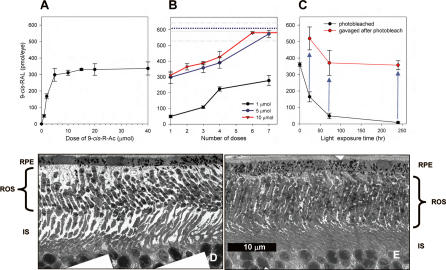
“[59] reported increased rod outer segment lengths in a similar model analyzed directly following a multiple gavage regime.”
Contribution of Membrane Trafficking Perturbation to Retinal Toxicity
Khoh‐Reiter, S., Sokolowski, S. A., Jessen, B. A., Evans, M. G., Dalvie, D., & Lu, S. (2015) · Toxicological Sciences · doi:10.1093/toxsci/kfv059 · Cited by 16
Impact of LCA-Associated E14L LRAT Mutation on Protein Stability and Retinoid Homeostasis
Chełstowska, S., Widjaja‐Adhi, M. A. K., Silvaroli, J. A., & Golczak, M. (2017) · Biochemistry · doi:10.1021/acs.biochem.7b00451 · Cited by 15
Highly efficient retinal gene delivery with helper-dependent adenoviral vectors
Lam, S., Cao, H., Wu, J., Duan, R. C., & Hu, J. (2014) · Genes & Diseases · doi:10.1016/j.gendis.2014.09.002 · Cited by 16
“LRAT gene therapy has been studied with significant electro-physiological results but poor distribution of gene expression.(31) Furthermore, it has been argued that the regulatory regions required for LRAT expression cannot be packaged using the AAV vector.”
Koster, C., van den Hurk, K., Lewallen, C. F., Talib, M., ten Brink, J. B., Boon, C. J. F., & Bergen, A. A. B. (2021) · International Journal of Molecular Sciences · doi:10.3390/ijms22137234 · Cited by 14
“In these mouse strains, supplementation of visual cycle metabolites, such as retinoids [20] and 9-cis-retinyl acetate (QLT091001), seem to be efficacious to maintain the ERG responses as long as there is sufficient retinal integrity to support functional improvement [21,22].”
den Hollander, A. I., Black, A., Bennett, J., & Cremers, F. P. M. (2010) · Journal of Clinical Investigation · doi:10.1172/jci45855 · Cited by 13
RPE based gene and cell therapy for inherited retinal diseases: A review
Sanie‐Jahromi, F., & Nowroozzadeh, M. H. (2022) · Experimental Eye Research · doi:10.1016/j.exer.2022.108961 · Cited by 13
Gene therapies for inherited retinal disorders
Farrar, G. J., Millington‐Ward, S., Chadderton, N., Mansergh, F. C., & Palfi, A. (2014) · Visual Neuroscience · doi:10.1017/s0952523814000133 · Cited by 16
“…LCA genes including GUCY2D ( GC1 ), LRAT , CEP290 , RD3 , and AIPL1 have now also been the subject of successful preclinical gene therapy studies (Batten et al., 2005 ; Tan et al., 2009 ; Sun et al., 2010 ; Baye et al., 2011 ; Boye et al., 2011 , 2012, 2013 b ; Mihelec et al., 2011 ; Smith et…”
Jacobson, S. G., Boye, S. L., Alemán, T. S., Conlon, T. J., Zeiss, C. J., Román, A. J., Cideciyan, A. V., Schwartz, S., Komáromy, A. M., Doobrajh, M., et al. (2006) · Human Gene Therapy · doi:10.1089/hum.2006.17.ft-230 · Cited by 12
Self-citationRescue of Sight by Gene Therapy—Closer than It May Appear
Rex, T. S. (2007) · Ophthalmic Genetics · doi:10.1080/13816810701503707 · Cited by 11
Retinal Gene Therapy Using Adeno-Associated Viral Vectors: Multiple Applications for a Small Virus
Hauswirth, W. W. (2014) · Human Gene Therapy · doi:10.1089/hum.2014.2530 · Cited by 12
“Our other published retinal gene therapy studies, which space limits preclude from being reviewed here, include successful treatments for retinal diseases/conditions in animal models because of mutations in LRAT (Batten et al., 2005), AIPL1 (Ramamurthy et al., 2004; Ku et al., 2011), PDE6b (Pang et al., 2008; Deng et…”
Self-citation
Metadata
- Authors
- Batten, M. L., Imanishi, Y., Tu, D. C., Doan, T., Zhu, L., Pang, J., Glushakova, L., Moise, A. R., Baehr, W., Van Gelder, R. N., Hauswirth, W. W., Rieke, F., & Palczewski, K.
- Affiliations
- University of Washington (US)
- Washington University in St. Louis (US)
- University of Florida (US)
- University of Utah (US)
- Corresponding author
- Palczewski, Krzysztof
- ORCID
- Venue
- PLoS Medicine
- Publisher
- Public Library of Science (PLoS)
- Published
- 2005-11-01
- Volume
- 2
- Issue
- 11
- Pages
- e333
- ISSN
- 1549-1277 (ISSN-L)
- 1549-1676
- PMC
- PMC1274279
- OpenAlex
- W2108100103
- Cited by
- 134
- References
- 55
- Citations by year
- 2026: 1 · 2025: 1 · 2024: 2 · 2023: 2 · 2022: 4 · 2021: 6 · 2020: 6 · 2019: 4 · 2018: 4 · 2017: 1 · 2016: 7 · 2015: 7 · 2014: 6 · 2013: 6 · 2012: 13
- FWCI
- 3.53
- Type
- journal article
- Language
- en
- Open access
- gold
- doi.org
- Locations
- PLoS Medicine (publishedVersion, cc-by)
- PubMed Central (publishedVersion, cc-by)
- PubMed (publishedVersion)
- DOAJ (DOAJ: Directory of Open Access Journals) (submittedVersion, cc-by-sa)
- DOAJ (DOAJ: Directory of Open Access Journals) (submittedVersion)
- Figshare (submittedVersion, cc-by)
- KU ScholarWorks (The University of Kansas) (submittedVersion, other-oa)
- Funders
- Foundation Fighting Blindness
- Research to Prevent Blindness
- University of Utah
- National Institutes of Health (EY-01730, EY09339)
- National Eye Institute (EY 13729, EY-01730, U10EY013729, R01EY008123, EY 09339, R01EY014988, EY 08123, R01EY011123, EY-11123, EY14988, R01EY009339, P30EY001730)
- Topics
- Health Sciences › Medicine › Ophthalmology › Retinal Development and Disorders
- Health Sciences › Medicine › Ophthalmology › Retinal Diseases and Treatments
- Life Sciences › Biochemistry, Genetics and Molecular Biology › Genetics › Virus-based gene therapy research
- Keywords
- Leber congenital amaurosis, LRAT, retinal dystrophy, chromophore regeneration, visual pigments, electroretinogram, pupillary light reflex, hereditary blindness
- MeSH terms
- Retinyl Esters, Acyltransferases, Adenoviridae, Administration, Oral, Animals, Blindness, Disease Models, Animal, Diterpenes, Genetic Vectors, Molecular Sequence Data, Prodrugs, Pupil, Retinal Pigments, Vitamin A, Genetic Therapy, Mice, Knockout, Optic Atrophy, Hereditary, Leber, Mice
About these checks
Registry, retraction, Cites and statistics results are computed, not judged, with one exception: a printed reference that no index lists is read once by a model before it counts as a citation error. Claims are extracted by a model and kept only when their quote appears verbatim in the text; each cited source is then checked, with a model’s help, for whether it says what the claim relies on. Those verdicts can be wrong — read the claim’s quote and the cited source before relying on one.
Statistics and arithmetic are recomputed, not judged.
Confidence bands are shown only for fields calibrated on our annotated test set. None is calibrated yet, so no band is shown.
What counts as a claim ›How we measure confidence ›How we check this ›
Are you an author, or do you see a problem with this page? Request a review
Data sources
Bibliographic data: Semantic Scholar, OpenAlex, Crossref.
Contains information from the Semantic Scholar Academic Graph Datasets, made available under the ODC Attribution License (ODC-BY 1.0).
Semantic Scholar’s data is described in: Kinney, R., et al. (2023). The Semantic Scholar Open Data Platform. arXiv:2301.10140.
