

Financial Conflicts of Interest and Reporting Bias Regarding the Association between Sugar-Sweetened Beverages and Weight Gain: A Systematic Review of Systematic Reviews
Open accessThe DOI matches its Crossref record; 50 of the 51 references it cites were found in a registry or an index.
Abstract
BACKGROUND: Industry sponsors' financial interests might bias the conclusions of scientific research. We examined whether financial industry funding or the disclosure of potential conflicts of interest influenced the results of published systematic reviews (SRs) conducted in the field of sugar-sweetened beverages (SSBs) and weight gain or obesity. METHODS AND FINDINGS: We conducted a search of the PubMed, Cochrane Library, and Scopus databases to identify published SRs from the inception of the databases to August 31, 2013, on the association between SSB consumption and weight gain or obesity. SR conclusions were independently classified by two researchers into two groups: those that found a positive association and those that did not. These two reviewers were blinded with respect to the stated source of funding and the disclosure of conflicts of interest. We identified 17 SRs (with 18 conclusions). In six of the SRs a financial conflict of interest with some food industry was disclosed. Among those reviews without any reported conflict of interest, 83.3% of the conclusions (10/12) were that SSB consumption could be a potential risk factor for weight gain. In contrast, the same percentage of conclusions, 83.3% (5/6), of those SRs disclosing some financial conflict of interest with the food industry were that the scientific evidence was insufficient to support a positive association between SSB consumption and weight gain or obesity. Those reviews with conflicts of interest were five times more likely to present a conclusion of no positive association than those without them (relative risk: 5.0, 95% CI: 1.3-19.3). An important limitation of this study is the impossibility of ruling out the existence of publication bias among those studies not declaring any conflict of interest. However, the best large randomized trials also support a direct association between SSB consumption and weight gain or obesity. CONCLUSIONS: Financial conflicts of interest may bias conclusions from SRs on SSB consumption and weight gain or obesity.
Overview
The claims and statistics of this paper haven’t been checked yet.
Free: it reads the open-access text and checks the first 5 claims that cite a source we can check. Create a free account to check every claim.
Integrity signals
Registry
Cites
Statistics
Figures
Verification
Claims the paper makes
The claims and statistics of this paper haven’t been checked yet.
Free: it reads the open-access text and checks the first 5 claims that cite a source we can check. Create a free account to check every claim.
Claims other papers make about this one
Each is checked against this paper’s own text: does it say what the citing paper says it does?
The source backs part of the claim, not all of it — or backs it for a different population, condition or comparison.
In the citing paper
“Reviews of the health effects of sugar sweetened beverages that are performed by authors with financial ties to food companies are five times more likely to conclude that there is no association of sugar consumption with weight gain compared to those with other sponsors (relative risk: 5.0, 95% CI: 1.3–19.3)[42].”
From Relationship between research outcomes and risk of bias, study sponsorship, and author financial conflicts of interest in reviews of the effects of artificially sweetened beverages on weight outcomes: a systematic review of reviews (2016) · cites this paper as [42]
Experimental — accuracy not yet measuredIn the citing paper
“Reviews of the health effects of sugar sweetened beverages performed by authors with financial ties to the sugar industry are five times more likely to conclude there is no association of sugar consumption with weight gain [42].”
Self-check
Percentages, sums and reported differences re-computed from the paper’s own numbers.
The self-check needs the paper’s full text.
Citations
Cites
Preferred Reporting Items for Systematic Reviews and Meta-Analyses: the PRISMA statement
Moher, D., Liberati, A., Tetzlaff, J., Altman, D. G., & for the PRISMA Group (2009) · BMJ · doi:10.1136/bmj.b2535 · Cited by 83,823
Preferred Reporting Items for Systematic Reviews and Meta-Analyses: The PRISMA Statement
Moher, D., Liberati, A., Tetzlaff, J., Altman, D. G., & The PRISMA Group (2009) · PLoS Medicine · doi:10.1371/journal.pmed.1000097 · Cited by 64,042 · cited 1×
“Methods Standard methods for conducting and reporting SRs were used [13].”
MethodPreferred reporting items for systematic reviews and meta-analyses: the PRISMA Statement.
(2009) · PubMed Central · Cited by 44,859
Preferred Reporting Items for Systematic Reviews and Meta-Analyses: The PRISMA Statement
Moher, D., Liberati, A., Tetzlaff, J., & Altman, D. G. (2009) · Journal of Clinical Epidemiology · doi:10.1016/j.jclinepi.2009.06.005 · Cited by 19,575
Intake of sugar-sweetened beverages and weight gain: a systematic review
Malik, V. S., Schulze, M. B., & Hu, F. B. (2006) · The American Journal of Clinical Nutrition · doi:10.1093/ajcn/84.2.274 · Cited by 2,100 · cited 1×
“Similarly, another food industry–funded SR [27] did not include one of the RCTs already included in a previous SR [28], and therefore available at the time of the literature search.”
BackgroundSelf-citationEffects of soft drink consumption on nutrition and health: a systematic review and meta-analysis
Vartanian, L. R., Schwartz, M. B., & Brownell, K. D. (2007) · American Journal of Public Health · doi:10.2105/ajph.2005.083782 · Cited by 1,863 · cited 1×
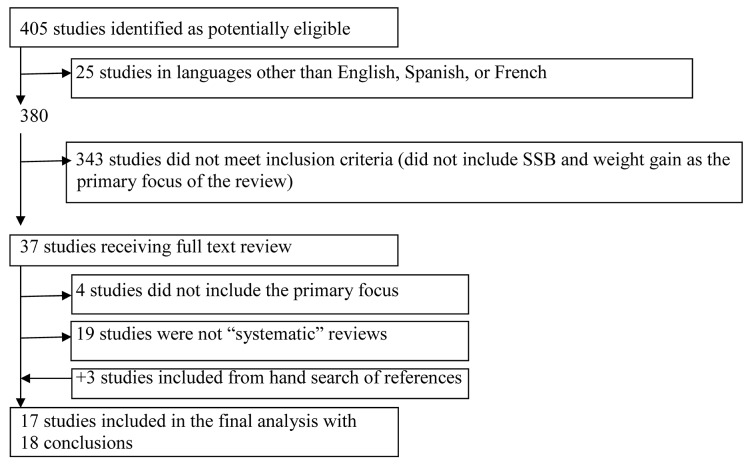
“Results Our final study was based on 17 out of 405 potentially eligible articles (Figure 1) [14–30].”
Scope and Impact of Financial Conflicts of Interest in Biomedical Research: A Systematic Review
Bekelman, J. E., Li, Y., & Gross, C. P. (2003) · JAMA · doi:10.1001/jama.289.4.454 · Cited by 1,816 · cited 2×
“This issue has been thoroughly discussed in pharmaceutical studies, where the dangers of the use of so-called scientific evidence in industry marketing and profit-making strategies have been noted [3–6].”
BackgroundMalik, V. S., Pan, A., Willett, W. C., & Hu, F. B. (2013) · The American Journal of Clinical Nutrition · doi:10.3945/ajcn.113.058362 · Cited by 1,668 · cited 3×
“We identified only two SRs [15,29] that specifically reported using the PRISMA guidelines as the standard method for conducting and reporting the meta-analysis.”
BackgroundMethodMoodie, R., Stuckler, D., Monteiro, C., Sheron, N., Neal, B., Thamarangsi, T., Lincoln, P., & Casswell, S. (2013) · The Lancet · doi:10.1016/s0140-6736(12)62089-3 · Cited by 1,663
Te Morenga, L., Mallard, S., & Mann, J. (2012) · BMJ · doi:10.1136/bmj.e7492 · Cited by 1,629 · cited 3×
“One of the reviews [15] was identified twice because the analyses were reported separately for adults and children/ adolescents and achieved different conclusions; therefore we included a total of 18 conclusions from the 17 SRs in the analysis.”
Method
Research works printed but not linked: 1
- Lesser LI (2009) Reducing potential bias in industry-funded nutrition research. Am J Clin Nutr 90: 699– 700. 19625682 · DOI
Cited by
Shamseer, L., Moher, D., Clarke, M., Ghersi, D., Liberati, A., Petticrew, M., Shekelle, P., Stewart, L. A., & the PRISMA-P Group (2015) · BMJ · doi:10.1136/bmj.g7647 · Cited by 13,120
The Global Syndemic of Obesity, Undernutrition, and Climate Change: The Lancet Commission report
Swinburn, B. A., Kraak, V. I., Allender, S., Atkins, V. J., Baker, P. I., Bogard, J. R., Brinsden, H., Calvillo, A., De Schutter, O., Devarajan, R., et al. (2019) · The Lancet · doi:10.1016/s0140-6736(18)32822-8 · Cited by 3,081
Fructose and sugar: A major mediator of non-alcoholic fatty liver disease
Jensen, T., Abdelmalek, M. F., Sullivan, S., Nadeau, K. J., Green, M., Roncal, C., Nakagawa, T., Kuwabara, M., Sato, Y., Kang, D.-H., et al. (2018) · Journal of Hepatology · doi:10.1016/j.jhep.2018.01.019 · Cited by 941
“Of note, studies funded by the food industry, and/ or in which the authors are funded by the food industry, often fail to show a relationship between sugar intake and metabolic disease.(155,156) Experimentally, the data that uric acidmay have a role in NAFLD is countered by a report in which exogenously administered u…”
Sugar consumption, metabolic disease and obesity: The state of the controversy
Stanhope, K. L. (2016) · Critical Reviews in Clinical Laboratory Sciences · doi:10.3109/10408363.2015.1084990 · Cited by 739
“Does this conflict of interest influence the conclusions? Two recent studies that examined whether industry funding or the disclosure of potential conflicts of interest influenced the results of published systematic reviews conducted in the field of sugar-sweetened beverages and weight gain or obesity suggest it may (…”
Sweetening of the global diet, particularly beverages: patterns, trends, and policy responses
Popkin, B. M., & Hawkes, C. (2016) · The Lancet Diabetes & Endocrinology · doi:10.1016/s2213-8587(15)00419-2 · Cited by 737
Diet and Dental Caries: The Pivotal Role of Free Sugars Reemphasized
Sheiham, A., & James, W. P. T. (2015) · Journal of Dental Research · doi:10.1177/0022034515590377 · Cited by 520
“They also fudge and offer contrary evidence to delay any policy decisions and manipulate governments to procrastinate (Bes-Rastrollo et al. 2013; Goldman et al. 2014).”
BackgroundGreenwood, D. C., Threapleton, D. E., Evans, C. E. L., Cleghorn, C. L., Nykjaer, C., Woodhead, C., & Burley, V. J. (2014) · British Journal of Nutrition · doi:10.1017/s0007114514001329 · Cited by 332
Luger, M., Lafontan, M., Bes-Rastrollo, M., Winzer, E., Yumuk, V., & Farpour-Lambert, N. (2017) · Obesity Facts · doi:10.1159/000484566 · Cited by 308
Self-citationSweeteners as food additives in the XXI century: A review of what is known, and what is to come
Carocho, M., Morales, P., & Ferreira, I. C. F. R. (2017) · Food and Chemical Toxicology · doi:10.1016/j.fct.2017.06.046 · Cited by 307
von Philipsborn, P., Stratil, J. M., Burns, J., Busert, L. K., Pfadenhauer, L. M., Polus, S., Holzapfel, C., Hauner, H., & Rehfuess, E. (2019) · Cochrane Database of Systematic Reviews · doi:10.1002/14651858.cd012292.pub2 · Cited by 304
Mooradian, A. D., Smith, M., & Tokuda, M. (2017) · Clinical Nutrition ESPEN · doi:10.1016/j.clnesp.2017.01.004 · Cited by 299
“3% found insufficient support of a positive association between sugar-sweetened beverage consumption and weight gain, whereas among trials conducted without industry financial support, the same percentage found that sugar-sweetened beverage consumption was a risk factor for weight gain [51].”
ResultToews, I., Lohner, S., Küllenberg de Gaudry, D., Sommer, H., & Meerpohl, J. J. (2019) · BMJ · doi:10.1136/bmj.k4718 · Cited by 264
Béné, C. (2022) · World Development · doi:10.1016/j.worlddev.2022.105881 · Cited by 225
Functionality of sugars in foods and health
Clemens, R. A., Jones, J. M., Kern, M., Lee, S., Mayhew, E. J., Slavin, J. L., & Zivanovic, S. (2016) · Comprehensive Reviews in Food Science and Food Safety · doi:10.1111/1541-4337.12194 · Cited by 224
Determinants of sugar‐sweetened beverage consumption in young children: a systematic review
Mazarello Paes, V., Hesketh, K., O'Malley, C., Moore, H., Summerbell, C., Griffin, S., van Sluijs, E. M. F., Ong, K. K., & Lakshman, R. (2015) · Obesity Reviews · doi:10.1111/obr.12310 · Cited by 221
“We believe that we have included all relevant published studies (ranged from 1999 to 2014), although we are unable to rule out the possibility of publication and reporting bias (87).”
BackgroundDunn, A. G., Coiera, E., Mandl, K. D., & Bourgeois, F. T. (2016) · Research Integrity and Peer Review · doi:10.1186/s41073-016-0006-7 · Cited by 208
“When authors of systematic reviews hold financial conflicts of interest, they are more likely to interpret data as evidence supporting an intervention [9, 36, 37].”
BackgroundBuse, K., Tanaka, S., & Hawkes, S. (2017) · Globalization and Health · doi:10.1186/s12992-017-0255-3 · Cited by 175
Mandrioli, D., Kearns, C. E., & Bero, L. A. (2016) · PLOS ONE · doi:10.1371/journal.pone.0162198 · Cited by 160
“Reviews of the health effects of sugar sweetened beverages performed by authors with financial ties to the sugar industry are five times more likely to conclude there is no association of sugar consumption with weight gain [42].”
BackgroundDiNicolantonio, J. J., O’Keefe, J. H., & Lucan, S. C. (2015) · Mayo Clinic Proceedings · doi:10.1016/j.mayocp.2014.12.019 · Cited by 184
“3%) found that sugar-sweetened beverage consumption was a potential risk factor for weight gain.(106) In a trial of men with both normal and elevated insulin levels, replacing starch with moderate amounts of isolated fructose (7.”
BackgroundSchwingshackl, L., Hoffmann, G., Iqbal, K., Schwedhelm, C., & Boeing, H. (2018) · The American Journal of Clinical Nutrition · doi:10.1093/ajcn/nqy151 · Cited by 147
“benefit bias in nutrition research (143).”
DiNicolantonio, J. J., Mehta, V., Onkaramurthy, N. J., & O’Keefe, J. H. (2017) · Progress in Cardiovascular Diseases · doi:10.1016/j.pcad.2017.12.001 · Cited by 150
“3% of studies without conflicts to the food industry find a positive association between sugar sweetened beverages and weight gain or obesity.(113) A systematic review and meta-analyses of randomised controlled trials”
Kearns, C. E., Glantz, S. A., & Schmidt, L. A. (2015) · PLOS Medicine · doi:10.1371/journal.pmed.1001798 · Cited by 118
“Publications about food industry influence on public health policy are growing [14–21], but analyses of food industry documents are rare [22].”
BackgroundReporting of declarations and conflicts of interest in WHO guidelines can be further improved
Wang, X., Chen, Y., Yao, L., Zhou, Q. X., Wu, Q., Estill, J. A. M., Wang, Q., Yang, K., & Norris, S. L. (2017) · Journal of Clinical Epidemiology · doi:10.1016/j.jclinepi.2017.12.021 · Cited by 116
Baker, P., Slater, S., White, M., Wood, B., Contreras‐Manzano, A., Corvalán, C., Gupta, A. K., Hofman, K. J., Kruger, P., Laar, A. K., et al. (2025) · The Lancet · doi:10.1016/s0140-6736(25)01567-3 · Cited by 135
Public Health Ethics: Cases Spanning the Globe
Barrett, D. H., Ortmann, L., Dawson, A., Saénz, C., Reis, A. A., & BOLAN, G. A. (2016) · Public health ethics analysis · doi:10.1007/978-3-319-23847-0 · Cited by 135
Artificially Sweetened Beverages and the Response to the Global Obesity Crisis
Borges, M. C., Louzada, M. L., de Sá, T. H., Laverty, A. A., Parra, D. C., Garzillo, J. M. F., Monteiro, C. A., & Millett, C. (2017) · PLOS Medicine · doi:10.1371/journal.pmed.1002195 · Cited by 103
“Systematic reviews sponsored by food or beverage companies or with other conflicts of interest are more likely to report a conclusion of no positive association between SSB consumption and obesity than those reporting having no industry sponsorship or conflicts of interest [55].”
BackgroundPisinger, C. H., Godtfredsen, N. S., & Bender, A. M. (2018) · Preventive Medicine · doi:10.1016/j.ypmed.2018.12.011 · Cited by 114
Dietary guidelines and health—is nutrition science up to the task?
Mozaffarian, D., & Forouhi, N. G. (2018) · BMJ · doi:10.1136/bmj.k822 · Cited by 119
Disease Prevention and Health Promotion
Ali, A., & Katz, D. L. (2015) · American Journal of Preventive Medicine · doi:10.1016/j.amepre.2015.07.019 · Cited by 133
“CAM-oriented practitioners may be just as apt to discourage the use of standard preventive interventions of conventional medicine, citing its reliance on pharmaceuticals and invasive procedures, a failure to respect nature, a systemic lack of compassion and patient centeredness, and financial conflicts of interest.(14…”
BackgroundChartres, N., Fabbri, A., & Bero, L. A. (2016) · JAMA Internal Medicine · doi:10.1001/jamainternmed.2016.6721 · Cited by 93
Crino, M., Sacks, G., Vandevijvere, S., Swinburn, B., & Neal, B. (2015) · Current Obesity Reports · doi:10.1007/s13679-014-0134-7 · Cited by 90
Knai, C., Petticrew, M. P., Capewell, S., Cassidy, R., Collin, J., Cummins, S., Eastmure, E., Fafard, P., Fitzgerald, N., Gilmore, A., et al. (2021) · BMJ Global Health · doi:10.1136/bmjgh-2020-003543 · Cited by 239
Dunn, A. G., Arachi, D., Hudgins, J., Tsafnat, G., Coiera, E., & Bourgeois, F. T. (2014) · Annals of Internal Medicine · doi:10.7326/m14-0933 · Cited by 84
Fooks, G., Williams, S. N., Box, G., & Sacks, G. (2019) · Globalization and Health · doi:10.1186/s12992-019-0495-5 · Cited by 90
“The duty rates from 1 January 2014 are as follows: [text goes on to list commodities that attract the tax] B) Text from submission of Coca-Cola [70] “Moreover, consumers typically substitute SSBs with other Calorie dense products, such as alcohol [20].”
MethodEaton, J., Rothpletz‐Puglia, P., Dreker, M. R., Iannotti, L. L., Lutter, C. K., Kaganda, J., & Rayco‐Solon, P. (2019) · Cochrane Database of Systematic Reviews · doi:10.1002/14651858.cd012818.pub2 · Cited by 103
“DOI: 10.1016/j.jclinepi.2010.07.015; PUBMED: 21208779 Bes-Rastrollo 2013 Bes-Rastrollo M, Schulze MB, Ruiz-Canela M, MartinezGonzalez MA. Financial conflicts of interest and reporting bias regarding the association between sugar-sweetened beverages and weight gain: a systematic review of systematic…”
BackgroundResultInfluentialTselengidis, A., & Östergren, P. (2018) · Scandinavian Journal of Public Health · doi:10.1177/1403494818787102 · Cited by 83
Tissue-Specific Fructose Metabolism in Obesity and Diabetes
Helsley, R. N., Moreau, F., Gupta, M. K., Radulescu, A., DeBosch, B. J., & Softic, S. (2020) · Current Diabetes Reports · doi:10.1007/s11892-020-01342-8 · Cited by 86
Food and beverage product reformulation as a corporate political strategy
Scott, C., Hawkins, B. R., & Knai, C. (2016) · Social Science & Medicine · doi:10.1016/j.socscimed.2016.11.020 · Cited by 89
Circulating Ignorance: Complexity and Agnogenesis in the Obesity “Epidemic”
Sanabria, E. (2015) · Cultural Anthropology · doi:10.14506/ca31.1.07 · Cited by 87
Lucan, S. C., & DiNicolantonio, J. J. (2014) · Public Health Nutrition · doi:10.1017/s1368980014002559 · Cited by 86
Farhangi, M. A., Tofigh, A. M., Jahangiri, L., Nikniaz, Z., & Nikniaz, L. (2022) · Pediatric Obesity · doi:10.1111/ijpo.12914 · Cited by 90
“Nevertheless two systematic reviews have revealed that the connection between caloric sweeteners and weight gain in research studies sponsored by the sugar and beverages industries was weak.(12,13) Methodological bias in original studies and reviews might account for varying results.”
ResultTax on Sugar Sweetened Beverages in SpainPreprint
Rubio, V. O., López‐Valcárcel, B. G., & Pinilla, J. (2017) · SSRN Electronic Journal · doi:10.2139/ssrn.3004464 · Cited by 73
Provenza, F. D., Meuret, M., & Gregorini, P. (2015) · Appetite · doi:10.1016/j.appet.2015.08.004 · Cited by 84
Epistemology of causal inference in pharmacology: Towards a framework for the assessment of harms
Landes, J., Osimani, B., & Poellinger, R. (2017) · European Journal for Philosophy of Science · doi:10.1007/s13194-017-0169-1 · Cited by 80
Sugar-Sweetened Beverage Taxes: Industry Response and Tactics.
Du, M., Tugendhaft, A., Erzse, A., & Hofman, K. J. (2018) · PubMed Central · Cited by 86
Fair game? Producing and publishing gambling research
Cassidy, R. (2014) · International Gambling Studies · doi:10.1080/14459795.2014.971420 · Cited by 79
Barlow, P., & Thow, A. M. (2021) · Social Science & Medicine · doi:10.1016/j.socscimed.2021.113761 · Cited by 79
Barrett, D. H., Ortmann, L., Brown, N., DeCausey, B. R., Saénz, C., & Dawson, A. (2016) · Public health ethics analysis · doi:10.1007/978-3-319-23847-0_9 · Cited by 66
Serôdio, P. M., McKee, M., & Stuckler, D. (2018) · Public Health Nutrition · doi:10.1017/s136898001700307x · Cited by 63
“A recent systematic review of systematic reviews on the relationship between sugarsweetened beverages and weight gain found that industrysponsored studies were five times more likely to produce results favourable to the companies((28)).”
BackgroundHakoum, M. B., Anouti, S., Al-Gibbawi, M., Abou-Jaoude, E. A., Hasbani, D. J., Lopes, L. C., Agarwal, A., Guyatt, G., & Akl, E. A. (2016) · BMJ Open · doi:10.1136/bmjopen-2016-011997 · Cited by 59
Russell, C., Grimes, C. A., Baker, P., Sievert, K., & Lawrence, M. A. (2020) · Nutrition Research Reviews · doi:10.1017/s0954422420000268 · Cited by 65
Conflicts of Interest in the Assessment of Chemicals, Waste, and Pollution
Schäffer, A., Groh, K. J., Sigmund, G., Azoulay, D., Backhaus, T., Bertram, M. G., Almroth, B. C., Cousins, I. T., Ford, A. T., Grimalt, J. O., et al. (2023) · Environmental Science & Technology · doi:10.1021/acs.est.3c04213 · Cited by 63
König, L., & Jucks, R. (2019) · International Journal of Educational Technology in Higher Education · doi:10.1186/s41239-019-0132-7 · Cited by 66
Disclosures in Nutrition Research: Why It Is Different
Ioannidis, J. P. A., & Trepanowski, J. F. (2017) · JAMA · doi:10.1001/jama.2017.18571 · Cited by 63
Sugar and health in South Africa: Potential challenges to leveraging policy change
Myers, A., Fig, D., Tugendhaft, A., Mandle, J., Myers, J. E., & Hofman, K. J. (2015) · Global Public Health · doi:10.1080/17441692.2015.1071419 · Cited by 70
Impact of sugars and sugar taxation on body weight control: A comprehensive literature review
Bes‐Rastrollo, M., Sayón-Orea, C., Ruiz‐Canela, M., & Martínez‐González, M. Á. (2016) · Obesity · doi:10.1002/oby.21535 · Cited by 68
“This is consistent with our previous assessment about SRs on SSBs and weight (38) and with another independent assessment published several months later (39).”
ResultSelf-citationConflict of interest in nutrition research: an editorial perspective
Soares, M. J., Müller, M.-M., Boeing, H., Maffeis, C., Misra, A., Muscogiuri, G., Muthayya, S., Newsholme, P., Wolever, T. M. S., & Zhu, S. (2019) · European Journal of Clinical Nutrition · doi:10.1038/s41430-019-0488-8 · Cited by 55
The influence of the team in conducting a systematic review
Uttley, L., & Montgomery, P. (2017) · Systematic Reviews · doi:10.1186/s13643-017-0548-x · Cited by 54
“Financial ”conflict of interest” (CoI) in systematic reviews has been shown to influence the results of published systematic review in the field of sugar-sweetened beverages and weight gain or obesity [26].”
BackgroundBou-Karroum, L., Hakoum, M. B., Hammoud, M. Z., Khamis, A. M., Al‐Gibbawi, M., Badour, S. A., Hasbani, D. J., Lopes, L. C., El-Rayess, H. M., El‐Jardali, F., et al. (2018) · International Journal of Health Policy and Management · doi:10.15171/ijhpm.2017.146 · Cited by 55
Mebane, C. A., Sumpter, J. P., Fairbrother, A., Augspurger, T. P., Canfield, T. J., Goodfellow, W. L., Guiney, P. D., LeHuray, A. P., Maltby, L., Mayfield, D. B., et al. (2019) · Integrated Environmental Assessment and Management · doi:10.1002/ieam.4119 · Cited by 62
“2015; Tollefson 2015), profound bias (Atkinson and Macdonald 2010; Bes-Rastrollo et al. 2014; Suter and Cormier 2015a, 2015b), suppression of results to protect financial interests (Wadman 1997; Wise 1997), deliberate misinformation campaigns as a public relations strategy for financial or ideological aims (Baba et al.”
BackgroundManchikanti, L., Hirsch, J. A., Heavner, J. E., Cohen, S. P., Benyamin, R. M., Sehgal, N., Falco, F. J. E., Vallejo, R., Onyewu, O., Zhu, J., et al. (2014) · Pain Physician · doi:10.36076/ppj.2014/17/e291 · Cited by 63
Resnik, D. B., Konecny, B., & Kissling, G. E. (2016) · Journal of Occupational and Environmental Medicine · doi:10.1097/jom.0000000000000910 · Cited by 57
Lauber, K., Hunt, D., Gilmore, A., & Rutter, H. (2021) · PLoS Medicine · doi:10.1371/journal.pmed.1003695 · Cited by 57
Elia, N., von Elm, E., Chatagner, A., Pöpping, D. M., & Tramèr, M. R. (2016) · BMJ Open · doi:10.1136/bmjopen-2015-010442 · Cited by 49
Morris, V., & Jacquet, J. (2024) · Climatic Change · doi:10.1007/s10584-024-03690-w · Cited by 53
Source of bias in sugar-sweetened beverage research: a systematic review
Litman, E. A., Gortmaker, S. L., Ebbeling, C. B., & Ludwig, D. S. (2018) · Public Health Nutrition · doi:10.1017/s1368980018000575 · Cited by 47
Lyn, R., Heath, E., & Dubhashi, J. (2019) · Current Obesity Reports · doi:10.1007/s13679-019-00358-w · Cited by 56
Johnston, B. C., Alonso‐Coello, P., Bała, M. M., Zeraatkar, D., Rabassa, M., Valli, C., Marshall, C., Dib, R. E., Vernooij, R. W. M., Vandvik, P. O., et al. (2018) · BMC Medical Research Methodology · doi:10.1186/s12874-018-0621-8 · Cited by 48
Conflicts of interest for members of the US 2020 dietary guidelines advisory committee
Mialon, M., Serodio, P. M., Crosbie, E., Teicholz, N., Naik, A., & Carriedo, Á. (2022) · Public Health Nutrition · doi:10.1017/s1368980022000672 · Cited by 44
Sacks, G., Riesenberg, D., Mialon, M., Dean, S., & Cameron, A. J. (2020) · PLoS ONE · doi:10.1371/journal.pone.0243144 · Cited by 46
“The interests of many commercial food industry actors are misaligned with clinical and public health objectives as the legal mandate of corporations is to return profit for their shareholders, without explicit consideration of broader social impact [10, 11].”
BackgroundResultSerodio, P. M., Ruskin, G., McKee, M., & Stückler, D. (2020) · Public Health Nutrition · doi:10.1017/s1368980020002098 · Cited by 46
“Recent concerns focus on industry funding of science on sugar-sweetened beverages(6), with evidence that studies funded by industry are more likely to report conclusions favourable to the industry’s position(7,8).”
BackgroundFructose and metabolic diseases: too much to be good
Shi, Y.-N., Liu, Y., Xie, Z., & Zhang, W. J. (2021) · Chinese Medical Journal · doi:10.1097/cm9.0000000000001545 · Cited by 46
von Philipsborn, P., Stratil, J. M., Burns, J., Busert, L. K., Pfadenhauer, L. M., Polus, S., Holzapfel, C., Hauner, H., & Rehfuess, E. (2016) · Cochrane Database of Systematic Reviews · doi:10.1002/14651858.cd012292 · Cited by 35
Dooley, D., Moultrie, N. M., Sites, E., & Crawford, P. B. (2017) · Journal of Public Health Dentistry · doi:10.1111/jphd.12229 · Cited by 42
“studied published reviews of the medical literature on the relationship between SSB consumption and weight gain; they found that reviews with financial conflicts of interest were five times more likely to determine no impact of SSB on weight gain compared to reviews without food-industry funding (45).”
BackgroundHow are frames generated? Insights from the industry lobby against the sugar tax in Ireland
Campbell, N., Mialon, M., Reilly, K., Browne, S., & Finucane, F. M. (2020) · Social Science & Medicine · doi:10.1016/j.socscimed.2020.113215 · Cited by 42
Nesrallah, S., Klepp, K., Budin‐Ljøsne, I., Luszczynska, A., Brinsden, H., Rutter, H., Bergstrøm, E., Singh, S., Debelian, M., Bouillon, C., et al. (2023) · Obesity Reviews · doi:10.1111/obr.13549 · Cited by 37
“This has been demonstrated in industry studies on the health effects of sugar-sweetened beverages and artificial sweeteners.(34,35) In another example, a soda tax proposal was rejected in the city of Philadelphia, shortly after the American Beverage Association donated $10 million to the Children's Hospital of Philade…”
BackgroundSteele, S., Ruskin, G., & Stuckler, D. (2020) · Public Health Nutrition · doi:10.1017/s1368980019005184 · Cited by 34
Children's and parents' opinions on the sport‐related food environment: a systematic review
Smith, M., Signal, L. N., Edwards, R., & Hoek, J. A. (2017) · Obesity Reviews · doi:10.1111/obr.12558 · Cited by 39
Stückler, D., Ruskin, G., & McKee, M. (2017) · Journal of Public Health Policy · doi:10.1057/s41271-017-0095-7 · Cited by 35
“Another meta-analysis of systematic reviews conducted in the field of sugarsweetened beverages found that those with food industry funding were five times more likely to report no positive association between weight gain and obesity than those not reporting funding [5].”
BackgroundZeraatkar, D., Johnston, B. C., & Guyatt, G. H. (2019) · Annual Review of Nutrition · doi:10.1146/annurev-nutr-082018-124610 · Cited by 40
Fabbri, A., Chartres, N., Scrinis, G., & Bero, L. A. (2016) · Public Health Nutrition · doi:10.1017/s1368980016003128 · Cited by 38
Immediate-release methylphenidate for attention deficit hyperactivity disorder (ADHD) in adults
Cândido, R. C. F., de Padua, C. A. M., Golder, S., & Junqueira, D. R. (2021) · Cochrane Database of Systematic Reviews · doi:10.1002/14651858.cd013011.pub2 · Cited by 44
Development of measurable indicators to enhance public health evidence-informed policy-making
Tudisca, V., Valente, A., Castellani, T., Ståhl, T., Sandu, P., Dulf, D., Spitters, H., van de Goor, I., Radl-Karimi, C., Syed, M. A., et al. (2018) · Health Research Policy and Systems · doi:10.1186/s12961-018-0323-z · Cited by 40
Kearns, C. E., Apollonio, D. E., & Glantz, S. A. (2017) · PLoS Biology · doi:10.1371/journal.pbio.2003460 · Cited by 38
“Industries seeking to influence regulation have a history of funding research resulting in industry-favorable interpretations of controversial evidence related to health effects of smoking [15,16], therapeutic effects of pharmaceutical drugs [17,18], the relationship between sugar-sweetened beverage consumption and we…”
BackgroundGolder, S., & McCambridge, J. (2021) · Social Science & Medicine · doi:10.1016/j.socscimed.2021.114450 · Cited by 35
“…Received 16 April 2021; Received in revised form 14 September 2021; Accepted 29 September 2021 Social Science & Medicine 289 (2021) 114450 Bes-Rastrollo et al., 2013; Mandrioli et al., 2016; Dunn et al., 2014; Hansen et al., 2019; Newman, 2004).”
BackgroundHeise, T. L., Katikireddi, S. V., Pega, F., Gartlehner, G., Fenton, C., Griebler, U., Sommer, I., Pfinder, M., & Lhachimi, S. K. (2016) · Cochrane Database of Systematic Reviews · doi:10.1002/14651858.cd012319 · Cited by 41
Pinkse, J., Hahn, T., & FIGGE, F. (2019) · Academy of Management Discoveries · doi:10.5465/amd.2018.0150 · Cited by 34
Claudy, M., Doyle, G., Marriott, L., Campbell, N., & O’Malley, G. (2020) · Journal of Public Policy & Marketing · doi:10.1177/0743915620965153 · Cited by 33
“Others have stated that self-regulation in the food industry can lead to regulatory capture, the reframing of evidence bases to suit corporate agendas (Bes-Rastrollo et al. 2013), and a lack of transparency and accountability (Freudenberg 2014; Nestle 2010; Norum 2005).”
BackgroundCan rapeseed oil replace olive oil as part of a Mediterranean-style diet?
Richard Hoffman PhD RNutr, F. R. S. A., & Gerber, M. (2014) · British Journal Of Nutrition · doi:10.1017/s0007114514002888 · Cited by 34
“Funding from the food industry and the RO industry was received by two recent reviews((83,84)), hence leading to possible conflicts of interest((85,86)).”
BackgroundSickeningly Sweet: Does Sugar Cause Type 2 Diabetes? Yes
Lustig, R. H. (2016) · Canadian Journal of Diabetes · doi:10.1016/j.jcjd.2016.01.004 · Cited by 33
“Furthermore, a meta-analysis of meta-analyses showed that 5 of 6 food industry-sponsored studies showed that sugared beverages do not cause weight gain, whereas 10 of 12 independent studies showed that they did (39).”
BackgroundA sugary drinks tax: recovering the community costs of obesity
Duckett, S. J., & Swerissen, H. (2016) · Cited by 40
Public-Private Partnerships and the Reduction of Undernutrition in Developing CountriesPreprint
Hoddinott, J. F., Gillespie, S., & Yosef, S. (2016) · SSRN Electronic Journal · doi:10.2139/ssrn.2741274 · Cited by 30
Cullerton, K. B., Adams, J. M., Forouhi, N. G., Francis, O., & White, M. J. (2024) · BMJ · doi:10.1136/bmj-2023-077908 · Cited by 31
Should we welcome food industry funding of public health research?
Aveyard, P. N., Yach, D., Gilmore, A., & Capewell, S. (2016) · BMJ · doi:10.1136/bmj.i2161 · Cited by 33
Withdrawal of biologic agents in rheumatoid arthritis: a systematic review and meta-analysis
Galvão, T. F., Zimmermann, I. R., da Mota, L. M. H., Silva, M. T., & Pereira, M. G. (2016) · Clinical Rheumatology · doi:10.1007/s10067-016-3285-y · Cited by 26
Kent, M. P., Pauzé, E., Guo, K., Kent, A., & Jean-Louis, R. (2020) · BMC Public Health · doi:10.1186/s12889-020-09030-8 · Cited by 30
Perspective: Essential Study Quality Descriptors for Data from Nutritional Epidemiologic Research
Yang, C., Pinart, M., Kolsteren, P. W., Camp, J. V., Cock, N. D., Nimptsch, K., Pischon, T., Laird, E. J., Perozzi, G., Canali, R., et al. (2017) · Advances in Nutrition · doi:10.3945/an.117.015651 · Cited by 26
“For instance, previous studies indicate that the source of funding could bias study findings (57).”
The Matter of Facts: Skepticism, Persuasion, and Evidence in Science
Leng, G., & Leng, R. (2020) · The MIT Press eBooks · doi:10.7551/mitpress/12228.001.0001 · Cited by 33
Yet another problem with systematic reviews: a living review update
Uttley, L., Weng, Y., & Falzon, L. (2024) · Journal of Clinical Epidemiology · doi:10.1016/j.jclinepi.2024.111608 · Cited by 27
Reporting of Meta-Analysis (PRISMA)
Athikarisamy, S. E., & Patole, S. (2021) · Springer eBooks · doi:10.1007/978-3-030-71921-0_11 · Cited by 30
Metadata
- Authors
- Bes-Rastrollo, M., Schulze, M. B., Ruiz-Canela, M., & Martinez-Gonzalez, M. A.
- Affiliations
- German Institute of Human Nutrition (DE)
- ORCID
- Schulze, Matthias B.
- Venue
- PLoS Medicine
- Publisher
- Public Library of Science (PLoS)
- Published
- 2013-12-31
- Volume
- 10
- Issue
- 12
- Pages
- e1001578
- ISSN
- 1549-1277 (ISSN-L)
- 1549-1676
- PMC
- PMC3876974
- OpenAlex
- W2114549073
- Cited by
- 343
- References
- 51
- Citations by year
- 2026: 6 · 2025: 19 · 2024: 37 · 2023: 23 · 2022: 16 · 2021: 21 · 2020: 31 · 2019: 33 · 2018: 35 · 2017: 38 · 2016: 42 · 2015: 27 · 2014: 14 · 2013: 1
- FWCI
- 4.58
- Type
- journal article
- Language
- en
- Open access
- gold
- doi.org
- Licence
- Locations
- PLoS Medicine (publishedVersion, cc-by)
- PubMed Central (publishedVersion, cc-by)
- PubMed (publishedVersion)
- RePEc: Research Papers in Economics (publishedVersion)
- Deposito Adademico Digital Universidad De Navarra (University of Navarra) (submittedVersion, other-oa)
- DOAJ (DOAJ: Directory of Open Access Journals) (submittedVersion, cc-by-sa)
- Figshare (submittedVersion, cc-by)
- Topics
- Health Sciences › Nursing › Issues, ethics and legal aspects › Pharmaceutical industry and healthcare
- Health Sciences › Medicine › Public Health, Environmental and Occupational Health › Global Public Health Policies and Epidemiology
- Social Sciences › Decision Sciences › Statistics, Probability and Uncertainty › Meta-analysis and systematic reviews
- Keywords
- financial conflicts of interest, industry funding, sugar-sweetened beverages, weight gain, obesity, reporting bias, conflict of interest disclosure, publication bias
- MeSH terms
- Beverages, Humans, Obesity, Sweetening Agents, Weight Gain, Conflict of Interest
About these checks
Registry, retraction, Cites and statistics results are computed, not judged, with one exception: a printed reference that no index lists is read once by a model before it counts as a citation error. Claims are extracted by a model and kept only when their quote appears verbatim in the text; each cited source is then checked, with a model’s help, for whether it says what the claim relies on. Those verdicts can be wrong — read the claim’s quote and the cited source before relying on one.
Statistics and arithmetic are recomputed, not judged.
Confidence bands are shown only for fields calibrated on our annotated test set. None is calibrated yet, so no band is shown.
What counts as a claim ›How we measure confidence ›How we check this ›
Are you an author, or do you see a problem with this page? Request a review
Data sources
Bibliographic data: Semantic Scholar, OpenAlex, Crossref.
Contains information from the Semantic Scholar Academic Graph Datasets, made available under the ODC Attribution License (ODC-BY 1.0).
Semantic Scholar’s data is described in: Kinney, R., et al. (2023). The Semantic Scholar Open Data Platform. arXiv:2301.10140.
