

Type 2 diabetes genetic loci informed by multi-trait associations point to disease mechanisms and subtypes: A soft clustering analysis
Open accessThe DOI matches its Crossref record; 75 of the 75 references it cites were found in a registry or an index.
Abstract
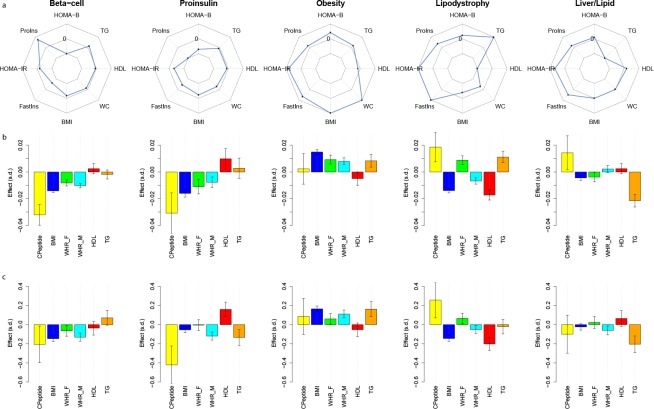
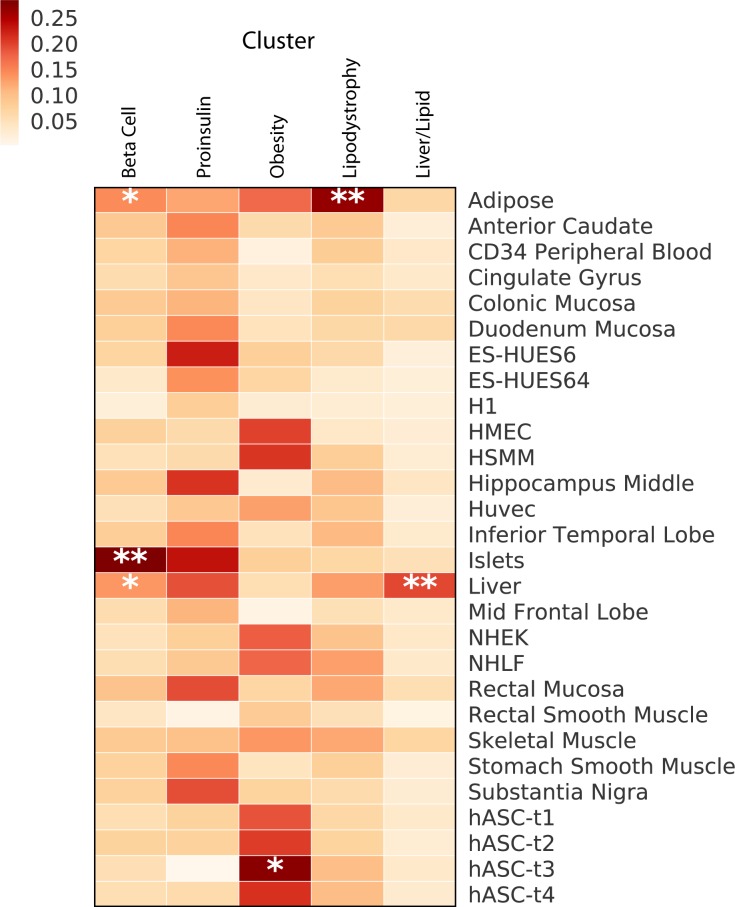
BACKGROUND: Type 2 diabetes (T2D) is a heterogeneous disease for which (1) disease-causing pathways are incompletely understood and (2) subclassification may improve patient management. Unlike other biomarkers, germline genetic markers do not change with disease progression or treatment. In this paper, we test whether a germline genetic approach informed by physiology can be used to deconstruct T2D heterogeneity. First, we aimed to categorize genetic loci into groups representing likely disease mechanistic pathways. Second, we asked whether the novel clusters of genetic loci we identified have any broad clinical consequence, as assessed in four separate subsets of individuals with T2D. METHODS AND FINDINGS: In an effort to identify mechanistic pathways driven by established T2D genetic loci, we applied Bayesian nonnegative matrix factorization (bNMF) clustering to genome-wide association study (GWAS) results for 94 independent T2D genetic variants and 47 diabetes-related traits. We identified five robust clusters of T2D loci and traits, each with distinct tissue-specific enhancer enrichment based on analysis of epigenomic data from 28 cell types. Two clusters contained variant-trait associations indicative of reduced beta cell function, differing from each other by high versus low proinsulin levels. The three other clusters displayed features of insulin resistance: obesity mediated (high body mass index [BMI] and waist circumference [WC]), "lipodystrophy-like" fat distribution (low BMI, adiponectin, and high-density lipoprotein [HDL] cholesterol, and high triglycerides), and disrupted liver lipid metabolism (low triglycerides). Increased cluster genetic risk scores were associated with distinct clinical outcomes, including increased blood pressure, coronary artery disease (CAD), and stroke. We evaluated the potential for clinical impact of these clusters in four studies containing individuals with T2D (Metabolic Syndrome in Men Study [METSIM], N = 487; Ashkenazi, N = 509; Partners Biobank, N = 2,065; UK Biobank [UKBB], N = 14,813). Individuals with T2D in the top genetic risk score decile for each cluster reproducibly exhibited the predicted cluster-associated phenotypes, with approximately 30% of all individuals assigned to just one cluster top decile. Limitations of this study include that the genetic variants used in the cluster analysis were restricted to those associated with T2D in populations of European ancestry. CONCLUSION: Our approach identifies salient T2D genetically anchored and physiologically informed pathways, and supports the use of genetics to deconstruct T2D heterogeneity. Classification of patients by these genetic pathways may offer a step toward genetically informed T2D patient management.
Overview
The claims and statistics of this paper haven’t been checked yet.
Free: it reads the open-access text and checks the first 5 claims that cite a source we can check. Create a free account to check every claim.
Integrity signals
Registry
Cites
Statistics
Figures
Verification
Claims the paper makes
The claims and statistics of this paper haven’t been checked yet.
Free: it reads the open-access text and checks the first 5 claims that cite a source we can check. Create a free account to check every claim.
Claims other papers make about this one
Each is checked against this paper’s own text: does it say what the citing paper says it does?
The cited source says what the claim attributes to it.
In the citing paper
“We previously showed using epigenomic data that this genetic cluster is enriched for enhancers/promoters active in liver tissue (9).”
From Increased genetic risk for β-cell failure is associated with β-cell function decline in people with prediabetes (2024) · cites this paper as [9]
The cited source says what the claim attributes to it.
In the citing paper
“the β-cell pPS included a specific subset of 30 T2D-associated SNPs specifically related to β-cell function (including HNF1A, HNF4A, TCF7L2, and SLC30A8) (9)”
From Increased genetic risk for β-cell failure is associated with β-cell function decline in people with prediabetes (2024) · cites this paper as [9]
Self-check
Percentages, sums and reported differences re-computed from the paper’s own numbers.
The self-check needs the paper’s full text.
Citations
Cites
A global reference for human genetic variation
The 1000 Genomes Project Consortium, authors, C., Auton, A., Abecasis, G. R., Steering committee, Altshuler, D. M., Durbin, R. M., Abecasis, G. R., Bentley, D. R., Chakravarti, A., et al. (2015) · Nature · doi:10.1038/nature15393 · Cited by 18,247
2. Classification and Diagnosis of Diabetes: Standards of Medical Care in Diabetes—2022
American Diabetes Association Professional Practice Committee (2022) · Diabetes Care · doi:10.2337/dc22-s002 · Cited by 4,792
Genetic studies of body mass index yield new insights for obesity biology
Study, T. L. C., Locke, A. E., The ADIPOGen Consortium, The AGEN-BMI Working Group, The CARDIOGRAMplusC4D Consortium, The CKDGen Consortium, The, G. L. G. C., The, I. C. B. P., The MAGIC Investigators, The MuTHER Consortium, et al. (2015) · Nature · doi:10.1038/nature14177 · Cited by 4,534
Self-citationNext-generation genotype imputation service and methods
Das, S., Forer, L., Schönherr, S., Sidore, C., Locke, A. E., Kwong, A., Vrieze, S. I., Chew, E. Y., Levy, S., McGue, M., et al. (2016) · Nature Genetics · doi:10.1038/ng.3656 · Cited by 3,808
Self-citation2. Classification and Diagnosis of Diabetes: Standards of Medical Care in Diabetes—2018
American Diabetes Association (2018) · Diabetes Care · doi:10.2337/dc18-s002 · Cited by 3,159
A reference panel of 64,976 haplotypes for genotype imputation
the Haplotype Reference Consortium (2016) · Nature Genetics · doi:10.1038/ng.3643 · Cited by 2,836
ChromHMM: automating chromatin-state discovery and characterization
Ernst, J., & Kellis, M. (2012) · Nature Methods · doi:10.1038/nmeth.1906 · Cited by 2,475 · cited 1×
“We obtained previously published 13-state ChromHMM [45] chromatin state calls for 28 cell types, excluding cancer cell lines [46].”
MethodComprehensive Molecular Characterization of Muscle-Invasive Bladder Cancer
Robertson, A. G., Kim, J., Al-Ahmadie, H., Bellmunt, J., Guo, G., Cherniack, A. D., Hinoue, T., Laird, P. W., Hoadley, K. A., Akbani, R., et al. (2017) · Cell · doi:10.1016/j.cell.2017.09.007 · Cited by 2,443
Self-citationAhlqvist, E., Storm, P., Käräjämäki, A., Martinell, M., Dorkhan, M., Carlsson, A., Vikman, P., Prasad, R. B., Aly, D. M., Almgren, P., et al. (2018) · The Lancet Diabetes & Endocrinology · doi:10.1016/s2213-8587(18)30051-2 · Cited by 2,335 · cited 5×
“In an attempt to deconstruct the heterogeneity of T2D, recent studies have performed cluster analysis of individuals using serum biomarkers and clinical data to identify T2D subgroups [3,4].”
BackgroundMethodInfluentialNew genetic loci implicated in fasting glucose homeostasis and their impact on type 2 diabetes risk
DIAGRAM Consortium, Dupuis, J., GIANT Consortium, Global BPgen Consortium, Anders Hamsten on behalf of Procardis Consortium, the MAGIC investigators, Langenberg, C., Prokopenko, I., Saxena, R., Soranzo, N., et al. (2010) · Nature Genetics · doi:10.1038/ng.520 · Cited by 2,166
Self-citation
Cited by
Items 101–200 of 544
Zhuang, P., Liu, X., Li, Y., Li, H., Zhang, L., Wan, X., Wu, Y., Zhang, Y., & Jiao, J. (2022) · Diabetes Care · doi:10.2337/dc21-2048 · Cited by 54
Harnessing heterogeneity in type 2 diabetes mellitus
Philipson, L. H. (2019) · Nature Reviews Endocrinology · doi:10.1038/s41574-019-0308-1 · Cited by 54
Grieco, G. E., Besharat, Z. M., Licata, G., Fignani, D., Brusco, N., Nigi, L., Formichi, C., Pò, A., Sabato, C., Dardano, A., et al. (2022) · Translational research · doi:10.1016/j.trsl.2022.03.008 · Cited by 45
Loci for insulin processing and secretion provide insight into type 2 diabetes risk
Broadaway, K. A., Yin, X., Williamson, A., Parsons, V. A., Wilson, E. P., Moxley, A. H., Vadlamudi, S., Varshney, A., Jackson, A., Ahuja, V., et al. (2023) · The American Journal of Human Genetics · doi:10.1016/j.ajhg.2023.01.002 · Cited by 50
Self-citationSingh, S., Kriti, M., Anamika, K. S., Sarma, D. K., Verma, V., Nagpal, R., Mohania, D., Tiwari, R. R., & Kumar, M. (2024) · Metabolism Open · doi:10.1016/j.metop.2024.100287 · Cited by 64
“More than 100 ge-netic loci linked to an elevated risk of T2D have been identified and reported through Genome-wide association studies (GWAS) [73].”
BackgroundMerino, J., Guasch‐Ferré, M., Li, J., Chung, W., Hu, Y., Ma, B., Li, Y., Kang, J. H., Kraft, P. L., Liang, L., et al. (2022) · PLoS Medicine · doi:10.1371/journal.pmed.1003972 · Cited by 59
“The significance of pathway-specific polygenic scores has been shown in previous studies indicating that individuals enriched for genetic variants defining each of the intermediate diabetogenic processes exhibited the predicted score–associated phenotypes [13,23].”
BackgroundMethodResultInfluentialSelf-citationElksnis, A., Martinell, M., Eriksson, O., & Espes, D. (2019) · Frontiers in Physiology · doi:10.3389/fphys.2019.00107 · Cited by 48
“Moreover, AGEs such as methylglyoxal are highly abundant in the standard western diet (Uribarri et al., 2007), rendering them as both endogenous and exogenous contributors to oxidative stress.”
Identifying cross-disease components of genetic risk across hospital data in the UK Biobank
Cortés, A., Albers, P. K., Dendrou, C. A., Fugger, L. H., & McVean, G. (2019) · Nature Genetics · doi:10.1038/s41588-019-0550-4 · Cited by 42
Do gene–environment interactions have implications for the precision prevention of type 2 diabetes?
Sørensen, T. I. A., Metz, S., & Kilpeläinen, T. O. (2022) · Diabetologia · doi:10.1007/s00125-021-05639-5 · Cited by 52
“Combining the genetic loci linked to specific mechanistic clusters may allow us to construct partitioned polygenic scores that identify individuals with a high genetic predisposition for certain disease mechanisms, possibly reflecting different aetiological subtypes of type 2 diabetes [11].”
BackgroundLaber, S., Strobel, S., Mercader, J. M., Dashti, H., dos Santos, F. R. C., Kubitz, P., Jackson, M., Ainbinder, A., Honecker, J., Agrawal, S., et al. (2023) · Cell Genomics · doi:10.1016/j.xgen.2023.100346 · Cited by 41
“Lipodystrophy-specific PRS consists of 20 T2D-associated loci contributing to polygenic risk for a lipodystrophy-like phenotype.(59) y axis: weights of individual loci; x axis: effect size of individual loci contributing to polygenic risk for a lipodystrophy-like phenotype.”
BackgroundSelf-citationReverse GWAS: Using genetics to identify and model phenotypic subtypes
Dahl, A. W., Cai, N., Ko, A., Laakso, M., Pajukanta, P., Flint, J., & Zaitlen, N. (2019) · PLoS Genetics · doi:10.1371/journal.pgen.1008009 · Cited by 43
“Nonethe-less, we do observe that IID GxEMM increases the estimated heritability for preT2D and CHD, which is consistent with the existence of subtype-specific heritability.”
BackgroundInfluentialSelf-citationVincent, E. E., & Yaghootkar, H. (2020) · Diabetologia · doi:10.1007/s00125-020-05228-y · Cited by 45
Dwibedi, C., Ekström, O., Brandt, J., Adiels, M., Franzén, S., Abrahamsson, B., & Rosengren, A. H. (2024) · Nature Metabolism · doi:10.1038/s42255-023-00943-3 · Cited by 40
Glunk, V., Laber, S., Sinnott-Armstrong, N., Sobreira, D. R., Strobel, S., Batista, T. M., Kubitz, P., Moud, B. N., Ebert, H., Huang, Y., et al. (2023) · Nature Metabolism · doi:10.1038/s42255-023-00807-w · Cited by 47
Szczerbiński, Ł., & Florez, J. C. (2023) · The Lancet Diabetes & Endocrinology · doi:10.1016/s2213-8587(23)00232-2 · Cited by 45
Self-citationZhu, J., Pujol‐Gualdo, N., Wittemans, L. B. L., Lindgren, C. M., Laisk, T., Hirschhorn, J. N., & Chan, Y.-M. (2021) · The Journal of Clinical Endocrinology & Metabolism · doi:10.1210/clinem/dgab838 · Cited by 47
“Type 2 diabetes mellitus was defined based on a previously reported composite algorithm of self-report, ICD-9/10 diagnosis codes from hospitalization records, medication use, and age at diagnosis (13,14).”
MethodCardoso, P., Young, K., Nair, A. T. N., Hopkins, R., McGovern, A. P., Haider, E., Karunaratne, P., Donnelly, L. A., Mateen, B. A., Sattar, N. A., et al. (2024) · Diabetologia · doi:10.1007/s00125-024-06099-3 · Cited by 43
Diabetes: Is There a Future for Pharmacogenomics Guided Treatment?
Pearson, E. R. (2019) · Clinical Pharmacology & Therapeutics · doi:10.1002/cpt.1484 · Cited by 42
Wang, J., Liu, J., Gurung, R. L., Liu, S., Lee, J., Yiamunaa, M., Ang, K., Shao, Y. M., Tang, J. I.-S., Benke, P. I., et al. (2022) · Diabetologia · doi:10.1007/s00125-022-05741-2 · Cited by 48
“showing that patients with type 2 diabetes who have a high number of beta cell dysfunction-related genetic loci have a reduced fasting C-peptide level [3].”
BackgroundGenetic architecture and biology of youth-onset type 2 diabetes
Kwak, S. H., Srinivasan, S., Chen, L., Todd, J. N., Mercader, J. M., Jensen, E. T., Divers, J., Mottl, A. K., Pihoker, C., Gandica, R., et al. (2024) · Nature Metabolism · doi:10.1038/s42255-023-00970-0 · Cited by 45
“…of causal variant frequency is probably far less than that of patient clustering on the basis of observed phenotypes 10 or genetic disease mechanism 24 , but this genetic model for youth-onset T2D may help to better understand and categorize not only youth-onset but adult-onset and monogenic…”
BackgroundSelf-citationVolek, J. S., Yancy, W. S., Gower, B. A., Phinney, S. D., Slavin, J. L., Koutnik, A. P., Hurn, M., Spinner, J. R., Cucuzzella, M. T., & Hecht, F. M. (2024) · Frontiers in Nutrition · doi:10.3389/fnut.2024.1376098 · Cited by 46
“Type 2 diabetes is a heterogeneous disease for which there are several phenotypes that can help inform patient management (63).”
BackgroundGenetic Determinants of Glycemic Traits and the Risk of Gestational Diabetes Mellitus
Powe, C. E., Nodzenski, M., Talbot, O., Allard, C., Briggs, C., Leya, M. V., Perron, P., Bouchard, L., Florez, J. C., Scholtens, D. M., et al. (2018) · Diabetes · doi:10.2337/db18-0203 · Cited by 38
“6) 176 (15) 53 (26) Gestational age at OGTT (weeks) 28.”
Self-citationGenetic Influences on Disease Subtypes
Dahl, A. W., & Zaitlen, N. (2020) · Annual Review of Genomics and Human Genetics · doi:10.1146/annurev-genom-120319-095026 · Cited by 42
“It is also possible to calculate each person’s genetic risk per pathway post hoc, though these scores will not generally inherit a subtype structure even when SNP effects have subtypes (133).”
BackgroundMethodDissection of type 2 diabetes: a genetic perspective
Bonnefond, A., Florez, J. C., Loos, R. J. F., & Froguel, P. (2025) · The Lancet Diabetes & Endocrinology · doi:10.1016/s2213-8587(24)00339-5 · Cited by 54
Self-citationTorres, J., Abdalla, M., Payne, A., Fernandez-Tajes, J. J., Thurner, M., Nylander, V., Gloyn, A. L., Mahajan, A., & McCarthy, M. I. (2020) · The American Journal of Human Genetics · doi:10.1016/j.ajhg.2020.10.009 · Cited by 39
Gormley, M., Dudding, T., Thomas, S. J., Tyrrell, J., Ness, A., Pring, M., Legge, D., Smith, G. D., Richmond, R. C., Vincent, E. E., et al. (2023) · eLife · doi:10.7554/elife.82674 · Cited by 37
Defining and Classifying New Subgroups of Diabetes
Balasubramanyam, A. (2020) · Annual Review of Medicine · doi:10.1146/annurev-med-050219-034524 · Cited by 41
The “Common Soil Hypothesis” Revisited—Risk Factors for Type 2 Diabetes and Cardiovascular Disease
Silva, L. F., Vangipurapu, J., & Laakso, M. (2021) · Metabolites · doi:10.3390/metabo11100691 · Cited by 38
“Importantly, genetic risk scores in these clusters were associated with different clinical outcomes, including CAD, stroke, and hypertension [103].”
BackgroundMethodSelf-citationA Century-long Journey From the Discovery of Insulin to the Implantation of Stem Cell–derived Islets
Ramzy, A., Belmonte, P. J., Braam, M. J. S., Ida, S., Wilts, E. M., Levings, M. K., Rezania, A., & Kieffer, T. J. (2023) · Endocrine Reviews · doi:10.1210/endrev/bnac021 · Cited by 34
Nguyen‐Tu, M., Martínez-Sánchez, A., Leclerc, I., Rutter, G. A., & Xavier, G. D. S. (2020) · Diabetologia · doi:10.1007/s00125-020-05292-4 · Cited by 44
Risk Assessment for Hip and Knee Osteoarthritis Using Polygenic Risk Scores
Sedaghati-khayat, B., Boer, C. G., Runhaar, J., Bierma‐Zeinstra, S., Broer, L., Ikram, M. A., Zeggini, E., Uitterlinden, A. G., van Rooij, J., & van Meurs, J. B. J. (2022) · Arthritis & Rheumatology · doi:10.1002/art.42246 · Cited by 40
“However, we need to consider that identifying pathways for variants does not have a standard practice (28), and a lack of standardized methodology is observed in this area.”
BackgroundBig data and machine learning to tackle diabetes management
Pina, A. F., Meneses, M. J., Sousa‐Lima, I., Henriques, R., Raposo, J. F., & Macedo, M. P. (2022) · European Journal of Clinical Investigation · doi:10.1111/eci.13890 · Cited by 40
Mannose is an insulin-regulated metabolite reflecting whole-body insulin sensitivity in man
Ferrannini, E., Bokarewa, M. I., Brembeck, P., Baboota, R. K., Hedjazifar, S., Andersson, K., Baldi, S., Campi, B., Muscelli, E., Saba, A., et al. (2019) · Metabolism · doi:10.1016/j.metabol.2019.153974 · Cited by 35
Cefalu, W. T., Andersen, D. K., Arreaza-Rubín, G., Pin, C. L., Sato, S. M., Verchere, C. B., Woo, M., & Rosenblum, N. D. (2021) · Diabetes Care · doi:10.2337/dci21-0051 · Cited by 40
Loesch, D. P., Garg, M., Matelska, D., Vitsios, D., Jiang, X., Ritchie, S. C., Sun, B. B., Runz, H., Whelan, C. D., Holman, R. R., et al. (2025) · Nature Communications · doi:10.1038/s41467-025-56695-z · Cited by 41
Self-citationCarrat, G., Haythorne, E., Tomás, A., Haataja, L., Müller, A., Arvan, P., Piunti, A., Cheng, K., Huang, M., Pullen, T. J., et al. (2020) · Molecular Metabolism · doi:10.1016/j.molmet.2020.101015 · Cited by 37
“Our earlier demonstration [10] that STARD10 is the likely causal gene at the T2D risk locus on chromosome 11q13 has emphasised the probable importance of lipid transfer for the normal physiology of the pancreatic b-cell.”
BackgroundTechnological readiness and implementation of genomic‐driven precision medicine for complex diseases
Franks, P. W., Melén, E., Friedman, M., Sundström, J., Kockum, I. S., Klareskog, L., Almqvist, C., Bergen, S. E., Czene, K., Hägg, S., et al. (2021) · Journal of Internal Medicine · doi:10.1111/joim.13330 · Cited by 53
Guo, Q., Gao, Z., Zhao, L., Wang, H., Luo, Z., Vandeputte, D., He, L., Li, M., Di, S., Liu, Y., et al. (2023) · Diabetes · doi:10.2337/db23-0447 · Cited by 45
Diabetes mellitus and the key role of endoplasmic reticulum stress in pancreatic β cells
Lytrivi, M., Tong, Y. A., Virgilio, E., Yi, X., & Cnop, M. (2025) · Nature Reviews Endocrinology · doi:10.1038/s41574-025-01129-5 · Cited by 45
“Clusters of T2DM subtypes or T2DM phenotypes have been proposed, based on either clinical data or genetic variants 9–12 , but their relationship to specific aetiological processes remains uncertain.”
Godoy‐Matos, A. F., Valério, C. M., Júnior, W. S. D. S., Neto, J. M. D. A., Sposito, A. C., & Suassuna, J. H. R. (2025) · Diabetology & Metabolic Syndrome · doi:10.1186/s13098-025-01796-4 · Cited by 50
“Some studies have introduced a new concept for sub-phenotyping adult-onset diabetes, both clinically and genetically, beyond a binary classification of type 1 diabetes (T1D) and T2D [116, 117].”
Davies, M. J., Lim, S. K., Slater, T., Goldney, J., Philis‐Tsimikas, A., Franco, D. R., Lamptey, R., Yates, T. E., Tankova, T. I., & Lingvay, I. (2026) · Nature Reviews Disease Primers · doi:10.1038/s41572-026-00687-w · Cited by 64
Chasman, D. I., Giulianini, F., Demler, O., & Udler, M. S. (2020) · The American Journal of Human Genetics · doi:10.1016/j.ajhg.2020.03.011 · Cited by 34
Self-citationKhan, S. R., Manialawy, Y. M., Obersterescu, A., Cox, B., Gunderson, E. P., & Wheeler, M. B. (2020) · iScience · doi:10.1016/j.isci.2020.101566 · Cited by 39
Multitrait GWAS to connect disease variants and biological mechanisms
Julienne, H., Laville, V., McCaw, Z. R., He, Z., Guillemot, V., Lasry, C., Ziyatdinov, A., Nerin, C., Vaysse, A., Lechat, P., et al. (2021) · PLoS Genetics · doi:10.1371/journal.pgen.1009713 · Cited by 48
“Finally, in addition to the potential ability to detect new variants, there is increasing interest in using GWAS multitrait association to decipher inter- and intra-phenotype genetic architecture[31, 32].”
Wieder, N. W., Coraor, J., Kim, C., Sidhom, E.-H., Brown, M., Marshall, J. L., Arevalo, C., Dvela‐Levitt, M., Kost‐Alimova, M., Sieber, J., et al. (2023) · Cell Metabolism · doi:10.1016/j.cmet.2023.03.018 · Cited by 37
Self-citationKen, S., Hatzikotoulas, K., Southam, L., Taylor, H. J., Yin, X., Lorenz, K., Mandla, R., Huerta‐Chagoya, A., Rayner, N. W., Bocher, O., et al. (2023) · Yearbook of pediatric endocrinology · doi:10.1530/ey.20.13.6 · Cited by 38
Precision Medicine in Type 2 Diabetes Mellitus: Utility and Limitations
Galiero, R., Caturano, A., Vetrano, E., Monda, M., Marfella, R., Sardu, C., Salvatore, T., Rinaldi, L., & Sasso, F. C. (2023) · Diabetes Metabolic Syndrome and Obesity · doi:10.2147/dmso.s390752 · Cited by 42
Plasma Metabolomics to Identify and Stratify Patients With Impaired Glucose Tolerance
Wildberg, C., Masuch, A., Budde, K., Kastenmüller, G., Artati, A., Rathmann, W., Adamski, J., Kocher, T., Völzke, H., Nauck, M. A., et al. (2019) · The Journal of Clinical Endocrinology & Metabolism · doi:10.1210/jc.2019-01104 · Cited by 33
Dashti, H. S., Hivert, M., Levy, D. E., McCurley, J. L., Saxena, R., & Thorndike, A. N. (2020) · PLoS Medicine · doi:10.1371/journal.pmed.1003219 · Cited by 32
“Although these preliminary findings will need to be confirmed in larger samples, our results may have implications for tailoring interventions for subgroups of individuals, and insights could be leveraged to unravel and classify subtypes of BMI genetic risk, as has been conducted for other diseases such as diabetes [4…”
ResultTao, R., Yu, X., Lu, J., Shen, Y., Lu, W., Zhu, W., Bao, Y., Li, H., & Zhou, J. (2021) · BMJ Open Diabetes Research & Care · doi:10.1136/bmjdrc-2020-001869 · Cited by 39
Noordam, R., Läll, K., Smit, R. A. J., Laisk, T., Metspalu, A., Esko, T., Milani, L. A., Loos, R. J. F., Mägi, R., van Dijk, K. W., et al. (2021) · Diabetes · doi:10.2337/db20-0602 · Cited by 37
“The genetic variants previously identified in genome-wide association studies (GWAS) on T2D (14) might thus cause different T2D subphenotypes characterized by differences based on the age of diagnosed, as has been previously proposed (3).”
BackgroundA roadmap to achieve pharmacological precision medicine in diabetes
Florez, J. C., & Pearson, E. R. (2022) · Diabetologia · doi:10.1007/s00125-022-05732-3 · Cited by 30
“It is possible that such an assessment may indicate a most likely or predominant mechanism in a fraction of the cases, currently estimated in 25–30% of people with type 2 diabetes [7]; however, the majority of cases may have type 2 diabetes caused by a constellation of factors that could make it difficult to place ind…”
BackgroundSelf-citationBancks, M. P., Casanova, R., Gregg, E. W., & Bertoni, A. G. (2019) · Diabetes Research and Clinical Practice · doi:10.1016/j.diabres.2019.107915 · Cited by 28
Gaining insight into metabolic diseases from human genetic discoveries
Claussnitzer, M., & Suszták, K. (2021) · Trends in Genetics · doi:10.1016/j.tig.2021.07.005 · Cited by 30
REDONDO, M. J., & Balasubramanyam, A. (2021) · The Journal of Clinical Endocrinology & Metabolism · doi:10.1210/clinem/dgab545 · Cited by 35
Lp(a) and the Risk for Cardiovascular Disease: Focus on the Lp(a) Paradox in Diabetes Mellitus
Kostner, K., & Kostner, G. M. (2022) · International Journal of Molecular Sciences · doi:10.3390/ijms23073584 · Cited by 31
“Based on contemporary genetic methods, close to 100 polymorphisms and mutations relevant for the etiology of T2DM have been identified, and this sheds some light on the complexity of this disease [37,38].”
BackgroundIdentifying obesity subtypes: A review of studies utilising clinical biomarkers and genetic data
Abraham, A., & Yaghootkar, H. (2023) · Diabetic Medicine · doi:10.1111/dme.15226 · Cited by 43
“Such approaches, which have found success in conditions like type 2 diabetes, leveraging genetic variants and clinical traits, 11,12 are now under exploration for obesity.”
BackgroundPancreatic Islet Transcriptional Enhancers and Diabetes
Cebola, I. (2019) · Current Diabetes Reports · doi:10.1007/s11892-019-1230-6 · Cited by 28
Ghatan, S., van Rooij, J., van Hoek, M., Boer, C. G., Felix, J. F., Kavousi, M., Jaddoe, V. W. V., Sijbrands, E. J. G., Medina‐Gómez, C., Rivadeneira, F., et al. (2024) · Genome Medicine · doi:10.1186/s13073-023-01255-7 · Cited by 32
“Recent studies using this approach identified five to six clusters representing biological pathways of T2D that associated with specific clinical measures and outcomes in individuals with T2D [4, 9–11].”
BackgroundMethodResultSynergizing Mouse and Human Studies to Understand the Heterogeneity of Obesity
Gordon‐Larsen, P., French, J. E., Moustaïd‐Moussa, N., Voruganti, V. S., Mayer‐Davis, E. J., Bizon, C., Cheng, Z., Stewart, D. A., Easterbrook, J. W., & Shaikh, S. R. (2021) · Advances in Nutrition · doi:10.1093/advances/nmab040 · Cited by 32
“To further exemplify, in another study, GWAS results were clustered using Bayesian non-negative matrix factorization for 94 type 2 diabetic genetic variants and 47 type 2 diabetes traits (108).”
MethodLi, P., & Chen, W. (2020) · The Journal of Clinical Endocrinology & Metabolism · doi:10.1210/clinem/dgaa628 · Cited by 31
Wang, F., Zheng, R., Li, L., Xu, M., Lu, J., Zhao, Z., Li, M., Wang, T., Wang, S., Bi, Y., et al. (2022) · Frontiers in Endocrinology · doi:10.3389/fendo.2021.802114 · Cited by 32
Shared components of heritability across genetically correlated traits
Ballard, J. L., & O’Connor, L. J. (2022) · The American Journal of Human Genetics · doi:10.1016/j.ajhg.2022.04.003 · Cited by 23
Mendelian randomization supports the causal role of fasting glucose on periodontitis
Wang, Y., Chu, T., Gong, Y., Li, S., Wu, L., Jin, L., Hu, R., & Deng, H. (2022) · Frontiers in Endocrinology · doi:10.3389/fendo.2022.860274 · Cited by 26
“The null association of T2D with periodontitis could be explained by the heterogenicity of T2D associated genetic loci (43).”
BackgroundRelationship of Fat Mass Ratio, a Biomarker for Lipodystrophy, With Cardiometabolic Traits
Agrawal, S., Luan, J., Cummings, B. B., Weiss, E. J., Wareham, N. J., & Khera, A. V. (2024) · Diabetes · doi:10.2337/db23-0575 · Cited by 30
New Insights into the Genetics of Latent Autoimmune Diabetes in Adults
Andersen, M. K. (2020) · Current Diabetes Reports · doi:10.1007/s11892-020-01330-y · Cited by 31
The Need for Precision Medicine to be Applied to Diabetes
Klonoff, D. C., Florez, J. C., German, M. S., & Fleming, A. (2020) · Journal of Diabetes Science and Technology · doi:10.1177/1932296819894295 · Cited by 26
“Using the first approach, in 2018, Udler et al reported a cluster analysis of 14,183 subjects with 94 T2D genetic variants and 47 diabetes-related metabolic traits from publicly available genome-wide association study (GWAS) datasets and biobanks.(17) They identified five robust clusters of type 2 diabetes variants, w…”
BackgroundMethodSelf-citationPolycystic Ovary Syndrome Physiologic Pathways Implicated Through Clustering of Genetic Loci
Stamou, M. I., Smith, K. T., Kim, H., Balasubramanian, R., Gray, K. J., & Udler, M. S. (2023) · The Journal of Clinical Endocrinology & Metabolism · doi:10.1210/clinem/dgad664 · Cited by 28
Self-citationGenetics of Type 2 Diabetes: Opportunities for Precision Medicine
Kim, D. S., Gloyn, A. L., & Knowles, J. W. (2021) · Journal of the American College of Cardiology · doi:10.1016/j.jacc.2021.03.346 · Cited by 27
Barroso, I. (2021) · Diabetologia · doi:10.1007/s00125-021-05575-4 · Cited by 23
Risk of cardiovascular events associated with pathophysiological phenotypes of type 2 diabetes
Stidsen, J. V., Christensen, D. H., Henriksen, J. E., Højlund, K., Olsen, M. H., Thomsen, R. W., Christensen, L. B., Nielsen, J. S., Olesen, T. B., & Beck‐Nielsen, H. (2022) · European Journal of Endocrinology · doi:10.1530/eje-22-0020 · Cited by 24
Polygenic scores of diabetes-related traits in subgroups of type 2 diabetes in India: a cohort study
Yajnik, C. S., Wagh, R. S. H., Kunte, P. S., Asplund, O., Ahlqvist, E., Bhat, D., Shukla, S., & Prasad, R. B. (2023) · The Lancet Regional Health - Southeast Asia · doi:10.1016/j.lansea.2023.100182 · Cited by 30
Jiang, X., Zhang, M. J., Zhang, Y., Durvasula, A., Inouye, M., Holmes, C. C., Price, A. L., & McVean, G. (2023) · Nature Genetics · doi:10.1038/s41588-023-01522-8 · Cited by 28
“35 and the severe insulin-deficient diabetes subtype described in ref.”
BackgroundZhang, Z., Jung, J., Kim, A., Suboc, N., Gazal, S., & Mancuso, N. (2023) · The American Journal of Human Genetics · doi:10.1016/j.ajhg.2023.09.015 · Cited by 23
Diabetes and obesity: leveraging heterogeneity for precision medicine
Franks, P. W., & Sargent, J. L. (2024) · European Heart Journal · doi:10.1093/eurheartj/ehae746 · Cited by 28
Gloudemans, M. J., Balliu, B., Nachun, D. C., Schnurr, T. M., Durrant, M. G., Ingelsson, E., Wabitsch, M., Quertermous, T., Montgomery, S. B., Knowles, J. W., et al. (2022) · Genome Medicine · doi:10.1186/s13073-022-01036-8 · Cited by 26
“3a), two genes assigned previously to a lipodystrophy cluster [14] that has been shown to overlap with IR biology.”
InfluentialAshenhurst, J. R., Sazonova, O. V., Svrchek, O., Detweiler, S., Kita, R., Babalola, L., McIntyre, M. H., Aslibekyan, S. W., Fontanillas, P., Shringarpure, S., et al. (2022) · Frontiers in Genetics · doi:10.3389/fgene.2022.871260 · Cited by 25
“Further work may identify sub-scales within a T2D PGS that associate with specific biological pathways or systems, illuminating specific causes of genetic risk and complications (Udler et al., 2018; Tremblay et al., 2021).”
BackgroundRecent advancements on novel approaches of insulin delivery
Karmakar, S., Bhowmik, M., Laha, B., & Manna, S. (2023) · Medicine in Novel Technology and Devices · doi:10.1016/j.medntd.2023.100253 · Cited by 31
Prystupa, K., Delgado, G. E., Moissl, A. P., Kleber, M. E., Birkenfeld, A. L., Heni, M., Fritsche, A., März, W., & Wagner, R. J. (2023) · Cardiovascular Diabetology · doi:10.1186/s12933-023-01923-3 · Cited by 28
“They can also link known disease features to physiological mechanisms [18].”
BackgroundTang, D., Freudenberg, J., & Dahl, A. W. (2023) · The American Journal of Human Genetics · doi:10.1016/j.ajhg.2023.10.002 · Cited by 28
Lessons and Applications of Omics Research in Diabetes Epidemiology
Yu, G., Tam, H. C. H., Huang, C., Shi, M., Lim, C. K. P., Chan, J. C. N., & Ronald, C. W. (2024) · Current Diabetes Reports · doi:10.1007/s11892-024-01533-7 · Cited by 24
“These clusters/partitioned PRSs showed distinct patterns of associations with metabolic traits and clinical outcomes related to T2D [65–67], suggesting the great potential of process-specific PRS to provide mechanistic insights into the heterogeneity of T2D and advance precision medicine in…”
BackgroundMethodGenetic Subtypes of Prediabetes, Healthy Lifestyle, and Risk of Type 2 Diabetes
Li, Y., Chen, G., Moon, J., Arthur, R., Sotres‐Alvarez, D., Daviglus, M. L., Pirzada, A., Mattei, J., Perreira, K. M., Rotter, J. I., et al. (2024) · Diabetes · doi:10.2337/db23-0699 · Cited by 23
Yu, G., Tam, C. H. T., Lim, C. K. P., Shi, M., Lau, E. S. H., Ozaki, R., Lee, H. M., Ng, A. C. W., Hou, Y. J., Fan, B., et al. (2024) · Diabetologia · doi:10.1007/s00125-024-06309-y · Cited by 27
“Udler and colleagues [5, 7] implemented a ‘soft-clustering’ approach (i.e. a single SNP could belong to multiple clusters), identifying several type 2 diabetes genetic clusters in the European population.”
Diabetes mellitus polygenic risk scores: heterogeneity and clinical translation
Ortega, H. I., Udler, M. S., Gloyn, A. L., & Sharp, S. A. (2025) · Nature Reviews Endocrinology · doi:10.1038/s41574-025-01132-w · Cited by 32
“In particular, both recapitulate clusters previously identified in the 2018 study mentioned earlier in this section 111 (β-cell clusters with inverse effects on proinsulin and clusters related to lipodystrophy, obesity, and liver metabolism and lipid metabolism) (Fig.”
InfluentialSelf-citationBeyond Glucose—Rethinking Prediabetes for Precision Prevention
Wagner, R. J., Selvin, E., Sehgal, R., Prystupa, K., Misra, S., Fritsche, A., & Heni, M. (2025) · Diabetes Care · doi:10.2337/dci25-0054 · Cited by 31
Powe, C. E., Udler, M. S., Hsu, S. C., Allard, C., Kuang, A., Manning, A. K., Perron, P., Bouchard, L., Lowe, W. L., Scholtens, D., et al. (2020) · Diabetes · doi:10.2337/db20-0772 · Cited by 22
“(12) to cluster traits and variants with Bayesian nonnegative matrix factorization (bNMF) were previously described in detail.”
BackgroundMethodInfluentialSelf-citationCefalu, W. T., Andersen, D. K., Arreaza-Rubín, G., Pin, C. L., Sato, S. M., Verchere, C. B., Woo, M., & Rosenblum, N. D. (2021) · Diabetes · doi:10.2337/db21-0777 · Cited by 22
Grant, A. J., Gill, D., Kirk, P., & Burgess, S. (2022) · PLoS Genetics · doi:10.1371/journal.pgen.1009975 · Cited by 23
Verma, M., Loh, N. Y., Sabaratnam, R., Vasan, S. K., van Dam, A. D., Todorčević, M., Neville, M., Toledo, E. M., Karpe, F., & Christodoulides, C. (2022) · Metabolism · doi:10.1016/j.metabol.2022.155240 · Cited by 27
Harnessing the power of proteomics in precision diabetes medicine
Kurgan, N., Larsen, J. K., & Deshmukh, A. S. (2024) · Diabetologia · doi:10.1007/s00125-024-06097-5 · Cited by 24
“While recent advances in PDM, such as disease classification, have relied mainly on genetics [11] or clinical features [11, 12], deep molecular profiling [13–19], including transcriptomics, proteomics and metabolomics, can improve these efforts (Fig.”
A Research Roadmap to Address the Heterogeneity of Diabetes and Advance Precision Medicine
Franks, P. W., Rich, S. S., Linder, B. L., Zaghloul, N. A., & Cefalu, W. T. (2024) · The Journal of Clinical Endocrinology & Metabolism · doi:10.1210/clinem/dgae844 · Cited by 23
Kulyté, A., Aman, A., Strawbridge, R. J., Arner, P., & Dahlman, I. A. (2022) · Diabetes · doi:10.2337/db21-0804 · Cited by 21
“The analyses presented here complement previous -omics analyses to identify type 2 diabetes GWAS signals with impact in adipose tissue (41,42).”
Pagel, K. A., Chu, H., Ramola, R., Guerrero, R. F., Chung, J. M., Parry, S. I., Reddy, U. M., Silver, R. M., Steller, J. G., Yee, L. M., et al. (2022) · JAMA Network Open · doi:10.1001/jamanetworkopen.2022.29158 · Cited by 23
Burren, O. S., Reales, G., Wong, L., Bowes, J., Lee, J. C., Barton, A. C., Lyons, P. A., Smith, K. G. C., Thomson, W., Kirk, P., et al. (2020) · Genome Medicine · doi:10.1186/s13073-020-00797-4 · Cited by 20
“Alternatively, decomposition of estimated effects at 94 T2D risk variants, together with their effects on 46 metabolic traits, was used to cluster variants into 5 groups, three focused on insulin resistance and two on beta cell function [56].”
BackgroundBrain insulin signaling and cerebrovascular disease in human postmortem brain
Arvanitakis, Z., Capuano, A. W., Wang, H.-Y., Schneider, J. A., Kapasi, A., Bennett, D. A., Ahima, R. S., & Arnold, S. E. (2021) · Acta Neuropathologica Communications · doi:10.1186/s40478-021-01176-9 · Cited by 22
“Insulin resistance is an early and characteristic feature of the most common types of diabetes, and specifically type 2 diabetes [32] and has been extensively studied in adipose, muscle, and other tissues.”
BackgroundMadsen, A. L., Bonàs‐Guarch, S., Gheibi, S., Prasad, R. B., Vangipurapu, J., Ahuja, V., Cataldo, L. R., Dwivedi, O. P., Hatem, G., Atla, G., et al. (2024) · Nature Metabolism · doi:10.1038/s42255-024-01140-6 · Cited by 22
“Previous studies have expanded the catalogue of BCF genetic associations through candidate gene studies 3–7 , large-scale genome-wide association studies (GWAS) of fasting BCF 8,9 or functional islet studies on T2D risk variants 10–14 .”
Self-citationPolycystic Ovary Syndrome Susceptibility Loci Inform Disease Etiological Heterogeneity
Zhang, Y., Movva, V. C., Williams, M. S., & Lee, M. T. M. (2021) · Journal of Clinical Medicine · doi:10.3390/jcm10122688 · Cited by 24
“Some epidemiologic studies have reported increased risk for T2DM, CAD and breast cancer in women with PCOS.”
BackgroundMethodInfluentialZhu, X., Zhu, L., Wang, H., Cooper, R., & Chakravarti, A. (2022) · Genetic Epidemiology · doi:10.1002/gepi.22440 · Cited by 23
Li, J. H., Brenner, L. N., Kaur, V., Figueroa, K., Schroeder, P. H., Huerta‐Chagoya, A., MaGiC Investigators, Chen, J., Spracklen, C. N., Marenne, G., et al. (2023) · Diabetologia · doi:10.1007/s00125-023-05922-7 · Cited by 20
Kim, N. Y., Lee, H., Kim, S. H., Kim, Y., Lee, H., Lee, J., Kwak, S. H., & Lee, S. (2024) · Scientific Reports · doi:10.1038/s41598-024-55313-0 · Cited by 27
“To demonstrate the association between T2DM PRS and diabetic complications, we need to further understand the biological pathway or systems that can clarify the specific cause of genetic risk and T2DM complications 25,26 .”
Metadata
- Authors
- Udler, M. S., Kim, J., von Grotthuss, M., Bonàs-Guarch, S., Cole, J. B., Chiou, J., ISGC, C. D. A. O. B. O. M. A. T., Boehnke, M., Laakso, M., Atzmon, G., Glaser, B., Mercader, J. M., Gaulton, K., Flannick, J., Getz, G., & Florez, J. C.
- Affiliations
- Broad Institute (US)
- University of California San Diego (US)
- University of Eastern Finland (FI)
- Albert Einstein College of Medicine (US)
- ORCID
- Venue
- PLOS Medicine
- Publisher
- Public Library of Science (PLoS)
- Published
- 2018-09-21
- Volume
- 15
- Issue
- 9
- Pages
- e1002654
- ISSN
- 1549-1277 (ISSN-L)
- 1549-1676
- PMC
- PMC6150463
- OpenAlex
- W2890555481
- Cited by
- 542
- References
- 75
- Citations by year
- 2026: 59 · 2025: 60 · 2024: 71 · 2023: 89 · 2022: 88 · 2021: 65 · 2020: 72 · 2019: 37 · 2018: 1
- FWCI
- 26.83
- Type
- journal article
- Language
- en
- Open access
- gold
- doi.org
- Licence
- Locations
- PLoS Medicine (publishedVersion, cc-by)
- Europe PMC (PubMed Central) (publishedVersion, cc-by)
- PubMed Central (publishedVersion, cc-by)
- PubMed (publishedVersion)
- UEF eRepo (University of Eastern Finland) (submittedVersion, cc-by)
- DOAJ (DOAJ: Directory of Open Access Journals) (submittedVersion, cc-by-sa)
- Figshare (submittedVersion, cc-by)
- Funders
- National Institute of Diabetes and Digestive and Kidney Diseases (1K23DK114551-01, DK062370)
- National Institute of Neurological Disorders and Stroke (1K23NS086873-04)
- Topics
- Life Sciences › Biochemistry, Genetics and Molecular Biology › Genetics › Genetic Associations and Epidemiology
- Life Sciences › Biochemistry, Genetics and Molecular Biology › Genetics › Diabetes and associated disorders
- Life Sciences › Biochemistry, Genetics and Molecular Biology › Genetics › Genetic Mapping and Diversity in Plants and Animals
- Keywords
- type 2 diabetes, genetic loci, disease heterogeneity, diabetes subtypes, fuzzy clustering, tissue-specific enhancers, beta-cell function, insulin resistance, hepatic lipid metabolism, polygenic risk score, coronary artery disease, stroke, blood pressure, adiponectin, triglycerides
- MeSH terms
- Algorithms, Bayes Theorem, Cross-Sectional Studies, Diabetes Mellitus, Type 2, Female, Multigene Family, Genetic Markers, Humans, Insulin, Insulin Resistance, Male, Phenotype, Prospective Studies, Risk Factors, Cohort Studies, Cluster Analysis, Founder Effect, Genetic Predisposition to Disease, Databases, Genetic, Genome-Wide Association Study, Genetic Loci
About these checks
Registry, retraction, Cites and statistics results are computed, not judged, with one exception: a printed reference that no index lists is read once by a model before it counts as a citation error. Claims are extracted by a model and kept only when their quote appears verbatim in the text; each cited source is then checked, with a model’s help, for whether it says what the claim relies on. Those verdicts can be wrong — read the claim’s quote and the cited source before relying on one.
Statistics and arithmetic are recomputed, not judged.
Confidence bands are shown only for fields calibrated on our annotated test set. None is calibrated yet, so no band is shown.
What counts as a claim ›How we measure confidence ›How we check this ›
Are you an author, or do you see a problem with this page? Request a review
Data sources
Bibliographic data: Semantic Scholar, OpenAlex, Crossref.
Contains information from the Semantic Scholar Academic Graph Datasets, made available under the ODC Attribution License (ODC-BY 1.0).
Semantic Scholar’s data is described in: Kinney, R., et al. (2023). The Semantic Scholar Open Data Platform. arXiv:2301.10140.
