

Type 2 diabetes genetic loci informed by multi-trait associations point to disease mechanisms and subtypes: A soft clustering analysis
Open accessThe DOI matches its Crossref record; 75 of the 75 references it cites were found in a registry or an index.
Abstract
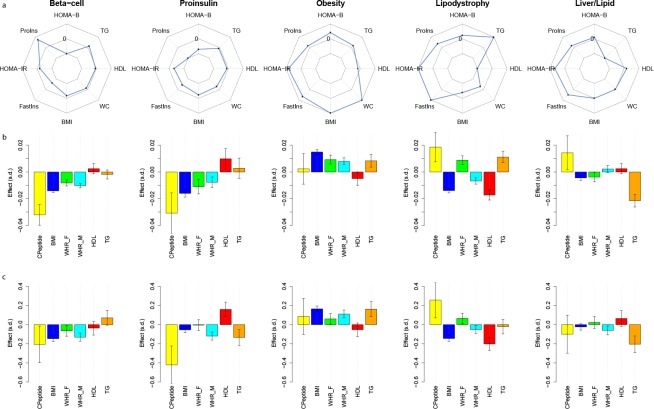
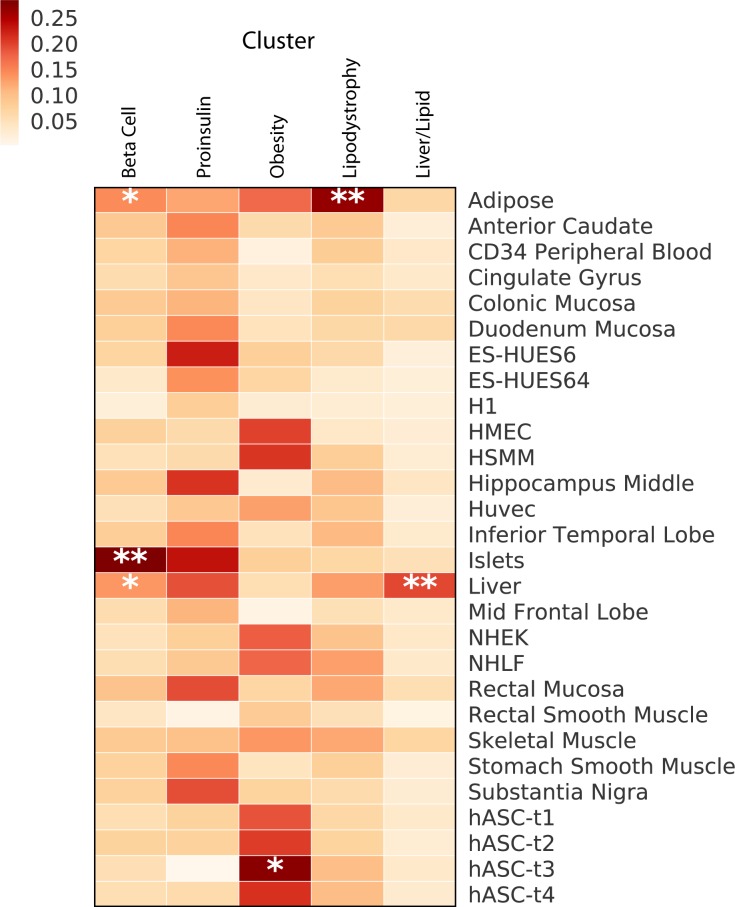
BACKGROUND: Type 2 diabetes (T2D) is a heterogeneous disease for which (1) disease-causing pathways are incompletely understood and (2) subclassification may improve patient management. Unlike other biomarkers, germline genetic markers do not change with disease progression or treatment. In this paper, we test whether a germline genetic approach informed by physiology can be used to deconstruct T2D heterogeneity. First, we aimed to categorize genetic loci into groups representing likely disease mechanistic pathways. Second, we asked whether the novel clusters of genetic loci we identified have any broad clinical consequence, as assessed in four separate subsets of individuals with T2D. METHODS AND FINDINGS: In an effort to identify mechanistic pathways driven by established T2D genetic loci, we applied Bayesian nonnegative matrix factorization (bNMF) clustering to genome-wide association study (GWAS) results for 94 independent T2D genetic variants and 47 diabetes-related traits. We identified five robust clusters of T2D loci and traits, each with distinct tissue-specific enhancer enrichment based on analysis of epigenomic data from 28 cell types. Two clusters contained variant-trait associations indicative of reduced beta cell function, differing from each other by high versus low proinsulin levels. The three other clusters displayed features of insulin resistance: obesity mediated (high body mass index [BMI] and waist circumference [WC]), "lipodystrophy-like" fat distribution (low BMI, adiponectin, and high-density lipoprotein [HDL] cholesterol, and high triglycerides), and disrupted liver lipid metabolism (low triglycerides). Increased cluster genetic risk scores were associated with distinct clinical outcomes, including increased blood pressure, coronary artery disease (CAD), and stroke. We evaluated the potential for clinical impact of these clusters in four studies containing individuals with T2D (Metabolic Syndrome in Men Study [METSIM], N = 487; Ashkenazi, N = 509; Partners Biobank, N = 2,065; UK Biobank [UKBB], N = 14,813). Individuals with T2D in the top genetic risk score decile for each cluster reproducibly exhibited the predicted cluster-associated phenotypes, with approximately 30% of all individuals assigned to just one cluster top decile. Limitations of this study include that the genetic variants used in the cluster analysis were restricted to those associated with T2D in populations of European ancestry. CONCLUSION: Our approach identifies salient T2D genetically anchored and physiologically informed pathways, and supports the use of genetics to deconstruct T2D heterogeneity. Classification of patients by these genetic pathways may offer a step toward genetically informed T2D patient management.
Overview
The claims and statistics of this paper haven’t been checked yet.
Free: it reads the open-access text and checks the first 5 claims that cite a source we can check. Create a free account to check every claim.
Integrity signals
Registry
Cites
Statistics
Figures
Verification
Claims the paper makes
The claims and statistics of this paper haven’t been checked yet.
Free: it reads the open-access text and checks the first 5 claims that cite a source we can check. Create a free account to check every claim.
Claims other papers make about this one
Each is checked against this paper’s own text: does it say what the citing paper says it does?
The cited source says what the claim attributes to it.
In the citing paper
“We previously showed using epigenomic data that this genetic cluster is enriched for enhancers/promoters active in liver tissue (9).”
From Increased genetic risk for β-cell failure is associated with β-cell function decline in people with prediabetes (2024) · cites this paper as [9]
The cited source says what the claim attributes to it.
In the citing paper
“the β-cell pPS included a specific subset of 30 T2D-associated SNPs specifically related to β-cell function (including HNF1A, HNF4A, TCF7L2, and SLC30A8) (9)”
From Increased genetic risk for β-cell failure is associated with β-cell function decline in people with prediabetes (2024) · cites this paper as [9]
Self-check
Percentages, sums and reported differences re-computed from the paper’s own numbers.
The self-check needs the paper’s full text.
Citations
Cites
A global reference for human genetic variation
The 1000 Genomes Project Consortium, authors, C., Auton, A., Abecasis, G. R., Steering committee, Altshuler, D. M., Durbin, R. M., Abecasis, G. R., Bentley, D. R., Chakravarti, A., et al. (2015) · Nature · doi:10.1038/nature15393 · Cited by 18,247
2. Classification and Diagnosis of Diabetes: Standards of Medical Care in Diabetes—2022
American Diabetes Association Professional Practice Committee (2022) · Diabetes Care · doi:10.2337/dc22-s002 · Cited by 4,792
Genetic studies of body mass index yield new insights for obesity biology
Study, T. L. C., Locke, A. E., The ADIPOGen Consortium, The AGEN-BMI Working Group, The CARDIOGRAMplusC4D Consortium, The CKDGen Consortium, The, G. L. G. C., The, I. C. B. P., The MAGIC Investigators, The MuTHER Consortium, et al. (2015) · Nature · doi:10.1038/nature14177 · Cited by 4,534
Self-citationNext-generation genotype imputation service and methods
Das, S., Forer, L., Schönherr, S., Sidore, C., Locke, A. E., Kwong, A., Vrieze, S. I., Chew, E. Y., Levy, S., McGue, M., et al. (2016) · Nature Genetics · doi:10.1038/ng.3656 · Cited by 3,808
Self-citation2. Classification and Diagnosis of Diabetes: Standards of Medical Care in Diabetes—2018
American Diabetes Association (2018) · Diabetes Care · doi:10.2337/dc18-s002 · Cited by 3,159
A reference panel of 64,976 haplotypes for genotype imputation
the Haplotype Reference Consortium (2016) · Nature Genetics · doi:10.1038/ng.3643 · Cited by 2,836
ChromHMM: automating chromatin-state discovery and characterization
Ernst, J., & Kellis, M. (2012) · Nature Methods · doi:10.1038/nmeth.1906 · Cited by 2,475 · cited 1×
“We obtained previously published 13-state ChromHMM [45] chromatin state calls for 28 cell types, excluding cancer cell lines [46].”
MethodComprehensive Molecular Characterization of Muscle-Invasive Bladder Cancer
Robertson, A. G., Kim, J., Al-Ahmadie, H., Bellmunt, J., Guo, G., Cherniack, A. D., Hinoue, T., Laird, P. W., Hoadley, K. A., Akbani, R., et al. (2017) · Cell · doi:10.1016/j.cell.2017.09.007 · Cited by 2,443
Self-citationAhlqvist, E., Storm, P., Käräjämäki, A., Martinell, M., Dorkhan, M., Carlsson, A., Vikman, P., Prasad, R. B., Aly, D. M., Almgren, P., et al. (2018) · The Lancet Diabetes & Endocrinology · doi:10.1016/s2213-8587(18)30051-2 · Cited by 2,335 · cited 5×
“In an attempt to deconstruct the heterogeneity of T2D, recent studies have performed cluster analysis of individuals using serum biomarkers and clinical data to identify T2D subgroups [3,4].”
BackgroundMethodInfluentialNew genetic loci implicated in fasting glucose homeostasis and their impact on type 2 diabetes risk
DIAGRAM Consortium, Dupuis, J., GIANT Consortium, Global BPgen Consortium, Anders Hamsten on behalf of Procardis Consortium, the MAGIC investigators, Langenberg, C., Prokopenko, I., Saxena, R., Soranzo, N., et al. (2010) · Nature Genetics · doi:10.1038/ng.520 · Cited by 2,166
Self-citation
Cited by
Items 401–500 of 544
Genetics of Coronary Artery Disease in Diabetes Mellitus
Morieri, M. L., & Doria, A. (2023) · Contemporary cardiology · doi:10.1007/978-3-031-13177-6_6 · Cited by 1
Dynamic measures of insulin action identify genetic determinants of dysglycemia
Udler, M. S. (2023) · Nature Genetics · doi:10.1038/s41588-023-01346-6 · Cited by 2
Self-citationMufid, N. A., Hanum, D. R. N., & Sidiq, A. H. (2023) · Jurnal Pendidikan Matematika · doi:10.47134/ppm.v1i1.107 · Cited by 1
“…kedua penelitian tersebut dapat mendukung penelitian yang akan dilakukan berkaitan dengan clustering Kabupaten/Kota di Provinsi Jawa Tengah tahun 2022 berdasarkan jumlah kasus kemunculan penyakit dengan algoritma K-Means (Franceschi, 2018; Hashmi, 2020; Jia, 2018; Nguyen, 2019; Udler, 2018).”
BackgroundRura, S. R., Djabir, Y. Y., Rahim, A., Ningsih, S. S., & Firdausi, N. (2023) · Jurnal Ilmiah Kesehatan (JIKA) · doi:10.36590/jika.v5i2.509 · Cited by 1
Zammit, M., Agius, R., Fava, S., Vassallo, J., & Pace, N. P. (2024) · Acta Diabetologica · doi:10.1007/s00592-023-02230-9 · Cited by 1
“They show that the polygenic correlate of lipodystrophy, defined by low BMI, low WC, IR and high TG levels is an important intermediary mechanism leading to dysglycaemia, and underpinning the mechanistic heterogeneity of the disease [37, 38].”
Various classification methods for diabetes mellitus in the management of blood glucose control
Jiang, Q., Hu, Y. Y., & Ma, J. (2025) · World Journal of Diabetes · doi:10.4239/wjd.v16.i5.103316 · Cited by 1
Genetic drivers of etiologic heterogeneity in thyroid cancer
Jee, Y. H., Pozdeyev, N. V., Gignoux, C. R., White, S., Haugen, B. R., Verma, A., Pečulis, R., Rovīte, V., Mulford, A. J., Sanders, A. R., et al. (2026) · Nature Communications · doi:10.1038/s41467-026-75111-8 · Cited by 1
“We applied a modi fi ed bNMF pipeline 26,27,118 .”
InfluentialData analysis in diabetes and the role of technology in diabetes management
Rangaswamy, U. K., Ratan, C., kumar, S. S., Anil, A. A., Rajesh, D., & Krishnan, A. L. (2025) · Elsevier eBooks · doi:10.1016/b978-0-443-29129-6.00013-0 · Cited by 2
Effect heterogeneity reveals complex pleiotropic effects of rare coding variants
Lu, W., Chen, S., Auwerx, C., Fu, J. M., Posthuma, D., Neale, B. M., O’Connor, L. J., & Karczewski, K. J. (2026) · The American Journal of Human Genetics · doi:10.1016/j.ajhg.2026.09.007 · Cited by 2
Network medicine-travelling with the insulin receptor: Encounter of the second type
Boutchueng-Djidjou, M., & Faure, R. L. (2019) · EClinicalMedicine · doi:10.1016/j.eclinm.2019.07.007 · Cited by 1
“Recently, a soft clustering of genetic loci associated with T2D allowed the identification of two groups relatedwith insulin deficiency, and three relatedwith insulin resistance [83].”
BackgroundNutritionist Guide to Direct-to-Consumer Genetic Tests and Precision Nutrition
Dashti, H. S., & Tucker, C. (2019) · Nutrition Today · doi:10.1097/nt.0000000000000360 · Cited by 2
Vorschlag für neue Subklassifikationen des Diabetes mellitus
Zaharia, O., & Szendrödi, J. (2020) · Aktuelle Kardiologie · doi:10.1055/a-1214-5618 · Cited by 1
“Die Klassifizierung von Individuen durch genetische Analysen kann einen Schritt hin zu einer genetisch verankerten, aber klinisch fundierten Diagnose, Überwachung und zum Management von Patienten mit Diabetes darstellen [18].”
BackgroundCousminer, D. L., & Grant, S. F. A. (2020) · Endocrinology and Metabolism Clinics of North America · doi:10.1016/j.ecl.2020.07.007 · Cited by 1
Was bedeuten die neuen Diabetessubgruppen für Menschen mit Fettlebererkrankung?
Schröder, B., & Roden, M. (2020) · Der Diabetologe · doi:10.1007/s11428-020-00698-5 · Cited by 1
EVALUATION OF ANIMAL MODELS BY COMPARISON WITH HUMAN DIABETES MELLITUS: A REVIEW
Dupák, R., & Capcarová, M. (2021) · Slovak Journal of Animal Science · Cited by 1
Extending precision medicine tools to populations at high risk of type 2 diabetes
Misra, S., & Florez, J. C. (2022) · PLoS Medicine · doi:10.1371/journal.pmed.1003989 · Cited by 3
“Finally, the application of process-specific PS (scores that cluster SNPs based on physiological associations) has huge potential to interrogate the biology underlying T2D [14].”
BackgroundSelf-citationGetting it right first time – precision medicine in diabetes
Kilvert, A., & Fox, C. (2022) · Practical Diabetes · doi:10.1002/pdi.2419 · Cited by 1
Precision medicine in diabetes - current trends and future directions. Is the future now?
Szczerbiński, Ł., & Florez, J. C. (2023) · Elsevier eBooks · doi:10.1016/b978-0-12-824010-6.00021-6 · Cited by 1
Self-citationA transcription start site map in human pancreatic islets reveals functional regulatory signaturesPreprint
Varshney, A., Kyono, Y., Elangovan, V. R., Wang, C., Erdos, M. R., Narisu, N., Albanus, R. D., Orchard, P., Stitzel, M. L., Collins, F. S., et al. (2019) · bioRxiv (Cold Spring Harbor Laboratory) · doi:10.1101/812552 · Cited by 1
Jiang, X., Zhang, M. J., Zhang, Y., Durvasula, A., Inouye, M., Holmes, C., Price, A. L., & McVean, G. (2022) · medRxiv · doi:10.1101/2022.10.23.22281420 · Cited by 1
Li, X., Zhang, M., Yan, J., & Liu, Z. (2023) · Frontiers in Endocrinology · doi:10.3389/fendo.2022.1120555 · Cited by 1
Sun, Y. V., Liu, C., Hui, Q., Zhou, J. J., Gaziano, J. M., Wilson, P. W. F., Program, T. M. V., Joseph, J., & Phillips, L. S. (2023) · medRxiv · doi:10.1101/2023.09.22.23295915 · Cited by 1
Smith, K., Deutsch, A., McGrail, C., Kim, H., Hsu, S., Mandla, R., Schroeder, P. H., Westerman, K., Szczerbinski, L., Majarian, T., et al. (2023) · medRxiv · doi:10.1101/2023.09.28.23296294 · Cited by 3
Self-citationCarvalho, N. R. G., He, Y., Smadbeck, P., Flannick, J. A., Mercader, J. M., Udler, M. S., Manrai, A. K., Moreno, J., & Patel, C. J. (2024) · medRxiv · doi:10.1101/2024.01.30.24302019 · Cited by 1
Self-citationLoesch, D. P., Garg, M., Matelska, D., Vitsios, D., Jiang, X., Ritchie, S. C., Sun, B. B., Runz, H., Whelan, C. D., Holman, R. R., et al. (2024) · medRxiv · doi:10.1101/2024.03.15.24304200 · Cited by 1
Self-citationGenetic subtypes of prediabetes, healthy lifestyle, and risk of type 2 diabetes
Yang, L., Chen, G., Moon, J., Arthur, R., Sotres‐Alvarez, D., Daviglus, M. L., Pirzada, A., Mattei, J., Perreira, K. M., Rotter, J. I., et al. (2024) · doi:10.2337/figshare.25571796.v1 · Cited by 1
Brain Cell-based Genetic Subtyping and Drug Repositioning for Alzheimer DiseasePreprint
Sahelijo, N. J., Rajagopalan, P., Lu, Q., Rahman, R., Priyadarshi, D., Goldstein, D., Thomopoulos, S. I., Bennett, D. A., Farrer, L. A., Stein, T. D., et al. (2024) · medRxiv · doi:10.1101/2024.06.21.24309255 · Cited by 1
Kempegowda, P., CASTRO-REVOREDO, I. A., & Umpierrez, G. E. (2024) · The Journal of Clinical Endocrinology & Metabolism · doi:10.1210/clinem/dgae680 · Cited by 1
Pascat, V., Zudina, L., Maurin, L., Ulrich, A., Maina, J. G., Demirkan, A., Balkhiyarova, Z., Pupko, I., Sharhorodska, Y., Pattou, F. N., et al. (2025) · medRxiv · doi:10.1101/2025.03.02.25323190 · Cited by 1
“We observed several well-known loci and genes, such as those at GRB14-COBLL1 (associated with reduced insulin level, pulse pressure, and mean arterial pressure) 25,26 , ADCY5 (beta cell function and lipodystrophy) 27 , and ACE (renin-angiotensin system, hypertension) 28 .”
Exposure accumulation drives age-dependent disease architectures and polygenic risk scoresPreprint
Jiang, X., Price, A. L., Danesh, J. N., McVean, G., Inouye, M., Urbut, S., & Durvasula, A. (2025) · Research Square · doi:10.1101/2025.08.29.25334745 · Cited by 4
Tham, N., Surian, N. U., Chee, Y. J., Acharyya, S., Lai, W. B., Wu, A., Batagov, A., & Dalan, R. (2025) · medRxiv · doi:10.64898/2025.12.04.25341430 · Cited by 1
Li, H., Morze, J., Adiels, M., Kullberg, J., Merino, J., Sevilla-González, M. D. R., Bergström, G. M. L., Orho‐Melander, M., Söderberg, S., Östgren, C. J., et al. (2026) · medRxiv · doi:10.64898/2026.01.15.26344187 · Cited by 1
Self-citationGenetics and Pharmacogenetics of COPD
Bossé, Y., & Cho, M. H. (2020) · Respiratory medicine · doi:10.1007/978-3-030-31507-8_4
Les diabètes : de la génétique à l’environnement
Boîtard, C. (2020) · Bulletin de l Académie Nationale de Médecine · doi:10.1016/j.banm.2020.03.007 · Cited by 11
Diabetesclusters: Diabetessubgruppen und Folgeerkrankungen
Zaharia, O., & Roden, M. (2020) · Der Diabetologe · doi:10.1007/s11428-020-00665-0
“Neueste Studien weisen auch auf zukünftige genbasierte Konzepte zur Prognose und Therapie hin, die einen weiteren Schritt hin zum optimierten Management von Menschen mit Diabetes darstellen könnten [25].”
BackgroundNovel clusters of type 2 Diabetes: A tailored therapeutic approach
Duarte, V., Ivo, C., Veríssimo, D., Silva, J., Lopes, L., Passos, D., de Castro, J. J., & Marcelino, M. (2021) · Revista Portuguesa de Endocrinologia Diabetes e Metabolismo · doi:10.26497/ao200037
A Basis Approach to Surface Clustering
Zambom, A. Z., Wang, Q., & Dias, R. (2022) · Statistics Optimization & Information Computing · doi:10.19139/soic-2310-5070-1486
Hussein, A. A., Alghobashy, A. A., & Raafat, N. (2021) · The Egyptian Journal of Hospital Medicine · doi:10.21608/ejhm.2021.191658
Prediction, diagnosis, prevention and treatment: genetic-led care of patients with diabetes
Tangjittipokin, W., Borrisut, N., & Rujirawan, P. (2021) · Expert Review of Precision Medicine and Drug Development · doi:10.1080/23808993.2021.1970526
“Mahajan et al. [51] study in 2018 using the c-mean clustering approach show that T2DM loci could be identified into 6 variant clusters while Udler et al [52] study in 2018 using the complimentary soft clustering approach also identified 5 variant clusters that related to pathophysiology and phenotypic feature.”
MethodiPSCs in insulin resistance, type 2 diabetes, and the metabolic syndrome
Carcamo‐Orive, I. (2022) · Elsevier eBooks · doi:10.1016/b978-0-323-99892-5.00020-7
Hughes, A. E., Hayes, M. G., Egan, A. M., Patel, K., Scholtens, D. M., Lowe, L. P., Lowe, W. L., Dunne, F., Hattersley, A. T., & Freathy, R. M. (2020) · Wellcome Open Research · doi:10.12688/wellcomeopenres.16097.2
TSABL: Trait Specific Annotation Based Locus predictor
Lorenz, K., Thom, C. S., Adurty, S., & Voight, B. F. (2022) · BMC Genomics · doi:10.1186/s12864-022-08654-x
Alotaibi, A., Podlasek, A., AlTokhis, A. I., Tench, C. R., Mohammadi‐Nejad, A., Sotiropoulos, S. N., Constantinescu, C. S., Lee, S., & Dineen, R. A. (2022) · SSRN Electronic Journal · doi:10.2139/ssrn.4093571
Yajnik, C. S., Wagh, R. S. H., Kunte, P. S., Shukla, S., & Prasad, R. B. (2022) · SSRN Electronic Journal · doi:10.2139/ssrn.4169813
Grieco, G. E., Fignani, D., Dotta, F., & Sebastiani, G. (2022) · L Endocrinologo · doi:10.1007/s40619-022-01146-w
Cluster Analysis Identified Clinically Relevant Metabolic Syndrome EndophenotypesPreprint
Lim, A. M. W., Lim, E. U., Chen, P., & Fann, C. S. J. (2022) · medRxiv · doi:10.1101/2022.11.04.22281926
“The phenotypic traits of MetS Cluster 4 are similar to that lipodystrophy-like and liver/lipid type 2 diabetes clusters identified by Udler et al [43] with lipodystrophy-like features such as low obesity traits and dyslipidaemia (elevated triglycerides and LDL but reduced HDL).”
BackgroundDiabetes, genética y epigenética: cómo aplicar la medicina personalizada de precisión
Carrasco, A. J. B. (2022) · Diabetes práctica · doi:10.52102/diabet/pract/2022.1/art2
Li, Y., Chen, G., Moon, J., Arthur, R., Sotres‐Alvarez, D., Daviglus, M. L., Pirzada, A., Mattei, J., Perreira, K. M., Rotter, J. I., et al. (2022) · medRxiv · doi:10.1101/2022.12.27.22283972
“Within each SNP set, a polygenetic risk score was assessed by computing the sum of risk alleles of SNPs in the set for each individual, weighted by their effect sizes estimated by previous study.(11) Thus, five PRSs were calculated for each individual as input features for the following clustering analysis on particip…”
BackgroundMethodResultInfluentialIdentifying type 2 diabetes risk genes by β-cell CRISPR screening
Wagner, B. K. (2023) · Nature Genetics · doi:10.1038/s41588-022-01269-8
Präzisionstherapie bei Diabetes mellitus Typ 2
Graessler, J., Bornstein, S. R., & Perakakis, N. (2023) · Die Diabetologie · doi:10.1007/s11428-023-01013-8
Zooming into process-specific risk
Maude, H., & Cebola, I. (2023) · Nature Metabolism · doi:10.1038/s42255-023-00770-6 · Cited by 1
Introduction: Epidemiology, Definitions, and Pathophysiology
Westcott, G. P., & Beaser, R. S. (2023) · Contemporary cardiology · doi:10.1007/978-3-031-13177-6_1
Review: Updates of precision medicine in type 2 diabetes — R1/PR7
Xia, M., & Li, X. (2023) · Cambridge Prisms Precision Medicine · doi:10.1017/pcm.2023.12.pr7
Author comment: Updates of precision medicine in type 2 diabetes — R1/PR6
Li, X. (2023) · Cambridge Prisms Precision Medicine · doi:10.1017/pcm.2023.12.pr6
Recommendation: Updates of precision medicine in type 2 diabetes — R0/PR4
Xia, M., & Li, X. (2022) · Cambridge Prisms Precision Medicine · doi:10.1017/pcm.2023.12.pr4
Rodríguez‐Saldaña, J. (2023) · Springer eBooks · doi:10.1007/978-3-031-25519-9_1 · Cited by 1
Decision: Updates of precision medicine in type 2 diabetes — R1/PR10
Xia, M., & Li, X. (2023) · Cambridge Prisms Precision Medicine · doi:10.1017/pcm.2023.12.pr10
Recommendation: Updates of precision medicine in type 2 diabetes — R1/PR9
Xia, M., & Li, X. (2023) · Cambridge Prisms Precision Medicine · doi:10.1017/pcm.2023.12.pr9
Review: Updates of precision medicine in type 2 diabetes — R1/PR8
Xia, M., & Li, X. (2023) · Cambridge Prisms Precision Medicine · doi:10.1017/pcm.2023.12.pr8 · Cited by 1
Decision: Updates of precision medicine in type 2 diabetes — R0/PR5
Xia, M., & Li, X. (2023) · Cambridge Prisms Precision Medicine · doi:10.1017/pcm.2023.12.pr5
Review: Updates of precision medicine in type 2 diabetes — R0/PR2
Xia, M., & Li, X. (2022) · Cambridge Prisms Precision Medicine · doi:10.1017/pcm.2023.12.pr2
Author comment: Updates of precision medicine in type 2 diabetes — R0/PR1
Li, X. (2022) · Cambridge Prisms Precision Medicine · doi:10.1017/pcm.2023.12.pr1
Review: Updates of precision medicine in type 2 diabetes — R0/PR3
Xia, M., & Li, X. (2022) · Cambridge Prisms Precision Medicine · doi:10.1017/pcm.2023.12.pr3
Cannon, S. J., Hall, T., Hawkes, G., Colclough, K., Boggan, R. M., Wright, C. F., Pickett, S. J., Hattersley, A. T., Weedon, M., & Patel, K. A. (2023) · medRxiv · doi:10.1101/2023.06.12.23291273
Wang, S., Lei, Y., Wang, X., Wang, C., Sun, C., & Han, T. (2023) · SSRN Electronic Journal · doi:10.2139/ssrn.4572847
Franks, P. W., Coral, D., Fernandez-Tajes, J. J., Pigeyre, M., Chong, M., Atabaki‐Pasdar, N., Fitipaldi, H., Kalamajski, S., Gomez, M. F., Paré, G., et al. (2023) · Research Square · doi:10.21203/rs.3.rs-3470871/v1
PHYSICAL THERAPY APPROACHES FOR CHILDREN WITH DIABETES: A REVIEW
(2023) · Egyptian Journal of Applied Science · doi:10.21608/ejas.2023.325261
Research Progress on Clinical Classification of Diabetes Based on Precision Medicine
张, 玉. (2024) · Advances in Clinical Medicine · doi:10.12677/acm.2024.141019
Polygenic Risk Score and Precision Medicine in Diabetes
Kwak, S. H. (2023) · Journal of Korean Diabetes · doi:10.4093/jkd.2023.24.4.210
Prasad, R. B. (2024) · Wiley eBooks · doi:10.1002/9781119697473.ch12
Heald, A. H., & Krentz, A. J. (2023) · Elsevier eBooks · doi:10.1016/b978-0-323-91707-0.00017-6
Genetic subtypes of prediabetes, healthy lifestyle, and risk of type 2 diabetes
Yang, L., Chen, G., Moon, J., Arthur, R., Sotres‐Alvarez, D., Daviglus, M. L., Pirzada, A., Mattei, J., Perreira, K. M., Rotter, J. I., et al. (2024) · doi:10.2337/figshare.25571796
Franco, P. C. (2024) · Digital Library of Theses and Dissertations (Universidade de São Paulo) · doi:10.11606/t.5.2024.tde-25042024-161527 · Cited by 2
Guidorizzi, N. R. (2024) · Digital Library of Theses and Dissertations (Universidade de São Paulo) · doi:10.11606/t.17.2024.tde-26072024-140155
Risiken diabetesassoziierter Komorbiditäten in Subgruppen des Typ-2-Diabetes
Zaharia, O., Marx, N., Kelm, M., & Roden, M. (2024) · Aktuelle Kardiologie · doi:10.1055/a-2304-8090
Mirică, A., & Păun, D. L. (2024) · Springer eBooks · doi:10.1007/978-3-031-65300-1_2
Mapping disease loci to biological processes via joint pleiotropic and epigenomic partitioningPreprint
Kerner, G., Kamitaki, N., Strober, B. J., & Price, A. L. (2025) · medRxiv · doi:10.1101/2025.05.05.25327017
“The initial number of clusters (set to 15 following prior work 23 ) serves as an upper bound and may be reduced during optimization as uninformative clusters are pruned.”
InfluentialHétérogénéité du diabète de type 2 : avancées vers la médecine de précision
Vuong, T. B., Julla, J., Venteclef, N., & Gautier, J. (2025) · Médecine des Maladies Métaboliques · doi:10.1016/j.mmm.2025.04.010 · Cited by 1
Surawit, A., Pasookhush, P., Pumeiam, S., Mongkolsucharitkul, P., Suta, S., Pinsawas, B., Ophakas, S., Vorasan, N., Voharnsuchon, P., & Mayurasakorn, K. (2025) · Research Square · doi:10.21203/rs.3.rs-6351460/v1
Decomposing type 2 diabetes genetics into population-specific features by 600,000 East-AsiansPreprint
Terao, C. C., Saito, K., Lu, H., Inoue, T., Usui, T., Shirai, T., Ogawa, T., Kosugi, R., Kyo, C., Li, Y., et al. (2025) · Research Square · doi:10.21203/rs.3.rs-6532678/v1
Allicin and its Therapeutic Potential in Diabetes Management: A Comprehensive Review
Saini, A., Saini, V., Kumar, S. S., Dhingra, A. K., & Kumar, J. (2025) · Current Aging Science · doi:10.2174/0118746098362006250602085308 · Cited by 2
Alonso, L., Pérez, M. Á., Ali, M. Y. S., Mashhadikhan, M., Gaitán, N., Satari, L., Martín, R., Piron, A., Farré, X., Blay, N., et al. (2025) · medRxiv · doi:10.1101/2025.07.24.25332120 · Cited by 1
Kursawe, R., Bandesh, K., Krishnan, S. N., Liu, K. S., Bhuiyan, R. M., & Stitzel, M. L. (2025) · Annual Review of Genetics · doi:10.1146/annurev-genet-020525-114513
Diabetes Genetic Clusters and Clinical Outcomes in American Indians
Reynolds, K. M., Sun, Q., Zhang, Y., Umans, J. G., Cole, S. A., Morris, A. P., & Franceschini, N. (2025) · Diabetes · doi:10.2337/db25-0322 · Cited by 1
Bayesian learning of clinically meaningful sepsis phenotypes in northern Tanzania
Dombowsky, A., Dunson, D. B., Madut, D. B., Rubach, M. P., & Herring, A. H. (2025) · The Annals of Applied Statistics · doi:10.1214/25-aoas2045
“Endotypes have been derived using Bayesian clustering for illnesses such as cancer (Savage et al., 2010; Yuan et al., 2011; Lock and Dunson, 2013; Wang et al., 2023), Alzheimer’s (Poulakis et al., 2022), emphysema (Ross et al., 2016), and type 2 diabetes (Udler et al., 2018).”
Genetic and phenotypic heterogeneity of type 2 diabetes across Russian ancestry groups
Markelova, E. E., Кононенко, И. В., Zubritskiy, A. V., Podshivalova, E. S., Matrosova, A. A., Plaksina, E. V., Mansour, S., Ahtyamov, P., Shagimardanova, E. I., Vagapova, G. R., et al. (2025) · Frontiers in Endocrinology · doi:10.3389/fendo.2025.1672403
Gurucharan, G., Mohan, C. R., Rugvidh, C. V. N., Rupesh, V., & Kumar, T. S. P. R. (2025) · doi:10.38124/ijisrt/25sep990
Li, J., Zhang, H., Xinyang, H., Li, Y., Zhou, F., Li, D., Zhang, H., Fan, S., Shen, B. Q., & Wang, Y. (2025) · Experimental Eye Research · doi:10.1016/j.exer.2025.110673 · Cited by 1
Genetic Predictors of Response to Oral Insulin for Type 1 Diabetes Prevention
You, L., Parikh, H. M., Triolo, T. M., Ferrat, L. A., Templeman, E. L., Oram, R. A., Gottlieb, P. A., Rich, S. S., Önengüt-Gümüşcü, S., Steck, A. K., et al. (2025) · Diabetes Care · doi:10.2337/dc25-2006 · Cited by 1
Burren, O. S., Reales, G., Wong, L., Bowes, J., Lee, J. C., Barton, A. C., Lyons, P. A., Smith, K. G. C., Thomson, W., Kirk, P., et al. (2020) · Figshare · doi:10.6084/m9.figshare.13291234
Additional file 46 of TSABL: Trait Specific Annotation Based Locus predictor
Lorenz, K., Thom, C. S., Adurty, S., & Voight, B. F. (2022) · Figshare · doi:10.6084/m9.figshare.20076848
Ghatan, S., van Rooij, J., van Hoek, M., Boer, C. G., Felix, J. F., Kavousi, M., Jaddoe, V. W. V., Sijbrands, E. J. G., Medina-Gomez, C., Rivadeneira, F., et al. (2024) · Figshare · doi:10.6084/m9.figshare.26665993
Jiang, W., Tang, Y., Yang, R., Long, Y., Sun, C., Han, T., & Wei, W. (2024) · Figshare · doi:10.6084/m9.figshare.26675747
Burren, O. S., Reales, G., Wong, L., Bowes, J., Lee, J. C., Barton, A. C., Lyons, P. A., Smith, K. G. C., Thomson, W., Kirk, P., et al. (2020) · Figshare · doi:10.6084/m9.figshare.13291240
Ghatan, S., van Rooij, J., van Hoek, M., Boer, C. G., Felix, J. F., Kavousi, M., Jaddoe, V. W. V., Sijbrands, E. J. G., Medina-Gomez, C., Rivadeneira, F., et al. (2024) · Figshare · doi:10.6084/m9.figshare.26665996
Jiang, W., Tang, Y., Yang, R., Long, Y., Sun, C., Han, T., & Wei, W. (2024) · Figshare · doi:10.6084/m9.figshare.26675744
Prystupa, K., Delgado, G. E., Moissl-Blanke, A., Kleber, M. E., Birkenfeld, A. L., Heni, M., Fritsche, A., März, W., & Wagner, R. (2024) · Figshare · doi:10.6084/m9.figshare.26611076
Xie, J., Zhang, X., Shao, H., Jing, S., Shan, T., Shi, Y., Li, Y., Liu, Y., & Liu, N. (2022) · Figshare · doi:10.6084/m9.figshare.20472180
Ghatan, S., van Rooij, J., van Hoek, M., Boer, C. G., Felix, J. F., Kavousi, M., Jaddoe, V. W. V., Sijbrands, E. J. G., Medina‐Gómez, C., Rivadeneira, F., et al. (2024) · Figshare · doi:10.6084/m9.figshare.26665990
Burren, O. S., Reales, G., Wong, L., Bowes, J., Lee, J. C., Barton, A. C., Lyons, P., Smith, K. G. C., Thomson, W., Kirk, P., et al. (2020) · Figshare · doi:10.6084/m9.figshare.13291243
Metadata
- Authors
- Udler, M. S., Kim, J., von Grotthuss, M., Bonàs-Guarch, S., Cole, J. B., Chiou, J., ISGC, C. D. A. O. B. O. M. A. T., Boehnke, M., Laakso, M., Atzmon, G., Glaser, B., Mercader, J. M., Gaulton, K., Flannick, J., Getz, G., & Florez, J. C.
- Affiliations
- Broad Institute (US)
- University of California San Diego (US)
- University of Eastern Finland (FI)
- Albert Einstein College of Medicine (US)
- ORCID
- Venue
- PLOS Medicine
- Publisher
- Public Library of Science (PLoS)
- Published
- 2018-09-21
- Volume
- 15
- Issue
- 9
- Pages
- e1002654
- ISSN
- 1549-1277 (ISSN-L)
- 1549-1676
- PMC
- PMC6150463
- OpenAlex
- W2890555481
- Cited by
- 542
- References
- 75
- Citations by year
- 2026: 59 · 2025: 60 · 2024: 71 · 2023: 89 · 2022: 88 · 2021: 65 · 2020: 72 · 2019: 37 · 2018: 1
- FWCI
- 26.83
- Type
- journal article
- Language
- en
- Open access
- gold
- doi.org
- Licence
- Locations
- PLoS Medicine (publishedVersion, cc-by)
- Europe PMC (PubMed Central) (publishedVersion, cc-by)
- PubMed Central (publishedVersion, cc-by)
- PubMed (publishedVersion)
- UEF eRepo (University of Eastern Finland) (submittedVersion, cc-by)
- DOAJ (DOAJ: Directory of Open Access Journals) (submittedVersion, cc-by-sa)
- Figshare (submittedVersion, cc-by)
- Funders
- National Institute of Diabetes and Digestive and Kidney Diseases (1K23DK114551-01, DK062370)
- National Institute of Neurological Disorders and Stroke (1K23NS086873-04)
- Topics
- Life Sciences › Biochemistry, Genetics and Molecular Biology › Genetics › Genetic Associations and Epidemiology
- Life Sciences › Biochemistry, Genetics and Molecular Biology › Genetics › Diabetes and associated disorders
- Life Sciences › Biochemistry, Genetics and Molecular Biology › Genetics › Genetic Mapping and Diversity in Plants and Animals
- Keywords
- type 2 diabetes, genetic loci, disease heterogeneity, diabetes subtypes, fuzzy clustering, tissue-specific enhancers, beta-cell function, insulin resistance, hepatic lipid metabolism, polygenic risk score, coronary artery disease, stroke, blood pressure, adiponectin, triglycerides
- MeSH terms
- Algorithms, Bayes Theorem, Cross-Sectional Studies, Diabetes Mellitus, Type 2, Female, Multigene Family, Genetic Markers, Humans, Insulin, Insulin Resistance, Male, Phenotype, Prospective Studies, Risk Factors, Cohort Studies, Cluster Analysis, Founder Effect, Genetic Predisposition to Disease, Databases, Genetic, Genome-Wide Association Study, Genetic Loci
About these checks
Registry, retraction, Cites and statistics results are computed, not judged, with one exception: a printed reference that no index lists is read once by a model before it counts as a citation error. Claims are extracted by a model and kept only when their quote appears verbatim in the text; each cited source is then checked, with a model’s help, for whether it says what the claim relies on. Those verdicts can be wrong — read the claim’s quote and the cited source before relying on one.
Statistics and arithmetic are recomputed, not judged.
Confidence bands are shown only for fields calibrated on our annotated test set. None is calibrated yet, so no band is shown.
What counts as a claim ›How we measure confidence ›How we check this ›
Are you an author, or do you see a problem with this page? Request a review
Data sources
Bibliographic data: Semantic Scholar, OpenAlex, Crossref.
Contains information from the Semantic Scholar Academic Graph Datasets, made available under the ODC Attribution License (ODC-BY 1.0).
Semantic Scholar’s data is described in: Kinney, R., et al. (2023). The Semantic Scholar Open Data Platform. arXiv:2301.10140.
