

Type 2 diabetes genetic loci informed by multi-trait associations point to disease mechanisms and subtypes: A soft clustering analysis
Open accessThe DOI matches its Crossref record; 75 of the 75 references it cites were found in a registry or an index.
Abstract
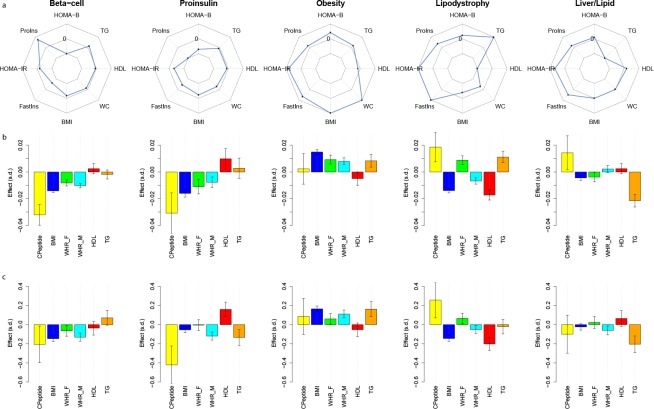
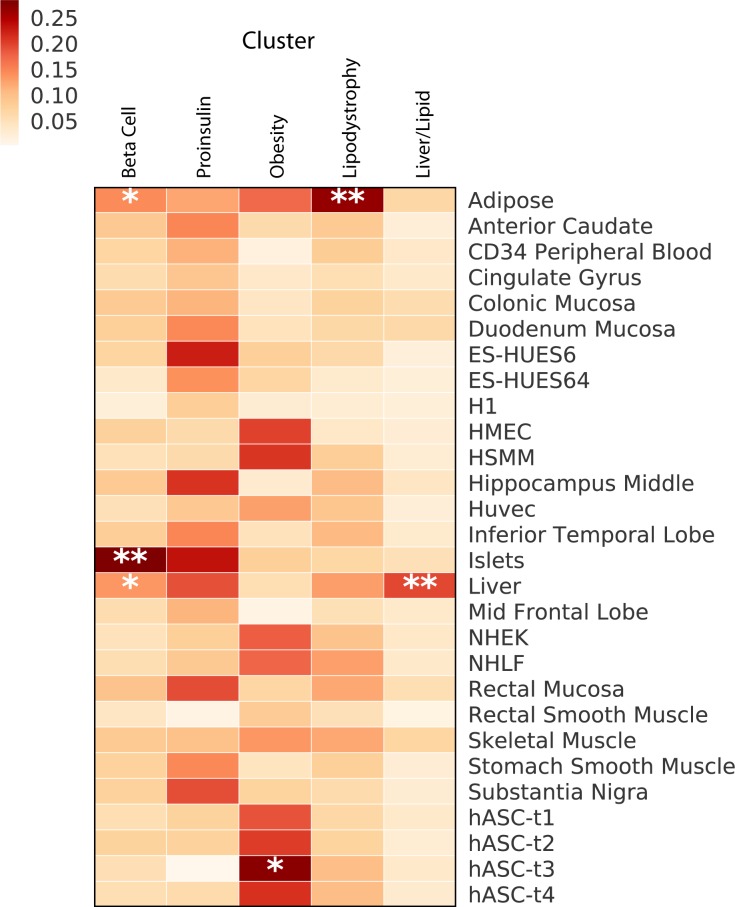
BACKGROUND: Type 2 diabetes (T2D) is a heterogeneous disease for which (1) disease-causing pathways are incompletely understood and (2) subclassification may improve patient management. Unlike other biomarkers, germline genetic markers do not change with disease progression or treatment. In this paper, we test whether a germline genetic approach informed by physiology can be used to deconstruct T2D heterogeneity. First, we aimed to categorize genetic loci into groups representing likely disease mechanistic pathways. Second, we asked whether the novel clusters of genetic loci we identified have any broad clinical consequence, as assessed in four separate subsets of individuals with T2D. METHODS AND FINDINGS: In an effort to identify mechanistic pathways driven by established T2D genetic loci, we applied Bayesian nonnegative matrix factorization (bNMF) clustering to genome-wide association study (GWAS) results for 94 independent T2D genetic variants and 47 diabetes-related traits. We identified five robust clusters of T2D loci and traits, each with distinct tissue-specific enhancer enrichment based on analysis of epigenomic data from 28 cell types. Two clusters contained variant-trait associations indicative of reduced beta cell function, differing from each other by high versus low proinsulin levels. The three other clusters displayed features of insulin resistance: obesity mediated (high body mass index [BMI] and waist circumference [WC]), "lipodystrophy-like" fat distribution (low BMI, adiponectin, and high-density lipoprotein [HDL] cholesterol, and high triglycerides), and disrupted liver lipid metabolism (low triglycerides). Increased cluster genetic risk scores were associated with distinct clinical outcomes, including increased blood pressure, coronary artery disease (CAD), and stroke. We evaluated the potential for clinical impact of these clusters in four studies containing individuals with T2D (Metabolic Syndrome in Men Study [METSIM], N = 487; Ashkenazi, N = 509; Partners Biobank, N = 2,065; UK Biobank [UKBB], N = 14,813). Individuals with T2D in the top genetic risk score decile for each cluster reproducibly exhibited the predicted cluster-associated phenotypes, with approximately 30% of all individuals assigned to just one cluster top decile. Limitations of this study include that the genetic variants used in the cluster analysis were restricted to those associated with T2D in populations of European ancestry. CONCLUSION: Our approach identifies salient T2D genetically anchored and physiologically informed pathways, and supports the use of genetics to deconstruct T2D heterogeneity. Classification of patients by these genetic pathways may offer a step toward genetically informed T2D patient management.
Overview
The claims and statistics of this paper haven’t been checked yet.
Free: it reads the open-access text and checks the first 5 claims that cite a source we can check. Create a free account to check every claim.
Integrity signals
Registry
Cites
Statistics
Figures
Verification
Claims the paper makes
The claims and statistics of this paper haven’t been checked yet.
Free: it reads the open-access text and checks the first 5 claims that cite a source we can check. Create a free account to check every claim.
Claims other papers make about this one
Each is checked against this paper’s own text: does it say what the citing paper says it does?
The cited source says what the claim attributes to it.
In the citing paper
“We previously showed using epigenomic data that this genetic cluster is enriched for enhancers/promoters active in liver tissue (9).”
From Increased genetic risk for β-cell failure is associated with β-cell function decline in people with prediabetes (2024) · cites this paper as [9]
The cited source says what the claim attributes to it.
In the citing paper
“the β-cell pPS included a specific subset of 30 T2D-associated SNPs specifically related to β-cell function (including HNF1A, HNF4A, TCF7L2, and SLC30A8) (9)”
From Increased genetic risk for β-cell failure is associated with β-cell function decline in people with prediabetes (2024) · cites this paper as [9]
Self-check
Percentages, sums and reported differences re-computed from the paper’s own numbers.
The self-check needs the paper’s full text.
Citations
Cites
A global reference for human genetic variation
The 1000 Genomes Project Consortium, authors, C., Auton, A., Abecasis, G. R., Steering committee, Altshuler, D. M., Durbin, R. M., Abecasis, G. R., Bentley, D. R., Chakravarti, A., et al. (2015) · Nature · doi:10.1038/nature15393 · Cited by 18,247
2. Classification and Diagnosis of Diabetes: Standards of Medical Care in Diabetes—2022
American Diabetes Association Professional Practice Committee (2022) · Diabetes Care · doi:10.2337/dc22-s002 · Cited by 4,792
Genetic studies of body mass index yield new insights for obesity biology
Study, T. L. C., Locke, A. E., The ADIPOGen Consortium, The AGEN-BMI Working Group, The CARDIOGRAMplusC4D Consortium, The CKDGen Consortium, The, G. L. G. C., The, I. C. B. P., The MAGIC Investigators, The MuTHER Consortium, et al. (2015) · Nature · doi:10.1038/nature14177 · Cited by 4,534
Self-citationNext-generation genotype imputation service and methods
Das, S., Forer, L., Schönherr, S., Sidore, C., Locke, A. E., Kwong, A., Vrieze, S. I., Chew, E. Y., Levy, S., McGue, M., et al. (2016) · Nature Genetics · doi:10.1038/ng.3656 · Cited by 3,808
Self-citation2. Classification and Diagnosis of Diabetes: Standards of Medical Care in Diabetes—2018
American Diabetes Association (2018) · Diabetes Care · doi:10.2337/dc18-s002 · Cited by 3,159
A reference panel of 64,976 haplotypes for genotype imputation
the Haplotype Reference Consortium (2016) · Nature Genetics · doi:10.1038/ng.3643 · Cited by 2,836
ChromHMM: automating chromatin-state discovery and characterization
Ernst, J., & Kellis, M. (2012) · Nature Methods · doi:10.1038/nmeth.1906 · Cited by 2,475 · cited 1×
“We obtained previously published 13-state ChromHMM [45] chromatin state calls for 28 cell types, excluding cancer cell lines [46].”
MethodComprehensive Molecular Characterization of Muscle-Invasive Bladder Cancer
Robertson, A. G., Kim, J., Al-Ahmadie, H., Bellmunt, J., Guo, G., Cherniack, A. D., Hinoue, T., Laird, P. W., Hoadley, K. A., Akbani, R., et al. (2017) · Cell · doi:10.1016/j.cell.2017.09.007 · Cited by 2,443
Self-citationAhlqvist, E., Storm, P., Käräjämäki, A., Martinell, M., Dorkhan, M., Carlsson, A., Vikman, P., Prasad, R. B., Aly, D. M., Almgren, P., et al. (2018) · The Lancet Diabetes & Endocrinology · doi:10.1016/s2213-8587(18)30051-2 · Cited by 2,335 · cited 5×
“In an attempt to deconstruct the heterogeneity of T2D, recent studies have performed cluster analysis of individuals using serum biomarkers and clinical data to identify T2D subgroups [3,4].”
BackgroundMethodInfluentialNew genetic loci implicated in fasting glucose homeostasis and their impact on type 2 diabetes risk
DIAGRAM Consortium, Dupuis, J., GIANT Consortium, Global BPgen Consortium, Anders Hamsten on behalf of Procardis Consortium, the MAGIC investigators, Langenberg, C., Prokopenko, I., Saxena, R., Soranzo, N., et al. (2010) · Nature Genetics · doi:10.1038/ng.520 · Cited by 2,166
Self-citation
Cited by
Items 201–300 of 544
The RNA-binding profile of the splicing factor SRSF6 in immortalized human pancreatic β-cells
Alvelos, M. I., Brüggemann, M., Sutandy, F. X. R., Juan-Mateu, J., Colli, M. L., Busch, A., Lopes, M., Castela, Â., Aartsma-Rus, A. M., König, J., et al. (2020) · Life Science Alliance · doi:10.26508/lsa.202000825 · Cited by 20
Diabetes subgroups and risk for complications: The Multi-Ethnic Study of Atherosclerosis (MESA)
Bancks, M. P., Carnethon, M. R., Chen, H., Cotch, M. F., Klein, R., Klein, R., Szklo, M., & Bertoni, A. G. (2021) · Journal of Diabetes and its Complications · doi:10.1016/j.jdiacomp.2021.107915 · Cited by 18
Clustering Interval-Censored Time-Series for Disease Phenotyping
Chen, I. Y., Krishnan, R. G., & Sontag, D. A. (2022) · Proceedings of the AAAI Conference on Artificial Intelligence · doi:10.1609/aaai.v36i6.20570 · Cited by 30
Magkos, F., Reeds, D. N., & Mittendorfer, B. (2022) · Physiological Reviews · doi:10.1152/physrev.00015.2022 · Cited by 21
Hwang, Y., Ahn, H. Y., Jun, J. E., Jeong, I., Ahn, K. J., & Chung, H. Y. (2023) · Metabolism · doi:10.1016/j.metabol.2023.155514 · Cited by 21
Lin, J., Wang, J., Fang, J., Li, M., Xu, S., Little, P. J., Zhang, D., & Liu, Z. (2024) · British Journal of Pharmacology · doi:10.1111/bph.16355 · Cited by 23
“Investigating the key regulators of AIM2 – PANoptosis is crucial. has the effect of weakening the host defences (Udler et al., 2018).”
BackgroundInfluentialKrzymień, J., & Ładyżyński, P. (2023) · Journal of Applied Biomedicine · doi:10.1016/j.bbe.2023.12.004 · Cited by 23
Antonio‐Villa, N. E., Bello‐Chavolla, O. Y., Fermín‐Martínez, C. A., Ramírez‐García, D., Vargas‐Vázquez, A., Basile‐Alvarez, M. R., Núñez-Luna, A., Sánchez-Castro, P., Fernández‐Chirino, L., Díaz-Sánchez, J. P., et al. (2024) · The Lancet Regional Health - Americas · doi:10.1016/j.lana.2024.100732 · Cited by 28
Self-citationOjima, T., Namba, S., Ken, S., Yamamoto, K., Sonehara, K., Narita, A., The Biobank Japan Project, Kamatani, Y., Tamiya, G., Yamamoto, M. P., et al. (2024) · Nature Genetics · doi:10.1038/s41588-024-01782-y · Cited by 20
“Udler’s soft clustering method is a well-known PRS construction method that classifies T2D risk variants into five pathogenic pathways and calculates five pathway-specific partitioned PRSs (beta-cell, proinsulin, obesity, lipodystrophy and liver) 28,43 .”
The Burmese cat as a genetic model of type 2 diabetes in humans
Samaha, G., Beatty, J. A., Wade, C. M., & Haase, B. (2019) · Animal Genetics · doi:10.1111/age.12799 · Cited by 21
Clustering for a better prediction of type 2 diabetes mellitus
Bonnefond, A., & Froguel, P. (2021) · Nature Reviews Endocrinology · doi:10.1038/s41574-021-00475-4 · Cited by 18
Number of teeth is associated with hip fracture and femoral neck bone mineral density in the NHANES
Yu, Y., Cheung, W. S., Miller, D. R., & Steffensen, B. (2021) · Archives of Osteoporosis · doi:10.1007/s11657-021-00970-1 · Cited by 21
Human Physiology of Genetic Defects Causing Beta-cell Dysfunction
Kettunen, J. L. T., & Tuomilehto, J. (2020) · Journal of Molecular Biology · doi:10.1016/j.jmb.2019.12.038 · Cited by 23
Lipoatrophic diabetes in familial partial lipodystrophy type 2: From insulin resistance to diabetes
Treiber, G., Guilleux, A., Huynh, K., Bonfanti, O., Flaus–Furmaniuk, A., Couret, D., Mellet, N. A., Bernard, C., Moullec, N. L., Doray, B., et al. (2022) · Diabetes & Metabolism · doi:10.1016/j.diabet.2022.101409 · Cited by 18
Genetics and Epigenetics: Implications for the Life Course of Gestational Diabetes
Lowe, W. L. (2023) · International Journal of Molecular Sciences · doi:10.3390/ijms24076047 · Cited by 21
“Using GWAS data and diabetes-related traits, five clusters of T2DM loci and traits were identified [75].”
MethodAnwar, M. Y., Highland, H. M., Buchanan, V. L., Graff, M., Young, K., Taylor, K. D., Tracy, R. P., Durda, P., Liu, Y., Johnson, C. W., et al. (2024) · Obesity · doi:10.1002/oby.24137 · Cited by 19
(Epi)genomic heterogeneity of pancreatic islet function and failure in type 2 diabetes
Lawlor, N. T., & Stitzel, M. L. (2019) · Molecular Metabolism · doi:10.1016/j.molmet.2019.06.002 · Cited by 19
A Type 2 Diabetes Subtype Responsive to ACCORD Intensive Glycemia Treatment
Mariam, A., Miller-Atkins, G. A., Pantalone, K. M., Zimmerman, R. S., Barnard, J., Kattan, M. W., Shah, H., McLeod, H. L., Doria, A., Wagner, M. J., et al. (2021) · Diabetes Care · doi:10.2337/dc20-2700 · Cited by 19
Understanding nonproliferative diabetic retinopathy progression using noninvasive imaging
Cunha-Vaz, J. G., Mendes, L. G. A., & Reste‐Ferreira, D. (2025) · Eye · doi:10.1038/s41433-025-03901-3 · Cited by 19
“Clustering approaches using clinical or genetic biomarkers have identified subtypes of T2D that are clinically distinct and differentially associated with diabetic complications [17, 18].”
Stanislawski, M. A., LITKOWSKI, E. M., Raghavan, S., Harrall, K. K., Shaw, J. R., Glueck, D. H., Lange, E. M., Dabelea, D., & Lange, L. A. (2021) · Diabetes Care · doi:10.2337/dc21-0464 · Cited by 17
Role of natural mTOR inhibitors in treatment of diabetes mellitus
Noori, T., Sureda, A., & Shirooie, S. (2022) · Fundamental and Clinical Pharmacology · doi:10.1111/fcp.12851 · Cited by 17
“Classically, diabetes is divided into two types: type 1 diabetes (T1D, early autoimmune form) and type 2 diabetes (T2D, late non-autoimmune form); however, others exist as clinical subgroups, such as maturityonset diabetes of the young, neonatal diabetes (monogenic diabetes), latent autoimmune diabetes in adults (gest…”
BackgroundRetinal Capillary Nonperfusion in Preclinical Diabetic Retinopathy
Santos, T., Santos, A. R., Almeida, A. C., Rocha, A. C., Reste‐Ferreira, D., Marques, I. P., Martinho, A. C.-V., Mendes, L. G. A., Foote, K. G., & Cunha-Vaz, J. G. (2023) · Ophthalmic Research · doi:10.1159/000534553 · Cited by 19
“Clustering approaches using clinical or genetic biomarkers have identi fi ed subtypes of T2D that are clinically distinct and differentially associated with diabetic complications [26, 27].”
BackgroundXu, W., Liang, X., Chen, L., Hong, W., & Hu, X. (2024) · Heliyon · doi:10.1016/j.heliyon.2024.e32063 · Cited by 19
“For instance, research on the insulin signaling pathway aids in understanding the pathogenesis of type 2 diabetes and provides clues for developing new treatment strategies [28,29].”
Background“H” for Heterogeneity in the Algorithm for Type 2 Diabetes Management
Pieralice, S., Zampetti, S., Maddaloni, E., & Buzzetti, R. (2020) · Current Diabetes Reports · doi:10.1007/s11892-020-01297-w · Cited by 17
Novel Approaches for Identifying the Molecular Background of Schizophrenia
Golov, A. K., Kondratyev, N. V., Kostyuk, G. P., & Golimbet, A. V. E. (2020) · Cells · doi:10.3390/cells9010246 · Cited by 16
Lim, A. M. W., Lim, E. U., Chen, P., & Fann, C. S. J. (2024) · iScience · doi:10.1016/j.isci.2024.109815 · Cited by 21
“Furthermore, Cluster 4 GWAS highlighted some of the genes previously reported in ‘‘lipodystrophy-like’’ insulin resistance cluster by both Yaghootkar et al. 34 and Udler et al. 35 such as GRB14 (growth factor receptor bound protein 14), GCKR (glucokinase regulator), and IRS1 (insulin receptor substrate 1).”
InfluentialXie, J., Zhang, X., Shao, H., Jing, S., Shan, T., Shi, Y., Li, Y., Liu, Y., & Liu, N. (2022) · Diabetology & Metabolic Syndrome · doi:10.1186/s13098-022-00883-0 · Cited by 15
“Given its heterogeneity, attempts have been made to define its subgroups through genetic [2, 3] or clinical features [4–9].”
BackgroundChristiansen, C., Arathimos, R., Pain, O., Molokhia, M., Bell, J. T., & Lewis, C. M. (2023) · Human Molecular Genetics · doi:10.1093/hmg/ddad093 · Cited by 19
Penetrance and expressivity of mitochondrial variants in a large clinically unselected population
Cannon, S. J., Hall, T., Hawkes, G., Colclough, K., Boggan, R. M., Wright, C. F., Pickett, S. J., Hattersley, A. T., Weedon, M. N., & Patel, K. (2023) · Human Molecular Genetics · doi:10.1093/hmg/ddad194 · Cited by 21
Genetic biomarkers and machine learning techniques for predicting diabetes: systematic review
Khan, S., Mohsen, F., & Shah, Z. (2024) · Artificial Intelligence Review · doi:10.1007/s10462-024-11020-w · Cited by 20
“…T2DM as a diagnostic criterion, along - side the OGTT (Kim et al. 2018 ; Zhang, et al. 2021 ; Abdulaimma et al. 2018 ; Hathaway, et al. 2019; López et al. 2018 ; Kumar and Singh 2017; Kazerouni et al. 2020 ; Slieker et al. 2021 ; Ahlqvist et al. 2018 ; Udler, et al. 2018 ; Sun et al. 2009).”
InfluentialIntegrating Genetics and the Plasma Proteome to Predict the Risk of Type 2 Diabetes
Carrasco-Zanini, J., Pietzner, M., & Langenberg, C. (2020) · Current Diabetes Reports · doi:10.1007/s11892-020-01340-w · Cited by 15
The Relation of Diabetes to Memory Function
Arvanitakis, Z., Tatavarthy, M., & Bennett, D. A. (2020) · Current Neurology and Neuroscience Reports · doi:10.1007/s11910-020-01085-9 · Cited by 18
Chung, J., Sahelijo, N. J., Maruyama, T., Hu, J., Panitch, R., Xia, W., Mez, J., Stein, T. D., Initiative, T. A. D. N., Saykin, A. J., et al. (2023) · Alzheimer s & Dementia · doi:10.1002/alz.13069 · Cited by 18
“10 These studies demonstrate that PRSs from biologically connected gene sets may explain disease heterogeneity and improve scientific understanding of biological mechanisms underlying disease subtypes.”
de Hoogh, I. M., Pasman, W. J., Boorsma, A., van Ommen, B., & Wopereis, S. (2022) · Biomedicines · doi:10.3390/biomedicines10030643 · Cited by 17
“Besides our subtyping model, other models exist, using established T2DM genetic loci to identify several diabetic phenotypes [44], using clinical parameters to cluster adult-onset diabetes [45,46], or using patterns of specific glycemic responses called “glucotypes” [47].”
MethodData Mining Framework for Discovering and Clustering Phenotypes of Atypical Diabetes
Parikh, H. M., Remedios, C. L., Hampe, C. S., Balasubramanyam, A., Fisher‐Hoch, S. P., Choi, Y. J., Patel, S. G., McCormick, J. B., REDONDO, M. J., & Krischer, J. P. (2022) · The Journal of Clinical Endocrinology & Metabolism · doi:10.1210/clinem/dgac632 · Cited by 12
Castaño, C., Novials, A., & Párrizas, M. (2023) · International Journal of Molecular Sciences · doi:10.3390/ijms24032071 · Cited by 17
Emerzian, S. R., Jóhannesdóttir, F., Yu, E. W.-Y., & Bouxsein, M. (2024) · JBMR Plus · doi:10.1093/jbmrpl/ziae003 · Cited by 14
“151 Overall, improved classification into more homogeneous diabetes subtypes offers the potential for more accurate phenotypic characterizations that may portend different types of skeletal fragility.”
BackgroundHaslam, D. E., Liang, L., Wang, D. D., Kelly, R. S., Wittenbecher, C., Pérez, C. M., Martínez, M., Lee, C., Clish, C. B., Wong, D. T., et al. (2021) · BMJ Open Diabetes Research & Care · doi:10.1136/bmjdrc-2021-002298 · Cited by 14
Castaño, C., Novials, A., & Párrizas, M. (2022) · Cells · doi:10.3390/cells12010169 · Cited by 15
Updates of precision medicine in type 2 diabetes
Xia, M., & Li, X. (2023) · Cambridge Prisms Precision Medicine · doi:10.1017/pcm.2023.12 · Cited by 13
“Patients from different ethnicities respond differently to glucose-lowering drugs, including dipeptidyl peptidase-4 inhibitors (Kim et al., 2013), metformin (Williams et al., 2014) and glucagon-like peptide 1 agonist (Velásquez-Mieyer et al., 2008).”
BackgroundClinical use of polygenic scores in type 2 diabetes: challenges and possibilities
Prasad, R. B., Hakaste, L., & Tuomi, T. (2025) · Diabetologia · doi:10.1007/s00125-025-06419-1 · Cited by 20
“…et al applied ‘soft clustering’ to 95 type 2 diabetes loci (associated with 47 diabetes-related traits) and identified five robust clusters, two related to insulin secretion (‘beta cell’ and ‘proinsulin’) and three to insulin response or action (‘obesity’, ‘lipodystrophy’ and ‘liver/lipid’) [87].”
Luo, Y., Liu, Z., Luo, J., Li, R., Wei, Z., Yang, L., Li, J., He, L., Su, Y., Peng, X., et al. (2023) · American Journal of Epidemiology · doi:10.1093/aje/kwad080 · Cited by 13
Jiang, W., Tang, Y., Yang, R., Long, Y., Sun, C., Han, T., & Wei, W. (2024) · BMC Medicine · doi:10.1186/s12916-024-03256-8 · Cited by 14
“This clustering analysis identified five distinct clusters that likely represent disease-causing pathways: β-cell, proin-sulin, obesity, lipodystrophy, and liver/lipid clusters, as described in previous studies [16, 17].”
BackgroundResultAdipocentric Strategy for the Treatment of Type 2 Diabetes Mellitus
Martínez, J. J. G. (2025) · Journal of Clinical Medicine · doi:10.3390/jcm14030678 · Cited by 16
Tian, X., Wang, L., Zhong, L., Zhang, K., Ge, X., Luo, Z., Zhai, X., & Liu, S. (2025) · Frontiers in Medicine · doi:10.3389/fmed.2025.1555077 · Cited by 24
“Therefore, in-depth exploration of the interactions between genomics and epigenetics will undoubtedly provide new perspectives and strategies for revealing the full picture of T2DM pathophysiology and developing personalized therapeutic approaches (73).”
Alotaibi, A., Alqarras, M., Podlasek, A., Almanaa, A., AlTokhis, A. I., Aldhebaib, A., Aldebasi, B., Almutairi, M. G., Tench, C. R., Almanaa, M. A., et al. (2025) · Medicina · doi:10.3390/medicina61030455 · Cited by 14
Billings, L. K., Jablonski, K. A., Pan, Q., Florez, J. C., Franks, P. W., Goldberg, R. B., Hivert, M.-F., Kahn, S. E., Knowler, W. C., Lee, C. G., et al. (2024) · Diabetes · doi:10.2337/db23-0761 · Cited by 11
Self-citationFive tenets for advancing evidence-based precision medicine
Coral, D., Sargent, J. L., Carrasco-Zanini, J., Coral, L., Deutsch, A. J., Udler, M. S., Giordano, G. N., Pare, G. P., Pearson, E. R., van Smeden, M., et al. (2026) · Nature Medicine · doi:10.1038/s41591-026-04309-6 · Cited by 12
Self-citationPathological evaluation of the pathogenesis of diabetes mellitus and diabetic peripheral neuropathy
Mizukami, H. (2024) · Pathology International · doi:10.1111/pin.13458 · Cited by 14
PCOS - the many faces of a disorder in women and men
Lafcı, N. G., Yılmaz, B., & Yıldız, B. O. (2024) · Journal of Endocrinological Investigation · doi:10.1007/s40618-024-02512-1 · Cited by 14
“Multifactorial disorders are complex phenotypic unions of several genetic etiologies under the same roof [55, 56].”
Sevilla-González, M. D. R., Smith, K., Wang, N., Jensen, A. E., LITKOWSKI, E. M., Kim, H., DICORPO, D. A., Hsu, S. C., Cui, J., Liu, C., et al. (2025) · Nature Communications · doi:10.1038/s41467-025-57452-y · Cited by 18
“So I think important to be explicit about “these alleles’ association with FI being an artefact of the FI GWAS being performed in people without diabetes, thus inducing subtle but false associations between insulin secretion increasing/T2D protective alleles and higher FI”.”
InfluentialSelf-citationWood, A. C., Jensen, E. T., Bertoni, A. G., Ramesh, G., Rich, S. S., Rotter, J. I., Chen, Y. I., & Goodarzi, M. O. (2021) · Metabolites · doi:10.3390/metabo11070420 · Cited by 10
“Active efforts are underway to use physiologic and genetic parameters to define subtypes of diabetes [34,35].”
BackgroundNext-generation epidemiology: the role of high-resolution molecular phenotyping in diabetes research
Franks, P. W., & Pomares‐Millan, H. (2020) · Diabetologia · doi:10.1007/s00125-020-05246-w · Cited by 13
Chen, S., Zhao, Z., Albanus, R. D., Taylor, H. J., Tang, X., Han, Y., Orchard, P., Varshney, A., Zhang, T., Manickam, N., et al. (2023) · Research Square · doi:10.21203/rs.3.rs-3343318/v1 · Cited by 11
Ahmed, A., Sattar, N., & Yaghootkar, H. (2022) · Diabetic Medicine · doi:10.1111/dme.14982 · Cited by 10
Prioritization of genes associated with type 2 diabetes mellitus for functional studies
Tan, W. X., Sim, X., Khoo, C. M., & Teo, A. K. K. (2023) · Nature Reviews Endocrinology · doi:10.1038/s41574-023-00836-1 · Cited by 11
Association of dietary patterns with diabetes-related comorbidities varies among diabetes endotypes
Weber, K. S., Schlesinger, S., Lang, A., Straßburger, K., Maalmi, H., Zhu, A., Zaharia, O., Strom, A., Bönhof, G. J., Goletzke, J., et al. (2024) · Nutrition Metabolism and Cardiovascular Diseases · doi:10.1016/j.numecd.2023.12.026 · Cited by 14
Lu, B., Li, P., Crouse, A. B., Grimes, T., Might, M., Ovalle, F., & Shalev, A. (2024) · The Journal of Clinical Endocrinology & Metabolism · doi:10.1210/clinem/dgae516 · Cited by 13
Young‐onset type 2 diabetes—Epidemiology, pathophysiology, and management
Luk, A. O. Y., Wu, H., Fan, Y., Fan, B., O, C. K., & Chan, J. C. N. (2025) · Journal of Diabetes Investigation · doi:10.1111/jdi.70081 · Cited by 13
Albanus, R. D., Zhang, X., Zhao, Z., Taylor, H. J., Tang, X., Han, Y., Orchard, P., Varshney, A., Zhang, T., Manickam, N., et al. (2025) · Cell Reports · doi:10.1016/j.celrep.2025.116065 · Cited by 27
“We observed the strongest enrichments for these two traits in accessible chromatin regions from β cells and other islet endocrine cell types (Figure 3A), consistent with previous studies 46–49 and highlighting the quality of the underlying data and analyses in this current work.”
Jia, X., Wang, S., Lin, H., Zhu, Y., Ding, Y., Li, M., Xu, Y., Xu, M., Huang, F., Shen, F., et al. (2025) · Diabetologia · doi:10.1007/s00125-025-06528-x · Cited by 13
“Previous studies have attempted to identify distinct subtypes of diabetes using genetic loci [2, 3] or clinical variables [4, 5], aiming to capture the disease heterogeneity more accurately.”
Genomic annotation of disease-associated variants reveals shared functional contexts
Kyono, Y., Kitzman, J. O., & Parker, S. C. J. (2019) · Diabetologia · doi:10.1007/s00125-019-4823-3 · Cited by 10
Identifying blood biomarkers for type 2 diabetes subtyping: a report from the ORIGIN trial
Pigeyre, M., Gerstein, H. C., Ahlqvist, E., Hess, S., & Paré, G. (2023) · Diabetologia · doi:10.1007/s00125-023-05887-7 · Cited by 12
“Several approaches have been proposed [2, 3, 4].”
Zhang, W., Zhang, L., Zhu, J., Xiao, C., Cui, H., Yang, C., Yan, P., Tang, M., Wang, Y., Chen, L., et al. (2023) · Diabetes · doi:10.2337/db22-0954 · Cited by 11
Didari, E., Sarhangi, N., Afshari, M., Meybodi, H. R. A., & Hasanzad, M. (2021) · Journal of Diabetes & Metabolic Disorders · doi:10.1007/s40200-021-00894-0 · Cited by 10
“SFUs are mainly metabolized by the enzyme cytochrome P450 that is encoded by the isoform of the cytochrome P450 family 2 subfamily C member 9 (CYP2C9) gene [12].”
BackgroundClinical Characterization of Data-Driven Diabetes Clusters of Pediatric Type 2 Diabetes
Abbasi, M., Tosur, M., Astudillo, M., REFAEY, A. K., Sabharwal, A., & REDONDO, M. J. (2023) · Pediatric Diabetes · doi:10.1155/2023/6955723 · Cited by 10
“The addition of genetic information allowed further refinement of the clusters [7, 8].”
Zou, X., Liu, Y., & Ji, L. (2023) · Digital Health · doi:10.1177/20552076231203879 · Cited by 20
“18 Data-driven clustering can also be used to de fi ne subgroups with different cardiovascular risks in participants with T2DM with established atherosclerotic cardiovascular disease (ASCVD).”
MethodCovington, B. A., & Chen, W. (2024) · Biomedicines · doi:10.3390/biomedicines12030473 · Cited by 12
“By assigning risk alleles into groups of likely pathogenic pathways, Udler et al. identified five different clusters [59].”
BackgroundEtiologies underlying subtypes of long-standing type 2 diabetes
Bayoumi, R., Farooqi, M. H., Alawadi, F., Hassanein, M. M., Osama, A., Mukhopadhyay, D., Abdul, F., Sulaiman, F., Dsouza, S., Mulla, F., et al. (2024) · PLoS ONE · doi:10.1371/journal.pone.0304036 · Cited by 11
Exploring the Genetic Heterogeneity of Alzheimer’s Disease: Evidence for Genetic Subtypes
Elman, J. A., Schork, N. J., Rangan, A. V., & Initiative, F. T. A. D. N. (2024) · Journal of Alzheimer’s Disease · doi:10.3233/jad-231252 · Cited by 9
Peralta, F. G., Pinés-Corrales, P. J., Santos, E., Cuesta, M., Albarrán, O. G., Azriel, S., & on behalf the AGORA Diabetes Collaborative Group (2024) · Journal of Clinical Medicine · doi:10.3390/jcm13164839 · Cited by 14
“Cluster analysis based on pathophysiological and omics data (genomics, proteomics, metabolomics, etc.) has been used to identify and characterize subtypes of T2D [6,7,19,20].”
MethodBjarkø, V. V., Haug, E. B., Langhammer, A., Ruiz, P. L., Carlsson, S., Birkeland, K. I., Berg, T. J., Sørgjerd, E. P., Lyssenko, V., & Åsvold, B. O. (2024) · BMJ Open Diabetes Research & Care · doi:10.1136/bmjdrc-2024-004493 · Cited by 11
Kentistou, K. A., Lim, B. E. M., Kaisinger, L. R., Steinthórsdóttir, V., Sharp, L. N., Patel, K., Tragante, V., Hawkes, G., Gardner, E. J., Ólafsdóttir, Þ., et al. (2025) · Nature Communications · doi:10.1038/s41467-024-55761-2 · Cited by 11
“…rs1801282 in PPARG , which is associated with type 2 diabetes risk in adulthood 62 via a fat distribution-mediated form of insulin resistance 63 , is weakly associated with lower birth weight ( p = 0.0259 ) 5 and was notassociated with gestational duration in a fetal GWAS of gestational…”
InfluentialUse of technology in prediabetes and precision prevention
He, J., Chu, N. H. S., Wan, H., Ling, J., Xue, Y., Leung, K. H. T., Yang, A., Shen, J., & Chow, E. (2025) · Journal of Diabetes Investigation · doi:10.1111/jdi.70057 · Cited by 10
Zhao, Y., Yang, L., Chen, M., Gao, F., Lv, Y., Li, X., & Liu, H. (2023) · Biotechnology and Genetic Engineering Reviews · doi:10.1080/02648725.2023.2199238 · Cited by 9
“It has been predicted by models that there will be 693 million people with diabetes mellitus worldwide by 2045 (about a 50% increase compared to 2047) ( ) Cho et al. (2018); Udler et al. (2018); Ahlqvist et al. (2018).”
Jia, C., Zhang, S., Xu, C. Y., Li, P., An, J., Zhang, X., Li, W., Xu, Y., Yang, H., Jing, T., et al. (2023) · Environmental Pollution · doi:10.1016/j.envpol.2023.122541 · Cited by 9
Different β‐cell secretory phenotype in non‐obese compared to obese early type 2 diabetes
Gudipaty, L., Rosenfeld, N. K., Fuller, C. S., Cuchel, M., & Rickels, M. R. (2020) · Diabetes/Metabolism Research and Reviews · doi:10.1002/dmrr.3295 · Cited by 12
“Taking a genomic clustering approach, Udler and colleagues identified five clusters of T2D loci and traits, with two characterized by β-cell secretory defects and three characterized by insulin resistance phenotypes with either obesity, a ‘lipodystrophylike’ fat distribution, or disrupted liver lipid metabolism.(22) W…”
BackgroundFlorez, H. J., Ghosh, A., Pop‐Busui, R., Hox, S. H., Underkofler, C., McKee, M. D., Park, J., Rhee, M. K., Killean, T., Krause-Steinrauf, H. J., et al. (2021) · Diabetes Research and Clinical Practice · doi:10.1016/j.diabres.2021.109188 · Cited by 11
Diabetes mellitus, glycemic traits, and cerebrovascular disease: a Mendelian randomization studyPreprint
Georgakis, M. K., Harshfield, E. L., Malik, R., Franceschini, N., Langenberg, C., Wareham, N. J., Markus, H. S., & Dichgans, M. (2019) · medRxiv · doi:10.1101/2019.12.27.19015834 · Cited by 9
The necessity and power of random, under-sampled experiments in biologyPreprint
Cleary, B., & Regev, A. (2020) · arXiv (Cornell University) · doi:10.48550/arxiv.2012.12961 · Cited by 17
Multi-Trait Genetic Analysis Reveals Clinically Interpretable Hypertension Subtypes
Vaura, F. C., Kim, H., Udler, M. S., FinnGen*, Salomaa, V. V., Lahti, L., & Niiranen, T. (2022) · Circulation Genomic and Precision Medicine · doi:10.1161/circgen.121.003583 · Cited by 9
Self-citationDissecting pleiotropy to gain mechanistic insights into human disease
Jee, Y. H., He, Y., Lu, W., Shi, Y., Lazarev, D., Daly, M. J., Reeve, M. P., & Martin, A. R. (2025) · Nature Reviews Genetics · doi:10.1038/s41576-025-00908-0 · Cited by 15
Zhou, X., Sevilla-González, M. D. R., Phipps, A. I., Udler, M. S., Castellví-Bel, S., Chan, A. T., Pellatt, A. J., Schoen, R. E., Giovannucci, E. L., Gunter, M. J., et al. (2025) · Diabetologia · doi:10.1007/s00125-025-06631-z · Cited by 13
“For example, polygenic scores for hyperinsulinaemic insulin resistance have been shown to be associated with increased coronary artery disease risk, whereas scores for insulin resistance without hyperinsulinaemia were associated with reduced renal function [19, 20].”
Self-citationLee, H., Fernandes, M., Lee, J., Merino, J., & Kwak, S. H. (2025) · Diabetologia · doi:10.1007/s00125-025-06403-9 · Cited by 10
“Udler et al applied a Bayesian soft clustering method to 94 type 2 diabetes variants and 47 diabetes-related traits [40].”
InfluentialPopovic, D. S., Rizzo, M., Stokić, E., & Παπάνας, Ν. (2021) · Diabetes Therapy · doi:10.1007/s13300-021-01065-3 · Cited by 11
“Additionally, the pathophysiological classification of diabetes-related genetic variants [13] suggested a lower presence of b-cell-related risk alleles in cluster 6 [10].”
BackgroundBailetti, D., Sentinelli, F., Prudente, S., Cimini, F. A., Barchetta, I., Totaro, M., Costanzo, A. D., Barbonetti, A., Leonetti, F., Cavallo, M. G., et al. (2022) · International Journal of Molecular Sciences · doi:10.3390/ijms23031221 · Cited by 8
Sperling, M. A., Wolfsdorf, J. I., Menon, R. K., Tamborlane, W. V., Maahs, D. M., Battelino, T., & Phillip, M. (2021) · Elsevier eBooks · doi:10.1016/b978-0-323-62520-3.00021-x · Cited by 14
The Genetics of Type 2 Diabetes in Youth: Where We Are and the Road Ahead
Srinivasan, S., & Todd, J. N. (2022) · The Journal of Pediatrics · doi:10.1016/j.jpeds.2022.05.044 · Cited by 10
Achieving replicable subphenotypes of adult-onset diabetes
Varghese, J. S., Carrillo-Larco, R. M., & Narayan, K. M. V. (2023) · The Lancet Diabetes & Endocrinology · doi:10.1016/s2213-8587(23)00195-x · Cited by 11
Pathophysiological hallmarks in type 2 diabetes heterogeneity (review)
Datta, D., Kundu, R., Basu, R., & Chakrabarti, P. (2024) · Diabetology International · doi:10.1007/s13340-024-00783-w · Cited by 12
“…and different types of polygenic risk scores including partitioned polygenic risk scores (pPRS), restricted polygenic risk scores (rPRS) and global polygenic risk scores (gPRS) in association with genetic clustering may have implications in individuali-zation of T2DM treatments [24, 109, 110] (Fig.”
Variant-to-function approaches for adipose tissue: Insights into cardiometabolic disorders
Metz, S., Belanich, J. R., Claussnitzer, M., & Kilpeläinen, T. O. (2025) · Cell Genomics · doi:10.1016/j.xgen.2025.100844 · Cited by 9
Corrao, S., & Federici, M. (2025) · Acta Diabetologica · doi:10.1007/s00592-025-02556-6 · Cited by 8
“Soft clustering meth-ods, such as those introduced by Udler et al. [13], allow overlapping subtype membership based on genetic risk loci, offering a more nuanced classification framework.”
On the Verge of Precision Medicine in Diabetes
Li, J. H., & Florez, J. C. (2022) · Drugs · doi:10.1007/s40265-022-01774-4 · Cited by 9
“Other efforts have applied clustering methods to genome-wide association study (GWAS) results for T2D genetic variants and diabetes-related traits [7, 8].”
MethodSelf-citationIdentifying subgroups of people at risk for type 2 diabetes
Udler, M. S. (2021) · Nature Medicine · doi:10.1038/s41591-020-01208-2 · Cited by 8
Self-citationMaude, H., Lau, W., Maniatis, N., & Andrew, T. (2021) · Frontiers in Endocrinology · doi:10.3389/fendo.2021.694893 · Cited by 7
Bayoumi, R. A. L., Khamis, A. H., Tahlak, M., Elgergawi, T., Harb, D. K., Hazari, K., Abdelkareem, W., Issa, A. O., Choudhury, R., Hassanein, M. M., et al. (2021) · World Journal of Diabetes · doi:10.4239/wjd.v12.i10.1778 · Cited by 8
Silva, K. D., Demmer, R. T., Jönsson, D., Mousa, A., Forbes, A. B., & Enticott, J. (2022) · Functional & Integrative Genomics · doi:10.1007/s10142-022-00881-5 · Cited by 7
“Recent studies also support the deconstruction of T2D heterogeneity to define T2D sub-types [8] and the delineation of a continuum of diabetes subtypes [9] as opposed to the status quo characterized by a few distinct diabetes phenotypes.”
ResultMaloney, K. A., Mizerik, E. A., King, R. H., McGinnis, E. M., Perkowitz, S., Diamonstein, C. J., Schmanski, A. A., Saliganan, S., Shipper, A. G., Udler, M. S., et al. (2023) · Journal of Genetic Counseling · doi:10.1002/jgc4.1744 · Cited by 7
“Applying our current genetics knowledge to this subset of patients will likely in turn set the stage for enhanced individualization and efficacy of diabetes management as the genetic and other etiological factors in diabetes continue to be elucidated (Chung et al., 2020; Udler et al., 2018).”
MethodSelf-citationThe Continuing Evolution of Precision Health in Type 2 Diabetes: Achievements and Challenges
Lin, Y., & Wessel, J. (2019) · Current Diabetes Reports · doi:10.1007/s11892-019-1137-2 · Cited by 7
Structural basis of ethnic-specific variants of PAX4 associated with type 2 diabetes
Hosoe, J., Ken, S., Miya, F., Kato, T., Tsunoda, T., Okada, Y., Horikoshi, M., Shojima, N., Yamauchi, T., & Kadowaki, T. (2021) · Human Genome Variation · doi:10.1038/s41439-021-00156-8 · Cited by 7
Metadata
- Authors
- Udler, M. S., Kim, J., von Grotthuss, M., Bonàs-Guarch, S., Cole, J. B., Chiou, J., ISGC, C. D. A. O. B. O. M. A. T., Boehnke, M., Laakso, M., Atzmon, G., Glaser, B., Mercader, J. M., Gaulton, K., Flannick, J., Getz, G., & Florez, J. C.
- Affiliations
- Broad Institute (US)
- University of California San Diego (US)
- University of Eastern Finland (FI)
- Albert Einstein College of Medicine (US)
- ORCID
- Venue
- PLOS Medicine
- Publisher
- Public Library of Science (PLoS)
- Published
- 2018-09-21
- Volume
- 15
- Issue
- 9
- Pages
- e1002654
- ISSN
- 1549-1277 (ISSN-L)
- 1549-1676
- PMC
- PMC6150463
- OpenAlex
- W2890555481
- Cited by
- 542
- References
- 75
- Citations by year
- 2026: 59 · 2025: 60 · 2024: 71 · 2023: 89 · 2022: 88 · 2021: 65 · 2020: 72 · 2019: 37 · 2018: 1
- FWCI
- 26.83
- Type
- journal article
- Language
- en
- Open access
- gold
- doi.org
- Licence
- Locations
- PLoS Medicine (publishedVersion, cc-by)
- Europe PMC (PubMed Central) (publishedVersion, cc-by)
- PubMed Central (publishedVersion, cc-by)
- PubMed (publishedVersion)
- UEF eRepo (University of Eastern Finland) (submittedVersion, cc-by)
- DOAJ (DOAJ: Directory of Open Access Journals) (submittedVersion, cc-by-sa)
- Figshare (submittedVersion, cc-by)
- Funders
- National Institute of Diabetes and Digestive and Kidney Diseases (1K23DK114551-01, DK062370)
- National Institute of Neurological Disorders and Stroke (1K23NS086873-04)
- Topics
- Life Sciences › Biochemistry, Genetics and Molecular Biology › Genetics › Genetic Associations and Epidemiology
- Life Sciences › Biochemistry, Genetics and Molecular Biology › Genetics › Diabetes and associated disorders
- Life Sciences › Biochemistry, Genetics and Molecular Biology › Genetics › Genetic Mapping and Diversity in Plants and Animals
- Keywords
- type 2 diabetes, genetic loci, disease heterogeneity, diabetes subtypes, fuzzy clustering, tissue-specific enhancers, beta-cell function, insulin resistance, hepatic lipid metabolism, polygenic risk score, coronary artery disease, stroke, blood pressure, adiponectin, triglycerides
- MeSH terms
- Algorithms, Bayes Theorem, Cross-Sectional Studies, Diabetes Mellitus, Type 2, Female, Multigene Family, Genetic Markers, Humans, Insulin, Insulin Resistance, Male, Phenotype, Prospective Studies, Risk Factors, Cohort Studies, Cluster Analysis, Founder Effect, Genetic Predisposition to Disease, Databases, Genetic, Genome-Wide Association Study, Genetic Loci
About these checks
Registry, retraction, Cites and statistics results are computed, not judged, with one exception: a printed reference that no index lists is read once by a model before it counts as a citation error. Claims are extracted by a model and kept only when their quote appears verbatim in the text; each cited source is then checked, with a model’s help, for whether it says what the claim relies on. Those verdicts can be wrong — read the claim’s quote and the cited source before relying on one.
Statistics and arithmetic are recomputed, not judged.
Confidence bands are shown only for fields calibrated on our annotated test set. None is calibrated yet, so no band is shown.
What counts as a claim ›How we measure confidence ›How we check this ›
Are you an author, or do you see a problem with this page? Request a review
Data sources
Bibliographic data: Semantic Scholar, OpenAlex, Crossref.
Contains information from the Semantic Scholar Academic Graph Datasets, made available under the ODC Attribution License (ODC-BY 1.0).
Semantic Scholar’s data is described in: Kinney, R., et al. (2023). The Semantic Scholar Open Data Platform. arXiv:2301.10140.
