

Type 2 diabetes genetic loci informed by multi-trait associations point to disease mechanisms and subtypes: A soft clustering analysis
Open accessThe DOI matches its Crossref record; 75 of the 75 references it cites were found in a registry or an index.
Abstract
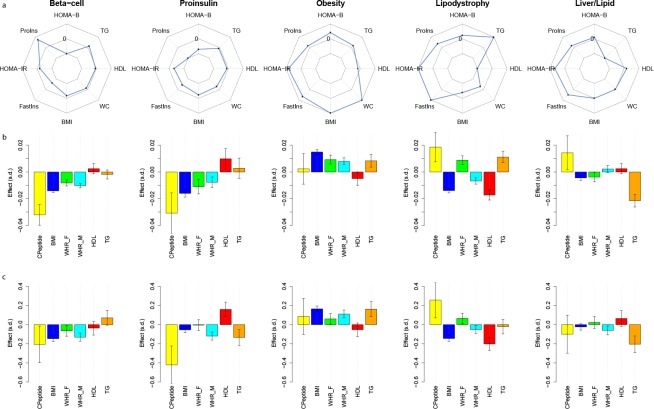
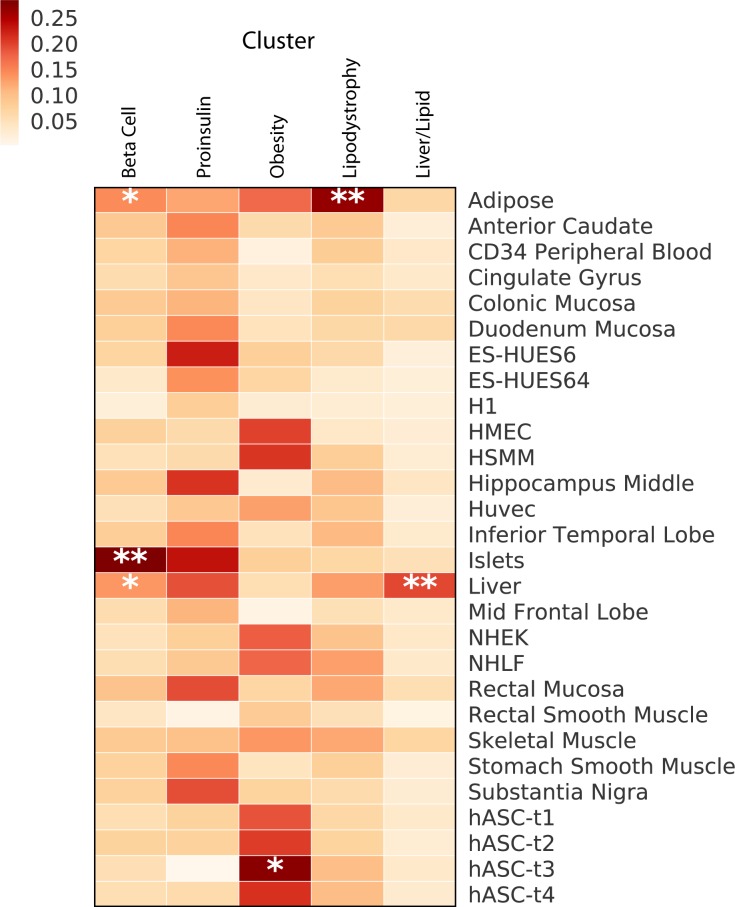
BACKGROUND: Type 2 diabetes (T2D) is a heterogeneous disease for which (1) disease-causing pathways are incompletely understood and (2) subclassification may improve patient management. Unlike other biomarkers, germline genetic markers do not change with disease progression or treatment. In this paper, we test whether a germline genetic approach informed by physiology can be used to deconstruct T2D heterogeneity. First, we aimed to categorize genetic loci into groups representing likely disease mechanistic pathways. Second, we asked whether the novel clusters of genetic loci we identified have any broad clinical consequence, as assessed in four separate subsets of individuals with T2D. METHODS AND FINDINGS: In an effort to identify mechanistic pathways driven by established T2D genetic loci, we applied Bayesian nonnegative matrix factorization (bNMF) clustering to genome-wide association study (GWAS) results for 94 independent T2D genetic variants and 47 diabetes-related traits. We identified five robust clusters of T2D loci and traits, each with distinct tissue-specific enhancer enrichment based on analysis of epigenomic data from 28 cell types. Two clusters contained variant-trait associations indicative of reduced beta cell function, differing from each other by high versus low proinsulin levels. The three other clusters displayed features of insulin resistance: obesity mediated (high body mass index [BMI] and waist circumference [WC]), "lipodystrophy-like" fat distribution (low BMI, adiponectin, and high-density lipoprotein [HDL] cholesterol, and high triglycerides), and disrupted liver lipid metabolism (low triglycerides). Increased cluster genetic risk scores were associated with distinct clinical outcomes, including increased blood pressure, coronary artery disease (CAD), and stroke. We evaluated the potential for clinical impact of these clusters in four studies containing individuals with T2D (Metabolic Syndrome in Men Study [METSIM], N = 487; Ashkenazi, N = 509; Partners Biobank, N = 2,065; UK Biobank [UKBB], N = 14,813). Individuals with T2D in the top genetic risk score decile for each cluster reproducibly exhibited the predicted cluster-associated phenotypes, with approximately 30% of all individuals assigned to just one cluster top decile. Limitations of this study include that the genetic variants used in the cluster analysis were restricted to those associated with T2D in populations of European ancestry. CONCLUSION: Our approach identifies salient T2D genetically anchored and physiologically informed pathways, and supports the use of genetics to deconstruct T2D heterogeneity. Classification of patients by these genetic pathways may offer a step toward genetically informed T2D patient management.
Overview
The claims and statistics of this paper haven’t been checked yet.
Free: it reads the open-access text and checks the first 5 claims that cite a source we can check. Create a free account to check every claim.
Integrity signals
Registry
Cites
Statistics
Figures
Verification
Claims the paper makes
The claims and statistics of this paper haven’t been checked yet.
Free: it reads the open-access text and checks the first 5 claims that cite a source we can check. Create a free account to check every claim.
Claims other papers make about this one
Each is checked against this paper’s own text: does it say what the citing paper says it does?
The cited source says what the claim attributes to it.
In the citing paper
“We previously showed using epigenomic data that this genetic cluster is enriched for enhancers/promoters active in liver tissue (9).”
From Increased genetic risk for β-cell failure is associated with β-cell function decline in people with prediabetes (2024) · cites this paper as [9]
The cited source says what the claim attributes to it.
In the citing paper
“the β-cell pPS included a specific subset of 30 T2D-associated SNPs specifically related to β-cell function (including HNF1A, HNF4A, TCF7L2, and SLC30A8) (9)”
From Increased genetic risk for β-cell failure is associated with β-cell function decline in people with prediabetes (2024) · cites this paper as [9]
Self-check
Percentages, sums and reported differences re-computed from the paper’s own numbers.
The self-check needs the paper’s full text.
Citations
Cites
A global reference for human genetic variation
The 1000 Genomes Project Consortium, authors, C., Auton, A., Abecasis, G. R., Steering committee, Altshuler, D. M., Durbin, R. M., Abecasis, G. R., Bentley, D. R., Chakravarti, A., et al. (2015) · Nature · doi:10.1038/nature15393 · Cited by 18,247
2. Classification and Diagnosis of Diabetes: Standards of Medical Care in Diabetes—2022
American Diabetes Association Professional Practice Committee (2022) · Diabetes Care · doi:10.2337/dc22-s002 · Cited by 4,792
Genetic studies of body mass index yield new insights for obesity biology
Study, T. L. C., Locke, A. E., The ADIPOGen Consortium, The AGEN-BMI Working Group, The CARDIOGRAMplusC4D Consortium, The CKDGen Consortium, The, G. L. G. C., The, I. C. B. P., The MAGIC Investigators, The MuTHER Consortium, et al. (2015) · Nature · doi:10.1038/nature14177 · Cited by 4,534
Self-citationNext-generation genotype imputation service and methods
Das, S., Forer, L., Schönherr, S., Sidore, C., Locke, A. E., Kwong, A., Vrieze, S. I., Chew, E. Y., Levy, S., McGue, M., et al. (2016) · Nature Genetics · doi:10.1038/ng.3656 · Cited by 3,808
Self-citation2. Classification and Diagnosis of Diabetes: Standards of Medical Care in Diabetes—2018
American Diabetes Association (2018) · Diabetes Care · doi:10.2337/dc18-s002 · Cited by 3,159
A reference panel of 64,976 haplotypes for genotype imputation
the Haplotype Reference Consortium (2016) · Nature Genetics · doi:10.1038/ng.3643 · Cited by 2,836
ChromHMM: automating chromatin-state discovery and characterization
Ernst, J., & Kellis, M. (2012) · Nature Methods · doi:10.1038/nmeth.1906 · Cited by 2,475 · cited 1×
“We obtained previously published 13-state ChromHMM [45] chromatin state calls for 28 cell types, excluding cancer cell lines [46].”
MethodComprehensive Molecular Characterization of Muscle-Invasive Bladder Cancer
Robertson, A. G., Kim, J., Al-Ahmadie, H., Bellmunt, J., Guo, G., Cherniack, A. D., Hinoue, T., Laird, P. W., Hoadley, K. A., Akbani, R., et al. (2017) · Cell · doi:10.1016/j.cell.2017.09.007 · Cited by 2,443
Self-citationAhlqvist, E., Storm, P., Käräjämäki, A., Martinell, M., Dorkhan, M., Carlsson, A., Vikman, P., Prasad, R. B., Aly, D. M., Almgren, P., et al. (2018) · The Lancet Diabetes & Endocrinology · doi:10.1016/s2213-8587(18)30051-2 · Cited by 2,335 · cited 5×
“In an attempt to deconstruct the heterogeneity of T2D, recent studies have performed cluster analysis of individuals using serum biomarkers and clinical data to identify T2D subgroups [3,4].”
BackgroundMethodInfluentialNew genetic loci implicated in fasting glucose homeostasis and their impact on type 2 diabetes risk
DIAGRAM Consortium, Dupuis, J., GIANT Consortium, Global BPgen Consortium, Anders Hamsten on behalf of Procardis Consortium, the MAGIC investigators, Langenberg, C., Prokopenko, I., Saxena, R., Soranzo, N., et al. (2010) · Nature Genetics · doi:10.1038/ng.520 · Cited by 2,166
Self-citation
Cited by
Items 301–400 of 544
The Trans-Ancestral Genomic Architecture of Glycaemic TraitsPreprint
Chen, J., Spracklen, C. N., Marenne, G., Varshney, A., Corbin, L. J., Luan, J., Willems, S. M., Wu, Y., Zhang, X., Horikoshi, M., et al. (2020) · bioRxiv (Cold Spring Harbor Laboratory) · doi:10.1101/2020.07.23.217646 · Cited by 7
Rosselot, C., Alvarsson, A., Wang, P., Li, Y., Beliard, K., Lu, G., Li, R., Liu, H., Gillespie, V., Tzavaras, N., et al. (2020) · bioRxiv (Cold Spring Harbor Laboratory) · doi:10.1101/2020.07.24.220244 · Cited by 11
Identifying chronic obstructive pulmonary disease subtypes using multi-trait genetics
Ziyatdinov, A., Hobbs, B. D., Kanaan-Izquierdo, S., Moll, M. R., Sakornsakolpat, P., Shrine, N. R. G., Chen, J., Song, K. S., Bowler, R. P., Castaldi, P. J., et al. (2025) · EBioMedicine · doi:10.1016/j.ebiom.2025.105609 · Cited by 8
“5 As non-negative matrix factorization requires positive values, we construct one matrix of positive Z-scores, and another comprised of negative Z-scores (thus, 2 T instead of T traits).”
Effectiveness of GLP ‐ 1RA according to different type 2 diabetes phenotypes: A retrospective study
Caruso, I., Giordano, F., Matichecchia, I. I., Gioia, L. D., Molfetta, S. D., Cignarelli, A., Sorice, G. P., Natalicchio, A., Laviola, L., & Giorgino, F. (2025) · Diabetes Obesity and Metabolism · doi:10.1111/dom.70005 · Cited by 6
“25 HbA1c Baseline D e l t a H b A 1 c To the best of our knowledge, we are the first to investigate time-to-treatment failure according to diabetes phenotypes as defined by Ahlqvist and colleagues.”
Cohort profile of the Heidelberg study on diabetes and complications HEIST-DiC
Kliemank, E., von Rauchhaupt, E., Seebauer, L., Roshan, M., Ansmann, M., Flegka, V., Schimpfle, L., Tsilingiris, D., Bartl, H., Fleming, T. H., et al. (2025) · Scientific Reports · doi:10.1038/s41598-025-15343-8 · Cited by 7
CROMER, S. J., Cobran, E. K., Iyer, H. S., Hysong, M. R., Vargas, L. B., Smith, J. L., Konigsberg, I. R., Bogumil, D. D., Glover, L. M., King, G. A., et al. (2026) · The American Journal of Human Genetics · doi:10.1016/j.ajhg.2026.02.007 · Cited by 7
“Created in https://BioRender.com. scores, “partitioned” polygenic scores (pPRSs) have also been developed to capture heterogeneity of physiologic pathways leading to T2D, 10,13 and the distribution of these partitioned scores varies by genetic ancestry.”
Association between temperatures and type 2 diabetes: A prospective study in UK Biobank
Wang, S., Lei, Y., Wang, X., Ma, K., Wang, C., Sun, C., & Han, T. (2024) · Diabetes Research and Clinical Practice · doi:10.1016/j.diabres.2024.111817 · Cited by 8
Prediabetes Subgroups, Type 2 Diabetes Risk, and Differential Effects of Preventive Interventions
Stafford, J. M., Casanova, R., Jaeger, B. C., Demesie, Y. N., Wells, B. J., & Bancks, M. P. (2025) · The Journal of Clinical Endocrinology & Metabolism · doi:10.1210/clinem/dgaf350 · Cited by 5
Predicting diabetes risk in diverse populations: what next?
Mercader, J. M., Ng, M. C. Y., Manning, A. K., & Rich, S. S. (2021) · The Lancet Diabetes & Endocrinology · doi:10.1016/s2213-8587(21)00287-4 · Cited by 7
Self-citationImplementation of Precision Genetic Approaches for Type 1 and 2 Diabetes
Ronald, C. W., & Chan, J. C. N. (2022) · Springer eBooks · doi:10.1007/978-3-030-98927-9_5 · Cited by 6
Wesolowska‐Andersen, A., Brorsson, C., Bizzotto, R., Mari, A., Tura, A., Koivula, R. W., Mahajan, A., Viñuela, A., Tajes, J. F., Sharma, S., et al. (2022) · Yearbook of pediatric endocrinology · doi:10.1530/ey.19.15.4 · Cited by 7
Wang, W., Li, X., Chen, F., Wei, R., Chen, Z., Li, J., Qiao, J., Pan, Q., Yang, W., & Guo, L. (2023) · Diabetes & Metabolic Syndrome Clinical Research & Reviews · doi:10.1016/j.dsx.2023.102936 · Cited by 8
Kutalik, Z. (2020) · International Journal of Epidemiology · doi:10.1093/ije/dyaa062 · Cited by 5
Aetiological differences between novel subtypes of diabetes derived from genetic associationsPreprint
Aly, D. M., Dwivedi, O. P., Prasad, R. B., Käräjämäki, A., Hjort, R., Åkerlund, M., Mahajan, A., Udler, M. S., Florez, J. C., McCarthy, M. I., et al. (2020) · medRxiv · doi:10.1101/2020.09.29.20203935 · Cited by 6
Self-citationPhenotypic subtyping via contrastive learningPreprint
Gorla, A., Sankararaman, S., Burchard, E. G., Flint, J., Zaitlen, N., & Rahmani, E. (2023) · bioRxiv (Cold Spring Harbor Laboratory) · doi:10.1101/2023.01.05.522921 · Cited by 6
Liang, X., Mounier, N., Apfel, N., Khalid, S., Frayling, T. M., & Bowden, J. (2023) · medRxiv · doi:10.1101/2023.03.18.23287164 · Cited by 6
Valério, C. M., Viola, L. F., Guidorizzi, N. R., Lima, J. G., Godoy‐Matos, A. F., Hohl, A., Trujilho, F. R., Dantas, J. R., Campos, J. T. A. D. M., Zajdenverg, L., et al. (2025) · Diabetology & Metabolic Syndrome · doi:10.1186/s13098-025-01733-5 · Cited by 6
“In a genome-wide association study, Udler et al. identified five major loci groups in patients with type 2 diabetes (T2D), with one displaying a “lipodystrophy-like” fat distribution [45].”
Rodriguez‐Martinez, A., Kothalawala, D. M., Carrillo-Larco, R. M., & Poulakakis-Daktylidis, A. (2025) · Emerging Topics in Life Sciences · doi:10.1042/etls20240011 · Cited by 9
“Diseases such as cancer, cardiometabolic diseases, neurodegenerative diseases, and infectious diseases have been extensively investigated through the lens of subtyping [30–34].”
Bridging the variant-to-function gap in type 2 diabetes: advances and challenges
Maynard, A. G., Bhardwaj, R., Jones, T. R., & Claussnitzer, M. (2025) · Diabetologia · doi:10.1007/s00125-025-06600-6 · Cited by 10
“Recent studies have used several approaches to cluster phenotypes and variants, such as k -means clustering and Bayesian non-negative matrix factorisation (bNMF), and annotated clusters of variants by their clinical associations [8, 14, 36–39].”
Sun, Y. V., Liu, C., Hui, Q., Zhou, J. J., Gaziano, J. M., Wilson, P. W. F., Program, T. M. V., Joseph, J., & Phillips, L. S. (2024) · The American Journal of Human Genetics · doi:10.1016/j.ajhg.2024.05.018 · Cited by 7
Liang, X., Mounier, N., Apfel, N., Khalid, S., Frayling, T. M., & Bowden, J. (2024) · Genetic Epidemiology · doi:10.1002/gepi.22582 · Cited by 9
Molinari, M., Iorio, M. D., Chaturvedi, N., Hughes, A. D., & Tillin, T. (2020) · The International Journal of Biostatistics · doi:10.1515/ijb-2019-0108 · Cited by 7
“Each of the 10 clusters has a distinctive metabolic and phenotypic profile, consistent with suggestions that there are different pathways to type 2 diabetes [18] and that some pathways may be more strongly associated with a particular ethnic group.”
BackgroundGloudemans, M. J., Balliu, B., Nachun, D. C., Durrant, M. G., Ingelsson, E., Wabitsch, M., Quertermous, T., Montgomery, S. B., Knowles, J. W., & Carcamo‐Orive, I. (2022) · Metabolism · doi:10.1016/j.metabol.2021.155025 · Cited by 5
Algorithmic identification of atypical diabetes in electronic health record (EHR) systems
CROMER, S. J., Chen, V., Han, C. Y., Marshall, W., EMONGO, S., Greaux, E. G., MAJARIAN, T., Florez, J. C., Mercader, J. M., & Udler, M. S. (2022) · PLoS ONE · doi:10.1371/journal.pone.0278759 · Cited by 5
Self-citationVerhoeff, K. K., Marfil‐Garza, B. A., Czarnecka, Z., Cuesta‐Gomez, N., Jasra, I. T., Dadheech, N., Senior, P. A., & Shapiro, A. M. J. (2023) · The Journal of Clinical Endocrinology & Metabolism · doi:10.1210/clinem/dgad257 · Cited by 6
Eoli, A., Ibing, S., Schurmann, C., Nadkarni, G. N., Heyne, H., & Böttinger, E. P. (2024) · Scientific Reports · doi:10.1038/s41598-024-59747-4 · Cited by 6
“As additional validation, we also performed a Bayesian version of NMF 16 , using the code provided by Udler et al. 17 . bNMF was run 1000 times with up to 200,000 iterations in each run.”
BackgroundMethodRichter, J., Jitka, P., Závorková, M., Král, V., Ivana, S., Dobiásová, L., & Větvička, V. (2020) · Folia Microbiologica · doi:10.1007/s12223-020-00789-2 · Cited by 6
Trischitta, V., Prudente, S., & Doria, A. (2020) · Current Opinion in Pharmacology · doi:10.1016/j.coph.2020.10.020 · Cited by 5
Leveraging eQTLs to identify individual-level tissue of interest for a complex trait
Majumdar, A., Giambartolomei, C., Cai, N., Haldar, T., Schwarz, T., Gandal, M. J., Flint, J., & Paşaniuc, B. (2021) · PLoS Computational Biology · doi:10.1371/journal.pcbi.1008915 · Cited by 5
“Genetic subtyping offers an advantage over phenotypic subtyping in that germline genetic characteristics are more stable than phenotypic characteristics of an individual [12, 13].”
BackgroundMultitrait genetic-phenotype associations to connect disease variants and biological mechanismsPreprint
Julienne, H., Laville, V., McCaw, Z. R., He, Z., Guillemot, V., Lasry, C., Ziyatdinov, A., Vaysse, A., Lechat, P., Ménager, H., et al. (2020) · bioRxiv (Cold Spring Harbor Laboratory) · doi:10.1101/2020.06.26.172999 · Cited by 5
Costanzo, M. C., Akolkar, B., Claussnitzer, M., Florez, J. C., Gloyn, A. L., Grant, S. F. A., Kaestner, K. H., Manning, A. K., Mohlke, K. L., Parker, S. C. J., et al. (2025) · Diabetes · doi:10.2337/db25-0042 · Cited by 9
Self-citationvan Gemert, T., Zaharia, O., Roden, M., & Müssig, K. (2019) · Diabetes aktuell · doi:10.1055/a-0965-9433 · Cited by 4
“Neueste Studien weisen bereits auf zukünftige gene tische Ansätze für die Diabetesprognose und -therapie hin [16].”
BackgroundInfluentialBengtson, A. M., Dice, A. L. E., Clark, M. A., Gutman, R., Rouse, D. J., & Werner, E. F. (2022) · American Journal of Perinatology · doi:10.1055/a-1877-9587 · Cited by 4
“36,37 However, race and ethnicity are not reliable indicators ofgenetic differences.”
BackgroundAnticipation of Precision Diabetes and Promise of Integrative Multi-Omics
Liu, C., & Sun, Y. V. (2021) · Endocrinology and Metabolism Clinics of North America · doi:10.1016/j.ecl.2021.05.011 · Cited by 4
Wang, W., Jia, T., Liu, Y., Deng, H., Chen, Z., Wang, J., Geng, Z., Wei, R., Qiao, J., Ma, Y., et al. (2023) · Diabetes & Metabolic Syndrome Clinical Research & Reviews · doi:10.1016/j.dsx.2023.102850 · Cited by 7
Reim, P. K., Engelbrechtsen, L., Gybel-Brask, D. J., Schnurr, T. M., Kelstrup, L., Høgdall, E. V. S., & Hansen, T. F. (2023) · Scientific Reports · doi:10.1038/s41598-023-46910-6 · Cited by 4
Forte, J. C., Folkertsma, P., Gannamani, R., Kumaraswamy, S., Mount, S. W., de Koning, T. J., van Dam, S., & Wolffenbuttel, B. H. R. (2021) · Journal of Personalized Medicine · doi:10.3390/jpm11121322 · Cited by 6
Commentary: Data-driven subgrouping in epidemiology and medicine
Ala‐Korpela, M. (2019) · International Journal of Epidemiology · doi:10.1093/ije/dyz040 · Cited by 4
“These included a cluster of very insulin-resistant individuals with higher risk of diabetic kidney disease than the other clusters, a cluster of relatively young insulin deficient individuals with poor metabolic control, and a large group of elderly patients with the most benign disease course.3 In an independent work…”
BackgroundMethodInfluentialSpontaneous recovery and the multiple timescales of human motor memoryPreprint
Orozco, S. P., Albert, S. T., & Shadmehr, R. (2020) · bioRxiv (Cold Spring Harbor Laboratory) · doi:10.1101/2020.03.24.006023 · Cited by 3
Burren, O. S., Reales, G., Wong, L., Bowes, J., Lee, J. C., Barton, A. C., Lyons, P. A., Smith, K. G. C., Thomson, W., Kirk, P., et al. (2020) · bioRxiv (Cold Spring Harbor Laboratory) · doi:10.1101/2020.01.14.905869 · Cited by 5
“33 Here, we hoped to learn the same sorts of factors by decomposing only summary GWAS data on clinical disease endpoints.”
BackgroundGenetics of skeletal proportions in two different populationsPreprint
Bartell, E., Lin, K., Tsuo, K., Gan, W., Vedantam, S., Cole, J. B., Baronas, J., Yengo, L., Marouli, E., Amariuta, T., et al. (2023) · bioRxiv · doi:10.1101/2023.05.22.541772 · Cited by 4
“…GWAS of multiple related phenotypes has explored improving power for genetic discovery (Turley et al. 2018), identifying loci whose effects overlap between phenotypes (Shi et al. 2017; Giambartolomei et al. 2014), or classifying loci based on their effect on related phenotypes (Udler et al. 2018).”
BackgroundSelf-citationPascat, V., Zudina, L., Maurin, L., Ulrich, A., Maina, J. G., Demirkan, A., Balkhiyarova, Z., Pupko, I., Sharhorodska, Y., Pattou, F. N., et al. (2026) · Nature Communications · doi:10.1038/s41467-025-67449-2 · Cited by 8
“We observed several well-known loci , such as those at GRB14-COBLL1 (associated with reduced insulin level, pulse pressure, and mean arterial pressure) 25,26 , ADCY5 (beta cell function and lipodystrophy) 27 , and ACE (renin-angiotensin system, hypertension) genes 28 .”
InfluentialDing, K., Zhou, Z., Ma, Y., Li, X., Xiao, H., Wu, Y., Wu, T., & Chen, D. (2022) · Biomedicines · doi:10.3390/biomedicines10123093 · Cited by 5
“Recent examples of proposed subtypes span diverse disease domains, including type 2 diabetes [3,27], breast cancer [28,29], asthma [30,31], autism [32,33], bipolar disorder, and schizophrenia [34,35].”
BackgroundAssessing the causal association of pregnancy complications with diabetes and cardiovascular disease
Xie, Y., Zhang, J., Ni, S., & Ji, L. (2024) · Frontiers in Endocrinology · doi:10.3389/fendo.2024.1293292 · Cited by 5
Challenges and opportunities in precision therapy for diabetic patients
Sharma, R., Musyuni, P., Majeed, J., & Aggarwal, G. (2024) · Health Sciences Review · doi:10.1016/j.hsr.2024.100190 · Cited by 6
Jia, C., Zhang, S., An, J., Cheng, X., Li, P., Zhang, X., Geng, T., Li, W., Yan, Y., Zhao, Z., et al. (2024) · Ecotoxicology and Environmental Safety · doi:10.1016/j.ecoenv.2024.116948 · Cited by 3
Fowler, L. A., Fernández, J. R., O'Neil, P. M., Parcha, V., Arora, P. K., Shetty, N. S., Cardel, M. I., Foster, G. D., & Gower, B. A. (2024) · Archives of Medical Research · doi:10.1016/j.arcmed.2024.103128 · Cited by 5
Wang, X., Zhao, D., Beeraka, N. M., Spandana, T., Sri, C. D., Nishanth, V. V., Uthaiah, C. A., Leihang, Z., Sugur, K., Liu, J., et al. (2022) · Current Medicinal Chemistry · doi:10.2174/0929867329666220802090446 · Cited by 3
Non-cross-linking advanced glycation end products affect prohormone processing
Brings, S., Mier, W., Beijer, B., Kliemank, E., Herzig, S., Szendroedi, J., Nawroth, P. P., & Fleming, T. (2024) · Biochemical Journal · doi:10.1042/bcj20230321 · Cited by 3
Advancing precision medicine in type 2 diabetes
Florez, J. C. (2023) · The Lancet Diabetes & Endocrinology · doi:10.1016/s2213-8587(23)00384-4 · Cited by 3
Self-citationAutomated annotation of disease subtypes
Ofer, D., & Linial, M. (2024) · Journal of Biomedical Informatics · doi:10.1016/j.jbi.2024.104650 · Cited by 3
Genetic variants explain ancestry‐related differences in type 2 diabetes risk
Deutsch, A. J., Smith, K., & Udler, M. S. (2024) · Clinical and Translational Medicine · doi:10.1002/ctm2.70076 · Cited by 2
Self-citationHughes, A. E., Hayes, M. G., Egan, A. M., Patel, K., Scholtens, D. M., Lowe, L. P., Lowe, W. L., Dunne, F., Hattersley, A. T., & Freathy, R. M. (2020) · Wellcome Open Research · doi:10.12688/wellcomeopenres.16097.3 · Cited by 4
Boecker, M., & Lai, A. G. (2020) · Wellcome Open Research · doi:10.12688/wellcomeopenres.16251.1 · Cited by 5
Cefalu, W. T., Andersen, D. K., Arreaza-Rubín, G., Pin, C. L., Sato, S. M., Verchere, C. B., Woo, M., Rosenblum, N. D., Rosenblum, N. D., Cefalu, W. T., et al. (2021) · Canadian Journal of Diabetes · doi:10.1016/j.jcjd.2021.09.126 · Cited by 10
Self-citationPalmer, J. P., Kahn, S. E., Schwartz, M. W., Taborsky, G. J., & Woods, S. C. (2020) · Diabetes Care · doi:10.2337/dci19-0068 · Cited by 3
Merino, J., Dashti, H. S., Sarnowski, C., Lane, J. M., Udler, M. S., Todorov, P. V., Song, Y., Wang, H., Kim, J., Tucker, C., et al. (2019) · bioRxiv (Cold Spring Harbor Laboratory) · doi:10.1101/623728 · Cited by 4
“To enable an inference for latent overlapping modules or clusters embedded in variant-trait associations, we modified the existing bNMF algorithm to explicitly account for both positive and negative associations as was done previously.(43,44) The defining features of each cluster were determined by the most highly ass…”
MethodSelf-citationA zebrafish model system for drug screening in diabetes
Mathews, B. (2019) · University Library of Skövde (University of Skövde) · Cited by 5
Li, J. H., Brenner, L. N., Kaur, V., Figueroa, K., Udler, M. S., Leong, A., MaGiC Investigators, Mercader, J. M., & Florez, J. C. (2022) · medRxiv · doi:10.1101/2022.01.24.22269036 · Cited by 3
“We constructed five process-specific polygenic scores (pPS) derived from physiologically-driven clusters.(23) We tested these scores against the primary endpoints of metformin and glipizide response and set an experiment-wide significance threshold of p<0·003 to account for multiple comparisons (two drugs × nine polyg…”
MethodSelf-citationAlbanus, R. D., Tang, X., Taylor, H. J., Manickam, N., Erdos, M. R., Narisu, N., Han, Y., Orchard, P., Varshney, A., Liu, C., et al. (2022) · bioRxiv (Cold Spring Harbor Laboratory) · doi:10.1101/2022.11.12.516291 · Cited by 2
Khan, S. R., Röst, H. L., Cox, B., Razani, B., Alexeeff, S., Wheeler, M. B., & Gunderson, E. P. (2023) · medRxiv · doi:10.1101/2023.06.13.23291346 · Cited by 3
“Recently, Udler and colleagues explored genomic profiles and traits of T2D heterogeneous groups using a soft clustering method (i.e., Bayesian nonnegative matrix factorization clustering) and identified five genetic variant-trait associated clusters using only T2D population of Caucasian ancestry from the Metabolic Sy…”
BackgroundOmdahl, A. R., Weinstock, J. S., Keener, R., Chhetri, S. B., Arvanitis, M., & Battle, A. J. (2025) · The American Journal of Human Genetics · doi:10.1016/j.ajhg.2025.07.003 · Cited by 3
“Several studies 8–14 have shown that these relationships can be captured by latent genetic components (factors).”
Sedaghati-khayat, B., Trajanoska, K., Boer, C. G., Rivadeneira, F., Uitterlinden, A. G., van Meurs, J. B. J., & van Rooij, J. (2025) · Osteoarthritis and Cartilage · doi:10.1016/j.joca.2025.09.018 · Cited by 2
Harnessing dysglycaemia heterogeneity for precision type 2 diabetes prevention
Xie, S., & Merino, J. (2025) · Current Opinion in Lipidology · doi:10.1097/mol.0000000000001018 · Cited by 3
Plengvidhya, N., Teerawattanapong, N., Narkdontr, T., Innang, S., Songlilitchuwong, S., Suthon, S., & Tangjittipokin, W. (2025) · Scientific Reports · doi:10.1038/s41598-025-32840-y · Cited by 2
“These results are consistent with data from both GWAS and functional studies, indicating that CDKAL1 variants reduce insulin synthesis and secretion, particularly in Asian populations where early-onset diabetes with low BMI is more prevalent 19 .”
InfluentialDisease Subtyping in Type 2 Diabetes: From Clusters to Clinical Translation
Podobnik, J. (2026) · University of Toronto Medical Journal · doi:10.33137/utmj.v103i1.46160 · Cited by 2
Precision Medicine in Diabetes
Dawed, A. Y., Haider, E., & Pearson, E. R. (2022) · Handbook of experimental pharmacology · doi:10.1007/164_2022_590 · Cited by 5
Hasan, M., Islam, M. M., Raihan, M. O., Brishti, A., Das, A., Shawon, J., Sultana, F., Bari, M. W., Islam, M. A., Gan, S. H., et al. (2023) · 3 Biotech · doi:10.1007/s13205-023-03575-2 · Cited by 2
“Among the various types of diabetes, type 2 DM is the most common type, as it accounts for 90–95% of cases (Udler et al. 2018).”
BackgroundCharacterisation of phenotypic patterns in equine exercise‐associated myopathies
Lindsay‐McGee, V., Massey, C., Li, Y. T., Clark, E. L., Psifidi, A., & Piercy, R. J. (2024) · Equine Veterinary Journal · doi:10.1111/evj.14128 · Cited by 2
Wang, K., Qian, Q., Bian, C., Sheng, P., Zhu, L., Teng, S., & An, X. (2024) · Diabetes Therapy · doi:10.1007/s13300-024-01667-7 · Cited by 3
McWilliam, A., Marshall, D. C., Kerns, S. L., Barnett, G. C., Vega, A. I., Kapouranis, T., Aguado-Barrera, M. E., Avuzzi, B., Azria, D., Chang-Claude, J. C., et al. (2025) · JNCI Journal of the National Cancer Institute · doi:10.1093/jnci/djae349 · Cited by 2
“34 These partitions were then associated with cardiovascular endpoints, with different partitions showing a stronger association with different endpoints than the combined polygenic risk score.”
DRAGoM: Classification and Quantification of Noncoding RNA in Metagenomic Data
Liu, B., Thippabhotla, S., Zhang, J., & Zhong, C. (2021) · Frontiers in Genetics · doi:10.3389/fgene.2021.669495 · Cited by 2
The world congress on insulin resistance, diabetes, and cardiovascular disease ( WCIRDC )
Bloomgarden, Z. T. (2022) · Journal of Diabetes · doi:10.1111/1753-0407.13260 · Cited by 2
Interactive similar patient retrieval for visual summary of patient outcomes
Liu, H., Dai, H., Chen, J., Xu, J., Tao, Y., & Lin, H. B. (2022) · Journal of Visualization · doi:10.1007/s12650-022-00898-9 · Cited by 3
“According to data complexity and task requirements, recent research also designs novel clustering algorithms for subtype analysis, focusing on diabetes (Udler et al. 2018) and cancers (Liu et al. 2020).”
BackgroundAl-Aama, J. Y., Mahdi, H. B. A., Salama, M. A., Bakur, K., Alhozali, A. M., Mosli, H. H., Bahijri, S., Bahieldin, A., Elango, R., Willmitzer, L., et al. (2019) · Biotechnology & Biotechnological Equipment · doi:10.1080/13102818.2019.1664321 · Cited by 3
“Many of them interact with environmental factors and with other genes to increase the risk of developing T2D [3].”
BackgroundIdentifying the Relationship Between Health Investment and Economic Development
Eti, S., Gökalp, Y., & Tosun, N. O. (2020) · Advances in medical diagnosis, treatment, and care (AMDTC) book series · doi:10.4018/978-1-7998-2329-2.ch001 · Cited by 2
Current Techniques for Complex Phenotypes: GWAS of the Electrocardiogram
Fauman, E. B. (2020) · Trends in Genetics · doi:10.1016/j.tig.2020.09.009 · Cited by 2
Verma, M., Loh, N. Y., Vasan, S. K., van Dam, A. D., Todorčević, M., Neville, M. J., Karpe, F., & Christodoulides, C. (2019) · bioRxiv (Cold Spring Harbor Laboratory) · doi:10.1101/854661 · Cited by 2
Identifying COPD subtypes using multi-trait geneticsPreprint
Ziyatdinov, A., Hobbs, B. D., Kanaan-Izquierdo, S., Moll, M. R., Sakornsakolpat, P., Shrine, N. R. G., Chen, J., Song, K. S., Bowler, R. P., Castaldi, P. J., et al. (2023) · medRxiv · doi:10.1101/2023.02.20.23286186 · Cited by 2
“We applied a Bayesian method previously used in type 2 diabetes, another complex disease characterized by disease heterogeneity 5 , to cluster these variants based on their association with a broad range of traits measured in the UK Biobank, a large population cohort with hundreds of phenotypic…”
Zhang, Z., Jung, J., Kim, A., Suboc, N., Gazal, S., & Mancuso, N. (2023) · medRxiv · doi:10.1101/2023.03.27.23287801 · Cited by 2
Pleiotropic heritability quantifies the shared genetic variance of common diseasesPreprint
Zhao, Y., Strober, B. J., Hou, K., Kerner, G., Danesh, J., Gazal, S., Cheng, W., Inouye, M., Price, A. L., & Jiang, X. (2025) · medRxiv · doi:10.1101/2025.06.10.25329261 · Cited by 2
“(cid:0) Third, we estimated (cid:0)(cid:2)(cid:3)(cid:4)(cid:5)(cid:6) without pruning highly correlated auxiliary diseases, and we found that (cid:0)(cid:2)(cid:3)(cid:4)(cid:5)(cid:6) estimates were downward biased when true values were less than 25% but approximately unbiased (similar to Figure 2 ) when true values…”
InfluentialSrinivasan, S., Chen, L., Udler, M. S., Todd, J. N., Kelsey, M. M., Haymond, M. W., Arslanian, S. A., Zeitler, P. S., Gubitosi‐Klug, R., Nadeau, K. J., et al. (2023) · Pediatric Diabetes · doi:10.1155/2023/8883199 · Cited by 2
“For quality control, we examined the association of the pPS for each of the five T2D genetic clusters with select metabolic traits and the results were in the expected direction and similar to findings in adults [19, 24] (Supplementary Table 5).”
MethodResultSelf-citationSonawalla, A., Chasman, D. I., & Chan, Y.-M. (2025) · The Journal of Clinical Endocrinology & Metabolism · doi:10.1210/clinem/dgaf141 · Cited by 1
Maraschin, C. K., Molino, G. O. G., Alessi, J., Teló, G. H., dos Reis, M. A., & Schaan, B. D. (2025) · Archives of Endocrinology and Metabolism · doi:10.20945/2359-4292-2024-0258 · Cited by 1
Actionability of Genetic Variants in Diabetes: Core Aspects and Applied Examples
Yvonnet, S., Reim, P. K., & Thuesen, A. C. B. (2025) · Diabetes Spectrum · doi:10.2337/ds24-0081 · Cited by 1
“Many scores are derived from the cumulative effects of independent genetic signals identi fi ed in genome-wide association studies (30) and may be further re fi ned into pathway-or cell-type – speci fi c scores (31 – 33).”
Glycaemic responses to metformin monotherapy by SNP clusters in patients with type 2 diabetes
Sheu, W. H., Lee, C., Wang, Y., Liao, C.-S., Hsiao, T., Ken, S., Hatzikotoulas, K., Morris, A. P., Initiative, T. T. 2. D. G. G., Chen, Y. I., et al. (2025) · Diabetes Obesity and Metabolism · doi:10.1111/dom.70023 · Cited by 1
Dsouza, S., Sulaiman, F., Abdul, F., Mulla, F., Ahmed, F. S., Al-Sharhan, M., AlOlama, A., Ali, N., Abdulaziz, A., Rafie, A. M., et al. (2025) · BMJ Open · doi:10.1136/bmjopen-2025-101284 · Cited by 1
Mapping disease loci to biological processes via joint pleiotropic and epigenomic partitioning
Kerner, G., Kamitaki, N., Strober, B. J., & Price, A. L. (2026) · Cell Genomics · doi:10.1016/j.xgen.2025.101138 · Cited by 4
“Extensive pleiotropy between diseases and complex traits 13–22 motivates pleiotropic partitioning 23–25 (see also Zhang et al., 26–31 Kim et al., 26–31 Reeve et al., 26–31 Qi et al., 26–31 Ghatan et al., 26–31 and Li et al. 26–31 )—leveraging pleiotropic associations with auxiliary traits to group…”
InfluentialYu, G., Tam, C. H. T., SHI, M., Hughes, A. E., Huang, C., Deng, Y., Weedon, M. N., Lim, C. K. P., Chiu, C., Chan, J. C. N., et al. (2026) · Diabetologia · doi:10.1007/s00125-026-06669-7 · Cited by 1
“…the causal effects of some previously reported type 2 diabetes loci on birthweight, including HHEX [13, 56, 57], CDKAL1 [13, 57–61], ADCY5 [13, 59–61], ANK1 [8, 62, 63], IRS1 [8, 62, 63], MTNR1B and TCF7L2 [2, 35, 57], and highlighted CDKAL1 as the only locus with both maternal and fetal effects.”
Zhuang, P., Liu, X., Jia, W., Zheng, W., Wan, X., Chen, W., Li, Y., Lan, X., Li, H., Tong, W., et al. (2026) · Fundamental Research · doi:10.1016/j.fmre.2026.03.017 · Cited by 1
Nature vs nurture of glucose homeostasis trajectories in children from the ALSPAC study
Gamache, I., Fagbemi, K., Harnois‐Leblanc, S., Greenwood, C. M. T., Henderson, M., Hulst, A. V., Timpson, N. J., & Manousaki, D. (2026) · Diabetologia · doi:10.1007/s00125-026-06722-5 · Cited by 1
“Third, we investigated the pathophysiological mechanisms underlying glucose regulation in children using pathway-specific partitioned PRSs for adult type 2 diabetes [17].”
Converging TCF7L2 and CDKAL1 pathways in the pathogenesis of type 2 diabetes mellitus
Farman, M. S., Salman, M. I., & Hassan, O. M. (2026) · Acta Diabetologica · doi:10.1007/s00592-026-02719-z · Cited by 1
“These loci still support mechanistic stratification in studies that measure incretin-potentiated insulin secretion, proinsulin-to-insulin ratio, and beta cell stress markers under standardized metabolic challenges [ 65 , 66 ].”
Genetic background of obesity: a case-control study
Kalesis, K., Roidοs, P., Nikolopoulos, V., Katsiki, N., Kotsa, K., & Koufakis, T. (2026) · HORMONES · doi:10.1007/s42000-026-00790-3 · Cited by 1
“Analy - ses were performed using IBM SPSS Statistics version 26.”
Pleiotropic shared heritability quantifies the shared genetic variance of common diseases
Zhao, Y., Strober, B. J., Hou, K., Kerner, G., Danesh, J., Gazal, S., Cheng, W., Inouye, M., Price, A. L., & Jiang, X. (2026) · Nature Genetics · doi:10.1038/s41588-026-02607-w · Cited by 4
“…estimation of partitioned pleiotropic shared heritability, in which genetic values of auxiliary diseases/traits are partitioned into tissue/cell type-specific components 49–51 , increasing shared genetic variance with the target disease and elucidating shared biological processes 1–6, 15, 22, 23 .”
Type 2 diabetes prevention across the life course
Wang, Y., Sargent, J. L., Mathieu, C., Arreola, E. V., Perreault, L., Loos, R. J. F., Lim, L., Sandforth, L., Hanson, R. L., Kullmann, S., et al. (2026) · Nature Medicine · doi:10.1038/s41591-026-04550-z · Cited by 1
“Nevertheless, genetic data have been successfully used to help differentiate the disease processes underpinning diabetes predisposition using partitioned polygenic scores 147–149 and in response stratification 150 .”
Khan, S. H., Anwar, R., Amin, Z., Fazal, N., Gilani, A. A. S., & Tariq, M. (2019) · Journal of College of Physicians And Surgeons Pakistan · doi:10.29271/jcpsp.2019.12.1153
Visualizing heterogeneity in type 2 diabetes phenotype, outcome and drug response
(2022) · Nature Medicine · doi:10.1038/s41591-022-01791-6 · Cited by 2
Possible clinical applications of knowledge about the genetics of type 2 diabetes
Demidova, T. Y., & Plakhotnyaya, V. M. (2022) · Meditsinskiy sovet = Medical Council · doi:10.21518/2079-701x-2022-16-10-46-56 · Cited by 1
Precision Medicine in Type 2 Diabetes
Jeon, E. J. (2022) · Journal of Korean Diabetes · doi:10.4093/jkd.2022.23.2.77 · Cited by 1
“그러나 최근 복합적인 원인으로 발생하는 질병 예측의 정확도를 높 이기 위하여 더 많은 유전자로 질병을 예측하는 다중유전자 위험점수(polygenic risk scores)에 관심이 증대되고 있지 만, 2형당뇨병 치료에 약물 결과를 매우 잘 예측하는 유전변 이가 찾아질지는 불확실하다[5].”
Zaharia, O., Herder, C., & Roden, M. (2023) · Die Diabetologie · doi:10.1007/s11428-023-01006-7 · Cited by 1
Metadata
- Authors
- Udler, M. S., Kim, J., von Grotthuss, M., Bonàs-Guarch, S., Cole, J. B., Chiou, J., ISGC, C. D. A. O. B. O. M. A. T., Boehnke, M., Laakso, M., Atzmon, G., Glaser, B., Mercader, J. M., Gaulton, K., Flannick, J., Getz, G., & Florez, J. C.
- Affiliations
- Broad Institute (US)
- University of California San Diego (US)
- University of Eastern Finland (FI)
- Albert Einstein College of Medicine (US)
- ORCID
- Venue
- PLOS Medicine
- Publisher
- Public Library of Science (PLoS)
- Published
- 2018-09-21
- Volume
- 15
- Issue
- 9
- Pages
- e1002654
- ISSN
- 1549-1277 (ISSN-L)
- 1549-1676
- PMC
- PMC6150463
- OpenAlex
- W2890555481
- Cited by
- 542
- References
- 75
- Citations by year
- 2026: 59 · 2025: 60 · 2024: 71 · 2023: 89 · 2022: 88 · 2021: 65 · 2020: 72 · 2019: 37 · 2018: 1
- FWCI
- 26.83
- Type
- journal article
- Language
- en
- Open access
- gold
- doi.org
- Licence
- Locations
- PLoS Medicine (publishedVersion, cc-by)
- Europe PMC (PubMed Central) (publishedVersion, cc-by)
- PubMed Central (publishedVersion, cc-by)
- PubMed (publishedVersion)
- UEF eRepo (University of Eastern Finland) (submittedVersion, cc-by)
- DOAJ (DOAJ: Directory of Open Access Journals) (submittedVersion, cc-by-sa)
- Figshare (submittedVersion, cc-by)
- Funders
- National Institute of Diabetes and Digestive and Kidney Diseases (1K23DK114551-01, DK062370)
- National Institute of Neurological Disorders and Stroke (1K23NS086873-04)
- Topics
- Life Sciences › Biochemistry, Genetics and Molecular Biology › Genetics › Genetic Associations and Epidemiology
- Life Sciences › Biochemistry, Genetics and Molecular Biology › Genetics › Diabetes and associated disorders
- Life Sciences › Biochemistry, Genetics and Molecular Biology › Genetics › Genetic Mapping and Diversity in Plants and Animals
- Keywords
- type 2 diabetes, genetic loci, disease heterogeneity, diabetes subtypes, fuzzy clustering, tissue-specific enhancers, beta-cell function, insulin resistance, hepatic lipid metabolism, polygenic risk score, coronary artery disease, stroke, blood pressure, adiponectin, triglycerides
- MeSH terms
- Algorithms, Bayes Theorem, Cross-Sectional Studies, Diabetes Mellitus, Type 2, Female, Multigene Family, Genetic Markers, Humans, Insulin, Insulin Resistance, Male, Phenotype, Prospective Studies, Risk Factors, Cohort Studies, Cluster Analysis, Founder Effect, Genetic Predisposition to Disease, Databases, Genetic, Genome-Wide Association Study, Genetic Loci
About these checks
Registry, retraction, Cites and statistics results are computed, not judged, with one exception: a printed reference that no index lists is read once by a model before it counts as a citation error. Claims are extracted by a model and kept only when their quote appears verbatim in the text; each cited source is then checked, with a model’s help, for whether it says what the claim relies on. Those verdicts can be wrong — read the claim’s quote and the cited source before relying on one.
Statistics and arithmetic are recomputed, not judged.
Confidence bands are shown only for fields calibrated on our annotated test set. None is calibrated yet, so no band is shown.
What counts as a claim ›How we measure confidence ›How we check this ›
Are you an author, or do you see a problem with this page? Request a review
Data sources
Bibliographic data: Semantic Scholar, OpenAlex, Crossref.
Contains information from the Semantic Scholar Academic Graph Datasets, made available under the ODC Attribution License (ODC-BY 1.0).
Semantic Scholar’s data is described in: Kinney, R., et al. (2023). The Semantic Scholar Open Data Platform. arXiv:2301.10140.
