

Type 2 diabetes genetic loci informed by multi-trait associations point to disease mechanisms and subtypes: A soft clustering analysis
Open accessThe DOI matches its Crossref record; 75 of the 75 references it cites were found in a registry or an index.
Abstract
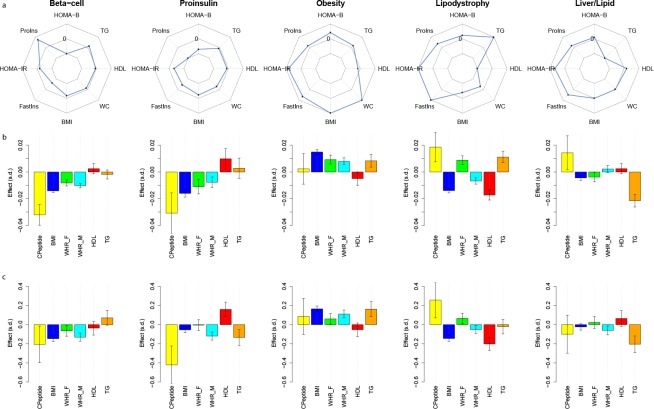
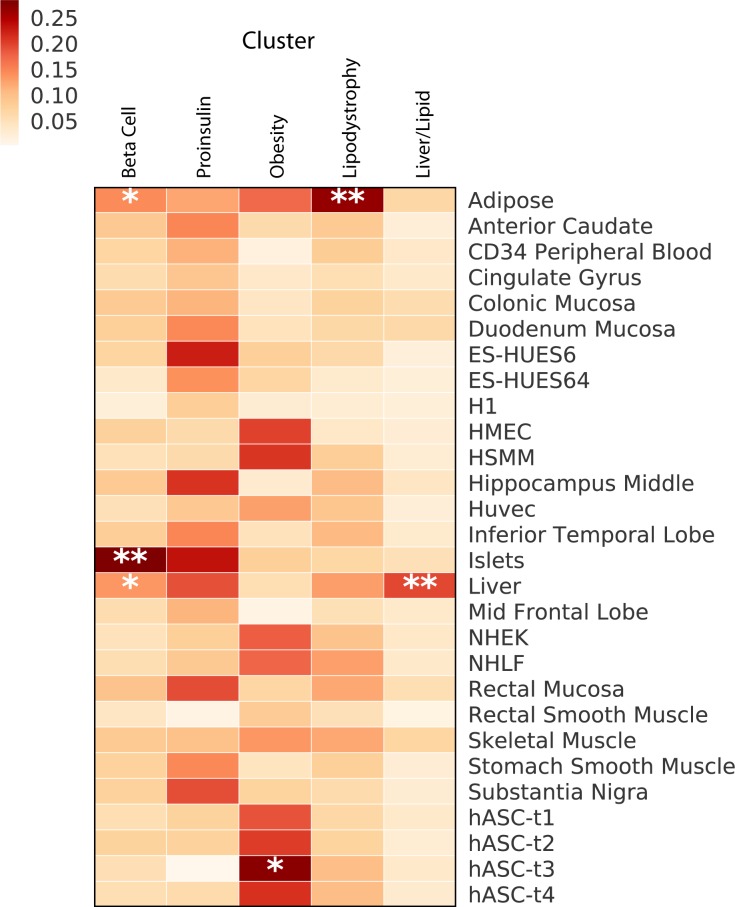
BACKGROUND: Type 2 diabetes (T2D) is a heterogeneous disease for which (1) disease-causing pathways are incompletely understood and (2) subclassification may improve patient management. Unlike other biomarkers, germline genetic markers do not change with disease progression or treatment. In this paper, we test whether a germline genetic approach informed by physiology can be used to deconstruct T2D heterogeneity. First, we aimed to categorize genetic loci into groups representing likely disease mechanistic pathways. Second, we asked whether the novel clusters of genetic loci we identified have any broad clinical consequence, as assessed in four separate subsets of individuals with T2D. METHODS AND FINDINGS: In an effort to identify mechanistic pathways driven by established T2D genetic loci, we applied Bayesian nonnegative matrix factorization (bNMF) clustering to genome-wide association study (GWAS) results for 94 independent T2D genetic variants and 47 diabetes-related traits. We identified five robust clusters of T2D loci and traits, each with distinct tissue-specific enhancer enrichment based on analysis of epigenomic data from 28 cell types. Two clusters contained variant-trait associations indicative of reduced beta cell function, differing from each other by high versus low proinsulin levels. The three other clusters displayed features of insulin resistance: obesity mediated (high body mass index [BMI] and waist circumference [WC]), "lipodystrophy-like" fat distribution (low BMI, adiponectin, and high-density lipoprotein [HDL] cholesterol, and high triglycerides), and disrupted liver lipid metabolism (low triglycerides). Increased cluster genetic risk scores were associated with distinct clinical outcomes, including increased blood pressure, coronary artery disease (CAD), and stroke. We evaluated the potential for clinical impact of these clusters in four studies containing individuals with T2D (Metabolic Syndrome in Men Study [METSIM], N = 487; Ashkenazi, N = 509; Partners Biobank, N = 2,065; UK Biobank [UKBB], N = 14,813). Individuals with T2D in the top genetic risk score decile for each cluster reproducibly exhibited the predicted cluster-associated phenotypes, with approximately 30% of all individuals assigned to just one cluster top decile. Limitations of this study include that the genetic variants used in the cluster analysis were restricted to those associated with T2D in populations of European ancestry. CONCLUSION: Our approach identifies salient T2D genetically anchored and physiologically informed pathways, and supports the use of genetics to deconstruct T2D heterogeneity. Classification of patients by these genetic pathways may offer a step toward genetically informed T2D patient management.
Overview
The claims and statistics of this paper haven’t been checked yet.
Free: it reads the open-access text and checks the first 5 claims that cite a source we can check. Create a free account to check every claim.
Integrity signals
Registry
Cites
Statistics
Figures
Verification
Claims the paper makes
The claims and statistics of this paper haven’t been checked yet.
Free: it reads the open-access text and checks the first 5 claims that cite a source we can check. Create a free account to check every claim.
Claims other papers make about this one
Each is checked against this paper’s own text: does it say what the citing paper says it does?
The cited source says what the claim attributes to it.
In the citing paper
“We previously showed using epigenomic data that this genetic cluster is enriched for enhancers/promoters active in liver tissue (9).”
From Increased genetic risk for β-cell failure is associated with β-cell function decline in people with prediabetes (2024) · cites this paper as [9]
The cited source says what the claim attributes to it.
In the citing paper
“the β-cell pPS included a specific subset of 30 T2D-associated SNPs specifically related to β-cell function (including HNF1A, HNF4A, TCF7L2, and SLC30A8) (9)”
From Increased genetic risk for β-cell failure is associated with β-cell function decline in people with prediabetes (2024) · cites this paper as [9]
Self-check
Percentages, sums and reported differences re-computed from the paper’s own numbers.
The self-check needs the paper’s full text.
Citations
Cites
A global reference for human genetic variation
The 1000 Genomes Project Consortium, authors, C., Auton, A., Abecasis, G. R., Steering committee, Altshuler, D. M., Durbin, R. M., Abecasis, G. R., Bentley, D. R., Chakravarti, A., et al. (2015) · Nature · doi:10.1038/nature15393 · Cited by 18,247
2. Classification and Diagnosis of Diabetes: Standards of Medical Care in Diabetes—2022
American Diabetes Association Professional Practice Committee (2022) · Diabetes Care · doi:10.2337/dc22-s002 · Cited by 4,792
Genetic studies of body mass index yield new insights for obesity biology
Study, T. L. C., Locke, A. E., The ADIPOGen Consortium, The AGEN-BMI Working Group, The CARDIOGRAMplusC4D Consortium, The CKDGen Consortium, The, G. L. G. C., The, I. C. B. P., The MAGIC Investigators, The MuTHER Consortium, et al. (2015) · Nature · doi:10.1038/nature14177 · Cited by 4,534
Self-citationNext-generation genotype imputation service and methods
Das, S., Forer, L., Schönherr, S., Sidore, C., Locke, A. E., Kwong, A., Vrieze, S. I., Chew, E. Y., Levy, S., McGue, M., et al. (2016) · Nature Genetics · doi:10.1038/ng.3656 · Cited by 3,808
Self-citation2. Classification and Diagnosis of Diabetes: Standards of Medical Care in Diabetes—2018
American Diabetes Association (2018) · Diabetes Care · doi:10.2337/dc18-s002 · Cited by 3,159
A reference panel of 64,976 haplotypes for genotype imputation
the Haplotype Reference Consortium (2016) · Nature Genetics · doi:10.1038/ng.3643 · Cited by 2,836
ChromHMM: automating chromatin-state discovery and characterization
Ernst, J., & Kellis, M. (2012) · Nature Methods · doi:10.1038/nmeth.1906 · Cited by 2,475 · cited 1×
“We obtained previously published 13-state ChromHMM [45] chromatin state calls for 28 cell types, excluding cancer cell lines [46].”
MethodComprehensive Molecular Characterization of Muscle-Invasive Bladder Cancer
Robertson, A. G., Kim, J., Al-Ahmadie, H., Bellmunt, J., Guo, G., Cherniack, A. D., Hinoue, T., Laird, P. W., Hoadley, K. A., Akbani, R., et al. (2017) · Cell · doi:10.1016/j.cell.2017.09.007 · Cited by 2,443
Self-citationAhlqvist, E., Storm, P., Käräjämäki, A., Martinell, M., Dorkhan, M., Carlsson, A., Vikman, P., Prasad, R. B., Aly, D. M., Almgren, P., et al. (2018) · The Lancet Diabetes & Endocrinology · doi:10.1016/s2213-8587(18)30051-2 · Cited by 2,335 · cited 5×
“In an attempt to deconstruct the heterogeneity of T2D, recent studies have performed cluster analysis of individuals using serum biomarkers and clinical data to identify T2D subgroups [3,4].”
BackgroundMethodInfluentialNew genetic loci implicated in fasting glucose homeostasis and their impact on type 2 diabetes risk
DIAGRAM Consortium, Dupuis, J., GIANT Consortium, Global BPgen Consortium, Anders Hamsten on behalf of Procardis Consortium, the MAGIC investigators, Langenberg, C., Prokopenko, I., Saxena, R., Soranzo, N., et al. (2010) · Nature Genetics · doi:10.1038/ng.520 · Cited by 2,166
Self-citation
Cited by
Genetics of diabetes mellitus and diabetes complications
Cole, J. B., & Florez, J. C. (2020) · Nature Reviews Nephrology · doi:10.1038/s41581-020-0278-5 · Cited by 1,797
Self-citationPRSice-2: Polygenic Risk Score software for biobank-scale data
Choi, S. W., & O'Reilly, P. F. (2019) · GigaScience · doi:10.1093/gigascience/giz082 · Cited by 1,532
The integrative biology of type 2 diabetes
Roden, M., & Shulman, G. I. (2019) · Nature · doi:10.1038/s41586-019-1797-8 · Cited by 1,167
Anti-obesity drug discovery: advances and challenges
Müller, T. D., Blüher, M., Tschöp, M. H., & DiMarchi, R. D. (2022) · Nature Reviews Drug Discovery · doi:10.1038/s41573-021-00337-8 · Cited by 1,021
The trans-ancestral genomic architecture of glycemic traits
Chen, J., Spracklen, C. N., Marenne, G., Varshney, A., Corbin, L. J., Luan, J., Willems, S. M., Wu, Y., Zhang, X., Horikoshi, M., et al. (2021) · Nature Genetics · doi:10.1038/s41588-021-00852-9 · Cited by 793
A brief history of human disease genetics
Claussnitzer, M., Cho, J. H., Collins, R., Cox, N. J., Dermitzakis, E. T., Hurles, M. E., Kathiresan, S., Kenny, E. E., Lindgren, C. M., MacArthur, D. G., et al. (2020) · Nature · doi:10.1038/s41586-019-1879-7 · Cited by 697
Genetic drivers of heterogeneity in type 2 diabetes pathophysiology
Suzuki, K., Hatzikotoulas, K., Southam, L., Taylor, H. J., Yin, X., Lorenz, K. M., Mandla, R., Huerta-Chagoya, A., Melloni, G. E. M., Kanoni, S., et al. (2024) · Nature · doi:10.1038/s41586-024-07019-6 · Cited by 606
“The lipodystrophy cluster was enriched only in adult adipocytes, which confirms previous reports in bulk adipose tissue 4,20 .”
BackgroundResultInfluentialSelf-citationGenetics meets proteomics: perspectives for large population-based studies
Suhre, K., McCarthy, M. I., & Schwenk, J. M. (2021) · Nature Reviews Genetics · doi:10.1038/s41576-020-0268-2 · Cited by 478
Dennis, J. M., Shields, B. M., Henley, W. E., Jones, A. G., & Hattersley, A. T. (2019) · The Lancet Diabetes & Endocrinology · doi:10.1016/s2213-8587(19)30087-7 · Cited by 462
Genetic determinants of daytime napping and effects on cardiometabolic health
Dashti, H. S., Daghlas, I., Lane, J. M., Huang, Y., Udler, M. S., Wang, H., Ollila, H. M., Jones, S. E., Kim, J., Wood, A. R., et al. (2021) · Nature Communications · doi:10.1038/s41467-020-20585-3 · Cited by 446
Self-citationPathophysiology-based subphenotyping of individuals at elevated risk for type 2 diabetes
Wagner, R., Heni, M., Tabák, A. G., Machann, J., Schick, F., Randrianarisoa, E., Hrabě de Angelis, M., Birkenfeld, A. L., Stefan, N., Peter, A., et al. (2021) · Nature Medicine · doi:10.1038/s41591-020-1116-9 · Cited by 415
O’Sullivan, J. W., Raghavan, S., Marquez-Luna, C., Luzum, J. A., Damrauer, S. M., Ashley, E. A., O’Donnell, C. J., Willer, C. J., Natarajan, P., & on behalf of the American Heart Association Council on Genomic and Precision Medicine; Council on Clinical Cardiology; Council on Arteriosclerosis, T. A. V. B. C. O. C. R. A. I. C. O. L. A. C. H. A. C. O. P. V. D. (2022) · Circulation · doi:10.1161/cir.0000000000001077 · Cited by 412
Chung, W. K., Erion, K., Florez, J. C., Hattersley, A. T., Hivert, M.-F., Lee, C. G., McCarthy, M. I., Nolan, J. J., Norris, J. M., Pearson, E. R., et al. (2020) · Diabetes Care · doi:10.2337/dci20-0022 · Cited by 400
Axes of a revolution: challenges and promises of big data in healthcare
Shilo, S., Rossman, H., & Segal, E. (2020) · Nature Medicine · doi:10.1038/s41591-019-0727-5 · Cited by 370
“Large-scale deep phenotyping of subjects can help overcome these challenges and allow a better understanding of 97 .”
BackgroundDapas, M., Lin, F. T. J., Nadkarni, G. N., Sisk, R., Legro, R. S., Urbanek, M., Hayes, M. G., & Dunaif, A. (2020) · PLOS Medicine · doi:10.1371/journal.pmed.1003132 · Cited by 297
“Recent studies in type 2 diabetes (T2D) support the concept that there are disease subtypes with distinct genetic architecture [7,8].”
BackgroundGenetic contributions to NAFLD: leveraging shared genetics to uncover systems biology
Eslam, M., & George, J. (2020) · Nature Reviews Gastroenterology & Hepatology · doi:10.1038/s41575-019-0212-0 · Cited by 308
Atlas of the plasma proteome in health and disease in 53,026 adults
Deng, Y.-T., You, J., He, Y., Zhang, Y., Li, H.-Y., Wu, X.-R., Cheng, J.-Y., Guo, Y., Long, Z.-W., Chen, Y.-L., et al. (2025) · Cell · doi:10.1016/j.cell.2024.10.045 · Cited by 294
“18,19 While these studies revealed some disease-specific proteomic changes, the lack of a comprehensive human proteome-phenome atlas also raises many questions.”
Genetic Risk Scores for Diabetes Diagnosis and Precision Medicine
Udler, M. S., McCarthy, M. I., Florez, J. C., & Mahajan, A. (2019) · Endocrine Reviews · doi:10.1210/er.2019-00088 · Cited by 302
“associated with T2D into specific clusters informed by biology [20,38].”
BackgroundMethodInfluentialSelf-citationInter-organ crosstalk during development and progression of type 2 diabetes mellitus
Xourafa, G., Korbmacher, M., & Roden, M. (2024) · Nature Reviews Endocrinology · doi:10.1038/s41574-023-00898-1 · Cited by 274
“NAFLD (also known as MASLD) which comprises steatosis, NASH, fibrosis and cirrhosis, affects approximately 55% of individuals”
BackgroundInfluentialType 2 Diabetes and Cancer: An Umbrella Review of Observational and Mendelian Randomization Studies
Pearson-Stuttard, J., Papadimitriou, N., Markozannes, G., Cividini, S., Kakourou, A., Gill, D., Rizos, E. C., Monori, G., Ward, H. A., Kyrgiou, M., et al. (2021) · Cancer Epidemiology, Biomarkers & Prevention · doi:10.1158/1055-9965.epi-20-1245 · Cited by 267
100 years of insulin: celebrating the past, present and future of diabetes therapy
Sims, E. K., Carr, A. L. J., Oram, R. A., DiMeglio, L. A., & Evans-Molina, C. (2021) · Nature Medicine · doi:10.1038/s41591-021-01418-2 · Cited by 270
Hyperinsulinemia: An Early Indicator of Metabolic Dysfunction
Thomas, D. D., Corkey, B. E., Istfan, N. W., & Apovian, C. M. (2019) · Journal of the Endocrine Society · doi:10.1210/js.2019-00065 · Cited by 259
“Distinct clusters of genes have been shown to be associated with b-cell function, body weight, and different diabetes phenotypes [78, 79].”
BackgroundType 2 diabetes: a multifaceted disease
Pearson, E. R. (2019) · Diabetologia · doi:10.1007/s00125-019-4909-y · Cited by 257
Wang, H., Lane, J. M., Jones, S. E., Dashti, H. S., Ollila, H. M., Wood, A. R., van Hees, V. T., Brumpton, B., Winsvold, B. S., Kantojärvi, K., et al. (2019) · Nature Communications · doi:10.1038/s41467-019-11456-7 · Cited by 237
Genetics of circadian rhythms and sleep in human health and disease
Lane, J. M., Qian, J., Mignot, E., Redline, S., Scheer, F. A. J. L., & Saxena, R. (2023) · Nature Reviews Genetics · doi:10.1038/s41576-022-00519-z · Cited by 236
Pillon, N. J., Loos, R. J. F., Marshall, S. M., & Zierath, J. R. (2021) · Cell · doi:10.1016/j.cell.2021.02.012 · Cited by 234
Subtypes of Type 2 Diabetes Determined From Clinical Parameters
Ahlqvist, E., Prasad, R. B., & Groop, L. (2020) · Diabetes · doi:10.2337/dbi20-0001 · Cited by 229
Tobias, D. K., Merino, J., Ahmad, A., Aiken, C., Benham, J. L., Bodhini, D., Clark, A. L., Colclough, K., Corcoy, R., Cromer, S. J., et al. (2023) · Nature Medicine · doi:10.1038/s41591-023-02502-5 · Cited by 217
“There was also replication of genetic subtypes of T2D from Udler et al. 45 , with associations with clinical features seen in multiple cohorts of European ancestry.”
BackgroundBiomarkers for type 2 diabetes
Laakso, M. (2019) · Molecular Metabolism · doi:10.1016/j.molmet.2019.06.016 · Cited by 225
Self-citationMitochondrial Dysfunction, Insulin Resistance, and Potential Genetic Implications
Sangwung, P., Petersen, K. F., Shulman, G. I., & Knowles, J. W. (2020) · Endocrinology · doi:10.1210/endocr/bqaa017 · Cited by 218
Stefan, N., & Schulze, M. B. (2023) · The Lancet Diabetes & Endocrinology · doi:10.1016/s2213-8587(23)00086-4 · Cited by 215
Chung, W. K., Erion, K., Florez, J. C., Hattersley, A. T., Hivert, M.-F., Lee, C. G., McCarthy, M. I., Nolan, J. J., Norris, J. M., Pearson, E. R., et al. (2020) · Diabetologia · doi:10.1007/s00125-020-05181-w · Cited by 203
Self-citationThe clinical consequences of heterogeneity within and between different diabetes types
Redondo, M. J., Hagopian, W. A., Oram, R., Steck, A. K., Vehik, K., Weedon, M., Balasubramanyam, A., & Dabelea, D. (2020) · Diabetologia · doi:10.1007/s00125-020-05211-7 · Cited by 190
Esser, N., Utzschneider, K. M., & Kahn, S. E. (2020) · Diabetologia · doi:10.1007/s00125-020-05245-x · Cited by 192
Dand, N., Mahil, S., Capon, F., Smith, C., Simpson, M., & Barker, J. (2020) · Acta Dermato Venereologica · doi:10.2340/00015555-3384 · Cited by 178
“Relevant methods include polygenic risk scores (PRS) (74) and genetic correlation (75, 76) to assess shared genetic associations, Mendelian randomisation (77) to assess causality, and methods for deconvoluting genome-wide association signals into functionally relevant constituents (78) (Box 1).”
MethodMansour Aly, D., Dwivedi, O. P., Prasad, R. B., Käräjämäki, A., Hjort, R., Thangam, M., Åkerlund, M., Mahajan, A., Udler, M. S., Florez, J. C., et al. (2021) · Nature Genetics · doi:10.1038/s41588-021-00948-2 · Cited by 172
Self-citationChallenges and Opportunities for Developing More Generalizable Polygenic Risk Scores
Wang, Y., Tsuo, K., Kanai, M., Neale, B. M., & Martin, A. R. (2022) · Annual Review of Biomedical Data Science · doi:10.1146/annurev-biodatasci-111721-074830 · Cited by 171
Heterogeneity in phenotype, disease progression and drug response in type 2 diabetes
Nair, A. T. N., Wesolowska‐Andersen, A., Brorsson, C., Rajendrakumar, A. L., Hapca, S. M., Gan, S., Dawed, A. Y., Donnelly, L. A., McCrimmon, R. J., Doney, A. S. F., et al. (2022) · Nature Medicine · doi:10.1038/s41591-022-01790-7 · Cited by 180
Inherited basis of visceral, abdominal subcutaneous and gluteofemoral fat depots
Agrawal, S., Wang, M., Klarqvist, M. D. R., Smith, K., Shin, J., Dashti, H., Diamant, N., Choi, S. H., Jurgens, S. J., Ellinor, P. T., et al. (2022) · Nature Communications · doi:10.1038/s41467-022-30931-2 · Cited by 156
Self-citationBurgess, S., Mason, A. M., Grant, A. J., Slob, E. A. W., Gkatzionis, A., Zuber, V., Patel, A., Tian, H., Liu, C., Haynes, W. G., et al. (2023) · The American Journal of Human Genetics · doi:10.1016/j.ajhg.2022.12.017 · Cited by 176
“83 Two methods with relevance to Mendelian randomization have been proposed for the clustering of genetic variants associated with a particular exposure: one that clusters variants on the basis of their associations with the outcome and another that clusters variants on the basis of their…”
Genetic variant effects on gene expression in human pancreatic islets and their implications for T2D
Viñuela, A., Varshney, A., van de Bunt, M., Prasad, R. B., Asplund, O., Bennett, A., Boehnke, M., Brown, A. A., Erdos, M. R., Fadista, J., et al. (2020) · Nature Communications · doi:10.1038/s41467-020-18581-8 · Cited by 152
Self-citationJamialahmadi, O., Vincentis, A. D., Tavaglione, F., Malvestiti, F., Li‐Gao, R., Mancina, R. M., Alvarez, M., Gelev, K. Z., Maurotti, S., Gentilucci, U. V., et al. (2024) · Nature Medicine · doi:10.1038/s41591-024-03284-0 · Cited by 177
Diabetes Mellitus, Glycemic Traits, and Cerebrovascular Disease: A Mendelian Randomization Study
Georgakis, M. K., Harshfield, E. L., Malik, R., Franceschini, N., Langenberg, C., Wareham, N. J., Markus, H. S., & Dichgans, M. (2021) · Neurology · doi:10.1212/wnl.0000000000011555 · Cited by 169
“We used the clusters of the variants and the respective weights per variant and cluster as described by Udler et al.(25) (table e-8, doi.”
InfluentialA novel diabetes typology: towards precision diabetology from pathogenesis to treatment
Herder, C., & Roden, M. (2022) · Diabetologia · doi:10.1007/s00125-021-05625-x · Cited by 140
“In contrast, genotypic data are stable over time and are more likely to be related to causal mechanisms [22].”
BackgroundMethodInfluentialCho, M. H., Hobbs, B. D., & Silverman, E. K. (2022) · The Lancet Respiratory Medicine · doi:10.1016/s2213-2600(21)00510-5 · Cited by 184
Multi-ancestry polygenic mechanisms of type 2 diabetes
Smith, K., Deutsch, A. J., McGrail, C., Kim, H., Hsu, S. C., Huerta‐Chagoya, A., Mandla, R., Schroeder, P. H., Westerman, K. E., Szczerbiński, Ł., et al. (2024) · Nature Medicine · doi:10.1038/s41591-024-02865-3 · Cited by 164
Self-citationCostanzo, M. C., von Grotthuss, M., Massung, J., Jang, D., Caulkins, L., Koesterer, R., Gilbert, C., Welch, R., Kudtarkar, P., Hoang, Q., et al. (2023) · Cell Metabolism · doi:10.1016/j.cmet.2023.03.001 · Cited by 149
Self-citationThe Genetic Basis of Metabolic Disease
Barroso, I., & McCarthy, M. I. (2019) · Cell · doi:10.1016/j.cell.2019.02.024 · Cited by 124
Insights into pancreatic islet cell dysfunction from type 2 diabetes mellitus genetics
Krentz, N. A. J., & Gloyn, A. L. (2020) · Nature Reviews Endocrinology · doi:10.1038/s41574-020-0325-0 · Cited by 142
Precision subclassification of type 2 diabetes: a systematic review
Misra, S., Wagner, R. J., Özkan, B., Schön, M., Sevilla-González, M. D. R., Prystupa, K., Wang, C. C., Kreienkamp, R. J., CROMER, S. J., Rooney, M. R., et al. (2023) · Communications Medicine · doi:10.1038/s43856-023-00360-3 · Cited by 152
“…and to drug response and demonstrated associations of gradients across the tree using genetic process-speci fi c scores from Udler et al. 10 Wesolowska-Andersen et al. performed soft-clustering from 32 clinical variables which yielded 4 diabetes archetypes comprising a third of the…”
BackgroundMethodInfluentialSelf-citationGenetics Insights in the Relationship Between Type 2 Diabetes and Coronary Heart Disease
Goodarzi, M. O., & Rotter, J. I. (2020) · Circulation Research · doi:10.1161/circresaha.119.316065 · Cited by 141
Dennis, J. M. (2020) · Diabetes · doi:10.2337/dbi20-0002 · Cited by 119
“Several other data-driven classifications have recently been proposed with substantial variation in the features used for classification and the numbers of subgroups identified (37–39), including genetically defined clusters (40,41), but their utility to stratify treatment response has similarly not been assessed.”
BackgroundThe Diverse Functions of IMP2/IGF2BP2 in Metabolism
Dai, N. (2020) · Trends in Endocrinology & Metabolism · doi:10.1016/j.tem.2020.05.007 · Cited by 114
Phenotypic and genetic classification of diabetes
Deutsch, A. J., Ahlqvist, E., & Udler, M. S. (2022) · Diabetologia · doi:10.1007/s00125-022-05769-4 · Cited by 108
“While all five subgroups in the genetically driven subclassification of type 2 diabetes described in [61] had distinct replicable clinical phenotypes, phenotypic differences between subgroups were quantitatively small and unlikely to be appreciated clinically on an individual patient level [62].”
BackgroundMethodInfluentialSelf-citationGenetic analysis of right heart structure and function in 40,000 people
Pirruccello, J. P., Achille, P. D., Nauffal, V., Nekoui, M., Friedman, S. F., Klarqvist, M. D. R., Chaffin, M. D., Weng, L.-C. C., Cunningham, J. W., Khurshid, S. S., et al. (2022) · Nature Genetics · doi:10.1038/s41588-022-01090-3 · Cited by 106
Understanding diabetes heterogeneity: key steps towards precision medicine in diabetes
Leslie, R. D., Ronald, C. W., Franks, P. W., Nadeau, K. J., Pearson, E. R., & REDONDO, M. J. (2023) · The Lancet Diabetes & Endocrinology · doi:10.1016/s2213-8587(23)00159-6 · Cited by 121
Jiang, R., Li, H., Yang, J., Shen, X., Song, C., Yang, Z., Wang, X., Huang, Y., Lan, X., Lei, C., et al. (2020) · Molecular Therapy — Nucleic Acids · doi:10.1016/j.omtn.2020.03.011 · Cited by 94
Wesolowska‐Andersen, A., Brorsson, C., Bizzotto, R., Mari, A., Tura, A., Koivula, R. W., Mahajan, A., Viñuela, A., Tajes, J. F., Sharma, S., et al. (2022) · Cell Reports Medicine · doi:10.1016/j.xcrm.2021.100477 · Cited by 109
Kim, H., Westerman, K. E., Smith, K., Chiou, J., Cole, J. B., Majarian, T. D., von Grotthuss, M., Kwak, S. H., Kim, J., Mercader, J. M., et al. (2022) · Diabetologia · doi:10.1007/s00125-022-05848-6 · Cited by 103
“Cluster associations with relevant phenotypes using GWAS summary statisticsWe generated GWAS-partitioned polygenic scores (GWAS pPSs) for each cluster utilising inversevariance weighted fixed effects meta-analysis of GWAS summary statistics including the set of strongest-weighted variants above the weight cut-off for…”
BackgroundMethodSelf-citationMR-Clust: clustering of genetic variants in Mendelian randomization with similar causal estimates
Foley, C. N., Mason, A. M., Kirk, P., & Burgess, S. (2020) · Bioinformatics · doi:10.1093/bioinformatics/btaa778 · Cited by 100
“Previous researchers have considered Bayesian nonnegative matrix factorization (Udler et al. , 2018), truncated singular value decomposition method (Tanigawa et al. , 2019), and hierarchical clustering approaches (Ruth et al. , 2020).”
BackgroundMethodType 2 Diabetes: Multiple Genes, Multiple Diseases
Udler, M. S. (2019) · Current Diabetes Reports · doi:10.1007/s11892-019-1169-7 · Cited by 85
Self-citationBello-Chavolla, O. Y., Bahena-López, J. P., Vargas-Vázquez, A., Antonio-Villa, N. E., Márquez-Salinas, A., Fermín-Martínez, C. A., Rojas, R., Mehta, R., Cruz-Bautista, I., Hernández-Jiménez, S., et al. (2020) · BMJ Open Diabetes Research & Care · doi:10.1136/bmjdrc-2020-001550 · Cited by 84
Genetics of Type 2 Diabetes: Past, Present, and Future
Laakso, M., & Silva, L. F. (2022) · Nutrients · doi:10.3390/nu14153201 · Cited by 108
“[75] were the first to show that the liver/lipids subgroup of T2D is its own entity.”
BackgroundSelf-citationRomeo, S., Vidal‐Puig, A., Husain, M., Ahima, R. S., Arca, M., Bhatt, D. L., Diehl, A. M., Fontana, L., Foo, R., Frühbeck, G., et al. (2025) · European Heart Journal · doi:10.1093/eurheartj/ehaf314 · Cited by 109
Self-citationThe Genetic Epidemiology of Type 2 Diabetes: Opportunities for Health Translation
Meigs, J. B. (2019) · Current Diabetes Reports · doi:10.1007/s11892-019-1173-y · Cited by 82
Metabolic and proteomic signatures of type 2 diabetes subtypes in an Arab population
Zaghlool, S. B., Halama, A., Stephan, N., Gudmundsdottir, V., Gudnason, V., Jennings, L. L., Thangam, M., Ahlqvist, E., Malik, R. A., Albagha, O. M. E., et al. (2022) · Nature Communications · doi:10.1038/s41467-022-34754-z · Cited by 79
“A study clustering genetic risk loci for T2D-associated traits observed some overlap with the clusters of Ahlqvist et al.(24).”
ResultInfluentialPigeyre, M., Hess, S., Gomez, M. F., Asplund, O., Groop, L., Paré, G., & Gerstein, H. (2022) · Diabetologia · doi:10.1007/s00125-021-05567-4 · Cited by 79
“Although diabetes is caused by a combination of disrupted pathophysiological processes rather than a single defect [20], assigning individuals to one of the five mutually exclusive clusters to which they were the closest helped to distinguish individuals based on their dominant biological defect, and allowed us to dec…”
BackgroundSirdah, M. M., & Reading, N. S. (2020) · Clinical Genetics · doi:10.1111/cge.13772 · Cited by 89
“identifying T2D genetic risk variants is a crucial step in disease management as it may ameliorate the clinical condition and preclude the complications.(56,100-103) Until recently T2D was seen only in adults but”
BackgroundWagner, R. J., Jaghutriz, B. A., Gerst, F., Oquendo, M. B., Machann, J., Schick, F., Loeffler, M. W., Nadalin, S., Fend, F., Königsrainer, A., et al. (2020) · The Journal of Clinical Endocrinology & Metabolism · doi:10.1210/clinem/dgaa435 · Cited by 79
“Third, we used the partitioning of variants to different pathomechanistic clusters as suggested by Udler et al (26).”
BackgroundMethodInfluentialShapira, S. N., Naji, A., Atkinson, M. A., Powers, A. C., & Kaestner, K. H. (2022) · Cell Metabolism · doi:10.1016/j.cmet.2022.09.013 · Cited by 87
Defining Heterogeneity Among Women With Gestational Diabetes Mellitus
Powe, C. E., Hivert, M.-F., & Udler, M. S. (2020) · Diabetes · doi:10.2337/dbi20-0004 · Cited by 75
Self-citationPark, S., Kim, S., Kim, B., Kim, D. S., Kim, J., Ahn, Y., Kim, H., Song, M., Shim, I., Jung, S., et al. (2024) · Nature Genetics · doi:10.1038/s41588-024-01933-1 · Cited by 88
Self-citationDiCorpo, D., LeClair, J., Cole, J. B., Sarnowski, C., Ahmadizar, F., Bielak, L. F., Blokstra, A., Bottinger, E. P., Chaker, L., Chen, Y.-D. I., et al. (2022) · Diabetes Care · doi:10.2337/dc21-1395 · Cited by 66
“(7), the associations with expected clinical features were replicated in our study participants: increased obesity cluster pPS was associated with increased BMI; increased lipodystrophy cluster pPS with decreased BMI, decreased HDL cholesterol, and increased triglycerides; and increased liver/lipid cluster pPS with de…”
BackgroundSelf-citationGenetics of Sleep and Insights into Its Relationship with Obesity
Dashti, H. S., & Ordovás, J. M. (2021) · Annual Review of Nutrition · doi:10.1146/annurev-nutr-082018-124258 · Cited by 77
The β Cell in Diabetes: Integrating Biomarkers With Functional Measures
Kahn, S. E., Chen, Y., Esser, N., Taylor, A. J., van Raalte, D. H., Zraika, S., & Verchere, C. B. (2021) · Endocrine Reviews · doi:10.1210/endrev/bnab021 · Cited by 80
“Indeed, classification of these GWAS variants according to their association with diabetes-related metabolic traits has identified robust groups each characterized by a specific pathophysiological process: reduced β-cell function with high proinsulin, reduced β-cell function with low proinsulin, obesity, lipodystrophy…”
BackgroundMethodInfluentialRottner, A. K., Ye, Y., Navarro‐Guerrero, E., Rajesh, V., Pollner, A., Bevacqua, R. J., Yang, J., Spigelman, A. F., Baronio, R., Bautista, A., et al. (2022) · Nature Genetics · doi:10.1038/s41588-022-01261-2 · Cited by 69
Ansari, M. A., Chauhan, W., Shoaib, S., Alyahya, S. A., Ali, M., Ashraf, H., Alomary, M. N., & Al-Suhaimi, E. A. (2023) · International Journal of Obesity · doi:10.1038/s41366-023-01369-3 · Cited by 75
“As a matter of fact, the terminology “ T2D ” is frequently used to refer to any kind of diabetes that is not autoimmune in etiology, and it is increasingly recognized that it may really represent an aggregation of several pathophysiological states [37].”
BackgroundThe biological function of IGF2BPs and their role in tumorigenesis
Du, Q., Zhu, Z., & Pei, D. (2021) · Investigational New Drugs · doi:10.1007/s10637-021-01148-9 · Cited by 74
“Numerous studies have identified polymorphisms of IGF2BP2 are associated with type 2 diabetes (T2D) in numerous populations [32].”
BackgroundHodgson, S., Huang, Q. Q., Sallah, N., Griffiths, C., Newman, W. G., Trembath, R. C., Wright, J., Lumbers, R. T., Kuchenbaecker, K. B., van Heel, D. A., et al. (2022) · PLoS Medicine · doi:10.1371/journal.pmed.1003981 · Cited by 64
“PRSs including fasting glucose, beta cell function, insulin sensitivity index, and corrected insulin response were compared between each cluster and nondiabetic controls (n = 10,841) using Bonferroni-corrected unpaired one-tailed t tests [18,37].”
BackgroundMethodResultInfluentialRegué, L., Zhao, L., Ji, F., Wang, H., Avruch, J., & Dai, N. (2021) · Molecular Metabolism · doi:10.1016/j.molmet.2021.101209 · Cited by 60
“In line with our data collected from murine models, the recent human T2D research grouped IMP2 into a “proinsulin cluster” featured with decreased proinsulin and reduced b-cell function [49].”
ResultEpigenetics of Hepatic Insulin Resistance
Maude, H., Sanchez-Cabanillas, C., & Cebola, I. (2021) · Frontiers in Endocrinology · doi:10.3389/fendo.2021.681356 · Cited by 69
Sarría‐Santamera, A., Orazumbekova, B., Maulenkul, T., Gaipov, A., & Atageldiyeva, K. K. (2020) · International Journal of Environmental Research and Public Health · doi:10.3390/ijerph17249523 · Cited by 70
“Genetic information is another critical domain that will be necessary to explore in order to identify subgroups of DM patients [24].”
BackgroundSlieker, R. C., Donnelly, L. A., Fitipaldi, H., Bouland, G. A., Giordano, G. N., Åkerlund, M., Gerl, M. J., Ahlqvist, E., Ali, A., Dragan, I., et al. (2021) · Diabetes · doi:10.2337/db20-1281 · Cited by 57
Orchard, P., Manickam, N., Ventresca, C., Vadlamudi, S., Varshney, A., Rai, V., Kaplan, J., Lalancette, C., Mohlke, K. L., Gallagher, K., et al. (2021) · Genome Research · doi:10.1101/gr.268482.120 · Cited by 56
“SNPs in this credible set are statistically associated with fasting insulin (73), and more broadly variants in or near ARL15 associate with metabolic traits including adiponectin, HDL cholesterol levels, and BMI (73–75), suggesting that the locus may affect T2D risk not through islets but through adipose or a related…”
BackgroundInfluentialA phenome-wide comparative analysis of genetic discordance between obesity and type 2 diabetes
Coral, D., Fernandez-Tajes, J. J., Tsereteli, N., Pomares‐Millan, H., Fitipaldi, H., Mutie, P. M., Atabaki‐Pasdar, N., Kalamajski, S., Poveda, A., Miller‐Fleming, T. W., et al. (2023) · Nature Metabolism · doi:10.1038/s42255-022-00731-5 · Cited by 58
Lipodystrophy for the Diabetologist—What to Look For
Patni, N., & Garg, A. (2022) · Current Diabetes Reports · doi:10.1007/s11892-022-01485-w · Cited by 52
“Most interestingly, a recent genome-wide association study identified five robust clusters of T2DM loci and traits, with one being ‘lipodystrophy-like” fat distribution [5].”
BackgroundPrecision nutrition in diabetes: when population-based dietary advice gets personal
Merino, J. (2022) · Diabetologia · doi:10.1007/s00125-022-05721-6 · Cited by 58
“The generation of ‘pathwayspecific’ polygenic scores with cluster-specific variants showed that individuals whose diabetes risk is driven by adverse body fat distribution were at increased risk of coronary artery disease, while those with beta cell dysfunction were at increased risk of stroke [29].”
BackgroundPrecision medicine for cardiometabolic disease: a framework for clinical translation
Franks, P. W., Cefalu, W. T., Dennis, J., Florez, J. C., Mathieu, C., Morton, R. W., Ridderstråle, M., Sillesen, H. H., & Stehouwer, C. D. A. (2023) · The Lancet Diabetes & Endocrinology · doi:10.1016/s2213-8587(23)00165-1 · Cited by 66
Self-citationGenetic basis of early onset and progression of type 2 diabetes in South Asians
Hodgson, S., Williamson, A., Bigossi, M., Stow, D., Jacobs, B. M., Samuel, M., Gafton, J., Zöllner, J., Spreckley, M., Akhtar, S., et al. (2024) · Nature Medicine · doi:10.1038/s41591-024-03317-8 · Cited by 78
“Genetic endotyping has been largely restricted to individuals of European ancestry, with no representation of South Asian populations in more recent multi-ancestry efforts 11–14 .”
Jiang, G., Luk, A. O. Y., Tam, C. H. T., Lau, E. S. H., Ozaki, R., Chow, E., Kong, A. P. S., Lim, C. K. P., Lee, K. F., Siu, S. C., et al. (2020) · PLoS Medicine · doi:10.1371/journal.pmed.1003209 · Cited by 54
Altered β-Cell Prohormone Processing and Secretion in Type 1 Diabetes
Calvo, T. R., Chen, Y., Verchere, C. B., Haataja, L., Arvan, P., Leete, P., Richardson, S. J., Morgan, N. G., Qian, W., Pugliese, A., et al. (2021) · Diabetes · doi:10.2337/dbi20-0034 · Cited by 51
Bancks, M. P., Bertoni, A. G., Carnethon, M. R., Chen, H., Cotch, M. F., Gujral, U. P., Herrington, D. M., Kanaya, A. M., Szklo, M., Vaidya, D. M., et al. (2021) · The Journal of Clinical Endocrinology & Metabolism · doi:10.1210/clinem/dgaa962 · Cited by 52
Ma, E.-Y., Kim, J., Lee, Y., Cho, S.-W., Kim, H., & Kim, J. K. (2021) · Scientific Reports · doi:10.1038/s41598-021-84003-4 · Cited by 60
Self-citationCao, J., Yan, W., Ma, X., Huang, H., & Yan, H. (2021) · The Journal of Clinical Endocrinology & Metabolism · doi:10.1210/clinem/dgab391 · Cited by 49
100 YEARS OF INSULIN: Towards improved precision and a new classification of diabetes mellitus
Ahlqvist, E., Prasad, R. B., & Groop, L. (2021) · Journal of Endocrinology · doi:10.1530/joe-20-0596 · Cited by 62
“When comparing the SNPs included in the pathway clusters with associations in ANDIS, variants associated with SIDD had the strongest weights in the proinsulin/beta cell genetic clusters, the genetic obesity cluster shared associations with MOD, whereas the genetically obtained insulin resistance cluster shared genetic…”
ResultTale of two Indians: Heterogeneity in type 2 diabetes pathophysiology
Staimez, L. R., Deepa, M., Ali, M. K., Mohan, V., Hanson, R. L., & Narayan, K. M. V. (2019) · Diabetes/Metabolism Research and Reviews · doi:10.1002/dmrr.3192 · Cited by 50
“com/j function (eg, amount of insulin produced relative to the body's needs) and insulin resistance (eg, effectiveness of insulin across the body's tissues).(2,3) Variations in diabetes mechanisms appear linked to unique clusters of individuals who have different trajectories toward specific diabetes complications or…”
BackgroundBancks, M. P., Chen, H., Balasubramanyam, A., Bertoni, A. G., Espeland, M. A., Kahn, S. E., Pilla, S. J., Vaughan, E. M., & Wagenknecht, L. E. (2021) · Diabetes Care · doi:10.2337/dc20-2372 · Cited by 53
Xue, D., Narisu, N., Taylor, D. L., Zhang, M., Grenko, C. M., Taylor, H. J., Yan, T., Tang, X., Sinha, N., Zhu, J., et al. (2023) · Cell Metabolism · doi:10.1016/j.cmet.2023.09.013 · Cited by 53
Two decades since the fetal insulin hypothesis: what have we learned from genetics?
Hughes, A. E., Hattersley, A. T., Flanagan, S. E., & Freathy, R. M. (2021) · Diabetologia · doi:10.1007/s00125-021-05386-7 · Cited by 57
Dornbos, P., Koesterer, R., Ruttenburg, A., Nguyen, T., Cole, J. B., AMP-T2D-GENES Consortium, Leong, A., Meigs, J. B., Florez, J. C., Rotter, J. I., et al. (2022) · Nature Genetics · doi:10.1038/s41588-022-01200-1 · Cited by 46
Self-citation
Metadata
- Authors
- Udler, M. S., Kim, J., von Grotthuss, M., Bonàs-Guarch, S., Cole, J. B., Chiou, J., ISGC, C. D. A. O. B. O. M. A. T., Boehnke, M., Laakso, M., Atzmon, G., Glaser, B., Mercader, J. M., Gaulton, K., Flannick, J., Getz, G., & Florez, J. C.
- Affiliations
- Broad Institute (US)
- University of California San Diego (US)
- University of Eastern Finland (FI)
- Albert Einstein College of Medicine (US)
- ORCID
- Venue
- PLOS Medicine
- Publisher
- Public Library of Science (PLoS)
- Published
- 2018-09-21
- Volume
- 15
- Issue
- 9
- Pages
- e1002654
- ISSN
- 1549-1277 (ISSN-L)
- 1549-1676
- PMC
- PMC6150463
- OpenAlex
- W2890555481
- Cited by
- 542
- References
- 75
- Citations by year
- 2026: 59 · 2025: 60 · 2024: 71 · 2023: 89 · 2022: 88 · 2021: 65 · 2020: 72 · 2019: 37 · 2018: 1
- FWCI
- 26.83
- Type
- journal article
- Language
- en
- Open access
- gold
- doi.org
- Licence
- Locations
- PLoS Medicine (publishedVersion, cc-by)
- Europe PMC (PubMed Central) (publishedVersion, cc-by)
- PubMed Central (publishedVersion, cc-by)
- PubMed (publishedVersion)
- UEF eRepo (University of Eastern Finland) (submittedVersion, cc-by)
- DOAJ (DOAJ: Directory of Open Access Journals) (submittedVersion, cc-by-sa)
- Figshare (submittedVersion, cc-by)
- Funders
- National Institute of Diabetes and Digestive and Kidney Diseases (1K23DK114551-01, DK062370)
- National Institute of Neurological Disorders and Stroke (1K23NS086873-04)
- Topics
- Life Sciences › Biochemistry, Genetics and Molecular Biology › Genetics › Genetic Associations and Epidemiology
- Life Sciences › Biochemistry, Genetics and Molecular Biology › Genetics › Diabetes and associated disorders
- Life Sciences › Biochemistry, Genetics and Molecular Biology › Genetics › Genetic Mapping and Diversity in Plants and Animals
- Keywords
- type 2 diabetes, genetic loci, disease heterogeneity, diabetes subtypes, fuzzy clustering, tissue-specific enhancers, beta-cell function, insulin resistance, hepatic lipid metabolism, polygenic risk score, coronary artery disease, stroke, blood pressure, adiponectin, triglycerides
- MeSH terms
- Algorithms, Bayes Theorem, Cross-Sectional Studies, Diabetes Mellitus, Type 2, Female, Multigene Family, Genetic Markers, Humans, Insulin, Insulin Resistance, Male, Phenotype, Prospective Studies, Risk Factors, Cohort Studies, Cluster Analysis, Founder Effect, Genetic Predisposition to Disease, Databases, Genetic, Genome-Wide Association Study, Genetic Loci
About these checks
Registry, retraction, Cites and statistics results are computed, not judged, with one exception: a printed reference that no index lists is read once by a model before it counts as a citation error. Claims are extracted by a model and kept only when their quote appears verbatim in the text; each cited source is then checked, with a model’s help, for whether it says what the claim relies on. Those verdicts can be wrong — read the claim’s quote and the cited source before relying on one.
Statistics and arithmetic are recomputed, not judged.
Confidence bands are shown only for fields calibrated on our annotated test set. None is calibrated yet, so no band is shown.
What counts as a claim ›How we measure confidence ›How we check this ›
Are you an author, or do you see a problem with this page? Request a review
Data sources
Bibliographic data: Semantic Scholar, OpenAlex, Crossref.
Contains information from the Semantic Scholar Academic Graph Datasets, made available under the ODC Attribution License (ODC-BY 1.0).
Semantic Scholar’s data is described in: Kinney, R., et al. (2023). The Semantic Scholar Open Data Platform. arXiv:2301.10140.
