

Mindfulness-based programmes for mental health promotion in adults in nonclinical settings: A systematic review and meta-analysis of randomised controlled trials
Open accessThe DOI matches its Crossref record; 298 of the 305 references it cites were found in a registry or an index; 10 of the 62 sources its claims cite were checked for support.
Abstract
Background: There is an urgent need for mental health promotion in nonclinical settings. Mindfulness–based programmes (MBPs) are being widely implemented to reduce stress, but a comprehensive evidence synthesis is lacking. We reviewed trials to assess whether MBPs promote mental health relative to no intervention or comparator interventions. Methods and findings: Following a detailed preregistered protocol (PROSPERO CRD42018105213) developed with public and professional stakeholders, 13 databases were searched to August 2020 for randomised controlled trials (RCTs) examining in–person, expert–defined MBPs in nonclinical settings. Two researchers independently selected, extracted, and appraised trials using the Cochrane Risk–of–Bias Tool 2.0. Primary outcomes were psychometrically validated anxiety, depression, psychological distress, and mental well–being questionnaires at 1 to 6 months after programme completion. Multiple testing was performed using p < 0.0125 (Bonferroni) for statistical significance. Secondary outcomes, meta–regression and sensitivity analyses were prespecified. Pairwise random–effects multivariate meta–analyses and prediction intervals (PIs) were calculated. A total of 11,605 participants in 136 trials were included (29 countries, 77% women, age range 18 to 73 years). Compared with no intervention, in most but not all scenarios MBPs improved average anxiety (8 trials; standardised mean difference (SMD) = −0.56; 95% confidence interval (CI) −0.80 to −0.33; p –value < 0.001; 95% PI −1.19 to 0.06), depression (14 trials; SMD = −0.53; 95% CI −0.72 to −0.34; p –value < 0.001; 95% PI −1.14 to 0.07), distress (27 trials; SMD = −0.45; 95% CI −0.58 to −0.31; p –value < 0.001; 95% PI −1.04 to 0.14), and well–being (9 trials; SMD = 0.33; 95% CI 0.11 to 0.54; p –value = 0.003; 95% PI −0.29 to 0.94). Compared with nonspecific active control conditions, in most but not all scenarios MBPs improved average depression (6 trials; SMD = −0.46; 95% CI −0.81 to −0.10; p –value = 0.012, 95% PI −1.57 to 0.66), with no statistically significant evidence for improving anxiety or distress and no reliable data on well–being. Compared with specific active control conditions, there is no statistically significant evidence of MBPs’ superiority. Only effects on distress remained when higher–risk trials were excluded. USA–based trials reported smaller effects. MBPs targeted at higher–risk populations had larger effects than universal MBPs. The main limitation of this review is that confidence according to the Grading of Recommendations Assessment, Development and Evaluation (GRADE) approach is moderate to very low, mainly due to inconsistency and high risk of bias in many trials. Conclusions: Compared with taking no action, MBPs of the included studies promote mental health in nonclinical settings, but given the heterogeneity between studies, the findings do not support generalisation of MBP effects across every setting. MBPs may have specific effects on some common mental health symptoms. Other preventative interventions may be equally effective. Implementation of MBPs in nonclinical settings should be partnered with thorough research to confirm findings and learn which settings are most likely to benefit.
Overview
CoChat Summary
## TL;DR
This systematic review and meta-analysis of 136 RCTs (11,605 participants) found that mindfulness-based programmes (MBPs) improved anxiety, depression, psychological distress, and well-being versus no intervention, but effects varied substantially by setting and were not consistent enough to generalize everywhere. Compared with active controls, MBPs showed little clear advantage overall, and the paper emphasizes that trial quality was low and heterogeneity was high.
## Key findings
- Across 136 trials from 29 countries with 11,605 participants, MBPs versus passive controls improved:
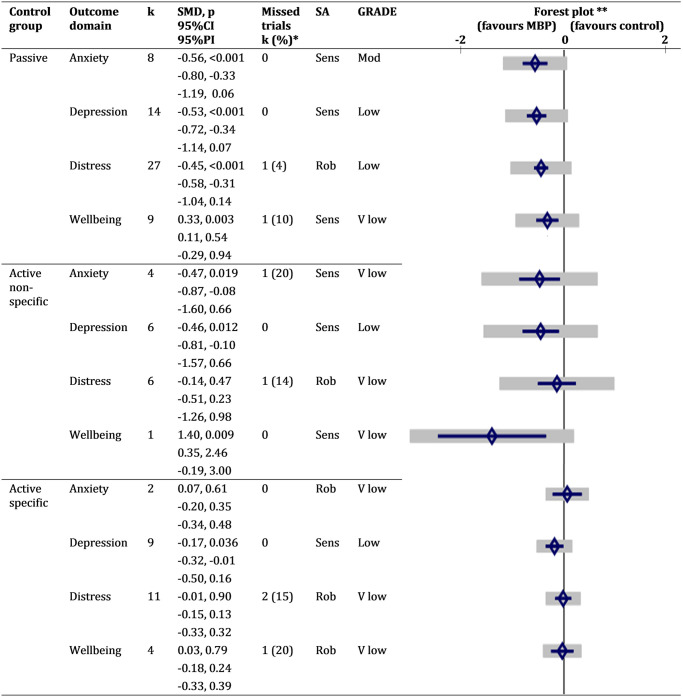
- anxiety: SMD = −0.56; 95% CI −0.80 to −0.33; p < 0.001; 95% PI −1.19 to 0.06
- depression: SMD = −0.53; 95% CI −0.72 to −0.34; p < 0.001; 95% PI −1.14 to 0.07
- psychological distress: SMD = −0.45; 95% CI −0.58 to −0.31; p < 0.001; 95% PI −1.04 to 0.14
- mental well-being: SMD = 0.33; 95% CI 0.11 to 0.54; p = 0.003; 95% PI −0.29 to 0.94
- Compared with active nonspecific controls, MBPs improved depression modestly (SMD = −0.46; 95% CI −0.81 to −0.10; p = 0.012), but there was no statistically significant evidence for anxiety or distress, and well-being was based on only 1 study.
- Compared with active specific controls, there was no clear evidence that MBPs improved any primary outcome domain; for example, anxiety was SMD = 0.07 (95% CI −0.20 to 0.35), depression SMD = −0.17 (95% CI −0.32 to −0.01), distress SMD = −0.01 (95% CI −0.15 to 0.13), and well-being SMD = 0.03 (95% CI −0.18 to 0.24).
- Moderator analyses found larger depression and anxiety effects in selective/indicated versus universal MBPs, and smaller depression effects in USA-based trials; for depression, selective MBPs were 1.10 SD more effective and indicated MBPs 0.84 SD more effective than universal MBPs, while for anxiety indicated MBPs were 1.12 SD more effective than universal MBPs.
## Methods
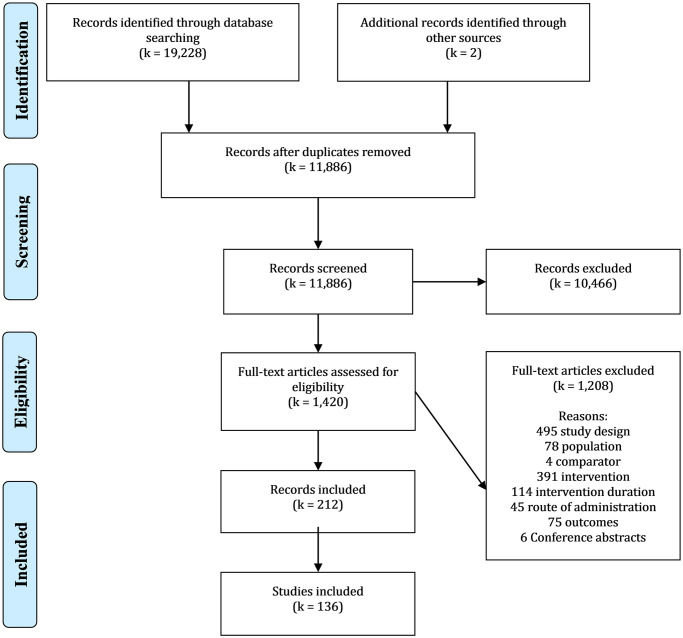
- Systematic review and meta-analysis of parallel-arm RCTs and cluster-RCTs of in-person, group-based, expert-defined first-generation MBPs in adult nonclinical community settings; online MBPs were excluded.
- Searches covered 13 databases plus ICTRP through 1 August 2020, with no geographical, language, or publication-date/type restrictions; 136 trials were eligible for meta-analysis.
- Primary outcomes were psychometrically validated anxiety, depression, psychological distress, and mental well-being at 1 to 6 months after programme completion; analyses used pairwise random-effects multivariate meta-analyses, prediction intervals, Bonferroni correction, sensitivity analyses, and moderator analyses.
## Limitations
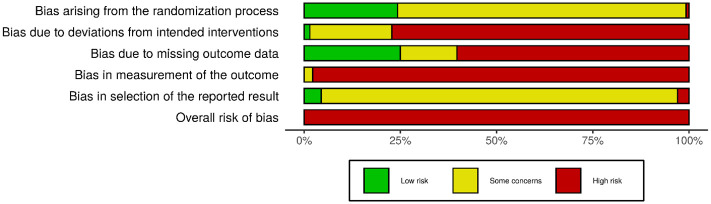
- The paper states that confidence in the evidence was moderate to very low overall, mainly due to inconsistency and high risk of bias; all included trials were judged high risk of bias by RoB2.
- The authors note substantial heterogeneity between studies, with wide prediction intervals showing that effects may not generalize across settings.
- Many trials had missing or poorly reported information: teacher credentials were often not described, 60% were high risk due to missing outcome data, and most outcomes were self-reported, which the paper says may bias results.
- Evident from the text: adverse events were rarely measured or reported; 121 of 136 studies (89%) did not mention adverse events or effects, so safety conclusions are weak.
Model-written summary. Check it against the paper before relying on it.
Integrity signals
Registry
Cites
Statistics
Figures
Verification
Claims the paper makes
7 Valid · 1 Not valid · 31 Not checked · 111 Own results and interpretations
The cited sources that could be checked couldn’t confirm or dispute this claim.
In the paper
“many trial reports do not describe their credentials [6].”
§ Mindfulness-based programmes for mental health promotion in adults in nonclinical settings: A systematic review and meta-analysis of randomised controlled trials > Results
What the sources say
- Could not verifycites [6] Crane RS, Brewer J, Feldman C, Kabat-Zinn J, Santorelli S, Williams JM, et al What defines mindfulness–based programs? The warp and the weft. Psychol Med 2017; 47(6): 990– 9. Epub 2016/12/30. 10.1017/S0033291716003317. 28031068 sourceExperimental — accuracy not yet measured
Our copy of Crane et al. (2017) is an editorial defining the 'warp' and 'weft' of MBPs; the 'The teacher' and 'Adapted MBP considerations' sections set out what MBP teacher competence, training and good practice comprise, and argue that clear titling/description matters so that 'the public are given clear information on ... what training their MBP teacher has had' and that 'research should clearly identify the adapted curriculum guide used'. However, no passage states the empirical claim that many trial reports fail to describe teachers' credentials. Searched: 'trial reports do not describe teacher qualifications or credentials', 'published trials rarely report what training the MBP teacher has had', 'research reports fail to describe teacher qualifications' — only normative statements about reporting clarity, no characterization of existing trial reporting. The copy is not truncated, so the omission is not due to missing text. (LLM, conf=0.70)
plain- Asserted: passes — The authors put it forward as true.
- Checkable: passes — It can be checked against evidence.
- Load-bearing: passes — The paper’s conclusions depend on it.
- Based: passes — The paper gives a reason why it holds.
- Could not verify
The sources with a verdict support this claim; the rest weren’t checked yet, have no full text we could read, or their verdicts aren’t rated yet.
In the paper
“Two studies reported a participant abandoning the MBP because s/he felt it was being counterproductive [52,186].”
§ Mindfulness-based programmes for mental health promotion in adults in nonclinical settings: A systematic review and meta-analysis of randomised controlled trials > Results > Outcomes
What the sources say
- Supportedcites [52] Galante J, Dufour G, Vainre M, Wagner AP, Stochl J, Benton A, et al A mindfulness–based intervention to increase resilience to stress in university students (the Mindful Student Study): a pragmatic randomised controlled trial. Lancet Public Health. 2018; 3 (2): e72– 81. 10.1016/S2468-2667(17)30231-1 29422189 PMC5813792 source
The Results report that one participant left the mindfulness course because they felt it was unhelpful and brought unwanted matters to the fore. This supports the incident attributed to this paper; the sentence cites a second study for the other incident. (LLM, conf=0.92)
- Not checked yetcites [186] Lonnberg G, Jonas W, Unternaehrer E, Branstrom R, Nissen E, Niemi M. Effects of a mindfulness based childbirth and parenting program on pregnant women’s perceived stress and risk of perinatal depression–Results from a randomized controlled trial. J Affect Disord. 2020; 262: 133– 42. 10.1016/j.jad.2019.10.048 31733457 source
plainstates a causen = 2- Asserted: passes — The authors put it forward as true.
- Checkable: passes — It can be checked against evidence.
- Load-bearing: unclear — It is unclear whether the paper’s conclusions depend on it.
- Based: passes — The paper gives a reason why it holds.
- Supported
The cited sources support only part of this claim — read each source’s verdict below.
In the paper
“However, our preliminary post hoc analysis, in line with previous research, did not find evidence of this factor being influential [290].”
§ Mindfulness-based programmes for mental health promotion in adults in nonclinical settings: A systematic review and meta-analysis of randomised controlled trials > Discussion > Interpretation and comparison with previous research
What the sources say
- Partly supportedcites [290] Huijbers MJ, Crane RS, Kuyken W, Heijke L, van den Hout I, Donders ART, et al Teacher Competence in Mindfulness–Based Cognitive Therapy for Depression and Its Relation to Treatment Outcome. Mindfulness (N Y). 2017; 8(4): 960– 72. Epub 2017/08/02. 10.1007/s12671-016-0672-z. 28757901 PMC5506231 sourceExperimental — accuracy not yet measured
Our copy matches the framing of the citing sentence: the Limitations section states the teacher analyses were not randomized but 'post hoc comparisons', and the Discussion frames the null result as consistent with previous research (Branson et al. 2015; Bearman et al. 2013; Mason et al. 2016). However, the factor this source tested was teacher competence (MBI:TAC scores) and teachers' experience — years of clinical practice, number of MBCT courses taught, personal practice — none of which predicted adherence, mediators, depressive symptoms or relapse/recurrence (Discussion; Results, 'Teacher Competence and Outcomes'). Teacher training as such is only described descriptively (Introduction; Method, 'Participants': 150-h education criterion, 3-day protocol training retreat), and no analysis relates amount or quality of training to outcome, so the claim's specific attribution to 'teacher training' is not what this study tested. (LLM, conf=0.70)
plain- Asserted: passes — The authors put it forward as true.
- Checkable: passes — It can be checked against evidence.
- Load-bearing: unclear — It is unclear whether the paper’s conclusions depend on it.
- Based: passes — The paper gives a reason why it holds.
- Partly supported
Every source the paper cites for this claim was checked and supports it.
In the paper
“The wide prediction intervals found in this review may go some way to explain why unwanted effects are reported in surveys, despite MBPs showing benefit on average [297,298].”
§ Mindfulness-based programmes for mental health promotion in adults in nonclinical settings: A systematic review and meta-analysis of randomised controlled trials > Discussion > Interpretation and comparison with previous research
What the sources say
- Supportedcites [297] Schlosser M, Sparby T, Voros S, Jones R, Marchant NL. Unpleasant meditation–related experiences in regular meditators: Prevalence, predictors, and conceptual considerations. PLoS ONE. 2019; 14(5): e0216643 Epub 2019/05/10. 10.1371/journal.pone.0216643. 31071152 PMC6508707 source
Schlosser et al. (2019) is exactly the survey-type source the sentence invokes: its Abstract reports that in a cross-sectional online survey of 1,232 regular meditators, 315 (25.6%, 95% CI 23.1–28.0) reported particularly unpleasant meditation-related experiences they attributed to their practice, and its Discussion (p. 1 of the Discussion section) adds two further large surveys (25.4% 'unwanted effects', n=342; 32% 'fear, dread, or terror', n=1,120). The contrast clause is also carried by our copy: the Introduction notes the 'large and expanding body of research on meditation has mostly focussed on the putative benefits of meditation on health and well-being' while adverse events in MBSR/MBCT trials were reported by only 1% of participants, i.e. benefits assumed and unwanted effects under-captured. The 'wide prediction intervals' element is explicitly the citing review's own statistic ('found in this review') and is not, and need not be, in this source; no passage of our copy discusses prediction intervals or heterogeneity. (LLM, conf=0.80)
- Supportedcites [298] Cebolla A, Demarzo M, Martins P, Soler J, Garcia–Campayo J. Unwanted effects: Is there a negative side of meditation? A multicentre survey. PLoS ONE. 2017; 12(9): e0183137 Epub 2017/09/06. 10.1371/journal.pone.0183137. 28873417 PMC5584749 source
The Discussion reports unwanted effects in 25.4% of survey respondents, supporting the point for which this survey is cited. The prediction intervals and average benefit are findings or framing from the citing review, not claims attributed to this source. (LLM, conf=0.92)
hedgedstates a possible cause- Asserted: passes — The authors put it forward as true.
- Checkable: passes — It can be checked against evidence.
- Load-bearing: unclear — It is unclear whether the paper’s conclusions depend on it.
- Based: passes — The paper gives a reason why it holds.
- Supported
The cited sources support only part of this claim — read each source’s verdict below.
In the paper
“Our results differ in some respects from those of recent reviews looking at MBPs for university students [29,31] and from those looking at MBPs for patients with mental health problems [57,292].”
§ Mindfulness-based programmes for mental health promotion in adults in nonclinical settings: A systematic review and meta-analysis of randomised controlled trials > Discussion > Interpretation and comparison with previous research
What the sources say
- Not checked yetcites [29] Ma L, Zhang Y, Cui Z. Mindfulness–Based Interventions for Prevention of Depressive Symptoms in University Students: a Meta–analytic Review. Mind. 2019; 10 (11): 2209– 24. 10.1007/s12671-019-01192-w
- Not checked yetcites [31] Dawson AF, Brown WW, Anderson J, Datta B, Donald JN, Hong K, et al Mindfulness–based Interventions for University Students: A Systematic Review and Meta–analysis of Randomized Controlled Trials. Applied Psychology: Health and Well–Being. 2019; Epub ahead of print. 31743957
- Partly supportedcites [57] Goyal M, Singh S, Sibinga EMS, Gould NF, Rowland-Seymour A, Sharma R, et al Meditation programs for psychological stress and well–being: a systematic review and meta–analysis. JAMA Intern Med. 2014; 174(3): 357– 68. 10.1001/jamainternmed.2013.13018. 24395196 PMC4142584 sourceExperimental — accuracy not yet measured
Our copy confirms Goyal et al. (2014) is a recent systematic review and meta-analysis of meditation programs, and that mindfulness programs showed small improvements in anxiety, depression and pain (Discussion, Conclusion paragraph), so it can stand as a 'recent review' of MBP outcomes. However, its population is not university students and not patients with mental health problems as such: Study Selection states the review required participants with a clinical condition defined broadly to include mental health/psychiatric AND physical conditions (low back pain, heart disease, advanced age) plus stressed populations without a diagnosis, and the Abstract/Objective frames it as 'diverse adult clinical populations'. The intervention label is also broader than MBPs, since mantra programs (e.g. TM) were reviewed separately and found not to improve any outcome. The student-population part of the attribution is therefore not supported by this source. (LLM, conf=0.78)
- Supportedcites [292] Goldberg SB, Tucker RP, Greene PA, Davidson RJ, Wampold BE, Kearney DJ, et al Mindfulness–based interventions for psychiatric disorders: A systematic review and meta–analysis. Clin Psychol Rev. 2018; 59: 52– 60. Epub 2017/11/12. 10.1016/j.cpr.2017.10.011. 29126747 PMC5741505 source
The cited sentence uses this reference only to identify a recent review of mindfulness-based practices for patients with mental health problems (the 'differ in some respects' comparison is the citing authors' own conclusion, not an attribution). Our copy of Goldberg et al. (2018) is exactly that: the Abstract (p. 1) states they 'sought to examine the efficacy of mindfulness-based interventions for clinical populations on disorder-specific symptoms' across 142 non-overlapping samples and 12,005 participants, and the Method > Eligibility Criteria describes inclusion of RCTs of mindfulness-based interventions for adult patients with psychiatric diagnoses (per APA Division 12), with formal mindfulness meditation plus home practice as required ingredients. The Study Selection (p. ~5) and Discussion (p. ~2) confirm it is a systematic review and meta-analysis of MBIs for psychiatric disorders. (LLM, conf=0.90)
plain- Asserted: passes — The authors put it forward as true.
- Checkable: passes — It can be checked against evidence.
- Load-bearing: unclear — It is unclear whether the paper’s conclusions depend on it.
- Based: passes — The paper gives a reason why it holds.
61 more claims
Create a free account to see all 150 claims and to verify the 52 references still open.
- Probably not a substantial claim. 48
- It may state two separate claims as one. 49
- The quote only partly states this claim. 4
Claims other papers make about this one
Each is checked against this paper’s own text: does it say what the citing paper says it does?
The source backs part of the claim, not all of it — or backs it for a different population, condition or comparison.
In the citing paper
“there is overwhelming evidence that mindfulness-based interventions (MBIs) might be helpful for psychological and to a lesser extent physical health in clinical5,6 and non-clinical populations7,8.”
From A common factors perspective on mindfulness-based interventions (2022) · cites this paper as [7]
Experimental — accuracy not yet measuredThe source backs part of the claim, not all of it — or backs it for a different population, condition or comparison.
In the citing paper
“First, MBIs produce moderate benefits (standardized mean difference ≈ ≥ 0.50) relative to no treatment in RCTs6,7 and also show moderate effects (standardized mean difference ≈ ≥ 0.50) in naturalistic settings101,102 (absolute efficacy).”
From A common factors perspective on mindfulness-based interventions (2022) · cites this paper as [7]
Experimental — accuracy not yet measuredThe source backs part of the claim, not all of it — or backs it for a different population, condition or comparison.
In the citing paper
“Mindfulness practices, which include breathwork and meditation, have been shown to reduce symptoms of psychological distress among both adults and youth (Carsley et al., 2018; Galante et al., 2021; Querstret et al., 2020; Zoogman et al., 2015).”
From Positive impacts of a universal trauma-informed intervention on student mental health: The Project POWER trial (2025) · cites this paper as Galante et al., 2021
Experimental — accuracy not yet measuredThe source backs part of the claim, not all of it — or backs it for a different population, condition or comparison.
In the citing paper
“Some studies, such as those by Galante et al., reported strong effects compared to no intervention, but not when compared to active controls [23].”
From The Effects of Mindfulness Techniques on Anxiety, Depression, and Stress, with an Emphasis on Gratitude: A Systematic Review and Meta-Analysis (2026) · cites this paper as [23]
Experimental — accuracy not yet measuredThe source backs part of the claim, not all of it — or backs it for a different population, condition or comparison.
In the citing paper
“This mirrors what past reviews have found in terms of outcomes, with limited evidence for MBP superiority when compared with current gold-standard treatments (eg, CBT).5 7”
From Target mechanisms of mindfulness-based programmes and practices: a scoping review (2024) · cites this paper as [7]
Experimental — accuracy not yet measured
13 more claims about this paper
Create a free account to see every claim other papers make about this one.
Citations
Cites
Statistical Power Analysis for the Behavioral Sciences
Muller, K. (1989) · Technometrics · doi:10.1080/00401706.1989.10488618 · Cited by 99,167
Preferred Reporting Items for Systematic Reviews and Meta-Analyses: the PRISMA statement
Moher, D., Liberati, A., Tetzlaff, J., Altman, D. G., & for the PRISMA Group (2009) · BMJ · doi:10.1136/bmj.b2535 · Cited by 83,823
Statistical power analysis for the behavioral sciences
(1990) · Computers, Environment and Urban Systems · doi:10.1016/0198-9715(90)90050-4 · Cited by 65,269
Preferred reporting items for systematic reviews and meta-analyses: the PRISMA Statement.
(2009) · PubMed Central · Cited by 44,859
Statistical Power Analysis for the Behavioral Sciences (2nd ed.).
Lachenbruch, P. A., & Cohen, J. (1989) · Journal of the American Statistical Association · doi:10.2307/2290095 · Cited by 37,395
RoB 2: a revised tool for assessing risk of bias in randomised trials
Sterne, J. A. C., Savović, J., Page, M. J., Elbers, R. G., Blencowe, N. S., Boutron, I., Cates, C. J., Cheng, H.-Y., Corbett, M. S., Eldridge, S. M., et al. (2019) · BMJ · doi:10.1136/bmj.l4898 · Cited by 34,787
Self-citationGRADE: an emerging consensus on rating quality of evidence and strength of recommendations
Guyatt, G. H., Oxman, A. D., Vist, G. E., Kunz, R., Falck-Ytter, Y., Alonso-Coello, P., & Schünemann, H. J. (2008) · BMJ · doi:10.1136/bmj.39489.470347.ad · Cited by 23,305 · cited 1×
“We used the Grading of Recommendations Assessment, Development and Evaluation (GRADE) approach to assess confidence in the cumulative evidence [60].”
MethodCochrane Handbook for Systematic Reviews of Interventions
(2019) · doi:10.1002/9781119536604 · Cited by 14,828
Vos, T., Abajobir, A. A., Abate, K. H., Abbafati, C., Abbas, K. M., Abd-Allah, F., Abdulkader, R. S., Abdulle, A. M., Abebo, T. A., Abera, S. F., et al. (2017) · The Lancet · doi:10.1016/s0140-6736(17)32154-2 · Cited by 13,220
Self-citationCumpston, M., Li, T., Page, M. J., Chandler, J., Welch, V. A., Higgins, J. P., & Thomas, J. (2019) · Cochrane Database of Systematic Reviews · doi:10.1002/14651858.ed000142 · Cited by 7,218
Research works printed but not linked: 16
- Mental Health Foundation. Mental health foundation strategy 2020–2025: Making prevention happen. London, UK: Mental Health Foundation; 2019.
- National Institute for Health and Care Excellence (NICE). Guideline CG91. Depression in adults: recognition and management. 2009. 31990491
- Galante J, Dawson A, Modrego M, Dalgleish T, White I, Jones PB. PROSPERO CRD42018105213 Mindfulness–based programmes for mental health promotion: a systematic review and meta–analysis of randomised controlled trials 2018 Available from: https://www.crd.york.ac.uk/prospero/display_record.php?ID=CRD42018105213. PMC7799763 33428616
- Covidence systematic review software. Melbourne, Australia: Veritas Health Innovation; 2019.
- StataCorp. Stata Statistical Software: Release 16. College Station, TX: StataCorp LLC; 2019.
- Black DS, Luders E, Breen E, Olmstead R, Irwin M. Mindfulness Training Versus Sleep Hygiene for Insomnia Symptoms in Older Adults: A Randomized Controlled Comparison Trial. Ann Behav Med. 2014; 47: S135– S.
- Black DS, Luders E, Olmstead R, Irwin MR. Effect of Mindfulness Training on Sleep, Inflammatory Transcription, and Brain Morphology: A Randomized Comparison Trial with Older Adults. Psychosom Med. 2014; 76(3): A28– A.
- Hou J. The Effects of Mindfulness–based Stress Reduction Program on Depressive Symptoms Reduction among Family Caregivers in Hong Kong. Ann Arbor: The Chinese University of Hong Kong (Hong Kong); 2012.
- Ma DY. Mindfulness–based cognitive therapy for community–dwelling adults with anxiety symptoms: An exploration of efficacy and cognitive mechanism. 2019; 80. 2019–41128–294.
- Hande KA, Cloyd E, Doersam J, Dietrich MS, Plummer C. Mindfulness Centered Stress Reduction in a Graduate Nursing Curriculum: A Randomized Controlled Study. Tenn Nurse. 2017; 80(3): 13– 22.. Language: English. Entry Date: 20170913. Revision Date: 20180612. Publication Type: Article.29718629
- Prakash RS, Whitmoyer P, Bredemeier K, Fountain–Zaragoza S. Mindfulness Training and Cognitive Control in Older Adults: Results of a Single–Blind, Placebo–Controlled Randomized Controlled Trial. Gerontologist. 2015; 55.
- Richards D Jr, M WE. The Effects of a Brief Mindfulness Intervention on Self–Compassion Among Undergraduate College Students. VISTAS. 2012; 1 (3): 1– 10.
- Richards D. A randomized control study of brief mindfulness with undergraduates on self–compassion, mindfulness, and thought suppression. Ann Arbor: Northern Arizona University; 2013.
- Richards D Jr, M WE. Thought Suppression and Mindfulness: A Randomized Controlled Study. VISTAS Online. 2013; 65: 1– 10.
- Schellekens MPJ, van den Hurk DGM, Prins JB, Donders ART, Molema J, Dekhuijzen R, et al Mindfulness–Based Stress Reduction in Addition to Treatment as Usual for Patients with Lung Cancer and Their Partners: Results of a Multi–Centre Randomized Controlled Trial. Int J Behav Med. 2016; 23: S231– S.
- van Dijk I, Lucassen P, Akkermans R, van Engelen B, van Weel C, Speckens A. Effect of Mindfulness Training on the Course of Psychological Distress and Positive Mental Health of Medical Students during Their Clinical Clerkships. A Cluster–Randomized Controlled Trial. Int J Behav Med. 2016; 23: S86– S.
Cited by
Climate anxiety: What predicts it and how is it related to climate action?
Whitmarsh, L., Player, L., Jiongco, A., James, M., Williams, M., Marks, E., & Kennedy-Williams, P. (2022) · Journal of Environmental Psychology · doi:10.1016/j.jenvp.2022.101866 · Cited by 401
Sustainable Consumption Research and the Role of Marketing: A Review of the Literature (1976–2021)
Haider, M., Shannon, R. M., & Moschis, G. P. (2022) · Sustainability · doi:10.3390/su14073999 · Cited by 228
“Mindfulness promotes subjective well-being [225,226], a sustainability behavior pre-condition, and positively moderates intentions into actual behaviors [202,227].”
BackgroundCrovetto, F., Crispi, F., Casas, R., Martín-Asuero, A., Borràs, R., Vieta, E., Estruch, R., Gratacós, E., IMPACT BCN Trial Investigators, Paules, C., et al. (2021) · JAMA · doi:10.1001/jama.2021.20178 · Cited by 116
Galante, J., Friedrich, C., Collaboration of Mindfulness Trials (CoMinT), Aeamla-Or, N., Arts-de Jong, M., Barrett, B., Bögels, S. M., Buitelaar, J. K., Checovich, M. M., Christopher, M. S., et al. (2023) · Nature Mental Health · doi:10.1038/s44220-023-00081-5 · Cited by 113
“A comparison of meta-analyses of MBPs for children and students with those of MBPs for adults suggests that effects may be larger among younger people 20,41–43 .”
InfluentialSelf-citationGanesan, S., Beyer, E., Moffat, B. A., Dam, N. T. V., Lorenzetti, V., & Zalesky, A. (2022) · Neuroscience & Biobehavioral Reviews · doi:10.1016/j.neubiorev.2022.104846 · Cited by 106
Mitsea, E., Drigas, A., & Skianis, C. (2023) · Behavioral Sciences · doi:10.3390/bs13121008 · Cited by 101
“A growing body of research indicates that mindfulness-based interventions can be a promising avenue for training self-regulation skills [10–12].”
BackgroundA Framework for the Empirical Investigation of Mindfulness Meditative Development
Galante, J., Grabovac, A., Wright, M., Ingram, D. M., Van Dam, N. T., Sanguinetti, J. L., Sparby, T., van Lutterveld, R., & Sacchet, M. D. (2023) · Mindfulness · doi:10.1007/s12671-023-02113-8 · Cited by 84
Self-citationMindfulness for Global Public Health: Critical Analysis and Agenda
Oman, D. (2025) · Mindfulness · doi:10.1007/s12671-023-02089-5 · Cited by 87
“…to mind-fulness can foster well-being in general populations, and favorably affect conditions that include depression, anxiety, stress, insomnia, addiction, psychosis, pain, hypertension, weight control, and cancer-related symptoms (Galante et al., 2021; Khoury et al., 2015; Zhang et al., 2021).”
Tudor, K., Maloney, S., Raja, A., Baer, R., Blakemore, S.-J., Byford, S., Crane, C., Dalgleish, T., De Wilde, K., Ford, T., et al. (2022) · Prevention Science · doi:10.1007/s11121-022-01361-9 · Cited by 79
“Furthermore, the model’s consideration of moderators, mediators, and implementation factors could also potentially be used to guide testing of mindfulness training in other populations and contexts; for example, in mindfulness training for younger children and for adults in workplaces or prisons, which are developing…”
Self-citationGoldberg, S. B., Sun, S., Carlbring, P., & Torous, J. (2023) · npj Digital Medicine · doi:10.1038/s41746-023-00923-7 · Cited by 75
A common factors perspective on mindfulness-based interventions
Goldberg, S. B. (2022) · Nature Reviews Psychology · doi:10.1038/s44159-022-00090-8 · Cited by 75
Myall, K., Montero-Marin, J., Gorczynski, P., Kajee, N., Syed Sheriff, R., Bernard, R., Harriss, E., & Kuyken, W. (2023) · British Journal of Sports Medicine · doi:10.1136/bjsports-2022-105596 · Cited by 73
Mindfulness-based interventions among people of color: A systematic review and meta-analysis
Sun, S., Goldberg, S. B., Loucks, E. B., & Brewer, J. A. (2022) · Psychotherapy Research · doi:10.1080/10503307.2021.1937369 · Cited by 64
Xiong, P., Ming, W., Zhang, C., Bai, J., Luo, C., Cao, W., Zhang, F., & Tao, Q. (2021) · Frontiers in Public Health · doi:10.3389/fpubh.2021.603331 · Cited by 68
Bowles, N. I., Davies, J. N., & Van Dam, N. T. (2022) · Mindfulness · doi:10.1007/s12671-022-01977-6 · Cited by 58
Maddock, A., Blair, C., Ean, N., & Best, P. (2021) · International Journal of Mental Health Systems · doi:10.1186/s13033-021-00482-y · Cited by 66
Afrashteh, M. Y., & Hasani, F. (2022) · Borderline Personality Disorder and Emotion Dysregulation · doi:10.1186/s40479-022-00192-y · Cited by 111
Fincham, G. W., Mavor, K., & Dritschel, B. (2023) · Mindfulness · doi:10.1007/s12671-023-02119-2 · Cited by 48
“, 2021; Kropp & Sedlmeier, 2019) and preliminary component analyses’ results suggest mindful movement could lead to larger improvements in mental well-being than static sitting or lying mindfulness practices (Galante et al., 2021; Sauer-Zavala et al., 2013).”
BackgroundSun, S., Nardi, W., Loucks, E. B., & Operario, D. (2021) · Mindfulness · doi:10.1007/s12671-021-01710-9 · Cited by 46
Riello, M., Purgato, M., Bove, C., Tedeschi, F., MacTaggart, D., Barbui, C., & Rusconi, E. (2021) · Royal Society Open Science · doi:10.1098/rsos.210219 · Cited by 42
Montero‐Marín, J., Hinze, V., Crane, C., Dalrymple, N., Kempnich, M., Lord, L., Slaghekke, Y., Tudor, K., Ahmed, S. P., Allwood, M., et al. (2023) · Journal of the American Academy of Child & Adolescent Psychiatry · doi:10.1016/j.jaac.2023.02.016 · Cited by 59
“13,14 Alternative terms, previously used to refer to responsiveness, include “ acceptability, ” “ receptiveness, ” “ satisfaction, ” etc. 4 A recent scoping review summarized the existing quantitative research on students ’ experiences with SBMT and found that students reported low mindfulness…”
BackgroundSelf-citationOverall and differential attrition in mindfulness-based interventions: A meta-analysis
Lam, S. U., Kirvin-Quamme, A., & Goldberg, S. B. (2022) · Mindfulness · doi:10.1007/s12671-022-01970-z · Cited by 39
“Fifth, we examined the bibliography of two recent large-scale meta-analyses (Galante et al., 2021; Goldberg et al., 2018) for potentially eligible studies.”
BackgroundMethodInfluentialGherardi-Donato, E. C. D. S., Díaz-Serrano, K. V., Barbosa, M. R., Fernandes, M. N. D. F., Gonçalves-Ferri, W. A., Camargo Júnior, E. B., & Reisdorfer, E. (2023) · International Journal of Environmental Research and Public Health · doi:10.3390/ijerph20043666 · Cited by 37
“Among the possible interventions postulated in view of the main demands of health professionals, mindfulness-based practices have been appointed [3,4], which may be applicable to a wide variety of health conditions, as well as in diverse contexts which may be applicable to a wide variety of health conditions, as well…”
BackgroundGroot, J., MacLellan, A., Butler, M., Todor, E., Zulfiqar, M., Thackrah, T., Clarke, C., Brosnan, M., & Ainsworth, B. (2023) · JMIR Mental Health · doi:10.2196/44658 · Cited by 37
“In contrast to prior research, our exploratory analysis showed no significant effect on general mental well-being outcomes (eg, Warwick-Edinburgh Mental Well-Being Scale) [7,15].”
MethodResultInfluentialRenfrew, M. E., Morton, D. P., Morton, J. K., & Przybylko, G. (2021) · Frontiers in Psychology · doi:10.3389/fpsyg.2021.716106 · Cited by 42
“…Cooney et al., 2014; Dale et al., 2014; Sarris et al., 2014, 2015; Cohen-Cline et al., 2015; Conner et al., 2015; Jacka et al., 2017) and various other practices which cross over several of the abovementioned fields (e.g., mindfulness, meditation) (Spijkerman et al., 2016; Galante et al., 2021).”
BackgroundClarke, F. J., Kotera, Y., & McEwan, K. (2021) · Sustainability · doi:10.3390/su13126761 · Cited by 45
Bonde, E. H., Fjorback, L. O., Frydenberg, M., & Juul, L. (2022) · European Journal of Public Health · doi:10.1093/eurpub/ckab223 · Cited by 57
Meditation, mindfulness, and acceptance methods in psychotherapy: A systematic review
Goldberg, S. B., Anders, C., Stuart-Maver, S. L., & Kivlighan, D. M. (2023) · Psychotherapy Research · doi:10.1080/10503307.2023.2209694 · Cited by 34
“…the broader psychotherapy literature (Wampold & Imel, 2015), these therapies generally improve psychological symptoms to a similar degree as other interventions that are intended to be therapeutic (i.e., bona fide psychotherapies; Galante et al., 2021; Goldberg et al., 2018; Öst, 2008; Öst, 2014).”
BackgroundLecuona, O. Z., García‐Rubio, C., de Rivas, S., Moreno‐Jiménez, J. E., & Rodríguez‐Carvajal, R. (2022) · Mindfulness · doi:10.1007/s12671-022-01939-y · Cited by 40
Tian, X., Yi, L.-J., Liang, C.-S.-S., Gu, L., Peng, C., Chen, G., & Herrera, M. (2022) · Frontiers in Psychology · doi:10.3389/fpsyg.2022.901247 · Cited by 42
“, 2019), which may greatly dilute the destructive effects of stressors (Galante et al., 2021) and then restore patient’s psychosomatic balance.”
BackgroundLam, S. U., Riordan, K. M., Simonsson, O., Davidson, R. J., & Goldberg, S. B. (2023) · Mindfulness · doi:10.1007/s12671-022-02061-9 · Cited by 36
“This rise in popularity has been driven, in part, by increasing empirical evidence supporting the efficacy of meditation in both clinical (Goldberg et al., 2018) and non-clinical populations (Galante et al., 2021).”
Karing, C. (2022) · Applied Psychology Health and Well-Being · doi:10.1111/aphw.12408 · Cited by 41
The Effects of Mindfulness Interventions on Older Adults’ Cognition: A Meta-Analysis
Mirabito, G., & Verhaeghen, P. (2022) · The Journals of Gerontology Series B · doi:10.1093/geronb/gbac143 · Cited by 37
Mindfulness and Acceptance–Based Interventions in Physical Therapist Practice: The Time Is Now
Tatta, J., Willgens, A. M., & Palombaro, K. M. (2022) · Physical Therapy · doi:10.1093/ptj/pzab293 · Cited by 30
Priority actions for promoting population mental health and wellbeing
Barry, M. M., Kuosmanen, T., Keppler, T., Dowling, K., & Harte, P. (2023) · Mental Health & Prevention · doi:10.1016/j.mhp.2023.200312 · Cited by 36
Petrovic, J., Mettler, J., Cho, S., & Heath, N. L. (2024) · Clinical Psychology Review · doi:10.1016/j.cpr.2024.102433 · Cited by 45
Poetar, C.-R., Bradley, N., & Voinescu, A. (2023) · Frontiers in Psychology · doi:10.3389/fpsyg.2023.1157469 · Cited by 28
Lei, H., Tian, X., Jin, Y., Tang, L. L., Chen, W., & Herrera, M. (2021) · Supportive Care in Cancer · doi:10.1007/s00520-021-06278-7 · Cited by 25
Mechanisms of Mindfulness: A Longitudinal Study of a Mindfulness-Based Stress Reduction Program
Davis, K. M., Wojcik, C. M., Baillie, A. J., Foley, E., Goddard, T., Lau, M. A., & Haigh, E. A. P. (2024) · Mindfulness · doi:10.1007/s12671-024-02359-w · Cited by 25
“Such improvements in well-being have been observed for adults in the general community, most psychiatric populations, as well as for individuals experiencing a variety of chronic medical conditions (Alsubaie et al., 2017; Galante et al., 2021; Goldberg et al., 2018; Khoury et al., 2015).”
Riordan, K. M., MacCoon, D. G., Barrett, B. P., Rosenkranz, M. A., Chungyalpa, D., Lam, S. U., Davidson, R. J., & Goldberg, S. B. (2022) · Journal of Environmental Psychology · doi:10.1016/j.jenvp.2022.101900 · Cited by 25
Félix-Junior, I. J., Donate, A. P. G., Noto, A. R., Galduróz, J. C. F., Simionato, N. M., & Opaleye, E. S. (2022) · Addictive Behaviors Reports · doi:10.1016/j.abrep.2022.100467 · Cited by 23
“…ScienceDirect Addictive Behaviors Reports journal homepage: www.elsevier.com/locate/abrep https://doi.org/10.1016/j.abrep.2022.100467 Received 8 September 2022; Received in revised form 21 October 2022; Accepted 30 October 2022 Addictive Behaviors Reports 16 (2022) 100467 2 (Galante et al., 2021).”
BackgroundInfluentialTarget mechanisms of mindfulness-based programmes and practices: a scoping review
Maloney, S., Kock, M., Slaghekke, Y., Radley, L., Lopez-Montoyo, A., Montero-Marin, J., & Kuyken, W. (2024) · BMJ Mental Health · doi:10.1136/bmjment-2023-300955 · Cited by 22
“7 However, more work is needed to further understand effectiveness, and the mechanisms of action of MBPs within this broader global mental health approach.”
Schäfer, S. K., Kunzler, A. M., Lindner, S., Broll, J., Stoll, M., Stoffers‐Winterling, J., & Lieb, K. (2023) · European Journal of Psychotraumatology · doi:10.1080/20008066.2023.2196762 · Cited by 24
“Overall, there is little research on mental health promotion and prevention of mental symptoms in forcibly displaced persons compared to research on similar interventions in other populations at lower risk for mental disorders (Conley et al., 2015; Galante et al., 2021).”
ResultTian, X., Liao, Z., Yi, L.-J., Tang, L. L., Chen, G., & Herrera, M. (2022) · Asia-Pacific Journal of Oncology Nursing · doi:10.1016/j.apjon.2022.100151 · Cited by 21
Liu, N., Deng, J., Lu, F., & Xiao, J. (2025) · Scientific Reports · doi:10.1038/s41598-025-96165-6 · Cited by 30
Wright, M., Galante, J., Corneille, J. S., Grabovac, A. D., Ingram, D. M., & Sacchet, M. D. (2024) · Mindfulness · doi:10.1007/s12671-024-02356-z · Cited by 29
“Buddhist-derived practices such as MBIs are applied to promote mental and physical health (Galante et al., 2021; Strohmaier, 2020), and utilized in therapeutic and clinical settings for the management of stress (Garland et al., 2017), anxiety (Goldberg et al., 2018), substance mis-use (Garland et…”
Self-citationArmaou, M., Pears, M., Konstantinidis, S. T., & Blake, H. (2024) · International Journal of Environmental Research and Public Health · doi:10.3390/ijerph21030375 · Cited by 18
“Due to the studies’ heterogeneity, findings are often not generalisable across different intervention settings [8,9].”
BackgroundMaloney, S., Montero-Marin, J., & Kuyken, W. (2024) · Psychotherapy Research · doi:10.1080/10503307.2023.2269299 · Cited by 18
“MBPs have demonstrated promising effects in addressing mental health across a wider distribution of the population (Galante et al.,2021; Khoury et al., 2013; van Agteren et al., 2021).”
BackgroundLi, A. C., Wong, K. K., Chio, F. H., Mak, W. W., & Poon, L. W. (2022) · Journal of Medical Internet Research · doi:10.2196/30073 · Cited by 17
Guillot, C. R., Kelly, M. E., Phillips, N. B., Su, M.-Y., Douglas, M. E., Poe, D. J., Berman, M. E., & Liang, T. (2023) · Journal of Psychiatric Research · doi:10.1016/j.jpsychires.2023.05.060 · Cited by 23
An integrative framework for the mechanisms underlying mindfulness-induced cognitive change
Cásedas, L., Schooler, J. W., Vadillo, M. A., & Lupiáñez, J. (2024) · Nature Reviews Psychology · doi:10.1038/s44159-024-00374-1 · Cited by 25
Scafuto, F., Ghiroldi, S., Montecucco, N. F., Presaghi, F., & Iani, L. (2022) · Mindfulness · doi:10.1007/s12671-022-01920-9 · Cited by 16
Maloney, S., Montero‐Marín, J., & Kuyken, W. (2024) · Behaviour Research and Therapy · doi:10.1016/j.brat.2024.104478 · Cited by 19
“Recent reviews (Galante et al., 2021; van Agteren et al., 2021) have demonstrated small to moderate effects for mindfulness-based approaches in improving well-being across a wider distribution of the population (e.g., individuals experiencing mental or physical ill health and general population or…”
BackgroundResultMindfulness or expectancy? The label of mindfulness leads to expectancy effects
Ghanbari Noshari, M., Kempton, H. M., & Kreplin, U. (2023) · Counselling and Psychotherapy Research · doi:10.1002/capr.12589 · Cited by 16
Zangri, R. M., Andreu, C. I., Nieto, I., González-Garzón, A. M., & Vázquez, C. (2022) · Neuroscience & Biobehavioral Reviews · doi:10.1016/j.neubiorev.2022.104957 · Cited by 20
“stress and other negative emotions both in non-clinical (Galante et al., 2021) and clinical populations (Goldberg et al.”
BackgroundResultSentiment Analysis of Arabic Course Reviews of a Saudi University Using Support Vector Machine
Louati, A., Louati, H., Kariri, E., Alaskar, F., & Alotaibi, A. (2023) · Applied Sciences · doi:10.3390/app132312539 · Cited by 19
Meditation attenuates default-mode activity: A pilot study using ultra-high field 7 Tesla MRI
Ganesan, S., Moffat, B. A., Dam, N. T. V., Lorenzetti, V., & Zalesky, A. (2023) · Brain Research Bulletin · doi:10.1016/j.brainresbull.2023.110766 · Cited by 17
“Meditation training can promote mental and emotional well-being (Galante et al., 2021; Tang et al., 2015), enable greater control over attentional and psychological processes (Shapiro and Walsh, 2003) and alleviate core psychopathological symptoms of depression, anxiety, addiction, attentional…”
Bowles, N. I., & Van Dam, N. T. (2025) · Applied Psychology: Health and Well-Being · doi:10.1111/aphw.70063 · Cited by 14
“Despite this reduction, meta-analysis indicates that MBPs yield standardized mean differences of 0.56 for anxiety, 0.53 for depression, 0.45 for distress, and 0.33 for well-being (Galante et al., 2021).”
InfluentialBowles, N. I., Davies, J. N., Strohmaier, S., Galante, J., & Van Dam, N. T. (2026) · Journal of Contemplative Studies · doi:10.57010/caxs3076 · Cited by 14
Self-citationGao, J., Roslan, S. B., Soh, K. G., & Zaremohzzabieh, Z. (2024) · Frontiers in Psychology · doi:10.3389/fpsyg.2024.1446260 · Cited by 34
Roca, P., Vázquez, C., Díez, G. G., & McNally, R. J. (2023) · Journal of Behavior Therapy and Experimental Psychiatry · doi:10.1016/j.jbtep.2023.101895 · Cited by 20
What is positive psychological functioning?
Martela, F. (2025) · The Journal of Positive Psychology · doi:10.1080/17439760.2025.2498130 · Cited by 24
“While Western countries are over-presented, 25 RCTs have also been conducted in Asia and the Middle East, increasing the cross-cultural generalizability of the findings (Galante et al., 2021).”
Galante, J., Montero-Marín, J., Vainre, M., Dufour, G., García-Campayo, J., & Jones, P. B. (2024) · PLoS ONE · doi:10.1371/journal.pone.0305928 · Cited by 13
Self-citationRamos, G., Aguilera, A., Montoya, A., Lau, A., Wen, C. Y., Cruz Torres, V., & Chavira, D. (2022) · JMIR Research Protocols · doi:10.2196/35196 · Cited by 12
“86) and validity [64], and it is commonly used in mindfulness meditation research [22].”
BackgroundMethodInfluentialNeurophysiological mechanisms of focused attention meditation: A scoping systematic review
Lieberman, J. M., McConnell, P. A., Estarellas, M., & Sacchet, M. D. (2025) · Imaging Neuroscience · doi:10.1162/imag.a.14 · Cited by 25
“…sleep quality, and bolster immune function ( Arch & Landy, 2015; Black & Slavich, 2016; Brown et al., 2007; Chiesa et al., 2011; Creswell, 2017; Dunning et al., 2019; Galante et al., 2021; Goyal et al., 2014; Hofmann & G ó mez, 2017; Pascoe et al., 2017; Rusch et al., 2019; Walsh & Shapiro, 2006).”
Making Mindfulness Meditation a Healthy Habit
Miles, E., Matcham, F., Strauss, C., & Cavanagh, K. (2023) · Mindfulness · doi:10.1007/s12671-023-02258-6 · Cited by 21
Díez, G. G., Martin-Subero, I., Zangri, R. M., Kulis, M., Andreu, C. I., Blanco, I., Roca, P., Cuesta, P., García, C., Garzón, J., et al. (2023) · PLoS ONE · doi:10.1371/journal.pone.0283169 · Cited by 14
Saijonkari, M., Paronen, E., Lakka, T. A., Tolmunen, T., Linnosmaa, I., Lammintakanen, J., Isotalo, J., Rekola, H., & Mäki-Opas, T. E. (2023) · Frontiers in Public Health · doi:10.3389/fpubh.2023.1201552 · Cited by 18
“Of the 19 reviews addressing the effectiveness of the interventions, five covered young adults (aged 18–25 years) (25, 31, 34–36), one parents and families (20), five employees at workplaces (21, 28–30, 32), two disadvantaged groups (22, 38), and six the general adult population (23, 26, 27, 33, 37, 39).”
BackgroundMethodInfluentialSchönfeld, S., Rathmer, I., Michaelsen, M. M., Hoetger, C., Onescheit, M., Lange, S., Werdecker, L., & Esch, T. (2022) · JMIR Research Protocols · doi:10.2196/37195 · Cited by 16
“An effective tool for stress management is mindfulness, especially for individuals with psychological distress [15,16].”
BackgroundInfluentialSælid, G. A., Czajkowski, N. O., Aarø, L. E., Andersen, J. R., Idsøe, T., Helleseter, M. A. D., & Holte, A. (2022) · BMC Psychology · doi:10.1186/s40359-022-00721-y · Cited by 27
Quinto, R. M., Russo, F., Scafuto, F., Innamorati, M., Montecucco, N. F., & Ghiroldi, S. (2025) · Behavioral Sciences · doi:10.3390/bs15010055 · Cited by 15
Mindfulness Interventions in Older Adults for Mental Health and Well-Being: A Meta-Analysis
Verhaeghen, P., Aikman, S. N., & Mirabito, G. (2024) · The Journals of Gerontology Series B · doi:10.1093/geronb/gbae205 · Cited by 25
Bowles, N. I., Davies, J., Strohmaier, S., Galante, J., & Van Dam, N. T. (2023) · doi:10.31219/osf.io/zmwtp · Cited by 14
Self-citationBonde, E. H., Mikkelsen, E. G., Fjorback, L. O., & Juul, L. (2022) · Frontiers in Psychology · doi:10.3389/fpsyg.2022.1020454 · Cited by 20
“The results of previous research may be dependent on context and generalization to other settings and/or study populations might not be feasible (Galante et al., 2021; Skivington et al., 2021).”
ResultMontero‐Marín, J., Hinze, V., Crane, C., et al. (2022) · doi:10.31219/osf.io/fhwrm · Cited by 11
Self-citationThe uptake and outcomes of an online self-help mindfulness programme during COVID-19
Li, I., Chen, A. Z., Newby, J. M., Kladnitski, N., Haskelberg, H., Millard, M., & Mahoney, A. (2022) · Clinical Psychologist · doi:10.1080/13284207.2022.2045866 · Cited by 12
Schmitt, J., Pauknerová, D., Arbet, P., & Tarasová, O. V. (2025) · Journal of Workplace Learning · doi:10.1108/jwl-10-2024-0225 · Cited by 18
Development and Validation of the Inventory of Meditation Experiences (IME)
Dam, N. T. V., Targett, J., Burger, A., Davies, J. N., & Galante, J. (2024) · Mindfulness · doi:10.1007/s12671-024-02384-9 · Cited by 19
Self-citationMischenko, P. P., Schussler, D. L., & Jennings, P. A. (2024) · Mindfulness · doi:10.1007/s12671-023-02285-3 · Cited by 11
“While the positive effects of mindfulness-based programs on adults have been well-established in controlled clinical and non-clinical settings (see Galante et al., 2021; Goldberg et al., 2018, for reviews), outcomes of school-based mindfulness programs (SBMPs) on children are less clear (see…”
Maloney, S., Surawy, C., Martin, M., Montero-Marin, J., & Kuyken, W. (2023) · Mindfulness · doi:10.1007/s12671-023-02193-6 · Cited by 10
“However, this area of research is still in its early stages (Creswell, 2017; Dimidjian & Segal, 2015; Galante et al., 2021; Van Dam et al., 2018) with generally low to moderate quality trials that lack a consensus on a range of factors, such as the programme protocol (e.g., optimal dosage) and…”
BackgroundBailey, N. W., Comte, W., Chambers, R., Bartlett, L., Connaughton, S., & Hassed, C. S. (2023) · Mindfulness · doi:10.1007/s12671-023-02168-7 · Cited by 14
Cheng, K.-H., Wu, N.-K., Chen, C., Hsu, C., Lin, Y.-A., Luo, J. J.-C., Lee, L., & Chuang, H. (2022) · Frontiers in Medicine · doi:10.3389/fmed.2022.930165 · Cited by 16
van den Tol, A. J. M., Coulthard, H., Lang, V. A., & Wallis, D. J. (2022) · Appetite · doi:10.1016/j.appet.2022.105947 · Cited by 14
Crego, A., Yela, J. R., Gómez-Martínez, M. Á., Sánchez-Zaballos, E., & Vicente-Arruebarrena, A. (2025) · Frontiers in Psychology · doi:10.3389/fpsyg.2025.1597264 · Cited by 10
Enhancing Rigor in Quantitative Meta-Analyses for Mindfulness Research: A Comprehensive Guide
Sperling, E. L., Khoury, B., Sutton, A., Price‐Blackshear, M. A., & Bettencourt, B. A. (2025) · Mindfulness · doi:10.1007/s12671-025-02517-8 · Cited by 10
“Objectives may also include assessing clinical populations (e.g., Goldberg et al., 2018; Khoury et al., 2013b; Spijkerman et al., 2016) or non-clinical populations’ responses to MBIs (e.g., Galante et al., 2021; Khoury et al., 2015; Querstret et al., 2020).”
Zeng, N., Zhang, M., Fu, S., Xiao, Q., & Javed, T. (2023) · Frontiers in Psychology · doi:10.3389/fpsyg.2022.963439 · Cited by 13
“Yet, a systematic review found that mindfulness-based programs do not affect every nonclinical setting (Galante et al., 2021).”
BackgroundKogan, L. R., & Bussolari, C. J. (2021) · Frontiers in Psychology · doi:10.3389/fpsyg.2021.698075 · Cited by 10
Countering Climate Fear with Mindfulness: A Framework for Sustainable Behavioral Change
Poonamallee, L. (2025) · Sustainability · doi:10.3390/su17146472 · Cited by 15
Meditation in Qualitative Research for Bracketing and Beyond
Grajzel, K. (2025) · International Journal of Qualitative Methods · doi:10.1177/16094069241312826 · Cited by 31
“Mindfulness as a meditational practice gained popularity in the West in the second half of the 20th century (Galante et al., 2021; Goldberg et al., 2022; Jain et al., 2015; Reangsing et al., 2021).”
Yadav, M., Neate, S. L., Hassed, C. S., Chambers, R., Connaughton, S., & Nag, N. (2022) · JMIR Formative Research · doi:10.2196/37406 · Cited by 9
“Mindfulness is a form of mental training that has been effectively used to improve health outcomes in clinical and nonclinical populations [10-12].”
BackgroundGalante, J., Friedrich, C., Dalgleish, T., White, I. R., & Jones, P. B. (2022) · BMJ Open · doi:10.1136/bmjopen-2021-058976 · Cited by 9
Self-citationSerhatoğlu, S., Koydemir, S., & Schütz, A. (2022) · The Journal of Psychology · doi:10.1080/00223980.2022.2048777 · Cited by 9
“In fact, in a recent meta-analysis, mindfulness-based programs did not fare better than other interventions at improving mental health (Galante et al., 2021).”
MethodThe clinical neuroscience of lucid dreaming
Tzioridou, S., Campillo-Ferrer, T., Cañas-Martín, J., Schlüter, L., Torres-Platas, S. G., Gott, J., Soffer‐Dudek, N., Stumbrys, T., & Dresler, M. (2025) · Neuroscience & Biobehavioral Reviews · doi:10.1016/j.neubiorev.2025.106011 · Cited by 17
Burić, I., Žderić, L., Koch, P., & de Bruin, C. (2024) · Journal of Affective Disorders · doi:10.1016/j.jad.2024.12.076 · Cited by 12
Take a break! Leisure participation moderates the workaholism–work stress relationship
Aziz, S., Meier, B., Wuensch, K. L., & Dolbier, C. L. (2023) · The Career Development Quarterly · doi:10.1002/cdq.12336 · Cited by 14
A theory of change for community-initiated mental health care in the United States
Breuer, E., Morris, A., Blanke, L., Pearsall, M., Rodriguez, R., Miller, B. F., Naslund, J. A., Saxena, S., Balsari, S., & Patel, V. (2023) · Cambridge Prisms Global Mental Health · doi:10.1017/gmh.2023.49 · Cited by 12
“…of psychosocial interventions for mental health problems, there is modest evidence of the effectiveness of task-sharing for mental health promotion (Galante et al., 2021), and stronger evidence for prevention (in particular indicated prevention) (Stockings et al., 2016; Arango et al., 2018;…”
Asl, N. R. H., & İl, S. (2021) · Journal of Evidence-Based Social Work · doi:10.1080/26408066.2021.1964670 · Cited by 9
Measuring mindfulness: A systematic review and evaluation of self-report mindfulness scales
Chems-Maarif, R., Cavanagh, K., Baer, R., Gu, J., & Strauss, C. (2026) · Clinical Psychology Review · doi:10.1016/j.cpr.2026.102719 · Cited by 7
Abdoun, O., Poublan‐Couzardot, A., Offort, S., Pagnoni, G., & Antoine Lutz, A. (2025) · Biological Psychiatry Global Open Science · doi:10.1016/j.bpsgos.2025.100474 · Cited by 14
“…in its infancy, and various practices are studied (1); however, a signi fi cant focus has been placed on mindfulness practices, which are conceptualized as attention-based, regulatory, and self-inquiry training regimes cultivated for purposes such as well-being and psychological health (2 – 4).”
ENIGMA-Meditation: Worldwide Consortium for Neuroscientific Investigations of Meditation Practices
Ganesan, S., Barrios, F. A., Batta, I., Bauer, C. C. C., Braver, T. S., Brewer, J. A., Brown, K. W., Cahn, B. R., Cain, J. A., Calhoun, V. D., et al. (2024) · Biological Psychiatry Cognitive Neuroscience and Neuroimaging · doi:10.1016/j.bpsc.2024.10.015 · Cited by 9
“…therapy (16), mindfulness-oriented recovery enhancement (17), compassion meditation training (18), Transcendental Meditation (19), etc. (20), and have indirectly in fl uenced interventions, such as acceptance and commitment therapy (21) and dialectical behavior therapy (22), among others (20).”
Metadata
- Authors
- Galante, J., Friedrich, C., Dawson, A. F., Modrego-Alarcón, M., Gebbing, P., Delgado-Suárez, I., Gupta, R., Dean, L., Dalgleish, T., White, I. R., & Jones, P. B.
- Affiliations
- University of Cambridge (GB)
- Australian National University (AU)
- Leiden University (NL)
- Universidad de Zaragoza (ES)
- University College London (GB)
- Corresponding author
- Galante, Julieta
- ORCID
- Venue
- PLOS Medicine
- Publisher
- Public Library of Science (PLoS)
- Published
- 2021-01-11
- Volume
- 18
- Issue
- 1
- Pages
- e1003481
- ISSN
- 1549-1277 (ISSN-L)
- 1549-1676
- PMC
- PMC7799763
- OpenAlex
- W3119406512
- Cited by
- 319
- References
- 305
- Citations by year
- 2026: 70 · 2025: 65 · 2024: 49 · 2023: 61 · 2022: 54 · 2021: 20
- FWCI
- 6.15
- Type
- journal article
- Language
- en
- Open access
- gold
- doi.org
- Licence
- Locations
- PLoS Medicine (publishedVersion, cc-by)
- Europe PMC (PubMed Central) (publishedVersion, cc-by)
- PubMed Central (publishedVersion, cc-by)
- PubMed (publishedVersion)
- ANU Open Research (Australian National University) (submittedVersion, cc-by)
- DOAJ (DOAJ: Directory of Open Access Journals) (submittedVersion, cc-by-sa)
- UCL Discovery (University College London) (submittedVersion)
- Minerva Access (University of Melbourne) (submittedVersion, cc-by)
- Apollo (University of Cambridge) (submittedVersion)
- Apollo (University of Cambridge) (submittedVersion, cc-by)
- Zaguan (Universidad de Zaragoza) (submittedVersion, cc-by)
- Apollo
- Apollo (cc-by)
- Funders
- UK National Institute for Health Research (PDF-2017-10-018)
- Cambridgeshire & Peterborough NHS Foundation Trust (RNAG/552)
- UK Medical Research Council (MC_UU_12023/21, SUAG/043 G101400, MR/N019067/1)
- Wellcome Trust (104908/Z/14/Z, 107496/Z/15/Z, 095844/Z/11/Z)
- NIHR Applied Research Collaboration (ARC) East of England (RNAG/564)
- Ministerio de Educación, Cultura y Deporte (FPU15/00598, FPU16/03565)
- National Institute for Health Research Cambridge Biomedical Research Centre (RG85446 247730)
- Topics
- Social Sciences › Psychology › Clinical Psychology › Mindfulness and Compassion Interventions
- Social Sciences › Psychology › Applied Psychology › Digital Mental Health Interventions
- Social Sciences › Psychology › Social Psychology › Psychological Well-being and Life Satisfaction
- Keywords
- mental health promotion, anxiety, depression, psychological distress, psychological well-being, stress reduction, adults, workplace interventions, community-based intervention, mindfulness-based cognitive therapy, mindfulness-based stress reduction, mindfulness-based acceptance and commitment therapy, mindfulness-based eating awareness training, mindfulness-based relapse prevention
- MeSH terms
- Adult, Mental Disorders, Health Promotion, Humans, Randomized Controlled Trials as Topic, Mindfulness
About these checks
Registry, retraction, Cites and statistics results are computed, not judged, with one exception: a printed reference that no index lists is read once by a model before it counts as a citation error. Claims are extracted by a model and kept only when their quote appears verbatim in the text; each cited source is then checked, with a model’s help, for whether it says what the claim relies on. Those verdicts can be wrong — read the claim’s quote and the cited source before relying on one.
The claim verdicts this report counts are experimental: their accuracy is not yet measured.
A language model drew the claims from the paper on 2026-10-11, under version 3 of the claim definition (model deepseek-v4.1-flash, prompt extract-v3).
A second model labelled each claim on 2026-10-11 (model jev-1.13-20260917, definition revision gold-guideline-v0.2).
Cited sources are checked with a language model’s help (qwen3.8-omni-flash and gpt-6-sol).
Statistics and arithmetic are recomputed, not judged.
Confidence bands are shown only for fields calibrated on our annotated test set. None is calibrated yet, so no band is shown.
What counts as a claim ›How we measure confidence ›How we check this ›
Are you an author, or do you see a problem with this page? Request a review
Data sources
Bibliographic data: Semantic Scholar, OpenAlex, Crossref.
Contains information from the Semantic Scholar Academic Graph Datasets, made available under the ODC Attribution License (ODC-BY 1.0).
Semantic Scholar’s data is described in: Kinney, R., et al. (2023). The Semantic Scholar Open Data Platform. arXiv:2301.10140.
