

Changes in Weight, Waist Circumference and Compensatory Responses with Different Doses of Exercise among Sedentary, Overweight Postmenopausal Women
Open accessThe DOI matches its Crossref record; 30 of the 32 references it cites were found in a registry or an index.
Abstract
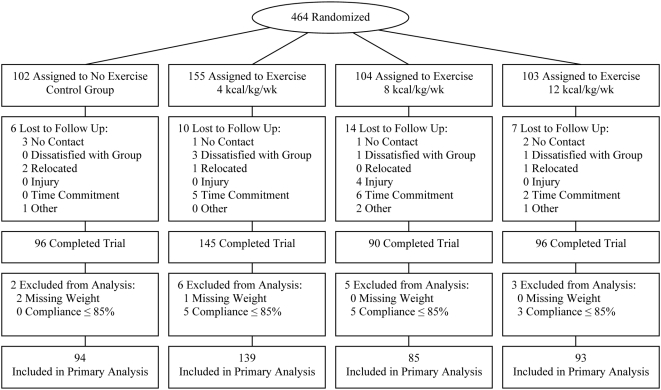
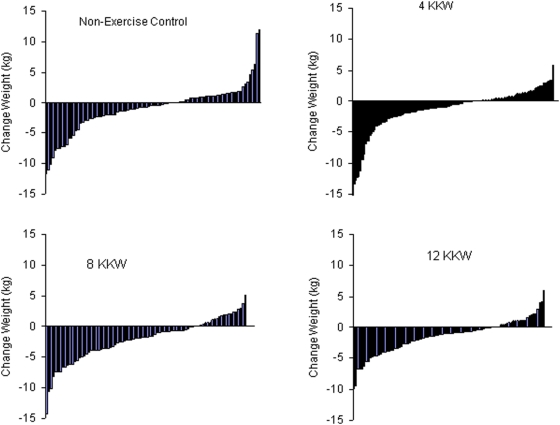
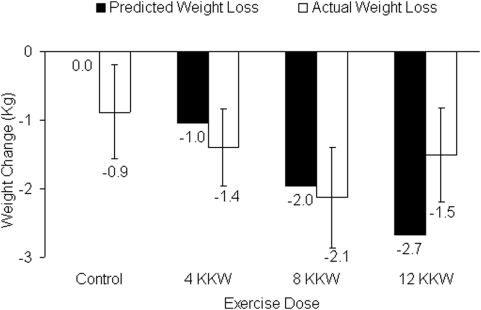
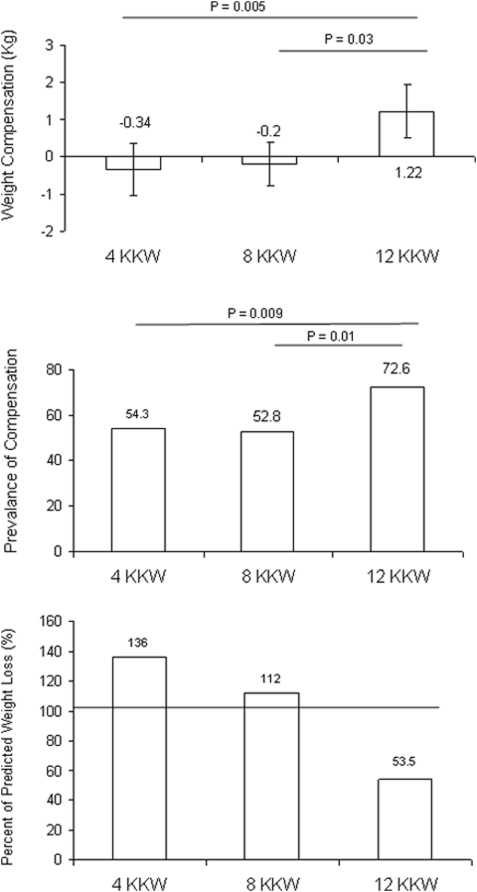
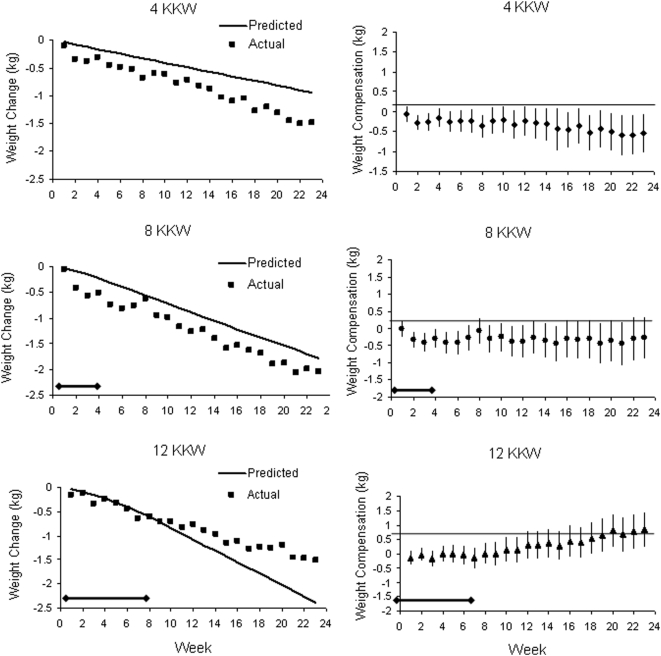
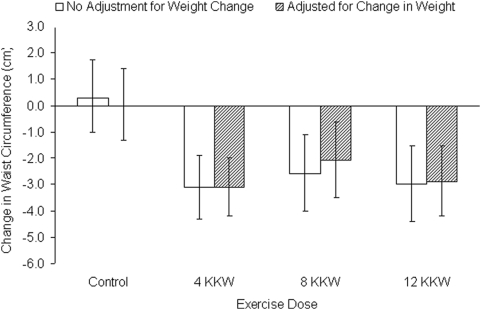
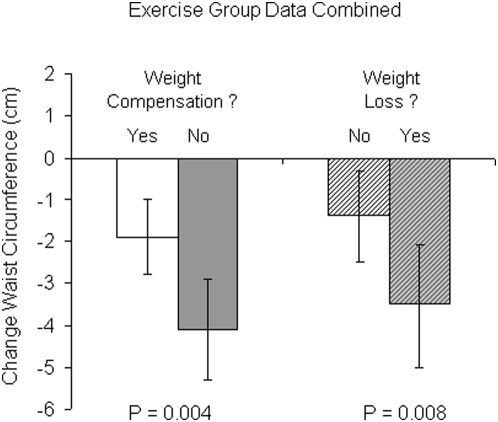
BACKGROUND: It has been suggested that exercise training results in compensatory mechanisms that attenuate weight loss. However, this has only been examined with large doses of exercise. The goal of this analysis was to examine actual weight loss compared to predicted weight loss (compensation) across different doses of exercise in a controlled trial of sedentary, overweight or obese postmenopausal women (n = 411). METHODOLOGY/PRINCIPAL FINDINGS: Participants were randomized to a non-exercise control (n = 94) or 1 of 3 exercise groups; exercise energy expenditure of 4 (n = 139), 8 (n = 85), or 12 (n = 93) kcal/kg/week (KKW). Training intensity was set at the heart rate associated with 50% of each woman's peak VO(2) and the intervention period was 6 months. All exercise was supervised. The main outcomes were actual weight loss, predicted weight loss (exercise energy expenditure/ 7700 kcal per kg), compensation (actual minus predicted weight loss) and waist circumference. The study sample had a mean (SD) age 57.2 (6.3) years, BMI of 31.7 (3.8) kg/m(2), and was 63.5% Caucasian. The adherence to the intervention was >99% in all exercise groups. The mean (95% CI) weight loss in the 4, 8 and 12 KKW groups was -1.4 (-2.0, -0.8), -2.1 (-2.9, -1.4) and -1.5 (-2.2, -0.8) kg, respectively. In the 4 and 8 KKW groups the actual weight loss closely matched the predicted weight loss of -1.0 and -2.0 kg, respectively, resulting in no significant compensation. In the 12 KKW group the actual weight loss was less than the predicted weight loss (-2.7 kg) resulting in 1.2 (0.5, 1.9) kg of compensation (P<0.05 compared to 4 and 8 KKW groups). All exercise groups had a significant reduction in waist circumference which was independent of changes in weight. CONCLUSION: In this study of previously sedentary, overweight or obese, postmenopausal women we observed no difference in the actual and predicted weight loss with 4 and 8 KKW of exercise (72 and 136 minutes respectively), while the 12 KKW (194 minutes) produced only about half of the predicted weight loss. However, all exercise groups had a significant reduction in waist circumference which was independent of changes in weight. TRIAL REGISTRATION: (ClinicalTrials.gov) NCT00011193.
Overview
The claims and statistics of this paper haven’t been checked yet.
Free: it reads the open-access text and checks the first 5 claims that cite a source we can check. Create a free account to check every claim.
Integrity signals
Registry
Cites
Statistics
Figures
Verification
Claims the paper makes
The claims and statistics of this paper haven’t been checked yet.
Free: it reads the open-access text and checks the first 5 claims that cite a source we can check. Create a free account to check every claim.
Claims other papers make about this one
Each is checked against this paper’s own text: does it say what the citing paper says it does?
The source backs part of the claim, not all of it — or backs it for a different population, condition or comparison.
In the citing paper
“This type of outcome is robust and has been demonstrated in different types of participants followed over similar time periods [14].”
From Appetite control and energy balance: Impact of exercise (2015) · cites this paper as [14]
Experimental — accuracy not yet measuredThe cited source says what the claim attributes to it.
In the citing paper
“in many cases the degree of weight lost is somewhat less than that theoretically predicted on the basis of the measured EE and its presumed relationship to tissue lost [13, 14].”
From Appetite control and energy balance: Impact of exercise (2015) · cites this paper as [14]
The check wasn’t confident either way, so it gives no verdict — never disputed.
In the citing paper
“Resistance training preserves lean body mass and slows the drop in resting metabolic rate that often follows weight loss [102].”
From Obesity: Clinical Impact, Pathophysiology, Complications, and Modern Innovations in Therapeutic Strategies (2025) · cites this paper as [102]
Experimental — accuracy not yet measuredIn the citing paper
“The most significant outcome of the study by King et al. [13] - and other similar investigations [14] - is the range of individual adjustments in body weight as shown in Figure 3.”
From Appetite control and energy balance: Impact of exercise (2015) · cites this paper as [14]
Self-check
Percentages, sums and reported differences re-computed from the paper’s own numbers.
The self-check needs the paper’s full text.
Citations
Cites
Obesity : Preventing and managing the global epidemic
Akram, D. S., Astrup, A. V., Atinmo, T., Boissin, J.-L., Bray, G. A., Carroll, K. N., Chitson, P., Chen, C., Dietz, W. H., Hill, J. O., et al. (2000) · Research at the University of Copenhagen (University of Copenhagen) · Cited by 12,945
Prevalence of Overweight and Obesity in the United States, 1999-2004
Ogden, C. L., Carroll, M. D., Curtin, L. R., McDowell, M. A., Tabak, C. J., & Flegal, K. M. (2006) · JAMA · doi:10.1001/jama.295.13.1549 · Cited by 8,720
(2007) · Circulation · doi:10.1161/circulationaha.107.185649 · Cited by 6,545 · cited 1×
“[1,5–8,12,13] To our knowledge there are no studies that have examined weight compensation across different doses of exercise.”
Self-citationTrumbo, P., Schlicker, S., Yates, A. A., & Poos, M. (2002) · Journal of the American Dietetic Association · doi:10.1016/s0002-8223(02)90346-9 · Cited by 5,993
Physical Activity and Health: A Report of the Surgeon General: (525162010-001)
(1995) · PsycEXTRA Dataset · doi:10.1037/e525162010-001 · Cited by 5,479
American College of Sports Medicine position stand
Otis, C. L. (1997) · Medical Entomology and Zoology · Cited by 4,407
Prevalence of Overweight and Obesity in the United States
Crespo, C. J., & Ellen, S. (2003) · Obesity: Etiology Assessment Treatment and Prevention · doi:10.5040/9781718206601.ch-001 · Cited by 4,379
Physical Fitness and All-Cause Mortality: A Prospective Study of Healthy Men and Women
Blair, S. N. (1989) · JAMA · doi:10.1001/jama.1989.03430170057028 · Cited by 2,658 · cited 1×
“[17–20] Specifically, we estimated that the typical sedentary postmenopausal woman who started an activity program and followed the consensus public health recommendation would expend 8 kcal/kg/week (KKW) in the exercise program.”
Self-citationObesity and Diabetes in the Developing World — A Growing Challenge
Hossain, P., Kawar, B., & El Nahas, M. (2007) · New England Journal of Medicine · doi:10.1056/nejmp068177 · Cited by 2,200 · cited 1×
“[1–4] Regular exercise is considered a central component of weight loss and there are many organizations that recommend an hour or more per day of exercise to prevent weight gain, promote weight loss and/or prevent weight regain.”
Practical Assessment of Body Composition
Jackson, A. S., & Pollock, M. L. (1985) · The Physician and Sportsmedicine · doi:10.1080/00913847.1985.11708790 · Cited by 1,149 · cited 1×
“[22] To calculate predicted weight change we assumed that 1 Kg of weight represented 7700 kcal in energy.”
Research works printed but not linked: 1
- 23. The University of Texas HSoPH (1996) Food intake analysis system. Version 3.0.
Cited by
Garvey, W. T., Mechanick, J. I., Brett, E. M., Garber, A. J., Hurley, D. L., Jastreboff, A. M., Nadolsky, K., Pessah-Pollack, R., & Plodkowski, R. (2016) · Endocrine Practice · doi:10.4158/ep161365.gl · Cited by 1,914
Letter to the Editor: Standardized use of the terms “sedentary” and “sedentary behaviours”
Networ, S. B. R. (2012) · Applied Physiology, Nutrition, and Metabolism · doi:10.1139/h2012-024 · Cited by 1,873
“In contrast, we suggest that authors use the term “inactive” to describe those who are performing insufficient amounts of MVPA (i.e., not meeting specified physical activity guidelines).”
InfluentialHow many steps/day are enough? for adults
Tudor-Locke, C., Craig, C. L., Brown, W. J., Clemes, S. A., De Cocker, K., Giles-Corti, B., Hatano, Y., Inoue, S., Matsudo, S. M., Mutrie, N., et al. (2011) · International Journal of Behavioral Nutrition and Physical Activity · doi:10.1186/1479-5868-8-79 · Cited by 1,087
“, ≅ 4,700 steps/day) have produced important improvements in a number of health outcomes [52,56-58].”
BackgroundSelf-citationAssessing Adiposity: A Scientific Statement From the American Heart Association
Cornier, M.-A., Després, J.-P., Davis, N., Grossniklaus, D. A., Klein, S., Lamarche, B., Lopez-Jimenez, F., Rao, G., St-Onge, M.-P., Towfighi, A., et al. (2011) · Circulation · doi:10.1161/cir.0b013e318233bc6a · Cited by 945
Church, T. S., Blair, S. N., Cocreham, S., Johannsen, N., Johnson, W., Kramer, K., Mikus, C. R., Myers, V., Nauta, M., Rodarte, R. Q., et al. (2010) · JAMA · doi:10.1001/jama.2010.1710 · Cited by 944
“The failure of the aerobic group to lose a substantial amount of weight (or fat) has been reported in numerous aerobic exercise trials, which may be due to aerobic training resulting in energy intake, expenditure compensation, or both.(18-20)”
Self-citationThe role of exercise and physical activity in weight loss and maintenance
Swift, D. L., Johannsen, N. M., Lavie, C. J., Earnest, C. P., & Church, T. S. (2014) · Progress in Cardiovascular Diseases · doi:10.1016/j.pcad.2013.09.012 · Cited by 855
“Using data from the DREW study, Church et al.16 examined weight compensation in postmenopausal women who were required to perform ET at 50%, 100% and 150% of public health recommendations, and restricted the analysis to those who were 85% compliant to exercise training.”
BackgroundMethodResultInfluentialSelf-citationThe Effects of Exercise and Physical Activity on Weight Loss and Maintenance
Swift, D. L., McGee, J. E., Earnest, C. P., Carlisle, E., Nygard, M., & Johannsen, N. M. (2018) · Progress in Cardiovascular Diseases · doi:10.1016/j.pcad.2018.07.014 · Cited by 536
Self-citationLong, C. G., Blundell, J. E., & Finlayson, G. (2015) · Obesity Facts · doi:10.1159/000442403 · Cited by 511
Appetite control and energy balance: Impact of exercise
Blundell, J. E., Gibbons, C., Caudwell, P., Finlayson, G., & Hopkins, M. (2015) · Obesity Reviews · doi:10.1111/obr.12257 · Cited by 346
“Nevertheless, in many cases, the degree of weight lost is somewhat less than that theoretically predicted on the basis of the measured EE and its presumed relationship to tissue lost (13,14).”
BackgroundResultInfluentialWeight-loss intervention adherence and factors promoting adherence: a meta-analysis
Rogers, M., Lemstra, M., Bird, Y., Nwankwo, C., & Moraros, J. (2016) · Patient Preference and Adherence · doi:10.2147/ppa.s103649 · Cited by 345
“5%.(29) Adherence was operationalized in 13 studies, P at ie nt P re fe re nc e an d A dh er en ce d ow nl oa de d fr om h ttp s: //w w w .”
BackgroundPhysical Activity Promotion in the Health Care System
Vuori, I. M., Lavie, C. J., & Blair, S. N. (2013) · Mayo Clinic Proceedings · doi:10.1016/j.mayocp.2013.08.020 · Cited by 323
“In this study, important benefits were observed in the lowdose ET group, which was engaging in 72 minutes of moderate-intensity PA per week.(130,131) However, a more sustainable and thorough solution would be to include PA and ET medicine in the core curriculum of medical schools and residency/fellowship programs.”
BackgroundSelf-citationTrue and false interindividual differences in the physiological response to an intervention
Atkinson, G., & Batterham, A. M. (2015) · Experimental Physiology · doi:10.1113/ep085070 · Cited by 300
“The between-subject SD for all participants at baseline in the study by Church et al. (2009) was 11.9 kg.”
InfluentialThomas, D. M., Bouchard, C., Church, T., Slentz, C., Kraus, W. E., Redman, L. M., Martin, C. K., Silva, A. M., Vossen, M., Westerterp, K., et al. (2012) · Obesity Reviews · doi:10.1111/j.1467-789x.2012.01012.x · Cited by 280
“It is noteworthy that the discrepancy between achieved energy imbalance and prescribed energy expenditures is larger in magnitude with higher exercise dose (3,4,14,22) (Table 1).”
InfluentialSelf-citationDorling, J., Broom, D. R., Burns, S. F., Clayton, D. J., Deighton, K., James, L. J., King, J. A., Miyashita, M., Thackray, A. E., Batterham, R. L., et al. (2018) · Nutrients · doi:10.3390/nu10091140 · Cited by 235
“These features of the study design are important, as previous research suggests a higher exercise-induced energy deficit may stimulate greater compensatory elevations in energy intake [95].”
Dorling, J., Broom, D., Burns, S., Clayton, D., Deighton, K., James, L., King, J., Miyashita, M., Thackray, A., Batterham, R., et al. (2018) · doi:10.20944/preprints201807.0495.v1 · Cited by 235
The Theory and Practice of “Nudging”: Changing Health Behaviors
Vlaev, I., King, D., Dolan, P., & Darzi, A. (2016) · Public Administration Review · doi:10.1111/puar.12564 · Cited by 215
“The finding that most people put weight on following successful attempts to quit smoking or that high levels of exercise may result in compensatory mechanisms – such as overeating – suggest the need for joined up thinking, and clarity about the over-arching objectives of policy (Church et al., 2009; Parsons et al., 20…”
BackgroundRethorst, C. D., Toups, M. S., Greer, T. L., Nakonezny, P. A., Carmody, T. J., Grannemann, B. D., Huebinger, R. M., Barber, R. C., & Trivedi, M. H. (2013) · Molecular Psychiatry · doi:10.1038/mp.2012.125 · Cited by 211
Craft, B. B., Carroll, H. A., & Lustyk, M. K. B. (2014) · PubMed · Cited by 211
Donnelly, J. E., Honas, J. J., Smith, B. K., Mayo, M. S., Gibson, C. A., Sullivan, D. K., Lee, J., Herrmann, S. D., Lambourne, K., & Washburn, R. A. (2013) · Obesity · doi:10.1002/oby.20145 · Cited by 209
“(34) from a 6-month trial of supervised exercise (3-4 days/week, 50% VO2 peak) at 4 kcal/kg/week (72 min), 8 kcal/kg/week (136 min), or 12 kcal kg 1 week 1 (194 min).”
Blundell, J. E., Caudwell, P., Gibbons, C., Hopkins, M., Naslund, E., King, N., & Finlayson, G. (2012) · Disease Models & Mechanisms · doi:10.1242/dmm.009837 · Cited by 208
“…showed that exercise caused an average weight loss of 3.3 kg, indicating that the exercise EE was not fully compensated (King et al., 2008), but individual variability was very large [also observed in other studies (Church et al., 2007; Church et al., 2009) using lower intensities of exercise].”
BackgroundResultInfluentialEnergy balance, body composition, sedentariness and appetite regulation: pathways to obesity
Hopkins, M., & Blundell, J. E. (2016) · Clinical Science · doi:10.1042/cs20160006 · Cited by 208
“However, marked inter-individual variability exists in these biological and behavioural compensatory responses (11, 13, 14).”
Ryan, B. J., Schleh, M. W., Ahn, C., Ludzki, A. C., Gillen, J. B., Varshney, P., Van Pelt, D. W., Pitchford, L. M., Chenevert, T. L., Gioscia-Ryan, R. A., et al. (2020) · The Journal of Clinical Endocrinology & Metabolism · doi:10.1210/clinem/dgaa345 · Cited by 202
Exercise, energy balance and body composition
Westerterp, K. R. (2018) · European Journal of Clinical Nutrition · doi:10.1038/s41430-018-0180-4 · Cited by 142
Exercise in Obesity, Metabolic Syndrome, and Diabetes
Church, T. (2011) · Progress in Cardiovascular Diseases · doi:10.1016/j.pcad.2011.03.013 · Cited by 186
Self-citationAnandacoomarasamy, A., Leibman, S., Smith, G., Caterson, I. D., Giuffrè, B., Fransen, M., Sambrook, P. N., & MARCH, L. M. (2011) · Annals of the Rheumatic Diseases · doi:10.1136/ard.2010.144725 · Cited by 181
Resistance to Exercise-Induced Weight Loss: Compensatory Behavioral Adaptations
MELANSON, E. L., KEADLE, S. K., DONNELLY, J. E., BRAUN, B., & KING, N. A. (2013) · Medicine & Science in Sports & Exercise · doi:10.1249/mss.0b013e31828ba942 · Cited by 156
“In contrast, no dose– response effect was observed in a secondary analysis in two large cohort studies that compared the effects of different doses of exercise on cardiovascular fitness and cardiovascular risk factors (10,27).”
Keating, S. E., Machan, E. A., O'Connor, H. T., Gerofi, J. A., Sainsbury, A., Caterson, I. D., & Johnson, N. A. (2014) · Journal of Obesity · doi:10.1155/2014/834865 · Cited by 170
Leung, A. W. Y., Chan, R. S. M., Sea, M. M. M., & Woo, J. (2017) · International Journal of Environmental Research and Public Health · doi:10.3390/ijerph14080922 · Cited by 166
“PA adherence was all objectively measured using pedometers [65,69], accelerometer [66] and heart rate monitoring [70].”
MethodGibbons, C., Hopkins, M., Beaulieu, K., Oustric, P., & Blundell, J. E. (2019) · Current Obesity Reports · doi:10.1007/s13679-019-00340-6 · Cited by 163
Toward exercise as personalized medicine.
Buford, T. W., Roberts, M. D., & Church, T. S. (2013) · Sports Medicine · doi:10.1007/s40279-013-0018-0 · Cited by 158
“recently reported changes in body mass among 411 overweight or obese women who participated in the Dose-Response to Exercise in postmenopausal Women (DREW) study [16].”
Self-citationConstrained Total Energy Expenditure and the Evolutionary Biology of Energy Balance
Pontzer, H. (2015) · Exercise and Sport Sciences Reviews · doi:10.1249/jes.0000000000000048 · Cited by 158
“Indeed, low-intensity exercise interventions in sedentary subjects have been shown to induce weight loss (4).”
BackgroundMethodInfluentialDonnelly, J. E., Herrmann, S. D., Lambourne, K., Szabo, A. N., Honas, J. J., & Washburn, R. A. (2014) · PLoS ONE · doi:10.1371/journal.pone.0083498 · Cited by 132
“$ 30 kg/m(2)) in 8 trials [16,107,110,111,115,123,128,129] and normal weight (i.”
BackgroundMethodInfluentialPhysical activity does not influence obesity risk: time to clarify the public health message
Luke, A. H., & Cooper, R. (2013) · International Journal of Epidemiology · doi:10.1093/ije/dyt159 · Cited by 158
Obesity – A neuropsychological disease? Systematic review and neuropsychological model
Jauch‐Chara, K., & Oltmanns, K. M. (2014) · Progress in Neurobiology · doi:10.1016/j.pneurobio.2013.12.001 · Cited by 162
Sweet, S. N., & Fortier, M. S. (2010) · International Journal of Environmental Research and Public Health · doi:10.3390/ijerph7041720 · Cited by 110
“This finding is congruent with the current literature on physical activity and weight loss [67,68] as physical activity is hypothesized to play a more important role in weight maintenance rather than weight loss [69,70].”
ResultIs the calorie concept a real solution to the obesity epidemic?
Camacho, S., & Ruppel, A. (2017) · Global Health Action · doi:10.1080/16549716.2017.1289650 · Cited by 145
Exercise without Weight Loss Does Not Reduce C-Reactive Protein: The INFLAME Study
CHURCH, T. S., EARNEST, C. P., THOMPSON, A. M., PRIEST, E. L., RODARTE, R. Q., SAUNDERS, T., ROSS, R., & BLAIR, S. N. (2010) · Medicine & Science in Sports & Exercise · doi:10.1249/mss.0b013e3181c03a43 · Cited by 127
“(6) (1) We hypothesize that the small percentage of expected weight loss (29%) achieved in the exercise group accounts for our failure to see a significant mean reduction in CRP.”
BackgroundSelf-citationFriedenreich, C. M., Woolcott, C. G., McTiernan, A., Terry, T., Brant, R., Ballard-Barbash, R., Irwin, M. L., Jones, C. A., Boyd, N. F., Yaffe, M. J., et al. (2011) · International Journal of Obesity · doi:10.1038/ijo.2010.147 · Cited by 126
Rosenkilde, M., Auerbach, P., Reichkendler, M. H., Ploug, T., Stallknecht, B. M., & Sjödin, A. (2012) · American Journal of Physiology-Regulatory, Integrative and Comparative Physiology · doi:10.1152/ajpregu.00141.2012 · Cited by 121
Use of Psychology and Behavioral Economics to Promote Healthy Eating
Roberto, C. A., & Kawachi, I. I. (2014) · American Journal of Preventive Medicine · doi:10.1016/j.amepre.2014.08.002 · Cited by 132
“People may also compensate for exercise by eating more calories after the workout than they burned during it.(38) Unfortunately, people do not tend to compensate in a healthier direction.”
BackgroundRelationship Between Sedentary Behavior and Cardiovascular Risk
Same, R. V., Feldman, D. I., Shah, N. P., Martin, S. S., Rifai, M. A., Blaha, M. J., Graham, G. N., & Ahmed, H. M. (2015) · Current Cardiology Reports · doi:10.1007/s11886-015-0678-5 · Cited by 130
The effect of exercise on non‐exercise physical activity and sedentary behavior in adults
Melanson, E. L. (2017) · Obesity Reviews · doi:10.1111/obr.12507 · Cited by 103
“(28) compared predicted and actual weight loss in overweight and obese women during a 6 month exercise intervention.”
BackgroundResultThe Health Benefits of Exercise and Physical Activity
Miller, K. R., McClave, S. A., Jampolis, M. B., Hurt, R. T., Krueger, K. J., Landes, S., & Collier, B. C. (2016) · Current Nutrition Reports · doi:10.1007/s13668-016-0175-5 · Cited by 125
Martin, C. K., Johnson, W. D., Myers, C. A., Apolzan, J. W., Earnest, C. P., Thomas, D. M., Rood, J. C., Johannsen, N. M., Tudor-Locke, C., Harris, M., et al. (2019) · The American Journal of Clinical Nutrition · doi:10.1093/ajcn/nqz054 · Cited by 106
“Previous studies examining compensation could be improved upon by designing and powering studies to specifically identify the source or sources of compensation, relying on measures of energy intake that are sufficiently sensitive to detect small changes over time, and determining if physical activity levels change out…”
BackgroundResultInfluentialSelf-citationEnergy Constraint as a Novel Mechanism Linking Exercise and Health
Pontzer, H. (2018) · Physiology · doi:10.1152/physiol.00027.2018 · Cited by 101
“Energy compensation to increased physical activity is a common phenomenon in exercise interventions, but the degree of compensation varies among subjects and studies (16, 26, 28, 34, 38, 46, 70, 71, 79, 84), leading to uncertainty in the size and regularity of the effect.”
BackgroundInfluence of Running and Walking on Hormonal Regulators of Appetite in Women
Larson-Meyer, D. E., Palm, S., Bansal, A., Austin, K. J., Hart, A. M., & Alexander, B. M. (2012) · Journal of Obesity · doi:10.1155/2012/730409 · Cited by 95
“Although the aforementioned recommendations, if followed, are likely to have a major impact on health, intervention studies find that exercise without intentional food restriction and/or behavior modification does not effectively promote weight loss, [5, 6], particularly in women [7, 8].”
BackgroundResultChurch, T., & Martin, C. K. (2018) · Obesity · doi:10.1002/oby.22072 · Cited by 104
“We have demonstrated that, in many individuals, increased exercise results in increased energy intake, a phenomenon known as compensation (3).”
BackgroundSelf-citationEglseer, D., Traxler, M., Embacher, S., Reiter, L., Schoufour, J. D., Weijs, P. J. M., Voortman, T., Boirie, Y., Cruz-Jentoft, A., & Bauer, S. (2023) · Advances in Nutrition · doi:10.1016/j.advnut.2023.04.001 · Cited by 102
Malin, S. K., Nightingale, J., Choi, S., Chipkin, S. R., & Braun, B. (2013) · Obesity · doi:10.1002/oby.20235 · Cited by 88
Voluntary Exercise Improves High-Fat Diet-Induced Leptin Resistance Independent of Adiposity
Carhuatanta, K. A. K., Demuro, G., Tschöp, M. H., Pfluger, P. T., Benoit, S. C., & Obici, S. (2011) · Endocrinology · doi:10.1210/en.2010-1340 · Cited by 91
Kim, B., Choi, D., Jung, C., Kang, S., Mok, J., & Kim, C. (2017) · Journal of Obesity & Metabolic Syndrome · doi:10.7570/jomes.2017.26.1.15 · Cited by 97
Friedenreich, C. M., Neilson, H. K., O’Reilly, R., Duha, A., Yasui, Y., Morielli, A. R., Adams, S. C., & Courneya, K. S. (2015) · JAMA Oncology · doi:10.1001/jamaoncol.2015.2239 · Cited by 76
Cheng, C.-C., Hsu, C.-Y., & Liu, J.-F. (2018) · Menopause · doi:10.1097/gme.0000000000001085 · Cited by 89
Swift, D. L., Johannsen, N. M., Lavie, C. J., Earnest, C. P., Blair, S. N., & Church, T. S. (2016) · Obesity · doi:10.1002/oby.21404 · Cited by 82
“(11) reported an TABLE 3 Change in cardiovascular risk factors in women achieving clinically significant weight loss (CWL), moderate weight loss (MWL), or neither”
BackgroundInfluentialSelf-citationKline, C. E., Sui, X., Hall, M. H., Youngstedt, S. D., Blair, S. N., Earnest, C. P., & Church, T. S. (2012) · BMJ Open · doi:10.1136/bmjopen-2012-001044 · Cited by 87
Self-citationHopkins, M., Gibbons, C., Caudwell, P., Hellström, P. M., Näslund, E. B., King, N. A., Finlayson, G., & Blundell, J. E. (2014) · European Journal of Clinical Nutrition · doi:10.1038/ejcn.2013.277 · Cited by 86
“However, consistent with previous findings (19-21), the group changes in body 307 composition masked marked individual variability (Figure 2).”
ResultThomas, D. T., DelCimmuto, N. R., Flack, K. D., Stec, D. E., & Hinds, T. D. (2022) · Antioxidants · doi:10.3390/antiox11020179 · Cited by 85
Letter to the Editor: Standardized use of the terms “sedentary” and “sedentary behaviours”
Sedentary Behaviour Research Network (2013) · Mental health and physical activity · doi:10.1016/j.mhpa.2012.06.001 · Cited by 84
Behavioral Compensatory Adjustments to Exercise Training in Overweight Women
MANTHOU, E., GILL, J. M. R., WRIGHT, A., & MALKOVA, D. (2010) · Medicine & Science in Sports & Exercise · doi:10.1249/mss.0b013e3181c524b7 · Cited by 67
“compensation occurs is related to exercise dose (7).”
BackgroundInfluentialViester, L., Verhagen, E. A. L. M., Bongers, P. M., & van der Beek, A. J. (2017) · American Journal of Health Promotion · doi:10.1177/0890117117694450 · Cited by 80
Washburn, R. A., Lambourne, K., Szabo‐Reed, A. N., Herrmann, S. D., Honas, J. J., & Donnelly, J. E. (2013) · Clinical Obesity · doi:10.1111/cob.12040 · Cited by 80
“Compliance with the exercise protocol: five studies presented data relative to participant compliance with the exercise training protocol as assessed by the percentage of scheduled exercise sessions attended (15,21,53,54,56).”
BackgroundMethodInfluentialTaillie, L. S., Ng, S. W., & Popkin, B. M. (2014) · Social Science & Medicine · doi:10.1016/j.socscimed.2014.09.010 · Cited by 77
Hopkins, M., King, N. A., & Blundell, J. E. (2010) · Current Opinion in Clinical Nutrition and Metabolic Care · doi:10.1097/mco.0b013e32833e343b · Cited by 76
The Health Benefits of Exercise in Overweight and Obese Patients
Garber, C. E. (2019) · Current Sports Medicine Reports · doi:10.1249/jsr.0000000000000619 · Cited by 79
“Reductions in waist circumference, visceral abdominal fat, and total body fat, even without accompanying weight loss, occur consequently to exercise interventions at exercise volumes of one half that recommended (51,52).”
BackgroundBeaulieu, K., Blundell, J. E., van Baak, M. A., Battista, F., Busetto, L., Carraça, E. V., Dicker, D., Encantado, J., Ermolao, A., Farpour‐Lambert, N., et al. (2021) · Obesity Reviews · doi:10.1111/obr.13251 · Cited by 59
“5 8 Even in some studies that show a positive effect of exercise intervention on weight loss, the degree of weight loss actually observed is often less than the weight loss theoretically expected based on the amount of energy expended.”
Silva, A. M., Júdice, P. B., Carraça, E. V., King, N., Teixeira, P. J., & Sardinha, L. B. (2018) · British Journal of Nutrition · doi:10.1017/s000711451800096x · Cited by 63
“Willis et al.(26) prescribed 39 and 55min for the 1674kJ/ session and 2510kJ/session; Rosenkilde et al.(23) prescribed 1255 and 2510 kJ/d; Church et al.(19) prescribed 17, 33 and 50 kJ/kg per week; and Rangan et al.(31) and Hollowell et al.(20) dosed duration as 58·6 kJ/kg per week and 59 and 96 kJ/kg per week.”
BackgroundMethodInfluentialHerrmann, S. D., Willis, E. A., Honas, J. J., Lee, J., Washburn, R. A., & Donnelly, J. E. (2015) · Obesity · doi:10.1002/oby.21073 · Cited by 58
“Only two trials, both conducted in women, have included simultaneous assessments of changes in energy intake and NEEx on exerciseinduced weight loss (28,29).”
BackgroundIncreases in Physical Activity Result in Diminishing Increments in Daily Energy Expenditure in Mice
O’Neal, T. J., Friend, D. M., Guo, J., Hall, K. D., & Kravitz, A. V. (2017) · Current Biology · doi:10.1016/j.cub.2016.12.009 · Cited by 59
Carrasquilla, G. D., García-Ureña, M., Fall, T., Sørensen, T. I. A., & Kilpeläinen, T. O. (2022) · eLife · doi:10.7554/elife.70386 · Cited by 63
“Furthermore, randomized clinical trials of physical activity interventions have indicated that the causal effects of physical activity on body weight are modest (Church et al., 2009; Rosenkilde et al., 2012; Golubic et al., 2015) compared to the strong inverse relationship between physical activity and body weight obs…”
Williamson, P., Atkinson, G., & Batterham, A. M. (2018) · Obesity Reviews · doi:10.1111/obr.12682 · Cited by 64
Shaibi, G. Q., Konopken, Y. P., Hoppin, E., Keller, C. S., Ortega, R., & Castro, F. G. (2012) · The Science of Diabetes Self-Management and Care · doi:10.1177/0145721712446635 · Cited by 61
“Studies in adults suggest that exercise can result in significant reductions in waist circumference and/or abdominal obesity even in the absence of weight loss.(34,35) Given the independent effect of abdominal adiposity on insulin resistance in Latino children(36) and T2D in Latino adults,(37) refocusing attention on…”
BackgroundHopkins, M., Jeukendrup, A., King, N. A., & Blundell, J. E. (2011) · Sports Medicine · doi:10.2165/11588780-000000000-00000 · Cited by 58
“Church et al.([12]) have examined the effects of exercise dose (4, 8 and 12 kcal/kg/week) on compensation during 6 months of supervised exercise.”
BackgroundPredictors of Energy Compensation during Exercise Interventions: A Systematic Review
Riou, M.-È., Jomphe-Tremblay, S., Lamothe, G., Stacey, D., Szczotka, A., & Doucet, É. (2015) · Nutrients · doi:10.3390/nu7053677 · Cited by 58
“Similarly, the effects of dose (kcal/week) [9,22,23] and intensity of exercise [24,25] have not been clearly established as far as energy compensation in response to exercise is concerned.”
BackgroundBaker, A., Sirois-Leclerc, H., & Tulloch, H. E. (2016) · Journal of Obesity · doi:10.1155/2016/6169890 · Cited by 58
“According to the DREW study [46], there was a significant difference in mean maximal fitness response (treadmill testing) for all pairwise comparisons (i.”
MethodVariability in Individual Response to Aerobic Exercise Interventions Among Older Adults
Whipple, M. O., Schorr, E. N., Talley, K. M., Lindquist, R. A., Bronas, U. G., & Treat‐Jacobson, D. (2017) · Journal of Aging and Physical Activity · doi:10.1123/japa.2017-0054 · Cited by 58
“Of the 17 included articles, 9 provided a specific definition of nonresponse (Chmelo et al., 2015; Church et al., 2009; Gardner et al., 2014; Leifer et al., 2014; Osler et al., 2015; Pandey et al., 2015; Sisson et al., 2009; Swift et al., 2016; Yalamanchi et al., 2016).”
InfluentialEffect of Morning and Evening Exercise on Energy Balance: A Pilot Study
Creasy, S. A., Wayland, L. T., Panter, S. L., Purcell, S. A., Rosenberg, R. C., Willis, E. A., Shiferaw, B. A., Grau, L., Breit, M. J., Bessesen, D. H., et al. (2022) · Nutrients · doi:10.3390/nu14040816 · Cited by 53
Kelly, S. A., Nehrenberg, D. L., Hua, K., Garland, T., & Pomp, D. (2010) · Physiological Genomics · doi:10.1152/physiolgenomics.00217.2010 · Cited by 52
“Individual variation in human weight loss and reduction in adiposity, in response to voluntary exercise, has in part been attributed to the frequency, duration, and intensity of the activity engaged in (6, 9, 34), although results remain inconsistent (16, 17, 44).”
BackgroundResultMeasurement, Determinants, and Implications of Energy Intake in Athletes
Holtzman, B., & Ackerman, K. E. (2019) · Nutrients · doi:10.3390/nu11030665 · Cited by 39
The crown joules: energetics, ecology, and evolution in humans and other primates
Pontzer, H. (2017) · Evolutionary Anthropology Issues News and Reviews · doi:10.1002/evan.21513 · Cited by 52
“The effect of increased exercise on weight loss is generally less than expected from the energy cost of that exercise, particularly over the course of weeks and months (Ross & Janssen, 1989; Thomas et al., 2012; Church et al., 2009).”
BackgroundEffect of Exercise on Metabolic Syndrome Variables in Breast Cancer Survivors
Thomas, G. A., Alvarez-Reeves, M., Lu, L., Yu, H., & Irwin, M. L. (2013) · International Journal of Endocrinology · doi:10.1155/2013/168797 · Cited by 51
Rossi, A., Garber, C. E., Ortiz, M., Shankar, V., Goldberg, G. L., & Nevadunsky, N. S. (2016) · Gynecologic Oncology · doi:10.1016/j.ygyno.2016.05.034 · Cited by 52
Genetic determinants of voluntary exercise
Kelly, S. A., & Pomp, D. (2013) · Trends in Genetics · doi:10.1016/j.tig.2012.12.007 · Cited by 50
Effect of Aerobic Exercise-induced Weight Loss on the Components of Daily Energy Expenditure
BROSKEY, N. T., MARTIN, C. K., BURTON, J. H., CHURCH, T. S., RAVUSSIN, E., & REDMAN, L. M. (2021) · Medicine & Science in Sports & Exercise · doi:10.1249/mss.0000000000002689 · Cited by 40
“Decades of research have shown a large amount of variance in weight loss in response to exercise interventions (4,5,9).”
BackgroundMethodSelf-citationRosenkilde, M., Reichkendler, M. H., Auerbach, P., Toräng, S., Gram, A. S., Ploug, T., Holst, J. J., Sjödin, A. M., & Stallknecht, B. M. (2013) · Journal of Applied Physiology · doi:10.1152/japplphysiol.00680.2013 · Cited by 51
“(EI) (9, 13, 47), perhaps due to augmented appetite.”
BackgroundFedewa, M. V., Hathaway, E. D., Williams, T. D., & Schmidt, M. D. (2017) · Sports Medicine · doi:10.1007/s40279-016-0649-z · Cited by 49
“Exercise training interventions examining the dose–response relationship between exercise energy expenditure and weight loss have shown little difference in weight loss across various doses, indicating that greater energy expenditure through exercise does not necessarily lead to greater weight loss [23], and can expla…”
BackgroundMethodNonexercise Energy Expenditure and Physical Activity in the Midwest Exercise Trial 2
WILLIS, E. A., HERRMANN, S. D., HONAS, J. J., LEE, J., DONNELLY, J. E., & WASHBURN, R. A. (2014) · Medicine & Science in Sports & Exercise · doi:10.1249/mss.0000000000000354 · Cited by 47
“Compensatory changes in energy intake and/or NEEx are also suggested by studies reporting no additional weight loss with increased exercise dose (3, 8, 29).”
BackgroundResultInfluentialVolek, J. S., Kackley, M. L., & Buga, A. (2024) · Current Nutrition Reports · doi:10.1007/s13668-024-00548-6 · Cited by 48
“This is consistent with evidence supporting a restraint on human metabolic rate in individuals who are extremely active [248] and larger studies that show only about a quarter of participants exercising at a high dose do not compensate (i.e., they lose weight in response to exercise) [25].”
BackgroundResultThe skinny on obesity and plasma cell myeloma: a review of the literature
Carson, K. R., Bates, M. L., & Tomasson, M. H. (2014) · Bone Marrow Transplantation · doi:10.1038/bmt.2014.71 · Cited by 48
Johnson, N. A., Sultana, R. N., Brown, W. J., Bauman, A. E., & Gill, T. (2021) · Journal of Science and Medicine in Sport · doi:10.1016/j.jsams.2021.07.009 · Cited by 47
Commentary: Why sprint interval training is inappropriate for a largely sedentary population
Jung, M. E., Little, J. P., & Batterham, A. M. (2016) · Frontiers in Psychology · doi:10.3389/fpsyg.2015.01999 · Cited by 47
Myers, A., Dalton, M., Gibbons, C., Finlayson, G., & Blundell, J. E. (2018) · Physiology & Behavior · doi:10.1016/j.physbeh.2018.11.005 · Cited by 47
“Post-interventions PA levels similar to baseline have previously been 458 highlighted (39-42).”
BackgroundResultStudy design and methods for the Breast Cancer and Exercise Trial in Alberta (BETA)
Friedenreich, C. M., MacLaughlin, S., Neilson, H. K., Stanczyk, F. Z., Yasui, Y., Duha, A., Lynch, B. M., Kallal, C., & Courneya, K. S. (2014) · BMC Cancer · doi:10.1186/1471-2407-14-919 · Cited by 46
“and also weight loss [40], but not for change in waist circumference [40] or CRP levels [39].”
BackgroundMethodRedman, L. M., Elkind-Hirsch, K., & Ravussin, E. (2011) · Fertility and Sterility · doi:10.1016/j.fertnstert.2011.01.137 · Cited by 44
Walsh, J. J., Bonafiglia, J. T., Goldfield, G. S., Sigal, R. J., Kenny, G. P., Doucette, S. P., Hadjiyannakis, S., Alberga, A. S., Prud’homme, D., & Gurd, B. J. (2019) · Applied Physiology, Nutrition, and Metabolism · doi:10.1139/apnm-2019-0088 · Cited by 41
Effects of a Long-Term Physical Activity Program on Activity Patterns in Older Adults
Wanigatunga, A. A., Tudor-Locke, C. E., Axtell, R. S., Glynn, N. W., King, A. C., McDermott, M. M., Fielding, R. A., Lu, X., Pahor, M., & Manini, T. M. (2017) · Medicine & Science in Sports & Exercise · doi:10.1249/mss.0000000000001340 · Cited by 41
“intensity physical activity is preserved (6, 21, 27, 29).”
Ullah, M. I., & Tamanna, S. (2025) · Medicines · doi:10.3390/medicines12030019 · Cited by 38
“Resistance training preserves lean body mass and slows the drop in resting metabolic rate that often follows weight loss [102].”
Buford, T. W., Hsu, F., Brinkley, T. E., Carter, C. S., Church, T. S., Dodson, J. A., Goodpaster, B. H., McDermott, M. M., Nicklas, B. J., Yank, V. A., et al. (2014) · Physiological Genomics · doi:10.1152/physiolgenomics.00169.2013 · Cited by 39
Self-citationIndividual Variability in Waist Circumference and Body Weight in Response to Exercise
Hammond, B., Stotz, P. J., Brennan, A. M., Lamarche, B., Day, A. G., & Ross, R. (2018) · Medicine & Science in Sports & Exercise · doi:10.1249/mss.0000000000001784 · Cited by 38
McNeil, J., Brenner, D. R., Courneya, K. S., & Friedenreich, C. M. (2017) · International Journal of Obesity · doi:10.1038/ijo.2017.87 · Cited by 36
Hopkins, M., Beaulieu, K., Myers, A., Gibbons, C., & Blundell, J. E. (2017) · Expert Review of Endocrinology & Metabolism · doi:10.1080/17446651.2017.1395693 · Cited by 37
“Importantly, this variability echoes that seen in response to long-term dietary [129-131], exercise [132-135], pharmacological [136,137] and surgical [138-140] weight loss interventions.”
Metadata
- Authors
- Church, T. S., Martin, C. K., Thompson, A. M., Earnest, C. P., Mikus, C. R., & Blair, S. N.
- Affiliations
- Pennington Biomedical Research Center (US)
- University of Missouri (US)
- University of South Carolina (US)
- Corresponding author
- Church, Timothy S.
- Venue
- PLoS ONE
- Publisher
- Public Library of Science (PLoS)
- Published
- 2009-02-18
- Volume
- 4
- Issue
- 2
- Pages
- e4515
- ISSN
- 1932-6203 (ISSN-L)
- PMC
- PMC2639700
- OpenAlex
- W2121467598
- Cited by
- 275
- References
- 32
- Citations by year
- 2026: 6 · 2025: 8 · 2024: 8 · 2023: 10 · 2022: 15 · 2021: 10 · 2020: 16 · 2019: 16 · 2018: 21 · 2017: 25 · 2016: 22 · 2015: 21 · 2014: 19 · 2013: 25 · 2012: 22
- FWCI
- 11.71
- Type
- journal article
- Language
- en
- Open access
- gold
- doi.org
- Locations
- PLoS ONE (publishedVersion, cc-by)
- PubMed Central (publishedVersion, cc-by)
- PubMed (publishedVersion)
- Scholar Commons (University of South Carolina) (submittedVersion)
- DOAJ (DOAJ: Directory of Open Access Journals) (submittedVersion, cc-by-sa)
- Figshare (submittedVersion, cc-by)
- Funders
- National Institutes of Health (5k23dk068052-04)
- National Heart, Lung, and Blood Institute (HL-66262, R01HL066262)
- National Institute of Diabetes and Digestive and Kidney Diseases (K23-DK-068052, K23 DK068052-01A2)
- Topics
- Health Sciences › Medicine › Public Health, Environmental and Occupational Health › Physical Activity and Health
- Health Sciences › Medicine › Physiology (medical) › Cardiovascular and exercise physiology
- Health Sciences › Medicine › Public Health, Environmental and Occupational Health › Obesity, Physical Activity, Diet
- Keywords
- weight loss prediction, waist circumference, postmenopausal women, overweight women, sedentary women, exercise energy expenditure, aerobic exercise, obesity, weight loss
- MeSH terms
- Exercise Therapy, Female, Humans, Middle Aged, Exercise, Treatment Outcome, Postmenopause, Overweight, Waist Circumference
About these checks
Registry, retraction, Cites and statistics results are computed, not judged, with one exception: a printed reference that no index lists is read once by a model before it counts as a citation error. Claims are extracted by a model and kept only when their quote appears verbatim in the text; each cited source is then checked, with a model’s help, for whether it says what the claim relies on. Those verdicts can be wrong — read the claim’s quote and the cited source before relying on one.
Statistics and arithmetic are recomputed, not judged.
Confidence bands are shown only for fields calibrated on our annotated test set. None is calibrated yet, so no band is shown.
What counts as a claim ›How we measure confidence ›How we check this ›
Are you an author, or do you see a problem with this page? Request a review
Data sources
Bibliographic data: Semantic Scholar, OpenAlex, Crossref.
Contains information from the Semantic Scholar Academic Graph Datasets, made available under the ODC Attribution License (ODC-BY 1.0).
Semantic Scholar’s data is described in: Kinney, R., et al. (2023). The Semantic Scholar Open Data Platform. arXiv:2301.10140.
