

Changes in Weight, Waist Circumference and Compensatory Responses with Different Doses of Exercise among Sedentary, Overweight Postmenopausal Women
Open accessThe DOI matches its Crossref record; 30 of the 32 references it cites were found in a registry or an index.
Abstract
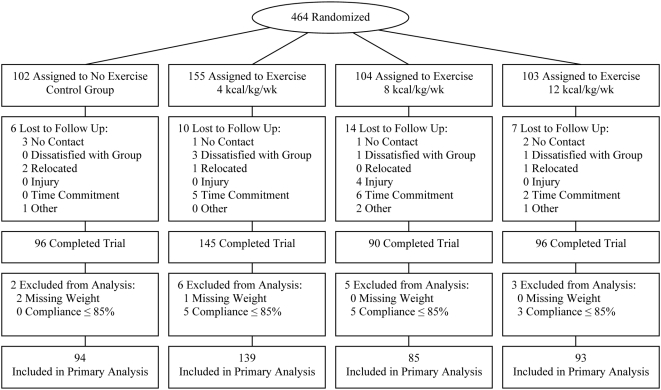
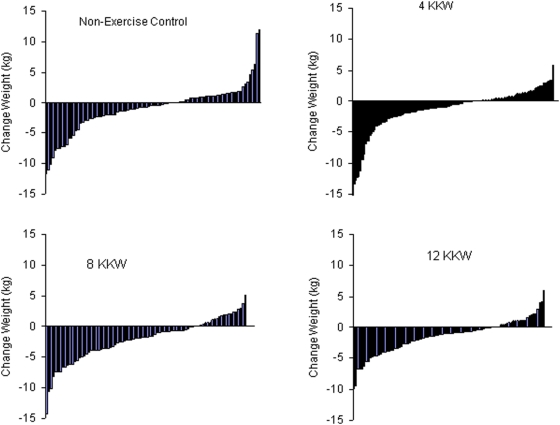
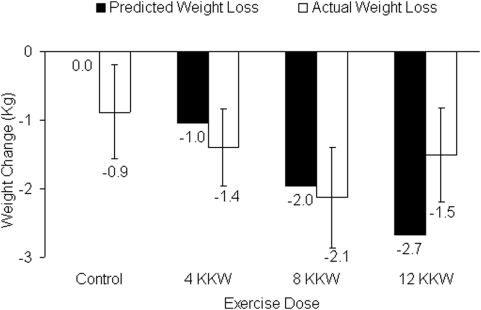
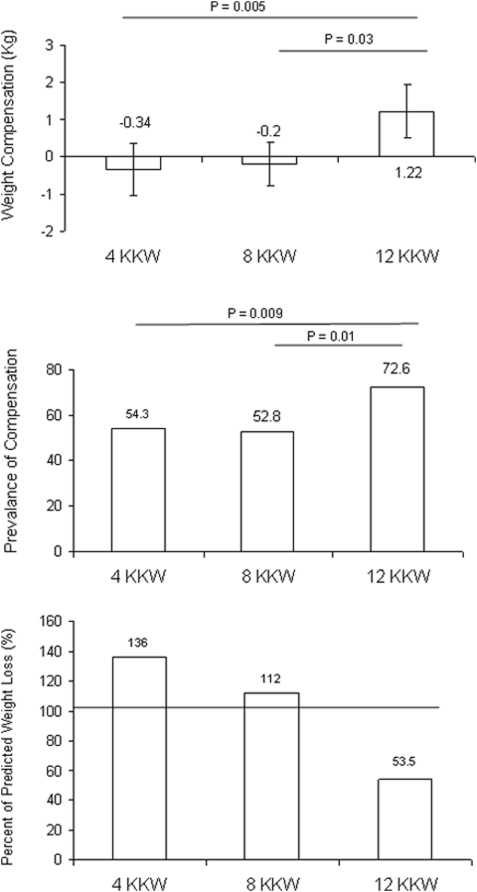
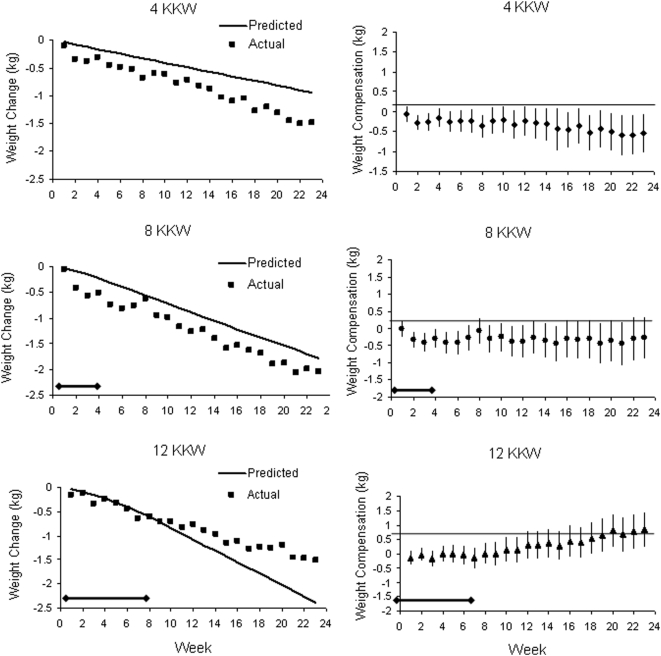
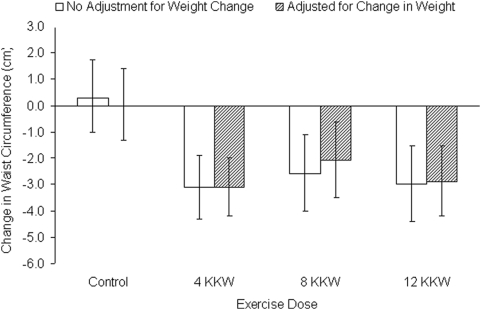
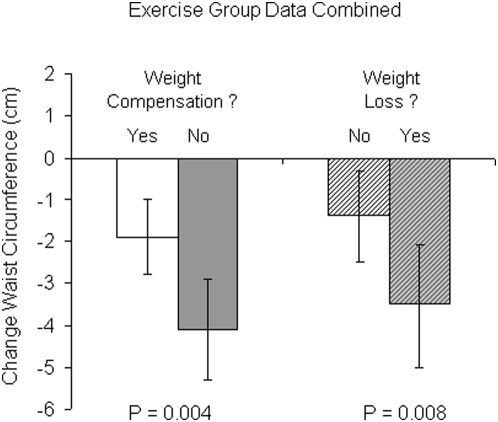
BACKGROUND: It has been suggested that exercise training results in compensatory mechanisms that attenuate weight loss. However, this has only been examined with large doses of exercise. The goal of this analysis was to examine actual weight loss compared to predicted weight loss (compensation) across different doses of exercise in a controlled trial of sedentary, overweight or obese postmenopausal women (n = 411). METHODOLOGY/PRINCIPAL FINDINGS: Participants were randomized to a non-exercise control (n = 94) or 1 of 3 exercise groups; exercise energy expenditure of 4 (n = 139), 8 (n = 85), or 12 (n = 93) kcal/kg/week (KKW). Training intensity was set at the heart rate associated with 50% of each woman's peak VO(2) and the intervention period was 6 months. All exercise was supervised. The main outcomes were actual weight loss, predicted weight loss (exercise energy expenditure/ 7700 kcal per kg), compensation (actual minus predicted weight loss) and waist circumference. The study sample had a mean (SD) age 57.2 (6.3) years, BMI of 31.7 (3.8) kg/m(2), and was 63.5% Caucasian. The adherence to the intervention was >99% in all exercise groups. The mean (95% CI) weight loss in the 4, 8 and 12 KKW groups was -1.4 (-2.0, -0.8), -2.1 (-2.9, -1.4) and -1.5 (-2.2, -0.8) kg, respectively. In the 4 and 8 KKW groups the actual weight loss closely matched the predicted weight loss of -1.0 and -2.0 kg, respectively, resulting in no significant compensation. In the 12 KKW group the actual weight loss was less than the predicted weight loss (-2.7 kg) resulting in 1.2 (0.5, 1.9) kg of compensation (P<0.05 compared to 4 and 8 KKW groups). All exercise groups had a significant reduction in waist circumference which was independent of changes in weight. CONCLUSION: In this study of previously sedentary, overweight or obese, postmenopausal women we observed no difference in the actual and predicted weight loss with 4 and 8 KKW of exercise (72 and 136 minutes respectively), while the 12 KKW (194 minutes) produced only about half of the predicted weight loss. However, all exercise groups had a significant reduction in waist circumference which was independent of changes in weight. TRIAL REGISTRATION: (ClinicalTrials.gov) NCT00011193.
Overview
The claims and statistics of this paper haven’t been checked yet.
Free: it reads the open-access text and checks the first 5 claims that cite a source we can check. Create a free account to check every claim.
Integrity signals
Registry
Cites
Statistics
Figures
Verification
Claims the paper makes
The claims and statistics of this paper haven’t been checked yet.
Free: it reads the open-access text and checks the first 5 claims that cite a source we can check. Create a free account to check every claim.
Claims other papers make about this one
Each is checked against this paper’s own text: does it say what the citing paper says it does?
The source backs part of the claim, not all of it — or backs it for a different population, condition or comparison.
In the citing paper
“This type of outcome is robust and has been demonstrated in different types of participants followed over similar time periods [14].”
From Appetite control and energy balance: Impact of exercise (2015) · cites this paper as [14]
Experimental — accuracy not yet measuredThe cited source says what the claim attributes to it.
In the citing paper
“in many cases the degree of weight lost is somewhat less than that theoretically predicted on the basis of the measured EE and its presumed relationship to tissue lost [13, 14].”
From Appetite control and energy balance: Impact of exercise (2015) · cites this paper as [14]
The check wasn’t confident either way, so it gives no verdict — never disputed.
In the citing paper
“Resistance training preserves lean body mass and slows the drop in resting metabolic rate that often follows weight loss [102].”
From Obesity: Clinical Impact, Pathophysiology, Complications, and Modern Innovations in Therapeutic Strategies (2025) · cites this paper as [102]
Experimental — accuracy not yet measuredIn the citing paper
“The most significant outcome of the study by King et al. [13] - and other similar investigations [14] - is the range of individual adjustments in body weight as shown in Figure 3.”
From Appetite control and energy balance: Impact of exercise (2015) · cites this paper as [14]
Self-check
Percentages, sums and reported differences re-computed from the paper’s own numbers.
The self-check needs the paper’s full text.
Citations
Cites
Obesity : Preventing and managing the global epidemic
Akram, D. S., Astrup, A. V., Atinmo, T., Boissin, J.-L., Bray, G. A., Carroll, K. N., Chitson, P., Chen, C., Dietz, W. H., Hill, J. O., et al. (2000) · Research at the University of Copenhagen (University of Copenhagen) · Cited by 12,945
Prevalence of Overweight and Obesity in the United States, 1999-2004
Ogden, C. L., Carroll, M. D., Curtin, L. R., McDowell, M. A., Tabak, C. J., & Flegal, K. M. (2006) · JAMA · doi:10.1001/jama.295.13.1549 · Cited by 8,720
(2007) · Circulation · doi:10.1161/circulationaha.107.185649 · Cited by 6,545 · cited 1×
“[1,5–8,12,13] To our knowledge there are no studies that have examined weight compensation across different doses of exercise.”
Self-citationTrumbo, P., Schlicker, S., Yates, A. A., & Poos, M. (2002) · Journal of the American Dietetic Association · doi:10.1016/s0002-8223(02)90346-9 · Cited by 5,993
Physical Activity and Health: A Report of the Surgeon General: (525162010-001)
(1995) · PsycEXTRA Dataset · doi:10.1037/e525162010-001 · Cited by 5,479
American College of Sports Medicine position stand
Otis, C. L. (1997) · Medical Entomology and Zoology · Cited by 4,407
Prevalence of Overweight and Obesity in the United States
Crespo, C. J., & Ellen, S. (2003) · Obesity: Etiology Assessment Treatment and Prevention · doi:10.5040/9781718206601.ch-001 · Cited by 4,379
Physical Fitness and All-Cause Mortality: A Prospective Study of Healthy Men and Women
Blair, S. N. (1989) · JAMA · doi:10.1001/jama.1989.03430170057028 · Cited by 2,658 · cited 1×
“[17–20] Specifically, we estimated that the typical sedentary postmenopausal woman who started an activity program and followed the consensus public health recommendation would expend 8 kcal/kg/week (KKW) in the exercise program.”
Self-citationObesity and Diabetes in the Developing World — A Growing Challenge
Hossain, P., Kawar, B., & El Nahas, M. (2007) · New England Journal of Medicine · doi:10.1056/nejmp068177 · Cited by 2,200 · cited 1×
“[1–4] Regular exercise is considered a central component of weight loss and there are many organizations that recommend an hour or more per day of exercise to prevent weight gain, promote weight loss and/or prevent weight regain.”
Practical Assessment of Body Composition
Jackson, A. S., & Pollock, M. L. (1985) · The Physician and Sportsmedicine · doi:10.1080/00913847.1985.11708790 · Cited by 1,149 · cited 1×
“[22] To calculate predicted weight change we assumed that 1 Kg of weight represented 7700 kcal in energy.”
Research works printed but not linked: 1
- 23. The University of Texas HSoPH (1996) Food intake analysis system. Version 3.0.
Cited by
Items 101–200 of 321
Physical Activity, Energy Intake, and Obesity: The Links Between Exercise and Appetite
Caudwell, P., Gibbons, C., Finlayson, G., Näslund, E. B., & Blundell, J. E. (2013) · Current Obesity Reports · doi:10.1007/s13679-013-0051-1 · Cited by 37
Thomas, D. M., Kyle, T. K., & Stanford, F. C. (2015) · Preventive Medicine · doi:10.1016/j.ypmed.2015.10.001 · Cited by 36
Myers, C. A., Johnson, W. D., Earnest, C. P., Rood, J. C., Tudor-Locke, C. E., Johannsen, N. M., Cocreham, S. H., Harris, M. N., Church, T. S., & Martin, C. K. (2014) · Trials · doi:10.1186/1745-6215-15-212 · Cited by 36
“We will rely on conservative estimates of effect size and liberal estimates of variance, as well as the assumption that 1 kg of weight represents 7,700 kcal energy, in our power analyses [33].”
BackgroundMethodInfluentialSelf-citationAerobic and Resistance Training Effects on Energy Intake: The STRRIDE-AT/RT Study
Bales, C. W., Hawk, V., Granville, E., ROSE, S. B., Shields, T., Bateman, L. A., Willis, L. H., Piner, L. W., Slentz, C. A., Houmard, J. A., et al. (2012) · Medicine & Science in Sports & Exercise · doi:10.1249/mss.0b013e318259479a · Cited by 35
“Exercise directly affects energy balance by increasing total energy expenditure (TEE) and can also have indirect effects via influences on appetite regulation.”
How Does Obesity and Physical Activity Affect Aging?: Focused on Telomere as a Biomarker of Aging
Shin, Y.-A. (2019) · Journal of Obesity & Metabolic Syndrome · doi:10.7570/jomes.2019.28.2.92 · Cited by 36
Wang, K., Mehta, R. S., Ma, W., Nguyen, L. H., Wang, D. D., Ghazi, A. R., Yan, Y., Al‐Shaar, L., Wang, Y., Hang, D., et al. (2023) · Microbiome · doi:10.1186/s40168-023-01542-w · Cited by 35
“, modified appetite, PA performed beyond the prescribed level, and perceived reinforcement value of food [9, 32, 33].”
BackgroundPredictors of Fat Mass Changes in Response to Aerobic Exercise Training in Women
Sawyer, B. J., Bhammar, D. M., Angadi, S. S., Ryan, D. M., Ryder, J. R., Sussman, E. J., Bertmann, F. M. W., & Gaesser, G. A. (2014) · The Journal of Strength and Conditioning Research · doi:10.1519/jsc.0000000000000726 · Cited by 34
“However, most studies show that marked individual variability in body weight or body fat changes in response to exercise training is not predicted by changes in energy intake (2,3,6,7,22,24).”
BackgroundHopkins, M., Gibbons, C., Caudwell, P., Webb, D., Hellström, P. M., Näslund, E. B., Blundell, J. E., & Finlayson, G. (2014) · International Journal of Endocrinology · doi:10.1155/2014/323728 · Cited by 33
The Role of Episodic Postprandial Peptides in Exercise-Induced Compensatory Eating
Gibbons, C., Blundell, J. E., Caudwell, P., Webb, D., Hellström, P. M., Näslund, E. B., & Finlayson, G. (2017) · The Journal of Clinical Endocrinology & Metabolism · doi:10.1210/jc.2017-00817 · Cited by 33
Mansfeldt, J. M., & Magkos, F. (2023) · Current Nutrition Reports · doi:10.1007/s13668-023-00467-y · Cited by 31
Cowan, T., Brennan, A. M., Stotz, P. J., Clarke, J. G., Lamarche, B., & Ross, R. (2018) · Obesity · doi:10.1002/oby.22304 · Cited by 30
“Despite the fact this attempt to regulate energy balance, while those in the high-amount groups achieved the expected weight loss, participants in the LALI group lost more weight than expected given the negative energy balance prescribed, a finding that is surprising but consistent with others (22,23).”
ResultGreater Weight Loss from Running than Walking during a 6.2-Yr Prospective Follow-Up
WILLIAMS, P. T. (2013) · Medicine & Science in Sports & Exercise · doi:10.1249/mss.0b013e31827b0d0a · Cited by 29
Huynh, E., Wiley, E., Noguchi, K. S., Fang, H., Beauchamp, M., MacDonald, M. J., & Tang, A. (2024) · Women s Health · doi:10.1177/17455057241290889 · Cited by 31
Rocha, J., Paxman, J. R., Dalton, C., Winter, E., & Broom, D. R. (2016) · Applied Physiology, Nutrition, and Metabolism · doi:10.1139/apnm-2016-0189 · Cited by 29
“390 391 Similar to previous studies, there were no changes in energy expenditure after the exercise 392 intervention (Church et al. 2009; Hollowell et al. 2009; Turner et al. 2010).”
BackgroundResultInfluentialRoberson, K. B., Potiaumpai, M., Widdowson, K., Jaghab, A., Chowdhari, S., Armitage, C., Seeley, A. D., Jacobs, K. A., & Signorile, J. F. (2018) · Applied Physiology, Nutrition, and Metabolism · doi:10.1139/apnm-2017-0807 · Cited by 29
“…impact many of the individual risk factors associated with CMS 45 including blood pressure (BP) (Hagberg et al. 1989, Kelley and Kelley 2000), waist 46 circumference (WC) (Slentz et al. 2004, Church et al. 2009), and blood lipid profile (Halverstadt, 47 Phares et al. 2007, Paoli et al. 2013).”
BackgroundEffects of exercise dose on endogenous estrogens in postmenopausal women: a randomized trial
Friedenreich, C. M., Neilson, H. K., Wang, Q., Stanczyk, F. Z., Yasui, Y., Duha, A., MacLaughlin, S., Kallal, C., Forbes, C. C., & Courneya, K. S. (2015) · Endocrine Related Cancer · doi:10.1530/erc-15-0243 · Cited by 28
Voluntary running decreases nonexercise activity in lean and diet-induced obese mice
de Carvalho, F. P., Benfato, I. D., Moretto, T. L., Barthichoto, M., & de Oliveira, C. A. M. (2016) · Physiology & Behavior · doi:10.1016/j.physbeh.2016.08.003 · Cited by 28
Time spent exercising and obesity: An application of Lewbel’s instrumental variables method
Courtemanche, C., Pinkston, J. C., & Stewart, J. (2020) · Economics & Human Biology · doi:10.1016/j.ehb.2020.100940 · Cited by 28
Qualls‐Creekmore, E., Marlatt, K. L., Aarts, E., Bruce‐Keller, A. J., Church, T., Clément, K., Fisher, J. O., Gordon‐Larsen, P., Morrison, C. D., Raybould, H. E., et al. (2020) · Obesity · doi:10.1002/oby.22806 · Cited by 28
“Furthermore, it has been suggested that clinically meaningful weight loss, unless the overall volume of exercise is very high (14-106), is unlikely to occur in response to aerobic exercise training (17).”
BackgroundSelf-citationExamining the Role of Exercise Timing in Weight Management: A Review
Blankenship, J. M., Rosenberg, R. C., Rynders, C. A., Melanson, E. L., Catenacci, V. A., & Creasy, S. A. (2021) · International Journal of Sports Medicine · doi:10.1055/a-1485-1293 · Cited by 28
Cardiorespiratory Fitness and Body Composition in Postmenopausal Women
Moreira, H., Passos, B. M. A., Rocha, J. S. B., Reis, V. M. C. P., Carneiro, A. L. G., & Gabriel, R. (2014) · Journal of Human Kinetics · doi:10.2478/hukin-2014-0099 · Cited by 30
“Phone: (351)259350972; E-mail: hmoreira@utad.pt”
BackgroundExercise as a Therapeutic Strategy for Obesity: Central and Peripheral Mechanisms
Zhang, Y., Wang, R., Liu, T., & Wang, R. (2024) · Metabolites · doi:10.3390/metabo14110589 · Cited by 27
Unick, J. L., Michael, J. C., & Jakicic, J. M. (2012) · Psychology of sport and exercise · doi:10.1016/j.psychsport.2012.02.012 · Cited by 28
Li, G., Li, H., Su, Y., Li, Y., Jiang, S., & Zhang, G. (2025) · BMC Public Health · doi:10.1186/s12889-025-22739-8 · Cited by 26
Exercise, Occupational Activity, and Risk of Sleep Apnea: A Cross-Sectional Study
da Silva, R. P., Martinez, D., Pedroso, M., Righi, C. G., Martins, E. F., Silva, L. M. T., Lenz, M. C. S., & Fiori, C. Z. (2017) · Journal of Clinical Sleep Medicine · doi:10.5664/jcsm.6446 · Cited by 26
“32 In addition to behavioral changes, physical activity may induce metabolic compensation, 33 which could also influence BMI.”
Energy expenditure responses to exercise training in older women
Wang, X., Bowyer, K. P., Porter, R. R., Breneman, C. B., & Custer, S. (2017) · Physiological Reports · doi:10.14814/phy2.13360 · Cited by 26
“Pedometer-assessed steps (Church et al. 2009; Lynch et al. 2009), heart rate-based calculations (Keytel et al.”
BackgroundMethodInfluentialCommentary: Why sprint interval training is inappropriate for a largely sedentary population
Del Vecchio, F. B., Gentil, P., Coswig, V. S., & Fukuda, D. H. (2015) · Frontiers in Psychology · doi:10.3389/fpsyg.2015.01359 · Cited by 25
Ramírez‐Vélez, R., Izquierdo, M., Castro-Astudillo, K., Medrano-Mena, C., Monroy-Díaz, Á. L., Castellanos-Vega, R. D. P., Triana-Reina, H. R., & Correa‐Rodríguez, M. (2020) · Nutrients · doi:10.3390/nu12082231 · Cited by 26
Clinically Significant Weight Gain 1 Year After Occupational Back Injury
Keeney, B. J., Fulton‐Kehoe, D., Wickizer, T. M., Turner, J. A., Chan, K. C. G., & Franklin, G. M. (2012) · Journal of Occupational and Environmental Medicine · doi:10.1097/jom.0b013e31827943c6 · Cited by 25
The relationship between changes in sitting time and mortality in post-menopausal US women
Lee, J., Kuk, J. L., & Ardern, C. I. (2015) · Journal of Public Health · doi:10.1093/pubmed/fdv055 · Cited by 24
Energy compensation after sprint- and high-intensity interval training
Schubert, M. M., Palumbo, E., Seay, R. F., Spain, K. K., & Clarke, H. E. (2017) · PLoS ONE · doi:10.1371/journal.pone.0189590 · Cited by 24
EXERCISE PRESCRIPTION FOR THE MENOPAUSAL YEARS: Promoting and Enhancing Well-Being
Perez, K. S., & Garber, C. E. (2011) · ACSMʼs Health & Fitness Journal · doi:10.1249/fit.0b013e3182160f2f · Cited by 23
EXERCÍCIO FÍSICO COMO TRATAMENTO NÃO FARMACOLÓGICO PARA A MELHORA DA SAÚDE PÓS-MENOPAUSA
Diniz, T. A., Rossi, F. E., Buonani, C., Mota, J. A. P. S., & Júnior, I. F. F. (2017) · Revista Brasileira de Medicina do Esporte · doi:10.1590/1517-869220172304156418 · Cited by 22
Jackson, M. J., Fatahi, F., Alabduljader, K., Jelleyman, C., Moore, J. P., & Kubis, H. (2017) · Applied Physiology, Nutrition, and Metabolism · doi:10.1139/apnm-2017-0577 · Cited by 22
“Possible causes of less than expected weight outcomes are suggested to be modified 51 appetite, perceived reinforcement value of food and altered unstructured physical activity (Blundell 52 et al. 2003, King et al. 2007, Church et al. 2009).”
BackgroundWoolcott, C. G., Dishman, R. K., Motl, R. W., Matthai, C. H., & Nigg, C. R. (2013) · American Journal of Health Promotion · doi:10.4278/ajhp.100917-quan-312 · Cited by 22
“calories expended enable people to be physically active.(17,18) The complemen-”
BackgroundMethodAutonomic function and change in insulin for exercising postmenopausal women
Earnest, C. P., Poirier, P., Carnethon, M. R., Blair, S. N., & Church, T. S. (2009) · Maturitas · doi:10.1016/j.maturitas.2009.11.021 · Cited by 22
Self-citationExercise patterns, ingestive behaviors, and energy balance
Li, J., O’Connor, L. E., Zhou, J., & Campbell, W. W. (2014) · Physiology & Behavior · doi:10.1016/j.physbeh.2014.04.023 · Cited by 21
Yang, Z., Chen, S., Bao, R., Li, R., Bao, K., Feng, R., Zhong, Z., & Wang, X. (2022) · Medicina · doi:10.3390/medicina58121764 · Cited by 21
“However, in the sport science research area, the term “sedentary” is often applied to describe the incompliant with certain thresholds for moderate to vigorous physical activity (PA) [10].”
BackgroundUnick, J. L., O’Leary, K. C., Dorfman, L. R., Thomas, J. G., Strohacker, K. A., & Wing, R. R. (2015) · British Journal Of Nutrition · doi:10.1017/s000711451500046x · Cited by 20
“Before each testing session, participants were instructed to (1) not consume any food or energy beverages past midnight, (2) refrain from exercising 24 h before their visit, (3) abstain from any caffeine or alcohol use 12 h before their visit, and (4) maintain regular sleeping habits.”
MethodHarrington, D. M., Martin, C. K., Ravussin, É., & Katzmarzyk, P. T. (2013) · Appetite · doi:10.1016/j.appet.2013.03.005 · Cited by 20
“It has been both hypothesized and demonstrated that intervention groups not losing the amount of body weight that was predicted can be due to behavioral responses leading to an increase in EI or a decrease in non-intervention physical activity (Church et al., 2009; Friedenreich et al., 2011; Manthou et al., 2010; Rose…”
BackgroundSelf-citationExercise in the Management of Obesity
Moinuddin, I. K., Collins, E. G., & Kramer, H. (2012) · Journal of Obesity & Weight loss Therapy · doi:10.4172/2165-7904.1000117 · Cited by 20
“The 4 kcal/kg/wk and 8 kcal/kg/wk groups lost weight as expected; however, the 12 kcal/kg/wk fell short of expectation [27].”
BackgroundStol, D. M., Badenbroek, I. F., Hollander, M., Nielen, M. M. J., Kraaijenhagen, R. A., Schellevis, F., & de Wit, N. J. (2020) · Preventive Medicine · doi:10.1016/j.ypmed.2020.105984 · Cited by 19
Obesity and energy balance: What is the role of physical activity?
Shook, R. P. (2016) · Expert Review of Endocrinology & Metabolism · doi:10.1080/17446651.2016.1243465 · Cited by 20
“[35,64,79,80,103,104], suggesting heterogeneity in energy balance responses on a per participant basis [105,106].”
BackgroundEnergy and Macronutrient Intake in the Midwest Exercise Trial 2 (MET-2)
Washburn, R. A., Honas, J. J., Ptomey, L. T., Mayo, M. S., Lee, J., Sullivan, D. K., Lambourne, K., Willis, E. A., & Donnelly, J. E. (2015) · Medicine & Science in Sports & Exercise · doi:10.1249/mss.0000000000000611 · Cited by 20
“ergy intake in response to exercise training (8,21).”
BackgroundResultBlundell, J. E., & Beaulieu, K. (2023) · Appetite · doi:10.1016/j.appet.2023.106482 · Cited by 19
Casanova, N., Finlayson, G., Blundell, J. E., & Hopkins, M. (2019) · Current Opinion in Physiology · doi:10.1016/j.cophys.2019.06.007 · Cited by 18
“This variability may help account for i) the diversity in eating behaviours between individuals, and ii) differences in the susceptibility to weight loss/gain and the marked individual variability in weight loss following lifestyle((23-26)), pharmacological 28) and surgical((29-31)) interventions.”
BackgroundFlack, K. D., Anderson, R. E., McFee, K. F., Kryscio, R., & Rush, C. R. (2022) · Physiology & Behavior · doi:10.1016/j.physbeh.2022.113711 · Cited by 17
The Benefits of Physical Activity for Older People
Koster, A., Stenholm, S., & Schrack, J. A. (2018) · Springer eBooks · doi:10.1007/978-3-319-71291-8_3 · Cited by 18
Paravidino, V. B., Mediano, M. F. F., Hoffman, D. J., & Sichieri, R. (2016) · PLoS ONE · doi:10.1371/journal.pone.0147141 · Cited by 17
“This controversy may be related to the fact that some studies have reported a lower energy deficit induced by exercise sessions when compared to the energy expenditure theoretically predicted [13,14], which can be explained by a possible compensatory effect on physical activities throughout the day [15,16].”
BackgroundExercise increases NPY/AgRP and TH neuron activity in the hypothalamus of female mice
Landry, T., Shookster, D., Chaves, A., Free, K., Nguyen, T., & Hu, H. (2021) · Journal of Endocrinology · doi:10.1530/joe-21-0250 · Cited by 15
Correa, J. B., Apolzan, J. W., Shepard, D. N., Heil, D. P., Rood, J. C., & Martin, C. K. (2016) · Applied Physiology, Nutrition, and Metabolism · doi:10.1139/apnm-2015-0461 · Cited by 15
“2007), or behavioral (Church et al. 2009) likely interact with physical activity to influence weight regulation, especially during calorie restriction (Catenacci et al.”
BackgroundSelf-citationEnergy balance dynamics during short-term high-intensity functional training
Schubert, M. M., & Palumbo, E. (2018) · Applied Physiology, Nutrition, and Metabolism · doi:10.1139/apnm-2018-0311 · Cited by 16
“Exercise as a means of weight management has been utilized for decades, with mixed effects (Church et al. 2009; Donnelly et al. 2013).”
BackgroundEvaluation of Step-Counting Interventions Differing on Intensity Messages
Tudor-Locke, C. E., Schuna, J. M., Swift, D. L., Dragg, A. T., Davis, A. B., Martin, C. K., Johnson, W. D., & Church, T. S. (2019) · Journal of Physical Activity and Health · doi:10.1123/jpah.2018-0439 · Cited by 15
Self-citationDavis, M. E., Blake, C. M., & O’Donoghue, G. (2024) · Obesity Science & Practice · doi:10.1002/osp4.749 · Cited by 14
“40,42,50,51 Similar to other research, the main reasons for dropouts were ill health, lack of time and changed mind.”
ResultLatino, F., Cataldi, S., Bonavolontá, V., Carvutto, R., Candia, M. D., & Fischetti, F. (2021) · Frontiers in Psychology · doi:10.3389/fpsyg.2021.693244 · Cited by 14
Lyall, G. K., Birk, G. K., Harris, E., Ferguson, C., Riches‐Suman, K., Kearney, M. T., Porter, K. E., & Birch, K. M. (2022) · Physiological Reports · doi:10.14814/phy2.15441 · Cited by 15
“These changes in waist circumference occur independently of changes in body mass (Church et al., 2009), and while body mass decreased with exercise training, waist circumference did not change.”
BackgroundKim, H., & Kim, H. (2017) · Nursing and Health Sciences · doi:10.1111/nhs.12375 · Cited by 14
Höchsmann, C., Dorling, J. L., Apolzan, J. W., Johannsen, N. M., Hsia, D. S., & Martin, C. K. (2020) · Obesity · doi:10.1002/oby.22766 · Cited by 14
“org Obesity | VOLUME 28 | NUMBER 5 | MAY 2020 883 expended in exercise (4-7).”
BackgroundSelf-citationSupervised Exercise Intervention and Overall Activity in CKD
Pike, M., Alsouqi, A., Headley, S., Tuttle, K. R., Evans, E. E., Milch, C. M., Moody, K. A., Germain, M. J., Stewart, T. G., Lipworth, L. P., et al. (2020) · Kidney International Reports · doi:10.1016/j.ekir.2020.06.006 · Cited by 14
Swift, D. L., Ross, L. M., Laddu, D. R., Conroy, M. B., German, C. A., Evangelista, L. S., Marvel, F. A., Jerome, G. J., on behalf the American Heart Association Council on Lifestyle and Cardiometabolic Health, Council on Cardiovascular and Stroke Nursing, et al. (2026) · Circulation · doi:10.1161/cir.0000000000001441 · Cited by 13
Kelley, G. A., Kelley, K. S., & Pate, R. R. (2020) · Pediatric Obesity · doi:10.1111/ijpo.12692 · Cited by 13
Lara, M., & Amigo, H. (2026) · Archivos Latinoamericanos de Nutrición · doi:10.37527/2011.61.1.006 · Cited by 13
Johnson, N. A., Sultana, R. N., Brown, W. J., Bauman, A. E., & Gill, T. (2023) · Pensar en Movimiento Revista de Ciencias del Ejercicio y la Salud · doi:10.15517/pensarmov.v21i2.57055 · Cited by 12
Effekt av fysisk aktivitet på vektreduksjon
Aadland, E., & Anderssen, S. A. (2013) · Tidsskrift for Den norske legeforening · doi:10.4045/tidsskr.12.0523 · Cited by 14
Malin, S. K., Nightingale, J., Choi, S.-E., Chipkin, S. R., & Braun, B. (2012) · Obesity · doi:10.1038/oby.2012.133 · Cited by 12
Psychometric Evaluation of the Midlife Women’s Symptom Index in Multiethnic Groups
Lee, B., Im, E., & Chee, W. (2010) · Western Journal of Nursing Research · doi:10.1177/0193945910362066 · Cited by 12
“A number of studies have been performed to control the weight gain in menopausal women for management of their health problems (Church et al., 2009; Uusi-Rasi et al., 2009), and nose bleeding was rarely reported by them.”
BackgroundDorling, J. L., Höchsmann, C., Fearnbach, S. N., Apolzan, J. W., Hsia, D. S., Johannsen, N. M., Church, T., & Martin, C. K. (2021) · Medicine & Science in Sports & Exercise · doi:10.1249/mss.0000000000002633 · Cited by 11
“Exercise training is recommended for individuals with overweight or obesity due to the numerous health benefits it stimulates (3), but there is substantial unexplained heterogeneity in weight change, which can alter many improvements seen (5,42).”
BackgroundResultSelf-citationXin, X., Wang, H., Guo, Y., & Xie, J. (2025) · Frontiers in Nutrition · doi:10.3389/fnut.2025.1518143 · Cited by 10
Paravidino, V. B., Mediano, M. F. F., Crochemore‐Silva, I., Wendt, A. T., Vecchio, F. B. D., Neves, F. A., Terra, B., Gomes, E. A. C., Moura, A. S., & Sichieri, R. (2018) · Trials · doi:10.1186/s13063-018-2445-6 · Cited by 10
Utilisation standardisée des termes « sédentarité » et « comportements sédentaires »
Tremblay, M. S., & Sédentaire, L. R. D. R. S. L. C. (2012) · Science & Motricité · doi:10.1051/sm/2012006 · Cited by 11
Adipocytokines, Metabolic Syndrome, and Exercise
Chilibeck, P. D., Pérez-López, F. R., Bodary, P. F., Kang, E. S., & Jeon, J. Y. (2014) · International Journal of Endocrinology · doi:10.1155/2014/597162 · Cited by 10
Investigating the psychology of eating after exercise — a scoping review
Porter, A., Jago, R., Robles, L. A., Cawley, E., Rogers, P. J., Ferriday, D., & Brunstrom, J. M. (2025) · Journal of Nutritional Science · doi:10.1017/jns.2024.99 · Cited by 9
“(6,7) Understanding why exercise is not always as effective as expected for weight management, and developing strategies to overcome this, is important for obesity research and population-level health.”
Reciprocal relations between body dissatisfaction and excessive exercise in college women
Davis, H. A., Rush, M., & Smith, G. T. (2022) · Journal of American College Health · doi:10.1080/07448481.2022.2080508 · Cited by 9
“…of weight loss programs, 56 and research suggesting women participating in exercise programs do not lose more weight than women who do not exercise, 57 it is possible that the failure to lose weight results in intense disappointment, 58 which may lead to heightened body dissatisfaction and…”
BackgroundAppetitive and Metabolic Responses to an Exercise versus Dietary Intervention in Adults with Obesity
Purcell, S. A., Legget, K. T., Halliday, T. M., Pan, Z., Creasy, S. A., Blankenship, J. M., Hild, A., Tregellas, J. R., Melanson, E. L., & Cornier, M. (2022) · Translational Journal of the American College of Sports Medicine · doi:10.1249/tjx.0000000000000211 · Cited by 9
“These findings are consistent with research among individuals with overweight or obesity in which accelerometer-derived NEPA does not change with exercise or dietary restriction (18,37) but contradict several other findings in which NEPA decreases during weight loss interventions (38).”
ResultCharlot, K., & Chapelot, D. (2018) · Applied Physiology, Nutrition, and Metabolism · doi:10.1139/apnm-2018-0485 · Cited by 9
“However, when authors show individual results, compensation is clearly characterized by a large inter-individual variability (Church et al. 2009; Finlayson et al. 2009; Unick et al. 2010; Charlot et al. 2013; Hopkins et al. 2013; King et al. 2013).”
BackgroundCardiometabolic results from an armband-based weight loss trial
Sieverdes, Sui, X., Hand, Barry, V., Wilcox, S., Meriwether, Hardin, J. W., Mcclain, & Blair, S. N. (2011) · Diabetes Metabolic Syndrome and Obesity · doi:10.2147/dmso.s18649 · Cited by 8
Self-citationRossi, F. E., Diniz, T. A., Fortaleza, A. C. D. S., Neves, L. M., Picolo, M. R., Monteiro, P. A., Buonani, C., Lira, F. S., & Júnior, I. F. F. (2016) · The Journal of Strength and Conditioning Research · doi:10.1519/jsc.0000000000001732 · Cited by 8
Bewegung und Sport im Kontext der kindlichen Adipositas
Bagheri, F., Ferrari, N., & Graf, C. (2015) · Kinder- und Jugendmedizin · doi:10.1055/s-0038-1629277 · Cited by 8
Not very NICE: deviance, stigma and nutritional guidelines related to healthy weight and obesity
Hann, A., Frawley, A., & Spedding, G. (2016) · The International Journal of Health Planning and Management · doi:10.1002/hpm.2350 · Cited by 8
“Weight loss studies focusing on exercise have observed considerably less weight loss than predictions would suggest, with long-term studies in particular showing losses ∼30% of that predicted (Church et al., 2009).”
BackgroundIturriaga, T., Guido, O. B., Díez-Vega, I., Cordero, J., Pulgar, S., Fernández‐Luna, Á., & Pérez, M. (2019) · Health Care For Women International · doi:10.1080/07399332.2019.1679813 · Cited by 9
“…in line with those described in adult physical exercise studies in which improved body composition was linked to a lower risk of metabolic diseases (Church et al., 2009; Contr o et al., 2017; Friedenreich et al., 2015; McTiernan et al., 2007; Sims et al., 2013; Velthuis, Schuit, Peeters, &…”
ResultSanti, A., Bosch, T. A., Bantle, A., ALVEAR, A. C., Wang, Q., Hodges, J. S., Dengel, D. R., & Chow, L. S. (2018) · Metabolic Syndrome and Related Disorders · doi:10.1089/met.2018.0042 · Cited by 8
“Chronic aerobic training of sedentary individuals (3–9 months) reduces fat mass, especially abdominal visceral fat(14,15) and waist circumference.(14,16) This study adds to the literature by examining high BMI runners.”
BackgroundExercise makes you fat – what's going on?
Blundell, J. E. (2009) · Nutrition Bulletin · doi:10.1111/j.1467-3010.2009.01792.x · Cited by 7
Myette‐Côté, É., Archambault-Therrien, C., Brochu, M., Dionne, I. J., & Riesco, É. (2016) · Menopause The Journal of The North American Menopause Society · doi:10.1097/gme.0000000000000677 · Cited by 7
“and others have previously reported heterogeneous responsiveness to lifestyle interventions(27) including body composition changes in response to various doses of exercise.(28)”
BackgroundEto, M., Ohkawara, K., Sasai, H., Tsujimoto, T., So, R., Matsuo, T., Ohkubo, H., & Tanaka, K. (2012) · Journal of Nutritional Science and Vitaminology · doi:10.3177/jnsv.58.384 · Cited by 6
The Role of Compensatory Adaptations and Individual Variability in Exercise Prescription
Drenowatz, C. J. (2016) · Journal of Functional Morphology and Kinesiology · doi:10.3390/jfmk1020230 · Cited by 6
“further indicated a potential minimal threshold in exercise or energy expenditure that needs to be reached before compensatory alterations in energy intake may occur [34].”
Planned morning aerobic exercise in a fasted state increases energy intake in the preceding 24 h
Barutcu, A., Briasco, E., Moon, J., Stensel, D. J., King, J. A., Witcomb, G. L., & James, L. J. (2021) · European Journal of Nutrition · doi:10.1007/s00394-021-02501-7 · Cited by 6
le Comporte, R. D. R. S. (2012) · Applied Physiology, Nutrition, and Metabolism · doi:10.1139/h2012-041 · Cited by 6
Wang, X., Song, G., & Wan, X. (2022) · Behavioral Sciences · doi:10.3390/bs12090318 · Cited by 6
“There are three primary brain systems (Goal-Directed System, Impulsive System, and Habit System) in the self-regulatory processes involved in behavioral change, each of which can generate psychological processes, including thinking, planning, drives, emotions, and mental and motor habits that drive behavior [30].”
Background‘Mean response’ disregards the importance of individual variation
Mann, T. N. (2011) · South African Journal of Sports Medicine · doi:10.17159/2078-516x/2011/v23i1a532 · Cited by 6
“Several authors have highlighted the discrepancy between the mean group response and the responses of individual participants by reporting the effects of exercise training programmes that were carefully standardised by frequency and intensity of training.(1-6) These standardised training studies have documented a rang…”
BackgroundCrochiere, R. J., Butryn, M. L., Zhang, F., Beaulieu, K., Maher, J. P., Huang, Z., Cong, C., & Forman, E. M. (2024) · Health Psychology · doi:10.1037/hea0001358 · Cited by 5
Exploring Strategies to Promote Exercise as a Viable Obesity and Chronic Disease Treatment
Flack, K. D., Stults‐Kolehmainen, M., Anderson, R. E., Handlery, R., Creasy, S. A., & Catenacci, V. A. (2025) · Nutrients · doi:10.3390/nu17121997 · Cited by 5
A Systems Engineering Approach to Harnessing Human Energy in Public Places: A Feasibility Study
Jafek, A., & Salmon, J. L. (2017) · Journal of Energy Resources Technology · doi:10.1115/1.4035904 · Cited by 5
Relation of Income and Education Level with Cardiorespiratory Fitness
Willis, E. A., White, D., Shafer, A. B., Wisniewski, K. S., Goss, F. L., Chiapetta, L. B., Arena, V. C., Robertson, R. J., & Nagle, E. F. (2015) · International journal of exercise science · doi:10.70252/yvij6477 · Cited by 5
“In recent years, governmental agencies and professional organizations have issued many public health messages that promote regular physical activity (PA) participation (12, 15, 16, 22).”
BackgroundEvaluation of Muscle Strength and Endurance in Postmenopausal Women: A Cross-sectional Study
Mahishale, A. V., & Kulkarni, M. P. (2021) · Journal of South Asian Federation of Obstetrics and Gynaecology · doi:10.5005/jp-journals-10006-1905 · Cited by 5
If not dieting, how to lose weight? Tips and tricks for a better global and cardiovascular health
Leclerc, J., Bonneville, N., Auclair, A., Bastien, M., Leblanc, M., & Poirier, P. (2014) · Postgraduate Medicine · doi:10.1080/00325481.2015.993884 · Cited by 5
“In women, more calories spent per week were associated to higher compensatory energy intakes when compared to lower doses of exercise [84].”
BackgroundAdaptations to exercise in compensators and noncompensators in the E-MECHANIC Trial
Fearnbach, S. N., Johannsen, N. M., Myers, C. A., Apolzan, J. W., Johnson, W. D., Earnest, C. P., Rood, J. C., Tudor-Locke, C. E., Harris, M. N., Church, T. S., et al. (2020) · Journal of Applied Physiology · doi:10.1152/japplphysiol.00826.2019 · Cited by 5
Self-citationDorling, J. L., Apolzan, J. W., Johannsen, N. M., Thomas, D. M., Höchsmann, C., Hsia, D. S., & Martin, C. K. (2023) · The Journal of Clinical Endocrinology & Metabolism · doi:10.1210/clinem/dgad696 · Cited by 4
Self-citationTreating obesity to optimize women’s health outcomes
Rubino, D., & Schon, S. B. (2025) · Menopause The Journal of The North American Menopause Society · doi:10.1097/gme.0000000000002595 · Cited by 4
Role of Exercise and Physical Activity in Promoting Weight Loss and Weight Loss Maintenance
Cuthbertson, D. J., & Dobbie, L. J. (2022) · Wiley eBooks · doi:10.1002/9781119695257.ch20 · Cited by 4
Exercise in the Treatment of Obesity
Sayer, R. D., & Hill, J. O. (2019) · Endocrinology · doi:10.1007/978-3-319-46933-1_29 · Cited by 5
Metadata
- Authors
- Church, T. S., Martin, C. K., Thompson, A. M., Earnest, C. P., Mikus, C. R., & Blair, S. N.
- Affiliations
- Pennington Biomedical Research Center (US)
- University of Missouri (US)
- University of South Carolina (US)
- Corresponding author
- Church, Timothy S.
- Venue
- PLoS ONE
- Publisher
- Public Library of Science (PLoS)
- Published
- 2009-02-18
- Volume
- 4
- Issue
- 2
- Pages
- e4515
- ISSN
- 1932-6203 (ISSN-L)
- PMC
- PMC2639700
- OpenAlex
- W2121467598
- Cited by
- 275
- References
- 32
- Citations by year
- 2026: 6 · 2025: 8 · 2024: 8 · 2023: 10 · 2022: 15 · 2021: 10 · 2020: 16 · 2019: 16 · 2018: 21 · 2017: 25 · 2016: 22 · 2015: 21 · 2014: 19 · 2013: 25 · 2012: 22
- FWCI
- 11.71
- Type
- journal article
- Language
- en
- Open access
- gold
- doi.org
- Locations
- PLoS ONE (publishedVersion, cc-by)
- PubMed Central (publishedVersion, cc-by)
- PubMed (publishedVersion)
- Scholar Commons (University of South Carolina) (submittedVersion)
- DOAJ (DOAJ: Directory of Open Access Journals) (submittedVersion, cc-by-sa)
- Figshare (submittedVersion, cc-by)
- Funders
- National Institutes of Health (5k23dk068052-04)
- National Heart, Lung, and Blood Institute (HL-66262, R01HL066262)
- National Institute of Diabetes and Digestive and Kidney Diseases (K23-DK-068052, K23 DK068052-01A2)
- Topics
- Health Sciences › Medicine › Public Health, Environmental and Occupational Health › Physical Activity and Health
- Health Sciences › Medicine › Physiology (medical) › Cardiovascular and exercise physiology
- Health Sciences › Medicine › Public Health, Environmental and Occupational Health › Obesity, Physical Activity, Diet
- Keywords
- weight loss prediction, waist circumference, postmenopausal women, overweight women, sedentary women, exercise energy expenditure, aerobic exercise, obesity, weight loss
- MeSH terms
- Exercise Therapy, Female, Humans, Middle Aged, Exercise, Treatment Outcome, Postmenopause, Overweight, Waist Circumference
About these checks
Registry, retraction, Cites and statistics results are computed, not judged, with one exception: a printed reference that no index lists is read once by a model before it counts as a citation error. Claims are extracted by a model and kept only when their quote appears verbatim in the text; each cited source is then checked, with a model’s help, for whether it says what the claim relies on. Those verdicts can be wrong — read the claim’s quote and the cited source before relying on one.
Statistics and arithmetic are recomputed, not judged.
Confidence bands are shown only for fields calibrated on our annotated test set. None is calibrated yet, so no band is shown.
What counts as a claim ›How we measure confidence ›How we check this ›
Are you an author, or do you see a problem with this page? Request a review
Data sources
Bibliographic data: Semantic Scholar, OpenAlex, Crossref.
Contains information from the Semantic Scholar Academic Graph Datasets, made available under the ODC Attribution License (ODC-BY 1.0).
Semantic Scholar’s data is described in: Kinney, R., et al. (2023). The Semantic Scholar Open Data Platform. arXiv:2301.10140.
