

The DOI matches its Crossref record; 49 of the 50 references it cites were found in a registry or an index.
The HIF-1 Hypoxia-Inducible Factor Modulates Lifespan in C. elegans
Open accessAbstract
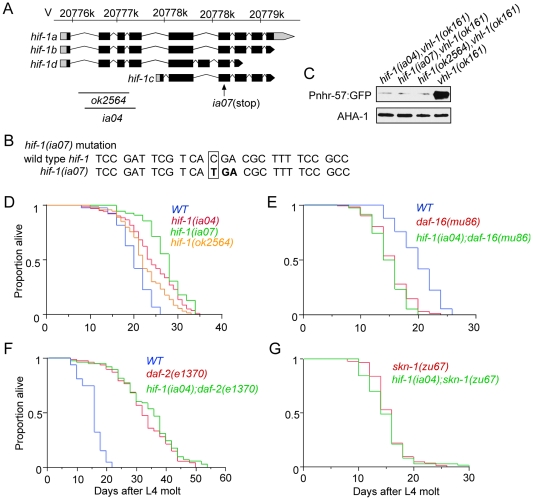
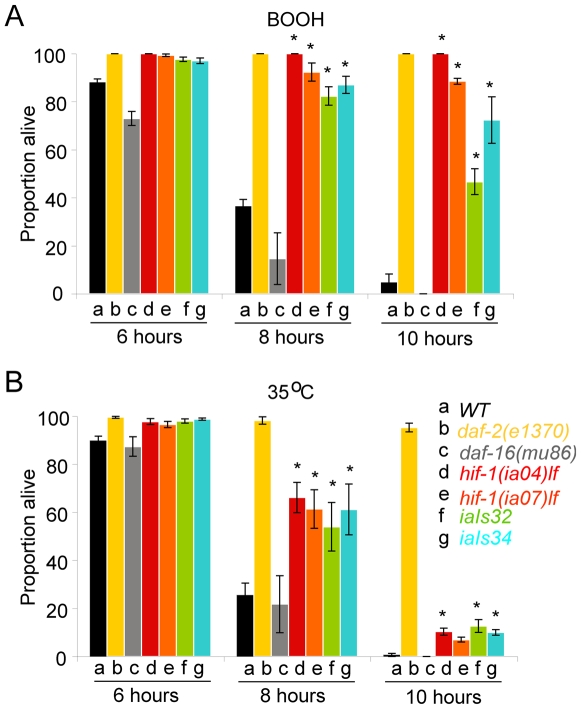
During normal development or during disease, animal cells experience hypoxic (low oxygen) conditions, and the hypoxia-inducible factor (HIF) transcription factors implement most of the critical changes in gene expression that enable animals to adapt to this stress. Here, we examine the roles of HIF-1 in post-mitotic aging. We examined the effects of HIF-1 over-expression and of hif-1 loss-of-function mutations on longevity in C. elegans, a powerful genetic system in which adult somatic cells are post-mitotic. We constructed transgenic lines that expressed varying levels of HIF-1 protein and discovered a positive correlation between HIF-1 expression levels and lifespan. The data further showed that HIF-1 acted in parallel to the SKN-1/NRF and DAF-16/FOXO transcription factors to promote longevity. HIF-1 over-expression also conferred increased resistance to heat and oxidative stress. We isolated and characterized additional hif-1 mutations, and we found that each of 3 loss-of-function mutations conferred increased longevity in normal lab culture conditions, but, unlike HIF-1 over-expression, a hif-1 deletion mutation did not extend the lifespan of daf-16 or skn-1 mutants. We conclude that HIF-1 over-expression and hif-1 loss-of-function mutations promote longevity by different pathways. These data establish HIF-1 as one of the key stress-responsive transcription factors that modulate longevity in C. elegans and advance our understanding of the regulatory networks that link oxygen homeostasis and aging.
Overview
The claims and statistics of this paper haven’t been checked yet.
Run the check — free, no account needed. It reads the open-access text and checks the sources it cites.
Integrity signals
Registry
Cites
Statistics
Figures
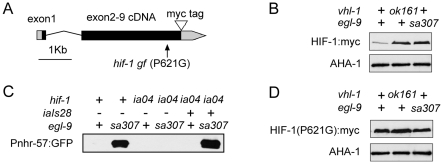
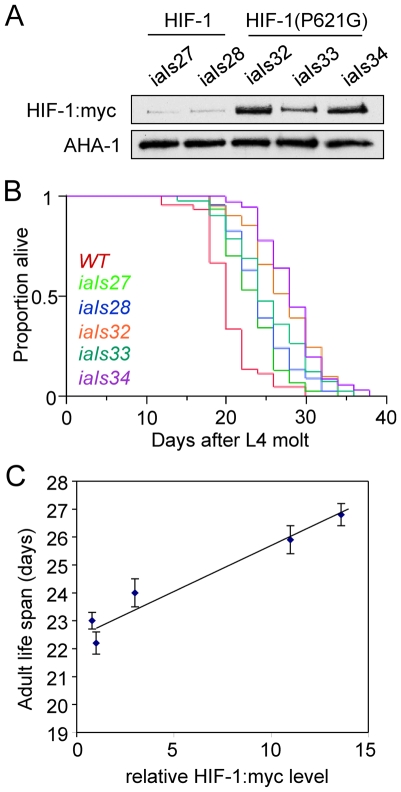
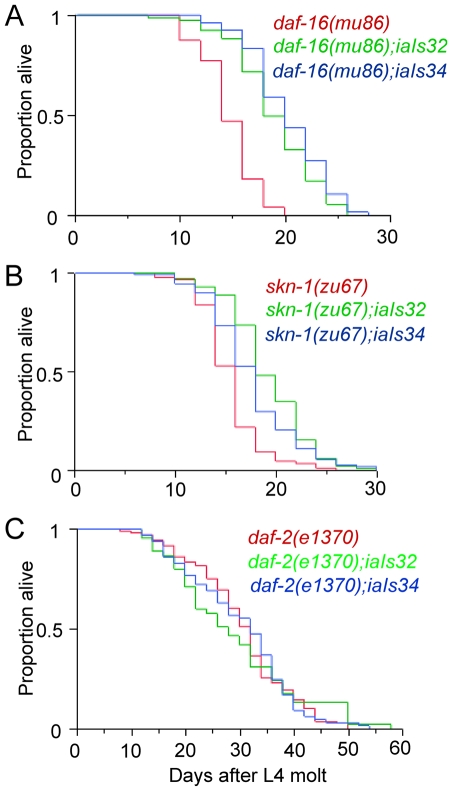
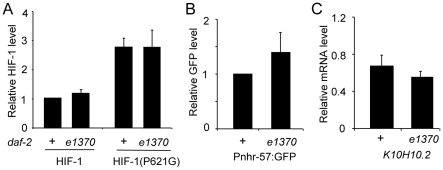
Verification
Claims the paper makes
The claims and statistics of this paper haven’t been checked yet.
Run the check — free, no account needed. It reads the open-access text and checks the sources it cites.
Claims other papers make about this one
Each is checked against this paper’s own text: does it say what the citing paper says it does?
The cited source says what the claim attributes to it.
In the citing paper
“Numerous reports have indicated that the HIF pathway has a role in life span of C. elegans (Chen et al., 2009; Zhang et al., 2009).”
From SirT3 suppresses hypoxia inducible factor 1α and tumor growth by inhibiting mitochondrial ROS production (2011) · cites this paper as Zhang et al., 2009
Self-check
Percentages, sums and reported differences re-computed from the paper’s own numbers.
The self-check needs the paper’s full text.
Citations
Cites
A C. elegans mutant that lives twice as long as wild type
Kenyon, C., Chang, J., Gensch, E., Rudner, A., & Tabtiang, R. (1993) · Nature · doi:10.1038/366461a0 · Cited by 3,387
Epstein, A. C. R., Gleadle, J. M., McNeill, L. A., Hewitson, K. S., O'Rourke, J., Mole, D. R., Mukherji, M., Metzen, E., Wilson, M. I., Dhanda, A., et al. (2001) · Cell · doi:10.1016/s0092-8674(01)00507-4 · Cited by 3,333
Oxygen sensing by metazoans: the central role of the HIF hydroxylase pathway.
Kaelin, W. G., & Ratcliffe, P. J. (2008) · Molecular Cell · doi:10.1016/j.molcel.2008.04.009 · Cited by 3,251 · cited 1×
“HIF stability and activity are influenced by reactive oxygen species, citric acid cycle intermediates, Fe(II) availability, and intracellular signaling events [1,3].”
BackgroundKimura, K. D., Tissenbaum, H. A., Liu, Y., & Ruvkun, G. (1997) · Science · doi:10.1126/science.277.5328.942 · Cited by 2,250
Ogg, S., Paradis, S., Gottlieb, S., Patterson, G. I., Lee, L., Tissenbaum, H. A., & Ruvkun, G. (1997) · Nature · doi:10.1038/40194 · Cited by 1,935
Increased dosage of a sir-2 gene extends lifespan in Caenorhabditis elegans
Tissenbaum, H. A., & Guarente, L. (2001) · Nature · doi:10.1038/35065638 · Cited by 1,603
Regulation of aging and age-related disease by DAF-16 and heat-shock factor
Hsu, A.-L., Murphy, C. T., & Kenyon, C. (2003) · Science · doi:10.1126/science.1083701 · Cited by 1,513
Hypoxia-inducible factor 1: master regulator of O2 homeostasis
Semenza, G. L. (1998) · Current Opinion in Genetics & Development · doi:10.1016/s0959-437x(98)80016-6 · Cited by 1,092
Lin, K., Hsin, H., Libina, N., & Kenyon, C. J. (2001) · Nature Genetics · doi:10.1038/88850 · Cited by 1,027
Henderson, S. T., & Johnson, T. E. (2001) · Current Biology · doi:10.1016/s0960-9822(01)00594-2 · Cited by 949
Cited by
Sorted by citations
mTOR is a key modulator of ageing and age-related disease
Johnson, S. C., Rabinovitch, P. S., & Kaeberlein, M. (2013) · Nature · doi:10.1038/nature11861 · Cited by 1,676
Schmidt, E. P., Yang, Y., Janssen, W. J., Gandjeva, A., Perez, M. J., Barthel, L., Zemans, R. L., Bowman, J. C., Koyanagi, D., Yunt, Z. X., et al. (2012) · Nature Medicine · doi:10.1038/nm.2843 · Cited by 842
Mitonuclear communication in homeostasis and stress
Quirós, P. M., Mottis, A., & Auwerx, J. (2016) · Nature Reviews Molecular Cell Biology · doi:10.1038/nrm.2016.23 · Cited by 787
Sirtuin 1 Modulates Cellular Responses to Hypoxia by Deacetylating Hypoxia-Inducible Factor 1α
Lim, J.-H., Lee, Y.-M., Chun, Y.-S., Chen, J., Kim, J.-E., & Park, J.-W. (2010) · Molecular Cell · doi:10.1016/j.molcel.2010.05.023 · Cited by 758
With TOR, Less Is More: A Key Role for the Conserved Nutrient-Sensing TOR Pathway in Aging
Kapahi, P., Chen, D., Rogers, A. N., Katewa, S. D., Li, P. W.-L., Thomas, E., & Kockel, L. (2010) · Cell Metabolism · doi:10.1016/j.cmet.2010.05.001 · Cited by 678
The metabolite α-ketoglutarate extends lifespan by inhibiting ATP synthase and TOR
Chin, R., Fu, X., Pai, M. Y., Vergnes, L., Hwang, H., Deng, G., Diep, S., Lomenick, B., Meli, V. S., Monsalve, G. C., et al. (2014) · Nature · doi:10.1038/nature13264 · Cited by 624
Oxidative stress and vascular inflammation in aging
Assar, M. E., Angulo, J., & Rodríguez‐Mañas, L. (2013) · Free Radical Biology and Medicine · doi:10.1016/j.freeradbiomed.2013.07.003 · Cited by 591
Aging as an event of proteostasis collapse
Taylor, R. C., & Dillin, A. (2011) · Cold Spring Harbor Perspectives in Biology · doi:10.1101/cshperspect.a004440 · Cited by 538
Mitohormesis: Promoting Health and Lifespan by Increased Levels of Reactive Oxygen Species (ROS)
Ristow, M., & Schmeisser, K. (2014) · Dose-Response · doi:10.2203/dose-response.13-035.ristow · Cited by 534
Lee, S., Hwang, A. B., & Kenyon, C. J. (2010) · Current Biology · doi:10.1016/j.cub.2010.10.057 · Cited by 495
Bell, E. L., Emerling, B. M., Ricoult, S. J. H., & Guarente, L. (2011) · Oncogene · doi:10.1038/onc.2011.37 · Cited by 440
The role of hypoxia-inducible factors in metabolic diseases
Gonzalez, F. J., Xie, C., & Jiang, C. (2018) · Nature Reviews Endocrinology · doi:10.1038/s41574-018-0096-z · Cited by 418
Dietary restriction and lifespan: lessons from invertebrate models
Kapahi, P., Kaeberlein, M., & Hansen, M. (2017) · Ageing Research Reviews · doi:10.1016/j.arr.2016.12.005 · Cited by 340
HIF-1 in cancer therapy: two decade long story of a transcription factor
Soni, S., & Padwad, Y. S. (2017) · Acta Oncologica · doi:10.1080/0284186x.2017.1301680 · Cited by 251
Bennett, C. F., Wende, H. V., Simko, M., Klum, S., Barfield, S., Choi, H., Pineda, V. V., & Kaeberlein, M. R. (2014) · Nature Communications · doi:10.1038/ncomms4483 · Cited by 220
Role of redox metabolism for adaptation of aquatic animals to drastic changes in oxygen availability
Welker, A. F., Moreira, D. C., Campos, E. G., & Hermes‐Lima, M. (2013) · Comparative Biochemistry and Physiology Part A Molecular & Integrative Physiology · doi:10.1016/j.cbpa.2013.04.003 · Cited by 217
Mechanisms of amino acid-mediated lifespan extension in Caenorhabditis elegans
Edwards, C., Canfield, J., Copes, N., Brito, A. G., Rehan, M. A. Y., Lipps, D., Brunquell, J., Westerheide, S. D., & Bradshaw, P. C. (2015) · BMC Genetics · doi:10.1186/s12863-015-0167-2 · Cited by 226
Iron-starvation-induced mitophagy mediates lifespan extension upon mitochondrial stress in C.elegans
Schiavi, A., Maglioni, S., Palikaras, K., Shaik, A., Strappazzon, F., Brinkmann, V., Torgovnick, A., Castelein, N., De Henau, S., Braeckman, B. P., et al. (2015) · Current Biology · doi:10.1016/j.cub.2015.05.059 · Cited by 209
D-beta-hydroxybutyrate extends lifespan in C. elegans
Edwards, C., Canfield, J., Copes, N., Rehan, M., Lipps, D., & Bradshaw, P. C. (2014) · Aging · doi:10.18632/aging.100683 · Cited by 209
Mitochondrial and Cytoplasmic ROS Have Opposing Effects on Lifespan
Schaar, C. E., Dues, D. J., Spielbauer, K. K., Machiela, E., Cooper, J. F., Senchuk, M., Hekimi, S., & Van Raamsdonk, J. M. (2015) · PLOS Genetics · doi:10.1371/journal.pgen.1004972 · Cited by 203
Lifespan-regulating genes in C. elegans
Uno, M., & Nishida, E. (2016) · npj Aging and Mechanisms of Disease · doi:10.1038/npjamd.2016.10 · Cited by 202
Feedback regulation via AMPK and HIF-1 mediates ROS-dependent longevity in Caenorhabditis elegans
Hwang, A. B., Ryu, E.-A., Artan, M., Chang, H., Kabir, M. H., Nam, H.-J., Lee, D.-Y., Yang, J., Kim, S., Mair, W. B., et al. (2014) · Proceedings of the National Academy of Sciences · doi:10.1073/pnas.1411199111 · Cited by 196
The immune effects of naturally occurring and synthetic nanoparticles
Chang, C. (2010) · Journal of Autoimmunity · doi:10.1016/j.jaut.2009.11.009 · Cited by 180
Lin, X.-X., Sen, I., Janssens, G. E., Zhou, X., Fonslow, B. R., Edgar, D., Stroustrup, N., Swoboda, P., Yates, J. R., Ruvkun, G., et al. (2018) · Nature Communications · doi:10.1038/s41467-018-06624-0 · Cited by 179
Mitohormesis, an Antiaging Paradigm
Bárcena, C., Mayoral, P., & Quirós, P. M. (2018) · International review of cytology · doi:10.1016/bs.ircmb.2018.05.002 · Cited by 174
Mitochondrial Proteostasis in the Control of Aging and Longevity
Jensen, M. B., & Jasper, H. (2014) · Cell Metabolism · doi:10.1016/j.cmet.2014.05.006 · Cited by 169
Cell nonautonomous activation of flavin-containing monooxygenase promotes longevity and health span
Leiser, S. F., Miller, H., Rossner, R., Fletcher, M., Leonard, A., Primitivo, M., Rintala, N., Ramos, F. J., Miller, D. L., & Kaeberlein, M. (2015) · Science · doi:10.1126/science.aac9257 · Cited by 159
The tumor suppressor folliculin regulates AMPK-dependent metabolic transformation
Yan, M., Gingras, M., Dunlop, E. A., Nouët, Y., Dupuy, F., Jalali, Z., Possik, E., Coull, B. J., Kharitidi, D., Dydensborg, A. B., et al. (2014) · Journal of Clinical Investigation · doi:10.1172/jci71749 · Cited by 141
Wu, Z., Senchuk, M. M., Dues, D. J., Johnson, B. K., Cooper, J. F., Lew, L., Machiela, E., Schaar, C. E., DeJonge, H., Blackwell, T. K., et al. (2018) · BMC Biology · doi:10.1186/s12915-018-0615-3 · Cited by 127
TOR signaling never gets old: Aging, longevity and TORC1 activity
Evans, D. S., Kapahi, P., Hsueh, W., & Kockel, L. (2010) · Ageing Research Reviews · doi:10.1016/j.arr.2010.04.001 · Cited by 118
Biochemical Genetic Pathways that Modulate Aging in Multiple Species: Figure 1.Preprint
Bitto, A., Wang, A. M., Bennett, C. F., & Kaeberlein, M. R. (2015) · Cold Spring Harbor Perspectives in Medicine · doi:10.1101/cshperspect.a025114 · Cited by 122
Rangaraju, S., Solis, G. M., Thompson, R. C., Gomez-Amaro, R. L., Kurian, L., Encalada, S. E., Niculescu, A. B., Salomon, D. R., & Petrascheck, M. (2015) · eLife · doi:10.7554/elife.08833 · Cited by 110
Regulation of life span by mitochondrial respiration: the HIF-1 and ROS connection
Hwang, A. B., & Lee, S. (2011) · Aging · doi:10.18632/aging.100292 · Cited by 110
The Target of Rapamycin Signalling Pathway in Ageing and Lifespan Regulation
Bjedov, I., & Rallis, C. (2020) · Genes · doi:10.3390/genes11091043 · Cited by 108
HIF‐1 modulates longevity and healthspan in a temperature‐dependent manner
Leiser, S. F., Begun, A., & Kaeberlein, M. R. (2011) · Aging Cell · doi:10.1111/j.1474-9726.2011.00672.x · Cited by 104
The paradox of mitochondrial dysfunction and extended longevity
Munkácsy, E., & Rea, S. L. (2014) · Experimental Gerontology · doi:10.1016/j.exger.2014.03.016 · Cited by 104
Hypoxia and the Hypoxic Response Pathway Protect against Pore-Forming Toxins in C. elegans
Bellier, A., Chen, C., Kao, C., Cinar, H. N., & Aroian, R. V. (2009) · PLoS Pathogens · doi:10.1371/journal.ppat.1000689 · Cited by 103
Shifting HIFs in osteoarthritis
Husa, M., Liu-Bryan, R., & Terkeltaub, R. (2010) · Nature Medicine · doi:10.1038/nm0610-641 · Cited by 101
Hypoxia signaling and resistance in C. elegans
Powell‐Coffman, J. A. (2010) · Trends in Endocrinology and Metabolism · doi:10.1016/j.tem.2010.02.006 · Cited by 94
Self-citationSalminen, A., Kauppinen, A., & Kaarniranta, K. (2015) · Cellular and Molecular Life Sciences · doi:10.1007/s00018-015-1978-z · Cited by 99
TOR and ageing: a complex pathway for a complex process
McCormick, M. A., Tsai, S., & Kennedy, B. K. (2010) · Philosophical Transactions of the Royal Society B Biological Sciences · doi:10.1098/rstb.2010.0198 · Cited by 99
Ma, S., Upneja, A., Galecki, A., Tsai, Y.-M., Burant, C. F., Raskind, S., Zhang, Q., Zhang, Z. D., Seluanov, A., Gorbunova, V., et al. (2016) · eLife · doi:10.7554/elife.19130 · Cited by 89
Chlorogenic Acid Extends the Lifespan ofCaenorhabditis elegansvia Insulin/IGF-1 Signaling Pathway
Zheng, S., Huang, X., Xing, T.-K., Ding, A.-J., Wu, G.-S., & Luo, H. (2016) · The Journals of Gerontology Series A · doi:10.1093/gerona/glw105 · Cited by 89
Mitochondria and Organismal Longevity
Hwang, A. B., Jeong, D., & Lee, S. (2012) · Current Genomics · doi:10.2174/138920212803251427 · Cited by 87
Neuronal Responses to Physiological Stress
Kagias, K., Nehammer, C., & Pocock, R. (2012) · Frontiers in Genetics · doi:10.3389/fgene.2012.00222 · Cited by 94
Salminen, A., Kaarniranta, K., & Kauppinen, A. (2016) · Biogerontology · doi:10.1007/s10522-016-9655-7 · Cited by 89
Leiser, S. F., Fletcher, M., Begun, A., & Kaeberlein, M. R. (2013) · The Journals of Gerontology Series A · doi:10.1093/gerona/glt016 · Cited by 89
Denzel, M. S., Lapierre, L. R., & Mack, H. I. D. (2018) · Mechanisms of Ageing and Development · doi:10.1016/j.mad.2018.08.001 · Cited by 82
TOR Signaling Couples Oxygen Sensing to Lifespan in C. elegans
Schieber, M., & Chandel, N. S. (2014) · Cell Reports · doi:10.1016/j.celrep.2014.08.075 · Cited by 80
Ischemic preconditioning: The role of mitochondria and aging
Wojtovich, A. P., Nadtochiy, S. M., Brookes, P. S., & Nehrke, K. W. (2011) · Experimental Gerontology · doi:10.1016/j.exger.2011.11.001 · Cited by 79
Novel links between HIFs, type 2 diabetes, and metabolic syndrome
Girgis, C. M., Cheng, K., Scott, C. H., & Gunton, J. E. (2012) · Trends in Endocrinology and Metabolism · doi:10.1016/j.tem.2012.05.003 · Cited by 77
The hypoxia-inducible factor HIF-1 functions as both a positive and negative modulator of aging
Leiser, S. F., & Kaeberlein, M. R. (2010) · Biological Chemistry · doi:10.1515/bc.2010.123 · Cited by 79
Long-lived mitochondrial (Mit) mutants of Caenorhabditis elegans utilize a novel metabolism
Butler, J. A., Ventura, N., Johnson, T. E., & Rea, S. L. (2010) · The FASEB Journal · doi:10.1096/fj.10-162941 · Cited by 75
Romney, S. J., Newman, B. S., Thacker, C. M., & Leibold, E. A. (2011) · PLoS Genetics · doi:10.1371/journal.pgen.1002394 · Cited by 76
Ackerman, D., & Gems, D. (2012) · PLoS Genetics · doi:10.1371/journal.pgen.1002498 · Cited by 73
Metabolism, homeostasis, and aging
Moldakozhayev, A., & Gladyshev, V. N. (2023) · Trends in Endocrinology and Metabolism · doi:10.1016/j.tem.2023.01.003 · Cited by 69
Bennett, C. F., & Kaeberlein, M. R. (2014) · Experimental Gerontology · doi:10.1016/j.exger.2014.02.002 · Cited by 61
A droplet microchip with substance exchange capability for the developmental study of C. elegans
Wen, H., Yu, Y., Zhu, G., Jiang, L., & Qin, J. (2015) · Lab on a Chip · doi:10.1039/c4lc01377h · Cited by 63
Shao, Z., Zhang, Y., & Powell‐Coffman, J. A. (2009) · Genetics · doi:10.1534/genetics.109.107284 · Cited by 61
Self-citationMiller, D. L., Budde, M. W., & Roth, M. B. (2011) · PLoS ONE · doi:10.1371/journal.pone.0025476 · Cited by 61
Machiela, E., Liontis, T., Dues, D. J., Rudich, P. D., Traa, A., Wyman, L., Kaufman, C., Cooper, J. F., Lew, L., Nadarajan, S., et al. (2020) · The FASEB Journal · doi:10.1096/fj.201903235r · Cited by 54
Harper, J. M., Wilkinson, J. E., & Miller, R. A. (2010) · The FASEB Journal · doi:10.1096/fj.09-152223 · Cited by 58
Shao, Z., Zhang, Y., Qi, Y., Saldanha, J. N., & Powell‐Coffman, J. A. (2010) · PLoS Pathogens · doi:10.1371/journal.ppat.1001075 · Cited by 51
Self-citationEffects of the mitochondrial respiratory chain on longevity in C. elegans
Rabbitts, B. M., Sedensky, M. M., & Morgan, P. G. (2014) · Experimental Gerontology · doi:10.1016/j.exger.2014.03.028 · Cited by 54
Hot topics in aging research: protein translation, 2009
Kennedy, B. K., & Kaeberlein, M. R. (2009) · Aging Cell · doi:10.1111/j.1474-9726.2009.00522.x · Cited by 54
Caenorhabditis elegansas a model for cancer research
Kyriakakis, E., Markaki, M., & Tavernarakis, N. (2014) · Molecular & Cellular Oncology · doi:10.4161/23723556.2014.975027 · Cited by 56
Soo, S. K., Rudich, Z. D., Ko, B., Moldakozhayev, A., AlOkda, A., & Raamsdonk, J. M. V. (2023) · Ageing Research Reviews · doi:10.1016/j.arr.2023.101941 · Cited by 58
Cruzen, S. M., Pearce, S., Baumgard, L. H., Gabler, N. K., Huff-Lonergan, E. J., & Lonergan, S. M. (2015) · Journal of Proteomics · doi:10.1016/j.jprot.2015.07.032 · Cited by 51
Effect of exercise on HIF-1 and VEGF signaling
Ohno, H., Shirato, K., Sakurai, T., Ogasawara, J., Sumitani, Y., Sato, S., Imaizumi, K., Ishida, H., & Kizaki, T. (2012) · The Journal of Physical Fitness and Sports Medicine · doi:10.7600/jpfsm.1.5 · Cited by 52
Mitochondrial metabolites extend lifespan
Mishur, R. J., Khan, M. H., Munkácsy, E., Sharma, L. K., Bokov, A. F., Beam, H., Radetskaya, O., Borror, M. B., Lane, R. K., Bai, Y., et al. (2016) · Aging Cell · doi:10.1111/acel.12439 · Cited by 50
Hou, P., Kuo, C., Cheng, C.-T., Liou, J., Ann, D. K., & Chen, Q. (2014) · PLoS ONE · doi:10.1371/journal.pone.0113865 · Cited by 46
Crosstalk between nitric oxide and hypoxia-inducible factor signaling pathways: an update
Poyton, R., & Hendrickson, M. (2015) · Research and Reports in Biochemistry · doi:10.2147/rrbc.s58280 · Cited by 45
Genome-Wide RNAi Longevity Screens in Caenorhabditis elegans
Yanos, M. E., Bennett, C. F., & Kaeberlein, M. R. (2012) · Current Genomics · doi:10.2174/138920212803251391 · Cited by 45
Age-associated vulval integrity is an important marker of nematode healthspan
Leiser, S. F., Jafari, G., Primitivo, M., Sutphin, G. L., Dong, J., Leonard, A., Fletcher, M., & Kaeberlein, M. R. (2016) · AGE · doi:10.1007/s11357-016-9936-8 · Cited by 50
LaRue, B., & Padilla, P. A. (2011) · PLoS ONE · doi:10.1371/journal.pone.0016790 · Cited by 43
Effects of chlorogenic acid on thermal stress tolerance in C. elegans via HIF-1, HSF-1 and autophagy
Carranza, A. D. V., Saragusti, A. C., Chiabrando, G. A., Carrari, F. O., & Asís, R. (2019) · Phytomedicine · doi:10.1016/j.phymed.2019.153132 · Cited by 41
To breathe or not to breathe: Understanding how oxygen sensing contributes to age-related phenotypes
van Vliet, T., Casciaro, F., & Demaria, M. (2021) · Ageing Research Reviews · doi:10.1016/j.arr.2021.101267 · Cited by 41
Fischer, F., Grigolon, G., Benner, C., & Ristow, M. (2022) · Physiological Reviews · doi:10.1152/physrev.00017.2021 · Cited by 42
Soo, S. K., Traa, A., Rudich, Z. D., Moldakozhayev, A., Mistry, M., & Raamsdonk, J. M. V. (2022) · Aging Cell · doi:10.1111/acel.13740 · Cited by 41
Espinosa‐Ruíz, C., Manuguerra, S., Cuesta, A., Esteban, M. Á., Santulli, A., & Messina, C. M. (2019) · Aquatic Toxicology · doi:10.1016/j.aquatox.2019.02.014 · Cited by 38
Gonidakis, S., Finkel, S. E., & Longo, V. D. (2010) · Aging Cell · doi:10.1111/j.1474-9726.2010.00618.x · Cited by 38
Chandler-Brown, D. B., Choi, H., Park, S., Ocampo, B. R., Chen, S., Le, A., Sutphin, G. L., Shamieh, L. S., Smith, E. D., & Kaeberlein, M. R. (2015) · Frontiers in Genetics · doi:10.3389/fgene.2015.00316 · Cited by 40
Neuronal Inputs and Outputs of Aging and Longevity
Alcedo, J., Flatt, T., & PASYUKOVA, E. G. (2013) · Frontiers in Genetics · doi:10.3389/fgene.2013.00071 · Cited by 39
Barretto, E. C., Polan, D. M., Beevor-Potts, A., Lee, B., & Grewal, S. (2020) · Genetics · doi:10.1534/genetics.120.303219 · Cited by 34
The hypoxic response and aging
Kaeberlein, M. R., & Kapahi, P. (2009) · Cell Cycle · doi:10.4161/cc.8.15.9126 · Cited by 36
Methods for the discovery of new anti-aging products – targeted approaches
Manayi, A., Saeidnia, S., Gohari, A. R., & Abdollahi, M. R. (2014) · Expert Opinion on Drug Discovery · doi:10.1517/17460441.2014.885014 · Cited by 32
Pender, C. L., & Horvitz, H. R. (2018) · eLife · doi:10.7554/elife.36828 · Cited by 28
Chrysophanol delays aging via insulin/IGF-1 signaling pathway
Zhang, H., Xiong, J., Wang, Q., Song, Q., Meng, L., Zhang, H., Bao, Y., Liu, F., & Xiao, Y. (2025) · Free Radical Biology and Medicine · doi:10.1016/j.freeradbiomed.2025.03.011 · Cited by 30
A Role for SIRT1 in the Hypoxic Response
Leiser, S. F., & Kaeberlein, M. R. (2010) · Molecular Cell · doi:10.1016/j.molcel.2010.06.015 · Cited by 29
Signaling beyond Punching Holes: Modulation of Cellular Responses by Vibrio cholerae Cytolysin
Khilwani, B., & Chattopadhyay, K. (2015) · Toxins · doi:10.3390/toxins7083344 · Cited by 27
Liu, T., & Cai, D. (2013) · The EMBO Journal · doi:10.1038/emboj.2013.75 · Cited by 27
Redox regulation of cysteine-dependent enzymes1
Guttmann, R. P. (2009) · Journal of Animal Science · doi:10.2527/jas.2009-2381 · Cited by 27
Cellular lifespan and senescence: a complex balance between multiple cellular pathways
Dolivo, D., Hernandez, S. J., & Dominko, T. (2016) · BioEssays · doi:10.1002/bies.201670906 · Cited by 29
Shamalnasab, M., Dhaoui, M., Thondamal, M., Harvald, E. B., Færgeman, N. J., Aguilaniu, H., & Fabrizio, P. (2017) · Aging · doi:10.18632/aging.101267 · Cited by 26
An automated compound screening for anti-aging effects on the function of C. elegans sensory neurons
Bazopoulou, D., Chaudhury, A. R., Pantazis, A. K., & Chronis, N. (2017) · Scientific Reports · doi:10.1038/s41598-017-09651-x · Cited by 27
Salminen, A. (2022) · Cellular Signalling · doi:10.1016/j.cellsig.2022.110445 · Cited by 27
Beneficial effects of dietary fibre supplementation of a high-fat diet on fetal development in rats
Lin, Y., Han, X., Fang, Z., Che, L., Nelson, J., Yan, T.-H., & Wu, D. (2011) · British Journal Of Nutrition · doi:10.1017/s0007114511000614 · Cited by 26
Han, J. S., Lee, J. H., Kong, J., Ji, Y., Kim, J., Choe, S. S., & Kim, J. B. (2018) · Molecular and Cellular Biology · doi:10.1128/mcb.00390-18 · Cited by 25
Genes and Pathways That Influence Longevity in Caenorhabditis elegans
Lee, Y., An, S. W. A., Artan, M., Seo, M., Hwang, A. B., Jeong, D., Son, H. G., Hwang, W., Lee, D.-Y., Seo, K., et al. (2015) · Springer eBooks · doi:10.1007/978-4-431-55763-0_8 · Cited by 24
Inhibition of elongin C promotes longevity and protein homeostasis via HIF ‐1 in C. elegans
Hwang, W., Artan, M., Seo, M., Lee, D.-Y., Nam, H. G., & Lee, S. (2015) · Aging Cell · doi:10.1111/acel.12390 · Cited by 23
Metadata
- Authors
- Zhang, Y., Shao, Z., Zhai, Z., Shen, C., & Powell-Coffman, J. A.
- Affiliations
- Iowa State University (US)
- Venue
- PLoS ONE
- Publisher
- Public Library of Science (PLoS)
- Published
- 2009-07-27
- Volume
- 4
- Issue
- 7
- Pages
- e6348
- ISSN
- 1932-6203 (ISSN-L)
- PMC
- PMC2711329
- OpenAlex
- W2076724288
- Cited by
- 211
- References
- 50
- Citations by year
- 2026: 7 · 2025: 10 · 2024: 11 · 2023: 5 · 2022: 10 · 2021: 8 · 2020: 10 · 2019: 14 · 2018: 12 · 2017: 7 · 2016: 16 · 2015: 22 · 2014: 18 · 2013: 9 · 2012: 11
- FWCI
- 5.33
- Type
- journal article
- Language
- en
- Open access
- gold
- doi.org
- Locations
- PLoS ONE (publishedVersion, cc-by)
- PubMed Central (publishedVersion, cc-by)
- PubMed (publishedVersion)
- Iowa State University Digital Repository (Iowa State University) (submittedVersion, other-oa)
- DOAJ (DOAJ: Directory of Open Access Journals) (submittedVersion)
- Figshare (submittedVersion, cc-by)
- Funders
- Iowa State University
- National Institutes of Health
- National Institute of General Medical Sciences (R01GM078424)
- National Center for Research Resources
- Topics
- Life Sciences › Biochemistry, Genetics and Molecular Biology › Aging › Genetics, Aging, and Longevity in Model Organisms
- Life Sciences › Biochemistry, Genetics and Molecular Biology › Cancer Research › Cancer, Hypoxia, and Metabolism
- Life Sciences › Biochemistry, Genetics and Molecular Biology › Cell Biology › Autophagy in Disease and Therapy
- Keywords
- HIF-1, hypoxia-inducible factor, lifespan, longevity, Caenorhabditis elegans, DAF-16/FOXO, transcription factors, oxidative stress resistance, heat stress resistance, oxygen homeostasis, stress response, loss-of-function mutations
- MeSH terms
- Animals, Longevity, Mutation, Transcription Factors, Caenorhabditis elegans, Reverse Transcriptase Polymerase Chain Reaction, Caenorhabditis elegans Proteins
About these checks
Registry, retraction, Cites and statistics results are computed, not judged, with one exception: a printed reference that no index lists is read once by a model before it counts as a citation error. Claims are extracted by a model and kept only when their quote appears verbatim in the text; each cited source is then checked, with a model’s help, for whether it says what the claim relies on. Those verdicts can be wrong — read the claim’s quote and the cited source before relying on one.
Statistics and arithmetic are recomputed, not judged.
Confidence bands are shown only for fields calibrated on our annotated test set. None is calibrated yet, so no band is shown.
What counts as a claim ›How we measure confidence ›How we check this ›
Are you an author, or do you see a problem with this page? Request a review
